EP0087268A2 - Verfahren für die Schlammbehandlung - Google Patents
Verfahren für die Schlammbehandlung Download PDFInfo
- Publication number
- EP0087268A2 EP0087268A2 EP83300783A EP83300783A EP0087268A2 EP 0087268 A2 EP0087268 A2 EP 0087268A2 EP 83300783 A EP83300783 A EP 83300783A EP 83300783 A EP83300783 A EP 83300783A EP 0087268 A2 EP0087268 A2 EP 0087268A2
- Authority
- EP
- European Patent Office
- Prior art keywords
- coagulant
- recovered
- sludge
- solids
- acid
- Prior art date
- Legal status (The legal status is an assumption and is not a legal conclusion. Google has not performed a legal analysis and makes no representation as to the accuracy of the status listed.)
- Granted
Links
Images

Classifications
-
- C—CHEMISTRY; METALLURGY
- C02—TREATMENT OF WATER, WASTE WATER, SEWAGE, OR SLUDGE
- C02F—TREATMENT OF WATER, WASTE WATER, SEWAGE, OR SLUDGE
- C02F11/00—Treatment of sludge; Devices therefor
- C02F11/12—Treatment of sludge; Devices therefor by de-watering, drying or thickening
- C02F11/121—Treatment of sludge; Devices therefor by de-watering, drying or thickening by mechanical de-watering
-
- B—PERFORMING OPERATIONS; TRANSPORTING
- B01—PHYSICAL OR CHEMICAL PROCESSES OR APPARATUS IN GENERAL
- B01D—SEPARATION
- B01D37/00—Processes of filtration
- B01D37/03—Processes of filtration using flocculating agents
-
- C—CHEMISTRY; METALLURGY
- C02—TREATMENT OF WATER, WASTE WATER, SEWAGE, OR SLUDGE
- C02F—TREATMENT OF WATER, WASTE WATER, SEWAGE, OR SLUDGE
- C02F1/00—Treatment of water, waste water, or sewage
- C02F1/52—Treatment of water, waste water, or sewage by flocculation or precipitation of suspended impurities
- C02F1/5236—Treatment of water, waste water, or sewage by flocculation or precipitation of suspended impurities using inorganic agents
Definitions
- the present invention relates to an improved process for treating sludge produced by a water treatment process so as to recover coagulant used to effect flocculation of solids in the untreated raw water.
- coagulants such as aluminium sulphate (alum) and ferric sulphate to remove the turbidity in the raw water.
- the coagulant added to the raw water reacts with the water's natural or added alkalinity to produce an insoluble base form of the coagulant as a precipitate.
- This coagulant precipitate removes suspended materials such as silt, dissolved or colloidal organic material, microscopic organisms, and colloidal metallic hydroxides present in the raw water.
- Coagulant-containing sludge is generally dilute; typically, the suspended solids content for alum sludges ranges from 1 to 15%. Landfill disposal of alum sludge requires at least 10% to 20% solids content.
- mechanical filter pressing yields dewatered alum sludge possessing at least 30% to 50% solids, the initial equipment cost and subsequent operational costs are high.
- the cost of alum sludge disposal is related to its solids content and dewatering characteristics. It is well known that recovery of the alum from the alum sludge improves the dewatering characteristics of the remaining solids and reduces the overall quantity of solids which require disposal. Thus, recovery of alum from the alum sludge reduces the overall disposal costs.
- the primary objective of the typical alum recovery process is to acid-solubilize the maximum recoverable amount of alum present in the alum sludge. In an effort to obtain maximum alum recovery, acid is added to achieve a predetermined pH.
- the second drawback associated with known alum recovery processes is linked to the use of mechanical filter presses to recover the alum from the alum sludge after acid has been added and to dewater the remaining solids.
- Mechanical filter presses are both expensive to buy and operate.
- removal of the dewatered solids is a slow process requiring extended cessation of the alum recovery process.
- U.S. Patent No. 3,959,133 to Fulton discloses a process which utilizes a mechanical filter press in a vertical configuration to recover the alum from the alum sludge and dewater the remaining solids.
- Fulton's process requires a complete discarding periodically of the. recovered alum and subsequent total replacement with commercially available alum.
- the prior art in no way suggests an improved, economical coagulant recovery process characterised by freedom from unwanted acid soluble impurity accumulation and utilizing an inexpensive non-mechanical substantially horizontal filtering medium to produce a recovered coagulant filtrate with enhanced coagulative properties.
- a process for treating sludge produced by a water treatment process so as to recover coagulant used to effect flocculation of solids in the untreated raw water comprising adding acid to the sludge to produce an acidulated sludge comprising a liquid component containing the acid soluble form of the coagulant and acid soluble impurities, r and a solids component containing an unsolubilized base form of the coagulant and other suspended matter; introducing the acidulated sludge onto the surface of a filtering medium; filtering the liquid component through the solids component on the filtering medium so as to yield a recovered coagulant filtrate comprising a recovered soluble form of the coagulant and some acid soluble impurities, and so as to leave on the surface of the filtering medium a solids cake comprising unsolubilized base form of the coagulant, other suspended matter, and entrained liquid component; and recycling at least a portion of the recovered coagulant filtrate so as
- the said liquid component of the acidulated sludge may be decanted from above the solids component thereof.
- a principal object of this invention is thus to provide a process for recovering and recycling coagulant present in water treatment sludge which possesses enhanced coagulative properties.
- the problem of less than 100% recovery of used coagulant is minimized because less of the recovered coagulant is required when recycled to treat raw water than if commercial coagulant were used. Therefore, addition of commercial coagulant to the recovered coagulant is greatly reduced.
- the weight percentage of coagulant remaining unrecovered is offset by the increased 'coagulative capabilities of the recovered coagulant as well as by the addition of minor amounts of make-up commercial coagulant.
- An additional object of this invention is to provide a process for recovering and recycling coagulant present in water treatment sludge which possesses an essentially stable concentration of acid soluble impurities below the acceptable maximum contaminant level for the water treated with the recycled recovered coagulant.
- This stable concentration eliminates the problem of gradual increases in the concentration of acid soluble impurities each time the coagulant is recovered and recycled which would eventually contaminate the treated water. There is no need to close down the process and discard all the coagulant recovered since the process of the present invention enables problems associated with excessive concentrations of acid soluble impurities in the recovered coagulant to be avoided.
- the non-mechanical substantially horizontal filtering medium permits neutralization of the solids cake easily without the latter being removed from the surface of the filtering medium.
- this filtering medium is cheaper to buy and operate, has a greater sludge handling capacity, and requires less shut down time of the coagulant recovery process to permit solids cake disposal.
- the coagulant used to treat the raw water may be either an aluminium coagulant (e.g. aluminium sulphate) or an iron coagulant (e.g. ferric sulphate).
- an aluminium coagulant e.g. aluminium sulphate
- an iron coagulant e.g. ferric sulphate
- the base form of the coagulant present in the sludge produced by the process may be an hydroxide, and the acid added to the sludge may be sulphuric acid.
- the amount of acid added to the sludge is sufficient to reduce the pH of the acid-treated sludge to 3.9 or less.
- the step of adding acid to the sludge may be followed by adding a destabilizing agent to the acidulated sludge.
- substantially 70% of the recovered coagulant filtrate is retained in a storage facility for recycling to effect flocculation of solids in the untreated raw water and substantially 30% of the recovered coagulant filtrate is discarded.
- all of the retained recovered coagulant filtrate is recycled to effect flocculation of solids in the untreated raw water.
- a portion of the retained recovered coagulant filtrate is not recycled to effect flocculation of solids in the untreated raw water but is instead added to the sludge before the sludge is treated with acid.
- the neutralizing solution may comprise sodium hydroxide or lime.
- the solids cake is preferably neutralized to a pH above 4.
- the non-mechanical substantially horizontal filtering medium is preferably a rigid porous filter plate.
- an amount of coagulant may be added as a make-up to the recovered coagulant filtrate.
- the improved coagulant recovery process of this invention involves adding acid to coagulant-containing water treatment sludge sufficient to convert most, but not all, of the base form of the coagulant potentially recoverable from the sludge to the acid soluble form of the coagulant.
- a controlled amount; of the recovered coagulant filtrate is then discarded. Both these steps combine to stabilize (at steady state) the quantity of acid soluble impurities present in the recovered coagulant filtrate at an acceptable maximum contaminant level determined for the water treated with the recycled recovered coagulant.
- the acid treated sludge after it is filtered to recover the acid soluble form of the coagulant, yields a solids cake which is subsequently neutralized and disposed of.
- the present invention unlike the typical coagulant recovery process, uses only enough acid to convert a predetermined amount of the base form of the coagulant to the acid soluble form of the coagulant.
- Known coagulant recovery processes use significantly more acid since their objective is to convert all of the base form of the coagulant potentially recoverable from the sludge to the acid soluble form of the coagulant. Consequently, most, if not all, of the acid soluble impurities present in the sludge are also dissolved by the excess quantity of acid employed in the typical coagulant recovery process. These impurities accumulate in the recovered coagulant, eventually exceeding the acceptable maximum contaminant level for the water treated with the recycled recovered coagulant.
- the present invention avoids exceeding the acceptable maximum contaminant level of impurities for the water treated with the recycled recovered coagulant.
- the exact amounts of acid to be added and of recovered coagulant filtrate to be discarded to avoid exceeding the acceptable maximum contaminant level may be determined by mass balance.
- the sludge After adding the acid to the coagulant-containing sludge, the sludge is introduced onto a non-mechanical substantially, horizontal filtering medium to effect gravity and, at times, vacuum filtration of the sludge.
- the acid soluble form of the coagulant filters through the layers of suspended solids and through the remaining unsolubilized base form of the coagulant that form the solids cake on the surface of the non-mechanical substantially horizonal filtering medium.
- the filtration step produces a solids cake, remaining on the filter surface, and a filtered recovered coagulant filtrate, which is low in suspended solids.
- the acid-soluble form of the coagulant may also be decanted from above the solids.
- the recovered coagulant filtrate when recycled to effect flocculation of solids in untreated raw water, exhibits enhanced coagulative properties as compared with the stoichiometric mole equivalent of commercial coagulant. Therefore, the same coagulative effect produced by the total amount of commercial coagulant initially used is obtainable using recovered coagulant and make-up commercial coagulant that together amount to less than the initial quantity of commercial coagulant used to treat raw water.
- the solids cake is treated with a neutralizing solution that is applied directly on the cake which is resting on the surface of the non-mechanical substantially horizontal filtering medium.
- a neutralizing solution that is applied directly on the cake which is resting on the surface of the non-mechanical substantially horizontal filtering medium.
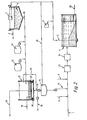
- the concentrated coagulant-containing water treatment sludge 8 is mixed with acid 11 so that most, but not all, of the base form of the coagulant potentially recoverable from the sludge is converted to the acid soluble form of the coagulant, producing an acidulated sludge.
- a destabilizing agent 12 is added to the acidulated sludge to destabilize the remaining unsolubilized base form of the coagulant and suspended solids materials in a coagulant recovery basin 13.
- “Destabilization" in this context, is a term of art that describes flocculation and coalescence of suspended material in a liquid.
- the acidulated sludge is then filtered by gravity and, at times, vacuum on a non-mechanical substantially horizontal filtering medium 19.
- the liquid component may also be decanted from above the solids component via a passage 26.
- a portion of the recovered coagulant filtrate is recycled to effect flocculation of solids in untreated raw water via a conduit 17.
- the solids cake 22 is flooded with a neutralizing solution via a conduit 18. This solution modifies the pH of liquid entrained in the cake..
- the solids cake 22 remains on the surface of the filtering medium 19. When the pH of the solids cake 22 is raised to a sufficient extent to permit disposal, it is removed via a conduit 21.
- the initial step of adding acid to the coagulant-containing water treatment sludge 8 to produce an acidulated sludge involves adding acid 11 to the sludge sufficient to convert most, but not all, of the base form of the coagulant potentially recoverable from the sludge to the acid soluble form of the coagulant.
- Using a controlled amount of acid to convert some of the base form of the coagulant potentially recoverable from the sludge reduces the quantity of acid soluble impurities present in the recovered coagulant filtrate and contributes to the stabilization at steady state of the concentration of acid soluble impurities present in the recovered coagulant filtrate below the acceptable maximum contaminant level for the water treated with the recycled recovered coagulant filtrate.
- the acidulated sludge placed in the recovery basin 13 on top of the non-mechanical substantially horizontal filtering medium 19 comprises a liquid component containing the acid soluble form of the coagulant and acid soluble impurities, and a solids component containing unsolubilized base form of the coagulant and other suspended matter.
- the non-mechanical substantially horizontal filtering medium 19 may have a rigid upper surface, or loose granular upper surface, e.g. a sand bed.
- the term "non-mechanical” is used in this context particularly to distinguish over mechanical filter press type devices, as well as other mechanical devices.
- the preferred non-mechanical substantially horizontal filtering medium is a rigid porous structure, most preferably a rigid porous filter plate.
- the most preferred non-mechanical substantially horizontal filtering media are multi-layer filter plates of the type available from U.S. Environmental Products, Inc., St. Charles, Illinois.
- These plates are characterised by an upper layer of jagged, irregular hard particles.such as aluminium oxide with average particles size increasing from the upper surface to the lower surface of the layer, and a supporting layer of larger particles, with the particles bonded together within each layer and each layer bonded to the other.
- the liquid component of the acidulated sludge in the in the recovery basin 13 is filtered through the solids component, thereby removing undesirable suspended solids.
- the liquid component may also be decanted from above the solids component via the passage 26.
- the filtering and decanting processes yield a recovered coagulant filtrate at 14 comprising a recovered acid soluble form of the coagulant that is more efficient, on a mole basis, than the commercially available equivalent.
- the recovered coagulant filtrate 14 is later recycled via the conduit 17 to effect flocculation of solids in untreated raw water passing through a raw water intake conduit 1, less of the recovered coagulant is necessary to treat a given quantity of raw water than is required when commercial coagulant is utilized.
- Untreated raw water is pumped into the water treatment facility via the raw water intake conduit 1.
- commercial coagulant preferably either aluminium sulphate or ferric sulphate
- an alkaline agent preferably sodium hydroxide or lime
- the water is flash mixed at 23, flocculated at 24, and transferred to a settling tank 4.
- the treated water then passes from the settling tank 4 to a filter 4a and passes from the filter 4a into an outlet conduit 25.
- the suspended materials and the base form of the coagulant combine to form a dilute coagulant-containing sludge which is collected and removed via a conduit 5 from the settling tank 4.
- the dilute coagulant-containing sludge may be treated with a polymer coagulant from a chamber 6 before being pumped into a sludge retention tank 7.
- the selection of a particular polymer coagulant is made on the basis of its cost, availability and proven effectiveness in connection with a given coagulant-containing sludge.
- the dilute coagulant-containing sludge is concentrated, e.g., over a 2 to 4 hour period, forming a blanket of sludge 8.
- the supernatant water remaining in the sludge retention tank 7 is decanted via a conduit 9 and returned to the raw water intake conduit 1.
- the concentrated coagulant-containing sludge is drawn from the retention tank via a conduit 10.
- Acid 11 most preferably sulphuric acid, is added to the sludge to lower the pH of the sludge to preferably 3.9 or less and to convert at least 40% and preferably up to 70%, but not all, of the base form of the coagulant to an acid soluble form of the coagulant.
- the addition of acid produces an acidulated sludge comprising a liquid component containing the acid soluble form of the coagulant and acid soluble impurities, and a solids component containing unsolubilized base form of the coagulant and other suspended matter.
- a destabilizing agent 12 preferably a polymer flocculant
- a destabilizing agent or a particle polymer flocculant is again made by testing several types and considering the cost and availability of a particular polymer together with the proven effectiveness of a given polymer in a given coagulant-containing sludge.
- the acidulated sludge is introduced onto the surface of the non-mechanical porous substantially horizontal filtering medium 19.
- the liquid component of the acidulated sludge is filtered through the solids component by gravity and in some cases vacuum filtration is also employed.
- the liquid component may also be decanted from above the solids component via the passage 26.
- Filtration and decanting yields a recovered coagulant filtrate at 14 comprising (i) a recovered acid soluble form of the coagulant that is a more efficient coagulant, on a mole basis, than the commercially available equivalent, and (ii) some acid soluble impurities; and leaves on the surface of the non-mechanical substantially horizontal filtering medium 19 a solids cake 22 comprising unsolubilzed base form of the coagulant, other suspended matter, and entrained liquid component.
- a neutralizing solution most preferably consisting of sodium hydroxide, lime, or an aqueous caustic solution, is introduced via the conduit 18 onto the surface of the solids cake 22 remaining on the surface of the non-mechanical substantially horizontal filtering medium 19.
- the solution is drawn through the solids cake 22 by gravity and in some situations by vacuum filtration, thus raising the pH of the entrained liquid component to a level, preferably at least 4.0, sufficient to permit subsequent disposal of the solids cake 22.
- the neutralizing solution filtrate is removed via a conduit 15, the dewatered solids cake is disposed of at 21.
- the apparatus shown in Figure 1 involves the use, as shown, of valves V and a pump P.
- FIG 2 a flow diagram illustrating a modification of the coagulant recovery process more particularly relating to the recycling of recovered coagulant filtrate, is shown.
- the water treatment process in Figure 2 is the same as that depicted in Figure 1, like reference numerals indicating like parts.
- raw water enters the treatment facility via a raw water intake conduit 1 and is mixed initially with commercial coagulant via a conduit 2 and later also with recovered coagulant filtrate drawn from a storage facility 16.
- the water containing the coagulant and possibly an alkaline agent is transferred to a settling tank 4 after flash mixing and subsequent flocculation.
- the dilute sludge comprising suspended materials and the base form of the coagulant is collected and removed from the settling tank via a conduit 5.
- a destabilizing agent usually a polymer flocculant 12
- the acidulated sludge is placed in a recovery basin 13.
- Recovery of the acid soluble form of the coagulant by filtration and optionally decanting is accompanied by formation of a solids cake 22 on the surface of a non-mechanical substantially horizontal filtering medium 19.
- a neutralizing solution 18 filters through the solids cake 22 and is discarded via a conduit 15, the solids cake is taken from the recovery basin 13 and disposed of at 21.
- the recovered coagulant filtrate at 14 in Figure 2 is in part transferred into a storage facility 16 and in part discarded via the conduit 15.
- a portion of the retained recovered coagulant filtrate in the storage facility 16 is recycled as before via the conduit 17 to effect flocculation of solids in untreated raw water.
- it is added to the coagulant-containg sludge after settling and prior to addition of acid via a conduit 20, and thus, cycled internally within the system without effecting flocculation of solids in untreated raw water.
- the improved coagulant recovery process described above yields a recovered acid soluble form of the coagulant that is a more efficient coagulant, on a mole basis, than the commercially available equivalent.
- Numerous experiments have demonstrated that the recovered coagulant filtrate is often significantly more effective at reducing unwanted colour and turbidity in raw water than the commercial equivalent. The results of these experiments are set forth below.
- Coagulant Equivalency Test I the efficiency of a recovered alum (aluminium sulphate) coagulant was compared to commercially available reagent alum.
- a stock solution of reagent alum coagulant at a known concentration and optimum pH was used to reduce the colour and turbidity of a one litre sample of raw water through coagulation, flocculation and settling.
- a test solution of a recovered alum coagulant filtrate to be analyzed was added to a one litre sample of the same type of raw water until the turbidity and colour matched those of the water sample treated with the stock reagent alum solution.
- the effective percent concentration of the recovered alum hereinafter termed the "coagulation equivalency percent concentration" was computed by multiplying the percent concentration of the stock reagent alum solution by the ratio of the amount of stock reagent alum used to the amount of test solution of recovered alum used.
- the coagulation equivalency percent concentration of the recovered alum is then compared with the calculated stoichiometric percent concentration of recovered alum test solution at the operating pH.
- the stoichiometric percent concentration of the recovered alum test solution is calculated by using the following equation:
- the stoichiometric percentage concentration of recovered alum test solution should equal the coagulation equivalency percent concentration of recovered alum test solution if the recovered alum solution was as efficient a coagulating agent as the stock reagent alum solution. If the recovered alum test solution was more efficient than the stock reagent alum solution, then the effective coagulation equivalency percent concentration would be greater than the stoichiometric percent concentration of the recovered alum test solution.
- Coagulant Equivalency Test 1 comprises two experiments with recovered alum solutions at different pH's using identical raw water samples of a very clear mountain water with low solids and low alkalinity. (2.0 NTU, 15 pt Co C.U., pH 6.2, total alkalinity equals 20 mg per litre as calcium carbonate). The results are summarized in Tables I and II.
- the recovered alum test solution at a pH of 1.80 produced a coagulative effect in raw water corresponding to a coagulation equivalenty percent concentration of 3.33% while the calculated stoichiometric percent concentration for the recovered alum test solution was 2.48%. Therefore, the recovered alum test solution at a pH of 1.80 was 34% more efficient than the stock reagent alum solution.
- Coagulant Equivalency Test II the efficiency of the recovered alum coagulant was compared to commercially available stock reagent alum in several experiments. These experiments were conducted in the same manner as the experiments discussed in Coagulant Equivalency Test I. However, the raw water sample tested was obtained from a source different from that used in Coagulant Equivalency Test I. The raw water used in Coagulant Equivalency Test II was a surface water typical of the waters in the United States Piedmont. (20 NTU, 30 pt Co C.U., pH 6.8, total alkalinity equals 60 mg per litre as calcium carbonate).
- Coagulant Equivalency Test II consists of four experiments with recovered alum solutions at different pH's. The results of these experiments are summarized in Table IV.
- the recovered alum test solutions at pH values of 2.3, 3.5 and 3.9 demonstrated enhanced coagulative properties when compared with the commercial stock reagent alum solution.
- the recovered alum test solutions were 80%, 140% and 360% more efficient at pH values of 2.3, 3.5 and 3.9 respectively.
- the results of the experiments listed under Coagulant Equivalency Test II provide further evidence that recovered alum coagulant produced by the new improved recovery process described herein possesses enhanced coagulative properties.
- Coagulant Equivalency Test III the efficiency of the recovered alum coagulant was compared to commercially available stock reagent alum in several experiments. These experiments were conducted in the same manner as the experiments discussed in Coagulant Equivalency Tests I and II. However, the raw water sample tested was obtained from a source different from that used in either Coagulant Equivalency Tests I-or II. The raw water used in Coagulant Equivalency Test III was a surface water typical of a highly coloured United States coastal "swamp" water. (10 NTU, 150 pt Co C.U., pH 6.6, total alkalinity equals 10 mg per litre as calcium carbonate).
- Coagulant Equivalency Test III consists of seven experiments with recovered alum solutions at different pH's. The results of these experiments are summarized in Table VI .
Landscapes
- Chemical & Material Sciences (AREA)
- Engineering & Computer Science (AREA)
- Life Sciences & Earth Sciences (AREA)
- Hydrology & Water Resources (AREA)
- Environmental & Geological Engineering (AREA)
- Water Supply & Treatment (AREA)
- Organic Chemistry (AREA)
- Mechanical Engineering (AREA)
- Chemical Kinetics & Catalysis (AREA)
- Inorganic Chemistry (AREA)
- Separation Of Suspended Particles By Flocculating Agents (AREA)
- Treatment Of Sludge (AREA)
Applications Claiming Priority (2)
| Application Number | Priority Date | Filing Date | Title |
|---|---|---|---|
| US06/351,503 US4448696A (en) | 1982-02-23 | 1982-02-23 | Process for recovering and recycling coagulant present in water treatment sludges |
| US351503 | 1982-02-23 |
Publications (3)
| Publication Number | Publication Date |
|---|---|
| EP0087268A2 true EP0087268A2 (de) | 1983-08-31 |
| EP0087268A3 EP0087268A3 (en) | 1984-05-23 |
| EP0087268B1 EP0087268B1 (de) | 1986-09-10 |
Family
ID=23381201
Family Applications (1)
| Application Number | Title | Priority Date | Filing Date |
|---|---|---|---|
| EP83300783A Expired EP0087268B1 (de) | 1982-02-23 | 1983-02-16 | Verfahren für die Schlammbehandlung |
Country Status (4)
| Country | Link |
|---|---|
| US (1) | US4448696A (de) |
| EP (1) | EP0087268B1 (de) |
| CA (1) | CA1187215A (de) |
| DE (1) | DE3365953D1 (de) |
Cited By (4)
| Publication number | Priority date | Publication date | Assignee | Title |
|---|---|---|---|---|
| WO1988005334A1 (en) * | 1987-01-24 | 1988-07-28 | Kambanellas Chrysostomos Andre | Methods and apparatus for liquid filtration |
| AU635837B2 (en) * | 1990-10-31 | 1993-04-01 | Green Environmental Systems, Limited | Method to detoxify sewage sludge |
| US5674402A (en) * | 1993-06-17 | 1997-10-07 | Kemira Kemi Ab | Method for the treatment of water treatment sludge |
| RU2133225C1 (ru) * | 1998-01-26 | 1999-07-20 | Открытое акционерное общество "Ангарская нефтехимическая компания" | Способ регенерации коагулянта из гидроксидсодержащего шлама водоочистки |
Families Citing this family (16)
| Publication number | Priority date | Publication date | Assignee | Title |
|---|---|---|---|---|
| US4888053A (en) * | 1988-07-07 | 1989-12-19 | Union Oil Co. Of California | Chloride leaching of iron-based, heavy metal-containing sludges |
| US5102556A (en) * | 1990-03-30 | 1992-04-07 | Union Oil Company Of California | Method for rendering ferric hydroxide sludges recyclable |
| US5304309A (en) * | 1992-06-24 | 1994-04-19 | Lehigh University | Cyclic process for selective coagulant recovery from clarifier sludge |
| GB9321732D0 (en) * | 1993-10-21 | 1993-12-15 | Laporte Industries Ltd | Treatment of waste liquors |
| US5766485A (en) * | 1995-06-06 | 1998-06-16 | General Chemical Corporation | Color removal from effluent waters |
| WO2000050345A2 (en) | 1999-02-25 | 2000-08-31 | Minox Corporation Usa | Mineral oxide liquid concentrates for water and wastewater treatment |
| US6245236B1 (en) * | 1999-05-26 | 2001-06-12 | Cercona Of America Inc. | Reciprocating biological filter |
| KR20010028571A (ko) * | 1999-09-22 | 2001-04-06 | 유두현 | 적색오니의 처리방법 및 이를 이용하여 제조된 폐수침강제 |
| US6890431B1 (en) | 2000-02-18 | 2005-05-10 | The F. B. Leopold Co., Inc. | Buoyant media flotation |
| ES2286435T3 (es) * | 2002-05-28 | 2007-12-01 | Feralco Ab | Metodo de tratamiento de fango procedente de instalaciones de abastecimiento de agua y plantas de tratamiento de aguas residulaes. |
| US8071055B2 (en) * | 2002-12-04 | 2011-12-06 | Blue Water Technologies, Inc. | Water treatment techniques |
| US8080163B2 (en) * | 2002-12-04 | 2011-12-20 | Blue Water Technologies, Inc. | Water treatment method |
| PL380068A1 (pl) * | 2003-10-17 | 2006-12-27 | Feralco Ab | Sposób obróbki szlamu |
| US8741154B2 (en) | 2008-10-17 | 2014-06-03 | Remembrance Newcombe | Water denitrification |
| WO2025123002A1 (en) * | 2023-12-07 | 2025-06-12 | U.S. Peroxide, Llc | Coagulant slurry compositions produced from drinking water treatment residuals |
| JP7865438B1 (ja) * | 2025-08-18 | 2026-05-26 | 栗田工業株式会社 | タングステン含有液の処理方法及びタングステン含有液の処理装置 |
Family Cites Families (7)
| Publication number | Priority date | Publication date | Assignee | Title |
|---|---|---|---|---|
| US1249125A (en) * | 1916-08-05 | 1917-12-04 | Frank Langford | Process for producing aluminum compounds. |
| US2177857A (en) * | 1934-12-28 | 1939-10-31 | Guggenheim Brothers | Treating sewage |
| US3377272A (en) * | 1966-06-08 | 1968-04-09 | William T Neiman | Process for the treatment of waste-containing waters |
| DE1584878C3 (de) * | 1966-07-16 | 1974-11-28 | Chemische Werke Albert Ag, 6202 Wiesbaden-Biebrich | Vorrichtung zum Entwässern von Klärschlamm |
| US4176160A (en) * | 1971-06-23 | 1979-11-27 | Societe De Prayon | Process for purifying a zinc sulfate solution |
| US3959133A (en) * | 1974-09-11 | 1976-05-25 | Metcalf & Eddy, Inc. | Alum recovery and waste disposal in water treatment |
| FR2317234A1 (fr) * | 1975-07-15 | 1977-02-04 | Vizgepeszeti Vallalat | Procede et installation de clarification continue d'eaux brutes et d'eaux usees |
-
1982
- 1982-02-23 US US06/351,503 patent/US4448696A/en not_active Expired - Lifetime
-
1983
- 1983-01-13 CA CA000419427A patent/CA1187215A/en not_active Expired
- 1983-02-16 DE DE8383300783T patent/DE3365953D1/de not_active Expired
- 1983-02-16 EP EP83300783A patent/EP0087268B1/de not_active Expired
Cited By (5)
| Publication number | Priority date | Publication date | Assignee | Title |
|---|---|---|---|---|
| WO1988005334A1 (en) * | 1987-01-24 | 1988-07-28 | Kambanellas Chrysostomos Andre | Methods and apparatus for liquid filtration |
| GB2223421A (en) * | 1987-01-24 | 1990-04-11 | Chrysostomos Andre Kambanellas | Methods and apparatus for liquid filtration |
| AU635837B2 (en) * | 1990-10-31 | 1993-04-01 | Green Environmental Systems, Limited | Method to detoxify sewage sludge |
| US5674402A (en) * | 1993-06-17 | 1997-10-07 | Kemira Kemi Ab | Method for the treatment of water treatment sludge |
| RU2133225C1 (ru) * | 1998-01-26 | 1999-07-20 | Открытое акционерное общество "Ангарская нефтехимическая компания" | Способ регенерации коагулянта из гидроксидсодержащего шлама водоочистки |
Also Published As
| Publication number | Publication date |
|---|---|
| US4448696A (en) | 1984-05-15 |
| CA1187215A (en) | 1985-05-14 |
| EP0087268A3 (en) | 1984-05-23 |
| DE3365953D1 (en) | 1986-10-16 |
| EP0087268B1 (de) | 1986-09-10 |
Similar Documents
| Publication | Publication Date | Title |
|---|---|---|
| EP0087268B1 (de) | Verfahren für die Schlammbehandlung | |
| US5266210A (en) | Process for removing heavy metals from water | |
| AU2002220093B2 (en) | Method and apparatus for treatment of water and wastewater | |
| US4814091A (en) | Process for removing metals from water | |
| US3959133A (en) | Alum recovery and waste disposal in water treatment | |
| US6464883B2 (en) | Remover of fluoride ion and treatment method for wastewater containing fluoride ion using the same | |
| US5128047A (en) | Sequential separation of metals by controlled pH precipitation | |
| US4334999A (en) | Process for the extraction of metal ions | |
| TW412433B (en) | Processes for the treatment of flue gas desulfurization waste water | |
| US6110379A (en) | Method for treating water containing sulfate | |
| WO1991007354A1 (en) | Water treatment method | |
| EP1375439A1 (de) | Verfahren und Vorrichtung zur Flüssigkeitsbehandlung | |
| CA1115437A (en) | Process for treating waste water | |
| CA1114966A (en) | Method of purifying tenside and detergent contaminated waste waters | |
| US5510037A (en) | Regeneration of used cleaning solution | |
| US5766485A (en) | Color removal from effluent waters | |
| US6254783B1 (en) | Treatment of contaminated waste water | |
| KR0149156B1 (ko) | 연마폐수의 처리방법 및 장치 | |
| US1886267A (en) | Treating sewage | |
| JP5072780B2 (ja) | 酸化チタン及びメタチタン酸を用いるフッ素排水処理方法 | |
| Wang et al. | Total waste recycle system for water purification plant using alum as primary coagulant | |
| JP4016564B2 (ja) | フッ素含有排水の処理方法 | |
| US6805802B2 (en) | De-watering process | |
| CN1438186A (zh) | 废纸造纸污水处理工艺 | |
| KR950002540B1 (ko) | 수삼 세척수의 처리방법 |
Legal Events
| Date | Code | Title | Description |
|---|---|---|---|
| PUAI | Public reference made under article 153(3) epc to a published international application that has entered the european phase |
Free format text: ORIGINAL CODE: 0009012 |
|
| AK | Designated contracting states |
Designated state(s): DE FR GB IT SE |
|
| PUAL | Search report despatched |
Free format text: ORIGINAL CODE: 0009013 |
|
| AK | Designated contracting states |
Designated state(s): DE FR GB IT SE |
|
| 17P | Request for examination filed |
Effective date: 19840802 |
|
| ITF | It: translation for a ep patent filed | ||
| GRAA | (expected) grant |
Free format text: ORIGINAL CODE: 0009210 |
|
| AK | Designated contracting states |
Kind code of ref document: B1 Designated state(s): DE FR GB IT SE |
|
| REF | Corresponds to: |
Ref document number: 3365953 Country of ref document: DE Date of ref document: 19861016 |
|
| ET | Fr: translation filed | ||
| PLBE | No opposition filed within time limit |
Free format text: ORIGINAL CODE: 0009261 |
|
| STAA | Information on the status of an ep patent application or granted ep patent |
Free format text: STATUS: NO OPPOSITION FILED WITHIN TIME LIMIT |
|
| 26N | No opposition filed | ||
| ITTA | It: last paid annual fee | ||
| PGFP | Annual fee paid to national office [announced via postgrant information from national office to epo] |
Ref country code: GB Payment date: 19920217 Year of fee payment: 10 |
|
| PGFP | Annual fee paid to national office [announced via postgrant information from national office to epo] |
Ref country code: SE Payment date: 19920220 Year of fee payment: 10 |
|
| PGFP | Annual fee paid to national office [announced via postgrant information from national office to epo] |
Ref country code: FR Payment date: 19920227 Year of fee payment: 10 |
|
| PGFP | Annual fee paid to national office [announced via postgrant information from national office to epo] |
Ref country code: DE Payment date: 19920309 Year of fee payment: 10 |
|
| PG25 | Lapsed in a contracting state [announced via postgrant information from national office to epo] |
Ref country code: GB Effective date: 19930216 |
|
| PG25 | Lapsed in a contracting state [announced via postgrant information from national office to epo] |
Ref country code: SE Effective date: 19930217 |
|
| GBPC | Gb: european patent ceased through non-payment of renewal fee |
Effective date: 19930216 |
|
| PG25 | Lapsed in a contracting state [announced via postgrant information from national office to epo] |
Ref country code: FR Effective date: 19931029 |
|
| PG25 | Lapsed in a contracting state [announced via postgrant information from national office to epo] |
Ref country code: DE Effective date: 19931103 |
|
| REG | Reference to a national code |
Ref country code: FR Ref legal event code: ST |
|
| EUG | Se: european patent has lapsed |
Ref document number: 83300783.4 Effective date: 19930912 |