EP0088151A2 - Arzneimittel mit Antikrebs-Wirkung - Google Patents
Arzneimittel mit Antikrebs-Wirkung Download PDFInfo
- Publication number
- EP0088151A2 EP0088151A2 EP82106507A EP82106507A EP0088151A2 EP 0088151 A2 EP0088151 A2 EP 0088151A2 EP 82106507 A EP82106507 A EP 82106507A EP 82106507 A EP82106507 A EP 82106507A EP 0088151 A2 EP0088151 A2 EP 0088151A2
- Authority
- EP
- European Patent Office
- Prior art keywords
- lap
- group
- medium
- anticancer
- lem
- Prior art date
- Legal status (The legal status is an assumption and is not a legal conclusion. Google has not performed a legal analysis and makes no representation as to the accuracy of the status listed.)
- Granted
Links
Images



Classifications
-
- C—CHEMISTRY; METALLURGY
- C12—BIOCHEMISTRY; BEER; SPIRITS; WINE; VINEGAR; MICROBIOLOGY; ENZYMOLOGY; MUTATION OR GENETIC ENGINEERING
- C12N—MICROORGANISMS OR ENZYMES; COMPOSITIONS THEREOF; PROPAGATING, PRESERVING, OR MAINTAINING MICROORGANISMS; MUTATION OR GENETIC ENGINEERING; CULTURE MEDIA
- C12N1/00—Microorganisms; Compositions thereof; Processes of propagating, maintaining or preserving microorganisms or compositions thereof; Processes of preparing or isolating a composition containing a microorganism; Culture media therefor
- C12N1/14—Fungi; Culture media therefor
- C12N1/145—Fungi isolates
-
- C—CHEMISTRY; METALLURGY
- C12—BIOCHEMISTRY; BEER; SPIRITS; WINE; VINEGAR; MICROBIOLOGY; ENZYMOLOGY; MUTATION OR GENETIC ENGINEERING
- C12P—FERMENTATION OR ENZYME-USING PROCESSES TO SYNTHESISE A DESIRED CHEMICAL COMPOUND OR COMPOSITION OR TO SEPARATE OPTICAL ISOMERS FROM A RACEMIC MIXTURE
- C12P1/00—Preparation of compounds or compositions, not provided for in groups C12P3/00 - C12P39/00, by using microorganisms or enzymes
- C12P1/02—Preparation of compounds or compositions, not provided for in groups C12P3/00 - C12P39/00, by using microorganisms or enzymes by using fungi
-
- A—HUMAN NECESSITIES
- A61—MEDICAL OR VETERINARY SCIENCE; HYGIENE
- A61K—PREPARATIONS FOR MEDICAL, DENTAL OR TOILETRY PURPOSES
- A61K36/00—Medicinal preparations of undetermined constitution containing material from algae, lichens, fungi or plants, or derivatives thereof, e.g. traditional herbal medicines
- A61K36/06—Fungi, e.g. yeasts
- A61K36/07—Basidiomycota, e.g. Cryptococcus
-
- A—HUMAN NECESSITIES
- A61—MEDICAL OR VETERINARY SCIENCE; HYGIENE
- A61K—PREPARATIONS FOR MEDICAL, DENTAL OR TOILETRY PURPOSES
- A61K36/00—Medicinal preparations of undetermined constitution containing material from algae, lichens, fungi or plants, or derivatives thereof, e.g. traditional herbal medicines
- A61K36/18—Magnoliophyta (angiosperms)
- A61K36/88—Liliopsida (monocotyledons)
- A61K36/899—Poaceae or Gramineae (Grass family), e.g. bamboo, corn or sugar cane
-
- C—CHEMISTRY; METALLURGY
- C07—ORGANIC CHEMISTRY
- C07K—PEPTIDES
- C07K14/00—Peptides having more than 20 amino acids; Gastrins; Somatostatins; Melanotropins; Derivatives thereof
- C07K14/37—Peptides having more than 20 amino acids; Gastrins; Somatostatins; Melanotropins; Derivatives thereof from fungi
- C07K14/375—Peptides having more than 20 amino acids; Gastrins; Somatostatins; Melanotropins; Derivatives thereof from fungi from Basidiomycetes
-
- A—HUMAN NECESSITIES
- A61—MEDICAL OR VETERINARY SCIENCE; HYGIENE
- A61K—PREPARATIONS FOR MEDICAL, DENTAL OR TOILETRY PURPOSES
- A61K38/00—Medicinal preparations containing peptides
-
- C—CHEMISTRY; METALLURGY
- C12—BIOCHEMISTRY; BEER; SPIRITS; WINE; VINEGAR; MICROBIOLOGY; ENZYMOLOGY; MUTATION OR GENETIC ENGINEERING
- C12R—INDEXING SCHEME ASSOCIATED WITH SUBCLASSES C12C - C12Q, RELATING TO MICROORGANISMS
- C12R2001/00—Microorganisms ; Processes using microorganisms
- C12R2001/645—Fungi ; Processes using fungi
Definitions
- the present invention relates to anticancer drugs consisting of sugar and protein which is composed primarily of a xylose component contained in the nutrient medium and tissue-medium of Basideomycetes such as Lentinus edodes which has been cultured in a solid medium which is rich in xylose, such as bagasse.
- the present inventors have researched the mycelia of edible mushrooms belonging to Basidiomycetes such as Lentinus edodes, and accomplished many inventions as to the method of extracting pharmacologically active components contained in the mycelia, while the present inventors found out that an active substance of the cytokinin system is contained in the extract of the mycelia and that its extract is effective on vegetable viruses (Japanese Published Specification No. 55-34769).
- the main action mechanism of the anticancer substance extracted from the above-described substances is usually an increase of immunity, that is, it serves as an adjuvant; synthetic anticancer drugs developed hitheretofore attack not only cancerous cells but normal ones and cause severe side effects.
- the main purpose of the present invention is to propose anticancer drugs which have an excellent anticancer effect.
- Another purpose of the present invention is to propose anticancer drugs which have excellent effects for preventing cancer and for promoting the survival of patients having cancer.
- Another purpose of the present invention is to propose anticancer drugs which attack only cancerous cells and not normal cells and therefore are very safe.
- the present inventors have been engaged for many years in research on the method of extracting an anticancer substance from the nutrient medium and tissue-medium of Basidiomycetes such as Lentinus edodes, and found some method for the purpose but the active component of this extract is still unknown.
- the present inventors have invented a method in which Lentinus edodes or other mycelia belonging to Basidiomycetes is cultivated in a solid medium consisting of main fibrous component such as bagasse with rice bran added thereto, and anticancer substance is extracted from the nutrient medium and tissue-medium; Japanese Patent Application No. 90265/1981 (6/12/1981) was filed. In the invention, the active component is not revealed.
- the present invention is characterized by analyzing the extracted substance in the above-described invention and defining it.
- the present inventors analyzed the extracted solution obtained by the method in the above-described invention and found that the solution was rich in sugar and protein primarily composed of a xylose component: moreover, as the result of analyzing the medium, it was found that bagasse (strained lees of sugar cane) and rice bran contain much xylose. Then, the present inventors recongnized that sugar and protein primarily composed of xylose contribute the anticancer mechanism.
- a medium being rich in xylose must be employed by the reason described above.
- bagasse rice straw, straw, stems and leaves of corn and unifoliate plants such Japanese cedar as the material, and rice bran as the nutritional source for such medium.
- bagass has been almost useless hitheretofore and mostly burnt, and consequently it can be obtained easily and cheaply.
- Basidiomycetes used in the present invention, there are Lentinus edodes, Pleurotus ostreatus, Flammulina Velutipes sing, Ploliata nameko, Lyophyllum aggregatum, etc., and the substance extracted from the nutrient medium and tissue-medium of Lentinus edodes is shown to have the highest anticancer activity.
- the substance obtained by the method of the present invention was fractioned by column chromatography with Sephalose 6B and analysed by gas chromatography; it was found to contain sugar and protein primarily consisting of xylose.
- the substance obtained by the method of the present invention is excellent particularly in the "anticancer" effect, and it results in an excellent effect on depressing the carcinogenic activity of carcinogens, that is prevention of cancer and prolongation of survival of subjects bearing an autocarcinogenic condition, and also it is found that the substance acts only upon cancerous cells without any detrimental side effect.
- the present invention is described by example.
- a solid medium consisting of 90% of crushed bagasse, 5% of rice bran and 5% of nutritional material such as wheat bran was sterilized as usual, and the solid seed mycelium of Lentinus edodes was inoculated on it.
- the inoculated medium was then put in a culture room kept at a temperature of 18 to 20°C at a humidity of 60% by air- conditioning and the culture of the mycelium was begun.
- the medium When finishing the culture, the medium was transferred into a culture room and allowed to stand there. When fruiting bodies began to grow up from the surface of the medium, the medium was taken out of the culture room, and crushed into thumb sized pieces by a crusher.
- the crushed medium (the mixture of mycelium and the medium, which is called the nutrient medium and tissue-medium hereinafter) was packed in a tank, and after adding 5 liters of water at pH 3 to 8 per 800 grams of the nutrient medium and tissue-medium, it was blended and stirred stepwise for a given period of time: that is the temperature was changed in the range from 40°C to 60°C depending on pH for promoting enzymation according to activities of enzymes such as cellulase, chitinase, gloco- sidase and protease existing in the nutrient medium and tissue-medium. Finally it was blended and stirred at 80°C for deactivating the enzymes, and in this step the mycelial components, the metabolites of mycelia, and cellulose decomposition products of the medium component were dissolved in water.
- enzymes such as cellulase, chitinase, gloco- sidase and protease existing in the nutrient medium and
- the suspension thus obtained was packed in a filtering bag of flannel, and compressed to filter, and the filtrate was further filtered through a membrane filter and sterilized to obtain an extracted solution.
- the extracted solution thus obtained was frieze- dried and a powder (which is called as LEM hereinafter) was obtained.
- LEM a powder
- ethyle alcohol of 4-fold volume of the LEM solution was added, and the precipitate produced was washed with 80% ethyle alcohol twice, and then centrifuged and freeze-dried to obtain a powder (which is called as LAP hereinafter).
- LAP occurred as brown powder; the melting point was vague. It was carbonized on ignition, was insoluble in usual organic solvents, and highly soluble in water.
- LAP obtained as described above was dissolved in a small amount of water, fractionated by column chromatography with Sephalose 6B and subjected to the determination of sugar and protein according to Lowry's method and to the anthrone-H 2 S0 4 method. The result is shown in Fig. 1.
- the figure shows the absorbance at 280nm by dotted line, at 66nm by Lowry's method by ⁇ • ⁇ , and at 620nm by the anthrone-H 2 S0 4 method by ⁇ .
- LAP was roughly divided into two fractions; LAP-1 contained the fractions from No. 14 to No. 30 and LAP-2 contained those from No. 31 to No. 42: they were both freeze-dried.
- the total yield of LAP was more than 95%, and the weight ratio of LAP-1/ LAP-2 was about 1/2.
- Table 2 shows the amino acid composition in LAP, LAP-1 and LAP-2 fractions. All of these fractions were mainly composed of aspargic acid, glutamic acid, glycine, and serine; cysteine was present in large quantity in LAP-2, about 5 times the amount as in LAP-1.
- Table 3 shows the sugar composition of LAP, LAP-1 and LAP-2. Each of them contained much xylose, and also contained considerable amounts of glucose, galactose, mannose, and arabinose. It is seen that the fruit body of Lentinus edodes is mainly composed of glucose and mannose, and its mycelium mainly consists of glucose. From bagasse and rice bran in the medium, considerable amounts of galactose, arabinose, and xylose were detected, as well as glucose.
- the sugar content was about 60% in LAP and LAP-1 and about 50% of LAP-2.
- the carcinostatic agent of this invention is found to be sugar and protein mainly consisting of xylose.
- Wister male rats (5-weeks of age) were fed with 0.06% 3'-methyl-4-dimenthylaminoazobenzene (mDAB) assorted food (Nippon Clean Co.) for 6 months and then with usual food to induce liver tumor.
- mDAB 3'-methyl-4-dimenthylaminoazobenzene
- the ascitic cell obtained from tumor-bearing rats with AH414 of liver cancer derived from 4-dimenthylamino- azobenzene was subinoculated into Donryu male rats (140 % 150 grams) and used in the experiment.
- LEM powder was solved in 0.9% salt water, and given with a dose of 700mg/kg every other day for 10 days from the beginning of feeding and every two days for further 30 days with a dose of 250mg/kg every 2 days for further 60 days and with a dose of 100mg/kg for every 4 days since then; for the survival test, it was given every 2 days with a dose of 300mg/kg. It was all injected intraperitoneally.
- 50mg or 100mg of LEM per rat was injected intraperitoneally just before inoculation and then every other day 4 times at all. After 8 days, they were object to laparotomy and the cell count and the quantity of ascites was determined.
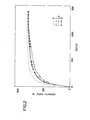
- Fig. 2 shows the body weight gain ((Weight on determination-Weight at the beginning of feeding)/Weight on determination) x 100 of rats given LEM or mDAB.
- C is a group fed with usual food and given 0.9% salt water
- L is a group fed with usual food and given LEM
- LD is a group fed with mDAB assorted food and given LEM
- D is a group fed with mDAB assorted food and given 0.9% salt water.
- the weight gains of the groups except Group C were lower than that of Group C by 5 to 15% in the feeding period of 100 to 150 days.
- the ratio of the liver weight to the body weight (%) in 41 weeks of feeding (287 days) was about 16% in Group D, 9% in Group LD, 4% in Group L and 3.5% in Group C (Table 4).
- the rate to depress the liver weight gain in Group LD to Group D ((the liver weight of Group D) - (the liver weight of Group LD) x I/the liver weight of Group D) was 14.0% in 23 weeks of feeding and 50.6% in 41 weeks (Table 5).
- the liver of Group L had a hue similar to that of Group C, but the liver of Group LD was dark brown in the period of 700mg/ kg administration, suggesting LEM accumulation in the liver.
- Rats were fed with mDAB assorted food for 10 weeks or 20 weeks and then LEM was given.
- the 50% survival rate was 209 days in the non-treated group (D), 260 days in the group given LEM after 20 weeks of feeding (DLE20), and 279 days in the group given LEM after 10 weeks of feeding (DLE10) (Fig. 3).
- Table 6 shows the proliferation of ascitic cells after LEM administration.
- the value is the average of 3 rats having the largest, the mean and the smallest body weights among 10 rats in the experiment which was repeated twice.
- the number of cells in 1 m£ of ascites was small in the LEM given group; the ratio to the non-treated group (AS) was 52% in the group given 50mg LEM (ASLE50), and 22% in the group given 100mg LEM (ASLE100).
- AS non-treated group
- ASLE100 the ratio obtained by multiplying the number of cells by the amount of ascites (the total number of cells) was small, and the ratio (%) was 58.3% in the ASLE50 group and 24.6% in the ASLE100 group.
- LAP which is a carcinostatic fraction of LEM is very soluble in water but not soluble in alcohol, and more than 80% of it consists of sugar and protein.
- AH141 cells derived from the liver cancer induced by 4-dimethylaminoazobenzene were subinoculated into Donryu male rats (140 % 150 grams) and used in this experiment.
- the number of cells per ml of ascites was smaller than that in the non-treated group (AS), and the ratio was 68% in the ASLA1 group and 46% in the ASLA2 group (Table 8).
- the value obtained by multiplying the number of cells by the volume of ascites was rather large in the ASLA1 group; it is due to the fact that ascites in this group was considerably greater than in the AS group.
- the results were obtained from the average values of three rats of the largest, the mean and the smallest body weights among 10 rats in a group in the twice-repeated experiment.
- the carcinostatic activity in the extract from fruit seed bodies of C.shiitake, Suehirotake, Kawaratake has been precisely and intensively studied, and the active component has now been analyzed.
- the active component of C.shiitake and Suehirotake is a branched polysaccharide having a main chain of ⁇ -1, 3-glucan, and the active component of Kawaratake is reported to be a protein polysaccharide.
- the inventors tried to analyze the active component of the fractions of LAP-1 and LAP-2 in expectation of finding polysaccharide but the result was an unexpected one.
- LAP-1 fraction is eluted at the position of void volume with Sepharose 6B and LAP-2 fraction at the position just prior to total-volume.
- these fractions are high-molecular weight ones and suggest strongly the presence of xyloglucan and more complicated polysaccharides. It is already known that polysaccharide fractions of bagasse and unifoliate plants such as bamboo have carcinostatic activity, and thus polysaccharide or polysuccharide protein mainly composed of xylose may be expected to have carcinostatic activity.
- polysaccharide fractions of bagasse and unifoliate plants such as bamboo have carcinostatic activity
- polysaccharide or polysuccharide protein mainly composed of xylose may be expected to have carcinostatic activity.
- the LAP-1 fraction shows a strong red-violet band from the base line; when staining with Cumasie Blue, the LAP-2 fraction gives 3 bands at the positions of 75000, 47000, and 32000 molecular weights.
- the carcinostatic activity can be supposed in the LAP-1 fraction as host-mediated activity and in the LAP-2 fraction as another cell-destroying activity. No cytotoxicity is observed in any of LAP, LAP-1 and LAP-2, and no detrimented side effects are observed, such as reduction of white blood cells, atrophy of the spleen and lack of appetite which are noted upon treatment with conventional anticancer drugs.
Landscapes
- Health & Medical Sciences (AREA)
- Life Sciences & Earth Sciences (AREA)
- Chemical & Material Sciences (AREA)
- Mycology (AREA)
- Natural Medicines & Medicinal Plants (AREA)
- Engineering & Computer Science (AREA)
- Organic Chemistry (AREA)
- General Health & Medical Sciences (AREA)
- Biotechnology (AREA)
- Zoology (AREA)
- Microbiology (AREA)
- Wood Science & Technology (AREA)
- Medicinal Chemistry (AREA)
- Genetics & Genomics (AREA)
- Biochemistry (AREA)
- Botany (AREA)
- Bioinformatics & Cheminformatics (AREA)
- Alternative & Traditional Medicine (AREA)
- Veterinary Medicine (AREA)
- Public Health (AREA)
- Animal Behavior & Ethology (AREA)
- Epidemiology (AREA)
- Pharmacology & Pharmacy (AREA)
- Medical Informatics (AREA)
- General Engineering & Computer Science (AREA)
- Chemical Kinetics & Catalysis (AREA)
- General Chemical & Material Sciences (AREA)
- Gastroenterology & Hepatology (AREA)
- Biophysics (AREA)
- Molecular Biology (AREA)
- Proteomics, Peptides & Aminoacids (AREA)
- Tropical Medicine & Parasitology (AREA)
- Virology (AREA)
- Biomedical Technology (AREA)
- Medicines Containing Plant Substances (AREA)
- Preparation Of Compounds By Using Micro-Organisms (AREA)
Applications Claiming Priority (2)
| Application Number | Priority Date | Filing Date | Title |
|---|---|---|---|
| JP214299/81 | 1981-12-29 | ||
| JP56214299A JPS58118519A (ja) | 1981-12-29 | 1981-12-29 | 抗がん剤 |
Publications (3)
| Publication Number | Publication Date |
|---|---|
| EP0088151A2 true EP0088151A2 (de) | 1983-09-14 |
| EP0088151A3 EP0088151A3 (en) | 1984-06-13 |
| EP0088151B1 EP0088151B1 (de) | 1990-12-27 |
Family
ID=16653428
Family Applications (1)
| Application Number | Title | Priority Date | Filing Date |
|---|---|---|---|
| EP82106507A Expired - Lifetime EP0088151B1 (de) | 1981-12-29 | 1982-07-19 | Arzneimittel mit Antikrebs-Wirkung |
Country Status (6)
| Country | Link |
|---|---|
| US (1) | US4461760A (de) |
| EP (1) | EP0088151B1 (de) |
| JP (1) | JPS58118519A (de) |
| KR (1) | KR850001938B1 (de) |
| CA (1) | CA1207669A (de) |
| DE (1) | DE3280287D1 (de) |
Cited By (3)
| Publication number | Priority date | Publication date | Assignee | Title |
|---|---|---|---|---|
| EP0154066A1 (de) * | 1984-03-06 | 1985-09-11 | NODA SHOKUKIN KOGYO KABUSHIKI KAISHA, also known as NODA SHOKUKIN KOGYO CO., LTD. | Immunoverstärker |
| EP0292601A1 (de) * | 1987-05-14 | 1988-11-30 | Noda Shokukin Kogyo Co., Ltd. | Aus Lentinus edodes extrahiertes Anti-AIDS-Arzneimittel |
| EP0370673A3 (en) * | 1988-11-14 | 1990-06-27 | Noda Shokukin Kogyo Co., Ltd. | Therapeutic agent for aids |
Families Citing this family (14)
| Publication number | Priority date | Publication date | Assignee | Title |
|---|---|---|---|---|
| JPH0714351B2 (ja) * | 1987-05-18 | 1995-02-22 | 野田食菌工業株式会社 | 菌糸体培養物から薬効成分を抽出する方法 |
| US5283239A (en) * | 1989-02-10 | 1994-02-01 | Jcr Pharmaceuticals Co. Ltd. | Inhibitor of herpesvirus absorption |
| WO1991006307A1 (en) * | 1989-11-03 | 1991-05-16 | Sun Alexander S | Herbal treatment of malignancy |
| JP3017630B2 (ja) * | 1993-12-17 | 2000-03-13 | 長岡 均 | Hiv型ウイルス活性阻害剤 |
| GB9808796D0 (en) * | 1998-04-24 | 1998-06-24 | Rowett Research Services Limit | Antithrombotic agents |
| TW200422049A (en) * | 1998-11-27 | 2004-11-01 | Kobayashi Seiyaku Kabushiki Kaisha | LAK activity potentiator orginating in shiitake mushroom hyphae extract and LAK activity potentiating preparations containing the same |
| JP2000159686A (ja) * | 1998-11-27 | 2000-06-13 | Kobayashi Pharmaceut Co Ltd | シイタケ菌糸体抽出物由来のlak活性増強用製剤 |
| EP1154022B1 (de) * | 1999-12-15 | 2010-10-13 | Amino Up Chemical Co. Ltd. | Aus basidiomyceten-kultur stammende substanz, verfahren zur herstellung derselben und deren anwendung |
| US6783771B2 (en) * | 2000-01-12 | 2004-08-31 | Life Science Laboratories Co., Ltd. | Physiologically active substance EEM-S originating in mushrooms, process for producing the same and drugs |
| US20030054047A1 (en) * | 2001-06-15 | 2003-03-20 | Sanjiu Medical & Pharmaceutical Co., Ltd. | Pharmaceutical composition for the treatment of viral infection |
| NO20014256D0 (no) | 2001-09-03 | 2001-09-03 | Bjoern Kristiansen | Fremstilling av immunstimulerende forbindelse |
| US7514085B2 (en) * | 2004-07-16 | 2009-04-07 | Medimush A/S | Immune modulating compounds from fungi |
| WO2006119774A1 (en) * | 2005-05-13 | 2006-11-16 | Medimush As | Feed or food products comprising fungal material |
| WO2006133707A2 (en) * | 2005-06-15 | 2006-12-21 | Medimush A/S | Anti-cancer combination treatment and kit-of-part |
Family Cites Families (3)
| Publication number | Priority date | Publication date | Assignee | Title |
|---|---|---|---|---|
| GB1356449A (en) * | 1970-12-30 | 1974-06-12 | Iizuka C | Process for extracting water soluble components of the hyphae of edible fungi |
| PH14773A (en) * | 1976-01-01 | 1981-12-09 | Kureha Chemical Ind Co Ltd | Protein-bound polysaccharides |
| JPS5943929B2 (ja) * | 1979-08-13 | 1984-10-25 | サッポロビール株式会社 | 多糖体rbs物質,その製法およびそれを有効成分とする抗腫瘍性剤 |
-
1981
- 1981-12-29 JP JP56214299A patent/JPS58118519A/ja active Pending
-
1982
- 1982-07-08 US US06/396,294 patent/US4461760A/en not_active Expired - Lifetime
- 1982-07-19 DE DE8282106507T patent/DE3280287D1/de not_active Expired - Lifetime
- 1982-07-19 EP EP82106507A patent/EP0088151B1/de not_active Expired - Lifetime
- 1982-08-25 CA CA000410136A patent/CA1207669A/en not_active Expired
- 1982-12-13 KR KR8205581A patent/KR850001938B1/ko not_active Expired
Cited By (3)
| Publication number | Priority date | Publication date | Assignee | Title |
|---|---|---|---|---|
| EP0154066A1 (de) * | 1984-03-06 | 1985-09-11 | NODA SHOKUKIN KOGYO KABUSHIKI KAISHA, also known as NODA SHOKUKIN KOGYO CO., LTD. | Immunoverstärker |
| EP0292601A1 (de) * | 1987-05-14 | 1988-11-30 | Noda Shokukin Kogyo Co., Ltd. | Aus Lentinus edodes extrahiertes Anti-AIDS-Arzneimittel |
| EP0370673A3 (en) * | 1988-11-14 | 1990-06-27 | Noda Shokukin Kogyo Co., Ltd. | Therapeutic agent for aids |
Also Published As
| Publication number | Publication date |
|---|---|
| KR850001938B1 (ko) | 1985-12-31 |
| US4461760A (en) | 1984-07-24 |
| DE3280287D1 (de) | 1991-02-07 |
| KR840002905A (ko) | 1984-07-21 |
| JPS58118519A (ja) | 1983-07-14 |
| CA1207669A (en) | 1986-07-15 |
| EP0088151B1 (de) | 1990-12-27 |
| EP0088151A3 (en) | 1984-06-13 |
Similar Documents
| Publication | Publication Date | Title |
|---|---|---|
| EP0088151B1 (de) | Arzneimittel mit Antikrebs-Wirkung | |
| Elbatrawy et al. | Medicinal mushroom extracts possess differential antioxidant activity and cytotoxicity to cancer cells | |
| Breene | Nutritional and medicinal value of specialty mushrooms | |
| Ajith et al. | Indian medicinal mushrooms as a source of antioxidant and antitumor agents | |
| Pleszczyńska et al. | Fomitopsis betulina (formerly Piptoporus betulinus): the Iceman’s polypore fungus with modern biotechnological potential | |
| US20240189376A1 (en) | Novel mushroom strains, extracts thereof and compositions comprising them | |
| Sugano et al. | Anticarcinogenic actions of water-soluble and alcohol-insoluble fractions from culture medium of Lentinus edodes mycelia | |
| JP2004514403A (ja) | 高等担子菌類キノコからの栄養補助剤としてのグルクロンオキシロマンナンの製造方法及びその組成物 | |
| US7258862B2 (en) | Mushroom extracts having anticancer activity | |
| Asatiani et al. | Higher basidiomycetes mushrooms as a source of antioxidants | |
| Umeo et al. | Screening of basidiomycetes in submerged cultivation based on antioxidant activity | |
| US4289688A (en) | Protein-bound polysaccharides | |
| Kopylchuk et al. | Comparison of total amino acid compositions, total phenolic compounds, total flavonoid content, β-carotene content and hydroxyl radical scavenging activity in four wild edible mushrooms | |
| Zhuang et al. | Medicinal Value of Culinary-Medicinal Maitake Mushroom Grifola frondosa (Dicks.: Fr.) SF Gray (Aphyllophoromycetideae). Review. | |
| CN1379082A (zh) | 樟芝的固体培养方法,所得固体培养物及其产品与用途 | |
| Salwan et al. | Recent developments in shiitake mushrooms and their nutraceutical importance | |
| Amin et al. | Role of medicinal mushroom Lentinula edodes in nutrition, Nutraceutics and Ethnopharmacology | |
| Srivastava et al. | Submerged cultivation and phytochemical analysis of medicinal mushrooms (Trametes sp.) | |
| Asatiani et al. | Antioxidant activity of submerged cultured mycelium extracts of higher Basidiomycetes mushrooms | |
| AU2006273203B2 (en) | Strain of turkey tail mushroom, extract from the same, and use of the same | |
| Aytar et al. | Antioxidant and antimicrobial activities of Armillaria mellea and Macrolepiota procera extracts | |
| KR100491362B1 (ko) | 면역 활성 증진 복합 다당체의 제조 방법 | |
| JP4102466B2 (ja) | 抗癌剤の副作用軽減剤 | |
| US20060078971A1 (en) | Isoflavone-beta-D-glucan produced by Agaricus blazei in the submerged liquid culture and method of producing same | |
| KR20020069269A (ko) | 담자균류 및 두릅나무과 추출물의 생리학적 활성 조성물 |
Legal Events
| Date | Code | Title | Description |
|---|---|---|---|
| PUAI | Public reference made under article 153(3) epc to a published international application that has entered the european phase |
Free format text: ORIGINAL CODE: 0009012 |
|
| 17P | Request for examination filed |
Effective date: 19820719 |
|
| AK | Designated contracting states |
Designated state(s): DE FR GB |
|
| PUAL | Search report despatched |
Free format text: ORIGINAL CODE: 0009013 |
|
| AK | Designated contracting states |
Designated state(s): DE FR GB |
|
| 17Q | First examination report despatched |
Effective date: 19860710 |
|
| GRAA | (expected) grant |
Free format text: ORIGINAL CODE: 0009210 |
|
| AK | Designated contracting states |
Kind code of ref document: B1 Designated state(s): DE FR GB |
|
| REF | Corresponds to: |
Ref document number: 3280287 Country of ref document: DE Date of ref document: 19910207 |
|
| ET | Fr: translation filed | ||
| PLBE | No opposition filed within time limit |
Free format text: ORIGINAL CODE: 0009261 |
|
| STAA | Information on the status of an ep patent application or granted ep patent |
Free format text: STATUS: NO OPPOSITION FILED WITHIN TIME LIMIT |
|
| 26N | No opposition filed | ||
| PGFP | Annual fee paid to national office [announced via postgrant information from national office to epo] |
Ref country code: GB Payment date: 20010622 Year of fee payment: 20 |
|
| PGFP | Annual fee paid to national office [announced via postgrant information from national office to epo] |
Ref country code: FR Payment date: 20010727 Year of fee payment: 20 |
|
| PGFP | Annual fee paid to national office [announced via postgrant information from national office to epo] |
Ref country code: DE Payment date: 20010731 Year of fee payment: 20 |
|
| REG | Reference to a national code |
Ref country code: GB Ref legal event code: IF02 |
|
| PG25 | Lapsed in a contracting state [announced via postgrant information from national office to epo] |
Ref country code: GB Free format text: LAPSE BECAUSE OF EXPIRATION OF PROTECTION Effective date: 20020718 |
|
| REG | Reference to a national code |
Ref country code: GB Ref legal event code: PE20 Effective date: 20020718 |