EP0089014B1 - Entraîneur cardiaque physiologique implantable dont la fréquence de stimulation est réglée par la fréquence respiratoire du patient - Google Patents
Entraîneur cardiaque physiologique implantable dont la fréquence de stimulation est réglée par la fréquence respiratoire du patient Download PDFInfo
- Publication number
- EP0089014B1 EP0089014B1 EP83102349A EP83102349A EP0089014B1 EP 0089014 B1 EP0089014 B1 EP 0089014B1 EP 83102349 A EP83102349 A EP 83102349A EP 83102349 A EP83102349 A EP 83102349A EP 0089014 B1 EP0089014 B1 EP 0089014B1
- Authority
- EP
- European Patent Office
- Prior art keywords
- signal
- pacemaker
- impedance
- fact
- patient
- Prior art date
- Legal status (The legal status is an assumption and is not a legal conclusion. Google has not performed a legal analysis and makes no representation as to the accuracy of the status listed.)
- Expired
Links
Images


Classifications
-
- A—HUMAN NECESSITIES
- A61—MEDICAL OR VETERINARY SCIENCE; HYGIENE
- A61B—DIAGNOSIS; SURGERY; IDENTIFICATION
- A61B5/00—Measuring for diagnostic purposes; Identification of persons
- A61B5/08—Measuring devices for evaluating the respiratory organs
- A61B5/085—Measuring impedance of respiratory organs or lung elasticity
- A61B5/086—Measuring impedance of respiratory organs or lung elasticity by impedance pneumography
-
- A—HUMAN NECESSITIES
- A61—MEDICAL OR VETERINARY SCIENCE; HYGIENE
- A61B—DIAGNOSIS; SURGERY; IDENTIFICATION
- A61B5/00—Measuring for diagnostic purposes; Identification of persons
- A61B5/08—Measuring devices for evaluating the respiratory organs
- A61B5/0816—Measuring devices for examining respiratory frequency
-
- A—HUMAN NECESSITIES
- A61—MEDICAL OR VETERINARY SCIENCE; HYGIENE
- A61N—ELECTROTHERAPY; MAGNETOTHERAPY; RADIATION THERAPY; ULTRASOUND THERAPY
- A61N1/00—Electrotherapy; Circuits therefor
- A61N1/18—Applying electric currents by contact electrodes
- A61N1/32—Applying electric currents by contact electrodes alternating or intermittent currents
- A61N1/36—Applying electric currents by contact electrodes alternating or intermittent currents for stimulation
- A61N1/362—Heart stimulators
- A61N1/365—Heart stimulators controlled by a physiological parameter, e.g. heart potential
- A61N1/36514—Heart stimulators controlled by a physiological parameter, e.g. heart potential controlled by a physiological quantity other than heart potential, e.g. blood pressure
- A61N1/36521—Heart stimulators controlled by a physiological parameter, e.g. heart potential controlled by a physiological quantity other than heart potential, e.g. blood pressure the parameter being derived from measurement of an electrical impedance
Definitions
- This invention concerns the type of artificial cardiac pacemakers to be implanted in the patient's body.
- pacemaker will substitute “artificial cardiac pacemaker” for the rest of this description, keeping in consideration that the above mentioned term is a registered trade-mark.
- the kind of pacemaker in which the ventricle's stimulation activity is driven and synchronized by the detection of the spontaneous bio-electrical atrial activity are commonly defined as physiological since the electrical impulses that effect the rate are not fixed but induced by the spontaneous atrial rate and are therefore always proportional to it.
- This kind of pacemaker can only be used in the cases in which the atrial activity can occur in a physiological manner and, therefore, it is only possible in 30 to 60% of the actual pacemaker wearer patients.
- the present invention proposes a heart pacemaker implantable in a patient, which comprises:
- the circuit that detects impedance variations in the human body is supplied with current impulses that are at a higher rate than those of the ventilation rate with the necessary intensity but of very short duration; for instance, impulses in which the relation between the width of each pulse and its period of repetition is approximately 1 to 1000.
- Programmable amplifiers in which it is possible to program the current drain are used in the circuit of such a pacemaker.
- a yet further problem to solve was that of realizing a highly reliable, simple, compact device that could easily be realized into an integrated circuit.
- the improved pacemaker which can be implanted according to the invention is essentially composed of:
- Z indicates the variable physiological impedance between leads 1 and 2.
- Unit 10 will pick up the Z impedance variations as measured with current pulses of constant intensity l o .
- the voltage l o ⁇ Z that exists during each impulse on thoracic impedance is supplied to the subsequent unit 20.
- This unit is the main innovation of the entire device. In this part the l o ⁇ Z variation is amplified and then compared with threshold levels V A and V B , the latter is programmable from the outside. After the comparison stage follows a decision stage in which it eliminates errors in detection and discriminates between substantial and less substantial respiratory acts.
- the unit 20 output is a signal V OUT at logic levels that produces a number of positive transitions equal to the number of substantial respiratory acts.
- Unit 30, that follows unit 20, must establish a linear relation, within a field of limited and preestablished values, between the number of positive transitions in the time unit of the said signal V OUT and, for instance, a current I CH charging the capacitor of a normal pacemaker 40 and determining its stimulation rate.
- unit 30 realizes the ventilation rate/current conversion so as to allow, along with unit 40, a relation ventilation rate VR/heart rate HR according to the curve chosen and programmed from the curves in Figure 3 (see further).
- Number 3 indicates the output from unit 40 that goes to the lead that stimulates the heart.
- Units 10-20-30 are driven by unit 50 that generates the A-C-D-K timing as will be described further on.
- the device can transmit information to the outside through unit 60.
- Unit 60 can transmit information regarding the ventilation acts through coil 61 towards the outside and by means of the coil 61 itself, when reed switch 62 is closed it is able to receive the programming signals coming from coil 63 and to send them to unit 70.
- Unit 64 is the magnet by means of which it is possible to close reed switch 62 when programming the pacemaker.
- the registers that allow the control of the general working conditions of the entire pacemaker and are protected by a coded identification device are located in unit 70.
- unit 70 includes the means for generating the threshold voltages V A and V B and the programming values R Y ⁇ R ⁇ ⁇ PC along with the H signal that, when sent to unit 50, is responsible for the inhibition of the entire circuit of detection and elaboration of the ventilation rate thus letting the pacemaker work at its fixed reference rate.
- Unit 50 is illustrated in Figure 4. It includes a twelve stage counter U4/A that fixes the periods To and T, at circa 120 ⁇ sec and 125 msec respectively. This can be seen in Figure 5 where Tx indicates the period of the oscillator OSC that drives the U4/A. Unit 50 also contains a Johnson counter joined to a monostable (Q9 output of U4/ B linked to a respective Clock) that creates the necessary phase relationship between signals A-C-D and K. Figure 5 shows the timing of outputs A-C-D and K when the H input, coming from the external programming stage, is low. When H is high the whole blocks itself and disconnects the detection of the ventilation act (see further). V s indicates the supply voltage of the pacemaker that is represented by a negative sign since it is normally the positive pole of the battery that is connected to ground M.
- a current impulse l o for instance, of constant intensity, width of 120 psec, and period of 125 msec, is applied to the physiological load Z that varies during time.
- the current l o generator is made up of TS1 ⁇ R4 ⁇ D1 ⁇ D2 ⁇ R3 and is driven by signal A with the characteristics as shown in Figure 5.
- the TS2 switch controlled by A short circuits it when the current generator is off and therefore when A is low.
- the resistor R5 placed in series with Z and with the decoupling capacitor C 2 has the task of translating the level of the voltage peaks originating from Z in order to bring them to levels which will make them easily manageable by the subsequent components.
- the TS3 switch is closed when the current impulse l o is present, that is, when A becomes high and makes the bias current Ip oL of the operational amplifiers U1/A, U1/B and U1/C ( Figure 7) go from a very low rest value (circa 0,4 uA) to a much higher value (circa 40 pA) in order to assure a fast slew rate of these components during the active phase of measurement of impedance Z and elaboration of the value detected.
- a voltage V x formed by very short impulses comes from the circuit in Figure 6; it varies in amplitude accoridng to the ventilation rate of the patient.
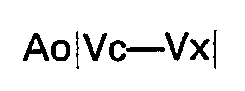
- V H the capacitor Ci reaches a voltage V c slightly superior to the V x peak.
- VH A o -
- the envelope of the V H impulse peaks has a V A average value and profile similar to that of the envelope of V x peaks.
- the voltage V A for example, is chosen with the approximate value of V s /2.
- the output Q 3 becomes low and therefore when the buffer Q 3 , opens there is a slight decrease in the absolute value of V c which tends to reduce the V H peak.
- V H peak does not exceed the V A threshold the V j signal remains low and the output Q 3 is high since the U2/C bistable was previously set by D. In these conditions, when Q 3 , opens, the absolute value of V c increases and it will tend to increase the V H peak.
- V H of the V H peak is none other than the V x envelope multiplied by A o and centered on V A . This holds true for rather rapid variations so that V c will not vary perceptibly. This condition can be obtained by adopting a sufficiently high R1 ⁇ C1 time constant. This part of the circuit obtains the automatic adjustment of the device to the slow basic impedance variations and a signal V j indicates when the rapid variations of the Z impedance are of a certain consistency and therefore can be attributed to a possible evolution of a respiratory act.
- Figure 7 also shows that through the operational amplifier U1/B the signal V H is also compared with a voltage threshold V B with a higher value than V A and therefore the output V K of U1/B signals the presence of variations of Z superior to the Z threshold value In the presence of such high variations, V K , by means of U2/A and the buffer Q1' will set the flip-flop composed of U3/A-U3/B.
- the reset situation of said device can only be reached when the V H peak goes under the threshold V A or when, with a high C, there are no positive impulses at the output Q2 of U2/B.
- the circuit described therefore introduces a sort of hysteresis with a variable width, varying V B in regards to V A , that has a double aim: eliminate improper transitions due to noise, and create a sensitivity control that can descriminate between more or less consistent variations of the impedance Z.
- the connections of points X-Y and the resulting connection in parallel of low value R2 resistor to R1 is controlled by the programming circuit from the outside, as will be described further, so that the V c will rapidly reach the necessary values.
- the output signal V OUT from the circuit in Figure 7, as can be seen in Figure 8, has the same number of positive transitions as the number of respiratory acts and represents the patient's ventilation rate.
- Figure 9 illustrates an example of the possible use of the V our signal to construct a physiological pacemaker as explained in the introduction of this paper.
- the signal V OUT enters in U5/A and becomes correlated to the number of falling edges of the K signal that forms the U5/A clock, the latter is a monostable and for each falling edge of V OUT an impulse of approximately 1 msec is present at the output Q2.
- the output Q2 drives TS4 that terminates into the Ru-Cu integrator whose average voltage drives the TS5 base.
- the current I CH charges the capacitor of the oscillator of the pacemaker's circuit thus determining a linear stimulation rate (see further).
- Unit 60 as shown in Figure 10, allows the communication of the system with the outside.
- read switch 62 When read switch 62 is open the information regarding the respiratory act is sent to the outside by a train of 20 ⁇ sec pulses with a 125 msec period between each impulse, when V OUT is high. This is obtained by sampling the V our signal through signal D and associating, at each falling edge of the sampled signal, a 20 ⁇ sec pulse that charges the coil 61.
- This impulse is generated by a monostable circuit made up of TS8-TS9 R8-R9-R10-CX and triggered by the TS10 ⁇ CY ⁇ R11. In the condition considered above the outputs S and T are kept high (see further).
- each suitable variation of the magnetic flux induced from the outside on coil 61 starts a monostable cycle and there is a 20 ⁇ sec impulse on R9.
- a train of external magnetic impulses with an inferior or equal (20 ⁇ sec) duration starts off a similar train of impulses at output T also having a 20 ⁇ sec duration.
- output S are low.
- Unit 70 makes reference to Figure 11. As already observed in Figure 10, the impulses received from the outside are present in output T while S is low.
- the circuit in Figure 11 can set some of the devices parameters through the number of impulses coming from the outside.
- This portion of the circuit can generate the voltage V A which is equal to V s /2 as mentioned before; it can generate the variable V B threshold value through U7 and TS; it establishes the load between points y and 6 and therefore, along with the output PC, gives the possibility of selecting 16 different operative conditions of stage 30; it can activate the switch located between X and Y creating the FS conditions, a rapid start of the circuit that detects the ventilation rate, and lastly can also exclude this function with a high H.
- unit 70 includes a protection for the information received. In order to program the pacemaker reed switch 62 must be closed and programming impulses must be preceded by an eight impulse key code.
- the counter U6/A reads the keycode and activates the FS function by means of U8 when the second key-code impulse is received and Q1 goes high.
- the external magnet 64 Figure 2
- reed switch 62 opens while S goes high and Q1 goes low, this will determine the end of FS.
- the output Q3 goes high when the eighth key-code impulse is received and read switch 62 is closed for programming.
- the counter U6/A stops and the impulses T are switched to the counters U6/B, U6/ C. The number of the impulses which is higher than that of the key-codes, will determine the output state of said U6/B and U6/C combination.
- FIG. 12 illustrates unit 40 that, in this example, corresponds to a demand heart pacemaker.
- Output 3 goes to the heart.
- the stimulation signals are sent and the EKG signals are received by this terminal.
- the latter filtered from R16 ⁇ C3 ⁇ C4 ⁇ R17, is amplified by T1 and T2 and sent to the circuit, made up of T3-T4-T5 and relative connected components, that creates the functions that form the refractory period after each stimulation impulse and that reject external interference.
- T5 each EKG signal received discharges the capacitor C5. If heart signals are absent C5 will be charged by I CH and when the threshold which is determined by R18-R19 is reached T6 will discharge it in a short time which is determined by C6-R20. This is the width of the stimulation impulse.
- the impulse rate is therefore controlled by I CH -T7-C7-R21 that determines the maximum rate value that can be reached, indicated in Figure 3 by HR L -
- the stimulation impulse amplitude is duplicated by T8-T9 and sent to the heart by C8. It is to be understood that the various V A , V B and other currents were considered in their absolute value without indicating the negative sign that in reality marks them.
Landscapes
- Health & Medical Sciences (AREA)
- Life Sciences & Earth Sciences (AREA)
- Pulmonology (AREA)
- Heart & Thoracic Surgery (AREA)
- Public Health (AREA)
- Cardiology (AREA)
- Biophysics (AREA)
- Engineering & Computer Science (AREA)
- Biomedical Technology (AREA)
- Veterinary Medicine (AREA)
- Physiology (AREA)
- General Health & Medical Sciences (AREA)
- Animal Behavior & Ethology (AREA)
- Surgery (AREA)
- Molecular Biology (AREA)
- Medical Informatics (AREA)
- Physics & Mathematics (AREA)
- Pathology (AREA)
- Hematology (AREA)
- Nuclear Medicine, Radiotherapy & Molecular Imaging (AREA)
- Radiology & Medical Imaging (AREA)
- Electrotherapy Devices (AREA)
Claims (22)
Priority Applications (1)
| Application Number | Priority Date | Filing Date | Title |
|---|---|---|---|
| AT83102349T ATE34303T1 (de) | 1982-03-16 | 1983-03-10 | Physiologischer implantierbarer herzschrittmacher dessen stimulationsfrequenz durch die atemfrequenz des patienten geregelt wird. |
Applications Claiming Priority (2)
| Application Number | Priority Date | Filing Date | Title |
|---|---|---|---|
| IT03369/82A IT1156564B (it) | 1982-03-16 | 1982-03-16 | Elettrostimolatore cardiaco impiantabile, di tipo fisiologico, in cui la frequenza di stimolazione e'regolata dalla frequenza respiratoria del paziente |
| IT336982 | 1982-03-16 |
Publications (3)
| Publication Number | Publication Date |
|---|---|
| EP0089014A2 EP0089014A2 (fr) | 1983-09-21 |
| EP0089014A3 EP0089014A3 (en) | 1984-12-05 |
| EP0089014B1 true EP0089014B1 (fr) | 1988-05-18 |
Family
ID=11105833
Family Applications (1)
| Application Number | Title | Priority Date | Filing Date |
|---|---|---|---|
| EP83102349A Expired EP0089014B1 (fr) | 1982-03-16 | 1983-03-10 | Entraîneur cardiaque physiologique implantable dont la fréquence de stimulation est réglée par la fréquence respiratoire du patient |
Country Status (5)
| Country | Link |
|---|---|
| US (1) | US4567892A (fr) |
| EP (1) | EP0089014B1 (fr) |
| AT (1) | ATE34303T1 (fr) |
| DE (1) | DE3376625D1 (fr) |
| IT (1) | IT1156564B (fr) |
Cited By (1)
| Publication number | Priority date | Publication date | Assignee | Title |
|---|---|---|---|---|
| US7133718B2 (en) | 2003-06-19 | 2006-11-07 | Medtronic, Inc. | Method and apparatus for temporarily varying a parameter in an implantable medical device |
Families Citing this family (122)
| Publication number | Priority date | Publication date | Assignee | Title |
|---|---|---|---|---|
| DE3428975A1 (de) * | 1984-08-06 | 1986-02-13 | Michael S. 8113 Kochel Lampadius | Atmungsgesteuerter herzschrittmacher |
| DE3688577D1 (de) * | 1985-09-17 | 1993-07-22 | Biotronik Mess & Therapieg | Herzschrittmacher. |
| DE3687388D1 (de) * | 1985-09-17 | 1993-02-11 | Biotronik Mess & Therapieg | Herzschrittmacher. |
| EP0216725B1 (fr) * | 1985-09-17 | 1993-12-01 | BIOTRONIK Mess- und Therapiegeräte GmbH & Co Ingenieurbüro Berlin | Stimulateur cardiaque |
| DE3535534A1 (de) * | 1985-10-04 | 1987-04-09 | Siemens Ag | Herzschrittmacher |
| US4702253A (en) * | 1985-10-15 | 1987-10-27 | Telectronics N.V. | Metabolic-demand pacemaker and method of using the same to determine minute volume |
| DE3545359A1 (de) * | 1985-12-20 | 1987-06-25 | Siemens Ag | Herzschrittmacher |
| US4770177A (en) * | 1986-02-18 | 1988-09-13 | Telectronics N.V. | Apparatus and method for adjusting heart/pacer relative to changes in venous diameter during exercise to obtain a required cardiac output. |
| US4741341A (en) * | 1986-03-12 | 1988-05-03 | Siemens-Pacesetter, Inc. | Protection circuit and method for implanted ECG telemetry circuits |
| EP0249823B1 (fr) * | 1986-06-16 | 1991-12-18 | Pacesetter AB | Dispositif pour le contrôle d'un stimulateur cardiaque intracorporel utilisant la mesure de l'impedance de tissus corporels |
| US4790318A (en) * | 1986-06-16 | 1988-12-13 | Siemens Aktiengesellschaft | Cardiac pacer for pacing a human heart |
| US4730618A (en) | 1986-06-16 | 1988-03-15 | Siemens Aktiengesellschaft | Cardiac pacer for pacing a human heart and pacing method |
| US4697591A (en) * | 1986-06-16 | 1987-10-06 | Siemens Aktiengesellschaft | Cardiac pacer for pacing a human heart and pacing method |
| US4776338A (en) * | 1986-06-16 | 1988-10-11 | Siemens Aktiengesellschaft | Cardiac pacer for pacing a human heart and pacing method |
| US4733667A (en) * | 1986-08-11 | 1988-03-29 | Cardiac Pacemakers, Inc. | Closed loop control of cardiac stimulator utilizing rate of change of impedance |
| US4771780A (en) * | 1987-01-15 | 1988-09-20 | Siemens-Pacesetter, Inc. | Rate-responsive pacemaker having digital motion sensor |
| US5010893A (en) * | 1987-01-15 | 1991-04-30 | Siemens-Pacesetter, Inc. | Motion sensor for implanted medical device |
| US4858611A (en) * | 1987-06-03 | 1989-08-22 | Dimed, Inc. | Sensing system and method for sensing minute ventilation |
| US4791931A (en) * | 1987-08-13 | 1988-12-20 | Pacesetter Infusion, Ltd. | Demand pacemaker using an artificial baroreceptor reflex |
| DE3732640C1 (de) * | 1987-09-28 | 1989-05-18 | Alt Eckhard | Medizinisches Geraet zum Ermitteln von physiologischen Funktionsparametern |
| US4817606A (en) * | 1987-11-24 | 1989-04-04 | Siemens Aktiengesellschaft | Body activity controlled heart pacer |
| US4886064A (en) * | 1987-11-25 | 1989-12-12 | Siemens Aktiengesellschaft | Body activity controlled heart pacer |
| GB2214813A (en) * | 1988-01-14 | 1989-09-13 | Stuart Charles Webb | Rate-responsive pacemaker |
| US4901725A (en) * | 1988-01-29 | 1990-02-20 | Telectronics N.V. | Minute volume rate-responsive pacemaker |
| GB2216011B (en) * | 1988-02-17 | 1990-02-28 | Stuart Charles Webb | Rate-responsive pacemaker |
| US5040535A (en) * | 1989-01-25 | 1991-08-20 | Siemens-Pacesetter, Inc. | Average amplitude controlled rate-responsive pacemaker having automatically adjustable control parameters |
| US4940053A (en) * | 1989-01-25 | 1990-07-10 | Siemens-Pacesetter, Inc. | Energy controlled rate-responsive pacemaker having automatically adjustable control parameters |
| US5040534A (en) * | 1989-01-25 | 1991-08-20 | Siemens-Pacesetter, Inc. | Microprocessor controlled rate-responsive pacemaker having automatic rate response threshold adjustment |
| CA2033765C (fr) * | 1990-03-08 | 1999-10-19 | Brian D. Pederson | Variation de volume ou de pression dans les cavites du coeur comme parametre de controle |
| US5284136A (en) * | 1990-04-04 | 1994-02-08 | Cardiac Pacemakers, Inc. | Dual indifferent electrode pacemaker |
| US5036849A (en) * | 1990-04-04 | 1991-08-06 | Cardiac Pacemakers, Inc. | Variable rate cardiac pacer |
| US5058583A (en) * | 1990-07-13 | 1991-10-22 | Geddes Leslie A | Multiple monopolar system and method of measuring stroke volume of the heart |
| US5201808A (en) * | 1992-02-10 | 1993-04-13 | Telectronics Pacing Systems, Inc. | Minute volume rate-responsive pacemaker employing impedance sensing on a unipolar lead |
| US5197467A (en) * | 1992-06-22 | 1993-03-30 | Telectronics Pacing Systems, Inc. | Multiple parameter rate-responsive cardiac stimulation apparatus |
| JPH11506380A (ja) * | 1996-03-28 | 1999-06-08 | メドトロニック・インコーポレーテッド | カテーテル/リード本体を通って伝達した圧力波を検出するためのシステム |
| US6662049B1 (en) | 1997-12-17 | 2003-12-09 | Pacesetter, Inc. | Implantable device with a programmable reset mode and method of operation |
| DE19940952A1 (de) * | 1999-08-20 | 2001-02-22 | Biotronik Mess & Therapieg | Ratenadaptiver Herzschrittmacher |
| US6454719B1 (en) * | 2000-08-01 | 2002-09-24 | Pacesetter, Inc. | Apparatus and method for diagnosis of cardiac disease using a respiration monitor |
| US7191000B2 (en) * | 2001-07-31 | 2007-03-13 | Cardiac Pacemakers, Inc. | Cardiac rhythm management system for edema |
| US7226422B2 (en) * | 2002-10-09 | 2007-06-05 | Cardiac Pacemakers, Inc. | Detection of congestion from monitoring patient response to a recumbent position |
| FR2868323B1 (fr) * | 2004-04-05 | 2006-06-02 | Ela Medical Sa | Dispositif medical implantable actif pourvu de moyens de diagnostic de troubles respiratoires, a detection perfectionnee des cycles respiratoires artefactes |
| US20080287754A1 (en) * | 2004-05-28 | 2008-11-20 | Wen Jea Whan | System for Processing Decaying Periodic Physiological Signals |
| US7387610B2 (en) | 2004-08-19 | 2008-06-17 | Cardiac Pacemakers, Inc. | Thoracic impedance detection with blood resistivity compensation |
| US8024029B2 (en) * | 2004-11-02 | 2011-09-20 | Medtronic, Inc. | Techniques for user-activated data retention in an implantable medical device |
| US10111613B2 (en) * | 2004-11-02 | 2018-10-30 | Medtronic, Inc. | Methods for data retention in an implantable medical device |
| US7917199B2 (en) * | 2004-11-02 | 2011-03-29 | Medtronic, Inc. | Patient event marking in combination with physiological signals |
| US8768446B2 (en) * | 2004-11-02 | 2014-07-01 | Medtronic, Inc. | Clustering with combined physiological signals |
| US8112148B2 (en) * | 2004-12-17 | 2012-02-07 | Medtronic, Inc. | System and method for monitoring cardiac signal activity in patients with nervous system disorders |
| US8209009B2 (en) * | 2004-12-17 | 2012-06-26 | Medtronic, Inc. | System and method for segmenting a cardiac signal based on brain stimulation |
| US8112153B2 (en) * | 2004-12-17 | 2012-02-07 | Medtronic, Inc. | System and method for monitoring or treating nervous system disorders |
| US20070239060A1 (en) * | 2004-12-17 | 2007-10-11 | Medtronic, Inc. | System and method for regulating cardiac triggered therapy to the brain |
| US8214035B2 (en) | 2004-12-17 | 2012-07-03 | Medtronic, Inc. | System and method for utilizing brain state information to modulate cardiac therapy |
| US20070239230A1 (en) * | 2004-12-17 | 2007-10-11 | Medtronic, Inc. | System and method for regulating cardiac triggered therapy to the brain |
| US8209019B2 (en) * | 2004-12-17 | 2012-06-26 | Medtronic, Inc. | System and method for utilizing brain state information to modulate cardiac therapy |
| US8108038B2 (en) * | 2004-12-17 | 2012-01-31 | Medtronic, Inc. | System and method for segmenting a cardiac signal based on brain activity |
| US8108046B2 (en) * | 2004-12-17 | 2012-01-31 | Medtronic, Inc. | System and method for using cardiac events to trigger therapy for treating nervous system disorders |
| EP1833557B1 (fr) * | 2004-12-17 | 2011-01-19 | Medtronic, Inc. | Systeme de surveillance ou de traitement des troubles du systeme nerveux |
| US8485979B2 (en) * | 2004-12-17 | 2013-07-16 | Medtronic, Inc. | System and method for monitoring or treating nervous system disorders |
| US7603170B2 (en) * | 2005-04-26 | 2009-10-13 | Cardiac Pacemakers, Inc. | Calibration of impedance monitoring of respiratory volumes using thoracic D.C. impedance |
| US9089275B2 (en) * | 2005-05-11 | 2015-07-28 | Cardiac Pacemakers, Inc. | Sensitivity and specificity of pulmonary edema detection when using transthoracic impedance |
| US7907997B2 (en) * | 2005-05-11 | 2011-03-15 | Cardiac Pacemakers, Inc. | Enhancements to the detection of pulmonary edema when using transthoracic impedance |
| US7340296B2 (en) | 2005-05-18 | 2008-03-04 | Cardiac Pacemakers, Inc. | Detection of pleural effusion using transthoracic impedance |
| US8900154B2 (en) | 2005-05-24 | 2014-12-02 | Cardiac Pacemakers, Inc. | Prediction of thoracic fluid accumulation |
| US7644714B2 (en) * | 2005-05-27 | 2010-01-12 | Apnex Medical, Inc. | Devices and methods for treating sleep disorders |
| US8478399B2 (en) * | 2006-01-31 | 2013-07-02 | Paul J. Degroot | Method and apparatus for controlling arrhythmia detection and treatment based on patient posture |
| US7894894B2 (en) | 2006-03-29 | 2011-02-22 | Medtronic, Inc. | Method and apparatus for detecting arrhythmias in a subcutaneous medical device |
| US7941214B2 (en) * | 2006-03-29 | 2011-05-10 | Medtronic, Inc. | Method and apparatus for detecting arrhythmias in a subcutaneous medical device |
| US7761150B2 (en) * | 2006-03-29 | 2010-07-20 | Medtronic, Inc. | Method and apparatus for detecting arrhythmias in a medical device |
| US7991471B2 (en) * | 2006-03-29 | 2011-08-02 | Medtronic, Inc. | Method and apparatus for detecting arrhythmias in a subcutaneous medical device |
| US7496409B2 (en) * | 2006-03-29 | 2009-02-24 | Medtronic, Inc. | Implantable medical device system and method with signal quality monitoring and response |
| US7962202B2 (en) * | 2006-03-31 | 2011-06-14 | Medtronic, Inc. | Method and apparatus for verifying a determined cardiac event in a medical device based on detected variation in hemodynamic status |
| US7647095B2 (en) * | 2006-03-31 | 2010-01-12 | Medtronic, Inc. | Method and apparatus for verifying a determined cardiac event in a medical device based on detected variation in hemodynamic status |
| US7610083B2 (en) * | 2006-04-27 | 2009-10-27 | Medtronic, Inc. | Method and system for loop recording with overlapping events |
| US7764988B2 (en) | 2006-04-27 | 2010-07-27 | Medtronic, Inc. | Flexible memory management scheme for loop recording in an implantable device |
| US7359837B2 (en) * | 2006-04-27 | 2008-04-15 | Medtronic, Inc. | Peak data retention of signal data in an implantable medical device |
| US8855771B2 (en) | 2011-01-28 | 2014-10-07 | Cyberonics, Inc. | Screening devices and methods for obstructive sleep apnea therapy |
| US9913982B2 (en) | 2011-01-28 | 2018-03-13 | Cyberonics, Inc. | Obstructive sleep apnea treatment devices, systems and methods |
| US9205262B2 (en) | 2011-05-12 | 2015-12-08 | Cyberonics, Inc. | Devices and methods for sleep apnea treatment |
| US9744354B2 (en) * | 2008-12-31 | 2017-08-29 | Cyberonics, Inc. | Obstructive sleep apnea treatment devices, systems and methods |
| EP3527255B1 (fr) * | 2006-10-13 | 2020-08-05 | Cyberonics, Inc. | Dispositifs et systèmes pour le traitement du syndrome d'apnée obstructive du sommeil |
| US9186511B2 (en) | 2006-10-13 | 2015-11-17 | Cyberonics, Inc. | Obstructive sleep apnea treatment devices, systems and methods |
| WO2008106612A1 (fr) | 2007-02-28 | 2008-09-04 | Medtronic, Inc. | Système implantable et procédé de détection de l'irrigation des tissus |
| US8000788B2 (en) * | 2007-04-27 | 2011-08-16 | Medtronic, Inc. | Implantable medical device for treating neurological conditions including ECG sensing |
| US8095206B2 (en) * | 2007-05-01 | 2012-01-10 | Medtronic, Inc. | Method and apparatus for detecting arrhythmias in a medical device |
| US7774049B2 (en) * | 2007-05-01 | 2010-08-10 | Medtronic, Inc. | Method and apparatus for determining oversensing in a medical device |
| US8068901B2 (en) * | 2007-05-01 | 2011-11-29 | Medtronic, Inc. | Method and apparatus for adjusting a sensing parameter |
| US7937135B2 (en) * | 2007-05-01 | 2011-05-03 | Medtronic, Inc. | Method and apparatus for adjusting a sensing parameter |
| US20090275998A1 (en) | 2008-04-30 | 2009-11-05 | Medtronic, Inc. | Extra-cardiac implantable device with fusion pacing capability |
| AU2009246179A1 (en) | 2008-05-15 | 2009-11-19 | Inspire Medical Systems, Inc. | Method and apparatus for sensing respiratory pressure in an implantable stimulation system |
| JP5547200B2 (ja) * | 2008-10-01 | 2014-07-09 | インスパイア・メディカル・システムズ・インコーポレイテッド | 睡眠時無呼吸を治療する経静脈法 |
| EP2184011A1 (fr) * | 2008-11-06 | 2010-05-12 | Ela Medical | Dispositif médical de type prothèse cardiaque implantable, intégrant des moyens spirométriques pour le diagnostic de pathologies pulmonaires |
| WO2010059839A2 (fr) | 2008-11-19 | 2010-05-27 | Inspire Medical Systems, Inc. | Procédé de traitement de troubles respiratoires du sommeil |
| JP2012521864A (ja) | 2009-03-31 | 2012-09-20 | インスパイア・メディカル・システムズ・インコーポレイテッド | 睡眠に関連する異常呼吸を処置するシステムにおける経皮的アクセス方法 |
| US8463346B2 (en) * | 2009-06-10 | 2013-06-11 | Medtronic, Inc. | Absolute calibrated tissue oxygen saturation and total hemoglobin volume fraction |
| WO2010144668A1 (fr) * | 2009-06-10 | 2010-12-16 | Medtronic, Inc. | Surveillance de l'oxygénation des tissus en cas de défaillance cardiaque |
| US9126049B2 (en) * | 2009-06-10 | 2015-09-08 | Medtronic, Inc. | Shock reduction using absolute calibrated tissue oxygen saturation and total hemoglobin volume fraction |
| WO2010144670A1 (fr) * | 2009-06-10 | 2010-12-16 | Medtronic, Inc. | Dispositif et méthode de surveillance de la saturation en oxygène absolue et de la concentration d'hémoglobine dans un tissu |
| US8352008B2 (en) * | 2009-06-10 | 2013-01-08 | Medtronic, Inc. | Active noise cancellation in an optical sensor signal |
| US20110066017A1 (en) * | 2009-09-11 | 2011-03-17 | Medtronic, Inc. | Method and apparatus for post-shock evaluation using tissue oxygenation measurements |
| US8467870B2 (en) | 2011-05-09 | 2013-06-18 | Medtronic, Inc. | Techniques for modifying breathing rate using cardiac pacing |
| US8483833B2 (en) | 2011-05-09 | 2013-07-09 | Medtronic, Inc. | Techniques for modifying breathing rate using cardiac pacing |
| JP6092212B2 (ja) | 2011-08-11 | 2017-03-08 | インスパイア・メディカル・システムズ・インコーポレイテッドInspire Medical Systems, Inc. | 呼吸努力の検知結果に基づいて刺激プロトコルを選択するためのシステム |
| US8934992B2 (en) | 2011-09-01 | 2015-01-13 | Inspire Medical Systems, Inc. | Nerve cuff |
| US9403016B2 (en) | 2012-03-27 | 2016-08-02 | The University Of Vermont And State Agricultural College | Cardiac pacemaker and uses thereof |
| US11383083B2 (en) | 2014-02-11 | 2022-07-12 | Livanova Usa, Inc. | Systems and methods of detecting and treating obstructive sleep apnea |
| US10376705B2 (en) | 2014-04-01 | 2019-08-13 | Medtronic, Inc. | Method and apparatus for discriminating tachycardia events in a medical device |
| US9526908B2 (en) | 2014-04-01 | 2016-12-27 | Medtronic, Inc. | Method and apparatus for discriminating tachycardia events in a medical device |
| CN106132481B (zh) | 2014-04-01 | 2020-01-10 | 美敦力公司 | 用于在医疗设备中辨别心动过速事件的方法和装置 |
| US9808640B2 (en) | 2014-04-10 | 2017-11-07 | Medtronic, Inc. | Method and apparatus for discriminating tachycardia events in a medical device using two sensing vectors |
| US9352165B2 (en) | 2014-04-17 | 2016-05-31 | Medtronic, Inc. | Method and apparatus for verifying discriminating of tachycardia events in a medical device having dual sensing vectors |
| US10244957B2 (en) | 2014-04-24 | 2019-04-02 | Medtronic, Inc. | Method and apparatus for selecting a sensing vector configuration in a medical device |
| US10252067B2 (en) | 2014-04-24 | 2019-04-09 | Medtronic, Inc. | Method and apparatus for adjusting a blanking period during transitioning between operating states in a medical device |
| US9795312B2 (en) | 2014-04-24 | 2017-10-24 | Medtronic, Inc. | Method and apparatus for adjusting a blanking period for selecting a sensing vector configuration in a medical device |
| US10278601B2 (en) | 2014-04-24 | 2019-05-07 | Medtronic, Inc. | Method and apparatus for selecting a sensing vector configuration in a medical device |
| CN106456977B (zh) | 2014-04-24 | 2019-04-09 | 美敦力公司 | 用于在医疗设备中选择感测向量配置的方法和装置 |
| US9610025B2 (en) | 2014-07-01 | 2017-04-04 | Medtronic, Inc. | Method and apparatus for verifying discriminating of tachycardia events in a medical device having dual sensing vectors |
| WO2016118693A1 (fr) | 2015-01-23 | 2016-07-28 | Medtronic, Inc. | Procédé et appareil d'acquisition de battements pendant la génération d'un modèle dans un dispositif médical ayant deux vecteurs de détection |
| JP6759227B2 (ja) | 2015-03-19 | 2020-09-23 | インスパイア・メディカル・システムズ・インコーポレイテッドInspire Medical Systems, Inc. | 閉塞性睡眠時無呼吸を治療する刺激 |
| AU2018316277B2 (en) | 2017-08-11 | 2023-12-07 | Inspire Medical Systems, Inc. | Cuff electrode |
| CN112292178A (zh) | 2018-06-14 | 2021-01-29 | 美敦力公司 | 用于心脏重塑的心脏起搏治疗的递送 |
| GB2586987B (en) | 2019-09-10 | 2023-09-20 | Ceryx Medical Ltd | Pacemaker Device |
| US12508428B2 (en) | 2023-01-26 | 2025-12-30 | Medtronic, Inc. | Respiratory-based cardiac remodeling pacing therapy |
Family Cites Families (10)
| Publication number | Priority date | Publication date | Assignee | Title |
|---|---|---|---|---|
| US3593718A (en) * | 1967-07-13 | 1971-07-20 | Biocybernetics Inc | Physiologically controlled cardiac pacer |
| US3802419A (en) * | 1972-04-11 | 1974-04-09 | Us Air Force | Respiration monitor |
| SU683722A1 (ru) * | 1976-09-06 | 1979-09-05 | Московский Ордена Трудового Красного Знамени Инженерно-Физический Институт | Устройство дл контрол стимул ции сердца |
| US4291699A (en) * | 1978-09-21 | 1981-09-29 | Purdue Research Foundation | Method of and apparatus for automatically detecting and treating ventricular fibrillation |
| US4267843A (en) * | 1978-11-06 | 1981-05-19 | Medtronic, Inc. | Means to inhibit a digital cardiac pacemaker |
| US4310000A (en) * | 1980-01-23 | 1982-01-12 | Medtronic, Inc. | Implantable pulse generator having separate passive sensing reference electrode |
| US4303075A (en) * | 1980-02-11 | 1981-12-01 | Mieczyslaw Mirowski | Method and apparatus for maximizing stroke volume through atrioventricular pacing using implanted cardioverter/pacer |
| US4344437A (en) * | 1980-04-30 | 1982-08-17 | Medtronic, Inc. | Pacemaker triggering coupling circuit |
| US4466440A (en) * | 1981-11-12 | 1984-08-21 | Telectronics Pty. Ltd. | Heart pacer time-domain processing of internal physiological signals |
| US4428378A (en) * | 1981-11-19 | 1984-01-31 | Medtronic, Inc. | Rate adaptive pacer |
-
1982
- 1982-03-16 IT IT03369/82A patent/IT1156564B/it active
-
1983
- 1983-03-10 US US06/474,241 patent/US4567892A/en not_active Expired - Lifetime
- 1983-03-10 AT AT83102349T patent/ATE34303T1/de not_active IP Right Cessation
- 1983-03-10 DE DE8383102349T patent/DE3376625D1/de not_active Expired
- 1983-03-10 EP EP83102349A patent/EP0089014B1/fr not_active Expired
Cited By (1)
| Publication number | Priority date | Publication date | Assignee | Title |
|---|---|---|---|---|
| US7133718B2 (en) | 2003-06-19 | 2006-11-07 | Medtronic, Inc. | Method and apparatus for temporarily varying a parameter in an implantable medical device |
Also Published As
| Publication number | Publication date |
|---|---|
| EP0089014A2 (fr) | 1983-09-21 |
| ATE34303T1 (de) | 1988-06-15 |
| US4567892A (en) | 1986-02-04 |
| EP0089014A3 (en) | 1984-12-05 |
| IT1156564B (it) | 1987-02-04 |
| DE3376625D1 (en) | 1988-06-23 |
| IT8203369A0 (it) | 1982-03-16 |
Similar Documents
| Publication | Publication Date | Title |
|---|---|---|
| EP0089014B1 (fr) | Entraîneur cardiaque physiologique implantable dont la fréquence de stimulation est réglée par la fréquence respiratoire du patient | |
| EP0249820B1 (fr) | Stimulateur cardiaque pour entraîner le coeur humain | |
| EP0341297B1 (fr) | Detecteurs de marge de detection pour des dispositifs electromedicaux implantables | |
| US4373531A (en) | Apparatus for physiological stimulation and detection of evoked response | |
| US5201808A (en) | Minute volume rate-responsive pacemaker employing impedance sensing on a unipolar lead | |
| US4776338A (en) | Cardiac pacer for pacing a human heart and pacing method | |
| US4697591A (en) | Cardiac pacer for pacing a human heart and pacing method | |
| US5243979A (en) | Method and apparatus for implementing activity sensing in a pulse generator | |
| CA2033765C (fr) | Variation de volume ou de pression dans les cavites du coeur comme parametre de controle | |
| US5174286A (en) | Sensor for right ventricular and thoracic volumes using the trailing edge value of a generated pulse | |
| US4860751A (en) | Activity sensor for pacemaker control | |
| EP0653181A1 (fr) | Dispositif de surveillance de l'état d'un patient | |
| WO1998011941A1 (fr) | Procede et appareil de detection et de mesure de l'impedance cardiaque | |
| WO2006036667A1 (fr) | Fil medical implantable | |
| US4790318A (en) | Cardiac pacer for pacing a human heart | |
| EP0657186A2 (fr) | Stimulateur cardiaque dont les modes de fonctionnement sont commandés par un aimant | |
| WO1990008570A1 (fr) | Stimulateur cardiaque intracorporel automatiquement reglable, commande par energie et sensible au rythme cardiaque | |
| EP0249824B1 (fr) | Stimulateur cardiaque pour entraîner le coeur humain | |
| US5314449A (en) | Rate-adaptive cardiac pacemaker | |
| JP2001520545A (ja) | 異所性収縮を検出するための極性検出を備えた埋込可能心臓刺激器 | |
| EP0001708A2 (fr) | Dispositif de stimulation et de surveillance du coeur | |
| US5607457A (en) | Pacemaker with evoked response detection by using differential sensing between two unipolar electrodes | |
| EP0624384A1 (fr) | Méthode et appareil d'identification d'une onde cardiaque de déclenchement de la dépolarization | |
| Wilson et al. | Apparent undersensing due to oversensing of low amplitude pulses in a thoracic impedance‐sensing, rate‐responsive pacemaker | |
| OHM | Inhibition/Filter Characteristics and Input Impedances of QRS‐Inhibited Demand Pacemakers Determined by in vitro Studies |
Legal Events
| Date | Code | Title | Description |
|---|---|---|---|
| PUAI | Public reference made under article 153(3) epc to a published international application that has entered the european phase |
Free format text: ORIGINAL CODE: 0009012 |
|
| AK | Designated contracting states |
Designated state(s): AT BE CH DE FR GB LI LU NL SE |
|
| PUAL | Search report despatched |
Free format text: ORIGINAL CODE: 0009013 |
|
| AK | Designated contracting states |
Designated state(s): AT BE CH DE FR GB LI LU NL SE |
|
| 17P | Request for examination filed |
Effective date: 19841113 |
|
| 17Q | First examination report despatched |
Effective date: 19860421 |
|
| GRAA | (expected) grant |
Free format text: ORIGINAL CODE: 0009210 |
|
| AK | Designated contracting states |
Kind code of ref document: B1 Designated state(s): AT BE CH DE FR GB LI LU NL SE |
|
| REF | Corresponds to: |
Ref document number: 34303 Country of ref document: AT Date of ref document: 19880615 Kind code of ref document: T |
|
| REF | Corresponds to: |
Ref document number: 3376625 Country of ref document: DE Date of ref document: 19880623 |
|
| ET | Fr: translation filed | ||
| PLBE | No opposition filed within time limit |
Free format text: ORIGINAL CODE: 0009261 |
|
| STAA | Information on the status of an ep patent application or granted ep patent |
Free format text: STATUS: NO OPPOSITION FILED WITHIN TIME LIMIT |
|
| 26N | No opposition filed | ||
| EPTA | Lu: last paid annual fee | ||
| EAL | Se: european patent in force in sweden |
Ref document number: 83102349.4 |
|
| REG | Reference to a national code |
Ref country code: GB Ref legal event code: IF02 |
|
| PGFP | Annual fee paid to national office [announced via postgrant information from national office to epo] |
Ref country code: FR Payment date: 20020214 Year of fee payment: 20 |
|
| PGFP | Annual fee paid to national office [announced via postgrant information from national office to epo] |
Ref country code: BE Payment date: 20020218 Year of fee payment: 20 |
|
| PGFP | Annual fee paid to national office [announced via postgrant information from national office to epo] |
Ref country code: SE Payment date: 20020225 Year of fee payment: 20 |
|
| PGFP | Annual fee paid to national office [announced via postgrant information from national office to epo] |
Ref country code: GB Payment date: 20020308 Year of fee payment: 20 |
|
| PGFP | Annual fee paid to national office [announced via postgrant information from national office to epo] |
Ref country code: LU Payment date: 20020313 Year of fee payment: 20 |
|
| PGFP | Annual fee paid to national office [announced via postgrant information from national office to epo] |
Ref country code: CH Payment date: 20020320 Year of fee payment: 20 |
|
| PGFP | Annual fee paid to national office [announced via postgrant information from national office to epo] |
Ref country code: AT Payment date: 20020328 Year of fee payment: 20 |
|
| PGFP | Annual fee paid to national office [announced via postgrant information from national office to epo] |
Ref country code: NL Payment date: 20020329 Year of fee payment: 20 |
|
| PGFP | Annual fee paid to national office [announced via postgrant information from national office to epo] |
Ref country code: DE Payment date: 20020524 Year of fee payment: 20 |
|
| PG25 | Lapsed in a contracting state [announced via postgrant information from national office to epo] |
Ref country code: LI Free format text: LAPSE BECAUSE OF EXPIRATION OF PROTECTION Effective date: 20030309 Ref country code: GB Free format text: LAPSE BECAUSE OF EXPIRATION OF PROTECTION Effective date: 20030309 Ref country code: CH Free format text: LAPSE BECAUSE OF EXPIRATION OF PROTECTION Effective date: 20030309 |
|
| PG25 | Lapsed in a contracting state [announced via postgrant information from national office to epo] |
Ref country code: NL Free format text: LAPSE BECAUSE OF EXPIRATION OF PROTECTION Effective date: 20030310 Ref country code: LU Free format text: LAPSE BECAUSE OF EXPIRATION OF PROTECTION Effective date: 20030310 Ref country code: AT Free format text: LAPSE BECAUSE OF EXPIRATION OF PROTECTION Effective date: 20030310 |
|
| BE20 | Be: patent expired |
Owner name: *CANDUCCI GIANCARLO Effective date: 20030310 Owner name: *PLICCHI GIANNI Effective date: 20030310 |
|
| REG | Reference to a national code |
Ref country code: GB Ref legal event code: PE20 |
|
| REG | Reference to a national code |
Ref country code: CH Ref legal event code: PL |
|
| NLV7 | Nl: ceased due to reaching the maximum lifetime of a patent |
Effective date: 20030310 |
|
| EUG | Se: european patent has lapsed |