EP0092405B1 - Méthode de fabrication de cristaux - Google Patents
Méthode de fabrication de cristaux Download PDFInfo
- Publication number
- EP0092405B1 EP0092405B1 EP83302154A EP83302154A EP0092405B1 EP 0092405 B1 EP0092405 B1 EP 0092405B1 EP 83302154 A EP83302154 A EP 83302154A EP 83302154 A EP83302154 A EP 83302154A EP 0092405 B1 EP0092405 B1 EP 0092405B1
- Authority
- EP
- European Patent Office
- Prior art keywords
- starting material
- pressure
- crystals
- laser beam
- heated
- Prior art date
- Legal status (The legal status is an assumption and is not a legal conclusion. Google has not performed a legal analysis and makes no representation as to the accuracy of the status listed.)
- Expired
Links
- 239000013078 crystal Substances 0.000 title claims description 42
- 238000004519 manufacturing process Methods 0.000 title description 12
- 238000000034 method Methods 0.000 claims description 42
- 239000000463 material Substances 0.000 claims description 40
- 239000007858 starting material Substances 0.000 claims description 36
- 239000011521 glass Substances 0.000 claims description 33
- OKTJSMMVPCPJKN-UHFFFAOYSA-N Carbon Chemical compound [C] OKTJSMMVPCPJKN-UHFFFAOYSA-N 0.000 claims description 20
- 229910002804 graphite Inorganic materials 0.000 claims description 19
- 239000010439 graphite Substances 0.000 claims description 19
- 239000010432 diamond Substances 0.000 claims description 14
- 229910003460 diamond Inorganic materials 0.000 claims description 14
- 239000000155 melt Substances 0.000 claims description 14
- 238000010438 heat treatment Methods 0.000 claims description 11
- 238000001816 cooling Methods 0.000 claims description 9
- VYPSYNLAJGMNEJ-UHFFFAOYSA-N Silicium dioxide Chemical compound O=[Si]=O VYPSYNLAJGMNEJ-UHFFFAOYSA-N 0.000 claims description 6
- 238000002425 crystallisation Methods 0.000 claims description 6
- 230000006698 induction Effects 0.000 claims description 6
- 239000011343 solid material Substances 0.000 claims description 4
- UHYPYGJEEGLRJD-UHFFFAOYSA-N cadmium(2+);selenium(2-) Chemical compound [Se-2].[Cd+2] UHYPYGJEEGLRJD-UHFFFAOYSA-N 0.000 claims description 2
- 239000000112 cooling gas Substances 0.000 claims description 2
- SBIBMFFZSBJNJF-UHFFFAOYSA-N selenium;zinc Chemical compound [Se]=[Zn] SBIBMFFZSBJNJF-UHFFFAOYSA-N 0.000 claims description 2
- PNEYBMLMFCGWSK-UHFFFAOYSA-N Alumina Chemical compound [O-2].[O-2].[O-2].[Al+3].[Al+3] PNEYBMLMFCGWSK-UHFFFAOYSA-N 0.000 description 7
- 239000000843 powder Substances 0.000 description 6
- 239000010979 ruby Substances 0.000 description 6
- 229910001750 ruby Inorganic materials 0.000 description 6
- 239000003054 catalyst Substances 0.000 description 4
- 230000008025 crystallization Effects 0.000 description 4
- 150000002736 metal compounds Chemical class 0.000 description 4
- 239000010453 quartz Substances 0.000 description 4
- HEMHJVSKTPXQMS-UHFFFAOYSA-M Sodium hydroxide Chemical compound [OH-].[Na+] HEMHJVSKTPXQMS-UHFFFAOYSA-M 0.000 description 3
- 150000001875 compounds Chemical class 0.000 description 3
- 238000002844 melting Methods 0.000 description 3
- 230000008018 melting Effects 0.000 description 3
- 238000000563 Verneuil process Methods 0.000 description 2
- 230000015572 biosynthetic process Effects 0.000 description 2
- 230000004907 flux Effects 0.000 description 2
- 238000007716 flux method Methods 0.000 description 2
- 239000000156 glass melt Substances 0.000 description 2
- 238000005216 hydrothermal crystallization Methods 0.000 description 2
- 239000000203 mixture Substances 0.000 description 2
- 230000003287 optical effect Effects 0.000 description 2
- 230000035699 permeability Effects 0.000 description 2
- 229910052594 sapphire Inorganic materials 0.000 description 2
- 239000010980 sapphire Substances 0.000 description 2
- PXLIDIMHPNPGMH-UHFFFAOYSA-N sodium chromate Chemical compound [Na+].[Na+].[O-][Cr]([O-])(=O)=O PXLIDIMHPNPGMH-UHFFFAOYSA-N 0.000 description 2
- 238000003786 synthesis reaction Methods 0.000 description 2
- 238000009834 vaporization Methods 0.000 description 2
- 230000008016 vaporization Effects 0.000 description 2
- 238000004857 zone melting Methods 0.000 description 2
- RZVAJINKPMORJF-UHFFFAOYSA-N Acetaminophen Chemical compound CC(=O)NC1=CC=C(O)C=C1 RZVAJINKPMORJF-UHFFFAOYSA-N 0.000 description 1
- 229910052779 Neodymium Inorganic materials 0.000 description 1
- 229910018487 Ni—Cr Inorganic materials 0.000 description 1
- 239000011149 active material Substances 0.000 description 1
- PSNPEOOEWZZFPJ-UHFFFAOYSA-N alumane;yttrium Chemical compound [AlH3].[Y] PSNPEOOEWZZFPJ-UHFFFAOYSA-N 0.000 description 1
- 239000007864 aqueous solution Substances 0.000 description 1
- 238000010420 art technique Methods 0.000 description 1
- 239000011230 binding agent Substances 0.000 description 1
- BVKZGUZCCUSVTD-UHFFFAOYSA-N carbonic acid Chemical compound OC(O)=O BVKZGUZCCUSVTD-UHFFFAOYSA-N 0.000 description 1
- 239000000919 ceramic Substances 0.000 description 1
- 229910052804 chromium Inorganic materials 0.000 description 1
- 239000011651 chromium Substances 0.000 description 1
- VNNRSPGTAMTISX-UHFFFAOYSA-N chromium nickel Chemical compound [Cr].[Ni] VNNRSPGTAMTISX-UHFFFAOYSA-N 0.000 description 1
- 230000008602 contraction Effects 0.000 description 1
- 239000002223 garnet Substances 0.000 description 1
- 239000010437 gem Substances 0.000 description 1
- TXFYZJQDQJUDED-UHFFFAOYSA-N germanium nickel Chemical compound [Ni].[Ge] TXFYZJQDQJUDED-UHFFFAOYSA-N 0.000 description 1
- 229910001026 inconel Inorganic materials 0.000 description 1
- 229910052741 iridium Inorganic materials 0.000 description 1
- 229910052742 iron Inorganic materials 0.000 description 1
- XEEYBQQBJWHFJM-UHFFFAOYSA-N iron Substances [Fe] XEEYBQQBJWHFJM-UHFFFAOYSA-N 0.000 description 1
- UGKDIUIOSMUOAW-UHFFFAOYSA-N iron nickel Chemical compound [Fe].[Ni] UGKDIUIOSMUOAW-UHFFFAOYSA-N 0.000 description 1
- 229910000464 lead oxide Inorganic materials 0.000 description 1
- YAFKGUAJYKXPDI-UHFFFAOYSA-J lead tetrafluoride Chemical compound F[Pb](F)(F)F YAFKGUAJYKXPDI-UHFFFAOYSA-J 0.000 description 1
- 230000007774 longterm Effects 0.000 description 1
- 229910052748 manganese Inorganic materials 0.000 description 1
- 239000011572 manganese Substances 0.000 description 1
- 229910052751 metal Inorganic materials 0.000 description 1
- 239000002184 metal Substances 0.000 description 1
- 150000001247 metal acetylides Chemical class 0.000 description 1
- 150000002739 metals Chemical class 0.000 description 1
- 238000002156 mixing Methods 0.000 description 1
- 238000000465 moulding Methods 0.000 description 1
- -1 neodymium ions Chemical class 0.000 description 1
- 229910052759 nickel Inorganic materials 0.000 description 1
- PXHVJJICTQNCMI-UHFFFAOYSA-N nickel Substances [Ni] PXHVJJICTQNCMI-UHFFFAOYSA-N 0.000 description 1
- 150000004767 nitrides Chemical class 0.000 description 1
- 229910052762 osmium Inorganic materials 0.000 description 1
- YEXPOXQUZXUXJW-UHFFFAOYSA-N oxolead Chemical compound [Pb]=O YEXPOXQUZXUXJW-UHFFFAOYSA-N 0.000 description 1
- 229910052763 palladium Inorganic materials 0.000 description 1
- 229910052697 platinum Inorganic materials 0.000 description 1
- 238000002360 preparation method Methods 0.000 description 1
- 239000005297 pyrex Substances 0.000 description 1
- 230000005855 radiation Effects 0.000 description 1
- 238000001953 recrystallisation Methods 0.000 description 1
- 229910052703 rhodium Inorganic materials 0.000 description 1
- 229910052707 ruthenium Inorganic materials 0.000 description 1
- 229910000029 sodium carbonate Inorganic materials 0.000 description 1
- 229910052715 tantalum Inorganic materials 0.000 description 1
- 150000003568 thioethers Chemical class 0.000 description 1
- 229910052725 zinc Inorganic materials 0.000 description 1
Images

Classifications
-
- B—PERFORMING OPERATIONS; TRANSPORTING
- B01—PHYSICAL OR CHEMICAL PROCESSES OR APPARATUS IN GENERAL
- B01J—CHEMICAL OR PHYSICAL PROCESSES, e.g. CATALYSIS OR COLLOID CHEMISTRY; THEIR RELEVANT APPARATUS
- B01J19/00—Chemical, physical or physico-chemical processes in general; Their relevant apparatus
- B01J19/08—Processes employing the direct application of electric or wave energy, or particle radiation; Apparatus therefor
- B01J19/12—Processes employing the direct application of electric or wave energy, or particle radiation; Apparatus therefor employing electromagnetic waves
- B01J19/121—Coherent waves, e.g. laser beams
-
- B—PERFORMING OPERATIONS; TRANSPORTING
- B01—PHYSICAL OR CHEMICAL PROCESSES OR APPARATUS IN GENERAL
- B01J—CHEMICAL OR PHYSICAL PROCESSES, e.g. CATALYSIS OR COLLOID CHEMISTRY; THEIR RELEVANT APPARATUS
- B01J3/00—Processes of utilising sub-atmospheric or super-atmospheric pressure to effect chemical or physical change of matter; Apparatus therefor
- B01J3/06—Processes using ultra-high pressure, e.g. for the formation of diamonds; Apparatus therefor, e.g. moulds or dies
-
- C—CHEMISTRY; METALLURGY
- C01—INORGANIC CHEMISTRY
- C01B—NON-METALLIC ELEMENTS; COMPOUNDS THEREOF; METALLOIDS OR COMPOUNDS THEREOF NOT COVERED BY SUBCLASS C01C
- C01B32/00—Carbon; Compounds thereof
- C01B32/25—Diamond
- C01B32/26—Preparation
-
- C—CHEMISTRY; METALLURGY
- C30—CRYSTAL GROWTH
- C30B—SINGLE-CRYSTAL GROWTH; UNIDIRECTIONAL SOLIDIFICATION OF EUTECTIC MATERIAL OR UNIDIRECTIONAL DEMIXING OF EUTECTOID MATERIAL; REFINING BY ZONE-MELTING OF MATERIAL; PRODUCTION OF A HOMOGENEOUS POLYCRYSTALLINE MATERIAL WITH DEFINED STRUCTURE; SINGLE CRYSTALS OR HOMOGENEOUS POLYCRYSTALLINE MATERIAL WITH DEFINED STRUCTURE; AFTER-TREATMENT OF SINGLE CRYSTALS OR A HOMOGENEOUS POLYCRYSTALLINE MATERIAL WITH DEFINED STRUCTURE; APPARATUS THEREFOR
- C30B29/00—Single crystals or homogeneous polycrystalline material with defined structure characterised by the material or by their shape
- C30B29/02—Elements
- C30B29/04—Diamond
-
- C—CHEMISTRY; METALLURGY
- C30—CRYSTAL GROWTH
- C30B—SINGLE-CRYSTAL GROWTH; UNIDIRECTIONAL SOLIDIFICATION OF EUTECTIC MATERIAL OR UNIDIRECTIONAL DEMIXING OF EUTECTOID MATERIAL; REFINING BY ZONE-MELTING OF MATERIAL; PRODUCTION OF A HOMOGENEOUS POLYCRYSTALLINE MATERIAL WITH DEFINED STRUCTURE; SINGLE CRYSTALS OR HOMOGENEOUS POLYCRYSTALLINE MATERIAL WITH DEFINED STRUCTURE; AFTER-TREATMENT OF SINGLE CRYSTALS OR A HOMOGENEOUS POLYCRYSTALLINE MATERIAL WITH DEFINED STRUCTURE; APPARATUS THEREFOR
- C30B9/00—Single-crystal growth from melt solutions using molten solvents
-
- B—PERFORMING OPERATIONS; TRANSPORTING
- B01—PHYSICAL OR CHEMICAL PROCESSES OR APPARATUS IN GENERAL
- B01J—CHEMICAL OR PHYSICAL PROCESSES, e.g. CATALYSIS OR COLLOID CHEMISTRY; THEIR RELEVANT APPARATUS
- B01J2203/00—Processes utilising sub- or super atmospheric pressure
- B01J2203/06—High pressure synthesis
- B01J2203/0605—Composition of the material to be processed
- B01J2203/061—Graphite
-
- B—PERFORMING OPERATIONS; TRANSPORTING
- B01—PHYSICAL OR CHEMICAL PROCESSES OR APPARATUS IN GENERAL
- B01J—CHEMICAL OR PHYSICAL PROCESSES, e.g. CATALYSIS OR COLLOID CHEMISTRY; THEIR RELEVANT APPARATUS
- B01J2203/00—Processes utilising sub- or super atmospheric pressure
- B01J2203/06—High pressure synthesis
- B01J2203/065—Composition of the material produced
- B01J2203/0655—Diamond
-
- Y—GENERAL TAGGING OF NEW TECHNOLOGICAL DEVELOPMENTS; GENERAL TAGGING OF CROSS-SECTIONAL TECHNOLOGIES SPANNING OVER SEVERAL SECTIONS OF THE IPC; TECHNICAL SUBJECTS COVERED BY FORMER USPC CROSS-REFERENCE ART COLLECTIONS [XRACs] AND DIGESTS
- Y10—TECHNICAL SUBJECTS COVERED BY FORMER USPC
- Y10S—TECHNICAL SUBJECTS COVERED BY FORMER USPC CROSS-REFERENCE ART COLLECTIONS [XRACs] AND DIGESTS
- Y10S117/00—Single-crystal, oriented-crystal, and epitaxy growth processes; non-coating apparatus therefor
- Y10S117/903—Dendrite or web or cage technique
- Y10S117/904—Laser beam
Definitions
- This invention relates to a method for producing crystals from materials of the type which will require super-high temperature and pressure conditions upon production of the crystals.
- the present invention is useful in producing jewels such as artificial diamond, sapphire and ruby and crystals of various metal compounds.
- Known techniques of producing single crystals can broadly be classified into five categories including (1) flame fusion method, (2) hydrothermal crystallization method, (3) flux method, (4) Czchralski method, and (5) zone melting method.
- the flame fusion method is also called Verneui's method in which a starting oxide powder is dropped through a screen and is melted in oxyhydrogen flame of a burner, followed by dropping in a container where it crystallizes to give a single crystal boule.
- Verneui's method in which a starting oxide powder is dropped through a screen and is melted in oxyhydrogen flame of a burner, followed by dropping in a container where it crystallizes to give a single crystal boule.
- this method is disadvantageous in that although starting materials of high purity are used, the resulting crystals are not of high quality.
- hydrothermal crystallization method When hydrothermal crystallization method is used to make, for example, ruby, alpha-alumina and 0.18 g/I of sodium chromate are charged into a pressure-resistant container along with 1-2N Na 2 C0 3 .or 0.5N NaOH aqueous solution and seed crystals of ruby are suspended in the container.
- the alumina When the alumina is heated under a pressure of about 2000 atms., it is melted and crystals grow around the suspended seed crystals at a growing rate of about 0.05-0.25 mm/hr.
- this method requires a large-scale apparatus with the production efficiency being very poor.
- pink ruby crystals can be formed, for example, by mixing aluminium oxide with equal amounts of lead oxide and lead fluoride serving as a flux and heating the mixture to about 1250°C, and cooling the resultant melt at a rate of 0.11-1°C/min to form alumina crystals.
- the alumina crystals are immersed in sodium chromate to obtain pink ruby crystals.
- this method has the drawback that ruby cannot stably be obtained because of changes in composition and viscosity of the flux.
- the Czchralski method is a method in which starting materials are melted in crucible and seed crystals are immersed in the melt and drawn-up.
- the zone melting method is a method in which starting materials are shaped in the form of a rod and the rod is locally heated for recrystallization by induction heating. Single crystals are formed over the entire rod while moving the melting zone. This method has been reduced to practice for the production of single crystals of Si. However, no technique of producing single crystals under super-high pressure has been developed yet.
- FR-A-1370722 describes the synthesis of diamond using a device which comprises a glass plate containing graphite inclusions.
- the glass plate is placed in the focal plane of an optical system in such a manner that a graphite inclusion is at the focal point of the optical system and a laser beam is then focussed upon the inclusion.
- the glass plate can be subject to considerable thermal strain and break as a result. If such breakage is to be avoided the thickness of the glass plate has to be increased considerably.
- the invention provides a method for producing expensive crystals of materials in a simple energy-saving manner under high temperature and high pressure conditions.
- a method for producing crystals of a material comprises completely surrounding a starting solid material for crystallisation which is capable of absorbing electromagnetic energy by a substantially spherical body which is pressure-resistant and transparent to the energy, the starting solid material being at or near the centre of the substantially spherical body, applying electro- magnetic energy to said starting material from outside the pressure-resistant body until said starting material is heated and melted whereby a high internal pressure produced by thermal expansion of the heated starting material is imposed on the melt, and cooling the melt thereby forming crystals different from crystals of the starting material.
- the pressure-resistant body used in the method of the invention may be made of quartz or transparent glasses such as quartz glass when a laser beam is used as the source of electromagnetic energy for melting starting materials.
- the body may be made of magnetic-permeable materials such as A1 2 0 3 or S 13 N 4 . In this case, high frequency induction heating is used instead of a laser beam and the starting material should be electrically conductive.
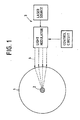
- a heat-resistant body 1 substantially in the form of a sphere which contains a starting material 2 for crystallization approximately at the center of the body 1.
- the body is transparent to a laser beam and is made of quartz or a transparent glass for example.
- the starting material 2 included within the body 1 as a nucleus is pressurized for the reason described hereinafter.
- a laser beam generator 3 including a laser source, a light modulator and a control circuit for the modulator is provided at the outside of the body 1.
- a laser beam 4 such as C0 2 laser beam or YAG laser (a four level infrared laser in which the active material comprises neodymium ions in a yttrium-aluminium garnet crystal) beam generates and is focussed on the starting material 2 through the transparent body 1.
- the material 2 is heated and melted. That is, the laser beam 4 is able to pass through the transparent body and is absorbed by the material 2.
- the material 2 is thus heated whereupon it expands and vaporizes.
- the heat-resistant body 1 is not directly heated and is made of a material which is poor in thermal conductivity, so that it is hardly heated and expanded except for portions which contact with the starting material 2 or thereabouts.
- the material 2 is maintained at high temperatures under high pressure conditions which are created by the thermal expansion and vaporization of the heated material 2 and the pressure-resistant body 1 in portions contacting with or near the heated material 2.
- Power of the laser beam 4 is then lowered or tuned off so as to gradually cool the melt of the material 2.
- the melt is gradually cooled from outside under high temperature and high pressure conditions to form crystals. It will be noted that because the body 1 is not directly heated, it does not melt or break. Finally, the crystals are obtained by removing the body 1.
- Manufacture of artificial diamond is usually effected under conditions of 300,000 atms, and 3000°K.
- 10 g of graphite which is molded under pressure in the form of a sphere is provided as the starting material 2 and covered with powdered glass in a mold capable of yielding a spherical body.
- the glass-covered graphite is then heated to a temperature at which the glass powder melts.
- the glass melt is then cooled and hardened to obtain a spherical transparent glass body having a nucleus of the graphite therein.
- the glass body may be made by inserting the graphite sphere into melted glass, followed by cooling and hardening. Upon cooling of the glass melt, a pressure of several thousands atms. is imposed on the graphite sphere by contraction of the glass body.
- the graphite sphere has a diameter of about 2 cm.
- the glass body In order to allow the glass body to withstand very high internal pressures, the glass body has preferably a diameter exceeding 20 cm.
- the size of the nucleus for crystallization is preferably 1/10 time or less the size of the surrounding body.
- YAG laser beam of 10 KW is focussed on the sphere from outside for several seconds to several minutes, by which the graphite sphere is heated to over 3000°C and melts.
- the surrounding body 1 is made of a glass, e.g. Pyrex 7740 by Corning Glass Works, and is thus poor in thermal conductivity.
- At least the outer surface or layer of the body 1 does neither melt nor undergo thermal expansion upon application of the beam on the order of several minutes.
- the pressure exerted on the glass sphere surface is about 3000 atms. Even when the internal pressure reaches 300,000 atms the glass sphere does not break when taking into account a Young modulus of glass of 6-8x10 3 kg/cm 2 .
- Output power for the laser beam is reduced until the graphite sphere is cooled to about 2000°C. Thereafter, the sphere is allowed to stand for cooling thereby obtaining artificial diamond as usual.
- the pressure-resistant body is made of a transparent glass
- any other pressure-resistant materials may be used provided that they are transparent to a laser beam used. If visible light laser beams are used, quartz, and transparent glasses may be used to make the heat-resistant body.
- the surrounding body 1 is monolithic but may not have a monolithic structure if the internal pressure is held without a loss.
- the body 1 is not necessarily made entirely of one material. It is sufficient that at least a portion through which laser beam can pass if formed of a material which is transparent to the laser beam. Examples of the materials include quartz, transparent glasses, diamond and sapphire. For instance, these materials are suitably shaped and incorporated into a body of a suitable form made of metals or ceramics.
- the body In order to allow the surrounding body to withstand an internal pressure over 300,000 atms., the body should have a size of at least ten times greater than a size of the nucleus.
- the size of the body varies according to the internal pressure used. For instance, if metal compounds are used as a nucleus material, they melt at much lower temperature than graphite, resulting in lower internal pressures. This permits use of a body of a smaller size or diameter. Accordingly, the size or diameter of the surrounding body should be determined depending on the pressure required by the type of material used as nucleus.
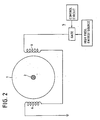
- the surrounding body 1 is made of a material of magnetic permeability which is not permeable to laser beam.
- a high frequency induction heating system 5 having a high frequency energy source, a gate and a control circuit therefor as diagrammatically shown in the figure and also a pair of induction coils 6 is used to heat and melt the nucleus material being crystallized. The melt is then cooled thereby permitting the nucleus material to crystallize.
- the nucleus material which is effectively treated by this technique should be electrically conductive and includes, for example, graphite.
- the material of magnetic permeability constituting the body 1 is, for example, A1 2 0 3 or SI31V4.
- nucleus materials being crystallized are heated and thus heat energy can be saved to a greater extent than in the case of prior art techniques.
- the pressure-resistant surrounding body is not directly heated, so that materials which are not so high in heat resistance can be used to make the body.
- starting nucleus materials are heated and melted within a pressure-resistant body and thus high temperature and high pressure conditions required for crystallization of the materials can be relatively easily obtained by self-expansion and vaporization of the nucleus materials. It will be noted that when starting materials for crystallization are molded so that a given degree of porosity is imparted to the resulting molding, it is possible to arbitrarily control the internal pressure.
- catalysts may be mixed with starting materials to make crystals at lower temperatures.
- the catalysts include Fe, Ni, Cr, Mn, Co, Ru, Rh, Pd, Os, Ir, Pt, Ta or Inconel or carbides, sulfides and nitrides thereof as ordinarily used for this purpose.
- heating of a starting material 2 to higher temperature results in a greater loss of radiant energy released from the heated material 2.
- starting graphite when artificial diamond is produced without use of catalysts according to the first embodiment, starting graphite must be treated under conditions of about 300,000 atms. and 3000°K.
- YAG laser of about 10 KW is necessary when 10 g of graphite is used as starting material. This is because heat radiation reaches 460 W/cm 2 at 3000°K. In other words, most of the laser beam is lost as radiant heat released from the starting material which has been heated.
- a round concave mirror 7 having windows 8 which are transparent to laser beams.
- the round mirror 7 completely surrounds the pressure-resistant body 1 in a spaced relationship.
- the laser beam 4 is applied through the windows 8 to the starting material 2, by which the material 2 is heated and melts.
- the concave mirror 7 is so designed that radiant heat released from the heated material 2 to the outside of the body 1 is almost all reflected at the inner surface of the concave mirror 7 and focussed back on the materials 2. Power consumption for the laser beam can drastically _be reduced because little beam energy is lost to the outside.
- the application of the laser beam is stopped to gradually cool the melt under high temperature and high pressure conditions thereby forming crystals of the starting material.
- the pressure-resistant body 1 does scarcely absorb the laser beam and is heated only by thermal conduction by contact with the starting material 2, so that its outer surface is maintained at low temperatures, say, room temperature provided that the beam application is within several minutes.
- the concave mirror 7 covering the body 1 does not rise in temperature because of reflection of most heating rays.
- the surface of the pressure-resistant body and the concave mirror increase in temperature.
- a high pressure cooling gas may pass through a space established between the body 1 and the concave mirror 7 to prevent the body 1 and the concave mirror 7 from breakage due to the rise in temperature.
- 10 g of graphite is shaped under pressure to have a spherical form and covered with glass powder, followed by heating to melt the glass powder and cooling to obtain a transparent glass sphere having the graphite nucleus substantially at the center thereof.
- the glass body should preferably have a diameter of at least 10 times greater than the diameter of the nucleus.
- a round concave mirror having a window is covered entirely over the glass body and YAG laser beam of 1-2 KW is irradiated through the window.
- the graphite melts over 3000°C within several tens seconds. Thereafter, the laser irradiation is stopped for cooling. The body is cooled from outside while keeping the melt under high pressure thereby obtaining diamond crystals.
- the use of the concave mirror reduces the laser output power from 10 KWto 1-2 KW with similar results obtained.
- the starting material is shown as irradiated by the laser beam from opposite directions but it may be irradiated from only one direction of from several directions.
- energy loss can be reduced to a substantial extent as mentioned and thus a laser system can be made compact with an improved energy efficiency. Furthermore, even though long laser irradiation time may be needed, the pressure-resistant body and the concave mirror can be cooled by a simple manner.
- the resulting sphere has a radius of about 3 times the radius of the ZnS nucleus.
- the pressure resistance of the sphere body is 6 to 8 bar (6-8x 10 3 kg/cm 2 ) so that the body can withstand an internal pressure of 60 to 80 bar (6-8x10° kg/cm 2 .
- the nucleus is heated by YAG laser from outside to a temperature of about 1800-1900°C and output power of the laser is gradually lowered for cooling the resulting melt by which crystals of the ZnS compound can be obtained.
- the method of the present invention is particularly useful in producing crystals of materials which are high in vapor pressure at high temperature but cannot be melted at a normal pressure.
Landscapes
- Chemical & Material Sciences (AREA)
- Organic Chemistry (AREA)
- Chemical Kinetics & Catalysis (AREA)
- Materials Engineering (AREA)
- Metallurgy (AREA)
- Crystallography & Structural Chemistry (AREA)
- Physics & Mathematics (AREA)
- Engineering & Computer Science (AREA)
- Toxicology (AREA)
- Health & Medical Sciences (AREA)
- General Health & Medical Sciences (AREA)
- Electromagnetism (AREA)
- Optics & Photonics (AREA)
- Life Sciences & Earth Sciences (AREA)
- General Life Sciences & Earth Sciences (AREA)
- Geology (AREA)
- Inorganic Chemistry (AREA)
- Crystals, And After-Treatments Of Crystals (AREA)
- Carbon And Carbon Compounds (AREA)
Claims (10)
Applications Claiming Priority (4)
| Application Number | Priority Date | Filing Date | Title |
|---|---|---|---|
| JP63744/82 | 1982-04-15 | ||
| JP57063744A JPS58181788A (ja) | 1982-04-15 | 1982-04-15 | 結晶製造方法 |
| JP57183959A JPS5973490A (ja) | 1982-10-19 | 1982-10-19 | 結晶製造方法 |
| JP183959/82 | 1982-10-19 |
Publications (2)
| Publication Number | Publication Date |
|---|---|
| EP0092405A1 EP0092405A1 (fr) | 1983-10-26 |
| EP0092405B1 true EP0092405B1 (fr) | 1986-07-23 |
Family
ID=26404880
Family Applications (1)
| Application Number | Title | Priority Date | Filing Date |
|---|---|---|---|
| EP83302154A Expired EP0092405B1 (fr) | 1982-04-15 | 1983-04-15 | Méthode de fabrication de cristaux |
Country Status (3)
| Country | Link |
|---|---|
| US (1) | US4522680A (fr) |
| EP (1) | EP0092405B1 (fr) |
| DE (1) | DE3364653D1 (fr) |
Families Citing this family (10)
| Publication number | Priority date | Publication date | Assignee | Title |
|---|---|---|---|---|
| US4790735A (en) * | 1983-10-03 | 1988-12-13 | Kms Fusion, Inc. | Materials processing using chemically driven spherically symmetric implosions |
| JP2651146B2 (ja) * | 1987-03-02 | 1997-09-10 | キヤノン株式会社 | 結晶の製造方法 |
| JPH0794360B2 (ja) * | 1989-01-24 | 1995-10-11 | 住友電気工業株式会社 | ダイヤモンドの気相合成法 |
| US6342195B1 (en) | 1993-10-01 | 2002-01-29 | The Penn State Research Foundation | Method for synthesizing solids such as diamond and products produced thereby |
| US5620754A (en) * | 1994-01-21 | 1997-04-15 | Qqc, Inc. | Method of treating and coating substrates |
| US5554415A (en) * | 1994-01-18 | 1996-09-10 | Qqc, Inc. | Substrate coating techniques, including fabricating materials on a surface of a substrate |
| US5731046A (en) * | 1994-01-18 | 1998-03-24 | Qqc, Inc. | Fabrication of diamond and diamond-like carbon coatings |
| RU2083272C1 (ru) * | 1995-06-07 | 1997-07-10 | Физический институт им.П.Н.Лебедева РАН | Способ выращивания алмаза из графита |
| US6626949B1 (en) | 1999-07-14 | 2003-09-30 | Biopro, Inc. | Diamond coated joint implant |
| KR20030020809A (ko) * | 2001-09-04 | 2003-03-10 | 전우용 | 고주파유도가열 의한 사파이어 제조장치 및 방법 |
Family Cites Families (3)
| Publication number | Priority date | Publication date | Assignee | Title |
|---|---|---|---|---|
| FR1370722A (fr) * | 1963-07-12 | 1964-08-28 | Comp Generale Electricite | Dispositif pour la synthèse du diamant |
| US3897590A (en) * | 1968-05-18 | 1975-07-29 | Battelle Development Corp | Method and apparatus for making monocrystals |
| US3661526A (en) * | 1969-06-24 | 1972-05-09 | Univ Case Western Reserve | Process for the catalytic growth of metastable crystals from the vapor phase |
-
1983
- 1983-04-15 EP EP83302154A patent/EP0092405B1/fr not_active Expired
- 1983-04-15 US US06/485,506 patent/US4522680A/en not_active Expired - Fee Related
- 1983-04-15 DE DE8383302154T patent/DE3364653D1/de not_active Expired
Also Published As
| Publication number | Publication date |
|---|---|
| US4522680A (en) | 1985-06-11 |
| DE3364653D1 (en) | 1986-08-28 |
| EP0092405A1 (fr) | 1983-10-26 |
Similar Documents
| Publication | Publication Date | Title |
|---|---|---|
| US4522680A (en) | Method for producing crystals | |
| US20030089307A1 (en) | Method and device for growing large-volume oriented monocrystals | |
| CN104570199B (zh) | 一种硒碲单晶复合光纤及其制备方法 | |
| JPH04338631A (ja) | 薄膜半導体装置の製法 | |
| US3681033A (en) | Horizontal growth of crystal ribbons | |
| JP3642063B2 (ja) | テルビウム・アルミニウム系常磁性ガーネット単結晶の製造方法 | |
| US5611856A (en) | Method for growing crystals | |
| EP0796931B1 (fr) | Procédé de fabrication d'un monocristal de grenat magnétique contenant le cérium | |
| JP3006148B2 (ja) | 耐エキシマ性に優れた蛍石の製造装置 | |
| JPS58204896A (ja) | 結晶性強誘電性化合物からなる歪のない単結晶を製造するための方法及び装置 | |
| Feigelson et al. | Growth of nonlinear crystals for frequency conversion | |
| Tatartchenko | 10 Sapphire Crystal Growth and Applications | |
| CN106629632A (zh) | 硒镓镉钡化合物及其制备方法、硒镓镉钡晶体及其制备方法和应用 | |
| US6736893B2 (en) | Process for growing calcium fluoride monocrystals | |
| JP2550344B2 (ja) | 赤外線加熱単結晶製造装置 | |
| AU633610B2 (en) | Method of inhibiting dislocation generation in silicon dendritic webs | |
| JPH0521339A (ja) | 薄膜半導体装置とその製法 | |
| JPS5973490A (ja) | 結晶製造方法 | |
| JPH0135797B2 (fr) | ||
| Khattak et al. | Growth of laser crystals by heat exchanger method (HEM) | |
| Bera | Rare-earth doped yttrium aluminum garnet single crystal fibers for high power laser applications | |
| JP7798972B2 (ja) | サファイア棒状体の製造方法 | |
| JPH01115897A (ja) | フッ化マグネシウム単結晶の製造方法 | |
| Bagdasarov et al. | Application of Laser Heating to Crystal Growth | |
| JPS6032126Y2 (ja) | 単結晶製造装置 |
Legal Events
| Date | Code | Title | Description |
|---|---|---|---|
| PUAI | Public reference made under article 153(3) epc to a published international application that has entered the european phase |
Free format text: ORIGINAL CODE: 0009012 |
|
| AK | Designated contracting states |
Designated state(s): DE FR GB |
|
| 17P | Request for examination filed |
Effective date: 19840417 |
|
| GRAA | (expected) grant |
Free format text: ORIGINAL CODE: 0009210 |
|
| AK | Designated contracting states |
Kind code of ref document: B1 Designated state(s): DE FR GB |
|
| REF | Corresponds to: |
Ref document number: 3364653 Country of ref document: DE Date of ref document: 19860828 |
|
| ET | Fr: translation filed | ||
| PLBE | No opposition filed within time limit |
Free format text: ORIGINAL CODE: 0009261 |
|
| STAA | Information on the status of an ep patent application or granted ep patent |
Free format text: STATUS: NO OPPOSITION FILED WITHIN TIME LIMIT |
|
| 26N | No opposition filed | ||
| PGFP | Annual fee paid to national office [announced via postgrant information from national office to epo] |
Ref country code: GB Payment date: 19940406 Year of fee payment: 12 |
|
| PGFP | Annual fee paid to national office [announced via postgrant information from national office to epo] |
Ref country code: DE Payment date: 19940408 Year of fee payment: 12 |
|
| PGFP | Annual fee paid to national office [announced via postgrant information from national office to epo] |
Ref country code: FR Payment date: 19940411 Year of fee payment: 12 |
|
| PG25 | Lapsed in a contracting state [announced via postgrant information from national office to epo] |
Ref country code: GB Effective date: 19950415 |
|
| GBPC | Gb: european patent ceased through non-payment of renewal fee |
Effective date: 19950415 |
|
| PG25 | Lapsed in a contracting state [announced via postgrant information from national office to epo] |
Ref country code: FR Effective date: 19951229 |
|
| PG25 | Lapsed in a contracting state [announced via postgrant information from national office to epo] |
Ref country code: DE Effective date: 19960103 |
|
| REG | Reference to a national code |
Ref country code: FR Ref legal event code: ST |