EP0093027A1 - Support de fixation de micro-organismes - Google Patents
Support de fixation de micro-organismes Download PDFInfo
- Publication number
- EP0093027A1 EP0093027A1 EP19830400596 EP83400596A EP0093027A1 EP 0093027 A1 EP0093027 A1 EP 0093027A1 EP 19830400596 EP19830400596 EP 19830400596 EP 83400596 A EP83400596 A EP 83400596A EP 0093027 A1 EP0093027 A1 EP 0093027A1
- Authority
- EP
- European Patent Office
- Prior art keywords
- support
- immobilization
- particle size
- support according
- microns
- Prior art date
- Legal status (The legal status is an assumption and is not a legal conclusion. Google has not performed a legal analysis and makes no representation as to the accuracy of the status listed.)
- Withdrawn
Links
- 244000005700 microbiome Species 0.000 title claims abstract description 5
- CPLXHLVBOLITMK-UHFFFAOYSA-N Magnesium oxide Chemical compound [Mg]=O CPLXHLVBOLITMK-UHFFFAOYSA-N 0.000 claims abstract description 16
- 238000004519 manufacturing process Methods 0.000 claims abstract description 11
- 229910052878 cordierite Inorganic materials 0.000 claims abstract description 8
- JSKIRARMQDRGJZ-UHFFFAOYSA-N dimagnesium dioxido-bis[(1-oxido-3-oxo-2,4,6,8,9-pentaoxa-1,3-disila-5,7-dialuminabicyclo[3.3.1]nonan-7-yl)oxy]silane Chemical compound [Mg++].[Mg++].[O-][Si]([O-])(O[Al]1O[Al]2O[Si](=O)O[Si]([O-])(O1)O2)O[Al]1O[Al]2O[Si](=O)O[Si]([O-])(O1)O2 JSKIRARMQDRGJZ-UHFFFAOYSA-N 0.000 claims abstract description 8
- 239000000395 magnesium oxide Substances 0.000 claims abstract description 8
- 239000002245 particle Substances 0.000 claims abstract description 8
- 239000003054 catalyst Substances 0.000 claims abstract description 4
- 239000000919 ceramic Substances 0.000 claims abstract description 4
- 239000000463 material Substances 0.000 claims description 7
- 239000004927 clay Substances 0.000 claims description 6
- 239000000203 mixture Substances 0.000 claims description 5
- 239000000454 talc Substances 0.000 claims description 5
- 229910052623 talc Inorganic materials 0.000 claims description 5
- 229910018072 Al 2 O 3 Inorganic materials 0.000 claims description 4
- 229910010413 TiO 2 Inorganic materials 0.000 claims description 4
- ZLNQQNXFFQJAID-UHFFFAOYSA-L magnesium carbonate Chemical compound [Mg+2].[O-]C([O-])=O ZLNQQNXFFQJAID-UHFFFAOYSA-L 0.000 claims description 4
- 239000001095 magnesium carbonate Substances 0.000 claims description 4
- 229910000021 magnesium carbonate Inorganic materials 0.000 claims description 4
- 239000005995 Aluminium silicate Substances 0.000 claims description 3
- 235000012211 aluminium silicate Nutrition 0.000 claims description 3
- 238000010924 continuous production Methods 0.000 claims description 3
- KZHJGOXRZJKJNY-UHFFFAOYSA-N dioxosilane;oxo(oxoalumanyloxy)alumane Chemical compound O=[Si]=O.O=[Si]=O.O=[Al]O[Al]=O.O=[Al]O[Al]=O.O=[Al]O[Al]=O KZHJGOXRZJKJNY-UHFFFAOYSA-N 0.000 claims description 3
- 239000011521 glass Substances 0.000 claims description 3
- NLYAJNPCOHFWQQ-UHFFFAOYSA-N kaolin Chemical compound O.O.O=[Al]O[Si](=O)O[Si](=O)O[Al]=O NLYAJNPCOHFWQQ-UHFFFAOYSA-N 0.000 claims description 3
- 229910052863 mullite Inorganic materials 0.000 claims description 3
- 238000001354 calcination Methods 0.000 claims description 2
- 238000000227 grinding Methods 0.000 claims description 2
- 229910052708 sodium Inorganic materials 0.000 claims description 2
- 239000000126 substance Substances 0.000 claims description 2
- 229910052570 clay Inorganic materials 0.000 claims 1
- 241000894006 Bacteria Species 0.000 abstract description 13
- 102000004190 Enzymes Human genes 0.000 abstract description 6
- 108090000790 Enzymes Proteins 0.000 abstract description 6
- 240000004808 Saccharomyces cerevisiae Species 0.000 abstract description 3
- 241000233866 Fungi Species 0.000 abstract description 2
- 241000700605 Viruses Species 0.000 abstract description 2
- SIKJAQJRHWYJAI-UHFFFAOYSA-N Indole Chemical compound C1=CC=C2NC=CC2=C1 SIKJAQJRHWYJAI-UHFFFAOYSA-N 0.000 description 12
- 210000004027 cell Anatomy 0.000 description 8
- QIVBCDIJIAJPQS-VIFPVBQESA-N L-tryptophane Chemical compound C1=CC=C2C(C[C@H](N)C(O)=O)=CNC2=C1 QIVBCDIJIAJPQS-VIFPVBQESA-N 0.000 description 6
- QIVBCDIJIAJPQS-UHFFFAOYSA-N Tryptophan Natural products C1=CC=C2C(CC(N)C(O)=O)=CNC2=C1 QIVBCDIJIAJPQS-UHFFFAOYSA-N 0.000 description 6
- PZOUSPYUWWUPPK-UHFFFAOYSA-N indole Natural products CC1=CC=CC2=C1C=CN2 PZOUSPYUWWUPPK-UHFFFAOYSA-N 0.000 description 6
- RKJUIXBNRJVNHR-UHFFFAOYSA-N indolenine Natural products C1=CC=C2CC=NC2=C1 RKJUIXBNRJVNHR-UHFFFAOYSA-N 0.000 description 6
- XEEYBQQBJWHFJM-UHFFFAOYSA-N Iron Chemical compound [Fe] XEEYBQQBJWHFJM-UHFFFAOYSA-N 0.000 description 5
- 210000004408 hybridoma Anatomy 0.000 description 5
- 238000000034 method Methods 0.000 description 5
- VYPSYNLAJGMNEJ-UHFFFAOYSA-N Silicium dioxide Chemical compound O=[Si]=O VYPSYNLAJGMNEJ-UHFFFAOYSA-N 0.000 description 4
- GWEVSGVZZGPLCZ-UHFFFAOYSA-N Titan oxide Chemical compound O=[Ti]=O GWEVSGVZZGPLCZ-UHFFFAOYSA-N 0.000 description 4
- 230000000694 effects Effects 0.000 description 4
- 239000001963 growth medium Substances 0.000 description 4
- 239000002609 medium Substances 0.000 description 4
- 239000011148 porous material Substances 0.000 description 4
- 239000011734 sodium Substances 0.000 description 4
- IJGRMHOSHXDMSA-UHFFFAOYSA-N Atomic nitrogen Chemical compound N#N IJGRMHOSHXDMSA-UHFFFAOYSA-N 0.000 description 3
- 239000002028 Biomass Substances 0.000 description 3
- 229910019142 PO4 Inorganic materials 0.000 description 3
- 229910004298 SiO 2 Inorganic materials 0.000 description 3
- 238000006243 chemical reaction Methods 0.000 description 3
- 238000005259 measurement Methods 0.000 description 3
- NBIIXXVUZAFLBC-UHFFFAOYSA-K phosphate Chemical compound [O-]P([O-])([O-])=O NBIIXXVUZAFLBC-UHFFFAOYSA-K 0.000 description 3
- 239000010452 phosphate Substances 0.000 description 3
- 238000001179 sorption measurement Methods 0.000 description 3
- 239000000725 suspension Substances 0.000 description 3
- USFZMSVCRYTOJT-UHFFFAOYSA-N Ammonium acetate Chemical compound N.CC(O)=O USFZMSVCRYTOJT-UHFFFAOYSA-N 0.000 description 2
- CURLTUGMZLYLDI-UHFFFAOYSA-N Carbon dioxide Chemical compound O=C=O CURLTUGMZLYLDI-UHFFFAOYSA-N 0.000 description 2
- LFQSCWFLJHTTHZ-UHFFFAOYSA-N Ethanol Chemical compound CCO LFQSCWFLJHTTHZ-UHFFFAOYSA-N 0.000 description 2
- 108060003951 Immunoglobulin Proteins 0.000 description 2
- KKCBUQHMOMHUOY-UHFFFAOYSA-N Na2O Inorganic materials [O-2].[Na+].[Na+] KKCBUQHMOMHUOY-UHFFFAOYSA-N 0.000 description 2
- 206010035226 Plasma cell myeloma Diseases 0.000 description 2
- RADKZDMFGJYCBB-UHFFFAOYSA-N Pyridoxal Chemical compound CC1=NC=C(CO)C(C=O)=C1O RADKZDMFGJYCBB-UHFFFAOYSA-N 0.000 description 2
- PNEYBMLMFCGWSK-UHFFFAOYSA-N aluminium oxide Inorganic materials [O-2].[O-2].[O-2].[Al+3].[Al+3] PNEYBMLMFCGWSK-UHFFFAOYSA-N 0.000 description 2
- 239000011942 biocatalyst Substances 0.000 description 2
- 229910052681 coesite Inorganic materials 0.000 description 2
- 229910052593 corundum Inorganic materials 0.000 description 2
- 229910052906 cristobalite Inorganic materials 0.000 description 2
- 238000009792 diffusion process Methods 0.000 description 2
- 230000002255 enzymatic effect Effects 0.000 description 2
- 230000004927 fusion Effects 0.000 description 2
- 239000007789 gas Substances 0.000 description 2
- 102000018358 immunoglobulin Human genes 0.000 description 2
- 229940072221 immunoglobulins Drugs 0.000 description 2
- 229910010272 inorganic material Inorganic materials 0.000 description 2
- 239000011147 inorganic material Substances 0.000 description 2
- 210000004698 lymphocyte Anatomy 0.000 description 2
- 229920002521 macromolecule Polymers 0.000 description 2
- 201000000050 myeloid neoplasm Diseases 0.000 description 2
- 239000008363 phosphate buffer Substances 0.000 description 2
- 238000002360 preparation method Methods 0.000 description 2
- NGVDGCNFYWLIFO-UHFFFAOYSA-N pyridoxal 5'-phosphate Chemical compound CC1=NC=C(COP(O)(O)=O)C(C=O)=C1O NGVDGCNFYWLIFO-UHFFFAOYSA-N 0.000 description 2
- 239000000377 silicon dioxide Substances 0.000 description 2
- DAEPDZWVDSPTHF-UHFFFAOYSA-M sodium pyruvate Chemical compound [Na+].CC(=O)C([O-])=O DAEPDZWVDSPTHF-UHFFFAOYSA-M 0.000 description 2
- 229910052682 stishovite Inorganic materials 0.000 description 2
- 239000000758 substrate Substances 0.000 description 2
- 238000012360 testing method Methods 0.000 description 2
- 229910052905 tridymite Inorganic materials 0.000 description 2
- 229910001845 yogo sapphire Inorganic materials 0.000 description 2
- NHBKXEKEPDILRR-UHFFFAOYSA-N 2,3-bis(butanoylsulfanyl)propyl butanoate Chemical compound CCCC(=O)OCC(SC(=O)CCC)CSC(=O)CCC NHBKXEKEPDILRR-UHFFFAOYSA-N 0.000 description 1
- ZKHQWZAMYRWXGA-KQYNXXCUSA-J ATP(4-) Chemical compound C1=NC=2C(N)=NC=NC=2N1[C@@H]1O[C@H](COP([O-])(=O)OP([O-])(=O)OP([O-])([O-])=O)[C@@H](O)[C@H]1O ZKHQWZAMYRWXGA-KQYNXXCUSA-J 0.000 description 1
- ZKHQWZAMYRWXGA-UHFFFAOYSA-N Adenosine triphosphate Natural products C1=NC=2C(N)=NC=NC=2N1C1OC(COP(O)(=O)OP(O)(=O)OP(O)(O)=O)C(O)C1O ZKHQWZAMYRWXGA-UHFFFAOYSA-N 0.000 description 1
- 239000005695 Ammonium acetate Substances 0.000 description 1
- 108091003079 Bovine Serum Albumin Proteins 0.000 description 1
- 230000005526 G1 to G0 transition Effects 0.000 description 1
- DGAQECJNVWCQMB-PUAWFVPOSA-M Ilexoside XXIX Chemical compound C[C@@H]1CC[C@@]2(CC[C@@]3(C(=CC[C@H]4[C@]3(CC[C@@H]5[C@@]4(CC[C@@H](C5(C)C)OS(=O)(=O)[O-])C)C)[C@@H]2[C@]1(C)O)C)C(=O)O[C@H]6[C@@H]([C@H]([C@@H]([C@H](O6)CO)O)O)O.[Na+] DGAQECJNVWCQMB-PUAWFVPOSA-M 0.000 description 1
- 241000222722 Leishmania <genus> Species 0.000 description 1
- 208000004554 Leishmaniasis Diseases 0.000 description 1
- 239000004677 Nylon Substances 0.000 description 1
- LCTONWCANYUPML-UHFFFAOYSA-M Pyruvate Chemical compound CC(=O)C([O-])=O LCTONWCANYUPML-UHFFFAOYSA-M 0.000 description 1
- 239000012980 RPMI-1640 medium Substances 0.000 description 1
- 102100040653 Tryptophan 2,3-dioxygenase Human genes 0.000 description 1
- 101710136122 Tryptophan 2,3-dioxygenase Proteins 0.000 description 1
- MCMNRKCIXSYSNV-UHFFFAOYSA-N ZrO2 Inorganic materials O=[Zr]=O MCMNRKCIXSYSNV-UHFFFAOYSA-N 0.000 description 1
- 210000000683 abdominal cavity Anatomy 0.000 description 1
- 239000011149 active material Substances 0.000 description 1
- TTWYZDPBDWHJOR-IDIVVRGQSA-L adenosine triphosphate disodium Chemical compound [Na+].[Na+].C1=NC=2C(N)=NC=NC=2N1[C@@H]1O[C@H](COP(O)(=O)OP(O)(=O)OP([O-])([O-])=O)[C@@H](O)[C@H]1O TTWYZDPBDWHJOR-IDIVVRGQSA-L 0.000 description 1
- 229940043376 ammonium acetate Drugs 0.000 description 1
- 235000019257 ammonium acetate Nutrition 0.000 description 1
- QVGXLLKOCUKJST-UHFFFAOYSA-N atomic oxygen Chemical compound [O] QVGXLLKOCUKJST-UHFFFAOYSA-N 0.000 description 1
- 230000001580 bacterial effect Effects 0.000 description 1
- 230000004888 barrier function Effects 0.000 description 1
- 230000015572 biosynthetic process Effects 0.000 description 1
- 239000001569 carbon dioxide Substances 0.000 description 1
- 229910002092 carbon dioxide Inorganic materials 0.000 description 1
- 238000007444 cell Immobilization Methods 0.000 description 1
- 229910010293 ceramic material Inorganic materials 0.000 description 1
- 239000012141 concentrate Substances 0.000 description 1
- 238000010411 cooking Methods 0.000 description 1
- 239000002178 crystalline material Substances 0.000 description 1
- 238000002425 crystallisation Methods 0.000 description 1
- 230000008025 crystallization Effects 0.000 description 1
- 238000002050 diffraction method Methods 0.000 description 1
- 238000002474 experimental method Methods 0.000 description 1
- 238000000855 fermentation Methods 0.000 description 1
- 230000004151 fermentation Effects 0.000 description 1
- 239000012894 fetal calf serum Substances 0.000 description 1
- 238000005194 fractionation Methods 0.000 description 1
- 239000008187 granular material Substances 0.000 description 1
- 238000009169 immunotherapy Methods 0.000 description 1
- 239000000411 inducer Substances 0.000 description 1
- 230000036512 infertility Effects 0.000 description 1
- 229910052500 inorganic mineral Inorganic materials 0.000 description 1
- 239000007928 intraperitoneal injection Substances 0.000 description 1
- 229910052742 iron Inorganic materials 0.000 description 1
- UQSXHKLRYXJYBZ-UHFFFAOYSA-N iron oxide Inorganic materials [Fe]=O UQSXHKLRYXJYBZ-UHFFFAOYSA-N 0.000 description 1
- JEIPFZHSYJVQDO-UHFFFAOYSA-N iron(III) oxide Inorganic materials O=[Fe]O[Fe]=O JEIPFZHSYJVQDO-UHFFFAOYSA-N 0.000 description 1
- 238000004898 kneading Methods 0.000 description 1
- 238000004020 luminiscence type Methods 0.000 description 1
- 239000011777 magnesium Substances 0.000 description 1
- 230000004060 metabolic process Effects 0.000 description 1
- 239000011325 microbead Substances 0.000 description 1
- 230000000813 microbial effect Effects 0.000 description 1
- 239000011707 mineral Substances 0.000 description 1
- 238000002156 mixing Methods 0.000 description 1
- 229910052757 nitrogen Inorganic materials 0.000 description 1
- 229920001778 nylon Polymers 0.000 description 1
- 230000003287 optical effect Effects 0.000 description 1
- 239000001301 oxygen Substances 0.000 description 1
- 229910052760 oxygen Inorganic materials 0.000 description 1
- 230000002572 peristaltic effect Effects 0.000 description 1
- 239000008055 phosphate buffer solution Substances 0.000 description 1
- 108090000623 proteins and genes Proteins 0.000 description 1
- 102000004169 proteins and genes Human genes 0.000 description 1
- 238000000746 purification Methods 0.000 description 1
- 229960003581 pyridoxal Drugs 0.000 description 1
- 235000008164 pyridoxal Nutrition 0.000 description 1
- 239000011674 pyridoxal Substances 0.000 description 1
- 235000007682 pyridoxal 5'-phosphate Nutrition 0.000 description 1
- 239000011589 pyridoxal 5'-phosphate Substances 0.000 description 1
- 229960001327 pyridoxal phosphate Drugs 0.000 description 1
- 229940076788 pyruvate Drugs 0.000 description 1
- 239000012429 reaction media Substances 0.000 description 1
- 238000012216 screening Methods 0.000 description 1
- 230000028327 secretion Effects 0.000 description 1
- 238000000926 separation method Methods 0.000 description 1
- 229940054269 sodium pyruvate Drugs 0.000 description 1
- 239000007787 solid Substances 0.000 description 1
- 230000006641 stabilisation Effects 0.000 description 1
- 238000011105 stabilization Methods 0.000 description 1
- 238000009423 ventilation Methods 0.000 description 1
- 238000005406 washing Methods 0.000 description 1
- 210000005253 yeast cell Anatomy 0.000 description 1
Images
Classifications
-
- C—CHEMISTRY; METALLURGY
- C02—TREATMENT OF WATER, WASTE WATER, SEWAGE, OR SLUDGE
- C02F—TREATMENT OF WATER, WASTE WATER, SEWAGE, OR SLUDGE
- C02F3/00—Biological treatment of water, waste water, or sewage
- C02F3/02—Aerobic processes
- C02F3/10—Packings; Fillings; Grids
-
- C—CHEMISTRY; METALLURGY
- C12—BIOCHEMISTRY; BEER; SPIRITS; WINE; VINEGAR; MICROBIOLOGY; ENZYMOLOGY; MUTATION OR GENETIC ENGINEERING
- C12N—MICROORGANISMS OR ENZYMES; COMPOSITIONS THEREOF; PROPAGATING, PRESERVING, OR MAINTAINING MICROORGANISMS; MUTATION OR GENETIC ENGINEERING; CULTURE MEDIA
- C12N11/00—Carrier-bound or immobilised enzymes; Carrier-bound or immobilised microbial cells; Preparation thereof
- C12N11/14—Enzymes or microbial cells immobilised on or in an inorganic carrier
-
- C—CHEMISTRY; METALLURGY
- C12—BIOCHEMISTRY; BEER; SPIRITS; WINE; VINEGAR; MICROBIOLOGY; ENZYMOLOGY; MUTATION OR GENETIC ENGINEERING
- C12N—MICROORGANISMS OR ENZYMES; COMPOSITIONS THEREOF; PROPAGATING, PRESERVING, OR MAINTAINING MICROORGANISMS; MUTATION OR GENETIC ENGINEERING; CULTURE MEDIA
- C12N5/00—Undifferentiated human, animal or plant cells, e.g. cell lines; Tissues; Cultivation or maintenance thereof; Culture media therefor
- C12N5/0068—General culture methods using substrates
-
- C—CHEMISTRY; METALLURGY
- C12—BIOCHEMISTRY; BEER; SPIRITS; WINE; VINEGAR; MICROBIOLOGY; ENZYMOLOGY; MUTATION OR GENETIC ENGINEERING
- C12N—MICROORGANISMS OR ENZYMES; COMPOSITIONS THEREOF; PROPAGATING, PRESERVING, OR MAINTAINING MICROORGANISMS; MUTATION OR GENETIC ENGINEERING; CULTURE MEDIA
- C12N2533/00—Supports or coatings for cell culture, characterised by material
- C12N2533/10—Mineral substrates
- C12N2533/14—Ceramic
-
- Y—GENERAL TAGGING OF NEW TECHNOLOGICAL DEVELOPMENTS; GENERAL TAGGING OF CROSS-SECTIONAL TECHNOLOGIES SPANNING OVER SEVERAL SECTIONS OF THE IPC; TECHNICAL SUBJECTS COVERED BY FORMER USPC CROSS-REFERENCE ART COLLECTIONS [XRACs] AND DIGESTS
- Y02—TECHNOLOGIES OR APPLICATIONS FOR MITIGATION OR ADAPTATION AGAINST CLIMATE CHANGE
- Y02W—CLIMATE CHANGE MITIGATION TECHNOLOGIES RELATED TO WASTEWATER TREATMENT OR WASTE MANAGEMENT
- Y02W10/00—Technologies for wastewater treatment
- Y02W10/10—Biological treatment of water, waste water, or sewage
Definitions
- the present invention relates to the field of inorganic materials used as insoluble supports for the immobilization of enzymes and / or microorganisms such as fungi, bacteria, yeasts, viruses or any other living mono or polycellular material. It relates more specifically to a new ceramic-type support, containing at least 50% cordierite, with very specific characteristics.
- the quantity of biomass fixed per unit area of the material as well as the stabilization over time of the biocatalyst obtained was not necessarily a function of the porosity of the product. nor of the need to have at its disposal an average pore diameter at least equal and preferably several times greater than a diameter of the microorganism to be fixed.
- the efficiency of the catalyst can indeed be deeply affected by phenomena of accessibility restriction, mechanical or physical, for organisms; for example, in highly porous media, the enzymes that line the pore wall can show a very reduced activity due in particular to the constitution of a diffusion limit layer on the surface of the solid support, this layer constituting a barrier which slows down the reactions caused by the biomass.
- the object of the invention is to provide a support which, without being adapted to the aforementioned porosity requirements, is capable of providing not only significant activity in a reaction medium but to demonstrate great stability over time, in particular by giving rates conversion - in use as a biocatalyst - which are constant for a long time, for example one or more months
- the new support according to the invention essentially consists of a silico-aluminate containing well-defined contents - magnesia, namely between 5 and 25% (by weight), and whose average particle size is between 5 and 300 microns, with an interval such that the diameter of the largest grains is at most twice that of the smallest, and advantageously less than 1.5 times.
- such a support is, from the crystallographic point of view, of the synthetic cordierite type in which the iron content, expressed as Fe 2 O 3 , is less than 2%.
- this material is advantageously prepared by kneading kaolin clay with talc or magnesium carbonate then calcination around 1000 at 1400 ° C. and fine grinding of the ceramic material obtained for get the desired size range.
- talc a material that is used, the amount will advantageously be close to 30% by weight (for 70% of clay) while it will be of the order of 20% for magnesium carbonate.
- This example relates to the production of a continuous bioreactor for the production of tryptophan by immobilization of Echerichia coli cells on a support of the invention, using indole as substrate. Comparisons were also made with other supports that did not meet the critical parameters of the invention.
- the support of the invention hereinafter referred to as A, was prepared by mixing 70 parts of kaolin clay (KR 2 ) and 30 parts of talc (2 C) then baking at a temperature of 1350 ° C and grinding-screening. to retain only the particles and fine grains having a range of particle size entirely between 100 and 200 microns.
- KR 2 kaolin clay
- talc talc
- Its chemical composition was as follows: SiO 2 : 53, 7; Al 2 O 3 30, 8; Fe 2 O 3 : 1, 6; TiO 2 : 1, 1; K 2 O + Na 2 O: 0.6; Mg 0 : 9, 6.
- the mineralogical structure it corresponded substantially to 80% cordierite, 8% mullite and 12% glass.
- these two supports contained substantially equivalent amounts of mullite, cristoballite and glass.
- approximately 70% of the pores of these ceramic compositions had an average diameter of between 1 and 200 microns, to approximate the conditions of the aforementioned French patent (publication No. 2,403,384).
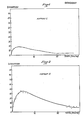
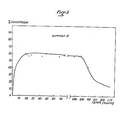
- the substrate was introduced under the aforementioned conditions and then the enzymatic kinematics were monitored by measurement, as a function of the time of the concentration of tryptophan and indole. The curves were then plotted on the abscissa the rates of production of tryptophan (in% by weight) with respect to time.
- the support X gives a bioconversion yield of approximately 43%, but this lasts only 3 to 4 hours.
- the maximum yield is very low, of the order of 20%, for a fairly short stationary state of 2 to 5 hours.
- the support A according to the invention very interesting results have been obtained: in fact, the conversion rate has remained practically constant, at around 60% for a period of 1 month without the need for reload the column with bacteria and without the presence of indole at the outlet of the reactor being observed.
- the supports according to the invention make it possible to immobilize whole bacteria and to obtain cataly biological sors authorizing the manufacture of various products in continuous processes, with yields compatible with the economic constraints of the industrialist
- This example illustrates another important case of use of the supports according to the invention, in particular for the immobilization of single-cell organisms such as for example trypanosomes or leishmanias or, better still, for the immobilization of hybridomas for the purpose of production of monoclonal antibodies which, as is known, are used in particular for the preparation of sera:
- hybridoma cells which result from the fusion of lymphocytes and myeloma cells and allow the preparation of very valuable monoclonal antibodies in human immunotherapy (see for example the journal "Pour la Science” November 1981 p. 38-39).
- the culture of these cells can be done in various ways for the phases of growth and then of production of antibodies, for example by intraperitoneal injection of hybridomas in the abdominal cavity of a mouse or by batch culture on microbeads of a fluidized bed support;
- the support A was washed with Hcl then dried and pasteurized at 80-90 ° C in the column for 2 hours, with circulation at this temperature of an alkaline phosphate buffer solution giving a pH of 7.2 at 7, 4.
- the hybridomas were obtained by fusion of BALB / C type mouse lymphocytes with SP 2 myeloma cells and the concentrate of active material was introduced into 150 ml of a known culture medium RPMI 1640 containing 10% fetal calf serum .
- the active medium was then introduced into the reactor with a flow rate of approximately 1 ml / minute corresponding to a linear speed of 1.3 cm / minute.
- the measurements of antibodies obtained were made on hydrolysed and acetylated nylon plates (with comparison of standards on different plates) then counting in a THOMA chamber and measurement of ATP (adenosine triphosphate) by luminescence.
- Table 1 below shows the energetic metabolism of the culture medium during the process of immobilization of the cells on the support used:
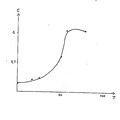
- the activity of the hydridoma cells immobilized on the support of the invention has shown a continuous secretion of monoclonal antibodies according to a stationary phase as can be seen from the curve (1) of FIG. 4 appended where the abscissa T corresponds to the time in hours while the ordinate represents the concentration C of the immunoglobulins (expressed in micrograms per ml).
Landscapes
- Life Sciences & Earth Sciences (AREA)
- Chemical & Material Sciences (AREA)
- Engineering & Computer Science (AREA)
- Organic Chemistry (AREA)
- Health & Medical Sciences (AREA)
- Bioinformatics & Cheminformatics (AREA)
- Genetics & Genomics (AREA)
- Wood Science & Technology (AREA)
- Zoology (AREA)
- Biomedical Technology (AREA)
- Biotechnology (AREA)
- Microbiology (AREA)
- General Health & Medical Sciences (AREA)
- General Engineering & Computer Science (AREA)
- Biochemistry (AREA)
- Inorganic Chemistry (AREA)
- Cell Biology (AREA)
- Biodiversity & Conservation Biology (AREA)
- Hydrology & Water Resources (AREA)
- Environmental & Geological Engineering (AREA)
- Water Supply & Treatment (AREA)
- Immobilizing And Processing Of Enzymes And Microorganisms (AREA)
- Preparation Of Compounds By Using Micro-Organisms (AREA)
Abstract
Support céramique pour l'immobilisation d'enzymes et/ou microorganismes tels que champignons, bactéries, levures, virus . . . etc. Le support est constitué par un silico-aluminate renfermant 5 à 25 % de magnésie et de granulométrie 5 à 300 microns. Avantageusement, il renferme plus de 50 % en poids de cordiérite synthétique. Application à l'immobilisation de catalyseurs biologiques et de cellues d'hydridomes pour la production d'anticorps monoclonaux.
Description
- La présente invention a trait au domaine des matériaux anorganiques utilisés comme supports insolubles pour l' immobilisation d'enzymes et/ou de micro-organismes tels que champignons, bactéries, levures, virus ou tout autre matière vivante mono ou polycellulaire. Elle concerne plus spécialement un nouveau support de type céramique, contenant au moins 50 % de cordiérite, de caractéristiques bien particulières.
- Il est connu de longue date de préparer et utiliser des supports, notamment en matériaux minéraux plus ou moins poreux, destinés à fixer, par adsorption ou autre phénomène, des populations microbiennes telles que bactéries, levures, enzymes ou autres et de constituer ainsi des catalyseurs biologiques utilisables pour de multiples applications dans les domaines industriels et agricoles les plus divers.
- On a ainsi préconisé, entre autres supports, des matériaux vitreux frittés, des matières cristallines telles que spinelle- zircone ou cordiérite. Il a été bien précisé, dans ce cas, que ces produits devaient avoir, avec un taux d'au moins 70 %, des diamètres moyens de pores bien délimités tels que notamment 0, 8 à 220 microns pour une population de bactéries et 1 à 140 microns pour des cellules de levure ; en outre, la granulométrie annoncée pour les supports était de 0, 7 à 1 mm (brevet français n* 78.26415 publié sous n° 2403384 ; brevet américain n° 4 149 937).
- Il a maintenant été trouvé que, dans le cas tout au moins de certains matériaux anorganiques, la quantité de biomasse fixée par unité de surface du matériau ainsi que la stabilisation dans le temps du biocatalyseur obtenu n'étaient pas nécessairement fonction de la porosité du produit ni de la nécessité d'avoir à sa disposition un diamètre moyen de pores au moins égal et de préférence plusieurs fois supérieur à un diamètre du micro-organisme à fixer.' L'efficacité du catalyseur peut en effet se trouver profondément affectée par des phénomènes de restriction d'accessibilité, mécaniques ou physiques, pour les organismes ; par exemple, dans les supports à grande porosité, les enzymes qui tapissent la paroi des pores peuvent montrer une activité très réduite du fait notamment de la constitution d'une couche limite de diffusion à la surface du support solide, cette couche constituant une barrière qui ralentit les réactions provoquées par la biomasse.
- Le but de l'invention est de proposer un support qui, sans être adapté aux exigences de porosité précitées, soit apte à fournir non seulement une activité importante dans un milieu réactionnel mais à manifester une grande stabilité dans le temps, notamment en donnant des taux de conversion -dans l'utilisation comme biocatalyseur- qui soient constants pendant une longue durée, par exemple de un ou plusieurs mois
- Le nouveau support selon l'invention est essentiellement constitué par un silico-aluminate renfermant des teneurs bien déter - minées en magnésie, à savoir entre 5 et 25 % (en poids), et dont la granulométrie moyenne est comprise entre 5 et 300 microns, avec un intervalle tel que le diamètre des plus gros grains soit au maximum deux fois celui des plus petits, et avantageusement inférieur à une fois et demie.
- Avantageusement, un tel support est, au point de vue cristallographique, du type cordiérite synthétique dans laquelle la teneur en fer, exprimée en Fe2O3 , est inférieure à 2 %. Bien qu'il puisse être obtenu par d'autres méthodes ou variantes, ce matériau est avantageusement préparé par malaxage d'argile kaolinique avec du talc ou du carbonate de magnésium puis calcination vers 1000 à 1400°C et broyage fin du matériau céramique obtenu pour obtenir la fourchette de granulométrie désirée. Par exemple, si l'on utilise du talc, la quantité sera avantageusement voisine de 30 % en poids (pour 70 % d'argile) alors qu'elle sera de l'ordre de 20 % pour le carbonate de magnésium. On peut aussi accélérer la cuisson et diminuer le palier de température de cette dernière en incorporant à la pâte de cordiérisation un petit pourcentage, par exemple 5 à 10 %, de cordiérite synthétique finement broyée par exemple de type ARTAL 23 (marque déposée) qui agit comme germe de cristallisation.
- Parmi les nombreux cas d'application des supports selon l'invention, on décrira ci-dessous en détail deux exemples non limitatifs illustrant l'un la fixation de bactéries pour la production de protéines et l'autre, la formation de macro-molécules, par exemple des anticorps, secrétées par des organismes vivants.
- Cet exemple concerne la réalisation d'un bioréacteur en continu pour la production de tryptophane par immobilisation de cellules d'Echerichia coli sur un support de l'invention, en utilisant de l'indole comme substrat. On a également effectué des comparaisons avec d'autres supports ne satisfaisant pas aux paramètres critiques de l'invention.
- Le support de l'invention, dénommé ci-après A, a été préparé par mélange de 70 parties d'argile kaolinique (KR2) et 30 parties de talc (2 C) puis cuisson à température de 1350°C et broyage- criblage pour ne retenir que les particules et grains fins présentant une fourchette de granulométrie entièrement comprise entre 100 et 200 microns. Sa composition chimique était la suivante : SiO2:53, 7 ; Al2O3 30, 8 ; Fe2O3 : 1, 6 ; TiO2 :1, 1 ; K2O + Na2O : 0, 6 ; Mg0 : 9, 6. Quant à la structure minéralogique, elle correspondait sensiblement à 80 % de cordiérite, 8 % de mullite et 12 % de verre.
- A titre de comparaison, on a également effectué les mêmes expériences avec deux supports de type silico-aluminates de compositions assez voisines de celles du produit A mais contenant très peu de magnésie, à savoir :
- Support L SiO2 : 54, 3 ; Al2O3 41, 3 ; FeO3; 1, 9 ; TiO2 :1, 4 ; K20 + Na2O = 0,7 ; Ca0 + MgO :0, 4.
- Support X SiO2 53, 6 ; Al2O3 : 44, 2 ; Fe2O3 : 0, 9 ; TiO2 ; 0, 8 ; K2O + Na2O : 0, 3 ; CaO + MgO :0,2,
- Au plan cristallo graphique, ces deux supports contenaient des quantités sensiblement équivalentes de mullite, cristobal- lite et verre. En outre, environ 70 % des pores de ces compositions céramiques avaient un diamètre moyen compris entre 1 et 200 microns, pour se rapprocher des conditions du brevet français précité (publication n° 2 403 384).
- On est parti de bactéries d'Echerichia coli, qui présentaient une activité tryptophanase élevée avec une concentration de 0, 3 g/1 de tryptophane comme inducteur dans le milieu de fermentation. Les bactéries ont été utilisées en suspension pour tester le système enzymatique de conversion de l'indole en tryptophane dans un milieu de composition suivante :
- indole 10 -2 mole ; pyruvate de sodium : 0, 5 mole ; acétate d'ammonium : 0, 6 mole ; phosphate de pyridoxal : 10-3 mole ; éthanol : 10 %. Le pH était de 9 et la température de 37°C. On a testé les différents supports dans un réacteur à lit fixe en fixant par adsorption les bactéries pendant plusieurs heures par circulation de la suspension bactérienne à débit de 30 ml/h dans un tampon de phosphate 0, 1 M (pH 7). On effectuait un lavage avec ce tampon phosphate pour éliminer l'excès de bactéries jusqu'à l'obtention d'une diffraction optique nulle en sortie.
- La colonne étant prête, on a introduit le substrat dans les conditions précitées puis on a suivi la cinématique enzymatique par mesure, en fonction du temps de la concentration du tryptophane et de l'indole. On a tracé alors les courbes donnant en abscisse les taux de production de tryptophane (en % en poids) par rapport au temps.
- Comme on peut le voir sur les dessins des figures 1 à 3 annexées, le support X donne un rendement de bioconversion de 43 % environ, mais celui-ci ne dure que 3 à 4 heures. Dans ce cas du support L, le rendement maximum est très faible, de l'ordre de 20 %, pour un état stationnaire assez court de 2 à 5 heures. Dans la mise en oeuvre, au contraire, du support A selon l'invention, on a obtenu des résultats très intéressants : en effet, le taux de conversion est resté pratiquement constant, à environ 60 % pendant une durée de 1 mois sans avoir besoin de recharger la colonne en bactéries et sans que l'on constate la présence d'indole à la sortie du réacteur.
- Ainsi, les supports selon l'invention permettent de réaliser l'immobilisation de bactéries entières et d'obtenir des catalyseurs biologiques autorisant la fabrication de divers produits dans des procédés continus, avec des rendements compatibles avec les contraintes économiques de l'industriel
- Cet exemple illustre un autre cas important d'utilisation des supports selon l'invention, notamment pour l'immobilisation d'organismes monocellulaires comme par exemple des trypanosomes ou des leishmanias ou, mieux encore, pour l'immobilisation d'hybridomes en vue de la production d'anticorps monoclonaux qui, comme on le sait, servent notamment à l'élaboration de sérums:
- On connaît la fragilité et les contraintes de diffusion des cellules d'hybridomes qui résultent de la fusion de lymphocytes et de cellules myélomateuses et permettent la préparation d'anticorps monoclonaux très précieux en immunothérapie humaine (voir par exemple la revue "Pour la Science" novembre 1981 p. 38-39). La culture de ces cellules peut se faire de diverses façons pour les phases de croissance puis de production d'anticorps, par exemple par injection intrapéritonéale d'hybridomes dans la cavité abdominale d'une souris ou par culture en discontinu sur des microbilles d'un support en lit fluidisé;
- Il a maintenant été trouvé que les procédés de fractionnement et de purification de molécules biologiques pouvaient être notablement simplifiés grâce à la mise en oeuvre, comme supports de cellules, des matériaux granulaires anorganiques selon l'invention. En effet, grâce aux travaux effectués en collaboration avec l'Institut de Technologie des Surfaces Actives de Compiègne (France), il a pu être mis au point une technique de fixation d'hybridomes et de fabrication d' anticorps monoclonaux par l'utilisation de colonnes en lit fixe de support selon l'invention et fonctionnant en continu. Cette technique présente de nombreux avantages tels que, en particulier : la séparation du milieu de culture, plus simple que dans les cas classiques ; la plus grande facilité de maintenir la stérilité du milieu ; et bien entendu la production en continu d'anticorps monoclonaux.
- Dans l'exemple de réalisation ci-après, on a utilisé comme support d'immobilisation de cellules, dans un réacteur cylindrique à lit fixe, le produit dénommé A dont les caractéristiques ont été fournies ci-avant.
- On a utilisé comme matériel un réacteur cylindrique thermostaté de 20 cm de hauteur et de 1 cm de diamètre, rempli du support A (20 grammes) et connecté, par l'intermédiaire d'une pompe péristaltique, à un échangeur de gaz ou colonne d'aération apte à fournir au milieu de culture un gaz contenant approximativement :
- 74 % d'azote, 20 % d'oxygène et 6 % de gaz carbonique.
- Avant opération, le support A a été lavé à l'Hcl puis séché et pasteurisé à 80-90°C dans la colonne pendant 2 heures, avec circulation à cette température d'une solution tampon de phosphate alcalin donnant un pH de 7,2 à 7, 4.
- Les hybridomes étaient obtenus par fusion de lymphocytes de souris type BALB/C avec des cellules de myélome type SP2 et le concentrat de matière active était introduit dans 150 ml d'un milieu de culture connu RPMI 1640 contenant 10 % de sérum fétal de veau.
- Le milieu actif était alors introduit dans le réacteur avec un débit d'environ 1 ml/minute correspondant à une vitesse linéaire de 1, 3 cm/minute. Les mesures d'anticorps obtenus (immunoglobulines G) étaient faites sur plaques de nylon hydrolysé et acétylé (avec comparaison d'étalons sur différentes plaques) puis comptage dans une chambre de THOMA et mesure d'ATP (adénosine triphosphate) par luminescence.
- Le tableau 1 ci-dessous montre le métabolisme énergique du milieu de culture au cours du processus d'immobilisation des cellules sur le support utilisé :

- L'absence de cellules et d'ATP dans le milieu sortant du réacteur montre clairement que la totalité de la biomasse a été mobilisée dans ce dernier, par un seul passage, ce qui a été confirmé par utilisation du microscope électronique.
- Par ailleurs, l'activité des cellules d'hydridomes immobilisées sur le support de l'invention a montré une secrétion continue d'anticorps monoclonaux selon une phase stationnaire comme cela ressort de la courbe (1) de la figure 4 annexée où l'abscisse T correspond au temps en heures alors que l'ordonnée représente la concentration C des immunoglobulines (exprimées en microgrammes par ml).
- Ces essais ont donc montré la possibilité d'utilisation, en phase continue, d'un réacteur à lit fixe de support selon l'invention, pour la production d'anticorps et, partant de là, de diverses macro-molécules secrétées par des organismes vivants;
Claims (5)
1. Support céramique pour la fixation de micro-organismes, caractérisé en ce qu'il est constitué par un silicoaluminate renfermant des teneurs de 5 à 25 % en magnésie et dont la granulométrie moyenne est comprise entre 5 et 300 microns, avec un intervalle tel que le diamètre des plus gros grains soit au maximum deux fois celui des plus petits, et avantageusement inférieur à une fois et dernier
2. Support céramique selon la revendication 1, caractérisé en ce qu'il est obtenu par calcination entre 1000 - 1400°C d'un mélange d'argile kaolinique et de talc ou carbonate de magnésium puis broyage et classification à la répartition granulométrique désirée du matériau final, contenant plus de 50 % de cordiérite.
3. Support selon la revendication 2, caractérisé en ce que l'on mélange environ 70 % (en poids) d'argile kaolinique et 30 % de talc ou encore 80 % d'argile kaolinique et 20 % de carbonate de magnésium.
4. Support selon l'une quelconque des revendications 1 à 3, caractérisé en ce qu'il renferme : 53, 7 % de Si02 ; 30, 8 % d'Al2O3 ; 1, 6 % de FeO3 ; 1,1 % de TiO2 ; 0, 6 % de Na2O + K2O et 9, 6 % de Mg0 ; la structure minéralogique correspondant sensiblement à 80 % de cordiérite, 8 % de mullite et 12 % de verre ; la granulométrie étant entièrement comprise entre 100 et 200 microns.
5. Application du support selon l'invention à l'immobilisation de catalyseurs biologiques pour la production en continu de diverses substances en bioréacteur, ainsi que pour l'immobilisation d'hydridomes en vue de la production d'anticorps monoclonaux.
Applications Claiming Priority (4)
| Application Number | Priority Date | Filing Date | Title |
|---|---|---|---|
| FR8207205A FR2525629B1 (fr) | 1982-04-27 | 1982-04-27 | Support de fixation de micro-organismes |
| FR8207205 | 1982-04-27 | ||
| FR8215845 | 1982-09-21 | ||
| FR8215845A FR2533229B2 (fr) | 1982-09-21 | 1982-09-21 | Support de fixation de micro-organismes |
Publications (1)
| Publication Number | Publication Date |
|---|---|
| EP0093027A1 true EP0093027A1 (fr) | 1983-11-02 |
Family
ID=26222874
Family Applications (1)
| Application Number | Title | Priority Date | Filing Date |
|---|---|---|---|
| EP19830400596 Withdrawn EP0093027A1 (fr) | 1982-04-27 | 1983-03-23 | Support de fixation de micro-organismes |
Country Status (2)
| Country | Link |
|---|---|
| US (1) | US4560660A (fr) |
| EP (1) | EP0093027A1 (fr) |
Cited By (10)
| Publication number | Priority date | Publication date | Assignee | Title |
|---|---|---|---|---|
| AU584322B2 (en) * | 1984-03-23 | 1989-05-25 | Carl-Zeiss-Stiftung Trading As Schott Glaswerke | Porous inorganic carriers bearing a growth of micro- organisms - procedure for immobilising micro-organisms and carrier bodies suitable for this purpose |
| EP0260695A3 (en) * | 1986-09-19 | 1989-06-14 | Nippon Steel Corporation | Fixing carrier for activated sludge in sewage or waste water treatment |
| AU594126B2 (en) * | 1986-03-04 | 1990-03-01 | Ici Australia Operations Proprietary Limited | Improvements in carriers for micro-organisms |
| WO1995022606A1 (fr) * | 1994-02-21 | 1995-08-24 | Novo Nordisk A/S | Procede pour la production d'une preparation enzymatique immobilisee et utilisation de cette preparation |
| FR2753988A1 (fr) * | 1996-10-02 | 1998-04-03 | Eparco Sa | Activateur biologique pour fosse septique ou equivalent a base d'argile |
| KR100481973B1 (ko) * | 2002-09-26 | 2005-04-13 | 대호산업 주식회사 | 미생물 고정화 유·무기 복합 담체 및 제조방법 |
| WO2009085357A3 (fr) * | 2007-10-03 | 2009-08-27 | 3M Innovative Properties Company | Procédé de concentration de micro-organismes |
| US8546100B2 (en) | 2007-10-03 | 2013-10-01 | 3M Innovative Properties Company | Microorganism concentration process and agent |
| US8741595B2 (en) | 2008-12-31 | 2014-06-03 | 3M Innovative Properties Company | Coliform detection process and kit for use therein |
| US9145541B2 (en) | 2007-10-03 | 2015-09-29 | 3M Innovative Properties Company | Microorganism concentration process |
Families Citing this family (6)
| Publication number | Priority date | Publication date | Assignee | Title |
|---|---|---|---|---|
| EP0160267B1 (fr) * | 1984-04-24 | 1991-02-27 | Kanto Kagaku Kabushiki Kaisha | Corps poreux en céramique de cordiérite, leur préparation et leur utilisation |
| JP2735458B2 (ja) * | 1993-06-18 | 1998-04-02 | 日本碍子株式会社 | 生体触媒用担体 |
| AUPP439398A0 (en) * | 1998-06-29 | 1998-07-23 | Bellamy, Kenneth M. | Method of treating waste water |
| JP3690245B2 (ja) * | 2000-06-05 | 2005-08-31 | 株式会社村田製作所 | ガラス粉末の製造方法 |
| WO2010114727A1 (fr) * | 2009-04-03 | 2010-10-07 | 3M Innovative Properties Company | Procédé et dispositif de concentration de microorganismes |
| US9029100B2 (en) | 2009-12-22 | 2015-05-12 | 3M Innovative Properties Company | Microorganism concentration process and concentration agent for use therein |
Citations (11)
| Publication number | Priority date | Publication date | Assignee | Title |
|---|---|---|---|---|
| FR2133370A5 (en) * | 1971-04-15 | 1972-11-24 | Monsan Pierre | Solid enzyme complexes - prep by activating a clay support and then reacting with enzyme |
| FR2272965A1 (fr) * | 1974-05-28 | 1975-12-26 | Corning Glass Works | |
| FR2289467A1 (fr) * | 1974-11-04 | 1976-05-28 | Gen Motors Corp | Composition refractaire a base de cordierite et procede de fabrication de cette composition |
| US3967971A (en) * | 1971-07-09 | 1976-07-06 | Scm Corporation | Translucent ceramic whiteware products |
| FR2347321A1 (fr) * | 1976-04-08 | 1977-11-04 | Ngk Insulators Ltd | Masse ceramique alveolaire de cordierite et son procede de fabrication |
| FR2376088A1 (fr) * | 1976-12-28 | 1978-07-28 | Ngk Insulators Ltd | Ceramique de cordierite |
| FR2393810A1 (fr) * | 1977-06-10 | 1979-01-05 | Kali Chemie Ag | Procede de production de preparations enzymatiques insolubles dans l'eau et preparations obtenues selon ce procede |
| FR2403384A1 (fr) * | 1977-09-14 | 1979-04-13 | Corning Glass Works | Matieres composites a base de biomasse d'une grande surface specifique et d'un petit volume et procede de preparation |
| EP0003923A1 (fr) * | 1978-02-16 | 1979-09-05 | Rhone-Poulenc Specialites Chimiques | Complexes support-enzyme et leur procédé de préparation |
| FR2451942A1 (fr) * | 1979-03-20 | 1980-10-17 | Hayashibara Biochem Lab | Preparation d'enzymes immobilisees |
| US4235855A (en) * | 1978-12-06 | 1980-11-25 | Gte Products Corporation | Method for producing high strength low expansion cordierite bodies |
Family Cites Families (3)
| Publication number | Priority date | Publication date | Assignee | Title |
|---|---|---|---|---|
| US3950175A (en) * | 1973-11-05 | 1976-04-13 | Corning Glass Works | Pore size control in cordierite ceramic |
| US4149936A (en) * | 1977-09-14 | 1979-04-17 | Corning Glass Works | High surface low volume fungal biomass composite |
| US4448884A (en) * | 1982-03-03 | 1984-05-15 | Kms Fusion, Inc. | Glass-surface microcarrier for growth of cell cultures |
-
1983
- 1983-03-23 EP EP19830400596 patent/EP0093027A1/fr not_active Withdrawn
- 1983-04-15 US US06/485,417 patent/US4560660A/en not_active Expired - Fee Related
Patent Citations (11)
| Publication number | Priority date | Publication date | Assignee | Title |
|---|---|---|---|---|
| FR2133370A5 (en) * | 1971-04-15 | 1972-11-24 | Monsan Pierre | Solid enzyme complexes - prep by activating a clay support and then reacting with enzyme |
| US3967971A (en) * | 1971-07-09 | 1976-07-06 | Scm Corporation | Translucent ceramic whiteware products |
| FR2272965A1 (fr) * | 1974-05-28 | 1975-12-26 | Corning Glass Works | |
| FR2289467A1 (fr) * | 1974-11-04 | 1976-05-28 | Gen Motors Corp | Composition refractaire a base de cordierite et procede de fabrication de cette composition |
| FR2347321A1 (fr) * | 1976-04-08 | 1977-11-04 | Ngk Insulators Ltd | Masse ceramique alveolaire de cordierite et son procede de fabrication |
| FR2376088A1 (fr) * | 1976-12-28 | 1978-07-28 | Ngk Insulators Ltd | Ceramique de cordierite |
| FR2393810A1 (fr) * | 1977-06-10 | 1979-01-05 | Kali Chemie Ag | Procede de production de preparations enzymatiques insolubles dans l'eau et preparations obtenues selon ce procede |
| FR2403384A1 (fr) * | 1977-09-14 | 1979-04-13 | Corning Glass Works | Matieres composites a base de biomasse d'une grande surface specifique et d'un petit volume et procede de preparation |
| EP0003923A1 (fr) * | 1978-02-16 | 1979-09-05 | Rhone-Poulenc Specialites Chimiques | Complexes support-enzyme et leur procédé de préparation |
| US4235855A (en) * | 1978-12-06 | 1980-11-25 | Gte Products Corporation | Method for producing high strength low expansion cordierite bodies |
| FR2451942A1 (fr) * | 1979-03-20 | 1980-10-17 | Hayashibara Biochem Lab | Preparation d'enzymes immobilisees |
Cited By (16)
| Publication number | Priority date | Publication date | Assignee | Title |
|---|---|---|---|---|
| AU584322B2 (en) * | 1984-03-23 | 1989-05-25 | Carl-Zeiss-Stiftung Trading As Schott Glaswerke | Porous inorganic carriers bearing a growth of micro- organisms - procedure for immobilising micro-organisms and carrier bodies suitable for this purpose |
| AU594126B2 (en) * | 1986-03-04 | 1990-03-01 | Ici Australia Operations Proprietary Limited | Improvements in carriers for micro-organisms |
| EP0260695A3 (en) * | 1986-09-19 | 1989-06-14 | Nippon Steel Corporation | Fixing carrier for activated sludge in sewage or waste water treatment |
| WO1995022606A1 (fr) * | 1994-02-21 | 1995-08-24 | Novo Nordisk A/S | Procede pour la production d'une preparation enzymatique immobilisee et utilisation de cette preparation |
| US5776741A (en) * | 1994-02-21 | 1998-07-07 | Novo Nordisk A/S | Method of enzyme immobilization on a particulate silica carrier for synthesis inorganic media |
| FR2753988A1 (fr) * | 1996-10-02 | 1998-04-03 | Eparco Sa | Activateur biologique pour fosse septique ou equivalent a base d'argile |
| EP0834473A1 (fr) * | 1996-10-02 | 1998-04-08 | Eparco | Activateur biologique pour fosse septique ou équivalent à base d'argile |
| KR100481973B1 (ko) * | 2002-09-26 | 2005-04-13 | 대호산업 주식회사 | 미생물 고정화 유·무기 복합 담체 및 제조방법 |
| WO2009085357A3 (fr) * | 2007-10-03 | 2009-08-27 | 3M Innovative Properties Company | Procédé de concentration de micro-organismes |
| US20100190171A1 (en) * | 2007-10-03 | 2010-07-29 | Kshirsagar Manjiri T | Microorganism concentration process |
| CN101981177B (zh) * | 2007-10-03 | 2013-06-26 | 3M创新有限公司 | 微生物浓集方法 |
| US8546100B2 (en) | 2007-10-03 | 2013-10-01 | 3M Innovative Properties Company | Microorganism concentration process and agent |
| US9145541B2 (en) | 2007-10-03 | 2015-09-29 | 3M Innovative Properties Company | Microorganism concentration process |
| US9624464B2 (en) | 2007-10-03 | 2017-04-18 | 3M Innovative Properties Company | Microorganism concentration process |
| US11391732B2 (en) | 2007-10-03 | 2022-07-19 | 3Minnovative Properties Company | Microorganism concentration process |
| US8741595B2 (en) | 2008-12-31 | 2014-06-03 | 3M Innovative Properties Company | Coliform detection process and kit for use therein |
Also Published As
| Publication number | Publication date |
|---|---|
| US4560660A (en) | 1985-12-24 |
Similar Documents
| Publication | Publication Date | Title |
|---|---|---|
| Yokoi et al. | Hydrogen production by immobilized cells of aciduric Enterobacter aerogenes strain HO-39 | |
| Wada et al. | A new immobilization of microbial cells: immobilized growing cells using carrageenan gel and their properties | |
| US4560660A (en) | Fixation support for microorganisms | |
| Barros et al. | Mass transfer studies on immobilized α‐chymotrypsin biocatalysts prepared by deposition for use in organic medium | |
| JP5455244B2 (ja) | 遊離細胞によるガラクトオリゴ糖の製造方法 | |
| Yahashi et al. | D-glucose feeding for improvement of xylitol productivity from D-xylose using Candida tropicalis immobilized on a non-woven fabric | |
| EP0206904B1 (fr) | Procédé de production enzymatique de L-alpha-aminoacides à partir d'chi cétoacides | |
| FR2488909A1 (fr) | Production de polysaccharides microbiens | |
| Chevalier et al. | Hydantoinase activity of immobilized non-growing Pseudomonas putida cells | |
| BE897165A (fr) | Procede pour la conversion enzymatique du glycose en fructose | |
| FR2563234A1 (fr) | Procede de preparation du d-glucose et d'hydrolysats d'amidon | |
| FR2582544A1 (fr) | Procede de preparation de supports spheriques de catalyseurs et matieres ainsi produites | |
| Vijaikishore et al. | Glycerol production by immobilised cells of Pichia farinosa | |
| EP0956272A1 (fr) | Procede de decomposition de chlorite | |
| AU743520B2 (en) | Method for producing L-carnitine from crotonobetaine | |
| FR2525629A1 (fr) | Support de fixation de micro-organismes | |
| JPS6178374A (ja) | 固定化増殖微生物による連続発酵システム | |
| JPS62262987A (ja) | 細胞培養方法 | |
| Ochi et al. | Diacetyl production by co-immobilized citrate-positive Lactococcus lactis subsp. lactis 3022 and homogenized bovin liver in alginate fibers with double gel layers | |
| Patel et al. | Stabilization of a halophilic α-amylase by calcium alginate immobilization | |
| Trusek-Holownia et al. | Peptides removing in enzymatic membrane bioreactor | |
| FR2533229A2 (fr) | Support de fixation de micro-organismes | |
| SU1592330A1 (ru) | Консорциум штаммов микроорганизмов-деструкторов РSеUDомоNаS рUтIDа, BacILLUS SUвтILIS и BacILLUS SUвтILIS дл очистки сточных вод от метаупона, превоцелла и мочевины | |
| SU1594216A1 (ru) | Способ получени иммобилизованных клеток, обладающих бродильной активностью | |
| CA2209082A1 (fr) | Procede de production de ligine-peroxydase et de manganese-peroxydase a partir d'une culture de phanerochaete chrysosporium |
Legal Events
| Date | Code | Title | Description |
|---|---|---|---|
| PUAI | Public reference made under article 153(3) epc to a published international application that has entered the european phase |
Free format text: ORIGINAL CODE: 0009012 |
|
| 17P | Request for examination filed |
Effective date: 19830728 |
|
| AK | Designated contracting states |
Designated state(s): CH DE GB LI NL SE |
|
| STAA | Information on the status of an ep patent application or granted ep patent |
Free format text: STATUS: THE APPLICATION IS DEEMED TO BE WITHDRAWN |
|
| 18D | Application deemed to be withdrawn |
Effective date: 19851004 |
|
| RIN1 | Information on inventor provided before grant (corrected) |
Inventor name: GEIRNAERT, GILLES |