EP0093276A2 - Turbinenregelungssystem - Google Patents
Turbinenregelungssystem Download PDFInfo
- Publication number
- EP0093276A2 EP0093276A2 EP83103434A EP83103434A EP0093276A2 EP 0093276 A2 EP0093276 A2 EP 0093276A2 EP 83103434 A EP83103434 A EP 83103434A EP 83103434 A EP83103434 A EP 83103434A EP 0093276 A2 EP0093276 A2 EP 0093276A2
- Authority
- EP
- European Patent Office
- Prior art keywords
- speed
- controller
- signal
- control signal
- valve
- Prior art date
- Legal status (The legal status is an assumption and is not a legal conclusion. Google has not performed a legal analysis and makes no representation as to the accuracy of the status listed.)
- Granted
Links
Images


Classifications
-
- F—MECHANICAL ENGINEERING; LIGHTING; HEATING; WEAPONS; BLASTING
- F01—MACHINES OR ENGINES IN GENERAL; ENGINE PLANTS IN GENERAL; STEAM ENGINES
- F01D—NON-POSITIVE DISPLACEMENT MACHINES OR ENGINES, e.g. STEAM TURBINES
- F01D17/00—Regulating or controlling by varying flow
- F01D17/20—Devices dealing with sensing elements or final actuators or transmitting means between them, e.g. power-assisted
- F01D17/22—Devices dealing with sensing elements or final actuators or transmitting means between them, e.g. power-assisted the operation or power assistance being predominantly non-mechanical
- F01D17/24—Devices dealing with sensing elements or final actuators or transmitting means between them, e.g. power-assisted the operation or power assistance being predominantly non-mechanical electrical
-
- G—PHYSICS
- G05—CONTROLLING; REGULATING
- G05B—CONTROL OR REGULATING SYSTEMS IN GENERAL; FUNCTIONAL ELEMENTS OF SUCH SYSTEMS; MONITORING OR TESTING ARRANGEMENTS FOR SUCH SYSTEMS OR ELEMENTS
- G05B9/00—Safety arrangements
- G05B9/02—Safety arrangements electric
- G05B9/03—Safety arrangements electric with multiple-channel loop, i.e. redundant control systems
Definitions
- the present invention is related to control systems and more specifically, to control systems for controlling the speed of variable speed steam turbines.
- Variable speed steam turbines typically employ a feedback loop to control the shaft speed of the steam turbine to an approximation of a commanded speed.
- One element in such control systems includes a speed signal generator producing a signal for comparison with the commanded speed.
- two or more independant channels may be provided for generation of idependent speed feedback signals.
- a digital speed signal generator In a digital speed signal generator, it has been common to employ a toothed wheel coupled to the shaft whose speed is to be measured.
- the toothed wheel generates an electrical signal as the teeth pass in the vicinity of a sensor.
- the resulting pulse information is first converted into an analog voltage with a frequency-to-voltage converter followed by an analog-to-digital conversion.
- This technique has the disadvantage of complexity in implementation and of having its resolution limited by the converters.
- such a system requires calibration.
- Reliability in turbine control has been improved by employing redundant controllers, each capable of providing a control signal to control the turbine.
- a problem in the use of such redundant controllers is to detect failure of a controller and to transfer control to one which has not failed.
- One technique previously used employs three or more controllers, each receiving identical inputs and an added hardware or software system to select the controller to be used on the basis of voting. Alternatively, the outputs of multiple controllers may be combined in such a fashion that a failure in one of them which places its output out of range control will be ignored.
- a control system effective to produce a control signal for controlling an apparatus having a shaft rotating at a speed controllable by a position of a valve, said valve being responsive to the control signal
- the control system including first and second controllers
- the apparatus including means for producing a speed command signal, a speed feedback signal responsive to the speed and a valve feedback signal responsive to the position of the valve, each of the controllers, comprising means for producing a speed error signal proportional to a difference between the speed command and speed feedback signals, a valve command generator effective in response to the speed error to produce a valve command signal, means for producing the control signal in response to a difference between the valve command and valve feedback signals, a comparison circuit receiving at least some of the speed feedback, speed error, valve command, valve feedback and valve drive signals, means for communicating at least some of the speed feedback, speed error, valve command, valve feedback and valve drive signals in each of the first and second controllers to the comparison circuit in the other thereof, the comparison circuit in each of the first and second controllers being effective
- an apparatus for applying a first control signal from a first controller to a device for controlling speed and for transferring a second control signal from a second controller to the device for controlling speed with minimum discontinuity during the transferring comprising a control selector receiving the first and second control signals, a termination effective to terminate an unused one of the first and second control signals in a load having characteristics similar to the device for controlling, means in the control selector for applying a used one of the first and second control signals to the device for controlling and an unused one of the first and second control signals to the load, means for delaying the unused one by a predetermined amount to produce a delayed control signal, means effective, upon detection of a fault in the controller providing the used control signal, to substitute the delayed control signal therefor, means for initializing the controller producing the previously unused control signal to force it to produce a control signal closely equalling a previously good control signal from the previously used controller, and means for transferring the previously used control signal to the termination and the previously unused control signal
- a shaft speed signal generator for providing a signal responsive to a speed of a shaft, the speed being variable, comprising means for generating cycles of an alternating current signal having a variable frequency responsive to the speed, a clock effective to produce clock pulses at a substantially fixed frequency, accumulator means responsive to a predetermined successive number of one of the cycles and the clock pulses for counting the other thereof to store a count therein, means for changing the substantially fixed frequency to a second different susbtantially fixed frequency in response to the speed exceeding a predetermined value, and means responsive to the count and to the predetermined successive number for calculating the speed.
- a shaft speed signal generator for providing a signal responsive to a speed of a shaft, the speed being variable, comprising at least one speed pickup effective to produce at least one alternating signal having a first frequency proportional to shaft speed, a clock effective to selectively generate at least a fixed second frequency, and a fixed third frequency, the third frequency being higher than the first frequency, means for counting cycles of the second frequency occuring over a predetermined period to produce a count when the speed measured in a preceding period is less than a predetermined value, the means for counting cycles being further effective for counting cycles of the second frequency over the predetermined period when the speed measured in a preceding period is at least the predetermined value, means for changing the predetermined period in response to the speed measured in a preceding period, and calculating means responsive to the means for counting effective for calculating the speed.
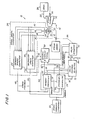
- Steam turbine 12 may be a conventional, industrial or marine turbine suitable for applying torque to a drive shaft 14 at a controllable speed and/or pressure.
- Steam turbine 12 is driven by steam generated in a conventional steam source 16 fed through a valve 18 and a steam pipe 20.
- Valve 18 is conventionnally built into steam turbine 12 but is shown separated in Fig. 1 for clarity.
- Exhaust steam from steam turbine 12 is conveyed through an exhaust steam pipe 22 to a conventional condenser 24. Since steam source 16, valve 18, steam turbine 12 and condenser 24 are conventional devices and do not, in themselves, constitute an inventive portion of the present disclosure, detailed description thereof is ommitted.
- a speed signal generator shown generally at 26, includes redundant components for generating redundant digital signals representing the speed of drive shaft 14.
- Speed sensor 29 may be of any type known or to become known in the art including, for example, magnetic, capacitive, inductive, optical or mechanical devices.
- speed sensor 29 includes a toothed wheel 30 having a predetermined number of equally spaced teeth 32 on its perimeter rotated by auxiliary shaft 28 in the vicinity of a plurality of speed pickups 34. Although any number of speed pickups may be used, in the embodiment shown, four speed pickups 34 are maintained in the vicinity of toothed wheel 30 and each produces an output signal in response to the passage of each of teeth 32.
- Speed pickups 34 are independent of each other and failure in one thereof does not itself cause failure in any of the others. Thus, the four speed pickups 34 produce four independent speed signals which are transmitted on lines 36, 38, 40 and 42 to a primary speed computer 44 and a secondary speed computer 46.
- Primary and secondary speed computers 44 and 46 each independently test the four speed signals, eliminate speed signals from speed pickups 34 which are faulty calculate a digital speed feedback signal and apply these digital speed feedback signals on lines 48 and 50 to primary and secondary controllers 52 and 54, respectively.
- primary and secondary speed computers 44 and 46 produce sensor status data which is applied on lines 56 and 58 to a control and display panel 60.
- the sensor status signal may produce an operator indication on control and display panel 60 informing an operator about failures in speed pickups 34 and, optionally, identifying the specific element or elements which have failed.
- a speed command generator 62 produces a speed command signal which is applied in parallel to command inputs of primary and secondary controllers 52 and 54.
- Speed command generator 62 preferably produces a digital signal containing information about the speed desired in drive shaft 14.
- Speed command generator 62 may be of any convenient type such as, for example, a manual control, programmed digital control, or a signal derived from the process being driven by steam turbine 12.
- Primary controller 52 and secondary controller 54 also receive separate valve actuator feedback signals on lines 64 and 66, respectively, produced in a manner to be described hereinafter.
- Primary controller 52 and secondary controller 54 each produce a control output signal in response to its respective input. These output signals are applied on lines 68 and 70, respectively, to a valve control selector 72.
- Primary controller 52 and secondary controller 54 are interconnected by a status bus 74 which permits each controller to keep its counterpart informed about its internal health.
- valve control selector 72 Under normal circumstances in the absence of a failure in primary controller 52 and the circuits feeding it, primary controller 52 is selected as the control source by valve control selector 72. If a failure occurs in primary controller 52 or the circuits feeding it, this information is transmitted to secondary controller 54 on status bus 74 and a process of transfer of control from primary controller 52 to secondary controller 54 is initiated. This status information may also be communicated both to control and display panel 60 and to valve control selector 72 on lines 76 and 78. Valves control selector 72 applies the one of its inputs which a control logic indicates is a correct input on a line 80 to a valve actuator 82. The other input to valve control selector 72 is applied on a line 84 to a termination 86.
- Termination 86 shown as a resistive element, is selected to prodive the same characteristics to valve control selector 72 as does valve actuator 82. That is, if valve actuator 82 represents a substantially pure resistive load, termination 86 may be a pure resistor as shown. Alternatively, if valve actuator 82 includes a substantial reactive component, termination 86 may be selected to have a corresponding reactive component.
- Valve actuator 82 provides a mechanical output represented by a dashed line 88 which is effective to proportionately open and close valve 18 in response to the signal on line 80.
- valve actuator 82 includes components (not shown in Fig. 1) which are effective to produce two independently generated valve actuator feedback signals on lines 64 and 66 each of which represents the amount by which valve 18 is open.
- a line 94 may optionally be provided to transmit valve condition information to control and display panel 60.
- steam turbine 12 could be controlled to a predetermined speed by simply opening valve 18 a predetermined amount. In such case, speed signal generator 26 would not be required.
- input, internal and external variables such as, for example, the pressure, temperature, water content and molecular weight of the steam, changing load characteristics, bearing and valve wear, changing turbine tip clearances, and the build up of scale and corrosion tend to make the relationship between valve position and speed variable both in the short and the long term.
- an inner feedback loop consisting of valve actuator feedback signals from valve actuator 82 to primary and secondary controllers 52 and 54 must be supplemented by an outer loop consisting of speed feedback signals produced by speed signal generator 26.
- Primary and secondary speed computers 44 and 46 may use any convenient technique for detecting faulty speed pickups 34 such as, for example, two-out-of-three or two-out-of-four voting.
- the speed signal on each of lines 36, 38, 40 and 42 is monitored for individual pickup failure.
- momentary failure of a speed pickup 34 can be tolerated, a large number of successive failures cannot.
- a count is initiated against such failed pickup to determine the number of successive outputs which are faulty.
- primary and secondary speed computers 44 and 46 independently switch the failed pickup into inactive status.
- Primary and secondary speed computers 44 and 46 continue to monitor the output of a pickup which has been determined to be defective in order to sense the spontaneous clearing of an intermittent failure. If this continued monitoring detects the successive occurrence of M good outputs, then the affected pickup is considered to be good and becomes a candidate for again supplying speed signals.
- speed sensing is performed by counting the number of high-frequency pulses generated by a crystal-controlled clock oscillator during a predetermined condition of the output of the related speed sensor.
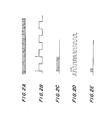
- a clock oscillator output is shown in which a large number of narrow clock pulses are produced.
- Fig. 2b shows the squared output of one of speed pickups 34. If the predetermined condition of the pickup signal is defined to be the positive-going leading edges of two succeeding cycles as indicated by the vertical line above the waveform of Fig. 2b, the pulses of Fig. 2a are counted for one cycle of the speed signal as indicated in F ig. 2c.
- the turbine speed is, of course, inversely proportional to the number of pulses counted during a cycle. That is, as the turbine speeds up, the period of one cycle is reduced in proportion and thus the number of clock pulses occuring in the cycle is correspondingly reduced.
- Fig. 2d shows a speed sensor output at a frequency four times as great as that shown in Fig. 2b.
- Fig. 2e With the same clock frequency and using succeeding positive-going leading edges as the gating point, only one- quarter as many clock pulses are counted as indicated in Fig. 2e. It would be clear to one skilled in the art that the resolution with which speed can be determined is substantially decreased as the number of pulses counted is reduced with increasing speed.
- the clock frequency is changed as a function of measured speed. That is, at slow speed, a low clock frequency can be used whereas at higher speeds one or more higher clock frequencies can be employed.
- the clock frequency selected can be determined based on a preceding speed measurement.
- the second way to improve speed resolution is to change the number of speed cycles over which clock pulses are counted. For example, in Fig. 2d, if instead of counting clock pulses only during a single cycle of the speed signal, the clock pulses are counted for, for example, four cycles of the speed signal, approximately, the same number of pulses would be counted as in the case of the much slower speed signal of Fig. 2b.
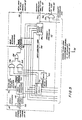
- Fig. 3 there is shown one embodiment of a speed computer which, in the figure, is assumed to be the primary speed computer 44.
- Secondary speed computer 46 F ig. 1 is identical to primary speed computer 44 and is thus not described in detail.
- the speed pulses on line 36 are applied to an accumulator 96 in primary speed computer 44.
- speed pulses on lines 38, 40 and 42 are applied to accumulators 98,, 100 and 102, respectively.
- Accumulators 96-102 are identical, therefore, only accumulator 102 is shown in detail and described hereinafter.
- the speed pulses on line 42 are applied to a programmable divider 104 which is controlled by an output of a CPU 106 to provide a gating output on a line 108 to a counter 110.
- a clock 112 provides clock pulses on a line 114 to a clock input CK on counter 110.
- a signal fed from CPU 106 to programmable divider 104 on a line 116 controls the division ratio of programmable divider 104 and thus controls the number of cycles of the speed signal on line 42 during which programmable divider 104 enables counter 110 to count clock pulses.
- the division ratio on line 116 increases with increasing speed as will be explained.
- Each of accumulators 96, 98, 100 and 102 ends each counting cycle with a count contained in its respective counter. Each of these counts should be substantially identical if the associated speed pickup and circuits within the accumulators are functioning properly.
- the accumulated counts are applied to a comparator and selector 118 to determine whether one or more of the counts deviates substantially from the others. Any counts which are determined to be substantially different are eliminated in comparator and selector 118 and all of the remaining counts are transmitted on lines 120 to an averaging circuit 122.
- Averaging circuit 122 performs the calculation which divides the numerator in the preceding equation by the count to determine the speed in rpm. In order to accomplish this, averaging circuit 122 receives signals from CPU 106 which inform it of the clock frequency f and the number of speed cycles N being employed on a line 124. Averaging circuit 122 takes the average of the thus calculated speeds from all of the properly functioning speed pickups and provides this average speed signal on line 48 to primary controller 52. In order to keep CPU 106 updated as to the measured speed so that it can control clock 112 and the programmable dividers in accumulators 96, 98, 100 and 102, the digital speed feedback signal is applied on a line 126 to CPU 106.
- a test signal is applied on a line 128 to programmable divider 104 in accumulator 102 as well as to corresponding elements in accumulators 96, 98 and 100.
- the test signal is substituted for the speed pulses on lines 36-42 to determine whether an apparent fault in a speed pickup is, in fact, due to the speed pickup or is due to downstream components.
- the test signal is selected to have a nominal frequency somewhere in the expected range of frequencies of speed pulses. In the preferred embodiment, the test signal on line 128 is about 2kHz. While the test signal is being employed, counter 110, and corresponding elements in the other accumulators, are directly controlled by clock 112. Comparator and selector 118 will receive the test signal as it is applied to each accumulator to determine the location of the fault.
- clock 112 is seen to include a clock oscillator 130 which is preferably a crystal-controlled oscillator operating at a high frequency of, for example, 1.8432 MHz.
- a first divider 132 divides the clock frequency by a relatively large factor such as, for example, by 32 to produce a clock frequency of 57.6 kHz which is applied to one input of an AND gate 134.
- the second input of AND gate 134 receives a control signal from CPU 106.
- a second divider 136 divides the oscillator frequency by a smaller factor than does divider 132 such as, for example, a factor of 2 to produce a frequency of 921.6 KHz which is applied to an AND gate 138.
- a further divider 140 divides the oscillator frequency by a very high factor of, for example, 921 to produce a test frequency of, for example, 2 kHz which is applied to an input of an AND gate 142.
- the second inputs of AND gates 138 and 142 receive control signals from CPU 106.
- Outputs of AND gates 134 and 138 are applied to an OR gate 144.
- the clock signal at the output of OR gate 144 is applied via line 114 to the clock input C K of accumulator 102 (Fig. 3).
- the 2 kHz signal from AND gate 134 is applied on line 128 to inputs of each of accumulators 96, 98, 100 and 102 (Fig. 3).
- CPU 106 when steam turbine 12 is started either from a stop or from a low speed of 5 to 20 rpm at which it may be spun by an external electric motor (not shown), CPU 106 provides an enable signal to an input of AND gate 134 and inhibit signals to the inputs of AND gate 138 and 142 so that the clock signal transmitted on line 114 is 57.6 KHz. At such very low speed, the interval control signal on line 108 enables counter 110 to count clock pulses for a period equal to one cycle of the speed pulses on line 42. Corresponding circuits in accumulators 96, 98 and 100 count speed pulses for the same period.
- CPU 106 determines the measured speed at the end of each measurement cycle and enables the appropriate one of AND gates 134 and 138 in response thereto.
- While the shaft speed is increasing, when the shaft speed exceeds 200 rpm, the input of AND gate 134 is inhibited and the input of AND gate 138 is enabled so that the clock frequency changes from 57.6 kHz to 921 kHz. This occurs under the rules stated hereinabove while N 4. This increases the measurement resolution by a factor of 16 at this point during increasing shaft speed. At 257 rpm, N is increased by one and continues to increase by one additional integer for each increase in shaft speed of 64 rpm. This fixes minimum pulses counted during N at about 11,500 and the maximum at less than 14,400. During decreasing rpm, the higher clock frequency is retained down at 100 rpm and thereafter the lower clock frequency is employed. This hysteresis in clock frequency improves the stability of operation by preventing jittering between the two clock frequencies with resultant possibilitiy of sudden changes in control signal.
- the 2 kHz signal produced by divider 140 is gated onto line 128 by enablement of AND gate 142 so that accumulators 96, 98, 100 and 102 can be driven with a known signal to isolate problems to pickup or counter.
- CPU 106 may be shared between the two computers and also may perform computing functions for other elements in the systems such as controllers 52 and 54 and control and display panel 60.
- Primary and secondary controllers 52 and 54 are identical except for the sources of some of their signals. Thus, only primary controller 52 is described in detail.
- the speed command signal from speed command generator 62 is applied to one input of an adder 146 which receives the speed feedback signal on line 48 at its other input.
- the difference between the speed command and speed feedback signals is a speed error signal which is communicated on a line 148 to a valve command generator 150 and to a comparison circuit 152.
- Valve command generator 150 produces a valve command signal on a line 154 in response to the speed error signal at its input which is applied to one input of an AND gate 156, an input of comparison circuit 152 and on status bus 74 to secondary controller 54.
- a second input of AND gate 156 receives an enable signal from comparison circuit 152 when primary controller 52 is determined to be good.
- the output of AND gate 156 is applied through an OR gate 158 to an input of an adder 160.
- valve actuator feedback signal on line 64 is applied to a second input of adder 160, an input of comparison circuit 152 and is communicated to secondary controller 54 on status bus 74.
- the difference between the valve command signal from OR gate 158 and the valve actuator feedback on line 64 is the valve drive signal' which is applied on line 68 to valve control selector 78, to an input of comparison circuit 152 and is communicated on status bus 74 to secondary controller 54.
- a valve command signal from secondary controller 54, besides being applied to comparison circuit 152 is also applied to a delay 162.
- Delay 162 delays the secondary valve command for a predetermined period such as, for example, two counting intervals of primary speed computer 44 (Fig. 1).
- the delayed secondary valve command is applied to one input of an AND gate 164.
- the second input of AND gate 164 is enabled by an output of comparison circuit 152 when it is determined that primary controller 52 is bad.
- the use of delay 162 ensures that the valve drive signal which is applied on line 68 to valve control selector 72 does not deviate substantially from the desired value due to failure of primary controller 52.
- comparison circuit 152 determines that there is a fault and switchover from the primary valve command signal from AND gate 156 to the delayed secondary valve command signal from AND gate 164
- the signal from AND gate 164 is responsive to speed inputs which existed two sampling periods before the fault was detected. This ensures that the valve drive signal 68 does not go out of control before secondary controller 54 can assume control and begin initializing its constants.
- a system mathematical model 166 receives the same inputs as comparison circuit 152 from lines 68, 64, 154, 148 and 48. In response to such inputs, system mathematical model 166 produces model results which determine whether valve command generator 150 and its associated circuits are producing valve drive signals which are appropriate to the inputs. Comparison circuit 152 receives corresponding signals fom secondary controller 54. When corresponding inputs of the two circuits indicate correct operation of both circuits, a both good signal is applied on a line 168 to system mathematical model 166. Under this circumstance, system mathematical model 166 continues to apply a low output on line 76a to control and display panel 60 as well as to an AND gate 170. The low or zero applied to the input of AND gate 170 inhibits this AND gate. The low on line 76a informs control and display panel 60 that the primary controller is still in operating condition. The signal from system mathematical model 166 is applied on a line in status bus 74 to a corresponding input of secondary controller 54.
- fprimary controller 52 is providing output signals which are inconsistent with its input signal, this fact will detected both by system mathematical model 166 and by the comparison circuit (not shown) in secondary controller 54. In this case, system mathematical model 166 will produce a high or one output which will enable one input of AND gate 170. In addition, system mathematical model 166 provides an alarm signal on line 76a to control and display panel 60 indicating that primary controller 52 is bad. At the same time, if secondary controller 54 is still functional, corresponding circuits therein will take over the process of controlling the turbine 12 and will provide valve drive signals to valve control selector 72.
- secondary controller 54 begins to provide control signals which are inconsistent with its inputs, this fact will be detected by a counterpart of the system mathematical model in secondary controller 54 and a high or one signal will be applied to AND gate 170 in primary controller 52. If primary controller 52 is also determined to be faulty, the one at the second input of AND gate 170 enables both inputs of AND gate 170 and produces a both bad signal on line 76b for connection to control and display panel 60 where this fact may be indicated with possible diagnostic display to the operator.
- primary controller 52 may be performed by circuits made up of discrete components or small, medium or large scale integrated circuits, and may be performed by either analog or digital apparatus.
- the input signals are digital, internal processing is digitally performed and some or all of the calculations and signal generation is performed employing digital computers.
- some or most of such functions are performed by a microprocessor.
- Each of primary and secondary controllers 52 and 54 may contain their own independent microprocessors or they may be combined with each other and optionally be combined with primary and secondary speed computers 44 and 46.
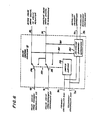
- valve control selector 72 is seen to consist of a double-pole double throw switch 172 which receives valve drive signals on lines 68 and 70 from primary and secondary controllers 52 and 54 at movable elements 174 and 176, respectively.
- Switch 172 is driven by a switch driver 178 in response to signals on lines 76a and 78a indicating that the primary or secondary controller, respectivelly, is bad.
- an appropriate signal on line 76a indicating that the primary controller is bad causes switch driver 178 to reverse the positions of movable elements 174 and 176.
- the primary and secondary controller bad signals on lines 76a and 78a are also applied to an initialize command generator 180 which also receives the active and inactive valve drive signals on lines 182 and 184, respectively.
- initialize command generator 180 transmits signals to secondary controller 54 on a line 78c immediately after secondary controller 54 assumes control which forces the valve command generator in secondary controller 54 to reinitialize its internal constants to correct for any drift which may have occurred.
Landscapes
- Engineering & Computer Science (AREA)
- Physics & Mathematics (AREA)
- General Physics & Mathematics (AREA)
- Automation & Control Theory (AREA)
- Mechanical Engineering (AREA)
- General Engineering & Computer Science (AREA)
- Control Of Turbines (AREA)
- Safety Devices In Control Systems (AREA)
Applications Claiming Priority (6)
| Application Number | Priority Date | Filing Date | Title |
|---|---|---|---|
| US368737 | 1982-04-15 | ||
| US368738 | 1982-04-15 | ||
| US06/368,737 US4494207A (en) | 1982-04-15 | 1982-04-15 | Dual turbine controller |
| US06/368,738 US4494208A (en) | 1982-04-15 | 1982-04-15 | Bumpless switching of valve drive in a turbine control system |
| US06/368,739 US4484137A (en) | 1982-04-15 | 1982-04-15 | Wide dynamic range shaft speed sensor |
| US368739 | 1989-06-20 |
Publications (3)
| Publication Number | Publication Date |
|---|---|
| EP0093276A2 true EP0093276A2 (de) | 1983-11-09 |
| EP0093276A3 EP0093276A3 (en) | 1984-09-05 |
| EP0093276B1 EP0093276B1 (de) | 1988-10-26 |
Family
ID=27408881
Family Applications (1)
| Application Number | Title | Priority Date | Filing Date |
|---|---|---|---|
| EP83103434A Expired EP0093276B1 (de) | 1982-04-15 | 1983-04-08 | Turbinenregelungssystem |
Country Status (5)
| Country | Link |
|---|---|
| EP (1) | EP0093276B1 (de) |
| KR (1) | KR890001169B1 (de) |
| DE (1) | DE3378332D1 (de) |
| ES (1) | ES8404009A1 (de) |
| MX (1) | MX155415A (de) |
Cited By (8)
| Publication number | Priority date | Publication date | Assignee | Title |
|---|---|---|---|---|
| GB2144491A (en) * | 1983-08-05 | 1985-03-06 | United Technologies Corp | Propeller pitch control system |
| EP0186612A3 (en) * | 1984-12-20 | 1988-08-24 | United Technologies Corporation | Control system actuator position synthesis for failure detection |
| EP0397913A1 (de) * | 1989-05-19 | 1990-11-22 | ELEKTRO-GERÄTE-BAU GUSTAV KLEIN GMBH & CO. KG | Gleichrichteranordnung |
| EP0443384A3 (en) * | 1990-02-22 | 1993-07-14 | Man Gutehoffnungshuette Aktiengesellschaft | Method for the redundant rotation speed control and apparatus for carrying out this method |
| EP0615180A1 (de) * | 1993-03-08 | 1994-09-14 | Landis & Gyr Technology Innovation AG | Elektrische Überwachungsanordnung |
| FR2736387A1 (fr) * | 1995-07-08 | 1997-01-10 | Mtu Muenchen Gmbh | Procede de regulation d'un mecanisme d'entrainement d'un arbre avec un micro-appareil de commande |
| KR101022107B1 (ko) * | 2006-11-21 | 2011-03-17 | 미츠비시 쥬고교 가부시키가이샤 | 가스 터빈의 흡기 가열 제어 장치 |
| EP4685604A1 (de) * | 2024-07-26 | 2026-01-28 | Liebherr-Aerospace Lindenberg GmbH | Aktuator mit redundanten kanälen |
Family Cites Families (11)
| Publication number | Priority date | Publication date | Assignee | Title |
|---|---|---|---|---|
| US3709626A (en) * | 1971-09-16 | 1973-01-09 | Gen Electric | Digital analog electrohydraulic turbine control system |
| US4267458A (en) * | 1972-04-26 | 1981-05-12 | Westinghouse Electric Corp. | System and method for starting, synchronizing and operating a steam turbine with digital computer control |
| FR2248511B1 (de) * | 1973-10-17 | 1976-05-07 | Sopromi Soc Proc Modern Inject | |
| DE2353038A1 (de) * | 1973-10-23 | 1975-04-30 | Teldix Gmbh | Verfahren und anordnung zur messung der impulsfolgefrequenz einer impulsfolge |
| US4057715A (en) * | 1973-11-06 | 1977-11-08 | Westinghouse Electric Corporation | Wide range system for transferring steam generator and turbine operation between computers in a multiple turbine computer control system |
| DE2635004B2 (de) * | 1976-08-04 | 1978-09-28 | Wabco Westinghouse Gmbh, 3000 Hannover | Verfahren und Schaltungsanordnung zur digitalen Messung der Rotationsgeschwindigkeit |
| US4159444A (en) * | 1978-03-21 | 1979-06-26 | Sperry Rand Corporation | Fail operational dual electromechanical servo actuator for aircraft with model monitoring |
| FR2458814A1 (fr) * | 1979-06-12 | 1981-01-02 | Alsthom Atlantique | Mesure d'une frequence par asservissement numerique |
| US4398242A (en) * | 1980-02-25 | 1983-08-09 | The Boeing Company | Electronic controller |
| JPS573101A (en) * | 1980-06-09 | 1982-01-08 | Hitachi Ltd | Multiple control device |
| US4370706A (en) * | 1980-09-26 | 1983-01-25 | The Bendix Corporation | Controller for a dual servo system |
-
1983
- 1983-04-08 DE DE8383103434T patent/DE3378332D1/de not_active Expired
- 1983-04-08 EP EP83103434A patent/EP0093276B1/de not_active Expired
- 1983-04-14 KR KR1019830001574A patent/KR890001169B1/ko not_active Expired
- 1983-04-14 ES ES521453A patent/ES8404009A1/es not_active Expired
- 1983-04-15 MX MX196949A patent/MX155415A/es unknown
Cited By (9)
| Publication number | Priority date | Publication date | Assignee | Title |
|---|---|---|---|---|
| GB2144491A (en) * | 1983-08-05 | 1985-03-06 | United Technologies Corp | Propeller pitch control system |
| EP0186612A3 (en) * | 1984-12-20 | 1988-08-24 | United Technologies Corporation | Control system actuator position synthesis for failure detection |
| EP0397913A1 (de) * | 1989-05-19 | 1990-11-22 | ELEKTRO-GERÄTE-BAU GUSTAV KLEIN GMBH & CO. KG | Gleichrichteranordnung |
| EP0443384A3 (en) * | 1990-02-22 | 1993-07-14 | Man Gutehoffnungshuette Aktiengesellschaft | Method for the redundant rotation speed control and apparatus for carrying out this method |
| EP0615180A1 (de) * | 1993-03-08 | 1994-09-14 | Landis & Gyr Technology Innovation AG | Elektrische Überwachungsanordnung |
| US5619131A (en) * | 1993-03-08 | 1997-04-08 | Landis & Gyr Business Support Ag | Parallel analog-digital monitoring system |
| FR2736387A1 (fr) * | 1995-07-08 | 1997-01-10 | Mtu Muenchen Gmbh | Procede de regulation d'un mecanisme d'entrainement d'un arbre avec un micro-appareil de commande |
| KR101022107B1 (ko) * | 2006-11-21 | 2011-03-17 | 미츠비시 쥬고교 가부시키가이샤 | 가스 터빈의 흡기 가열 제어 장치 |
| EP4685604A1 (de) * | 2024-07-26 | 2026-01-28 | Liebherr-Aerospace Lindenberg GmbH | Aktuator mit redundanten kanälen |
Also Published As
| Publication number | Publication date |
|---|---|
| ES521453A0 (es) | 1984-04-01 |
| KR890001169B1 (ko) | 1989-04-26 |
| ES8404009A1 (es) | 1984-04-01 |
| MX155415A (es) | 1988-02-29 |
| EP0093276A3 (en) | 1984-09-05 |
| KR840004474A (ko) | 1984-10-15 |
| EP0093276B1 (de) | 1988-10-26 |
| DE3378332D1 (en) | 1988-12-01 |
Similar Documents
| Publication | Publication Date | Title |
|---|---|---|
| US4494207A (en) | Dual turbine controller | |
| US4071897A (en) | Power plant speed channel selection system | |
| US4494208A (en) | Bumpless switching of valve drive in a turbine control system | |
| US5893047A (en) | Monitoring apparatus and method | |
| CA1234901A (en) | Control system actuator position synthesis for failure detection | |
| US4153198A (en) | Electro-hydraulic governor employing duplex digital controller system | |
| US4134106A (en) | Absolute resolver angle to digital converter circuit | |
| US4447788A (en) | Method for optimizing the power input of a plurality of hysteresis motors connected in parallel | |
| EP0093276B1 (de) | Turbinenregelungssystem | |
| JPS6237231B2 (de) | ||
| US4484137A (en) | Wide dynamic range shaft speed sensor | |
| JPH0346842B2 (de) | ||
| US4504905A (en) | Digital control system including means for maintaining signals supplied thereby within limiting values | |
| RU2313099C2 (ru) | Устройство для определения частоты вращения вращающейся детали машины | |
| JP7153767B2 (ja) | 電力変換装置 | |
| RU2350968C2 (ru) | Устройство для определения частоты вращения вращающейся детали машины с избыточными датчиками и схемами оценки | |
| WO2021076322A1 (en) | Systems, methods and apparatuses for frequency tracking | |
| GB2226423A (en) | Control system for a gas turbine engine | |
| US5070333A (en) | Frequency-to-digital converter using a combined counted and time method | |
| GB2105492A (en) | A duplicated computer control system | |
| WO1995016226A1 (en) | Measuring value judging method | |
| US4160198A (en) | Numerically-controlled machine tool | |
| JP2740953B2 (ja) | 主軸定位置停止制御装置 | |
| RO132781A0 (ro) | Procedură programabilă de detecţie a defectelor la senzorii de curent ai unui convertor electronic trifazat | |
| JPH01320468A (ja) | 機械の回転数を測定する方法および装置 |
Legal Events
| Date | Code | Title | Description |
|---|---|---|---|
| PUAI | Public reference made under article 153(3) epc to a published international application that has entered the european phase |
Free format text: ORIGINAL CODE: 0009012 |
|
| AK | Designated contracting states |
Designated state(s): CH DE FR GB LI |
|
| PUAL | Search report despatched |
Free format text: ORIGINAL CODE: 0009013 |
|
| AK | Designated contracting states |
Designated state(s): CH DE FR GB LI |
|
| 17P | Request for examination filed |
Effective date: 19850215 |
|
| 17Q | First examination report despatched |
Effective date: 19860821 |
|
| D17Q | First examination report despatched (deleted) | ||
| GRAA | (expected) grant |
Free format text: ORIGINAL CODE: 0009210 |
|
| AK | Designated contracting states |
Kind code of ref document: B1 Designated state(s): CH DE FR GB LI |
|
| REF | Corresponds to: |
Ref document number: 3378332 Country of ref document: DE Date of ref document: 19881201 |
|
| ET | Fr: translation filed | ||
| PLBE | No opposition filed within time limit |
Free format text: ORIGINAL CODE: 0009261 |
|
| STAA | Information on the status of an ep patent application or granted ep patent |
Free format text: STATUS: NO OPPOSITION FILED WITHIN TIME LIMIT |
|
| 26N | No opposition filed | ||
| PGFP | Annual fee paid to national office [announced via postgrant information from national office to epo] |
Ref country code: FR Payment date: 19930311 Year of fee payment: 11 |
|
| PGFP | Annual fee paid to national office [announced via postgrant information from national office to epo] |
Ref country code: CH Payment date: 19930316 Year of fee payment: 11 |
|
| PGFP | Annual fee paid to national office [announced via postgrant information from national office to epo] |
Ref country code: DE Payment date: 19930317 Year of fee payment: 11 |
|
| PGFP | Annual fee paid to national office [announced via postgrant information from national office to epo] |
Ref country code: GB Payment date: 19930331 Year of fee payment: 11 |
|
| PG25 | Lapsed in a contracting state [announced via postgrant information from national office to epo] |
Ref country code: GB Effective date: 19940408 |
|
| PG25 | Lapsed in a contracting state [announced via postgrant information from national office to epo] |
Ref country code: LI Effective date: 19940430 Ref country code: CH Effective date: 19940430 |
|
| GBPC | Gb: european patent ceased through non-payment of renewal fee |
Effective date: 19940408 |
|
| PG25 | Lapsed in a contracting state [announced via postgrant information from national office to epo] |
Ref country code: FR Effective date: 19941229 |
|
| REG | Reference to a national code |
Ref country code: CH Ref legal event code: PL |
|
| PG25 | Lapsed in a contracting state [announced via postgrant information from national office to epo] |
Ref country code: DE Effective date: 19950103 |
|
| REG | Reference to a national code |
Ref country code: FR Ref legal event code: ST |