EP0093856A1 - Esters de l'acide acrylique substitués par des groupements phényl et leur utilisation - Google Patents
Esters de l'acide acrylique substitués par des groupements phényl et leur utilisation Download PDFInfo
- Publication number
- EP0093856A1 EP0093856A1 EP83102409A EP83102409A EP0093856A1 EP 0093856 A1 EP0093856 A1 EP 0093856A1 EP 83102409 A EP83102409 A EP 83102409A EP 83102409 A EP83102409 A EP 83102409A EP 0093856 A1 EP0093856 A1 EP 0093856A1
- Authority
- EP
- European Patent Office
- Prior art keywords
- phenyl
- acrylic acid
- molecular weight
- carbon atoms
- weight distribution
- Prior art date
- Legal status (The legal status is an assumption and is not a legal conclusion. Google has not performed a legal analysis and makes no representation as to the accuracy of the status listed.)
- Withdrawn
Links
Images





Classifications
-
- C—CHEMISTRY; METALLURGY
- C08—ORGANIC MACROMOLECULAR COMPOUNDS; THEIR PREPARATION OR CHEMICAL WORKING-UP; COMPOSITIONS BASED THEREON
- C08F—MACROMOLECULAR COMPOUNDS OBTAINED BY REACTIONS ONLY INVOLVING CARBON-TO-CARBON UNSATURATED BONDS
- C08F20/00—Homopolymers and copolymers of compounds having one or more unsaturated aliphatic radicals, each having only one carbon-to-carbon double bond, and only one being terminated by only one carboxyl radical or a salt, anhydride, ester, amide, imide or nitrile thereof
- C08F20/02—Monocarboxylic acids having less than ten carbon atoms, Derivatives thereof
- C08F20/10—Esters
- C08F20/12—Esters of monohydric alcohols or phenols
- C08F20/16—Esters of monohydric alcohols or phenols of phenols or of alcohols containing two or more carbon atoms
- C08F20/18—Esters of monohydric alcohols or phenols of phenols or of alcohols containing two or more carbon atoms with acrylic or methacrylic acids
Definitions
- Phenyl-substituted acrylic acid esters with a longer aliphatic chain in the alcohol part are already known (US Pat. No. 3,751,449). These are, for example, 5-phenyl-n-pentyl-acrylate or 6-phenyl-n-hexyl-acrylate or their higher homologues. These monomeric compounds are used as intermediates for the production of polymers. These polymers can be used as pressure-sensitive adhesives (cf. US Pat. No. 3,751,449, column 1, lines 14 to 39).
- phenyl substituted acrylic acid esters of the formula R denotes a straight-chain or branched alkylene radical having 3 to 4 carbon atoms, which is optionally interrupted by an ether oxygen bridge, the straight-chain portion containing at least 3 carbon atoms.
- the acrylic acid esters according to the invention can be prepared, inter alia, by direct esterification of the relevant alcohols with acrylic acid.
- the phenyl-substituted acrylic acid esters according to the invention are intermediate products. They can be converted into polymers by conventional polymerization in bulk, solution, emulsion and suspension, in the manner in which this is done, for. B. in the monograph Monomeric Acrylic Esters by Riddle, Reinhold Publishing Corp. (1954) from page 37 to page 56 or also in the monograph Acrylic Resins by Horn, Reinhold Publishing Corp. (1960) from page 26 to page 29.
- the preparation of the polymers by emulsion polymerization is particularly expedient.
- B salts of carboxylic acid, such as sodium caprinate, laurate, myristate, palmitate.
- Salts of primary and secondary alkyl sulfates e.g. B. sodium capryl sulfate, lauryl sulfate, myristyl sulfate and oleyl sulfate.
- sulfates of esterified polyoxy compounds such as mono-fatty acid glycerol sulfuric acid esters, salts of primary and secondary alkyl sulfonates, such as sodium methyl sulfonate, stearyl sulfonate, oleyl sulfonate, n-alkane sulfonates with statistical distribution of the sulfonic acid group and chain length C 13 to C 17 sulfonates, alkylates, etc.
- B. the Na salt of pn-dodecylbenzenesulfonic acid such as mono-fatty acid glycerol sulfuric acid esters, salts of primary and secondary alkyl sulfonates, such as sodium methyl sulfonate, stearyl sulfonate, oleyl sulfonate, n-alkane sulfonates with statistical distribution of the sulfonic acid group and chain length C 13 to C 17 sulf
- emulsifiers are also suitable. Auxiliaries can also be added to the emulsifiers mentioned, for. B. alcohols such as lauryl alcohol, esters such as sorbitol monolaurate and carboxylic acid glycol ester.
- the concentration of the emulsifiers can be 0.1 to 3 percent by weight, preferably 0.5 to 2 percent by weight, based on monomers. Emulsifier-free emulsion polymerization is also an option.
- Suitable catalysts are the water-soluble compounds usually used in emulsion polymerization, such as water-soluble persulfate, e.g. B. Na or K persulfate optionally combined with a reducing component, such as water-soluble bisulfite, hydrosulfite, hydrazine, thiosulfate, formaldehyde sulfoxylates; Hydrogen peroxide combined with reducing components, such as bisulfite, hydrazine, hydroxylamine or ascorbic acid, furthermore water-soluble persulfate combined with hydrogen peroxide and an activating component, such as copper salts, which are to be used in an alkaline medium with complexing agents, such as pyrophosphates. The usual concentrations are used.
- water-soluble persulfate e.g. B. Na or K persulfate
- a reducing component such as water-soluble bisulfite, hydrosulfite, hydrazine, thiosulf
- the polymerization temperature can be 5 to 120 ° C, but preferably 40 to 90 ° C.
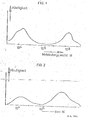
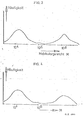
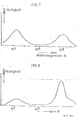
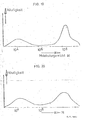
- the polymers generally have a broad molecular weight distribution, as will be explained later using the examples. These broad molecular weight distributions are shown in the molecular weight averages, determined by gel permeation chromatography (GPC), in that number average molecular weight values of 5 ⁇ 10 to 5 ⁇ 10 4 and weight average molecular weight values of 5 ⁇ 10 5 to 5 ⁇ 10 8 are possible.
- Possible crosslinking compounds are: divinylbenzene, divinyl esters of dibasic and triphasic acids, such as divinyl adipate, diallyl esters of polyfunctional acids (diallyl phthalate), divinyl ethers of polyhydric alcohols (divinyl ethers of ethylene glycol), di- and tri-methacrylates and acrylates of polyhydric alcohols.
- the commercially available representatives of the latter group are particularly suitable because they can be copolymerized well with acrylic acid esters and give the finished mixture better thermal stability. Examples include: ethylene glycol dimethacrylate, propylene glycol dimethacrylate, 1,3-butylene glycol dimethacrylate, 1,4-butylene glycol dimethacrylate and the corresponding diacrylates.
- the polymers thus obtained can be added to the rigid polyvinyl chloride as a toughening component and, in a completely surprising manner, result in molding compositions with particularly high impact strength and transparency.
- any polyvinyl chloride produced can be used as the polyvinyl chloride; however, it appears most expedient to prepare the polyvinyl chlorides in bulk, suspension, emulsion or solution using free radical initiators and to strive for molecular weights of 35,000 to 150,000 (K value 40 to 90).
- the introduction of the impact-resistant polymers can be carried out by all known methods of modification, namely by graft polymerization of vinyl chloride onto the polymer of the acrylic acid ester according to the invention or by any type of mixing polyvinyl chloride with the polyaerylate, e.g. B. by mixing in the solid state on a roller mixer, a Banburg mixer, a plastograph, a Compoudier extruder or the like.
- the polyvinyl chloride and the polyacrylate can also be mixed together in latex form and then dried in a conventional manner, e.g. B. by spray drying.
- the cooled product is washed with NaHCO 3 solution and water, the aqueous phase is separated off in a separating funnel and the organic phase is distilled. After toluene has been distilled off at about 100 mbar, acrylic acid esters and alcohol are separated on a column.
- Boiling point of 3-phenylpropanol-l 109 ° C / 6 mbar
- Boiling point of 3-phenylpropanol-1-acrylic acid ester 120 ° C / 6 mbar
- Boiling point of 4-phenylbutanol-1 116 ° C / 6 mbar
- Boiling point of 4-phenylbutanol-1-acrylic acid ester 126 ° C / 6 mbar
- the reactor contents below 2 bar N 2 pressure at 80 o C is heated. 5 ml of the ammonium peroxodisulfate solution are added during the heating, the remainder is metered in uniformly over the course of 120 minutes and the reaction temperature is kept at 80.degree. The reaction is complete after a further 30 minutes. The mixture is allowed to cool and a white, stable polyacrylate latex is obtained.
- the molecular weight distribution curve is shown in FIG. 1.
- the molecular weight distribution is shown in Figure 2.
- a white, stable polyacrylate latex is obtained in each case.
- a white, stable polyacrylate latex is obtained in each case.
- copolymers of the phenyl-substituted acrylic acid esters with alkyl acrylates can also be prepared.
- a white, stable polyacrylate latex is obtained in each case.
- a white, stable polyacrylate latex is obtained in each case.
- the reactor contents are heated to 60 C and polymerized at this temperature until the pressure drops by 3 bar within about 6 hours.
- PA polyacrylic acid ester
- M-PVC bulk polyvinyl chloride
- M-PVC manufactured e.g. according to DE-OS 15 20 595
- PA latex produced according to Examples 7, 7 a, 8, 8 a, 12, 12a, 13, 13 a, 14, 14 a, 15, 15a, 18, 18 a
- the polyacrylate latices prepared according to Examples 7 a, 8 a, 12 a, 13 a, 14 a, are worked up so that the pure polymer is present.
- 100 g of methanol and 100 g of 5% strength aqueous Na formate solution are added to each of the above 250 g of polyacrylate latex with stirring.
- the polyacrylate thus precipitated is filtered off on a frit, washed with methanol and demineralized water and dried in vacuo at 40 ° C. for 24 hours.
- 10 parts (40 g) of the polymer obtained in this way are each made with 90 parts (360 g) of M-PVC (produced, for example, according to DE-OS 15 95 431) using the processing described for all processing operations described later. and stabilizing agents mixed on the roller at 185 ° C. for 5 to 15 minutes.
- a rolled skin is obtained, which is further processed in the usual way to press plates.
Landscapes
- Chemical & Material Sciences (AREA)
- Health & Medical Sciences (AREA)
- Chemical Kinetics & Catalysis (AREA)
- Medicinal Chemistry (AREA)
- Polymers & Plastics (AREA)
- Organic Chemistry (AREA)
- Addition Polymer Or Copolymer, Post-Treatments, Or Chemical Modifications (AREA)
- Organic Low-Molecular-Weight Compounds And Preparation Thereof (AREA)
- Compositions Of Macromolecular Compounds (AREA)
Applications Claiming Priority (2)
| Application Number | Priority Date | Filing Date | Title |
|---|---|---|---|
| DE3216987 | 1982-05-06 | ||
| DE19823216987 DE3216987A1 (de) | 1982-05-06 | 1982-05-06 | Phenylsubstituierter acrylsaeureester und dessen verwendung |
Publications (1)
| Publication Number | Publication Date |
|---|---|
| EP0093856A1 true EP0093856A1 (fr) | 1983-11-16 |
Family
ID=6162891
Family Applications (1)
| Application Number | Title | Priority Date | Filing Date |
|---|---|---|---|
| EP83102409A Withdrawn EP0093856A1 (fr) | 1982-05-06 | 1983-03-11 | Esters de l'acide acrylique substitués par des groupements phényl et leur utilisation |
Country Status (5)
| Country | Link |
|---|---|
| EP (1) | EP0093856A1 (fr) |
| JP (1) | JPS58203941A (fr) |
| BR (1) | BR8302328A (fr) |
| DE (1) | DE3216987A1 (fr) |
| NO (1) | NO831578L (fr) |
Cited By (1)
| Publication number | Priority date | Publication date | Assignee | Title |
|---|---|---|---|---|
| EP3572396A4 (fr) * | 2017-01-17 | 2020-11-18 | Nikon Corporation | Composé (méth)acrylate, additif pour résine optique, élément optique et dispositif optique |
Citations (2)
| Publication number | Priority date | Publication date | Assignee | Title |
|---|---|---|---|---|
| DE2110189A1 (de) * | 1970-03-04 | 1971-09-16 | Sumitomo Chemical Co | Mit Schwefel vernetzbare Olefin Acryl säureester Mischpolymerisate und Verfahren zu ihrer Herstellung |
| US3751449A (en) * | 1969-06-26 | 1973-08-07 | Minnesota Mining & Mfg | Cycloaliphatic and phenylalkyl acrylates and vinyl esters |
-
1982
- 1982-05-06 DE DE19823216987 patent/DE3216987A1/de not_active Withdrawn
-
1983
- 1983-03-11 EP EP83102409A patent/EP0093856A1/fr not_active Withdrawn
- 1983-05-02 JP JP58076340A patent/JPS58203941A/ja active Pending
- 1983-05-04 NO NO831578A patent/NO831578L/no unknown
- 1983-05-05 BR BR8302328A patent/BR8302328A/pt unknown
Patent Citations (2)
| Publication number | Priority date | Publication date | Assignee | Title |
|---|---|---|---|---|
| US3751449A (en) * | 1969-06-26 | 1973-08-07 | Minnesota Mining & Mfg | Cycloaliphatic and phenylalkyl acrylates and vinyl esters |
| DE2110189A1 (de) * | 1970-03-04 | 1971-09-16 | Sumitomo Chemical Co | Mit Schwefel vernetzbare Olefin Acryl säureester Mischpolymerisate und Verfahren zu ihrer Herstellung |
Non-Patent Citations (2)
| Title |
|---|
| Chemical Abstracts Band 63, Nr. 13, 20 December 1965, Columbus, Ohio, USA K. YOKOTA et al. "N.M.R. study on the stereoregularity of poly(omega-phenylalkyl methacrylates) obtained with a radical initiator. High syndiotacticity of poly(2-phenylethyl methacrylate)", Spalte 18 * |
| Chemical Abstracts Band 76, Nr. 20, 15 Mai 1972, Columbus, Ohio, USA Seite 31, Spalte 2, Abstract Nr. 113892e & JP-A-71-40690 * |
Cited By (2)
| Publication number | Priority date | Publication date | Assignee | Title |
|---|---|---|---|---|
| EP3572396A4 (fr) * | 2017-01-17 | 2020-11-18 | Nikon Corporation | Composé (méth)acrylate, additif pour résine optique, élément optique et dispositif optique |
| US11142636B2 (en) | 2017-01-17 | 2021-10-12 | Nikon Corporation | (Meth)acrylate compound, additive for optical resin, optical element, and optical device |
Also Published As
| Publication number | Publication date |
|---|---|
| DE3216987A1 (de) | 1983-11-17 |
| NO831578L (no) | 1983-11-07 |
| JPS58203941A (ja) | 1983-11-28 |
| BR8302328A (pt) | 1984-01-10 |
Similar Documents
| Publication | Publication Date | Title |
|---|---|---|
| DE3213296C2 (de) | Verfahren zur Herstellung von Copolymerisaten auf der Basis von Maleinsäure und Acrylsäure in einer wäßrigen Lösung bei einem ph-Wert von 3,5 bis 5. | |
| DE69813996T2 (de) | Verfahren zur Herstellung von Emulsionen und den daraus hergestellen Polymeren | |
| EP0059446B1 (fr) | Procédé de préparation de copolymères de l'anhydride maléique | |
| DE60111365T2 (de) | Verfahren zur herstellung einer photochromen latex | |
| DE69602700T2 (de) | Emulsion mit niedrigem Gehalt an flüchtigen organischen Verbindungen | |
| DE1645126A1 (de) | Homopolymerisate und Mischpolymerisate von Perfluor-(2-methylen-4-methyl-1,3-dioxolan) und Verfahren zu deren Herstellung | |
| WO2000014123A1 (fr) | Procede de reduction de la quantite de monomeres residuels dans des dispersions aqueuses de polymeres | |
| DE2442121C2 (fr) | ||
| EP0030999A2 (fr) | Résines résistant aux chocs et leur préparation | |
| EP0600478A1 (fr) | Préparation d'un latex de copolymère greffé constitué de particules coeur-enveloppe avec adhésion améliorée entre le coeur et l'enveloppe | |
| DE1158269B (de) | Verfahren zur Herstellung von stabilen waessrigen Polymerisat-Dispersionen | |
| EP0222127B1 (fr) | Préparation de mélanges thermoplastiques | |
| EP0093854B1 (fr) | Produits hautement transparents et malléables à base de chlorure de polyvinyle | |
| EP0129720A2 (fr) | Usage de produits de transformation d'oxyde d'éthylène avec diols aliphatiques vicinaux comme émulsifiant dans la polymérisation en émulsion | |
| EP0681593B1 (fr) | Copolymerisats greffes et capsules a liaison de phase amelioree entre la base de greffage et la phase polymere greffee | |
| EP0124759A1 (fr) | Procédé pour produire des dispersions aqueuses de copolymère et leur application | |
| EP0374814B1 (fr) | Polymère greffé | |
| EP0508262B1 (fr) | Procédé de préparation de polymères d'alpha-méthylstyrène | |
| EP0093855B1 (fr) | Polymères d'un ester phénylalkyl d'acide acrylique, leur préparation et leur usage | |
| DE3518617A1 (de) | Copolymeres von fluormethacrylat mit styrol oder dessen derivaten und verfahren zu seiner herstellung | |
| EP0001782B1 (fr) | Procédé de préparation de copolymérisats greffés | |
| DE3216987A1 (de) | Phenylsubstituierter acrylsaeureester und dessen verwendung | |
| EP0402748B1 (fr) | Compositions à mouler ayant une résistance à l'embuage améliorée contenant des polymères de chlorure de vinyle | |
| EP0306806A2 (fr) | Procédé de préparation de polymères greffés | |
| EP0001810B1 (fr) | Procédé de préparation de copolymères d'un ester vinylique |
Legal Events
| Date | Code | Title | Description |
|---|---|---|---|
| PUAI | Public reference made under article 153(3) epc to a published international application that has entered the european phase |
Free format text: ORIGINAL CODE: 0009012 |
|
| AK | Designated contracting states |
Designated state(s): BE DE FR GB IT NL SE |
|
| 17P | Request for examination filed |
Effective date: 19831119 |
|
| STAA | Information on the status of an ep patent application or granted ep patent |
Free format text: STATUS: THE APPLICATION HAS BEEN WITHDRAWN |
|
| 18W | Application withdrawn |
Withdrawal date: 19840706 |
|
| RIN1 | Information on inventor provided before grant (corrected) |
Inventor name: STUETZEL, BERNHARD, DR. |