EP0094997A1 - Vaccin contre la mastite des bovins, son procédé de préparation et méthode pour détecter son efficacité - Google Patents
Vaccin contre la mastite des bovins, son procédé de préparation et méthode pour détecter son efficacité Download PDFInfo
- Publication number
- EP0094997A1 EP0094997A1 EP82302639A EP82302639A EP0094997A1 EP 0094997 A1 EP0094997 A1 EP 0094997A1 EP 82302639 A EP82302639 A EP 82302639A EP 82302639 A EP82302639 A EP 82302639A EP 0094997 A1 EP0094997 A1 EP 0094997A1
- Authority
- EP
- European Patent Office
- Prior art keywords
- antigen
- bovine
- derived
- aureus
- vaccine
- Prior art date
- Legal status (The legal status is an assumption and is not a legal conclusion. Google has not performed a legal analysis and makes no representation as to the accuracy of the status listed.)
- Withdrawn
Links
- 229960005486 vaccine Drugs 0.000 title claims abstract description 79
- 208000031462 Bovine Mastitis Diseases 0.000 title claims abstract description 28
- 238000000034 method Methods 0.000 title claims description 38
- 238000004519 manufacturing process Methods 0.000 title claims description 9
- 102000036639 antigens Human genes 0.000 claims abstract description 164
- 108091007433 antigens Proteins 0.000 claims abstract description 164
- 239000000427 antigen Substances 0.000 claims abstract description 163
- 241000283690 Bos taurus Species 0.000 claims abstract description 89
- 238000002965 ELISA Methods 0.000 claims abstract description 44
- 239000002671 adjuvant Substances 0.000 claims abstract description 43
- 239000000203 mixture Substances 0.000 claims abstract description 9
- 230000002265 prevention Effects 0.000 claims abstract description 7
- 239000008267 milk Substances 0.000 claims description 48
- 235000013336 milk Nutrition 0.000 claims description 48
- 210000004080 milk Anatomy 0.000 claims description 48
- 108010006464 Hemolysin Proteins Proteins 0.000 claims description 39
- 239000003228 hemolysin Substances 0.000 claims description 39
- 239000000463 material Substances 0.000 claims description 24
- 239000000758 substrate Substances 0.000 claims description 18
- 230000000415 inactivating effect Effects 0.000 claims description 15
- 239000002480 mineral oil Substances 0.000 claims description 13
- 235000010446 mineral oil Nutrition 0.000 claims description 13
- 239000004480 active ingredient Substances 0.000 claims description 11
- 210000002966 serum Anatomy 0.000 claims description 9
- 102000004190 Enzymes Human genes 0.000 claims description 8
- 108090000790 Enzymes Proteins 0.000 claims description 8
- 239000007790 solid phase Substances 0.000 claims description 8
- 230000000935 anti-streptococcal effect Effects 0.000 claims description 7
- 241000894007 species Species 0.000 claims description 7
- 108010014603 Leukocidins Proteins 0.000 claims description 6
- 239000007795 chemical reaction product Substances 0.000 claims description 6
- 238000002156 mixing Methods 0.000 claims description 5
- 239000003995 emulsifying agent Substances 0.000 claims description 4
- 239000002023 wood Substances 0.000 claims description 4
- 238000003306 harvesting Methods 0.000 claims description 3
- 108010042708 Acetylmuramyl-Alanyl-Isoglutamine Proteins 0.000 claims description 2
- BSOQXXWZTUDTEL-ZUYCGGNHSA-N muramyl dipeptide Chemical compound OC(=O)CC[C@H](C(N)=O)NC(=O)[C@H](C)NC(=O)[C@@H](C)O[C@H]1[C@H](O)[C@@H](CO)O[C@@H](O)[C@@H]1NC(C)=O BSOQXXWZTUDTEL-ZUYCGGNHSA-N 0.000 claims description 2
- -1 dimethyl dioctadecyl ammonium halide compound Chemical class 0.000 claims 1
- 210000005075 mammary gland Anatomy 0.000 abstract description 11
- 208000015181 infectious disease Diseases 0.000 abstract description 6
- 230000028996 humoral immune response Effects 0.000 abstract description 3
- 238000002360 preparation method Methods 0.000 description 44
- 230000004044 response Effects 0.000 description 42
- FAPWRFPIFSIZLT-UHFFFAOYSA-M Sodium chloride Chemical compound [Na+].[Cl-] FAPWRFPIFSIZLT-UHFFFAOYSA-M 0.000 description 28
- 239000011780 sodium chloride Substances 0.000 description 28
- 241001465754 Metazoa Species 0.000 description 25
- 238000010790 dilution Methods 0.000 description 22
- 239000012895 dilution Substances 0.000 description 22
- 238000012360 testing method Methods 0.000 description 21
- 239000000523 sample Substances 0.000 description 17
- 238000011081 inoculation Methods 0.000 description 16
- 208000004396 mastitis Diseases 0.000 description 16
- 238000002474 experimental method Methods 0.000 description 15
- 241000894006 Bacteria Species 0.000 description 14
- 239000000872 buffer Substances 0.000 description 13
- 210000004027 cell Anatomy 0.000 description 13
- 230000000392 somatic effect Effects 0.000 description 13
- 238000002255 vaccination Methods 0.000 description 13
- 238000011534 incubation Methods 0.000 description 11
- 238000005406 washing Methods 0.000 description 11
- 238000002835 absorbance Methods 0.000 description 10
- 230000000694 effects Effects 0.000 description 10
- 230000028993 immune response Effects 0.000 description 10
- 230000003053 immunization Effects 0.000 description 10
- 238000002649 immunization Methods 0.000 description 10
- 241000588832 Bordetella pertussis Species 0.000 description 9
- BVKZGUZCCUSVTD-UHFFFAOYSA-L Carbonate Chemical compound [O-]C([O-])=O BVKZGUZCCUSVTD-UHFFFAOYSA-L 0.000 description 8
- 241000283973 Oryctolagus cuniculus Species 0.000 description 8
- 238000003556 assay Methods 0.000 description 8
- 210000004907 gland Anatomy 0.000 description 8
- 239000002609 medium Substances 0.000 description 7
- 230000000638 stimulation Effects 0.000 description 7
- 238000004448 titration Methods 0.000 description 7
- 238000005119 centrifugation Methods 0.000 description 6
- 230000006651 lactation Effects 0.000 description 6
- 102000003992 Peroxidases Human genes 0.000 description 5
- 229940024546 aluminum hydroxide gel Drugs 0.000 description 5
- SMYKVLBUSSNXMV-UHFFFAOYSA-K aluminum;trihydroxide;hydrate Chemical compound O.[OH-].[OH-].[OH-].[Al+3] SMYKVLBUSSNXMV-UHFFFAOYSA-K 0.000 description 5
- 150000001720 carbohydrates Chemical class 0.000 description 5
- 239000000839 emulsion Substances 0.000 description 5
- 238000011156 evaluation Methods 0.000 description 5
- 239000000284 extract Substances 0.000 description 5
- 210000001165 lymph node Anatomy 0.000 description 5
- 239000006228 supernatant Substances 0.000 description 5
- 239000000725 suspension Substances 0.000 description 5
- 230000009885 systemic effect Effects 0.000 description 5
- 241000191940 Staphylococcus Species 0.000 description 4
- 241000194017 Streptococcus Species 0.000 description 4
- 238000000692 Student's t-test Methods 0.000 description 4
- 238000004458 analytical method Methods 0.000 description 4
- 201000010099 disease Diseases 0.000 description 4
- 208000037265 diseases, disorders, signs and symptoms Diseases 0.000 description 4
- 244000144980 herd Species 0.000 description 4
- 230000001965 increasing effect Effects 0.000 description 4
- 230000002906 microbiologic effect Effects 0.000 description 4
- 108040007629 peroxidase activity proteins Proteins 0.000 description 4
- 238000012808 pre-inoculation Methods 0.000 description 4
- 239000000243 solution Substances 0.000 description 4
- WSFSSNUMVMOOMR-UHFFFAOYSA-N Formaldehyde Chemical compound O=C WSFSSNUMVMOOMR-UHFFFAOYSA-N 0.000 description 3
- PEDCQBHIVMGVHV-UHFFFAOYSA-N Glycerine Chemical compound OCC(O)CO PEDCQBHIVMGVHV-UHFFFAOYSA-N 0.000 description 3
- OKKJLVBELUTLKV-UHFFFAOYSA-N Methanol Chemical compound OC OKKJLVBELUTLKV-UHFFFAOYSA-N 0.000 description 3
- 241000609499 Palicourea Species 0.000 description 3
- 101710124951 Phospholipase C Proteins 0.000 description 3
- 239000011149 active material Substances 0.000 description 3
- 230000006978 adaptation Effects 0.000 description 3
- 238000013019 agitation Methods 0.000 description 3
- 230000005875 antibody response Effects 0.000 description 3
- 230000001580 bacterial effect Effects 0.000 description 3
- 239000003795 chemical substances by application Substances 0.000 description 3
- 230000000052 comparative effect Effects 0.000 description 3
- 238000007405 data analysis Methods 0.000 description 3
- 230000007423 decrease Effects 0.000 description 3
- GUJOJGAPFQRJSV-UHFFFAOYSA-N dialuminum;dioxosilane;oxygen(2-);hydrate Chemical compound O.[O-2].[O-2].[O-2].[Al+3].[Al+3].O=[Si]=O.O=[Si]=O.O=[Si]=O.O=[Si]=O GUJOJGAPFQRJSV-UHFFFAOYSA-N 0.000 description 3
- 244000144993 groups of animals Species 0.000 description 3
- 230000002949 hemolytic effect Effects 0.000 description 3
- 230000002779 inactivation Effects 0.000 description 3
- 238000011835 investigation Methods 0.000 description 3
- 239000002960 lipid emulsion Substances 0.000 description 3
- 238000009629 microbiological culture Methods 0.000 description 3
- 238000012545 processing Methods 0.000 description 3
- 238000011218 seed culture Methods 0.000 description 3
- 238000007619 statistical method Methods 0.000 description 3
- 238000003860 storage Methods 0.000 description 3
- 239000003053 toxin Substances 0.000 description 3
- 231100000765 toxin Toxicity 0.000 description 3
- 239000003981 vehicle Substances 0.000 description 3
- OFQCQIGMURIECL-UHFFFAOYSA-N 2-[2-(diethylamino)ethyl]-2',6'-dimethylspiro[isoquinoline-4,4'-oxane]-1,3-dione;phosphoric acid Chemical compound OP(O)(O)=O.O=C1N(CCN(CC)CC)C(=O)C2=CC=CC=C2C21CC(C)OC(C)C2 OFQCQIGMURIECL-UHFFFAOYSA-N 0.000 description 2
- QTBSBXVTEAMEQO-UHFFFAOYSA-N Acetic acid Chemical compound CC(O)=O QTBSBXVTEAMEQO-UHFFFAOYSA-N 0.000 description 2
- 229920001817 Agar Polymers 0.000 description 2
- IJGRMHOSHXDMSA-UHFFFAOYSA-N Atomic nitrogen Chemical compound N#N IJGRMHOSHXDMSA-UHFFFAOYSA-N 0.000 description 2
- 241000283707 Capra Species 0.000 description 2
- 108060003951 Immunoglobulin Proteins 0.000 description 2
- 206010061218 Inflammation Diseases 0.000 description 2
- CSNNHWWHGAXBCP-UHFFFAOYSA-L Magnesium sulfate Chemical compound [Mg+2].[O-][S+2]([O-])([O-])[O-] CSNNHWWHGAXBCP-UHFFFAOYSA-L 0.000 description 2
- 239000004793 Polystyrene Substances 0.000 description 2
- VMHLLURERBWHNL-UHFFFAOYSA-M Sodium acetate Chemical compound [Na+].CC([O-])=O VMHLLURERBWHNL-UHFFFAOYSA-M 0.000 description 2
- 235000005121 Sorbus torminalis Nutrition 0.000 description 2
- 244000152100 Sorbus torminalis Species 0.000 description 2
- LUXUAZKGQZPOBZ-SAXJAHGMSA-N [(3S,4S,5S,6R)-3,4,5-trihydroxy-6-(hydroxymethyl)oxan-2-yl] (Z)-octadec-9-enoate Chemical compound CCCCCCCC\C=C/CCCCCCCC(=O)OC1O[C@H](CO)[C@@H](O)[C@H](O)[C@@H]1O LUXUAZKGQZPOBZ-SAXJAHGMSA-N 0.000 description 2
- 239000008272 agar Substances 0.000 description 2
- BFNBIHQBYMNNAN-UHFFFAOYSA-N ammonium sulfate Chemical compound N.N.OS(O)(=O)=O BFNBIHQBYMNNAN-UHFFFAOYSA-N 0.000 description 2
- 230000000941 anti-staphylcoccal effect Effects 0.000 description 2
- 230000000890 antigenic effect Effects 0.000 description 2
- 239000011324 bead Substances 0.000 description 2
- 239000006161 blood agar Substances 0.000 description 2
- 210000000481 breast Anatomy 0.000 description 2
- 244000309464 bull Species 0.000 description 2
- 230000008859 change Effects 0.000 description 2
- 239000011248 coating agent Substances 0.000 description 2
- 238000000576 coating method Methods 0.000 description 2
- 239000002131 composite material Substances 0.000 description 2
- 238000011157 data evaluation Methods 0.000 description 2
- 230000003247 decreasing effect Effects 0.000 description 2
- 238000003745 diagnosis Methods 0.000 description 2
- 231100000676 disease causative agent Toxicity 0.000 description 2
- 231100000673 dose–response relationship Toxicity 0.000 description 2
- 238000001035 drying Methods 0.000 description 2
- 230000002708 enhancing effect Effects 0.000 description 2
- 239000000706 filtrate Substances 0.000 description 2
- 239000011521 glass Substances 0.000 description 2
- 230000036039 immunity Effects 0.000 description 2
- 102000018358 immunoglobulin Human genes 0.000 description 2
- 230000002434 immunopotentiative effect Effects 0.000 description 2
- 230000000091 immunopotentiator Effects 0.000 description 2
- 230000004054 inflammatory process Effects 0.000 description 2
- 238000002347 injection Methods 0.000 description 2
- 239000007924 injection Substances 0.000 description 2
- 239000002054 inoculum Substances 0.000 description 2
- 238000005259 measurement Methods 0.000 description 2
- 230000001404 mediated effect Effects 0.000 description 2
- 239000012528 membrane Substances 0.000 description 2
- 238000012986 modification Methods 0.000 description 2
- 230000004048 modification Effects 0.000 description 2
- 239000002953 phosphate buffered saline Substances 0.000 description 2
- 229920002223 polystyrene Polymers 0.000 description 2
- 239000002244 precipitate Substances 0.000 description 2
- 238000011160 research Methods 0.000 description 2
- 238000005070 sampling Methods 0.000 description 2
- 238000003118 sandwich ELISA Methods 0.000 description 2
- 230000028327 secretion Effects 0.000 description 2
- 239000001632 sodium acetate Substances 0.000 description 2
- 235000017281 sodium acetate Nutrition 0.000 description 2
- 238000001179 sorption measurement Methods 0.000 description 2
- 238000013517 stratification Methods 0.000 description 2
- 238000000108 ultra-filtration Methods 0.000 description 2
- DGVVWUTYPXICAM-UHFFFAOYSA-N β‐Mercaptoethanol Chemical compound OCCS DGVVWUTYPXICAM-UHFFFAOYSA-N 0.000 description 2
- JDRAOGVAQOVDEB-KTKRTIGZSA-N (3-hydroxy-2,3,3a,5,6,6a-hexahydrofuro[3,2-b]furan-6-yl) (z)-octadec-9-enoate Chemical compound OC1COC2C(OC(=O)CCCCCCC\C=C/CCCCCCCC)COC21 JDRAOGVAQOVDEB-KTKRTIGZSA-N 0.000 description 1
- JLPULHDHAOZNQI-ZTIMHPMXSA-N 1-hexadecanoyl-2-(9Z,12Z-octadecadienoyl)-sn-glycero-3-phosphocholine Chemical compound CCCCCCCCCCCCCCCC(=O)OC[C@H](COP([O-])(=O)OCC[N+](C)(C)C)OC(=O)CCCCCCC\C=C/C\C=C/CCCCC JLPULHDHAOZNQI-ZTIMHPMXSA-N 0.000 description 1
- IXPNQXFRVYWDDI-UHFFFAOYSA-N 1-methyl-2,4-dioxo-1,3-diazinane-5-carboximidamide Chemical compound CN1CC(C(N)=N)C(=O)NC1=O IXPNQXFRVYWDDI-UHFFFAOYSA-N 0.000 description 1
- ZTOJFFHGPLIVKC-UHFFFAOYSA-N 3-ethyl-2-[(3-ethyl-6-sulfo-1,3-benzothiazol-2-ylidene)hydrazinylidene]-1,3-benzothiazole-6-sulfonic acid Chemical compound S1C2=CC(S(O)(=O)=O)=CC=C2N(CC)C1=NN=C1SC2=CC(S(O)(=O)=O)=CC=C2N1CC ZTOJFFHGPLIVKC-UHFFFAOYSA-N 0.000 description 1
- PLXMOAALOJOTIY-FPTXNFDTSA-N Aesculin Natural products OC[C@@H]1[C@@H](O)[C@H](O)[C@@H](O)[C@H](O)[C@H]1Oc2cc3C=CC(=O)Oc3cc2O PLXMOAALOJOTIY-FPTXNFDTSA-N 0.000 description 1
- 239000001987 Bordet-Gengou agar Substances 0.000 description 1
- 238000009641 CAMP test Methods 0.000 description 1
- 241000700198 Cavia Species 0.000 description 1
- WNBCMONIPIJTSB-BGNCJLHMSA-N Cichoriin Natural products O([C@H]1[C@H](O)[C@@H](O)[C@@H](O)[C@@H](CO)O1)c1c(O)cc2c(OC(=O)C=C2)c1 WNBCMONIPIJTSB-BGNCJLHMSA-N 0.000 description 1
- 108010065152 Coagulase Proteins 0.000 description 1
- 241001508000 Corynebacterium bovis Species 0.000 description 1
- KCXVZYZYPLLWCC-UHFFFAOYSA-N EDTA Chemical compound OC(=O)CN(CC(O)=O)CCN(CC(O)=O)CC(O)=O KCXVZYZYPLLWCC-UHFFFAOYSA-N 0.000 description 1
- WQZGKKKJIJFFOK-GASJEMHNSA-N Glucose Natural products OC[C@H]1OC(O)[C@H](O)[C@@H](O)[C@@H]1O WQZGKKKJIJFFOK-GASJEMHNSA-N 0.000 description 1
- 239000004166 Lanolin Substances 0.000 description 1
- 239000005662 Paraffin oil Substances 0.000 description 1
- 235000019483 Peanut oil Nutrition 0.000 description 1
- 241001494479 Pecora Species 0.000 description 1
- 201000005702 Pertussis Diseases 0.000 description 1
- 229920001213 Polysorbate 20 Polymers 0.000 description 1
- 241000282849 Ruminantia Species 0.000 description 1
- 241000193985 Streptococcus agalactiae Species 0.000 description 1
- 239000005862 Whey Substances 0.000 description 1
- 102000007544 Whey Proteins Human genes 0.000 description 1
- 108010046377 Whey Proteins Proteins 0.000 description 1
- 229960000583 acetic acid Drugs 0.000 description 1
- 230000004520 agglutination Effects 0.000 description 1
- 229940037003 alum Drugs 0.000 description 1
- 150000004645 aluminates Chemical class 0.000 description 1
- 229910052921 ammonium sulfate Inorganic materials 0.000 description 1
- 235000011130 ammonium sulphate Nutrition 0.000 description 1
- 230000007503 antigenic stimulation Effects 0.000 description 1
- OHDRQQURAXLVGJ-HLVWOLMTSA-N azane;(2e)-3-ethyl-2-[(e)-(3-ethyl-6-sulfo-1,3-benzothiazol-2-ylidene)hydrazinylidene]-1,3-benzothiazole-6-sulfonic acid Chemical compound [NH4+].[NH4+].S/1C2=CC(S([O-])(=O)=O)=CC=C2N(CC)C\1=N/N=C1/SC2=CC(S([O-])(=O)=O)=CC=C2N1CC OHDRQQURAXLVGJ-HLVWOLMTSA-N 0.000 description 1
- 238000007630 basic procedure Methods 0.000 description 1
- 230000008901 benefit Effects 0.000 description 1
- 230000003115 biocidal effect Effects 0.000 description 1
- 229960000074 biopharmaceutical Drugs 0.000 description 1
- 210000004369 blood Anatomy 0.000 description 1
- 239000008280 blood Substances 0.000 description 1
- 239000012888 bovine serum Substances 0.000 description 1
- 238000006555 catalytic reaction Methods 0.000 description 1
- 238000006243 chemical reaction Methods 0.000 description 1
- 239000003153 chemical reaction reagent Substances 0.000 description 1
- 239000000470 constituent Substances 0.000 description 1
- 238000012136 culture method Methods 0.000 description 1
- 238000012258 culturing Methods 0.000 description 1
- 235000013365 dairy product Nutrition 0.000 description 1
- 230000007123 defense Effects 0.000 description 1
- 230000012969 defense response to bacterium Effects 0.000 description 1
- 238000001514 detection method Methods 0.000 description 1
- 238000011161 development Methods 0.000 description 1
- 230000009699 differential effect Effects 0.000 description 1
- OGQYPPBGSLZBEG-UHFFFAOYSA-N dimethyl(dioctadecyl)azanium Chemical class CCCCCCCCCCCCCCCCCC[N+](C)(C)CCCCCCCCCCCCCCCCCC OGQYPPBGSLZBEG-UHFFFAOYSA-N 0.000 description 1
- LOKCTEFSRHRXRJ-UHFFFAOYSA-I dipotassium trisodium dihydrogen phosphate hydrogen phosphate dichloride Chemical compound P(=O)(O)(O)[O-].[K+].P(=O)(O)([O-])[O-].[Na+].[Na+].[Cl-].[K+].[Cl-].[Na+] LOKCTEFSRHRXRJ-UHFFFAOYSA-I 0.000 description 1
- 239000006185 dispersion Substances 0.000 description 1
- 230000003028 elevating effect Effects 0.000 description 1
- 210000003743 erythrocyte Anatomy 0.000 description 1
- 229940093496 esculin Drugs 0.000 description 1
- XHCADAYNFIFUHF-TVKJYDDYSA-N esculin Chemical compound O[C@@H]1[C@@H](O)[C@H](O)[C@@H](CO)O[C@H]1OC(C(=C1)O)=CC2=C1OC(=O)C=C2 XHCADAYNFIFUHF-TVKJYDDYSA-N 0.000 description 1
- AWRMZKLXZLNBBK-UHFFFAOYSA-N esculin Natural products OC1OC(COc2cc3C=CC(=O)Oc3cc2O)C(O)C(O)C1O AWRMZKLXZLNBBK-UHFFFAOYSA-N 0.000 description 1
- 238000000605 extraction Methods 0.000 description 1
- 239000012530 fluid Substances 0.000 description 1
- 239000000499 gel Substances 0.000 description 1
- 239000012362 glacial acetic acid Substances 0.000 description 1
- 239000008103 glucose Substances 0.000 description 1
- 239000001963 growth medium Substances 0.000 description 1
- 230000009083 hemolysis by symbiont of host erythrocytes Effects 0.000 description 1
- 230000007062 hydrolysis Effects 0.000 description 1
- 238000006460 hydrolysis reaction Methods 0.000 description 1
- 230000001900 immune effect Effects 0.000 description 1
- 230000008105 immune reaction Effects 0.000 description 1
- 230000002163 immunogen Effects 0.000 description 1
- 230000005847 immunogenicity Effects 0.000 description 1
- 230000006872 improvement Effects 0.000 description 1
- 238000009654 indole test Methods 0.000 description 1
- 238000001802 infusion Methods 0.000 description 1
- 239000004615 ingredient Substances 0.000 description 1
- 230000006799 invasive growth in response to glucose limitation Effects 0.000 description 1
- 229940039717 lanolin Drugs 0.000 description 1
- 235000019388 lanolin Nutrition 0.000 description 1
- 229910052943 magnesium sulfate Inorganic materials 0.000 description 1
- 235000019341 magnesium sulphate Nutrition 0.000 description 1
- 230000007246 mechanism Effects 0.000 description 1
- 230000010534 mechanism of action Effects 0.000 description 1
- 244000005700 microbiome Species 0.000 description 1
- 210000003205 muscle Anatomy 0.000 description 1
- 230000007935 neutral effect Effects 0.000 description 1
- 229910052757 nitrogen Inorganic materials 0.000 description 1
- 210000000056 organ Anatomy 0.000 description 1
- 238000007911 parenteral administration Methods 0.000 description 1
- 244000052769 pathogen Species 0.000 description 1
- 239000000312 peanut oil Substances 0.000 description 1
- 239000008188 pellet Substances 0.000 description 1
- 239000012071 phase Substances 0.000 description 1
- 239000000256 polyoxyethylene sorbitan monolaurate Substances 0.000 description 1
- 235000010486 polyoxyethylene sorbitan monolaurate Nutrition 0.000 description 1
- 239000011148 porous material Substances 0.000 description 1
- 230000008569 process Effects 0.000 description 1
- 239000000047 product Substances 0.000 description 1
- 238000011321 prophylaxis Methods 0.000 description 1
- 230000001681 protective effect Effects 0.000 description 1
- 102000004169 proteins and genes Human genes 0.000 description 1
- 108090000623 proteins and genes Proteins 0.000 description 1
- 238000000746 purification Methods 0.000 description 1
- 238000005057 refrigeration Methods 0.000 description 1
- 230000003362 replicative effect Effects 0.000 description 1
- 238000012552 review Methods 0.000 description 1
- 150000003839 salts Chemical class 0.000 description 1
- 230000003248 secreting effect Effects 0.000 description 1
- 230000035945 sensitivity Effects 0.000 description 1
- 238000000926 separation method Methods 0.000 description 1
- 238000013207 serial dilution Methods 0.000 description 1
- 239000000661 sodium alginate Substances 0.000 description 1
- 235000010413 sodium alginate Nutrition 0.000 description 1
- 229940005550 sodium alginate Drugs 0.000 description 1
- 239000001488 sodium phosphate Substances 0.000 description 1
- 229910000162 sodium phosphate Inorganic materials 0.000 description 1
- 238000000527 sonication Methods 0.000 description 1
- 229940083466 soybean lecithin Drugs 0.000 description 1
- 230000004936 stimulating effect Effects 0.000 description 1
- 239000010414 supernatant solution Substances 0.000 description 1
- 239000013589 supplement Substances 0.000 description 1
- 238000002560 therapeutic procedure Methods 0.000 description 1
- RTKIYNMVFMVABJ-UHFFFAOYSA-L thimerosal Chemical compound [Na+].CC[Hg]SC1=CC=CC=C1C([O-])=O RTKIYNMVFMVABJ-UHFFFAOYSA-L 0.000 description 1
- 229940033663 thimerosal Drugs 0.000 description 1
- 230000001052 transient effect Effects 0.000 description 1
- 238000011282 treatment Methods 0.000 description 1
- RYFMWSXOAZQYPI-UHFFFAOYSA-K trisodium phosphate Chemical compound [Na+].[Na+].[Na+].[O-]P([O-])([O-])=O RYFMWSXOAZQYPI-UHFFFAOYSA-K 0.000 description 1
- 239000001974 tryptic soy broth Substances 0.000 description 1
- 108010050327 trypticase-soy broth Proteins 0.000 description 1
- 239000007762 w/o emulsion Substances 0.000 description 1
- XLYOFNOQVPJJNP-UHFFFAOYSA-N water Substances O XLYOFNOQVPJJNP-UHFFFAOYSA-N 0.000 description 1
- NWONKYPBYAMBJT-UHFFFAOYSA-L zinc sulfate Chemical compound [Zn+2].[O-]S([O-])(=O)=O NWONKYPBYAMBJT-UHFFFAOYSA-L 0.000 description 1
- 229960001763 zinc sulfate Drugs 0.000 description 1
- 229910000368 zinc sulfate Inorganic materials 0.000 description 1
Images

Classifications
-
- G—PHYSICS
- G01—MEASURING; TESTING
- G01N—INVESTIGATING OR ANALYSING MATERIALS BY DETERMINING THEIR CHEMICAL OR PHYSICAL PROPERTIES
- G01N33/00—Investigating or analysing materials by specific methods not covered by groups G01N1/00 - G01N31/00
- G01N33/48—Biological material, e.g. blood, urine; Haemocytometers
- G01N33/50—Chemical analysis of biological material, e.g. blood, urine; Testing involving biospecific ligand binding methods; Immunological testing
- G01N33/53—Immunoassay; Biospecific binding assay; Materials therefor
- G01N33/569—Immunoassay; Biospecific binding assay; Materials therefor for microorganisms, e.g. protozoa, bacteria, viruses
- G01N33/56911—Bacteria
- G01N33/56938—Staphylococcus
-
- A—HUMAN NECESSITIES
- A61—MEDICAL OR VETERINARY SCIENCE; HYGIENE
- A61K—PREPARATIONS FOR MEDICAL, DENTAL OR TOILETRY PURPOSES
- A61K39/00—Medicinal preparations containing antigens or antibodies
- A61K39/02—Bacterial antigens
- A61K39/085—Staphylococcus
-
- A—HUMAN NECESSITIES
- A61—MEDICAL OR VETERINARY SCIENCE; HYGIENE
- A61K—PREPARATIONS FOR MEDICAL, DENTAL OR TOILETRY PURPOSES
- A61K39/00—Medicinal preparations containing antigens or antibodies
- A61K39/02—Bacterial antigens
- A61K39/09—Lactobacillales, e.g. aerococcus, enterococcus, lactobacillus, lactococcus, streptococcus
- A61K39/092—Streptococcus
-
- G—PHYSICS
- G01—MEASURING; TESTING
- G01N—INVESTIGATING OR ANALYSING MATERIALS BY DETERMINING THEIR CHEMICAL OR PHYSICAL PROPERTIES
- G01N33/00—Investigating or analysing materials by specific methods not covered by groups G01N1/00 - G01N31/00
- G01N33/48—Biological material, e.g. blood, urine; Haemocytometers
- G01N33/50—Chemical analysis of biological material, e.g. blood, urine; Testing involving biospecific ligand binding methods; Immunological testing
- G01N33/53—Immunoassay; Biospecific binding assay; Materials therefor
- G01N33/543—Immunoassay; Biospecific binding assay; Materials therefor with an insoluble carrier for immobilising immunochemicals
- G01N33/54306—Solid-phase reaction mechanisms
-
- A—HUMAN NECESSITIES
- A61—MEDICAL OR VETERINARY SCIENCE; HYGIENE
- A61K—PREPARATIONS FOR MEDICAL, DENTAL OR TOILETRY PURPOSES
- A61K39/00—Medicinal preparations containing antigens or antibodies
- A61K2039/55—Medicinal preparations containing antigens or antibodies characterised by the host/recipient, e.g. newborn with maternal antibodies
- A61K2039/552—Veterinary vaccine
-
- A—HUMAN NECESSITIES
- A61—MEDICAL OR VETERINARY SCIENCE; HYGIENE
- A61K—PREPARATIONS FOR MEDICAL, DENTAL OR TOILETRY PURPOSES
- A61K39/00—Medicinal preparations containing antigens or antibodies
- A61K2039/70—Multivalent vaccine
-
- Y—GENERAL TAGGING OF NEW TECHNOLOGICAL DEVELOPMENTS; GENERAL TAGGING OF CROSS-SECTIONAL TECHNOLOGIES SPANNING OVER SEVERAL SECTIONS OF THE IPC; TECHNICAL SUBJECTS COVERED BY FORMER USPC CROSS-REFERENCE ART COLLECTIONS [XRACs] AND DIGESTS
- Y10—TECHNICAL SUBJECTS COVERED BY FORMER USPC
- Y10S—TECHNICAL SUBJECTS COVERED BY FORMER USPC CROSS-REFERENCE ART COLLECTIONS [XRACs] AND DIGESTS
- Y10S424/00—Drug, bio-affecting and body treating compositions
- Y10S424/823—Bacterial vaccine for bovine species, e.g. cattle
Definitions
- Bovine mastitis an inflammation or an infection of the bovine mammary gland or udder, is a serious problem to the fluid milk industry.
- Various microorganisms are associated with mastitis.
- a large proportion of these intramammary infections are caused by gram-positive cocci and specifically Streptococcus agalactiae and Staphyloccus aureus.
- Treatment and prophylaxis of mastitis encompasses milking machine management, test hygiene and antibiotic therapy.
- Vaccination has been attempted in numerous reports (see, for example, Schalm et al: "Bovine Mastitis", Lea and Febeger, Philadelphia, Pa., 1971 and Janovics et al, Jour. So. Afric. Vet.
- mastitis vaccination is at least partially effective in preventing the establishment the new infections, but more commonly has been associated with decreasing the severity of the disease.
- One of the factors which has contributed to the essential inadequacy of vaccination under field conditions is that the area pertaining to the ingredients necessary for an effective vaccine has been insufficiently investigated, in terms of the response of the gland itself.
- This invention relates to a vaccine for the prevention and/or control of gram-positive cocci, e.g. Str. agalactiae and and S. aureus, induced bovine mastitis infections and to an immunological method, an enzyme linked immunosorbent assay (ELISA), for assaying the humoral immune response of the lactating bovine mammary gland to detect antibody variables associated with the vaccinated or suspected infected bovine.
- ELISA enzyme linked immunosorbent assay
- a preferred embodiment comprises a mixture of active ingredients in combination with a specific adjuvant.
- Experimental results indicate that the adjuvant substantially enhances the efficacy of the vaccine over the efficacy of the same active ingredients, alone or in combination with other previously suggested adjuvants.
- the use of optional amounts of the active ingredients in conjunction with the adjuvant enhances efficacy of the vaccine.
- this invention provides a vaccine effective for the prevention and/or control of gram-positive cocci caused bovine mastitis which comprises:
- this invention provides a process for preparing a vaccine which is effective for the prevention and/or control of gram-positive cocci caused bovine mastitis which comprises:
- Preferred embodiments for vaccines prepared according to these processes are the same as described above.
- useful vaccines can be provided where only one or at least less than all of the bactrins and/or toxoids are employed.
- Particularly useful vaccines, especially adapted for a specific locale can be adapted where the causative agent or agents have been isolated and the materials used, tailored to combat that agent or the manifestations of the disease caused thereby.
- the antigens employed may even be derived from cultures of the specific bacteria present.
- a bovine mastitis preventing or controlling amount is that amount of an active material when used in conjunction with the other active materials enumerated above and present which prevents infection and/or reduces the clinical manifestations of the diseases, for example, reduces bacteria cell counts in the milk and/or physiological manifestations in the bovine as compared, for example, to a control group.
- the vaccine of the invention comprises the above active ingredients in a pharmaceutically acceptable vehicle, preferably in aqueous dispersion (typically about 2 to 4 ml, preferably about 2.5 ml, per dose) alone or with an adjuvant.
- a pharmaceutically acceptable vehicle typically about 2 to 4 ml, preferably about 2.5 ml, per dose
- the antigen may be emulsified with mineral oil, preferably together with emulsion enhancing amounts of a physiologically acceptable emulsifying agent, and with or without the addition of components which are known to stimulate mediated immune responses, such as muramyl dipeptide or its analogs and dimethyl dioctadecyl ammonium compounds, and the like, in order to provide enhanced vaccine response in animals.
- Oily adjuvants comprising mineral oil and emulsifiers such as mannide monooleate and lanolin are known in the art as incomplete Freund's adjuvants and are known in certain cases to enhance vaccine efficacy [see, for example, British Veterinary Codex 1965, Supplement 1970, pages 83-86].
- a presently preferred incomplete Freund's adjuvant comprising 15% Arlacel A (mannide monooleate) and 85% Bayol F (paraffin oil).
- the amount of mineral oil employed, if employed, is at least that amount necessary to obtain enhanced vaccine efficacy, and should be an amount which forms an emulsion which remains sufficiently stable so as not to significantly separate for several hours after mixing. If separation does occur between mixing and use, typically the layers may be reemulsified by vigorous agitation prior to use. Typically about equal volumes of aqueous active materials and mineral oil with an emulsion enhancing amount of an emulsifier are employed to form reasonably stable useful emulsion, although volume ratios of 1:4 to 4:1 may be employed, for example.
- the vaccines of the invention are administered to a bovine in bovine mastitis preventing or controlling amounts, preferably in at least two time sequenced doses, preferably separated by one to four, preferably about three weeks.
- the vaccine is administered by systemic injection, other than orally or intravenously, preferably by injection in the vicinity of a lymph node, most preferably the external inguinal lymph node.
- the invention also relates to the use of enzyme linked immunoassay in the control of bovine mastitis to detect the presence of or change in levels of specific antibody of each immunoglobulin class associated with immunity to bovine mastitis provided by the above-described vaccine in the milk of vaccinated bovine.
- the enzyme linked immunoassay of the invention in one aspect comprises absorbing staphylococcal antigens on a solid phase and removing unabsorbed material; contacting the absorbed antigen with a defatted bovine milk sample to absorb staphylococcal antibodies if present in the milk and removing unabsorbed material; contacting the resultant absorbed material with an enzyme conjugated species specific anti IgG serum, specific to a particular staphylococcal antibody sought to be measured to react with the absorbed staphyloccal antibody and removing unabsorbed materials; contacting the resultant absorbed material with a reactive substrate which yields a measurable reaction product and measuring the measurable reaction product thereby indirectly determining the amount of the specific staphylococcal antibody, sought to be detected, absorbed on the substrate.
- the enzyme linked immunoassay of the invention in another aspect comprises absorbing anti-streptococcal Ig on a solid phase and removing unabsorbed material; contacting the absorbed anti-streptococcal Ig with streptococcal antigen to form a complexed antigen-antibody and removing unabsorbed material; contacting the absorbed antigen-antibody complex with a defatted bovine milk sample to absorb streptococcal antibodies if present in the milk and removing unabsorbed material; contacting the resultant absorbed material with an enzyme conjugated species specific anti IgG serum, specific to a particular streptococcal antibody sought to be measured, to react with the absorbed streptococcal antibody and removing unabsorbed material; contacting the resultant absorbed material with a reactive substrate which yields a measurable reaction product thereby indirectly determining the amount of the specific streptococcal antibody sought to be detected, absorbed on the substrate.
- S. aureus strain 305 was grown in trypticase soy broth (Becton, Dickinson, and Co., Cockeysville, MD) for 18 hours, centrifuged, washed with sterile saline, and inactivated bacteria were washed and resuspended in sterile saline, and inactivated by suspension in 0.3% formolized saline for 5 days at 25°C. The inactivated bacteria were washed and resuspended in sterile saline.
- Encapsulated S. aureus strain NL6 was prepared as follows. Seed cultures were grown on a high salt and carbohydrate content medium, here staphylococcus medium 110 (Difco Laboratories, Detroit, MI) agar plates and then suspended in sterile saline and inoculated onto the surface of 110 media prepared in glass Roux flasks. Incubation was for 24 hours at 37°C in an air incubator. Harvesting was carried out by washing bacteria off the agar surface with 0.3% formolized saline using sterile beads.
- staphylococcus medium 110 Difco Laboratories, Detroit, MI
- S. aureus strain 305 (ATCC 29740 ) was used to produce staphyloccal somatic antigen. An 18 hour culture was grown, harvested, and washed as described in preparation I. The organisms harvested from two liters of culture media were suspended in 50 ml of sterile saline and subjected to 30 minutes of ultrasonic disruption. A Model S220 sonifier (Branson Instruments Inc., Danbury, CT) with a maximum probe size, at maximum energy settings was used for this purpose. The bacterial suspension was maintained below 30°C. by means of an icebath, throughout the procedure. Following sonication, the preparation was centrifuged at 1700 g for 45 minutes and the resulting pellet was discarded.
- a Model S220 sonifier Branson Instruments Inc., Danbury, CT
- Staphylococcal a hemolysin was produced using S. aureus strain 305 following the method described by Coulter (J. Bacteriol., 92:1655-1662 (1966)).
- Heart infusion broth (Difco Labratories, Detroit, MI) was inoculated with a seed culture and incubated at 37°C for 18 hours on a rotary shaker in an aerobic enviroment. Bacteria were removed from the medium by centrifugation at O O C,, the supernatant collected and fully cooled to 0°C. A 0.45 micron filter was used to filter the supernatant.
- the filtrate was adjusted to pH 4.0 with glacial acetic acid after which methanol chilled to -30°C was added to a final concentration of 25% (v/v). This was followed by refrigeration at 4°C for 4 hours without agitation. Formed precipitate was collected by centrifugation and resuspended in 0.15M sodium acetate and recentrifuged. Any remaining precipitate was discarded, the supernatant sterile filtered, dialized against water overnight and again sterile filtered. Inactivation was by heat, for example at about 56°C for about 30 minutes.
- Staphylococcal beta hemolysin toxoid was prepared from S. aureus strain SS 697 (ATCC 31888 ) by inoculating Todd Hewitt broth (Becton, Dickinson and Co., Cockeysville, MD ) with seed culture and statically culturing the medium for 48 hours at 37°C in an aerobic incubator. Bacteria were removed by centrifugation and the supernatant passed through a 0.45 micron filter. The toxin containing filtrate was stabilized with O.lM zinc sulfate, 0.01M magnesium sulfate and 2-mercaptoethanol in PBS. If desired, the solution may be concentrated by ultra filtration, for example with an Amicon filter unit using a XM50 membrane. Inactivation was by heat at about 56°C for about 30 minutes.
- S. aureus derived leucocidin were prepared by growing up a culture of S. aureus strain P83 cells in CCY media made according to Bladstone and Van Heyningen (British J. Experimental Path., Vol XXXVIII, p 123-37, 1957) by incubating with agitation for 18 hours at 37°C in an aerobic incubator. Bacteria were removed by centrifugation and the toxin precipitated with ammonium sulfate. Alternatively, the crude supernatant was concentrated by ultrafiltration. The resulting solution was sterile filtered using a 0.45 micron filter. Leucocidin was inactivated by the addition of formaldehyde to a final concentration of 0.5% (v/v) at pH 6.5.
- Str. aglactiae preparations were carried out using the following procedure which is applicable to all Str. aglactiae herein.
- Str. agalactiae type III was grown in Todd Hewitt broth (Difco Laboratories, Detroit, Mich), which was modified according to Baker et al [Baker et al, J. Exper. Med., 143:258-270 (1976)].
- the organisms were harvested by centr-ifugation at 1700 g and washed in sterile saline.
- the streptococcal group and type antigen was extracted using the neutral buffer method described by Baker et al for the preparation of "native" type III antigen [Baker et al, J. Exper.
- pelleted organisms were suspended in a buffer containing 0.05 M sodium phosphate, 0.15 M HC1 and 0.01 M EDTA adjusted to pH 7.4. This suspension of organisms was stirred with glass beads at 24°C for 15 hours. Washed cells were then removed by centrifugation at 12,000 g and the supernatant solution was filtered to remove residual bacteria by means of a Millipore membrane (0.45 microns). This preparation contained both Group B and type III immunoligical activity on microimmunodiffusion. Inactivation was by means of suspension in 0.3% formolized saline at 24°C for 4 days.
- Streptococcal group and type antigens are carbohydrate in nature and adsorb poorly to the polystyrene solid phase.
- a modified ELISA system was therefore considered for use with the streptococci.
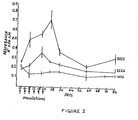
- This system is illustrated in Figure 2. It is an adaptation of the method described by Voller et al for the measurement of antigen [Vollet et al, su ra] .
- the essential modification here is the addition of a step which involves initial adsorption of anti-streptococcal Group B and type III Igs to the solid phase followed by washing, addition of antigen and incubation.
- the complexed antigen-antibody then forms the antigen phase for the test.
- the remainder of the test is carried out as described previously for the indirect method.
- An inocolum in sterile saline was prepared using S. aureus strain 305 prepared as per preparation I and staphylococcus a hemolysin prepared in accordance with preparation IV.
- the final concentration of bacteria in the inoculum was 1.8x10⁸ cells per ml.
- the final concentration of a hemolysin in the inoculum was 2,4 I.U. per ml.
- the 6 cows which received antigen were inoculated with 10 ml of the preparation described above on days 0, 4, 8, 12, 16 and 20 of the experiment. Immunization, by means of an 18 gauge 1-1/2 inch needle, was in the region of the external inguinal lymph node, alternating between the right and the left. The 3 control animals received 10 ml of sterile saline using the same regime.
- Milk samples were taken aseptically from all four quarters of each cow, prior to and at intervals following immunization. All samples were taken before evening milking. Following microbiological culture of each quarter, the samples were centrifuged at 300 g for 15 minutes and the milk was aspirated from below the fat layer. Composite samples were made up for each cow, which represented all four quarters. Samples were stored at -20°C.
- Protein content was determined as mg N/ml by means of Kjeldahl nitrogen determination [Baker et al, J.Exper.Med, 143:258-270 (l976)]. Carbohydrate content was determined by the Indole test using microgram glucose/ml as a standard [Williams et al, "Methods in Immunology and Immunochemistry," II Acad. Press, NY, p. 187 (1968)].
- ELISA was performed by adaptation of the basic procedure guidelines described by Bullock and Walls [Bullock et al, J.Infect.Dis., 136: Supplem. Oct. 1977]. The tests were carried out using an EIA automatic analyzer (Gilford Instrument Laboratories Inc., Oberlin, OH). The solid phase used was a polystrene cuvette system (Gilford Instrument Laboratories Inc., Oberlin, OH) which consisted of 10 wells in 5 cuvette strips.
- the buffer for coating the cuvettes with antigen was 0.06M carbonate buffer pH 9.6 (C0 3 buffer).
- Coating with antigen was carried out by 4 hour incubations at 37°C. followed by storage of plates overnight at 40°C. All incubations in the test were carried out in air incubator at 37°C.
- Enzyme conjugated antisera used were the IgG fractions of anti-species IgG (heavy and light chains) conjugated with the enzyme peroxidase (Capel Laboratories, Cochranville, PA).
- the substrate for the enzyme was 2,2'-azino-di-(3-ethyl-benzthiazoline-6-sulphonic acid) (ABTS) (Sigma Chemical Co., Saint Louis, MO) prepared according to the method described by Saunders et al [Saunders et al, Los Alamos Sci. Lab. Univ. Calif. Prog. Rep.: LA-7078-PR-1 (1978)].
- the substrate was dispensed and the plate was shaken for 30 seconds on a Cooke micro-shaker (Dynatch Laboratories, Inc., Alexandria, VA).
- the degree of substrate catalysis was determined by reading absorbance at 405 nm. A constant interval of 5 minutes was allowed to elapse between dispensing of substrate and reading of each individual sample.
- Chequer board titration of the staphylococcal and streptococcal antigens were carried out in an ELISA system in order to determine the optimal antigen concentrations to be used in subsequent tests [Voller et al, "The enzyme linked immunosorbent assay (ELISA)", Dynatech Europe, Burrough House, Rue du Pre, Guernsey, B.G. (1979)].
- ELISA enzyme linked immunosorbent assay
- peroxidase conjugated IgG fraction of goat antirabbit IgG (heavy and lights chains) (Cappel Laboratories, Cochranville, PA) was added to each well at a solution of 1:500 in PBS-T and incubated for 40 minutes. Unreacted conjugated antisera was washed out. The substrate was added and evaluated as described above for General ELISA Procedures.
- the streptococcal group and type specific antigen is carbohydrate in nature and did not adhere to polystyrene cuvettes as readily as the staphylococcal protein antigens.
- In order to optimize adsorption of the streptococcal extract antigen it was necessary to adapt the modified double antibody sandwich ELISA described by Voller et al for measurement of antigen [Voller et al, "The enzyme linked immunosorbent assay (ELISA)", Dynatech Europe, Borrough House, Rue du Pre, Guernsey, G.B. (1979)].
- Antibodies to the Group B, type III antigens were raised in rabbits by hyperimmunization with a bacterin following the method described by Lancefield et al [Jour. Exper .
- Igs were precipitated from this serum with 35% saturated ammonium sulfate [Hebert et al, App. Micro., 25:26-36 (1972)].
- the precipitated Igs were serially diluted in the carbonate buffer, added in repeating vertical rows to the cuvette wells and incubated for 4 hours.
- the cuvettes were washed and streptococcal extract antigen, serially diluted in PBS-T was added to the cuvette wells in repeating horizontal rows. Each Ig dilution was therefore reacted with each antigen dilution. Incubation for 1 hour was followed by washing.
- the test system for the staphylococcal antigens was indirect.
- the staphylococcal antigens diluted in carbonate buffer at predetermined optimal concentrations, were adsorbed to the cuvette wall by means of a 4 hour incubation followed by overnight storage at 4°C.
- Milk samples to be assayed were diluted in PBS-T either serially or at a dilution of 1:6. Three tenths of an ml of these samples were incubated in the antigen coated washed wells for 40 minutes.
- peroxidase conjugated IgG fraction rabbit anti-bovine IgG (heavy and light chains) (Cappel Laboratories, Cochranville, PA) diluted 1:500 in P B S-T was dispensed into each well and incubated for 40 minutes.
- substrate was dispensed and evaluated as described under General ELISA Procedures.
- the test system for the streptococcal Group B type III extract antigen was modified double antibody sandwich ELISA as illustrated in Figure 2.
- the precipitated Igs containing specificity for streptococcal group and type antigens were diluted to the predetermined optimal concentration in carbonate buffer and adsorbed to the cuvette wells by means of a 4 hour incubation followed by overnight storage at 4°C.
- Streptococcal Group B, type III antigen was added diluted to the predetermined optimal concentration in PBS-T and incubated for 40 minutes. The test was carried out subsequently as described above.
- S. aureus was not isolated from any sample during the experimental period. Streptococcus species other than Str. agalactiae were isolated intermittently during the experiment.
- the hemolytic assays on the milk samples were insufficiently sensitive to allow for reading of a titre.
- the rabbit anti-streptococcal Igs showed an apparent "prozone phenomena" at high concentrations. This was evident at dilutions of 1:20 to 1:80 where absorbance values exhibited a tendency to increase. A plateau effect was seen from 1:160 through 1:640 for all the dilutions of the streptococcal extract antigen. Subsequently the absorbance values declined with increasing dilutions indicating that the anti-streptococcal Igs had become a limiting factor in the reaction. The Ig preparation was subsequently used in tests at a dilution of 1:300 in carbonate buffer.
- the concentration of the streptococcal antigen became a limiting factor in the test system at a dilution of 1:80 since the absorbance values decreased with further dilutions.
- the antigen was used in subsequent tests at a dilution of 1:50 in PBS-T.
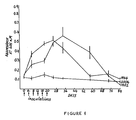
- Each of the 3 Figures show 2 animals which received inoculations of the antigenic preparation versus one control animal which received saline.
- Control animals (1934, 1635, and 2004) showed no significant variation in IgG specific for stapphylococcal a hemolysin over the 84 day experimental period.
- the 6 inoculated animals showed a variable IgG response in terms of both the rate of development of the antibody response and the level attained. Peak levels were reached over the period of day 18 to day 34, cows number 2228, 3036 and cow number 1902 being the first and last to peak, respectively. The rate of antibody decline was also variable.
- day 84 64 days following the last inoculation, all cows had returned to preinoculation levels.
- This Example relates to the antibody response in milk following immunization with increasing concentrations of staphlococcal and streptococcal antigens.
- the S. aureus strain 305 bacterin and staphylococcal a hemolysin toxoid were produced and inactivated as described in preparations I and III except that Strain Wood 46 was used for production of the toxin in place of Strain 305.
- Str. agalactiae type III was grown and prepared for inoculation as described in preparation VIII.
- the inactivated organisms were washed twice in sterile saline and resuspended in the same dilutent.
- the concentration of the 3 antigen components for each group of cows is tabulated in Table 5.
- the vaccines were administered as a composite of the 3 antigen preparation.
- a 5 ml dose of the relevant vaccine preparation was inoculated into the region of the right external inguinal lymph node using an 18 gauge 1-1/2 inch needle. This was followed by a second inoculation in the region of the left lymph node, 21 days later.
- Each milk sample was tested in duplicate in an ELISA system against each of 3 antigens.
- the 3 antigens used were staphylococcal somatic antigen, staphylococcal a hemolysin and streptococcal Group B type III antigen, prepared as described in Example I.
- the milk was diluted 1:6 in PBS-T. Three-tenths of an ml of this dilution was tested in ELISA. The procedure for ELISA was as described in Example I.
- aureus was not isolated from any milk sample during the course of the experiment. Animals which cultured positive for Str. agalactiae were excluded from the assessment of antibody levels specific for this bacteria on that sample date. Other bacteria which were isolated from the herd included Streptococcus species, Corynebacterium bovis and staphylococcus species. These isolates were not considered in relation to data processing unless the infected animals showed evidence of clinical mastitis. Cows developing clinical signs were excluded from data evaluation.
- the specific IgG responses of the groups of animals to each of the 3 antigens are set forth in Tables 13, 14 and 15.
- the tabulated results include in addition to the mean absorbance values, the standard error of the mean and the number of animals contributing to the sample's data.
- Pre-inoculation levels at -1 week are expressed as the mean of 2 samples taken with a 2 day interval. These values are extrapolated as straight lines until inoculation takes place at time 0. Group 1, which received saline, did not vary significantly in antibody levels throughout the experiment with respect to all 3 ELISA antigens.
- the specific IgG response in milk to staphylococcal somatic antigen is shown in Table 7.
- the specific IgG response in milk to staphylococcal a hemolysin is shown in Table 6.
- the specific IgG response in milk to streptococcal Group B type III antigen is shown in Table 8.
- Vaccine groups 5 and 6 were the only 2 groups to have increased above the reference line by week 2 of the experiment. By week 4, Groups 4 and 6 showed significant increases in antibody levels. The lower dose levels of Groups 2 and 3 seemed to require a second inoculation (week 3) before an antibody repsponse was seen at week 6. The peak levels of all groups occurred 6 weeks after the first inoculation. By week 8, Groups 2 and 3 were again negative. By week 12, Group 4 was negative and by week 17, Group 5 was also. Group 6 was still marginally above the positive-negative value line at week 17.
- aureus vaccines containing 1.5 x 10 9 and 2 x 10 9 cells per ml, respectively, in conjunction with intensive inoculation regimes. Their affirmative results are not necessarily evidence of the efficacy of high dosage vaccines since many other differentials were involved in these experiments. However, it seems rational to conclude that the use of the correct antigens at a dosage level which is proven to elicit an immune response in the lactating gland is more likely to give positive results than a vaccine causing no detectable response in the target organ.
- This Example relates to the effect of selected adjuvants on the response of the mammary gland to a staphylococcal and streptococcal antigen.
- Staphylococcal a hemolysin was produced using S. aureus strain Wood 46. This strain was selected because it is a consistently high producer of a hemolysin [Slanetz, Am. J. Vet. Res., 26: 688-695 (1965)] . Production of a hemolysin was by the method of Coulter as described in Preparation 1. Purification was carried out by extraction using 0.15M sodium acetate [Coulter, J. Bacteriol., 92:1655-1662 (1966)].
- Staphylococcal somatic antigen was prepared from an S. aureus isolate cultured from a member of the herd, which was representative of the predominant phage type identified. The method of preparation was that described in Preparation I.
- Streptococcal Group and type antigen was prepared from Str. agalactiae type III which was the type identified in the herd. The method of preparation was that described in Preparation VIII.
- the concentration of antigens in the vaccine was 1.82 x 10 11 CF U/ ml of S. aureus (43.8 mg N/ml), 4.48 x 10 9 CFU/ml of Str. agalactiae (28 mg N/ml), and 0. 4 mg N/ml of toxoid containing staphylococcal a hemolysin. Equal volumes of this preparation and sterile saline were mixed for administration to animals in Groups 2 and 6. These were cows receiving vaccine alone and vaccine with B. pertussis, respectively.
- a water-in-oil emulsion was prepared using equal volumes of vaccine and Freunds incomplete adjuvant (Difco Laboratories, Detroit, MI) by means of a syringe method ["Handbook of experimental immunology", Weir (ed.), 3rd ed., Blackwell Scientific Publications, Oxford P.A3.1-A3.15].
- Aluminum hydroxide gel The vaccine was adsorbed with equal volumes of a 2% aluminum hydroxide gel (Rehsorptar gel, Reheis Chemical Co., Chicago, IL).
- Bordella pertussis B. pertussis was grown at 37 Deg. C. for 5 days on Bordet gengou agar plates (Difco Lab., Detroit, MI), enriched with 15% defibrinated rabbit blood. The organisms were harvested by washing of plates with sterile saline and inactivated by suspension in saline containing 1:10,000 Merithiolate Thimerosal (Eli Lilly and Co., Indianapolis, Ind) [Verway et al, Jour. Bact. 58:127-134 (1949)]. Following 3 washes in merthiolated saline the baceria were resuspended to a final concentration of 4 x 10 10 cells/ml in sterile saline.
- Fifty-four lactating Holstein Friesan cows were randomly allocated to 5 groups in the same manner as described hereinabove.
- the groups of animals were vaccinated as follows: Group 1, Saline; Group 2, Vaccine; Group 3, Vaccine and aluminum hydroxide gel; Group 4, Vaccine and lipid emulsion; Group 5, Vaccine and mineral oil; and Group 6, Vaccine and B. pertussis. Samples taken from cows 14-days or less, prior to drying off, were excluded from data analysis.
- the levels of IgG in milk specific for staphylococcal samnatic antigen, a hemolysin and streptococcal Group B and type III antigen were assayed by means of ELISA.
- S. aureus and Str. agalactiae were not isolated from any milk sample during the course of the experiment.
- Other bacteria which were isolated from the herd included Streptococcus species, Staphylococcus species and coliform species. These isolates were not considered in relation to data processing unless the infected animals showed evidence of clinical mastitis. Cows which developed clinical mastitis, irrespective of actiology, were excluded from data evaluation for the sample date prior to and following the clinical period.
- the specific IgG responses of each group of animals to each of the 3 antigens are shown in Tables 9-11. The results are expressed as mean absorbance values at 405 nm for that group. The standard error of the mean and the number of animals contributing to that sample's data are also included.
- the specific IgG responses to staphylococcal somatic antigen and a hemolysin are shown in Tables 9 and 10, respectively. The only adjuvant which exerted a significant effect in terms of level and duration of the response to the 2 antigens was mineral oil. Peak response in Group 5 cows to the staphylococcal somatic antigen showed a 6 fold increase over the antibody level of the saline control cows as opposed to a 2.7 fold increase shown by the animals which received vaccine alone.
- the specific IgG responses in milk to the streptococcal extract antigen are shown in Table 11.
- the height of the response did not appear to be affected in a statistically significant level by the inclusion of any of the adjuvant preparations.
- the duration of the response was extended somewhat by the inclusion of mineral oil in the vaccine.
- Group 5 still showed significantly different antibody levels at weeks 18 to 22 post vaccination, while the other groups of animals returned to approximate control levels by weeks 14 to 18 post vaccination.
- the adjuvant of choice is mineral oil.
- the inclusion of this adjuvant with staphylococcal antigens has a highly significant effect on the height and duration of the immune response following stimulation.
- the effects of the mineral oil on the response to the streptococcal antigens is less clearly affirmative although there is evidence of an extension of the duration of the response.
- This Example relates to the relative contribution of each immunoglobulin class and subclass to the immune response.
- Immunization during lactation must of necessity be a systemic stimulus.
- the advantages of systemic over local stimulation are evident at a practical level.
- the lack of success encountered following a systemic stimulus has led to statements such as "antigenic stimulation at the local level is clearly the major (if not the only) factor influencing an immune response in the mammary glands of ruminants" [Watson, Aus. J. Biol. Sci., 33: 403-522 (1980)].
- the response following local stimulation is almost entirely IgA and IgM.
- IgG l the major secretory Ig in the bovine species, plays a major role in protection against extracellularly replicating bateria. This Ig is almost entirely humoral in origin and local stimulation is expected to have little effect on a specific response within this class.
- Previous examples analyzed the immune response of the lactating gland in terms of IgG levels. This Example is concerned with analysis of this response to determine the relative contribution, if any, of IgA and IgM and in addition to clarify the IgG subclasses which are involved in the response.
- Group 1 received saline, Group 2 vaccine suspended in saline and Group 3 vaccine emulsified in Freunds incomplete adjuvant.
- the concentration, volume of the vaccine, and method for administration was as described for Groups 1, 2 and 5, respectively, in Example V.
- Antibodies in milk with specificity for staphylococcal a hemolysin were assayed by means of a modified indirect ELISA. The procedure was as described in Example I, with one modification which allowed for concurrent determination of the relative contribution of each Ig class to the response. Following incubation of the milk samples, rabbit anti-bovine serum, monospecific for bovine IgA, IgM, IgG l and IgG 2 was added, at an appropriate dilution predetermined by titration and incubated at 37 Deg. C. for 40 minutes.
- the 4 antisera used were rabbit anti-bovine IgG l and IgG 2 (Miles Research Products Division, Box 2000, Elkhart, IN) and rabbit anti-bovine IgA and IgM (Pel-Freeze Biologicals, Box 68, Rogers, AR). All milk samples, diluted 1:6 in PBS-T were tested in duplicate, using each of the 4 mono-specific antisera described above. Following washing, IgG goat anti-rabbit IgG (heavy and light chains) conjugated to peroxidase (Capel Laboratories, Cochranville, PA) and diluted 1:500 in PBS-T was added, and incubated for 40 minutes at 37°C. The remainder of the test was carried out as descirbed in Example I.
- S. aureus and Str. agalactiae were not isolated from the lacteal secretions of any cows during the experimental period.
- Stephylococcus species other than S. aureus and Streptococcus species other than Str. agalactiae were isolated intermittently. None bf these isolates were associated with clinical disease during the experiment and, therefore, were not considered in relation to data processing.
- the results of ELISA tests are shown in Tables 12 - 14.
- the results of samples taken 1 week prior to inoculation showed that there were detectable levels of specific antibody of all classes present in the 3 groups of cows.
- the IgG levels in Group 3 were slightly elevated, the difference between these and Group 1 control cows being significant at the 0.02 level for IgG, and at the 0.01 level for IgG 2 as computed by the student t test.
- IgA and IgM levels did not differ significantly between the groups.
- IgA levels in Group 2 cows had returned to approximate control values.
- the IgA levels in Group 3 cows remained elevated to almost 2 times control levels.
- IgG l and IgG 2 in group 3 cows were also still significantly raised although in Group 2 cows IgG 2 was no longer elevated.
Landscapes
- Health & Medical Sciences (AREA)
- Life Sciences & Earth Sciences (AREA)
- Immunology (AREA)
- Chemical & Material Sciences (AREA)
- Engineering & Computer Science (AREA)
- Urology & Nephrology (AREA)
- General Health & Medical Sciences (AREA)
- Biomedical Technology (AREA)
- Medicinal Chemistry (AREA)
- Hematology (AREA)
- Microbiology (AREA)
- Molecular Biology (AREA)
- Biotechnology (AREA)
- Mycology (AREA)
- Cell Biology (AREA)
- Physics & Mathematics (AREA)
- Analytical Chemistry (AREA)
- Biochemistry (AREA)
- Veterinary Medicine (AREA)
- General Physics & Mathematics (AREA)
- Pathology (AREA)
- Food Science & Technology (AREA)
- Pharmacology & Pharmacy (AREA)
- Epidemiology (AREA)
- Animal Behavior & Ethology (AREA)
- Public Health (AREA)
- Chemical Kinetics & Catalysis (AREA)
- Tropical Medicine & Parasitology (AREA)
- Virology (AREA)
- Medicines Containing Antibodies Or Antigens For Use As Internal Diagnostic Agents (AREA)
Applications Claiming Priority (1)
| Application Number | Priority Date | Filing Date | Title |
|---|---|---|---|
| US06/265,287 US4425330A (en) | 1981-05-20 | 1981-05-20 | Bovine mastitis vaccine and method for detecting efficacy thereof |
Publications (1)
| Publication Number | Publication Date |
|---|---|
| EP0094997A1 true EP0094997A1 (fr) | 1983-11-30 |
Family
ID=23009830
Family Applications (1)
| Application Number | Title | Priority Date | Filing Date |
|---|---|---|---|
| EP82302639A Withdrawn EP0094997A1 (fr) | 1981-05-20 | 1982-05-24 | Vaccin contre la mastite des bovins, son procédé de préparation et méthode pour détecter son efficacité |
Country Status (5)
| Country | Link |
|---|---|
| US (1) | US4425330A (fr) |
| EP (1) | EP0094997A1 (fr) |
| AU (1) | AU561890B2 (fr) |
| CA (1) | CA1200487A (fr) |
| ZA (1) | ZA823673B (fr) |
Cited By (3)
| Publication number | Priority date | Publication date | Assignee | Title |
|---|---|---|---|---|
| WO1993014209A1 (fr) * | 1992-01-17 | 1993-07-22 | Smithkline Beecham Corporation | Vaccins a base de streptokinase |
| WO1993014784A1 (fr) * | 1992-02-04 | 1993-08-05 | Consejo Superior Investigaciones Cientificas | Vaccin contre les staphylocoques, et sa preparation |
| EP0694309A3 (fr) * | 1994-07-29 | 1998-04-22 | The Kitasato Institute | Compositions vaccinales contenant des antigènes et des anticorps pour la prévention et l'inhibition d'infections induites par les staphylocoques |
Families Citing this family (47)
| Publication number | Priority date | Publication date | Assignee | Title |
|---|---|---|---|---|
| FI68262C (fi) * | 1982-12-17 | 1985-08-12 | Labsystems Oy | Foerfarande foer konstatering av juverinflammation |
| US5198214A (en) * | 1983-08-31 | 1993-03-30 | Stolle Research & Development Corporation | Anti-mastitis polyvalent vaccine, method of administration and method for production thereof |
| US4762712A (en) * | 1983-08-31 | 1988-08-09 | Stolle Research & Development Corporation | Anti-mastitis polyvalent vaccine, method of administration and method for production thereof |
| US5189015A (en) * | 1984-05-30 | 1993-02-23 | Alfa-Laval Agri International Ab | Method for prophylactic treatment of the colonization of a Staphylococcus aureus bacterial strain by bacterial cell surface protein with fibronectin and fibrinogen binding ability |
| IN164864B (fr) * | 1985-05-13 | 1989-06-24 | Commw Scient Ind Res Org | |
| US5084269A (en) * | 1986-11-06 | 1992-01-28 | Kullenberg Fred W | Adjuvant for dose treatment with antigens |
| US5132210A (en) * | 1986-12-02 | 1992-07-21 | Proscience Corporation | Diagnostic test for staphylococcal mastitis |
| US4849341A (en) * | 1986-12-02 | 1989-07-18 | Proscience Corporation | Diagnostic test for Staphylococcal mastitis in cattle |
| US5198215A (en) * | 1987-06-22 | 1993-03-30 | Noordzee Laboratorium N.V. | Composition for controlling mastitis in ruminants, method for its preparation and method of treatment of ruminants |
| NL8701451A (nl) * | 1987-06-22 | 1989-01-16 | Noordzee Lab N V | Preparaat voor de bestrijding van mastitis bij herkauwers, werkwijze voor de bereiding daarvan en werkwijze voor het behandelen van herkauwers. |
| SE8801894D0 (sv) * | 1988-05-20 | 1988-05-20 | Alfa Laval Agri Int | Fibronektinbindande protein |
| SE8901687D0 (sv) * | 1989-05-11 | 1989-05-11 | Alfa Laval Agri Int | Fibronectin binding protein as well as its preparation |
| US5648241A (en) * | 1989-09-15 | 1997-07-15 | The General Hospital Corporation | Conjugate vaccine against group B streptococcus |
| US5440014A (en) * | 1990-08-10 | 1995-08-08 | H+E,Uml/Oo/ K; Magnus | Fibronectin binding peptide |
| US5571511A (en) * | 1990-10-22 | 1996-11-05 | The U.S. Government | Broadly reactive opsonic antibodies that react with common staphylococcal antigens |
| US7279162B1 (en) | 1990-10-22 | 2007-10-09 | Henry M. Jackson Foundation For The Advancement Of Military Medicine | Isolated broadly reactive opsonic immunoglobulin for treating a pathogenic coagulase-negative staphylococcus infection |
| US5980908A (en) * | 1991-12-05 | 1999-11-09 | Alfa Laval Ab | Bacterial cell surface protein with fibronectin, fibrinogen, collagen and laminin binding ability, process for the manufacture of the protein and prophylactic treatment |
| ZA937034B (en) * | 1992-09-24 | 1995-06-23 | Brigham & Womens Hospital | Group B streptococcus type II and type V polysaccharide-protein conjugate vaccines |
| IL107103A (en) * | 1992-09-24 | 2001-03-19 | Brigham & Womens Hospital | Multivalent vaccine based on conjugated molecule comprising a capsular polysaccharide linked to a protein and a method for the preparation thereof |
| US5648240A (en) * | 1994-05-24 | 1997-07-15 | Texas A&M University | MHC II analog from Staphylococcus aureus |
| US6284884B1 (en) | 1995-06-07 | 2001-09-04 | North American Vaccine, Inc. | Antigenic group B streptococcus type II and type III polysaccharide fragments having a 2,5-anhydro-D-mannose terminal structure and conjugate vaccine thereof |
| US6610293B1 (en) * | 1997-06-16 | 2003-08-26 | The Henry M. Jackson Foundation For The Advancement Of Military Medicine | Opsonic and protective monoclonal and chimeric antibodies specific for lipoteichoic acid of gram positive bacteria |
| IL122829A (en) * | 1997-12-31 | 2000-06-29 | Maabarot Products Ltd | Isolated strains of staphylococcus aureus and vaccines manufactured therefrom |
| US7250494B2 (en) * | 1998-06-15 | 2007-07-31 | Biosynexus Incorporated | Opsonic monoclonal and chimeric antibodies specific for lipoteichoic acid of Gram positive bacteria |
| DE69933707T2 (de) * | 1999-08-25 | 2007-08-23 | Accuplex, L.L.C. | Serum amyloid a als marker für entzündungsreaktion, milchqualität und die anwesenheit von kolostrum in milch |
| US6509444B1 (en) | 1999-10-22 | 2003-01-21 | The Board Of Regents Of The University Of Nebraska | Serum amyloid a isoform from colostrum |
| JP2003512839A (ja) * | 1999-10-22 | 2003-04-08 | ザ ボード オブ リージェンツ オブ ザ ユニバーシティ オブ ネブラスカ | 初乳由来の血清アミロイドaアイソフォーム |
| AU782508B2 (en) * | 1999-11-08 | 2005-08-04 | Biomune | Vaccines for mycoplasma bovis and methods of use |
| GB0014907D0 (en) * | 2000-06-20 | 2000-08-09 | Univ Sheffield | Antigenic polypeptides |
| ATE439372T1 (de) * | 2000-10-27 | 2009-08-15 | Novartis Vaccines & Diagnostic | Nukleinsäuren und proteine von gruppen a und b- streptokokken |
| US7118756B2 (en) * | 2000-12-28 | 2006-10-10 | Wyeth | Recombinant protective protein from Streptococcus pneumoniae |
| GB0108332D0 (en) * | 2001-04-03 | 2001-05-23 | Univ Durham | Lectin directed prodrug delivery system |
| CA2808598A1 (fr) * | 2001-08-02 | 2003-02-13 | University Of Sheffield | Polypeptides antigenes |
| AU2002364507A1 (en) * | 2001-11-21 | 2003-06-10 | Board Of Regents Of The University Of Nebraska | Mammary-associated serum amyloid a3 promoter sequences and uses for same |
| US6984381B2 (en) | 2002-07-05 | 2006-01-10 | The United States Of America As Represented By The Secretary Of Agriculture | Vaccine for the prevention of bacterial infection of the bovine mammary gland |
| US7368546B2 (en) * | 2003-01-21 | 2008-05-06 | The Board Of Regents Of The University Of Nebraska | Human SAA3 nucleic acid molecule, protein, and methods of use for same |
| US7204993B2 (en) * | 2004-03-18 | 2007-04-17 | The United States Of America As Represented By The Secretary Of Agriculture | Streptococcus agalactiae vaccine |
| CN101107010A (zh) | 2004-11-01 | 2008-01-16 | 布里格海姆妇女医院公司 | 经修饰的链球菌多糖及其用途 |
| EP2059807B1 (fr) * | 2006-08-17 | 2013-02-20 | The UAB Research Foundation | Diagnostic d'une pneumonie à pneumocoques |
| ES2678143T3 (es) | 2010-01-19 | 2018-08-09 | President And Fellows Of Harvard College | Opsonina obtenida por ingeniería genética para la detección y el tratamiento de microorganismos patógenos |
| EP2734843A2 (fr) | 2011-07-18 | 2014-05-28 | President and Fellows of Harvard College | Molécules manipulées ciblant un microbe et leurs utilisations |
| EP2976642A4 (fr) | 2013-03-15 | 2016-09-21 | Harvard College | Procédés et compositions pour améliorer la détection et/ou la capture d'une entité cible |
| US9988617B2 (en) | 2013-05-21 | 2018-06-05 | President And Fellows Of Harvard College | Engineered heme-binding compositions and uses thereof |
| EP3546474B1 (fr) | 2013-12-18 | 2021-07-07 | President and Fellows of Harvard College | Capture/détection de bactéries gram positif à l'aide de crp |
| CN108289928B (zh) | 2015-08-06 | 2024-09-17 | 哈佛大学校长及研究员协会 | 改进的微生物-结合分子和其用途 |
| CN106749651B (zh) * | 2016-12-20 | 2020-11-10 | 天津瑞普生物技术股份有限公司 | 一种无乳链球菌型特异性抗血清的制备方法 |
| CN113207913B (zh) * | 2021-04-30 | 2022-06-14 | 石河子大学 | 一种奶牛乳房炎生物消毒剂制备与应用 |
Citations (4)
| Publication number | Priority date | Publication date | Assignee | Title |
|---|---|---|---|---|
| GB1182555A (en) * | 1967-10-16 | 1970-02-25 | Saphar Lab Ltd | An Anti-Mastitis Vaccine |
| EP0038265A1 (fr) * | 1980-04-14 | 1981-10-21 | Merck & Co. Inc. | Polysaccharides capsulaires de streptocoques du groupe B |
| EP0041897A2 (fr) * | 1980-06-09 | 1981-12-16 | The President And Fellows Of Harvard College | Antigène de polysaccharide de streptocoque et vaccins |
| US4327082A (en) * | 1979-07-12 | 1982-04-27 | Adcock-Ingram Laboratories Limited | Mastitis vaccination |
Family Cites Families (2)
| Publication number | Priority date | Publication date | Assignee | Title |
|---|---|---|---|---|
| JPS5452794A (en) | 1977-09-30 | 1979-04-25 | Kousaku Yoshida | Extracting of polysacchride from capusle containing epidermis staphylococus |
| US4207414A (en) | 1978-08-16 | 1980-06-10 | President And Fellows Of Harvard College | Polysaccharide antigens |
-
1981
- 1981-05-20 US US06/265,287 patent/US4425330A/en not_active Expired - Lifetime
-
1982
- 1982-05-24 EP EP82302639A patent/EP0094997A1/fr not_active Withdrawn
- 1982-05-25 AU AU84148/82A patent/AU561890B2/en not_active Ceased
- 1982-05-26 ZA ZA823673A patent/ZA823673B/xx unknown
- 1982-05-26 CA CA000403704A patent/CA1200487A/fr not_active Expired
Patent Citations (4)
| Publication number | Priority date | Publication date | Assignee | Title |
|---|---|---|---|---|
| GB1182555A (en) * | 1967-10-16 | 1970-02-25 | Saphar Lab Ltd | An Anti-Mastitis Vaccine |
| US4327082A (en) * | 1979-07-12 | 1982-04-27 | Adcock-Ingram Laboratories Limited | Mastitis vaccination |
| EP0038265A1 (fr) * | 1980-04-14 | 1981-10-21 | Merck & Co. Inc. | Polysaccharides capsulaires de streptocoques du groupe B |
| EP0041897A2 (fr) * | 1980-06-09 | 1981-12-16 | The President And Fellows Of Harvard College | Antigène de polysaccharide de streptocoque et vaccins |
Non-Patent Citations (1)
| Title |
|---|
| CHEMICAL ABSTRACTS, vol. 96, no. 3, 18th January 1982, page 337, no. 18770t, Columbus, Ohio, USA * |
Cited By (6)
| Publication number | Priority date | Publication date | Assignee | Title |
|---|---|---|---|---|
| WO1993014209A1 (fr) * | 1992-01-17 | 1993-07-22 | Smithkline Beecham Corporation | Vaccins a base de streptokinase |
| US5840315A (en) * | 1992-01-17 | 1998-11-24 | Pfizer Inc. | Vaccines based on streptokinase |
| WO1993014784A1 (fr) * | 1992-02-04 | 1993-08-05 | Consejo Superior Investigaciones Cientificas | Vaccin contre les staphylocoques, et sa preparation |
| ES2051621A1 (es) * | 1992-02-04 | 1994-06-16 | Consejo Superior Investigacion | Procedimiento de obtencion de vacuna frente a estafilococos. |
| EP0694309A3 (fr) * | 1994-07-29 | 1998-04-22 | The Kitasato Institute | Compositions vaccinales contenant des antigènes et des anticorps pour la prévention et l'inhibition d'infections induites par les staphylocoques |
| US6391315B1 (en) | 1994-07-29 | 2002-05-21 | Takahashi Hashimoto | Vaccine for inhibiting and preventing induced staphylococcus infection, isolated antigens used therein, and isolated antibodies induced thereby |
Also Published As
| Publication number | Publication date |
|---|---|
| CA1200487A (fr) | 1986-02-11 |
| AU8414882A (en) | 1982-12-02 |
| ZA823673B (en) | 1984-01-25 |
| AU561890B2 (en) | 1987-05-21 |
| US4425330A (en) | 1984-01-10 |
Similar Documents
| Publication | Publication Date | Title |
|---|---|---|
| CA1200487A (fr) | Vaccin contre la mastite des bovins et methode pour en detecter l'efficacite | |
| JP5074656B2 (ja) | 改良されたマイコプラズマハイオニューモニエバクテリンワクチン | |
| US20030064073A1 (en) | Active immunization using a siderophore receptor protein | |
| CA2517911A1 (fr) | Composition et methode pour le traitement et la prevention d'infections bacteriennes enteriques | |
| US20090123500A1 (en) | Active immunization using a siderophore receptor protein | |
| CA2129982A1 (fr) | Mycoplasma hyopneumoniae inactive et son application | |
| Watson | Evaluation of attenuated, live staphylococcal mastitis vaccine in lactating heifers | |
| Yoshida et al. | Staphylococcal capsular vaccine for preventing mastitis in two herds in Georgia | |
| Selim et al. | The effect of Escherichia coli J5 and modified live Salmonella dublin vaccines in artificially reared neonatal calves | |
| Finkelstein et al. | In vitro detection of antibody to cholera enterotoxin in cholera patients and laboratory animals | |
| Ruby et al. | Haemophilus somnus-induced IgE in calves vaccinated with commercial monovalent H. somnus bacterins | |
| Relyveld et al. | Antibody response of pregnant women to two different adsorbed tetanus toxoids | |
| Lind | Production of cold agglutinins in rabbits induced by Mycoplasma pneumoniae, Listeria monocytogenes or Streptococcus MG | |
| Käyhty et al. | Radioimmunoassay of capsular polysaccharide antigens of groups A and C meningococci and Haemophilus influenzae type b in cerebrospinal fluid. | |
| Erwin et al. | Haemophilus influenzae type b isolates show antigenic variation in a major outer membrane protein | |
| NZ200739A (en) | Composite bovine mastitis vaccine and enzyme-linked immunoassay therefor | |
| Ebersole et al. | Sequential appearance of salivary antibodies after oral immunization of axenic mice | |
| CA1186623A (fr) | Vaccin contre la mastite des bovins et methode pour en detecter l'efficacite | |
| Linggood et al. | Antibody induced elimination of the plasmid controlled K88 adhesion factor from a porcine enteropathogen | |
| Opdebeeck et al. | Comparative effect of selected adjuvants on the response in the bovine mammary gland to staphylococcal and streptococcal antigens | |
| Daynes et al. | An antiphagocytic factor associated with group E streptococcus | |
| Gilsdorf et al. | Mucosal antibodies to Haemophilus influenzae type b capsular polysaccharide | |
| Gay | Bacteriological and serological studies of colibacillosis in calves with special reference to vaccination as a means of prevention | |
| Rosner | Bovine parainfluenza type 3 virus infection and pasteurellosis | |
| Loucks et al. | Effect of prepartum vaccination with K99 Escherichia coli vaccine on maternal and calf blood antibody concentration and calf health |
Legal Events
| Date | Code | Title | Description |
|---|---|---|---|
| PUAI | Public reference made under article 153(3) epc to a published international application that has entered the european phase |
Free format text: ORIGINAL CODE: 0009012 |
|
| AK | Designated contracting states |
Designated state(s): AT BE CH DE FR GB IT LI LU NL SE |
|
| 17P | Request for examination filed |
Effective date: 19840524 |
|
| STAA | Information on the status of an ep patent application or granted ep patent |
Free format text: STATUS: THE APPLICATION IS DEEMED TO BE WITHDRAWN |
|
| 18D | Application deemed to be withdrawn |
Effective date: 19890314 |
|
| RIN1 | Information on inventor provided before grant (corrected) |
Inventor name: NORCROSS, NEIL L. Inventor name: OBDEBEECK, JOHANNA P. |