EP0095452A2 - Herstellung von DNS-Sequenzen und für die Unterteile A und B des Cholera-Toxins kodierende DNS-Rekombinant-Moleküle, die erhaltenen Produkte und das oder die erhaltene(n) Unterteil(e)enthaltende Zusammensetzungen - Google Patents
Herstellung von DNS-Sequenzen und für die Unterteile A und B des Cholera-Toxins kodierende DNS-Rekombinant-Moleküle, die erhaltenen Produkte und das oder die erhaltene(n) Unterteil(e)enthaltende Zusammensetzungen Download PDFInfo
- Publication number
- EP0095452A2 EP0095452A2 EP83870048A EP83870048A EP0095452A2 EP 0095452 A2 EP0095452 A2 EP 0095452A2 EP 83870048 A EP83870048 A EP 83870048A EP 83870048 A EP83870048 A EP 83870048A EP 0095452 A2 EP0095452 A2 EP 0095452A2
- Authority
- EP
- European Patent Office
- Prior art keywords
- dna
- cholera toxin
- subunit
- endonuclease
- strain
- Prior art date
- Legal status (The legal status is an assumption and is not a legal conclusion. Google has not performed a legal analysis and makes no representation as to the accuracy of the status listed.)
- Withdrawn
Links
Images


Classifications
-
- C—CHEMISTRY; METALLURGY
- C07—ORGANIC CHEMISTRY
- C07K—PEPTIDES
- C07K14/00—Peptides having more than 20 amino acids; Gastrins; Somatostatins; Melanotropins; Derivatives thereof
- C07K14/195—Peptides having more than 20 amino acids; Gastrins; Somatostatins; Melanotropins; Derivatives thereof from bacteria
- C07K14/28—Peptides having more than 20 amino acids; Gastrins; Somatostatins; Melanotropins; Derivatives thereof from bacteria from Vibrionaceae (F)
-
- A—HUMAN NECESSITIES
- A61—MEDICAL OR VETERINARY SCIENCE; HYGIENE
- A61K—PREPARATIONS FOR MEDICAL, DENTAL OR TOILETRY PURPOSES
- A61K39/00—Medicinal preparations containing antigens or antibodies
-
- Y—GENERAL TAGGING OF NEW TECHNOLOGICAL DEVELOPMENTS; GENERAL TAGGING OF CROSS-SECTIONAL TECHNOLOGIES SPANNING OVER SEVERAL SECTIONS OF THE IPC; TECHNICAL SUBJECTS COVERED BY FORMER USPC CROSS-REFERENCE ART COLLECTIONS [XRACs] AND DIGESTS
- Y10—TECHNICAL SUBJECTS COVERED BY FORMER USPC
- Y10S—TECHNICAL SUBJECTS COVERED BY FORMER USPC CROSS-REFERENCE ART COLLECTIONS [XRACs] AND DIGESTS
- Y10S435/00—Chemistry: molecular biology and microbiology
- Y10S435/8215—Microorganisms
- Y10S435/822—Microorganisms using bacteria or actinomycetales
- Y10S435/848—Escherichia
- Y10S435/849—Escherichia coli
-
- Y—GENERAL TAGGING OF NEW TECHNOLOGICAL DEVELOPMENTS; GENERAL TAGGING OF CROSS-SECTIONAL TECHNOLOGIES SPANNING OVER SEVERAL SECTIONS OF THE IPC; TECHNICAL SUBJECTS COVERED BY FORMER USPC CROSS-REFERENCE ART COLLECTIONS [XRACs] AND DIGESTS
- Y10—TECHNICAL SUBJECTS COVERED BY FORMER USPC
- Y10S—TECHNICAL SUBJECTS COVERED BY FORMER USPC CROSS-REFERENCE ART COLLECTIONS [XRACs] AND DIGESTS
- Y10S435/00—Chemistry: molecular biology and microbiology
- Y10S435/8215—Microorganisms
- Y10S435/822—Microorganisms using bacteria or actinomycetales
- Y10S435/909—Vibrio
Definitions
- the present invention relates to the preparation of DNA sequences and recombinant DNA molecules coding for the subunits A and B of cholera toxin, products obtained and preparations containing the obtained subunit (s).
- the A subunit (TCA) is responsible for the penetration of the epithelial cell and the enzymatic effect which leads to a significant loss of fluid in the intestine while the B subunit (TCB) binds the holotoxin to monosialosylgan-glioside type G M1 receptor sites on the cell wall; it has no toxic activity and is highly immunogenic.
- Vibrio cholerae producing the holotoxin mention may be made, for example, of the strains of Vibrio cholerae biotype El Tor serotype INABA and, in Proc. Natl. Acad. Sci. EUA 76, 2052-2056, 1979, T. HONDA and R.A. FINKELSTEIN describe a mutant of Vibrio cholerae which produces the B subunit of cholera toxin but no detectable amount of the A subunit.
- the B subunit appears to be a desirable vaccine component for inducing protective antibodies either by oral or parenteral administration and various authors have proposed cholera vaccines based on the B subunit toxin or, with less preference , on antitoxins (J. HOLMGREN et al. in Nature 269, 602-603, 1977; HONDA and RA FINKELSTEIN in loc. cit. and J. HOLMGREN in Nature 292, 413-417, 1981).
- the holotoxin is determined by a chromosomal gene (ctx) and SL MOSELEY and S. FALKOW (J. Bact. 144, 444-446, 1980) have shown that the DNA fragments representing the two cistrons of the E. coli thermolabile enterotoxin (elt) related gene can be used as probes during DNA / DNA hybridization experiments to detect specific fragments of the ctx gene making up the total DNA of V. cholerae digested by the different restriction endonucleases.
- ctx chromosomal gene
- SL MOSELEY and S. FALKOW J. Bact. 144, 444-446, 1980
- the fragments containing either the ctxA gene or the ctxB gene and obtained by treatment with the endonuclease ClaI, as indicated above, are inserted either separately or sequentially in an appropriate vector which has has been previously cleaved by the endonuclease Clal to constitute cloning vectors in host microorganisms such as, for example, a strain of E. coli K12 or a non-toxigenic strain of V. cholerae.
- the strains finally obtained are then used for the production of the A subunit or of the B subunit or of the two subunits A and B of cholera toxin or genetically modified derivatives thereof.
- Samples of an E. coli K12 strain were transformed, respectively, by the plasmids pRIT 10841, pRIT 10810 and PRIT 10814 and cultures of these transformed strains were deposited at the American Type Culture Collection, Rockville, Maryland, USA respectively under the order numbers ATCC 39053, ATCC 39051 and ATCC 39052.
- plasmid vector pBR322 a 5.1 x 10 6 d DNA fragment produced by PstI from ATCC 39050 was cloned into the plasmid vector pBR322 so as to form the recombinant plasmid pRIT 10824.
- This plasmid has the same number and the same arrangement of restriction sites within and around the ctx coding sequences as the aforementioned pRIT10814.
- Each of the subunits A and B or both together prove to be valuable for the preparation of cholera vaccines for which the subunit A is necessarily used in the form of an antitoxin and the subunit B is, with less preference, used in the form of an antitoxin.
- the cloned DNA fragments are used to produce the anatoxic forms of the A or B subunits by genetic manipulation in vivo or in vitro.
- manipulations well known to specialists are the removal or insertion of nucleotide base pairs at specific restriction sites or mutagenesis directed at specific sites in order to modify particular amino acids.
- hybrid toxin molecules by genetic manipulation in vitro, for example, by recombination of the gene related to the thermolabile enterotoxin (TL) of E.
- the pharmaceutical forms containing either the B subunit or a toxoid and valuable as vaccines to be administered orally and / or parenterally are pre parent according to any technique known to specialists for a preparation of this kind, that is to say, for example, by addition of an antacid such as sodium bicarbonate or by enteric coating or by microencapsulation of the active ingredient; toxoid is also readily obtained from the toxin, eg by treatment with formaldehyde or, preferably, glutaraldehyde.
- the subunits A and B according to the present invention also prove to be valuable for the characterization of natural V. cholerae strains thanks to their possible use as radiolabelled probes during DNA / DNA hybridization experiments for detecting fragments of ctxA and / or ctxB genes in unknown strains of V. cholerae by digestion of their total DNA with restriction endonucleases or by colony hybridizations.
- the V. cholerae ATCC 39050 is allowed to develop in Syncase medium (FINKELSTEIN et al. J. Immu-nol. 96, 440-449 (1966) until reaching the stationary phase.
- the cells are then recovered by centrifugation, washed and resuspended in a buffer containing tromethamine (0.05 M), NaCl (0.1 M) and edetic acid (EDTA) (0.25 M), pH 8.
- lyse the cells by adding sodium dodecyl sulfate (SDS) to a final concentration of 1% (w / v) and the mixture is extracted twice with equal volumes of saturated phenol in buffer.
- SDS sodium dodecyl sulfate
- 1 x SSC corresponds, at standard saline citrate, i.e. 0.15 M in NaCl, 0.015 M in trisodium citrate, pH 7.).
- the 0.05 M tromethamine buffer is added (pH 8) and the preparation is incubated using bovine pancreatic ribonuclease (final concentration: 10 ⁇ g / ml) at 37 °, for 1 hour.
- the mixture is extracted twice with equal volumes of saturated phenol in buffer, the DNA is precipitated with ethanol, dissolved in 1 x SSC and dialyzed against 1 x SSC.
- a 6 ⁇ g sample of the DNA thus obtained is digested with 45.6 units of ClaI endonuclease in a total volume of 40 ⁇ l, at 37 ° for 3 hours.
- the DNA of Vibrio cholerae digested by ClaI is divided into two equal samples and electrophoresis is carried out in stalls separate from a 1% agarose gel (the electrophoresis buffer is that described by HAYWARD GS and SMITH MG , J. Mol. Biol. 63, 383 (1972) and contains 0.5 ⁇ g / ml ethidium bromide).
- Lambda phage DNA samples digested sequentially with HindIII and EcoRI restriction endonucleases are passed through other stalls of the same gel so that they serve as molecular weight markers using the values provided by CORY, S. and ADAMS, J. Cell 11; 795 (1977).
- the gel After electrophoresis, the gel is exposed to short-wave ultraviolet radiation so as to visualize the DNA fragments and they are photographed to keep a record of the relative migration of DNA bands from phage lambda.
- the DNA fragments are then transferred into the gel and fixed on a nitrocellulose filter by the technique of SOUTHERN E.M., J. Mol. Biol. 98, 503 (1975).
- the filter is cut in half lengthwise to obtain the DNA samples of Vibrio cholerae digested with Clal on each half of the filter.
- the plasmid pEWD299 DNA is prepared by CsCl density gradient centrifugation according to the method described by KAHN M. et al., Methods in Enzymology, 68, 268 (1979), the desired DNA fragments are separated and separated. purifies by digesting 50 to 100 ⁇ g of DNA of the plasmid pEWD299 either by an excess of restriction endonuclease HincII (for eltA) or, sequentially, by the restriction endonuclease HindIII and EcoRI (for eltB) and subsequent gel electrophoresis 7.5% acrylamide.
- the construction and characterization of the plasmid pEWD299 is described by DALLAS W. et al. in J. Bact. 139, 850 (1979).
- the part of the gel which contains the desired fragment is excised with a scalpel (the fragment of the eltA gene is a DNA fragment of 1000 base pairs and the fragment of the eltB gene is a fragment of DNA of 600 base pairs), place it in a dialysis membrane bag and elute the DNA from the gel slice by electrophoresis.
- the DNA eluted in the electrophoresis buffer is recovered inside the bag and concentrated by precipitation with ethanol.
- the recovered DNA is dissolved in 20 ⁇ l of tromethamine buffer (0.01 M), pH 7.
- the specific activities of the DNA fragments thus labeled are. 2.3 x 10 7 cpm per 0.5 ⁇ g DNA for eltA DNA and 3.14 x 10 7 cpm per 0.5 ⁇ g DNA for eltB DNA.
- the labeled DNA is denatured by heating at 100 ° C. for 10 to 15 minutes.
- the filter is then placed in a hybridization solution of the same composition but additionally containing 25 ⁇ g per ml of DNA of heat-denatured salmon sperm and the probe is diluted.
- radioactive eltA denatured from Example 3 so as to obtain a specific final activity of 9 x 10 5 cpm per ml.
- the filter is incubated in this solution at 37 ° for 36 hours and then incubated at 37 ° twice for 25 minutes in solutions of the same composition as those used for hybridization but without the DNA of the radioactive probe .
- the filter is then rinsed twice for 25 minutes at room temperature in 2 x SSC solutions and air dried.
- the dried filter is exposed to an X-ray film (Fuji Photo film Co. Ltd) for a sufficient time so as to blacken the surfaces of the film corresponding to the surfaces of the filter where the DNA of the radioactive probe has hybridized to the denatured fragments and DNA from V. cholerae.
- the DNA sequence of V. cholerae which, under these hybridization conditions, shows homology with respect to the eltB probe represents all or part of the ctxB cistron which determines the sequence of the structural gene for the sub- unit B of cholera toxin.
- An aliquot of 63 ⁇ g of the total DNA as obtained in Example 1 is digested with 500 units of Clal endonuclease at 37 ° for 3 hours, in a total reaction volume of 400 ⁇ l.
- the digested DNA is electrophoresed on a 1% (w / v) aga-pink gel.
- the position of the V. cholerae DNA fragments is evaluated, from digestion with the endonuclease ClaI, corresponding to molecular weights of 2.45 x 10 6 d and 1 x 10 6 d, with reference to the markers of molecular weight and five slices of 1 mm are cut across the gel above and below each of these two points.
- the DNA is recovered in each gel slice by electroelution in a closed bag of a dialysis membrane. We removes the liquid from each bag, filtered through a Milli p ore 0.45 .mu.m filter to remove agarose fragments and the DNA is recovered by precipitation with an equal volume of isopropanol.
- the precipitate is dissolved in a tromethamine buffer (0.01 M) at pH 7 and reprecipitated using 2 volumes of ethanol.
- the DNA obtained from each gel slice is finally dissolved in 20 ⁇ l of a tromethamine buffer solution (0.01 M), EDTA (0.001 M), at pH 7.
- the mixture is incubated at 37 ° for 30 minutes, it is extracted twice with an equal volume of phenol, it is extracted three times with ether and the DNA is precipitated with ethanol.
- the pBR322 DNA is dissolved in 30 ⁇ l of tromethamine-HCl buffer (0.01 M) EDTA (0.001 M) at pH 7.
- the mixture of V. cholerae DNA fragments and pBR322 DNA is ligated by incubation using T4 DNA ligase.
- T4 DNA ligase To 10 ⁇ l of a DNA mixture, 10 ⁇ l of a cocktail of T4 DNA ligase are added so as to obtain a 20 mM solution of tromethamine-HCl pH 7.6, 10 mM in MgCl 2 6H 2 0 , 10 mM in dithiothrei-tol, 1.2 mM in deoxyadenosine triphosphate and containing 50 ⁇ g per ml of beef serum albumin and 0.5 units of T4 DNA ligase (Boehringer Mannheim, Federal Republic of Germany ).
- the mixture containing the ligase is incubated at 15 ° C. for 4 hours so as to obtain the ligation of the DNA fragments of V. cholerae with the DNA of pBR322 digested by ClaI and to form the recombinant molecules.
- the entire ligated DNA mixture (20 ⁇ l) is used for the transformation of the competent cells treated with CaCl2 of the strain MM294 of E. coli K12 (described by BACKMAN K. et al., Proc. Natl. Acad. Sci US 73, 4174 (1976)) prepared according to the method described by COHEN S. et al., Proc. Natl. Acad. Sci. US 69, 2110 (1972)).
- the trans culture formed on a solid agar medium containing 200 f g 3'ampicillin per ml so as to select the transformants according to the cells which have captured the DNA of the plasmid pBR322. From the whole transformed culture, approximately 1000 colonies resistant to ampicillin are recovered.
- the transformed colonies resistant to ampicillin, obtained in Example 7, are selected as a function of the presence of the DNA sequences hybridizing with the eltB probe, according to the colony hybridization method described by GERGEN J. and al., Nucl. Acids Res. 7, 2115 (1979).
- the colonies of transformants growing on the solid agar medium are transferred to the surface of split plates of medium containing ampicillin and the plates are incubated at 37 °.
- a square of sterile filter paper (Whatman 541) is placed on the surface of a plate of each pair and the bacterial proliferation is removed from the agar surface by removing the filter paper.
- the filter papers are dried at 37 ° for 15 minutes and proceed as described by GERGEN J. et al. (Loc. Cit.) Except that the washing with ethanol is omitted.
- the filter papers thus treated are hybridized with the DNA of the eltB radioactive probe under exactly identical conditions and according to the method described in Example 5 and they are exposed to an X-ray film for variable periods of time.
- the plasmid DNA is prepared from each of these four colonies according to the method of BIRNBOIM H. and DOLY J. (Nucl. Acids Res. 7, 1513 (1979) and analysis by the restriction endonuclease Clal shows that in each preparation, the vector pBR322 carries a DNA insert of molecular weight 2.45 x 10 6 d.
- a colony thus isolated is characterized as MM294 (pRIT10810), a culture of which has been deposited in the American Type Culture Collection under the number ATCC 39051.
- Plasmid DNA is prepared from the strain ATCC 39051 by density gradient centrifugation of CsCl-ethidium bromide and subjected to a new restriction endonuclease analysis.
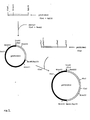
- the ClaI DNA insert of 2.45 ⁇ 10 6 daltons is characterized by the possession of the restriction sites and the orientation towards the DNA of the vector pBR322 as indicated in FIG. 1.
- the strain is further characterized by the production of a protein which reacts with antibodies raised against pure cholera toxin according to a method called ELISA described by SVENNERHOLM A. and HOLMGREN J. (Curr. Microbiol. 1, 19, 1978) on the binding of the protein of the cholera toxin B subunit to ganglioside receptors of GM1 type.
- the DNA of pRIT10810 is digested sequentially by the endonucleases ClaI and HincII and the 0.2 ⁇ 10 6 d fragment is purified by electrophoresis on an acrylamide gel and electroelution of the slice of gel containing the fragment. 0.5 ⁇ g of this purified fragment is marked using 32 P by "Nick translation", as described in Example 3, until a specific activity of 1.96 ⁇ 10 8 cpm per 0 is obtained. , 5 ⁇ g for use as a probe.
- the total DNA of the ATCC 39050 strain is digested with different endonucleases and the samples are electrophoresed on agarose gels, they are denatured and they are transferred to nitrocellulose filters. These filters are incubated with the DNA of the radioactive ClaI-HincIII probe, denatured under strict DNA / DNA hybridization conditions, by excluding the formamide from the hybridization solutions and by incubating at 65 ° for 18 hours.
- the DNA mixture is extracted with phenol, precipitated with alcohol, dissolved, ligated using T4 DNA ligase exactly as in Example 7 and used to transform the cells treated with CaCl 2 of the strain MM294 of E. coli K12. A total of approximately 4000 colonies is recovered by inoculation of the transformed culture on agar medium containing ampicillin at 37 °.
- the ampicillin-resistant colonies described above are selected according to the presence of the DNA sequences hybridizing to the eltA probe using the methods and conditions described in example 8. Two colonies are detected which give a positive response with the eltA probe and which are sensitive to tetracycline.
- the plasmid DNA is prepared from these two clones by the method of BIRNBOIM and DOLY (loc. Cit.) And digestion with the endonuclease Clal releases, in addition to the fragment of the vector pBR322, a DNA fragment of 1 x 10 6 d.
- the two colonies are characterized as being MM294 (pRIT10841) and MM294 (pRIT10851).
- a culture of MM294 (pRIT10841) has been deposited in the American Type Culture Collection under order number ATCC 39053.
- the plasmid DNA is prepared from the strain ATCC 39053 by gradient centrifugation of CsCl-ethidium bromide and subjected to a new analysis by restriction endonuclease.
- the DNA insert of 1 ⁇ 10 6 daltons is characterized by the possession of the restriction sites BstEII and XbaI and the orientation towards the DNA of the vector pBR322 as indicated in FIG. 2.
- L Of the ClaI insert is further characterized by the lack of possession of sites for the endonucleases EcoRI, BamHI, HindIII, PstI, SacI, Pvul, XhoI, Downstream, BglII, Hpal, SmaI, HincII, PvuII or SalI.
- Purified DNA from pRIT10841 is digested with ClaI endonuclease and the 1 ⁇ 10 6 daltons fragment is purified by agarose gel electrophoresis and electroelution. 0, sfg of this DNA is labeled with 32 P by "Nick Translation" as described in Example 3 and used as probe.
- Total DNA of the ATCC 39050 strain is digested with various restriction endonucleases and the samples are electrophoresed on agarose gels, denatured in situ and transferred to nitrocellulose filters.
- the incubation, under rigorous hybridization conditions, of the DNA fragment of the denatured ClaI probe with the Vibrio DNA fixed on the filters indicates that the probe detects exactly the same bands of Vibrio DNA as those which have were detected by the eltA probe under non-stringent ("relaxed") hybridization conditions.
- a 25 ⁇ g aliquot of plasmid DNA from pRIT10810 prepared as described in Example 9 is digested sequentially with 55 units of Clal endonuclease at 37 ° for 3 hours and 24 units of BglII endonuclease at 37 ° for 2 hours .
- the digested DNA is electrophoresed on a 1% agarose gel and the ClaI-BglII DNA fragment containing the sequences of the ctxB gene is excised from the gel and the DNA is recovered by electroelution.
- plasmid DNA from pBR327 (SOBERON X. et al., Gene 9, 287, 1980) is digested sequentially with 11 units of Clal endonuclease at 37 ° for 2.5 hours and 8 units of endonuclease BamHI at 37 ° for 2 hours.
- the digested DNA is extracted twice with phenol and three times with ether, precipitated with ethanol and dissolved in a tromethamine buffer (0.01 M) at pH 7.
- the DNA mixture formed by ligation is used to transform the cells treated with CaCl2 of the strain MM294 of E. coli K12.
- the transformants are selected on a solid agar medium containing 200 ⁇ g / ml of ampicillin.
- pRIT10812 contains a plasmid, pRIT10812, which consists mainly of the ClaI-BamHI fragment of pBR327 and an insert of ClaIBglII fragment purified from pRIT10810.
- the plasmid is characterized by the possession of the restriction map indicated in FIG. 3.
- the DNA is recovered from the gel section by electroelution and precipitation with ethanol.
- the plasmid DNA is prepared according to the method of BIRNBOIM and DOLY (loc. Cit.) From 12 colonies and it is sequentially restricted using the endonucleases PstI and Xbal. A plasmid thus obtained gives a restriction fragment motif which denotes the insertion of a ClaI fragment of 1 ⁇ 10 6 daltons on pRIT10812 in the desired orientation and is more fully characterized.
- Plasmid DNA is prepared from the clone by centrifugation on CsCl-ethidium bromide.
- the plasmid DNA of the clone MM294 (pRIT10814) reveals on analysis by restriction endonuclease that it has the structure indicated in FIG. 3.
- a culture of MM294 (pRIT10814) has been deposited in the American Type Culture Collection under ATCC order number 39052.
- the extracts of the strain MM294 did not give any measurable fluid accumulation in five animals tested.
- the injection of 100 ng of purified choleric toxin per loop generates a positive response in eight out of eight rabbits, the injection of 10 ng of purified toxin producing the same effect in three out of eight rabbits.
- the extracts of the strain ATCC 39051 (pRIT10810) and of the strain ATCC 39053 (pRIT10841) were also negative in the tests, respectively on four and five rabbits. This result demonstrates that the extracts of the strain ATCC 39052 (pRIT10814) contain a substance capable of inducing an accumulation of fluid in the intestine of the rabbit as induced by the cholera toxin.
- the ctxA and ctxB cistrons on the pRIT10814 must therefore have been properly reformed by ligation to them.
- common Clal site so as to restore a gene for functional structure determining the synthesis of cholera holotoxin.
- a DNA fragment containing the two cistrons is directly cloned, from the strain ATCC 39050.
- Analysis of the total DNA of ATCC 39050 digested by the endonuclease PstI using the eltA and eltB probes using the methods and methods described above in examples 1 to 5 demonstrates that the two ctxA cistrons and ctxB are present on DNA fragment (s) with a calculated molecular weight of 5.3 x 10 6 D.
- This fragment is enriched from a digestion of 50 ⁇ g of DNA from ATCC 39050 with 100 units of PstI endonuclease, according to the methods and methods described in Example 6 and an aliquot of 6 ⁇ l of is ligated.
- This mixture of DNA formed by ligation is transformed into the strain MM294 of E. coli K12, the colonies of transformants being selected on solid agar medium supplemented with 15 ⁇ g / ml of tetracycline.
- Plasmid DNA is prepared from one of these clones - strain MM294 (pRIT10824) - and subjected to restriction enzyme analysis.
- the plasmid pRIT10824 contains an insert of 5.1 ⁇ 10 5 d at the PstI site of the vector and digestion by the endonuclease ClaI releases 5 fragments, one of which corresponds, by size, to the ctxB fragment of 1 ⁇ 10 6 d previously cloned into RIT10810 and one to the 2.45 x 10 6 d ctxA fragment previously cloned in pRIT10841.
- these 1x10 6 d and 2.45 x 10⁶ d ClaI fragments from pRIT10824 have the same number and the same location of the restriction sites as the fragments cloned separately in pRIT 10810 and pRIT10841.
- Example 13 does not demonstrate any difference in the number of restriction fragments for the enzymes or combinations of enzymes incising in or around ctx cistrons.
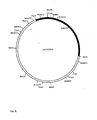
- a restriction map for pRIT10824 is given in Figure 4.
- the nucleotide sequence of the DNA corresponding to ctxA and ctxB is determined according to the chemical modification method of MAXAM and GILBERT using the methods described in Methods in Enzymology, 65, 499-560, 1980.
- the restriction fragments are labeled with the 32 P at their 5 ′ end either by exchange kination or by direct kination of the dephosphorylated ends.
- the 3 ′ ends are marked using the terminal transferase and the ⁇ - 32 P-cordycepin (CP TU and SN COHEN, Gene, 10, 177-183, 1980).
- the fragments labeled at one end are obtained by cleavage using another restriction endonuclease and purification on polyacrylamide gel.
- Dimethyl sulfate, hydrazine and sodium hydroxide reactions are used for cleavage, respectively at the guanine, pyrimidine and adenine levels.
- the products are separated on thin gels at 8% or 20% polyacrylamide (SANGER & COULSON, FEBS Lett. 87, 107, 1978). The sequence is then read from the autoradiogram of the gel.
- the overlapping DNA sequences are read from the different labeled ends and the sequences of the two strands of DNA are determined where appropriate. is possible.
- the recombinant plasmids, the restriction sites chosen for labeling and the extent of the sequence read for each determination are presented in FIG. 5.
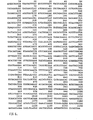
- the DNA sequence derived from these methods is presented in FIG. 6 and it comprises 1148 nucleotides of which nucleotides 1 to 777 inclusive constitute the coding sequence for the subunit A and nucleotides 774 to 1148 inclusive constitute the coding sequence for subunit B. It is important that, in the sequence in question, there are extended regions which correspond to the amino acid sequences known for the proteins of subunit A and subunit B of the thermolabile enterotoxin of E. coli (cf. SPICER E. et al., Proc. Natl. Acad. Sci. US 78, 50, 1981) with the exception, of course, of errors and omissions in the determination of protein sequences of this kind.
- the coding sequence of the protein of the A subunit crosses the ClaI site by marking the end of the fragment of the ctxA gene by extending there and ending at nucleotide 777 inside the fragment of the gene here called ctxB.
- a strain of E. coli ATCC 39051 is allowed to develop in Syncase medium (loc. Cit.) Until reaching the stationary phase.
- the culture is then centrifuged and filtered, the resulting filtrate is concentrated, dialyzed and adsorbed on aluminum hydroxide.
- the solution of the cholera toxin subunit B is eluted with sodium citrate (0.1 M), it is buffered to pH 7.2 using a phosphate buffer, it is distributed in 2 ml vials containing 200 units of antitoxin per ml and lyophilized.
- the freshly rehydrated vials are used for oral administration, the vaccination schedule including booster administration 30 days after the first vaccination, each administration being preceded by the oral administration of 2 g of sodium bicarbonate in 60 ml of water.
Landscapes
- Chemical & Material Sciences (AREA)
- Organic Chemistry (AREA)
- Health & Medical Sciences (AREA)
- Medicinal Chemistry (AREA)
- Proteomics, Peptides & Aminoacids (AREA)
- Biophysics (AREA)
- General Health & Medical Sciences (AREA)
- Genetics & Genomics (AREA)
- Life Sciences & Earth Sciences (AREA)
- Molecular Biology (AREA)
- Biochemistry (AREA)
- Gastroenterology & Hepatology (AREA)
- Micro-Organisms Or Cultivation Processes Thereof (AREA)
- Enzymes And Modification Thereof (AREA)
- Measuring Or Testing Involving Enzymes Or Micro-Organisms (AREA)
- Peptides Or Proteins (AREA)
- Saccharide Compounds (AREA)
- Medicines Containing Antibodies Or Antigens For Use As Internal Diagnostic Agents (AREA)
Applications Claiming Priority (2)
| Application Number | Priority Date | Filing Date | Title |
|---|---|---|---|
| US381083 | 1982-05-24 | ||
| US06/381,083 US4666837A (en) | 1982-05-24 | 1982-05-24 | DNA sequences, recombinant DNA molecules and processes for producing the A and B subunits of cholera toxin and preparations containing so-obtained subunit or subunits |
Publications (2)
| Publication Number | Publication Date |
|---|---|
| EP0095452A2 true EP0095452A2 (de) | 1983-11-30 |
| EP0095452A3 EP0095452A3 (de) | 1985-10-02 |
Family
ID=23503587
Family Applications (1)
| Application Number | Title | Priority Date | Filing Date |
|---|---|---|---|
| EP83870048A Withdrawn EP0095452A3 (de) | 1982-05-24 | 1983-05-18 | Herstellung von DNS-Sequenzen und für die Unterteile A und B des Cholera-Toxins kodierende DNS-Rekombinant-Moleküle, die erhaltenen Produkte und das oder die erhaltene(n) Unterteil(e)enthaltende Zusammensetzungen |
Country Status (10)
| Country | Link |
|---|---|
| US (1) | US4666837A (de) |
| EP (1) | EP0095452A3 (de) |
| JP (1) | JPS58222033A (de) |
| AU (1) | AU1348083A (de) |
| CA (1) | CA1212640A (de) |
| DK (1) | DK211483A (de) |
| ES (3) | ES522566A0 (de) |
| GR (1) | GR79261B (de) |
| PT (1) | PT76726B (de) |
| ZA (1) | ZA833662B (de) |
Cited By (12)
| Publication number | Priority date | Publication date | Assignee | Title |
|---|---|---|---|---|
| EP0145486A3 (de) * | 1983-12-12 | 1986-10-08 | Glaxo Group Limited | Mikrobiologisches Verfahren |
| EP0168322A3 (en) * | 1984-07-09 | 1986-11-20 | Praxis Biologics, Inc. | Production of the e. coli lt-b enterotoxin subunit |
| US4808700A (en) * | 1984-07-09 | 1989-02-28 | Praxis Biologics, Inc. | Immunogenic conjugates of non-toxic E. coli LT-B enterotoxin subunit and capsular polymers |
| US4882278A (en) * | 1983-04-29 | 1989-11-21 | President And Fellows Of Harvard College | Non-toxinogenic vibrio cholerae mutants |
| FR2636842A1 (fr) * | 1988-09-27 | 1990-03-30 | Liege Universite Etat | Proteine de fusion d'une sequence derivee de la sous-unite b de la toxine cholerique et d'un antigene heterologue doue de proprietes immunogenes, compositions de vaccins les contenant et acides nucleiques recombinants contenant une sequence de nucleotides codant pour ladite proteine de fusion |
| EP0368819A1 (de) * | 1988-09-16 | 1990-05-16 | Aktiebolag Vitec | Expression der bindenden Untereinheit des Choleratoxins mit Hilfe von fremden Promotoren und/oder Leadersequenzen |
| US5066596A (en) * | 1984-02-01 | 1991-11-19 | Enterovax Limited | Bacterial strains harboring cloned genes controlling vibrio cholerae o-antigen biosynthesis |
| US5308835A (en) * | 1984-07-09 | 1994-05-03 | Praxis Biologics, Inc. | Production of the E. coli LT-B enterotoxin subunit |
| US5399494A (en) * | 1983-03-04 | 1995-03-21 | The University Of Maryland System | Vibrio cholerae strain CVD103Hgr, method of making same, and vaccines derived therefrom |
| US5470729A (en) * | 1983-03-04 | 1995-11-28 | University Of Maryland At Baltimore | Method of isolating restriction fragment deletions in Vibrio cholerae, and products thereof |
| US5882653A (en) * | 1983-03-04 | 1999-03-16 | The University Of Maryland System | Vibrio cholerae 01 (CVD111) and non-01 (CVD112 and CVD112RM) serogroup vaccine strains, methods of making same and products thereof |
| US6043057A (en) * | 1988-09-16 | 2000-03-28 | Vitec Aktiebolag | Recombinant systems for expression of the cholera B-sub-unit with the aid of foreign promoters and/or leader peptides |
Families Citing this family (26)
| Publication number | Priority date | Publication date | Assignee | Title |
|---|---|---|---|---|
| US4935364A (en) * | 1983-03-04 | 1990-06-19 | Swiss Serum And Vaccine Institute Berne | Method of isolating restriction fragment deletions in vibrio cholerae and products thereof |
| US5668255A (en) * | 1984-06-07 | 1997-09-16 | Seragen, Inc. | Hybrid molecules having translocation region and cell-binding region |
| US6022950A (en) * | 1984-06-07 | 2000-02-08 | Seragen, Inc. | Hybrid molecules having translocation region and cell-binding region |
| JPH02500329A (ja) * | 1987-05-21 | 1990-02-08 | クリエイテイブ・バイオマリキユールズ・インコーポレーテツド | ターゲット化多機能蛋白質 |
| US5258498A (en) * | 1987-05-21 | 1993-11-02 | Creative Biomolecules, Inc. | Polypeptide linkers for production of biosynthetic proteins |
| US5132405A (en) * | 1987-05-21 | 1992-07-21 | Creative Biomolecules, Inc. | Biosynthetic antibody binding sites |
| US5091513A (en) * | 1987-05-21 | 1992-02-25 | Creative Biomolecules, Inc. | Biosynthetic antibody binding sites |
| US20040014068A1 (en) * | 1988-10-05 | 2004-01-22 | Whatman, Inc. | Solid medium and method for DNA storage |
| US5985327A (en) * | 1988-10-05 | 1999-11-16 | Flinders Technologies Pty. Ltd. | Solid medium and method for DNA storage |
| AU657087B2 (en) * | 1989-12-22 | 1995-03-02 | Seragen Incorporated | Hybrid molecules having translocation region and cell-binding region |
| IL101715A (en) * | 1991-05-02 | 2005-06-19 | Amgen Inc | Recombinant dna-derived cholera toxin subunit analogs |
| GB9513371D0 (en) * | 1995-06-30 | 1995-09-06 | Biocine Spa | Immunogenic detoxified mutant toxins |
| IT1253009B (it) * | 1991-12-31 | 1995-07-10 | Sclavo Ricerca S R L | Mutanti immunogenici detossificati della tossina colerica e della tossina lt, loro preparazione ed uso per la preparazione di vaccini |
| USH1985H1 (en) | 1992-01-09 | 2001-08-07 | The United States Of America As Represented By The Secretary Of The Navy | Method for detecting biological toxins |
| JP3134907B2 (ja) * | 1993-06-15 | 2001-02-13 | 株式会社島津製作所 | コレラ菌検出用オリゴヌクレオチドおよびそれを用いた検出法 |
| GB9326174D0 (en) * | 1993-12-22 | 1994-02-23 | Biocine Sclavo | Mucosal adjuvant |
| US5840307A (en) * | 1995-03-31 | 1998-11-24 | Immulogic Pharmacuetical Corp. | Hapten-carrier conjugates for use in drug-abuse therapy and methods for preparation |
| US20020032316A1 (en) * | 1995-03-31 | 2002-03-14 | Cantab Pharmaceuticals Research Limited | Hapten-carrier conjugates for use in drug-abuse therapy and methods for preparation of same |
| WO1996030049A2 (en) * | 1995-03-31 | 1996-10-03 | Immulogic Pharmaceutical Corporation | Hapten-carrier conjugates for use in drug-abuse therapy |
| US6818222B1 (en) | 1997-03-21 | 2004-11-16 | Chiron Corporation | Detoxified mutants of bacterial ADP-ribosylating toxins as parenteral adjuvants |
| US7097845B2 (en) | 1997-04-23 | 2006-08-29 | Jacob Sten Petersen | Combinations of antigen and mucosal binding component for inducing specific immunological tolerance |
| US6232082B1 (en) | 1998-12-01 | 2001-05-15 | Nabi | Hapten-carrier conjugates for treating and preventing nicotine addiction |
| US20030162733A1 (en) * | 2000-11-27 | 2003-08-28 | Haynes Joel R. | Nucleic acid adjuvants |
| EP1377299A4 (de) | 2001-03-19 | 2009-11-11 | Intercell Usa Inc | Transkutane immunstimulation |
| US20060099229A1 (en) * | 2004-11-05 | 2006-05-11 | Universiti Sains Malaysia | Vibrio cholerae strains VCUSM1 and VCUSM4, method of producing same, and vaccine derivatives thereof |
| WO2014044690A1 (en) | 2012-09-18 | 2014-03-27 | Valneva Austria Gmbh | Improved vaccines |
Family Cites Families (6)
| Publication number | Priority date | Publication date | Assignee | Title |
|---|---|---|---|---|
| US4366246A (en) * | 1977-11-08 | 1982-12-28 | Genentech, Inc. | Method for microbial polypeptide expression |
| US4264737A (en) * | 1978-09-21 | 1981-04-28 | President And Fellows Of Harvard College | Method of making genetically stable mutants of vibrio cholerae |
| US4332892A (en) * | 1979-01-15 | 1982-06-01 | President And Fellows Of Harvard College | Protein synthesis |
| US4328209A (en) * | 1979-04-11 | 1982-05-04 | Board Of Regents, The University Of Texas System | Cholera vaccine |
| US4293652A (en) * | 1979-05-25 | 1981-10-06 | Cetus Corporation | Method for synthesizing DNA sequentially |
| US4338397A (en) * | 1980-04-11 | 1982-07-06 | President And Fellows Of Harvard College | Mature protein synthesis |
-
1982
- 1982-05-24 US US06/381,083 patent/US4666837A/en not_active Expired - Lifetime
-
1983
- 1983-04-13 AU AU13480/83A patent/AU1348083A/en not_active Abandoned
- 1983-05-11 DK DK211483A patent/DK211483A/da not_active Application Discontinuation
- 1983-05-18 EP EP83870048A patent/EP0095452A3/de not_active Withdrawn
- 1983-05-19 PT PT76726A patent/PT76726B/pt unknown
- 1983-05-20 ZA ZA833662A patent/ZA833662B/xx unknown
- 1983-05-20 CA CA000428654A patent/CA1212640A/en not_active Expired
- 1983-05-20 ES ES522566A patent/ES522566A0/es active Granted
- 1983-05-23 JP JP58091416A patent/JPS58222033A/ja active Pending
- 1983-05-23 GR GR71430A patent/GR79261B/el unknown
-
1984
- 1984-01-30 ES ES529276A patent/ES529276A0/es active Granted
- 1984-09-11 ES ES535809A patent/ES8506348A1/es not_active Expired
Cited By (14)
| Publication number | Priority date | Publication date | Assignee | Title |
|---|---|---|---|---|
| US5399494A (en) * | 1983-03-04 | 1995-03-21 | The University Of Maryland System | Vibrio cholerae strain CVD103Hgr, method of making same, and vaccines derived therefrom |
| US5882653A (en) * | 1983-03-04 | 1999-03-16 | The University Of Maryland System | Vibrio cholerae 01 (CVD111) and non-01 (CVD112 and CVD112RM) serogroup vaccine strains, methods of making same and products thereof |
| US5628994A (en) * | 1983-03-04 | 1997-05-13 | The University Of Maryland | Vibrio cholerae strain CVD103Hgr, method of making same, and vaccines derived therefrom |
| US5470729A (en) * | 1983-03-04 | 1995-11-28 | University Of Maryland At Baltimore | Method of isolating restriction fragment deletions in Vibrio cholerae, and products thereof |
| US4882278A (en) * | 1983-04-29 | 1989-11-21 | President And Fellows Of Harvard College | Non-toxinogenic vibrio cholerae mutants |
| EP0145486A3 (de) * | 1983-12-12 | 1986-10-08 | Glaxo Group Limited | Mikrobiologisches Verfahren |
| US5066596A (en) * | 1984-02-01 | 1991-11-19 | Enterovax Limited | Bacterial strains harboring cloned genes controlling vibrio cholerae o-antigen biosynthesis |
| US5308835A (en) * | 1984-07-09 | 1994-05-03 | Praxis Biologics, Inc. | Production of the E. coli LT-B enterotoxin subunit |
| US4808700A (en) * | 1984-07-09 | 1989-02-28 | Praxis Biologics, Inc. | Immunogenic conjugates of non-toxic E. coli LT-B enterotoxin subunit and capsular polymers |
| EP0168322A3 (en) * | 1984-07-09 | 1986-11-20 | Praxis Biologics, Inc. | Production of the e. coli lt-b enterotoxin subunit |
| EP0368819A1 (de) * | 1988-09-16 | 1990-05-16 | Aktiebolag Vitec | Expression der bindenden Untereinheit des Choleratoxins mit Hilfe von fremden Promotoren und/oder Leadersequenzen |
| US6043057A (en) * | 1988-09-16 | 2000-03-28 | Vitec Aktiebolag | Recombinant systems for expression of the cholera B-sub-unit with the aid of foreign promoters and/or leader peptides |
| WO1990003437A1 (fr) * | 1988-09-27 | 1990-04-05 | L'universite De L'etat A Liege | Proteines de fusion de la sous-unite b de la toxine cholerique et d'un antigene heterologue et acides nucleiques les encodant |
| FR2636842A1 (fr) * | 1988-09-27 | 1990-03-30 | Liege Universite Etat | Proteine de fusion d'une sequence derivee de la sous-unite b de la toxine cholerique et d'un antigene heterologue doue de proprietes immunogenes, compositions de vaccins les contenant et acides nucleiques recombinants contenant une sequence de nucleotides codant pour ladite proteine de fusion |
Also Published As
| Publication number | Publication date |
|---|---|
| ES8504460A1 (es) | 1985-05-01 |
| DK211483A (da) | 1983-11-25 |
| PT76726B (en) | 1985-12-27 |
| JPS58222033A (ja) | 1983-12-23 |
| DK211483D0 (da) | 1983-05-11 |
| CA1212640A (en) | 1986-10-14 |
| ES8504458A1 (es) | 1985-04-16 |
| ES522566A0 (es) | 1985-04-16 |
| GR79261B (de) | 1984-10-22 |
| ES529276A0 (es) | 1985-05-01 |
| US4666837A (en) | 1987-05-19 |
| ES535809A0 (es) | 1985-07-01 |
| ES8506348A1 (es) | 1985-07-01 |
| EP0095452A3 (de) | 1985-10-02 |
| AU1348083A (en) | 1983-12-01 |
| PT76726A (en) | 1983-06-01 |
| ZA833662B (en) | 1984-03-28 |
Similar Documents
| Publication | Publication Date | Title |
|---|---|---|
| EP0586266B1 (de) | DNA-Fragmente, die für die Untereinheiten von dem Neisseria Meningitidis Rezeptor kodieren | |
| US4666837A (en) | DNA sequences, recombinant DNA molecules and processes for producing the A and B subunits of cholera toxin and preparations containing so-obtained subunit or subunits | |
| WO1995004079A1 (fr) | Vecteur recombinant contenant une sequence d'un gene de lipoproteine pour l'expression de sequences de nucleotides | |
| FR2514783A1 (fr) | Interferon immunitaire humain | |
| DK175831B1 (da) | Neisseria gonorrhoeae-relaterede nucleinsyrer, rekombinantvektorer, værtsorgaismer, encellede organismer, polypeptidfremstillingsmetoder, polypeptidsammensætninger, vaccinepræparater, DNA-sonder, påvisningsmetoder og diagnostiske prövesæt, ......... | |
| EP0791063B1 (de) | Trägerprotein mit adjuvant aktivität, diese enthaltende immunogene komplexe, ihre herstellung, nukleotidsequenz und impfstoff | |
| EP0389347A1 (de) | Impfstoffe gegen Bakterien, die zur Blutvergiftung führen | |
| KR20010042175A (ko) | AroC, OmpF 및 OmpC 유전자 각각에 비복귀돌연변이로 약독화된 백신에 유용한 박테리아 | |
| WO1984002918A1 (fr) | NOUVEAUX VECTEURS D'EXPRESSION ET LEUR APPLICATION A LA PREPARATION D'UNE PROTEINE AYANT L'ACTIVITE DE L'ANTITRYPSINE-alpha1 HUMAINE | |
| EP0235474A1 (de) | Gereinigte Antigene mit vakzinierenden Eigenschaften gegen B. pertussis, Mittel, insbesondere rekombinante DNS-Moleküle zur Herstellung derselben und diese Antigene enthaltende Impfstoffe | |
| EP0106828A2 (de) | Rekombinante DNS-Moleküle die Hepatitis-B-Oberflächenantigen kodieren, deren Herstellung und abgeleitete Vakzine | |
| AU773003B2 (en) | Virulence genes and proteins, and their use | |
| EP0180012A1 (de) | Immunogene Polypeptidsequenz des Hepatitis B-Virus | |
| US5589380A (en) | Isolated DNA molecule encoding SHET1 of Shigella flexneri 2a and mutant Shigella flexneri 2a | |
| EP0787796B9 (de) | Schützende Epitope von Adenylate-Zyklase-Hämolysin(AC-Hly) und ihre Verwendung zur Behandlung oder Verhütung von Bordetella-Infektionen | |
| US6214356B1 (en) | Use of adenylate cyclase or bacteria producing it as vaccines against bordetella | |
| EP0145486A2 (de) | Mikrobiologisches Verfahren | |
| US6664094B1 (en) | Neisserial vaccine free of immunologically functional PIII or class 4 proteins | |
| EP0377349B1 (de) | Rekombinante Polypeptide des hämorrhagischen Fisch-Sepsis-Virus | |
| US5468639A (en) | Isolated DNA molecule encoding ShET2 of Shigella flexneri 2a | |
| HU205372B (en) | Process for producing vaccines against cholera | |
| WO1992016223A1 (en) | Production of gonorrheal pi proteins and vaccines | |
| FR2539758A1 (fr) | Nouveaux vecteurs d'expression et leur application a la preparation d'une proteine ayant l'activite de l'antitrypsine-a1 humaine |
Legal Events
| Date | Code | Title | Description |
|---|---|---|---|
| PUAI | Public reference made under article 153(3) epc to a published international application that has entered the european phase |
Free format text: ORIGINAL CODE: 0009012 |
|
| 17P | Request for examination filed |
Effective date: 19830614 |
|
| AK | Designated contracting states |
Designated state(s): AT BE CH DE FR GB IT LI LU NL SE |
|
| RAP1 | Party data changed (applicant data changed or rights of an application transferred) |
Owner name: SMITH KLINE - RIT SOCIETE ANONYME DITE: |
|
| PUAL | Search report despatched |
Free format text: ORIGINAL CODE: 0009013 |
|
| AK | Designated contracting states |
Designated state(s): AT BE CH DE FR GB IT LI LU NL SE |
|
| 17Q | First examination report despatched |
Effective date: 19870227 |
|
| STAA | Information on the status of an ep patent application or granted ep patent |
Free format text: STATUS: THE APPLICATION IS DEEMED TO BE WITHDRAWN |
|
| 18D | Application deemed to be withdrawn |
Effective date: 19870710 |
|
| RIN1 | Information on inventor provided before grant (corrected) |
Inventor name: DE WILDE, MICHEL Inventor name: HARFORD, NIGEL |