EP0096117B1 - Vorrichtung zur Analyse chemischer oxydierender oder reduzierender Stoffe - Google Patents
Vorrichtung zur Analyse chemischer oxydierender oder reduzierender Stoffe Download PDFInfo
- Publication number
- EP0096117B1 EP0096117B1 EP19820200695 EP82200695A EP0096117B1 EP 0096117 B1 EP0096117 B1 EP 0096117B1 EP 19820200695 EP19820200695 EP 19820200695 EP 82200695 A EP82200695 A EP 82200695A EP 0096117 B1 EP0096117 B1 EP 0096117B1
- Authority
- EP
- European Patent Office
- Prior art keywords
- instrument
- exchange membrane
- electrode
- weight percent
- electrodes
- Prior art date
- Legal status (The legal status is an assumption and is not a legal conclusion. Google has not performed a legal analysis and makes no representation as to the accuracy of the status listed.)
- Expired
Links
- 239000000126 substance Substances 0.000 title claims description 10
- 239000003638 chemical reducing agent Substances 0.000 title claims description 9
- 239000007800 oxidant agent Substances 0.000 title claims description 9
- 230000001590 oxidative effect Effects 0.000 title claims description 9
- 239000008151 electrolyte solution Substances 0.000 claims description 16
- 239000012528 membrane Substances 0.000 claims description 13
- 239000003014 ion exchange membrane Substances 0.000 claims description 12
- KWGKDLIKAYFUFQ-UHFFFAOYSA-M lithium chloride Chemical compound [Li+].[Cl-] KWGKDLIKAYFUFQ-UHFFFAOYSA-M 0.000 claims description 9
- 229910052751 metal Inorganic materials 0.000 claims description 8
- 239000002184 metal Substances 0.000 claims description 8
- 239000000463 material Substances 0.000 claims description 6
- 238000005341 cation exchange Methods 0.000 claims description 5
- 239000003011 anion exchange membrane Substances 0.000 claims description 4
- 150000002739 metals Chemical class 0.000 claims description 4
- 229920002239 polyacrylonitrile Polymers 0.000 claims description 4
- 239000002904 solvent Substances 0.000 claims description 4
- RUOJZAUFBMNUDX-UHFFFAOYSA-N propylene carbonate Chemical compound CC1COC(=O)O1 RUOJZAUFBMNUDX-UHFFFAOYSA-N 0.000 claims description 3
- 150000003839 salts Chemical class 0.000 claims description 3
- HZNVUJQVZSTENZ-UHFFFAOYSA-N 2,3-dichloro-5,6-dicyano-1,4-benzoquinone Chemical compound ClC1=C(Cl)C(=O)C(C#N)=C(C#N)C1=O HZNVUJQVZSTENZ-UHFFFAOYSA-N 0.000 claims description 2
- 239000007864 aqueous solution Substances 0.000 claims description 2
- 229910052799 carbon Inorganic materials 0.000 claims description 2
- 229920001577 copolymer Polymers 0.000 claims description 2
- 239000003349 gelling agent Substances 0.000 claims description 2
- 239000011255 nonaqueous electrolyte Substances 0.000 claims description 2
- -1 polytetrafluoroethylene backbone Polymers 0.000 claims description 2
- 125000001453 quaternary ammonium group Chemical group 0.000 claims description 2
- BASFCYQUMIYNBI-UHFFFAOYSA-N platinum Chemical compound [Pt] BASFCYQUMIYNBI-UHFFFAOYSA-N 0.000 description 11
- 239000003792 electrolyte Substances 0.000 description 8
- ZAMOUSCENKQFHK-UHFFFAOYSA-N Chlorine atom Chemical compound [Cl] ZAMOUSCENKQFHK-UHFFFAOYSA-N 0.000 description 6
- 239000000460 chlorine Substances 0.000 description 6
- 229910052801 chlorine Inorganic materials 0.000 description 6
- 229910052697 platinum Inorganic materials 0.000 description 5
- 238000003487 electrochemical reaction Methods 0.000 description 4
- 239000007788 liquid Substances 0.000 description 4
- 238000011084 recovery Methods 0.000 description 4
- 238000012360 testing method Methods 0.000 description 4
- UXVMQQNJUSDDNG-UHFFFAOYSA-L Calcium chloride Chemical compound [Cl-].[Cl-].[Ca+2] UXVMQQNJUSDDNG-UHFFFAOYSA-L 0.000 description 3
- BQCADISMDOOEFD-UHFFFAOYSA-N Silver Chemical compound [Ag] BQCADISMDOOEFD-UHFFFAOYSA-N 0.000 description 3
- 239000003795 chemical substances by application Substances 0.000 description 3
- 239000007789 gas Substances 0.000 description 3
- QSHDDOUJBYECFT-UHFFFAOYSA-N mercury Chemical compound [Hg] QSHDDOUJBYECFT-UHFFFAOYSA-N 0.000 description 3
- 229910052753 mercury Inorganic materials 0.000 description 3
- 239000000203 mixture Substances 0.000 description 3
- 238000007789 sealing Methods 0.000 description 3
- 230000035945 sensitivity Effects 0.000 description 3
- LFQSCWFLJHTTHZ-UHFFFAOYSA-N Ethanol Chemical compound CCO LFQSCWFLJHTTHZ-UHFFFAOYSA-N 0.000 description 2
- 229910021135 KPF6 Inorganic materials 0.000 description 2
- 229920000557 Nafion® Polymers 0.000 description 2
- 230000003197 catalytic effect Effects 0.000 description 2
- 230000003750 conditioning effect Effects 0.000 description 2
- 238000011109 contamination Methods 0.000 description 2
- 238000001514 detection method Methods 0.000 description 2
- 238000010292 electrical insulation Methods 0.000 description 2
- 239000012530 fluid Substances 0.000 description 2
- 229910052736 halogen Inorganic materials 0.000 description 2
- 150000002367 halogens Chemical class 0.000 description 2
- 150000002500 ions Chemical class 0.000 description 2
- 231100000572 poisoning Toxicity 0.000 description 2
- 230000000607 poisoning effect Effects 0.000 description 2
- 229910052709 silver Inorganic materials 0.000 description 2
- 239000004332 silver Substances 0.000 description 2
- UGFAIRIUMAVXCW-UHFFFAOYSA-N Carbon monoxide Chemical compound [O+]#[C-] UGFAIRIUMAVXCW-UHFFFAOYSA-N 0.000 description 1
- 239000004801 Chlorinated PVC Substances 0.000 description 1
- KZBUYRJDOAKODT-UHFFFAOYSA-N Chlorine Chemical compound ClCl KZBUYRJDOAKODT-UHFFFAOYSA-N 0.000 description 1
- RWSOTUBLDIXVET-UHFFFAOYSA-N Dihydrogen sulfide Chemical compound S RWSOTUBLDIXVET-UHFFFAOYSA-N 0.000 description 1
- 229910001628 calcium chloride Inorganic materials 0.000 description 1
- 239000001110 calcium chloride Substances 0.000 description 1
- 229910002091 carbon monoxide Inorganic materials 0.000 description 1
- 239000013626 chemical specie Substances 0.000 description 1
- 229920000457 chlorinated polyvinyl chloride Polymers 0.000 description 1
- 239000000470 constituent Substances 0.000 description 1
- 238000009792 diffusion process Methods 0.000 description 1
- 239000002019 doping agent Substances 0.000 description 1
- 229910052739 hydrogen Inorganic materials 0.000 description 1
- 239000001257 hydrogen Substances 0.000 description 1
- 150000002431 hydrogen Chemical class 0.000 description 1
- 229910000037 hydrogen sulfide Inorganic materials 0.000 description 1
- 229910001502 inorganic halide Inorganic materials 0.000 description 1
- 238000005342 ion exchange Methods 0.000 description 1
- 238000012423 maintenance Methods 0.000 description 1
- 238000005259 measurement Methods 0.000 description 1
- 238000000034 method Methods 0.000 description 1
- 238000012986 modification Methods 0.000 description 1
- 230000004048 modification Effects 0.000 description 1
- 239000005486 organic electrolyte Substances 0.000 description 1
- 229920003023 plastic Polymers 0.000 description 1
- 239000004033 plastic Substances 0.000 description 1
- 230000008929 regeneration Effects 0.000 description 1
- 238000011069 regeneration method Methods 0.000 description 1
- 229920006395 saturated elastomer Polymers 0.000 description 1
- 239000000243 solution Substances 0.000 description 1
- 238000005406 washing Methods 0.000 description 1
Images
Classifications
-
- G—PHYSICS
- G01—MEASURING; TESTING
- G01N—INVESTIGATING OR ANALYSING MATERIALS BY DETERMINING THEIR CHEMICAL OR PHYSICAL PROPERTIES
- G01N27/00—Investigating or analysing materials by the use of electric, electrochemical, or magnetic means
- G01N27/26—Investigating or analysing materials by the use of electric, electrochemical, or magnetic means by investigating electrochemical variables; by using electrolysis or electrophoresis
- G01N27/403—Cells and electrode assemblies
- G01N27/404—Cells with anode, cathode and cell electrolyte on the same side of a permeable membrane which separates them from the sample fluid, e.g. Clark-type oxygen sensors
- G01N27/4045—Cells with anode, cathode and cell electrolyte on the same side of a permeable membrane which separates them from the sample fluid, e.g. Clark-type oxygen sensors for gases other than oxygen
-
- G—PHYSICS
- G01—MEASURING; TESTING
- G01N—INVESTIGATING OR ANALYSING MATERIALS BY DETERMINING THEIR CHEMICAL OR PHYSICAL PROPERTIES
- G01N33/00—Investigating or analysing materials by specific methods not covered by groups G01N1/00 - G01N31/00
- G01N33/0004—Gaseous mixtures, e.g. polluted air
- G01N33/0009—General constructional details of gas analysers, e.g. portable test equipment
- G01N33/0027—General constructional details of gas analysers, e.g. portable test equipment concerning the detector
- G01N33/0036—General constructional details of gas analysers, e.g. portable test equipment concerning the detector specially adapted to detect a particular component
- G01N33/0052—Gaseous halogens
Definitions
- This invention relates to the quantitative determination of chemical oxidizing or reducing agents in a gaseous environment. More particularly, the invention relates to the determination of chemical oxidizing or reducing agents by means of a novel type of sensor or detector which includes an ion-exchange membrane.
- the electrodes forming a part of the electrochemical cell or couple in analyzers are separated from each other by means of a porous layer.
- the porous layer permits a restricted flow of electrolyte, thereby completing the electrochemical couple between the electrodes in the sensor portion of the analyzers.
- a serious disadvantage of the porous layer is that it permits a substantial diffusion of sample throughout the electrolyte between the electrodes.
- the recovery time necessary to stabilize known analyzers between tests is relatively long, and the only known way to reduce the recovery time is to provide special means of renewing the electrolyte in the analyzers.
- These special means are not entirely satisfactory in that they are cumbersome, costly, and require frequent and extensive maintenance.
- the present invention provides an analyzer which is not subject to the limitations of lengthy recovery time or the necessity of providing auxiliary means for restabilizing the electrode system.
- a second serious disadvantage of the porous layer is that it is non-selective.
- the porous layer permits the electrodes to be exposed to all constituents of the fluid being monitored. The result is the possibility of contamination or poisoning of the electrodes, and of direct interference in the quantitative measurement by substances present in the sample other than those being determined.
- the present invention provides a means which, in combination with the electrodes, substantially eliminates the possibility of contamination or poisoning of the electrodes and of interference by extraneous components of the environment being tested.
- the present invention concerns however an instrument for analyzing gaseous components.
- the present invention is concerned with an instrument (10) for quantitatively determining the concentration of chemical oxidizing or reducing agents in a gaseous environment, comprising a first electrode (9) exposed to said gaseous environment, a second electrode (3) in contact with an electrolyte solution (4) and means for measuring a flow of electrical current between said first (9) and said second electrode (3).
- the present invention is characterized in that an ion-exchange membrane (6) adapted to contain said electrolyte solution is present, said ion-exchange membrane (6) separating said electrolyte solution (14) and second electrode (3) from said first electrode (9), said first electrode (9) being in electrical and physical contact with said ion-exchange membrane (6).
- membrane depends upon the chemical species being quantitatively determined. If an oxidizing species such as a halogen is to be determined, a cation-exchange membrane is chosen to permit a flow of positive ions from the electrolyte through the membrane to the first electrode. If a reducing species such as hydrogen, carbon monoxide or hydrogen sulfide is to be determined, an anion-exchange membrane may be used to permit a flow of negative ions from the electrolyte through the membrane to the first electrode. -
- the function of the instrument may be classified as electrochemical in nature. If the first and second electrodes are made of dissimilar metals, the first electrode is characterized as being catalytic with respect to the oxidizing or reducing agent being determined but chemically inert to the agent and fluid environment in which it is positioned, and the second electrode is characterized as being chemically reactive in the electrolyte solution and being consumed by the electrochemical reaction taking place during determination of the agent. If the first and second electrodes are made of the same metal, they are characterized as both being catalytic to the agent being determined and chemically inert to the environments in which they are positioned.
- both electrodes are made from the same metal, an additional means is required for imposing a voltage across and causing direct electrical current to flow between the electrodes, thereby providing the driving force for the electrochemical reaction of the instrument.
- an additional power source is not necessarily required since a galvanic couple will be formed between the electrodes.
- an external power source may be used if desired.
- an external power source may be used in the case where the galvanic potential is insufficient as a driving force for the electrochemical reaction to provide an accurate readout for the instrument or where it is desired to decrease the rate of the electrochemical reaction, thereby increasing the effective range of the instrument.
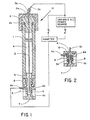
- the sensor 10 comprises a hollow cylindrical body 1 adapted to contain an electrolyte solution 4; a means for sealing the body 1 at the top which includes a threaded cap 2, an electrically-insulating member 2a, and an "0" ring 2b.
- the body 1 is provided with sealing means at the bottom which includes a swagelock fitting 5, a tube 6 formed from an ion-exchange membrane material, and an end plug 7 fitted into and sealing the end of the tube 6.
- a nut 8 is threaded onto the swagelock fitting 5.
- a lower cap 8a for protecting the tube 6 is secured to the nut 8 and includes openings 8b.
- An electrode 3 is in contact with the electrolyte solution 4 and extends into the tube 6.
- the electrode 3 has a terminal end connection 3a which is covered with an electrical insulation 3b.
- An electrode 9 is wound around tube 6 and has a terminal end connection 9a.
- the modified version of the sensor 10 includes a mercury pool electrode 3d in electrical contact with an electrical-lead wire 3c. All other elements of sensor 10 remain unchanged.
- the electrolyte solution 4 is generally a solution of an inorganic halide.
- the electrolyte solution 4 is a saturated aqueous solution of calcium chloride or lithium chloride.
- the electrode 3 is preferably a silver wire and electrode 9 is preferably a platinum wire when the electrodes are made from dissimilar metals. When the electrodes are made from the same metal, both electrodes 3 and 9 are preferably made of platinum.
- the electrical-lead wire 3c in contact with the mercury pool electrode 3d is preferably made of platinum.
- the tube 6 can be formed from any known ion-exchange membrane material depending on the requirements of the sensor 10.
- the tube 6 is beneficially made from a material having a polytetrafluoroethylene backbone and perfluorinated two-carbon sulfonated sidechains such as that marketed by E. I. du Pont de Nemours and Company, Inc., under the tradename of "Nafion".
- the tube 6 is beneficially made from a styrene-divinyl-benzene copolymer having quaternary-ammonium sidechains.
- the remaining structural elements of the sensor 10 can be constructed of any known structural material which will also provide electrical insulation for the electrochemical circuit.
- a plastic material such as chlorinated polyvinylchloride may beneficially be used.
- any known means for accurately measuring the flow of electrical current is connected between the terminal end connections 3a and 9a of the sensor 10.
- a microammeter or a resistor in parallel combination with a voltmeter may beneficially be used.
- a suitable measuring device includes a ten-thousand ohm resistor in parallel combination with a Hickok LX-303 Digital Voltmeter. If a source of voltage and direct electric current is imposed on the electrodes, this source may be any well-known means such as a battery or an alternating power source which has been stepped down with a direct current transformer or rectifier.
- a chart recorder may also be beneficially used in combination with the-current measuring means to provide a permanent and continuous record.
- the current measuring means is also preferably adapted to read out directly in the quantity of the chemical oxidizing or reducing agent detected in the test environment.
- a particularly preferred use of the sensor 10 is for measuring the concentration of a halogen such as chlorine in air.
- a halogen such as chlorine in air.
- pre-conditioning is accomplished by making a direct electrical connection between the terminal end connections 3a and 9a, and then exposing the electrode 9 to an atmosphere of substantially pure wet chlorine gas for a period of ten to fifteen minutes.
- the exact reason that the sensitivity of the sensor 10 is improved by pre-conditioning is not known, but it is theorized that pre-conditioning brings a new sensor 10 to a faster chemical equilibrium across the electrochemical couple of the electrodes 3 and 9, the electrolyte solution 4 and the ion-exchange tube 6.
- the instrument of the present invention can be modified by employing a non-aqueous electrolyte solution for determining chlorine leaks in chlorine liquefaction processes.
- the electrolyte here employed in an organic gel comprising (1) from 50 to 81 weight percent of a solvent such as, for example, propylene carbonate, (2) a gelling agent from 18 to 49 weight percent such as, for example, polyacrylonitrile and (3) from 0.09 to 1.1 weight percent of a salt capable of lowering the humidity in the gas that can be absorbed on the membrane.
- the salt preferably is lithium chloride.
- the organic gel includes from 0.2 to 1.0 weight percent of a doping agent such as, for example, KPF 6 (potassium hexafluorophosphate).
- a preferred composition comprises (1) from 70 to 8J weight percent, most preferably about 81 weight percent, propylene carbonate; (2) from 18 to 29 weight percent, most preferably about 18 weight percent, polyacrylonitrile; (3) about 0.5 weight percent KPF 6 and (4) about 0.3 weight percent lithium chloride.
- Organic electrolytes for use in gas detectors are generally known from U.S. Patent 4,049,503, issued to W. J. Becker et al. on September 20, 1977.
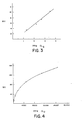
- the gelled electrolyte composition of this invention is a composition gelled with polyacrylonitrile to decrease the vapor pressure of the solvent, which increases the life span by a significant factor over other liquid based electrolytes. No loss of sensitivity has been detected in a linear detection range of from 0.04 to 5 ppm at an average response time of about six seconds for a detection level of 5 ppm. Regeneration of the instrument can be obtained by washing with ethanol.
Landscapes
- Chemical & Material Sciences (AREA)
- Life Sciences & Earth Sciences (AREA)
- Health & Medical Sciences (AREA)
- Physics & Mathematics (AREA)
- Chemical Kinetics & Catalysis (AREA)
- Electrochemistry (AREA)
- Molecular Biology (AREA)
- Analytical Chemistry (AREA)
- Biochemistry (AREA)
- General Health & Medical Sciences (AREA)
- General Physics & Mathematics (AREA)
- Immunology (AREA)
- Pathology (AREA)
- Measuring Oxygen Concentration In Cells (AREA)
Claims (11)
Priority Applications (2)
| Application Number | Priority Date | Filing Date | Title |
|---|---|---|---|
| EP19820200695 EP0096117B1 (de) | 1982-06-07 | 1982-06-07 | Vorrichtung zur Analyse chemischer oxydierender oder reduzierender Stoffe |
| DE8282200695T DE3277134D1 (en) | 1982-06-07 | 1982-06-07 | Analyzer for chemical oxidizing or reducing agents |
Applications Claiming Priority (1)
| Application Number | Priority Date | Filing Date | Title |
|---|---|---|---|
| EP19820200695 EP0096117B1 (de) | 1982-06-07 | 1982-06-07 | Vorrichtung zur Analyse chemischer oxydierender oder reduzierender Stoffe |
Publications (2)
| Publication Number | Publication Date |
|---|---|
| EP0096117A1 EP0096117A1 (de) | 1983-12-21 |
| EP0096117B1 true EP0096117B1 (de) | 1987-09-02 |
Family
ID=8189496
Family Applications (1)
| Application Number | Title | Priority Date | Filing Date |
|---|---|---|---|
| EP19820200695 Expired EP0096117B1 (de) | 1982-06-07 | 1982-06-07 | Vorrichtung zur Analyse chemischer oxydierender oder reduzierender Stoffe |
Country Status (2)
| Country | Link |
|---|---|
| EP (1) | EP0096117B1 (de) |
| DE (1) | DE3277134D1 (de) |
Families Citing this family (4)
| Publication number | Priority date | Publication date | Assignee | Title |
|---|---|---|---|---|
| DE3864981D1 (de) * | 1987-05-15 | 1991-10-24 | Nat Res Dev | Elektrochemischer messwertaufnehmer mit festem elektrolyt. |
| FR2625319B1 (fr) * | 1987-12-23 | 1993-08-27 | Electricite De France | Dispositif incorporant une electrode de reference pour la mesure de donnees electrochimiques |
| GB2221537A (en) * | 1988-08-02 | 1990-02-07 | Sp Kt Bjuro Konstruirovaniju O | Apparatus for measuring hydrogen cyanide vapour content in the air |
| DE59603550D1 (de) * | 1995-09-18 | 1999-12-09 | Werner Goehring | Verfahren und Vorrichtung zur Messung und Regelung einer Aufkohlungs- und/oder Nitrieratmosphäre |
Family Cites Families (4)
| Publication number | Priority date | Publication date | Assignee | Title |
|---|---|---|---|---|
| US3421989A (en) * | 1964-11-24 | 1969-01-14 | Beckman Instruments Inc | Mercury pool electrode |
| US3703457A (en) * | 1970-10-15 | 1972-11-21 | Gen Electric | Sensor with anion exchange resin electrolyte |
| DE2436261B2 (de) * | 1974-07-27 | 1976-11-25 | Bayer Ag, 5090 Leverkusen | Elektrochemische gasdetektoren |
| US4310400A (en) * | 1980-02-26 | 1982-01-12 | Mark Jr Harry B | Thin layer electrode and cell |
-
1982
- 1982-06-07 EP EP19820200695 patent/EP0096117B1/de not_active Expired
- 1982-06-07 DE DE8282200695T patent/DE3277134D1/de not_active Expired
Also Published As
| Publication number | Publication date |
|---|---|
| DE3277134D1 (en) | 1987-10-08 |
| EP0096117A1 (de) | 1983-12-21 |
Similar Documents
| Publication | Publication Date | Title |
|---|---|---|
| US2913386A (en) | Electrochemical device for chemical analysis | |
| US5322602A (en) | Gas sensors | |
| CA1071709A (en) | Gas analysis apparatus | |
| US4568445A (en) | Electrode system for an electro-chemical sensor for measuring vapor concentrations | |
| US3454485A (en) | Oxygen sensor with scavenger means | |
| EP0293230B1 (de) | Sensoren für saure Gase | |
| US4377446A (en) | Carbon dioxide measurement | |
| US4025412A (en) | Electrically biased two electrode, electrochemical gas sensor with a H.sub.2 | |
| US3325378A (en) | Electrochemical method and apparatus for measuring hydrogen content | |
| US4083765A (en) | Polymeric electrolytic hygrometer | |
| US4227974A (en) | Electrochemical cell having a polarographic device with ion selective electrode as working electrode and method of use | |
| US3223597A (en) | Method and means for oxygen analysis of gases | |
| US3272725A (en) | Method of electrolytically testing oxygen concentration | |
| EP0512053A1 (de) | Polarographisch-chemischer sensor mit externer referenzelektrode | |
| US4302315A (en) | Gas sensing unit | |
| US4689122A (en) | Gas detection apparatus and method with novel electrolyte membrane | |
| JPH08500444A (ja) | 塩素センサー | |
| US4333810A (en) | Analyzer for chemical oxidizing or reducing agents | |
| US4201634A (en) | Method for the detection of hydrazine | |
| US3897315A (en) | Method of determining hydrogen sulfide | |
| US7632393B2 (en) | Total organic carbon (TOC) analyzer | |
| US3909384A (en) | Electro-chemical sensors for trace gases | |
| US3859191A (en) | Hydrogen cyanide sensing cell | |
| US4235689A (en) | Apparatus for detecting traces of a gas | |
| EP0096117A1 (de) | Vorrichtung zur Analyse chemischer oxydierender oder reduzierender Stoffe |
Legal Events
| Date | Code | Title | Description |
|---|---|---|---|
| PUAI | Public reference made under article 153(3) epc to a published international application that has entered the european phase |
Free format text: ORIGINAL CODE: 0009012 |
|
| AK | Designated contracting states |
Designated state(s): DE FR GB IT NL |
|
| 17P | Request for examination filed |
Effective date: 19840618 |
|
| GRAA | (expected) grant |
Free format text: ORIGINAL CODE: 0009210 |
|
| AK | Designated contracting states |
Kind code of ref document: B1 Designated state(s): DE FR GB IT NL |
|
| REF | Corresponds to: |
Ref document number: 3277134 Country of ref document: DE Date of ref document: 19871008 |
|
| ET | Fr: translation filed | ||
| ITF | It: translation for a ep patent filed | ||
| PLBI | Opposition filed |
Free format text: ORIGINAL CODE: 0009260 |
|
| 26 | Opposition filed |
Opponent name: DRAEGERWERK AG Effective date: 19880510 |
|
| NLR1 | Nl: opposition has been filed with the epo |
Opponent name: DRAEGERWERK AG |
|
| RDAG | Patent revoked |
Free format text: ORIGINAL CODE: 0009271 |
|
| STAA | Information on the status of an ep patent application or granted ep patent |
Free format text: STATUS: PATENT REVOKED |
|
| GBPR | Gb: patent revoked under art. 102 of the ep convention designating the uk as contracting state | ||
| 27W | Patent revoked |
Effective date: 19881006 |
|
| NLR2 | Nl: decision of opposition |