EP0096810B2 - Pièce en superalliage pourvue d'un revêtement pour des turbines à gaz - Google Patents
Pièce en superalliage pourvue d'un revêtement pour des turbines à gaz Download PDFInfo
- Publication number
- EP0096810B2 EP0096810B2 EP83105489A EP83105489A EP0096810B2 EP 0096810 B2 EP0096810 B2 EP 0096810B2 EP 83105489 A EP83105489 A EP 83105489A EP 83105489 A EP83105489 A EP 83105489A EP 0096810 B2 EP0096810 B2 EP 0096810B2
- Authority
- EP
- European Patent Office
- Prior art keywords
- coating
- gas turbine
- chromium
- coatings
- composition
- Prior art date
- Legal status (The legal status is an assumption and is not a legal conclusion. Google has not performed a legal analysis and makes no representation as to the accuracy of the status listed.)
- Expired - Lifetime
Links
- 229910000601 superalloy Inorganic materials 0.000 title claims description 29
- 238000000576 coating method Methods 0.000 claims description 96
- 239000011248 coating agent Substances 0.000 claims description 58
- 229910052782 aluminium Inorganic materials 0.000 claims description 31
- XAGFODPZIPBFFR-UHFFFAOYSA-N aluminium Chemical compound [Al] XAGFODPZIPBFFR-UHFFFAOYSA-N 0.000 claims description 30
- 239000011651 chromium Substances 0.000 claims description 26
- 239000000203 mixture Substances 0.000 claims description 25
- 229910052804 chromium Inorganic materials 0.000 claims description 20
- 229910045601 alloy Inorganic materials 0.000 claims description 19
- 239000000956 alloy Substances 0.000 claims description 19
- VYZAMTAEIAYCRO-UHFFFAOYSA-N Chromium Chemical compound [Cr] VYZAMTAEIAYCRO-UHFFFAOYSA-N 0.000 claims description 18
- 239000008199 coating composition Substances 0.000 claims description 15
- 229910000684 Cobalt-chrome Inorganic materials 0.000 claims description 6
- WAIPAZQMEIHHTJ-UHFFFAOYSA-N [Cr].[Co] Chemical compound [Cr].[Co] WAIPAZQMEIHHTJ-UHFFFAOYSA-N 0.000 claims description 6
- 239000010952 cobalt-chrome Substances 0.000 claims description 6
- 239000000463 material Substances 0.000 claims description 6
- 229910017052 cobalt Inorganic materials 0.000 claims description 4
- 239000010941 cobalt Substances 0.000 claims description 4
- GUTLYIVDDKVIGB-UHFFFAOYSA-N cobalt atom Chemical compound [Co] GUTLYIVDDKVIGB-UHFFFAOYSA-N 0.000 claims description 4
- 239000012535 impurity Substances 0.000 claims description 4
- 229910052727 yttrium Inorganic materials 0.000 claims description 3
- VWQVUPCCIRVNHF-UHFFFAOYSA-N yttrium atom Chemical compound [Y] VWQVUPCCIRVNHF-UHFFFAOYSA-N 0.000 claims description 3
- 229910052684 Cerium Inorganic materials 0.000 claims description 2
- QCWXUUIWCKQGHC-UHFFFAOYSA-N Zirconium Chemical compound [Zr] QCWXUUIWCKQGHC-UHFFFAOYSA-N 0.000 claims description 2
- GWXLDORMOJMVQZ-UHFFFAOYSA-N cerium Chemical compound [Ce] GWXLDORMOJMVQZ-UHFFFAOYSA-N 0.000 claims description 2
- 229910052735 hafnium Inorganic materials 0.000 claims description 2
- VBJZVLUMGGDVMO-UHFFFAOYSA-N hafnium atom Chemical compound [Hf] VBJZVLUMGGDVMO-UHFFFAOYSA-N 0.000 claims description 2
- 229910052726 zirconium Inorganic materials 0.000 claims description 2
- 239000004411 aluminium Substances 0.000 claims 1
- 239000000470 constituent Substances 0.000 claims 1
- 229910052710 silicon Inorganic materials 0.000 claims 1
- 239000010703 silicon Substances 0.000 claims 1
- 230000007797 corrosion Effects 0.000 description 47
- 238000005260 corrosion Methods 0.000 description 47
- 239000007789 gas Substances 0.000 description 26
- 239000000758 substrate Substances 0.000 description 24
- PMZURENOXWZQFD-UHFFFAOYSA-L Sodium Sulfate Chemical compound [Na+].[Na+].[O-]S([O-])(=O)=O PMZURENOXWZQFD-UHFFFAOYSA-L 0.000 description 14
- 238000012360 testing method Methods 0.000 description 14
- FAPWRFPIFSIZLT-UHFFFAOYSA-M Sodium chloride Chemical compound [Na+].[Cl-] FAPWRFPIFSIZLT-UHFFFAOYSA-M 0.000 description 12
- 238000000137 annealing Methods 0.000 description 12
- 238000000034 method Methods 0.000 description 12
- 229910052938 sodium sulfate Inorganic materials 0.000 description 12
- 235000011152 sodium sulphate Nutrition 0.000 description 12
- PXHVJJICTQNCMI-UHFFFAOYSA-N Nickel Chemical compound [Ni] PXHVJJICTQNCMI-UHFFFAOYSA-N 0.000 description 11
- 239000007832 Na2SO4 Substances 0.000 description 8
- 230000008569 process Effects 0.000 description 8
- 238000005266 casting Methods 0.000 description 7
- 238000009533 lab test Methods 0.000 description 6
- 239000007788 liquid Substances 0.000 description 6
- 239000000843 powder Substances 0.000 description 6
- 239000011780 sodium chloride Substances 0.000 description 6
- 239000000446 fuel Substances 0.000 description 5
- 229910052751 metal Inorganic materials 0.000 description 5
- 239000002184 metal Substances 0.000 description 5
- 229910052759 nickel Inorganic materials 0.000 description 5
- 239000007921 spray Substances 0.000 description 5
- 229910000599 Cr alloy Inorganic materials 0.000 description 4
- 230000015572 biosynthetic process Effects 0.000 description 4
- DGAQECJNVWCQMB-PUAWFVPOSA-M Ilexoside XXIX Chemical compound C[C@@H]1CC[C@@]2(CC[C@@]3(C(=CC[C@H]4[C@]3(CC[C@@H]5[C@@]4(CC[C@@H](C5(C)C)OS(=O)(=O)[O-])C)C)[C@@H]2[C@]1(C)O)C)C(=O)O[C@H]6[C@@H]([C@H]([C@@H]([C@H](O6)CO)O)O)O.[Na+] DGAQECJNVWCQMB-PUAWFVPOSA-M 0.000 description 3
- 230000008859 change Effects 0.000 description 3
- 238000000151 deposition Methods 0.000 description 3
- 238000005566 electron beam evaporation Methods 0.000 description 3
- 230000007246 mechanism Effects 0.000 description 3
- 230000035515 penetration Effects 0.000 description 3
- 238000002360 preparation method Methods 0.000 description 3
- 239000011253 protective coating Substances 0.000 description 3
- 150000003839 salts Chemical class 0.000 description 3
- 229910052708 sodium Inorganic materials 0.000 description 3
- 239000011734 sodium Substances 0.000 description 3
- 230000007704 transition Effects 0.000 description 3
- 230000004584 weight gain Effects 0.000 description 3
- 235000019786 weight gain Nutrition 0.000 description 3
- NINIDFKCEFEMDL-UHFFFAOYSA-N Sulfur Chemical compound [S] NINIDFKCEFEMDL-UHFFFAOYSA-N 0.000 description 2
- UCKMPCXJQFINFW-UHFFFAOYSA-N Sulphide Chemical compound [S-2] UCKMPCXJQFINFW-UHFFFAOYSA-N 0.000 description 2
- AZDRQVAHHNSJOQ-UHFFFAOYSA-N alumane Chemical group [AlH3] AZDRQVAHHNSJOQ-UHFFFAOYSA-N 0.000 description 2
- PNEYBMLMFCGWSK-UHFFFAOYSA-N aluminium oxide Inorganic materials [O-2].[O-2].[O-2].[Al+3].[Al+3] PNEYBMLMFCGWSK-UHFFFAOYSA-N 0.000 description 2
- QVGXLLKOCUKJST-UHFFFAOYSA-N atomic oxygen Chemical compound [O] QVGXLLKOCUKJST-UHFFFAOYSA-N 0.000 description 2
- 229910052799 carbon Inorganic materials 0.000 description 2
- 239000002131 composite material Substances 0.000 description 2
- 229910052593 corundum Inorganic materials 0.000 description 2
- 230000007423 decrease Effects 0.000 description 2
- 230000008021 deposition Effects 0.000 description 2
- 230000000694 effects Effects 0.000 description 2
- 238000004453 electron probe microanalysis Methods 0.000 description 2
- 230000008018 melting Effects 0.000 description 2
- 238000002844 melting Methods 0.000 description 2
- TWNQGVIAIRXVLR-UHFFFAOYSA-N oxo(oxoalumanyloxy)alumane Chemical compound O=[Al]O[Al]=O TWNQGVIAIRXVLR-UHFFFAOYSA-N 0.000 description 2
- 229910052760 oxygen Inorganic materials 0.000 description 2
- 239000001301 oxygen Substances 0.000 description 2
- 238000007750 plasma spraying Methods 0.000 description 2
- 229920006395 saturated elastomer Polymers 0.000 description 2
- 238000009718 spray deposition Methods 0.000 description 2
- 238000005507 spraying Methods 0.000 description 2
- 229910052717 sulfur Inorganic materials 0.000 description 2
- 239000011593 sulfur Substances 0.000 description 2
- 238000007751 thermal spraying Methods 0.000 description 2
- 229910052719 titanium Inorganic materials 0.000 description 2
- XLYOFNOQVPJJNP-UHFFFAOYSA-N water Substances O XLYOFNOQVPJJNP-UHFFFAOYSA-N 0.000 description 2
- 229910001845 yogo sapphire Inorganic materials 0.000 description 2
- OKTJSMMVPCPJKN-UHFFFAOYSA-N Carbon Chemical compound [C] OKTJSMMVPCPJKN-UHFFFAOYSA-N 0.000 description 1
- 238000002441 X-ray diffraction Methods 0.000 description 1
- 238000007792 addition Methods 0.000 description 1
- 238000000889 atomisation Methods 0.000 description 1
- 230000015556 catabolic process Effects 0.000 description 1
- 238000012512 characterization method Methods 0.000 description 1
- 238000006243 chemical reaction Methods 0.000 description 1
- 239000000567 combustion gas Substances 0.000 description 1
- 238000002485 combustion reaction Methods 0.000 description 1
- 230000007547 defect Effects 0.000 description 1
- 238000006731 degradation reaction Methods 0.000 description 1
- 238000005137 deposition process Methods 0.000 description 1
- 230000001627 detrimental effect Effects 0.000 description 1
- 238000009792 diffusion process Methods 0.000 description 1
- 238000010894 electron beam technology Methods 0.000 description 1
- 238000000313 electron-beam-induced deposition Methods 0.000 description 1
- 230000001747 exhibiting effect Effects 0.000 description 1
- 230000006872 improvement Effects 0.000 description 1
- 238000010348 incorporation Methods 0.000 description 1
- 239000004615 ingredient Substances 0.000 description 1
- 230000007774 longterm Effects 0.000 description 1
- 238000004519 manufacturing process Methods 0.000 description 1
- 239000011159 matrix material Substances 0.000 description 1
- 150000002739 metals Chemical class 0.000 description 1
- 230000005012 migration Effects 0.000 description 1
- 238000013508 migration Methods 0.000 description 1
- 229910052750 molybdenum Inorganic materials 0.000 description 1
- 230000008520 organization Effects 0.000 description 1
- 239000002245 particle Substances 0.000 description 1
- 238000010587 phase diagram Methods 0.000 description 1
- 238000012545 processing Methods 0.000 description 1
- 230000001681 protective effect Effects 0.000 description 1
- 229910052761 rare earth metal Inorganic materials 0.000 description 1
- 238000011160 research Methods 0.000 description 1
- 229910052715 tantalum Inorganic materials 0.000 description 1
- 238000012546 transfer Methods 0.000 description 1
- 229910052723 transition metal Inorganic materials 0.000 description 1
- -1 transition metal carbides Chemical class 0.000 description 1
- 229910052721 tungsten Inorganic materials 0.000 description 1
- 238000007740 vapor deposition Methods 0.000 description 1
Images



Classifications
-
- F—MECHANICAL ENGINEERING; LIGHTING; HEATING; WEAPONS; BLASTING
- F01—MACHINES OR ENGINES IN GENERAL; ENGINE PLANTS IN GENERAL; STEAM ENGINES
- F01D—NON-POSITIVE DISPLACEMENT MACHINES OR ENGINES, e.g. STEAM TURBINES
- F01D5/00—Blades; Blade-carrying members; Heating, heat-insulating, cooling or antivibration means on the blades or the members
- F01D5/12—Blades
- F01D5/28—Selecting particular materials; Particular measures relating thereto; Measures against erosion or corrosion
- F01D5/288—Protective coatings for blades
-
- C—CHEMISTRY; METALLURGY
- C23—COATING METALLIC MATERIAL; COATING MATERIAL WITH METALLIC MATERIAL; CHEMICAL SURFACE TREATMENT; DIFFUSION TREATMENT OF METALLIC MATERIAL; COATING BY VACUUM EVAPORATION, BY SPUTTERING, BY ION IMPLANTATION OR BY CHEMICAL VAPOUR DEPOSITION, IN GENERAL; INHIBITING CORROSION OF METALLIC MATERIAL OR INCRUSTATION IN GENERAL
- C23C—COATING METALLIC MATERIAL; COATING MATERIAL WITH METALLIC MATERIAL; SURFACE TREATMENT OF METALLIC MATERIAL BY DIFFUSION INTO THE SURFACE, BY CHEMICAL CONVERSION OR SUBSTITUTION; COATING BY VACUUM EVAPORATION, BY SPUTTERING, BY ION IMPLANTATION OR BY CHEMICAL VAPOUR DEPOSITION, IN GENERAL
- C23C30/00—Coating with metallic material characterised only by the composition of the metallic material, i.e. not characterised by the coating process
-
- Y—GENERAL TAGGING OF NEW TECHNOLOGICAL DEVELOPMENTS; GENERAL TAGGING OF CROSS-SECTIONAL TECHNOLOGIES SPANNING OVER SEVERAL SECTIONS OF THE IPC; TECHNICAL SUBJECTS COVERED BY FORMER USPC CROSS-REFERENCE ART COLLECTIONS [XRACs] AND DIGESTS
- Y10—TECHNICAL SUBJECTS COVERED BY FORMER USPC
- Y10T—TECHNICAL SUBJECTS COVERED BY FORMER US CLASSIFICATION
- Y10T428/00—Stock material or miscellaneous articles
- Y10T428/12—All metal or with adjacent metals
- Y10T428/12493—Composite; i.e., plural, adjacent, spatially distinct metal components [e.g., layers, joint, etc.]
- Y10T428/12771—Transition metal-base component
- Y10T428/12861—Group VIII or IB metal-base component
- Y10T428/12931—Co-, Fe-, or Ni-base components, alternative to each other
-
- Y—GENERAL TAGGING OF NEW TECHNOLOGICAL DEVELOPMENTS; GENERAL TAGGING OF CROSS-SECTIONAL TECHNOLOGIES SPANNING OVER SEVERAL SECTIONS OF THE IPC; TECHNICAL SUBJECTS COVERED BY FORMER USPC CROSS-REFERENCE ART COLLECTIONS [XRACs] AND DIGESTS
- Y10—TECHNICAL SUBJECTS COVERED BY FORMER USPC
- Y10T—TECHNICAL SUBJECTS COVERED BY FORMER US CLASSIFICATION
- Y10T428/00—Stock material or miscellaneous articles
- Y10T428/12—All metal or with adjacent metals
- Y10T428/12493—Composite; i.e., plural, adjacent, spatially distinct metal components [e.g., layers, joint, etc.]
- Y10T428/12771—Transition metal-base component
- Y10T428/12861—Group VIII or IB metal-base component
- Y10T428/12937—Co- or Ni-base component next to Fe-base component
-
- Y—GENERAL TAGGING OF NEW TECHNOLOGICAL DEVELOPMENTS; GENERAL TAGGING OF CROSS-SECTIONAL TECHNOLOGIES SPANNING OVER SEVERAL SECTIONS OF THE IPC; TECHNICAL SUBJECTS COVERED BY FORMER USPC CROSS-REFERENCE ART COLLECTIONS [XRACs] AND DIGESTS
- Y10—TECHNICAL SUBJECTS COVERED BY FORMER USPC
- Y10T—TECHNICAL SUBJECTS COVERED BY FORMER US CLASSIFICATION
- Y10T428/00—Stock material or miscellaneous articles
- Y10T428/12—All metal or with adjacent metals
- Y10T428/12493—Composite; i.e., plural, adjacent, spatially distinct metal components [e.g., layers, joint, etc.]
- Y10T428/12771—Transition metal-base component
- Y10T428/12861—Group VIII or IB metal-base component
- Y10T428/12944—Ni-base component
-
- Y—GENERAL TAGGING OF NEW TECHNOLOGICAL DEVELOPMENTS; GENERAL TAGGING OF CROSS-SECTIONAL TECHNOLOGIES SPANNING OVER SEVERAL SECTIONS OF THE IPC; TECHNICAL SUBJECTS COVERED BY FORMER USPC CROSS-REFERENCE ART COLLECTIONS [XRACs] AND DIGESTS
- Y10—TECHNICAL SUBJECTS COVERED BY FORMER USPC
- Y10T—TECHNICAL SUBJECTS COVERED BY FORMER US CLASSIFICATION
- Y10T428/00—Stock material or miscellaneous articles
- Y10T428/12—All metal or with adjacent metals
- Y10T428/12493—Composite; i.e., plural, adjacent, spatially distinct metal components [e.g., layers, joint, etc.]
- Y10T428/12771—Transition metal-base component
- Y10T428/12861—Group VIII or IB metal-base component
- Y10T428/12951—Fe-base component
- Y10T428/12972—Containing 0.01-1.7% carbon [i.e., steel]
- Y10T428/12979—Containing more than 10% nonferrous elements [e.g., high alloy, stainless]
Definitions
- the invention relates to a gas turbine component as defined in the preamble of claim 1.
- EP ⁇ A1 ⁇ 25 263 describes a coated nickel base alloy article such as gas turbine components the coating of which comprises by weight percent from 30% to 40% Cr, from 1 % to 5% Ti, from 1 % to 10% Al, balance Ni.
- FR ⁇ A ⁇ 2 467 243 describes a protective coating for a superalloy substrate, said coating consisting of a matrix of the MCrAlY-type saturated with carbon comprising transition metal carbides.
- US-A-4 088 479 describes a corrosion-resistant, high-temperature alloy consisting essentially of (in percent by weight):
- the known alloy contains, as a necessary ingredient, a substantial amount of nickel giving this alloy specific properties.
- the decribed alloys have been used in tests primarily carried out at about 900°C.
- US-A-4 024 294 describes protective coatings for superalloys, said coatings consisting of, on a weight basis, from 50 to 80 % cobalt and from 50 to 20 % chromium.
- a preferred coating composition consists of 65 % Co and 35 % Cr.
- Said coatings optionally can be overcoated with aluminum resulting in a high surface concentration thereof (such as 20 atom %, compare the figure of said US-A).
- the described coatings are to improve the high temperature hot corrosion resistance tested at about 870 to 900°C.
- Most of the superalloys of interest generally contain some aluminum.
- the aluminum content of these coatings is to be kept below 3 weight percent, particularly to a minimum.
- the deposit made on the superalloy substrate component to generate the final coating will, preferably, be substantially free of aluminum
- the aluminum content can be expected to increase as aluminum atoms migrate from the superalloy substrate during annealing.
- the annealing step develops an interdiffusion zone partly from the substrate and partly from the initial coating deposit, which metallurgically bonds the final coating to the substrate.
- the coated, annealed superalloy components ready for incorporation in a gas turbine should have an aluminum content at the exterior surface of the final coating, that is less than the concentration of aluminum which will form a continuous film of aluminum oxide.
- first stage vanes and blades are typically designed to operate between 650 and 950°C with the operation being predominately in the 900 ⁇ 950°C temperature range (i.e. the high power operating regime).
- marine gas turbine components have been designed to cope with the operating parameters encountered in the high power mode of operation.
- a change in the operating regime for gas turbines has become necessary so that a greater percentage of the operation of the turbine now occurs under low power.
- This economy-dictated change in operating mode has sharply focused the existence of the problem defined hereinabove in connection with the utilization of gas turbines in marine service.
- typical present-day operation for gas turbines in marine service will consist of low power operation (about 650 ⁇ 750°C) about 90 percent of the time and high power operation (about 900 ⁇ 950°C) the rest of the time.
- the first stage vanes and blades will be subjected to low temperature hot corrosion.
- the first stage vanes and blades when the turbine is operated at high power, the first stage vanes and blades will be subjected to the higher temperature hot corrosion, but one or more of the downstream stages of vanes and blades will be subjected to low temperature hot corrosion. It is particularly to those components (e.g. vanes and blades) exposed to low temperature hot corrosion or to both low temperature and higher temperature hot corrosion that this invention is directed.
- each vane or blade would comprise a body made of material selected from the group consisting of cobalt-base superalloys, nickel-base superalloys and iron-base superalloys and each such body would have an alloy coating providing the outer surface for the body wherein the final coating would have a substantially uniform composition, at least on a macroscopic basis, as defined in claim 1.
- the yttrium, hafnium, zirconium and cerium additions may be in the form of oxides. In general, small concentrations of many rare earth elements and their oxides are added to coatings.
- These coatings can be applied to the nickel-base, cobalt-base or iron-base superalloy by such deposition methods as electron-beam techniques or plasma spray techniques.
- deposition methods as electron-beam techniques or plasma spray techniques.
- Such techniques for the deposition of alloy coatings are described in the textbook Vapor Deposition by Powell, Oxley and Blocher, Jr. [John Wiley & Sons, Inc., pages 242 ⁇ 246, 1966]; the article “Alloy Deposition From Single and Multiple Electron Beam Evaporation Sources” by K. Kennedy [A paper presented to the AVS at 1968 Regional Symposia Throughout the U.S.]; "Vacuum Plasma Spray Process and Coatings” ⁇ Wolfe and Longo [Trans. 9th Int. Thermal Spraying Conference, page 187 (1980)] and "Low Pressure Plasma Spray Coatings for Hot Corrosion Resistance” ⁇ Smith, Schilling and Fox [Trans. 9th Int. Thermal Spraying Conference, page 334 (1980)].
- compositions may be referred to either as initial compositions or final coating compositions.
- coating compositions given herein refer to initial composition, which is the pre-powder formation composition in the case of plasma spraying or the as-deposited composition in the case of electron-beam evaporation.
- the difference between initial composition and final coating composition is due predominantly to impurity content and to interdiffusion during the annealing step.
- impurity content encountered with plasma spraying at present two processes are used for the preparation of the powder. These processes are atomization and attrition. Even though the initial composition used for powder preparation is the same, the compositions of the resulting powders made by these two processes will differ slightly from each other and from the initial composition. When any of these coatings are later annealed, the interdiffusion which occurs contributes still a further change in composition reflected in the final coating composition.
- cobalt-chromium phase diagram shows that the cobalt-chromium content of coatings of this invention consist of two finely-dispersed phases.
- the cobalt-chromium composition is typically uniform (i.e. ⁇ 4%) throughout the coating either before or after annealing (i.e. in the final coating) and, therefore, can be considered as being substantially uniform in composition.
- This characterization of the cobalt-chromium content of the coating is readily verifiable by the use of electron microprobe traces, X-ray diffraction analysis and/or microscopic examination. It is not, however, critical to this invention that the cobalt-chromium content be present in substantially uniform concentration across the thickness of the coating, since some gradient can be present without detracting from the effectiveness of the protection afforded.
- FIGS. 1 and 2 The results of laboratory tests at 750°C and at 900°C are displayed in graphic form in FIGS. 1 and 2. Additional laboratory tests are described in connection with FIG. 8.
- Each specimen in FIGS. 1 and 2 was a standard size superalloy pin having an alloy coating about 5 mils thick vapor deposited thereon by electron beam evaporation. All coating compositions are expressed in weight percent and represent the as deposited composition.
- Each specimen received a coating of Na2SO4 (concentration 2.5 mg/cm2). The tests consisted of exposing the Na2SO4 specimens at the testing temperature to a gaseous environment [oxygen containing 0.15 vol.% (SO2+SO3)] and then determining the weight gain.
- SO2+SO3 oxygen containing 0.15 vol.%
- the Na2SO4 coating was applied by spraying water saturated with the salt on the surface of the specimens at 100° ⁇ 150°C. The water evaporated and left a coating of the salt on the specimen. The process was continued until the desired salt concentration had been deposited. Correlation of the curves, specimen make-up and testing temperature is as follows:
- Coating compositions represent initial (i.e. pre-powder formation) compositions given in weight percent.
- the first stage set of vanes 11 and blades 12 of the turbine 13 shown in FIG. 3 would employ coatings according to this invention.
- the hot gases leaving the combustor (not shown) and entering the first stage through transition piece 14 would expose vanes 11 and blades 12 to temperatures in the 650 ⁇ 750°C range.
- the very low Al content (after annealing) Co-Cr alloy coatings of this invention will exhibit outstanding corrosion resistance.
- the coatings of this invention are expected to provide corrosion resistance approximating that provided by the CoCrAlY coatings described in U.S. 4,101,715 ⁇ Rairden. In contrast to the latter coatings containing 3 ⁇ 9 wt.% aluminum, however, the coatings of this invention have particular utility where both regimes of hot corrosion are encountered.
- Components flanking the hot gas path such as casing member 16, platform members 17, 18 and shroud 19 may be constructed of cobalt-base or nickel-base superalloy and protected with the coating of this invention.
- Curve y provides corrosion behavior data for a casting (i.e. a coupon 1 mm (40 mils) thick) of Co-40Cr alloy. Comparison of the curves shows that whereas one coating (curve x) exhibited better, or comparable, corrosion resistance than the casting (curve y), three coatings (curves u, v, w) exhibited poorer corrosion resistance.
- FIG. 5 is a photomicrograph of the cross-section taken through a layer of Co-43Cr (initial composition) deposited by plasma spray on a substrate of lN-738 and metallurgically bonded thereto by annealing for 2 hours at 1120°C. This specimen was subjected to low temperature (i.e. 732°C (1350°F)) hot corrosion for 1007 hours. As is shown therein, a thin (about 0,05 mm (2 mils)) transition zone developed between the Co-43Cr coating and the substrate during anneal. This zone is made up of metal atoms diffused both from the coating into the substrate and from the substrate into the coating.
- Co-43Cr initial composition
- Annealing of alloy-coated gas turbine components is standard practice in order to develop adequate coating-to-substrate metallurgical bond. It is for this reason that the burner rig tests described above were conducted with specimens, which had been annealed as described. During the annealing process a small amount of aluminum migrated from the underlying superalloy into the coating and even to the surface of the coating in each case. However, as the results (Table II) show, these coatings still exhibited significantly improved resistance to low temperature hot corrosion.
- the superalloys of interest generally contain some aluminum. Although it would be preferred to keep the protective coating of this invention substantially free of aluminum content (and this will preferably be the condition of the coating deposit prior to annealing), the annealing process promotes the migration of metal atoms from the coating deposit inwardly and from the substrate outwardly. By this mechanism the interdiffusion zone develops and, as well, metal atoms from the substrate are added to the composition of the initial coating deposit.
- the aluminum content of the final annealed coating i.e. the region outward of the interdiffusion zone
- This value of aluminum concentration may be in the range of from about 3 to about 5 wt% aluminum.
- the concentration of aluminum at the outer surface of the annealed coating will be less than 0.5 wt%.
- the maximum concentration of aluminum at the surface of annealed pins comparable to those prepared, tested and reported in Tables II and III hereinabove was about 0.2 wt%.
- the best mode contemplated is the use of annealed (final) Co-Cr coating compositions containing chromium in the range of 43 to 48 percent by weight on nickel-base superalloys and a maximum aluminum content at the surface of the coating of about 0.2 wt%.
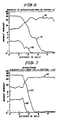
- FIGS. 6 and 7 present data of chromium, nickel and aluminum content of specimen pins of nickel-base superalloys initially coated with Co-48Cr-0.6 Si by plasma spray and then annealed to provide the coating of this invention metallurgically bonded to the substrate via an interdiffusion zone.
- the data in FIGS. 6 and 7 do not display the concentrations of other metallic components (e.g. Mo, W, Ti, Ta, Cb, etc.), which could be expected to migrate from the superalloy substrate to the interdiffusion zone and possibly to the coating. These metals to the extent they may be present in the coating do not have any significant effect on the coating behavior.
- the protection afforded by the coatings of this invention is not manifest as gradual improvement in low temperature hot corrosion resistance as the chromium content is increased from values below the useful range defined herein.
- the turning point between useful protection and ineffective protection is pronounced and is reflected in whether or not liquid Na2SO4 forms during low temperature (i.e. about 750°C) hot corrosion conditions.
- the initial composition of the coating material was as follows:
Landscapes
- Chemical & Material Sciences (AREA)
- Engineering & Computer Science (AREA)
- Materials Engineering (AREA)
- Mechanical Engineering (AREA)
- Chemical Kinetics & Catalysis (AREA)
- Metallurgy (AREA)
- Organic Chemistry (AREA)
- General Engineering & Computer Science (AREA)
- Coating By Spraying Or Casting (AREA)
- Turbine Rotor Nozzle Sealing (AREA)
- Other Surface Treatments For Metallic Materials (AREA)
Claims (8)
un corps constitué d'un matériau choisi dans le groupe se composant d'un superalliage à base de nickel, un superalliage à base de cobalt, et un superalliage à base de fer, et
un revêtement d'alliage lié métallurgiquement à ce corps et fournissant la surface extérieure du corps revêtu, la composition du revêtement comprenant du cobalt, du chrome et de l'aluminium, caractérisé en ce que le composant est recuit, et la composition de ce revêtement se compose (en pourcent en poids) de 43 à 48% de chrome ; 0 à 5% de matériau choisi dans le groupe se composant de l'yttrium, l'hafnium, le zirconium, le césium, leurs oxydes et les mélanges de ces matériaux; jusqu'à 15% de silicium, moins de 3% d'aluminium à la surface extérieure du revêtement et le complément de cobalt et d'impuretés ordinairement associées à ces constituants, le concentration du chrome et du cobalt étant substantiellement uniforme à une échelle macroscopique dans tout le revêtement.
Applications Claiming Priority (4)
| Application Number | Priority Date | Filing Date | Title |
|---|---|---|---|
| US38772582A | 1982-06-11 | 1982-06-11 | |
| US479618 | 1983-03-28 | ||
| US06/479,618 US4677034A (en) | 1982-06-11 | 1983-03-28 | Coated superalloy gas turbine components |
| US387725 | 1983-03-28 |
Publications (4)
| Publication Number | Publication Date |
|---|---|
| EP0096810A2 EP0096810A2 (fr) | 1983-12-28 |
| EP0096810A3 EP0096810A3 (en) | 1986-06-25 |
| EP0096810B1 EP0096810B1 (fr) | 1989-01-04 |
| EP0096810B2 true EP0096810B2 (fr) | 1992-02-12 |
Family
ID=27011999
Family Applications (1)
| Application Number | Title | Priority Date | Filing Date |
|---|---|---|---|
| EP83105489A Expired - Lifetime EP0096810B2 (fr) | 1982-06-11 | 1983-06-03 | Pièce en superalliage pourvue d'un revêtement pour des turbines à gaz |
Country Status (5)
| Country | Link |
|---|---|
| US (1) | US4677034A (fr) |
| EP (1) | EP0096810B2 (fr) |
| JP (1) | JPH0696763B2 (fr) |
| CA (1) | CA1248420A (fr) |
| DE (1) | DE3378837D1 (fr) |
Families Citing this family (9)
| Publication number | Priority date | Publication date | Assignee | Title |
|---|---|---|---|---|
| US4808486A (en) * | 1985-07-25 | 1989-02-28 | Toshiba Kikai Kabushiki Kaisha | Production method of machine parts and the machine parts thus produced |
| US4774149A (en) * | 1987-03-17 | 1988-09-27 | General Electric Company | Oxidation-and hot corrosion-resistant nickel-base alloy coatings and claddings for industrial and marine gas turbine hot section components and resulting composite articles |
| US4814236A (en) * | 1987-06-22 | 1989-03-21 | Westinghouse Electric Corp. | Hardsurfaced power-generating turbine components and method of hardsurfacing metal substrates using a buttering layer |
| US5499905A (en) * | 1988-02-05 | 1996-03-19 | Siemens Aktiengesellschaft | Metallic component of a gas turbine installation having protective coatings |
| GB9116332D0 (en) | 1991-07-29 | 1991-09-11 | Diffusion Alloys Ltd | Refurbishing of corroded superalloy or heat resistant steel parts and parts so refurbished |
| US5455119A (en) * | 1993-11-08 | 1995-10-03 | Praxair S.T. Technology, Inc. | Coating composition having good corrosion and oxidation resistance |
| US7064825B2 (en) * | 2003-11-25 | 2006-06-20 | General Electric Company | Methods and apparatus for evaluating rotary machinery |
| US20080253923A1 (en) * | 2007-04-10 | 2008-10-16 | Siemens Power Generation, Inc. | Superalloy forming highly adherent chromia surface layer |
| US20080260571A1 (en) * | 2007-04-19 | 2008-10-23 | Siemens Power Generation, Inc. | Oxidation resistant superalloy |
Family Cites Families (20)
| Publication number | Priority date | Publication date | Assignee | Title |
|---|---|---|---|---|
| US3053689A (en) * | 1958-07-09 | 1962-09-11 | Gen Motors Corp | Process of coating austenitic steel with chromium alloy coatings |
| DE1558440A1 (de) * | 1966-05-04 | 1970-03-19 | Asahi Glass Co Ltd | Legierung mit guter Hitze- und Korrosionsbestaendigkeit und Gasturbinenschaufel |
| US3652235A (en) * | 1967-04-14 | 1972-03-28 | Int Nickel Co | Composite metal articles |
| DE1621290A1 (de) * | 1967-07-08 | 1971-04-29 | Metallgesellschaft Ag | Verfahren zur Herstellung glatter,flammgespritzter UEberzuege aus Hartmetall-Legierungen |
| US3642519A (en) * | 1969-03-21 | 1972-02-15 | Us Air Force | Method for the development of hard coat seal surfaces |
| US3676085A (en) * | 1971-02-18 | 1972-07-11 | United Aircraft Corp | Cobalt base coating for the superalloys |
| DE2402827A1 (de) * | 1973-01-30 | 1974-08-01 | Cockerill | Verfahren zur erzeugung einer nichtrostenden beschichtung auf eisenerzeugnissen |
| US3873347A (en) * | 1973-04-02 | 1975-03-25 | Gen Electric | Coating system for superalloys |
| US3957454A (en) * | 1973-04-23 | 1976-05-18 | General Electric Company | Coated article |
| US3961098A (en) * | 1973-04-23 | 1976-06-01 | General Electric Company | Coated article and method and material of coating |
| US4024294A (en) * | 1973-08-29 | 1977-05-17 | General Electric Company | Protective coatings for superalloys |
| US3998603A (en) * | 1973-08-29 | 1976-12-21 | General Electric Company | Protective coatings for superalloys |
| US3993454A (en) * | 1975-06-23 | 1976-11-23 | United Technologies Corporation | Alumina forming coatings containing hafnium for high temperature applications |
| US4124737A (en) * | 1976-12-30 | 1978-11-07 | Union Carbide Corporation | High temperature wear resistant coating composition |
| US4101713A (en) * | 1977-01-14 | 1978-07-18 | General Electric Company | Flame spray oxidation and corrosion resistant superalloys |
| US4101715A (en) * | 1977-06-09 | 1978-07-18 | General Electric Company | High integrity CoCrAl(Y) coated nickel-base superalloys |
| US4339509A (en) * | 1979-05-29 | 1982-07-13 | Howmet Turbine Components Corporation | Superalloy coating composition with oxidation and/or sulfidation resistance |
| DE3064929D1 (en) * | 1979-07-25 | 1983-10-27 | Secr Defence Brit | Nickel and/or cobalt base alloys for gas turbine engine components |
| GB2063305B (en) * | 1979-10-15 | 1984-02-01 | United Technologies Corp | Carbon bearing mcraiy coatings coated articles and method for these coatings |
| DE3071257D1 (en) * | 1979-12-29 | 1986-01-02 | Ebara Corp | Coating metal for preventing the crevice corrosion of austenitic stainless steel |
-
1983
- 1983-03-28 US US06/479,618 patent/US4677034A/en not_active Expired - Lifetime
- 1983-06-03 EP EP83105489A patent/EP0096810B2/fr not_active Expired - Lifetime
- 1983-06-03 DE DE8383105489T patent/DE3378837D1/de not_active Expired
- 1983-06-03 CA CA000429666A patent/CA1248420A/fr not_active Expired
- 1983-06-10 JP JP58102995A patent/JPH0696763B2/ja not_active Expired - Lifetime
Also Published As
| Publication number | Publication date |
|---|---|
| JPS5963303A (ja) | 1984-04-11 |
| CA1248420A (fr) | 1989-01-10 |
| DE3378837D1 (en) | 1989-02-09 |
| EP0096810A3 (en) | 1986-06-25 |
| EP0096810A2 (fr) | 1983-12-28 |
| JPH0696763B2 (ja) | 1994-11-30 |
| EP0096810B1 (fr) | 1989-01-04 |
| US4677034A (en) | 1987-06-30 |
Similar Documents
| Publication | Publication Date | Title |
|---|---|---|
| US4447503A (en) | Superalloy coating composition with high temperature oxidation resistance | |
| CA1169267A (fr) | Enduit composite resistant a l'oxydation et a la sulfuration pour superalliages | |
| US4313760A (en) | Superalloy coating composition | |
| CA1069779A (fr) | Article enduit en superalliage | |
| EP0025263B1 (fr) | Alliages à base de nickel et/ou de cobalt pour des élémentes d'un moteur à turbine à gaz | |
| CA1045421A (fr) | Enduits de nicocraly resistant aux temperatures elevees | |
| Pomeroy | Coatings for gas turbine materials and long term stability issues | |
| US5273712A (en) | Highly corrosion and/or oxidation-resistant protective coating containing rhenium | |
| EP0282667B1 (fr) | Composants utilisés dans les turbines à gaz et procédé de fabrication de composants revêtus d'une couche protectrice | |
| US4615864A (en) | Superalloy coating composition with oxidation and/or sulfidation resistance | |
| JPS6117905B2 (fr) | ||
| US20040142204A1 (en) | Ni-base superalloy having a coating system containing a diffusion barrier layer | |
| EP1013786B1 (fr) | Procédé de réparation d'un composant de turbine à base d'un superalliage | |
| CA2612037A1 (fr) | Revetements contenant des couches a base d'aluminure de rhodium | |
| JPH0613749B2 (ja) | 耐酸化性かつ耐高温腐食性ニッケル基合金被覆材並びにそれを用いた複合製品 | |
| EP0096810B1 (fr) | Pièce en superalliage pourvue d'un revêtement pour des turbines à gaz | |
| US6974637B2 (en) | Ni-base superalloy having a thermal barrier coating system | |
| US6579627B1 (en) | Nickel-base superalloy with modified aluminide coating, and its preparation | |
| JPS6132392B2 (fr) | ||
| Peichl et al. | High‐temperature behavior of different coatings in high‐performance gas turbines and in laboratory tests | |
| CA2146503A1 (fr) | Revetement pour turbines a gaz et moteurs d'avions, resistant aux temperatures elevees | |
| GB2056487A (en) | Superalloy coating composition | |
| JPS6140022B2 (fr) | ||
| Glasgow et al. | Oxidation and hot corrosion of coated and bare oxide dispersion strengthened superalloy MA-755E | |
| Berry et al. | Enhancing performance of silicon-modified slurry aluminides on turbine components operating in marine environments |
Legal Events
| Date | Code | Title | Description |
|---|---|---|---|
| PUAI | Public reference made under article 153(3) epc to a published international application that has entered the european phase |
Free format text: ORIGINAL CODE: 0009012 |
|
| AK | Designated contracting states |
Designated state(s): CH DE GB IT LI SE |
|
| PUAL | Search report despatched |
Free format text: ORIGINAL CODE: 0009013 |
|
| AK | Designated contracting states |
Kind code of ref document: A3 Designated state(s): CH DE GB IT LI SE |
|
| 17P | Request for examination filed |
Effective date: 19861210 |
|
| 17Q | First examination report despatched |
Effective date: 19870727 |
|
| GRAA | (expected) grant |
Free format text: ORIGINAL CODE: 0009210 |
|
| AK | Designated contracting states |
Kind code of ref document: B1 Designated state(s): CH DE GB IT LI SE |
|
| REF | Corresponds to: |
Ref document number: 3378837 Country of ref document: DE Date of ref document: 19890209 |
|
| ITF | It: translation for a ep patent filed | ||
| PLBI | Opposition filed |
Free format text: ORIGINAL CODE: 0009260 |
|
| 26 | Opposition filed |
Opponent name: SIEMENS AKTIENGESELLSCHAFT, BERLIN UND MUENCHEN Effective date: 19890921 |
|
| PUAH | Patent maintained in amended form |
Free format text: ORIGINAL CODE: 0009272 |
|
| STAA | Information on the status of an ep patent application or granted ep patent |
Free format text: STATUS: PATENT MAINTAINED AS AMENDED |
|
| 27A | Patent maintained in amended form |
Effective date: 19920212 |
|
| AK | Designated contracting states |
Kind code of ref document: B2 Designated state(s): CH DE GB IT LI SE |
|
| REG | Reference to a national code |
Ref country code: CH Ref legal event code: AEN |
|
| ITF | It: translation for a ep patent filed | ||
| ITTA | It: last paid annual fee | ||
| EAL | Se: european patent in force in sweden |
Ref document number: 83105489.5 |
|
| REG | Reference to a national code |
Ref country code: GB Ref legal event code: IF02 |
|
| PGFP | Annual fee paid to national office [announced via postgrant information from national office to epo] |
Ref country code: SE Payment date: 20020521 Year of fee payment: 20 Ref country code: CH Payment date: 20020521 Year of fee payment: 20 |
|
| PGFP | Annual fee paid to national office [announced via postgrant information from national office to epo] |
Ref country code: GB Payment date: 20020529 Year of fee payment: 20 |
|
| PGFP | Annual fee paid to national office [announced via postgrant information from national office to epo] |
Ref country code: DE Payment date: 20020620 Year of fee payment: 20 |
|
| PG25 | Lapsed in a contracting state [announced via postgrant information from national office to epo] |
Ref country code: LI Free format text: LAPSE BECAUSE OF EXPIRATION OF PROTECTION Effective date: 20030602 Ref country code: GB Free format text: LAPSE BECAUSE OF EXPIRATION OF PROTECTION Effective date: 20030602 Ref country code: CH Free format text: LAPSE BECAUSE OF EXPIRATION OF PROTECTION Effective date: 20030602 |
|
| REG | Reference to a national code |
Ref country code: GB Ref legal event code: PE20 |
|
| REG | Reference to a national code |
Ref country code: CH Ref legal event code: PL |
|
| EUG | Se: european patent has lapsed |