EP0096845B1 - Copolymere und lichtempfindliches Material diese enthaltend - Google Patents
Copolymere und lichtempfindliches Material diese enthaltend Download PDFInfo
- Publication number
- EP0096845B1 EP0096845B1 EP83105634A EP83105634A EP0096845B1 EP 0096845 B1 EP0096845 B1 EP 0096845B1 EP 83105634 A EP83105634 A EP 83105634A EP 83105634 A EP83105634 A EP 83105634A EP 0096845 B1 EP0096845 B1 EP 0096845B1
- Authority
- EP
- European Patent Office
- Prior art keywords
- formula
- copolymer
- group
- photosensitive
- carbon atoms
- Prior art date
- Legal status (The legal status is an assumption and is not a legal conclusion. Google has not performed a legal analysis and makes no representation as to the accuracy of the status listed.)
- Expired
Links
- 229920001577 copolymer Polymers 0.000 title claims description 40
- 239000000463 material Substances 0.000 title claims description 10
- 239000000178 monomer Substances 0.000 claims description 21
- -1 Azidobenzoyloxy groups Chemical group 0.000 claims description 18
- 238000007645 offset printing Methods 0.000 claims description 15
- 125000002496 methyl group Chemical group [H]C([H])([H])* 0.000 claims description 11
- 125000004432 carbon atom Chemical group C* 0.000 claims description 10
- 229910052731 fluorine Inorganic materials 0.000 claims description 9
- 230000001846 repelling effect Effects 0.000 claims description 9
- YCKRFDGAMUMZLT-UHFFFAOYSA-N Fluorine atom Chemical compound [F] YCKRFDGAMUMZLT-UHFFFAOYSA-N 0.000 claims description 8
- 239000011737 fluorine Substances 0.000 claims description 8
- 125000003545 alkoxy group Chemical group 0.000 claims description 6
- 150000002576 ketones Chemical group 0.000 claims description 6
- WKBOTKDWSSQWDR-UHFFFAOYSA-N Bromine atom Chemical group [Br] WKBOTKDWSSQWDR-UHFFFAOYSA-N 0.000 claims description 5
- NIXOWILDQLNWCW-UHFFFAOYSA-N acrylic acid group Chemical group C(C=C)(=O)O NIXOWILDQLNWCW-UHFFFAOYSA-N 0.000 claims description 4
- 125000000217 alkyl group Chemical group 0.000 claims description 4
- HVZWVEKIQMJYIK-UHFFFAOYSA-N nitryl chloride Chemical group [O-][N+](Cl)=O HVZWVEKIQMJYIK-UHFFFAOYSA-N 0.000 claims description 4
- 150000008366 benzophenones Chemical group 0.000 claims description 3
- WBYWAXJHAXSJNI-UHFFFAOYSA-N cinnamic acid group Chemical group C(C=CC1=CC=CC=C1)(=O)O WBYWAXJHAXSJNI-UHFFFAOYSA-N 0.000 claims description 3
- 125000001997 phenyl group Chemical group [H]C1=C([H])C([H])=C(*)C([H])=C1[H] 0.000 claims description 3
- QUPDWYMUPZLYJZ-UHFFFAOYSA-N ethyl Chemical group C[CH2] QUPDWYMUPZLYJZ-UHFFFAOYSA-N 0.000 claims description 2
- 239000000976 ink Substances 0.000 description 21
- 238000010521 absorption reaction Methods 0.000 description 13
- 238000007639 printing Methods 0.000 description 13
- XLYOFNOQVPJJNP-UHFFFAOYSA-N water Substances O XLYOFNOQVPJJNP-UHFFFAOYSA-N 0.000 description 12
- 238000002329 infrared spectrum Methods 0.000 description 8
- 125000002915 carbonyl group Chemical group [*:2]C([*:1])=O 0.000 description 7
- 239000000203 mixture Substances 0.000 description 7
- 238000006116 polymerization reaction Methods 0.000 description 7
- RTZKZFJDLAIYFH-UHFFFAOYSA-N Diethyl ether Chemical compound CCOCC RTZKZFJDLAIYFH-UHFFFAOYSA-N 0.000 description 6
- 229910052782 aluminium Inorganic materials 0.000 description 6
- XAGFODPZIPBFFR-UHFFFAOYSA-N aluminium Chemical compound [Al] XAGFODPZIPBFFR-UHFFFAOYSA-N 0.000 description 6
- 239000005871 repellent Substances 0.000 description 6
- 229920000642 polymer Polymers 0.000 description 5
- 230000002940 repellent Effects 0.000 description 5
- OZAIFHULBGXAKX-UHFFFAOYSA-N 2-(2-cyanopropan-2-yldiazenyl)-2-methylpropanenitrile Chemical compound N#CC(C)(C)N=NC(C)(C)C#N OZAIFHULBGXAKX-UHFFFAOYSA-N 0.000 description 4
- 239000003708 ampul Substances 0.000 description 4
- 239000011248 coating agent Substances 0.000 description 4
- 238000000576 coating method Methods 0.000 description 4
- 150000001875 compounds Chemical class 0.000 description 4
- VLKZOEOYAKHREP-UHFFFAOYSA-N n-Hexane Chemical compound CCCCCC VLKZOEOYAKHREP-UHFFFAOYSA-N 0.000 description 4
- IIYLRFRRKZNPIZ-CMDGGOBGSA-N 2-[(e)-3-phenylprop-2-enoyl]oxyethyl 2-methylprop-2-enoate Chemical compound CC(=C)C(=O)OCCOC(=O)\C=C\C1=CC=CC=C1 IIYLRFRRKZNPIZ-CMDGGOBGSA-N 0.000 description 3
- 0 CC=C(*)C=C[*@@](*CN)C=*** Chemical compound CC=C(*)C=C[*@@](*CN)C=*** 0.000 description 3
- PPBRXRYQALVLMV-UHFFFAOYSA-N Styrene Natural products C=CC1=CC=CC=C1 PPBRXRYQALVLMV-UHFFFAOYSA-N 0.000 description 3
- 150000001252 acrylic acid derivatives Chemical class 0.000 description 3
- 238000007872 degassing Methods 0.000 description 3
- 125000001495 ethyl group Chemical group [H]C([H])([H])C([H])([H])* 0.000 description 3
- 239000007788 liquid Substances 0.000 description 3
- 150000002734 metacrylic acid derivatives Chemical class 0.000 description 3
- 238000000034 method Methods 0.000 description 3
- 239000003960 organic solvent Substances 0.000 description 3
- 239000002904 solvent Substances 0.000 description 3
- 229920002554 vinyl polymer Polymers 0.000 description 3
- SJBBXFLOLUTGCW-UHFFFAOYSA-N 1,3-bis(trifluoromethyl)benzene Chemical compound FC(F)(F)C1=CC=CC(C(F)(F)F)=C1 SJBBXFLOLUTGCW-UHFFFAOYSA-N 0.000 description 2
- SZNYYWIUQFZLLT-UHFFFAOYSA-N 2-methyl-1-(2-methylpropoxy)propane Chemical compound CC(C)COCC(C)C SZNYYWIUQFZLLT-UHFFFAOYSA-N 0.000 description 2
- PQXPAFTXDVNANI-UHFFFAOYSA-N 4-azidobenzoic acid Chemical compound OC(=O)C1=CC=C(N=[N+]=[N-])C=C1 PQXPAFTXDVNANI-UHFFFAOYSA-N 0.000 description 2
- IJGRMHOSHXDMSA-UHFFFAOYSA-N Atomic nitrogen Chemical compound N#N IJGRMHOSHXDMSA-UHFFFAOYSA-N 0.000 description 2
- 239000004342 Benzoyl peroxide Substances 0.000 description 2
- OMPJBNCRMGITSC-UHFFFAOYSA-N Benzoylperoxide Chemical compound C=1C=CC=CC=1C(=O)OOC(=O)C1=CC=CC=C1 OMPJBNCRMGITSC-UHFFFAOYSA-N 0.000 description 2
- KAKZBPTYRLMSJV-UHFFFAOYSA-N Butadiene Chemical compound C=CC=C KAKZBPTYRLMSJV-UHFFFAOYSA-N 0.000 description 2
- SOGAXMICEFXMKE-UHFFFAOYSA-N Butylmethacrylate Chemical compound CCCCOC(=O)C(C)=C SOGAXMICEFXMKE-UHFFFAOYSA-N 0.000 description 2
- WOBHKFSMXKNTIM-UHFFFAOYSA-N Hydroxyethyl methacrylate Chemical compound CC(=C)C(=O)OCCO WOBHKFSMXKNTIM-UHFFFAOYSA-N 0.000 description 2
- XEEYBQQBJWHFJM-UHFFFAOYSA-N Iron Chemical compound [Fe] XEEYBQQBJWHFJM-UHFFFAOYSA-N 0.000 description 2
- BAPJBEWLBFYGME-UHFFFAOYSA-N Methyl acrylate Chemical compound COC(=O)C=C BAPJBEWLBFYGME-UHFFFAOYSA-N 0.000 description 2
- 206010034972 Photosensitivity reaction Diseases 0.000 description 2
- JUJWROOIHBZHMG-UHFFFAOYSA-N Pyridine Chemical compound C1=CC=NC=C1 JUJWROOIHBZHMG-UHFFFAOYSA-N 0.000 description 2
- 239000002253 acid Substances 0.000 description 2
- 150000003931 anilides Chemical class 0.000 description 2
- 235000019400 benzoyl peroxide Nutrition 0.000 description 2
- 125000000484 butyl group Chemical group [H]C([*])([H])C([H])([H])C([H])([H])C([H])([H])[H] 0.000 description 2
- 238000006243 chemical reaction Methods 0.000 description 2
- FJKIXWOMBXYWOQ-UHFFFAOYSA-N ethenoxyethane Chemical compound CCOC=C FJKIXWOMBXYWOQ-UHFFFAOYSA-N 0.000 description 2
- 238000010528 free radical solution polymerization reaction Methods 0.000 description 2
- 238000007710 freezing Methods 0.000 description 2
- 230000008014 freezing Effects 0.000 description 2
- 239000011521 glass Substances 0.000 description 2
- 229920001519 homopolymer Polymers 0.000 description 2
- 150000002430 hydrocarbons Chemical group 0.000 description 2
- 125000002887 hydroxy group Chemical group [H]O* 0.000 description 2
- IVSZLXZYQVIEFR-UHFFFAOYSA-N m-xylene Chemical group CC1=CC=CC(C)=C1 IVSZLXZYQVIEFR-UHFFFAOYSA-N 0.000 description 2
- 125000000962 organic group Chemical group 0.000 description 2
- 125000001147 pentyl group Chemical group C(CCCC)* 0.000 description 2
- 230000036211 photosensitivity Effects 0.000 description 2
- 239000002244 precipitate Substances 0.000 description 2
- 238000002360 preparation method Methods 0.000 description 2
- 239000000047 product Substances 0.000 description 2
- 125000001436 propyl group Chemical group [H]C([*])([H])C([H])([H])C([H])([H])[H] 0.000 description 2
- 238000002310 reflectometry Methods 0.000 description 2
- 125000000391 vinyl group Chemical group [H]C([*])=C([H])[H] 0.000 description 2
- 230000004304 visual acuity Effects 0.000 description 2
- LTYBJDPMCPTGEE-UHFFFAOYSA-N (4-benzoylphenyl) prop-2-enoate Chemical compound C1=CC(OC(=O)C=C)=CC=C1C(=O)C1=CC=CC=C1 LTYBJDPMCPTGEE-UHFFFAOYSA-N 0.000 description 1
- WOGITNXCNOTRLK-VOTSOKGWSA-N (e)-3-phenylprop-2-enoyl chloride Chemical compound ClC(=O)\C=C\C1=CC=CC=C1 WOGITNXCNOTRLK-VOTSOKGWSA-N 0.000 description 1
- KHFGPBNEILANTD-UHFFFAOYSA-N 1,1,1,2-tetrachloro-2,3,3,4,4,4-hexafluorobutane Chemical compound FC(F)(F)C(F)(F)C(F)(Cl)C(Cl)(Cl)Cl KHFGPBNEILANTD-UHFFFAOYSA-N 0.000 description 1
- BOSAWIQFTJIYIS-UHFFFAOYSA-N 1,1,1-trichloro-2,2,2-trifluoroethane Chemical compound FC(F)(F)C(Cl)(Cl)Cl BOSAWIQFTJIYIS-UHFFFAOYSA-N 0.000 description 1
- KTZVZZJJVJQZHV-UHFFFAOYSA-N 1-chloro-4-ethenylbenzene Chemical compound ClC1=CC=C(C=C)C=C1 KTZVZZJJVJQZHV-UHFFFAOYSA-N 0.000 description 1
- RCSKFKICHQAKEZ-UHFFFAOYSA-N 1-ethenylindole Chemical compound C1=CC=C2N(C=C)C=CC2=C1 RCSKFKICHQAKEZ-UHFFFAOYSA-N 0.000 description 1
- CTXUTPWZJZHRJC-UHFFFAOYSA-N 1-ethenylpyrrole Chemical compound C=CN1C=CC=C1 CTXUTPWZJZHRJC-UHFFFAOYSA-N 0.000 description 1
- UDJZTGMLYITLIQ-UHFFFAOYSA-N 1-ethenylpyrrolidine Chemical compound C=CN1CCCC1 UDJZTGMLYITLIQ-UHFFFAOYSA-N 0.000 description 1
- SMZOUWXMTYCWNB-UHFFFAOYSA-N 2-(2-methoxy-5-methylphenyl)ethanamine Chemical compound COC1=CC=C(C)C=C1CCN SMZOUWXMTYCWNB-UHFFFAOYSA-N 0.000 description 1
- JAHNSTQSQJOJLO-UHFFFAOYSA-N 2-(3-fluorophenyl)-1h-imidazole Chemical compound FC1=CC=CC(C=2NC=CN=2)=C1 JAHNSTQSQJOJLO-UHFFFAOYSA-N 0.000 description 1
- OEPOKWHJYJXUGD-UHFFFAOYSA-N 2-(3-phenylmethoxyphenyl)-1,3-thiazole-4-carbaldehyde Chemical compound O=CC1=CSC(C=2C=C(OCC=3C=CC=CC=3)C=CC=2)=N1 OEPOKWHJYJXUGD-UHFFFAOYSA-N 0.000 description 1
- WHBAYNMEIXUTJV-UHFFFAOYSA-N 2-chloroethyl prop-2-enoate Chemical compound ClCCOC(=O)C=C WHBAYNMEIXUTJV-UHFFFAOYSA-N 0.000 description 1
- FCYVWWWTHPPJII-UHFFFAOYSA-N 2-methylidenepropanedinitrile Chemical compound N#CC(=C)C#N FCYVWWWTHPPJII-UHFFFAOYSA-N 0.000 description 1
- CFVWNXQPGQOHRJ-UHFFFAOYSA-N 2-methylpropyl prop-2-enoate Chemical compound CC(C)COC(=O)C=C CFVWNXQPGQOHRJ-UHFFFAOYSA-N 0.000 description 1
- HRPVXLWXLXDGHG-UHFFFAOYSA-N Acrylamide Chemical compound NC(=O)C=C HRPVXLWXLXDGHG-UHFFFAOYSA-N 0.000 description 1
- NIXOWILDQLNWCW-UHFFFAOYSA-M Acrylate Chemical compound [O-]C(=O)C=C NIXOWILDQLNWCW-UHFFFAOYSA-M 0.000 description 1
- NLHHRLWOUZZQLW-UHFFFAOYSA-N Acrylonitrile Chemical compound C=CC#N NLHHRLWOUZZQLW-UHFFFAOYSA-N 0.000 description 1
- OKTJSMMVPCPJKN-UHFFFAOYSA-N Carbon Chemical compound [C] OKTJSMMVPCPJKN-UHFFFAOYSA-N 0.000 description 1
- KZBUYRJDOAKODT-UHFFFAOYSA-N Chlorine Chemical compound ClCl KZBUYRJDOAKODT-UHFFFAOYSA-N 0.000 description 1
- VGGSQFUCUMXWEO-UHFFFAOYSA-N Ethene Chemical class C=C VGGSQFUCUMXWEO-UHFFFAOYSA-N 0.000 description 1
- JIGUQPWFLRLWPJ-UHFFFAOYSA-N Ethyl acrylate Chemical compound CCOC(=O)C=C JIGUQPWFLRLWPJ-UHFFFAOYSA-N 0.000 description 1
- CERQOIWHTDAKMF-UHFFFAOYSA-N Methacrylic acid Chemical compound CC(=C)C(O)=O CERQOIWHTDAKMF-UHFFFAOYSA-N 0.000 description 1
- VVQNEPGJFQJSBK-UHFFFAOYSA-N Methyl methacrylate Chemical compound COC(=O)C(C)=C VVQNEPGJFQJSBK-UHFFFAOYSA-N 0.000 description 1
- GYCMBHHDWRMZGG-UHFFFAOYSA-N Methylacrylonitrile Chemical compound CC(=C)C#N GYCMBHHDWRMZGG-UHFFFAOYSA-N 0.000 description 1
- WHNWPMSKXPGLAX-UHFFFAOYSA-N N-Vinyl-2-pyrrolidone Chemical compound C=CN1CCCC1=O WHNWPMSKXPGLAX-UHFFFAOYSA-N 0.000 description 1
- OFOBLEOULBTSOW-UHFFFAOYSA-N Propanedioic acid Natural products OC(=O)CC(O)=O OFOBLEOULBTSOW-UHFFFAOYSA-N 0.000 description 1
- PMZURENOXWZQFD-UHFFFAOYSA-L Sodium Sulfate Chemical compound [Na+].[Na+].[O-]S([O-])(=O)=O PMZURENOXWZQFD-UHFFFAOYSA-L 0.000 description 1
- XTXRWKRVRITETP-UHFFFAOYSA-N Vinyl acetate Chemical compound CC(=O)OC=C XTXRWKRVRITETP-UHFFFAOYSA-N 0.000 description 1
- BZHJMEDXRYGGRV-UHFFFAOYSA-N Vinyl chloride Chemical compound ClC=C BZHJMEDXRYGGRV-UHFFFAOYSA-N 0.000 description 1
- QYKIQEUNHZKYBP-UHFFFAOYSA-N Vinyl ether Chemical compound C=COC=C QYKIQEUNHZKYBP-UHFFFAOYSA-N 0.000 description 1
- HCHKCACWOHOZIP-UHFFFAOYSA-N Zinc Chemical compound [Zn] HCHKCACWOHOZIP-UHFFFAOYSA-N 0.000 description 1
- 230000001070 adhesive effect Effects 0.000 description 1
- 238000013019 agitation Methods 0.000 description 1
- 150000001336 alkenes Chemical class 0.000 description 1
- 238000004458 analytical method Methods 0.000 description 1
- 125000000852 azido group Chemical group *N=[N+]=[N-] 0.000 description 1
- CQEYYJKEWSMYFG-UHFFFAOYSA-N butyl acrylate Chemical compound CCCCOC(=O)C=C CQEYYJKEWSMYFG-UHFFFAOYSA-N 0.000 description 1
- 229910052799 carbon Inorganic materials 0.000 description 1
- 150000001732 carboxylic acid derivatives Chemical class 0.000 description 1
- 239000003795 chemical substances by application Substances 0.000 description 1
- 229910052801 chlorine Inorganic materials 0.000 description 1
- 239000000460 chlorine Substances 0.000 description 1
- 238000001816 cooling Methods 0.000 description 1
- 239000000539 dimer Substances 0.000 description 1
- 238000001035 drying Methods 0.000 description 1
- 238000010894 electron beam technology Methods 0.000 description 1
- 238000000921 elemental analysis Methods 0.000 description 1
- 238000007720 emulsion polymerization reaction Methods 0.000 description 1
- MEGHWIAOTJPCHQ-UHFFFAOYSA-N ethenyl butanoate Chemical compound CCCC(=O)OC=C MEGHWIAOTJPCHQ-UHFFFAOYSA-N 0.000 description 1
- UIWXSTHGICQLQT-UHFFFAOYSA-N ethenyl propanoate Chemical compound CCC(=O)OC=C UIWXSTHGICQLQT-UHFFFAOYSA-N 0.000 description 1
- SUPCQIBBMFXVTL-UHFFFAOYSA-N ethyl 2-methylprop-2-enoate Chemical compound CCOC(=O)C(C)=C SUPCQIBBMFXVTL-UHFFFAOYSA-N 0.000 description 1
- 239000000835 fiber Substances 0.000 description 1
- 125000001153 fluoro group Chemical group F* 0.000 description 1
- 238000009472 formulation Methods 0.000 description 1
- 125000005843 halogen group Chemical group 0.000 description 1
- HCDGVLDPFQMKDK-UHFFFAOYSA-N hexafluoropropylene Chemical compound FC(F)=C(F)C(F)(F)F HCDGVLDPFQMKDK-UHFFFAOYSA-N 0.000 description 1
- 125000004435 hydrogen atom Chemical group [H]* 0.000 description 1
- 229910052742 iron Inorganic materials 0.000 description 1
- PBOSTUDLECTMNL-UHFFFAOYSA-N lauryl acrylate Chemical compound CCCCCCCCCCCCOC(=O)C=C PBOSTUDLECTMNL-UHFFFAOYSA-N 0.000 description 1
- VZCYOOQTPOCHFL-UPHRSURJSA-N maleic acid Chemical compound OC(=O)\C=C/C(O)=O VZCYOOQTPOCHFL-UPHRSURJSA-N 0.000 description 1
- 239000011976 maleic acid Substances 0.000 description 1
- FPYJFEHAWHCUMM-UHFFFAOYSA-N maleic anhydride Chemical compound O=C1OC(=O)C=C1 FPYJFEHAWHCUMM-UHFFFAOYSA-N 0.000 description 1
- QSHDDOUJBYECFT-UHFFFAOYSA-N mercury Chemical compound [Hg] QSHDDOUJBYECFT-UHFFFAOYSA-N 0.000 description 1
- 229910052753 mercury Inorganic materials 0.000 description 1
- 229910052751 metal Inorganic materials 0.000 description 1
- 239000002184 metal Substances 0.000 description 1
- FQPSGWSUVKBHSU-UHFFFAOYSA-N methacrylamide Chemical compound CC(=C)C(N)=O FQPSGWSUVKBHSU-UHFFFAOYSA-N 0.000 description 1
- AWJZTPWDQYFQPQ-UHFFFAOYSA-N methyl 2-chloroprop-2-enoate Chemical compound COC(=O)C(Cl)=C AWJZTPWDQYFQPQ-UHFFFAOYSA-N 0.000 description 1
- XJRBAMWJDBPFIM-UHFFFAOYSA-N methyl vinyl ether Chemical compound COC=C XJRBAMWJDBPFIM-UHFFFAOYSA-N 0.000 description 1
- LVHBHZANLOWSRM-UHFFFAOYSA-N methylenebutanedioic acid Natural products OC(=O)CC(=C)C(O)=O LVHBHZANLOWSRM-UHFFFAOYSA-N 0.000 description 1
- BPCNEKWROYSOLT-UHFFFAOYSA-N n-phenylprop-2-enamide Chemical compound C=CC(=O)NC1=CC=CC=C1 BPCNEKWROYSOLT-UHFFFAOYSA-N 0.000 description 1
- KKFHAJHLJHVUDM-UHFFFAOYSA-N n-vinylcarbazole Chemical compound C1=CC=C2N(C=C)C3=CC=CC=C3C2=C1 KKFHAJHLJHVUDM-UHFFFAOYSA-N 0.000 description 1
- 229910052757 nitrogen Inorganic materials 0.000 description 1
- 238000000655 nuclear magnetic resonance spectrum Methods 0.000 description 1
- ANISOHQJBAQUQP-UHFFFAOYSA-N octyl prop-2-enoate Chemical compound CCCCCCCCOC(=O)C=C ANISOHQJBAQUQP-UHFFFAOYSA-N 0.000 description 1
- JRZJOMJEPLMPRA-UHFFFAOYSA-N olefin Natural products CCCCCCCC=C JRZJOMJEPLMPRA-UHFFFAOYSA-N 0.000 description 1
- PNJWIWWMYCMZRO-UHFFFAOYSA-N pent‐4‐en‐2‐one Natural products CC(=O)CC=C PNJWIWWMYCMZRO-UHFFFAOYSA-N 0.000 description 1
- 150000002978 peroxides Chemical class 0.000 description 1
- WRAQQYDMVSCOTE-UHFFFAOYSA-N phenyl prop-2-enoate Chemical compound C=CC(=O)OC1=CC=CC=C1 WRAQQYDMVSCOTE-UHFFFAOYSA-N 0.000 description 1
- 229920006255 plastic film Polymers 0.000 description 1
- 239000002985 plastic film Substances 0.000 description 1
- 229920000728 polyester Polymers 0.000 description 1
- 229920006254 polymer film Polymers 0.000 description 1
- 239000003505 polymerization initiator Substances 0.000 description 1
- UMJSCPRVCHMLSP-UHFFFAOYSA-N pyridine Natural products COC1=CC=CN=C1 UMJSCPRVCHMLSP-UHFFFAOYSA-N 0.000 description 1
- 239000011541 reaction mixture Substances 0.000 description 1
- 230000035945 sensitivity Effects 0.000 description 1
- 238000003756 stirring Methods 0.000 description 1
- 239000000126 substance Substances 0.000 description 1
- 239000000758 substrate Substances 0.000 description 1
- VZCYOOQTPOCHFL-UHFFFAOYSA-N trans-butenedioic acid Natural products OC(=O)C=CC(O)=O VZCYOOQTPOCHFL-UHFFFAOYSA-N 0.000 description 1
- 239000013638 trimer Substances 0.000 description 1
- KOZCZZVUFDCZGG-UHFFFAOYSA-N vinyl benzoate Chemical compound C=COC(=O)C1=CC=CC=C1 KOZCZZVUFDCZGG-UHFFFAOYSA-N 0.000 description 1
- 229920001567 vinyl ester resin Polymers 0.000 description 1
- 229910052724 xenon Inorganic materials 0.000 description 1
- FHNFHKCVQCLJFQ-UHFFFAOYSA-N xenon atom Chemical compound [Xe] FHNFHKCVQCLJFQ-UHFFFAOYSA-N 0.000 description 1
- 229910052725 zinc Inorganic materials 0.000 description 1
- 239000011701 zinc Substances 0.000 description 1
Classifications
-
- G—PHYSICS
- G03—PHOTOGRAPHY; CINEMATOGRAPHY; ANALOGOUS TECHNIQUES USING WAVES OTHER THAN OPTICAL WAVES; ELECTROGRAPHY; HOLOGRAPHY
- G03F—PHOTOMECHANICAL PRODUCTION OF TEXTURED OR PATTERNED SURFACES, e.g. FOR PRINTING, FOR PROCESSING OF SEMICONDUCTOR DEVICES; MATERIALS THEREFOR; ORIGINALS THEREFOR; APPARATUS SPECIALLY ADAPTED THEREFOR
- G03F7/00—Photomechanical, e.g. photolithographic, production of textured or patterned surfaces, e.g. printing surfaces; Materials therefor, e.g. comprising photoresists; Apparatus specially adapted therefor
- G03F7/004—Photosensitive materials
- G03F7/0046—Photosensitive materials with perfluoro compounds, e.g. for dry lithography
-
- C—CHEMISTRY; METALLURGY
- C08—ORGANIC MACROMOLECULAR COMPOUNDS; THEIR PREPARATION OR CHEMICAL WORKING-UP; COMPOSITIONS BASED THEREON
- C08F—MACROMOLECULAR COMPOUNDS OBTAINED BY REACTIONS ONLY INVOLVING CARBON-TO-CARBON UNSATURATED BONDS
- C08F220/00—Copolymers of compounds having one or more unsaturated aliphatic radicals, each having only one carbon-to-carbon double bond, and only one being terminated by only one carboxyl radical or a salt, anhydride ester, amide, imide or nitrile thereof
- C08F220/02—Monocarboxylic acids having less than ten carbon atoms; Derivatives thereof
- C08F220/10—Esters
- C08F220/26—Esters containing oxygen in addition to the carboxy oxygen
- C08F220/28—Esters containing oxygen in addition to the carboxy oxygen containing no aromatic rings in the alcohol moiety
- C08F220/282—Esters containing oxygen in addition to the carboxy oxygen containing no aromatic rings in the alcohol moiety and containing two or more oxygen atoms
-
- Y—GENERAL TAGGING OF NEW TECHNOLOGICAL DEVELOPMENTS; GENERAL TAGGING OF CROSS-SECTIONAL TECHNOLOGIES SPANNING OVER SEVERAL SECTIONS OF THE IPC; TECHNICAL SUBJECTS COVERED BY FORMER USPC CROSS-REFERENCE ART COLLECTIONS [XRACs] AND DIGESTS
- Y10—TECHNICAL SUBJECTS COVERED BY FORMER USPC
- Y10S—TECHNICAL SUBJECTS COVERED BY FORMER USPC CROSS-REFERENCE ART COLLECTIONS [XRACs] AND DIGESTS
- Y10S522/00—Synthetic resins or natural rubbers -- part of the class 520 series
- Y10S522/904—Monomer or polymer contains initiating group
-
- Y—GENERAL TAGGING OF NEW TECHNOLOGICAL DEVELOPMENTS; GENERAL TAGGING OF CROSS-SECTIONAL TECHNOLOGIES SPANNING OVER SEVERAL SECTIONS OF THE IPC; TECHNICAL SUBJECTS COVERED BY FORMER USPC CROSS-REFERENCE ART COLLECTIONS [XRACs] AND DIGESTS
- Y10—TECHNICAL SUBJECTS COVERED BY FORMER USPC
- Y10S—TECHNICAL SUBJECTS COVERED BY FORMER USPC CROSS-REFERENCE ART COLLECTIONS [XRACs] AND DIGESTS
- Y10S522/00—Synthetic resins or natural rubbers -- part of the class 520 series
- Y10S522/904—Monomer or polymer contains initiating group
- Y10S522/905—Benzophenone group
Definitions
- This invention relates to a novel fluorine-containing copolymer, photosensitive material containing the copolymer and dry offset printing plate using the material as a photosensitive layer.
- a fluoroalkyl acrylate copolymer is hitherto known to be useful as a water and oil repelling agent for fibers.
- a fluoroalkyl acrylate homopolymer or copolymer as a material of an offset printing plate, as proposed in Japanese Unexamined Patent Publication (Tokyo Kokai) No. 74404/1977 in which a film of the homopolymer or copolymer is formed on a support such as aluminum plate to provide an offset ink repelling layer.
- an oleophilic image area for carrying an offset ink thereon is formed on the layer by handwriting letters or pictures with an olephilic ink such as marking ink, ball pen or carbon ink or by typewriting them.
- an oleophilic photoconductive layer is further provided between the support and the ink repelling layer, and an oleophilic image area is formed by imagewise perforating the ink repelling layer with electric discharge or by forming a toner image on the ink repelling layer in a usual electrophotographic manner.
- these offset printing plates do not provide a sufficiently resolved image and, therefore, the image is lacking in resolving power or sharpness.
- These plates also have the disadvantage that the printing durability is not sufficient because the adhesive property of the ink repelling layer is poor in the imaged portion.
- Another object of the present invention is to provide a dry offset printing plate without necessity of dampening water which can form an image of good resolving power in a simple manner and moreover has an excellent printing durability.
- the present invention provides a novel fluorine-containing copolymer comprising (a) units of a monomer having a general formula wherein X is For CH 3 , Y is H or CH 3 , n is one of the integers 2; 3; 4; 5; 6 or 7, and (b) units of the ethylenically unsaturated monomers having a photosensitive group, a photosensitive material containing the copolymer, and a dry offset printing plate comprising an ink repelling layer of the photosensitive material and a support.
- the copolymer of the present invention is sensitive to light, and can be cured by exposure to light so as to become insoluble in an organic solvent.
- the copolymer also has an excellent oil repellent property, and accordingly is very useful as a photosensitive material for dry offset printing plate.
- the copolymer of the present invention is prepared by copolymerizing the fluorine-containing acrylic monomer of the formula (1), the monomer having a photosensitive group and, when desired, other copolymerizable vinyl monomer.
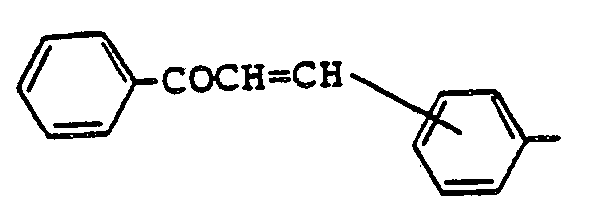
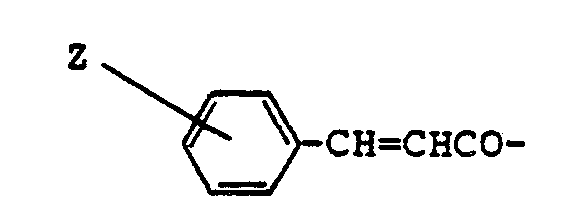
- the photosensitive groups containing the above ⁇ , ⁇ -unsaturated ketone residue include, for instance, cinnamoylphenyl group of the formula benzoylethylenylenephenyl group of the formula 2'-methoxy-4'-(1-butene-3-onyl)-phenyl group of the formula benzoylethylenylenebenzoyloxy group of the formula cinnamoyl groups of the formula wherein Z is H, alkyl having 1 to 5 carbon atoms, alkoxyl having 1 to 5 carbon atoms, i.e. the methyl-, ethyl-, propyl-, butyl- or pentyl-groups (straight or branched) and the corresponding alkoxy groups, nitro, chlorine atom or bromine atom.
- Preferable monomers (b) having the azidobenzoyloxy group are compounds of the formula wherein Z is as defined above, A is a bivalent organic group, R 1 is H or CH 3 .
- the azido group may be attached to any of ortho-, meta- and para-positions of the benzene ring, and the para-position is particularly preferred.
- A is a group which links azidobenzyloxy group to acryl group and is not limited.
- A may be various bivalent organic groups if not affecting these groups.
- Preferable examples of A is a bivalent hydrocarbon residue or those in which one of hydrogen atoms is substituted by hydroxyl group or halogen atom except for fluorine atom, such as chlorine or bromine atom.
- the hydrocarbon residue preferably has 1 to 5 carbon atoms, more preferably 1 to 3 carbon atoms. Examples of such monomers are the following methacrylates and the corresponding acrylates.
- Preferred examples of monomers having cinnamic acid residue are those represented by the formula wherein A and R 1 are as defined above. Examples of such monomers are the following methacrylates and the corresponding acrylates.
- Examples of preferred monomers having benzoylphenyl group are compounds represented by the formula wherein A and R 1 are as defined above. Examples of such monomers are the following methacrylates and the corresponding acrylates.
- examles of preferred monomers having a group containing ⁇ , ⁇ -unsaturated ketone residue are compounds represented by the formula wherein R 1 is H or CH 3 , R 2 is CH 3 , C 2 H 5 or C 6 H 5 .
- the vinyl monomers used, when desired, in the present copolymer include, for instance, an ethylenically unsaturated olefin such as ethylene, propylene, butylene, isobutylene or butadiene, a styrene compound such as styrene, a-methylsiyrene or p-chlorostyrene, an unsaturated carboxylic acid such as acrylic acid, methacrylic acid, itaconic acid, maleic acid or maleic anhydride; an a-methylene aliphatic monocarboxylic acid ester such as methyl acrylate, ethyl acrylate, n-butyl acrylate, isobutyl acrylate, dodecyl acrylate, n-octyl acrylate, 2-chloroethyl acrylate, phenyl acrylate, methyl a-chloroacrylate, methyl methacrylate, ethyl meth
- the polymerization is usually carried out by a solution of polymerization or emulsion polymerization process, and particularly the solution polymerization is preferable, since the copolymer having more excellent solubility and sensitivity is obtained.
- a good solvent for the produced copolymer such as m-xylene hexafluroide, trichlorotrifluoroethane, tetrachlorohexafluorobutane, or dimer and trimer of hexafluoropropene.
- Peroxides and aliphatic azo compounds used in a usual solution polymerization may be used as a polymerization initiator, and particularly azobisisobutyronitrile (AIBN) and benzoyl peroxide (BPO) are preferable.
- the polymerization temperature is preferably from 45 to 70°C.
- the copolymer of the invention contains at least 20 mole %, especially at least 40 mole % of the fluorine-containing acrylic monomer, and at least 5 mole %, especially at least 10 mole % of the monomer having a photosensitive group.
- the copolymer is excellent in the photosensitivity and ink-repellent property, hence particularly suitable for forming images on a dry offset printing plate without necessity of dampening water.
- the copolymer is supported in the form of film on a support to provide a dry offset printing plate.
- An image can be easily formed, for instance, by bringing a positive film into close contact with a photosensitive layer of the printing plate, exposing to light such as ultraviolet rays and developing with a solvent.
- a support there is used, for instance, metal plates such as aluminum plate, zinc plate and iron plate, papers, and plastic films having a good dimensional stability such as polyesters film.
- the photosensitive layer (repellent layer) of the printing plate is formed by preparing a solution of the copolymer in an organic solvent, if necessary, to which a sensitizer may be added, coating uniformly the solution onto a support and drying it.
- the thickness of the photosensitive layer is, for instance, from 2 to 20 urn.
- Usual graphic arts light sources such as a high pressure mercury lamp and a xenon lamp are employed as a light source for the exposure of the photosensitive layer.
- the development is conducted by dissolving the unexposed area with an organic solvent as mentioned before, and whereby the surface of the support at the unexposed area appears and the exposed area remains undissolved to leave as an image because the polymer is cured.
- the thus formed image strongly repels an oil printing ink, and accordingly provides a practical offset printing plate which can be used without dampening water.
- the offset printing plate of the present invention has the advantages (1) that the cured portion has a good repellent property to an oil ink, (2) that plate making procedure is simple, and (3) that the adhesiveness between the cured portion and a support and the mechanical strength of the cured portion are excellent. Therefore, the imaged printing plate does not require the use of dampening water in printing and also has excellent sharpness and printing durability.
- the copolymer of the present invention are useful for other purposes as well as dry offset printing plate.
- By utilizing an excellent photosensitivity it is possible to provide paper and other substrates with a photo-curable coating, and for instance, by further utilizing the water and oil repellent properties, the copolymer can be employed as a water and oil repelling coating.
- the copolymer is also usuable as a resist for producing a negative fine pattern by exposure to X-rays, electron beams or far ultraviolet rays.
- a 200 ml glass ampule was charged with the following mixture.
- the mixture was frozen by liquid nitrogen, and after degassing for 30 minutes by a vacuum pump, was fused at room temperature. These freezing, degassing and fusing procedures were conducted twice, and after freezing the mixture and degassing for 30 minutes again, the ampule was sealed.
- the ampule After fusing the frozen mixture in the ampule at room temperature, the ampule was placed in an oil bath and the polymerization was carried out at 60° for 4.5 hours. After the polymerization, the mixture was added to n-hexane with agitation, and the precipitate was filtered with a glass filter and washed with n-hexane and dried under reduced pressure at room temperature.
- the obtained precipitate was subjected to infrared spectrum analysis.
- the infrared spectrum indicated the absorption based on the carbonyl group of 23FO at 1,740 cm -1 and the absorption based on the ethylenically unsaturated group of cinnamoyl group at 1,665 cm- 1 .
- a copolymer was prepared in the same manner as in Example 1 except that the following mixture was employed for the polymerization.
- the infrared spectrum of the obtained copolymer indicated the absorption based on the carbonyl group of 23FO at 1,740 cm- 1 and the absorption based on the carbonyl group of p-azidobenzoic acid in 2HEM-ABA at 1,720 cm-'.
- a copolymer was prepared in the same manner as in Example 1 except that p-benzoylphenyl acrylate (hereinafter referred to as "BPA") was used in place of 2-cinnamoyloxyethyl methacrylate.
- BPA p-benzoylphenyl acrylate
- the infrared spectrum of the obtained copolymer showed tha absorption based on the carbonly group of 23FO at 1,740 cm -1 and the absorption based on the stretching vibration of diaryl ketone at 1,660 cm- 1 .
- a copolymer was prepared in the same manner as in Example 1 with the exception of using (hereinafter referred to as "17FO”) and as monomers (a) and (b).
- the infrared spectrum of the obtained copolymer indicated the absorption based on the carbonyl group of 17FO at 1,740 cm- 1 and the absorption based on the cinnamoylphenyl group at 1,650 cm- 1 .
- a copolymer was prepared in the same manner as in Example 2 except that 0.030 mole of 23FO and 0.005 mole of 2-hydroxyethyl methacrylate (hereinafter referred to as "HEM”) were used in place of 0.035 mole of 23FO.
- HEM 2-hydroxyethyl methacrylate
- the infrared spectrum of the obtained copolymer showed the absorption based on the carbonyl group of 23FO at 1,740 cm- 1 , the absorption based on the carbonyl group of p-azidobenzoic acid in 2HEM-ABA, at 1,720 cm- 1 and the absorption based on the OH group of HEM at 3,400 cm- 1.
- a copolymer was prepared in the same manner as in Example 1 except that was used in place of 23FO.
- the infrared spectrum of the obtained copolymer indicated the absorption of the carbonyl group of the above acrylate at 1,740 cm -1 and the absorption based on the ethylenically unsaturated group of cinnamoyl group at 1,665 cm- 1 .
- Each of the solution was applied to the smooth sutface of an aluminum plate by a spin coater at 200 r.p.m., and was dried to give a film having a thickness of 2 ⁇ m.
- the polymer layer was exposed to light in its whole surface and then developed with m-xylene hexafluoride to obtain a plate in which the whole surface thereof was covered with the fluorine-containing polymer.
- the plate was then set at a master cylinder portion of TOKO Offset Printing Machine Type-810 (Tokyo Koku Keiki Co., Ltd., Japan).
- the printing was carried out with feeding ink but without feeding water and paper, and stopped at a prescribed rotation number.
- the deposited ink was transferred to a paper and the ink repellent property was evaluated by measuring the relative reflectivity of the paper to a white paper.
- a positive film of halftone image of 200 lines/inch was superposed on the coated surface of the photosensitive plate obtained in Example 7, and the plate was exposed to light from a 20 W chemical lamp for 5 minutes at a distance of 10 cm. Development was then conducted with m-xylene hexafluoride to dissolve and remove the unexposed area, thereby causing the aluminum surface to appear. The exposed polymer remained on the aluminum surface without being dissolved to give an image composed of the fluorine-containing polymer.
- the plate was then attached to an offset printing machine from which a roll for'feeding dampening water was detached, and printing was carried out without dampening water by employing a usual offset ink (KOF-Hup, product of Moroboshi Ink Co., Ltd., Japan), the ink stuck to only the exposing aluminum surface without sticking to the polymer film portion of the plate.
- the printing was continued until 20,000 sheets of printed matters were produced.
- the quality of the later impression was the same as that of the first impression, and 5 to 95% halftone dots of 200 lines/inch was completely reproduced.
Landscapes
- Chemical & Material Sciences (AREA)
- Physics & Mathematics (AREA)
- General Physics & Mathematics (AREA)
- Health & Medical Sciences (AREA)
- Chemical Kinetics & Catalysis (AREA)
- Medicinal Chemistry (AREA)
- Polymers & Plastics (AREA)
- Organic Chemistry (AREA)
- Addition Polymer Or Copolymer, Post-Treatments, Or Chemical Modifications (AREA)
- Polymerisation Methods In General (AREA)
Claims (7)






Applications Claiming Priority (2)
| Application Number | Priority Date | Filing Date | Title |
|---|---|---|---|
| JP57098997A JPS58215411A (ja) | 1982-06-09 | 1982-06-09 | 感応性材料 |
| JP98997/82 | 1982-06-09 |
Publications (3)
| Publication Number | Publication Date |
|---|---|
| EP0096845A2 EP0096845A2 (de) | 1983-12-28 |
| EP0096845A3 EP0096845A3 (en) | 1984-10-17 |
| EP0096845B1 true EP0096845B1 (de) | 1986-09-10 |
Family
ID=14234611
Family Applications (1)
| Application Number | Title | Priority Date | Filing Date |
|---|---|---|---|
| EP83105634A Expired EP0096845B1 (de) | 1982-06-09 | 1983-06-08 | Copolymere und lichtempfindliches Material diese enthaltend |
Country Status (4)
| Country | Link |
|---|---|
| US (1) | US4529783A (de) |
| EP (1) | EP0096845B1 (de) |
| JP (1) | JPS58215411A (de) |
| DE (1) | DE3366040D1 (de) |
Families Citing this family (20)
| Publication number | Priority date | Publication date | Assignee | Title |
|---|---|---|---|---|
| JPS60118217A (ja) * | 1983-11-29 | 1985-06-25 | Daikin Ind Ltd | 気体分離膜 |
| DE3421526A1 (de) * | 1984-06-08 | 1985-12-12 | Hoechst Ag, 6230 Frankfurt | Perfluoralkylgruppen aufweisende copolymere, sie enthaltende reproduktionsschichten und deren verwendung fuer den wasserlosen offsetdruck |
| DE3421448A1 (de) * | 1984-06-08 | 1985-12-12 | Hoechst Ag, 6230 Frankfurt | Perfluoralkylgruppen aufweisende polymere, sie enthaltende reproduktionsschichten und deren verwendung fuer den wasserlosen offsetdruck |
| DE3421511A1 (de) * | 1984-06-08 | 1985-12-12 | Hoechst Ag, 6230 Frankfurt | Polymerisierbare, perfluoralkylgruppen aufweisende verbindungen, sie enthaltende reproduktionsschichten und deren verwendung fuer den wasserlosen offsetdruck |
| IT1185520B (it) * | 1985-02-22 | 1987-11-12 | Montefluos Spa | Poliacrilati e poliacrilammidi fluorurati a grado di reticolazione controllato e loro procedimento di preparazione |
| US4735896A (en) * | 1986-03-04 | 1988-04-05 | United Biomedical, Inc. | Synthetic peptide and process of using same for the detection and diagnosis of AIDS and pre-AIDS conditions |
| US5175023A (en) * | 1986-04-28 | 1992-12-29 | Nippondenso Co., Ltd. | Method for forming insulating coating material for electronic circuit board |
| US4963471A (en) * | 1989-07-14 | 1990-10-16 | E. I. Du Pont De Nemours And Company | Holographic photopolymer compositions and elements for refractive index imaging |
| DE69112269T2 (de) * | 1990-05-17 | 1996-03-21 | Nippon Oils & Fats Co Ltd | Ungesättigte Gruppen und Fluor enthaltende Blockcopolymere, Verfahren zur Herstellung davon und Verwendung. |
| US5484822A (en) * | 1991-06-24 | 1996-01-16 | Polaroid Corporation | Process and composition for cladding optic fibers |
| JP3290313B2 (ja) | 1994-09-07 | 2002-06-10 | 富士写真フイルム株式会社 | 湿し水不要感光性平版印刷版及びその製版方法 |
| JP4733680B2 (ja) * | 2007-10-31 | 2011-07-27 | 日東電工株式会社 | 光学フィルム用粘着剤、粘着型光学フィルム、その製造方法および画像表示装置 |
| EP2536772B1 (de) * | 2010-02-15 | 2016-02-10 | Daikin Industries, Ltd. | Wasser- und ölresistentes mittel für papier und papierbehandlungsverfahren |
| US20120285645A1 (en) * | 2011-03-29 | 2012-11-15 | Daikin Industries, Ltd. | Water- and oil-resistant agent having a decreased content of vinyl pyrrolidone monomer |
| US9958778B2 (en) | 2014-02-07 | 2018-05-01 | Orthogonal, Inc. | Cross-linkable fluorinated photopolymer |
| JP7480484B2 (ja) * | 2019-09-26 | 2024-05-10 | 東ソー株式会社 | 樹脂組成物 |
| KR102331785B1 (ko) * | 2019-10-18 | 2021-11-26 | 한국화학연구원 | 탑 코팅용 조성물 및 이로부터 제조된 탑 코팅 필름 |
| JP2021161378A (ja) * | 2020-03-31 | 2021-10-11 | 東ソー株式会社 | フッ素系樹脂、組成物、光架橋物、およびそれを備えた電子デバイス |
| JP7792918B2 (ja) | 2020-05-14 | 2025-12-26 | スリーエム イノベイティブ プロパティズ カンパニー | 全フッ素化基、光開始剤基、及びアミド連結基を含む化合物 |
| CN117136202B (zh) * | 2021-03-30 | 2026-02-06 | 东曹株式会社 | 氟系树脂、组合物、光交联物和具备它们的电子器件 |
Family Cites Families (3)
| Publication number | Priority date | Publication date | Assignee | Title |
|---|---|---|---|---|
| US3544537A (en) * | 1968-05-31 | 1970-12-01 | Du Pont | Poly(perfluoroalkoxy)polyfluoroalkyl acrylate-type esters and their polymers |
| JPS56167139A (en) * | 1980-05-27 | 1981-12-22 | Daikin Ind Ltd | Sensitive material |
| JPS5883011A (ja) * | 1981-11-12 | 1983-05-18 | Daikin Ind Ltd | フツ素含有アクリレ−トまたはメタクリレ−トの重合体およびその用途 |
-
1982
- 1982-06-09 JP JP57098997A patent/JPS58215411A/ja active Pending
-
1983
- 1983-06-08 EP EP83105634A patent/EP0096845B1/de not_active Expired
- 1983-06-08 DE DE8383105634T patent/DE3366040D1/de not_active Expired
- 1983-06-09 US US06/502,750 patent/US4529783A/en not_active Expired - Fee Related
Also Published As
| Publication number | Publication date |
|---|---|
| JPS58215411A (ja) | 1983-12-14 |
| DE3366040D1 (en) | 1986-10-16 |
| US4529783A (en) | 1985-07-16 |
| EP0096845A3 (en) | 1984-10-17 |
| EP0096845A2 (de) | 1983-12-28 |
Similar Documents
| Publication | Publication Date | Title |
|---|---|---|
| EP0040841B1 (de) | Lichtempfindliches Material | |
| EP0096845B1 (de) | Copolymere und lichtempfindliches Material diese enthaltend | |
| US3759711A (en) | Er compositions and elements nitrogen linked apperding quinone diazide light sensitive vinyl polym | |
| US3895949A (en) | Photosensitive element comprising photopolymerizable layer and protective layer | |
| US3418118A (en) | Photographic processes and products | |
| EP0277418B1 (de) | Lichtempfindliche Harzzusammensetzung | |
| US4724195A (en) | Perfluoroalkyl group-containing copolymers and reproduction layers produced therefrom | |
| CA1272061A (en) | Production of non-tacky, smooth surfaces of photopolymer relief printing plates for flexographic printing | |
| US4254209A (en) | Dry planographic plate with light sensitive silicone composition | |
| CA1042701A (en) | Photo-crosslinkable polymers with c-c backbone and side chains having 2-pyrone groups | |
| US3993684A (en) | Monomeric compounds | |
| US4322490A (en) | Photopolymerizable compositions featuring improved monomers | |
| US4442196A (en) | Photosensitive composition | |
| US3857822A (en) | Light-sensitive copolymers, a process for their manufacture and copying compositions containing them | |
| US3138460A (en) | Photopolymerization and stratum transfer process | |
| US4229514A (en) | Photosensitive composition | |
| US3923761A (en) | Photopolymers | |
| JPH05255216A (ja) | α,β−不飽和カルボキサミド単位を有する重合体結合剤を含有する放射線感応性混合物 | |
| JP3045820B2 (ja) | アルカリ現像型感光性組成物 | |
| US2751373A (en) | Light-sensitive polymers for photomechanical processes | |
| US3586507A (en) | Diazo printing plate having printing surface of thermally cured allylic resin | |
| US3885963A (en) | Light activating imaging process | |
| US3852256A (en) | Photopolymers | |
| US6187511B1 (en) | Water-less lithographic plates | |
| JP2930403B2 (ja) | 感光性組成物 |
Legal Events
| Date | Code | Title | Description |
|---|---|---|---|
| PUAI | Public reference made under article 153(3) epc to a published international application that has entered the european phase |
Free format text: ORIGINAL CODE: 0009012 |
|
| 17P | Request for examination filed |
Effective date: 19830608 |
|
| AK | Designated contracting states |
Designated state(s): DE FR GB |
|
| PUAL | Search report despatched |
Free format text: ORIGINAL CODE: 0009013 |
|
| AK | Designated contracting states |
Designated state(s): DE FR GB |
|
| GRAA | (expected) grant |
Free format text: ORIGINAL CODE: 0009210 |
|
| AK | Designated contracting states |
Kind code of ref document: B1 Designated state(s): DE FR GB |
|
| REF | Corresponds to: |
Ref document number: 3366040 Country of ref document: DE Date of ref document: 19861016 |
|
| ET | Fr: translation filed | ||
| PLBE | No opposition filed within time limit |
Free format text: ORIGINAL CODE: 0009261 |
|
| STAA | Information on the status of an ep patent application or granted ep patent |
Free format text: STATUS: NO OPPOSITION FILED WITHIN TIME LIMIT |
|
| 26N | No opposition filed | ||
| PGFP | Annual fee paid to national office [announced via postgrant information from national office to epo] |
Ref country code: GB Payment date: 19920505 Year of fee payment: 10 |
|
| PGFP | Annual fee paid to national office [announced via postgrant information from national office to epo] |
Ref country code: FR Payment date: 19920609 Year of fee payment: 10 |
|
| PGFP | Annual fee paid to national office [announced via postgrant information from national office to epo] |
Ref country code: DE Payment date: 19920702 Year of fee payment: 10 |
|
| PG25 | Lapsed in a contracting state [announced via postgrant information from national office to epo] |
Ref country code: GB Effective date: 19930608 |
|
| GBPC | Gb: european patent ceased through non-payment of renewal fee |
Effective date: 19930608 |
|
| PG25 | Lapsed in a contracting state [announced via postgrant information from national office to epo] |
Ref country code: FR Effective date: 19940228 |
|
| PG25 | Lapsed in a contracting state [announced via postgrant information from national office to epo] |
Ref country code: DE Effective date: 19940301 |
|
| REG | Reference to a national code |
Ref country code: FR Ref legal event code: ST |