EP0097571A1 - Verwendung des Inokulums mit schwacher Wasseraktivität zur biologischen Bekämpfung - Google Patents
Verwendung des Inokulums mit schwacher Wasseraktivität zur biologischen Bekämpfung Download PDFInfo
- Publication number
- EP0097571A1 EP0097571A1 EP83401176A EP83401176A EP0097571A1 EP 0097571 A1 EP0097571 A1 EP 0097571A1 EP 83401176 A EP83401176 A EP 83401176A EP 83401176 A EP83401176 A EP 83401176A EP 0097571 A1 EP0097571 A1 EP 0097571A1
- Authority
- EP
- European Patent Office
- Prior art keywords
- application according
- polymer
- inoculum
- water
- activity
- Prior art date
- Legal status (The legal status is an assumption and is not a legal conclusion. Google has not performed a legal analysis and makes no representation as to the accuracy of the status listed.)
- Granted
Links
Images


Classifications
-
- C—CHEMISTRY; METALLURGY
- C12—BIOCHEMISTRY; BEER; SPIRITS; WINE; VINEGAR; MICROBIOLOGY; ENZYMOLOGY; MUTATION OR GENETIC ENGINEERING
- C12N—MICROORGANISMS OR ENZYMES; COMPOSITIONS THEREOF; PROPAGATING, PRESERVING, OR MAINTAINING MICROORGANISMS; MUTATION OR GENETIC ENGINEERING; CULTURE MEDIA
- C12N11/00—Carrier-bound or immobilised enzymes; Carrier-bound or immobilised microbial cells; Preparation thereof
- C12N11/02—Enzymes or microbial cells immobilised on or in an organic carrier
- C12N11/04—Enzymes or microbial cells immobilised on or in an organic carrier entrapped within the carrier, e.g. gel or hollow fibres
-
- A—HUMAN NECESSITIES
- A01—AGRICULTURE; FORESTRY; ANIMAL HUSBANDRY; HUNTING; TRAPPING; FISHING
- A01N—PRESERVATION OF BODIES OF HUMANS OR ANIMALS OR PLANTS OR PARTS THEREOF; BIOCIDES, e.g. AS DISINFECTANTS, AS PESTICIDES OR AS HERBICIDES; PEST REPELLANTS OR ATTRACTANTS; PLANT GROWTH REGULATORS
- A01N63/00—Biocides, pest repellants or attractants, or plant growth regulators containing microorganisms, viruses, microbial fungi, animals or substances produced by, or obtained from, microorganisms, viruses, microbial fungi or animals, e.g. enzymes or fermentates
- A01N63/20—Bacteria; Substances produced thereby or obtained therefrom
-
- A—HUMAN NECESSITIES
- A01—AGRICULTURE; FORESTRY; ANIMAL HUSBANDRY; HUNTING; TRAPPING; FISHING
- A01N—PRESERVATION OF BODIES OF HUMANS OR ANIMALS OR PLANTS OR PARTS THEREOF; BIOCIDES, e.g. AS DISINFECTANTS, AS PESTICIDES OR AS HERBICIDES; PEST REPELLANTS OR ATTRACTANTS; PLANT GROWTH REGULATORS
- A01N63/00—Biocides, pest repellants or attractants, or plant growth regulators containing microorganisms, viruses, microbial fungi, animals or substances produced by, or obtained from, microorganisms, viruses, microbial fungi or animals, e.g. enzymes or fermentates
- A01N63/20—Bacteria; Substances produced thereby or obtained therefrom
- A01N63/27—Pseudomonas
-
- A—HUMAN NECESSITIES
- A01—AGRICULTURE; FORESTRY; ANIMAL HUSBANDRY; HUNTING; TRAPPING; FISHING
- A01N—PRESERVATION OF BODIES OF HUMANS OR ANIMALS OR PLANTS OR PARTS THEREOF; BIOCIDES, e.g. AS DISINFECTANTS, AS PESTICIDES OR AS HERBICIDES; PEST REPELLANTS OR ATTRACTANTS; PLANT GROWTH REGULATORS
- A01N63/00—Biocides, pest repellants or attractants, or plant growth regulators containing microorganisms, viruses, microbial fungi, animals or substances produced by, or obtained from, microorganisms, viruses, microbial fungi or animals, e.g. enzymes or fermentates
- A01N63/30—Microbial fungi; Substances produced thereby or obtained therefrom
-
- C—CHEMISTRY; METALLURGY
- C05—FERTILISERS; MANUFACTURE THEREOF
- C05F—ORGANIC FERTILISERS NOT COVERED BY SUBCLASSES C05B, C05C, e.g. FERTILISERS FROM WASTE OR REFUSE
- C05F11/00—Other organic fertilisers
- C05F11/08—Organic fertilisers containing added bacterial cultures, mycelia or the like
-
- C—CHEMISTRY; METALLURGY
- C12—BIOCHEMISTRY; BEER; SPIRITS; WINE; VINEGAR; MICROBIOLOGY; ENZYMOLOGY; MUTATION OR GENETIC ENGINEERING
- C12N—MICROORGANISMS OR ENZYMES; COMPOSITIONS THEREOF; PROPAGATING, PRESERVING, OR MAINTAINING MICROORGANISMS; MUTATION OR GENETIC ENGINEERING; CULTURE MEDIA
- C12N1/00—Microorganisms; Compositions thereof; Processes of propagating, maintaining or preserving microorganisms or compositions thereof; Processes of preparing or isolating a composition containing a microorganism; Culture media therefor
- C12N1/04—Preserving or maintaining viable microorganisms
Definitions
- the present invention relates to the use of inoculum for biological control.
- the present invention relates more particularly to the use of inoculum with low water activity.
- It relates more particularly to a process for the inclusion of microorganisms of the genus Agrobacterium radiobacter in a polymer gel matrix, for agronomic purposes.
- Neck gall disease caused by Agrobacterium tumefaciens causes very significant losses in nurseries and fruit growing around the world. Many dicots are affected, but the most serious losses are caused to stone and seed trees and ornamental plants.
- This strain is marketed either as a liquid culture (KERR, A. 1975, Waite Agricultural Research Institute, Biennal Repcrt, U. Sydney, p. 4) or as a culture adsorbed on peat (DYE DW 1975, Commercial Hort . 7, 5-7), or in the form of a unitary packaging consisting of a Petri dish (Phytom. Defenses of Cultures, January 1982, p. 43).
- the present invention also relates to the biological fight against insects by the use of powders consisting of conidiospores of Beauvaria bassiana or of Metarhizium anisopliae obtained by culture in a salt medium, (FERRON 1978 Biological control of insects pests by entomongenous fongi. Ann Rev. Entomol 23, 409-42).
- powders consisting of conidiospores of Beauvaria bassiana or of Metarhizium anisopliae obtained by culture in a salt medium, (FERRON 1978 Biological control of insects pests by entomongenous fongi. Ann Rev. Entomol 23, 409-42).
- spores of entomopathogenic fungi and more particularly the blastospores obtained from the same mushroom but by a culture technique in a liquid medium are extremely sensitive to temperature and to desiccation.
- n ° 7235452 published under n ° 2 202 159 is described a process for obtaining entonopathogenic preparations where the blastospores are fixed on an inert support based on silica then dehydrated in the presence of a protective mixture based sodium glutamate, sucrose and paraffin oil containing a polyoxyethylene oleic glyceride. But these preparations must be stored at + 4 ° C or be packaged under vacuum or under nitrogen.
- the present invention also relates to the biological control of a Ceratocystis ulmi fungus responsible for the disease of elm called graphiosis. Indeed, since 1918, this disease has destroyed millions of elms. This fungus takes several forms during its growth (mycelium, spores from the budding of the mycelium, conidiospores, ascospores), all of which are infectious for elm.
- the various inoculum described in the prior art, and used in biological control contain, in addition to the microorganism, a significant water content and nutrients from the culture of the bacteria.
- the objective of the present invention is the application to biological control of various inoculum with long viability and with improved temperature resistance, characterized in that the microorganism is included in a polymer gel and that the l water activity below 0.3 and preferably below 0.1 and that it is maintained at this value.
- the various inoculum applied in biological control can contain any microorganism present in a unicellular form or in sporulated form.
- bacteria, fungi chosen according to the goal to be achieved, that is to say, the disease to be treated or the action sought.
- Can in particular be used inoculum of bacteria such as Agrobacterium radiobacter in the biological fight against the gall of the collar, Pseudomonas syringae in the biological fight against the elm graphiosis, inoculum of entomopathogenic mushrooms such as. Beauvaria bassiana, Metarhizium anisopliae, Sorosporella uvella, Beauvaria tenella used as a biological insecticide.
- This minimum water activity beyond which the microorganisms will be preserved is a function of the constituents of the culture medium, of the polymer in which the microorganisms are inserted. There is a critical value for water activity beyond which all of these factors have a reduced influence. This value of the water activity is 0.3 and preferably 0.1.
- the water activity values are determined by the method known as saturated aqueous solutions (MULTON, 1981, Analysis and control techniques in the food industry, APRIA) or by their direct measurement using a "ROTRONIC BT; 'hygroscope (Hygroscop) J. RICHARD and PEKLY. 116 quai de Bezons 95102 ARGENTEUIL.
- microorganisms which can be used according to the present invention are chosen in particular from the following species: Beauvaria bassiana, Metarhizium anisopliae, Sorosporella uvella, Beauvaria tenella, Pseudomonas syringae, Agrobacterium
- the culture medium of these microorganisms contains at least one hydrocarbon source, mineral salts, a nitrogen source and optionally growth factors.
- the hydrocarbon source is chosen from sugars such as glycerol, sorbitol, sucrose, glucose, fructose; alcohols; di or polysaccharides and polysaccharides.
- the nitrogen source can be of mineral origin such as ammonium nitrate, potassium or organic origin such as in particular lysine, arginine, glycine, glutamate, soluble extract of corn, yeast extract.
- the concentration of the hydrocarbon source in the culture medium varies from 10 to 30 g / l, that of the nitrogen source varies from 1 to 20 g / l.
- microorganisms in the polymer according to the invention can be carried out from the liquid culture directly or from a concentrate obtained after centrifugation.
- the said polymer is subjected to an at least partial crosslinking treatment.
- at least partial crosslinking treatment is meant a treatment capable of modifying the structure of the polymer such as heat treatment, treatment with a metal salt or with another polymer.
- the polymer is advantageously from the group of bacterial or vegetable polysaccharides.
- the polysaccharides of bacterial origin are obtained by fermentation of a carbohydrate by a microorganism in particular of the genus Xanthomonas or Arthrobacter or by fungi belonging for example to the genus Sclerotium.
- the polysaccharides of plant origin can have various origins such as, in particular, algae (alginates, carrageenans) exudates from plants (karaya gum, tragacanth) and seeds (guar, locust bean).
- algae alginates, carrageenans
- karaya gum, tragacanth karaya gum, tragacanth
- seeds guar, locust bean
- Crosslinking can be done for example in the case of alginates with metal salts such as calcium.
- a culture medium is prepared which is seeded with the microorganism strain. After a few days of incubation, the total culture or the spores or bacteria obtained after centrifugation of the culture are mixed with a polymer; after crosslinking the gel obtained is dehydrated.
- the polymer concentration in the suspension to be dried is between 1 and 2%.
- Additives such as the constituents of the hydrocarbon source mentioned above or any other inert product can be added to the suspension before drying.
- the whole microorganism, gel, mineral salt, hydrocarbon source and nitrogen source constitutes between 2 and 10 X by weight of the suspension to be dried.
- the dehydration step consists in reducing the activity of the water below its critical value, that is to say below 0.3 and preferably below 0.1.
- the dehydration step can be done in various ways in one or more steps. According to the invention, a simple contact with air under the usual conditions of temperature and relative humidity is not sufficient.
- a spray drying technique which, unexpectedly leads to inoculum in which the survival of the microorganism is preserved even when the process gas temperatures are much higher than those the microorganism can experience.
- the fluidized bed used to finish drying and achieve a water activity of less than 0.1 consumes 2 to 4 times less energy for the elimination of the last fraction of water than atomization. Overall the energy saving achieved compared to a simple atomizer is around 20%.
- the inoculum is in the form of particles, with a flexible structure, easy to use, it is advantageous to use for their application spraying, resuspension in water or in a solution, spreading as it is on the soils or on plants.
- the inoculum can be provided on a support such as based on silica.
- this absorbent can also fulfill a support and load function facilitating the use and handling of the inoculum.
- the support can then advantageously consist of a precipitated silica with BET surface between 50 and 600 m 2 / g.
- inoculum are used, depending on the microorganism that they contain, as insecticides, fungicides, as bactericides, they are in particular active against gall of the snare, the elg disease.
- the culture is developed for 2 days in a YEM medium.
- A as defined by VINCENT in: "A manual for practical study of root nodule bacteria" IBP (Handbook 215 Blackwell Scientific Publication Oxfort, page 169) of the following composition: Culture is also developed in medium B as defined by Anand and Heverlein. In "American Journal of Botany 64
- the pH of the media is adjusted to 6.8.
- strain K 84 Environmental Protection Agency - USA 38087-2
- Xanthan gum solution anionic polysaccharide of PM> 2.10 6 resulting from the fermentation of carbohydrates by a microorganism of the genus Xanthomonas which will be designated by product 1.
- drying is an important point since the drying methods used in the prior art for the survival of microorganisms such as Agrobacterium radiobacter led to the destruction of bacteria.
- the activity of the water is adjusted by means of saturated solutions whose values of the activities of water at a temperature of 25 ° C. are set out in Table 1.
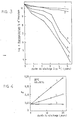
- FIGURE 1 It represents the survival curves for inoculum A (curve 1) and B (curve 2) after 15 days of storage at 28 ° C, depending on the activity of the water. These curves show that the survival of Agrobacterium radiobacter is maximum when the activity of the water in the inoculum is the lowest, they also show the importance of the composition of the culture medium on the survival of the bacterium. The compounds of the culture medium contained in inoculum B are more harmful for the survival of the microorganism than those of inoculum A.
- FIGURE 2 It represents the survival curves of inoculum A to two water activities (I a: 0.03 and 2 a: 0.11) during storage at 28 ° C.
- the survival of Agrobacterium radiobacter is possible in a dehydrated biopolymer for a period of at least one year.
- the third type of packaging is completely vapor-tight, and the figure shows l importance of the tightness of the packaging
- Table II illustrates a biological control test by dusting the inoculum A of Agrobacterium radiobacter, strain 84 at an inoculation wound made at the base of the stem of the plants The plants were previously infected with a virulent Agrobacterium tumefaciens strain (C58 pTi C58, Phabagen Collection. Department of molecular cell biology. De Mithof 3584 CH UTRECHT, The Netherlands).
- the medium is seeded with an entomopathogenic fungus: Beauvaria bassiana strain Bb 169 (INRA).
- the blastospore culture is developed for 5 days in a medium based on soluble corn / sucrose extract of the following composition: (CATROUX et al. 1970) Ann. Zoology and Animal Ecology T2 p.281-294 1970.
- Example 2 The procedure is as in Example 1, replacing the 50 ml of suspension of Agrobacterium radiobacter with 50 ml of spore suspension of Beauvaria bassiana.
- Example 2 The procedure is the same as in Example 1, replacing the suspension of Agrobacteriun radiobacter by a suspension of Beauvaria bassiana spores.
- the gels thus obtained are dried in air and then placed in different enclosures containing a saturated solution as defined in Table I.
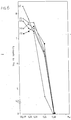
- FIG. 5 represents the shape of the survival curves of the blastospores included in a gel xanthan gum-carob seed flour placed in these different water activities:
- CTAB surface (external surface) by adsorption of ethyl trimethyl ammonium bromide at pH 9 is determined according to the method described by JAY, JANSEN and G. RAUS in Rubber Chemistry and Technclogy 44 (1971) pages 1287-1296.
- silica allows conservation of the blastospores of Beauvaria Bassiana up to a water activity of 0.3 therefore increased compared to the gel containing the spores without additive.
- the medium is inoculated with the strain of Pseudmonas syringae M 27 supplied by Ortho Chemical Company. This strain is deposited with the Northen Utilization Research and Development Division under the number KRRL B 12050 and at the Institut Pasteur under the number 1 142. 1 °) Culture of Pseudomonas syringae
- the culture is developed for three days on agar. This culture is used to inoculate a 300 ml Erlenmeyer flask containing a YEM culture medium which corresponds to the medium (A) as defined above for the culture of Agrobacterium radiobacter.
- Example 2 The procedure is the same as in Example 1, replacing the suspension of Agrobacterium radiobacter with a suspension of Pseudomonas svringae.
- the gels thus obtained are dried in air and then placed in different enclosures containing a saturated solution as defined in Table 1.
- the dried gels containing Pseudomonas syringae are placed in enclosures corresponding to the following water activities: 0.04 - 0.07 - 0.23 - 0.31 - 0.51 - 0.75 - 0.84 for 90 days at a temperature of 28 ° C.
- the activity of suspensions of Pseudomonas syringae obtained from a culture of Pseudomonas syringae included in a dried alginate gel and stored for 80 days at a water activity of 0.07 is measured then resuspended at a rate of 60 mg of dehydrated powder for 9 ml of pH 7 buffer, by estimation of the inhibition of the growth of Ceratocystis ulmi in a Petri dish.
- the percentage of inhibition of the culture reaches 90% compared to a control developed under the same conditions in the absence of Pseudomonas syringae included.
- the number of surviving bacteria was determined by the technique of dilution suspensions.
- the culture medium ensuring optimal survival of. Pseudomonas syringae is the YEM medium containing mannitol as a hydrocarbon source.
Landscapes
- Life Sciences & Earth Sciences (AREA)
- Engineering & Computer Science (AREA)
- Health & Medical Sciences (AREA)
- Zoology (AREA)
- Chemical & Material Sciences (AREA)
- General Health & Medical Sciences (AREA)
- Wood Science & Technology (AREA)
- Biotechnology (AREA)
- Microbiology (AREA)
- Organic Chemistry (AREA)
- Genetics & Genomics (AREA)
- Bioinformatics & Cheminformatics (AREA)
- Virology (AREA)
- Environmental Sciences (AREA)
- Biochemistry (AREA)
- Plant Pathology (AREA)
- Dentistry (AREA)
- Pest Control & Pesticides (AREA)
- Agronomy & Crop Science (AREA)
- Biomedical Technology (AREA)
- General Engineering & Computer Science (AREA)
- Dispersion Chemistry (AREA)
- Mycology (AREA)
- Medicinal Chemistry (AREA)
- Tropical Medicine & Parasitology (AREA)
- Micro-Organisms Or Cultivation Processes Thereof (AREA)
- Preparation Of Compounds By Using Micro-Organisms (AREA)
- Agricultural Chemicals And Associated Chemicals (AREA)
Applications Claiming Priority (6)
| Application Number | Priority Date | Filing Date | Title |
|---|---|---|---|
| FR8210636 | 1982-06-18 | ||
| FR8210636A FR2528866A1 (fr) | 1982-06-18 | 1982-06-18 | Inoculum d'agrobacterium radiobacter var radiobacter incluses dans un biopolymere pour la lutte biologique contre le crown gall |
| FR8305442A FR2543571A1 (fr) | 1983-04-01 | 1983-04-01 | Preparation entomopathogene a faible activite de l'eau et utilisation comme insecticide biologique |
| FR8305443 | 1983-04-01 | ||
| FR8305443A FR2543572A1 (fr) | 1983-04-01 | 1983-04-01 | Preparations d'inoculum de pseudomanas syringae a faible activite de l'eau et utilisation dans la lutte biologique contre la graphiose de l'orme |
| FR8305442 | 1983-04-01 |
Publications (2)
| Publication Number | Publication Date |
|---|---|
| EP0097571A1 true EP0097571A1 (de) | 1984-01-04 |
| EP0097571B1 EP0097571B1 (de) | 1985-12-04 |
Family
ID=27251115
Family Applications (1)
| Application Number | Title | Priority Date | Filing Date |
|---|---|---|---|
| EP83401176A Expired EP0097571B1 (de) | 1982-06-18 | 1983-06-09 | Verwendung des Inokulums mit schwacher Wasseraktivität zur biologischen Bekämpfung |
Country Status (7)
| Country | Link |
|---|---|
| US (1) | US4886664A (de) |
| EP (1) | EP0097571B1 (de) |
| AU (1) | AU571836B2 (de) |
| CA (1) | CA1197774A (de) |
| DE (1) | DE3361406D1 (de) |
| ES (1) | ES523360A0 (de) |
| NZ (1) | NZ204626A (de) |
Cited By (16)
| Publication number | Priority date | Publication date | Assignee | Title |
|---|---|---|---|---|
| EP0180743A1 (de) | 1984-09-21 | 1986-05-14 | Cernitin S.A. | Lebende Mikroorganismen enthaltendes flüssiges Präparat, Verfahren zu dessen Herstellung, lebende Mikroorganismen enthaltendes pelletiertes Produkt und Verfahren zu dessen Herstellung |
| US4615883A (en) * | 1985-10-23 | 1986-10-07 | Plant Genetics, Inc. | Hydrogel encapsulated nematodes |
| US4701326A (en) * | 1985-10-23 | 1987-10-20 | Plant Genetics, Inc. | Membrane-coated hydrogel encapsulated nematodes |
| FR2600673A1 (fr) * | 1986-06-26 | 1987-12-31 | Charbonnages Ste Chimique | Procede perfectionne de microencapsulation de microorganismes dans une matrice de polysaccharide |
| US4718935A (en) * | 1983-06-22 | 1988-01-12 | The United States Of America As Represented By The Secretary Of Agriculture | Method for the preparation of mycoherbicide-containing pellets |
| US4724147A (en) * | 1983-06-22 | 1988-02-09 | The United States Of America As Represented By The Secretary Of Agriculture | Preparation of pellets containing fungi for control of soilborne diseases |
| US4753799A (en) * | 1985-10-23 | 1988-06-28 | Plant Genetics, Inc. | Production of hydrogel encapsulated nematodes |
| US4767441A (en) * | 1985-09-06 | 1988-08-30 | The United States Of America As Represented By The Secretary Of Agriculture | Method for the preparation of mycoherbicide-containing pellets |
| WO1988008876A1 (fr) * | 1987-05-12 | 1988-11-17 | Institut National De La Recherche Agronomique (Inr | Structure d'inclusion de substances actives |
| US4818530A (en) * | 1983-06-22 | 1989-04-04 | The United States Of America As Represented By The Secretary Of Agriculture | Preparation of pellets containing fungi for control of soilborne diseases |
| WO1989007447A1 (en) * | 1988-02-12 | 1989-08-24 | President And Fellows Of Harvard College | Encapsulated bacterium |
| EP0250908A3 (en) * | 1986-06-03 | 1990-03-14 | The Dow Chemical Company | Pesticidal compositions and process for preparation thereof |
| WO1995017821A1 (en) * | 1993-12-29 | 1995-07-06 | Zeneca Limited | Composition for control of soil pests |
| WO1996010083A1 (en) | 1994-09-28 | 1996-04-04 | Novartis Ag | Novel pesticidal proteins and strains |
| US8410324B2 (en) | 2007-04-11 | 2013-04-02 | Mexichem Amanco Holding, S.A. De C.V. | Process for isomerizing a (hydro)fluoropropene |
| US9162946B2 (en) | 2006-10-03 | 2015-10-20 | Mexichem Amanco Holding S.A. De C.V. | Process for preparing C3-6 (hydro)fluoroalkenes by dehydrohalogenating C3-6 halo(hydro)fluoroalkanes in the presence of a zinc/chromia catalyst |
Families Citing this family (17)
| Publication number | Priority date | Publication date | Assignee | Title |
|---|---|---|---|---|
| CA1335363C (en) * | 1985-07-02 | 1995-04-25 | Imperial Oil Limited | Emergence-promoting rhizobacteria |
| US5413783A (en) * | 1988-04-04 | 1995-05-09 | The United States Of America As Represented By The Secretary Of Agriculture | Inhibiting plant pathogens with an antagonistic microorganism(s) |
| GB8824897D0 (en) * | 1988-10-24 | 1988-11-30 | Ici Plc | Biocatalysts |
| US5288488A (en) * | 1990-02-23 | 1994-02-22 | Auburn University | Method of controlling foliar microorganism populations |
| KR0145740B1 (ko) * | 1991-05-23 | 1998-08-01 | 채영복 | 고정화 미생물 농약과 그의 제조방법 |
| EP0649278A1 (de) * | 1992-05-27 | 1995-04-26 | EcoScience Corporation | Verfahren zur lagerung pilzlicher kulturen und konidien |
| US5989898A (en) * | 1992-05-27 | 1999-11-23 | Ecoscience Corporation | Method for storing fungal conidia |
| HU214917B (hu) * | 1994-07-14 | 1998-07-28 | Novartis Ag. | Mikroorganizmusokat tartalmazó granulált készítmény, eljárás ennek előállítására és alkalmazása |
| US5919689A (en) * | 1996-10-29 | 1999-07-06 | Selvig; Thomas Allan | Marine antifouling methods and compositions |
| US6342386B1 (en) | 1996-10-29 | 2002-01-29 | Warren Paul Powers | Methods for removing undesired growth from a surface |
| ES2217544T3 (es) * | 1997-03-27 | 2004-11-01 | The Governing Council Of The University Of Toronto | Tratamiento contra la enfermedad de los olmos holandeses. |
| KR200268109Y1 (ko) * | 2001-12-06 | 2002-03-15 | 김정훈 | 편평형 무정류자 진동모터 |
| US20060147662A1 (en) * | 2002-12-13 | 2006-07-06 | Merck Patent Gmbh | Method and device for drying of micro-organisms |
| FR2852203B1 (fr) * | 2003-03-14 | 2006-08-04 | Procede pour la potentialisation et la stimulation des defenses naturelles des plantes | |
| MY143693A (en) * | 2004-03-24 | 2011-06-30 | Nestec Sa | Shelf stable product wih living micro-organisms |
| US8257478B2 (en) * | 2004-12-16 | 2012-09-04 | The Hong Kong University Of Science And Technology | Use of marine fungus originated compounds as antifouling agents |
| US8020343B2 (en) * | 2004-12-23 | 2011-09-20 | Becker Underwood Inc. | Enhanced shelf life and on seed stabilization of liquid bacterium inoculants |
Citations (6)
| Publication number | Priority date | Publication date | Assignee | Title |
|---|---|---|---|---|
| FR2303080A1 (fr) * | 1975-03-03 | 1976-10-01 | Miles Lab | Procede de preparation d'une composition microbienne hydrosoluble et composition obtenue |
| FR2394606A1 (fr) * | 1976-10-29 | 1979-01-12 | Agronomique Inst Nat Rech | Procede de protection et de conservation des micro-organismes avec des argiles en vue de leur application agronomique |
| GB2065128A (en) * | 1979-11-19 | 1981-06-24 | Univ Montana State | Method for treating dutch elm disease |
| FR2501229A1 (fr) * | 1981-03-06 | 1982-09-10 | Rhone Poulenc Ind | Procede d'inclusion de micro-organismes du groupe des mycorhizes et des actinorhizes |
| EP0083267A1 (de) * | 1981-12-29 | 1983-07-06 | Rhone-Poulenc Agrochimie | Verfahren zur Herstellung von Inokulums mit niedriger Wasseraktivität und mit verbessertem Temperatur- und Rehydratationswiderstand |
| EP0017565B1 (de) * | 1979-04-05 | 1984-10-24 | Rhone-Poulenc Industries | Verfahren zum Einschliessen von Mikroorganismen in einer polymeren Matrize und so erhaltenes Produkt |
Family Cites Families (29)
| Publication number | Priority date | Publication date | Assignee | Title |
|---|---|---|---|---|
| US2995867A (en) * | 1961-08-15 | Seed pellet containing inoculant | ||
| BE521850A (de) * | ||||
| US1909622A (en) * | 1923-01-02 | 1933-05-16 | Frank J Matchette | Process for the propagation of culture germs for the inoculation of nitrogen gathering plants, such as legumes |
| DE1029839B (de) * | 1953-05-07 | 1958-05-14 | Tosaku Yoshioka | Mittel zur Verbesserung und Regelung der Duengerwirkung auf landwirtschaftlichen Kulturboeden |
| FR1103676A (fr) * | 1953-07-31 | 1955-11-04 | Union Chimique Belge Sa | Procédé de préparation d'un concentré de bactéries solide et pulvérulent |
| US2901864A (en) * | 1955-09-22 | 1959-09-01 | Ohio Commw Eng Co | Soil conditioner and method of using |
| US2988455A (en) * | 1958-03-06 | 1961-06-13 | American Mach & Foundry | Polysaccharide composition and method of manufacture |
| US3034968A (en) * | 1959-04-09 | 1962-05-15 | Standard Brands Inc | Process for preparing viable dry bacteria and molds |
| US3130121A (en) * | 1961-02-10 | 1964-04-21 | Leeco Chemican Company Divisio | Insecticidal powder |
| US3168796A (en) * | 1962-03-19 | 1965-02-09 | Agricultural Lab Inc | Inoculation of legumes |
| US3472644A (en) * | 1965-05-26 | 1969-10-14 | Mrs Charles A Zamzov | Foamed synthetic polymeric plant growth medium containing an inorganic filler and microorganisms |
| GB1177077A (en) * | 1965-12-13 | 1970-01-07 | British Petroleum Co | Improvements in or relating to Fertilisers and processes for their use |
| US3822187A (en) * | 1967-11-27 | 1974-07-02 | Chaffaut J Du | Cultivation of micro-organismus |
| US3616236A (en) * | 1968-06-24 | 1971-10-26 | Astra Ab | Production of rhizobium strains resistant to drying |
| LU56634A1 (de) * | 1968-08-02 | 1970-03-23 | ||
| CA977178A (en) * | 1970-03-17 | 1975-11-04 | Geoffrey G. Taylor | Methods of introducing to or ensuring the existence of viable micro-organisms in soil |
| US3898132A (en) * | 1972-08-24 | 1975-08-05 | Int Feed Improvement Ass Inc | Method of preparing stowable, dormant bacteria |
| DE2426988C2 (de) * | 1974-06-04 | 1985-02-14 | Boehringer Mannheim Gmbh, 6800 Mannheim | Verfahren zur Trägerbindung biologisch aktiver Proteine |
| FR2338287A1 (fr) * | 1976-01-19 | 1977-08-12 | Idemitsu Kosan Co | Polysaccharide ayant la propriete de former un gel et procede microbiologique pour sa preparation |
| US4089746A (en) * | 1976-07-19 | 1978-05-16 | The United States Of America As Represented By The Secretary Of Agriculture | Method for insolubilizing enzymes on chitosan |
| FR2386504A1 (fr) * | 1977-04-05 | 1978-11-03 | Anvar | Procede microbiologique destine a maitriser la productivite des plantes cultivees |
| GB1556584A (en) * | 1977-05-10 | 1979-11-28 | Sanraku Ocean Co | Hydrophilic complex gels |
| SU628143A1 (ru) * | 1977-05-27 | 1978-10-15 | Отдел Микробиологии Ан Молдавской Сср | Способ получени наполнител дл нитрагина |
| US4211774A (en) * | 1977-10-17 | 1980-07-08 | Merck & Co., Inc. | Bacterial polysaccharide S-21 and complex thereof |
| US4155739A (en) * | 1977-10-17 | 1979-05-22 | Texaco Trinidad, Inc. | Boron-containing spray oil composition for foliar application |
| US4202905A (en) * | 1978-02-22 | 1980-05-13 | Mitsui Toatsu Chemicals Incorporated | Luminous material for use in fishery and method for the production thereof |
| US4352883A (en) * | 1979-03-28 | 1982-10-05 | Damon Corporation | Encapsulation of biological material |
| FR2464093A1 (fr) * | 1979-08-30 | 1981-03-06 | Roussel Uclaf | Procede de preparation de suspensions ou de poudres stables de microcapsules stables et d'une porosite variable et les produits ainsi obtenus |
| FR2469861A1 (fr) * | 1979-11-23 | 1981-05-29 | Anvar | Nouveau procede d'inoculation de graines de soja et graines obtenues |
-
1983
- 1983-06-08 US US06/502,244 patent/US4886664A/en not_active Expired - Fee Related
- 1983-06-09 EP EP83401176A patent/EP0097571B1/de not_active Expired
- 1983-06-09 DE DE8383401176T patent/DE3361406D1/de not_active Expired
- 1983-06-17 AU AU15874/83A patent/AU571836B2/en not_active Ceased
- 1983-06-17 ES ES523360A patent/ES523360A0/es active Granted
- 1983-06-17 NZ NZ204626A patent/NZ204626A/en unknown
- 1983-06-17 CA CA000430594A patent/CA1197774A/fr not_active Expired
Patent Citations (6)
| Publication number | Priority date | Publication date | Assignee | Title |
|---|---|---|---|---|
| FR2303080A1 (fr) * | 1975-03-03 | 1976-10-01 | Miles Lab | Procede de preparation d'une composition microbienne hydrosoluble et composition obtenue |
| FR2394606A1 (fr) * | 1976-10-29 | 1979-01-12 | Agronomique Inst Nat Rech | Procede de protection et de conservation des micro-organismes avec des argiles en vue de leur application agronomique |
| EP0017565B1 (de) * | 1979-04-05 | 1984-10-24 | Rhone-Poulenc Industries | Verfahren zum Einschliessen von Mikroorganismen in einer polymeren Matrize und so erhaltenes Produkt |
| GB2065128A (en) * | 1979-11-19 | 1981-06-24 | Univ Montana State | Method for treating dutch elm disease |
| FR2501229A1 (fr) * | 1981-03-06 | 1982-09-10 | Rhone Poulenc Ind | Procede d'inclusion de micro-organismes du groupe des mycorhizes et des actinorhizes |
| EP0083267A1 (de) * | 1981-12-29 | 1983-07-06 | Rhone-Poulenc Agrochimie | Verfahren zur Herstellung von Inokulums mit niedriger Wasseraktivität und mit verbessertem Temperatur- und Rehydratationswiderstand |
Non-Patent Citations (2)
| Title |
|---|
| JOURNAL OF APPLIED BACTERIOLOGY, vol. 35, 1972, pages 493-497, London, GB * |
| JOURNAL OF ECONOMIC ENTOMOLOGY, vol. 59, no. 3, juin 1966, pages 620-622, Baltimore, md., US * |
Cited By (23)
| Publication number | Priority date | Publication date | Assignee | Title |
|---|---|---|---|---|
| US4818530A (en) * | 1983-06-22 | 1989-04-04 | The United States Of America As Represented By The Secretary Of Agriculture | Preparation of pellets containing fungi for control of soilborne diseases |
| US4718935A (en) * | 1983-06-22 | 1988-01-12 | The United States Of America As Represented By The Secretary Of Agriculture | Method for the preparation of mycoherbicide-containing pellets |
| US4724147A (en) * | 1983-06-22 | 1988-02-09 | The United States Of America As Represented By The Secretary Of Agriculture | Preparation of pellets containing fungi for control of soilborne diseases |
| EP0180743A1 (de) | 1984-09-21 | 1986-05-14 | Cernitin S.A. | Lebende Mikroorganismen enthaltendes flüssiges Präparat, Verfahren zu dessen Herstellung, lebende Mikroorganismen enthaltendes pelletiertes Produkt und Verfahren zu dessen Herstellung |
| US4767441A (en) * | 1985-09-06 | 1988-08-30 | The United States Of America As Represented By The Secretary Of Agriculture | Method for the preparation of mycoherbicide-containing pellets |
| US4615883A (en) * | 1985-10-23 | 1986-10-07 | Plant Genetics, Inc. | Hydrogel encapsulated nematodes |
| US4701326A (en) * | 1985-10-23 | 1987-10-20 | Plant Genetics, Inc. | Membrane-coated hydrogel encapsulated nematodes |
| US4753799A (en) * | 1985-10-23 | 1988-06-28 | Plant Genetics, Inc. | Production of hydrogel encapsulated nematodes |
| EP0250908A3 (en) * | 1986-06-03 | 1990-03-14 | The Dow Chemical Company | Pesticidal compositions and process for preparation thereof |
| FR2600673A1 (fr) * | 1986-06-26 | 1987-12-31 | Charbonnages Ste Chimique | Procede perfectionne de microencapsulation de microorganismes dans une matrice de polysaccharide |
| WO1988008876A1 (fr) * | 1987-05-12 | 1988-11-17 | Institut National De La Recherche Agronomique (Inr | Structure d'inclusion de substances actives |
| FR2615203A1 (fr) * | 1987-05-12 | 1988-11-18 | Agronomique Inst Nat Rech | Inoculum dans lequel les micro-organismes sont conditionnes sous la forme de granules biodegradables, son procede de preparation et ses applications |
| WO1989007447A1 (en) * | 1988-02-12 | 1989-08-24 | President And Fellows Of Harvard College | Encapsulated bacterium |
| AU631359B2 (en) * | 1988-02-12 | 1992-11-26 | President And Fellows Of Harvard College | Encapsulated bacterium |
| WO1995017821A1 (en) * | 1993-12-29 | 1995-07-06 | Zeneca Limited | Composition for control of soil pests |
| AP565A (en) * | 1993-12-29 | 1996-11-21 | Zeneca Ltd | A granular composition comprising fungal biological control agents for controlling insect pests in soil. |
| US5759562A (en) * | 1993-12-29 | 1998-06-02 | Zeneca Limited | Compositions for control of soil pests |
| WO1996010083A1 (en) | 1994-09-28 | 1996-04-04 | Novartis Ag | Novel pesticidal proteins and strains |
| US9162946B2 (en) | 2006-10-03 | 2015-10-20 | Mexichem Amanco Holding S.A. De C.V. | Process for preparing C3-6 (hydro)fluoroalkenes by dehydrohalogenating C3-6 halo(hydro)fluoroalkanes in the presence of a zinc/chromia catalyst |
| US9567275B2 (en) | 2006-10-03 | 2017-02-14 | Mexichem Amanco Holding S.A. De C.V. | Process for preparing C3-6(hydro)fluoroalkenes by dehydrohalogenating C3-6 halo(hydro)fluoroalkanes in the presence of a zinc/chromia catalyst |
| US9790149B2 (en) | 2006-10-03 | 2017-10-17 | Mexichem Amanco Holding S.A. De C.V. | Process for preparing C3-6(hydro)fluoroalkenes by dehydrohalogenating C3-6 halo(hydro) fluoroalkanes in the presence of a zinc chromia catalyst |
| US8410324B2 (en) | 2007-04-11 | 2013-04-02 | Mexichem Amanco Holding, S.A. De C.V. | Process for isomerizing a (hydro)fluoropropene |
| US8742181B2 (en) | 2007-04-11 | 2014-06-03 | Mexichem Amanco Holding S.A. De C.V. | Process for isomerizing A (hydro)fluoroalkene |
Also Published As
| Publication number | Publication date |
|---|---|
| EP0097571B1 (de) | 1985-12-04 |
| AU1587483A (en) | 1983-12-22 |
| DE3361406D1 (en) | 1986-01-16 |
| AU571836B2 (en) | 1988-04-28 |
| ES8403280A1 (es) | 1984-03-16 |
| US4886664A (en) | 1989-12-12 |
| ES523360A0 (es) | 1984-03-16 |
| NZ204626A (en) | 1987-01-23 |
| CA1197774A (fr) | 1985-12-10 |
Similar Documents
| Publication | Publication Date | Title |
|---|---|---|
| EP0097571B1 (de) | Verwendung des Inokulums mit schwacher Wasseraktivität zur biologischen Bekämpfung | |
| CA1179616A (fr) | Preparation d'inoculums a faible activite de l'eau a resistance amelioree a la temperature et a la rehydratation | |
| EP2043968B1 (de) | Neue pilzliche inokulumzusammensetzungen, verfahren zu ihrer herstellung und ihre verwendung für die verbesserung des wachstums von kulturen | |
| JP5329092B2 (ja) | 安定な微生物の接種材料およびその製造方法 | |
| EP0223662A1 (de) | Verfahren zur Herstellung eines stabilen Pulvers von Mikroorganismen und Bakterieninokulum | |
| HUE030268T2 (en) | Microbial fermentation methods and compositions | |
| CN107652027A (zh) | 一种生物防治作物枯萎病的复配组合物及其应用 | |
| CN107873704A (zh) | 一种用于防治植物病害的微胶囊剂及其制备方法与应用 | |
| CN116716210A (zh) | 一株多功能的丹参内生菌及其应用 | |
| JPH078769B2 (ja) | 土壌線虫駆除方法およびそれに用いる線虫駆除組成物 | |
| CN109880764A (zh) | 一株贝莱斯芽孢杆菌及其在防治苹果病害中的应用 | |
| EP0223661A1 (de) | Mikrobeninokulum und Verfahren zur Herstellung eines stabilen Bakterienpulvers, Düngemittel und seine Verwendung, Verfahren zur Bodenverbesserung | |
| EP2654435A1 (de) | Neue mykotische inokulumzusammensetzungen, verfahren zu ihrer herstellung und verwendung zur steigerung des kulturwachstums | |
| CN102604872A (zh) | 嗪草酮降解菌和基于该菌的土壤生物修复菌剂及应用 | |
| EP3462879B1 (de) | Verfahren zur verbesserung der entwicklung von pflanzen | |
| CN115772408A (zh) | 一种生物制剂及缓解麻疯树镉胁迫和提高镉修复效率的方法 | |
| EP3898939B1 (de) | Biodünger bakterienstamm | |
| JP2885805B2 (ja) | 微生物の生存性の維持方法 | |
| CN102316742A (zh) | 含有丝状真菌的颗粒及其制备方法 | |
| CN121472100B (zh) | 一株鞘氨醇单胞菌、微生物菌剂及其制备方法和应用 | |
| EP0662934A1 (de) | Zusammen mit inokulums-bakterien benutzte mikrogranulate, ihre herstellung und verwendung für die landwirtschaft | |
| WO2020128374A1 (fr) | Souche bactérienne biofertilisante | |
| EP0248832B1 (de) | Verfahren zur herstellung von mikroorganismen, insbesondere der gruppe frankia, und herstellung eines bakterieninokulums | |
| FR2494717A1 (fr) | Perfectionnements apportes aux procedes de preparation de spores durables d'entomophthorales pathogenes d'insectes, preparations de spores ainsi obtenues et compositions phytosanitaires contenant lesdites preparations | |
| FR2543571A1 (fr) | Preparation entomopathogene a faible activite de l'eau et utilisation comme insecticide biologique |
Legal Events
| Date | Code | Title | Description |
|---|---|---|---|
| PUAI | Public reference made under article 153(3) epc to a published international application that has entered the european phase |
Free format text: ORIGINAL CODE: 0009012 |
|
| AK | Designated contracting states |
Designated state(s): DE FR GB IT |
|
| 17P | Request for examination filed |
Effective date: 19840114 |
|
| ITF | It: translation for a ep patent filed | ||
| RAP1 | Party data changed (applicant data changed or rights of an application transferred) |
Owner name: RHONE-POULENC AGROCHIMIE |
|
| GRAA | (expected) grant |
Free format text: ORIGINAL CODE: 0009210 |
|
| AK | Designated contracting states |
Designated state(s): DE FR GB IT |
|
| REF | Corresponds to: |
Ref document number: 3361406 Country of ref document: DE Date of ref document: 19860116 |
|
| PLBE | No opposition filed within time limit |
Free format text: ORIGINAL CODE: 0009261 |
|
| STAA | Information on the status of an ep patent application or granted ep patent |
Free format text: STATUS: NO OPPOSITION FILED WITHIN TIME LIMIT |
|
| 26N | No opposition filed | ||
| ITTA | It: last paid annual fee | ||
| PGFP | Annual fee paid to national office [announced via postgrant information from national office to epo] |
Ref country code: GB Payment date: 19920505 Year of fee payment: 10 |
|
| PGFP | Annual fee paid to national office [announced via postgrant information from national office to epo] |
Ref country code: FR Payment date: 19920616 Year of fee payment: 10 |
|
| PGFP | Annual fee paid to national office [announced via postgrant information from national office to epo] |
Ref country code: DE Payment date: 19920826 Year of fee payment: 10 |
|
| PG25 | Lapsed in a contracting state [announced via postgrant information from national office to epo] |
Ref country code: GB Effective date: 19930609 |
|
| GBPC | Gb: european patent ceased through non-payment of renewal fee |
Effective date: 19930609 |
|
| PG25 | Lapsed in a contracting state [announced via postgrant information from national office to epo] |
Ref country code: FR Effective date: 19940228 |
|
| PG25 | Lapsed in a contracting state [announced via postgrant information from national office to epo] |
Ref country code: DE Effective date: 19940301 |
|
| REG | Reference to a national code |
Ref country code: FR Ref legal event code: ST |