EP0097633A1 - Bestimmung der Empfindlichkeit von Viren gegen antivirale Wirkstoffe - Google Patents
Bestimmung der Empfindlichkeit von Viren gegen antivirale Wirkstoffe Download PDFInfo
- Publication number
- EP0097633A1 EP0097633A1 EP19830850174 EP83850174A EP0097633A1 EP 0097633 A1 EP0097633 A1 EP 0097633A1 EP 19830850174 EP19830850174 EP 19830850174 EP 83850174 A EP83850174 A EP 83850174A EP 0097633 A1 EP0097633 A1 EP 0097633A1
- Authority
- EP
- European Patent Office
- Prior art keywords
- virus
- cells
- determination
- antigen
- viral
- Prior art date
- Legal status (The legal status is an assumption and is not a legal conclusion. Google has not performed a legal analysis and makes no representation as to the accuracy of the status listed.)
- Granted
Links
- 241000700605 Viruses Species 0.000 title claims abstract description 119
- 239000003443 antiviral agent Substances 0.000 title claims abstract description 58
- 230000035945 sensitivity Effects 0.000 title claims abstract description 18
- 238000000034 method Methods 0.000 claims abstract description 50
- 239000000427 antigen Substances 0.000 claims abstract description 44
- 102000036639 antigens Human genes 0.000 claims abstract description 41
- 108091007433 antigens Proteins 0.000 claims abstract description 41
- 238000011534 incubation Methods 0.000 claims abstract description 12
- 238000011081 inoculation Methods 0.000 claims abstract 3
- 230000001900 immune effect Effects 0.000 claims description 23
- 239000012895 dilution Substances 0.000 claims description 17
- 238000010790 dilution Methods 0.000 claims description 17
- 230000029812 viral genome replication Effects 0.000 claims description 16
- 239000000463 material Substances 0.000 claims description 15
- 238000002965 ELISA Methods 0.000 claims description 13
- 238000005259 measurement Methods 0.000 claims description 12
- XLYOFNOQVPJJNP-UHFFFAOYSA-N water Chemical compound O XLYOFNOQVPJJNP-UHFFFAOYSA-N 0.000 claims description 10
- 239000006228 supernatant Substances 0.000 claims description 9
- 241001529453 unidentified herpesvirus Species 0.000 claims description 9
- 239000003104 tissue culture media Substances 0.000 claims description 8
- 241000701022 Cytomegalovirus Species 0.000 claims description 7
- 239000012153 distilled water Substances 0.000 claims description 7
- 239000000126 substance Substances 0.000 claims description 7
- 241000701085 Human alphaherpesvirus 3 Species 0.000 claims description 5
- 230000005764 inhibitory process Effects 0.000 claims description 5
- 238000006243 chemical reaction Methods 0.000 claims description 4
- 230000000120 cytopathologic effect Effects 0.000 claims description 4
- 238000010257 thawing Methods 0.000 claims description 4
- 230000003612 virological effect Effects 0.000 claims description 4
- 239000013078 crystal Substances 0.000 claims description 3
- 239000001963 growth medium Substances 0.000 claims description 3
- 208000009889 Herpes Simplex Diseases 0.000 claims description 2
- 239000000819 hypertonic solution Substances 0.000 claims description 2
- 229940021223 hypertonic solution Drugs 0.000 claims description 2
- 238000002525 ultrasonication Methods 0.000 claims description 2
- 230000008014 freezing Effects 0.000 claims 1
- 238000007710 freezing Methods 0.000 claims 1
- 230000010076 replication Effects 0.000 abstract description 7
- 230000009830 antibody antigen interaction Effects 0.000 abstract description 3
- 210000004027 cell Anatomy 0.000 description 80
- XQFRJNBWHJMXHO-RRKCRQDMSA-N IDUR Chemical class C1[C@H](O)[C@@H](CO)O[C@H]1N1C(=O)NC(=O)C(I)=C1 XQFRJNBWHJMXHO-RRKCRQDMSA-N 0.000 description 11
- 229960004716 idoxuridine Drugs 0.000 description 8
- 229920003023 plastic Polymers 0.000 description 8
- 238000002835 absorbance Methods 0.000 description 7
- 239000000203 mixture Substances 0.000 description 7
- 210000002966 serum Anatomy 0.000 description 7
- 238000012360 testing method Methods 0.000 description 7
- FAPWRFPIFSIZLT-UHFFFAOYSA-M Sodium chloride Chemical compound [Na+].[Cl-] FAPWRFPIFSIZLT-UHFFFAOYSA-M 0.000 description 6
- 230000000840 anti-viral effect Effects 0.000 description 6
- 241000700584 Simplexvirus Species 0.000 description 5
- 239000003599 detergent Substances 0.000 description 5
- ZJAOAACCNHFJAH-UHFFFAOYSA-N phosphonoformic acid Chemical compound OC(=O)P(O)(O)=O ZJAOAACCNHFJAH-UHFFFAOYSA-N 0.000 description 5
- 238000003127 radioimmunoassay Methods 0.000 description 5
- 102000004190 Enzymes Human genes 0.000 description 4
- 108090000790 Enzymes Proteins 0.000 description 4
- 229960004150 aciclovir Drugs 0.000 description 4
- MKUXAQIIEYXACX-UHFFFAOYSA-N aciclovir Chemical compound N1C(N)=NC(=O)C2=C1N(COCCO)C=N2 MKUXAQIIEYXACX-UHFFFAOYSA-N 0.000 description 4
- 239000003153 chemical reaction reagent Substances 0.000 description 4
- 238000007796 conventional method Methods 0.000 description 4
- 230000000694 effects Effects 0.000 description 4
- UCSJYZPVAKXKNQ-HZYVHMACSA-N streptomycin Chemical compound CN[C@H]1[C@H](O)[C@@H](O)[C@H](CO)O[C@H]1O[C@@H]1[C@](C=O)(O)[C@H](C)O[C@H]1O[C@@H]1[C@@H](NC(N)=N)[C@H](O)[C@@H](NC(N)=N)[C@H](O)[C@H]1O UCSJYZPVAKXKNQ-HZYVHMACSA-N 0.000 description 4
- NLMKTBGFQGKQEV-UHFFFAOYSA-N 2-[2-[2-[2-[2-[2-[2-[2-[2-[2-[2-[2-[2-[2-[2-[2-[2-[2-[2-(2-hexadecoxyethoxy)ethoxy]ethoxy]ethoxy]ethoxy]ethoxy]ethoxy]ethoxy]ethoxy]ethoxy]ethoxy]ethoxy]ethoxy]ethoxy]ethoxy]ethoxy]ethoxy]ethoxy]ethoxy]ethanol Chemical group CCCCCCCCCCCCCCCCOCCOCCOCCOCCOCCOCCOCCOCCOCCOCCOCCOCCOCCOCCOCCOCCOCCOCCOCCOCCO NLMKTBGFQGKQEV-UHFFFAOYSA-N 0.000 description 3
- 206010019973 Herpes virus infection Diseases 0.000 description 3
- 208000029433 Herpesviridae infectious disease Diseases 0.000 description 3
- 102000014150 Interferons Human genes 0.000 description 3
- 108010050904 Interferons Proteins 0.000 description 3
- HEMHJVSKTPXQMS-UHFFFAOYSA-M Sodium hydroxide Chemical compound [OH-].[Na+] HEMHJVSKTPXQMS-UHFFFAOYSA-M 0.000 description 3
- 230000008901 benefit Effects 0.000 description 3
- 201000010099 disease Diseases 0.000 description 3
- 208000037265 diseases, disorders, signs and symptoms Diseases 0.000 description 3
- 210000002950 fibroblast Anatomy 0.000 description 3
- 229920002113 octoxynol Polymers 0.000 description 3
- 239000011780 sodium chloride Substances 0.000 description 3
- 239000000243 solution Substances 0.000 description 3
- 239000000758 substrate Substances 0.000 description 3
- 238000005406 washing Methods 0.000 description 3
- 102000002260 Alkaline Phosphatase Human genes 0.000 description 2
- 108020004774 Alkaline Phosphatase Proteins 0.000 description 2
- 108091003079 Bovine Serum Albumin Proteins 0.000 description 2
- 241000282693 Cercopithecidae Species 0.000 description 2
- 102000016928 DNA-directed DNA polymerase Human genes 0.000 description 2
- 108010014303 DNA-directed DNA polymerase Proteins 0.000 description 2
- 208000007514 Herpes zoster Diseases 0.000 description 2
- 241000700588 Human alphaherpesvirus 1 Species 0.000 description 2
- 108060003951 Immunoglobulin Proteins 0.000 description 2
- TWRXJAOTZQYOKJ-UHFFFAOYSA-L Magnesium chloride Chemical compound [Mg+2].[Cl-].[Cl-] TWRXJAOTZQYOKJ-UHFFFAOYSA-L 0.000 description 2
- 229930182555 Penicillin Natural products 0.000 description 2
- JGSARLDLIJGVTE-MBNYWOFBSA-N Penicillin G Chemical compound N([C@H]1[C@H]2SC([C@@H](N2C1=O)C(O)=O)(C)C)C(=O)CC1=CC=CC=C1 JGSARLDLIJGVTE-MBNYWOFBSA-N 0.000 description 2
- 229920001213 Polysorbate 20 Polymers 0.000 description 2
- CDBYLPFSWZWCQE-UHFFFAOYSA-L Sodium Carbonate Chemical compound [Na+].[Na+].[O-]C([O-])=O CDBYLPFSWZWCQE-UHFFFAOYSA-L 0.000 description 2
- PXIPVTKHYLBLMZ-UHFFFAOYSA-N Sodium azide Chemical compound [Na+].[N-]=[N+]=[N-] PXIPVTKHYLBLMZ-UHFFFAOYSA-N 0.000 description 2
- 239000003242 anti bacterial agent Substances 0.000 description 2
- 229940088710 antibiotic agent Drugs 0.000 description 2
- 230000015572 biosynthetic process Effects 0.000 description 2
- 229940098773 bovine serum albumin Drugs 0.000 description 2
- 239000000872 buffer Substances 0.000 description 2
- 244000309466 calf Species 0.000 description 2
- 238000004113 cell culture Methods 0.000 description 2
- 238000002512 chemotherapy Methods 0.000 description 2
- 230000006378 damage Effects 0.000 description 2
- 229960005102 foscarnet Drugs 0.000 description 2
- 102000018358 immunoglobulin Human genes 0.000 description 2
- 229940072221 immunoglobulins Drugs 0.000 description 2
- 239000002054 inoculum Substances 0.000 description 2
- 229940079322 interferon Drugs 0.000 description 2
- 239000000644 isotonic solution Substances 0.000 description 2
- 239000002609 medium Substances 0.000 description 2
- 150000007523 nucleic acids Chemical class 0.000 description 2
- 102000039446 nucleic acids Human genes 0.000 description 2
- 108020004707 nucleic acids Proteins 0.000 description 2
- 229940049954 penicillin Drugs 0.000 description 2
- 235000010486 polyoxyethylene sorbitan monolaurate Nutrition 0.000 description 2
- 239000000256 polyoxyethylene sorbitan monolaurate Substances 0.000 description 2
- 238000002360 preparation method Methods 0.000 description 2
- 230000005855 radiation Effects 0.000 description 2
- 229960005322 streptomycin Drugs 0.000 description 2
- XZKIHKMTEMTJQX-UHFFFAOYSA-N 4-Nitrophenyl Phosphate Chemical compound OP(O)(=O)OC1=CC=C([N+]([O-])=O)C=C1 XZKIHKMTEMTJQX-UHFFFAOYSA-N 0.000 description 1
- -1 4.5 % NaCl Chemical compound 0.000 description 1
- ZCYVEMRRCGMTRW-UHFFFAOYSA-N 7553-56-2 Chemical compound [I] ZCYVEMRRCGMTRW-UHFFFAOYSA-N 0.000 description 1
- 241000894006 Bacteria Species 0.000 description 1
- 241000724252 Cucumber mosaic virus Species 0.000 description 1
- 208000003098 Ganglion Cysts Diseases 0.000 description 1
- 241000701074 Human alphaherpesvirus 2 Species 0.000 description 1
- 241000701044 Human gammaherpesvirus 4 Species 0.000 description 1
- 208000032420 Latent Infection Diseases 0.000 description 1
- 206010028980 Neoplasm Diseases 0.000 description 1
- 241000283973 Oryctolagus cuniculus Species 0.000 description 1
- 239000012980 RPMI-1640 medium Substances 0.000 description 1
- 229920002684 Sepharose Polymers 0.000 description 1
- OIRDTQYFTABQOQ-UHTZMRCNSA-N Vidarabine Chemical compound C1=NC=2C(N)=NC=NC=2N1[C@@H]1O[C@H](CO)[C@@H](O)[C@@H]1O OIRDTQYFTABQOQ-UHTZMRCNSA-N 0.000 description 1
- 229940121357 antivirals Drugs 0.000 description 1
- 230000001580 bacterial effect Effects 0.000 description 1
- 210000000601 blood cell Anatomy 0.000 description 1
- 230000015556 catabolic process Effects 0.000 description 1
- 239000007795 chemical reaction product Substances 0.000 description 1
- 230000021615 conjugation Effects 0.000 description 1
- 238000012937 correction Methods 0.000 description 1
- 238000012136 culture method Methods 0.000 description 1
- 230000003247 decreasing effect Effects 0.000 description 1
- 238000006731 degradation reaction Methods 0.000 description 1
- 230000001419 dependent effect Effects 0.000 description 1
- 238000001514 detection method Methods 0.000 description 1
- 238000011161 development Methods 0.000 description 1
- 230000004069 differentiation Effects 0.000 description 1
- 208000037771 disease arising from reactivation of latent virus Diseases 0.000 description 1
- 239000003814 drug Substances 0.000 description 1
- 238000011156 evaluation Methods 0.000 description 1
- 239000012847 fine chemical Substances 0.000 description 1
- 239000012530 fluid Substances 0.000 description 1
- 239000011521 glass Substances 0.000 description 1
- 238000000265 homogenisation Methods 0.000 description 1
- 230000003053 immunization Effects 0.000 description 1
- 238000002649 immunization Methods 0.000 description 1
- 239000003547 immunosorbent Substances 0.000 description 1
- 238000000338 in vitro Methods 0.000 description 1
- 230000002779 inactivation Effects 0.000 description 1
- 208000015181 infectious disease Diseases 0.000 description 1
- 229940047124 interferons Drugs 0.000 description 1
- 229910052740 iodine Inorganic materials 0.000 description 1
- 239000011630 iodine Substances 0.000 description 1
- 231100000518 lethal Toxicity 0.000 description 1
- 230000001665 lethal effect Effects 0.000 description 1
- 210000004072 lung Anatomy 0.000 description 1
- 229910001629 magnesium chloride Inorganic materials 0.000 description 1
- 238000004519 manufacturing process Methods 0.000 description 1
- 239000011159 matrix material Substances 0.000 description 1
- 210000005036 nerve Anatomy 0.000 description 1
- 210000000056 organ Anatomy 0.000 description 1
- 239000002245 particle Substances 0.000 description 1
- 239000008363 phosphate buffer Substances 0.000 description 1
- 230000002285 radioactive effect Effects 0.000 description 1
- 238000000163 radioactive labelling Methods 0.000 description 1
- 230000007420 reactivation Effects 0.000 description 1
- 230000009257 reactivity Effects 0.000 description 1
- 230000003362 replicative effect Effects 0.000 description 1
- 238000011160 research Methods 0.000 description 1
- 238000012216 screening Methods 0.000 description 1
- 230000028327 secretion Effects 0.000 description 1
- 238000000926 separation method Methods 0.000 description 1
- 229910000029 sodium carbonate Inorganic materials 0.000 description 1
- 239000007787 solid Substances 0.000 description 1
- 238000001179 sorption measurement Methods 0.000 description 1
- 238000003239 susceptibility assay Methods 0.000 description 1
- 238000004448 titration Methods 0.000 description 1
- 238000002054 transplantation Methods 0.000 description 1
- 210000002700 urine Anatomy 0.000 description 1
- 210000003501 vero cell Anatomy 0.000 description 1
- 230000009385 viral infection Effects 0.000 description 1
Images

Classifications
-
- C—CHEMISTRY; METALLURGY
- C12—BIOCHEMISTRY; BEER; SPIRITS; WINE; VINEGAR; MICROBIOLOGY; ENZYMOLOGY; MUTATION OR GENETIC ENGINEERING
- C12Q—MEASURING OR TESTING PROCESSES INVOLVING ENZYMES, NUCLEIC ACIDS OR MICROORGANISMS; COMPOSITIONS OR TEST PAPERS THEREFOR; PROCESSES OF PREPARING SUCH COMPOSITIONS; CONDITION-RESPONSIVE CONTROL IN MICROBIOLOGICAL OR ENZYMOLOGICAL PROCESSES
- C12Q1/00—Measuring or testing processes involving enzymes, nucleic acids or microorganisms; Compositions therefor; Processes of preparing such compositions
- C12Q1/70—Measuring or testing processes involving enzymes, nucleic acids or microorganisms; Compositions therefor; Processes of preparing such compositions involving virus or bacteriophage
-
- G—PHYSICS
- G01—MEASURING; TESTING
- G01N—INVESTIGATING OR ANALYSING MATERIALS BY DETERMINING THEIR CHEMICAL OR PHYSICAL PROPERTIES
- G01N33/00—Investigating or analysing materials by specific methods not covered by groups G01N1/00 - G01N31/00
- G01N33/48—Biological material, e.g. blood, urine; Haemocytometers
- G01N33/50—Chemical analysis of biological material, e.g. blood, urine; Testing involving biospecific ligand binding methods; Immunological testing
- G01N33/5005—Chemical analysis of biological material, e.g. blood, urine; Testing involving biospecific ligand binding methods; Immunological testing involving human or animal cells
- G01N33/5008—Chemical analysis of biological material, e.g. blood, urine; Testing involving biospecific ligand binding methods; Immunological testing involving human or animal cells for testing or evaluating the effect of chemical or biological compounds, e.g. drugs, cosmetics
-
- G—PHYSICS
- G01—MEASURING; TESTING
- G01N—INVESTIGATING OR ANALYSING MATERIALS BY DETERMINING THEIR CHEMICAL OR PHYSICAL PROPERTIES
- G01N33/00—Investigating or analysing materials by specific methods not covered by groups G01N1/00 - G01N31/00
- G01N33/48—Biological material, e.g. blood, urine; Haemocytometers
- G01N33/50—Chemical analysis of biological material, e.g. blood, urine; Testing involving biospecific ligand binding methods; Immunological testing
- G01N33/53—Immunoassay; Biospecific binding assay; Materials therefor
- G01N33/569—Immunoassay; Biospecific binding assay; Materials therefor for microorganisms, e.g. protozoa, bacteria, viruses
- G01N33/56983—Viruses
-
- G—PHYSICS
- G01—MEASURING; TESTING
- G01N—INVESTIGATING OR ANALYSING MATERIALS BY DETERMINING THEIR CHEMICAL OR PHYSICAL PROPERTIES
- G01N2333/00—Assays involving biological materials from specific organisms or of a specific nature
- G01N2333/005—Assays involving biological materials from specific organisms or of a specific nature from viruses
- G01N2333/01—DNA viruses
- G01N2333/03—Herpetoviridae, e.g. pseudorabies virus
Definitions
- This invention relates to determination of the sensitivity of virus to various antiviral agents.
- Herpes virus infections arc among the most usual virus diseases. After the primary infection, which is often asymptomatic, a latent infection with remaining virus is established. Herpes virus is then probably often reactivated, sometimes subclinically, but sometimes with cell destruction and damage of organs as a consequence. A series of external factors such as irradiation, medicaments or another virus infection - often actually another herpes virus - can give such a reactivation. Paradoxically enough, the frequency and the difficulty of reactivated herpes infections will increase the more sophisticated other methods of treatment will be provided for medical care. An intensive - often life-saving - chemotherapy treatment of malign tumor diseases, as well as radiation treatment unintentionally also affecting . cells with a latent virus (nerve ganglions, blood cells) can provoke an outbreak of herpes infections.
- Herpes simplex types 1 and 2 varicella-zoster, cytomegalovirus and Epstein-Barr-virus are counted among the herpes virus normally infecting man.
- herpes virus infections are increasing in number in medical care. At an intensive care with chemotherapy, radiation treatment and transplantation,virus are easily reactivated in these less resistant patients. A herpes infection may result in serious conditions and even be lethal to these patients which are often successfully treated for some other disease.
- virus diseases especially herpes virus infections
- a prerequisite of an adequate treatment both in respect of an antiviral agent for treatment and the length of treatment time is however, that the type of virus is determined and that the sensitivity to different possible antiviral agents is determined.
- the sensitivity of a virus to antiviral agents can be determined by means of a conventional technique using methods comprising replication of virus on cells,cultivation, and repeated replication of virus on cells with addition of different amounts and types of antiviral agents and a following plaque-counting. This method taking at least 7-14 days depending on type of virus is time-consuming, complicated and expensive.
- This object is achieved according to the invention by means of a method for determining the sensitivity of a virus to an antiviral agent by inoculating a virus isolate thereof or a material containing such a viable virus mixed with a tissue culture medium on batches of cells allowing virus replication; addition of various concentrations of the antiviral agent to the cells; incubation of the inoculated cells to which an antiviral agent has been added and at least one batch of inoculated cells, to which the antiviral agent has not been added, the virus being allowed to replicate; measurement of the virus replication on the cells by immunological determination of the amount of virus antigen formed at the incubation, which determination comprises a virus antigen-antibody reaction; determination of the sensitivity of virus bo the antiviral agent by a comparison of the virus replication obtained at the incubation of the cells with addition of the antiviral agent with the virus replication obtained at the incubation of the cells without addition of the antiviral agent, the cells being disrupted before the immunological determination, which allows the content of virus antigen of the
- the method of the invention can be denominated by the rational name virus sensitivity assay (VSA).
- VSA virus sensitivity assay
- herpes virus The invention is described in the following more in detail with reference to herpes virus.
- the invention is not restricted to herpes virus but is applicable to any virus which can replicate in vitro on some cell culture.
- the invention is especially intended to be used on such virus for which antiviral agents have already been developed or may be developed in the near future.
- cells are first inoculated with a mixture of a virus-isolate or a virus containing material usually deriving from a patient material containing alive virus, e.g. material from skin blister, urine, throat washing fluid, lachrymal secretion, etc., a small amount of tissue culture medium and usually also with antibiotics, such as penicillin and streptomycin, e.g. 100 IE/ml and 100 Ug/ml, respectively, to suppress bacterial growth.
- a virus-isolate or a virus containing material usually deriving from a patient material containing alive virus, e.g. material from skin blister, urine, throat washing fluid, lachrymal secretion, etc., a small amount of tissue culture medium and usually also with antibiotics, such as penicillin and streptomycin, e.g. 100 IE/ml and 100 Ug/ml, respectively, to suppress bacterial growth.
- this virus mixture can be inoculated directly on cells, preferably using sterile plastic plates with cell-containing wells (holes).
- the virus mixture can first be cultured on cells allowing virus replication, e.g. human fibroblasts, after which virus obtained after one cell passage is investigated. This alternative can be suitable if only a small amount of virus containing material is at hand.
- a suitable tissue culture medium is Eagle's tissue culture medium containing a minor amount, e.g. 2 %, of calf serum.
- Other useful tissue culture media are RPMI 1640 and the like.
- the cells on which the virus mixture is inoculated are such permitting virus replication and which can be cultured in some tissue culture medium.
- Human lung fibroblasts (HL-cells) allow replication of herpes simplex virus (HSV), cytomegalovirus (CMV) and varicella-zoster virus (VZV). These viruses are the human herpes viruses treated at present with antiviral agents.
- HSV herpes simplex virus
- CMV cytomegalovirus
- VZV varicella-zoster virus
- viruses are the human herpes viruses treated at present with antiviral agents.
- Vero cells or GMK cells e.g. Vero cells or GMK cells.
- concentrations of the antiviral substance are added to different batches of cells, e.g. to cells in different wells on the above- mentioned sterile plastic plates.
- concentration is preferably a dilution series of a dilution factor of 1:n, where n is a number, e.g. with a value of 2-10.
- n is a number, e.g. with a value of 2-10.
- several different antiviral agents can then be tested starting from the same virus containing patient material if a sufficient number of batches of cells, e.g. cell-containing wells in the plastic plates, are used. Virus are allowed to replicate without addition of some antiviral substance on at least one batch of cells inoculated with the virus containing material.
- a detergent inactivated virus-containing material is added to one or more batches of cells for virus typing and as a background control that virus replication has taken place on the other cell batches.
- Detergent inactivation of virus means that virus cannot be replicated, but virus antigen can still be established.
- a suitable detergent is Brij-58 (ICI America Inc, Wilmington, DE, USA) or Triton X.
- antiviral agents that can be evaluated according to the invention are by no means restricted but all such ones known at present and such ones as may be developed in future can be utilized in the method of the invention.
- antiviral agents known at present are acyclovir (ACV), phosphonoformic acid (PFA), iododeoxyuridine (IDU), adenosine-arabinoside (Ara-A) and interferon (IF), which can be used for treatment of herpes simplex type 1 and 2 and varicella-zoster.
- cytomegalovirus PFA and different types of interferons are used.
- immunoglobulins are antiviral agents.
- the virus replication is measured indirectly by determining the amount of formed virus antigens utilizing antibody-antigen interaction.
- the amount of formed late antigens., which have not been formed until virus nucleic acid has replicated, is preferably measured.
- the time of the immunological determination is except virus type also dependent on whether a high or low virus concentration is obtained after the replication on the cells. If a high or low virus concentration can be expected can e.g. be read visually in a microscope on the basis of the cytopathic effect on cells inoculated without addition of an antiviral agent.
- the immunological determination should with HSV be carried out as early as after 24. hours since the cells are rapidly destroyed and measureable antigen is decreasing, probably due to degradation.
- the virus replication should be interrupted after about 2-3 days in order to achieve the best measuring result in the immunological determination.
- the corresponding time is 3-5 days.
- RIA as well as ELISA are methods well-known to one skilled in the art and described in available literature.
- RIA comprises utilization of radioactive labelling of e.g. an antibody, usually with radioactive iodine and measurement of the amount of free and antigen-bonded, respectively, labelled antibody.
- an antibody usually with radioactive iodine
- measurement of the amount of free and antigen-bonded, respectively, labelled antibody labelled antibody.
- immunosorbent is often utilized, i.e. utilization of antigen or antibody made insoluble with maintained reactivity, usually by covalent linkage to a solid matrix, such as particles of Sepharose ® (Pharmacia Fine Chemicals, Uppsala, Sweden) or by physical adsorption to glass or plastic surfaces.
- Sepharose ® Pharmacia Fine Chemicals, Uppsala, Sweden
- ELISA For detection conjugation with enzyme is utilized and after substrate addition and terminated antigen-antibody interaction the enzyme acitivity, i.e. formed reaction product, is measured, colorimetrically or fluorimetrically.
- One advantage of ELISA is except its great sensitivity permitting determination of very low concentrations of virus antigen that enzyme- labelled reagents have a long durability and that relatively cheap measuring equipment can be used.
- a method based on ELISA and which is especially adapted to determination of virus antibodies and virus antigens and which is preferably used for the immunological determination according to the invention is described in Journal of Virological Methods, 2 (19810, pages301-312. The method is especially described with reference to CMV but can as well be utilized on other virus, especially other virus of the herpes group.
- Inhibition technique in which the antigen-containing sample is incubated with antibodies of one single type as well as sandwich technique in which the incubation is carried out with two different types of antibodies can then be utilized.
- the sandwich technique is preferably used since lower antigen quantities can be discovered.
- virus containing patient materials are incubated on cells, as described above, and that in the supernatant the amount of virus antigen formed after virus replication is measured by means of a very sensitive immunological method, such as the enzyme immunological method described above.
- the sensitivy of the method can be increased essentially if the cells are treated before the immunological determination so that cell disrupture is achieved, which means that the virus antigen content of the cells is measured in the following immunological determination instead of virus antigen in the supernatant.
- This cell disrupture can be achieved by ultrasonication, hypertonic solutions or another mechanical or chemical disintegration. Preferably it is carried out by addition of distilled water and freeze thawing, e.g. in the following way:
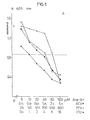
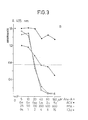
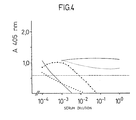
- Figs 1-4 show absorbance values plotted against the concentration of an antiviral agent, which values are measured with ELISA-sandwich technique on virus infected HL-cells incubated in the presence of an antiviral agent.
- Example 1 A patient material containing living HSV is mixed with a small amount of Eagle's tissue culture medium containing 2 % of calf serum, 100 IE penicillin/ ml and 100 ⁇ g of streptomycin/ml, after which the virus mixture is diluted 1:30 in this medium.
- Sterile plastic plates comprising 24 wells, each having a culture surface of 2.5 cm 2 and containing about 5 x 10 5 HL-cells/well were inoculated with 0.1 ml of virus dilutions as above.
- virus dilutions only containing a small amount of virus are first cultured for 3 days on HL-cells, on which virus replicates,after which virus isolate from one cell passage is taken out, is diluted 1:30 and 0.1 ml of the dilutions is added to the plates as indicated above.
- the cells are then incubated at a temperature of 32-37 0 C, with addition of different antiviral agents, and without any addition of antiviral agent to obtain reference values.
- Each antiviral agent is added in a dilution series comprising six different concentrations (C 1 -C 6 ), some of which correspond to desired serum concentrations at treatment of patients.
- concentrations C 1 -C 6
- table 1 it is indicated which antiviral agents and which concentrations thereof are Used.
- the effect of the antiviral agents is then evaluated by measurement with ELISA sandwich technique as described below. However, the cells are treated in the following way before this measurement.
- the supernatant is sucked off and in order to achieve cell disrupture 800 ⁇ l of distilled water are added to the cells on the plates.
- the plates are frozen at -20°C and after some time sufficient for formation of ice crystals (about 15 min) the plates are thawed to room temperature for measurement of virus antigen. If suitable, the plates can be preserved in a frozen state for a long time before they are thawed in order to carry out the measurement of virus antigen.
- 200 ⁇ l of NaCl of 4.5 % are added to the cells in order to obtain an isotonic solution.
- the amount of virus antigen formed is thereafter determined as follows. Guinea-pig-anti-HSV-serum is diluted in 0.1-M sodium carbonate buffer. 0.1 ml of the serum dilution is filled per well in microplates M 29 AR, Dynatech, Switzerland) which have been washed three times with NaCl-solution of 0.9 % containing 0.05 % of Tween 20, after which the plates are incubated for 16 hours at room temperature. The plates can be preserved as sealed with their contents at +4°C up to 2-3 months. The optimal antibody concentration has been determined by antibody titration with the respective antigen and control antigen.
- 0.1 ml of the cell material obtained above or a known virus antigen is filled in plates treated with antibody and is incubated for 4 hours at +4 0 C. After washing with the washing solution indicated above 0.1 ml of rabbit-anti-HSV is added and the plates are incubated for 2 hours at +37°C. The plates are washed and 0.1 ml of conjugate is added, after which they are incubated for 2 hours at +37 0 C.
- the conjugate consists of pig--anti-rabbit IgG conjugated with alkaline phosphatase (Orion Diagnostica, Helsinki, Finland) in a dilution of 1:100.
- Non-bonded conjugate is washed off before 100 ⁇ l of the substrate p-nitrophenylphosphate (1 mg/ml, Sigma, St Louis, MO, USA) are added.
- the substrate p-nitrophenylphosphate (1 mg/ml, Sigma, St Louis, MO, USA)
- pH 9.8 containing 0.5 x 10 -3 M MgCl 2 is used and for dilution of antisera and conjugate phosphate buffer (PBS), pH 7.3-7.4 with 0.5 % of Tween 20, 0.5 % of BSA (bovine serum albumin) and 0.02 % of NaN 3 is used.
- PBS antisera and conjugate phosphate buffer
- BSA bovine serum albumin
- 0.02 % of NaN 3 is used.
- the reaction is stopped after 20-60 min. with 0.025 ml of 5-M NaOH.
- Example 2 HL-cells infected with HSV-1 were incubated in the same way as in example 1 in the presence of Ara-A and IDU in the concentrations indicated in table 1 for 3 days. Reference culture without addition of anti- viral agent was also carried out. The virus antigen in the supernatant (---) and on cells disrupted with distilled water ( ⁇ ) was thereafter measured in the same way as in example 1, and the results are found in table 3 and Fig. 2.
- Fig. 2 It is apparent from Fig. 2 that the cells have a very high HSV-antigen content as compared with the supernatant and that 50 % of inhibition of antigen formation in the cells are achieved both with IDU and ARA-A in clinically relevant concentrations.
- Example 3 A virus isolate from an eye IDU-treated without result was tested in the same way as_in example 1, the antiviral agents indicated in table 1 being used in the concentrations stated therein.
- adsorbance values were measured (table 4). These values are given in Fig. 4, from which is apparent that the virus isolate has resistance to IDU and ACV and partial resistance to IDU.
- Example 4 In order to find out the best way of cell disrupture, which was carried out before the amount of virus antigen formed was determined, HSV-infected HL-cells were analyzed with ELISA sandwich techique in analogy with example 1, the measurements being carried out on disrupted cells, which had been scraped off, i.e. cell scrap; mechanically homogenized cell scrap; cell scrap homogenized by addition of 0.5 % of Triton X; and after pipetting; after cell disrupture with distilled water according to example 1, and also after freeze-thawing once in the culture medium, which also causes cell disrupture but less effectively.
- the sensitivity of a virus to different antiviral agents can be graduated by means of the method of the invention. Possibly created resistant virus mutants can also be discovered.
- the method of the invention is much quicker and more sensitive than a conventional culture method and is based on disrupture of infected cells and establishing small amounts of virus antigen.
- the invention has been described especially with reference to the virus of the herpes group but the same technique can in principle be used for most viruses. However, one condition is that virus can replicate. This may be an advantage in many situations of treatment, as virus antigen and virus nucleic acid, respectively, can occur in tissue without virus actively replicating (latent virus, killed mature virus).
- the amount of the testing material and the virus concentration decide in each individual case how fast the test can be finished and how many antiviral substances can be judged. If the test material is very scarce one cell passage can increase the amount of virus, but the method will then take a corresponding longer time. The same also applies to conventional technique.
- the cell disrupture treatment of the invention means that virus antigen can be proved very early and in a relatively simple way.
- the results can be ready after 1-4 days.
- the corresponding determination takes at least 7-14 days depending on virus type with the conventional technique described above.
- one advantage is that the invention provides a screening method for virus sensitivity with a comparison of multiple antiviral substances and cell disrupture in combination with immunological determination of antigen not previously described in literature.
- kits consisting of plastic plates for cell culture, plastic balls or, alternatively, discs with suitable concentrations of antiviral agents, reagents for ELISA-determination of the respective virus antigen and reagents for cell treatment can preferably be used.
- the present determination of virus sensitivity is especially intended to be used when an antiviral treatment is given.
- An antiviral preparation can be chosen before treatment, during the treatment the effect can be studied as well as the reason for a non-occurring effect be traced, respectively, and guidance can also be obtained for exchange of preparation.
- the development is probably to be compared with resistance determination of bacteria, a technique that has become guiding for the choice of antibiotics.
- sensitivity determination of virus is more complicated as alive cells are needed for replication.
- Example 5 The following test was carried out in analogy with the method according to Example 1 using the same cells and reagent, if nothing else is indicated.
- Sterile plastic plates (Linbro, Flow Labs, Hamden, Conn., USA) with 24 wells and 2-3 x 10 s HL-cells per 2.5-cm 2 well were used in the VSA-test.
- the wells were incubated with 0.1 ml of virus dilutions for 30 min.
- the cells double sample
- the dilutions were incubated with virus inoculum for 1 h at 37°C before addition of the cells.
- the cells were disrupted in analogy with Example 1 after 1-3 days and the content of virus antigen was decided by means of the ELISA sandwich technique described in this example.
- the concentrations of anti- viral substances which gave 50 % of inhibition (IC 50 ) after correction for virus inoculum were calculated.
- the cells incubated with merely antiviral agents or serum gave absorbance values lower than 0.06 at 405 nm.
- the ELISA-sandwich test was carried out on microplates (M29AR, Dynatech, Switzerland) coated with monkey anti-CMV IgG (prepared by immunization with late CMV-antigens from infected MRC-5-cells (human fibroblasts from Medical Research Council, London)).
- the total antigen amount from 2-4 wells on the plates used in the VSA-test was added to each of the wells on these plates, after which the latter wells were incubated for 2 h at 37°C or 16 h at 4°C.
- the plates were washed twice and rabbit-anti-CMV DNA polymerase in 100 pl was added to them, after which they were incubated for 2 h at 37 0 C.
- CMV-antigen was thereafter detected in the same way as in Example 1 by incubation (2 h, 37°C) with the same conjugate (0.1 ml pig-anti-rabbit IgG conjugated with alkaline phosphatase); inhibition of the reaction; and measurement of the absorbance at 405 nm (A405).
- the level for IC 50 is designated "----".
- computerized 3rd degree curves obtained from Table 6 are illustrated which show that virus antigen production was inhibited by human immunosera and monkey serum but not by rabbit anti-CMV DNA polymerase or human non-immuno serum. In this way the dilutions giving IC 50 are 1:3125, 1:8925, 1:139, ⁇ 1:1 and ⁇ 1:1, resp., for the antiviral agents 1-5.
Landscapes
- Health & Medical Sciences (AREA)
- Life Sciences & Earth Sciences (AREA)
- Engineering & Computer Science (AREA)
- Chemical & Material Sciences (AREA)
- Immunology (AREA)
- Biomedical Technology (AREA)
- Molecular Biology (AREA)
- Hematology (AREA)
- Urology & Nephrology (AREA)
- Virology (AREA)
- Biochemistry (AREA)
- Microbiology (AREA)
- Biotechnology (AREA)
- General Health & Medical Sciences (AREA)
- Physics & Mathematics (AREA)
- Analytical Chemistry (AREA)
- Organic Chemistry (AREA)
- Medicinal Chemistry (AREA)
- Bioinformatics & Cheminformatics (AREA)
- Cell Biology (AREA)
- Tropical Medicine & Parasitology (AREA)
- General Physics & Mathematics (AREA)
- Pathology (AREA)
- Zoology (AREA)
- Wood Science & Technology (AREA)
- Proteomics, Peptides & Aminoacids (AREA)
- Food Science & Technology (AREA)
- Biophysics (AREA)
- Toxicology (AREA)
- General Engineering & Computer Science (AREA)
- Genetics & Genomics (AREA)
- Medicines Containing Antibodies Or Antigens For Use As Internal Diagnostic Agents (AREA)
- Measuring Or Testing Involving Enzymes Or Micro-Organisms (AREA)
- Micro-Organisms Or Cultivation Processes Thereof (AREA)
Applications Claiming Priority (2)
| Application Number | Priority Date | Filing Date | Title |
|---|---|---|---|
| SE8203909A SE8203909L (sv) | 1982-06-23 | 1982-06-23 | Bestemning av virus kenslighet for antivirala medel |
| SE8203909 | 1982-06-23 |
Publications (2)
| Publication Number | Publication Date |
|---|---|
| EP0097633A1 true EP0097633A1 (de) | 1984-01-04 |
| EP0097633B1 EP0097633B1 (de) | 1986-05-28 |
Family
ID=20347166
Family Applications (1)
| Application Number | Title | Priority Date | Filing Date |
|---|---|---|---|
| EP19830850174 Expired EP0097633B1 (de) | 1982-06-23 | 1983-06-21 | Bestimmung der Empfindlichkeit von Viren gegen antivirale Wirkstoffe |
Country Status (3)
| Country | Link |
|---|---|
| EP (1) | EP0097633B1 (de) |
| DE (1) | DE3363728D1 (de) |
| SE (1) | SE8203909L (de) |
Cited By (4)
| Publication number | Priority date | Publication date | Assignee | Title |
|---|---|---|---|---|
| US4581331A (en) * | 1983-09-29 | 1986-04-08 | E. I. Du Pont De Nemours And Company | Method for the rapid detection of virus and viral antigens |
| WO1986005593A1 (en) * | 1985-03-18 | 1986-09-25 | The Royal Free Hospital School Of Medicine | Improvements relating to the detection of viruses and antibodies |
| WO1991002809A1 (en) * | 1989-08-24 | 1991-03-07 | Vaccine Research Foundation Limited | Method for in vivo testing of immunity in non-human subjects |
| WO2002006513A3 (en) * | 2000-07-13 | 2003-01-23 | Upjohn Co | A method for treating herpes viruses |
Citations (1)
| Publication number | Priority date | Publication date | Assignee | Title |
|---|---|---|---|---|
| US4297104A (en) * | 1978-02-28 | 1981-10-27 | Centre National De Transfusion Sanguine | Method of detecting or identifying virus antigens, erythrocyte or cell antigens or antibodies in a biological medium |
-
1982
- 1982-06-23 SE SE8203909A patent/SE8203909L/ not_active Application Discontinuation
-
1983
- 1983-06-21 DE DE8383850174T patent/DE3363728D1/de not_active Expired
- 1983-06-21 EP EP19830850174 patent/EP0097633B1/de not_active Expired
Patent Citations (1)
| Publication number | Priority date | Publication date | Assignee | Title |
|---|---|---|---|---|
| US4297104A (en) * | 1978-02-28 | 1981-10-27 | Centre National De Transfusion Sanguine | Method of detecting or identifying virus antigens, erythrocyte or cell antigens or antibodies in a biological medium |
Cited By (6)
| Publication number | Priority date | Publication date | Assignee | Title |
|---|---|---|---|---|
| US4581331A (en) * | 1983-09-29 | 1986-04-08 | E. I. Du Pont De Nemours And Company | Method for the rapid detection of virus and viral antigens |
| WO1986005593A1 (en) * | 1985-03-18 | 1986-09-25 | The Royal Free Hospital School Of Medicine | Improvements relating to the detection of viruses and antibodies |
| US4937199A (en) * | 1985-03-18 | 1990-06-26 | The Royal Free Hospital School Of Medicine | Detection of viruses and antibodies |
| WO1991002809A1 (en) * | 1989-08-24 | 1991-03-07 | Vaccine Research Foundation Limited | Method for in vivo testing of immunity in non-human subjects |
| WO2002006513A3 (en) * | 2000-07-13 | 2003-01-23 | Upjohn Co | A method for treating herpes viruses |
| US6682892B2 (en) | 2000-07-13 | 2004-01-27 | Pharmacia & Upjohn Company | Method for treating herpes viruses |
Also Published As
| Publication number | Publication date |
|---|---|
| SE8203909D0 (sv) | 1982-06-23 |
| DE3363728D1 (en) | 1986-07-03 |
| SE8203909L (sv) | 1983-12-24 |
| EP0097633B1 (de) | 1986-05-28 |
Similar Documents
| Publication | Publication Date | Title |
|---|---|---|
| Webster et al. | Cytomegalovirus infection and progression towards AIDS in haemophiliacs with human immunodeficiency virus infection | |
| Mortimer et al. | Transmission of serum parvovirus-like virus by clotting-factor concentrates | |
| US4535057A (en) | Immunoassay employing monoclonal herpes simplex antibody and biotin-avidin detection system | |
| O'callaghan et al. | Human antibody to influenza C virus: its age-related distribution and distinction from receptor analogs | |
| Dahl et al. | Antigen detection: the method of choice in comparison with virus isolation and serology for laboratory diagnosis of herpes zoster in human immunodeficiency virus-infected patients | |
| Vujcic et al. | Preparation and characterization of human HIV type 1 neutralizing reference sera | |
| Tamir et al. | Infectious Mononucleosis and Epstein Barr Virus in Childhood | |
| Wheelock et al. | Absence of circulating interferon in patients with infectious and serum hepatitis | |
| Land et al. | Rapid diagnosis of herpes simplex virus infections by enzyme-linked immunosorbent assay | |
| EP0260691A2 (de) | Immunotherapie für AIDS-Patienten | |
| CA2007733A1 (en) | Extraction composition, test kit and their use to extract or determine herpes simplex viral antigen | |
| Pronovost et al. | Sensitive chemiluminescent enzyme-linked immunosorbent assay for quantification of human immunoglobulin G and detection of herpes simplex virus | |
| Ahlfors et al. | Cytomegalovirus in breast milk of Swedish milk donors | |
| Langenberg et al. | Comparison of diploid fibroblast and rabbit kidney tissue cultures and a diploid fibroblast microtiter plate system for the isolation of herpes simplex virus | |
| EP0097633B1 (de) | Bestimmung der Empfindlichkeit von Viren gegen antivirale Wirkstoffe | |
| Gray et al. | Evaluation of a commercial latex agglutination test for detecting antibodies to cytomegalovirus in organ donors and transplant recipients | |
| Buller et al. | Use of a modified shell vial technique to quantitate cytomegalovirus viremia in a population of solid-organ transplant recipients | |
| Sarov et al. | Detection of virus-specific IgA antibodies in serum of kidney transplant patients with recurrent cytomegalovirus infection by enzymeimmuno and radioimmunoassay techniques | |
| Sarov et al. | Detection of specific IgA antibodies in serum of kidney transplant patients with recurrent cytomegalovirus infection | |
| Levy et al. | Determination of iga antibodies to human cytomegalovirus by enzyme‐linked immunosorbent assay (elisa) | |
| Visintine et al. | Leukocyte transforming agent (Epstein-Barr virus) in newborn infants and older individuals | |
| Kleemola et al. | Evaluation of an antigen-capture enzyme immunoassay for rapid diagnosis of Mycoplasma pneumoniae infection | |
| Settergren et al. | Detection of specific serum immunoglobulin M in nephropathia epidemica (Scandinavian epidemic nephropathy) by a biotin-avidin-amplified immunofluorescence method | |
| Helphingstine et al. | Antibodies detectable by counterimmunoelectrophoresis against Bacteroides antigens in serum of patients with inflammatory bowel disease | |
| Rose | Differences in the capacity of human serums to neutralize herpes simplex virus |
Legal Events
| Date | Code | Title | Description |
|---|---|---|---|
| PUAI | Public reference made under article 153(3) epc to a published international application that has entered the european phase |
Free format text: ORIGINAL CODE: 0009012 |
|
| AK | Designated contracting states |
Designated state(s): BE CH DE FR GB LI NL |
|
| 17P | Request for examination filed |
Effective date: 19840606 |
|
| GRAA | (expected) grant |
Free format text: ORIGINAL CODE: 0009210 |
|
| AK | Designated contracting states |
Kind code of ref document: B1 Designated state(s): BE CH DE FR GB LI NL |
|
| REF | Corresponds to: |
Ref document number: 3363728 Country of ref document: DE Date of ref document: 19860703 |
|
| ET | Fr: translation filed | ||
| PLBE | No opposition filed within time limit |
Free format text: ORIGINAL CODE: 0009261 |
|
| STAA | Information on the status of an ep patent application or granted ep patent |
Free format text: STATUS: NO OPPOSITION FILED WITHIN TIME LIMIT |
|
| 26N | No opposition filed | ||
| PGFP | Annual fee paid to national office [announced via postgrant information from national office to epo] |
Ref country code: NL Payment date: 19870630 Year of fee payment: 5 |
|
| PG25 | Lapsed in a contracting state [announced via postgrant information from national office to epo] |
Ref country code: GB Effective date: 19880621 |
|
| PG25 | Lapsed in a contracting state [announced via postgrant information from national office to epo] |
Ref country code: LI Effective date: 19880630 Ref country code: CH Effective date: 19880630 |
|
| BERE | Be: lapsed |
Owner name: SUNDQVIST VIVI-ANNE Effective date: 19880630 Owner name: HARMENBERG JOHAN Effective date: 19880630 Owner name: WAHREN BRITTA Effective date: 19880630 |
|
| PG25 | Lapsed in a contracting state [announced via postgrant information from national office to epo] |
Ref country code: NL Effective date: 19890101 |
|
| NLV4 | Nl: lapsed or anulled due to non-payment of the annual fee | ||
| GBPC | Gb: european patent ceased through non-payment of renewal fee | ||
| PG25 | Lapsed in a contracting state [announced via postgrant information from national office to epo] |
Ref country code: FR Free format text: LAPSE BECAUSE OF NON-PAYMENT OF DUE FEES Effective date: 19890228 |
|
| REG | Reference to a national code |
Ref country code: CH Ref legal event code: PL |
|
| PG25 | Lapsed in a contracting state [announced via postgrant information from national office to epo] |
Ref country code: DE Effective date: 19890301 |
|
| REG | Reference to a national code |
Ref country code: FR Ref legal event code: ST |
|
| PG25 | Lapsed in a contracting state [announced via postgrant information from national office to epo] |
Ref country code: BE Effective date: 19890630 |