EP0099122A2 - Compositions à base de pepstatine et d'un antagoniste des récepteurs d'histamine H2 ayant une activité anti-ulcére augmentée - Google Patents
Compositions à base de pepstatine et d'un antagoniste des récepteurs d'histamine H2 ayant une activité anti-ulcére augmentée Download PDFInfo
- Publication number
- EP0099122A2 EP0099122A2 EP83106847A EP83106847A EP0099122A2 EP 0099122 A2 EP0099122 A2 EP 0099122A2 EP 83106847 A EP83106847 A EP 83106847A EP 83106847 A EP83106847 A EP 83106847A EP 0099122 A2 EP0099122 A2 EP 0099122A2
- Authority
- EP
- European Patent Office
- Prior art keywords
- alkyl
- inclusive
- integer
- hydrogen
- pharmaceutically acceptable
- Prior art date
- Legal status (The legal status is an assumption and is not a legal conclusion. Google has not performed a legal analysis and makes no representation as to the accuracy of the status listed.)
- Granted
Links
Images

Classifications
-
- C—CHEMISTRY; METALLURGY
- C07—ORGANIC CHEMISTRY
- C07D—HETEROCYCLIC COMPOUNDS
- C07D207/00—Heterocyclic compounds containing five-membered rings not condensed with other rings, with one nitrogen atom as the only ring hetero atom
- C07D207/02—Heterocyclic compounds containing five-membered rings not condensed with other rings, with one nitrogen atom as the only ring hetero atom with only hydrogen or carbon atoms directly attached to the ring nitrogen atom
- C07D207/04—Heterocyclic compounds containing five-membered rings not condensed with other rings, with one nitrogen atom as the only ring hetero atom with only hydrogen or carbon atoms directly attached to the ring nitrogen atom having no double bonds between ring members or between ring members and non-ring members
- C07D207/08—Heterocyclic compounds containing five-membered rings not condensed with other rings, with one nitrogen atom as the only ring hetero atom with only hydrogen or carbon atoms directly attached to the ring nitrogen atom having no double bonds between ring members or between ring members and non-ring members with hydrocarbon radicals, substituted by hetero atoms, attached to ring carbon atoms
-
- A—HUMAN NECESSITIES
- A61—MEDICAL OR VETERINARY SCIENCE; HYGIENE
- A61K—PREPARATIONS FOR MEDICAL, DENTAL OR TOILETRY PURPOSES
- A61K38/00—Medicinal preparations containing peptides
- A61K38/04—Peptides having up to 20 amino acids in a fully defined sequence; Derivatives thereof
-
- A—HUMAN NECESSITIES
- A61—MEDICAL OR VETERINARY SCIENCE; HYGIENE
- A61K—PREPARATIONS FOR MEDICAL, DENTAL OR TOILETRY PURPOSES
- A61K45/00—Medicinal preparations containing active ingredients not provided for in groups A61K31/00 - A61K41/00
- A61K45/06—Mixtures of active ingredients without chemical characterisation, e.g. antiphlogistics and cardiaca
-
- A—HUMAN NECESSITIES
- A61—MEDICAL OR VETERINARY SCIENCE; HYGIENE
- A61P—SPECIFIC THERAPEUTIC ACTIVITY OF CHEMICAL COMPOUNDS OR MEDICINAL PREPARATIONS
- A61P1/00—Drugs for disorders of the alimentary tract or the digestive system
- A61P1/04—Drugs for disorders of the alimentary tract or the digestive system for ulcers, gastritis or reflux esophagitis, e.g. antacids, inhibitors of acid secretion, mucosal protectants
-
- A—HUMAN NECESSITIES
- A61—MEDICAL OR VETERINARY SCIENCE; HYGIENE
- A61P—SPECIFIC THERAPEUTIC ACTIVITY OF CHEMICAL COMPOUNDS OR MEDICINAL PREPARATIONS
- A61P43/00—Drugs for specific purposes, not provided for in groups A61P1/00-A61P41/00
-
- C—CHEMISTRY; METALLURGY
- C07—ORGANIC CHEMISTRY
- C07D—HETEROCYCLIC COMPOUNDS
- C07D209/00—Heterocyclic compounds containing five-membered rings, condensed with other rings, with one nitrogen atom as the only ring hetero atom
- C07D209/02—Heterocyclic compounds containing five-membered rings, condensed with other rings, with one nitrogen atom as the only ring hetero atom condensed with one carbocyclic ring
- C07D209/44—Iso-indoles; Hydrogenated iso-indoles
- C07D209/48—Iso-indoles; Hydrogenated iso-indoles with oxygen atoms in positions 1 and 3, e.g. phthalimide
-
- C—CHEMISTRY; METALLURGY
- C07—ORGANIC CHEMISTRY
- C07D—HETEROCYCLIC COMPOUNDS
- C07D211/00—Heterocyclic compounds containing hydrogenated pyridine rings, not condensed with other rings
- C07D211/04—Heterocyclic compounds containing hydrogenated pyridine rings, not condensed with other rings with only hydrogen or carbon atoms directly attached to the ring nitrogen atom
- C07D211/68—Heterocyclic compounds containing hydrogenated pyridine rings, not condensed with other rings with only hydrogen or carbon atoms directly attached to the ring nitrogen atom having one double bond between ring members or between a ring member and a non-ring member
- C07D211/70—Heterocyclic compounds containing hydrogenated pyridine rings, not condensed with other rings with only hydrogen or carbon atoms directly attached to the ring nitrogen atom having one double bond between ring members or between a ring member and a non-ring member with only hydrogen atoms, hydrocarbon or substituted hydrocarbon radicals, directly attached to ring carbon atoms
-
- C—CHEMISTRY; METALLURGY
- C07—ORGANIC CHEMISTRY
- C07D—HETEROCYCLIC COMPOUNDS
- C07D213/00—Heterocyclic compounds containing six-membered rings, not condensed with other rings, with one nitrogen atom as the only ring hetero atom and three or more double bonds between ring members or between ring members and non-ring members
- C07D213/02—Heterocyclic compounds containing six-membered rings, not condensed with other rings, with one nitrogen atom as the only ring hetero atom and three or more double bonds between ring members or between ring members and non-ring members having three double bonds between ring members or between ring members and non-ring members
- C07D213/04—Heterocyclic compounds containing six-membered rings, not condensed with other rings, with one nitrogen atom as the only ring hetero atom and three or more double bonds between ring members or between ring members and non-ring members having three double bonds between ring members or between ring members and non-ring members having no bond between the ring nitrogen atom and a non-ring member or having only hydrogen or carbon atoms directly attached to the ring nitrogen atom
- C07D213/60—Heterocyclic compounds containing six-membered rings, not condensed with other rings, with one nitrogen atom as the only ring hetero atom and three or more double bonds between ring members or between ring members and non-ring members having three double bonds between ring members or between ring members and non-ring members having no bond between the ring nitrogen atom and a non-ring member or having only hydrogen or carbon atoms directly attached to the ring nitrogen atom with hetero atoms or with carbon atoms having three bonds to hetero atoms with at the most one bond to halogen, e.g. ester or nitrile radicals, directly attached to ring carbon atoms
- C07D213/61—Halogen atoms or nitro radicals
-
- C—CHEMISTRY; METALLURGY
- C07—ORGANIC CHEMISTRY
- C07D—HETEROCYCLIC COMPOUNDS
- C07D213/00—Heterocyclic compounds containing six-membered rings, not condensed with other rings, with one nitrogen atom as the only ring hetero atom and three or more double bonds between ring members or between ring members and non-ring members
- C07D213/02—Heterocyclic compounds containing six-membered rings, not condensed with other rings, with one nitrogen atom as the only ring hetero atom and three or more double bonds between ring members or between ring members and non-ring members having three double bonds between ring members or between ring members and non-ring members
- C07D213/04—Heterocyclic compounds containing six-membered rings, not condensed with other rings, with one nitrogen atom as the only ring hetero atom and three or more double bonds between ring members or between ring members and non-ring members having three double bonds between ring members or between ring members and non-ring members having no bond between the ring nitrogen atom and a non-ring member or having only hydrogen or carbon atoms directly attached to the ring nitrogen atom
- C07D213/60—Heterocyclic compounds containing six-membered rings, not condensed with other rings, with one nitrogen atom as the only ring hetero atom and three or more double bonds between ring members or between ring members and non-ring members having three double bonds between ring members or between ring members and non-ring members having no bond between the ring nitrogen atom and a non-ring member or having only hydrogen or carbon atoms directly attached to the ring nitrogen atom with hetero atoms or with carbon atoms having three bonds to hetero atoms with at the most one bond to halogen, e.g. ester or nitrile radicals, directly attached to ring carbon atoms
- C07D213/62—Oxygen or sulfur atoms
- C07D213/63—One oxygen atom
- C07D213/64—One oxygen atom attached in position 2 or 6
-
- C—CHEMISTRY; METALLURGY
- C07—ORGANIC CHEMISTRY
- C07D—HETEROCYCLIC COMPOUNDS
- C07D295/00—Heterocyclic compounds containing polymethylene-imine rings with at least five ring members, 3-azabicyclo [3.2.2] nonane, piperazine, morpholine or thiomorpholine rings, having only hydrogen atoms directly attached to the ring carbon atoms
- C07D295/04—Heterocyclic compounds containing polymethylene-imine rings with at least five ring members, 3-azabicyclo [3.2.2] nonane, piperazine, morpholine or thiomorpholine rings, having only hydrogen atoms directly attached to the ring carbon atoms with substituted hydrocarbon radicals attached to ring nitrogen atoms
- C07D295/08—Heterocyclic compounds containing polymethylene-imine rings with at least five ring members, 3-azabicyclo [3.2.2] nonane, piperazine, morpholine or thiomorpholine rings, having only hydrogen atoms directly attached to the ring carbon atoms with substituted hydrocarbon radicals attached to ring nitrogen atoms substituted by singly bound oxygen or sulfur atoms
- C07D295/096—Heterocyclic compounds containing polymethylene-imine rings with at least five ring members, 3-azabicyclo [3.2.2] nonane, piperazine, morpholine or thiomorpholine rings, having only hydrogen atoms directly attached to the ring carbon atoms with substituted hydrocarbon radicals attached to ring nitrogen atoms substituted by singly bound oxygen or sulfur atoms with the ring nitrogen atoms and the oxygen or sulfur atoms separated by carbocyclic rings or by carbon chains interrupted by carbocyclic rings
-
- C—CHEMISTRY; METALLURGY
- C07—ORGANIC CHEMISTRY
- C07D—HETEROCYCLIC COMPOUNDS
- C07D307/00—Heterocyclic compounds containing five-membered rings having one oxygen atom as the only ring hetero atom
- C07D307/02—Heterocyclic compounds containing five-membered rings having one oxygen atom as the only ring hetero atom not condensed with other rings
- C07D307/34—Heterocyclic compounds containing five-membered rings having one oxygen atom as the only ring hetero atom not condensed with other rings having two or three double bonds between ring members or between ring members and non-ring members
- C07D307/38—Heterocyclic compounds containing five-membered rings having one oxygen atom as the only ring hetero atom not condensed with other rings having two or three double bonds between ring members or between ring members and non-ring members with substituted hydrocarbon radicals attached to ring carbon atoms
- C07D307/52—Radicals substituted by nitrogen atoms not forming part of a nitro radical
-
- C—CHEMISTRY; METALLURGY
- C07—ORGANIC CHEMISTRY
- C07D—HETEROCYCLIC COMPOUNDS
- C07D333/00—Heterocyclic compounds containing five-membered rings having one sulfur atom as the only ring hetero atom
- C07D333/02—Heterocyclic compounds containing five-membered rings having one sulfur atom as the only ring hetero atom not condensed with other rings
- C07D333/04—Heterocyclic compounds containing five-membered rings having one sulfur atom as the only ring hetero atom not condensed with other rings not substituted on the ring sulphur atom
- C07D333/06—Heterocyclic compounds containing five-membered rings having one sulfur atom as the only ring hetero atom not condensed with other rings not substituted on the ring sulphur atom with only hydrogen atoms, hydrocarbon or substituted hydrocarbon radicals, directly attached to the ring carbon atoms
- C07D333/14—Radicals substituted by singly bound hetero atoms other than halogen
- C07D333/20—Radicals substituted by singly bound hetero atoms other than halogen by nitrogen atoms
-
- C—CHEMISTRY; METALLURGY
- C07—ORGANIC CHEMISTRY
- C07D—HETEROCYCLIC COMPOUNDS
- C07D333/00—Heterocyclic compounds containing five-membered rings having one sulfur atom as the only ring hetero atom
- C07D333/02—Heterocyclic compounds containing five-membered rings having one sulfur atom as the only ring hetero atom not condensed with other rings
- C07D333/04—Heterocyclic compounds containing five-membered rings having one sulfur atom as the only ring hetero atom not condensed with other rings not substituted on the ring sulphur atom
- C07D333/26—Heterocyclic compounds containing five-membered rings having one sulfur atom as the only ring hetero atom not condensed with other rings not substituted on the ring sulphur atom with hetero atoms or with carbon atoms having three bonds to hetero atoms with at the most one bond to halogen, e.g. ester or nitrile radicals, directly attached to ring carbon atoms
- C07D333/30—Hetero atoms other than halogen
- C07D333/32—Oxygen atoms
Definitions
- the concomitant administration of the pepsin-complexing agent, pepstatin, and a histamin H 2 -receptor:antagonist of the formula I: wherein A, m, Z, n, R 1 and R 2 are as defined below, provides enhanced antiulcer activity, reduces the amount of the compound of Formula I necessary for effective treatment and thereby reduces the side effect liability of the compound of Formula I.
- This invention relates to pharmaceutical compositionscontaining pepstatin and at least one compound of Formula I for treating peptic ulcers in warm-blooded animals.
- gastric acid secretion is mediated, at least in part, by histamin H 2 -receptors located on parietal cells in the gastric mucosa and the gastric acid output induced by all secretagogues could be antagonized by specific antagonists of these receptors IBlack, J. W. et al., Nature, 236, 385-390 (1972); Brimblecombe, R. W. et al., J. Int. Med. Res., 3, 86-92 ( 197 5)J.
- pepsin The role of the proteolytic enzyme, pepsin, in the etiology of ulceration is not completely understood. Pepsin has been shown to play a major role in the development of experimentally induced ulcers in animals, but this may be due to lesion enlargement by means of pepsin digestion of necrotic tissue rather than by causing the initial damage. It is also possible that pepsin is entirely responsible for the erosions and that the acid produces pain and retards healing.
- This invention relates to a pharmaceutical composition
- a pharmaceutical composition comprising a mixture of the pepsin-inhibiting agent, pepstatin, and at least one histamine H 2 -receptor antagonist of the formula wherein R 1 and R 2 each are independently hydrogen or (lower)-alkyl, and, when R 1 is hydrogen, R 2 also may be allyl, propargyl, cyclo(lower)alkyl(lower)alkyl, cyclo(lower)alkyl, cyano(lower)-alkyl, 2-fluoroethyl, 2,2,2-trifluoroethyl, hydroxy, 2,3-dihydroxypropyl, in which p is an integer of from 1 to 6 inclusive, q is an integer of from 1 to 6 inclusive, R 3 and R 4 each are independently hydrogen, (lower)alkyl, hydroxy, (lower)alkoxy or halogen, and, when R3 is hydrogen, R4 also may be trifluoromethyl, or R 3
- the method of treating peptic ulcers in a warm-blooded animal in need of such treatment comprises concomitantly administering to said animal a peptic activity-inhibiting amount of pepstatin and an effective antiulcerogenic amount of at least one compound of Formula I, or a pharmaceutically acceptable acid addition salt, hydrate or solvate thereof.
- the improvement in the treatment of peptic ulcers in a warm-blooded animal by the administration to said animal of an effective antiulcerogenic amount of at least one compound of Formula I, or a pharmaceutically acceptable acid addition salt, hydrate or solvate thereof comprises reducing the amount of the compound of Formula I necessary for effective treatment by concomitantly administering to said animal a peptic activity-inhibiting amount of pepstatin.
- the compounds of Formula I are relatively nontoxic substances, as demonstrated by pharmacological studies in animals of some of the compounds. These studies showed a toxicity profile substantially the same as that of the commercial H 2 - antagonist cimetidine. Although widespread human usage-of cimetidine has demonstrated it to be a relatively safe drug with a low incidence of side-effects, it would, of course, be desirable to even further reduce the side-effect liability of such a drug.
- the compounds of Formula I have been shown by various animal studies to be from about equipotent to about 150 times as potent as cimetidine as inhibitors of gastric acid secretion, depending on the animal model and route of administration, with the preferred compounds of Examples 1 and 9 being about 20-25 times more potent than cimetidine by the oral route.
- the oral dosage of the compounds of Examples 1 and 9 would be about 1/20 to 1/25 that of cimetidine, thus reducing the expected incidence of side effects.
- the usual oral dosage of cimetidine is 300 mg, given four times a day, while the usual dosage of the compounds of Examples 1 and 9 is about 12-15 mg, given four times a day.
- Pepstatin has also been shown by pharmacological studies in animals to be a relatively nontoxic substance; its LD 50 exceeded 3000 mg/kg in all animal species studied ISvendsen, L. B. et al., Scand. J. Gastroent., 11, 459-463 (1976)]. It is essentially unabsorbed upon oral administration; no side effects were observed in human patients with ulcer dyspepsia receiving daily oral doses of 700 mg of pepstatin for up to three months [Svendsen, L. B. et al. (1976) supra]. Pepstatin does not inhibit the production of pepsin but inhibits peptic activity by forming a 1:1 pepsin-pepstatin complex which is devoid of proteolytic activity.
- pepstatin inhibits gastric peptic activity, but has no effect on the gastric acidity [Svendsen, L. B. et al., Scan. J. Gastroent., 11, 459-463 (1976)].
- the histamine H Z -receptor antagonist cimetidine has been shown to antagonize both basal and stimulated gastric acid secretion in normal volunteers [Burland, W. L. et al., Brit. J. Clin. Pharmacol., 2, 481-486 (1975)] and in patients with duodenal ulcer [Longstreth, G. F. et al., New England J.
- the stomachs were removed from the animals, cut along the greater curvature, opened, rinsed with saline and pinned out flat in a standard position for macroscopic examination and scoring of erosions.
- the stomachs were photographed with a Polaroid® Close Up camera (Polaroid Corporation) and scoring was determined from the photographs. For scoring purposes, only those erosions with a minimum length of 1 mm were considered.
- the severity of gastric ulceration was defined for each animal as the sum of the maximum continuous lengths (in mm) of the erosions satisfying the above criteria. Percent inhibition of lesion formation was defined as
- Example 1 The compound of Example 1 and ranitidine (synthesized by the Medicinal Chemistry Research Department of Bristol Laboratories, Division of.Bristol-Myers Company) were dissolved in one equivalent of HC1 and the pH adjusted to 5.5 with NaOH. A suspension of pepstatin (Banyu Pharmaceutical Co. Ltd.) in water was made by homogenizing the compound with a few drops of Tween-80® (Atlas Chemical Industries). Each of these compounds were administered orally by gavage in a volume of 2 mL/kg.
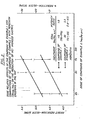
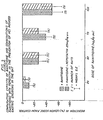
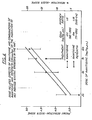
- Pretreatment of the rats with a 25, 50 or 75 mg/kg dose of the compound of Example 1 prior to instillation of the HCl decreased the formation of gastric erosions in a dose-related manner.
- Pretreatment of the rats with the compound of Example 1 plus 20 mg/kg of pepstatin significantly enhanced the inhibitory effect of the compound of Example 1 at doses of 50 and 75 mg/kg.
- An enhancement was also seen at 25 mg/kg, but the difference was not statistically significant (.05 ⁇ p ⁇ 10).
- Figure 1 shows, in graphic form, the percent of reduction in gastric erosions over that of the control rats (no pretreatment), which was obtained at each of the dosage levels of the compound of Example 1 alone and the compound of Example 1 plus pepstatin.
- the dosage of pepstatin be such that there is substantially complete inhibition of gastric pepsin activity for as long a period of the day as practical.
- pepstatin was administered to ulcer patients in 100 mg doses seven times a day (with meals, two hours after meals and at bedtime), pepsin activity was inhibited for 18 hours a day.
- pepstatin is administered in dosages of about 100 mg seven times a day. In another preferred embodiment of this invention, pepstatin is administered in dosages of about 175 mg four times a day. In a more preferred embodiment of this invention the pepstatin is administered in the form of floating minicapsules as described in U.S. Patent 4,101,650.
- the pepstatin floating minicapsules provide pepsin suppression for about 3-5 times as long as plain pepstatin and, in this form, may be administered, for example, four times a day in a dosage of floating minicapsules containing about 100 mg of pepstatin.
- the dosage of the compounds of Formula I to be administered concomitantly with pepstatin will depend not only on such factors as the weight of the patient, but also on the degree of gastric acid inhibition desired and the potency of the particular compound being utilized. The decision as to the particular dosage to be employed is within the discretion of the physician.
- cimetidine has an oral ED SO of approximately 3.3 pmoles/kg.
- the usual human adult oral dose of cimetidine is 300 mg, given four times a day.
- the usual human adult starting oral dosages of the compounds of Formula I (without pepstatin) are readily determined from their oral ED 50 in this same test.
- the oral ED50 of a particular compound of Formula I is 0.33 pmoles/kg
- the usual starting dosage would be approximately 30 mg, given four times a day, etc.
- the usual starting dose would be approximately 15 mg, given four times a day.
- Similar calculations may be made for parenteral dosages. These starting dosages (and the number of times administered per day) may, of course, be varied by titration of the dosage to the particular circumstances of the specific patient.
- the treatment of peptic ulcers in a warm-blooded animal in need of such treatment comprises concomitantly administering to said animal a peptic activity-inhibiting amount of pepstatin and an effective antiulcerogenic amount of at least one compound of Formula I, or a pharmaceutically acceptable acid addition salt, hydrate or solvate thereof.
- the usual dosage of the preferred compounds of Formula I is from about 2 to about 100 mg (and most preferably from about 4 to about 50 mg), given three or four times (and most preferably four times) a day.
- the most preferred compound of Formula I (the compound of Example 1), the usual dosage is from about 2 to about 15 mg, and preferably from about 4 to about 10 mg.
- the preferred dosage of pepstatin in man is from about 100 mg when administered about seven times a day, to about 175 mg when administered about four times a day.
- the preferred dosage is that amount of minicapsules containing about 100 mg of pepstatin, administered about four times a day.
- the improvement in the treatment of peptic ulcers in a warm-blooded animal by administering to said animal an effective antiulcerogenic amount of at least one compound of Formula I or a pharmaceutically acceptable acid addition salt, hydrate or solvate thereof _ comprises reducing the amount of the compound of Formula I necessary for effective treatment by concomitantly administering a peptic activity-inhibiting amount of pepstatin.
- the preferred dosage of pepstatin and of pepstatin floating minicapsules in man is as described in the preceding paragraph.
- compositions useful in the treatment of peptic ulcers which comprises a peptic activity- - inhibiting amount of pepstatin and an effective antiulcerogenic amount of at least one compound of Formula I, or a pharmaceutically acceptable acid addition salt, hydrate or solvate thereof, and a pharmaceutically acceptable carrier.
- the composition contains from about 2 to about 100 mg (and most preferably from about 4 to about 50 mg) of one of the preferred compounds of Formula I and from about 100 to about 175 mg of pepstatin.
- the composition contains from about 2 to about 15 (and most preferably from about 4 to about 10) mg of the compound of Example 1, plus from about 100 to about 175 mg of pepstatin.
- the compositions according to the invention are in unitary dosage form.
- a pharmaceutically acceptable acid addition salt of a compound of Formula I means the mono-or di-salt with a nontoxic pharmaceutically acceptable organic or inorganic acid.
- Such acids are well known and include hydrochloric, hydrobromic, sulfuric, sulfamic, phosphoric, nitric, maleic, fumaric, succinic, oxalic, benzoic, methanesulfonic, ethanedisulfonic, benzenesulfonic, acetic, propionic, tartaric, citric, camphorsulfonic, levulinic and the like.
- the salts are made by methods known in the art.
- a wide variety of pharmaceutical forms may be employed for the administration of the compound of Formula I and pepstatin, or the pharmaceutical composition containing both entities.
- a solid carrier is used, the preparations maybe tableted, placed in a hard gelatin capsule in powder or pellet form, or in the form of a troche or lozenge.
- a liquid carrier is used, the preparations may be in the form of a soft gelatin capsule, syrup, emulsion, aqueous or non-aqueous suspension or, in the case of the compounds of Formula I, a sterile solution or suspension for injection.
- These pharmaceutical dosage forms are prepared by conventional techniques.
- the compounds of Formula I may be prepared by various alternative procedures, utilizing as a starting material a compound of the formula in which R 12 is a good leaving group such as halogen, phenoxy, substituted phenoxy, alkoxy or the like. Suitable leaving groups are well-known to those skilled in the art.
- R 12 is (lower)alkoxy, and especially methoxy and ethoxy.
- the compounds of Formula I may be prepared from a rcompound of Formula IV by various alternative reaction schemes, as shown below in Reaction Schemes 1 and 2.
- the reactions are conducted in an inert organic solvent; methanol is a convenient and readily available solvent.
- the reaction temperature is not critical. Most starting materials are quite reactive and the reaction preferably is conducted at a below room temperature, e.g. 0-10°C. With some less reactive compounds it is convenient to conduct the reaction at room temperature. Sometimes it is desirable to subsequently raise the temperature of the reaction mixture (e.g. to 50-60°C) to complete the reaction.
- x is a conventional leaving group such as fluoro, chloro, bromo, iodo, -0 3 S R 13 in which R 13 is (lower)alkyl [e.g. methanesulfonate], aryl or substituted aryl [e.g. benzenesulfohate, p-bromobenzenesulfonate or p-toluenesulfonate], -0 3 SF, acetoxy or 2,4-dinitrophenoxy.
- R 13 is (lower)alkyl [e.g. methanesulfonate], aryl or substituted aryl [e.g. benzenesulfohate, p-bromobenzenesulfonate or p-toluenesulfonate], -0 3 SF, acetoxy or 2,4-dinitrophenoxy.
- X is chloro.
- the reaction of the compound of Formula VIII with A(CH 2 ) m X may be conducted in any inert organic solvent such as alkanol, acetonitrile, dimethylformamide, dimethylsulfoxide, acetone or the like.
- the reaction is conducted in an alkanol such as methanol, ethanol or isopropanol.
- the reaction temperature is not critical; the reaction may be conducted at temperatures of from about 0° to about 200°C. At low temperatures the reaction is slow, while high temperatures normally lead to less pure products due to decomposition and the formation of side-products.
- the reaction is conducted at room temperature.
- the reaction of the compound of Formula VIII with A(CH 2 ) m X to produce the compound of Formula I preferably is conducted in the presence of a base, which facilitates the reaction by acting as an acid acceptor.
- Suitable bases include, for example, NaOH, KOH, LiOH, triethylamine, dimethylaniline, sodium ethoxide and the like.
- the compounds of Formula I have the structure
- the compounds of Formula I have the structure
- the compounds of Formula I have the structure
- the compounds of Formula I have the structure
- Histamine H 2 -receptor antagonists have been shown to be effective inhibitors of gastric secretion in animals, including man, Brimblecombe et al., J. Int. Med. Res., 3, 86 (1975). Clinical evaluation of the histamine H 2 -receptor antagonist cimetidine has shown it to be an effective therapeutic agent in the treatment of peptic ulcer disease, Gray et al., Lancet, 1, 8001 (1977).
- Two of the standard animal models for determining gastric antisecretory activity of histamine H 2 -antagonists are the Gastric Fistula Rat and the Heidenhain Pouch Dog. The ED 50 's for some of the compounds of Formula I in these two animal models are given in Tables 2 and 3, below.
- the animals are fasted but allowed water ad libitum for 20 hours before the testing procedure is to begin.
- the cannula is opened and the. stomach washed gently with 30-40 mL of warm saline or distilled water to remove any residual contents.
- the catheter is then screwed into the cannula in place of the plugging screw and the rat is placed in a clear plastic rectangular cage measuring 40 cm long, 15 cm wide and 13 cm high.
- the bottom of the cage has a slit approximately 1.5 cm wide and 25 cm long running down the center to accommodate the catheter which hangs through it. In this way the rat is not restricted and can move -freely about the cage during collection periods.
- the remainder of the assay is carried out as described by Ridley et al. [Research Comm. Chem. Path. Pharm., 17, 365 (1977)].
- Gastric secretions collected during the first hour after washing the stomach are discarded as they may be contaminated.
- the catheter is then removed from the cannula and replaced with the plugging screw. Water (2 mL/kg) is administered orally via gastric intubation and the animal is returned to the cage for 45 minutes.
- the plugging screw is removed and replaced with a catheter to which a small plastic vial has been attached to collect the gastric secretions.
- a two hour sample is collected (this represents the control secretion), the catheter removed and.replaced with the plugging screw.
- the test drug is now administered orally in a volume of 2 mL/kg via gastric intubation. Forty-five minutes later the plugging screw is again removed, replaced with the catheter attached to a small plastic vial and another 2 hour sample is collected.
- the secretions in the second sample are compared to those of the control sample in order to determine thee effects of the test drug.
- test compounds When test compounds are to be evaluated parenterally, the animal is injected ip or sc with the test compound vehicle in a volume of 2 mL/kg immediately after discarding the initial 60 minute collection. A two hour sample is collected (control secretion) and the animals are injected either ip or sc with the test compound in a volume of 2 mL/kg. An additional two hour sample is collected and its secretions are compared to those of the control period to determing drug effects.
- Titratable acidity is measured by titrating a one mL sample to pH 7.0 with 0.02N NaOH, using an Autoburet and an electrometric pH meter (Radiometer). Titratable acid output is calculated in microequivalents by multiplying the volume in milliliters by the acid concentration in milliequivalents per liter.
- Results are expressed as percent inhibition relative to control readings. Dose response curves are constructed and ED 50 values are calculated by regression analyses. At least three rats are used at each dosage level and a minimum of three dosage levels are utilized for determination of a dose response curve.
- Dogs Prior to surgery, hematology and blood chemistry profiles are obtained and an assessment made as to the general health of selected female dogs. Dogs are vaccinated with Tissue Vax 5 (DHLP - Pitman-Moore) and housed in general animal quarters for four weeks' observation so incipient diseases may become apparent. Dogs are fasted with water ad libitum 24 hours prior to surgery.
- Tissue Vax 5 DHLP - Pitman-Moore
- Anesthesia is induced with Sodium Pentothal (Abbott) 25-30 mg/kg iv. Subsequent anesthesia is maintained with methoxy- flurane (Pitman-Moore).
- a mid-line linea alba incision from xiphoid to umbilicus provides good exposure and ease of closure.
- the stomach is pulled up into the operative fields the greater curvature stretched out at multiple points and clamps placed along the selected line of incision.
- the pouch is made from the corpus of the stomach so that true parietal cell juice is obtained. About 30% of the corpus volume is resected.
- the cannula is made of light-weight, biologically-inert material such as nylon or Delrin with dimensions and attachments after DeVito and Harkins fJ. Appl.
- dogs Post operatively, dogs are medicated with antibiotics and an analgesic. They are allowed 2-3 months for recovery. Experiments are carried out in the following way: Dogs are fasted overnight ( ⁇ 18 hours) with water ad libitum prior to each experiment. The dogs are placed in a sling and a saphenous vein cannulated for drug administration. Histamine as the base (100 ⁇ g/kg/hr) and chlorpheniramine maleate (0.25 mg/kg/hr) are infused continuously (in a volume of 6 mL/hr) with a Harvard infusion pump.
- Results are expressed as percent inhibition relative to control readings. Dose response curves are constructed and ED 50 values are calculated by regression analyses. From 3 to 5 dogs are used at each dose level and a minimum of three dosage levels are utilized for determination of a dose response curve.
- (lower)-alkyl and “(lower)alkoxy” mean straight or branched chain alkyl or alkoxy groups containing from 1 to 6 carbon atoms. Preferably these groups contain from 1 to 4 carbon atoms and, most preferably, they contain 1 or 2 carbon atoms.
- cyclo(lower)alkyl as used herein and in the claims, means a cycloalkyl ring containing from 3 to 7 carbon atoms and preferably from 3 to 6 carbon atoms.
- Celite is a registered trademark of the Johns-Manville Products Corporation for diatomaceous earth.
- the product (4.20 g; 12.2 mmoles) was suspended in 40 mL of 95% aqueous ethanol and 6.11 mL (12.2 mmoles) of aqueous 2.0N HCl was added with stirring. The solution was filtered through Celite, cooled at 0° for 17 hours, and then filtered to give 4.33 g of the title compound as its hydrochloride salt, mp 254-257°.
- the product was placed on 40 g of silica gel (230-400 mesh) and chromatographed by flash chromatography using a gradient elution of methanol-acetonitrile. The appropriate fractions were evaporated, then combined in methanol, treated with charcoal, filtered and evaporated to near dryness. The solid was triturated with acetonitrile and filtered to give the title compound, mp 176-177.5°.
- Example 6 The general procedure of Example 6 was repeated except that the 2-[(5-dimethylaminomethyl,4 methyl-2-thienyl)methyl- thio]ethylamine utilized therein was replaced by an equimolar amount of 2-[(5-piperidinomethyl-4-methyl-2-thienyl)methylthio]-ethylamine Iprepared according to the procedure described in published United Kingdom Patent Application 2,063,875].
- the product (3.64 g; 9.6 mmoles) was suspended in 50 mL of ethanol and 4.8 mL of aqueous 2.ON HC1 was added with stirring. The mixture was filtered and the solid was recrystallized from aqueous ethanol to give the title compound as its hydrochloride salt, mp 150-157°.
- the product was further purified by dissolving in 30% aqueous ethanol then filtered through a pad of silica gel and carbon, evaporated and the solid recrystallized from aqueous ethanol to yield a colorless hydrochloride salt of the title compound, mp 257-259°.
- Example 9 The general procedure of Example 9 is repeated, except that the 3-(3-dimethylaminomethylphenoxy)propylamine utilized therein is replaced by an equimolar amount of
- Example 11 The general procedure of Example 11 was repeated, except that the methylamine utilized therein was replaced by 1.08 g (10.0 mmoles) of 3-aminomethylpyridine.
- the crude product was placed on 65 g of silica gel (230-400 mesh) and chromatographed by flash chromatography using a gradient elution of methanol-methylene chloride containing 1% NH 4 OH. The appropriate fractions were combined, evaporated and the solid residue recrystallized from methanol to give the title compound, mp 174-178.5°.
- Example 11 The general procedure of Example 11 was repeated, except that the methylamine utilized therein was replaced by 4.0 mL (48.7 mmoles) of propylamine.
- the crude product was placed on 60 g of silica gel (230-400 mesh) and chromatographed by flash chromatography using a gradient elution of methanol-methylene chloride. The appropriate fractions were combined and the solid residue recrystallized from methanol to yield the title compound, mp 158-160°.
- Example 12 The general procedure of Example 12 is repeated, except that the 3-aminomethylpyridine utilized therein is replaced by an excess molar amount of
- 3-Aminopropanol (12.84 g, 0.171 mole) was added to a suspension of 50% sodium hydride in mineral oil (7.96 g, 0.166 mole) in 180 mL of dry DMF and the mixture was warmed to 80-83°.
- a solution of 2-chloro-6-piperidinomethylpyridine (34.0 g, 0.161 mole) [prepared in Step A] in 180 mL of dry DMF was then added dropwise and when complete, the temperature was raised to 125-128° for 3 hours followed by 17 hours at ambient temperature.
- the precipitated salts were removed by filtration and the solvent stripped under vacuum.
- the oily residue was dissolved in methylene chloride, washed with water, dried and the solvent evaporated.
- Example 15 The general procedure of Example 15 was repeated, except that the piperidine utilized in Step A was replaced with an excess of anhydrous dimethylamine.
- the product (2.26 g, 7.43 mmoles) was suspended in 40 mL of 95% ethanol and 7.43 mL of aqueous 2.0N HC1 was added with stirring. After evaporating most of the solvent, the residue was triturated under isopropyl alcohol and recrystallized from aqueous ethanol to give the hydrochloride salt of the title compound, mp 230-234° (dec.).
- Example 17 The general procedure of Example 17, Step D, was repeated, except the N-(2-bromoethyl)phthalimide utilized therein was replaced with an equimolar amount of N-(3-bromopropyl)-phthalimide.
- the chromatographed product was recrystallized from isopropyl alcohol to give the title compound as its hydrobromide salt, mp 188-192°.
- Example 19 The general procedure of Example 19 was repeated except that the 2-[(5-dimethylaminomethyl-3-thienyl)methylthio]ethylamine utilized therein was replaced by an equimolar amount of 2-[(5-piperidinomethyl-3-thienyl)methylthio)ethylamine [prepared according to the procedure described in published European Patent Application 27,744].
- the crude solid was recrystallized from 2-methoxyethanol to give the title compound (1.27 g), mp 236-238°.
- Anal. Calc'd. for C 17 H 23 N 3 O 2 S 2 C, 55.86; H, 6.34; N, 11.50; S, 17.54. Found: C, 55.59; H, 6.23; N, 11.75; S, 17.62.
Landscapes
- Chemical & Material Sciences (AREA)
- Organic Chemistry (AREA)
- Health & Medical Sciences (AREA)
- Life Sciences & Earth Sciences (AREA)
- General Health & Medical Sciences (AREA)
- Veterinary Medicine (AREA)
- Public Health (AREA)
- Medicinal Chemistry (AREA)
- Pharmacology & Pharmacy (AREA)
- Animal Behavior & Ethology (AREA)
- Bioinformatics & Cheminformatics (AREA)
- Engineering & Computer Science (AREA)
- Nuclear Medicine, Radiotherapy & Molecular Imaging (AREA)
- Chemical Kinetics & Catalysis (AREA)
- Epidemiology (AREA)
- General Chemical & Material Sciences (AREA)
- Gastroenterology & Hepatology (AREA)
- Immunology (AREA)
- Proteomics, Peptides & Aminoacids (AREA)
- Medicines That Contain Protein Lipid Enzymes And Other Medicines (AREA)
- Pharmaceuticals Containing Other Organic And Inorganic Compounds (AREA)
- Acyclic And Carbocyclic Compounds In Medicinal Compositions (AREA)
- Furan Compounds (AREA)
- Pyridine Compounds (AREA)
- Pyrrole Compounds (AREA)
- Indole Compounds (AREA)
- Peptides Or Proteins (AREA)
- Heterocyclic Compounds Containing Sulfur Atoms (AREA)
- Hydrogenated Pyridines (AREA)
- Organic Low-Molecular-Weight Compounds And Preparation Thereof (AREA)
Priority Applications (1)
| Application Number | Priority Date | Filing Date | Title |
|---|---|---|---|
| AT83106847T ATE23017T1 (de) | 1982-07-12 | 1983-07-12 | Zusammensetzungen enthaltend pepstatin und einen histamin h2-rezeptor antagonist mit erhoehter anti-ulkus-wirkung. |
Applications Claiming Priority (2)
| Application Number | Priority Date | Filing Date | Title |
|---|---|---|---|
| US39727782A | 1982-07-12 | 1982-07-12 | |
| US397277 | 1982-07-12 |
Publications (3)
| Publication Number | Publication Date |
|---|---|
| EP0099122A2 true EP0099122A2 (fr) | 1984-01-25 |
| EP0099122A3 EP0099122A3 (en) | 1984-02-22 |
| EP0099122B1 EP0099122B1 (fr) | 1986-10-22 |
Family
ID=23570544
Family Applications (1)
| Application Number | Title | Priority Date | Filing Date |
|---|---|---|---|
| EP83106847A Expired EP0099122B1 (fr) | 1982-07-12 | 1983-07-12 | Compositions à base de pepstatine et d'un antagoniste des récepteurs d'histamine H2 ayant une activité anti-ulcére augmentée |
Country Status (7)
| Country | Link |
|---|---|
| EP (1) | EP0099122B1 (fr) |
| JP (1) | JPS5951218A (fr) |
| AT (1) | ATE23017T1 (fr) |
| DE (1) | DE3367070D1 (fr) |
| FI (1) | FI832520A7 (fr) |
| GR (1) | GR77570B (fr) |
| MY (1) | MY100486A (fr) |
Cited By (6)
| Publication number | Priority date | Publication date | Assignee | Title |
|---|---|---|---|---|
| US4599346A (en) * | 1983-07-22 | 1986-07-08 | Ludwig Heumann & Co., Gmbh | Propan-2-ol derivatives, a process for their production and medicaments containing these compounds |
| EP0413343A3 (en) * | 1989-08-17 | 1992-04-22 | Kyowa Hakko Kogyo Co., Ltd. | Furan derivatives |
| WO1994001436A1 (fr) * | 1992-07-10 | 1994-01-20 | The Boots Company Plc | Derives de dioxcyclobutene comme antagonistes d'angiotensine ii |
| WO1998002413A1 (fr) * | 1996-07-17 | 1998-01-22 | American Home Products Corporation | Derives a substitution n-arylmethylamino de cyclobutene-3,4-diones |
| US5846999A (en) * | 1996-07-17 | 1998-12-08 | American Home Products Corporation | Substituted N-arylmethylamino derivatives of cyclobutene-3,4-diones |
| WO2002051396A1 (fr) * | 2000-12-26 | 2002-07-04 | Sankyo Company, Limited | Compositions pharmaceutiques contenant des derives de cyclobutene |
Families Citing this family (2)
| Publication number | Priority date | Publication date | Assignee | Title |
|---|---|---|---|---|
| WO1994020489A1 (fr) * | 1993-03-09 | 1994-09-15 | Sankyo Company, Limited | Derive de thienylobutenyle |
| CN103242210B (zh) * | 2012-02-09 | 2014-09-24 | 北京艾百诺科技有限公司 | 含有取代方酸的乙酸妙林酯及其应用 |
Family Cites Families (6)
| Publication number | Priority date | Publication date | Assignee | Title |
|---|---|---|---|---|
| US3840516A (en) * | 1969-06-13 | 1974-10-08 | Microbial Chem Res Found | Biologically active substance,pepstatin and production processes thereof |
| GB1563090A (en) * | 1975-07-31 | 1980-03-19 | Smith Kline French Lab | Cyclobutene-diones |
| DE2640420C2 (de) * | 1975-09-12 | 1985-01-10 | Sumitomo Chemical Co., Ltd., Osaka | Als Procidine bezeichnete Peptide, Verfahren zu ihrer Herstellung und diese Verbindungen enthaltende Mittel |
| US4101650A (en) * | 1977-04-06 | 1978-07-18 | Zaidan Hojin Biseibutsu Kagaku Kenkyu Kai | Pepstatin floating minicapsules |
| GR71929B (fr) * | 1979-11-13 | 1983-08-19 | Ici Ltd | |
| US4339439A (en) * | 1981-01-19 | 1982-07-13 | Bristol-Myers Company | Pharmaceutical methods and compositions |
-
1983
- 1983-07-11 FI FI832520A patent/FI832520A7/fi not_active Application Discontinuation
- 1983-07-12 JP JP58125607A patent/JPS5951218A/ja active Granted
- 1983-07-12 EP EP83106847A patent/EP0099122B1/fr not_active Expired
- 1983-07-12 DE DE8383106847T patent/DE3367070D1/de not_active Expired
- 1983-07-12 GR GR71919A patent/GR77570B/el unknown
- 1983-07-12 AT AT83106847T patent/ATE23017T1/de not_active IP Right Cessation
-
1987
- 1987-10-01 MY MYPI87002744A patent/MY100486A/en unknown
Cited By (9)
| Publication number | Priority date | Publication date | Assignee | Title |
|---|---|---|---|---|
| US4599346A (en) * | 1983-07-22 | 1986-07-08 | Ludwig Heumann & Co., Gmbh | Propan-2-ol derivatives, a process for their production and medicaments containing these compounds |
| EP0413343A3 (en) * | 1989-08-17 | 1992-04-22 | Kyowa Hakko Kogyo Co., Ltd. | Furan derivatives |
| WO1994001436A1 (fr) * | 1992-07-10 | 1994-01-20 | The Boots Company Plc | Derives de dioxcyclobutene comme antagonistes d'angiotensine ii |
| AU673183B2 (en) * | 1992-07-10 | 1996-10-31 | Boots Company Plc, The | Dioxcyclobutene derivatives as angiotensin II antagonists |
| US5627191A (en) * | 1992-07-10 | 1997-05-06 | The Boots Company Plc | Therapeutic agents |
| WO1998002413A1 (fr) * | 1996-07-17 | 1998-01-22 | American Home Products Corporation | Derives a substitution n-arylmethylamino de cyclobutene-3,4-diones |
| US5846999A (en) * | 1996-07-17 | 1998-12-08 | American Home Products Corporation | Substituted N-arylmethylamino derivatives of cyclobutene-3,4-diones |
| EP1151990A1 (fr) * | 1996-07-17 | 2001-11-07 | American Home Products Corporation | Dérivés à substitution N-arylméthylamino de cyclobutène-3,4-diones |
| WO2002051396A1 (fr) * | 2000-12-26 | 2002-07-04 | Sankyo Company, Limited | Compositions pharmaceutiques contenant des derives de cyclobutene |
Also Published As
| Publication number | Publication date |
|---|---|
| FI832520A0 (fi) | 1983-07-11 |
| FI832520L (fi) | 1984-01-13 |
| JPS5951218A (ja) | 1984-03-24 |
| JPH0530814B2 (fr) | 1993-05-11 |
| GR77570B (fr) | 1984-09-24 |
| EP0099122A3 (en) | 1984-02-22 |
| MY100486A (en) | 1990-10-15 |
| FI832520A7 (fi) | 1984-01-13 |
| DE3367070D1 (en) | 1986-11-27 |
| EP0099122B1 (fr) | 1986-10-22 |
| ATE23017T1 (de) | 1986-11-15 |
Similar Documents
| Publication | Publication Date | Title |
|---|---|---|
| KR880000968B1 (ko) | 1, 2-디아미노 시클로부텐-3, 4-디온 및 그의 제조방법 | |
| SU1400508A3 (ru) | Способ получени производных арилтиазолов | |
| EP0099122B1 (fr) | Compositions à base de pepstatine et d'un antagoniste des récepteurs d'histamine H2 ayant une activité anti-ulcére augmentée | |
| US4522943A (en) | Chemical compounds | |
| EP0099121B1 (fr) | Compositions pharmaceutiques | |
| US4526973A (en) | Chemical compounds | |
| US4503051A (en) | Substituted 3-cyclobutene-1,2-diones, pharmaceutical compositions thereof and methods of use | |
| US4395553A (en) | Chemical compounds | |
| US4539316A (en) | Pyridine derivatives of 1,2-diaminocyclobutene-3,4-diones | |
| KR880002706B1 (ko) | 설포닐 우레아의 제조방법 | |
| DE3875820T2 (de) | Aromatische heterozyklische karbonsaeureamidabkoemmlinge, verfahren zur herstellung und arzneimittel, die diese enthalten. | |
| US4528375A (en) | Substituted 3,4-diamino-1,2,5-thiadiazoles having histamine H2 -receptor antagonist activity | |
| US4546188A (en) | Substituted 1,2-diaminocyclobutene-3,4-diones | |
| US4386211A (en) | Anti-ulcer urea compounds | |
| US4788184A (en) | Substituted 3-cyclobutene-1,2-diones as anti-ulcer agents | |
| US4607105A (en) | 3-cyclobutene-1,2-dione intermediates | |
| US4507485A (en) | 3,4-Disubstituted-1,2,5-oxadiazoles having histamine H2 -receptor antagonist activity | |
| CA1216238A (fr) | Methodes et produits pharmacotherapie | |
| IE45144B1 (en) | Aminoalkyl esters of carbamimidothioic acid and compositions having immunosuppressant activity | |
| US4772704A (en) | 2,5-disubstituted-4(3H)-pyrimidones having histamine H2 -receptor antagonist activity | |
| EP0223512A2 (fr) | Dérivés de l'acide 2-pyridylacétique, leur procédé de préparation et leurs compositions pharmaceutiques | |
| US4578471A (en) | Substituted amino alkyl pyridyl ethanediimidamides | |
| GB2147899A (en) | Chemical intermediates derived from cyclobutene | |
| CS221527B2 (en) | Method of preparation of n-/1-methyl-2-pyrrolidinylmethyl/2,3-dimethoxy-5-methylsulphamoylbenzamide | |
| JPS61280486A (ja) | N−フエニル−4−フエニル−1−ピペラジンカルボキシアミジン類 |
Legal Events
| Date | Code | Title | Description |
|---|---|---|---|
| PUAI | Public reference made under article 153(3) epc to a published international application that has entered the european phase |
Free format text: ORIGINAL CODE: 0009012 |
|
| PUAL | Search report despatched |
Free format text: ORIGINAL CODE: 0009013 |
|
| AK | Designated contracting states |
Designated state(s): AT BE CH DE FR GB IT LI LU NL SE |
|
| AK | Designated contracting states |
Designated state(s): AT BE CH DE FR GB IT LI LU NL SE |
|
| 17P | Request for examination filed |
Effective date: 19840820 |
|
| GRAA | (expected) grant |
Free format text: ORIGINAL CODE: 0009210 |
|
| AK | Designated contracting states |
Kind code of ref document: B1 Designated state(s): AT BE CH DE FR GB IT LI LU NL SE |
|
| REF | Corresponds to: |
Ref document number: 23017 Country of ref document: AT Date of ref document: 19861115 Kind code of ref document: T |
|
| REF | Corresponds to: |
Ref document number: 3367070 Country of ref document: DE Date of ref document: 19861127 |
|
| ET | Fr: translation filed | ||
| ITF | It: translation for a ep patent filed | ||
| PLBE | No opposition filed within time limit |
Free format text: ORIGINAL CODE: 0009261 |
|
| STAA | Information on the status of an ep patent application or granted ep patent |
Free format text: STATUS: NO OPPOSITION FILED WITHIN TIME LIMIT |
|
| 26N | No opposition filed | ||
| ITTA | It: last paid annual fee | ||
| PGFP | Annual fee paid to national office [announced via postgrant information from national office to epo] |
Ref country code: GB Payment date: 19940704 Year of fee payment: 12 |
|
| PGFP | Annual fee paid to national office [announced via postgrant information from national office to epo] |
Ref country code: DE Payment date: 19940708 Year of fee payment: 12 |
|
| PGFP | Annual fee paid to national office [announced via postgrant information from national office to epo] |
Ref country code: FR Payment date: 19940711 Year of fee payment: 12 |
|
| PGFP | Annual fee paid to national office [announced via postgrant information from national office to epo] |
Ref country code: CH Payment date: 19940713 Year of fee payment: 12 |
|
| PGFP | Annual fee paid to national office [announced via postgrant information from national office to epo] |
Ref country code: AT Payment date: 19940714 Year of fee payment: 12 |
|
| PGFP | Annual fee paid to national office [announced via postgrant information from national office to epo] |
Ref country code: SE Payment date: 19940731 Year of fee payment: 12 Ref country code: NL Payment date: 19940731 Year of fee payment: 12 Ref country code: LU Payment date: 19940731 Year of fee payment: 12 |
|
| PGFP | Annual fee paid to national office [announced via postgrant information from national office to epo] |
Ref country code: BE Payment date: 19940912 Year of fee payment: 12 |
|
| EPTA | Lu: last paid annual fee | ||
| EAL | Se: european patent in force in sweden |
Ref document number: 83106847.3 |
|
| PG25 | Lapsed in a contracting state [announced via postgrant information from national office to epo] |
Ref country code: LU Free format text: LAPSE BECAUSE OF NON-PAYMENT OF DUE FEES Effective date: 19950712 Ref country code: GB Effective date: 19950712 Ref country code: AT Effective date: 19950712 |
|
| PG25 | Lapsed in a contracting state [announced via postgrant information from national office to epo] |
Ref country code: SE Effective date: 19950713 |
|
| PG25 | Lapsed in a contracting state [announced via postgrant information from national office to epo] |
Ref country code: LI Effective date: 19950731 Ref country code: CH Effective date: 19950731 Ref country code: BE Effective date: 19950731 |
|
| BERE | Be: lapsed |
Owner name: BRISTOL-MYERS CY Effective date: 19950731 |
|
| PG25 | Lapsed in a contracting state [announced via postgrant information from national office to epo] |
Ref country code: NL Effective date: 19960201 |
|
| GBPC | Gb: european patent ceased through non-payment of renewal fee |
Effective date: 19950712 |
|
| REG | Reference to a national code |
Ref country code: CH Ref legal event code: PL |
|
| NLV4 | Nl: lapsed or anulled due to non-payment of the annual fee |
Effective date: 19960201 |
|
| PG25 | Lapsed in a contracting state [announced via postgrant information from national office to epo] |
Ref country code: DE Effective date: 19960402 |
|
| EUG | Se: european patent has lapsed |
Ref document number: 83106847.3 |
|
| PG25 | Lapsed in a contracting state [announced via postgrant information from national office to epo] |
Ref country code: FR Effective date: 19960430 |
|
| REG | Reference to a national code |
Ref country code: FR Ref legal event code: ST |
|
| REG | Reference to a national code |
Ref country code: FR Ref legal event code: ST |
|
| REG | Reference to a national code |
Ref country code: FR Ref legal event code: ST |