EP0101267B1 - Ohne Sauerstoff vernetzbare Zusammensetzungen - Google Patents
Ohne Sauerstoff vernetzbare Zusammensetzungen Download PDFInfo
- Publication number
- EP0101267B1 EP0101267B1 EP83304534A EP83304534A EP0101267B1 EP 0101267 B1 EP0101267 B1 EP 0101267B1 EP 83304534 A EP83304534 A EP 83304534A EP 83304534 A EP83304534 A EP 83304534A EP 0101267 B1 EP0101267 B1 EP 0101267B1
- Authority
- EP
- European Patent Office
- Prior art keywords
- composition
- surfactant
- monomer
- anaerobically curable
- monomers
- Prior art date
- Legal status (The legal status is an assumption and is not a legal conclusion. Google has not performed a legal analysis and makes no representation as to the accuracy of the status listed.)
- Expired
Links
- 239000000203 mixture Substances 0.000 title claims description 98
- 239000000178 monomer Substances 0.000 claims description 85
- 239000004094 surface-active agent Substances 0.000 claims description 67
- XLYOFNOQVPJJNP-UHFFFAOYSA-N water Substances O XLYOFNOQVPJJNP-UHFFFAOYSA-N 0.000 claims description 24
- 238000000034 method Methods 0.000 claims description 18
- 230000008569 process Effects 0.000 claims description 14
- 239000000565 sealant Substances 0.000 claims description 13
- 125000000217 alkyl group Chemical group 0.000 claims description 11
- QVGXLLKOCUKJST-UHFFFAOYSA-N atomic oxygen Chemical compound [O] QVGXLLKOCUKJST-UHFFFAOYSA-N 0.000 claims description 11
- 229910052760 oxygen Inorganic materials 0.000 claims description 11
- 239000001301 oxygen Substances 0.000 claims description 11
- 239000003999 initiator Substances 0.000 claims description 10
- 125000004435 hydrogen atom Chemical group [H]* 0.000 claims description 9
- 125000004432 carbon atom Chemical group C* 0.000 claims description 7
- 229910052739 hydrogen Inorganic materials 0.000 claims description 7
- 239000001257 hydrogen Substances 0.000 claims description 7
- 238000007789 sealing Methods 0.000 claims description 7
- 150000003254 radicals Chemical class 0.000 claims description 6
- 239000000853 adhesive Substances 0.000 claims description 5
- 230000001070 adhesive effect Effects 0.000 claims description 5
- -1 methacrylate ester Chemical class 0.000 claims description 5
- 238000006116 polymerization reaction Methods 0.000 claims description 5
- 238000005406 washing Methods 0.000 claims description 5
- 239000012190 activator Substances 0.000 claims description 4
- 239000007795 chemical reaction product Substances 0.000 claims description 4
- 238000002156 mixing Methods 0.000 claims description 3
- NINIDFKCEFEMDL-UHFFFAOYSA-N Sulfur Chemical compound [S] NINIDFKCEFEMDL-UHFFFAOYSA-N 0.000 claims description 2
- 239000007859 condensation product Substances 0.000 claims description 2
- 229910052736 halogen Inorganic materials 0.000 claims description 2
- 150000002367 halogens Chemical group 0.000 claims description 2
- 150000002429 hydrazines Chemical class 0.000 claims description 2
- 125000002887 hydroxy group Chemical group [H]O* 0.000 claims description 2
- 125000002768 hydroxyalkyl group Chemical group 0.000 claims description 2
- IQPQWNKOIGAROB-UHFFFAOYSA-N isocyanate group Chemical group [N-]=C=O IQPQWNKOIGAROB-UHFFFAOYSA-N 0.000 claims description 2
- RBQRWNWVPQDTJJ-UHFFFAOYSA-N methacryloyloxyethyl isocyanate Chemical group CC(=C)C(=O)OCCN=C=O RBQRWNWVPQDTJJ-UHFFFAOYSA-N 0.000 claims description 2
- 229920001451 polypropylene glycol Polymers 0.000 claims description 2
- 229910052717 sulfur Inorganic materials 0.000 claims description 2
- 239000011593 sulfur Substances 0.000 claims description 2
- 125000000391 vinyl group Chemical group [H]C([*])=C([H])[H] 0.000 claims description 2
- 229920002554 vinyl polymer Polymers 0.000 claims description 2
- 125000003161 (C1-C6) alkylene group Chemical group 0.000 claims 1
- IGFHQQFPSIBGKE-UHFFFAOYSA-N 4-nonylphenol Polymers CCCCCCCCCC1=CC=C(O)C=C1 IGFHQQFPSIBGKE-UHFFFAOYSA-N 0.000 claims 1
- 239000012948 isocyanate Substances 0.000 claims 1
- 150000002513 isocyanates Chemical class 0.000 claims 1
- SNQQPOLDUKLAAF-UHFFFAOYSA-N nonylphenol Polymers CCCCCCCCCC1=CC=CC=C1O SNQQPOLDUKLAAF-UHFFFAOYSA-N 0.000 claims 1
- 150000003623 transition metal compounds Chemical class 0.000 claims 1
- 238000005470 impregnation Methods 0.000 description 10
- 229920005989 resin Polymers 0.000 description 9
- 239000011347 resin Substances 0.000 description 9
- 239000002904 solvent Substances 0.000 description 9
- 239000007788 liquid Substances 0.000 description 8
- 239000000463 material Substances 0.000 description 8
- NIXOWILDQLNWCW-UHFFFAOYSA-M Acrylate Chemical compound [O-]C(=O)C=C NIXOWILDQLNWCW-UHFFFAOYSA-M 0.000 description 7
- 150000001252 acrylic acid derivatives Chemical class 0.000 description 7
- 150000002148 esters Chemical class 0.000 description 7
- 229910052751 metal Inorganic materials 0.000 description 7
- 239000002184 metal Substances 0.000 description 7
- 230000008901 benefit Effects 0.000 description 6
- 238000000576 coating method Methods 0.000 description 6
- 229920000058 polyacrylate Polymers 0.000 description 6
- 239000011148 porous material Substances 0.000 description 6
- 239000010408 film Substances 0.000 description 5
- 238000010422 painting Methods 0.000 description 5
- 125000000864 peroxy group Chemical group O(O*)* 0.000 description 5
- 238000007747 plating Methods 0.000 description 5
- 239000011248 coating agent Substances 0.000 description 4
- 150000001875 compounds Chemical class 0.000 description 4
- 238000009472 formulation Methods 0.000 description 4
- 239000000243 solution Substances 0.000 description 4
- 238000004945 emulsification Methods 0.000 description 3
- 238000007654 immersion Methods 0.000 description 3
- 230000001976 improved effect Effects 0.000 description 3
- 239000004615 ingredient Substances 0.000 description 3
- 239000000126 substance Substances 0.000 description 3
- 238000012360 testing method Methods 0.000 description 3
- HCLJOFJIQIJXHS-UHFFFAOYSA-N 2-[2-[2-(2-prop-2-enoyloxyethoxy)ethoxy]ethoxy]ethyl prop-2-enoate Chemical compound C=CC(=O)OCCOCCOCCOCCOC(=O)C=C HCLJOFJIQIJXHS-UHFFFAOYSA-N 0.000 description 2
- 0 C*OC(N*OC(C(*)=C)=O)=O Chemical compound C*OC(N*OC(C(*)=C)=O)=O 0.000 description 2
- ZHNUHDYFZUAESO-UHFFFAOYSA-N Formamide Chemical compound NC=O ZHNUHDYFZUAESO-UHFFFAOYSA-N 0.000 description 2
- XEEYBQQBJWHFJM-UHFFFAOYSA-N Iron Chemical compound [Fe] XEEYBQQBJWHFJM-UHFFFAOYSA-N 0.000 description 2
- 238000013019 agitation Methods 0.000 description 2
- 239000007864 aqueous solution Substances 0.000 description 2
- 239000001045 blue dye Substances 0.000 description 2
- 238000005266 casting Methods 0.000 description 2
- 238000007598 dipping method Methods 0.000 description 2
- 150000002432 hydroperoxides Chemical class 0.000 description 2
- 238000010348 incorporation Methods 0.000 description 2
- 150000002739 metals Chemical class 0.000 description 2
- 150000002976 peresters Chemical class 0.000 description 2
- 150000002978 peroxides Chemical class 0.000 description 2
- 229920000642 polymer Polymers 0.000 description 2
- 239000003505 polymerization initiator Substances 0.000 description 2
- 229910052723 transition metal Inorganic materials 0.000 description 2
- 150000003624 transition metals Chemical class 0.000 description 2
- BEWCNXNIQCLWHP-UHFFFAOYSA-N 2-(tert-butylamino)ethyl 2-methylprop-2-enoate Chemical compound CC(=C)C(=O)OCCNC(C)(C)C BEWCNXNIQCLWHP-UHFFFAOYSA-N 0.000 description 1
- JFZBUNLOTDDXNY-UHFFFAOYSA-N 2-[2-(2-methylprop-2-enoyloxy)propoxy]propyl 2-methylprop-2-enoate Chemical compound CC(=C)C(=O)OCC(C)OCC(C)OC(=O)C(C)=C JFZBUNLOTDDXNY-UHFFFAOYSA-N 0.000 description 1
- HWSSEYVMGDIFMH-UHFFFAOYSA-N 2-[2-[2-(2-methylprop-2-enoyloxy)ethoxy]ethoxy]ethyl 2-methylprop-2-enoate Chemical compound CC(=C)C(=O)OCCOCCOCCOC(=O)C(C)=C HWSSEYVMGDIFMH-UHFFFAOYSA-N 0.000 description 1
- RIYDSTPQZDWTBD-UHFFFAOYSA-N 2-[2-[2-[2-(2-chloroprop-2-enoyloxy)ethoxy]ethoxy]ethoxy]ethyl 2-chloroprop-2-enoate Chemical compound ClC(=C)C(=O)OCCOCCOCCOCCOC(=O)C(Cl)=C RIYDSTPQZDWTBD-UHFFFAOYSA-N 0.000 description 1
- LTHJXDSHSVNJKG-UHFFFAOYSA-N 2-[2-[2-[2-(2-methylprop-2-enoyloxy)ethoxy]ethoxy]ethoxy]ethyl 2-methylprop-2-enoate Chemical compound CC(=C)C(=O)OCCOCCOCCOCCOC(=O)C(C)=C LTHJXDSHSVNJKG-UHFFFAOYSA-N 0.000 description 1
- GPOGMJLHWQHEGF-UHFFFAOYSA-N 2-chloroethyl 2-methylprop-2-enoate Chemical compound CC(=C)C(=O)OCCCl GPOGMJLHWQHEGF-UHFFFAOYSA-N 0.000 description 1
- AEPWOCLBLLCOGZ-UHFFFAOYSA-N 2-cyanoethyl prop-2-enoate Chemical compound C=CC(=O)OCCC#N AEPWOCLBLLCOGZ-UHFFFAOYSA-N 0.000 description 1
- OMIGHNLMNHATMP-UHFFFAOYSA-N 2-hydroxyethyl prop-2-enoate Chemical compound OCCOC(=O)C=C OMIGHNLMNHATMP-UHFFFAOYSA-N 0.000 description 1
- FRIBMENBGGCKPD-UHFFFAOYSA-N 3-(2,3-dimethoxyphenyl)prop-2-enal Chemical compound COC1=CC=CC(C=CC=O)=C1OC FRIBMENBGGCKPD-UHFFFAOYSA-N 0.000 description 1
- GNSFRPWPOGYVLO-UHFFFAOYSA-N 3-hydroxypropyl 2-methylprop-2-enoate Chemical compound CC(=C)C(=O)OCCCO GNSFRPWPOGYVLO-UHFFFAOYSA-N 0.000 description 1
- WNGDGLDJIWDQAB-UHFFFAOYSA-N 5-(2-methylprop-2-enoyloxy)pentyl 2-methylprop-2-enoate Chemical compound CC(=C)C(=O)OCCCCCOC(=O)C(C)=C WNGDGLDJIWDQAB-UHFFFAOYSA-N 0.000 description 1
- 229910001369 Brass Inorganic materials 0.000 description 1
- RYGMFSIKBFXOCR-UHFFFAOYSA-N Copper Chemical compound [Cu] RYGMFSIKBFXOCR-UHFFFAOYSA-N 0.000 description 1
- 239000004641 Diallyl-phthalate Substances 0.000 description 1
- MHAJPDPJQMAIIY-UHFFFAOYSA-N Hydrogen peroxide Chemical compound OO MHAJPDPJQMAIIY-UHFFFAOYSA-N 0.000 description 1
- FYYHWMGAXLPEAU-UHFFFAOYSA-N Magnesium Chemical compound [Mg] FYYHWMGAXLPEAU-UHFFFAOYSA-N 0.000 description 1
- CERQOIWHTDAKMF-UHFFFAOYSA-N Methacrylic acid Chemical compound CC(=C)C(O)=O CERQOIWHTDAKMF-UHFFFAOYSA-N 0.000 description 1
- 239000002202 Polyethylene glycol Substances 0.000 description 1
- 239000004115 Sodium Silicate Substances 0.000 description 1
- 229910000831 Steel Inorganic materials 0.000 description 1
- LCXXNKZQVOXMEH-UHFFFAOYSA-N Tetrahydrofurfuryl methacrylate Chemical compound CC(=C)C(=O)OCC1CCCO1 LCXXNKZQVOXMEH-UHFFFAOYSA-N 0.000 description 1
- HCHKCACWOHOZIP-UHFFFAOYSA-N Zinc Chemical compound [Zn] HCHKCACWOHOZIP-UHFFFAOYSA-N 0.000 description 1
- 238000005299 abrasion Methods 0.000 description 1
- 239000000654 additive Substances 0.000 description 1
- 239000013466 adhesive and sealant Substances 0.000 description 1
- 238000005273 aeration Methods 0.000 description 1
- 230000001476 alcoholic effect Effects 0.000 description 1
- 229920000180 alkyd Polymers 0.000 description 1
- 125000005907 alkyl ester group Chemical group 0.000 description 1
- 125000002947 alkylene group Chemical group 0.000 description 1
- 239000000956 alloy Substances 0.000 description 1
- 229910045601 alloy Inorganic materials 0.000 description 1
- 239000004411 aluminium Substances 0.000 description 1
- 229910052782 aluminium Inorganic materials 0.000 description 1
- XAGFODPZIPBFFR-UHFFFAOYSA-N aluminium Chemical compound [Al] XAGFODPZIPBFFR-UHFFFAOYSA-N 0.000 description 1
- 125000000129 anionic group Chemical group 0.000 description 1
- 239000003945 anionic surfactant Substances 0.000 description 1
- 239000012298 atmosphere Substances 0.000 description 1
- QUDWYFHPNIMBFC-UHFFFAOYSA-N bis(prop-2-enyl) benzene-1,2-dicarboxylate Chemical compound C=CCOC(=O)C1=CC=CC=C1C(=O)OCC=C QUDWYFHPNIMBFC-UHFFFAOYSA-N 0.000 description 1
- QUZSUMLPWDHKCJ-UHFFFAOYSA-N bisphenol A dimethacrylate Chemical class C1=CC(OC(=O)C(=C)C)=CC=C1C(C)(C)C1=CC=C(OC(=O)C(C)=C)C=C1 QUZSUMLPWDHKCJ-UHFFFAOYSA-N 0.000 description 1
- 239000010951 brass Substances 0.000 description 1
- 239000000919 ceramic Substances 0.000 description 1
- 239000003638 chemical reducing agent Substances 0.000 description 1
- 238000004140 cleaning Methods 0.000 description 1
- 229910052802 copper Inorganic materials 0.000 description 1
- 239000010949 copper Substances 0.000 description 1
- VNZQQAVATKSIBR-UHFFFAOYSA-L copper;octanoate Chemical compound [Cu+2].CCCCCCCC([O-])=O.CCCCCCCC([O-])=O VNZQQAVATKSIBR-UHFFFAOYSA-L 0.000 description 1
- 238000005260 corrosion Methods 0.000 description 1
- 230000007797 corrosion Effects 0.000 description 1
- 229920006037 cross link polymer Polymers 0.000 description 1
- 125000004093 cyano group Chemical group *C#N 0.000 description 1
- OIWOHHBRDFKZNC-UHFFFAOYSA-N cyclohexyl 2-methylprop-2-enoate Chemical compound CC(=C)C(=O)OC1CCCCC1 OIWOHHBRDFKZNC-UHFFFAOYSA-N 0.000 description 1
- 238000000354 decomposition reaction Methods 0.000 description 1
- 230000003111 delayed effect Effects 0.000 description 1
- GPLRAVKSCUXZTP-UHFFFAOYSA-N diglycerol Chemical compound OCC(O)COCC(O)CO GPLRAVKSCUXZTP-UHFFFAOYSA-N 0.000 description 1
- 239000003085 diluting agent Substances 0.000 description 1
- 230000000694 effects Effects 0.000 description 1
- 230000001804 emulsifying effect Effects 0.000 description 1
- 239000000839 emulsion Substances 0.000 description 1
- 150000002118 epoxides Chemical class 0.000 description 1
- STVZJERGLQHEKB-UHFFFAOYSA-N ethylene glycol dimethacrylate Chemical compound CC(=C)C(=O)OCCOC(=O)C(C)=C STVZJERGLQHEKB-UHFFFAOYSA-N 0.000 description 1
- 230000002349 favourable effect Effects 0.000 description 1
- 239000007850 fluorescent dye Substances 0.000 description 1
- 239000007789 gas Substances 0.000 description 1
- 239000011521 glass Substances 0.000 description 1
- 125000001475 halogen functional group Chemical group 0.000 description 1
- 125000000623 heterocyclic group Chemical group 0.000 description 1
- 125000001867 hydroperoxy group Chemical group [*]OO[H] 0.000 description 1
- 230000001939 inductive effect Effects 0.000 description 1
- 239000003112 inhibitor Substances 0.000 description 1
- 230000005764 inhibitory process Effects 0.000 description 1
- 230000000977 initiatory effect Effects 0.000 description 1
- 229910052742 iron Inorganic materials 0.000 description 1
- 238000002386 leaching Methods 0.000 description 1
- 239000011777 magnesium Substances 0.000 description 1
- 229910052749 magnesium Inorganic materials 0.000 description 1
- 238000004519 manufacturing process Methods 0.000 description 1
- 230000007246 mechanism Effects 0.000 description 1
- QSHDDOUJBYECFT-UHFFFAOYSA-N mercury Chemical compound [Hg] QSHDDOUJBYECFT-UHFFFAOYSA-N 0.000 description 1
- 229910052753 mercury Inorganic materials 0.000 description 1
- CERQOIWHTDAKMF-UHFFFAOYSA-M methacrylate group Chemical group C(C(=C)C)(=O)[O-] CERQOIWHTDAKMF-UHFFFAOYSA-M 0.000 description 1
- YDKNBNOOCSNPNS-UHFFFAOYSA-N methyl 1,3-benzoxazole-2-carboxylate Chemical compound C1=CC=C2OC(C(=O)OC)=NC2=C1 YDKNBNOOCSNPNS-UHFFFAOYSA-N 0.000 description 1
- 230000005012 migration Effects 0.000 description 1
- 238000013508 migration Methods 0.000 description 1
- UICBCXONCUFSOI-UHFFFAOYSA-N n'-phenylacetohydrazide Chemical compound CC(=O)NNC1=CC=CC=C1 UICBCXONCUFSOI-UHFFFAOYSA-N 0.000 description 1
- 239000002736 nonionic surfactant Substances 0.000 description 1
- 150000002894 organic compounds Chemical class 0.000 description 1
- 239000003960 organic solvent Substances 0.000 description 1
- 230000035515 penetration Effects 0.000 description 1
- 239000004014 plasticizer Substances 0.000 description 1
- 229920001223 polyethylene glycol Polymers 0.000 description 1
- 230000002028 premature Effects 0.000 description 1
- 239000000047 product Substances 0.000 description 1
- 238000007717 redox polymerization reaction Methods 0.000 description 1
- 238000006479 redox reaction Methods 0.000 description 1
- 238000009666 routine test Methods 0.000 description 1
- CVHZOJJKTDOEJC-UHFFFAOYSA-N saccharin Chemical compound C1=CC=C2C(=O)NS(=O)(=O)C2=C1 CVHZOJJKTDOEJC-UHFFFAOYSA-N 0.000 description 1
- 235000019204 saccharin Nutrition 0.000 description 1
- NTHWMYGWWRZVTN-UHFFFAOYSA-N sodium silicate Chemical compound [Na+].[Na+].[O-][Si]([O-])=O NTHWMYGWWRZVTN-UHFFFAOYSA-N 0.000 description 1
- 229910052911 sodium silicate Inorganic materials 0.000 description 1
- 239000007787 solid Substances 0.000 description 1
- 239000010959 steel Substances 0.000 description 1
- 238000004381 surface treatment Methods 0.000 description 1
- 239000008399 tap water Substances 0.000 description 1
- 235000020679 tap water Nutrition 0.000 description 1
- 150000003512 tertiary amines Chemical class 0.000 description 1
- 239000010409 thin film Substances 0.000 description 1
- IMFACGCPASFAPR-UHFFFAOYSA-N tributylamine Chemical compound CCCCN(CCCC)CCCC IMFACGCPASFAPR-UHFFFAOYSA-N 0.000 description 1
- 239000002966 varnish Substances 0.000 description 1
- 239000004034 viscosity adjusting agent Substances 0.000 description 1
- 239000002023 wood Substances 0.000 description 1
- 229910052725 zinc Inorganic materials 0.000 description 1
- 239000011701 zinc Substances 0.000 description 1
Classifications
-
- C—CHEMISTRY; METALLURGY
- C09—DYES; PAINTS; POLISHES; NATURAL RESINS; ADHESIVES; COMPOSITIONS NOT OTHERWISE PROVIDED FOR; APPLICATIONS OF MATERIALS NOT OTHERWISE PROVIDED FOR
- C09J—ADHESIVES; NON-MECHANICAL ASPECTS OF ADHESIVE PROCESSES IN GENERAL; ADHESIVE PROCESSES NOT PROVIDED FOR ELSEWHERE; USE OF MATERIALS AS ADHESIVES
- C09J4/00—Adhesives based on organic non-macromolecular compounds having at least one polymerisable carbon-to-carbon unsaturated bond ; adhesives, based on monomers of macromolecular compounds of groups C09J183/00 - C09J183/16
-
- C—CHEMISTRY; METALLURGY
- C08—ORGANIC MACROMOLECULAR COMPOUNDS; THEIR PREPARATION OR CHEMICAL WORKING-UP; COMPOSITIONS BASED THEREON
- C08F—MACROMOLECULAR COMPOUNDS OBTAINED BY REACTIONS ONLY INVOLVING CARBON-TO-CARBON UNSATURATED BONDS
- C08F222/00—Copolymers of compounds having one or more unsaturated aliphatic radicals, each having only one carbon-to-carbon double bond, and at least one being terminated by a carboxyl radical and containing at least one other carboxyl radical in the molecule; Salts, anhydrides, esters, amides, imides, or nitriles thereof
- C08F222/10—Esters
- C08F222/1006—Esters of polyhydric alcohols or polyhydric phenols
- C08F222/102—Esters of polyhydric alcohols or polyhydric phenols of dialcohols, e.g. ethylene glycol di(meth)acrylate or 1,4-butanediol dimethacrylate
Definitions
- This invention relates to anaerobically curable compositions, more particularly anaerobically curable compositions employing monomers with surfactant properties.
- porous metal articles are used commercially today, and are manufactured from a wide variety of metals. Zinc, copper, brass, iron, aluminium, magnesium and various alloys are among the common metals needing to be sealed. Other important materials which frequently need to be sealed are wood and ceramics.
- U.S. Patent No. 3,969,552 to Malofsky, et al discloses such a process in which uncured anaerobic coatings are removed-from the surface of articles by means of an aqueous solution of a surfactant. Typically the article is immersed in the aqueous solution of the surfactant.
- U.S. Patent No. 4,069,378 to DeMarco discloses anaerobically curable compositions which are rendered self-emulsifiable upon mixing with water by the incorporation of certain anionic and/or nonionic surfactants in a concentration range of about 0.25 to about 10.0 percent. These self-emulsifiable compositions had the advantage of being readily removed from surfaces by washing with water, making them especially useful in impregnation processes.
- U.S. Patent No. 4,165,400 also to DeMarco discloses the method of use of these compositions. While these methods had the advantage of cleaning off undesired uncured resin from the surfaces of articles by emulsifying in water, they had some disadvantages. The. surfactants tended to behave as plasticizers in the compositions to which they were added, occasionally migrating to the surface of the cured product and resulting in negative effects upon adhesion and solvent resistance.
- the present invention employs in an anaerobically curing composition novel monomers which possesses surfactant properties.
- These monomers hereinafter referred to as surfactant monomers, are the reaction product of a vinyl monomer and a surfactant and therefore they behave both as polymerizable materials and as surfactants.
- the surfactant monomers copolymerize with other comonomers of the composition thereby producing cured resins which have lipophilic and hydrophilic moieities attached thereto.
- the composition is water-washable, e.g., self-emulsifiable in water, due to its surfactant properties. Leaching and migrating of the surfactant to the surface of the cured resin is prevented since the surfactant moieties are chemically bound within polymerized material. Solvent resistance is also surprisingly improved due to the addition of these novel surfactant monomers.
- an anaerobically curable adhesive sealant composition which is self-emulsifiable upon mixing with water and comprising at least one anaerobically curable monomer, at least one surfactant, and a free radical initiator in an amount sufficient to initiate cure of the composition in the substantial absence of oxygen but insufficient to initiate cure thereof in the presence of oxygen, characterised in that the surfactant is a surfactant monomer co-curable with the anaerobically curable monomer.
- the anaerobically curable self-emulsifying compositions of the present invention may be used whenever it is desired that a polymeriziable anaerobic monomer liquid be readily removable from the surfaces of articles by means of an aqueous rinse.
- the invention is particularly advantageous when incorporated into an impregnation process as a means of removing excess or residual anaerobic monomer from the surface of impregnated porous articles.
- the present invention contemplates, in its preferred aspect, the use of the present composition as the polymerizable composition in an anaerobic impregnation process.
- the invention also contemplates an impregnation or sealing process at least one step of which involves removing at least a portion of the sealant from the surface of a porous article by treating the surface with plain water.
- surfactant monomers of the present invention are, however, contemplated for use in a variety of anaerobic formulations of adhesives, sealants, coatings and the like which are to be self-emulsifiable in water.
- compositions of the present invention are rendered self-emulsifiable by the incorporation of certain ethylenically unsaturated monomers containing lipophilic and hydrophilic moieties, such moieties commonly referred to as surfactants.
- These monomers also known as surfactant monomers, behave as polymerizable monomers and have the added benefit of possessing surfactant properties.
- surfactant monomers behave as polymerizable monomers and have the added benefit of possessing surfactant properties.
- these monomers can be effectively employed in compositions and processes where both the sealing or impregnating of articles and the subsequent washing of excess unpolymerized material of the surface of articles is desired.
- composition of the present invention may be obtained by dissolving suitable surfactant monomers into a mixture or solution of free-radical initiators, inhibitors, and anaerobically curable monomers.
- suitable surfactant monomers include a variety of non-acrylate monomers, as is known to the art.
- the surfactant monomer and indeed the other monomers present, should be selected to have favourable viscosity properties to permit ready penetration into the microporosity of the casting to be sealed.
- a suitable surfactant monomer In-choosing a suitable surfactant monomer, compatability with the anaerobic composition is required. In practise this means that the surfactant monomer must not significantly affect the stability or polymerization process of the liquid anaerobic composition, northe properties of the cured composition in a negative manner. Ideally, the surfactant monomer should be soluble in the anaerobic composition at room temperature. Another factor to consider in selecting a suitable surfactant monomer is the Hydrophile-Lipophile Balance (HLB). As understood in the industry, each surfactant monomer can be assigned an HLB number to characterize the hydrophilic and lipophilic moieties.
- HLB Hydrophile-Lipophile Balance
- the surfactant monomers should have an HLB ranging from 8 to 18. Aside from the above requirements, selection of a suitable surfactant monomer is a matter of routine experimentation directed by those properties which are desired.
- a mixture or blend of several surfactant monomers may be employed in the anaerobic composition, providing that they are both compatable with each other and the composition as a whole.
- surfactant monomers useful in anaerobic compositions are commercially available.
- One such surfactant monomer is prepared by the Monomer-Polymer and Dajac Laboratories, Inc., Trevase, Pennsylvania.
- This surfactant monomer is the reaction product of Igepal C0850, a surfactant sold by the same company, with methacrylic acid.
- surfactant monomers employable in the present invention are anaerobically curable surfactant monomers which are the reaction product of an anaerobically curable monomer containing an isocyanate group with a surfactant containing a reactive hydrogen atom.
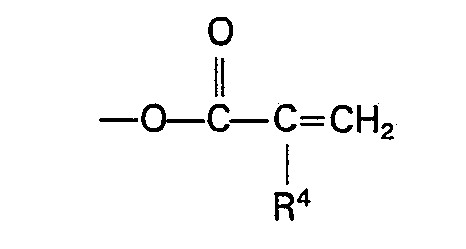
- the anaerobically curable surfactant monomers generally conform to the formula: wherein R' is H or lower alkyl; R 2 is C,-C 6 alkylene or where R 3 is H, or lower alkyl; R L is a lipophilic group represented by long chain linear or branched alkyls, alkylphenols or polypropyleneoxides. Lower alkyl may have 1 to 6, e.g. 1 to 4 carbon atoms.
- anaerobic compositions may contain non-acrylate comonomers which are used to modify the viscosity, solvent resistance or other properties of the uncured or cured anaerobic composition.
- the surfactant monomers typically should be present in the anaerobic composition in amounts of 1 % to 80% by weight of the total composition, preferably in amounts of 5% to 20%.
- anaerobic monomers characteristically contain acrylate or substituted acrylate (e.g. methacrylate) end-groups. Any such anaerobically curable composition can be rendered self-emulsifiable to at least some extent by utilizing the surfactant monomers as disclosed herein.
- the acrylate monomer is a di- or other polyacrylate ester.
- These polyfunctional monomers produce cross-linked polymers, which serve as more effective and more durable sealants.
- polyacrylate esters which have the following general formula: wherein R 5 represents hydrogen, lower alkyl of from 1 to 4 carbon atoms, hydroxy alkyl of from 1 to 4 carbon atoms, or R 4 is hydrogen, halogen or lower alkyl or from 1 to 4 carbon atoms; R 6 is hydrogen, hydroxyl; or m is from 0 to 12, and preferably from 0 to 6; n is equal to at least 1, e.g., 1 to 20 or more, and preferably from 2 to 6; and p is 0 or 1.
- the polymerizable polyacrylate esters corresponding to the above general formula are examplified by, but not restricted to, the following materials: di-, tri- and tetraethyleneglycol dimethacrylate, dipropyleneglycol dimethacrylate; polyethyleneglycol dimethacrylate; pentamethyleneglycol dimethacrylate; tetraethyleneglycol diacrylate; tetraethyleneglycol di(chloroacrylate); diglycerol diacrylate; diglycerol tetramethacrylate; tetramethlene dimethacrylate; ethylene dimethacrylate; and neopentylglycol diacrylate.
- the polar group is a labile hydrogen, heterocyclic ring, hydroxy, amino, cyano, or halo polar group.
- Typical examples of compounds within this category are cyclohexylmethacrylate, tetrahydrofurfuryl methacrylate, hydroxyethyl acrylate, hydroxypropyl methacrylate, t-butylaminoethyl methacrylate, cyanoethylacrylate and chloroethyl methacrylate.
- acrylates such as ethoxylated bisphenol-A dimethacrylate, related compounds and their derivatives can also be used. However, when such other acrylates are used, they often are used in combination with one or more members from either or both of the above-described classes of acrylate monomers. Most preferably, polyacrylates having the chemical formula given above, comprise at least a portion, preferably at least fifty percent by weight of the acrylates used since these monomers have been found clearly superior in many anaerobic adhesive and sealant applications.
- the anaerobic composition viscosity should be from 1 to 1,000 mPas (1 to 1,000 centipoises) and preferably is from 5 to 500 mPas (5 to 500 centipoises). The most highly preferred range is from 5 to 150 mPas (5 to 150 centipoises). Viscosities higher than those indicated tend to reduce the ease of emulsification; viscosities lower than those indicated are impractical to obtain because of the inherent characteristics of the monomers. It should be recognized however, that in certain adhesive and sealing situations where relatively large gaps are to be closed and relative slowness of emulsification can be tolerated, much higher viscosity sealants (e.g.
- 10,000-100,000 mPas 10,000-100,000 centipoises
- the ideal emulsifiability for any anaerobic composition will be a function of such factors as its viscosity, surface tension, the particular surfactant monomer to be used, and the pore size of the porous part to the impregnated, and can be determined easily with a minimum of routine tests.
- the monomers described above are combined with an appropriate polymerization initiator system.
- the initiator must be capable of inducing polymerization of the monomer or monomers in the substantial absence of oxygen, and yet not induce polymerization as long as oxygen is present. Since the unsaturated monomers used in this invention are conveniently cured through a free-radical mechanism, the most common initiator system is a redox polymerization initiator, i.e., an ingredient or a combination of ingredients which produce an oxidation-reduction reaction, resulting in the production of free radicals.
- the most common initiator systems of this type are those involving peroxy materials which, under the appropriate conditions, decompose to form peroxy free radicals. Initiators are generally present in amounts of 0.1 to 10% by weight of the composition, and preferably from 0.2 to 5%.
- peroxy initiators which has been found readily adaptable to the anaerobic concept, and particularly efficient when used in combination with the acrylate monomers described above, are the hydroperoxy initiators.
- the organic hydroperoxides are the most preferred. Cumene hydroperoxide has been used with particular success.
- Inorganic peroxides and compounds such as peresters which decompose to form free radicals are also useful.
- peroxy is intended to mean peroxides, hydroperoxides and peresters which are suitable for preparing anaerobically curing monomer systems.
- various additives for example, various classes of accelerators of hydroperoxide decomposition.
- Typical examples are tertiary amines such as tributyl amine, sulfimides such as benzoic sulfimide, formamide and compounds containing oxidizable transition metals, such as copper octanoate; as well as hydrazine compounds such as acetyl phenyl hydrazine.
- Accelerators are generally used with good results in concentrations of less than 10% by weight of the total composition, the preferred range being 0.1% to 0.75%.
- the invention also contemplates a process of impregnation, wherein the sealant composition described above cures under the anaerobic conditions of the porous interior of the article to form a hard, durable resin.
- the sealant composition described above cures under the anaerobic conditions of the porous interior of the article to form a hard, durable resin.
- the sealant composition described above cures under the anaerobic conditions of the porous interior of the article to form a hard, durable resin.
- This film is undesirable since the uncured impregnant can contaminate its surroundings upon removal by normal abrasion or by various liquids. More importantly, this film tends to interfere with the subsequent painting, plating or assembly operations which frequently are performed upon the metal articles, and generally will be removed during the painting or plating operations and will contaminate any painting or plating baths which are used.
- the present invention employs surfactant monomers in porous metal sealant compositions.
- the surfactant monomers On the surface of the porous article, where exposure to oxygen prevents cure of the composition, the surfactant monomers exhibit surfactant properties, making excess resin, which is normally water insoluble, self-emulsifiable, e.g., readily washed off with water.
- the surfactant monomers behave as anaerobically curable monomers, copolymerizing with the other monomers present to become an integral part of the polymerized sealant, thereby preventing the possibility of migration of the surfactant to the surface of the cured sealant.
- a particular advantage of these self-emulsifiable compositions is that their benefits may be realized through room temperature treatment with water. Warm or even hot water, however, may be used if desired.
- an aqueous surfactant wash may be optionally used instead of plain water, although this is ordinarily not necessary.
- Washing of articles having the self-emulsifying compositions on their surface may be performed by any convenient method.
- the articles may be placed on racks and sprayed with water.
- the most desirable method of treatment is by dipping the articles into a tank containing the wash water.
- the tank will be moderately agitated, although it is an advantage of this invention that extreme agitation is not required.
- Length of the treatment need only be such as will provide adequate removal of the anaerobic monomer composition and may be readily determined by simple experimentation for various combinations of surfactant monomer, monomer, concentration and agitation. In the great majority of cases the treatment time will be less than 10, typically less than 5 minutes.
- this invention is useful in the process for sealing porous rigid articles which comprises:
- the impregnation process uses tanks which contain the anaerobic composition.
- the composition is aerated at a sufficient rate to prevent its premature polymerization.
- Porous rigid articles to be sealed are submerged in the tank aeration is discontinued and a vacuum of less than 0.175 kg/cm 2 (5 inches of mercury) absolute pressure is drawn in the tank.
- the vacuum is released to force the anaerobically curable composition into the interstices.
- the impregnated article is then removed from the composition and treated with an aqueous rinse.
- the surface can optionally be further treated with an aqueous or solvent solution of a surface activator.
- the surface activator may be included in the aqueous rinse, or may be a separate step.
- the surface activator if present, may be used in an amount of 0.1 % to 5% by weight of the solution, and may be selected from the following classes: amine-aldehyde condensation products; sulfur-containing free-radical accelerators; aromatic tertiary amines; organic compounds containing an oxidizable transition metal; and other suitable reducing agents.
- the anaerobic composition is then permitted to cure.
- composition of the invention is intended to demonstrate the emulsifiability of the composition of the invention as compared with compositions of the prior art.
- Formulations were prepared, as shown in Table 1, and an oil- soluble, water insoluble blue fluorescent dye was added to aid in the observation for emulsifiability. Testing was performed under a black light to render the compositions clearly visible as bright blue fluorescent liquids. 6.45 Square centimetres (one square inch) of a 10.16 x 2.54 cm (4 x 1 inch) steel lap shear was dip coated in each of the formulations in Table 1 and any excess was allowed to run off. The coated lap shears were dipped in 300 ml of unstirred, room temperature tap water.
- Each dip consisted of immersion to a level above the composition coating, so that the entire coating was in water.
- Each coated lap shear was dipped 20 times, the approximate fractional area of the coating remaining on the lap shear being recorded after the tenth and twentieth dips. The results are shown in Table 2. All ingredients for the above compositions were added in the sequence that they appear and mixed for 30 minutes at room temperature.
- Composition A is a standard anaerobically curable composition used for impregnating and sealing articles. It does not contain a surfactant or surfactant monomer.
- Composition B is identical to A except that a small amount of surfactant has been added to the formulation to aid emulsification in water. This composition is of the type disclosed in U.S Patent Nos. 4,069,378 and 4,165,400 to DeMarco.
- Compositions C and D are representative of the instant invention.
- the surfactant monomers of the present invention are designated by an SM number. Some of the surfactant monomers tested were prepared by reacting isocyanatoethyl methacrylate with the commercially available surfactants indicated below.
- compositions of the present invention exhibit excellent emulsifiability in water, as evidenced by a low percentage of coating remaining on the lap shear after dipping in the unagitated water.
- Emulsifiability tests were run on the compositions in Table 3. These emulsifiability tests were conducted by adding 1 ml of the respective composition into 50 ml of water in a glass bottle. The bottle was capped and shaken for approximately 5 to 10 seconds. Suitable stable emulsions were formed from each of the compositions.
- compositions of the present invention are designed to show the improved solvent resistance the compositions of the present invention have over those of the prior art.
- the compositions of Example 2 were used where indicated but without the use of blue dye.
- the compositions of the prior art were identical to Compositions F without the blue dye except that a free surfactant was added in place of the surfactant monomer.
- compositions were cured at 82°C, and cut into samples of 10 mm x 25 mm. Three samples from each composition were measured for their total weight, placed into 30 ml of solvent in a beaker and left at room temperature for four weeks. After the four week immersion, the samples were removed, the surface moisture wiped off, and weighed immediately. The weight difference before and after the exposure is used to calculate the percentage weight gained. The amount of weight gained is an indication of resistance to the solvent. The less weight gained by the sample during the immersion period, the more solvent resistant the cured composition.
Landscapes
- Chemical & Material Sciences (AREA)
- Organic Chemistry (AREA)
- Sealing Material Composition (AREA)
- Health & Medical Sciences (AREA)
- Chemical Kinetics & Catalysis (AREA)
- Medicinal Chemistry (AREA)
- Polymers & Plastics (AREA)
Claims (12)


Applications Claiming Priority (2)
| Application Number | Priority Date | Filing Date | Title |
|---|---|---|---|
| US40578982A | 1982-08-06 | 1982-08-06 | |
| US405789 | 1982-08-06 |
Publications (3)
| Publication Number | Publication Date |
|---|---|
| EP0101267A2 EP0101267A2 (de) | 1984-02-22 |
| EP0101267A3 EP0101267A3 (en) | 1984-07-18 |
| EP0101267B1 true EP0101267B1 (de) | 1986-12-03 |
Family
ID=23605247
Family Applications (1)
| Application Number | Title | Priority Date | Filing Date |
|---|---|---|---|
| EP83304534A Expired EP0101267B1 (de) | 1982-08-06 | 1983-08-05 | Ohne Sauerstoff vernetzbare Zusammensetzungen |
Country Status (3)
| Country | Link |
|---|---|
| EP (1) | EP0101267B1 (de) |
| CA (1) | CA1217298A (de) |
| DE (1) | DE3368078D1 (de) |
Families Citing this family (5)
| Publication number | Priority date | Publication date | Assignee | Title |
|---|---|---|---|---|
| DE3338923C1 (de) * | 1983-10-27 | 1985-02-21 | Th. Goldschmidt Ag, 4300 Essen | Verwendung von Copolymerisaten von Polyoxyalkylenethern des Allyl- und/oder Methallylalkohols und Vinylestern als Dismulgatoren fuer Wasser enthaltendes Rohoel |
| US4749592A (en) * | 1984-09-28 | 1988-06-07 | Minnesota Mining And Manufacturing Company | Grouting composition |
| US4722962A (en) * | 1986-06-12 | 1988-02-02 | Desoto, Inc. | Nonionic associative thickeners |
| US7642297B2 (en) * | 2003-08-20 | 2010-01-05 | Koninklijke Philips Electronics N.V. | Non-leaching adhesive system and its use in a liquid immersion objective |
| CN111777718A (zh) * | 2020-06-11 | 2020-10-16 | 南京艾布纳密封技术股份有限公司 | 一种烧结或压铸成型多孔材料用有机浸渗剂 |
Family Cites Families (1)
| Publication number | Priority date | Publication date | Assignee | Title |
|---|---|---|---|---|
| JPS5246273B2 (de) * | 1973-08-21 | 1977-11-22 |
-
1983
- 1983-07-26 CA CA000433189A patent/CA1217298A/en not_active Expired
- 1983-08-05 EP EP83304534A patent/EP0101267B1/de not_active Expired
- 1983-08-05 DE DE8383304534T patent/DE3368078D1/de not_active Expired
Also Published As
| Publication number | Publication date |
|---|---|
| EP0101267A3 (en) | 1984-07-18 |
| CA1217298A (en) | 1987-01-27 |
| DE3368078D1 (en) | 1987-01-15 |
| EP0101267A2 (de) | 1984-02-22 |
Similar Documents
| Publication | Publication Date | Title |
|---|---|---|
| US3969552A (en) | Process for impregnating porous articles | |
| US4069378A (en) | Self-emulsifying anaerobic composition | |
| EP0014062B1 (de) | Zusammensetzung und Verfahren zur Imprägnierung und Versiegelung poröser Gegenstände | |
| US5256450A (en) | Process for impregnating porous metal articles using water miscible anaerobic sealants | |
| USRE32240E (en) | Self-emulsifying anaerobic composition | |
| EP0307074B1 (de) | Reaktionsbehälter für Polymere mit einer Beschichtung zur Unterdrückung der Bildung von Polymerkrusten | |
| US4165400A (en) | Self-emulsifying anaerobic composition | |
| US20080277060A1 (en) | Surface insensitive anaerobic adhesive and sealant compositions | |
| EP0101267A2 (de) | Ohne Sauerstoff vernetzbare Zusammensetzungen | |
| KR100332651B1 (ko) | 액상수지형성조성물과그조성물을형성하는2패키지시스템과투과성고체기판의시일방법 | |
| US5098743A (en) | Polymerizable liquid sealants for impregnating cast metal and powdered metal articles | |
| KR20220115935A (ko) | 수성 수지 에멀젼 | |
| US5416159A (en) | Polymerizable liquid sealants for impregnating cast metal and powdered articles | |
| DE2001286A1 (de) | Verfahren zur Impraegnierung poroeser Gegenstaende | |
| NO764203L (de) | ||
| WO2010090826A2 (en) | Fast curing, two part anaerobic adhesive composition | |
| EP0255363A2 (de) | Terpolymer-Emulsionen | |
| EP0591545A1 (de) | Verwendung einer zusammensetzung als formtrennmittel | |
| EP0478220B1 (de) | Peroxid-härtende (Meth)acrylesterzusammensetzungen unter Verwendung von Metalldithiolat-Katalysatoren | |
| US6712910B1 (en) | Rinsewater separable and recyclable heat curing impregnation compositions | |
| KR910006719B1 (ko) | 방부도료 조성물 | |
| US6828400B1 (en) | Washable impregnation compositions | |
| CA1296461C (en) | Aqueous dispersions | |
| WO2001007530A1 (en) | Washable impregnation compositions | |
| SU668334A1 (ru) | Клей Спрут-9М |
Legal Events
| Date | Code | Title | Description |
|---|---|---|---|
| PUAI | Public reference made under article 153(3) epc to a published international application that has entered the european phase |
Free format text: ORIGINAL CODE: 0009012 |
|
| AK | Designated contracting states |
Designated state(s): DE FR GB IT SE |
|
| PUAL | Search report despatched |
Free format text: ORIGINAL CODE: 0009013 |
|
| AK | Designated contracting states |
Designated state(s): DE FR GB IT SE |
|
| 17P | Request for examination filed |
Effective date: 19841213 |
|
| GRAA | (expected) grant |
Free format text: ORIGINAL CODE: 0009210 |
|
| AK | Designated contracting states |
Kind code of ref document: B1 Designated state(s): DE FR GB IT SE |
|
| ITF | It: translation for a ep patent filed | ||
| RBV | Designated contracting states (corrected) |
Designated state(s): DE FR GB IT |
|
| REF | Corresponds to: |
Ref document number: 3368078 Country of ref document: DE Date of ref document: 19870115 |
|
| ET | Fr: translation filed | ||
| PLBE | No opposition filed within time limit |
Free format text: ORIGINAL CODE: 0009261 |
|
| STAA | Information on the status of an ep patent application or granted ep patent |
Free format text: STATUS: NO OPPOSITION FILED WITHIN TIME LIMIT |
|
| 26N | No opposition filed | ||
| PG25 | Lapsed in a contracting state [announced via postgrant information from national office to epo] |
Ref country code: GB Free format text: LAPSE BECAUSE OF NON-PAYMENT OF DUE FEES Effective date: 19880805 |
|
| PG25 | Lapsed in a contracting state [announced via postgrant information from national office to epo] |
Ref country code: FR Free format text: LAPSE BECAUSE OF NON-PAYMENT OF DUE FEES Effective date: 19890428 |
|
| PG25 | Lapsed in a contracting state [announced via postgrant information from national office to epo] |
Ref country code: DE Effective date: 19890503 |
|
| GBPC | Gb: european patent ceased through non-payment of renewal fee | ||
| REG | Reference to a national code |
Ref country code: FR Ref legal event code: ST |