EP0101273A2 - Herstellung von biologischen Produkten mittels immobilisierter Zellen - Google Patents
Herstellung von biologischen Produkten mittels immobilisierter Zellen Download PDFInfo
- Publication number
- EP0101273A2 EP0101273A2 EP83304549A EP83304549A EP0101273A2 EP 0101273 A2 EP0101273 A2 EP 0101273A2 EP 83304549 A EP83304549 A EP 83304549A EP 83304549 A EP83304549 A EP 83304549A EP 0101273 A2 EP0101273 A2 EP 0101273A2
- Authority
- EP
- European Patent Office
- Prior art keywords
- growth
- cells
- cell
- production
- growth medium
- Prior art date
- Legal status (The legal status is an assumption and is not a legal conclusion. Google has not performed a legal analysis and makes no representation as to the accuracy of the status listed.)
- Withdrawn
Links
- 238000004519 manufacturing process Methods 0.000 title claims abstract description 21
- 230000000284 resting effect Effects 0.000 title description 4
- 239000001963 growth medium Substances 0.000 claims abstract description 27
- 238000000034 method Methods 0.000 claims abstract description 26
- 230000010261 cell growth Effects 0.000 claims abstract description 9
- 210000004027 cell Anatomy 0.000 claims description 71
- 230000012010 growth Effects 0.000 claims description 24
- 239000012510 hollow fiber Substances 0.000 claims description 22
- IJGRMHOSHXDMSA-UHFFFAOYSA-N Atomic nitrogen Chemical compound N#N IJGRMHOSHXDMSA-UHFFFAOYSA-N 0.000 claims description 16
- LFQSCWFLJHTTHZ-UHFFFAOYSA-N Ethanol Chemical group CCO LFQSCWFLJHTTHZ-UHFFFAOYSA-N 0.000 claims description 13
- 239000012528 membrane Substances 0.000 claims description 13
- 230000006820 DNA synthesis Effects 0.000 claims description 8
- 230000032823 cell division Effects 0.000 claims description 8
- 229910052757 nitrogen Inorganic materials 0.000 claims description 8
- 230000002950 deficient Effects 0.000 claims description 6
- 230000004543 DNA replication Effects 0.000 claims description 5
- 230000001965 increasing effect Effects 0.000 claims description 5
- 239000003112 inhibitor Substances 0.000 claims description 4
- 230000003247 decreasing effect Effects 0.000 claims description 2
- 235000020774 essential nutrients Nutrition 0.000 claims 1
- 210000005253 yeast cell Anatomy 0.000 claims 1
- 239000000835 fiber Substances 0.000 description 22
- 230000002906 microbiologic effect Effects 0.000 description 15
- 230000003698 anagen phase Effects 0.000 description 14
- 239000002609 medium Substances 0.000 description 11
- 239000007789 gas Substances 0.000 description 8
- 239000012071 phase Substances 0.000 description 8
- 235000015097 nutrients Nutrition 0.000 description 7
- HEMHJVSKTPXQMS-UHFFFAOYSA-M Sodium hydroxide Chemical compound [OH-].[Na+] HEMHJVSKTPXQMS-UHFFFAOYSA-M 0.000 description 6
- 239000007788 liquid Substances 0.000 description 6
- 244000005700 microbiome Species 0.000 description 6
- 238000004113 cell culture Methods 0.000 description 5
- 210000000170 cell membrane Anatomy 0.000 description 5
- 238000000855 fermentation Methods 0.000 description 5
- 230000004151 fermentation Effects 0.000 description 5
- 238000011081 inoculation Methods 0.000 description 5
- 239000011159 matrix material Substances 0.000 description 5
- XLYOFNOQVPJJNP-UHFFFAOYSA-N water Substances O XLYOFNOQVPJJNP-UHFFFAOYSA-N 0.000 description 5
- CURLTUGMZLYLDI-UHFFFAOYSA-N Carbon dioxide Chemical compound O=C=O CURLTUGMZLYLDI-UHFFFAOYSA-N 0.000 description 4
- 108090000790 Enzymes Proteins 0.000 description 4
- 102000004190 Enzymes Human genes 0.000 description 4
- 108010087702 Penicillinase Proteins 0.000 description 4
- 230000001276 controlling effect Effects 0.000 description 4
- 239000012153 distilled water Substances 0.000 description 4
- 230000035772 mutation Effects 0.000 description 4
- 229950009506 penicillinase Drugs 0.000 description 4
- 108090000623 proteins and genes Proteins 0.000 description 4
- WQZGKKKJIJFFOK-GASJEMHNSA-N Glucose Natural products OC[C@H]1OC(O)[C@H](O)[C@@H](O)[C@@H]1O WQZGKKKJIJFFOK-GASJEMHNSA-N 0.000 description 3
- 240000004808 Saccharomyces cerevisiae Species 0.000 description 3
- 210000002421 cell wall Anatomy 0.000 description 3
- 238000010586 diagram Methods 0.000 description 3
- 238000011010 flushing procedure Methods 0.000 description 3
- 230000014509 gene expression Effects 0.000 description 3
- 238000010353 genetic engineering Methods 0.000 description 3
- 239000008103 glucose Substances 0.000 description 3
- 239000001307 helium Substances 0.000 description 3
- 229910052734 helium Inorganic materials 0.000 description 3
- SWQJXJOGLNCZEY-UHFFFAOYSA-N helium atom Chemical compound [He] SWQJXJOGLNCZEY-UHFFFAOYSA-N 0.000 description 3
- 239000011148 porous material Substances 0.000 description 3
- 239000000243 solution Substances 0.000 description 3
- 239000000126 substance Substances 0.000 description 3
- 239000002699 waste material Substances 0.000 description 3
- YBJHBAHKTGYVGT-ZKWXMUAHSA-N (+)-Biotin Chemical compound N1C(=O)N[C@@H]2[C@H](CCCCC(=O)O)SC[C@@H]21 YBJHBAHKTGYVGT-ZKWXMUAHSA-N 0.000 description 2
- 244000063299 Bacillus subtilis Species 0.000 description 2
- 235000014469 Bacillus subtilis Nutrition 0.000 description 2
- 241000894006 Bacteria Species 0.000 description 2
- UXVMQQNJUSDDNG-UHFFFAOYSA-L Calcium chloride Chemical compound [Cl-].[Cl-].[Ca+2] UXVMQQNJUSDDNG-UHFFFAOYSA-L 0.000 description 2
- 101100499417 Chlamydia pneumoniae dnaA1 gene Proteins 0.000 description 2
- 108010093096 Immobilized Enzymes Proteins 0.000 description 2
- PVNIIMVLHYAWGP-UHFFFAOYSA-N Niacin Chemical compound OC(=O)C1=CC=CN=C1 PVNIIMVLHYAWGP-UHFFFAOYSA-N 0.000 description 2
- 238000013459 approach Methods 0.000 description 2
- QVGXLLKOCUKJST-UHFFFAOYSA-N atomic oxygen Chemical compound [O] QVGXLLKOCUKJST-UHFFFAOYSA-N 0.000 description 2
- 239000001110 calcium chloride Substances 0.000 description 2
- 229910001628 calcium chloride Inorganic materials 0.000 description 2
- 239000001569 carbon dioxide Substances 0.000 description 2
- 229910002092 carbon dioxide Inorganic materials 0.000 description 2
- 230000008859 change Effects 0.000 description 2
- 230000034994 death Effects 0.000 description 2
- 230000007423 decrease Effects 0.000 description 2
- 238000013461 design Methods 0.000 description 2
- 101150020338 dnaA gene Proteins 0.000 description 2
- 230000000694 effects Effects 0.000 description 2
- 239000011521 glass Substances 0.000 description 2
- 238000001727 in vivo Methods 0.000 description 2
- 239000002054 inoculum Substances 0.000 description 2
- 229910052500 inorganic mineral Inorganic materials 0.000 description 2
- 230000002503 metabolic effect Effects 0.000 description 2
- 239000011707 mineral Substances 0.000 description 2
- 229930014626 natural product Natural products 0.000 description 2
- 239000001301 oxygen Substances 0.000 description 2
- 229910052760 oxygen Inorganic materials 0.000 description 2
- IWZKICVEHNUQTL-UHFFFAOYSA-M potassium hydrogen phthalate Chemical compound [K+].OC(=O)C1=CC=CC=C1C([O-])=O IWZKICVEHNUQTL-UHFFFAOYSA-M 0.000 description 2
- 102000004169 proteins and genes Human genes 0.000 description 2
- 230000002441 reversible effect Effects 0.000 description 2
- 239000000758 substrate Substances 0.000 description 2
- 229940088594 vitamin Drugs 0.000 description 2
- 239000011782 vitamin Substances 0.000 description 2
- 235000013343 vitamin Nutrition 0.000 description 2
- 229930003231 vitamin Natural products 0.000 description 2
- 150000003722 vitamin derivatives Chemical class 0.000 description 2
- 101100331782 Bacillus subtilis (strain 168) dnaI gene Proteins 0.000 description 1
- 229920013683 Celanese Polymers 0.000 description 1
- 208000006332 Choriocarcinoma Diseases 0.000 description 1
- 102000011022 Chorionic Gonadotropin Human genes 0.000 description 1
- 108010062540 Chorionic Gonadotropin Proteins 0.000 description 1
- 239000011665 D-biotin Substances 0.000 description 1
- 235000000638 D-biotin Nutrition 0.000 description 1
- 239000004593 Epoxy Substances 0.000 description 1
- 241001646716 Escherichia coli K-12 Species 0.000 description 1
- IAYPIBMASNFSPL-UHFFFAOYSA-N Ethylene oxide Chemical compound C1CO1 IAYPIBMASNFSPL-UHFFFAOYSA-N 0.000 description 1
- 241000233866 Fungi Species 0.000 description 1
- VSNHCAURESNICA-UHFFFAOYSA-N Hydroxyurea Chemical compound NC(=O)NO VSNHCAURESNICA-UHFFFAOYSA-N 0.000 description 1
- 108060003951 Immunoglobulin Proteins 0.000 description 1
- 239000007836 KH2PO4 Substances 0.000 description 1
- FBOZXECLQNJBKD-ZDUSSCGKSA-N L-methotrexate Chemical compound C=1N=C2N=C(N)N=C(N)C2=NC=1CN(C)C1=CC=C(C(=O)N[C@@H](CCC(O)=O)C(O)=O)C=C1 FBOZXECLQNJBKD-ZDUSSCGKSA-N 0.000 description 1
- 102000008072 Lymphokines Human genes 0.000 description 1
- 108010074338 Lymphokines Proteins 0.000 description 1
- 206010028980 Neoplasm Diseases 0.000 description 1
- 239000004743 Polypropylene Substances 0.000 description 1
- 108700005078 Synthetic Genes Proteins 0.000 description 1
- 230000002411 adverse Effects 0.000 description 1
- 150000001298 alcohols Chemical class 0.000 description 1
- 150000001299 aldehydes Chemical class 0.000 description 1
- 230000004075 alteration Effects 0.000 description 1
- 150000001413 amino acids Chemical class 0.000 description 1
- 230000003321 amplification Effects 0.000 description 1
- 239000003242 anti bacterial agent Substances 0.000 description 1
- 229940088710 antibiotic agent Drugs 0.000 description 1
- 230000008901 benefit Effects 0.000 description 1
- 239000011176 biofiber Substances 0.000 description 1
- 239000002981 blocking agent Substances 0.000 description 1
- 230000000903 blocking effect Effects 0.000 description 1
- 238000009530 blood pressure measurement Methods 0.000 description 1
- 229940041514 candida albicans extract Drugs 0.000 description 1
- 230000001413 cellular effect Effects 0.000 description 1
- 229920002301 cellulose acetate Polymers 0.000 description 1
- 238000006243 chemical reaction Methods 0.000 description 1
- 230000003399 chemotactic effect Effects 0.000 description 1
- 230000021615 conjugation Effects 0.000 description 1
- 239000000356 contaminant Substances 0.000 description 1
- 238000011109 contamination Methods 0.000 description 1
- JZCCFEFSEZPSOG-UHFFFAOYSA-L copper(II) sulfate pentahydrate Chemical compound O.O.O.O.O.[Cu+2].[O-]S([O-])(=O)=O JZCCFEFSEZPSOG-UHFFFAOYSA-L 0.000 description 1
- 230000007812 deficiency Effects 0.000 description 1
- 230000001419 dependent effect Effects 0.000 description 1
- 238000000502 dialysis Methods 0.000 description 1
- 230000003292 diminished effect Effects 0.000 description 1
- 101150014291 dnaC gene Proteins 0.000 description 1
- 230000007613 environmental effect Effects 0.000 description 1
- 230000006353 environmental stress Effects 0.000 description 1
- 210000003527 eukaryotic cell Anatomy 0.000 description 1
- 210000001723 extracellular space Anatomy 0.000 description 1
- 239000012530 fluid Substances 0.000 description 1
- 230000002068 genetic effect Effects 0.000 description 1
- 230000005484 gravity Effects 0.000 description 1
- 230000036541 health Effects 0.000 description 1
- 239000005556 hormone Substances 0.000 description 1
- 229940088597 hormone Drugs 0.000 description 1
- 229940084986 human chorionic gonadotropin Drugs 0.000 description 1
- 210000004408 hybridoma Anatomy 0.000 description 1
- 230000002209 hydrophobic effect Effects 0.000 description 1
- 229960001330 hydroxycarbamide Drugs 0.000 description 1
- 230000003100 immobilizing effect Effects 0.000 description 1
- 102000018358 immunoglobulin Human genes 0.000 description 1
- 229940072221 immunoglobulins Drugs 0.000 description 1
- 230000006698 induction Effects 0.000 description 1
- 230000001939 inductive effect Effects 0.000 description 1
- 239000011261 inert gas Substances 0.000 description 1
- 230000005764 inhibitory process Effects 0.000 description 1
- 229960000367 inositol Drugs 0.000 description 1
- CDAISMWEOUEBRE-GPIVLXJGSA-N inositol Chemical compound O[C@H]1[C@H](O)[C@@H](O)[C@H](O)[C@H](O)[C@@H]1O CDAISMWEOUEBRE-GPIVLXJGSA-N 0.000 description 1
- 230000003834 intracellular effect Effects 0.000 description 1
- 230000009545 invasion Effects 0.000 description 1
- 230000002427 irreversible effect Effects 0.000 description 1
- 150000002576 ketones Chemical class 0.000 description 1
- 230000000670 limiting effect Effects 0.000 description 1
- 239000007791 liquid phase Substances 0.000 description 1
- 239000006194 liquid suspension Substances 0.000 description 1
- 230000033001 locomotion Effects 0.000 description 1
- 238000012423 maintenance Methods 0.000 description 1
- 229910000357 manganese(II) sulfate Inorganic materials 0.000 description 1
- 239000000463 material Substances 0.000 description 1
- 238000005259 measurement Methods 0.000 description 1
- 229960000485 methotrexate Drugs 0.000 description 1
- 239000000203 mixture Substances 0.000 description 1
- 229910000402 monopotassium phosphate Inorganic materials 0.000 description 1
- 230000000869 mutational effect Effects 0.000 description 1
- 230000007935 neutral effect Effects 0.000 description 1
- 229960003512 nicotinic acid Drugs 0.000 description 1
- 235000001968 nicotinic acid Nutrition 0.000 description 1
- 239000011664 nicotinic acid Substances 0.000 description 1
- 238000003199 nucleic acid amplification method Methods 0.000 description 1
- 235000021048 nutrient requirements Nutrition 0.000 description 1
- 150000007524 organic acids Chemical class 0.000 description 1
- 235000005985 organic acids Nutrition 0.000 description 1
- 238000012856 packing Methods 0.000 description 1
- 230000010412 perfusion Effects 0.000 description 1
- 230000002572 peristaltic effect Effects 0.000 description 1
- 239000013612 plasmid Substances 0.000 description 1
- 239000013600 plasmid vector Substances 0.000 description 1
- 229920002492 poly(sulfone) Polymers 0.000 description 1
- 239000004417 polycarbonate Substances 0.000 description 1
- 229920000515 polycarbonate Polymers 0.000 description 1
- 229920001184 polypeptide Polymers 0.000 description 1
- -1 polypropylene Polymers 0.000 description 1
- 229920001155 polypropylene Polymers 0.000 description 1
- GNSKLFRGEWLPPA-UHFFFAOYSA-M potassium dihydrogen phosphate Chemical compound [K+].OP(O)([O-])=O GNSKLFRGEWLPPA-UHFFFAOYSA-M 0.000 description 1
- 102000004196 processed proteins & peptides Human genes 0.000 description 1
- 108090000765 processed proteins & peptides Proteins 0.000 description 1
- 210000001236 prokaryotic cell Anatomy 0.000 description 1
- 230000002062 proliferating effect Effects 0.000 description 1
- ZUFQODAHGAHPFQ-UHFFFAOYSA-N pyridoxine hydrochloride Chemical compound Cl.CC1=NC=C(CO)C(CO)=C1O ZUFQODAHGAHPFQ-UHFFFAOYSA-N 0.000 description 1
- 229960004172 pyridoxine hydrochloride Drugs 0.000 description 1
- 235000019171 pyridoxine hydrochloride Nutrition 0.000 description 1
- 239000011764 pyridoxine hydrochloride Substances 0.000 description 1
- 230000002829 reductive effect Effects 0.000 description 1
- 230000001105 regulatory effect Effects 0.000 description 1
- 230000010076 replication Effects 0.000 description 1
- 230000000717 retained effect Effects 0.000 description 1
- 239000012266 salt solution Substances 0.000 description 1
- 150000003839 salts Chemical class 0.000 description 1
- CDAISMWEOUEBRE-UHFFFAOYSA-N scyllo-inosotol Natural products OC1C(O)C(O)C(O)C(O)C1O CDAISMWEOUEBRE-UHFFFAOYSA-N 0.000 description 1
- 239000010865 sewage Substances 0.000 description 1
- 239000007787 solid Substances 0.000 description 1
- 230000000087 stabilizing effect Effects 0.000 description 1
- 238000011146 sterile filtration Methods 0.000 description 1
- 230000035882 stress Effects 0.000 description 1
- 238000012360 testing method Methods 0.000 description 1
- DPJRMOMPQZCRJU-UHFFFAOYSA-M thiamine hydrochloride Chemical compound Cl.[Cl-].CC1=C(CCO)SC=[N+]1CC1=CN=C(C)N=C1N DPJRMOMPQZCRJU-UHFFFAOYSA-M 0.000 description 1
- 229960000344 thiamine hydrochloride Drugs 0.000 description 1
- 235000019190 thiamine hydrochloride Nutrition 0.000 description 1
- 239000011747 thiamine hydrochloride Substances 0.000 description 1
- 210000001519 tissue Anatomy 0.000 description 1
- 239000003053 toxin Substances 0.000 description 1
- 231100000765 toxin Toxicity 0.000 description 1
- 108700012359 toxins Proteins 0.000 description 1
- 238000013518 transcription Methods 0.000 description 1
- 230000035897 transcription Effects 0.000 description 1
- 238000012546 transfer Methods 0.000 description 1
- 230000009466 transformation Effects 0.000 description 1
- 238000000108 ultra-filtration Methods 0.000 description 1
- 238000011144 upstream manufacturing Methods 0.000 description 1
- 239000012808 vapor phase Substances 0.000 description 1
- 239000012138 yeast extract Substances 0.000 description 1
Images
Classifications
-
- C—CHEMISTRY; METALLURGY
- C12—BIOCHEMISTRY; BEER; SPIRITS; WINE; VINEGAR; MICROBIOLOGY; ENZYMOLOGY; MUTATION OR GENETIC ENGINEERING
- C12P—FERMENTATION OR ENZYME-USING PROCESSES TO SYNTHESISE A DESIRED CHEMICAL COMPOUND OR COMPOSITION OR TO SEPARATE OPTICAL ISOMERS FROM A RACEMIC MIXTURE
- C12P21/00—Preparation of peptides or proteins
- C12P21/02—Preparation of peptides or proteins having a known sequence of two or more amino acids, e.g. glutathione
-
- C—CHEMISTRY; METALLURGY
- C12—BIOCHEMISTRY; BEER; SPIRITS; WINE; VINEGAR; MICROBIOLOGY; ENZYMOLOGY; MUTATION OR GENETIC ENGINEERING
- C12M—APPARATUS FOR ENZYMOLOGY OR MICROBIOLOGY; APPARATUS FOR CULTURING MICROORGANISMS FOR PRODUCING BIOMASS, FOR GROWING CELLS OR FOR OBTAINING FERMENTATION OR METABOLIC PRODUCTS, i.e. BIOREACTORS OR FERMENTERS
- C12M25/00—Means for supporting, enclosing or fixing the microorganisms, e.g. immunocoatings
- C12M25/10—Hollow fibers or tubes
-
- C—CHEMISTRY; METALLURGY
- C12—BIOCHEMISTRY; BEER; SPIRITS; WINE; VINEGAR; MICROBIOLOGY; ENZYMOLOGY; MUTATION OR GENETIC ENGINEERING
- C12M—APPARATUS FOR ENZYMOLOGY OR MICROBIOLOGY; APPARATUS FOR CULTURING MICROORGANISMS FOR PRODUCING BIOMASS, FOR GROWING CELLS OR FOR OBTAINING FERMENTATION OR METABOLIC PRODUCTS, i.e. BIOREACTORS OR FERMENTERS
- C12M29/00—Means for introduction, extraction or recirculation of materials, e.g. pumps
- C12M29/16—Hollow fibers
-
- C—CHEMISTRY; METALLURGY
- C12—BIOCHEMISTRY; BEER; SPIRITS; WINE; VINEGAR; MICROBIOLOGY; ENZYMOLOGY; MUTATION OR GENETIC ENGINEERING
- C12M—APPARATUS FOR ENZYMOLOGY OR MICROBIOLOGY; APPARATUS FOR CULTURING MICROORGANISMS FOR PRODUCING BIOMASS, FOR GROWING CELLS OR FOR OBTAINING FERMENTATION OR METABOLIC PRODUCTS, i.e. BIOREACTORS OR FERMENTERS
- C12M41/00—Means for regulation, monitoring, measurement or control, e.g. flow regulation
- C12M41/30—Means for regulation, monitoring, measurement or control, e.g. flow regulation of concentration
- C12M41/36—Means for regulation, monitoring, measurement or control, e.g. flow regulation of concentration of biomass, e.g. colony counters or by turbidity measurements
-
- C—CHEMISTRY; METALLURGY
- C12—BIOCHEMISTRY; BEER; SPIRITS; WINE; VINEGAR; MICROBIOLOGY; ENZYMOLOGY; MUTATION OR GENETIC ENGINEERING
- C12N—MICROORGANISMS OR ENZYMES; COMPOSITIONS THEREOF; PROPAGATING, PRESERVING, OR MAINTAINING MICROORGANISMS; MUTATION OR GENETIC ENGINEERING; CULTURE MEDIA
- C12N15/00—Mutation or genetic engineering; DNA or RNA concerning genetic engineering, vectors, e.g. plasmids, or their isolation, preparation or purification; Use of hosts therefor
- C12N15/09—Recombinant DNA-technology
- C12N15/63—Introduction of foreign genetic material using vectors; Vectors; Use of hosts therefor; Regulation of expression
- C12N15/67—General methods for enhancing the expression
-
- C—CHEMISTRY; METALLURGY
- C12—BIOCHEMISTRY; BEER; SPIRITS; WINE; VINEGAR; MICROBIOLOGY; ENZYMOLOGY; MUTATION OR GENETIC ENGINEERING
- C12N—MICROORGANISMS OR ENZYMES; COMPOSITIONS THEREOF; PROPAGATING, PRESERVING, OR MAINTAINING MICROORGANISMS; MUTATION OR GENETIC ENGINEERING; CULTURE MEDIA
- C12N9/00—Enzymes; Proenzymes; Compositions thereof; Processes for preparing, activating, inhibiting, separating or purifying enzymes
- C12N9/14—Hydrolases (3)
- C12N9/78—Hydrolases (3) acting on carbon to nitrogen bonds other than peptide bonds (3.5)
- C12N9/86—Hydrolases (3) acting on carbon to nitrogen bonds other than peptide bonds (3.5) acting on amide bonds in cyclic amides, e.g. penicillinase (3.5.2)
-
- C—CHEMISTRY; METALLURGY
- C12—BIOCHEMISTRY; BEER; SPIRITS; WINE; VINEGAR; MICROBIOLOGY; ENZYMOLOGY; MUTATION OR GENETIC ENGINEERING
- C12P—FERMENTATION OR ENZYME-USING PROCESSES TO SYNTHESISE A DESIRED CHEMICAL COMPOUND OR COMPOSITION OR TO SEPARATE OPTICAL ISOMERS FROM A RACEMIC MIXTURE
- C12P1/00—Preparation of compounds or compositions, not provided for in groups C12P3/00 - C12P39/00, by using microorganisms or enzymes
-
- C—CHEMISTRY; METALLURGY
- C12—BIOCHEMISTRY; BEER; SPIRITS; WINE; VINEGAR; MICROBIOLOGY; ENZYMOLOGY; MUTATION OR GENETIC ENGINEERING
- C12P—FERMENTATION OR ENZYME-USING PROCESSES TO SYNTHESISE A DESIRED CHEMICAL COMPOUND OR COMPOSITION OR TO SEPARATE OPTICAL ISOMERS FROM A RACEMIC MIXTURE
- C12P7/00—Preparation of oxygen-containing organic compounds
- C12P7/02—Preparation of oxygen-containing organic compounds containing a hydroxy group
- C12P7/04—Preparation of oxygen-containing organic compounds containing a hydroxy group acyclic
- C12P7/06—Ethanol, i.e. non-beverage
-
- Y—GENERAL TAGGING OF NEW TECHNOLOGICAL DEVELOPMENTS; GENERAL TAGGING OF CROSS-SECTIONAL TECHNOLOGIES SPANNING OVER SEVERAL SECTIONS OF THE IPC; TECHNICAL SUBJECTS COVERED BY FORMER USPC CROSS-REFERENCE ART COLLECTIONS [XRACs] AND DIGESTS
- Y02—TECHNOLOGIES OR APPLICATIONS FOR MITIGATION OR ADAPTATION AGAINST CLIMATE CHANGE
- Y02E—REDUCTION OF GREENHOUSE GAS [GHG] EMISSIONS, RELATED TO ENERGY GENERATION, TRANSMISSION OR DISTRIBUTION
- Y02E50/00—Technologies for the production of fuel of non-fossil origin
- Y02E50/10—Biofuels, e.g. bio-diesel
Definitions
- the present invention is directed to methods and means for controlling cell growth and increasing the production of cell products in systems which utilize microorganisms to produce desirable cell products.
- the present invention is directed to methods and means for controlling cell growth and increasing production of cell products in hollow-fiber membrane microbiological cell culture reactors.
- the amplification of gene expression may be achieved by altering the regulatory sites which control the induction or repression of gene transcription or by increasing the number of gene copies in the cell.
- genetic material from foreign or synthetic sources may also be introduced into host cells.
- biological products which are either natural or foreign to normal gene expression of a host may be produced at enhanced levels.
- Some problems in the operation of microbiological reactors made from artificial capillaries are that environmental stresses result from growing cell cultures, such as product inhibition, reduced nutrients supply and waste product buildup which may decrease the efficiency of the reactors.
- growing and dividing cells may be undesirable in reactor configurations that provide for a specified amount of volume for cell containment.
- a further problem in the use of growing cultures in various types of micro-biological reactors is the possibility of culture reversion due to contamination or mutation.
- Cultures of genetically engineered cells which generate either abnormally high amounts of a natural product or a biological product which is non- essential or foreign to the host organism are at a selective disadvantage, and may sometime be particularly vulnerable to culture reversion.
- wall may be produced intracellularly in an organism and recovered extracellularly by inducing alterations of the cell membrane and/or wall by either the growth phase environment or the non-growth phase environment or by a combination thereof.
- biological products normally not transferred across the cell membrane and/or cell wall may be produced intracellularly in an organism and recovered extracellularly by the use of an organism selected for its ability to allow the transfer of such biological products across the cell membrane and/ or cell wall.
- the method which we have developed also provides an environment which will maximize the total productivity and/or life span of cell lines which exhibit a finite number of cell divisions before culture death or genetic reversion in the case of cells whose native DNA has been altered by one or more techniques commonly known as genetic engineering.
- the present invention provides a method of controlling cell grcwth and producticn of cell products comprising the steps of sequentially (a) contacting the cells with a growth medium whereby the cells grow and divide; and (b) contacting the cells with a non-growth medium whereby growth and division are decreased and production of the cell products is increased.
- This invention is directed to methods and means whereby biological products may be produced by resting cells maintained in a non-growth environment.
- An advantage in using resting cells is that cells which are not actively growing and dividing have lower nutrient requirements and generate small amounts of waste products. This allows the creation of a quasi-steady state environment which decreases the stress on the culture. In addition, the problem of cell reversion is diminished since the non-growth environment according to the present invention affects not only the productive cell line but also contaminants and mutants. The non-growth environment also limits the invasion of cells into the fiber lumen in the case of hollow fiber microbiological reactors.
- Non-growth environments include but are not limited to:
- Noh-growth may also be achieved by producing the desired biological product in mutants in which DNA synthesis may be suppressed by a non-permissive environment.
- This approach includes but is not limited to the use of temperature sensitive mutants in which DNA replication is inhibited at certain temperatures. Mutations which inhibit replication should be reversible and the mutation should permit maintenance on plasmid vectors.
- Chemical blocking of DNA synthesis may also be utilized for appropriate cultures by known DNA synthesis blocking agents such as, arylazopyrimidines and hydroxyurea.
- the method according to the present invention comprises the following steps:
- the steps a) and b) may be alternately repeated in order to maximize useful production from a particular cell culture.
- the method according to the present invention is useful in microbiological reactor systems in which a cell culture may be sequentially brought into contact with different culture media.
- the invention may be practiced by the use of any type of microbiological reactor, and by batch or continuous operation, or by combinations which include features of both batch and continuous operation.
- An exemplary batch type reactor may be used whereby cells are continuously mixed in a liquid suspension for a period of time after which the desired biological product is retrieved from the liquid medium or from disrupted cells.
- the method according to the invention may be practiced by allowing cells to grow and divide in a growth environment followed by a change in the liquid medium to a medium which will maintain the culture in the non-growth production phase.
- Another reactor useful in accordance with the present invention is a continuously stirred tank reactor known as a chemostat with both an inlet and an outlet for continuous nutrient supply and product removal.
- the invention may be practiced in a chemostat by initial use of a complete medium for the growth phase followed by a gradual or substantially instantaneous change to the non-growth environment of the production phase.
- the desired product may be retrieved either from the circulating liquid or, in the case of products sequestered intracellularly, from either the disruption of cells washed out of the reactor or the batch-wise disruption .of all or part of the cell population.
- the cells may be recycled to the tank reactor for re-use.
- microbiological reactors which are amenable to the practice of this invention as described above include concentric air lift fermentors, tubular loop fermentors, tower fermentors, fluidized-bed fermentors, pressure cycle fermentors, semi-batch fermentors, fermentors coupled td dialysis membranes, cells immobilized in or on a solid matrix including hollow fiber membranes, etc.
- a particularly preferred class of reactors comprises hollow fiber microbiological reactors.
- hollow fibers may be isotropic or asymmetric hollow fiber membranes.
- Isotropic hollow-fibers have a uniform tight-mesh structure throughout the entire membrane thickness whereas asymmetric hollow-fibers have a thin microporous inner lumen wall supported generally by a concentric thick macroporous matrix.
- a preferred class of hollow fibers may be constructed of polymeric materials which may be hydrophobic, hydrophilic, positively or negatively charged, or neutral or combinations thereof.
- the outside diameter of such fibers may be greater than 300 um and less than 1500 um.
- the inside diameter of such fibers may be about 25% of the total diameter, however, the range of this dimension may be as high as approximately 90% of the total diameter.
- the wall thickness of hollow fibers may be greater than 15 u and less than 500 u.
- Examples of such fibers include XM-50, PM-30, PW-10 and Vita- fiber, all made by Amicon Corporation, cellulose acetate (HFU) and silcone polycarbonate, hollow fibers made by Dow Chemical Corporation, Celgard made by Celanese Corporation and Biofiber 80/5 made by Bio-Rad Laboratories.
- Examples of an isotropic fiber are polypropylene isotropic fibers made by Ghia-Membrana.
- microorganisms such as bacteria, yeast, fungi, etc., or proliferative cells derived from normal tissue, tumors, hybridomas, etc.
- These may be naturally occurring strains or lines or modified strains or lines by conjugation or other known genetic engineering techniques.
- prokaryotic or eukaryotic cells can be used to practice the invention the specific growth environments used in the growth phase will depend upon the particular type of cell being cultured. In this respect the choice of growth environment may be readily determined by those of ordinary skill in the art of growing that particular cell type or microorganism.
- non-growth environment for the production phase of the invention is in a like manner dependent upon the cell type or microorganism used. Since it is desirable to alternate between growth and non-growth, product producing phases in the practice of the invention of the non-growth environment should not affect the ability of the cells to regenerate biological capacity when re-exposed to the growth environment.
- Non-growth environment may be attained by limiting a necessary nutrient for cell growth or cell division where such an environment does not result in culture death.
- An exemplary non-growth medium of this type is one which is deficient in nitrogen.
- non-growth may be achieved by use of inhibitors of DNA synthesis to prevent cell growth and division. In such cases it is desirable that the strains carry more than one mutation to reduce the likelihood that the cells will regain the ability to replicate as a result of mutational reversion.
- Temperature sensitive mutants may also be utilized whereby DNA replication is inhibited within a defined temperature, range. Examples of temperature sensitive mutants are dnaA or dnaC mutants of E. coli K-12, such as CRT 461.1, and dnaA or dnaI mutants of Bacillus subtilis, such as, BD 355.
- the biological products obtained from the practice of the invention include natural products such as excreted or non-excreted proteins. Examples include enzymes, polypeptides, hormones, lymphokines, antibiotics, toxins, immunoglobulins, amino acids, organic acids, alcohols, ketones, aldehydes, etc.
- biological products which result from the biological transformation of a substrate may be obtained by practicing this invention.
- Biological products produced by engineering synthetic genes into a cell line or microorganism may also be produced.
- the methods according to the present invention may also be used to transform effluents from commercial plants such as chemical, sewage or water treatment plants by pouring such streams through microbiological reactors.
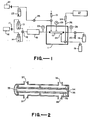
- FIG. 1 is a flow diagram of a microbiological reactor useful in accordance with the present invention.
- the microbiological reactor 10 containing hollow fiber membranes is located within gravity convection incubator 11 which maintains the environment of the reactor 10 at a constant temperature.
- pump 15 which is preferably a peristaltic pump.
- the media in vial 13 and 14 may be kept under inert atmosphere, preferably helium, or oxygen-containing atmosphere, as appropriate, which is bubbled into the vial from inert gas containing tank 16 which is filtered through a sterile filter 17.
- the liquid effluents from reactor 10 may be collected into reservoirs 18 and 19.
- Reservoir 18 is a liquid effluent from the lumen of the hollow fibers and reservoir 19 collects the liquid effluent from the shell space surrounding the lumen. Small samples of the lumen effluent may be taken off through sample tube 20.
- the reactor 10 may be inoculated with appropriate cell cultures through inoculating syringe 21. Following inoculation the same port may be used for flushing sterile, humidified air from tank 22 through humidifier 23 into reactor 10.
- the shell space outlet port 24 is located below the level of reactor 10 to allow extraneous fluid to drain from the fiber bundle, thus keeping the outer fiber surface in contact with the flowing gas stream.
- a micrometric capilary valve 25 is located upstream of the reactor 10 to control the air flow rate through the shell space.
- gas samples may be directed from the shell space effluent stream via line 26 into a gas chromatograph 27 through rotameter 28.
- Various ,pressures may be monitored by manometers located in various lines by manometers 29 located in various lines throughout the system.
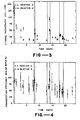
- FIG. 2 The design of a reactor with a single hollow fiber is schematically represented in Figure 2.
- Cell inoculum is introduced into the shell space 31 of reactor 30 through an inoculation port (not shown).
- Chemotactic microorganisms are capable of moving through large diameter pores on the fiber surface into the macro porous wall matrix 32 following inoculation. This movement into the wall matrix may be enhanced by pulling a slight suction on the fiber lumen 33 if necessary to establish non-motile microbes.
- the introduction of at least one viable cell into a macro pore will eventually lead to a dense cell packing as cells continue to grow and divide within the pore volume, essentially immobilizing and entrapping the actively growing cells within the wall matrix.
- Liquid phase nutrients are introduced into one end of the lumen and convectively flow through the lumen and penetrate the lumen membrane 34 into the macro porous region containing the cells.
- Cellular metabolic products excreted into the extra cellular space within the fiber wall, may diffuse or convect radially in the reverse direction across'the membrane 34 into the fiber lumen where they are subsequently swept from the fiber through an exit port of the fiber lumen 35.
- continuous. flushing of the shell space 31 with a gas stream through gas entry ports 36 will supply gaseous nutrients such as oxygen into the shell space, while simultaneously removing gaseous metabolic products such as carbon dioxide through gaseous exit ports 37.
- Figure 2 has been described in connection with an asymmetric hollow fiber, the design of the reactor containing an isotropic hollow fiber is essentially the same as shown in Figure 2 except that the cells grow on the outer fiber surface 32 rather than within the fiber wall.
- the complete growth medium contained the following components per liter of distilled water: glucose, 100 grams; yeast extract, 8.5grams; NH 4 C1, 1.32 grams; CaCl 2 , 0.06 grams; MgS0 4 .7H 2 0, 0.11 grams; potassium acid phthalate, 10.21 grams; and NaOH, 1.42 grams.
- the pH of the medium was 5.4.
- the nitrogen deficient medium had the following components per liter of distilled water: glucose, 100 grams; KH 2 PO 4 , 1 gram; potassium acid phthalate, 10.21 grams; NaOH, 1.42 grams; MgS0 4 .7H 2 0, 0.25 grams; CaCl 2 , 0.06 grams; meso-inositol, 0.125 grams; mineral salts solution, 1.0 ml.; and vitamin solution, 1.0 ml.
- the mineral salt solution contained the following per 100 ml of distilled water: ZnS0 4 .7H 2 0, 0.5 grams; FeS0 4 .7H 2 0, 0.1 grams; MnS0 4 H 2 0, 0.15 grams; CuSO 4 .5H 2 O, 0.20 grams.
- the vitamin solution contained the following per 100 ml of distilled water: thiamine hydrochloride, 0.5 grams; pyridoxine hydrochloride, 0.625 grams; nicotinic acid, 0.5 grams; Ca-D-pathothenate, 0.625 grams; D-biotin, 0.0125 grams.
- the yeast innoculum was an exponential-phase culture of S. cerevisiae (ATCC 4126) grown in growth medium, to a density 10 cells per ml.
- the shell space shown diagramatically in Figure 2, was inoculated with S. cerevisiae by means of the inoculum syringe shown in Figure 1. After one hour the shell space was drained and thereafter was flushed with humidified air at the rate of 20 ml per minute. Growth medium was perfused through the fiber lumen as diagrammed in Figure 2 for ten hours. A cell density of 10 9 -10 10 cells/ml was attained. The non-growth nitrogen deficient medium was thereafter perfused through the fiber lumen until the eighth day of the culture.
- the growth phases are represented in Figures 3 and 4 by the shaded areas.
- the ethanol production rate during the initial growth phase was approximately 133 gm/1-hr.
- the productivity steadily declined before stabilizing at a level between 10 and 15 gm/l-hr.after five days.
- Subsequent growth phases at eight, thirteen and eighteen days corrolate with a significant increases in ethanol productivity as shown in Figure 3.
- the ethanol productivity always appeared to stabilize between 10 and 15 gm/1-hr.
- Figure 4 is a plot of the fermentation efficiency as a function of time after inoculation.
- the fermentation efficiency of 100% occurs under the ideal conversion of one mole of glucose to two moles of ethanol and carbon dioxide.
- growth phases generally bring about an increase in the fermentation efficiency of a culture exposed to a non-growth medium.
- Human choriocarcinoma cells are grown in a microbiological reactor on artificial capillaries according to the method of Knazek (Patent No. 3,821,087). After the desired cell density is achieved, the culture medium is replaced with the same medium containing methotrexate. When necessary, the complete growth medium without inhibitors of DNA synthesis replaces the non-growth medium to regenerate the capacity to produce human chorionic gonadotropin.
- Bacillus subtilis (749/C) a mutant whose DNA replication can be inhibited by elevated temperature, is grown in a complete medium on artificial capillaries in a microbiological reactor. This organism excretes penicillinase at high rates. After the desired cell density is achieved, the temperature of the reactor and/or growth medium is raised to inhibit cell division and growth. Penicillinase is recovered from the perfusion medium during both growth and production phases.
- Eschericha coli K-12 (CRT 461.1), containing PBR 322, is a temperature sensitive mutant whose DNA synthesis is inhibited by elevated temperatures.
- the plasmid produces penicillinase which is normally retained intracellularly in the bacteria.
- the organism is grown in a chemostat in a complete growth medium to a desired cell density.
- the temperature of the chemostat is raised to inhibit further growth and cell division.
- Cells washed out of the chemostat are isolated and penicillinase is recovered from disrupted cells.
- the desired cell density within the chemostat is regenerated by reducing the temperature to allow cell growth and division.
Landscapes
- Life Sciences & Earth Sciences (AREA)
- Chemical & Material Sciences (AREA)
- Organic Chemistry (AREA)
- Health & Medical Sciences (AREA)
- Engineering & Computer Science (AREA)
- Zoology (AREA)
- Wood Science & Technology (AREA)
- Bioinformatics & Cheminformatics (AREA)
- Genetics & Genomics (AREA)
- Biotechnology (AREA)
- General Engineering & Computer Science (AREA)
- Microbiology (AREA)
- Biochemistry (AREA)
- General Health & Medical Sciences (AREA)
- Biomedical Technology (AREA)
- Sustainable Development (AREA)
- Molecular Biology (AREA)
- Chemical Kinetics & Catalysis (AREA)
- General Chemical & Material Sciences (AREA)
- Analytical Chemistry (AREA)
- Mycology (AREA)
- Medicinal Chemistry (AREA)
- Immunology (AREA)
- Physics & Mathematics (AREA)
- Biophysics (AREA)
- Plant Pathology (AREA)
- Proteomics, Peptides & Aminoacids (AREA)
- Micro-Organisms Or Cultivation Processes Thereof (AREA)
- Preparation Of Compounds By Using Micro-Organisms (AREA)
- Apparatus Associated With Microorganisms And Enzymes (AREA)
- Immobilizing And Processing Of Enzymes And Microorganisms (AREA)
Applications Claiming Priority (2)
| Application Number | Priority Date | Filing Date | Title |
|---|---|---|---|
| US40599182A | 1982-08-06 | 1982-08-06 | |
| US405991 | 1982-08-06 |
Publications (2)
| Publication Number | Publication Date |
|---|---|
| EP0101273A2 true EP0101273A2 (de) | 1984-02-22 |
| EP0101273A3 EP0101273A3 (de) | 1986-01-22 |
Family
ID=23606077
Family Applications (1)
| Application Number | Title | Priority Date | Filing Date |
|---|---|---|---|
| EP83304549A Withdrawn EP0101273A3 (de) | 1982-08-06 | 1983-08-05 | Herstellung von biologischen Produkten mittels immobilisierter Zellen |
Country Status (5)
| Country | Link |
|---|---|
| EP (1) | EP0101273A3 (de) |
| JP (1) | JPS5998685A (de) |
| AU (1) | AU1765383A (de) |
| BR (1) | BR8304213A (de) |
| CA (1) | CA1206433A (de) |
Cited By (6)
| Publication number | Priority date | Publication date | Assignee | Title |
|---|---|---|---|---|
| WO1989004867A1 (en) * | 1987-11-18 | 1989-06-01 | Cetus Corporation | Method of increasing product expression through solute stress |
| EP0334506A3 (de) * | 1988-03-07 | 1989-10-11 | Japan Gore-Tex, Inc. | Vorrichtung zur Versorgung einer Zellkultur mit Gas |
| EP0345588A1 (de) * | 1988-06-03 | 1989-12-13 | Gesellschaft für Biotechnologische Forschung mbH (GBF) | Verfahren und Anordnung zur Regelung eines biologischen Wachstumsprozesses |
| EP0405858A3 (en) * | 1989-06-26 | 1992-04-29 | Eli Lilly And Company | Control of aberrant expression vector accumulation during fermentation procedures |
| EP0931837A1 (de) * | 1998-01-27 | 1999-07-28 | Mitsui Chemicals, Inc. | Verfahren zur Herstellung von Phytase |
| US6238891B1 (en) * | 1987-11-18 | 2001-05-29 | Cetus Oncology Corporation | Method of increasing product expression through solute stress |
Family Cites Families (1)
| Publication number | Priority date | Publication date | Assignee | Title |
|---|---|---|---|---|
| US3821087A (en) * | 1972-05-18 | 1974-06-28 | Dedrick R | Cell culture on semi-permeable tubular membranes |
-
1983
- 1983-08-05 CA CA000434036A patent/CA1206433A/en not_active Expired
- 1983-08-05 JP JP58143619A patent/JPS5998685A/ja active Pending
- 1983-08-05 EP EP83304549A patent/EP0101273A3/de not_active Withdrawn
- 1983-08-05 AU AU17653/83A patent/AU1765383A/en not_active Abandoned
- 1983-08-05 BR BR8304213A patent/BR8304213A/pt unknown
Cited By (11)
| Publication number | Priority date | Publication date | Assignee | Title |
|---|---|---|---|---|
| WO1989004867A1 (en) * | 1987-11-18 | 1989-06-01 | Cetus Corporation | Method of increasing product expression through solute stress |
| US6238891B1 (en) * | 1987-11-18 | 2001-05-29 | Cetus Oncology Corporation | Method of increasing product expression through solute stress |
| US6905847B2 (en) | 1987-11-18 | 2005-06-14 | Chiron Corporation | Method of increasing product expression through solute stress |
| US7070960B2 (en) | 1987-11-18 | 2006-07-04 | Chiron Corporation | Method of increasing product expression through solute stress |
| EP0334506A3 (de) * | 1988-03-07 | 1989-10-11 | Japan Gore-Tex, Inc. | Vorrichtung zur Versorgung einer Zellkultur mit Gas |
| EP0345588A1 (de) * | 1988-06-03 | 1989-12-13 | Gesellschaft für Biotechnologische Forschung mbH (GBF) | Verfahren und Anordnung zur Regelung eines biologischen Wachstumsprozesses |
| WO1989012091A1 (fr) * | 1988-06-03 | 1989-12-14 | Gesellschaft Für Biotechnologische Forschung Mbh ( | Procede et agencement pour reguler un processus de croissance biologique |
| EP0405858A3 (en) * | 1989-06-26 | 1992-04-29 | Eli Lilly And Company | Control of aberrant expression vector accumulation during fermentation procedures |
| US5824496A (en) * | 1989-06-26 | 1998-10-20 | Eli Lilly And Company | Control of aberrant expression vector accumulation during fermentation procedures |
| EP0931837A1 (de) * | 1998-01-27 | 1999-07-28 | Mitsui Chemicals, Inc. | Verfahren zur Herstellung von Phytase |
| US6140077A (en) * | 1998-01-27 | 2000-10-31 | Mitsui Chemicals, Inc. | Method for producing phytase |
Also Published As
| Publication number | Publication date |
|---|---|
| BR8304213A (pt) | 1984-03-13 |
| EP0101273A3 (de) | 1986-01-22 |
| CA1206433A (en) | 1986-06-24 |
| AU1765383A (en) | 1984-02-09 |
| JPS5998685A (ja) | 1984-06-07 |
Similar Documents
| Publication | Publication Date | Title |
|---|---|---|
| Bruce Vick Roy et al. | Lactic acid production by Lactobacillus delbreuckii in a hollow fiber fermenter | |
| US4442206A (en) | Method of using isotropic, porous-wall polymeric membrane, hollow-fibers for culture of microbes | |
| Inloes et al. | Hollow‐fiber membrane bioreactors using immobilized E. coli for protein synthesis | |
| Nagashima et al. | Continuous ethanol fermentation using immobilized yeast cells | |
| US4440853A (en) | Microbiological methods using hollow fiber membrane reactor | |
| US5081035A (en) | Bioreactor system | |
| US4167450A (en) | Method and apparatus for the production of secondary metabolites by the maintenance-state cultivation of microorganisms | |
| Inloes et al. | Ethanol production by Saccharomyces cerevisiae immobilized in hollow-fiber membrane bioreactors | |
| US5510257A (en) | Hollow fiber immobilization with chopped microporous hollow fibers | |
| Roy et al. | Microbial hollow fiber bioreactors | |
| Brown et al. | The effect of acid pH on the growth kinetics of Trichoderma viride | |
| Nomura et al. | Factors affecting lactic acid production rate in the built-in electrodialysis fermentation, an approach to high speed batch culture | |
| Chang | Membrane bioreactors: engineering aspects | |
| CA1206433A (en) | Production of biological products using resting cells | |
| Berry et al. | Effect of growing conditions of recombinant E. coli in carrageenan gel beads upon biomasse production and plasmid stability | |
| US5304483A (en) | Controlling cultivation conditions for animal cells | |
| EP1907543B1 (de) | Herstellung von rekombinanten produkten unter verwendung von kapillarmembranen | |
| Märkl et al. | A new dialysis fermentor for the production of high concentrations of extracellular enzymes | |
| HÄggström et al. | Continuous production of butanol with immobilized cells of Clostridium acetobutylicum | |
| WO1984001959A1 (en) | Rapid production of biological products by fermentation in a densely-packed microbial membrane reactor | |
| Strandberg et al. | Continuous ethanol production by a flocculent strain of Zymomonas mobilis | |
| Hwang et al. | Continuous production of acrylamide by Brevibacterium sp. immobilized in a dual hollow fiber bioreactor | |
| Reardon et al. | Effects of pH and added metabolites on bioconversions by immobilized non‐growing Clostridium acetobutylicum | |
| CA1210719A (en) | Method of immobilizing enzymes | |
| FI80718C (fi) | Foerfarande foer framstaellning av aettiksyra av kolhydrater med hjaelp av en clostridium thermoaceticum stamm. |
Legal Events
| Date | Code | Title | Description |
|---|---|---|---|
| PUAI | Public reference made under article 153(3) epc to a published international application that has entered the european phase |
Free format text: ORIGINAL CODE: 0009012 |
|
| AK | Designated contracting states |
Designated state(s): AT BE CH DE FR GB IT LI LU NL SE |
|
| PUAL | Search report despatched |
Free format text: ORIGINAL CODE: 0009013 |
|
| AK | Designated contracting states |
Designated state(s): AT BE CH DE FR GB IT LI LU NL SE |
|
| STAA | Information on the status of an ep patent application or granted ep patent |
Free format text: STATUS: THE APPLICATION IS DEEMED TO BE WITHDRAWN |
|
| 18D | Application deemed to be withdrawn |
Effective date: 19860923 |
|
| RIN1 | Information on inventor provided before grant (corrected) |
Inventor name: TAYLOR, DEAN Inventor name: MICHAELS, ALAN S. Inventor name: ROBERTSON, CHANNING R. Inventor name: MATIN, ABDUL Inventor name: COHEN, STANLEY N. Inventor name: INLOES, DOUGLAS S. |