EP0101615A2 - Composants de catalyseur sur support pour polyoléfines, procédé de préparation et utilisation de ceux-ci - Google Patents
Composants de catalyseur sur support pour polyoléfines, procédé de préparation et utilisation de ceux-ci Download PDFInfo
- Publication number
- EP0101615A2 EP0101615A2 EP83108174A EP83108174A EP0101615A2 EP 0101615 A2 EP0101615 A2 EP 0101615A2 EP 83108174 A EP83108174 A EP 83108174A EP 83108174 A EP83108174 A EP 83108174A EP 0101615 A2 EP0101615 A2 EP 0101615A2
- Authority
- EP
- European Patent Office
- Prior art keywords
- component
- catalyst
- moles
- catalyst component
- polymerization
- Prior art date
- Legal status (The legal status is an assumption and is not a legal conclusion. Google has not performed a legal analysis and makes no representation as to the accuracy of the status listed.)
- Granted
Links
- 238000000034 method Methods 0.000 title claims abstract description 134
- 239000003054 catalyst Substances 0.000 title claims description 335
- 229920000098 polyolefin Polymers 0.000 title claims description 8
- 239000002904 solvent Substances 0.000 claims abstract description 106
- 238000006116 polymerization reaction Methods 0.000 claims abstract description 84
- 150000003623 transition metal compounds Chemical class 0.000 claims abstract description 78
- 239000004215 Carbon black (E152) Substances 0.000 claims abstract description 69
- 229930195733 hydrocarbon Natural products 0.000 claims abstract description 69
- 150000002430 hydrocarbons Chemical class 0.000 claims abstract description 69
- 229910052751 metal Inorganic materials 0.000 claims abstract description 60
- 239000002184 metal Substances 0.000 claims abstract description 60
- 238000010438 heat treatment Methods 0.000 claims abstract description 53
- 239000002841 Lewis acid Substances 0.000 claims abstract description 42
- 150000007517 lewis acids Chemical class 0.000 claims abstract description 42
- 239000002685 polymerization catalyst Substances 0.000 claims abstract description 42
- 239000004711 α-olefin Substances 0.000 claims abstract description 42
- 150000003839 salts Chemical class 0.000 claims abstract description 35
- RYGMFSIKBFXOCR-UHFFFAOYSA-N Copper Chemical compound [Cu] RYGMFSIKBFXOCR-UHFFFAOYSA-N 0.000 claims abstract description 16
- 229910052802 copper Inorganic materials 0.000 claims abstract description 16
- 239000010949 copper Substances 0.000 claims abstract description 16
- 230000007704 transition Effects 0.000 claims abstract description 16
- 239000010936 titanium Substances 0.000 claims description 80
- 229910052719 titanium Inorganic materials 0.000 claims description 78
- RTAQQCXQSZGOHL-UHFFFAOYSA-N Titanium Chemical compound [Ti] RTAQQCXQSZGOHL-UHFFFAOYSA-N 0.000 claims description 73
- MTZQAGJQAFMTAQ-UHFFFAOYSA-N ethyl benzoate Chemical compound CCOC(=O)C1=CC=CC=C1 MTZQAGJQAFMTAQ-UHFFFAOYSA-N 0.000 claims description 58
- IMNFDUFMRHMDMM-UHFFFAOYSA-N N-Heptane Chemical compound CCCCCCC IMNFDUFMRHMDMM-UHFFFAOYSA-N 0.000 claims description 57
- VLKZOEOYAKHREP-UHFFFAOYSA-N n-Hexane Chemical compound CCCCCC VLKZOEOYAKHREP-UHFFFAOYSA-N 0.000 claims description 51
- RDOXTESZEPMUJZ-UHFFFAOYSA-N anisole Chemical compound COC1=CC=CC=C1 RDOXTESZEPMUJZ-UHFFFAOYSA-N 0.000 claims description 48
- TWRXJAOTZQYOKJ-UHFFFAOYSA-L Magnesium chloride Chemical group [Mg+2].[Cl-].[Cl-] TWRXJAOTZQYOKJ-UHFFFAOYSA-L 0.000 claims description 40
- VSCWAEJMTAWNJL-UHFFFAOYSA-K aluminium trichloride Chemical compound Cl[Al](Cl)Cl VSCWAEJMTAWNJL-UHFFFAOYSA-K 0.000 claims description 40
- XJDNKRIXUMDJCW-UHFFFAOYSA-J titanium tetrachloride Chemical compound Cl[Ti](Cl)(Cl)Cl XJDNKRIXUMDJCW-UHFFFAOYSA-J 0.000 claims description 36
- -1 titanium halide Chemical class 0.000 claims description 34
- 239000007787 solid Substances 0.000 claims description 33
- 239000000203 mixture Substances 0.000 claims description 27
- 239000002002 slurry Substances 0.000 claims description 27
- 239000000470 constituent Substances 0.000 claims description 24
- UZKWTJUDCOPSNM-UHFFFAOYSA-N methoxybenzene Substances CCCCOC=C UZKWTJUDCOPSNM-UHFFFAOYSA-N 0.000 claims description 24
- 229910003074 TiCl4 Inorganic materials 0.000 claims description 21
- 239000003426 co-catalyst Substances 0.000 claims description 21
- 150000002148 esters Chemical class 0.000 claims description 21
- 229910001629 magnesium chloride Inorganic materials 0.000 claims description 20
- OFBQJSOFQDEBGM-UHFFFAOYSA-N Pentane Chemical compound CCCCC OFBQJSOFQDEBGM-UHFFFAOYSA-N 0.000 claims description 19
- RTZKZFJDLAIYFH-UHFFFAOYSA-N ether Substances CCOCC RTZKZFJDLAIYFH-UHFFFAOYSA-N 0.000 claims description 18
- 239000012442 inert solvent Substances 0.000 claims description 18
- 229930195734 saturated hydrocarbon Natural products 0.000 claims description 18
- 125000004432 carbon atom Chemical group C* 0.000 claims description 17
- 238000002156 mixing Methods 0.000 claims description 16
- 239000004743 Polypropylene Substances 0.000 claims description 15
- 150000002170 ethers Chemical class 0.000 claims description 15
- 229920001155 polypropylene Polymers 0.000 claims description 15
- QWTDNUCVQCZILF-UHFFFAOYSA-N isopentane Chemical compound CCC(C)C QWTDNUCVQCZILF-UHFFFAOYSA-N 0.000 claims description 14
- IJGRMHOSHXDMSA-UHFFFAOYSA-N Atomic nitrogen Chemical compound N#N IJGRMHOSHXDMSA-UHFFFAOYSA-N 0.000 claims description 12
- 150000001875 compounds Chemical class 0.000 claims description 11
- ATUOYWHBWRKTHZ-UHFFFAOYSA-N Propane Chemical compound CCC ATUOYWHBWRKTHZ-UHFFFAOYSA-N 0.000 claims description 10
- 150000001338 aliphatic hydrocarbons Chemical class 0.000 claims description 10
- 239000011949 solid catalyst Substances 0.000 claims description 10
- 238000005406 washing Methods 0.000 claims description 10
- 125000004429 atom Chemical group 0.000 claims description 9
- 150000001924 cycloalkanes Chemical class 0.000 claims description 8
- OTMSDBZUPAUEDD-UHFFFAOYSA-N Ethane Chemical compound CC OTMSDBZUPAUEDD-UHFFFAOYSA-N 0.000 claims description 7
- 239000001273 butane Substances 0.000 claims description 7
- AFABGHUZZDYHJO-UHFFFAOYSA-N dimethyl butane Natural products CCCC(C)C AFABGHUZZDYHJO-UHFFFAOYSA-N 0.000 claims description 7
- 125000001033 ether group Chemical group 0.000 claims description 7
- IJDNQMDRQITEOD-UHFFFAOYSA-N n-butane Chemical compound CCCC IJDNQMDRQITEOD-UHFFFAOYSA-N 0.000 claims description 7
- QQONPFPTGQHPMA-UHFFFAOYSA-N propylene Natural products CC=C QQONPFPTGQHPMA-UHFFFAOYSA-N 0.000 claims description 7
- 125000004805 propylene group Chemical group [H]C([H])([H])C([H])([*:1])C([H])([H])[*:2] 0.000 claims description 7
- QVGXLLKOCUKJST-UHFFFAOYSA-N atomic oxygen Chemical compound [O] QVGXLLKOCUKJST-UHFFFAOYSA-N 0.000 claims description 6
- 229910052757 nitrogen Inorganic materials 0.000 claims description 6
- 239000001301 oxygen Substances 0.000 claims description 6
- 229910052760 oxygen Inorganic materials 0.000 claims description 6
- 229910052720 vanadium Inorganic materials 0.000 claims description 6
- VYZAMTAEIAYCRO-UHFFFAOYSA-N Chromium Chemical compound [Cr] VYZAMTAEIAYCRO-UHFFFAOYSA-N 0.000 claims description 5
- OAICVXFJPJFONN-UHFFFAOYSA-N Phosphorus Chemical compound [P] OAICVXFJPJFONN-UHFFFAOYSA-N 0.000 claims description 5
- NINIDFKCEFEMDL-UHFFFAOYSA-N Sulfur Chemical compound [S] NINIDFKCEFEMDL-UHFFFAOYSA-N 0.000 claims description 5
- 150000001412 amines Chemical class 0.000 claims description 5
- 229910052804 chromium Inorganic materials 0.000 claims description 5
- 239000011651 chromium Substances 0.000 claims description 5
- 150000002576 ketones Chemical class 0.000 claims description 5
- 229910052698 phosphorus Inorganic materials 0.000 claims description 5
- 239000011574 phosphorus Substances 0.000 claims description 5
- 239000001294 propane Substances 0.000 claims description 5
- 239000011593 sulfur Substances 0.000 claims description 5
- 229910052717 sulfur Inorganic materials 0.000 claims description 5
- GPPXJZIENCGNKB-UHFFFAOYSA-N vanadium Chemical compound [V]#[V] GPPXJZIENCGNKB-UHFFFAOYSA-N 0.000 claims description 5
- 150000001299 aldehydes Chemical class 0.000 claims description 4
- 150000001408 amides Chemical class 0.000 claims description 4
- 239000012948 isocyanate Substances 0.000 claims description 4
- 150000002513 isocyanates Chemical class 0.000 claims description 4
- 150000002825 nitriles Chemical class 0.000 claims description 4
- 150000007970 thio esters Chemical class 0.000 claims description 4
- 150000003568 thioethers Chemical class 0.000 claims description 4
- 238000009736 wetting Methods 0.000 claims description 4
- 150000003755 zirconium compounds Chemical class 0.000 claims description 2
- XYFCBTPGUUZFHI-UHFFFAOYSA-N Phosphine Chemical compound P XYFCBTPGUUZFHI-UHFFFAOYSA-N 0.000 claims 2
- LFQSCWFLJHTTHZ-UHFFFAOYSA-N Ethanol Chemical compound CCO LFQSCWFLJHTTHZ-UHFFFAOYSA-N 0.000 claims 1
- ISWSIDIOOBJBQZ-UHFFFAOYSA-N Phenol Chemical compound OC1=CC=CC=C1 ISWSIDIOOBJBQZ-UHFFFAOYSA-N 0.000 claims 1
- SKOLWUPSYHWYAM-UHFFFAOYSA-N carbonodithioic O,S-acid Chemical compound SC(S)=O SKOLWUPSYHWYAM-UHFFFAOYSA-N 0.000 claims 1
- 150000001732 carboxylic acid derivatives Chemical class 0.000 claims 1
- 229910000073 phosphorus hydride Inorganic materials 0.000 claims 1
- 150000002739 metals Chemical class 0.000 abstract description 16
- 239000000306 component Substances 0.000 description 407
- 239000002585 base Substances 0.000 description 42
- 229920000642 polymer Polymers 0.000 description 30
- 238000002474 experimental method Methods 0.000 description 21
- 239000007788 liquid Substances 0.000 description 17
- 235000010210 aluminium Nutrition 0.000 description 12
- 238000009472 formulation Methods 0.000 description 12
- QSSJZLPUHJDYKF-UHFFFAOYSA-N methyl 4-methylbenzoate Chemical compound COC(=O)C1=CC=C(C)C=C1 QSSJZLPUHJDYKF-UHFFFAOYSA-N 0.000 description 12
- 229910052723 transition metal Inorganic materials 0.000 description 12
- 229910052782 aluminium Inorganic materials 0.000 description 11
- 150000003624 transition metals Chemical class 0.000 description 11
- 238000004519 manufacturing process Methods 0.000 description 10
- 239000012024 dehydrating agents Substances 0.000 description 9
- 239000011777 magnesium Substances 0.000 description 8
- 230000008569 process Effects 0.000 description 8
- VOITXYVAKOUIBA-UHFFFAOYSA-N triethylaluminium Chemical compound CC[Al](CC)CC VOITXYVAKOUIBA-UHFFFAOYSA-N 0.000 description 8
- 230000000694 effects Effects 0.000 description 7
- 238000001914 filtration Methods 0.000 description 7
- 229910052749 magnesium Inorganic materials 0.000 description 7
- 239000007795 chemical reaction product Substances 0.000 description 6
- 230000009931 harmful effect Effects 0.000 description 6
- 150000003609 titanium compounds Chemical class 0.000 description 6
- 230000006872 improvement Effects 0.000 description 5
- 125000002524 organometallic group Chemical group 0.000 description 5
- 238000002360 preparation method Methods 0.000 description 5
- VEXZGXHMUGYJMC-UHFFFAOYSA-M Chloride anion Chemical compound [Cl-] VEXZGXHMUGYJMC-UHFFFAOYSA-M 0.000 description 4
- FHUODBDRWMIBQP-UHFFFAOYSA-N Ethyl p-anisate Chemical compound CCOC(=O)C1=CC=C(OC)C=C1 FHUODBDRWMIBQP-UHFFFAOYSA-N 0.000 description 4
- FYYHWMGAXLPEAU-UHFFFAOYSA-N Magnesium Chemical compound [Mg] FYYHWMGAXLPEAU-UHFFFAOYSA-N 0.000 description 4
- 229910010066 TiC14 Inorganic materials 0.000 description 4
- 238000000605 extraction Methods 0.000 description 4
- 150000004820 halides Chemical class 0.000 description 4
- 238000003801 milling Methods 0.000 description 4
- 239000000178 monomer Substances 0.000 description 4
- 239000002245 particle Substances 0.000 description 4
- CSDQQAQKBAQLLE-UHFFFAOYSA-N 4-(4-chlorophenyl)-4,5,6,7-tetrahydrothieno[3,2-c]pyridine Chemical compound C1=CC(Cl)=CC=C1C1C(C=CS2)=C2CCN1 CSDQQAQKBAQLLE-UHFFFAOYSA-N 0.000 description 3
- 239000005997 Calcium carbide Substances 0.000 description 3
- XUIMIQQOPSSXEZ-UHFFFAOYSA-N Silicon Chemical compound [Si] XUIMIQQOPSSXEZ-UHFFFAOYSA-N 0.000 description 3
- QCWXUUIWCKQGHC-UHFFFAOYSA-N Zirconium Chemical compound [Zr] QCWXUUIWCKQGHC-UHFFFAOYSA-N 0.000 description 3
- 150000001298 alcohols Chemical class 0.000 description 3
- 150000001336 alkenes Chemical class 0.000 description 3
- 125000005234 alkyl aluminium group Chemical group 0.000 description 3
- 230000008901 benefit Effects 0.000 description 3
- 229910052799 carbon Inorganic materials 0.000 description 3
- 150000001735 carboxylic acids Chemical class 0.000 description 3
- 230000003247 decreasing effect Effects 0.000 description 3
- 150000002696 manganese Chemical class 0.000 description 3
- 239000002480 mineral oil Substances 0.000 description 3
- 235000010446 mineral oil Nutrition 0.000 description 3
- 150000002989 phenols Chemical class 0.000 description 3
- 150000003003 phosphines Chemical class 0.000 description 3
- FAIAAWCVCHQXDN-UHFFFAOYSA-N phosphorus trichloride Chemical compound ClP(Cl)Cl FAIAAWCVCHQXDN-UHFFFAOYSA-N 0.000 description 3
- 230000009467 reduction Effects 0.000 description 3
- 229910052710 silicon Inorganic materials 0.000 description 3
- 239000010703 silicon Substances 0.000 description 3
- CLZWAWBPWVRRGI-UHFFFAOYSA-N tert-butyl 2-[2-[2-[2-[bis[2-[(2-methylpropan-2-yl)oxy]-2-oxoethyl]amino]-5-bromophenoxy]ethoxy]-4-methyl-n-[2-[(2-methylpropan-2-yl)oxy]-2-oxoethyl]anilino]acetate Chemical compound CC1=CC=C(N(CC(=O)OC(C)(C)C)CC(=O)OC(C)(C)C)C(OCCOC=2C(=CC=C(Br)C=2)N(CC(=O)OC(C)(C)C)CC(=O)OC(C)(C)C)=C1 CLZWAWBPWVRRGI-UHFFFAOYSA-N 0.000 description 3
- 125000005323 thioketone group Chemical group 0.000 description 3
- YONPGGFAJWQGJC-UHFFFAOYSA-K titanium(iii) chloride Chemical compound Cl[Ti](Cl)Cl YONPGGFAJWQGJC-UHFFFAOYSA-K 0.000 description 3
- 229910052726 zirconium Inorganic materials 0.000 description 3
- VGGSQFUCUMXWEO-UHFFFAOYSA-N Ethene Chemical compound C=C VGGSQFUCUMXWEO-UHFFFAOYSA-N 0.000 description 2
- 239000005977 Ethylene Substances 0.000 description 2
- 125000000217 alkyl group Chemical group 0.000 description 2
- 125000003118 aryl group Chemical group 0.000 description 2
- 230000015572 biosynthetic process Effects 0.000 description 2
- 238000009835 boiling Methods 0.000 description 2
- 239000003795 chemical substances by application Substances 0.000 description 2
- 238000004140 cleaning Methods 0.000 description 2
- 238000010908 decantation Methods 0.000 description 2
- 230000007423 decrease Effects 0.000 description 2
- 230000008030 elimination Effects 0.000 description 2
- 238000003379 elimination reaction Methods 0.000 description 2
- BHEPBYXIRTUNPN-UHFFFAOYSA-N hydridophosphorus(.) (triplet) Chemical compound [PH] BHEPBYXIRTUNPN-UHFFFAOYSA-N 0.000 description 2
- 238000011084 recovery Methods 0.000 description 2
- 239000007858 starting material Substances 0.000 description 2
- 229920000576 tactic polymer Polymers 0.000 description 2
- XLYOFNOQVPJJNP-UHFFFAOYSA-N water Substances O XLYOFNOQVPJJNP-UHFFFAOYSA-N 0.000 description 2
- VXEGSRKPIUDPQT-UHFFFAOYSA-N 4-[4-(4-methoxyphenyl)piperazin-1-yl]aniline Chemical compound C1=CC(OC)=CC=C1N1CCN(C=2C=CC(N)=CC=2)CC1 VXEGSRKPIUDPQT-UHFFFAOYSA-N 0.000 description 1
- CPELXLSAUQHCOX-UHFFFAOYSA-M Bromide Chemical compound [Br-] CPELXLSAUQHCOX-UHFFFAOYSA-M 0.000 description 1
- KRHYYFGTRYWZRS-UHFFFAOYSA-M Fluoride anion Chemical compound [F-] KRHYYFGTRYWZRS-UHFFFAOYSA-M 0.000 description 1
- UFHFLCQGNIYNRP-UHFFFAOYSA-N Hydrogen Chemical compound [H][H] UFHFLCQGNIYNRP-UHFFFAOYSA-N 0.000 description 1
- 239000002879 Lewis base Substances 0.000 description 1
- 229910019440 Mg(OH) Inorganic materials 0.000 description 1
- 238000005054 agglomeration Methods 0.000 description 1
- 230000002776 aggregation Effects 0.000 description 1
- XAGFODPZIPBFFR-UHFFFAOYSA-N aluminium Chemical compound [Al] XAGFODPZIPBFFR-UHFFFAOYSA-N 0.000 description 1
- 159000000032 aromatic acids Chemical class 0.000 description 1
- 230000009286 beneficial effect Effects 0.000 description 1
- 230000015556 catabolic process Effects 0.000 description 1
- 230000003197 catalytic effect Effects 0.000 description 1
- 239000013065 commercial product Substances 0.000 description 1
- 230000000052 comparative effect Effects 0.000 description 1
- 238000007906 compression Methods 0.000 description 1
- 230000006835 compression Effects 0.000 description 1
- 238000010924 continuous production Methods 0.000 description 1
- 229920001577 copolymer Polymers 0.000 description 1
- 125000000753 cycloalkyl group Chemical group 0.000 description 1
- 238000000354 decomposition reaction Methods 0.000 description 1
- 238000006731 degradation reaction Methods 0.000 description 1
- 230000002939 deleterious effect Effects 0.000 description 1
- 230000006866 deterioration Effects 0.000 description 1
- 150000001993 dienes Chemical class 0.000 description 1
- YNLAOSYQHBDIKW-UHFFFAOYSA-M diethylaluminium chloride Chemical compound CC[Al](Cl)CC YNLAOSYQHBDIKW-UHFFFAOYSA-M 0.000 description 1
- 238000001704 evaporation Methods 0.000 description 1
- 239000000835 fiber Substances 0.000 description 1
- 239000012467 final product Substances 0.000 description 1
- 239000012530 fluid Substances 0.000 description 1
- 238000012685 gas phase polymerization Methods 0.000 description 1
- 238000000227 grinding Methods 0.000 description 1
- 229920006158 high molecular weight polymer Polymers 0.000 description 1
- 229920001519 homopolymer Polymers 0.000 description 1
- 150000004678 hydrides Chemical class 0.000 description 1
- 239000001257 hydrogen Substances 0.000 description 1
- 229910052739 hydrogen Inorganic materials 0.000 description 1
- XMBWDFGMSWQBCA-UHFFFAOYSA-N hydrogen iodide Chemical compound I XMBWDFGMSWQBCA-UHFFFAOYSA-N 0.000 description 1
- 125000002887 hydroxy group Chemical group [H]O* 0.000 description 1
- QWPPOHNGKGFGJK-UHFFFAOYSA-N hypochlorous acid Chemical compound ClO QWPPOHNGKGFGJK-UHFFFAOYSA-N 0.000 description 1
- 238000011065 in-situ storage Methods 0.000 description 1
- 238000010348 incorporation Methods 0.000 description 1
- 239000011261 inert gas Substances 0.000 description 1
- 238000001746 injection moulding Methods 0.000 description 1
- 150000007527 lewis bases Chemical class 0.000 description 1
- 238000011068 loading method Methods 0.000 description 1
- 239000002932 luster Substances 0.000 description 1
- VTHJTEIRLNZDEV-UHFFFAOYSA-L magnesium dihydroxide Chemical compound [OH-].[OH-].[Mg+2] VTHJTEIRLNZDEV-UHFFFAOYSA-L 0.000 description 1
- 239000000347 magnesium hydroxide Substances 0.000 description 1
- 229910001862 magnesium hydroxide Inorganic materials 0.000 description 1
- 230000004048 modification Effects 0.000 description 1
- 238000012986 modification Methods 0.000 description 1
- 150000002894 organic compounds Chemical class 0.000 description 1
- 150000002902 organometallic compounds Chemical class 0.000 description 1
- XHXFXVLFKHQFAL-UHFFFAOYSA-N phosphoryl trichloride Chemical compound ClP(Cl)(Cl)=O XHXFXVLFKHQFAL-UHFFFAOYSA-N 0.000 description 1
- 239000000047 product Substances 0.000 description 1
- 238000010298 pulverizing process Methods 0.000 description 1
- 239000005049 silicon tetrachloride Substances 0.000 description 1
- 239000000243 solution Substances 0.000 description 1
- 238000003756 stirring Methods 0.000 description 1
- 239000006228 supernatant Substances 0.000 description 1
- 238000012360 testing method Methods 0.000 description 1
Images





Classifications
-
- C—CHEMISTRY; METALLURGY
- C08—ORGANIC MACROMOLECULAR COMPOUNDS; THEIR PREPARATION OR CHEMICAL WORKING-UP; COMPOSITIONS BASED THEREON
- C08F—MACROMOLECULAR COMPOUNDS OBTAINED BY REACTIONS ONLY INVOLVING CARBON-TO-CARBON UNSATURATED BONDS
- C08F10/00—Homopolymers and copolymers of unsaturated aliphatic hydrocarbons having only one carbon-to-carbon double bond
Definitions
- This invention relates to supported polyolefin catalyst components and to methods of making and using such components.
- Organometallics have been used in combination with transition metal compounds to catalyze the production of high molecular weight polymers from ethylene and alpha-olefins to produce polymers having high stereoregularity.
- the basic catalysts used in these methods are formed by combining a transition metal salt with a metal alkyl or hydride. Titanium trichloride and an aluminum alkyl, such as triethyl aluminum or diethyl aluminum chloride, are often used. However, such catalysts generally have low productivity and produce polymer with low stereoregularity.
- Isotactic polypropylene results from a head-to-tail linkage of the monomer units resulting in the asymmetric carbon atoms all having the same configuration.
- the isotactic index is a measure of the percentage of isotactic isomer in the polymer.
- Atactic polypropylene results from random linkage of the monomer units.
- Isotactic polypropylene is a highly useful commercial product having high tensile strength, hardness, stiffness, resilience, clarity and better surface luster. Polypropylene finds extensive commercial use in injection molding, film, sheeting, filament and fiber applications. Commercially useful polypropylene contains essentially the stereoregular or isotactic isomer.
- the polymer produced using these basic catalysts must be extracted to remove the atactic (non-stereoregular) polymer to increase.the percentage of isotactic (stereo-regular) polymer in the final product. It is also necessary to deash polymer produced by this method to remove catalyst residues. The additional production steps of polymer extraction and polymer deashing add significantly to the cost of polymer produced with these basic catalysts.
- the first improvement in these catalysts resulted from the use of mixed titanium trichloride and aluminum trichloride as the catalyst with an aluminum alkyl co-catalyst.
- Some later supported catalysts were based on the reaction products of magnesium alkoxides with transition metal compounds. Examples include the reaction product of a transition metal compound with Mg(OR) 2 (U.S. Patent No. 3,644,318 and Belgian Patents Nos. 737,778; 743,325; and 780,530.)
- Promoted catalysts result from the addition of certain Lewis bases (electron donors) to the catalyst system.
- the electron donor has in certain situations been combined with titanium trichloride during production of the catalyst.
- Electron donors have included the ethers, esters, amines, ketones and nitroaromatics.
- the promoted catalysts improved the isotactic index of the polymer, they generally still did not produce polymer of such quality and quantity as to permit the elimination of polymer extraction and polymer deashing to remove catalyst residue.
- a catalyst component comprising an active component of titanium tetrachloride and a component support including aluminum trichloride, magnesium chloride, an ether in the form of anisole and an ester in the form of ethyl benzoate in one preferred embodiment of the invention.
- this catalyst has found this catalyst to be effective for the polymerization of alpha-olefins, particularly for the production of polypropylene.
- Applicants believe, however, that it would be advantageous if this catalyst component could be improved to improve its catalytic efficiency, and/or to improve the isotactic index and/or the bulk density of the produced polypropylene.
- a method of producing a polymerization catalyst component suitable for use in the polymerization of alpha-olefins comprises:
- catalyst component of this invention constitute high efficiency catalyst components for use in the polymerization of olefins, particularly alpha-olefins.
- catalyst components have only been used in the production of polypropylene, applicants believe that the catalyst components will also be useful for the production of satisfactory homopolymers or copolymers from other alpha-olefins, low molecular weight dienes, and ethylene.
- Co-comminution is a term used in the catalyst art to mean co-grinding or co-pulverization of components.
- the active component may be heated in the inert hydrocarbon solvent in the presence of an additional polymerization active tri-, tetra-, or penta-valent transition metal compound of a Group IVB-VIB metal.
- an additional quantity of the polymerization active transition metal compound can be incorporated into the catalyst component.
- This additional quantity of polymerization active transition metal compound, L -r the reaction product thereof including, for example, complexes thereof with one or more of the donors present in the system may be incorporated into the catalyst component slurry by being incorporated into the solid portion of the catalyst component itself, by being incorporated into the liquid portion of the catalyst component, or by being incorporated partly into the solid portion and partly into the liquid portion of the catalyst component slurry.
- the method of this invention may preferably include the step of incorporating a second organic electron donor.
- the second organic electron donor may be co-comminuted together with the component support, with the components of the component support, with the active transition metal compound or after the addition of the active transition metal compound.
- the first and second electron donors may be the same or may be different, and may conveniently be selected from the group consisting of organic electron donor compounds containing at least one atom of oxygen, sulfur, nitrogen or phosphorous to function as the electron donor atom.
- the first and second electron donors may be selected from the group consisting of ethers, esters, ketones, aldehydes, alcohols, carboxylic acids, phenols, thioethers, thioesters, thioketones, amines, amides, nitriles, isocyanates and phosphines.
- the first and second electron donors are selected from the group consisting of ethers and esters.
- the first electron donor is an ether in the form of anisole
- the second electron donor is an ester in the form of ethyl benzoate (E.B.).
- the support base will be used in anhydrous form.
- the support base may be co-comminuted with a suitable dehydrating agent. If a suitable dehydrating agent is employed, it need not be removed since it does not appear to have any harmful effects on the catalyst performance.
- a suitable dehydrating agent is employed, it need not be removed since it does not appear to have any harmful effects on the catalyst performance.
- Calcium hydride, calcium carbide and the silicon tetrahalides are acceptable dehydrating agents, although silicon tetrachloride is the preferred agent.
- the support base is then preferably first co-comminuted with the inorganic Lewis acid in a mill, preferably in a vibratory ball mill.
- the first electron donor may be incorporated by co-comminution to form the component support.
- the second electron donor should be incorporated by co-comminution with the component support, followed by the incorporation of the active transition metal compound.
- the inert hydrocarbon solvent may be selected from a wide group of inert saturated hydrocarbons.
- the solvent may be an aliphatic hydrocarbon, such as an aliphatic hydrocarbon having between about two and nine carbon atoms.
- the saturated hydrocarbon may have between about two and seven carbon atoms.
- the saturated hydrocarbon solvent may therefore be selected from the group consisting of heptane, hexane, pentane, particularly iso-pentane, butane and ethane.
- the inert hydrocarbon solvent may be a cycloalkane such as, for example, a cycloalkane having between about three and seven carbon atoms.
- the catalyst component of this invention will be formed under sufficient pressure for the solvent to operate effectively as a liquid solvent.
- the proportion of solvent used in preparing the catalyst component in accordance with this invention may be varied over a range, the solvent to component ratio may conveniently be at least sufficient for adequate wetting of the component to permit effective mixing.
- the solvent to component ratio may be between about 3:1 and about 1:3 by weight.
- the component ratio is between about 2:1 and 1:1 by weight. In a presently most preferred embodiment of the invention, the solvent to component ratio is about 3:2 by weight.
- the inorganic Lewis acid may conveniently be a metal salt selected from the group consisting of the Group IIIA halides, phosphorous trichloride and phosphorous oxytrichloride.
- the Lewis - acid is an aluminum halide, and most preferably an aluminum trichloride.
- the support base is preferably a magnesium or manganese salt, and most preferably a magnesium halide such as magnesium chloride.
- the polymerization active transition metal compound is preferably a compound of the formula MO p (OR) m X n-2p-m .
- M is a Group IVB-VIB metal with valency n * 3, 4 or 5.
- the metals titanium, vanadium, chromium and zirconium are preferred. Presently it appears that titanium is the most preferred metal due to its superior productivity.
- O is oxygen.
- p is 0 or 1.
- R is an alkyl, aryl, cycloalkyl group or substituted derivative threof, where 0 ⁇ m ⁇ n.
- X is any halide, i.e., chloride, bromide, iodide or fluoride, although the chloride is preferred.
- the preferred active transition metal compound is a titanium tetrahalide, and particularly titanium tetrachloride. It is presently believed that the active transition metal, preferably tetravalent titanium, is not reduced to the trivalent state in the catalyst component. Rather, it is presently believed that this reduction takes place in situ after addition of the organometallic compound during polymerization.
- the proportion of titanium incorporated in the polymerization catalyst component of this invention may be varied over a fairly wide range. Applicants have found that the proportion of titanium has a direct influence on the catalyst efficiency or productivity (the "C:E.”), on the isotacticity index (the II) and on the polymer bulk density. The titanium content may therefore be adjusted to obtain the desired balance between the productivity, the isotacticity and the bulk density.
- the titanium content in the polymerization catalyst component of this invention may be between about 2% and about 10% by weight of titanium as metal based on the weight of the solid portion of the catalyst component.
- the titanium content is between about 3 to 6% by weight of titanium as metal based on the weight of the solid portion of the catalyst component.
- the titanium component should be incorporated into the solid portion of the catalyst component, and at least a portion of the titanium component should preferably be contained in the liquid portion of the catalyst component.
- the portion of titanium incorporated into the solid portion of the catalyst component comprises at least about 40 to 60% by total weight of the total titanium content.
- the portion of titanium incorporated into the solid portion of the catalyst component is at least about 70 to 75% by weight of the total titanium content.
- the heating step of the process of this invention may therefore be performed at an appropriate temperature and for an appropriate period to provide the catalyst component which will provide a suitable productivity, isotacticity and bulk density during use.
- the active component may be heated in the inert hydrocarbon solvent at a temperature of between about 40 to 150°C for a period of between about 1 to 24 hours.
- the active component is heated in the inert hydrocarbon solvent at a temperature of between about 60 to 100'C for a period of between about 2 to 24 hours.
- the proportions of the components of the catalyst component of this invention may be varied over a certain range, and that the quality of the catalyst component will be influenced by the variation of the proportions of the components.
- the method of this invention may be carried out such that for every eight moles of support base used, up to about three moles of Lewis acid are used, between about 0.5 to about 3 moles of first electron donor are used, between about 0.5 to about 3 moles of second electron donor are used, and between about 0.1 and about 5 moles of active transition metal compound are used.
- between about 0.5 to about 2 moles of Lewis acid may be used, between about 1.0 to about 1.5 moles of first electron donor may be used, between about 0.8 and about 2 moles of second electron donor may be used, and between about 0.4 and about 2 moles of active transition metal compound may be used.
- the support base may be MgCl 2
- the Lewis acid may be AlCl 3
- the first electron donor may be anisole
- the second electron donor may be ethyl benzoate
- the active transition metal compound may be TiC1 4 .
- the individual constituents are in the following proportions:
- the polymerization catalyst component of this invention may be recovered as a slurry and may be used as such in the form of a slurry for the polymerization of alpha-olefins.
- the inert hydrocarbon solvent may be at least partially evaporated after the heating step to yield the catalyst component for use. If desired, the inert solvent may be evaporated completely after the heating step, and the catalyst component may be dried for use.
- the inert solvent may be filtered off after the heating step to yield a solid catalyst component in accordance with this invention for use in the polymerization of alpha-olefins. Because applicants have found that unimpregnated titanium tetrachloride does not appear to have any harmful effect and is usually beneficial, the inert solvent may simply be filtered off without any necessity to wash the remaining solid catalyst component.
- the catalyst component in accordance with this invention may be used in slurry form, or may be.used in the form of a solid catalyst component where the inert solvent has either been evaporated or has been filtered off, it is clear that the amount of inert solvent used in the heating step of this invention, should be limited. By limiting the quantity of inert hydrocarbon solvent, catalyst output can be maximized. In addition, of-course, - it will limit the cost of producing the catalyst component since it will limit the quantity of solvent to be handled in the process. It will also have a marked effect upon the cost of operating the process where the solvent is to be evaporated off after treatment or where the solvent is to be filtered off. Where the solvent is to be filtered off, the quantity of solvent will naturally affect the cost involved in cleaning the solvent for further use.
- the catalyst component of this invention can provide substantial advantages over catalyst components in which, as taught in the prior art, substantial washing is necessary to remove free, non-impregnated or unbonded transition metal or titanium components. If it is necessary to wash the solid catalyst four or more times to remove all traces of free titanium from the catalyst component, the capital cost in setting up a plant to handle the washing fluid, including cleaning and recovery thereof, can require a capital investment increase of 5 to 8 times. In addition, of course, the operating costs will increase by a factor of several times.
- the invention further extends to a method of producing a polymerization catalyst component suitable for use in the polymerization of alpha-olefins, which method comprises:
- the various constituents of the active component may be combined separately in separate groups to form complexes, and may then be added together for co-comminution to form the active component.
- a method of producing a polymerization catalyst component suitable for use in the polymerization of alpha-olefins comprises:
- this aspect of the invention may include the step of incorporating a second organic electron donor in the component support.
- the invention further extends to a polymerization catalyst component suitable for use in the polymerization of alpha-olefins, the component being a catalyst component produced by any one of the methods described herein.
- the invention further expends to a polymerization catalyst component comprising an inorganic Lewis acid, a first organic electron donor, a support base selected from the group consisting of the Group IIA and IIIA salts and the salts of the multivalent metals of the first transition series with the exception of copper, and a polymerization active tri-, tetra-, or penta-valent transition metal compound of a Group IVB-VIB metal, the catalyst component having a significant proportion of non-impregnated polymerization active transition metal compound component or complex associated therewith. This proportion may be associated with the catalyst component by being deposited onto the solid portion of the catalyst component and/or by being contained in a liquid portion of the catalyst component.
- the catalyst component of this invention will be used with a suitable co-catalyst.
- the co-catalyst should preferably be an organometallic co-catalyst.
- the presently preferred organometallic co-catalyst is selected from the group comprising the trialkyl aluminums, the alkyl aluminum halides, and the alkyl aluminum hydrides.
- the most preferred co-catalyst is triethyl aluminum (TEAL).
- the electron donor may be added prior to, during, or after addition of the co-catalyst or may be added as a preformed complex with - the co-catalyst.
- the electron donor is conveniently selected from the same group as the electron donors incorporated into the catalyst component.
- the preferred electron donors are the aromatic esters, with methyl p-toluate (MPT) especially preferred.
- the molar ratio of organometallic co-catalyst to titanium containing catalyst component, preferably moles of triethyl aluminum to gram-atoms of Ti in the catalyst component of the present invention may range up to about 400 to one. In laboratory liquid pool polymerization, the range of about 150 - 300 to one is presently believed to be preferred, with about 240 to one especially preferred. In continuous production processes, a range of about 30 - 200 to one is presently believed to be preferred.
- the electron donor is selected from the same group as the electron donors of the catalyst component and may be the same or different therefrom. Preferred electron donors are selected from the esters of aromatic acids such as ethyl anisate, methyl p-toluate (MPT) or ethyl benzoate.
- the most preferred electron donor is methyl p-toluate (MPT).
- MPT methyl p-toluate
- the preferred molor ratio of organometallic co-catalyst to electron donor component, preferably moles of triethyl aluminum to moles of methyl p-toluate of the present invention is about 1.0 - 20.0 to one, most preferably about 2.0 - 3.5 to one.
- the invention therefore extends to a method of producing polymers, particularly polypropylene, by the methods described herein and to polymers whenever produced by the method described herein.
- the catalyst component of this invention together with a co-catalyst may be used in the standard.methods for the polymerization of alpha-olefins.
- the catalysts may therefore, for example, be used in liquid pool, inert solvent or gas phase preparation methods.
- the active component of this invention may, in a presently preferred embodiment of the invention, be prepared by co-comminution of the constituents under an inert atmosphere in a ball or vibration mill.
- the support base is preferably initially charged into the mill.
- the support base will preferably be charged into the mill in dehydrated form. If the support base does, however, contain water which must be removed, a sufficient quantity of dehydrating agent will be initially added to the support base and the resulting mixture co-comminuted at a temperature of between about 0°C and about 90'C for from about 15 minutes to about 48 hours. Preferably this mixing would be from about 6 hours to about 24 hours, optimally for about 15 hours at temperatures between about 35 0 C and about 50°C.
- the preferred mixing temperature is from about 15'C to about 50°C.
- Mixing times may range from about 15 minutes to about 48 hours.
- Preferred mixing times are from about 12 hours to about 20 hours, with optimal mixing at about 16 hours. Insufficient mixing will not yield a homogeneous compound, while overmixing may cause agglomeration or may significantly decrease particle size of the catalyst component, causing a direct reduction in particle size of the polypropylene produced from the catalyst component.
- a support base containing water, the dehydrating agent and the Lewis acid are charged into the ball or vibration mill together and co-comminuted at temperatures between about 0°C and about 90°C for from about 15 minutes to about 48 hours.
- this mixing is for from about 12 hours to about 20 hours, optimally about 16 hours, at temperatures between about 15 0 C and about 50°C.
- a first electron donor is co-comminuted with the support base, Lewis acid and dehydrating agent if used, to produce the enhanced support.
- Mixing may be at temperatures between about 0°C and about 90°C for from about 30 minutes to about 48 hours.
- the preferred mixing temperatures are from about 15'C to about 50'C for from about one hour to about 5 hours, although co-comminution for about 3 hours is optimal.
- the active transition metal compound To the enhanced support produced as described above is added the active transition metal compound. Although many transition metal compounds of the formula MO p (OR) m X n-2p-m as described above will provide satisfactory catalyst components, liquid titanium tetrachloride is the preferred active compound. Such an active transition metal compound is added to the ball or vibration mill and co-comminuted therein with the enhanced support. This mixing may be at temperatures from about 0°C to about 90°C and for from about 15 minutes to about 48 hours. It is preferred that this mixing take place at temperatures ranging from about 40°C to about 80°C and for from about 12 hours to about 20 hours, optimally for about 16 hours, to produce the supported high efficiency catalyst component.
- a second electron donor which may be different from or the same as the first electron donor may be co-comminuted with the enhanced support prior to addition of the active transition metal compound.
- ethyl benzoate is co-comminuted in the ball or vibration mill with the enhanced support at temperatures'from about 0°C to about 90°C for from about 15 minutes to about 48 hours prior to addition of titanium tetrachloride.
- the preferred mixing is at from about 15 * C to about 50°C for from about one hour to about 5 hours, optimally about 3 hours.
- the second electron donor e.g., ethyl benzoate
- the active transition metal compound e.g., titanium tetrachloride
- a standard grade 700 catalyst was prepared by charging 2500 g of anhydrous MgCl 2 and 656 g of anhydrous AlCl 3 into a 10 liter vibratory mill, and milling the mixture for 16 hours at 30°C. 440 g of anisole was then added over a period of 30 minutes to the mill and the mixture was milled for a total of 3 hours at 30°C. 739 g of ethyl benzoate was then added to the mill over a period of 30 minutes and milling was continued for a total of 3 more hours at 30 . C. Finally, 310 g of TiCl 4 was added to the mill over a period of 30 minutes and milling was continued for 8 more hours at 30°C. This yielded the standard grade 700 catalyst with the components being used in the mole ratio of 8 MgCl2; 1.5 AlCl 3 ; 1.25 anisole; 1.5 ethylbenzoate; and 0.51 TiCl 4 .
- This grade 700 catalyst corresponds with one preferred embodiment of the catalyst disclosed in US-Patent 4.347 158.
- This grade 700 catalyst was used in some of the following examples as the active component for forming a catalyst component in accordance with this invention.
- Grade 700 modified catalyst was prepared in exactly the same way as the grade 700 catalyst was prepared in Example I, except that the mole ratios were varied so that the proportion of AlCl 3 mole ratio was varied from 1.5 to 1.0, and except that the ethyl benzoate was added before the anisole.
- a grade 751 catalyst was prepared in accordance with one embodiment of this invention by using the standard grade 700 catalyst as prepared in accordance with Example I. 100 g of the grade 700 catalyst prepared in accordance with Example I were charged into a 500 ml airless flask equipped with a mechanical stirrer. To this was added 100 g of n-heptane and the mixture was stirred at 95'C for 20 hours. Heating was discontinued and the mixture was stirred for an additional 0.5 hour until it was at room temperature. This yielded the grade 751 catalyst.
- a grade 761 catalyst component in accordance with this invention was prepared using the grade 700 catalyst of Example I as the active component.
- 100 g of the grade 700 catalyst of Example I were charged into a 500 ml airless flask equipped with a mechanical stirrer.
- This mixture was stirred at 95'C for 20 hours, then brought to room temperature with stirring. This yielded the grade 761 catalyst component in slurry form.
- the grade 751 catalyst prepared in Example III provided a marginally reduced productivity over the grade 700 catalyst of Example I.
- it provided an improved isotacticity and a substantially improved polymer bulk density.
- the grade 761 catalyst of Example IV it provided an improved productivity over the grade 700 catalyst, a substantially improved isotacticity, and a substantially improved polymer bulk density.
- the substantially improved isotacticity index of the grade 761 catalyst together with its improved bulk density and productivity in relation to the grade 700 catalyst, is particularly surprising since the grade 761 catalyst incorporates additional titanium tetrachloride and was used without the extensive washing which the prior art teaches as absolutely essential.
- a grade 751 catalyst was prepared substantially in the manner in which it was prepared in Example III. That is grade 700 catalyst was used as the active component and was slurried in n-heptane and stirred at 90 to 9S . C for 6 hours. This catalyst component was used as a grade 751 slurry to test the performance thereof. However, a portion of the grade 751 slurry was used to prepare a grade 751, solid catalyst component by decantation of the grade 751 catalyst slurry, followed by exhaustive washing thereof with n-heptane and filtration. The performance of the grade 751 solid as a . polymerization catalyst component was then compared with the performance of the grade 751 slurry as a catalyst component.
- the grade 751 catalyst in slurry form tends to provide an improved performance both in relation to productivity and isotacticity, and provides a substantial improvement of performance in regard to polymer bulk density over the grade 751 catalyst in solid form.
- This substantiates the surprising result that the grade 751 slurry which is "contaminated" with nonimpregnated titanium compound does, contrary to the teachings of the prior art, provide an improved catalyst component over the catalyst component which has been thoroughly washed to remove any free titanium compounds. If the teachings of the prior art were respected, the performance results set out in Table 2B above would be expected to be substantially better than the performance results set out in Table 2A above.
- Example VI Experiments similar to those of Example VI were performed on the Grade 761 catalyst component prepared in a similar manner to that of Example IV to determine the effect of filtration and hydrocarbon wash on the grade 761 catalyst performance.
- the Grade 761 catalyst component was perpared in a manner very similar to that of Example IV by slurrying the grade 700 catalyst (of Example I) in n-heptane in the presence of additional TiCl 4 at 90 to 95 * C for 6 hours.
- the grade 700 catalyst mole ratios of the components are as follows:
- the grade 700 modified catalyst mole ratios of the components are as follows:
- Both the standard grade 700 formulation and the modified grade 700 modified formulation were used as the active component to prepare standard formulation and modified formulation catalyst components in accordance with this invention.
- the active component was heated in heptane.
- Different quantities of additional titanium tetrachloride were incorporated in the heptane for the different experiments to indicate the effects of titanium variation in the catalyst component of this invention.
- the titanium content is indicated in Table IV below as the percentage of titanium as titanium metal based only on the solids content of the particular catalyst component in its slurried form.
- Each catalyst component was used as a catalyst component for the polymerization of propylene generally in the manner indicated in Example V, in a liquid pool experiment.
- the results of the experiments are set out in Table IV below.
- the catalyst in the first line of each of Tables IVA and IVB below is the starting grade 700 catalyst or grade 700 modified catalyst for the purposes of comparison.
- Table 4 again demonstrates the surprising result-of the catalyst component in accordance with this invention, where the addition of non-impregnated titanium does, contrary to the teachings of the prior art, provide an improved performance.
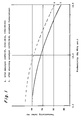
- the performance of the grade 700 catalyst was compared with a grade 750 catalyst, that is a grade 700 catalyst heated in hexane generally in the manner of Example III, except that the heptane of Example III was replaced by hexane.
- the grade 700 starting catalyst was identified by catalyst number 2235-36-8.
- the grade 750 catalysts were identified by catalyst numbers 2354-10, 2354-20-6, and 2354-20-14. The performance of these two catalysts are compared in the graphs of attached Figure 1.
- heating of the standard grade 700 catalyst in an inert solvent such as hexane in accordance with this invention provides an improved productivity and an improved isotacticity index as reflected by the difference between the solid line for the grade 700 starting catalyst, and the dotted line for the grade 750 catalyst in accordance with this invention.
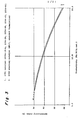
- the line identified by numeral 1 represents the grade 751 catalyst component in accordance with this invention (catalyst numbers 2354-19-6, 2354-26, 2354-44, 2354-45, 2354-48) whereas the line identified by numeral 2 represents the grade 700 starting catalyst (catalyst number 917).
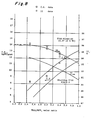
- line 1 represents the grade 751 catalyst component (catalyst numbers 2287-37W, 2287-41W, 2327-31, 2327-32) whereas the line identified by numeral 2 represents the grade 700 modified starting catalyst (catalyst number 2235-28-8, 2235-29-8).
- the results of the experiments of Example XIII are set out in Figure 5.
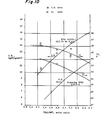
- Example XIV the performance of the grade 700 modified catalyst (catalyst number 2235-29-8) was compared with the performance of the grade 752 catalyst components (catalyst numbers 2287-24, 2327-6) formed by heating the grade 700 modified catalyst in mineral oil (PRIMOL-335 of Exxon) in accordance with the heating step of this invention.
- the results of these experiments are set out in Figure 6.
- grade 761 catalysts were prepared using a starting grade 700 catalyst formulation, and heating that formulation in the presence of heptane with various added quantities of titanium tetrachloride. The performances of the grade 761 catalyst were compared with each other and with the performance of the grade 700 modified catalyst.
- the TEAL/MPT molar ratio for utilization of the catalyst components in accordance with this invention can therefore be varied to provide desired catalyst efficiencies with desired isotacticity indices.
- the catalyst component in accordance with this invention which is prepared by treating an active component in a suitable inert solvent, with or without the inclusion of additional active transition metal compound, can provide a substantially improved performance over the untreated active component.
- the catalyst component in accordance with this invention when treated in an appropriate inert hydrocarbon solvent can provide an improved productivity, and improved isotacticity and an improved bulk density.
- the catalyst component of this invention in slurry form may be used as such or may be stored as such for subsequent use. Applicants have found that if the catalyst component is stored in slurry form at room temperature, it unexpectedly shows no significant deterioration after 7 to 8 months. In contrast therewith, if the grade 700 catalyst is stored at room temperature degradation is visible after one month.
- the catalyst component of this invention may be sized to achieve a polymer with a required minimum fine size particles. Variations in the milling times in the production of the active component permit variations of the coarseness of the particles of solid catalyst component, and thus of the produced polymer.
- catalyst residues would tend to be reduced in the final polypropylene product. This will therefore eliminate or at least substantially reduce the need for polymer deashing.
- the high isotacticity index of polymers which can be produced utilizing the catalyst components of this invention will also tend to permit a reduction in or a complete elimination of the expensive step of polymer extraction and solvent recovery from polymer production processes using liquid monomer. This would therefore tend to result in significant cost savings.
Landscapes
- Chemical & Material Sciences (AREA)
- Health & Medical Sciences (AREA)
- Chemical Kinetics & Catalysis (AREA)
- Medicinal Chemistry (AREA)
- Polymers & Plastics (AREA)
- Organic Chemistry (AREA)
- Transition And Organic Metals Composition Catalysts For Addition Polymerization (AREA)
- Addition Polymer Or Copolymer, Post-Treatments, Or Chemical Modifications (AREA)
- Organic Low-Molecular-Weight Compounds And Preparation Thereof (AREA)
Priority Applications (1)
| Application Number | Priority Date | Filing Date | Title |
|---|---|---|---|
| AT83108174T ATE57189T1 (de) | 1982-08-20 | 1983-08-18 | Katalysatorkomponenten fuer polyolefine auf einen traeger gebracht, verfahren zur herstellung und verwendung. |
Applications Claiming Priority (2)
| Application Number | Priority Date | Filing Date | Title |
|---|---|---|---|
| US40904182A | 1982-08-20 | 1982-08-20 | |
| US409041 | 1982-08-20 |
Publications (3)
| Publication Number | Publication Date |
|---|---|
| EP0101615A2 true EP0101615A2 (fr) | 1984-02-29 |
| EP0101615A3 EP0101615A3 (en) | 1984-10-10 |
| EP0101615B1 EP0101615B1 (fr) | 1990-10-03 |
Family
ID=23618814
Family Applications (1)
| Application Number | Title | Priority Date | Filing Date |
|---|---|---|---|
| EP83108174A Expired - Lifetime EP0101615B1 (fr) | 1982-08-20 | 1983-08-18 | Composants de catalyseur sur support pour polyoléfines, procédé de préparation et utilisation de ceux-ci |
Country Status (10)
| Country | Link |
|---|---|
| EP (1) | EP0101615B1 (fr) |
| JP (1) | JPH0618821B2 (fr) |
| AT (1) | ATE57189T1 (fr) |
| AU (1) | AU542963B2 (fr) |
| CA (1) | CA1216569A (fr) |
| DE (1) | DE3381920D1 (fr) |
| ES (1) | ES525047A0 (fr) |
| MX (1) | MX167219B (fr) |
| NO (1) | NO162967C (fr) |
| ZA (1) | ZA836025B (fr) |
Cited By (3)
| Publication number | Priority date | Publication date | Assignee | Title |
|---|---|---|---|---|
| US4626519A (en) * | 1985-09-06 | 1986-12-02 | Phillips Petroleum Company | Supported polyolefin catalyst components and methods of making and using same |
| US4680351A (en) * | 1985-09-06 | 1987-07-14 | Phillips Petroleum Company | Supported polyolefin catalyst components and methods of making and using same |
| EP0526810A1 (fr) * | 1991-07-26 | 1993-02-10 | Phillips Petroleum Company | Procédé de polymérisation pour la préparation d'une polyoléfine à partir de d'oléfines stériquement empêchés, méthyl ramifiée |
Families Citing this family (1)
| Publication number | Priority date | Publication date | Assignee | Title |
|---|---|---|---|---|
| WO2009005074A1 (fr) * | 2007-06-29 | 2009-01-08 | Toho Titanium Co., Ltd | Composant catalytique solide pour la polymérisation des oléfines, son procédé de fabrication, catalyseur et procédé de fabrication d'un polymère d'oléfine à l'aide du catalyseur |
Family Cites Families (10)
| Publication number | Priority date | Publication date | Assignee | Title |
|---|---|---|---|---|
| JPS5287489A (en) * | 1976-01-19 | 1977-07-21 | Mitsui Petrochem Ind Ltd | Polymerization of olefins |
| JPS591405B2 (ja) * | 1976-08-02 | 1984-01-12 | 三井東圧化学株式会社 | α−オレフィンの重合法 |
| JPS55116705A (en) * | 1979-03-02 | 1980-09-08 | Denki Kagaku Kogyo Kk | Preparation of catalyst for polymerization of olefin |
| JPS55120607A (en) * | 1979-03-10 | 1980-09-17 | Denki Kagaku Kogyo Kk | Polymerization of alpha-olefin |
| JPS5670003A (en) * | 1979-11-09 | 1981-06-11 | Denki Kagaku Kogyo Kk | Solid catalyst for polymerization of olefin |
| US4425257A (en) * | 1980-05-02 | 1984-01-10 | Phillips Petroleum Company | Supported high efficiency polyolefin catalyst component and methods of making and using the same |
| US4347158A (en) * | 1980-05-02 | 1982-08-31 | Dart Industries, Inc. | Supported high efficiency polyolefin catalyst component and methods of making and using the same |
| IT1169292B (it) * | 1981-12-24 | 1987-05-27 | Montedison Spa | Componenti di catalizzatori per la polimerizzazione delle alfa olefine e i catalizzatori da essi ottenuti |
| IT1190681B (it) * | 1982-02-12 | 1988-02-24 | Montedison Spa | Componenti e catalizzatori per la polimerizzazione di olefine |
| JPS59105009A (ja) * | 1982-12-09 | 1984-06-18 | Mitsui Toatsu Chem Inc | オレフインの共重合方法 |
-
1983
- 1983-08-10 AU AU17846/83A patent/AU542963B2/en not_active Ceased
- 1983-08-10 NO NO832875A patent/NO162967C/no not_active IP Right Cessation
- 1983-08-16 ZA ZA836025A patent/ZA836025B/xx unknown
- 1983-08-18 DE DE8383108174T patent/DE3381920D1/de not_active Expired - Fee Related
- 1983-08-18 EP EP83108174A patent/EP0101615B1/fr not_active Expired - Lifetime
- 1983-08-18 AT AT83108174T patent/ATE57189T1/de not_active IP Right Cessation
- 1983-08-19 JP JP58151477A patent/JPH0618821B2/ja not_active Expired - Lifetime
- 1983-08-19 MX MX198455A patent/MX167219B/es unknown
- 1983-08-19 CA CA000434998A patent/CA1216569A/fr not_active Expired
- 1983-08-19 ES ES525047A patent/ES525047A0/es active Granted
Cited By (4)
| Publication number | Priority date | Publication date | Assignee | Title |
|---|---|---|---|---|
| US4626519A (en) * | 1985-09-06 | 1986-12-02 | Phillips Petroleum Company | Supported polyolefin catalyst components and methods of making and using same |
| US4680351A (en) * | 1985-09-06 | 1987-07-14 | Phillips Petroleum Company | Supported polyolefin catalyst components and methods of making and using same |
| EP0214590A3 (fr) * | 1985-09-06 | 1988-09-14 | Phillips Petroleum Company | Composant de catalyseur supporté pour polymérisation d'oléfines et méthodes pour le préparer et l'utiliser |
| EP0526810A1 (fr) * | 1991-07-26 | 1993-02-10 | Phillips Petroleum Company | Procédé de polymérisation pour la préparation d'une polyoléfine à partir de d'oléfines stériquement empêchés, méthyl ramifiée |
Also Published As
| Publication number | Publication date |
|---|---|
| NO832875L (no) | 1984-02-21 |
| ATE57189T1 (de) | 1990-10-15 |
| CA1216569A (fr) | 1987-01-13 |
| JPS5956407A (ja) | 1984-03-31 |
| JPH0618821B2 (ja) | 1994-03-16 |
| DE3381920D1 (de) | 1990-11-08 |
| ES8600332A1 (es) | 1985-10-01 |
| NO162967C (no) | 1990-03-14 |
| EP0101615A3 (en) | 1984-10-10 |
| ZA836025B (en) | 1984-04-25 |
| NO162967B (no) | 1989-12-04 |
| AU1784683A (en) | 1984-02-23 |
| AU542963B2 (en) | 1985-03-28 |
| ES525047A0 (es) | 1985-10-01 |
| MX167219B (es) | 1993-03-09 |
| EP0101615B1 (fr) | 1990-10-03 |
Similar Documents
| Publication | Publication Date | Title |
|---|---|---|
| US4347158A (en) | Supported high efficiency polyolefin catalyst component and methods of making and using the same | |
| US4784983A (en) | Catalyst system for use in olefinic polymerization | |
| US4226741A (en) | Catalysts for polymerizing alpha-olefins and process for polymerizing alpha-olefins in contact with said catalysts | |
| US4548915A (en) | Olefin polymerization catalyst composition | |
| CA1104298A (fr) | Catalyseurs de polymerisation des olefines | |
| DE3855785T2 (de) | Auf modifizierte silika basierender katalysator | |
| US4425257A (en) | Supported high efficiency polyolefin catalyst component and methods of making and using the same | |
| EP0481748B1 (fr) | Catalyseur de polymérisation d'olefines | |
| GB1586241A (en) | Process for producing catalyst components for olefin polymerization | |
| EP0104374B1 (fr) | Polymérisation d'oléfines | |
| KR890003625B1 (ko) | α-올레핀 중합화용 촉매성분의 제조방법 | |
| US4422957A (en) | Methods of producing polyolefins using supported high efficiency polyolefin catalyst components | |
| US4485035A (en) | Process for producing highly stereoregular α-olefin polymers | |
| CA1081676A (fr) | Production d'un catalyseur de la polymerisation des alpha-olefines | |
| US4618661A (en) | Supported high efficiency polyolefin catalyst component and methods of making and using the same | |
| US4555496A (en) | Supported polyolefin catalyst components and methods of making and using the same | |
| EP0101615B1 (fr) | Composants de catalyseur sur support pour polyoléfines, procédé de préparation et utilisation de ceux-ci | |
| US4347162A (en) | Catalyst for the polymerization of alpha-olefins | |
| JPS5825362B2 (ja) | α−オレフイン重合体の製造方法 | |
| US3979372A (en) | Preparation of titanium trichloride polymerization catalyst component | |
| US4680351A (en) | Supported polyolefin catalyst components and methods of making and using same | |
| US4774300A (en) | Supported polyolefin catalyst components and methods of making and using the same | |
| DE3015878A1 (de) | Katalysator und verfahren zur polymerisation von olefinen | |
| JP3340729B2 (ja) | α−オレフィンの重合方法 | |
| EP0357135B1 (fr) | Composant solide de catalyseur pour polymérisation d'oléfines et procédé pour le préparer |
Legal Events
| Date | Code | Title | Description |
|---|---|---|---|
| PUAI | Public reference made under article 153(3) epc to a published international application that has entered the european phase |
Free format text: ORIGINAL CODE: 0009012 |
|
| AK | Designated contracting states |
Designated state(s): AT BE CH DE FR GB IT LI LU NL SE |
|
| PUAL | Search report despatched |
Free format text: ORIGINAL CODE: 0009013 |
|
| AK | Designated contracting states |
Designated state(s): AT BE CH DE FR GB IT LI LU NL SE |
|
| 17P | Request for examination filed |
Effective date: 19850312 |
|
| 17Q | First examination report despatched |
Effective date: 19860120 |
|
| GRAA | (expected) grant |
Free format text: ORIGINAL CODE: 0009210 |
|
| AK | Designated contracting states |
Kind code of ref document: B1 Designated state(s): AT BE CH DE FR GB IT LI LU NL SE |
|
| REF | Corresponds to: |
Ref document number: 57189 Country of ref document: AT Date of ref document: 19901015 Kind code of ref document: T |
|
| REF | Corresponds to: |
Ref document number: 3381920 Country of ref document: DE Date of ref document: 19901108 |
|
| ET | Fr: translation filed | ||
| ITF | It: translation for a ep patent filed | ||
| PLBE | No opposition filed within time limit |
Free format text: ORIGINAL CODE: 0009261 |
|
| STAA | Information on the status of an ep patent application or granted ep patent |
Free format text: STATUS: NO OPPOSITION FILED WITHIN TIME LIMIT |
|
| PGFP | Annual fee paid to national office [announced via postgrant information from national office to epo] |
Ref country code: LU Payment date: 19910814 Year of fee payment: 9 |
|
| ITTA | It: last paid annual fee | ||
| 26N | No opposition filed | ||
| EPTA | Lu: last paid annual fee | ||
| PG25 | Lapsed in a contracting state [announced via postgrant information from national office to epo] |
Ref country code: LU Free format text: LAPSE BECAUSE OF NON-PAYMENT OF DUE FEES Effective date: 19920818 |
|
| PGFP | Annual fee paid to national office [announced via postgrant information from national office to epo] |
Ref country code: CH Payment date: 19940711 Year of fee payment: 12 |
|
| EAL | Se: european patent in force in sweden |
Ref document number: 83108174.0 |
|
| NLS | Nl: assignments of ep-patents |
Owner name: MALLINCKRODT CHEMICAL, INC. TE CHESTERFIEL, MISSOU |
|
| PG25 | Lapsed in a contracting state [announced via postgrant information from national office to epo] |
Ref country code: LI Effective date: 19950831 Ref country code: CH Effective date: 19950831 |
|
| REG | Reference to a national code |
Ref country code: FR Ref legal event code: TP |
|
| REG | Reference to a national code |
Ref country code: CH Ref legal event code: PL |
|
| REG | Reference to a national code |
Ref country code: GB Ref legal event code: 732E |
|
| PGFP | Annual fee paid to national office [announced via postgrant information from national office to epo] |
Ref country code: FR Payment date: 20010801 Year of fee payment: 19 |
|
| PGFP | Annual fee paid to national office [announced via postgrant information from national office to epo] |
Ref country code: SE Payment date: 20010802 Year of fee payment: 19 Ref country code: DE Payment date: 20010802 Year of fee payment: 19 |
|
| PGFP | Annual fee paid to national office [announced via postgrant information from national office to epo] |
Ref country code: GB Payment date: 20010803 Year of fee payment: 19 Ref country code: AT Payment date: 20010803 Year of fee payment: 19 |
|
| PGFP | Annual fee paid to national office [announced via postgrant information from national office to epo] |
Ref country code: NL Payment date: 20010807 Year of fee payment: 19 |
|
| PGFP | Annual fee paid to national office [announced via postgrant information from national office to epo] |
Ref country code: BE Payment date: 20010903 Year of fee payment: 19 |
|
| REG | Reference to a national code |
Ref country code: GB Ref legal event code: IF02 |
|
| PG25 | Lapsed in a contracting state [announced via postgrant information from national office to epo] |
Ref country code: GB Free format text: LAPSE BECAUSE OF NON-PAYMENT OF DUE FEES Effective date: 20020818 Ref country code: AT Free format text: LAPSE BECAUSE OF NON-PAYMENT OF DUE FEES Effective date: 20020818 |
|
| PG25 | Lapsed in a contracting state [announced via postgrant information from national office to epo] |
Ref country code: SE Free format text: LAPSE BECAUSE OF NON-PAYMENT OF DUE FEES Effective date: 20020819 |
|
| PG25 | Lapsed in a contracting state [announced via postgrant information from national office to epo] |
Ref country code: BE Free format text: LAPSE BECAUSE OF NON-PAYMENT OF DUE FEES Effective date: 20020831 |
|
| BERE | Be: lapsed |
Owner name: *MALLINCKRODT CHEMICAL INC. Effective date: 20020831 |
|
| PG25 | Lapsed in a contracting state [announced via postgrant information from national office to epo] |
Ref country code: NL Free format text: LAPSE BECAUSE OF NON-PAYMENT OF DUE FEES Effective date: 20030301 Ref country code: DE Free format text: LAPSE BECAUSE OF NON-PAYMENT OF DUE FEES Effective date: 20030301 |
|
| EUG | Se: european patent has lapsed | ||
| GBPC | Gb: european patent ceased through non-payment of renewal fee |
Effective date: 20020818 |
|
| PG25 | Lapsed in a contracting state [announced via postgrant information from national office to epo] |
Ref country code: FR Free format text: LAPSE BECAUSE OF NON-PAYMENT OF DUE FEES Effective date: 20030430 |
|
| NLV4 | Nl: lapsed or anulled due to non-payment of the annual fee |
Effective date: 20030301 |
|
| REG | Reference to a national code |
Ref country code: FR Ref legal event code: ST |