EP0103307A2 - Fil pour enroulement - Google Patents
Fil pour enroulement Download PDFInfo
- Publication number
- EP0103307A2 EP0103307A2 EP83109075A EP83109075A EP0103307A2 EP 0103307 A2 EP0103307 A2 EP 0103307A2 EP 83109075 A EP83109075 A EP 83109075A EP 83109075 A EP83109075 A EP 83109075A EP 0103307 A2 EP0103307 A2 EP 0103307A2
- Authority
- EP
- European Patent Office
- Prior art keywords
- coil wire
- excitation winding
- contact members
- wire according
- insulation film
- Prior art date
- Legal status (The legal status is an assumption and is not a legal conclusion. Google has not performed a legal analysis and makes no representation as to the accuracy of the status listed.)
- Granted
Links
- 239000000314 lubricant Substances 0.000 claims abstract description 46
- 238000009413 insulation Methods 0.000 claims abstract description 40
- 239000000463 material Substances 0.000 claims abstract description 16
- 229920001451 polypropylene glycol Polymers 0.000 claims abstract description 15
- 239000004020 conductor Substances 0.000 claims abstract description 12
- 125000004435 hydrogen atom Chemical group [H]* 0.000 claims abstract description 7
- 238000004804 winding Methods 0.000 claims description 41
- 230000005284 excitation Effects 0.000 claims description 37
- 239000002904 solvent Substances 0.000 claims description 35
- -1 polyoxypropylene mono butyl ether Polymers 0.000 claims description 29
- 229920005749 polyurethane resin Polymers 0.000 claims description 15
- 239000011877 solvent mixture Substances 0.000 claims description 12
- 150000002148 esters Chemical class 0.000 claims description 10
- LFQSCWFLJHTTHZ-UHFFFAOYSA-N Ethanol Chemical compound CCO LFQSCWFLJHTTHZ-UHFFFAOYSA-N 0.000 claims description 8
- SLCVBVWXLSEKPL-UHFFFAOYSA-N neopentyl glycol Chemical compound OCC(C)(C)CO SLCVBVWXLSEKPL-UHFFFAOYSA-N 0.000 claims description 5
- ZJCCRDAZUWHFQH-UHFFFAOYSA-N Trimethylolpropane Chemical compound CCC(CO)(CO)CO ZJCCRDAZUWHFQH-UHFFFAOYSA-N 0.000 claims description 4
- 235000019387 fatty acid methyl ester Nutrition 0.000 claims description 4
- 229920005862 polyol Polymers 0.000 claims description 4
- 125000002256 xylenyl group Chemical class C1(C(C=CC=C1)C)(C)* 0.000 claims 3
- 239000007789 gas Substances 0.000 abstract description 9
- 238000011156 evaluation Methods 0.000 description 16
- 210000003298 dental enamel Anatomy 0.000 description 10
- 229920001721 polyimide Polymers 0.000 description 10
- 229920002635 polyurethane Polymers 0.000 description 9
- 239000004814 polyurethane Substances 0.000 description 9
- 239000012188 paraffin wax Substances 0.000 description 7
- QTWJRLJHJPIABL-UHFFFAOYSA-N 2-methylphenol;3-methylphenol;4-methylphenol Chemical compound CC1=CC=C(O)C=C1.CC1=CC=CC(O)=C1.CC1=CC=CC=C1O QTWJRLJHJPIABL-UHFFFAOYSA-N 0.000 description 6
- 239000004642 Polyimide Substances 0.000 description 6
- 229930003836 cresol Natural products 0.000 description 6
- 239000000523 sample Substances 0.000 description 6
- 230000001052 transient effect Effects 0.000 description 6
- 150000003739 xylenols Chemical class 0.000 description 5
- 239000009719 polyimide resin Substances 0.000 description 4
- 150000001408 amides Chemical class 0.000 description 3
- 230000003247 decreasing effect Effects 0.000 description 3
- 230000000694 effects Effects 0.000 description 3
- 229920000728 polyester Polymers 0.000 description 3
- UGZICOVULPINFH-UHFFFAOYSA-N acetic acid;butanoic acid Chemical compound CC(O)=O.CCCC(O)=O UGZICOVULPINFH-UHFFFAOYSA-N 0.000 description 2
- 230000004913 activation Effects 0.000 description 2
- 150000001555 benzenes Chemical class 0.000 description 2
- 238000004519 manufacturing process Methods 0.000 description 2
- 238000000034 method Methods 0.000 description 2
- 229920005989 resin Polymers 0.000 description 2
- 239000011347 resin Substances 0.000 description 2
- OKTJSMMVPCPJKN-UHFFFAOYSA-N Carbon Chemical compound [C] OKTJSMMVPCPJKN-UHFFFAOYSA-N 0.000 description 1
- RYGMFSIKBFXOCR-UHFFFAOYSA-N Copper Chemical compound [Cu] RYGMFSIKBFXOCR-UHFFFAOYSA-N 0.000 description 1
- IAYPIBMASNFSPL-UHFFFAOYSA-N Ethylene oxide Chemical compound C1CO1 IAYPIBMASNFSPL-UHFFFAOYSA-N 0.000 description 1
- ISWSIDIOOBJBQZ-UHFFFAOYSA-N Phenol Chemical compound OC1=CC=CC=C1 ISWSIDIOOBJBQZ-UHFFFAOYSA-N 0.000 description 1
- 229910052799 carbon Inorganic materials 0.000 description 1
- 239000007795 chemical reaction product Substances 0.000 description 1
- 239000011248 coating agent Substances 0.000 description 1
- 238000000576 coating method Methods 0.000 description 1
- 150000001875 compounds Chemical class 0.000 description 1
- 229910052802 copper Inorganic materials 0.000 description 1
- 239000010949 copper Substances 0.000 description 1
- 230000032050 esterification Effects 0.000 description 1
- 238000005886 esterification reaction Methods 0.000 description 1
- 238000006266 etherification reaction Methods 0.000 description 1
- PCHJSUWPFVWCPO-UHFFFAOYSA-N gold Chemical compound [Au] PCHJSUWPFVWCPO-UHFFFAOYSA-N 0.000 description 1
- 229910052737 gold Inorganic materials 0.000 description 1
- 239000010931 gold Substances 0.000 description 1
- 238000010303 mechanochemical reaction Methods 0.000 description 1
- 239000000203 mixture Substances 0.000 description 1
- 150000002989 phenols Chemical class 0.000 description 1
- 229920003023 plastic Polymers 0.000 description 1
- 239000004033 plastic Substances 0.000 description 1
- 229920000642 polymer Polymers 0.000 description 1
- 239000013557 residual solvent Substances 0.000 description 1
- 238000007789 sealing Methods 0.000 description 1
- 238000005406 washing Methods 0.000 description 1
Images




Classifications
-
- H—ELECTRICITY
- H01—ELECTRIC ELEMENTS
- H01B—CABLES; CONDUCTORS; INSULATORS; SELECTION OF MATERIALS FOR THEIR CONDUCTIVE, INSULATING OR DIELECTRIC PROPERTIES
- H01B3/00—Insulators or insulating bodies characterised by the insulating materials; Selection of materials for their insulating or dielectric properties
- H01B3/18—Insulators or insulating bodies characterised by the insulating materials; Selection of materials for their insulating or dielectric properties mainly consisting of organic substances
- H01B3/20—Insulators or insulating bodies characterised by the insulating materials; Selection of materials for their insulating or dielectric properties mainly consisting of organic substances liquids, e.g. oils
-
- H—ELECTRICITY
- H01—ELECTRIC ELEMENTS
- H01B—CABLES; CONDUCTORS; INSULATORS; SELECTION OF MATERIALS FOR THEIR CONDUCTIVE, INSULATING OR DIELECTRIC PROPERTIES
- H01B3/00—Insulators or insulating bodies characterised by the insulating materials; Selection of materials for their insulating or dielectric properties
- H01B3/18—Insulators or insulating bodies characterised by the insulating materials; Selection of materials for their insulating or dielectric properties mainly consisting of organic substances
- H01B3/30—Insulators or insulating bodies characterised by the insulating materials; Selection of materials for their insulating or dielectric properties mainly consisting of organic substances plastics; resins; waxes
-
- H—ELECTRICITY
- H01—ELECTRIC ELEMENTS
- H01H—ELECTRIC SWITCHES; RELAYS; SELECTORS; EMERGENCY PROTECTIVE DEVICES
- H01H50/00—Details of electromagnetic relays
- H01H50/44—Magnetic coils or windings
-
- Y—GENERAL TAGGING OF NEW TECHNOLOGICAL DEVELOPMENTS; GENERAL TAGGING OF CROSS-SECTIONAL TECHNOLOGIES SPANNING OVER SEVERAL SECTIONS OF THE IPC; TECHNICAL SUBJECTS COVERED BY FORMER USPC CROSS-REFERENCE ART COLLECTIONS [XRACs] AND DIGESTS
- Y10—TECHNICAL SUBJECTS COVERED BY FORMER USPC
- Y10T—TECHNICAL SUBJECTS COVERED BY FORMER US CLASSIFICATION
- Y10T428/00—Stock material or miscellaneous articles
- Y10T428/29—Coated or structually defined flake, particle, cell, strand, strand portion, rod, filament, macroscopic fiber or mass thereof
- Y10T428/2913—Rod, strand, filament or fiber
- Y10T428/2933—Coated or with bond, impregnation or core
- Y10T428/294—Coated or with bond, impregnation or core including metal or compound thereof [excluding glass, ceramic and asbestos]
- Y10T428/2942—Plural coatings
- Y10T428/2947—Synthetic resin or polymer in plural coatings, each of different type
Definitions
- the present invention relates to a coil wire and, more particularly, to a coil wire used for an excitation winding of a sealed electric device such as an electromagnetic relay.
- a conventional coil wire for an excitation winding of a sealed electric device such as an electromagnetic relay obtained by sealing the excitation winding together with contact members in a case in a given hermetic state so as to electromagnetically drive the contact members is prepared in the following manner.
- An electrically insulating coating material such as a polyurethane resin or polyimide resin which is dissolved in a solvent mixture comprising a solvent containing cresol, a phenol and a benzene nucleus is applied to the outer surface of a conductor, such as copper, and is baked. Thereafter, a lubricant such as paraffin of spindle oil is applied to the outer surface of the insulation film to smoothen the surface of the resultant wire and hence to prevent a disconnection during manufacture of the winding.
- an object of the present invention to improve a composition of a lubricant film formed on an outer surface of an insulation film covering a conductor so as to provide a coil wire wherein generation of organic gases can be suppressed.
- the lubricant film formed on the outer surface of the insulation film covering the conductor is made of polypropylene glycol or material (e.g., polyoxypropylene mono butyl ether or polyoxypropylene mono propyl ether) obtained by substituting a hydrogen atom at at least one end of polypropylene glycol with another reactive group.
- polypropylene glycol or material e.g., polyoxypropylene mono butyl ether or polyoxypropylene mono propyl ether
- the lubricant film formed on the outer surface of the insulation film covering the conductor is made of polyoxyethylene propylene glycol or a material such as polyoxyethylene propylene fatty acid methyl ester (tradename of an equivalent: Nippon Oil Unisafe 40MT1015 manufactured by Nippon Oil & Fats CO., Ltd.) obtained by substituting a hydrogen atom at at least one end of polyoxyethylene propylene glycol.
- the lubricant film formed on the outer surface of the insulation film covering the conductor is made of a polyol ester (eg., trimethyolpropane tricaprinic ester and neopentyl glycol dicaprinic ester).
- a polyol ester eg., trimethyolpropane tricaprinic ester and neopentyl glycol dicaprinic ester.
- the insulating film of the coil wire having any one of the aforementioned lubricant films is made of a polyurethane resin dissolved in KA solvent (tradename: 30% of solvent naphtha and 70% of cellsolve acetate butyrate).
- the insulation film of the coil wire is made of a polyurethane resin dissolved in a solvent mixture of xylenol and alcohol.
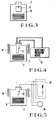
- test devices will be described in detail hereinafter.
- a gas evaporated from a sample 9 within a hermetic chamber 7 is deposited on the surface of a gold-plated test piece 8 so as to test how the deposited material increases the surface contact resistance of the gold-plated test piece 8.
- the surface contact resistance is measured in accordance with a four-point probe technique using a pure gold probe at a contact load of 1 gram after the test piece has been exposed in the chamber for 200 hours.
- an increase in a contact resistance of contact members 11 through an insulation film formed on the contact members 11 upon energization of a coil 12 is measured by a four-point probe contact resistance measuring device 13.
- a load circuit 14 is connected to contact members 11 to be tested.
- the contact members 11 are then driven with the load circuit 14 loaded in an atmosphere of an organic gas to produce an arc.
- An arc duration is continuously monitored by an oscilloscope 15, so that the number of times of ON/OFF operation of the relay required to abruptly increase the arc duration is measured. This increase in the arc duration is called contact activation. It is preferred that the contact member can withstand a great number of switching operations and retain a short arc duration.
- the influence of the sample to be tested can be understood by the number of switching operations required to produce contact activaton. It should be noted that the above tests are performed at a temperature of 120 ° C.
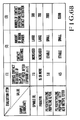
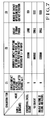
- test results of sample lubricants and solvents for evaluation items (1), (2) and (3) obtained using the above test devices are shown in Figs. 6A, 6B, 6C and Fig. 7.
- spindle oil and paraffin which are conventionally used as a lubricant have poor characteristics, while polypropylene glycols (average molecular weights: 400, 1000 and 2000), polyoxypropylene mono butyl ethers (average molecular weights: 700 and 2500), and polyoxypropylene mono propyl ether (average molecular weight: 1000) have good characteristics, throughout the evaluation items (1) to (3) described previously.
- the last two materials are obtained by substituting a hydrogen atom at one end of polypropylene glycol with a reactive group. The same effect can be obtained in any homologous material.
- the above-mentioned good characteristics are based upon the properties of polypropylene glycol.
- the average molecular weight of this material greatly influences the allowable range of viscosity when it is applied as the lubricant film of the wire.
- spindle oil and paraffin which are conventionally used as a lubricant have poor characteristics
- polyoxyethylene propylene glycol block polymer, polypropylene glycol: molecular weight of 1750, ethylene oxide: 10%
- polyoxyethylene propylene fatty acid methyl ester have good characteristics, throughout the evaluation items.
- the latter materials are obtained by etherification and esterification of a hydrogen atom at one end of polyoxyethylene propylene glycol. Therefore, the same effect as obtained using these materials can be obtained using homologous materials.
- the above-mentioned good characteristics are obtained in accordance with the properties of polyoxyethylene propylene glycol.
- spindle oil and paraffin which are conventionally used as a lubricant have poor characteristics, while polyol esters (trimethylolpropane tricaprinic ester and neopentyl glycol dicaprinic ester) have good characteristics, throughout the evaluation items.
- a solvent of the present invention shows good characteristics in evaluation items (2) and (3) excepting evaluation item (1). Furthermore, in the present invention, when a solvent mixture consisting of 40% or less of xylenol and a balance comprising cellsolve acetate butyrate or an alcohol solvent which does not contain a benzene nucleus is applied to the present invention, the good characteristics as previously described can be obtained.
- a lubricant film is made of one of polypropylene glycol, polyoxypropylene mono butyl ether, and polyoxypropylene mono propyl ether.
- An insulation film of the coil of this embodiment is formed using a conventional solvent.
- the average molecular weight of polypropylene glycol having an effect on the required viscosity of the lubricant may be about 1,000 without changing conventional winding manufacturing techniques. However, when washing or baking is performed before or after the winding is carried out, the average molecular weight can vary in a range of not more than 2,000.
- Polyoxypropylene mono butyl ether and polyoxypropylene mono propyl ether can be used in the same manner as polypropylene glycol.
- six types of coil wires were prepared such that polypropylene glycol, polyoxypropylene mono butyl ether and polyoxypropylene mono propyl ether were respectively formed as lubricant films on outer surfaces of conventional enamel wires respectively having insulation films of a polyurethane resin and a polyimide resin.
- four types of .coil wires were also prepared such that spindle oil and paraffin were applied as lubricant films to respective conventional enamel wires of the type described above. These 10 types of coil wires were used to form excitation windings, respectively.
- the contact performance of the six types of coil wires prepared according to the first embodiment of the present invention gave good results in a high-temperature exposure test, a resistance load transient test (DC 48 V - 10 mA) and a resistance load transient test (DC 48 V - 0.5 A), as compared with the four types of coil wires described above. Furthermore, the six types of coil wires gave good results in the three evaluation items for evaluating only coil wires.
- the first embodiment of the present invention may be applied to other enamel wires (e.gg., polyimide amide wires and polyester wires) in the same manner as described above.
- a second embodiment of a coil wire of the present invention will be described hereinafter.
- KA solvent described in detail with reference to Fig. 7 was used as a solvent for forming the insulation film.
- the lubricant of the first embodiment was used to prepare a polyurethane wire.
- the second embodiment can be obtained in the same manner as described above when a solvent mixture of xylenol and alcohol is used in place of the KA solvent.
- these solvents cannot be satisfactorily used for a heat-resistant wire such as a polyimide wire from the viewpoint of solvent power. Therefore the solvent mixture described above is preferably used for a polyurethane wire.
- the coil wire of the second embodiment gave the best results in the evaluation conditions shown in Fig. 8.
- cresol or the like is not contained in the polyurethane resin of the insulation film, and the lubricant film is made of polypropylene glycol or the like.
- coil wire of a third embodiment four types were prepared such that polyoxyethylene propylene glycol and polyoxyethylene propylene fatty acid methyl ester were applied as lubricant films to insulation films of a polyurethane resin and a polyimide resin of the conventional enamel wires.
- four types of conventional coil wires were prepared such that spindle oil and paraffin were applied as lubricant films to conventional enamel wires of the type described above.
- the eight types of coil wires were formed into excitation windings which were respectively mounted in sealed electromagnetic relays shown in Fig. 2. The performance of contact members of these relays were tested. Test results are shown in Fig. 8.
- the contact members of the four types of coil wires obtained according to the third embodiment of the present invention showed good characteristics in the high-temperature exposure test, the resistance load transient test (DC 48 V - 10 mA) and the resistance load transient test (DC 48 V - 0.5 A), as compared with the four types of conventional coil wires. Furthermore, the coil wires according to the third embodiment showed good characteristics in the three evaluation items, as shown in Fig. 6B.
- the third embodiment of the present invention can also be applied to other enamel wires (e.g., polyimide amide wires and polyester wires).
- KA solvent described in detail with reference to Fig. 7 was used as a solvent for forming the insulation film.
- the lubricant of the third embodiment was used to prepare a polyurethane wire.
- the fourth embodiment can be performed in the same manner as described above when a solvent mixture of xylenol and alcohol is used in place of the KA solvent.
- these solvents cannot be satisfactorily used for a heat-resistant wire such as a polyimide wire from the viewpoint of solvent power. Therefore, the solvent mixture described above is preferably used for a polyurethane wire.
- the coil wire of the fourth embodiment gave the best results in the evaluation conditions shown in Fig. 8.
- cresol or the like is not contained in the polyurethane resin of the insulation film, and the lubricant film is made of polyoxyethylene propylene glycol or the like.
- a lubricant film of the coil wire was formed by one of trimethylolpropane tricaprinic ester and neopentyl glycol dicaprinic ester.
- An insulation film of this coil wire comprised the conventional solvent.
- Trimethylolpropane tricaprinic ester and neopentyl glycol dicaprinic ester were applied as lubricant films to the outer surfaces of insulation films of a polyurethane resin and a polyimide resin of conventional enamel wires to prepare four types of coil wires according to the fifth embodiment.
- the coil wires according to the fifith embodiment showed good characteristics in the three evaluation items, as shown in Fig. 6C.
- the fifth embodiment of the present invention can also be applied to other enamel wires (e.g., polyimide amide wires and polyester wires).
- KA solvent described in detail with reference to Fig. 7 was used as a solvent for forming the insulation film.
- the lubricant of the fifth embodiment was used to prepare a polyurethane wire.
- the sixth embodiment can be obtained in the same manner as described above when a solvent mixture of xylenol and alcohol is used in place of the KA solvent.
- these solvents cannot be satisfactorily used for a heat-resistant wire such as a polyimide wire from the viewpoint of solvent power. Therefore, the solvent mixture described above is preferably used for a polyurethane wire.
- the coil wire of the sixth embodiment gave the best results in the evaluation conditions shown in Fig. 8.
- cresol or the like is not contained in the polyurethane resin of the insulation film, and the lubricant film is made of polyol ester. As a result, influences of the resultant wire on the contact members can be further decreased.
Landscapes
- Physics & Mathematics (AREA)
- Spectroscopy & Molecular Physics (AREA)
- Chemical & Material Sciences (AREA)
- Oil, Petroleum & Natural Gas (AREA)
- Electromagnetism (AREA)
- Insulated Conductors (AREA)
- Paints Or Removers (AREA)
Applications Claiming Priority (6)
| Application Number | Priority Date | Filing Date | Title |
|---|---|---|---|
| JP57161439A JP2806518B2 (ja) | 1982-09-14 | 1982-09-14 | コイル線材 |
| JP57161438A JP2806517B2 (ja) | 1982-09-14 | 1982-09-14 | コイル線材 |
| JP161438/82 | 1982-09-14 | ||
| JP57161440A JPS5950509A (ja) | 1982-09-14 | 1982-09-14 | コイル線材 |
| JP161439/82 | 1982-09-14 | ||
| JP161440/82 | 1982-09-14 |
Publications (3)
| Publication Number | Publication Date |
|---|---|
| EP0103307A2 true EP0103307A2 (fr) | 1984-03-21 |
| EP0103307A3 EP0103307A3 (en) | 1984-05-23 |
| EP0103307B1 EP0103307B1 (fr) | 1990-07-25 |
Family
ID=27321856
Family Applications (1)
| Application Number | Title | Priority Date | Filing Date |
|---|---|---|---|
| EP83109075A Expired - Lifetime EP0103307B1 (fr) | 1982-09-14 | 1983-09-14 | Fil pour enroulement |
Country Status (4)
| Country | Link |
|---|---|
| US (1) | US4605917A (fr) |
| EP (1) | EP0103307B1 (fr) |
| CA (1) | CA1200587A (fr) |
| DE (1) | DE3381763D1 (fr) |
Cited By (5)
| Publication number | Priority date | Publication date | Assignee | Title |
|---|---|---|---|---|
| EP0267736A3 (en) * | 1986-11-11 | 1988-06-08 | Sumitomo Electric Industries Limited | Magnet wire and electromagnetic relay using the same |
| AT391379B (de) * | 1988-07-21 | 1990-09-25 | Heinrich Dipl Ing Dr Hahn | Lackdraht mit niedrigem reibungskoeffizienten sowie verfahren zur herstellung eines solchen lackdrahtes |
| WO1996034399A1 (fr) * | 1995-04-26 | 1996-10-31 | Dr. Beck & Co. Ag | Formulation de vernis pour fils metalliques a lubrifiant interne |
| WO1996035763A1 (fr) * | 1995-05-11 | 1996-11-14 | Dr. Beck & Co. Ag | Lubrifiant pour fils vernis |
| US6392000B1 (en) | 2000-10-26 | 2002-05-21 | E. I. Du Pont De Nemours And Company | Binder for a coating composition for electrical conductors |
Families Citing this family (5)
| Publication number | Priority date | Publication date | Assignee | Title |
|---|---|---|---|---|
| EP0334535A3 (fr) * | 1988-03-23 | 1990-12-05 | PIRELLI GENERAL plc | Fabrication de câble électrique |
| US5942473A (en) * | 1994-08-15 | 1999-08-24 | Phelps Dodge Industries, Inc. | Solid magnet wire winding lubricants |
| US6392846B1 (en) | 1996-12-10 | 2002-05-21 | International Business Machines Corporation | Coil wire lubricant for use in magnetic disk drives |
| US7595028B2 (en) * | 2002-05-29 | 2009-09-29 | Sekisui Chemical Co., Ltd. | Bottomed tube for blood examination, stopper of bottomed tube for blood examination and blood examination container |
| JP6207252B2 (ja) * | 2013-06-24 | 2017-10-04 | 矢崎総業株式会社 | 高屈曲電線 |
Family Cites Families (6)
| Publication number | Priority date | Publication date | Assignee | Title |
|---|---|---|---|---|
| US3321722A (en) * | 1964-10-21 | 1967-05-23 | Leach Corp | Relay with adjustable armature |
| GB1230189A (fr) * | 1968-09-24 | 1971-04-28 | ||
| US4170673A (en) * | 1977-10-03 | 1979-10-09 | Conti Allen C | Method for pulling cable |
| US4379807A (en) * | 1981-03-13 | 1983-04-12 | Rea Magnet Wire Co., Inc. | Magnet wire for hermetic motors |
| JPS5817179A (ja) * | 1981-07-24 | 1983-02-01 | Sumitomo Electric Ind Ltd | 絶縁電線 |
| US4348460A (en) * | 1981-10-19 | 1982-09-07 | Essex Group, Inc. | Power insertable polyamide-imide coated magnet wire |
-
1983
- 1983-09-14 DE DE8383109075T patent/DE3381763D1/de not_active Expired - Lifetime
- 1983-09-14 US US06/532,189 patent/US4605917A/en not_active Expired - Lifetime
- 1983-09-14 CA CA000436718A patent/CA1200587A/fr not_active Expired
- 1983-09-14 EP EP83109075A patent/EP0103307B1/fr not_active Expired - Lifetime
Cited By (9)
| Publication number | Priority date | Publication date | Assignee | Title |
|---|---|---|---|---|
| EP0267736A3 (en) * | 1986-11-11 | 1988-06-08 | Sumitomo Electric Industries Limited | Magnet wire and electromagnetic relay using the same |
| US5254408A (en) * | 1986-11-11 | 1993-10-19 | Sumito Electric Industrial Co., Ltd. | Magnet wire and electromagnetic relay using the same |
| US5347249A (en) * | 1986-11-11 | 1994-09-13 | Sumitomo Electric Industries, Ltd. | Magnet wire and electromagnetic relay using the same |
| AT391379B (de) * | 1988-07-21 | 1990-09-25 | Heinrich Dipl Ing Dr Hahn | Lackdraht mit niedrigem reibungskoeffizienten sowie verfahren zur herstellung eines solchen lackdrahtes |
| WO1996034399A1 (fr) * | 1995-04-26 | 1996-10-31 | Dr. Beck & Co. Ag | Formulation de vernis pour fils metalliques a lubrifiant interne |
| US6022918A (en) * | 1995-04-26 | 2000-02-08 | Basf Coatings Ag | Wire enamel formulation with internal lubricant |
| WO1996035763A1 (fr) * | 1995-05-11 | 1996-11-14 | Dr. Beck & Co. Ag | Lubrifiant pour fils vernis |
| US6392000B1 (en) | 2000-10-26 | 2002-05-21 | E. I. Du Pont De Nemours And Company | Binder for a coating composition for electrical conductors |
| EP1202292A3 (fr) * | 2000-10-26 | 2004-02-18 | E.I. Du Pont De Nemours And Company | Liant pour composition de revêtement pour conducteurs électriques |
Also Published As
| Publication number | Publication date |
|---|---|
| CA1200587A (fr) | 1986-02-11 |
| US4605917A (en) | 1986-08-12 |
| EP0103307A3 (en) | 1984-05-23 |
| EP0103307B1 (fr) | 1990-07-25 |
| DE3381763D1 (de) | 1990-08-30 |
Similar Documents
| Publication | Publication Date | Title |
|---|---|---|
| US4605917A (en) | Coil wire | |
| Katz et al. | New high temperature polyimide insulation for partial discharge resistance in harsh environments | |
| Pukel et al. | Power transformers with environmentally friendly and low flammability ester liquids | |
| Tanaka et al. | Aging and related phenomena in modern electric power systems | |
| EP3769322A1 (fr) | Fluides diélectriques d'huile minérale et d'ester synthétique à stabilité accrue | |
| Garg et al. | Compatibility of ester oil with transformer components and comparison with mineral oil | |
| KR101174177B1 (ko) | 초전도 케이블의 내전압 시험 방법 | |
| CA1179216A (fr) | Fil de bobinage enduit de polyamides-imides pour insertion mecanique | |
| CN100583308C (zh) | 高性能介电油以及其在高压电气设备中的用途 | |
| JPS59114720A (ja) | 電磁リレ− | |
| JPS5950508A (ja) | コイル線材 | |
| US3163705A (en) | Oil insulated impregnant for high voltage electrical apparatus | |
| Brütsch et al. | Insulating systems for high voltage rotating machines and reliability considerations | |
| Nagarajan et al. | Green tapchanger—OLTC filled with ester oil | |
| EP0992041B1 (fr) | Cable resistant aux arborescences dues a l'eau | |
| Goffaux | On the nature of dielectric loss in high-voltage insulation | |
| Shu et al. | Study on mechanism and characteristics of dielectric breakdown in polyimide film | |
| Duart et al. | Aging of high temperature insulation systems with alternative fluids | |
| Cinquemani et al. | 105/spl deg/C/140/spl deg/C rated EPR insulated power cables | |
| Stahl et al. | PDIV and AC Breakdown Behavior of Magnet Wire in Different Embedded Media | |
| Bjorklund et al. | A new mica-free turn insulation for rotating HV machines | |
| Festus et al. | Investigation Of Different Solid Insulation Impregnated In Liquid Dielectrics | |
| Del Mar | Paper for High-Voltage Cables | |
| Schoch et al. | Assessment of applications of conducting polymers in power equipment | |
| US3145258A (en) | Treated insulation impregnant for high voltage electrical cable |
Legal Events
| Date | Code | Title | Description |
|---|---|---|---|
| PUAI | Public reference made under article 153(3) epc to a published international application that has entered the european phase |
Free format text: ORIGINAL CODE: 0009012 |
|
| PUAL | Search report despatched |
Free format text: ORIGINAL CODE: 0009013 |
|
| 17P | Request for examination filed |
Effective date: 19830914 |
|
| AK | Designated contracting states |
Designated state(s): CH DE FR GB LI NL |
|
| AK | Designated contracting states |
Designated state(s): CH DE FR GB LI NL |
|
| GRAA | (expected) grant |
Free format text: ORIGINAL CODE: 0009210 |
|
| AK | Designated contracting states |
Kind code of ref document: B1 Designated state(s): CH DE FR GB LI NL |
|
| ET | Fr: translation filed | ||
| REF | Corresponds to: |
Ref document number: 3381763 Country of ref document: DE Date of ref document: 19900830 |
|
| PLBE | No opposition filed within time limit |
Free format text: ORIGINAL CODE: 0009261 |
|
| STAA | Information on the status of an ep patent application or granted ep patent |
Free format text: STATUS: NO OPPOSITION FILED WITHIN TIME LIMIT |
|
| 26N | No opposition filed | ||
| REG | Reference to a national code |
Ref country code: GB Ref legal event code: IF02 |
|
| REG | Reference to a national code |
Ref country code: GB Ref legal event code: 732E |
|
| REG | Reference to a national code |
Ref country code: CH Ref legal event code: PUE Owner name: NEC CORPORATION TRANSFER- NEC TOKIN CORPORATION |
|
| NLS | Nl: assignments of ep-patents |
Owner name: NEC TOKIN CORPORATION |
|
| PGFP | Annual fee paid to national office [announced via postgrant information from national office to epo] |
Ref country code: FR Payment date: 20020910 Year of fee payment: 20 |
|
| PGFP | Annual fee paid to national office [announced via postgrant information from national office to epo] |
Ref country code: GB Payment date: 20020911 Year of fee payment: 20 |
|
| PGFP | Annual fee paid to national office [announced via postgrant information from national office to epo] |
Ref country code: CH Payment date: 20020916 Year of fee payment: 20 |
|
| PGFP | Annual fee paid to national office [announced via postgrant information from national office to epo] |
Ref country code: DE Payment date: 20020918 Year of fee payment: 20 |
|
| PGFP | Annual fee paid to national office [announced via postgrant information from national office to epo] |
Ref country code: NL Payment date: 20020930 Year of fee payment: 20 |
|
| REG | Reference to a national code |
Ref country code: FR Ref legal event code: TP |
|
| PG25 | Lapsed in a contracting state [announced via postgrant information from national office to epo] |
Ref country code: LI Free format text: LAPSE BECAUSE OF EXPIRATION OF PROTECTION Effective date: 20030913 Ref country code: GB Free format text: LAPSE BECAUSE OF EXPIRATION OF PROTECTION Effective date: 20030913 Ref country code: CH Free format text: LAPSE BECAUSE OF EXPIRATION OF PROTECTION Effective date: 20030913 |
|
| PG25 | Lapsed in a contracting state [announced via postgrant information from national office to epo] |
Ref country code: NL Free format text: LAPSE BECAUSE OF EXPIRATION OF PROTECTION Effective date: 20030914 |
|
| REG | Reference to a national code |
Ref country code: GB Ref legal event code: PE20 |
|
| REG | Reference to a national code |
Ref country code: CH Ref legal event code: PL |
|
| NLV7 | Nl: ceased due to reaching the maximum lifetime of a patent |
Effective date: 20030914 |