EP0104648A2 - Abwasserbehandlung - Google Patents
Abwasserbehandlung Download PDFInfo
- Publication number
- EP0104648A2 EP0104648A2 EP83109627A EP83109627A EP0104648A2 EP 0104648 A2 EP0104648 A2 EP 0104648A2 EP 83109627 A EP83109627 A EP 83109627A EP 83109627 A EP83109627 A EP 83109627A EP 0104648 A2 EP0104648 A2 EP 0104648A2
- Authority
- EP
- European Patent Office
- Prior art keywords
- brine solution
- bacteria
- waste water
- adjusted
- contacting
- Prior art date
- Legal status (The legal status is an assumption and is not a legal conclusion. Google has not performed a legal analysis and makes no representation as to the accuracy of the status listed.)
- Granted
Links
Images

Classifications
-
- C—CHEMISTRY; METALLURGY
- C02—TREATMENT OF WATER, WASTE WATER, SEWAGE, OR SLUDGE
- C02F—TREATMENT OF WATER, WASTE WATER, SEWAGE, OR SLUDGE
- C02F9/00—Multistage treatment of water, waste water or sewage
-
- B—PERFORMING OPERATIONS; TRANSPORTING
- B01—PHYSICAL OR CHEMICAL PROCESSES OR APPARATUS IN GENERAL
- B01D—SEPARATION
- B01D61/00—Processes of separation using semi-permeable membranes, e.g. dialysis, osmosis or ultrafiltration; Apparatus, accessories or auxiliary operations specially adapted therefor
- B01D61/02—Reverse osmosis; Hyperfiltration ; Nanofiltration
- B01D61/025—Reverse osmosis; Hyperfiltration
-
- C—CHEMISTRY; METALLURGY
- C02—TREATMENT OF WATER, WASTE WATER, SEWAGE, OR SLUDGE
- C02F—TREATMENT OF WATER, WASTE WATER, SEWAGE, OR SLUDGE
- C02F3/00—Biological treatment of water, waste water, or sewage
- C02F3/02—Aerobic processes
- C02F3/12—Activated sludge processes
- C02F3/1205—Particular type of activated sludge processes
- C02F3/1231—Treatments of toxic sewage
-
- C—CHEMISTRY; METALLURGY
- C02—TREATMENT OF WATER, WASTE WATER, SEWAGE, OR SLUDGE
- C02F—TREATMENT OF WATER, WASTE WATER, SEWAGE, OR SLUDGE
- C02F3/00—Biological treatment of water, waste water, or sewage
- C02F3/34—Biological treatment of water, waste water, or sewage characterised by the microorganisms used
-
- B—PERFORMING OPERATIONS; TRANSPORTING
- B01—PHYSICAL OR CHEMICAL PROCESSES OR APPARATUS IN GENERAL
- B01D—SEPARATION
- B01D2311/00—Details relating to membrane separation process operations and control
- B01D2311/02—Specific process operations before starting the membrane separation process
-
- C—CHEMISTRY; METALLURGY
- C02—TREATMENT OF WATER, WASTE WATER, SEWAGE, OR SLUDGE
- C02F—TREATMENT OF WATER, WASTE WATER, SEWAGE, OR SLUDGE
- C02F1/00—Treatment of water, waste water, or sewage
- C02F1/28—Treatment of water, waste water, or sewage by sorption
- C02F1/283—Treatment of water, waste water, or sewage by sorption using coal, charred products, or inorganic mixtures containing them
-
- C—CHEMISTRY; METALLURGY
- C02—TREATMENT OF WATER, WASTE WATER, SEWAGE, OR SLUDGE
- C02F—TREATMENT OF WATER, WASTE WATER, SEWAGE, OR SLUDGE
- C02F1/00—Treatment of water, waste water, or sewage
- C02F1/44—Treatment of water, waste water, or sewage by dialysis, osmosis or reverse osmosis
- C02F1/441—Treatment of water, waste water, or sewage by dialysis, osmosis or reverse osmosis by reverse osmosis
-
- C—CHEMISTRY; METALLURGY
- C02—TREATMENT OF WATER, WASTE WATER, SEWAGE, OR SLUDGE
- C02F—TREATMENT OF WATER, WASTE WATER, SEWAGE, OR SLUDGE
- C02F2101/00—Nature of the contaminant
- C02F2101/30—Organic compounds
-
- C—CHEMISTRY; METALLURGY
- C02—TREATMENT OF WATER, WASTE WATER, SEWAGE, OR SLUDGE
- C02F—TREATMENT OF WATER, WASTE WATER, SEWAGE, OR SLUDGE
- C02F2101/00—Nature of the contaminant
- C02F2101/30—Organic compounds
- C02F2101/36—Organic compounds containing halogen
-
- Y—GENERAL TAGGING OF NEW TECHNOLOGICAL DEVELOPMENTS; GENERAL TAGGING OF CROSS-SECTIONAL TECHNOLOGIES SPANNING OVER SEVERAL SECTIONS OF THE IPC; TECHNICAL SUBJECTS COVERED BY FORMER USPC CROSS-REFERENCE ART COLLECTIONS [XRACs] AND DIGESTS
- Y02—TECHNOLOGIES OR APPLICATIONS FOR MITIGATION OR ADAPTATION AGAINST CLIMATE CHANGE
- Y02W—CLIMATE CHANGE MITIGATION TECHNOLOGIES RELATED TO WASTEWATER TREATMENT OR WASTE MANAGEMENT
- Y02W10/00—Technologies for wastewater treatment
- Y02W10/10—Biological treatment of water, waste water, or sewage
Definitions
- This invention relates to the reduction of organic matter present in a brine solution.
- organics can be phenols, alcohols, ketones, esters, oligomes, polymer residues, proteins, carbohydrates, and fats.
- organics such as easily dispersible low molecular weight poly(phenylene sulfide), poly(phenylene sulfide) by-products, and unreclaimed reactants such as p-dichlorobenzene and N-methyl-2-pyrrolidone (NMP) can accumulate.
- NMP N-methyl-2-pyrrolidone
- one object of the present invention is to provide a process for the reduction of the organic matter in a brine solution.
- an adjusted brine solution is defined to be a solution whose pH and salt concentrations are adjusted to predetermined levels and thereafter maintained at these levels at as near a constant value as possible. This is because microorganisms grow best under constant environmental conditions.
- the addition of water is most commonly used to regulate the salt concentration value and the use of H 2 S0 4 is most common for the adjustment of pH concentrations.
- the pH should be adjusted to about 7.0 to 7.5 as microorganisms have been found to acclimate particularly well to this range.
- the brine solution will usually contain at least 2% wt. dissolved salts and more commonly from 2% to 10%. In the present invention, the salt concentration should be maintained at about 3.5 weight percent.
- the salts referred to in the process of this invention include salts of sodium, magnesium, calcium, barium, potassium, strontium, iron, nickel, and ammonia.
- the aerobic bacteria utilized in the process of the present invention are those present in general waste water or industrial water biotreatment process. The majority of these bacteria are gram negative.
- Representatives species of bacteria utilized in the process of the present invention include Escherichia, Proteus, Alcalegenis, Vibro, Aerobacter, Chromobacterium, Neissina, Pseudomonas, Spirillum, and Bacillus.
- Representative species of bacteria utilized in the process of the present invention include Escherichia coli, Proteus vulgaris, Alcalegenis faccalis, Vibro Hetchnikovii, Aerobacter aerogenes, Chromobacterium prodigiosium, Neissina Catarrhalio, Pseudomonas fluorescens, Spirillum serpens and Bacillus brevis.
- the adjusted brine solution is contacted with an aerated sludge of aerobic bacteria under conditions sufficient to reduce the organics to a desired level.
- the adjusted brine solution is contacted with an aerated sludge of bacteria wherein the oxygen concentration is from about .20 mg/liter to about 8 mg/liter.
- the temperature conditions for the contact will be in the range of from about 9°F to about 100°F and the contact time will be in the range of from about .25 hrs. to about 10 days or until the desired amount of organic matter is reduced.
- Air is introduced into the microbial sludge contained in a tank by any conventional method known in the art, such as in the form of bubbles through diffusion or by turbulent agitation of the liquid by an impeller.
- the activated sludge process is maintained by returning a certain portion of the sludge that passes through the sludge tank and is settled out in a subsequent sedimentation basin.
- the aerobic bacteria are acclimated to the neutral pH and salt concentration conditions existing in the equalization pond before these bacteria are contacted with the brine solution. This is because time is needed for the bacteria to acclimate themselves to the eventual conditions to which they will be subjected. If the bacteria are contacted with a brine solution to whose pH and salt concentration conditions they have not been previously adapted, then there exists the possibility that they will go into shock and therefore be unable to reduce the organic matter in the brine solution.
- the process of acclimating microorganisms to particular environmental conditions is a gradual process. At selected time intervals, the organisms are subjected to incremental additions of selected growth media until the total, desired concentration of growth media is achieved. During this process, some of the organisms will be non-viable while others will be able to sustain the growth conditions and multiply. The end result will be that by the time the total concentration by growth media is achieved, a population of viable microorganisms for this growth media will exist.
- the bacteria and other solids are normally removed by settling or coagulation and settling. If removals are insufficient further removals can be made by filtration. Filtration can be accomplished by any conventional process such as media bed filtration with or without coagulation; vacuum pressure filtration with or without filter aid, cartridge filtration and ultrafiltration.
- COD Chemical Oxygen Demand
- brine solution may be desalted by well known desalination methods such as reverse osmosis and electrodialysis, optionally, after the brine has passed through an ultrafiltration!.or other guard filters;
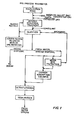
- polyphenylene sulfide process washwater containing concentrated brine and various organic substances is passed to an equalization pond where the pH and salt concentrations are subsequently adjusted to near constant levels.
- the adjusted brine solution is then contacted with an aerated sludge of aerobic bacteria under appropriate conditions to reduce the amount of organic matter present in the brine solution.
- the resulting treated brine solution is then contacted with a coagulant or flocculant, e.g., alum to aid in the setting of particles and is subsequently passed to a clarifier with part of the concentrated sludge passed as recycle to the biological treatment unit and part of it sent to drying beds, incineration, or other solids disposal methods.
- a coagulant or flocculant e.g., alum
- the supernatant brine is passed from the clarifier to media bed filtration.
- the filtered brine solution is passed to carbon adsorption columns containing activated carbon wherein the amount of organic matter is further reduced. Effluent from the carbon adsorption columns then passes to ultrafiltration treatment for removal of very small dispersed particles and subsequently to a desalination unit wherein it is desalted by such typical processes as reverse osmosis, ion exchange or electrodialysis.
- the resulting treated solution should be essentially salt free and thus fresh water in nature.
- Both the acclimation and biological treatment were carried out in the five-liter, laboratory, activated sludge unit shown in FIGURE 2.
- the apparatus is composed of a conical glass biodigester, a vertical glass-tube clarifier and auxilliary equipment. Air entering the digester from the bottom is dispersed by a built-in glass frit. The air provides oxygen for the bacteria and complete mixing. Waste water feed, nutrients, and recycle sludge enter the digester from the top.
- Digester pH was maintained in the 7 to 7.5 pH range by a pH controller. The digester temperature was maintained at about 75°F.
- Nutrients (approximately 1 molar solutions of NH 4Cl and R 2 HPO 4 ) were added through line (7) so as to provide a 100:5:1 weight ratio of chemical oxygen demand to nitrogen to phosphorus.
- Approximately 0.5 molar sulfuric acid was charged to the biodigester through line (9) by means of a small peristaltic pump (11) interfaced with a pH sensor (13) so as to maintain a pH of 7-8 in the biodigester.
- Enough air was introduced through line (15), rotometer (17) and a coarse glass frit (19) at the bottom of the biodigester to keep the aqueous system saturated with air.
- the bacterial floc was introduced through recycle line (21).
- the mixed liquor was allowed to flow from a mid-level exit tube (23) into a clarifier tube (25) of about 1 liter capacity, having an upper diameter of 2 inches and a length of about 30 inches.
- the clarifier (25) was fitted with a recycle line (32) which exited from the lower portion of the clarifier through a peristaltic pump at a rate of 10 to 30 ml per minute.
- the return line 33 to the clarifier exited about two inches below its withdrawal point of line 32.
- Alum and caustic solutions were charged by means of small peristaltic Masterflex pumps (27 and 29) to the recycle line 32.
- the flow of caustic to the recycle line was controlled by pH sensor 31 to 7.5 pH.
- the solution mixture was introduced into the clarifier (25) to form an aluminum hydroxide floc that aided in the settling of the bacteria floc from the biodigester.
- the alum content in the clarifier was maintained at dosages determined by jar tests (100-3000 mg/L).
- the clarifier content was stirred slowly (- 0.3 rpm) with stirrer (35) to mix biodigester effluent and alum flocculant solution.
- the settled bacteria floc was recycled to the biodigester (1) through line (21') by means of Ultra Masterflex pump (37) (Cole-Palmer; model C-7555-20) having a pump head designed for a flow range of 6.84-6840 ml/hr (Cole-Palmer; model C-7018-00,-10).
- the recycle flow rate was about 30-40 ml/minute.
- the effluent from the clarifier tube exited through line (39) and was collected in a large effluent bottle.
- Gram-negative rod-shaped bacteria contained in an activated sludge of a municipal sewage treatment plant were acclimated to the highly saline waste water of a poly(phenylene sulfide) plant.
- the acclimation of the bacteria was carried at room temperature over a period of about 2 months in a laboratory treatment unit described in Example I.
- HLSS mixed liquor suspended solids
- Acetone was fed to the aqueous suspension at a rate of about 0.6 grams per liter per day so as to maintain a COD (Chemical Oxygen Demand, "Standard Methods" Procedure 508 A) loading of about 0.42 g COD/g MLVSS/day, which was equivalent to about 0.5 g COD/g MLSS/day.
- Nitrogen and phosphorus nutrients were added in the form of aqueous solutions of NH 4 Cl and R 2 HPO 4 so as to give a COD:N:P weight ratio of 100:5:1.
- the NaCl concentration of the aqueous system was gradually increased from 0 to about 35 grams per liter (3.5 weight % NaCl) by the incremental addition of 2 grams per liter three times a week.
- the aqueous bacteria suspension was fed, for 5 days, a mixture of 1.5 grams per liter per day (g/L ⁇ d) of acetone and 54 g/1 ⁇ d grams per day of plant waste water containing about 3060 mg/liter TOC determined by means of an Oceanographic Carbon Analyzer (Oceanographic International Corporation, College Station, Texas). Thereafter, waste water without acetone was increased in two weeks from 100 to 375 g/L ⁇ d and continued at 375 g/L ⁇ d.
- g/L ⁇ d 1.5 grams per liter per day
- TOC Oceanographic Carbon Analyzer
- TOC Total Organic Carbon
- Bottles containing biologically treated waste water and activated charcoal were agitated for about 15 hours by means of a platform shaker operated at a frequency of 2-3 oscillations per second. Results summarized in Table II show that about 76-87% of residual TOC can be recovered by treatment with 1-5 weight percent of activated carbon.
Landscapes
- Life Sciences & Earth Sciences (AREA)
- Water Supply & Treatment (AREA)
- Engineering & Computer Science (AREA)
- Chemical & Material Sciences (AREA)
- Microbiology (AREA)
- Organic Chemistry (AREA)
- Environmental & Geological Engineering (AREA)
- Hydrology & Water Resources (AREA)
- Biodiversity & Conservation Biology (AREA)
- Nanotechnology (AREA)
- Toxicology (AREA)
- Health & Medical Sciences (AREA)
- Chemical Kinetics & Catalysis (AREA)
- Purification Treatments By Anaerobic Or Anaerobic And Aerobic Bacteria Or Animals (AREA)
- Biological Treatment Of Waste Water (AREA)
- Activated Sludge Processes (AREA)
- Separation Using Semi-Permeable Membranes (AREA)
- Separation Of Suspended Particles By Flocculating Agents (AREA)
- Water Treatment By Sorption (AREA)
- Vaporization, Distillation, Condensation, Sublimation, And Cold Traps (AREA)
Priority Applications (1)
| Application Number | Priority Date | Filing Date | Title |
|---|---|---|---|
| AT83109627T ATE50235T1 (de) | 1982-09-29 | 1983-09-27 | Abwasserbehandlung. |
Applications Claiming Priority (2)
| Application Number | Priority Date | Filing Date | Title |
|---|---|---|---|
| US42725782A | 1982-09-29 | 1982-09-29 | |
| US427257 | 1982-09-29 |
Publications (3)
| Publication Number | Publication Date |
|---|---|
| EP0104648A2 true EP0104648A2 (de) | 1984-04-04 |
| EP0104648A3 EP0104648A3 (en) | 1985-03-06 |
| EP0104648B1 EP0104648B1 (de) | 1990-02-07 |
Family
ID=23694122
Family Applications (1)
| Application Number | Title | Priority Date | Filing Date |
|---|---|---|---|
| EP19830109627 Expired - Lifetime EP0104648B1 (de) | 1982-09-29 | 1983-09-27 | Abwasserbehandlung |
Country Status (6)
| Country | Link |
|---|---|
| EP (1) | EP0104648B1 (de) |
| JP (1) | JPS5980394A (de) |
| AT (1) | ATE50235T1 (de) |
| CA (1) | CA1219384A (de) |
| DE (1) | DE3381198D1 (de) |
| ES (1) | ES526030A0 (de) |
Cited By (9)
| Publication number | Priority date | Publication date | Assignee | Title |
|---|---|---|---|---|
| FR2562885A1 (fr) * | 1984-04-11 | 1985-10-18 | Christ Charles | Perfectionnement aux procedes et installations de traitement des eaux residuaires provenant de la fabrication de choucroute |
| EP0352219A3 (en) * | 1988-05-05 | 1990-01-31 | Sandoz Ag | Pretreatment of industrial waste water in a biological purification process |
| EP0520921A1 (de) * | 1991-06-26 | 1992-12-30 | OTV (OMNIUM de TRAITEMENTS et de VALORISATION) | Anlage zur Behandlung von Oberflächenwasser mit Rückhaltesicherung, Rückhaltesicherung, und deren Verwendung |
| EP0700315A4 (de) * | 1993-05-25 | 1997-06-25 | Harrison Western Environmental | Vielstufiges wasserbehandlungssystem |
| WO1998025858A1 (en) * | 1996-12-13 | 1998-06-18 | Alliedsignal Inc. | Closed-loop wastewater treatment system |
| WO2009026208A3 (en) * | 2007-08-23 | 2009-08-27 | Dow Global Technologies Inc. | Brine purification |
| WO2009026211A3 (en) * | 2007-08-23 | 2009-09-03 | Dow Global Technologies Inc. | Process, adapted microbes, composition and apparatus for purification of industrial brine |
| EP2298703A1 (de) | 2004-04-07 | 2011-03-23 | University College Cardiff Consultants LTD. | Behandlung von salzwasserhaltigem häuslichen Abwasser |
| CN114272897A (zh) * | 2021-12-23 | 2022-04-05 | 西安建筑科技大学 | 一种基于奇亚籽胶的磁性生物炭吸附剂及制备方法 |
Family Cites Families (5)
| Publication number | Priority date | Publication date | Assignee | Title |
|---|---|---|---|---|
| US4081365A (en) * | 1974-01-02 | 1978-03-28 | Filters International Inc. | Methods for use in water purification particularly sewage treatments |
| US4098689A (en) * | 1974-07-05 | 1978-07-04 | Idemitsu Kosan Company, Ltd. | Method of treating waste water with activated sludge |
| US4053399A (en) * | 1975-04-30 | 1977-10-11 | Grumman Aerospace Corporation | Method and system for waste treatment |
| JPS53135171A (en) * | 1977-04-28 | 1978-11-25 | Mitsubishi Chem Ind Ltd | Method of treating waste water |
| JPS5422956A (en) * | 1977-07-19 | 1979-02-21 | Mikasa Setsukei Jimushiyo Kk | Method of and device for treating sewage |
-
1983
- 1983-09-07 CA CA000436220A patent/CA1219384A/en not_active Expired
- 1983-09-22 JP JP58176170A patent/JPS5980394A/ja active Pending
- 1983-09-27 AT AT83109627T patent/ATE50235T1/de not_active IP Right Cessation
- 1983-09-27 DE DE8383109627T patent/DE3381198D1/de not_active Expired - Fee Related
- 1983-09-27 EP EP19830109627 patent/EP0104648B1/de not_active Expired - Lifetime
- 1983-09-28 ES ES526030A patent/ES526030A0/es active Granted
Cited By (18)
| Publication number | Priority date | Publication date | Assignee | Title |
|---|---|---|---|---|
| EP0159246A1 (de) * | 1984-04-11 | 1985-10-23 | Charles Christ | Verfahren und Anlage zur Behandlung der bei der Sauerkrautfertigung anfallenden Abwässer |
| FR2562885A1 (fr) * | 1984-04-11 | 1985-10-18 | Christ Charles | Perfectionnement aux procedes et installations de traitement des eaux residuaires provenant de la fabrication de choucroute |
| US5405532A (en) * | 1988-05-05 | 1995-04-11 | Sandoz Ltd. | Process for the purification of industrial waste-waters |
| EP0352219A3 (en) * | 1988-05-05 | 1990-01-31 | Sandoz Ag | Pretreatment of industrial waste water in a biological purification process |
| US5039416A (en) * | 1988-05-05 | 1991-08-13 | Sandoz Ltd. | Process for the purification of industrial waste-waters |
| US5460723A (en) * | 1991-06-26 | 1995-10-24 | Omnium De Traitement Et De Valorrsation (Otv) S.A. | Surface water processing installation with safety barrier |
| WO1993000300A1 (fr) * | 1991-06-26 | 1993-01-07 | Otv S.A. | Chaine de traitement des eaux de surface a barriere de securite, barriere de securite, et applications correspondantes |
| FR2678260A1 (fr) * | 1991-06-26 | 1992-12-31 | Otv Sa | Chaine de traitement des eaux de surface a barriere de securite, barriere de securite, et applications correspondantes. |
| EP0520921A1 (de) * | 1991-06-26 | 1992-12-30 | OTV (OMNIUM de TRAITEMENTS et de VALORISATION) | Anlage zur Behandlung von Oberflächenwasser mit Rückhaltesicherung, Rückhaltesicherung, und deren Verwendung |
| EP0700315A4 (de) * | 1993-05-25 | 1997-06-25 | Harrison Western Environmental | Vielstufiges wasserbehandlungssystem |
| WO1998025858A1 (en) * | 1996-12-13 | 1998-06-18 | Alliedsignal Inc. | Closed-loop wastewater treatment system |
| EP2298703A1 (de) | 2004-04-07 | 2011-03-23 | University College Cardiff Consultants LTD. | Behandlung von salzwasserhaltigem häuslichen Abwasser |
| WO2009026208A3 (en) * | 2007-08-23 | 2009-08-27 | Dow Global Technologies Inc. | Brine purification |
| WO2009026211A3 (en) * | 2007-08-23 | 2009-09-03 | Dow Global Technologies Inc. | Process, adapted microbes, composition and apparatus for purification of industrial brine |
| EP2423165A1 (de) * | 2007-08-23 | 2012-02-29 | Dow Global Technologies LLC | Verfahren, adaptierte Mikroben, Zusammensetzung und Vorrichtung zur Reinigung von industriellen Laugen |
| EP2567941A1 (de) * | 2007-08-23 | 2013-03-13 | Dow Global Technologies LLC | Laugenreinigung |
| CN114272897A (zh) * | 2021-12-23 | 2022-04-05 | 西安建筑科技大学 | 一种基于奇亚籽胶的磁性生物炭吸附剂及制备方法 |
| CN114272897B (zh) * | 2021-12-23 | 2023-10-20 | 西安建筑科技大学 | 一种基于奇亚籽胶的磁性生物炭吸附剂及制备方法 |
Also Published As
| Publication number | Publication date |
|---|---|
| EP0104648A3 (en) | 1985-03-06 |
| CA1219384A (en) | 1987-03-17 |
| JPS5980394A (ja) | 1984-05-09 |
| ES8503630A1 (es) | 1985-03-16 |
| EP0104648B1 (de) | 1990-02-07 |
| ES526030A0 (es) | 1985-03-16 |
| ATE50235T1 (de) | 1990-02-15 |
| DE3381198D1 (de) | 1990-03-15 |
Similar Documents
| Publication | Publication Date | Title |
|---|---|---|
| US3356609A (en) | Aerobic treatment of sewage | |
| US4615807A (en) | Method for wastewater treatment | |
| CA1056965A (en) | Biological intermediate sewage treatment with ozone pretreatment | |
| US4069148A (en) | Industrial waste water treatment process | |
| JP2732536B2 (ja) | 二段廃水処理 | |
| EP0328821B1 (de) | Zweistufiges Verfahren für Abwasserbehandlung | |
| US4610792A (en) | Membrane filtration process | |
| US4208283A (en) | Process for treatment of waste waters | |
| EP0104648B1 (de) | Abwasserbehandlung | |
| US5573670A (en) | Method for treatment of waste water by activated sludge process | |
| JP3903500B2 (ja) | 高濃度塩類含有廃水の処理装置 | |
| JPH0366036B2 (de) | ||
| JP3358824B2 (ja) | 廃水処理方法 | |
| KR100403864B1 (ko) | 유기물의 부식화에 의한 폐수의 처리방법 | |
| CN1255108A (zh) | 废水尤其是来自发酵厂和酿酒厂废水的处理方法 | |
| US4108772A (en) | Sludge disinfection | |
| JPH0824885A (ja) | 廃水の生物的処理方法 | |
| KR100254523B1 (ko) | 유기성 하수,오폐수의 회분식 자연정화 방법 및 그 장치 | |
| RU2797098C1 (ru) | Способ глубокой комплексной очистки высококонцентрированных многокомпонентных фильтратов полигонов | |
| JPS6147597B2 (de) | ||
| KR20020040125A (ko) | 활성오니 접촉담체를 이용한 생물학적 고효율 오폐수처리방법 및 그 장치 | |
| JP2023121659A (ja) | 生物処理槽、水浄化システム及び水浄化方法 | |
| SU789427A1 (ru) | Способ очистки сточных вод анилинокрасочной промышленности | |
| SU891582A1 (ru) | Установка биологической обработки нефтесодержащих сточных вод | |
| JPS61230796A (ja) | 有機性廃水の処理方法 |
Legal Events
| Date | Code | Title | Description |
|---|---|---|---|
| PUAI | Public reference made under article 153(3) epc to a published international application that has entered the european phase |
Free format text: ORIGINAL CODE: 0009012 |
|
| AK | Designated contracting states |
Designated state(s): AT BE CH DE FR GB IT LI LU NL SE |
|
| PUAL | Search report despatched |
Free format text: ORIGINAL CODE: 0009013 |
|
| AK | Designated contracting states |
Designated state(s): AT BE CH DE FR GB IT LI LU NL SE |
|
| 17P | Request for examination filed |
Effective date: 19850820 |
|
| 17Q | First examination report despatched |
Effective date: 19860602 |
|
| GRAA | (expected) grant |
Free format text: ORIGINAL CODE: 0009210 |
|
| AK | Designated contracting states |
Kind code of ref document: B1 Designated state(s): AT BE CH DE FR GB IT LI LU NL SE |
|
| REF | Corresponds to: |
Ref document number: 50235 Country of ref document: AT Date of ref document: 19900215 Kind code of ref document: T |
|
| ITF | It: translation for a ep patent filed | ||
| REF | Corresponds to: |
Ref document number: 3381198 Country of ref document: DE Date of ref document: 19900315 |
|
| ET | Fr: translation filed | ||
| PGFP | Annual fee paid to national office [announced via postgrant information from national office to epo] |
Ref country code: SE Payment date: 19900827 Year of fee payment: 8 |
|
| PGFP | Annual fee paid to national office [announced via postgrant information from national office to epo] |
Ref country code: FR Payment date: 19900828 Year of fee payment: 8 Ref country code: DE Payment date: 19900828 Year of fee payment: 8 |
|
| PGFP | Annual fee paid to national office [announced via postgrant information from national office to epo] |
Ref country code: NL Payment date: 19900930 Year of fee payment: 8 |
|
| PGFP | Annual fee paid to national office [announced via postgrant information from national office to epo] |
Ref country code: BE Payment date: 19901010 Year of fee payment: 8 |
|
| PLBE | No opposition filed within time limit |
Free format text: ORIGINAL CODE: 0009261 |
|
| STAA | Information on the status of an ep patent application or granted ep patent |
Free format text: STATUS: NO OPPOSITION FILED WITHIN TIME LIMIT |
|
| 26N | No opposition filed | ||
| PGFP | Annual fee paid to national office [announced via postgrant information from national office to epo] |
Ref country code: GB Payment date: 19910809 Year of fee payment: 9 |
|
| PGFP | Annual fee paid to national office [announced via postgrant information from national office to epo] |
Ref country code: CH Payment date: 19910814 Year of fee payment: 9 |
|
| PGFP | Annual fee paid to national office [announced via postgrant information from national office to epo] |
Ref country code: AT Payment date: 19910827 Year of fee payment: 9 |
|
| PGFP | Annual fee paid to national office [announced via postgrant information from national office to epo] |
Ref country code: LU Payment date: 19910911 Year of fee payment: 9 |
|
| PG25 | Lapsed in a contracting state [announced via postgrant information from national office to epo] |
Ref country code: SE Effective date: 19910928 |
|
| ITTA | It: last paid annual fee | ||
| PG25 | Lapsed in a contracting state [announced via postgrant information from national office to epo] |
Ref country code: BE Effective date: 19910930 |
|
| EPTA | Lu: last paid annual fee | ||
| BERE | Be: lapsed |
Owner name: PHILLIPS PETROLEUM CY Effective date: 19910930 |
|
| PG25 | Lapsed in a contracting state [announced via postgrant information from national office to epo] |
Ref country code: NL Effective date: 19920401 |
|
| NLV4 | Nl: lapsed or anulled due to non-payment of the annual fee | ||
| PG25 | Lapsed in a contracting state [announced via postgrant information from national office to epo] |
Ref country code: FR Effective date: 19920529 |
|
| PG25 | Lapsed in a contracting state [announced via postgrant information from national office to epo] |
Ref country code: DE Effective date: 19920602 |
|
| REG | Reference to a national code |
Ref country code: FR Ref legal event code: ST |
|
| PG25 | Lapsed in a contracting state [announced via postgrant information from national office to epo] |
Ref country code: LU Free format text: LAPSE BECAUSE OF NON-PAYMENT OF DUE FEES Effective date: 19920927 Ref country code: GB Effective date: 19920927 Ref country code: AT Effective date: 19920927 |
|
| PG25 | Lapsed in a contracting state [announced via postgrant information from national office to epo] |
Ref country code: LI Effective date: 19920930 Ref country code: CH Effective date: 19920930 |
|
| GBPC | Gb: european patent ceased through non-payment of renewal fee |
Effective date: 19920927 |
|
| REG | Reference to a national code |
Ref country code: CH Ref legal event code: PL |
|
| EUG | Se: european patent has lapsed |
Ref document number: 83109627.6 Effective date: 19920408 |