EP0104659A2 - Blends of poly(etherimides) and polyamides - Google Patents
Blends of poly(etherimides) and polyamides Download PDFInfo
- Publication number
- EP0104659A2 EP0104659A2 EP83109701A EP83109701A EP0104659A2 EP 0104659 A2 EP0104659 A2 EP 0104659A2 EP 83109701 A EP83109701 A EP 83109701A EP 83109701 A EP83109701 A EP 83109701A EP 0104659 A2 EP0104659 A2 EP 0104659A2
- Authority
- EP
- European Patent Office
- Prior art keywords
- poly
- nylon
- polymer
- etherimide
- composition
- Prior art date
- Legal status (The legal status is an assumption and is not a legal conclusion. Google has not performed a legal analysis and makes no representation as to the accuracy of the status listed.)
- Granted
Links
- 0 C1*(C=C2)=NOC2=C1 Chemical compound C1*(C=C2)=NOC2=C1 0.000 description 2
- LCXUICMINDPMPH-UHFFFAOYSA-N C1CC2C(C=C3)=NOC3=C2CC1 Chemical compound C1CC2C(C=C3)=NOC3=C2CC1 LCXUICMINDPMPH-UHFFFAOYSA-N 0.000 description 1
Classifications
-
- C—CHEMISTRY; METALLURGY
- C08—ORGANIC MACROMOLECULAR COMPOUNDS; THEIR PREPARATION OR CHEMICAL WORKING-UP; COMPOSITIONS BASED THEREON
- C08L—COMPOSITIONS OF MACROMOLECULAR COMPOUNDS
- C08L77/00—Compositions of polyamides obtained by reactions forming a carboxylic amide link in the main chain; Compositions of derivatives of such polymers
-
- C—CHEMISTRY; METALLURGY
- C08—ORGANIC MACROMOLECULAR COMPOUNDS; THEIR PREPARATION OR CHEMICAL WORKING-UP; COMPOSITIONS BASED THEREON
- C08G—MACROMOLECULAR COMPOUNDS OBTAINED OTHERWISE THAN BY REACTIONS ONLY INVOLVING UNSATURATED CARBON-TO-CARBON BONDS
- C08G73/00—Macromolecular compounds obtained by reactions forming a linkage containing nitrogen with or without oxygen or carbon in the main chain of the macromolecule, not provided for in groups C08G12/00 - C08G71/00
- C08G73/06—Polycondensates having nitrogen-containing heterocyclic rings in the main chain of the macromolecule
- C08G73/10—Polyimides; Polyester-imides; Polyamide-imides; Polyamide acids or similar polyimide precursors
- C08G73/14—Polyamide-imides
-
- C—CHEMISTRY; METALLURGY
- C08—ORGANIC MACROMOLECULAR COMPOUNDS; THEIR PREPARATION OR CHEMICAL WORKING-UP; COMPOSITIONS BASED THEREON
- C08L—COMPOSITIONS OF MACROMOLECULAR COMPOUNDS
- C08L77/00—Compositions of polyamides obtained by reactions forming a carboxylic amide link in the main chain; Compositions of derivatives of such polymers
- C08L77/02—Polyamides derived from omega-amino carboxylic acids or from lactams thereof
-
- C—CHEMISTRY; METALLURGY
- C08—ORGANIC MACROMOLECULAR COMPOUNDS; THEIR PREPARATION OR CHEMICAL WORKING-UP; COMPOSITIONS BASED THEREON
- C08L—COMPOSITIONS OF MACROMOLECULAR COMPOUNDS
- C08L79/00—Compositions of macromolecular compounds obtained by reactions forming in the main chain of the macromolecule a linkage containing nitrogen with or without oxygen or carbon only, not provided for in groups C08L61/00 - C08L77/00
- C08L79/04—Polycondensates having nitrogen-containing heterocyclic rings in the main chain; Polyhydrazides; Polyamide acids or similar polyimide precursors
- C08L79/08—Polyimides; Polyester-imides; Polyamide-imides; Polyamide acids or similar polyimide precursors
Definitions
- This invention is directed to a composition suitable for molding comprising a blend of a poly(etherimide) polymer and a crystalline polyamide polymer. Also, this invention is directed to poly (etherimide)-polylactam block copolymer.
- Poly(etherimide) polymers are higt. performance engineering polymers. These polymers have a high continuous-use temperature, flame retardance, low smoke evolution, creep resistance, and good electrical properties. These resins can be injection molded, extruded into profiles, sheets or films and blow molded. However, poly(etherimide) polymers are susceptible to premature failure in certain environments such as in chlorinated hydrocarbons.
- Poly (etherimide) polymers are molded at temperatures of from about 750 to about 820°F. These high molding temperatures tend to have a detrimental effect upon the properties of. the polymer.
- composition of this invention comprises a blend of a poly(etherimide) polymer and a crystalline polyamide polymer. Also, this invention is directed to novel block copolymers derived from a lactam monomer and a poly (etherimide) polymer.
- a reinforcing fiber and/or mineral filler may be added to the blend or block copolymer.
- poly(etherimide) polymers suitable for use in this invention are known in the art.and are described in, for example, U.S. Patents 3,847,867, 3,838,091 and 4,107,147.
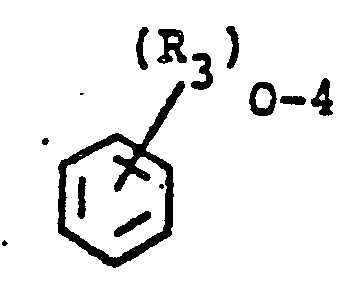
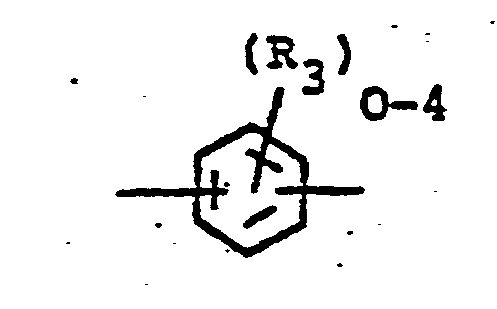
- the poly(etherimide) polymers are of the following formula: wherein a is an integer greater than 1, preferably from about 10 to about 10,000 or more, -O-R 1 -O- is attached to the 3 or 4 and 3' or 4' positions and R 1 is selected from (a) a substituted or'unsubstituted aromatic radical of the formula-: or (b) a divalent radical of the formula: wherein R 3 is independently C 1 to C 6 alkyl, or halogen and R 4 is selected from -O-, -S-, -SO-, -SO 2 - alkylene of 1 to 6 carbon atoms, cycloalkylene of 4 to 8 carbon atoms, alkylidene of 1 to 6 carbon atoms or cycloalkylidene of 4 to 8 carbon atoms, R 2 is selected from an aromatic hydrocarbon radical having from 6-20 carbon atoms and halogenated derivatives thereof, or alkyl substituted derivatives thereof, wherein the alkyl group contains 1 to 6 carbon
- -0-Z is a member selected from wherein R 6 is independently hydrogen, lower alkyl or lower alkoxy and, wherein the oxygen may be attached to either ring and located ortho or para to one of the bonds of the imide carbonyl groups, R 1 and R 2 and a are as previously defined.
- polyetherimides are prepared by methods well known in the art as set forth in, for example, U.S. Patents 3,833,544, 3,887,588, 4,017,511, 3,965,125 and 4,024,110.
- the polyetherimides of Formula (I) can, for example, be obtained by any of the methods well-known to those skilled in the art including the reaction of any aromatic bis(ether anhydride)s of the formula where R 1 is as defined hereinbefore, with a diamino compound of the formula where R 2 is as defined hereinbefore.
- the reactions can be advantageously carried out employing well-known solvents, e.g., o-dichlorobenzene, m-cresol/toluene, N,N-dimethylacetamide, etc., in which to effect interaction between the dianhydrides and diamines, at temperatures of from about 20 to about 250°C.
- the polyetherimides can be prepared by melt polymerization of any dianhydride of Formula III with any diamino compound of Formula IV while heating the mixture of the ingredients at elevated temperatures with concurrent intermixing.
- melt polymerization temperatures between about 200° to 400°C and preferably 230° to 300°C can be employed. Any order of addition of chain stoppers ordinarily employed in melt polymerization can be employed.
- the conditions of the reaction and the proportions of ingredients can be varied widely depending on the desired molecular weight, intrinsic viscosity, and solvent resistance.
- polyetherimides of Formula I have an intrinsic viscosity [ ⁇ ] greater than 0.2 deciliters per gram, preferably 0.35 to 0.60, or 0.7 deciliters per gram or even higher when measured in m-cresol at 25°C.
- aromatic bis(ether anhydride)s of Formula III include, for example,
- the organic diamines-of Formula IV include, for example, m-phehylenediamine, p-phenylenediamine, 4,4'-diaminodiphenylpropane, 4,4'-diaminodiphenylmethane, benzidine., 4,4'-diaminodiphenyl sulfide, 4,4'-diaminodiphenyl sulfone, 4,4'-diaminodiphenyl ether, 1,5-diaminonaphthalene, 3,3'-dimethylbenzidine and, 3,3'-dimethoxybenzidine.
- the polyetherimides of formula (II) may, for example, be prepared by affecting reaction in the presence of a dipolar aprotic solvent of a mixture of ingredients comprising, for instance, (1) a bis(nitrophthalimide) of the general formula: Wherein R 2 is defined as hereinabove, and (2) an alkali metal salt of an organic compound of the general formula: wherein M is an alkali metal and R 1 is defined as hereinabove.
- the bis(nitrophthalimide) used in'preparing the polymer is formed by reacting a diamine of the formula described above, NH 2 -R 1 -NH 2 , with a nitro-substituted aromatic anhydride of the formula:
- the molar ratio of diamine to anhydride should ideally be about 1:2 respectively.
- the initial reaction product is a bis(amide-acid) which is subsequently dehydrated to the corresponding bis(nitrophthalimide).
- nitrophthalic anhydrides useful herein are 3-nitrophthalic Anhydride, 4-nitrophthalic anhydride, and mixtures thereof. These reactants are commercially available in reagent grade. They may also be prepared by the nitration of phthalic anhydride using procedures described in Organic Syntheses, Collective Vol. I, Wiley (1948), page 408. Certain other closely related nitroaromatic anhydrides may also be used in the reaction and are illustrated for example by 2-nitrophthalic anhydride, 1-nitro-2,3-naghthalene- dicarboxylic acid anhydride, 3-methoxy-6-nitrophtbalic anhydride, and the like.
- alkali metal salts of formula VI among the.divalent carbocyclic aromatic radicals which R 1 may represent are, for instance, divalent aromatic hydrocarbon radicals of from 6 to 20 carbon atoms, such as phenylene, biphenylene, naphthylene, etc. Included are residues of, e.g. hydroquinone,.resorcinol, chlorohydroquinone, etc.
- R 1 may be a residue of a dihydroxy diarylene compound in which the aryl nuclei are joined by either an aliphatic group, a sulfoxide group, sulfonyl group, sulfur, carbonyl group, oxygen, the -C(CH 3 )(CH 2 ) 2 (COOH) group, etc.
- Typical of such diarylene compounds are the following:
- dialkali metal salts of formula VI When dialkali metal salts of formula VI are used with the compound illustrated by formula V, the. ingredients are advantageously present in an equal molar ratio for optimum molecular weight and properties of the polymer. Slight molar excesses, e.g., about 0.001 to 0.10 molar excess of either the dinitro-substituted organic compound or of the dialkali metal salt of formula VI may be employed. When the molar ratios are approximately equal, the polymer is substantially terminated by Z-NO2 at one end and a phenolic group at the other end. If there is a molar excess of one compound, that particular terminal group will predominate.
- the conditions of reaction-thereby the alkali-metal salt of formula VI is reacted with the dinitro-substituted organic compound of formula V can be varied widely. Generally, temperatures of the order of about 25-150°C are advantageously employed, although it is possible to employ lower or higher temperature conditions depending on the ingredients used, the reaction product sought, time of reaction, solvent employed,'etc. In addition to atmospheric pressure, superatmospheric pressures and subatmospheric pressures may be employed depending upon the other conditions of reaction, the ingredients used, the speed at which it is desired to effect reaction, etc.
- the time of reaction also can be varied widely depending on the ingredients used, the temperature, the desired yield; etc. It has been found that times varying from about 5 minutes to as much as 30 to 40 hours are advantageously employed to obtain the maximum yield and desired molecular weight.
- the reaction product can be treated in the appropriate manner required to effect precipitation and/or separation of the desired polymeric reaction product.
- common solvents such as alcohols (e.g. methanol, ethanol, isopropyl alcohol, etc.) and aliphatic hydrocarbons (e.g. pentane, hexane, octane, cyclohexane, etc.) may be employed as precipitants for this purpose.
- the polymerization is performed under anhydrous conditions usually using dipolar aprotic solvents such as dimethylsulfoxide which are added in varying amounts depending upon the particular polymerization.
- dipolar aprotic solvents such as dimethylsulfoxide which are added in varying amounts depending upon the particular polymerization.
- a total quantity of solvent, dipolar aprotic solvent or mixture of such solvent with an aromatic solvent sufficient to give a final solution containing 10-20% by weight of polymer is preferably employed.
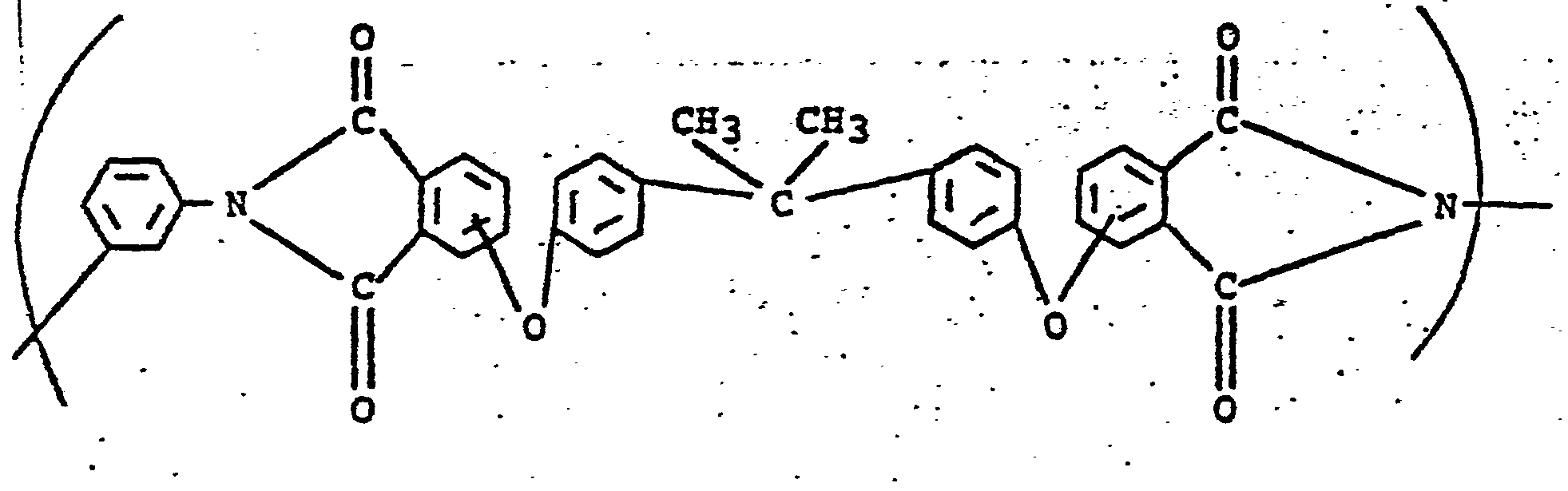
- the preferred poly(etherimide) polymers include those having repeating units of the following formula:
- the crystalline polyamide polymers which may be used herein are well known in the art.
- the polyamide polymers include homopolymers as well as copolymers. These polymers may be formed by conventional methods from the condensation of bifunctional monomers, by the condensation of diamines and dibasic acids, as well as by addition polymerization.
- diacids such as carbonic acid, oxalic acid, glutaric acid, adipic acid, pimelic acid, suberic acid, azelaic acid, sebacic acid, dodecanedioic acid, isophthalic acid, terephtnalic acid, and the like
- diamines such as hydrazine, ethylenediamine, hexametnylenediamine, 1,8-octanediamine, piperazine, and the like, and amino acids are possible.
- the chains between functional groups in tne reactants may comprise linear or branched aliphatic hydrocarbons, or alicyclic or aromatic rings. They may also contain hetero atoms such as oxygen, sulfur, and nitrogen. Secondary diamines lead to the formation of N-substituted polyamides
- Tne dibasic acias include terephthalic acid, isophthalic acid, phthalic acid, and the lixe.
- the aromatic aiamines include o-phenyleneaiamine, 2,4-diaminotoluene, 4,4'-methylenedianiline, and the like.
- the polyamiae polymers are prepared by methods well Known in the art, such as by direct amidation which is the reaction of amine groups with carboxyls accompanied by elimination of water; low temperature polycondensation of diamines and diacid chlorides, ring-opening polymerization, addition of amines to activated double bonds, polymerization of isocyanates and reaction of formaldehyde with dinitriles.
- the polyamide polymers include polyhexamethylene-
- T ne reinforcing fibers which may be used herein include fiberglass, carbon fibers, aromatic polyamide fibers, and the like.
- the mineral fillers which may be used includeae calcium carbonate, wollastonite, silicates and the like.
- the blend of poly(etherimide) polymer and crystalline polyamide polymer may be alloyed witn a variety of thermoplastic polymers such as aromatic polyesters, aromatic polycarbonates, poly (ester carbonates), poly(aryl ether)s, polyhydroxyether, polyarylates and the like.
- additives may be included with the blend and include pigments; thermal stabilizers; ultraviolet light stabilizers, plasticizers, and the like.
- the polyamide polymer is used in amounts of trom about 95 to about 5, preferably from about 80 to about 20 weight percent.
- the poly(etherimide) polymer is used in amounts of from about 5 to about . 95, preferably from about 20 to about 80 weight percent.
- the reinforcing fiber, or mineral filler or thermoplastic polymer is used in amounts of from 0 to about 50, preferably from 0 to about 30 weight percent.
- composition of this invention is prepared by any conventional mixing method.
- a preferred method comprises mixing the polyamide polymer, polytetherimide) polymer and optionally, thermoplastic polymer, and/or reinforcing fiber, and/or mineral fiber in powder or granular form in an extruder and extruding the mixture into strands, chopping the strands into pellets and molding the pellets into the desired article.
- the novel poly(etherimide)-polylactam block copolymer may be prepared from lactam monomer and poly(etherimide) by anionically polymerizing the lactam monomer with a catalyst-initiator system which comprises, as the initiator or activator, one or more poly(etherimides).
- lactams which may be used according to the present invention are all those which are capable of being polymerized anionically and are preferably those lactam monomers which contain at least one ring group of the structure wherein b is a whole number which is 3 to 15, and preferably 3 to 10, and R 7 and R 8 may be the same or different radicals on each carbon atom and may be H or C 1 to C 10 hydrocarbon.
- lactams would include those having a single ring structure such as 2-pyrrolidone, 2-piperidone, 6-metnyl-2-piperidone, ⁇ -caprolactam, enantholactam, capryllactam, lauryllactam, decanolactam, undecanolactam, dodecanolactam, pentadecanolactam, hexadecanolactam, alkyl substituted caprolactams, aryl substituted lactams, and the like.
- Lactams having a plurality of ring structures which may be used in the present invention include bis-lactams such as alkylene bis-lactams of the formula: wherein b' and b'' are independently integers of from 1 to about 14; R 7 and R 8 are as defined above and R 9 may be C 1 to C 4 alkylene such as methylene, ethylene, propylene, and butylene; phenylene and substituted phenylene; O and S.
- bis-lactams such as alkylene bis-lactams of the formula: wherein b' and b'' are independently integers of from 1 to about 14; R 7 and R 8 are as defined above and R 9 may be C 1 to C 4 alkylene such as methylene, ethylene, propylene, and butylene; phenylene and substituted phenylene; O and S.
- lactams having a plurality of ring structures include bicyclic lactams, such as those represented by the formulae:
- the lactams to be polymerized can be used individually or in any combination thereof.
- the initiators. are poly(etherimides). selected from the following formulae: . or wherein R 1 , R 2 Z and a are as previously defined and X and X' are independently halogen, N0 2 or an anhydride terminated moiety.
- the poly(etherimide) terminated by X and X' may be obtained by the procedure described above using a slight excess of the corresponding reagent in the polymerization reaction.
- the block copolymers of the present invention are block copolymers of the AB and ABA types, wherein A represents a block of lactam polymer and B represents the poly(etherimide) block. In the usual case these two types of block copolymers are concurrently prepared in the polymerization reaction. These two types of block copolymers may also be represented by the structures or for the ABA copolymers and and or for the AB type block copolymers.
- R 1 , R 2 , Z, a and X are as defined above.
- X 1 and X 2 are residues of the reaction between the initiator terminals X and X ', respectively, and the salt of the lactam being polymerized. For example, when X is Hal and X' is Hal, then X or X are Bal and X 2 is a chemical bond.
- the A chains of lactam monomer attach to the initiator at the site of, and upon the removal during the initiating reaction of, all or part of one or both of the terminal groups.
- X and X' terminal groups are active enough to serve as initiating sites, although with a given polymeric initiator not all of such individual X and X' sites will react.
- X is R or ArOR and X' is OH or OR these terminal groups are not very reactive, per se. Where such groups are present it is believed that a scission of the chain of the polymeric initiator takes place, with the creation of a more active terminal group at the site of the cleaved polymer chain.
- the block copolymers of the present invention formed from the poly(etherimide) and lactams disclosed above are unique semi-crystalline materials which have physical properties which are superior in various respects to either a homopolymer of the corresponding lactam or to the poly(etherimide) polymers. They are superior, for example, to the lactam homopolymers because they have higher heat distortion temperatures, particularly in the case where tne lactam is ⁇ -caprolactam and the lactam homopolymer is thus a nylon-6 polymer. In such instances of comparison the block copolymers of tne present invention would have heat distortion temperatures up to about 60°C.
- the block copolymers also have lower hydrophilicity and better thermal stability properties than the corresponding lactam homopolymers.
- the block copolymers are also better than the poly(etherimide) materials.from which they are formed because they have improved stress crack resistance properties and improved resistance to various types of environments.
- the olock copolymers also have improved processability in that they may be processed at temperatures which are up to 100°C. lower than the temperatures at which the poly(etherimide) materials may be processed. Blends of the block copolymer with poly(etherimide) would provide a useful property profile.
- the block copolymer blend with poly(etherimide) will offer improved mechanical compatibility over simple blends of polyamides and poly(etherimides).
- the preferred copolymers of the present invention are those which contain about 20 to 80 weight percent of the lactam monomer in the form of block segments therein, and 80 to 20 weight percent of the poly(etherimide) materials as block segments therein.
- the catalysts which may be employed in the anionic polymerization reaction of the present invention include all anionic catalyst materials which may be employed in the anionic polymerization of lactams.
- the catalyst material is usually a salt of the lactam being polymerized although any other lactam may be used to form the catalyst.
- the salt is usually prepared by reacting the lactam with a strong base, i.e., a base strong enough to convert the lactam to its salt.
- Such bases would include alkali and alkaline earth metals or basic derivatives of such metals such as the hydroxides, oxides, alkoxides, phenoxides, hydrides, alkyls, aryls, amides, borohydrides and weak acid salts, i.e., acetates, carbonates, bicarbonates, benzoates, sulfites and bisulfites; Grignard reagents, and various other organo-metallic compounds.
- alkali and alkaline earth metals or basic derivatives of such metals such as the hydroxides, oxides, alkoxides, phenoxides, hydrides, alkyls, aryls, amides, borohydrides and weak acid salts, i.e., acetates, carbonates, bicarbonates, benzoates, sulfites and bisulfites; Grignard reagents, and various other organo-metallic compounds.
- Such bases would include, therefore, metals such as lithium, sodium, potassium, magnesium, calcium, strontium, barium, and aluminum and derivatives of such metals, such as lithium hydroxide, sodium hydroxide, potassium hydroxide, magnesium hydroxide, calcium hydroxide, strontium hydroxide, barium hydroxide, lithium hydride, sodium hydride, sodium oxide, sodium methbxide, sodium phenoxide, sodium methyl, sodium ethyl, sodium phenyl, sodium naphthyl, and sodamide; Grignard reagents such as ethyl magnesium chloride, methyl magnesium bromide, and phenyl magnesium bromide; and other compounds such as zinc diethyl, triiospropyl aluminum, diisobutyl aluminum hydride, and lithium aluminum hydride.
- metals such as lithium, sodium, potassium, magnesium, calcium, strontium, barium, and aluminum and derivatives of such metals, such as lithium hydroxide, sodium hydroxide, potassium hydrox
- the catalyst and initiator are employed in a mole ratio to each other of about 2 to 200, and preferably, 3 to 10.
- a by-product is usually formed.
- hydrogen is formed as a by-product when the metal hydrides or the elemental metals are used; water is formed as a by-product when metal hydroxides are used; alcohols are formed when alkoxides are used and water and C0 2 are formed when carbonate or bicarbonate salts are used.
- the preferred catalysts are those which result in the most readily removable by-products, since some of the by-products, such as H 2 0, may have a deleterious effect on the polymerization reaction.
- the polymerization reaction is preferably conducted in bulk. Under such bulk polymerization procedures the poly(etherimide) initiator is preferably dissolved in the monomeric lactam. This can be accomplished easily at temperatures between 80°C. and 250°C. When initiators are used which contain less reactive end groups, e.g., hydroxyl or halogen then the solution of initiator in lactam monomer may be stored in the liquid or molten state at temperatures which are slightly above the melting point of the monomeric lactam, i.e., about 70-75° C . for ⁇ -caprolactam monomers, for up to about 40 hours without any appreciable change in the viscosity o-f the system or potency of the catalyst-initiator system.
- the poly(etherimide) initiator is preferably dissolved in the monomeric lactam. This can be accomplished easily at temperatures between 80°C. and 250°C.
- the solution of initiator in lactam monomer may be stored in the liquid or molten state at temperatures which are
- the pot life is shorter at higher temperatures, i.e., between about 80°C. and about 130°C. for ⁇ -caprolactam, and at temperatures of about 130°-240°C.
- the ⁇ -caprolactam polymerization reaction proceeds within a few minutes when using polymeric initiators having such OH and halogen . terminals. The reactions will proceed even faster under such temperature conditions when other terminal groups are used on the initiator.
- the bulk polymerization reaction is usually conducted at atmospheric pressure and at a temperature of about 130° to 260°C. The reaction can be conducted at a temperature which is above or below the melting point of the resulting polymer, and above that of the monomer.
- the use of elevated pressure is not required for the polymerization reaction.
- the bulk polymerization reaction requires a polymerization period of about 30 to 100 minutes at 130°-220°C. depending on the lactam(s) employed, the catalyst concentration, and the polymerization temperature.
- the bulk polymerization reaction should be carried out under anhydrous conditions, i.e., in the presence of no more than about 0.2 weight percent, and preferably no more than 0.03 weight percent, of water or other active hydrogen containing by-product. Where a catalyst is used which would generate water or other active hydrogen containing by-products, such as the hydroxide, alkoxide or phenoxide catalysts, the excess amounts of such by-product materials should be removed before the polymerization reaction is conducted
- the polymerization is preferably carried out under an inert blanket of gas, such as, nitrogen, argon or helium in order to prevent oxidative degradation of the monomer and of destruction of the catalyst by moisture.
- gas such as, nitrogen, argon or helium
- the reaction may be carried out batchwise or continuously.
- An advantageous method of carrying out the reaction of the present invention is to conduct the bulk polymerizatin in conventional molding equipment such as a rotational casting device or a compression molding machine, or an extruder. In this way the polymer and the molded objects can both be formed in one step. Where the polymerization is conducted in such molding devices, conventional molding pressures may be employed in order to simultaneously form the molded object with the in situ formed polymer.
- the bulk polymerization reactions may be carried out by various procedures. In one procedure, the lactam may be melted, and both the catalyst and the initiator admixed with it and then the reaction may be caused to proceed by bringing the reaction mixture to polymerization temperatures.
- the catalyst and initiator may be dissolved separately in the lactam monomer, after which the two separate solutions may be combined to cause the polymerization to proceed at polymerization temperatures.
- the equipment may be heated to the desired polymerization temperature in order to effect polymerization upon injection therein of the polymerization reaction system.
- the polymerization may also be conducted in high boiling inert organic solvents, i.e.', those having boiling points of above 100°C., such as chlorobenzene, dichlorobenzene, xylene, trichlorobenzene, N-alkyl pyrrolidones and hexamethylphosphoramide, at temperatures of about 100°C. up to the boiling point of the solvent; or at temperatures of about 130 to 240°C. in dispersion systems such as those disclosed in U.S. 3,061,592 and 3,383,352, and by G.B. Gechele and G.F. Martins in J. Applied Polymer Science, 9, 2939 (1965).
- solvents i.e.', those having boiling points of above 100°C., such as chlorobenzene, dichlorobenzene, xylene, trichlorobenzene, N-alkyl pyrrolidones and hexamethylphosphoramide
- the polymerization reaction of the present invention may also be conducted in the presence of various types of materials which are normally employed with the types of polymers prepared by the present invention, or the material may be added to the polymer after it is formed.
- materials would include fillers, stabilizers, fibrous reinforcing agents such as glass fiber, and pigmenting materials.
- the reaction can also be carried out in the presence of thermoplastic polymers which are inert under tne reaction conditions such as polyolefins and copolymers thereof, aromatic vinyl polymers and copolymers thereof, polyphenylene oxides, poly(arylethers), and the like.
- thermoplastic polymers which are inert under tne reaction conditions such as polyolefins and copolymers thereof, aromatic vinyl polymers and copolymers thereof, polyphenylene oxides, poly(arylethers), and the like.
- Control A was a poly(etherimide) polymer having repeating units of the following formula:
- This poly(etnerimide) polymer has a reduced viscosity of 0.51 as measured in chloroform (0.5 g. per 100 ml) at 25°C.
- Tne poly(etnerimide) polymer was injection molded into-ASTM test specimens in a 1 1/4 ounce Newbury screw injection molding machine under the molding conditions shown in Table I. The test specimens were tested for the following properties: tensile strength and modulus according to A STM D-638; elongation at break according to AS TM D-638; notched izod impact strength according to A STM D-256; heat distortion temperature measured at 264 psi on a 1/8 inch thick unannealed test bar according to AS T M D-635.
- the melt flow of the polymer was measured according to a.procedure similar to AS T M D-1238. The results are shown in Table I. Also, test specimens (1/8 inch wide and 25 mils thick cast from a compression molded sample) were placed under the stress snown in Table II. A cotton swab saturated with the chemical environment, as identified in Table II, was attached to tne center of the test specimen. The time for the specimen to rupture was then recorded. The results are shown in Table II.
- 80 weight percent of the poly(etnerimide) of Control A was blended with 20 weight percent of nylon 6,6 (Zytel 101 obtained from E.I. DuPont De Nemours & Co.) having a melting point of 255°C (as measured by ASTM D-789), a specific gravity of 1.14 (as measured by ASTM D-792) and a flexural modulus of 410,000 psi, dry 23°C (as measured by ASTM D-790) in a one inch laboratory extruder having a 24 L/D at a temperature of 270 to 290°C.
- the resultant proauct was molded and tested as described in Control A.
- 60 weight percent of the poly(etherimide) of Control A was blended with 40 weight percent of nylon 12 (Grilamid L25 Natural obtained from Emserwerke) having a melting range of 176 to 180°C (as measured by a polarization microscope), a specific gravity of 1.01 (as measured by ASTM D-792) and.a flexural modulus of 180,000 psi, dry, 23°C (as measurea by ASTM D-790) by the procedure described -in Example 1.
- the resultant product was molded and tested as described in Control A.
- Control A 80 weight percent of the poly(etherimide) of Control A was blended with 20 weight percent of fiberglass (1/8 inch chopped strands, P1978-XI obtained from Owens-Corning Piberglas Corp.) by the procedure described in Example 1. The resultant product was molded and tested as described in Control A.
- Example 1 80 weight percent of the nylon 6,6 of Example 1 was blended with 20 weight percent of the fiberglass of Control B by the procedure described in Example 1. The resultant product was molded and tested as described in Control A.
- Control A 48 weight percent of the poly(etherimide) of Control A was blended with 32 weight percent of the nylon 6,6 of Example 1 and 20 weight percent of the fiberglass of Control B. The resultant product was molded and tested as described in Control A.
- the crude material was extracted with methanol in a soxhlet apparatus.
- the extracted material was vacuum dried till constant weight at 100°C.
- the yield of methanol-insoluble block copolymer was 91.1%. It's RV was 0.69 as measured in m cresol at 25°C (0.1 gm/100ml).
- Example 5 The poly(etherimide)-polylactam block copolymer synthesized in Example 5 was compression molded in a 4 x 4 inch x 20 mil cavity mold.
- the mechanical properties measured on the resultant sheet conditioned at 23°C and 50% relative humidity are listed below using testing procedures similar to that described for Control A but modified to handle the smaller specimen size (1/8 inch wide strips).
- the poly(etherimide)-polylactam block copolymer synthesized in Example 5 was blended with the poly(etherimide) described in Control A.
- the mixing equipment used was a Brabender operated at 280°-300°C.
- the blend of 50% poly(etherimide) polylactam block copolymer and 50% poly(etherimide) was compression molded at 270°C into a 4" x 4" x 20 mil sample. Using the procedures described in Example 5, the following mechanical properties were obtained for this blend.
- Example 5 25 wt % of the poly(etherimide)-nylon 6 block copolymer described in Example 5 was mixed with 75 wt % of the poly(etherimide) described in Control A.
- the melt flow (300°C; 44 psi) of the resultant blend was 14.1 dg/min.
Landscapes
- Chemical & Material Sciences (AREA)
- Health & Medical Sciences (AREA)
- Chemical Kinetics & Catalysis (AREA)
- Medicinal Chemistry (AREA)
- Polymers & Plastics (AREA)
- Organic Chemistry (AREA)
- Compositions Of Macromolecular Compounds (AREA)
- Macromolecular Compounds Obtained By Forming Nitrogen-Containing Linkages In General (AREA)
- Polyamides (AREA)
Abstract
Description
- This invention is directed to a composition suitable for molding comprising a blend of a poly(etherimide) polymer and a crystalline polyamide polymer. Also, this invention is directed to poly (etherimide)-polylactam block copolymer.
- Poly(etherimide) polymers are higt. performance engineering polymers. These polymers have a high continuous-use temperature, flame retardance, low smoke evolution, creep resistance, and good electrical properties. These resins can be injection molded, extruded into profiles, sheets or films and blow molded. However, poly(etherimide) polymers are susceptible to premature failure in certain environments such as in chlorinated hydrocarbons.
- Poly (etherimide) polymers are molded at temperatures of from about 750 to about 820°F. These high molding temperatures tend to have a detrimental effect upon the properties of. the polymer.
- Thus, there is a desire to improve the chemical resistance of poly(etherimide) polymers to make them more useful in environments where tney are susceptible to premature failure without essentially effecting their mechanical properties. Also, there is a desire to lower the molding temperature of the poly (etherimide) polymers by use of an additive which does not adversely affect their mechanical properties.
- It has now been found that by adding a crystalline polyamide polymer to a poly(etherimide) polymer, the resulting'blend, when molded, has improved chemical resistance in environments such as in chlorinated hydrocarbons. The mechanical properties of the poly(etherimide) polymer are not adversely affected by addition of the crystalline polyamide polymer. Also, the addition of a crystalline polyamide polymer to the poly(etherimide) polymer significantly lowers the molding temperature of the poly(etherimide) without essentially affecting its mechanical properties.
- The composition of this invention comprises a blend of a poly(etherimide) polymer and a crystalline polyamide polymer. Also, this invention is directed to novel block copolymers derived from a lactam monomer and a poly (etherimide) polymer.
- In another embodiment of tnis invention, a reinforcing fiber and/or mineral filler may be added to the blend or block copolymer.
- The poly(etherimide) polymers suitable for use in this invention are known in the art.and are described in, for example, U.S. Patents 3,847,867, 3,838,091 and 4,107,147.
- The poly(etherimide) polymers are of the following formula:



- These polyetherimides are prepared by methods well known in the art as set forth in, for example, U.S. Patents 3,833,544, 3,887,588, 4,017,511, 3,965,125 and 4,024,110.
- The polyetherimides of Formula (I) can, for example, be obtained by any of the methods well-known to those skilled in the art including the reaction of any aromatic bis(ether anhydride)s of the formula


- The aromatic bis(ether anhydride)s of Formula III include, for example,
- 2,2-bis[4-(2,3-dicarboxyphenoxy)phenyl]-propane dianhydride;
- 4,4'-bis(2,3-dicarboxyphenoxy)diphenyl ether dianhydride;
- 1,3-bis(2,3-dicarboxyphenoxy)benzene dianhydride;
- 4,4'-bis(2,3-diearboxyphenoxy)diphenyl sulfide dianhydride;
- 1,4-bis(2,3-dicarboxyphenoxy)benzene dianhydride;
- 4,4'-bis(2,3-dicarboxyphenoxy)benzophenone dianhydride;
- 4,4'-bis(2,3-dicarboxyphenoxy)diphenyl sulfone dianhydride;
- 2,2-bis[4-(3,4-dicarboxyphehoxy)phenyl]-propane dianhydride;
- 4,4'-bis(3,4-dicarboxyphenoxy)diphenyl ether dianhydride;
- 4,4'-bis(3,4-dicarboxyphenoxy)diphenyl sulfide dianhydride;
- 1,3-bis(3,4-dicarboxyphenoxy)benzene dianhydride;
- 1,4-bis(3,4-dicarboxyphenoxy)benzene dianhydride;
- 4,4'-bis(3,4-dicarboxyphenoxy)benzophenone dianhydride;
- 4-(2,3-dicarboxyphenoxy)-4'-(3,4-dicarboxy- phenoxy)diphenyl-2,2-propane dianhydride; etc. and mixtures of such dianhydrides.
- The organic diamines-of Formula IV include, for example, m-phehylenediamine, p-phenylenediamine, 4,4'-diaminodiphenylpropane, 4,4'-diaminodiphenylmethane, benzidine., 4,4'-diaminodiphenyl sulfide, 4,4'-diaminodiphenyl sulfone, 4,4'-diaminodiphenyl ether, 1,5-diaminonaphthalene, 3,3'-dimethylbenzidine and, 3,3'-dimethoxybenzidine.
- The polyetherimides of formula (II) may, for example, be prepared by affecting reaction in the presence of a dipolar aprotic solvent of a mixture of ingredients comprising, for instance, (1) a bis(nitrophthalimide) of the general formula:


- The bis(nitrophthalimide) used in'preparing the polymer is formed by reacting a diamine of the formula described above, NH2-R1-NH2, with a nitro-substituted aromatic anhydride of the formula:

- The molar ratio of diamine to anhydride should ideally be about 1:2 respectively. The initial reaction product is a bis(amide-acid) which is subsequently dehydrated to the corresponding bis(nitrophthalimide).
- The diamines are described, supra.
- The preferred nitrophthalic anhydrides useful herein are 3-nitrophthalic Anhydride, 4-nitrophthalic anhydride, and mixtures thereof. These reactants are commercially available in reagent grade. They may also be prepared by the nitration of phthalic anhydride using procedures described in Organic Syntheses, Collective Vol. I, Wiley (1948), page 408. Certain other closely related nitroaromatic anhydrides may also be used in the reaction and are illustrated for example by 2-nitrophthalic anhydride, 1-nitro-2,3-naghthalene- dicarboxylic acid anhydride, 3-methoxy-6-nitrophtbalic anhydride, and the like.
- With reference to the alkali metal salts of formula VI among the.divalent carbocyclic aromatic radicals which R1 may represent (mixtures of such radicals are also included) are, for instance, divalent aromatic hydrocarbon radicals of from 6 to 20 carbon atoms, such as phenylene, biphenylene, naphthylene, etc. Included are residues of, e.g. hydroquinone,.resorcinol, chlorohydroquinone, etc. In addition, R1 may be a residue of a dihydroxy diarylene compound in which the aryl nuclei are joined by either an aliphatic group, a sulfoxide group, sulfonyl group, sulfur, carbonyl group, oxygen, the -C(CH3)(CH2)2(COOH) group, etc. Typical of such diarylene compounds are the following:
- 2,4-dihydroxydiphenylmethane;
- bis(2-hydroxyphenyl)methane;
- 2,2-bis(4-hydroxyphenyl)propane;
- bis(4-hydroxyphenyl)methane;
- bis(4-hydroxy-5-nitrophenyl)methane;
- bis(4-hydroxy-2,6-dimethyl-3-methoxyphenyl)methane;
- 1,1-bis(4-hydroxyphenyl)ethane;
- 1,2-bis(4-hydroxyphenyl)ethane;
- 1,1-bis(4-hydroxy-2-chlorophenyl)ethane;
- 1,1-bis(2,5-dimethyl-4-hydroxyphenyl)ethane;
- 1,3-bis(3-methyl-4-hydroxyphenyl)propane;
- 2,2-bis(3-phenyl-4-hydroxyphenyl)propane;
- 2,2-bis(3-isopropyl-4-hydroxyphenyl)propane;
- 2,2-bis(4-hydroxynaphthyl)propane;
- hydroquinone;
- naphthalene diols;
- bis(4-hydraxyphenyl)ether;
- bis(4-hydroxyphenyl)sulfide;
- bis(4-hydroxyphenyl)sulfone; and the like.
- When dialkali metal salts of formula VI are used with the compound illustrated by formula V, the. ingredients are advantageously present in an equal molar ratio for optimum molecular weight and properties of the polymer. Slight molar excesses, e.g., about 0.001 to 0.10 molar excess of either the dinitro-substituted organic compound or of the dialkali metal salt of formula VI may be employed. When the molar ratios are approximately equal, the polymer is substantially terminated by Z-NO2 at one end and a phenolic group at the other end. If there is a molar excess of one compound, that particular terminal group will predominate.
- The conditions of reaction-thereby the alkali-metal salt of formula VI is reacted with the dinitro-substituted organic compound of formula V can be varied widely. Generally, temperatures of the order of about 25-150°C are advantageously employed, although it is possible to employ lower or higher temperature conditions depending on the ingredients used, the reaction product sought, time of reaction, solvent employed,'etc. In addition to atmospheric pressure, superatmospheric pressures and subatmospheric pressures may be employed depending upon the other conditions of reaction, the ingredients used, the speed at which it is desired to effect reaction, etc.
- The time of reaction also can be varied widely depending on the ingredients used, the temperature, the desired yield; etc. It has been found that times varying from about 5 minutes to as much as 30 to 40 hours are advantageously employed to obtain the maximum yield and desired molecular weight. Thereafter the reaction product can be treated in the appropriate manner required to effect precipitation and/or separation of the desired polymeric reaction product. Generally, common solvents such as alcohols (e.g. methanol, ethanol, isopropyl alcohol, etc.) and aliphatic hydrocarbons (e.g. pentane, hexane, octane, cyclohexane, etc.) may be employed as precipitants for this purpose.
- It is important that the reaction between the dinitro-substituted organic compound of formula V and the alkali-metal salt of formula VI (mixtures of such alkali-metal salts can also be used) be carried out in the presence of a dipolar aprotic solvent.
- The polymerization is performed under anhydrous conditions usually using dipolar aprotic solvents such as dimethylsulfoxide which are added in varying amounts depending upon the particular polymerization. A total quantity of solvent, dipolar aprotic solvent or mixture of such solvent with an aromatic solvent sufficient to give a final solution containing 10-20% by weight of polymer is preferably employed.
- The preferred poly(etherimide) polymers include those having repeating units of the following formula:

- The crystalline polyamide polymers which may be used herein are well known in the art. The polyamide polymers include homopolymers as well as copolymers. These polymers may be formed by conventional methods from the condensation of bifunctional monomers, by the condensation of diamines and dibasic acids, as well as by addition polymerization. Numerous combinations of diacids, such as carbonic acid, oxalic acid, glutaric acid, adipic acid, pimelic acid, suberic acid, azelaic acid, sebacic acid, dodecanedioic acid, isophthalic acid, terephtnalic acid, and the like, diamines, such as hydrazine, ethylenediamine, hexametnylenediamine, 1,8-octanediamine, piperazine, and the like, and amino acids are possible. The chains between functional groups in tne reactants may comprise linear or branched aliphatic hydrocarbons, or alicyclic or aromatic rings. They may also contain hetero atoms such as oxygen, sulfur, and nitrogen. Secondary diamines lead to the formation of N-substituted polyamides
- Also, included herein are the aromatic polyamide polymers which are aromatic in both the diamine and the dibasic acid. Tne dibasic acias include terephthalic acid, isophthalic acid, phthalic acid, and the lixe. The aromatic aiamines include o-phenyleneaiamine, 2,4-diaminotoluene, 4,4'-methylenedianiline, and the like.
- The polyamiae polymers are prepared by methods well Known in the art, such as by direct amidation which is the reaction of amine groups with carboxyls accompanied by elimination of water; low temperature polycondensation of diamines and diacid chlorides, ring-opening polymerization, addition of amines to activated double bonds, polymerization of isocyanates and reaction of formaldehyde with dinitriles.
- The polyamide polymers include polyhexamethylene-
- adipamide, i.e., nylon 6,6; poly(ε-caprolactam), i.e., nylon-6; polypropiolactam, i.e., nylon-3;
- poly(pyrrolidin-2-one), i.e., nylon-4;
- poly(ω-enanthamide), i.e., nylon-7;
- polycapryllactam, i.e., nylon-8; poly(w
- -pelargonamiae), i.e., nylon-9;
- poly(11-aminodecanoic acid), i.e., nylon-10;
- poly(ω-undecaneamide), i.e., nyion-11;
- polyhexamethyleneterephthalamide, i.e., nylon-6,T, nylon 6,10, and the like
- Tne reinforcing fibers which may be used herein include fiberglass, carbon fibers, aromatic polyamide fibers, and the like.
- The mineral fillers which may be used incluae calcium carbonate, wollastonite, silicates and the like.
- The blend of poly(etherimide) polymer and crystalline polyamide polymer may be alloyed witn a variety of thermoplastic polymers such as aromatic polyesters, aromatic polycarbonates, poly (ester carbonates), poly(aryl ether)s, polyhydroxyether, polyarylates and the like.
- Other additives may be included with the blend and include pigments; thermal stabilizers; ultraviolet light stabilizers, plasticizers, and the like.
- The polyamide polymer is used in amounts of trom about 95 to about 5, preferably from about 80 to about 20 weight percent. The poly(etherimide) polymer is used in amounts of from about 5 to about . 95, preferably from about 20 to about 80 weight percent. The reinforcing fiber, or mineral filler or thermoplastic polymer, is used in amounts of from 0 to about 50, preferably from 0 to about 30 weight percent.
- The composition of this invention is prepared by any conventional mixing method. For example, a preferred method comprises mixing the polyamide polymer, polytetherimide) polymer and optionally, thermoplastic polymer, and/or reinforcing fiber, and/or mineral fiber in powder or granular form in an extruder and extruding the mixture into strands, chopping the strands into pellets and molding the pellets into the desired article.
- The novel poly(etherimide)-polylactam block copolymer may be prepared from lactam monomer and poly(etherimide) by anionically polymerizing the lactam monomer with a catalyst-initiator system which comprises, as the initiator or activator, one or more poly(etherimides).
- The lactams which may be used according to the present invention are all those which are capable of being polymerized anionically and are preferably those lactam monomers which contain at least one ring group of the structure

- Such lactams would include those having a single ring structure such as 2-pyrrolidone, 2-piperidone, 6-metnyl-2-piperidone,ε-caprolactam, enantholactam, capryllactam, lauryllactam, decanolactam, undecanolactam, dodecanolactam, pentadecanolactam, hexadecanolactam, alkyl substituted caprolactams, aryl substituted lactams, and the like.
- Lactams having a plurality of ring structures which may be used in the present invention include bis-lactams such as alkylene bis-lactams of the formula:

- Other lactams having a plurality of ring structures include bicyclic lactams, such as those represented by the formulae:

- The lactams to be polymerized can be used individually or in any combination thereof.
- The initiators.are poly(etherimides). selected from the following formulae: .


- The poly(etherimide) terminated by X and X' may be obtained by the procedure described above using a slight excess of the corresponding reagent in the polymerization reaction.
- The block copolymers of the present invention are block copolymers of the AB and ABA types, wherein A represents a block of lactam polymer and B represents the poly(etherimide) block. In the usual case these two types of block copolymers are concurrently prepared in the polymerization reaction. These two types of block copolymers may also be represented by the structures


- The A chains of lactam monomer attach to the initiator at the site of, and upon the removal during the initiating reaction of, all or part of one or both of the terminal groups.
- Most of the above described X and X' terminal groups are active enough to serve as initiating sites, although with a given polymeric initiator not all of such individual X and X' sites will react. In the case where X is R or ArOR and X' is OH or OR these terminal groups are not very reactive, per se. Where such groups are present it is believed that a scission of the chain of the polymeric initiator takes place, with the creation of a more active terminal group at the site of the cleaved polymer chain.
- The block copolymers of the present invention formed from the poly(etherimide) and lactams disclosed above are unique semi-crystalline materials which have physical properties which are superior in various respects to either a homopolymer of the corresponding lactam or to the poly(etherimide) polymers. They are superior, for example, to the lactam homopolymers because they have higher heat distortion temperatures, particularly in the case where tne lactam is ε-caprolactam and the lactam homopolymer is thus a nylon-6 polymer. In such instances of comparison the block copolymers of tne present invention would have heat distortion temperatures up to about 60°C. or more higher than the heat distortion temperature of the nylon-6 homopolymer where the block copolymer contains at least 10 to 15 weight percent of the poly(etherimide) as a block of the copolymer. The block copolymers also have lower hydrophilicity and better thermal stability properties than the corresponding lactam homopolymers. The block copolymers are also better than the poly(etherimide) materials.from which they are formed because they have improved stress crack resistance properties and improved resistance to various types of environments. The olock copolymers also have improved processability in that they may be processed at temperatures which are up to 100°C. lower than the temperatures at which the poly(etherimide) materials may be processed. Blends of the block copolymer with poly(etherimide) would provide a useful property profile. The block copolymer blend with poly(etherimide) will offer improved mechanical compatibility over simple blends of polyamides and poly(etherimides).
- The preferred copolymers of the present invention are those which contain about 20 to 80 weight percent of the lactam monomer in the form of block segments therein, and 80 to 20 weight percent of the poly(etherimide) materials as block segments therein.
- The catalysts which may be employed in the anionic polymerization reaction of the present invention include all anionic catalyst materials which may be employed in the anionic polymerization of lactams. The catalyst material is usually a salt of the lactam being polymerized although any other lactam may be used to form the catalyst. The salt is usually prepared by reacting the lactam with a strong base, i.e., a base strong enough to convert the lactam to its salt. Such bases would include alkali and alkaline earth metals or basic derivatives of such metals such as the hydroxides, oxides, alkoxides, phenoxides, hydrides, alkyls, aryls, amides, borohydrides and weak acid salts, i.e., acetates, carbonates, bicarbonates, benzoates, sulfites and bisulfites; Grignard reagents, and various other organo-metallic compounds. Such bases would include, therefore, metals such as lithium, sodium, potassium, magnesium, calcium, strontium, barium, and aluminum and derivatives of such metals, such as lithium hydroxide, sodium hydroxide, potassium hydroxide, magnesium hydroxide, calcium hydroxide, strontium hydroxide, barium hydroxide, lithium hydride, sodium hydride, sodium oxide, sodium methbxide, sodium phenoxide, sodium methyl, sodium ethyl, sodium phenyl, sodium naphthyl, and sodamide; Grignard reagents such as ethyl magnesium chloride, methyl magnesium bromide, and phenyl magnesium bromide; and other compounds such as zinc diethyl, triiospropyl aluminum, diisobutyl aluminum hydride, and lithium aluminum hydride.
- About 0.2 to 20, and preferably 0.5 to 4, mole percent of catalyst is used per mole of monomer being polymerized.
- The catalyst and initiator are employed in a mole ratio to each other of about 2 to 200, and preferably, 3 to 10.
- When the strong base is reacted with the lactam to form the catalyst a by-product is usually formed. For example, hydrogen is formed as a by-product when the metal hydrides or the elemental metals are used; water is formed as a by-product when metal hydroxides are used; alcohols are formed when alkoxides are used and water and C02 are formed when carbonate or bicarbonate salts are used. The preferred catalysts are those which result in the most readily removable by-products, since some of the by-products, such as H20, may have a deleterious effect on the polymerization reaction.
- The polymerization reaction is preferably conducted in bulk. Under such bulk polymerization procedures the poly(etherimide) initiator is preferably dissolved in the monomeric lactam. This can be accomplished easily at temperatures between 80°C. and 250°C. When initiators are used which contain less reactive end groups, e.g., hydroxyl or halogen then the solution of initiator in lactam monomer may be stored in the liquid or molten state at temperatures which are slightly above the melting point of the monomeric lactam, i.e., about 70-75°C. for ε-caprolactam monomers, for up to about 40 hours without any appreciable change in the viscosity o-f the system or potency of the catalyst-initiator system. This provides an unusually long pot life for the molten system at such temperatures. The pot life is shorter at higher temperatures, i.e., between about 80°C. and about 130°C. for ε-caprolactam, and at temperatures of about 130°-240°C. the ε-caprolactam polymerization reaction proceeds within a few minutes when using polymeric initiators having such OH and halogen . terminals. The reactions will proceed even faster under such temperature conditions when other terminal groups are used on the initiator. The bulk polymerization reaction is usually conducted at atmospheric pressure and at a temperature of about 130° to 260°C. The reaction can be conducted at a temperature which is above or below the melting point of the resulting polymer, and above that of the monomer. The use of elevated pressure is not required for the polymerization reaction. The bulk polymerization reaction requires a polymerization period of about 30 to 100 minutes at 130°-220°C. depending on the lactam(s) employed, the catalyst concentration, and the polymerization temperature. The bulk polymerization reaction should be carried out under anhydrous conditions, i.e., in the presence of no more than about 0.2 weight percent, and preferably no more than 0.03 weight percent, of water or other active hydrogen containing by-product. Where a catalyst is used which would generate water or other active hydrogen containing by-products, such as the hydroxide, alkoxide or phenoxide catalysts, the excess amounts of such by-product materials should be removed before the polymerization reaction is conducted
- The polymerization is preferably carried out under an inert blanket of gas, such as, nitrogen, argon or helium in order to prevent oxidative degradation of the monomer and of destruction of the catalyst by moisture.
- The reaction may be carried out batchwise or continuously. An advantageous method of carrying out the reaction of the present invention is to conduct the bulk polymerizatin in conventional molding equipment such as a rotational casting device or a compression molding machine, or an extruder. In this way the polymer and the molded objects can both be formed in one step. Where the polymerization is conducted in such molding devices, conventional molding pressures may be employed in order to simultaneously form the molded object with the in situ formed polymer.
- Since the lactams are normally solid materials at room temperatures, the bulk polymerization reactions may be carried out by various procedures. In one procedure, the lactam may be melted, and both the catalyst and the initiator admixed with it and then the reaction may be caused to proceed by bringing the reaction mixture to polymerization temperatures.
- In another procedure, the catalyst and initiator may be dissolved separately in the lactam monomer, after which the two separate solutions may be combined to cause the polymerization to proceed at polymerization temperatures. Whene the polymerization is conducted in molding equipment, the equipment may be heated to the desired polymerization temperature in order to effect polymerization upon injection therein of the polymerization reaction system.
- In addition to being conducted in bulk, the polymerization may also be conducted in high boiling inert organic solvents, i.e.', those having boiling points of above 100°C., such as chlorobenzene, dichlorobenzene, xylene, trichlorobenzene, N-alkyl pyrrolidones and hexamethylphosphoramide, at temperatures of about 100°C. up to the boiling point of the solvent; or at temperatures of about 130 to 240°C. in dispersion systems such as those disclosed in U.S. 3,061,592 and 3,383,352, and by G.B. Gechele and G.F. Martins in J. Applied Polymer Science, 9, 2939 (1965).
- The polymerization reaction of the present invention may also be conducted in the presence of various types of materials which are normally employed with the types of polymers prepared by the present invention, or the material may be added to the polymer after it is formed. Such materials would include fillers, stabilizers, fibrous reinforcing agents such as glass fiber, and pigmenting materials.
- The reaction can also be carried out in the presence of thermoplastic polymers which are inert under tne reaction conditions such as polyolefins and copolymers thereof, aromatic vinyl polymers and copolymers thereof, polyphenylene oxides, poly(arylethers), and the like.
- The following examples serve to give specific illustrations of the practice of this invention but they are not intended in any way to limit tne scope of this invention. In these examples, all parts and percentages are on a weignt basis unless otherwise specified.
- Control A was a poly(etherimide) polymer having repeating units of the following formula:

- This poly(etnerimide) polymer has a reduced viscosity of 0.51 as measured in chloroform (0.5 g. per 100 ml) at 25°C. Tne poly(etnerimide) polymer was injection molded into-ASTM test specimens in a 1 1/4 ounce Newbury screw injection molding machine under the molding conditions shown in Table I. The test specimens were tested for the following properties: tensile strength and modulus according to ASTM D-638; elongation at break according to ASTM D-638; notched izod impact strength according to ASTM D-256; heat distortion temperature measured at 264 psi on a 1/8 inch thick unannealed test bar according to ASTM D-635. The melt flow of the polymer was measured according to a.procedure similar to ASTM D-1238. The results are shown in Table I. Also, test specimens (1/8 inch wide and 25 mils thick cast from a compression molded sample) were placed under the stress snown in Table II. A cotton swab saturated with the chemical environment, as identified in Table II, was attached to tne center of the test specimen. The time for the specimen to rupture was then recorded. The results are shown in Table II.
- 80 weight percent of the poly(etnerimide) of Control A was blended with 20 weight percent of nylon 6,6 (Zytel 101 obtained from E.I. DuPont De Nemours & Co.) having a melting point of 255°C (as measured by ASTM D-789), a specific gravity of 1.14 (as measured by ASTM D-792) and a flexural modulus of 410,000 psi, dry 23°C (as measured by ASTM D-790) in a one inch laboratory extruder having a 24 L/D at a temperature of 270 to 290°C. The resultant proauct was molded and tested as described in Control A.
- The results are shown in Tables I and II.
- 60 weight percent of the poly(etherimide) of Control A was blended with 40 weight percent of the nylon 6,6 of Example 1 by the procedure described in Example 1. Tne resultant product was molded and tested as described in Control A.
- The results are shown in Tables I and II.
- 60 weight percent of the poly(etherimide) of Control A was blended with 40 weight percent of nylon 12 (Grilamid L25 Natural obtained from Emserwerke) having a melting range of 176 to 180°C (as measured by a polarization microscope), a specific gravity of 1.01 (as measured by ASTM D-792) and.a flexural modulus of 180,000 psi, dry, 23°C (as measurea by ASTM D-790) by the procedure described -in Example 1. The resultant product was molded and tested as described in Control A.
- The results are shown in Tables I ana II.


- 80 weight percent of the poly(etherimide) of Control A was blended with 20 weight percent of fiberglass (1/8 inch chopped strands, P1978-XI obtained from Owens-Corning Piberglas Corp.) by the procedure described in Example 1. The resultant product was molded and tested as described in Control A.
- The results are shown in Table III.
- 80 weight percent of the nylon 6,6 of Example 1 was blended with 20 weight percent of the fiberglass of Control B by the procedure described in Example 1. The resultant product was molded and tested as described in Control A.
- The results are shown in Table III
- 48 weight percent of the poly(etherimide) of Control A was blended with 32 weight percent of the nylon 6,6 of Example 1 and 20 weight percent of the fiberglass of Control B. The resultant product was molded and tested as described in Control A.
- The results are shown in Table III.

- To a dry 500 milliliter (ml), three neck flask fitted witn a mechanical stirrer, nitrogen inlet tube and a distillate receiver attached to a condenser were added 62.5 grams of the poly(etherimide) depicted in Control A, supra, 100 ml. of chlorobenzene, and 220 ml. of freshly distilled ε-caprolactam (1.95 moles = 220 gms) Stirring ana circulation of dry Nitrogen were started. The solution was heated (oil-oath) and 90% of the chlorobenzene was distilled off (time of distillation: 2.0 hours). A substantially dry solution of the polymer in the lactam was left in the flask as the residue.
- In a separate, dry 100 ml. flask fitted with a magnetic stirrer, a nitrogen-inlet tube, and a condenser were placed 30 ml of distilled ε-caprolactam. Heating of this material was accomplished via an oil bath. To the partially solidified ε-caprolactam was added 0.48 grams (0.8 gm of a 60-40 by weight dispersion in mineral oil) of sodium hydride (0.02 moles). Tne flask was slowly heated to 80°C, and the hydrogen gradually evolved to yield a clear solution of the catalyst (1 hour).
- Twenty-seven milliliters of this catalyst solution (1.80 x 10⁻² moles) were transferred via syringe to the polymer solution in ε-caprolactam. The oil bath temperature was kept at 185°C for 40 minutes, and no visible increase in viscosity was observed. The mixture was cooled to 140°C, and another 0.48 g (0.8 gm of a 60-40 by weight dispersion in mineral oil) of solid sodium hydride (0.02 mole) was added. The oil bath temperature was raised to 220°C. A rapid increase in viscosity was observed and at the end of a 75 minute period the reaction was considered complete. The resulting block copolymer product was cooled under nitrogen. The solid cold copolymer was highly crystalline and tougn. A mechanical grinder was usea to break the material into small particles. The yield of tnis crude product was quantitative.
- The crude material was extracted with methanol in a soxhlet apparatus. The extracted material was vacuum dried till constant weight at 100°C. The yield of methanol-insoluble block copolymer was 91.1%. It's RV was 0.69 as measured in m cresol at 25°C (0.1 gm/100ml).
- The poly(etherimide)-polylactam block copolymer synthesized in Example 5 was compression molded in a 4 x 4 inch x 20 mil cavity mold. The mechanical properties measured on the resultant sheet conditioned at 23°C and 50% relative humidity are listed below using testing procedures similar to that described for Control A but modified to handle the smaller specimen size (1/8 inch wide strips).

- The poly(etherimide)-polylactam block copolymer synthesized in Example 5 was blended with the poly(etherimide) described in Control A. The mixing equipment used was a Brabender operated at 280°-300°C. The blend of 50% poly(etherimide) polylactam block copolymer and 50% poly(etherimide) was compression molded at 270°C into a 4" x 4" x 20 mil sample. Using the procedures described in Example 5, the following mechanical properties were obtained for this blend.

- 25 wt % of the poly(etherimide)-nylon 6 block copolymer described in Example 5 was mixed with 75 wt % of the poly(etherimide) described in Control A. The melt flow (300°C; 44 psi) of the resultant blend was 14.1 dg/min.
Claims (13)




Priority Applications (1)
| Application Number | Priority Date | Filing Date | Title |
|---|---|---|---|
| AT83109701T ATE31937T1 (en) | 1982-09-29 | 1983-09-28 | MIXTURES OF POLY(ETHERIMIDES) AND POLYAMIDES. |
Applications Claiming Priority (2)
| Application Number | Priority Date | Filing Date | Title |
|---|---|---|---|
| US42673282A | 1982-09-29 | 1982-09-29 | |
| US426732 | 1982-09-29 |
Related Child Applications (1)
| Application Number | Title | Priority Date | Filing Date |
|---|---|---|---|
| EP87102812.2 Division-Into | 1987-02-27 |
Publications (3)
| Publication Number | Publication Date |
|---|---|
| EP0104659A2 true EP0104659A2 (en) | 1984-04-04 |
| EP0104659A3 EP0104659A3 (en) | 1985-08-28 |
| EP0104659B1 EP0104659B1 (en) | 1988-01-13 |
Family
ID=23691987
Family Applications (2)
| Application Number | Title | Priority Date | Filing Date |
|---|---|---|---|
| EP83109701A Expired EP0104659B1 (en) | 1982-09-29 | 1983-09-28 | Blends of poly(etherimides) and polyamides |
| EP87102812A Expired - Lifetime EP0237849B1 (en) | 1982-09-29 | 1983-09-28 | Process for preparing poly(etherimide)-polylactam block copolymers |
Family Applications After (1)
| Application Number | Title | Priority Date | Filing Date |
|---|---|---|---|
| EP87102812A Expired - Lifetime EP0237849B1 (en) | 1982-09-29 | 1983-09-28 | Process for preparing poly(etherimide)-polylactam block copolymers |
Country Status (5)
| Country | Link |
|---|---|
| EP (2) | EP0104659B1 (en) |
| JP (1) | JPS5981361A (en) |
| AT (2) | ATE73470T1 (en) |
| CA (1) | CA1232993A (en) |
| DE (2) | DE3382529D1 (en) |
Cited By (5)
| Publication number | Priority date | Publication date | Assignee | Title |
|---|---|---|---|---|
| WO1994014895A1 (en) * | 1992-12-23 | 1994-07-07 | E.I. Du Pont De Nemours And Company | Polyimide polymeric blends |
| US7244778B2 (en) | 2002-04-11 | 2007-07-17 | General Electric Company | Filler reinforced polyether imide resin composition and molded article thereof |
| CN101821338B (en) * | 2007-09-10 | 2012-07-04 | 沙伯基础创新塑料知识产权有限公司 | Blow moldable polyimide/polyamide composition, method of blow molding and articles made therefrom |
| JP2016504462A (en) * | 2012-12-31 | 2016-02-12 | サビック グローバル テクノロジーズ ベスローテン フェンノートシャップ | High fluidity reinforced polyimide composition with very low residual contamination for hard disk drive enclosures |
| CN109777102A (en) * | 2018-11-10 | 2019-05-21 | 湖南七纬科技有限公司 | A kind of dedicated Organic fluoride modification of nylon heat insulating strip of broken-bridge aluminum alloy door and window |
Families Citing this family (10)
| Publication number | Priority date | Publication date | Assignee | Title |
|---|---|---|---|---|
| US4657987A (en) * | 1984-01-27 | 1987-04-14 | General Electric Company | Polyetherimide-polyamide blends |
| US5013799A (en) * | 1984-01-27 | 1991-05-07 | Giles Jr Harold F | Polyetherimide-polyamide blends |
| US4612353A (en) * | 1985-04-22 | 1986-09-16 | The Dow Chemical Company | Polyamide/polyetherimide alloys |
| US4782114A (en) * | 1986-10-03 | 1988-11-01 | Dexter Corporation | Compatibilizing agent for polycarbonate and polyamide polymer blends |
| WO1988006170A1 (en) * | 1987-02-12 | 1988-08-25 | General Electric Company | Polyetherimide-polyamide compositions |
| CA1335009C (en) * | 1988-05-05 | 1995-03-28 | Kathleen Anne Hood | Polymeric composition |
| DE19513848A1 (en) * | 1995-04-12 | 1996-10-17 | Basf Ag | Thermoplastic molding compounds based on partially aromatic polyamides and polyether amides |
| JP3947030B2 (en) * | 2002-04-11 | 2007-07-18 | 日本ジーイープラスチックス株式会社 | Filler-reinforced polyetherimide resin composition and molded article thereof |
| US6822032B2 (en) | 2003-02-06 | 2004-11-23 | General Electric Company | Impact modified compositions of polyimide and polyamide resins |
| EP3484958B1 (en) | 2016-07-15 | 2021-05-26 | SHPP Global Technologies B.V. | Poly(etherimide-siloxane)/poly(phthalamide) compositions, articles prepared therefrom, and methods for the manufacture thereof |
Family Cites Families (10)
| Publication number | Priority date | Publication date | Assignee | Title |
|---|---|---|---|---|
| IT580069A (en) * | 1956-12-13 | |||
| US3592952A (en) * | 1968-02-27 | 1971-07-13 | Du Pont | Blends of aromatic polyamide with aromatic polyamide-acid and/or polyimide |
| DE1956461B1 (en) * | 1969-11-10 | 1971-07-15 | I Elementoorganitscheskich Soj | Plastic anti-friction material |
| BE758753A (en) * | 1969-11-11 | 1971-04-16 | Bayer Ag | POLYAMIDE-IMIDE PREPARATION PROCESS |
| GB1397125A (en) * | 1971-05-26 | 1975-06-11 | Standard Oil Co | Polyamide-acids polyamide-imides and processes for their production |
| CH580125A5 (en) * | 1972-08-25 | 1976-09-30 | Ciba Geigy Ag | |
| WO1980000349A1 (en) * | 1978-08-04 | 1980-03-06 | Toray Industries | Heat-resistant molding resin composition |
| US4250279A (en) * | 1979-12-26 | 1981-02-10 | Union Carbide Corporation | Polyarylate blends with polyetherimides |
| FR2472586A1 (en) * | 1979-12-28 | 1981-07-03 | Rhone Poulenc Ind | Heat-hardening compsn. contg. imide! prepolymer - and lactam giving polymers with higher resilience |
| GB2069513B (en) * | 1980-01-30 | 1983-07-27 | Gen Electric | Copolymers of etherimides and amides |
-
1983
- 1983-09-02 CA CA000436012A patent/CA1232993A/en not_active Expired
- 1983-09-28 EP EP83109701A patent/EP0104659B1/en not_active Expired
- 1983-09-28 JP JP58178333A patent/JPS5981361A/en active Granted
- 1983-09-28 DE DE8787102812T patent/DE3382529D1/en not_active Expired - Lifetime
- 1983-09-28 DE DE8383109701T patent/DE3375303D1/en not_active Expired
- 1983-09-28 AT AT87102812T patent/ATE73470T1/en not_active IP Right Cessation
- 1983-09-28 EP EP87102812A patent/EP0237849B1/en not_active Expired - Lifetime
- 1983-09-28 AT AT83109701T patent/ATE31937T1/en not_active IP Right Cessation
Cited By (6)
| Publication number | Priority date | Publication date | Assignee | Title |
|---|---|---|---|---|
| WO1994014895A1 (en) * | 1992-12-23 | 1994-07-07 | E.I. Du Pont De Nemours And Company | Polyimide polymeric blends |
| US7244778B2 (en) | 2002-04-11 | 2007-07-17 | General Electric Company | Filler reinforced polyether imide resin composition and molded article thereof |
| CN101821338B (en) * | 2007-09-10 | 2012-07-04 | 沙伯基础创新塑料知识产权有限公司 | Blow moldable polyimide/polyamide composition, method of blow molding and articles made therefrom |
| US9045636B2 (en) | 2007-09-10 | 2015-06-02 | Sabic Global Technologies B.V. | Blow moldable polyimide/polyamide composition, process for blow molding and articles made thereby |
| JP2016504462A (en) * | 2012-12-31 | 2016-02-12 | サビック グローバル テクノロジーズ ベスローテン フェンノートシャップ | High fluidity reinforced polyimide composition with very low residual contamination for hard disk drive enclosures |
| CN109777102A (en) * | 2018-11-10 | 2019-05-21 | 湖南七纬科技有限公司 | A kind of dedicated Organic fluoride modification of nylon heat insulating strip of broken-bridge aluminum alloy door and window |
Also Published As
| Publication number | Publication date |
|---|---|
| ATE73470T1 (en) | 1992-03-15 |
| JPH0211627B2 (en) | 1990-03-15 |
| EP0104659A3 (en) | 1985-08-28 |
| EP0237849B1 (en) | 1992-03-11 |
| EP0104659B1 (en) | 1988-01-13 |
| DE3375303D1 (en) | 1988-02-18 |
| JPS5981361A (en) | 1984-05-11 |
| DE3382529D1 (en) | 1992-04-16 |
| CA1232993A (en) | 1988-02-16 |
| EP0237849A3 (en) | 1987-12-16 |
| EP0237849A2 (en) | 1987-09-23 |
| ATE31937T1 (en) | 1988-01-15 |
Similar Documents
| Publication | Publication Date | Title |
|---|---|---|
| EP0104659A2 (en) | Blends of poly(etherimides) and polyamides | |
| KR920009412B1 (en) | Mixtures of Poly (aryl Ketones) and Polyetherimide | |
| US5998533A (en) | Process for producing masked polyarylene ethers | |
| US4501861A (en) | Thermoplastic polyamide compositions | |
| AU569549B2 (en) | Blends of a poly(aryl ketone)and a polyetherimide | |
| AU2004249690A1 (en) | Polyimide resin with reduced mold deposit | |
| EP0142166A2 (en) | Thermoplastic compositions including polyphenylenether, having improved impact strength and processability characteristics | |
| US5110880A (en) | Blends of poly(aryl ketone) and a polyetherimide | |
| US5457169A (en) | Molding materials based on polyarylene ethers having terminal anhydride groups | |
| EP0285693B1 (en) | Thermoplastic blends with end-group controlled polyamide resin | |
| EP0477757A2 (en) | Polyamide-Poly(aryl ether sulfone)blends | |
| JPS62187760A (en) | Thermoplastic blend containing amorphous polyamide | |
| US5084526A (en) | Miscible blends of an amide and/or imide containing polymer and a polyarylate | |
| US4749754A (en) | Impact modified polyamide/polycarbonate | |
| US4777223A (en) | Addition of polyhydroxyether to blends of a polyarylate and a polyamide | |
| JPH03205450A (en) | Polyether imide polyamide blends | |
| US4879354A (en) | Miscible blends of an amide and/or imide containing polymer and a polyarylate | |
| KR950014850B1 (en) | Compositions of polyphenylene oxide and thermoplastics polymers | |
| CA1247768A (en) | Blends of poly(etherimides) and polyamides | |
| US5280088A (en) | Thermoplastic blends of a polyamide having low amine end-group concentration and a polymer containing carbonate linkages | |
| EP0285692A1 (en) | Thermoplastic blends with end-group controlled polyamide resin | |
| US5907010A (en) | Graft copolymers of polyarylene ethers, polyamides and copolymers which contain cyclic, α,β-unsaturated dicarboxylic anhydrides as polymerized units | |
| US5605978A (en) | Block polysiloxane-polycarbonate copolymer blends with polyamides | |
| EP0343745A1 (en) | Resin composition made from polyamide and polyamide-imide. | |
| JPH05132617A (en) | Resin composition |
Legal Events
| Date | Code | Title | Description |
|---|---|---|---|
| PUAI | Public reference made under article 153(3) epc to a published international application that has entered the european phase |
Free format text: ORIGINAL CODE: 0009012 |
|
| AK | Designated contracting states |
Designated state(s): AT BE CH DE FR GB IT LI LU NL SE |
|
| PUAL | Search report despatched |
Free format text: ORIGINAL CODE: 0009013 |
|
| AK | Designated contracting states |
Designated state(s): AT BE CH DE FR GB IT LI LU NL SE |
|
| 17P | Request for examination filed |
Effective date: 19851127 |
|
| 17Q | First examination report despatched |
Effective date: 19860826 |
|
| RAP1 | Party data changed (applicant data changed or rights of an application transferred) |
Owner name: AMOCO CORPORATION |
|
| GRAA | (expected) grant |
Free format text: ORIGINAL CODE: 0009210 |
|
| AK | Designated contracting states |
Kind code of ref document: B1 Designated state(s): AT BE CH DE FR GB IT LI LU NL SE |
|
| PG25 | Lapsed in a contracting state [announced via postgrant information from national office to epo] |
Ref country code: NL Effective date: 19880113 Ref country code: IT Free format text: LAPSE BECAUSE OF FAILURE TO SUBMIT A TRANSLATION OF THE DESCRIPTION OR TO PAY THE FEE WITHIN THE PRESCRIBED TIME-LIMIT;WARNING: LAPSES OF ITALIAN PATENTS WITH EFFECTIVE DATE BEFORE 2007 MAY HAVE OCCURRED AT ANY TIME BEFORE 2007. THE CORRECT EFFECTIVE DATE MAY BE DIFFERENT FROM THE ONE RECORDED. Effective date: 19880113 Ref country code: AT Effective date: 19880113 |
|
| REF | Corresponds to: |
Ref document number: 31937 Country of ref document: AT Date of ref document: 19880115 Kind code of ref document: T |
|
| PG25 | Lapsed in a contracting state [announced via postgrant information from national office to epo] |
Ref country code: SE Effective date: 19880131 |
|
| REF | Corresponds to: |
Ref document number: 3375303 Country of ref document: DE Date of ref document: 19880218 |
|
| ET | Fr: translation filed | ||
| NLV1 | Nl: lapsed or annulled due to failure to fulfill the requirements of art. 29p and 29m of the patents act | ||
| PG25 | Lapsed in a contracting state [announced via postgrant information from national office to epo] |
Ref country code: LU Free format text: LAPSE BECAUSE OF NON-PAYMENT OF DUE FEES Effective date: 19880930 |
|
| PLBE | No opposition filed within time limit |
Free format text: ORIGINAL CODE: 0009261 |
|
| STAA | Information on the status of an ep patent application or granted ep patent |
Free format text: STATUS: NO OPPOSITION FILED WITHIN TIME LIMIT |
|
| 26N | No opposition filed | ||
| REG | Reference to a national code |
Ref country code: GB Ref legal event code: IF02 |
|
| REG | Reference to a national code |
Ref country code: CH Ref legal event code: PFA Free format text: AMOCO CORPORATION TRANSFER- BP CORPORATION NORTH AMERICA INC. |
|
| REG | Reference to a national code |
Ref country code: FR Ref legal event code: CD |
|
| PGFP | Annual fee paid to national office [announced via postgrant information from national office to epo] |
Ref country code: FR Payment date: 20020910 Year of fee payment: 20 |
|
| REG | Reference to a national code |
Ref country code: CH Ref legal event code: PUE Owner name: BP CORPORATION NORTH AMERICA INC. TRANSFER- SOLVAY |
|
| PGFP | Annual fee paid to national office [announced via postgrant information from national office to epo] |
Ref country code: GB Payment date: 20020925 Year of fee payment: 20 |
|
| PGFP | Annual fee paid to national office [announced via postgrant information from national office to epo] |
Ref country code: DE Payment date: 20021002 Year of fee payment: 20 |
|
| REG | Reference to a national code |
Ref country code: FR Ref legal event code: TP |
|
| PGFP | Annual fee paid to national office [announced via postgrant information from national office to epo] |
Ref country code: CH Payment date: 20021101 Year of fee payment: 20 |
|
| PGFP | Annual fee paid to national office [announced via postgrant information from national office to epo] |
Ref country code: BE Payment date: 20021129 Year of fee payment: 20 |
|
| REG | Reference to a national code |
Ref country code: GB Ref legal event code: 732E |
|
| BECN | Be: change of holder's name |
Effective date: 20020416 |
|
| PG25 | Lapsed in a contracting state [announced via postgrant information from national office to epo] |
Ref country code: LI Free format text: LAPSE BECAUSE OF EXPIRATION OF PROTECTION Effective date: 20030927 Ref country code: GB Free format text: LAPSE BECAUSE OF EXPIRATION OF PROTECTION Effective date: 20030927 Ref country code: CH Free format text: LAPSE BECAUSE OF EXPIRATION OF PROTECTION Effective date: 20030927 |
|
| BE20 | Be: patent expired |
Owner name: *SOLVAY ADVANCED POLYMERS L.L.C. Effective date: 20030928 |
|
| REG | Reference to a national code |
Ref country code: GB Ref legal event code: PE20 |
|
| REG | Reference to a national code |
Ref country code: CH Ref legal event code: PL |