EP0106446A1 - Thermorétrécissement pour douille de fermeture à tubulaire - Google Patents
Thermorétrécissement pour douille de fermeture à tubulaire Download PDFInfo
- Publication number
- EP0106446A1 EP0106446A1 EP83304629A EP83304629A EP0106446A1 EP 0106446 A1 EP0106446 A1 EP 0106446A1 EP 83304629 A EP83304629 A EP 83304629A EP 83304629 A EP83304629 A EP 83304629A EP 0106446 A1 EP0106446 A1 EP 0106446A1
- Authority
- EP
- European Patent Office
- Prior art keywords
- margin
- margin portion
- sleeve
- heat
- holes
- Prior art date
- Legal status (The legal status is an assumption and is not a legal conclusion. Google has not performed a legal analysis and makes no representation as to the accuracy of the status listed.)
- Withdrawn
Links
Images
Classifications
-
- B—PERFORMING OPERATIONS; TRANSPORTING
- B29—WORKING OF PLASTICS; WORKING OF SUBSTANCES IN A PLASTIC STATE IN GENERAL
- B29C—SHAPING OR JOINING OF PLASTICS; SHAPING OF MATERIAL IN A PLASTIC STATE, NOT OTHERWISE PROVIDED FOR; AFTER-TREATMENT OF THE SHAPED PRODUCTS, e.g. REPAIRING
- B29C65/00—Joining or sealing of preformed parts, e.g. welding of plastics materials; Apparatus therefor
- B29C65/02—Joining or sealing of preformed parts, e.g. welding of plastics materials; Apparatus therefor by heating, with or without pressure
- B29C65/34—Joining or sealing of preformed parts, e.g. welding of plastics materials; Apparatus therefor by heating, with or without pressure using heated elements which remain in the joint, e.g. "verlorenes Schweisselement"
- B29C65/3404—Joining or sealing of preformed parts, e.g. welding of plastics materials; Apparatus therefor by heating, with or without pressure using heated elements which remain in the joint, e.g. "verlorenes Schweisselement" characterised by the type of heated elements which remain in the joint
- B29C65/3456—Joining or sealing of preformed parts, e.g. welding of plastics materials; Apparatus therefor by heating, with or without pressure using heated elements which remain in the joint, e.g. "verlorenes Schweisselement" characterised by the type of heated elements which remain in the joint being a layer of a multilayer part to be joined, e.g. for joining plastic-metal laminates
-
- B—PERFORMING OPERATIONS; TRANSPORTING
- B29—WORKING OF PLASTICS; WORKING OF SUBSTANCES IN A PLASTIC STATE IN GENERAL
- B29C—SHAPING OR JOINING OF PLASTICS; SHAPING OF MATERIAL IN A PLASTIC STATE, NOT OTHERWISE PROVIDED FOR; AFTER-TREATMENT OF THE SHAPED PRODUCTS, e.g. REPAIRING
- B29C61/00—Shaping by liberation of internal stresses; Making preforms having internal stresses; Apparatus therefor
- B29C61/06—Making preforms having internal stresses, e.g. plastic memory
- B29C61/10—Making preforms having internal stresses, e.g. plastic memory by bending plates or sheets
-
- B—PERFORMING OPERATIONS; TRANSPORTING
- B29—WORKING OF PLASTICS; WORKING OF SUBSTANCES IN A PLASTIC STATE IN GENERAL
- B29C—SHAPING OR JOINING OF PLASTICS; SHAPING OF MATERIAL IN A PLASTIC STATE, NOT OTHERWISE PROVIDED FOR; AFTER-TREATMENT OF THE SHAPED PRODUCTS, e.g. REPAIRING
- B29C65/00—Joining or sealing of preformed parts, e.g. welding of plastics materials; Apparatus therefor
- B29C65/02—Joining or sealing of preformed parts, e.g. welding of plastics materials; Apparatus therefor by heating, with or without pressure
- B29C65/34—Joining or sealing of preformed parts, e.g. welding of plastics materials; Apparatus therefor by heating, with or without pressure using heated elements which remain in the joint, e.g. "verlorenes Schweisselement"
- B29C65/3468—Joining or sealing of preformed parts, e.g. welding of plastics materials; Apparatus therefor by heating, with or without pressure using heated elements which remain in the joint, e.g. "verlorenes Schweisselement" characterised by the means for supplying heat to said heated elements which remain in the join, e.g. special electrical connectors of windings
-
- B—PERFORMING OPERATIONS; TRANSPORTING
- B29—WORKING OF PLASTICS; WORKING OF SUBSTANCES IN A PLASTIC STATE IN GENERAL
- B29C—SHAPING OR JOINING OF PLASTICS; SHAPING OF MATERIAL IN A PLASTIC STATE, NOT OTHERWISE PROVIDED FOR; AFTER-TREATMENT OF THE SHAPED PRODUCTS, e.g. REPAIRING
- B29C65/00—Joining or sealing of preformed parts, e.g. welding of plastics materials; Apparatus therefor
- B29C65/02—Joining or sealing of preformed parts, e.g. welding of plastics materials; Apparatus therefor by heating, with or without pressure
- B29C65/34—Joining or sealing of preformed parts, e.g. welding of plastics materials; Apparatus therefor by heating, with or without pressure using heated elements which remain in the joint, e.g. "verlorenes Schweisselement"
- B29C65/3472—Joining or sealing of preformed parts, e.g. welding of plastics materials; Apparatus therefor by heating, with or without pressure using heated elements which remain in the joint, e.g. "verlorenes Schweisselement" characterised by the composition of the heated elements which remain in the joint
- B29C65/3476—Joining or sealing of preformed parts, e.g. welding of plastics materials; Apparatus therefor by heating, with or without pressure using heated elements which remain in the joint, e.g. "verlorenes Schweisselement" characterised by the composition of the heated elements which remain in the joint being metallic
- B29C65/348—Joining or sealing of preformed parts, e.g. welding of plastics materials; Apparatus therefor by heating, with or without pressure using heated elements which remain in the joint, e.g. "verlorenes Schweisselement" characterised by the composition of the heated elements which remain in the joint being metallic with a polymer coating
-
- B—PERFORMING OPERATIONS; TRANSPORTING
- B29—WORKING OF PLASTICS; WORKING OF SUBSTANCES IN A PLASTIC STATE IN GENERAL
- B29C—SHAPING OR JOINING OF PLASTICS; SHAPING OF MATERIAL IN A PLASTIC STATE, NOT OTHERWISE PROVIDED FOR; AFTER-TREATMENT OF THE SHAPED PRODUCTS, e.g. REPAIRING
- B29C65/00—Joining or sealing of preformed parts, e.g. welding of plastics materials; Apparatus therefor
- B29C65/78—Means for handling the parts to be joined, e.g. for making containers or hollow articles, e.g. means for handling sheets, plates, web-like materials, tubular articles, hollow articles or elements to be joined therewith; Means for discharging the joined articles from the joining apparatus
- B29C65/7802—Positioning the parts to be joined, e.g. aligning, indexing or centring
- B29C65/7832—Positioning the parts to be joined, e.g. aligning, indexing or centring by setting the overlap between the parts to be joined, e.g. the overlap between sheets, plates or web-like materials
-
- B—PERFORMING OPERATIONS; TRANSPORTING
- B29—WORKING OF PLASTICS; WORKING OF SUBSTANCES IN A PLASTIC STATE IN GENERAL
- B29C—SHAPING OR JOINING OF PLASTICS; SHAPING OF MATERIAL IN A PLASTIC STATE, NOT OTHERWISE PROVIDED FOR; AFTER-TREATMENT OF THE SHAPED PRODUCTS, e.g. REPAIRING
- B29C66/00—General aspects of processes or apparatus for joining preformed parts
- B29C66/01—General aspects dealing with the joint area or with the area to be joined
- B29C66/05—Particular design of joint configurations
- B29C66/10—Particular design of joint configurations particular design of the joint cross-sections
- B29C66/11—Joint cross-sections comprising a single joint-segment, i.e. one of the parts to be joined comprising a single joint-segment in the joint cross-section
- B29C66/112—Single lapped joints
- B29C66/1122—Single lap to lap joints, i.e. overlap joints
-
- B—PERFORMING OPERATIONS; TRANSPORTING
- B29—WORKING OF PLASTICS; WORKING OF SUBSTANCES IN A PLASTIC STATE IN GENERAL
- B29C—SHAPING OR JOINING OF PLASTICS; SHAPING OF MATERIAL IN A PLASTIC STATE, NOT OTHERWISE PROVIDED FOR; AFTER-TREATMENT OF THE SHAPED PRODUCTS, e.g. REPAIRING
- B29C66/00—General aspects of processes or apparatus for joining preformed parts
- B29C66/40—General aspects of joining substantially flat articles, e.g. plates, sheets or web-like materials; Making flat seams in tubular or hollow articles; Joining single elements to substantially flat surfaces
- B29C66/41—Joining substantially flat articles ; Making flat seams in tubular or hollow articles
- B29C66/43—Joining a relatively small portion of the surface of said articles
- B29C66/432—Joining a relatively small portion of the surface of said articles for making tubular articles or closed loops, e.g. by joining several sheets ; for making hollow articles or hollow preforms
- B29C66/4322—Joining a relatively small portion of the surface of said articles for making tubular articles or closed loops, e.g. by joining several sheets ; for making hollow articles or hollow preforms by joining a single sheet to itself
-
- B—PERFORMING OPERATIONS; TRANSPORTING
- B29—WORKING OF PLASTICS; WORKING OF SUBSTANCES IN A PLASTIC STATE IN GENERAL
- B29C—SHAPING OR JOINING OF PLASTICS; SHAPING OF MATERIAL IN A PLASTIC STATE, NOT OTHERWISE PROVIDED FOR; AFTER-TREATMENT OF THE SHAPED PRODUCTS, e.g. REPAIRING
- B29C66/00—General aspects of processes or apparatus for joining preformed parts
- B29C66/40—General aspects of joining substantially flat articles, e.g. plates, sheets or web-like materials; Making flat seams in tubular or hollow articles; Joining single elements to substantially flat surfaces
- B29C66/49—Internally supporting the, e.g. tubular, article during joining
- B29C66/496—Internally supporting the, e.g. tubular, article during joining using a support which remains in the joined object
-
- B—PERFORMING OPERATIONS; TRANSPORTING
- B29—WORKING OF PLASTICS; WORKING OF SUBSTANCES IN A PLASTIC STATE IN GENERAL
- B29C—SHAPING OR JOINING OF PLASTICS; SHAPING OF MATERIAL IN A PLASTIC STATE, NOT OTHERWISE PROVIDED FOR; AFTER-TREATMENT OF THE SHAPED PRODUCTS, e.g. REPAIRING
- B29C66/00—General aspects of processes or apparatus for joining preformed parts
- B29C66/50—General aspects of joining tubular articles; General aspects of joining long products, i.e. bars or profiled elements; General aspects of joining single elements to tubular articles, hollow articles or bars; General aspects of joining several hollow-preforms to form hollow or tubular articles
- B29C66/51—Joining tubular articles, profiled elements or bars; Joining single elements to tubular articles, hollow articles or bars; Joining several hollow-preforms to form hollow or tubular articles
- B29C66/53—Joining single elements to tubular articles, hollow articles or bars
- B29C66/532—Joining single elements to the wall of tubular articles, hollow articles or bars
- B29C66/5326—Joining single elements to the wall of tubular articles, hollow articles or bars said single elements being substantially flat
-
- B—PERFORMING OPERATIONS; TRANSPORTING
- B29—WORKING OF PLASTICS; WORKING OF SUBSTANCES IN A PLASTIC STATE IN GENERAL
- B29C—SHAPING OR JOINING OF PLASTICS; SHAPING OF MATERIAL IN A PLASTIC STATE, NOT OTHERWISE PROVIDED FOR; AFTER-TREATMENT OF THE SHAPED PRODUCTS, e.g. REPAIRING
- B29C66/00—General aspects of processes or apparatus for joining preformed parts
- B29C66/70—General aspects of processes or apparatus for joining preformed parts characterised by the composition, physical properties or the structure of the material of the parts to be joined; Joining with non-plastics material
- B29C66/72—General aspects of processes or apparatus for joining preformed parts characterised by the composition, physical properties or the structure of the material of the parts to be joined; Joining with non-plastics material characterised by the structure of the material of the parts to be joined
- B29C66/723—General aspects of processes or apparatus for joining preformed parts characterised by the composition, physical properties or the structure of the material of the parts to be joined; Joining with non-plastics material characterised by the structure of the material of the parts to be joined being multi-layered
- B29C66/7232—General aspects of processes or apparatus for joining preformed parts characterised by the composition, physical properties or the structure of the material of the parts to be joined; Joining with non-plastics material characterised by the structure of the material of the parts to be joined being multi-layered comprising a non-plastics layer
- B29C66/72321—General aspects of processes or apparatus for joining preformed parts characterised by the composition, physical properties or the structure of the material of the parts to be joined; Joining with non-plastics material characterised by the structure of the material of the parts to be joined being multi-layered comprising a non-plastics layer consisting of metals or their alloys
-
- F—MECHANICAL ENGINEERING; LIGHTING; HEATING; WEAPONS; BLASTING
- F16—ENGINEERING ELEMENTS AND UNITS; GENERAL MEASURES FOR PRODUCING AND MAINTAINING EFFECTIVE FUNCTIONING OF MACHINES OR INSTALLATIONS; THERMAL INSULATION IN GENERAL
- F16L—PIPES; JOINTS OR FITTINGS FOR PIPES; SUPPORTS FOR PIPES, CABLES OR PROTECTIVE TUBING; MEANS FOR THERMAL INSULATION IN GENERAL
- F16L47/00—Connecting arrangements or other fittings specially adapted to be made of plastics or to be used with pipes made of plastics
- F16L47/20—Connecting arrangements or other fittings specially adapted to be made of plastics or to be used with pipes made of plastics based principally on specific properties of plastics
- F16L47/22—Connecting arrangements or other fittings specially adapted to be made of plastics or to be used with pipes made of plastics based principally on specific properties of plastics using shrink-down material
-
- F—MECHANICAL ENGINEERING; LIGHTING; HEATING; WEAPONS; BLASTING
- F16—ENGINEERING ELEMENTS AND UNITS; GENERAL MEASURES FOR PRODUCING AND MAINTAINING EFFECTIVE FUNCTIONING OF MACHINES OR INSTALLATIONS; THERMAL INSULATION IN GENERAL
- F16L—PIPES; JOINTS OR FITTINGS FOR PIPES; SUPPORTS FOR PIPES, CABLES OR PROTECTIVE TUBING; MEANS FOR THERMAL INSULATION IN GENERAL
- F16L55/00—Devices or appurtenances for use in, or in connection with, pipes or pipe systems
- F16L55/16—Devices for covering leaks in pipes or hoses, e.g. hose-menders
- F16L55/168—Devices for covering leaks in pipes or hoses, e.g. hose-menders from outside the pipe
- F16L55/17—Devices for covering leaks in pipes or hoses, e.g. hose-menders from outside the pipe by means of rings, bands or sleeves pressed against the outside surface of the pipe or hose
-
- H—ELECTRICITY
- H02—GENERATION; CONVERSION OR DISTRIBUTION OF ELECTRIC POWER
- H02G—INSTALLATION OF ELECTRIC CABLES OR LINES, OR OF COMBINED OPTICAL AND ELECTRIC CABLES OR LINES
- H02G15/00—Cable fittings
- H02G15/08—Cable junctions
- H02G15/18—Cable junctions protected by sleeves, e.g. for communication cable
- H02G15/1806—Heat shrinkable sleeves
- H02G15/1813—Wraparound or slotted sleeves
-
- B—PERFORMING OPERATIONS; TRANSPORTING
- B29—WORKING OF PLASTICS; WORKING OF SUBSTANCES IN A PLASTIC STATE IN GENERAL
- B29C—SHAPING OR JOINING OF PLASTICS; SHAPING OF MATERIAL IN A PLASTIC STATE, NOT OTHERWISE PROVIDED FOR; AFTER-TREATMENT OF THE SHAPED PRODUCTS, e.g. REPAIRING
- B29C66/00—General aspects of processes or apparatus for joining preformed parts
- B29C66/01—General aspects dealing with the joint area or with the area to be joined
- B29C66/05—Particular design of joint configurations
- B29C66/20—Particular design of joint configurations particular design of the joint lines, e.g. of the weld lines
- B29C66/24—Particular design of joint configurations particular design of the joint lines, e.g. of the weld lines said joint lines being closed or non-straight
- B29C66/242—Particular design of joint configurations particular design of the joint lines, e.g. of the weld lines said joint lines being closed or non-straight said joint lines being closed, i.e. forming closed contours
- B29C66/2422—Particular design of joint configurations particular design of the joint lines, e.g. of the weld lines said joint lines being closed or non-straight said joint lines being closed, i.e. forming closed contours being circular, oval or elliptical
- B29C66/24221—Particular design of joint configurations particular design of the joint lines, e.g. of the weld lines said joint lines being closed or non-straight said joint lines being closed, i.e. forming closed contours being circular, oval or elliptical being circular
-
- B—PERFORMING OPERATIONS; TRANSPORTING
- B29—WORKING OF PLASTICS; WORKING OF SUBSTANCES IN A PLASTIC STATE IN GENERAL
- B29C—SHAPING OR JOINING OF PLASTICS; SHAPING OF MATERIAL IN A PLASTIC STATE, NOT OTHERWISE PROVIDED FOR; AFTER-TREATMENT OF THE SHAPED PRODUCTS, e.g. REPAIRING
- B29C66/00—General aspects of processes or apparatus for joining preformed parts
- B29C66/70—General aspects of processes or apparatus for joining preformed parts characterised by the composition, physical properties or the structure of the material of the parts to be joined; Joining with non-plastics material
- B29C66/73—General aspects of processes or apparatus for joining preformed parts characterised by the composition, physical properties or the structure of the material of the parts to be joined; Joining with non-plastics material characterised by the intensive physical properties of the material of the parts to be joined, by the optical properties of the material of the parts to be joined, by the extensive physical properties of the parts to be joined, by the state of the material of the parts to be joined or by the material of the parts to be joined being a thermoplastic or a thermoset
- B29C66/737—General aspects of processes or apparatus for joining preformed parts characterised by the composition, physical properties or the structure of the material of the parts to be joined; Joining with non-plastics material characterised by the intensive physical properties of the material of the parts to be joined, by the optical properties of the material of the parts to be joined, by the extensive physical properties of the parts to be joined, by the state of the material of the parts to be joined or by the material of the parts to be joined being a thermoplastic or a thermoset characterised by the state of the material of the parts to be joined
- B29C66/7371—General aspects of processes or apparatus for joining preformed parts characterised by the composition, physical properties or the structure of the material of the parts to be joined; Joining with non-plastics material characterised by the intensive physical properties of the material of the parts to be joined, by the optical properties of the material of the parts to be joined, by the extensive physical properties of the parts to be joined, by the state of the material of the parts to be joined or by the material of the parts to be joined being a thermoplastic or a thermoset characterised by the state of the material of the parts to be joined oriented or heat-shrinkable
- B29C66/73715—General aspects of processes or apparatus for joining preformed parts characterised by the composition, physical properties or the structure of the material of the parts to be joined; Joining with non-plastics material characterised by the intensive physical properties of the material of the parts to be joined, by the optical properties of the material of the parts to be joined, by the extensive physical properties of the parts to be joined, by the state of the material of the parts to be joined or by the material of the parts to be joined being a thermoplastic or a thermoset characterised by the state of the material of the parts to be joined oriented or heat-shrinkable heat-shrinkable
-
- B—PERFORMING OPERATIONS; TRANSPORTING
- B29—WORKING OF PLASTICS; WORKING OF SUBSTANCES IN A PLASTIC STATE IN GENERAL
- B29K—INDEXING SCHEME ASSOCIATED WITH SUBCLASSES B29B, B29C OR B29D, RELATING TO MOULDING MATERIALS OR TO MATERIALS FOR MOULDS, REINFORCEMENTS, FILLERS OR PREFORMED PARTS, e.g. INSERTS
- B29K2995/00—Properties of moulding materials, reinforcements, fillers, preformed parts or moulds
- B29K2995/0037—Other properties
- B29K2995/0049—Heat shrinkable
Definitions
- This invention relates to a heat shrinkable tubular closure sleeve having a riveted longitudinal seam.
- a wraparound closure sleeve may be used.
- U.S. Patent No. 3,379,218 to Conde use of a closure sleeve is discussed with reference to cables, pipes, and the like.
- Such sleeves can be used for repair purposes, for purposes of protecting an elongated article from the environment, for purposes of strengthening an enclosed article, or for other purposes.
- the sleeve includes a heat recoverable tubular structure all of which is shrinkable. The tubular structure is formed by providing a button-and-buttonhole longitudinal seam.
- a heat shrinkable wraparound sleeve is formed from a sheet which includes tabs along one longitudinal edge and complementary slots along the opposite longitudinal edge. In-forming the sleeve, the tabs are inserted into the slots and folded to form a longitudinal closure.
- includes an elongated metal channel having a C-shaped cross- longitudinal edges of the sleeve. As the channel is slid along the ridges, successive portions of the ridges are brought together to form a longitudinal closure. Smuckler, in his patent, notes that the channel becomes more difficult to slide as the length of the closure increases. Further, it is noted that the channel protrudes radially outward from the sleeve itself, which in various applications might represent a further disadvantage.
- the Srtuckler patent in effect, provides a survey of prior technology wherein the heat shrinkable tubular sleeve is provided with some type of longitudinal seam or closure. Specifically, the Smzckler patent recognises the shortcanings of the various prior devices which rely on mechanical couplings to longitudinally seam a tubular closure sleeve.
- the Smckler patent teaches an adhesive bond to form a longitudinal closure.
- a sheet formable into a substantially tubular sleeve for enclosing a substantially cylindrical object comprising:
- the invention further provides a substantially tubular closure sleeve adapted to form a wrapping around a cylindrical article, the sleeve comprising:
- a heat shrinkable tubular closure sleeve has a longitudinal seam formed by rivets passing through each of two marginal portions extending longitudinally along opposite sides of a flat sheet used in forming the sleeve.
- Each marginal portion has holes therealong which can be aligned with holes in the other marginal portion when the two marginal portions overlap each other. Rivets, or other fasteners, pass through the aligned holes to couple the marginal portions together to form a longitudinal seam.
- Rivets, or other fasteners pass through the aligned holes to couple the marginal portions together to form a longitudinal seam.
- the margin portions may include laminate structures into which the fasteners are placed.
- the laminate structures do not shrink when heat is applied, unlike the closure devices in the Conde patent and Tanaka patent which teach shrinkable closures.
- the laminate structures preferably include a metal layer sandwiched between two plastic layers. The invention thus has as another object the eliminating of the problem of a softened closure when heat is applied.
- the laminate structure of one margin portion may overlap the laminate structure of the other marain portion. Specifically, one plastic layer of one laminate structure abuts a plastic layer of the other laminate structure. By forming the plastic layers of a fusible bond plastic, heat applied to either or both of the abutting layers can effectuate a supplemental bond in addition to the rivet coupling.
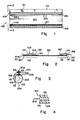
- a flat sheet 100 is shown.
- the sheet 100 includes two margin portions 102 and 104.
- the margin portion 102 has a first plurality of holes 106 extending therethrough, the holes 106 being arranged along the length of the sheet 100.
- the holes 106 pass through a laminate structure 108 of the margin portion 102. Extending from the laminate structure 108 toward the longitudinal edge 110 is an edge flat 112.
- holes 114 are shown passing through a laminate structure 116 of a margin portion 118. Extending between the margin portion 102 and the margin portion 118 is a strip 120 of heat shrinkable material.
- the laminate structure 108 includes a layer of metal 130 sandwiched between two layers of plastic 132 and 134.
- the plastic of at least layer 132 of laminate structure 108 and layer 136 of laminate structure 116 are heat fusible.
- the plastic of the layers 132 through 138 may be either unoriented heat shrinkable or not heat shrinkable material.
- the sheet 100 is formed by extrusion. That is, the heat shrinkable strip 120 and the two margin portions 102 and 118 are simultaneously extruded with a thin, maleable metal ribbon being intro pokerd into the margin portions 102 and 118 to form the laminate structures 108 and 116, respectively.
- the metal may be almost any metal, such as aluminum, capable of being extruded into thin ribbons.
- the meta is coated with an acrylate polymer film to enhance bonding to the plastic.
- a metal acrylate coated tape that may be used in this context is the commercially available Dow Zeta Bond tape.
- the plastic is preferably a polyolefin as is known in the art.
- the strip 120 is irradiated and oriented. This orienting will have a component of stretch transverse to the length of the sheet 120. Preferably, the stretch is orthogonal to the length of the sheet 120. With this type of stretching, the sheet 100 when formed as a tubular sleeve will shrink to reduce the radius of the sleeve.
- margin portions 102 and 118 are not irradiated or oriented and, hence, do not shrink with the application of heat. Because of the metal layer 130 inserted between layers 132 and 134, shrinking is further prevented.
- the holes 106 and 114 are drilled or punched, the diameter of the holes 106 and 114 corresponding to the size of hand-applied rivets (see Figure 3) or such other fasteners which pass through two aligned holes.
- the sheet 100 is shown wrapped around an article 200 which is elongated and may be cylindrical in shape.
- the article 200 may be a circular cylinde or may have a square or other multi-sided or other closed-curve cross-section.
- the sheet 100 is shaped so that holes 106 in the laminate structure 108 align with holes 114 in the laminate struc ture 116.
- a rivet 202 is applied through the aligned holes.
- the aligned holes are opposite each other, like holes 106a and 114a.
- each hole 106 is matched in size and shape and aligned with a corresponding hole 114.
- the laminate structure 108 is shown enlarged.
- the layers 132 and 134 may be 40. mms. thick while the layer 130 may be 20 mms. thick.
- the wire 208 is, preferably, a nichrome wire and may be imbedded in the plastic layers directly if desired. Depending on the heat generated by the wire 208, the wire 210 may not be required.
Landscapes
- Engineering & Computer Science (AREA)
- Mechanical Engineering (AREA)
- General Engineering & Computer Science (AREA)
- Cable Accessories (AREA)
- Wrappers (AREA)
- Lining Or Joining Of Plastics Or The Like (AREA)
Applications Claiming Priority (2)
| Application Number | Priority Date | Filing Date | Title |
|---|---|---|---|
| US43553982A | 1982-10-20 | 1982-10-20 | |
| US435539 | 1982-10-20 |
Publications (1)
| Publication Number | Publication Date |
|---|---|
| EP0106446A1 true EP0106446A1 (fr) | 1984-04-25 |
Family
ID=23728800
Family Applications (1)
| Application Number | Title | Priority Date | Filing Date |
|---|---|---|---|
| EP83304629A Withdrawn EP0106446A1 (fr) | 1982-10-20 | 1983-08-10 | Thermorétrécissement pour douille de fermeture à tubulaire |
Country Status (8)
| Country | Link |
|---|---|
| EP (1) | EP0106446A1 (fr) |
| JP (1) | JPS5973916A (fr) |
| AU (1) | AU1752483A (fr) |
| BR (1) | BR8305829A (fr) |
| DK (1) | DK462483A (fr) |
| FI (1) | FI832971L (fr) |
| NO (1) | NO833812L (fr) |
| ZA (1) | ZA836009B (fr) |
Cited By (2)
| Publication number | Priority date | Publication date | Assignee | Title |
|---|---|---|---|---|
| EP0488895A1 (fr) * | 1990-11-29 | 1992-06-03 | Societe Industrielle De Liaisons Electriques (Silec) | Dispositif de protection d'un raccordement de câbles |
| WO2020214045A3 (fr) * | 2018-11-22 | 2021-01-07 | Vlad Marian Gabriel | Conduite souple et procédé de capture de fuites accidentelles de fluide sous pression à partir d'une conduite endommagée |
Citations (7)
| Publication number | Priority date | Publication date | Assignee | Title |
|---|---|---|---|---|
| FR2200471A1 (fr) * | 1972-09-27 | 1974-04-19 | Trieb Peter | |
| DE1947057B2 (de) * | 1968-09-19 | 1976-03-18 | Compagnie Francaise des Isolants Anciens Ets. Josse & FiIs, Paris | Kabelmuffe |
| DE2912722A1 (de) * | 1978-04-03 | 1979-10-11 | Sigmaform Corp | Waermeschrumpffaehige umhuellung |
| DE2835102A1 (de) * | 1978-08-10 | 1980-02-14 | Siemens Ag | Verbindungsschiene zum verbinden von kabelschirmen in den einfuehrungsbereichen von thermoplastklemmuffen |
| GB2085538A (en) * | 1980-10-15 | 1982-04-28 | Kabel Metallwerke Ghh | Tubular fitting for an electric cable or a pipeline |
| EP0052476A1 (fr) * | 1980-11-18 | 1982-05-26 | Ube Industries, Ltd. | Procédé pour envelopper |
| EP0056080A1 (fr) * | 1980-12-19 | 1982-07-21 | Siemens Aktiengesellschaft | Manchon fendu longitudinalement en matière synthétique thermoplastique à mémoire de forme |
-
1983
- 1983-08-02 AU AU17524/83A patent/AU1752483A/en not_active Abandoned
- 1983-08-10 EP EP83304629A patent/EP0106446A1/fr not_active Withdrawn
- 1983-08-16 ZA ZA836009A patent/ZA836009B/xx unknown
- 1983-08-19 FI FI832971A patent/FI832971L/fi not_active Application Discontinuation
- 1983-09-17 JP JP58170627A patent/JPS5973916A/ja active Pending
- 1983-10-07 DK DK462483A patent/DK462483A/da not_active Application Discontinuation
- 1983-10-19 BR BR8305829A patent/BR8305829A/pt unknown
- 1983-10-19 NO NO833812A patent/NO833812L/no unknown
Patent Citations (7)
| Publication number | Priority date | Publication date | Assignee | Title |
|---|---|---|---|---|
| DE1947057B2 (de) * | 1968-09-19 | 1976-03-18 | Compagnie Francaise des Isolants Anciens Ets. Josse & FiIs, Paris | Kabelmuffe |
| FR2200471A1 (fr) * | 1972-09-27 | 1974-04-19 | Trieb Peter | |
| DE2912722A1 (de) * | 1978-04-03 | 1979-10-11 | Sigmaform Corp | Waermeschrumpffaehige umhuellung |
| DE2835102A1 (de) * | 1978-08-10 | 1980-02-14 | Siemens Ag | Verbindungsschiene zum verbinden von kabelschirmen in den einfuehrungsbereichen von thermoplastklemmuffen |
| GB2085538A (en) * | 1980-10-15 | 1982-04-28 | Kabel Metallwerke Ghh | Tubular fitting for an electric cable or a pipeline |
| EP0052476A1 (fr) * | 1980-11-18 | 1982-05-26 | Ube Industries, Ltd. | Procédé pour envelopper |
| EP0056080A1 (fr) * | 1980-12-19 | 1982-07-21 | Siemens Aktiengesellschaft | Manchon fendu longitudinalement en matière synthétique thermoplastique à mémoire de forme |
Cited By (4)
| Publication number | Priority date | Publication date | Assignee | Title |
|---|---|---|---|---|
| EP0488895A1 (fr) * | 1990-11-29 | 1992-06-03 | Societe Industrielle De Liaisons Electriques (Silec) | Dispositif de protection d'un raccordement de câbles |
| WO2020214045A3 (fr) * | 2018-11-22 | 2021-01-07 | Vlad Marian Gabriel | Conduite souple et procédé de capture de fuites accidentelles de fluide sous pression à partir d'une conduite endommagée |
| CN113272584A (zh) * | 2018-11-22 | 2021-08-17 | 马里安·加布里埃尔·弗拉德 | 用于捕集来自受损管的意外加压流体泄露的柔性管道和方法 |
| US11873941B2 (en) | 2018-11-22 | 2024-01-16 | Marian Gabriel Vlad | Flexible piping and process for capturing accidental pressurized fluid leaks from a damaged pipe |
Also Published As
| Publication number | Publication date |
|---|---|
| DK462483D0 (da) | 1983-10-07 |
| ZA836009B (en) | 1984-04-25 |
| FI832971A7 (fi) | 1984-04-21 |
| JPS5973916A (ja) | 1984-04-26 |
| NO833812L (no) | 1984-04-24 |
| DK462483A (da) | 1984-04-21 |
| FI832971L (fi) | 1984-04-21 |
| AU1752483A (en) | 1984-05-03 |
| BR8305829A (pt) | 1984-05-29 |
| FI832971A0 (fi) | 1983-08-19 |
Similar Documents
| Publication | Publication Date | Title |
|---|---|---|
| US3546754A (en) | Separable fastener | |
| DE2912722A1 (de) | Waermeschrumpffaehige umhuellung | |
| US4532168A (en) | Heat shrinkable covering | |
| US4465717A (en) | Assembly for marking elongate objects | |
| US4268559A (en) | Heat-shrinkable article | |
| US4219051A (en) | Heat recoverable article | |
| JP3949721B2 (ja) | スプライスを封止する熱回復性物品および方法 | |
| US4428790A (en) | Pleated heat-recoverable tape | |
| JPS5859816A (ja) | 回復性包囲器具およびその用途 | |
| CA1145235A (fr) | Manchon thermoretrecissable, et mode d'emploi connexe | |
| US3445898A (en) | Heat shrinkable cable clamp | |
| EP0042262B1 (fr) | Matériau plié à reprise | |
| JP2001028821A (ja) | 熱収縮性側部入口ケーブル外被 | |
| EP0106446A1 (fr) | Thermorétrécissement pour douille de fermeture à tubulaire | |
| US5449537A (en) | Heat-shrinkable composite foil | |
| US4402777A (en) | Sleeve and covering for tubing | |
| JPS621810B2 (fr) | ||
| JPH0337947Y2 (fr) | ||
| EP0595916A1 (fr) | Methode et montage permettant de recouvrir un objet | |
| JPS604752Y2 (ja) | 突起つき熱収縮性シ−ト | |
| US3568396A (en) | Insulating pads and their manufacture | |
| GB2038924A (en) | Heat Recoverable Closure Assembly and Method | |
| CA1206427A (fr) | Pellicule de recouvrement thermoretrecissable | |
| JPS5917813A (ja) | ケ−ブル接続用熱収縮性シ−ト | |
| JPS60193821A (ja) | 熱収縮性合成樹脂フイルム包装における開封口の附設方法 |
Legal Events
| Date | Code | Title | Description |
|---|---|---|---|
| PUAI | Public reference made under article 153(3) epc to a published international application that has entered the european phase |
Free format text: ORIGINAL CODE: 0009012 |
|
| AK | Designated contracting states |
Designated state(s): BE CH DE FR GB IT LI NL SE |
|
| STAA | Information on the status of an ep patent application or granted ep patent |
Free format text: STATUS: THE APPLICATION IS DEEMED TO BE WITHDRAWN |
|
| 18D | Application deemed to be withdrawn |
Effective date: 19841226 |
|
| RIN1 | Information on inventor provided before grant (corrected) |
Inventor name: STINE, CLIFFORD R. Inventor name: BRADLEY, RICHARD |