EP0108955A2 - Medical articles - Google Patents
Medical articles Download PDFInfo
- Publication number
- EP0108955A2 EP0108955A2 EP83110440A EP83110440A EP0108955A2 EP 0108955 A2 EP0108955 A2 EP 0108955A2 EP 83110440 A EP83110440 A EP 83110440A EP 83110440 A EP83110440 A EP 83110440A EP 0108955 A2 EP0108955 A2 EP 0108955A2
- Authority
- EP
- European Patent Office
- Prior art keywords
- tetra
- medical articles
- blood
- ethylhexyl
- weight
- Prior art date
- Legal status (The legal status is an assumption and is not a legal conclusion. Google has not performed a legal analysis and makes no representation as to the accuracy of the status listed.)
- Granted
Links
Images

Classifications
-
- A—HUMAN NECESSITIES
- A61—MEDICAL OR VETERINARY SCIENCE; HYGIENE
- A61J—CONTAINERS SPECIALLY ADAPTED FOR MEDICAL OR PHARMACEUTICAL PURPOSES; DEVICES OR METHODS SPECIALLY ADAPTED FOR BRINGING PHARMACEUTICAL PRODUCTS INTO PARTICULAR PHYSICAL OR ADMINISTERING FORMS; DEVICES FOR ADMINISTERING FOOD OR MEDICINES ORALLY; BABY COMFORTERS; DEVICES FOR RECEIVING SPITTLE
- A61J1/00—Containers specially adapted for medical or pharmaceutical purposes
- A61J1/05—Containers specially adapted for medical or pharmaceutical purposes for collecting, storing or administering blood, plasma or medical fluids ; Infusion or perfusion containers
- A61J1/10—Bag-type containers
-
- C—CHEMISTRY; METALLURGY
- C08—ORGANIC MACROMOLECULAR COMPOUNDS; THEIR PREPARATION OR CHEMICAL WORKING-UP; COMPOSITIONS BASED THEREON
- C08K—Use of inorganic or non-macromolecular organic substances as compounding ingredients
- C08K5/00—Use of organic ingredients
- C08K5/04—Oxygen-containing compounds
- C08K5/10—Esters; Ether-esters
- C08K5/12—Esters; Ether-esters of cyclic polycarboxylic acids
-
- C—CHEMISTRY; METALLURGY
- C08—ORGANIC MACROMOLECULAR COMPOUNDS; THEIR PREPARATION OR CHEMICAL WORKING-UP; COMPOSITIONS BASED THEREON
- C08K—Use of inorganic or non-macromolecular organic substances as compounding ingredients
- C08K5/00—Use of organic ingredients
- C08K5/36—Sulfur-, selenium-, or tellurium-containing compounds
- C08K5/37—Thiols
- C08K5/375—Thiols containing six-membered aromatic rings
-
- C—CHEMISTRY; METALLURGY
- C08—ORGANIC MACROMOLECULAR COMPOUNDS; THEIR PREPARATION OR CHEMICAL WORKING-UP; COMPOSITIONS BASED THEREON
- C08K—Use of inorganic or non-macromolecular organic substances as compounding ingredients
- C08K5/00—Use of organic ingredients
- C08K5/36—Sulfur-, selenium-, or tellurium-containing compounds
- C08K5/41—Compounds containing sulfur bound to oxygen
Definitions
- This invention relates to medical articles. More particularly, it is concerned with medical articles made of a polyvinyl chloride compoundwhich has excellent properties such as maintaining functions of blood constituents during preservation.
- the soft polyvinyl chloride compound contains, as a plasticizer, from 30 to 60 % of phthalic esters such as di-2-ethylhexyl phthalate (called DOP hereinbelow). It is known that the phthalic ester which is highly migratory is dissoluted into blood plasma when the soft polyvinyl chloride compound is formed, for example, into a blood preservation vessel.
- DOP di-2-ethylhexyl phthalate
- polyester plasticizers are used as the non-migratory plasticizer. It is well known, however, that the polyester plasticizers which are principally composed of aliphatic esters are in general inferior in such properties as water resistance and hydrolyzability to phthalic esters which contain phenyl group as the skeleton.
- Another object of the invention is to provide novel medical articles. Another object of the invention is to provide medical articles of good compatibility with blood. A further object of the invention is to provide medical articles such as blood preservation vessels, catheters and blood circuits in which migration of the plasticizer is inhibited and which have a high water resistance.
- medical articles made of a resin composition comprising a polyvinyl chloride and a tetracarboxylic tetraester represented by the general formula I wherein X is -0-, ( ⁇ CH 2 ) ⁇ n (in which n is an integer from 1 to 6), -C(CH 3 ) 2 -, -CH(CH 3 )-,-S-, -CH(CF 3 )-, (in which Ar is an aryl group) or (in which Y is H or F) and R is an aliphatic saturated hydrocarbon group containing from 4 to 18 carbon atoms are provided.
- X is -0-, ( ⁇ CH 2 ) ⁇ n (in which n is an integer from 1 to 6), -C(CH 3 ) 2 -, -CH(CH 3 )-,-S-, -CH(CF 3 )-, (in which Ar is an aryl group) or (in which Y is H or F) and R is an aliphatic saturated hydro
- This invention is also concerned with medical articles wherein the tetracarboxylic tetraester represented by the general formula I is incorporated in an amount from 20 to 120 parts by weight per 100 parts by weight of the polyvinyl chloride. Furthermore, the invention relates to medical articles wherein the tetracarboxylic tetraester represented by the general formula I is incorporated in an amount from 30 to 100 parts by weight per 100 parts by weight of the polyvinyl chloride.
- the invention is concerned with medical articles wherein the X is a member selected from the group consisting of -O-, ( ⁇ CH 2 ) ⁇ n (in which n is an integer from 1 to 6), -C(CH 3 ) 2 and -CH(CH 3 )-.
- the invention also relates to medical articles wherein the X is a member selected from the group consisting of -0- and ( ⁇ CH 2 ) ⁇ n (in which n is an integer 1 or 2). Furthermore, the invention is concerned with medical articles wherein the R is an aliphatic saturated hydrocarbon group containing from 4 to 12 carbon atoms. The invention also relates to medical articles wherein the R is an aliphatic saturated hydrocarbon group containing from 8 to 12 carbon atoms. Furthermore, the invention is concerned with medical articles wherein the body fluid is blood. The invention also relates to medical articles which are catheters, blood transfusion sets, aqueous infusion sets or blood circuits.
- the drawing is the front view of a blood bag illustrating a medical articles according to the present invention.
- Medical articles according to the present invention mean body fluid preservation vessels such as blood bags, catheters, blood transfusion sets, aqueous infusion sets and blood circuits.
- body fluid preservation vessels such as blood bags, catheters, blood transfusion sets, aqueous infusion sets and blood circuits.
- body fluid preservation vessels particularly blood bags.
- the polyvinyl chloride used in a resin composition constituting medical articles of the invention includes, in addition to homopolymers of vinyl chloride, polyvinylidene chloride and copolymers with other comonomers, said copolymers containing 50 % by weight . or more, preferably 60 % by weight or more and most preferably 90 % by weight or more of vinyl chloride.
- the average degree of polymerization is in the range from 700 to 3,000, preferably from 1,000 to 2,700.
- vinylidene chloride ethylene, propylene, vinyl acetate, vinyl bromide, vinyl fluoride, styrene, vinyltoluene, vinylpyridine, acrylic acid, alkyl acrylates (for.example, methyl, ethyl, isopropyl, n-butyl, 2-ethylhexyl acrylates and the like), methacrylic acid, alkyl methacrylates (for example, methyl, ethyl, 2-ethylhexyl methacrylates and the like), acrylonitrile, methacrylonitrile and the likel.
- the polyvinyl chloride may also be incorporated with a styrene-acrylonitrile or -methacrylonitrile copolymer.
- the tetracarboxylic tetraester used as the plasticizer is a compound represented by the aforementioned general formula I which is employed in a ratio of from 20 to 120 parts by weight, preferably from 30 to 100 parts by weight to 100 parts by weight of the polyvinyl chloride.
- the R in the general formula I is an aliphatic saturated hydrocarbon group containing from 4 to 18, preferably from 4 to 12 and most preferably from 8 to 12 carbon atoms.
- the aliphatic saturated hydrocarbon group may be a straight or branched hydrocarbon - group.
- the compounds of the aforementioned general formula I include tetraesters represented by the general formulae II - V.
- X is -0-, ( ⁇ CH 2 ) ⁇ n (in which n is an integer from 1 to 6, preferably 1 or 2), -C(CH 3 ) 2 -, -CH(CH 3 ), -S-, -CH(CF 3 )-, -C(CF 3 ) 2 -, -O-Ar-O- (in which Ar is an aryl group) or (in which Y is H or F), preferably -O-, ( ⁇ CH 2 ) ⁇ n (in which n is as defined above), -C(CH 3 ) 2 - or -CH(CH 3 ) and most preferably -0- or ( ⁇ CH 2 ) ⁇ n (in which n is an integer 1 or 2); R is an aliphatic saturated hydrocarbon group containing from 4 to 18, preferably from 4 to 12 and most preferably from 8 to 12 carbon atoms.
- tetracarboxylic tetraester represented by the general formula II are mentioned tetra(n-octyl) 3,3',4,4'-biphenylethextetracarboxylate, tetra(2-ethylhexyl) 3,3',4,4'-biphenylethertetracarboxylate, tetra-(2-methylheptyl) 3,3',4,4'-biphenylethertetracarboxylate, tetra(n-nonyl) 3,3',4,4'-biphenylethertetracarboxylate, tetra(n-dodecyl) 3,3',4,4'-biphenylethertetracarboxylate, tetra(n-tetradecyll 3,3',4,4'-biphenylethertetracarboxylate, tetra(n-hexyl) 3,3'-4,4'
- tetracarboxylic tetraester represented by the general formula III are mentioned, for example, tetra(n-octyl) 2,3,3',4'-biphenylethertetracarboxylate, tetra(2-ethylhexyl) 2,3,3',4'-biphenylethertetracarboxylate, tetra(2-methylheptyl) 2,3,3',4'-biphenylethertetracarboxylate, tetra(n-nonyl) 2,3,3',4'-biphenylethertetracarboxylate, tetra(n-dodecyl) 2,3,3',4'-biphenylethertetracarboxylate, tetra(n-hexyl) 2,3,3',4'-biphenylethertetracarboxylate, tetra(n-butyl) 2,3,3',4
- tetracarboxylic tetraester represented by the general formula IV are mentioned tetra(n-octyl) biphenylether-2,4,2',4'-tetracarboxylate, tetra(2-ethylhexyl).biphenylether-2,4,2',4'-tetracarboxylate, tetra(n-dodecyl) biphenylether-2,4,2',4'-tetracarboxylate, tetra(2-ethylhexyl) 2,4,2',4'-biphenylmethanetetracarboxylate, tetra(n-decyl) 2,4,2',4'-biphenylmethanetetracarboxylate, tetra(2-ethylhexyl) 2,4,2',4'-biphenyl-1,2-ethanetetracarboxylate, tetra(
- tetracarboxylic ester represented by the general formula V are mentioned tetra(n-octyl) 2,2',3,3'-biphenylethertetracarboxylate, tetra(2-ethylhexyl) 2,2',3,3'-biphenylethertetracarboxylate, tetra(n-dodecyll 2,2',3,3'-biphenylethertetracarboxylate, tetra(2-ethylhexyl) 2,2',3,3'-biphenylmethanetetracarboxylate, tetra(n-nonyl) 2,2',3,3'-biphenylmethanetetracarboxylate, tetra(2-ethylhexyl) 2,2',3,3'-biphenyl-l,2-ethanetetracarboxylate, tetra(n-dode
- a corresponding tetracarboxylic acid or a dianhydride thereof is reacted with a corresponding aliphatic alcohol in an organic solvent (for example, p-xylene, o-xylene, a mixed xylene, benzene, toluene, cyclohexane, n-heptane or the like) or in the absence of an organic solvent in the presence of a catalyst, for example, titanium tetrabutoxide, an organic sulfonic acid such as p-toluenesulfonic acid, sulfuric acid, phosphoric acid, a phosphoric ester or the like at a reaction temperature in the range from 170 to 250°C. for a period of time from 5 to 100 hours.
- an organic solvent for example, p-xylene, o-xylene, a mixed xylene, benzene, toluene, cyclohexane, n-heptane or the like
- a vegetable oil such as epoxidized soybean oil or epoxidized linseed oil, a lubricant and additionally an antioxidant are incorporated.
- the medical articles of the invention are produced by melt kneading the above-described composition by a conventional process and molding the kneaded mass by the use of an injection or extrusion molding machine.
- the drawing shows a blood bag.
- the blood bag 3 made of a polyvinyl chloride composition is equipped with plural outlets 1 each with a peelable tab and the outlet 2 and heat-sealed in the circumferential portion by high-frequency heating or another heating means.
- the blood collection tube 6 made of a polyvinyl chloride composition is connected with the internal space 5 of said blood collection bag.
- the ACD-A solution containing, for example, 2.20 g. of sodium citrate, 0.80 g. of citric acid and 2.20 g. of glucose in 100 mi.
- the CPD solution containing, for example, 206 mg. of citric acid, 1.66 g. of sodium citrate, 140 mg. of disodium hydrogen phosphate and 1.46 g. of dextrose in 100 ml.of the aqueous solution
- the blood collection needle 7 is provided with the cap 8.
- the first subbag 13 made of a polyvinyl chloride composition which is equipped with the outlets 9 with each with a peelable tab and heat-sealed in the circumferential portion 10 in the same way as above and the internal space 11 of which is connected with the connection tube 12 made of a polyvinyl chloride composition, is connected by means of the branched tube 14 with the connection tube 16 which is connected through the top connection needle 15 with the outlet 2 for connection of the blood collection bag 3.
- the subbag 21 which is equipped with the outlets 17 each with a peelable tab and heat-sealed in the circumferential portion and the internal space of which is connected with the connection tube 20 made of a polyvinyl chloride composition, is connected via the aforementioned connection tube 20 by means of the branched tube 14 with the connection tubes 12 and 16.
- the present invention is also applicable to blood preservation vessels, blood transfusion systems, aqueous infusion systems, catheters, blood circuits, tubes for dialysis and the like.
- the ester has refractive index n of 1.495, a specific gravity d of 0.988 and a degree of esterification of 276.
- Test pieces of the sheet were immersed in various solutions for a predetermined period of time and dried at a temperature of 70°C. for 10 hours. Weight changes of the test pieces between the pre- and post-immersion (amount of the plasticizer dissoluted) were examined to give the results shown in Table 1. When the test pieces were dried at 100°C. for 120 hours, weight loss by evaporation was 0.04 % by weight.
- Example 2 The sheet was subjected to the same tests as in Example 1. The weight changes are shown in Table 1. The weight loss by evaporation was 0.04 % by weight. Results of the dissolution, toxicity and physicochemical tests are shown in Tables 2 - 4, respectively.
- Example 2 The sheet was subjected to the same tests as in Example 1. The weight changes are shown in Table 1. The weight loss by evaporation was 0.03 % by weight. Results of the dissolution, toxicity and physicochemical tests are shown in Tables 2 - 4, respectively.
- a resin composition composed of 50 parts by weight of tetra(2-ethylhexyl) 2,3,3',4'-biphenyl-2,2-propane- tetracarboxylate, polyvinyl chloride (degree of polymerization 1,300), 3 parts by weight of epoxidized soybean oil and 1 part by weight of calcium stearate and zinc stearate was thoroughly kneaded by means of a two-roll roller at a temperature of 150°C. to form a sheet 0.4 mm. in thickness.
- Example 2 The sheet was subjected to the same tests as in Example 1. The weight changes are shown in Table 1. The weight loss by evaporation was 0.03 % by weight. Results of the dissolution, toxicity and physicochemical tests are shown in Tables 2 - 4, respectively.
- Example 2 The same process as in Example 1 was carried out except that di-2-ethylhexyl phthalate was employed in place of the tetraester to form a sheet 0.4 mm. in thickness.
- Example 2 The sheet was subjected to the same tests as in Example 1. The weight changes are shown in Table 1. The weight loss by evaporation was 3.7 % by weight. Results of the dissolution, toxicity and physicochemical tests are shown in Tables 2 - 4, respectively.
- Comparative Example 2 The same process as in Example 1 was carried out except that di-(2-ethylhexyl) 2,2'-biphenyldicarboxyl- ate was employed in place of the tetraester to form a sheet 0.04 mm. in thickness.
- Example 2 The sheet was subjected to the same tests as in Example 1. The weight changes are shown in Table 1. The weight loss by evaporation was 2.5 % by weight. Results of the dissolution, toxicity and physicochemical tests are shown in Tables 2 - 4, respectively.
- Example 2 The same process as in Example 1 was carried out except that tetra-(2-ethylhexyl) bicyclo[2.2.2]-oct-7- ene-2,3,5,6-tetracarboxylate was employed in place of the tetraester to form a sheet 0.4 mm. in thickness.
- Example 2 The sheet was subjected to the same tests as in Example 1. The weight changes are shown in Table 1. The weight loss by evaporation was 4.2 % by weight. Results of the dissolution, toxicity and physicochemical tests are shown in Tables 2 - 4, respectively.
- thrombocyte-rich plasma PRP
- the PRP was aseptically subdivided in 2 mk. portions into minibags made of the sheets obtained in Examples 1 - 4 and Comparative Examples 1 - 3. In consideration of variations of the blood by individual 3 blood specimens were used for each test. Tests of the thrombocytic agglutinating activity for the PRP were conducted with the PRP's preserved in the bag at room temperature for 2, 6 and 24 hours.
- the maximum ratio of agglutination upon subdivision into a bag was taken as A 1 .
- the maximum ratio of agglutination in a measurement after a period of time was taken A 2 , A 6 or A 24 .
- Comparisons were made on average values of the A2/Al, A 6 /A 1 and A 24 /A 1 respectively for 3 specimens, M(A 2 /A l ), (A 6 /A 1 ) and M(A 24 /A 1 ). Results of the measurements are shown in Table 5.
- the extracted amount of the plasticizer is far lower, being around 1/20, the evaporation loss is remarkably reduced and the migration to the surface is lower as compared with the cases using prior-art plasticizers such as di-2-ethylhexyl phthalate. Consequently, reduction in the thrombocytic agglutinating activity due to dissolution of the plasticizer into blood plasma when the medical article is contacted with body fluid such as blood is greatly improved. Especially, in the thrombocytic agglutinating activity test, the reduction ratio is far smaller than that in the prior-art articles, and the preservation period of time can remarkably be extended.
- the invention produces excellent results when used for medical articles such as body fluid preservation vessels such as blood plasma preservation vessels, catheters, blood transfusion sets, fluid transfusion sets and blood circuits, especially for the medical articles with which body fluids are directly contacted or agents to be delivered into the body are contacted.
- body fluid preservation vessels such as blood plasma preservation vessels, catheters, blood transfusion sets, fluid transfusion sets and blood circuits
- the medical article is a catheter in which. di-2-ethylhexyl phthalate (DOP) is incorporated, the catheter becomes hardened due to elution of the plasticizer and difficult to take off after resided in the body for a long period of time (for example, 1 - 2 weeks). On the contrary, the medical articles according to the present invention will not be encountered with such problem because of a very small amount of the plasticizer eluted.
- DOP di-2-ethylhexyl phthalate
- the blood circuit when used for extracorporeal circulation of blood, for example, in the artificial kidneys, is usually operated for 5 - 6 hours at a time and 2 - 4 times a week.
- the medical articles according to the invention for such use do not cause less damage to the thrombocytic functions thereby producing less hemorrhage in patients than with the DOP-containing articles.
Landscapes
- Health & Medical Sciences (AREA)
- Chemical & Material Sciences (AREA)
- Chemical Kinetics & Catalysis (AREA)
- Medicinal Chemistry (AREA)
- Polymers & Plastics (AREA)
- Organic Chemistry (AREA)
- Hematology (AREA)
- Pharmacology & Pharmacy (AREA)
- Life Sciences & Earth Sciences (AREA)
- Animal Behavior & Ethology (AREA)
- General Health & Medical Sciences (AREA)
- Public Health (AREA)
- Veterinary Medicine (AREA)
- Materials For Medical Uses (AREA)
Abstract
Description
- This invention relates to medical articles. More particularly, it is concerned with medical articles made of a polyvinyl chloride compoundwhich has excellent properties such as maintaining functions of blood constituents during preservation.
- It is well known that blood has autoprotecting activities and, when contacted with foreign surfaces other than the internal wall of blood vessels, is encountered with adhesion to-the foreign surfaces and agglutination of thrombocytes and gellation of blood plasma, that is fibrin bridges. With prior-art blood bags, thrombocytes in the blood is agglutinated on the plastic surface, and thrombocytic agglutinating activity is reduced to approximately 60 % in 6 hours after blood collection and further to approximately 40 % in 24 hours. Therefore, it is desirable that preservation vessels or other medical articles made of plastics capable of preserving blood cells for a longer period of time, that is, those which are compatible with blood be developed in order to enable efficient use of thrombocyte preparations.
- Presently, as the plastic vessels or other medical articles are widely used blood bags made of soft polyvinyl chloride compound because of its properties such as good workability and pliability, low permeability to water vapor and high heat resistance. The soft polyvinyl chloride compound contains, as a plasticizer, from 30 to 60 % of phthalic esters such as di-2-ethylhexyl phthalate (called DOP hereinbelow). It is known that the phthalic ester which is highly migratory is dissoluted into blood plasma when the soft polyvinyl chloride compound is formed, for example, into a blood preservation vessel. It is reported that if phthalic esters are dissolved into blood plasma containing concentrated thrombocytes due to the above-mentioned property, reduction in the coagulability which is a function of the thrombocyte is caused [Nihon Yuketsu Gakkaishi (Journal of the Blood Transfusion Society of Japan) 28, 282 (1982)].
- On the other hand, polyester plasticizers are used as the non-migratory plasticizer. It is well known, however, that the polyester plasticizers which are principally composed of aliphatic esters are in general inferior in such properties as water resistance and hydrolyzability to phthalic esters which contain phenyl group as the skeleton.
- It is therefore an object of the invention to provide novel medical articles. Another object of the invention is to provide medical articles of good compatibility with blood. A further object of the invention is to provide medical articles such as blood preservation vessels, catheters and blood circuits in which migration of the plasticizer is inhibited and which have a high water resistance.
- According to the present invention, medical articles made of a resin composition comprising a polyvinyl chloride and a tetracarboxylic tetraester represented by the general formula I


- This invention is also concerned with medical articles wherein the tetracarboxylic tetraester represented by the general formula I is incorporated in an amount from 20 to 120 parts by weight per 100 parts by weight of the polyvinyl chloride. Furthermore, the invention relates to medical articles wherein the tetracarboxylic tetraester represented by the general formula I is incorporated in an amount from 30 to 100 parts by weight per 100 parts by weight of the polyvinyl chloride. The invention is concerned with medical articles wherein the X is a member selected from the group consisting of -O-, (̵CH2)̵n (in which n is an integer from 1 to 6), -C(CH3)2 and -CH(CH3)-. The invention also relates to medical articles wherein the X is a member selected from the group consisting of -0- and (̵CH2)̵n (in which n is an integer 1 or 2). Furthermore, the invention is concerned with medical articles wherein the R is an aliphatic saturated hydrocarbon group containing from 4 to 12 carbon atoms. The invention also relates to medical articles wherein the R is an aliphatic saturated hydrocarbon group containing from 8 to 12 carbon atoms. Furthermore, the invention is concerned with medical articles wherein the body fluid is blood. The invention also relates to medical articles which are catheters, blood transfusion sets, aqueous infusion sets or blood circuits.
- The drawing is the front view of a blood bag illustrating a medical articles according to the present invention.
- Medical articles according to the present invention mean body fluid preservation vessels such as blood bags, catheters, blood transfusion sets, aqueous infusion sets and blood circuits. Preferably they are body fluid preservation vessels, particularly blood bags.
- The polyvinyl chloride used in a resin composition constituting medical articles of the invention includes, in addition to homopolymers of vinyl chloride, polyvinylidene chloride and copolymers with other comonomers, said copolymers containing 50 % by weight . or more, preferably 60 % by weight or more and most preferably 90 % by weight or more of vinyl chloride. The average degree of polymerization is in the range from 700 to 3,000, preferably from 1,000 to 2,700. As the comonomer with vinyl chloride are mentioned vinylidene chloride, ethylene, propylene, vinyl acetate, vinyl bromide, vinyl fluoride, styrene, vinyltoluene, vinylpyridine, acrylic acid, alkyl acrylates (for.example, methyl, ethyl, isopropyl, n-butyl, 2-ethylhexyl acrylates and the like), methacrylic acid, alkyl methacrylates (for example, methyl, ethyl, 2-ethylhexyl methacrylates and the like), acrylonitrile, methacrylonitrile and the likel. The polyvinyl chloride may also be incorporated with a styrene-acrylonitrile or -methacrylonitrile copolymer.
- The tetracarboxylic tetraester used as the plasticizer is a compound represented by the aforementioned general formula I which is employed in a ratio of from 20 to 120 parts by weight, preferably from 30 to 100 parts by weight to 100 parts by weight of the polyvinyl chloride. The R in the general formula I is an aliphatic saturated hydrocarbon group containing from 4 to 18, preferably from 4 to 12 and most preferably from 8 to 12 carbon atoms. The aliphatic saturated hydrocarbon group may be a straight or branched hydrocarbon - group.
- The compounds of the aforementioned general formula I include tetraesters represented by the general formulae II - V.


- In the above general formulae II and III, X is -0-, (̵CH2)̵n(in which n is an integer from 1 to 6, preferably 1 or 2), -C(CH3)2-, -CH(CH3), -S-, -CH(CF3)-, -C(CF3)2-,


- As the tetracarboxylic tetraester represented by the general formula II are mentioned tetra(n-octyl) 3,3',4,4'-biphenylethextetracarboxylate, tetra(2-ethylhexyl) 3,3',4,4'-biphenylethertetracarboxylate, tetra-(2-methylheptyl) 3,3',4,4'-biphenylethertetracarboxylate, tetra(n-nonyl) 3,3',4,4'-biphenylethertetracarboxylate, tetra(n-dodecyl) 3,3',4,4'-biphenylethertetracarboxylate, tetra(n-tetradecyll 3,3',4,4'-biphenylethertetracarboxylate, tetra(n-hexyl) 3,3'-4,4'-biphenylethertetracarboxylate, tetra(n-butyl) 3,3',4,4'-biphenylethertetracarboxylate, tetra(n-octyl) 3,3',4,4'-biphenylmethanetetracarboxylate, tetra(2-ethylhexyl) 3,3',4,4'-biphenylmethanetetracarboxylate, tetra(2-methylheptyl) 3,3',4,4'-biphenylmethanetetracarboxylate, tetra(n-nonyl) 3,3',4,4'-biphenylmethanetetracarboxylate, tetra(n-nonyl) 3,31,4,41- biphenylethanetetracarboxylate, tetra(n-dodecyl) 3,3',4,4'-biphenylmethanetetracarboxylate, tetra(n- octyl) 3,3',4,4'-biphenyl-1,2-ethanetetracarboxylate, tetra(2-ethylhexyl) 3,3',4,4'-biphenyl-l,2-ethanetetra- carboxylate, tetra(n-decyl) 3,3',4,4'-biphenyl-1,2-ethanetetracarboxylate, tetra(n-dodecyl) 3,3',4,4'-biphenyl-l,2-ethanetetracarboxylate, tetra(n-octyl) 3,3',4,4'-biphenyl-1,1-ethanetetracarboxylate, tetra-(2-ethylhexyl) 3,3',4,4'-biphenyl-1,1-ethanetetracar- boxylate, tetra(n-decyl) 3,3',4,4'-biphenyl-1,1-ethane- tetracarboxylate, tetra(n-octyll 3,3',4,4'-biphenyl-2,2-propanetetracarboxylate, tetra(2-ethylhexyl) 3,3',4,4'-biphenyl-2,2-propanetetracarboxylate, tetra-(n-decyl) 3,3',4,4'-biphenyl-2,2-propanetetracarboxyl- ate, tetra(n-dodecyl) 3,3',4,4'-biphenyl-2,2-propane- tetracarboxylate, tetra(n-octyl) 3,3',4,4'-biphenylthioethertetracarboxylate, tetra(2-ethylhexyl) 3,3',4,4'-biphenylthioethertetracarboxylate, tetra(n-dodecyl) 3,3',4,4'-biphenylthioethertetracarboxylate, 1,1-bis (3,4-dicarboxyphenyl)trifluoroethane tetra(n-octyl) ester, 1,1-bis(3,4-dicarboxyphenyl)trifluoroethane tetra(2-ethylhexyl) ester, l,l-bis(3,4-dicarboxyphenyl)-trifluoroethane tetra(n-decyl) ester, 2,2-bis(3,4-dicarboxyphenyl)hexafluoropropane tetra(2-ethylhexyl) ester, 2,2-bis(3,4-dicarboxyphenyl)hexafluoropropane tetra(n-octyl) ester, 2,2-bis(3,4-dicarboxyphenyl)hexafluoropropane tetra(2-ethylhexyl) ester, 2,2-bis(3,4-dicarboxyphenyl)hexafluoropropane tetra(n-dodecyl) ester, tetra(2-ethylhexyl) 3,3',4,4'-biphenylsulfoxidetetracarboxylate, tetra(n-decyl) 3,3',4,4'-biphenylsulfoxidetetracarboxylate, 2,2-bisI4-(3,4-dicarboxy- phenoxy)phenyl]propane tetra(2-ethylhexyl) ester, 2,2- bisl4-(3,4-dicarboxyphenoxylphenyljhexafluoropropane tetra(2-ethylhexyll ester, 2,2-bis(3,4-dicarboxyphenoxy)-benzene tetra(2-ethylhexyl) ester and the like.
- As the tetracarboxylic tetraester represented by the general formula III are mentioned, for example, tetra(n-octyl) 2,3,3',4'-biphenylethertetracarboxylate, tetra(2-ethylhexyl) 2,3,3',4'-biphenylethertetracarboxylate, tetra(2-methylheptyl) 2,3,3',4'-biphenylethertetracarboxylate, tetra(n-nonyl) 2,3,3',4'-biphenylethertetracarboxylate, tetra(n-dodecyl) 2,3,3',4'-biphenylethertetracarboxylate, tetra(n-hexyl) 2,3,3',4'-biphenylethertetracarboxylate, tetra(n-butyl) 2,3,3',4'-biphenylmethanetetracarboxylate, tetra(n-octyl) 2,3,3',4'-biphenylmethanetetracarboxylate, tetra(2-ethylhexyl) 2,3,3',4'-biphenylmethanetetracarboxylate, tetra(n-decyl) 2,3,3',4'-biphenylmethanetetracarboxylate, tetra(n-dodecyl) 2,3,3',4'-biphenylmethanetetracarboxylate, tetra(n-octyl) 2,3,3',4'-biphenyl-1,2-ethanetetracar- boxylate, tetra(2-ethylhexyl) 2,3,3',4'-biphenyl-l,2-ethanetetracarboxylate, tetra(n-decyl) 2,3,3',4'-biphenyl-1,2-ethanetetracarboxylate, tetra(2-ethylhexyl) 2,3,3',4'-biphenyl-1,1-ethanetetracarboxylate, tetra-(n-dodecyl) 2,3,3',4'-biphenyl-1,1-ethanetetracarboxyl- ate, tetra(n-octyl) 2,3,3',4'-biphenyl-2,2-propane- tetracarboxylate, tetra(2-ethylhexyl) 2,3,3',4'-biphenyl-2,2-propanetetracarboxylate, tetra(n-decyl) 2,3,3',4'-biphenyl-2,2-propanetetracarboxylate, tetra(2-ethylhexyl) 2,3,3',4'-biphenylthioethertetracarboxylate, tetra(n-dodecyl) 2,3,3'-4'-biphenylthioethertetracarboxylate, l,l-(2,3-dicarboxyphenyl-3',4'-dicarboxyphenyl)trifluoromethane tetra(2-ethylhexyl) ester, l,l-(2,3-dicarboxyphenyl-3',4'-dicarboxyphenyl)trifluoromethane tetra(n-decyl) ester, 2,2-(2,3-dicarboxyphenyl-3',4'-dicarboxyphenyl)hexafluoropropane tetra(2-ethylhexyl) ester, 2,2-(2,3-dicarboxyphenyl-3',4'-dicarboxyphenyl)-hexafluoropropane tetra(n-decyl) ester, tetra(2-ethylhexyl) 2,3,3',4'-biphenylsulfoxidetetracarboxylate, tetra(n-dodecyl) 2,3,3',4'-biphenylsulfoxidetetracarboxylate and the like.
- As the tetracarboxylic tetraester represented by the general formula IV are mentioned tetra(n-octyl) biphenylether-2,4,2',4'-tetracarboxylate, tetra(2-ethylhexyl).biphenylether-2,4,2',4'-tetracarboxylate, tetra(n-dodecyl) biphenylether-2,4,2',4'-tetracarboxylate, tetra(2-ethylhexyl) 2,4,2',4'-biphenylmethanetetracarboxylate, tetra(n-decyl) 2,4,2',4'-biphenylmethanetetracarboxylate, tetra(2-ethylhexyl) 2,4,2',4'-biphenyl-1,2-ethanetetracarboxylate, tetra(n-dodecyl) 2,4,2',4'-biphenyl-1,2-ethanetetracarboxylate, 1,1- bis(2,4-dicarboxyphenyl)trifluoroethane tetra(2-ethyl- hexyll ester, 2,2-bis(2,4-dicarboxyphenyl)hexafluoropropane tetra(2-ethylhexyll ester and the like.
- As the tetracarboxylic ester represented by the general formula V are mentioned tetra(n-octyl) 2,2',3,3'-biphenylethertetracarboxylate, tetra(2-ethylhexyl) 2,2',3,3'-biphenylethertetracarboxylate, tetra(n-
dodecyll 2,2',3,3'-biphenylethertetracarboxylate, tetra(2-ethylhexyl) 2,2',3,3'-biphenylmethanetetracarboxylate, tetra(n-nonyl) 2,2',3,3'-biphenylmethanetetracarboxylate, tetra(2-ethylhexyl) 2,2',3,3'-biphenyl-l,2-ethanetetracarboxylate, tetra(n-dodecyl) 2,2',3,3'-biphenyl-1,2-ethanetetracarboxylate; tetra-(2-ethylhexyl) 2,2',3,3'-biphenyl-l,l-ethanetetra- carboxylate, tetra(n-decyl) 2,2',3,3'-biphenyl-1,1-ethanetetracarboxylate, tetra(2-ethylhexyl) 2,2',3,3'-biphenylthioethertetracarboxylate, 2,2-bis(2,3-dicarboxyphenyl)propane tetra(2-ethylhexyll ester, 2,2-bis-[4-(2,3-dicarboxyphenoxy)phenyl]propane tetra(2-ethylhexyl) ester and the like. - In preparing the tetraesters represented by the aforementioned general formula I, a corresponding tetracarboxylic acid or a dianhydride thereof, for example, is reacted with a corresponding aliphatic alcohol in an organic solvent (for example, p-xylene, o-xylene, a mixed xylene, benzene, toluene, cyclohexane, n-heptane or the like) or in the absence of an organic solvent in the presence of a catalyst, for example, titanium tetrabutoxide, an organic sulfonic acid such as p-toluenesulfonic acid, sulfuric acid, phosphoric acid, a phosphoric ester or the like at a reaction temperature in the range from 170 to 250°C. for a period of time from 5 to 100 hours. -
- In the aforementioned resin compositions composed of a polyvinyl chloride and a plasticizer are incorporated metal soaps as zinc stearate.
- If needed, a vegetable oil such as epoxidized soybean oil or epoxidized linseed oil, a lubricant and additionally an antioxidant are incorporated.
- The medical articles of the invention are produced by melt kneading the above-described composition by a conventional process and molding the kneaded mass by the use of an injection or extrusion molding machine.
- Medical articles according to the invention will be described below taking as an example a blood collection bag with reference to the accompanying drawing. The drawing shows a blood bag. The blood bag 3 made of a polyvinyl chloride composition is equipped with plural outlets 1 each with a peelable tab and the
outlet 2 and heat-sealed in the circumferential portion by high-frequency heating or another heating means. Theblood collection tube 6 made of a polyvinyl chloride composition is connected with theinternal space 5 of said blood collection bag. In the internal space of the blood collection bag is placed the ACD-A solution (containing, for example, 2.20 g. of sodium citrate, 0.80 g. of citric acid and 2.20 g. of glucose in 100 mi. of the aqueous solution), the CPD solution (containing, for example, 206 mg. of citric acid, 1.66 g. of sodium citrate, 140 mg. of disodium hydrogen phosphate and 1.46 g. of dextrose in 100 mℓ.of the aqueous solution) or the like. At the top of saidblood collection tube 6 is provided theblood collection needle 7. Theblood collection needle 7 is provided with thecap 8. - If subbags are connected with the above-described blood collection bag 3, the
first subbag 13 made of a polyvinyl chloride composition, which is equipped with the outlets 9 with each with a peelable tab and heat-sealed in thecircumferential portion 10 in the same way as above and theinternal space 11 of which is connected with theconnection tube 12 made of a polyvinyl chloride composition, is connected by means of thebranched tube 14 with theconnection tube 16 which is connected through the top connection needle 15 with theoutlet 2 for connection of the blood collection bag 3. Also, thesubbag 21 which is equipped with theoutlets 17 each with a peelable tab and heat-sealed in the circumferential portion and the internal space of which is connected with theconnection tube 20 made of a polyvinyl chloride composition, is connected via theaforementioned connection tube 20 by means of thebranched tube 14 with theconnection tubes - In addition to the blood bag described above as an illustration, the present invention is also applicable to blood preservation vessels, blood transfusion systems, aqueous infusion systems, catheters, blood circuits, tubes for dialysis and the like.
- The invention will be described in greater detail in conjunction with the following examples.
- In a 1 A. eggplant type flask were replaced 201 g. ( 1 mol.) of 3-chlorophthalic acid, 166 g. (1 mol.) of 3- oxyphthalic acid, 200 ml. of dimethylformamide and 100 mℓ. of pyridine. A reflux condenser was attached to the flask and the mixture was heated at 150 - 160°C. for 5 hours. After cooling, the reaction mixture was filtered and the precipitates were washed with water to give 281 g. of the crude product, which was recrystallized from hot water to afford 245 g. of 2,2',3,3'-biphenylether tetracarboxylic acid as crystals. 50 g. of the crystals and 100 g. of acetyl chloride were replaced in a flask and a reflux condenser was attached thereto. The mixture was heated at 50 - 60°C. for 3 hours to give 42 g. of the anhydride.
- In a 1 ℓ. three-necked flask were placed 93 g. (0.3 mol.) of 2,2',3,3'-biphenylether tetracarboxylic dianhydride, 625 g. (4.8 mol.) of 2-ethylhexanol and 2.44 g. (6.2 % of the ester) of p-toluenesulfonic acid as a catalyst. The mixture was heated at a reaction temperature of 180 - 200°C. for 15 hours. After completion of the reaction, the reaction mixture was subjected to distillation under reduced'pressure to recover excess 2-ethylhexanol. It was then washed with diluted aqueous alkali solution and water, respectively and finally distilled under reduced pressure to obtain 238.2 g. of tetra(2-ethylhexyl) 2,2',3,3'-biphenylethertetracarboxylate. The ester has refractive index n of 1.495, a specific gravity d of 0.988 and a degree of esterification of 276.
- A resin composition composed of 50 parts by weight of the plasticizer thus prepared, polyvinyl chloride (average degree of polymerization 1,300), 3 parts by weight of epoxidized soybean oil and 1 part by weight of calcium stearate and zinc stearate was thoroughly kneaded on a two-roll roller at a temperature of 150°C. to form a sheet 0.4 mm. in thickness.
- Test pieces of the sheet were immersed in various solutions for a predetermined period of time and dried at a temperature of 70°C. for 10 hours. Weight changes of the test pieces between the pre- and post-immersion (amount of the plasticizer dissoluted) were examined to give the results shown in Table 1. When the test pieces were dried at 100°C. for 120 hours, weight loss by evaporation was 0.04 % by weight.
- Then, a test on the extractive substances was done according to "the test processes for plastic containers for aqueous infusion", Japansese pharmacopoeia B-302 - 318. The results are shown in Table 2. Results of a toxicity test are shown in Table 3. Results of a test on physicochemical properties are shown in Table 4.
- A resin composition composed of 50 parts by weight of tetra(2-ethylhexyl) 3,3',4,4'-biphenylmethanetetracarboxylate prepared in the same way as in Example 1, polyvinyl chloride (degree of polymerization 1,300), 3 parts by weight of epoxidized soybean oil and 1 part of calcium stearate and zinc stearate was thoroughly kneaded by means of a two-roll roller at a temperature of 150°C. to form a sheet 0.4 mm. in thickness.
- The sheet was subjected to the same tests as in Example 1. The weight changes are shown in Table 1. The weight loss by evaporation was 0.04 % by weight. Results of the dissolution, toxicity and physicochemical tests are shown in Tables 2 - 4, respectively.
- A resin composition composed of 50 parts by weight of tetra(n-dodecyl) 2,3,3',4'-biphenyl-I,I-ethanetetra- carboxylate prepared in the same way as in Example 1, polyvinyl chloride (degree of polymerization 1,300), 3 parts by weight of epoxidized soybean oil and 1 part by weight of calcium stearate and zinc stearate was thoroughly kneaded by means of a two-roll roller to form a sheet 0.4 mm. in thickness.
- The sheet was subjected to the same tests as in Example 1. The weight changes are shown in Table 1. The weight loss by evaporation was 0.03 % by weight. Results of the dissolution, toxicity and physicochemical tests are shown in Tables 2 - 4, respectively.
- A resin composition composed of 50 parts by weight of tetra(2-ethylhexyl) 2,3,3',4'-biphenyl-2,2-propane- tetracarboxylate, polyvinyl chloride (degree of polymerization 1,300), 3 parts by weight of epoxidized soybean oil and 1 part by weight of calcium stearate and zinc stearate was thoroughly kneaded by means of a two-roll roller at a temperature of 150°C. to form a sheet 0.4 mm. in thickness.
- The sheet was subjected to the same tests as in Example 1. The weight changes are shown in Table 1. The weight loss by evaporation was 0.03 % by weight. Results of the dissolution, toxicity and physicochemical tests are shown in Tables 2 - 4, respectively.
- The same process as in Example 1 was carried out except that di-2-ethylhexyl phthalate was employed in place of the tetraester to form a sheet 0.4 mm. in thickness.
- The sheet was subjected to the same tests as in Example 1. The weight changes are shown in Table 1. The weight loss by evaporation was 3.7 % by weight. Results of the dissolution, toxicity and physicochemical tests are shown in Tables 2 - 4, respectively.
- Comparative Example 2 The same process as in Example 1 was carried out except that di-(2-ethylhexyl) 2,2'-biphenyldicarboxyl- ate was employed in place of the tetraester to form a sheet 0.04 mm. in thickness.
- The sheet was subjected to the same tests as in Example 1. The weight changes are shown in Table 1. The weight loss by evaporation was 2.5 % by weight. Results of the dissolution, toxicity and physicochemical tests are shown in Tables 2 - 4, respectively.
- The same process as in Example 1 was carried out except that tetra-(2-ethylhexyl) bicyclo[2.2.2]-oct-7- ene-2,3,5,6-tetracarboxylate was employed in place of the tetraester to form a sheet 0.4 mm. in thickness.
- The sheet was subjected to the same tests as in Example 1. The weight changes are shown in Table 1. The weight loss by evaporation was 4.2 % by weight. Results of the dissolution, toxicity and physicochemical tests are shown in Tables 2 - 4, respectively.
- From 40 volumes of human venous blood collected by means of a plastic syringe containing 6 volumes of the solution ACD-A was obtained thrombocyte-rich plasma (PRP) by centrifugal separation (160 G, 10 min.). The PRP was aseptically subdivided in 2 mk. portions into minibags made of the sheets obtained in Examples 1 - 4 and Comparative Examples 1 - 3. In consideration of variations of the blood by individual 3 blood specimens were used for each test. Tests of the thrombocytic agglutinating activity for the PRP were conducted with the PRP's preserved in the bag at room temperature for 2, 6 and 24 hours.
- Equipment used: Aggregometer AUTORAM-11 (manufactured by Rika Denki Kogyo K. K.) Measurement temperature: 37°C. Agitation rate: 1000 r.p.m. Reagent: Final concentration of
ADP 10-5 M. Concentration of the reagent: PRP/Reagent = 10/1. - The maximum ratio of agglutination upon subdivision into a bag was taken as A1. The maximum ratio of agglutination in a measurement after a period of time was taken A2, A6 or A24. Comparisons were made on average values of the A2/Al, A6/A1 and A24/A1 respectively for 3 specimens, M(A2/Al), (A6/A1) and M(A24/A1). Results of the measurements are shown in Table 5.

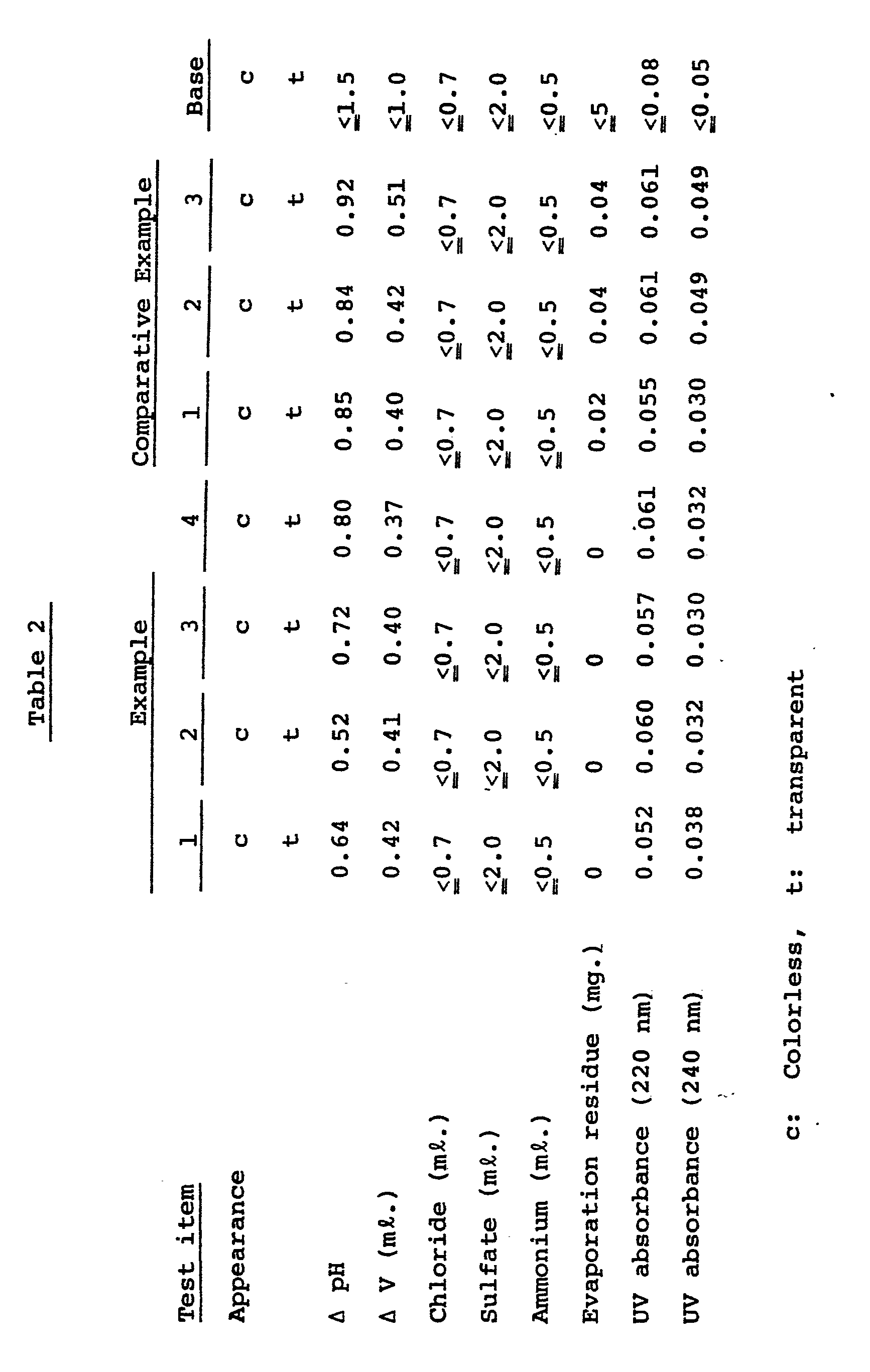


- As described above, in the medical articles according to the present invention, which are made of a resin composition comprising a polyvinyl chloride and a tetracarboxylic tetraester represented by the general formula I, the extracted amount of the plasticizer is far lower, being around 1/20, the evaporation loss is remarkably reduced and the migration to the surface is lower as compared with the cases using prior-art plasticizers such as di-2-ethylhexyl phthalate. Consequently, reduction in the thrombocytic agglutinating activity due to dissolution of the plasticizer into blood plasma when the medical article is contacted with body fluid such as blood is greatly improved. Especially, in the thrombocytic agglutinating activity test, the reduction ratio is far smaller than that in the prior-art articles, and the preservation period of time can remarkably be extended.
- Satisfactory physicochemical properties can also be maintained with the above-mentioned advantages remaining when the incorporated amount of a tetracarboxylic tetraester represented by the general formula I is from 20 to 120 parts by weight, particularly from 30 to 100 parts by weight per 100 parts of the polyvinyl chloride. Therefore, the invention produces excellent results when used for medical articles such as body fluid preservation vessels such as blood plasma preservation vessels, catheters, blood transfusion sets, fluid transfusion sets and blood circuits, especially for the medical articles with which body fluids are directly contacted or agents to be delivered into the body are contacted.
- When the medical article is a catheter in which. di-2-ethylhexyl phthalate (DOP) is incorporated, the catheter becomes hardened due to elution of the plasticizer and difficult to take off after resided in the body for a long period of time (for example, 1 - 2 weeks). On the contrary, the medical articles according to the present invention will not be encountered with such problem because of a very small amount of the plasticizer eluted.
- In addition, the blood circuit, when used for extracorporeal circulation of blood, for example, in the artificial kidneys, is usually operated for 5 - 6 hours at a time and 2 - 4 times a week. The medical articles according to the invention for such use do not cause less damage to the thrombocytic functions thereby producing less hemorrhage in patients than with the DOP-containing articles.
Claims (13)
- (1) Medical articles made of a resin composition comprising a polyvinyl chloride and a tetracarboxylic tetraester represented by the general formula I


- (2) Medical articles according to Claim 1 wherein the tetracarboxylic tetraester represented by the general formula I is incorporated in an amount from 20 to 120 parts by weight per 100 parts by weight of the polyvinyl chloride.
- (3) Medical articles according to Claim 2 wherein the tetracarboxylic tetraester represented by the general formula I is incorporated in an amount from 30 to 100 parts by weight per 100 parts by weight of the polyvinyl chloride.
- (4) Medical articles according to Claim 1 wherein the X is a member selected from the group consisting of -0-, (̵CH2)̵n (in which n is an integer from 1 to 6), -C(CH 3)2- and -CH(CH3)-.
- (5) Medical articles according to Claim 4 wherein the X is a member selected from the group consisting of -0- and (̵CH2)̵n (in which n is an integer 1 or 2).
- (6) Medical articles according to Claim 1 wherein the R is an aliphatic saturated hydrocarbon group containing from 4 to 12 carbon atoms.
- (7) Medical articles according to Claim 6 wherein the R is an aliphatic saturated hydrocarbon group containing from 8 to 12 carbon atoms.
- (8). Medical articles according to Claim 1 wherein the medical article is a body fluid preservation vessel.
- (9) Medical articles according to Claim 8 wherein the body fluid is blood.
- (10) Medical articles according to Claim 1 wherein the medical article is a catheter.
- (11) Medical articles according to Claim 1 wherein the medical article is a blood transfusion set.
- (12) Medical articles according to Claim 1 wherein the medical article is an aqueous infusion set.
- (13) Medical articles according to Claim 1 wherein the medical article is a blood circuit.
Applications Claiming Priority (2)
| Application Number | Priority Date | Filing Date | Title |
|---|---|---|---|
| JP183002/82 | 1982-10-20 | ||
| JP57183002A JPS5975056A (en) | 1982-10-20 | 1982-10-20 | Medical tool |
Publications (3)
| Publication Number | Publication Date |
|---|---|
| EP0108955A2 true EP0108955A2 (en) | 1984-05-23 |
| EP0108955A3 EP0108955A3 (en) | 1984-08-08 |
| EP0108955B1 EP0108955B1 (en) | 1987-07-22 |
Family
ID=16128033
Family Applications (1)
| Application Number | Title | Priority Date | Filing Date |
|---|---|---|---|
| EP83110440A Expired EP0108955B1 (en) | 1982-10-20 | 1983-10-19 | Medical articles |
Country Status (4)
| Country | Link |
|---|---|
| US (1) | US4560720A (en) |
| EP (1) | EP0108955B1 (en) |
| JP (1) | JPS5975056A (en) |
| DE (1) | DE3372571D1 (en) |
Cited By (1)
| Publication number | Priority date | Publication date | Assignee | Title |
|---|---|---|---|---|
| EP0398206A1 (en) * | 1989-05-15 | 1990-11-22 | Occidental Chemical Corporation | Dioxydiphthalic anhydride |
Families Citing this family (5)
| Publication number | Priority date | Publication date | Assignee | Title |
|---|---|---|---|---|
| US4753846A (en) * | 1987-02-02 | 1988-06-28 | National Starch And Chemical Corporation | Adhesive compositions for use on vinyl substrates |
| US4943287A (en) * | 1989-07-17 | 1990-07-24 | Miles Inc. | Red blood cell storage system |
| US5279594A (en) * | 1990-05-23 | 1994-01-18 | Jackson Richard R | Intubation devices with local anesthetic effect for medical use |
| US5417671A (en) * | 1990-05-23 | 1995-05-23 | Jackson; Richard R. | Medical devices having local anesthetic effect and methods of their manufacture |
| US5676996A (en) * | 1996-02-29 | 1997-10-14 | Sekisui Kagaku Kogyo Kabushiki Kaisha | Method of preparing carrier for blood treatment apparatus |
Family Cites Families (9)
| Publication number | Priority date | Publication date | Assignee | Title |
|---|---|---|---|---|
| US2963461A (en) * | 1953-05-20 | 1960-12-06 | Cambridge Ind Company | Polyvinyl alcohol resin plasticized with ethyl acid phthalate |
| US3332964A (en) * | 1963-06-18 | 1967-07-25 | Gulf Research Development Co | Tetraalkyl esters of diphenyl methane 3, 4, 3', 4'-tetracarboxylic acid, diphenyl methane 3, 4, 3', 4'-tetracarboxylic acid and the anhydride of said acids |
| US3379753A (en) * | 1965-10-18 | 1968-04-23 | Dow Chemical Co | Hydroxyalkylcarboxylic acid esters of hydroxymethylated diphenyl ether |
| JPS5456672A (en) * | 1977-10-14 | 1979-05-07 | Toray Ind Inc | High polymer tube having modified inner surface |
| JPS5588771A (en) * | 1978-12-28 | 1980-07-04 | Toray Industries | Pricking needle in plastic that can easily be inserted |
| DE3000568A1 (en) * | 1980-01-09 | 1981-07-16 | Jan-Erik Dr. Basel Sigdell | Plasticising synthetic material with myristic acid ester - with low toxicity, esp. for medical applications |
| JPS601888B2 (en) * | 1980-02-25 | 1985-01-18 | 日東電工株式会社 | Manufacturing method of polyimide tubes |
| JPS5762241A (en) * | 1980-10-02 | 1982-04-15 | Ube Ind Ltd | Biphenyltetracarboxylic acid tetra-ester |
| JPS6157786A (en) * | 1984-08-28 | 1986-03-24 | ナショナル住宅産業株式会社 | Door opening and closing structure |
-
1982
- 1982-10-20 JP JP57183002A patent/JPS5975056A/en active Granted
-
1983
- 1983-10-17 US US06/542,355 patent/US4560720A/en not_active Expired - Fee Related
- 1983-10-19 DE DE8383110440T patent/DE3372571D1/en not_active Expired
- 1983-10-19 EP EP83110440A patent/EP0108955B1/en not_active Expired
Cited By (1)
| Publication number | Priority date | Publication date | Assignee | Title |
|---|---|---|---|---|
| EP0398206A1 (en) * | 1989-05-15 | 1990-11-22 | Occidental Chemical Corporation | Dioxydiphthalic anhydride |
Also Published As
| Publication number | Publication date |
|---|---|
| DE3372571D1 (en) | 1987-08-27 |
| EP0108955B1 (en) | 1987-07-22 |
| JPS6157787B2 (en) | 1986-12-08 |
| US4560720A (en) | 1985-12-24 |
| JPS5975056A (en) | 1984-04-27 |
| EP0108955A3 (en) | 1984-08-08 |
Similar Documents
| Publication | Publication Date | Title |
|---|---|---|
| EP0152835B1 (en) | Medical instrument | |
| EP0537863B1 (en) | Use of a triglyceride compound as a hemolysis depressant | |
| US4710532A (en) | Medical article and method | |
| GB2139231A (en) | Vinyl chloride polymer composition and medical devices made thereof | |
| US4560720A (en) | Compositions of polyvinyl chloride and tetracarboxylic tetraesters and medical articles thereof | |
| CA1272831A (en) | Plasticized pvc blood storage bag | |
| US5248531A (en) | Hemolysis depressant and plasticizer | |
| AU623071B2 (en) | Hemolysis inhibitor and medical resin composition, medical implement, and blood-preserving fluid containing the same | |
| DE3337880C2 (en) | ||
| EP0331729A1 (en) | Medical implements | |
| US4883905A (en) | Process for preparing citrates using organic titanates | |
| JPS5974144A (en) | Vinyl chloride resin composition | |
| JPH038778B2 (en) | ||
| JP3243348B2 (en) | Medical equipment | |
| JP3549246B2 (en) | Medical equipment | |
| JPH0242501B2 (en) | ||
| CA1306698C (en) | Hemolysis depressant, and medical resin composition, medical implement and blood preserving liquid using the hemolysis depressant | |
| JPH01104265A (en) | Medical soft vinyl chloride resin composition and medical utensil | |
| JPH01297072A (en) | Medical implement | |
| JPH01104267A (en) | Medical soft vinyl chloride resin composition and medical utensil | |
| JPH08117328A (en) | Medical instrument | |
| JPH0244550B2 (en) | ||
| JPS63172756A (en) | Medical vinyl chloride resin compositions and medical devices | |
| JPH01104264A (en) | Medical soft resin composition and medical utensil | |
| JPH06169973A (en) | Tool for medical care |
Legal Events
| Date | Code | Title | Description |
|---|---|---|---|
| PUAI | Public reference made under article 153(3) epc to a published international application that has entered the european phase |
Free format text: ORIGINAL CODE: 0009012 |
|
| AK | Designated contracting states |
Designated state(s): BE DE FR IT SE |
|
| PUAL | Search report despatched |
Free format text: ORIGINAL CODE: 0009013 |
|
| AK | Designated contracting states |
Designated state(s): BE DE FR IT SE |
|
| 17P | Request for examination filed |
Effective date: 19841031 |
|
| ITF | It: translation for a ep patent filed | ||
| GRAA | (expected) grant |
Free format text: ORIGINAL CODE: 0009210 |
|
| AK | Designated contracting states |
Kind code of ref document: B1 Designated state(s): BE DE FR IT SE |
|
| ET | Fr: translation filed | ||
| REF | Corresponds to: |
Ref document number: 3372571 Country of ref document: DE Date of ref document: 19870827 |
|
| PLBE | No opposition filed within time limit |
Free format text: ORIGINAL CODE: 0009261 |
|
| STAA | Information on the status of an ep patent application or granted ep patent |
Free format text: STATUS: NO OPPOSITION FILED WITHIN TIME LIMIT |
|
| 26N | No opposition filed | ||
| ITTA | It: last paid annual fee | ||
| PGFP | Annual fee paid to national office [announced via postgrant information from national office to epo] |
Ref country code: FR Payment date: 19921005 Year of fee payment: 10 |
|
| PGFP | Annual fee paid to national office [announced via postgrant information from national office to epo] |
Ref country code: SE Payment date: 19921014 Year of fee payment: 10 |
|
| PGFP | Annual fee paid to national office [announced via postgrant information from national office to epo] |
Ref country code: DE Payment date: 19921110 Year of fee payment: 10 |
|
| PGFP | Annual fee paid to national office [announced via postgrant information from national office to epo] |
Ref country code: BE Payment date: 19921116 Year of fee payment: 10 |
|
| PG25 | Lapsed in a contracting state [announced via postgrant information from national office to epo] |
Ref country code: SE Effective date: 19931020 |
|
| PG25 | Lapsed in a contracting state [announced via postgrant information from national office to epo] |
Ref country code: BE Effective date: 19931031 |
|
| BERE | Be: lapsed |
Owner name: TERUMO K.K. TRADING AS TERUMO CORP. Effective date: 19931031 |
|
| PG25 | Lapsed in a contracting state [announced via postgrant information from national office to epo] |
Ref country code: FR Effective date: 19940630 |
|
| PG25 | Lapsed in a contracting state [announced via postgrant information from national office to epo] |
Ref country code: DE Effective date: 19940701 |
|
| REG | Reference to a national code |
Ref country code: FR Ref legal event code: ST |
|
| EUG | Se: european patent has lapsed |
Ref document number: 83110440.1 Effective date: 19940510 |