EP0109150A2 - Plasmides à comportement de replication conditionnellement non-contrôlé - Google Patents
Plasmides à comportement de replication conditionnellement non-contrôlé Download PDFInfo
- Publication number
- EP0109150A2 EP0109150A2 EP83305438A EP83305438A EP0109150A2 EP 0109150 A2 EP0109150 A2 EP 0109150A2 EP 83305438 A EP83305438 A EP 83305438A EP 83305438 A EP83305438 A EP 83305438A EP 0109150 A2 EP0109150 A2 EP 0109150A2
- Authority
- EP
- European Patent Office
- Prior art keywords
- plasmid
- copy number
- promoter
- temperature
- gene
- Prior art date
- Legal status (The legal status is an assumption and is not a legal conclusion. Google has not performed a legal analysis and makes no representation as to the accuracy of the status listed.)
- Granted
Links
Images





Classifications
-
- C—CHEMISTRY; METALLURGY
- C12—BIOCHEMISTRY; BEER; SPIRITS; WINE; VINEGAR; MICROBIOLOGY; ENZYMOLOGY; MUTATION OR GENETIC ENGINEERING
- C12N—MICROORGANISMS OR ENZYMES; COMPOSITIONS THEREOF; PROPAGATING, PRESERVING, OR MAINTAINING MICROORGANISMS; MUTATION OR GENETIC ENGINEERING; CULTURE MEDIA
- C12N15/00—Mutation or genetic engineering; DNA or RNA concerning genetic engineering, vectors, e.g. plasmids, or their isolation, preparation or purification; Use of hosts therefor
- C12N15/09—Recombinant DNA-technology
- C12N15/63—Introduction of foreign genetic material using vectors; Vectors; Use of hosts therefor; Regulation of expression
- C12N15/67—General methods for enhancing the expression
- C12N15/68—Stabilisation of the vector
-
- C—CHEMISTRY; METALLURGY
- C12—BIOCHEMISTRY; BEER; SPIRITS; WINE; VINEGAR; MICROBIOLOGY; ENZYMOLOGY; MUTATION OR GENETIC ENGINEERING
- C12N—MICROORGANISMS OR ENZYMES; COMPOSITIONS THEREOF; PROPAGATING, PRESERVING, OR MAINTAINING MICROORGANISMS; MUTATION OR GENETIC ENGINEERING; CULTURE MEDIA
- C12N15/00—Mutation or genetic engineering; DNA or RNA concerning genetic engineering, vectors, e.g. plasmids, or their isolation, preparation or purification; Use of hosts therefor
- C12N15/09—Recombinant DNA-technology
- C12N15/63—Introduction of foreign genetic material using vectors; Vectors; Use of hosts therefor; Regulation of expression
- C12N15/67—General methods for enhancing the expression
- C12N15/69—Increasing the copy number of the vector
Definitions
- the present invention relates to novel plasmids useful as cloning and production vectors in the field of recombinant DNA technology, the replication behaviour of which is uncontrolled under conditions favourable therefor, and to a method for preparing such plasmids.
- Plasmids with conditional uncontrolled replication behaviour are known from, e.g., published European Patent Application No. 78101877.5.
- the replication of these plasmids is temperature-dependent in that the plasmids show a controlled, constant, low copy number when host bacteria carrying the plasmids are grown at one temperature, e.g. a temperature about 30°C, and an uncontrolled copy number when the host bacteria are grown at a different temperature, e.g. a temperature above about 36°C.
- the plasmids disclosed in the above-mentioned patent application were isolated by chemical mutagenisation of plasmid R1, a wild-type plasmid which is known to replicate autonomously in EscherichId coli.
- the mutagenisation was performed in two stages, the first stage comprising the isolation of a plasmid-carrying bacterial clone in which the plasmid copy number was about 1-2 at 30°C and 4-5 times higher at 40°C, and the second stage comprising the isolation of a bacterial clone in which the plasmid showed an uncontrolled copy number at the higher temperature.
- the plasmids showing runaway behaviour were thus double mutants of the parent plasmid.
- miniplasmids which are useful as cloning vectors because they are relatively easily transformed to host bacteria due to their small size. These miniplasmids have retained the genes responsible for the temperature-dependent runaway replication behaviour.
- the plasmids disclosed in the above-mentioned patent application may be used to obtain gene products of inserted fragments of foreign DNA.
- the temperature-dependent replication of the plasmids may be utilized to produce amplified amounts of gene products from DNA fragments of, for instance, eucaryotic origin.
- Such amplification of gene product has not been available with conventional plasmid DNA amplification techniques which work by, for instance, the addition of chloramphenicol to the culture medium, as the presence of chloramphenicol causes the protein synthesis to stop.
- the plasmids disclosed in the above-mentioned patent application may advantageously be used as cloning and production vectors in cases - where an inserted foreign gene codes for a product which is detrimental to the bacterium to which the plasmids are transformed as, at low temperatures, the plasmids have a low copy. number and, consequently, little gene expression. This means that during the multiplication stage of the culture which is conducted at low temperatures the bacteria are not likely to be impaired.
- the present invention relates to novel plasmids which carry at least one regulatable promoter inserted in such a way that transcription therefrom regulates plasmid replication.
- the invention relates to plasmids in which the regulatable promoter causes substantially increased or uncontrolled replication when host microorganisms containing the plasmids are cultivated under conditions securing increased transcription from the promoter.
- the invention further relates to to a method for preparing such plasmids.
- the plasmids are useful as cloning and production vectors.
- a first aspect of the invention relates to a plasmid in which a regulatable promoter has been inserted in such a way that transcription from this promoter regulates replication, especially in such a way that increased transcription leads to a substantially increased or uncontrolled plasmid copy number.
- a regulatable promoter refers to a promoter the activity of which, with respect to -the rate of initiation of transcription, may be regulated by means of adjusting the conditions under which host microorganisms containing the promoter-carrying plasmids are grown.
- Such a regulatable promoter may, for instance, be a foreign promoter, i.e. a promotor not naturally related to the plasmid in which it is inserted.
- the promoter may be inherently regulatable due to a particular DNA structure within the region of the promoter.
- An example of such a promoter is the one found in the known runaway plasmids (cf. the description below).
- the promoter may be controllable by means of a regulating factor which may either exert positive control, i.e. the plasmid does not attain uncontrolled replication unless the promoter is positively induced, e.g. by adding an inducing substance to the medium in which the host cells are grown, or the regulating factor may exert negative control.
- the latter type of controlling factor is also known as a repressor the activity of which may also be regulatable by means of adjusting the growth conditions of the host cells.
- the repressor gene may be located on the plasmid itself together with the promoter, on a separate plasmid in the same host microorganism or on the chromosome of the host microorganism.
- the repressor gene codes for a product which inhibits transcription from the inserted promoter so that replication is kept at a low, constant level. When, for some reason, the repressor becomes inactivated, no such control exists, and transcription increases.
- promoter is usually meant to include both a promoter whose activity inherently responds to changes in the growth conditions of the host cells and a promoter which is controlled by a regulating factor.
- the expression "a plasmid in which a regulatable promoter has been inserted” is also intended to apply to plasmids of the invention in which the promoter and the replicon regulated by the promoter have been inserted on the same DNA fragment, the promoter and the replicon being ultimately derived from different sources; this means that at one stage during the construction of the desired final plasmid, the promoter has been inserted into the plasmid from which the replicon is derived.
- substantially increased or uncontrolled plasmid copy number is understood to refer to the fact that when the conditions for growing the host microorganisms are altered to secure increased transcription from the promoter so that the plasmid loses its replication control, the plasmid copy number increases exponentially with a generation time of about 40-50%, or less, of that of the microbial population. The increase continues until the host cell ceases to grow, usually after 4-5 cell doublings, - or less, at which point the content of plasmid DNA in the cell is about 40-70% of the total amount of DNA, i.e. the plasmid copy_ number increases by a factor of about 25-1000 or even more. I n other words, the plasmid copy number does not reach a steady state. This type of uncontrolled replication behaviour is also termed "runaway" behaviour.
- One of the conditions of cultivation by means of which it is possible to regulate the activity of the regulatable promoter is the temperature at which the host microorganisms are grown.
- the activity of the promoter may be temperature-dependent in itself, i.e. reacting to temperature changes during cultivation, or the regulating factor may be temperature-sensitive, e.g. a temperature-sensitive repressor.
- the regulatable promoter may be a promoter from the bacteriophage ⁇ which may be inserted as part of a DNA fragment which additionally carries the gene for a temperature-sensitive X cl repressor controlling transcription from the promoter.
- the X promoter may either be ⁇ P R or ⁇ P L , especially ⁇ P R .
- promoters which are inducible with chemicals or regulatable by means of metabolites such as lac, trp and deo promoters.
- a favoured embodiment of the plasmid according to the invention is one in which the promoter regulatory system results in temperature-dependent replication behaviour of the plasmid.
- the temperature at which the plasmid shows a substantially increased or uncontrolled plasmid copy number is a temperature higher than the temperature at which the copy number is low.
- Plasmids according to the invention carrying a regulatable promoter the transcription pattern of which is temperature-dependent, for instance due to the presence of a temperature-sensitive repressor show a constant, low copy number at one temperature, such as a temperature of about 30°C, because at this temperature the promoter is repressed and transcription from it is consequently kept at a low level, and a substantially increased or uncontrolled copy number at a higher temperature, such as a temperature in the range of about 36-42°C, as the regulatory system becomes inactivated in this temperature range causing derepression of the promoter and, consequently, increased transcription from the promoter. It is preferred that runaway replication occurs at temperatures above about 39°C.
- plasmid in which a regulatable promoter has been inserted in place of part of one native replication regulatory gene of the plasmid.
- a plasmid is designated a type A plasmid.
- the regulator gene deleted from the plasmid is the copB gene, coding for one of the native replication inhibitors of the plasmid.
- the deletion of the copS gene results in a slight, stable increase in plasmid copy number.
- the plasmid has a copy number of about 20-40, preferably 20-30 and particularly 20-25 copies per cell at about 30°C.
- the repressor function of the regulatable promoter is inactivated and replication becomes uncontrolled resulting in a plasmid copy number in the range of at least about 500-1000 copies per cell, dependent, inter alia, on the size of any foreign DNA fragment inserted in the plasmid (the larger the DNA fragment, the lower the number of plasmid copies formed), the effect of gene products of such foreign DNA and/or the microbial strain to which the plasmid is transformed.
- the plasmid may form up to several thousand copies per cell at the higher temperature.
- the content of plasmid DNA at the high temperature relative to the total DNA content is about 40-75%, usually 50-60%.
- Another type of plasmid according to the invention is a plasmid with a copy number of about 3-5 copies per cell at one temperature, such as a temperature of about 30°C, and an uncontrolled copy number in the range of about at least 500-1000 copies per cell, dependent on the factors outlined above, and in some cases up to several thousand copies per cell, at a higher temperature, such as a temperature of about .42°C.
- a plasmid may be obtained by inserting the regulatable promoter upstream of the native replication control gene(s) of the plasmid.
- a plasmid is designated a type B plasmid.
- the regulatable promoter has been inserted upstream of both the copB and copA genes, so that both these native replication inhibitors have been retained which causes the plasmids to show the above-mentioned copy number pattern.
- the plasmid is one that lacks the par region (the presence on the plasmid of the region responsible for partitioning has the effect that the plasmid is stably inherited; this effect is ascribable to one or more genes in the par region), the plasmid will be lost with a frequency of about 1% per generation at the low temperature because of the low copy number at the low temperature. Consequently, it may be advantageous to insert the par region into such a plasmid to ensure that the runaway replication of the plasmid will subsequently take place in all cells of the population.
- the type B plasmid has the added advantage of a large copy number range.
- the copy number at the low temperature is very low it is possible to insert foreign genes into the plasmids the products of which are partially toxic (lowering the growth rate) or even lethal to the microorganism to which the plasmid has been transformed. This is sometimes the case with products from eucaryotic genes, which are usually those of the highest interest to, e.g., the medical industry.
- foreign genes are either not expressed at all or only in such small amounts that the cells are not damaged thereby and may be grown at the low temperature under normal conditions. This greatly enhances or facilitates the process of producing certain polypeptides which has hitherto not been possible at all, or only with great difficulty.
- a third type of plasmid according to the invention is a plasmid with a copy number in the range of about 0.5-1 copy per cell (the figure 0.5 is understood to mean that the frequency of replication is less than one per cell cycle) at one temperature, such as a temperature about 30°C, and an uncontrolled copy number in the range of about at least 500-1000 copies per cell, dependent on the factors outlined above, and in some cases up to several thousand copies per cell, at a higher temperature, such as a temperature of about 42°C.
- Such a plasmid may be a plasmid carrying the regulatable promoter in the replication region from which part of one native replication regulatory gene has been deleted which has then been inserted outside the replication region, i.e. at a site where it is not naturally located.
- this plasmid is designated a type C plasmid.
- the copB gene is reinserted, not at its original site, but at the EcoRt site outside the replication region. Even so, the copB inhibitor protein influences the replication of the plasmid but in such a way that the plasmid shows the above-mentioned copy number pattern.
- the plasmid is one that lacks the par region, the plasmid is lost with a frequency of about 5% per generation at the low temperature because of this. extremely low copy number at the low temperature.
- a second aspect of the invention pertains to a plasmid in which, in addition to the first regulatable promoter regulating transcription from the replication region, a second promoter has been inserted in a manner permitting the insertion of a structural gene the expression of which is controlled from the second promoter.
- This second promoter may be controllable, i.e. it may be possible to regulate its function by adjusting the conditions under which the host cell is grown by means similar to those of regulating the first regulatable promoter.
- a number of promoters are at present contemplated to be useful for this purpose, such as a lac promoter, trp promoter, deo promoter, recA promoter, ⁇ P L promoter, etc.
- the XP L promoter may prove to be especially advantageous as a second promoter controlling the expression of the, structural gene as it is also regulated by the temperature-sensitive cl repressor, and therefore, amplification conditions are the same so that the cultivation of the host cells is simplified, and product amplification occurs simultaneously with the amplification of plasmid DNA.
- the second promoter may also be identical to the first regulatable promoter.
- the second promoter may be inserted into type A, type B and type C plasmids.
- a plasmid has a constant, low copy number and very little or no gene expression at about 30°C, and a substantially increased or uncontrolled plasmid copy number, and gene expression, at a temperature in the range of about 36-42°C.
- the plasmid has an uncontrolled plasmid copy number and a very high gene expression at temperatures above 39°C.
- the plasmids of the invention may be used as cloning and production vectors, i.e. plasmids which may be used in the field of recombinant DNA technology for the purpose of obtaining a wide variety of products for technical or medical purposes, particularly polypeptides and proteins or fragments thereof, enzymes and the non-proteinaceous products of reactions of enzymes with a compound in the nutrient medium, low molecular weight products such as hormones, and nucleic acids; products of eucaryotic, especially mammalian, genes are of particular interest.
- the plasmid To be useful as a cloning and production vector it is advantageous, though not essential, for the plasmid to have, for at least one restriction endonuclease, a unique site cleavable by this endonuclease.
- the site should be one which, upon insertion of a fragment of foreign DNA, permits the resulting recombinant plasmid to replicate autonomously and which permits the regulatable promoter inserted in the plasmid to regulate the transcription of the replication region leading, when transcription from this promoter is increased, to a substantially increased or uncontrolled plasmid copy number. Restriction sites located within the replication region are thus not permissible as cloning sites, as this would cause the plasmid to lose its replication properties.
- the plasmid of the invention is constructed by a method which comprises inserting a regulatable promoter into a plasmid in such a way that transcription from this promoter regulates replication and identifying the plasmid so treated by screening for those plasmids which show a substantially increased or uncontrolled plasmid copy number when transcription from the promoter is increased.
- the regulatable promoter is ⁇ F R , it may be inserted by mixing plasmid and phage DNA, restricting with an appropriate endonuclease, heat inactivating and ligating the mixture, and transforming the ligation mixture to a microorganism.
- plasmids may be performed -by inserting the promoter at random in different sites on the plasmid.
- screening for plasmids with uncontrolled replication behaviour under conditions securing increased transcription from the regulatable promoter the correct insertion is identified.
- a simple screening for such plasmids comprises analysing the growth properties of the plasmid-carrying cells at the various conditions.
- the amount of plasmid DNA in the host cells may be measured in different ways, notably by means' of agarose gel electrophoresis in a manner known per se. This screening method is easily and speedily performed.
- the construction method comprises deleting part of one native regulatory gene and its promoter, in the case of the copB gene from plasmid R1 by cleaving with the restriction endonuclease BglII, and inserting a DNA fragment, such as a BglII fragment, including the regulatable promoter at this site.
- the construction method comprises inserting the regulatable promoter into the plasmid upstream of the native replication control system, in the case of plasmid R1 derivatives at the Bglll site upstream of the copB gene by means of partial restriction with Bglll, ligation and transformation to the microorganism in question, such as E. coli.
- the plasmid may be constructed by using the type A plasmid with the partially deleted native replication regulatory gene as a starting material and reinserting the native regulatory gene at its original site, in the case of Rl-type plasmids by reinserting the copB gene at the Bgll site.
- a third embodiment of the invention involving the construction of type C plasmids, comprises, by using the type A plasmid as a starting material, inserting one native regulatory gene in a region of the plasmid where it is not located in the wild-type parent, in the case of Rl-type plasmids by inserting the copB gene as an EcoRl fragment at the EcoRl site outside the replication region of the plasmid by means of restriction with EcoRl, ligation and transformation.
- a fourth embodiment of the invention comprises inserting, in addition to inserting the regulatable promoter, a second promoter at an appropriate restriction site permitting the insertion of a structural gene the expression of which is regulatable from the second promoter. As mentioned above, this site must not be located within the replication region of the plasmid.
- the plasmids according to the invention are miniplasmids, i.e. they are appreciably smaller than their wild-type parent plasmids. Generally, they have a size in the range of about 2.5-15.0x10 6 daltons, often 2.5-10.0x10 6 daltons, usually 4.0-12.5x10 6 daltons, especially 4.0-5.0x10 6 daltons.
- the uncontrolled replication behaviour of the known runaway plasmids appears to depend on the specific bacterial strain to which it is transformed, the culture medium in which the bacteria are grown and the DNA inserted. This dependence is probably due to the fact that the runaway replication behaviour of the known plasmids is, in part, caused by the substitution of a single nucleotide in the copB promoter causing a slight increase in the transcription rate which may be affected by environmental changes as regards the bacterial species and strain involved and/or the culture medium as well as by foreign DNA inserted in the plasmids.
- the plasmids according to the invention do not seem to be similarly limited as the strong foreign promoter when activated/derepressed increases the transcription rate to such an extent that such changes are without significance. Consequently, these plasmids may be transformed to a wide variety of strains and they are also more reliable to handle than the known runaway plasmids.
- the present invention also extends to plasmids derived from other wild-type plasmids than - R1 and/or found in other plasmid-harbouring microorganisms than E. coli. It may also be envisaged to construct a plasmid of the above-described type which can be maintained in microorganisms not naturally harbouring plasmids.
- the replication system of several different microbial plasmids has been shown to be similar in many ways. For instance, all known plasmids require transcription if replication is to take place.
- the gene product (according to the DNA sequence) is a protein of 278 amino acids and a molecular weight of about 33.000 daltons (Rosen et al., Mol. Gen. Genet. 179, 1980, 527-37). This protein has not been unambiguously identified, but the capacity to form protein from the repA gene has been clearly demonstrated by the use of translational gene fusions with the lacZ gene (Light & Molin, Mol. Gen. Genet. 184, 1981, 56-61). The biochemical function of the RepA protein has not yet been fully explored,. but the RepA protein is believed to be a replication initiation factor.
- the gene copA codes for a small (80-90 nucleotides long) unstable RNA molecule with a high degree of secondary structure (i.e. it forms hairpin loops) (Stougaard et al., Proc. Natl. Acad. Sci. USA 78, 1981, 6008-6012).
- the CopA-RNA is an inhibitor of replication; mutations -affecting the nucleotide sequence of the CopA-RNA may lead to an increased copy number (cop mutants). DNA-sequence analysis of copA mutants shows that all mutations are strikingly clustered in a loop area within 5 bases. These mutations result in a drastically reduced or total loss of inhibitor activity against the wild-type plasmid.
- the copB gene codes for a basic protein of 86 amino acids with a molecular weight of 11.000 daltons. This protein is formed in substantial amounts. Deletion of the copB gene with its promoter leads to an eightfold increase in copy number; therefore, it is concluded that the copB protein acts as a replication inhibitor, i.e. as a negatively acting control element in the regulation of replication of plasmid R1 (Molin et al., Mol. Gen. Genet. 181, 1981, 123-30).
- a double mutant (copAcopB) is unconditionally lethal to the host microorganism due to so-called runaway replication. Hence, the two control gene products act synergistically.
- the copB promoter There are three transcription initiation sites within the basic replicon, the copB promoter, the repA promoter (Light & Molin, Mol. Gen. Genet. 184,' 1981, 56-61) and the promoter for the copA gene (Stougaard et al., op. cit.).
- the latter transcribes away from the origin region, whereas the two former transcribe towards the origin region. Consequently, both strands are transcribed in the copA region.
- the CopB transcript continues past the copB gene, and this transcript and the transcript that starts at the repA promoter both transcribe the repA gene.
- CopA-RNA is terminated in a normal termination structure with a stem ending in a series of U's.
- CopA-RNA control of the formation of RepA protein depends on such proper termination. If transcription of the opposite strand is strong (convergent transcription), the efficiency of termination is decreased. Increased transcription from the repA promoter results in an extension of the CopA transcript to about 150-200 nucleotides.
- the extended CopA transcript does not function as a replication inhibitor, i.e., it is substantially inactivated, leading to an increased amount of RepA protein and eventually to an increased plasmid copy number (Stougaard et al., the EMBO Journal 1, 1982, 323-328).
- plasmid R1 The products from two genes, copA and copB, negatively control replication of plasmid R1, i.e. they function as replication inhibitors.
- the two cop gene products act by negatively controlling the expression of the repA gene (Light & Molin, Mol. Gen. Genet. 184, 1981, 56-61). Therefore, plasmid R1 replication seems to be controlled by the regulation of the formation of a protein which is positively needed for, presumably, the initiation of replication of the plasmid.
- copA and copB products have separate targets.
- the target for the CopB protein is the repA promoter, where it acts by inhibiting initiation of transcription.
- the CopB protein is unable to interfere with transcription initiated upstream of the repA promoter.
- the CopA-RNA does not affect transcription but acts at a post-transcriptional level, i.e. by inhibiting translation of the RepA-mRNA.
- the replication system of the plasmids disclosed in published European Patent Application No. 78.101877.5 is substantially the same as described above with respect to the wild-type R1 plasmids.
- Recent research by the present inventors has now partially established the cause for the existence of temperature-dependent plasmid mutants with runaway replication. behaviour. As explained above, increased transcription towards the repA gene may lead to inactivation of the CopA-RNA molecule.
- the copB promoter is mutated by the. substitution of a single nucleotide in a sequence, as shown:
- the italics denote the nucleotide substitution.
- the region depicted is the RNA polymerase binding site.
- This mutation was shown to cause increased transcription from the copB promoter, in particular at higher temperatures.
- the inventors' recently acquired knowledge of the replication system of the wild-type R1 plasmids has been utilized.
- the replication of the plasmids of the present invention is not, however, made to rely on mutations in the plasmid as is the case with the runaway plasmids disclosed in published European Patent Application No. 78.101877.5. instead, a foreign promoter has been inserted so that transcription of the replication region is at least partly controlled from this promoter.
- the promoter may be regulatable by adjustments in the conditions under which the host microorganisms are grown, and the regulation of promoter activity may be effected by various means, such as by altering the cultivation temperature or the composition of the growth medium.
- the regulatable promoter is one selected from a group of temperature-dependent promoters, it is preferably a promoter derived from bacteriophage X, such as ⁇ P R or ⁇ P L , in particular ⁇ P R .
- the PR promoter is controlled by the cl repressor which, in accordance with the principles of the invention, is derived from phage ⁇ together with ⁇ P R and inserted in a plasmid in the form of a Bglll fragment (vide the appended plasmid maps, Figs. 4-11).
- the wild-type cl repressor is not in itself temperature-sensitive, so in order to make the replication system regulatable by means of adjustments in the cultivation temperature, the specific cl repressor employed (cf. the following examples) is temperature-sensitive, coded by the mutant allele cl 857 (Sussman & Jacob, Compt. Rend. Acad. Sci. 254, 1962, 1517).
- the repressor is active, i.e. it represses the ⁇ P R promoter, at low temperatures such as a temperature of about 30°C, whereas, at higher temperatures such as temperatures above about 39°C, it is denatured causing an inactivation of the repressor function and a derepression of ⁇ P R .
- the inserted promoter is very strong, this results in drastically increased transcription towards repA which, in turn, leads to uncontrolled plasmid replication.
- the regulation of the promoter may be effected by chemical means, i.e. by adjusting the composition of the medium in which the host microorganisms are grown, either by adding a chemical inducing the promoter, for instance by causing inactivation of the repressor controlling promoter activity and consequently derepression of the promoter or by securing the formation of a promoter-inducing metabolite leading to activation of the promoter.
- a chemically inducible promoter is the deo promoter from E. coli which is subject to negative control by two chromosomal repressor proteins, the products of the deoR and cytR genes.
- the deo promoter may be derepressed by adding cytidine to the growth medium, as cytidine acts by affinity to the repressor causing a conformational change thereof so that it ceases to function as a repressor. Additionally, positive control may be exerted on the expression from the deo promoter through the effect of catabolite repression.
- Activation of the crp (catabolite repressor protein) protein by cyclic AMP (cAMP) results in stimulation of the deo promoter activity; high cellular levels of CAMP are known to be correlated with low levels of glucose in, or the absence of glucose from, the growth medium, which may be obtained by adding only a limited amount of glucose to the medium, e.g.
- a chemically regulatable promoter is the lac promoter which is induced by the presence of lactose in the nutrient medium leading to increased or uncontrolled replication.
- the process may be reversed by dosing the amount of lactose added to the medium so that it is eventually consumed by the cells.
- type B plasmids which lack the par region are lost with a frequency of about 1% per generation. Without selection for the presence of the plasmids in a culture, the plasmid is eventually lost from cells grown at about 30°C.
- Plasmid stability may be determined by initially growing cells containing type B plasmids in which lac genes as well as the par region has been inserted and, as a control, cells containing type B plasmids carrying the lac genes, but not the par region, selectively on plates containing an antibiotic (to which the plasmids mediate resistance) to ensure the presence of both kinds of plasmid in the starting colonies. Samples of both colonies are then streaked on plates not containing any antibiotic so that the cells are left to grow without selection for a number of generations (cell doub- lings) such as, for instance, 25 generations.
- insertion of a DNA fragment carrying the native replication regulatory gene, such as the copB gene of plasmid R1, into a site outside the replication region of a type A plasmid results in a plasmid with particular replication properties (a type C plasmid).
- type C plasmids may be similarly stabilised by inserting the par region in the plasmids in the case of plasmids where it is not already present.
- the plasmid carries, in addition to the first regulatable promoter, a second promoter located outside the replication region which promoter regulates the expression of an inserted foreign structural gene which, for instance, codes for a desired polypeptide.
- This additional promoter may, for instance, be the cl promoter located on the fragment additionally carrying the ⁇ P R promoter and the cl gene, which cl promoter is controlled by the cl gene product and transcribes in the opposite direction of ⁇ P R . Downstream of the cl promoter it is possible to insert a structural gene the expression of which is regulatable by this promoter.
- lac genes (known as the lac operon) lacking the lac promoter have been inserted downstream of the cl gene and the gene product amplification obtained suggested that transcription of the lac genes was, at least in part, controlled by the cl promoter (cf. Example 8). It was thus demonstrated that it is possible to use the plasmids of the invention as cloning vectors for the insertion of a foreign gene.
- the cl promoter has the advantage of being regulatable by the cl repressor, too, so that amplification of the gene product takes place simultaneously with amplification of plasmid DNA.
- the second promoter may also be a ⁇ promoter, such as ⁇ P L , or it may be a recA promoter.
- ⁇ P L When the second promoter is ⁇ P L , it may be inserted in the plasmid as a BamHl - BglII fragment from phage X, thus producing a convenient cloning site (BamHl) for the insertion of DNA fragments generated by several restriction enzymes, such as BamHl, BglII, Sau3A and Bcll.
- ⁇ P L may also be inserted on an appropriate DNA fragment from a plasmid carrying the promoter.
- ⁇ P L is advantageous as a second promoter because it is also controlled by the temperature-sensitive cl repressor so that amplification conditions are the same.
- the promoter is recA
- it may be inserted in the plasmid of the invention as a BamHI fragment from, e.g., pBEU14 (Uhlin and Clark, J. Bact. 148, 1981, 386-90).
- This promoter functions in different ways depending on the microbial strain to which the recA promoter-carrying plasmid has been transformed.
- recA is controlled by the lexA repressor, which is located on the chromosome of the microorganism. At, e.g., a temperature-induction of uncontrolled replication the copy number of the plasmid and hence the number of recA promoters gradually increases.
- the plasmids of the invention have a number of characteristic properties:
- restriction sites located within the replication region are not permissible as cloning sites.
- the restriction sites Sall and Pstl are not suitable as cloning sites as they are located in the replicon of the plasmid, whereas the restriction sites EcoRl and BamHl are not located within this critical region and thus form useful sites for the introduction of foreign DNA.
- a suitable restriction site is not to be found on the plasmid itself, it may be constructed by inserting a small DNA fragment (known as a linker) containing such a site into the plasmid as described in
- One way of securing the presence of the ribosomal binding site is to insert a variety of of DNA fragments (e.g. as linkers), which . may be prepared synthetically, each carrying the translation start signal for a different structural gene.
- a DNA fragment carrying a gene which is already known to be expressed in microorganisms may be inserted in the runaway cloning vectors in toto, thus ensuring the presence of the correct translation start signal.
- the cloning vector carries genes for the expression of a so-called marker useful for the identification and/or selection of cells carrying the plasmid.
- the most useful marker is antibiotic resistance, for example ampicillin resistance, as this permits, after a treatment for transforming a recombinant plasmid to a microbiat host, an easy counter-selection of microorganisms which have not received the recombinant plasmid.
- Another marker which is present in all the plasmids described in the following examples is ⁇ immunity which is encoded by the cl gene.
- a further useful property in plasmids of the invention may be the presence of a gene mediating a selectable phenotype within which a unique restriction site is located. Insertion of a DNA fragment at this site results in insertional inactivation of the gene.
- An example of this is described in Example 9 with respect to the gene mediating the Lac * phenotype and Example 12 with respect to the gene encoding chloramphenicol resistance.
- a marker for instance antibiotic resistance
- the present invention also provides a method for producing a gene product of plasmid DNA which comprises cultivating microorganisms carrying a plasmid in which a regulatable promoter has been inserted in such a way that transcription regulates replication, especially in such a way that increased transcription from this promoter leads to a substantially increased or uncontrolled plasmid copy number, the method comprising at least a period of cultivation under conditions securing increased transcription from the regulatable promoter resulting in a substantially increased or uncontrolled plasmid copy number, and harvesting, from the microbial culture, a gene product of the plasmid.
- the cultivation per se is suitably performed using conventional techniques, including conventional nutrient media which are known to be optimal to the microbial species in question.
- the harvesting of the gene product is performed in accordance with well-known methods adapted to the identity and properties of the particular gene product prepared, the properties of the host micro- organism, etc.
- the present invention further provides a method of growing the host microorganism to which the plasmid according to the invention has been transformed under conditions resulting in a constant, low plasmid copy number during the seeding and multiplication stages until the desired number of cells has been obtained and then cultivating the host microorganism under conditions leading to a substantially increased or uncontrolled plasmid copy number.
- the cultivation may initially be performed under conditions where any transcription from the promoter does not significantly influence the copy number of the plasmid, after which a substance which induces promoter activity is added to the culture medium in an amount leading to substantially increased or uncontrolled replication. If desired, these cultivation conditions may be reversed after a period of time sufficient to obtain a substantial amplification of the plasmid, but sufficiently brief to avoid any substantial impairment of the microbial culture, the substance is removed from the culture medium leading to a slow decrease in plasmid copy number until it eventually reaches the pre-induction level.
- the term "removed" need not imply a complete absence of the substance in question from the culture medium, but only a reduction in the concentration of the substance to an extent where it no longer has any effect.
- the microbial culture may initially be cultivated in the presence of the substance inhibiting the activity of the particular promoter used, after which the concentration of the substance is reduced, e.g. by diluting the culture medium or by being gradually consumed by the cells, to an extent leading to activation of the promoter, thus causing a substantially increased or uncontrolled plasmid copy number.
- the cultivation conditions may be reversed after a period of time sufficient to obtain a substantial amplification of the plasmid, but sufficiently brief to avoid any substantial impairment of the microbial culture, by adding the substance inhibiting promoter activity in an amount leading to a slow decrease in plasmid copy number until it reaches the pre- - induction level.
- the conditions under which the microorganism is grown may also comprise at least a period of cultivation at or near a temperature at which the plasmid copy number is substantially increased or uncontrolled.
- the regulatable promoter is temperature-dependent or regulated by a temperature-sensitive factor
- the propagation of the microorganism transformed with a plasmid of the invention up to a production size culture is performed at or near the temperature at which the plasmid shows a constant, low copy number in order to avoid any inhibition of microbial growth by an increasing plasmid and gene product concentration.
- the temperature may be shifted to a temperature at which the plasmid shows a substantially increased or uncontrolled copy number.
- the harvesting of the gene product is performed.
- the production cultivation continuously at a temperature which only approaches the temperature at which the plasmid copy number is substantially increased or uncontrolled so as to permit the survival and continued growth of the host microorganism concomitantly with the formation of increased amounts of a gene product of the plasmid (which may then be continuously or intermittently harvested from the culture in a manner known per se).
- the microorganism may be propagated up to a production size culture at the temperature at which the plasmid copy number is constant, whereupon the temperature is shifted to a temperature at or near the temperature at which the plasmid copy number is substantially increased or uncontrolled, and this temperature is maintained for a period of time sufficient to obtain a substantial amplification of the plasmid, but sufficiently brief to avoid any substantial impairment of the microbial culture, after which the temperature is once more shifted to a temperature securing a low, constant plasmid copy number, and production cultivation is continued at this latter temperature -causing a slow decrease in plasmid copy number until it reaches its initial level.
- This cultivation method is particularly important when the foreign gene inserted in the plasmid is derived from an organism which is not viable at temperatures above about 30°C so that gene products of such a gene may be denatured at higher temperatures. Moreover, the yield of gene product is usually higher when this method of cultivation is employed (cf. Example 16; compare Uhlin et al. , Gene 6, 1979, 91-106, Table 11).
- the temperature at which the plasmid copy number is substantially increased or uncontrolled may be higher than the temperature at which the plasmid has a constant, low copy number.
- This higher temperature may for instance be a temperature in the range of about 36-42°C.
- Fig. 1 is a schematic view of the replication region of the wild-type plasmid R1,
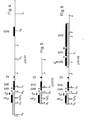
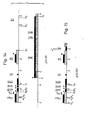
- Fig. 2 is a key to the symbols used in the following figures, and Figs. 3-14 show restriction maps of the plasmids described in the examples.
- Fig. 1 a schematic view of the basic replicon of plasmid R1 is shown in which the shaded areas denote the translated regions, the blank areas denote the transcripts and the dotted lines denote possible transcripts.
- the enlarged view of the hairpin loops is meant to illustrate the high degree of secondary structure of the CopA-RNA.
- Ori stands for origin of replication.
- the horizontally placed arrows denote the direction of transcription.
- A denotes DNA from Rl-type plasmids
- B denotes DNA derived from the bacteriophage ⁇ (ED ⁇ 4)
- C denotes DNA from the Tn3 transposon (from ED ⁇ Tn3)
- D denotes DNA from plasmid pBR322
- E denotes DNA from plasmid pMC871
- F denotes DNA from plasmid pVH1424
- G denotes DNA from plasmid pSKS104
- H denotes structural genes and important sites
- I denotes a promoter with an indication of the direction of transcription
- J denotes a scale of the dimensions of the plasmids.
- the blank area denotes DNA from plasmid pBEU14.
- copB represents a gene coding for a polypeptide which represses transcription from the repA promoter between the copB and copA genes
- copA represents a gene coding for an RNA molecule that inhibits translation of RepA-mRNA
- repA represents a gene coding for a protein required for plasmid R1 replication
- ori denotes the vegetative origin of replication
- aphA represents a gene encoding resistance to kanamycin
- bla represents a gene encoding resistance to ampicillin
- lacA, lacy and lacZ represent the inserted lac operon, of which lacA codes for trans- acetylase, lacy codes for permease and lacZ codes for ⁇ -galactosidase
- cl 857 represents a gene coding for a temperature-sensitive repress
- P denotes Pstl
- B 2 denotes BglII
- S 1 denotes SalI
- E denotes EcoRI
- H 3 denotes Hindlll
- B 1 denotes BamHI
- S denotes SmaI
- B 2 B 1 denotes a fusion of a BglII site and a BamHI site
- C denotes Clal.
- the plasmid depicted is drawn on the same scale as the plasmids in the other figures, and the bracketed insertion represents the inserted lac genes.
- the strain of Escherichia coli K-12 used was CSH50 ( ⁇ pro-lac, rpsL; cf. J. Miller: Experiments in Molecular Genetics, Cold Spring Harbor Laboratory, Cold Spring Harbor, New York, 1972).
- CSH50 ⁇ pro-lac, rpsL; cf. J. Miller: Experiments in Molecular Genetics, Cold Spring Harbor Laboratory, Cold Spring Harbor, New York, 1972.
- Several plasmids (Table 1) and bacteriophages (Table 2) were used.
- restriction endonucleases employed in the examples were used in accordance with the prescriptions provided by the manufacturer.
- the partial restrictions were performed with a ten-fold dilution of the enzymes.
- the cl857 mutant allele is used. Plasmids carrying this gene make the host E. coli cell resistant to infection with lytic ⁇ phages at 30°C. To select resistant cells more than 10 2 ⁇ b2 phage particles are added to plates before spreading the bacteria. Surviving colonies are further tested for their plasmid content.
- the Lac + phenotype is easily detected on McConkey lactose indicator plates (red colonies).
- the presence of a copB+ gene in cells harbouring pJL217 results in a Lac phenotype which appears as white colonies on the indicator plates.
- copB + hybrids are easily scored as Lac colonies when plasmid DNA is transformed. to E. coli ⁇ lac cells that harbour plasmid pJL217.
- Plasmid pKN1562 is a derivative of plasmid R1, in all essentials constructed as described in Molin et al.: "Clustering of Genes Involved in Replication, Copy Number Control, Incompatibility, and Stable Maintenance of the Resistance Plasmid Rldrd-19", J. Bact. 138, 1979, pp. 70-79, except for a few modifications added by later research.
- pKN1562 has a molecular weight of 6.9 ⁇ 10 6 daltons and the following genotype: copA + , copB + , repA+, aphA + , ⁇ par (see Fig. 3). It carries resistance to kanamycin.
- the plasmid possesses the replication properties of the wild-type plasmid, has a copy number of 3-5 per fast growing cell and is lost with a frequency of 1% per generation due to the lack of the par gene (the gene for partitioning).
- pJL20 By restricting pKN1562 with Bglll to delete part of the copB gene and ligating the sticky ends, another plasmid, pJL20, is constructed.
- the molecular weight of this plasmid is 6.7 ⁇ 60 6 daltons and its genotype is as follows: copA + , A copB, repA + , aphA + , ⁇ par.
- the plasmid has a copy number of 25-40 per fast growing cell, and there is no loss of the plasmid. This plasmid, too, mediates resistance to kanamycin.
- DNA from plasmid pJL20 and phage EDX4 was prepared according to standard methods. Plasmid and phage DNA was mixed at a final concentration of 20 ⁇ g/ml of each and in a final volume of 100 ⁇ l, restricted with Bglll for 30 minutes, heat inactivated at 70°C for 10 minutes, and ligated with T4 DNA ligase overnight at 15°C. Aliquots of the ligation mixture were transformed to E. coll strain CSH50. Transformants were selected on plates containing 50 ⁇ g/ml kanamycin onto which a suspension with about 10 9 ⁇ b2 particles had been spread. The plates were incubated for 20 hours at 30°C.
- plasmid pOU51
- pOU51 a plasmid which mediates resistance to Km and to ⁇ infection, renders the host bacterium temperature-sensitive for growth, and has an insertion of phage DNA in pJL20 corresponding to about 1.6x10 6 daltons.
- the total molecular weight of the plasmid was 8.4 ⁇ 10 6 daltons.
- DNA was prepared from pOU51 and the plasmid mapped with restriction enzymes. by purifying, the plasmid DNA, cleaving it with restriction enzyme(s) and analysing the resulting fragments by means of agarose gel electrophoresis (cf.Fig. 4). In this way the inserted 1.6 ⁇ 10 6 dalton fragment was identified as a BglII fragment from phage - ⁇ carrying the cl repressor gene (responsible for ⁇ immunity at 30°C) and the ⁇ P R promoter, and the orientation of the inserted fragment was determined to be as shown in Fig. 4. From the restriction map it further appears that pOU51 has a unique site for the restriction endonuclease EcoRI which makes it possible to use the plasmid as a cloning vector.
- the effect of the plasmid on the growth of the cells was investigated by growing a culture in medium at 30°C. At a time when growth was exponential the temperature was shifted to 42°C and cell growth followed (determined spectrophotometrically). Within 1.5-2 hours of growth at 42°C the culture ceased to grow.
- the plasmid DNA content was measured as described in MATERIALS AND METHODS from 10 ml cultures growing in A + B minimal medium supplemented with 0.2% of glucose and 1% of casamino acids.
- One 10 ml culture was labelled with 50 ⁇ Ci of 3 H-thymidine at 30°C, the other received the isotope just after a shift to 42°C until the cells ceased to grow.
- the relative content of plasmid DNA was 2% at 30°C corresponding to 25-40 plasmid copies per cell. At 42°C the relative content was more than 50% corresponding to more than 1000 plasmid copies per cell.
- E. coli CSH50/pOU51 The strain of E. coli CSH50/pOU51 is deposited in the German Collection of Microorganisms (Deutsche Sammlung von Mikroorganismen, Grisebachstrasse 8, D-3400 Göttingen), in the following abbreviated to DSM, under the Accession No. 2467.
- Example 1 By using the plasmid described in Example 1 as a starting material and by partially restricting pOU51 with HindIII, the title plasmid was constructed from which the gene for encoding kanamycin resistance had been deleted, but which had retained the gene for encoding ⁇ immunity.
- the plasmid was transformed to E. coll strain CHS50.
- pJEL53 had a molecular weight of 3.2 ⁇ 10 6 daltons and the following genotype: copA+, ⁇ copB, repA+, A par, imm ⁇ + , ⁇ aphA.
- the plasmid was mapped with restriction enzymes as described in Example 1 (cf. Fig. 5). From the restriction map it appears that pOU53 has a unique site for the restriction endonuclease EcoRl which makes it possible to use the plasmid as a cloning vector.
- cell cultures were grown on plates containing ⁇ b2 phage particles as described above to test for resistance to ⁇ infection.
- the cells were further tested for sensitivity to kanamycin by replica plating colonies on plates containing 50 ⁇ g/ml Km.
- To test for temperature-sensitive growth, the cells were streaked on plates at 42°C and grown in the manner described in Example 1.
- the cells When the plasmid DNA content was measured in the manner described in Example 1, the cells were found to contain 20-40 plasmid copies at 30°C and more than 1000 plasmid copies at 42°C. There was no loss of the plasmid.
- the strain of E. coli CSH50/pOU53 is deposited in the DSM under the Accession No. 2468.
- Plasmid DNA was isolated from a strain carrying the X Tn3 phage in the chromosomes and plasmid. pOU53. The plasmid DNA was transformed to E. coli -strain CSH50 selecting for ampicillin resistance and ⁇ immunity.
- pOU56 had a molecular weight of 6.5x10' daltons and the following genotype: copA + , A copB, repA + , ⁇ aphA, imm ⁇ + , bla + (::Tn3).
- the plasmid was mapped with restriction enzymes as described in Example 1 (cf. Fig. 6).
- the restriction map shows where the Tn3 transposon has been inserted in pOU56, and further shows that the plasmid has a unique site for each of the restriction endonucleases EcoRt and BamHI. While the plasmid is useful as a starting material for preparing the plasmid pOU57 (cf. Example 4 below), it is not preferred as a cloning vector as, due to the presence of the transposition gene, antibiotic resistance may be transferred to other bacteria.
- cell cultures were grown on plates containing Xb2 phage particles as described above to test for resistance to ⁇ infection.
- the cells were further tested for ampicillin resistance on plates containing 50 ⁇ g/ml ampicillin.
- the test for temperature-sensitive growth was performed in the manner described above.
- pOU56 was found to have the same replication properties as pOU53.
- the strain of E. coli CSH50/pOU56 is deposited in the DSM under the Accession No. 2469.
- the plasmid was cleaved at the BamHI and EcoRl sites to delete the transposition gene whereas the gene coding for ⁇ -lactamase was retained.
- a small BamHl - EcoRl fragment from plasmid pBR322 was inserted, thus producing plasmid pOUL57.
- the plasmid was transformed to E. coli strain CSH50.
- pOU57 had a molecular weight of 4.2 ⁇ 10 6 daltons, and the following genotype: copA + , ⁇ copB, repA + , ⁇ par, A aphA, imm ⁇ + , bla + ( ⁇ Tn3).
- the plasmid was mapped with restriction enzymes as described in Example 1 (cf. Fig. 7). From the restriction map it appears that pOU57 has unique sites for. each of the restriction endonucleases BamHI and EcoRl which makes it useful as a cloning vector.
- cell cultures were grown on plates containing ⁇ b2 phage particles as described above to test for resistance to phage infection. The cells were further tested for ampicillin resistance in the manner described above. The molecular weight of the plasmid was determined by means of agarose gel electrophoresis. The test for temperature-sensitive growth was performed in the manner described above.
- pOU57 was found to have the same replication properties as pOU53.
- the strain of E. coli CSH50/pOU57 is deposited in the DSM under the Accession No. 2470.
- the title plasmid was constructed which carried both the cl- ⁇ P R repressor-promoter system and the wild-type gene for the copB inhibitor of R1-type plasmids.
- the plasmid was transformed to E. coli-strain CSH50.
- the molecular weight of pOU71 was 4.3 ⁇ 10 6 daltons and the genotype was as follows: copA+, copB + , repA+, A par; ⁇ aphA, imm ⁇ + , bla + .
- the plasmid was mapped with restriction enzymes as described in Example 1 (cf. Fig. 8). From the restriction map it appears that pOU71 has the same unique restriction sites as pOU57.
- the cells When the content of plasmid DNA was measured in the manner described in Example 1, the cells were found to contain 3-5 plasmid copies at 30°C and more than 1000 plasmid copies at 42°C. At 30°C, the plasmid was lost with a frequency of 1% per generation.
- the strain of E. coli CSH50/pOU71 is deposited in the DSM under the Accession No. 2471.
- the title plasmid was constructed having the gene for the copB inhibitor as well as the cl- ⁇ P R repressor-promoter system.
- the plasmid was transformed to E. coli strain CSH50.
- pOU73 had a molecular weight of 4.4 ⁇ 10 6 daltons and the following genotype: copA+, copB + , repA + , D. par, ⁇ aphA, imm ⁇ + , bla + .
- the plasmid was mapped with restriction enzymes as described in Example 1 (cf. Fig. 9). From the restriction map it appears that the copB gene has been inserted in a region of the plasmid where it is not naturally located. It further appears that the plasmid has a unique site for the restriction endonuclease BamHI so that it may be used as a cloning vector.
- the strain of E. coli CSH50/pOU73 is deposited in the DSM under the Accession No. 2472.
- pOU75 had a molecular weight of 4.2 ⁇ 10 6 daltons and the following genotype: copA + , copB + , repA + , ⁇ par, ⁇ aphA, imm ⁇ + , bla + .
- the plasmid was mapped with restriction enzymes as described in Example 1 (cf. Fig. 10). From the restriction map it appears that the deletion of the HindIII fragment results in the removal of the EcoRl site of pOU71.
- pOU75 was found to have the same replication properties as pOU71.
- the strain of E. coli CSH50/pOU75 is deposited in the DSM under the Accession No. 2473.
- Plasmid pMC903 (Casadaban et al., J. Bact. 143, 1980, 971) was cleaved with the restriction enzymes BamHl and Bglll producing a BamHl - Bglll fragment carrying lac genes. Plasmid pOU71 was cleaved with BamHI and the BamHI. Bgll fragment obtained above was inserted at this site as shown in Fig. 11 followed by ligation with T4 DNA ligase, thus producing the plasmid pOU106 which was transformed to E. coli strain CSH50. The cells were streaked onto McConkey lactose indicator plates (see J.
- the promoter from which the ⁇ -galactosidase gene is expressed is the cl promoter and/or the tetracycline promoter located on the DNA fragment from pBR322 which, although it is relatively weak, cannot be dismissed as an influencing factor and which transcribes in the same direction as the cl promoter.
- pOU106 was mapped with restriction enzymes as described in Example 1 (cf. Fig. 11). From the restiction map it appears that the plasmid has a unique site for the restriction endonuclease BamHl immediately downstream of the inserted lac genes, which makes the plasmid useful as a cloning vector.
- the strain of E. coli CSH50/pOU106 is deposited in the DSM under the Accession No. 2474.
- Plasmid pOU71 was cleaved completely with BamHI and partially with Pstl and figated with a DNA fragment (carrying the lac operon) from plasmid pMC871 (Casadaban et al., J. Bact. 143, 1980, 971) which had been cleaved completely with BamHI and Pstl.
- the ligation mixture was transformed to E. coli strain CSH50 selecting for resistance to ampicillin on McConkey lactose indicator plates containing 50 ⁇ g/ml ampicillin which were incubated at 30°C. After 20 hours' incubation at 30°C, the plates were incubated for a short period (1-2 hours) at 42°C, and colonies that shifted from a Lac (white) to a Lac + (red) phenotype were further analysed. The title plasmid was identified from one such colony. pOU79 had a molecular weight of 8.8 ⁇ 10 6 daltons and the following genotype: copA + , copB + , repA + , ⁇ par, imm ⁇ + , bla + , lac + .
- the plasmid was mapped with restriction enzymes as described in Example 1 (cf. Fig. 12). From the restriction map it appears that the plasmid has a unique site for the restriction endonuclease BamHI just upstream of the lac genes. Insertion of promoter-carrying DNA fragments in the proper orientation at this site results in transcription of the lac genes thus giving rise to a Lac+ phenotype of cells carrying such hybrid plasmids at 30°C. Lac + cells are easily identified on McConkey lactose indicator plates.
- the plasmid also has a unique site for the restriction endonuclease EcoRl located at one end of the lacZ gene. Insertion of EcoRl fragments at this site eliminates the activity of the lacZ gene product, ⁇ -gatactosidase, resulting in a Lac phenotype which is easily scored as the formation of colourless colonies on McConkey lactose indicator plates after a temperature shift from 30°C to 42°C (cf. the description above). The plasmid is thus useful as a cloning vector.
- pOU79 was found to have the same replication properties as pOU71.
- the strain of E. coli CSH50/pOU79 is deposited in the DSM under the Accession No. 2481.
- Plasmid pOU79 was cleaved completely with BamHI and partially with SalI, and a BamHl - SalI fragment from pSKS104 carrying the lac operon from which the lac promoter had been deleted and the first four codons of the lacZ gene was inserted to construct pOU80 (not shown).
- pOU80 is Lac and has a BamHI site and an EcoRI site just upstream of the lac genes. Moreover, the EcoRI site normally found in the lacZ gene is missing since the lac genes in pSKS104 are derived from pMC1403 (Casadaban et al., J. Bact. 143, 1980, 971).
- the title plasmid was constructed by replacing an EcoRI - ClaI fragment in the lacZ gene (cf. the map of pOU79, Fig. 12) of pOU80 with an EcoRI - ClaI fragment from pVH1424 carrying the deo promoter and the amino terminal end of the lacZ gene.
- the replacement results in a reconstruction of the lacZ gene and, due to the presence of the deo promoter, the resulting hybrid plasmid, pOU82, mediates a Lac+ phenotype when transformed to E. coli strain CSH50.
- pOU82 had a molecular weight of 8.1 ⁇ 10 6 daltons and the following genotype:
- the plasmid is eventually lost from the cells at 30°C due to the lack of the par region, which is easily observed on non-selective McConkey lactose indicator plates. (cf. Example 11).
- the plasmid was mapped with restriction enzymes as described in Example 1 (cf. Fig. 13). From the restriction map it appears that the plasmid has a unique site for each of the restriction endonucleases EcoRI and BamHI, which makes it possible to use the plasmid as a cloning vector.
- pOU82 was found to have the same replication properties as pOU71.
- the strain of E. coli CSH50/pOU82 is deposited in the DSM under the Accession No. 2482.
- pOU82 was cleaved with EcoRl, and the EcoRl-A fragment including the wild-type par region of a plasmid R1 derivative, pKN184 (Nordström et al., Plasmid 4, 1980, 322), was inserted at this site followed by ligation.
- the resulting plasmid (pOU90, not shown) was transformed to E. coli strain CSH50, and the cells were grown selectively on plates containing 50 ⁇ g/ml ampicillin at 30°C.
- cells containing pOU82 were grown in a similar manner to ensure the presence of the plasmids in both starting colonies.
- pOU91 had a molecular weight of 12.5x10 6 daltons and the following genotype: copA + , copB+, repA + , par+, imm ⁇ + , bla f , lac + .
- the plasmid was mapped with restriction enzymes as described in Example 1 (cf. Fig. 14). From the restriction map it appears that pOU91 has unique sites for each of the restriction endonucleases EcoRl and BamHl, which makes the plasmid useful as a cloning vector.
- pOUL91 was found to have the same replication properties as pOU71 but, in contradistinction to pOU71, the plasmid is completely stable at 30°C.
- the strain of E. coli CSH50/pOU91 is deposited in the DSM under the Accession No. 2483.
- Example 7 By using the plasmid described in Example 7 as a starting material and by inserting a Sau3A fragment carrying the gene coding for chloramphenicol acetyl transferase (cat+) in the BamHI site of pOU75, the title plasmid was constructed which conferred chloramphenicol resistance to the host cell.
- the plasmid was transformed to E. coli strain CSH50.
- pOU101 had a molecular weight of 4.7 ⁇ 10 6 daltons and the following genotype: copA + , copB+, repA + , ⁇ par, A aphA, imm ⁇ + , bla+, cat+.
- the plasmid was mapped with restriction enzymes as described in Example 1 (cf. Fig 15). From the restriction map it appears that pOU101 has a unique site for the restriction endonuclease EcoRl which makes it possible to use the plasmid as a cloning vector. Moreover, insertion of EcoRl fragments inactivates the cat+ gene allowing screening for EcoRI hybrids.
- pOU101 was found to have the same replication properties as pOU71.
- E. coli CSH50/pOU101 The strain of E. coli CSH50/pOU101 is deposited in the DSM under the Accession No. 2757.
- the EcoRI - Clal fragment containing part of the lacZ gene was deleted from plasmid pOU80 (described in Example 10; cf. the map of pOU79, Fig. 12) and replaced with an EcoRI - Clal fragment from plasmid pVH1451 (Valentin-Hansen et al., the EMBO Journal 1, 1982) carrying the deo promoter and the amino terminal end of the lacZ gene.
- the resulting plasmid was denoted pOU83 (cf. Fig. 16).
- Plasmid pOU83 was partially restricted with BamHI and BglII in order to delete the lac genes and the DNA fragment carrying the cl repressor gene and the ⁇ P R promoter. After ligation and transformation to CSH50, a plasmid with the desired properties was isolated, resulting in a close fusion of the deo promoter and the copB gene.
- the plasmid, denoted pOU110 had a molecular weight of 3,2 x 10' daltons and the following genotype: copA + , copB+, repA + , ⁇ par, bla + .
- the plasmid was mapped with restriction enzymes as described in Example 1 (cf. Fig. 17). From the restriction map it appears that the plasmid has a unique site for each of the restriction endonucleases EcoRl and BamHl which makes it possible to use the plasmid as a cloning vector.
- E.coli CSH50/pOU110 The strain of E.coli CSH50/pOU110 is deposited in the DSM under the Accession No. 2758.
- Plasmid pOU91 was cleaved with BamHI and the BamHI site was deleted by means of the exonuclease Bal31 to produce plasmid pOU92 (not shown).
- the plasmid was restricted with EcoRl and Clal and a corresponding EcoRl - Clal fragment from plasmid pMC1403 (Casadaban et al., J. Bact 143, 1980, 971) was inserted to produce plasmid pOU93 which carried the lac operon without the deo promoter.
- a BglII fragment carrying a copB gene was inserted to produce plasmid pOU130 (cf. Fig.
- ⁇ -galactosidase As ⁇ -galactosidase is constitutively expressed from such a gene fusion (Light & Molin, J. Bact. 151, 1982, 1129-1135), the levels of enzyme activity accurately reflect the gene product amplification capacity of the plasmids of the invention.
- the strain of E.coli CHS50/pOU130 is deposited in the DSM under the .Accession No. 2759.
- pOU75 was cleaved with BamHI, and a BamHI fragment from plasmid pBEU14 (Uhlin and Clark, J. Bact. 148, 1981, 386-90) carrying the recA promoter and gene was inserted followed by transformation to E. coli strain CSH50.
- the title plasmid had a molecular weight of 6.3 x 10 6 daltons and the following genotype: recA, bla + , copA + , copB + , repA + , imm ⁇ + .
- pLC31 contains a unique site for the restriction enzyme EcoRI downstream of the recA promoter suitable for the insertion of foreign genes.
- pLC31 was found to have the same replication properties as pOU71.
- the strain of E.coli CSH50/pLC31 is deposited in the DSM under the Accession No. 2718.
- Plasmid PLc28 (Remaut et al., Gene 15, 1981, pp. 81-93) carrying the ⁇ P L promoter and the bla gene and provided with a linker comprising the restriction sites EcoRl, Smal, BamHI, Sall, Pstl and HindIII, was cleaved with EcoRl and inserted in the EcoRl site of plasmid pOU51 (cf. Example 1) followed by ligation and transformation to E.coli strain CSH50.
- the plasmid was mopped with restriction enzymes as described in Example 1 (cf. Fig. 21). From the restriction map it appears that the ⁇ P L promoter is located immediately upstream of the unique EcoRI site which makes the plasmid convenient as a cloning vector.
- pLC32 was found to have the same replication properties as pOU51.
- the strain of E. coli CSH50/pLC32 is deposited in the DSM under the Accession No. 2719.
Landscapes
- Genetics & Genomics (AREA)
- Health & Medical Sciences (AREA)
- Engineering & Computer Science (AREA)
- Life Sciences & Earth Sciences (AREA)
- Chemical & Material Sciences (AREA)
- Wood Science & Technology (AREA)
- Organic Chemistry (AREA)
- Biotechnology (AREA)
- General Engineering & Computer Science (AREA)
- Biomedical Technology (AREA)
- Zoology (AREA)
- Bioinformatics & Cheminformatics (AREA)
- Molecular Biology (AREA)
- Microbiology (AREA)
- Plant Pathology (AREA)
- Physics & Mathematics (AREA)
- Biochemistry (AREA)
- General Health & Medical Sciences (AREA)
- Biophysics (AREA)
- Micro-Organisms Or Cultivation Processes Thereof (AREA)
- Preparation Of Compounds By Using Micro-Organisms (AREA)
- Saccharide Compounds (AREA)
Priority Applications (1)
| Application Number | Priority Date | Filing Date | Title |
|---|---|---|---|
| AT83305438T ATE79406T1 (de) | 1982-09-16 | 1983-09-16 | Plasmide mit konditionalem unkontrolliertem replikationsverhalten. |
Applications Claiming Priority (4)
| Application Number | Priority Date | Filing Date | Title |
|---|---|---|---|
| DK415182 | 1982-09-16 | ||
| DK427082 | 1982-09-24 | ||
| DK4270/82 | 1982-09-24 | ||
| DK4151/82 | 1982-09-24 |
Publications (3)
| Publication Number | Publication Date |
|---|---|
| EP0109150A2 true EP0109150A2 (fr) | 1984-05-23 |
| EP0109150A3 EP0109150A3 (en) | 1985-10-09 |
| EP0109150B1 EP0109150B1 (fr) | 1992-08-12 |
Family
ID=26067368
Family Applications (1)
| Application Number | Title | Priority Date | Filing Date |
|---|---|---|---|
| EP83305438A Expired - Lifetime EP0109150B1 (fr) | 1982-09-16 | 1983-09-16 | Plasmides à comportement de replication conditionnellement non-contrôlé |
Country Status (11)
| Country | Link |
|---|---|
| EP (1) | EP0109150B1 (fr) |
| JP (2) | JPH0753111B2 (fr) |
| AU (1) | AU569043B2 (fr) |
| CA (1) | CA1313829C (fr) |
| DE (2) | DE109150T1 (fr) |
| FI (1) | FI89941C (fr) |
| HU (1) | HU201116B (fr) |
| IE (1) | IE58059B1 (fr) |
| IL (1) | IL69741A (fr) |
| NO (1) | NO175488C (fr) |
| WO (1) | WO1984001171A1 (fr) |
Cited By (10)
| Publication number | Priority date | Publication date | Assignee | Title |
|---|---|---|---|---|
| EP0136490A3 (en) * | 1983-08-10 | 1985-10-09 | Amgen | Dna plasmids |
| GB2166743A (en) * | 1984-11-13 | 1986-05-14 | Solvay | Thermo-inducible gene expression in bacteria |
| EP0217529A1 (fr) * | 1985-08-26 | 1987-04-08 | Eli Lilly And Company | Vecteurs d'expression pour utilisation en E. coli |
| EP0493926A1 (fr) * | 1990-12-19 | 1992-07-08 | Eli Lilly And Company | Procédé pour augmenter la stabilité structurelle des secteurs d'expression d'ADN recombinant |
| US5173418A (en) * | 1985-05-10 | 1992-12-22 | Benzon Pharma, A/S | Production in Escherichia coli of extracellular Serratia spp. hydrolases |
| WO1994002608A1 (fr) * | 1992-07-22 | 1994-02-03 | Celltech Limited | Procede d'obtention d'anticorps |
| US5670370A (en) * | 1986-03-26 | 1997-09-23 | Gx Biosystems A/S | Biological containment |
| US5702916A (en) * | 1982-09-16 | 1997-12-30 | Gx Biosystems A/S | Biological Containment |
| US6991786B1 (en) * | 2000-08-30 | 2006-01-31 | Wisconsin Alumni Research Foundation | Anti-microbial biotherapeutic agents: alternatives to conventional pharmaceutical antibiotics |
| US7758854B2 (en) | 2001-08-30 | 2010-07-20 | Wisconsin Alumni Research Foundation | Anti-microbial agents |
Families Citing this family (5)
| Publication number | Priority date | Publication date | Assignee | Title |
|---|---|---|---|---|
| GB8407498D0 (en) * | 1984-03-22 | 1984-05-02 | Biogen Nv | High copy number expression vectors |
| US5593860A (en) * | 1987-08-14 | 1997-01-14 | Bio-Technology General Corp. | Expression plasmids containing the deo promoter, and bacterial hosts containing the plasmids |
| NZ225760A (en) * | 1987-08-14 | 1991-02-26 | Bio Technology General Corp | Expression plasmids containing the deo promoter and bacterial hosts containing these plasmids |
| AU1031900A (en) * | 1998-11-09 | 2000-05-29 | Genecare Development Aps | Novel plasmids for use in medicine and method of producing same |
| JP2023529980A (ja) * | 2020-06-17 | 2023-07-12 | ビーエーエスエフ ソシエタス・ヨーロピア | プラスミドコピー数の調節及び組み込み |
Family Cites Families (6)
| Publication number | Priority date | Publication date | Assignee | Title |
|---|---|---|---|---|
| DE2759053A1 (de) * | 1977-12-30 | 1979-07-12 | Uhlin | Verfahren zum herstellen von genprodukten von plasmid-dns |
| FI793884A7 (fi) * | 1978-12-26 | 1981-01-01 | Cetus Corp | Vakaita runsaasti jäljentyviä plasmideja. |
| CA1198067A (fr) * | 1981-02-27 | 1985-12-17 | David H. Gelfand | Plasmides stables |
| IL65775A (en) * | 1981-05-18 | 1985-05-31 | Genentech Inc | Microbial hybrid promotors and plasmids and e.coli comprising them |
| DK410783D0 (da) * | 1982-09-16 | 1983-09-09 | Benzon A Salfred | Fremgangsmade til stabilisering af plasmider |
| GB8308236D0 (en) * | 1983-03-25 | 1983-05-05 | Celltech Ltd | Dna vectors |
-
1983
- 1983-09-09 HU HU833564A patent/HU201116B/hu not_active IP Right Cessation
- 1983-09-09 JP JP58502971A patent/JPH0753111B2/ja not_active Expired - Lifetime
- 1983-09-09 AU AU19487/83A patent/AU569043B2/en not_active Ceased
- 1983-09-09 WO PCT/DK1983/000084 patent/WO1984001171A1/fr not_active Ceased
- 1983-09-15 IL IL69741A patent/IL69741A/xx not_active IP Right Cessation
- 1983-09-16 DE DE198383305438T patent/DE109150T1/de active Pending
- 1983-09-16 CA CA000436866A patent/CA1313829C/fr not_active Expired - Fee Related
- 1983-09-16 EP EP83305438A patent/EP0109150B1/fr not_active Expired - Lifetime
- 1983-09-16 IE IE217783A patent/IE58059B1/en not_active IP Right Cessation
- 1983-09-16 DE DE8383305438T patent/DE3382607T2/de not_active Expired - Lifetime
-
1984
- 1984-05-15 NO NO841935A patent/NO175488C/no unknown
- 1984-05-16 FI FI841976A patent/FI89941C/fi not_active IP Right Cessation
-
1990
- 1990-01-11 JP JP2006100A patent/JP2604478B2/ja not_active Expired - Lifetime
Cited By (12)
| Publication number | Priority date | Publication date | Assignee | Title |
|---|---|---|---|---|
| US5702916A (en) * | 1982-09-16 | 1997-12-30 | Gx Biosystems A/S | Biological Containment |
| EP0136490A3 (en) * | 1983-08-10 | 1985-10-09 | Amgen | Dna plasmids |
| GB2166743A (en) * | 1984-11-13 | 1986-05-14 | Solvay | Thermo-inducible gene expression in bacteria |
| US5173418A (en) * | 1985-05-10 | 1992-12-22 | Benzon Pharma, A/S | Production in Escherichia coli of extracellular Serratia spp. hydrolases |
| EP0217529A1 (fr) * | 1985-08-26 | 1987-04-08 | Eli Lilly And Company | Vecteurs d'expression pour utilisation en E. coli |
| US5670370A (en) * | 1986-03-26 | 1997-09-23 | Gx Biosystems A/S | Biological containment |
| US5853718A (en) * | 1986-03-26 | 1998-12-29 | Genexpress Aps | Method of immunization using biologically contained bacterial cells |
| EP0493926A1 (fr) * | 1990-12-19 | 1992-07-08 | Eli Lilly And Company | Procédé pour augmenter la stabilité structurelle des secteurs d'expression d'ADN recombinant |
| WO1994002608A1 (fr) * | 1992-07-22 | 1994-02-03 | Celltech Limited | Procede d'obtention d'anticorps |
| US5665866A (en) * | 1992-07-22 | 1997-09-09 | Celltech Therapeutics Limited | Process for obtaining antibodies utilizing heat treatment |
| US6991786B1 (en) * | 2000-08-30 | 2006-01-31 | Wisconsin Alumni Research Foundation | Anti-microbial biotherapeutic agents: alternatives to conventional pharmaceutical antibiotics |
| US7758854B2 (en) | 2001-08-30 | 2010-07-20 | Wisconsin Alumni Research Foundation | Anti-microbial agents |
Also Published As
| Publication number | Publication date |
|---|---|
| IE832177L (en) | 1984-03-16 |
| WO1984001171A1 (fr) | 1984-03-29 |
| EP0109150A3 (en) | 1985-10-09 |
| FI841976A7 (fi) | 1984-05-16 |
| JPS59501532A (ja) | 1984-08-30 |
| HU201116B (en) | 1990-09-28 |
| EP0109150B1 (fr) | 1992-08-12 |
| NO175488C (no) | 1994-10-19 |
| FI89941B (fi) | 1993-08-31 |
| FI841976A0 (fi) | 1984-05-16 |
| IE58059B1 (en) | 1993-06-30 |
| NO175488B (no) | 1994-07-11 |
| NO841935L (no) | 1984-05-15 |
| JPH0753111B2 (ja) | 1995-06-07 |
| JPH02238891A (ja) | 1990-09-21 |
| DE3382607T2 (de) | 1993-03-11 |
| FI89941C (fi) | 1993-12-10 |
| AU569043B2 (en) | 1988-01-21 |
| CA1313829C (fr) | 1993-02-23 |
| AU1948783A (en) | 1984-04-04 |
| DE3382607D1 (de) | 1992-09-17 |
| IL69741A (en) | 1990-11-05 |
| DE109150T1 (de) | 1984-10-25 |
| JP2604478B2 (ja) | 1997-04-30 |
Similar Documents
| Publication | Publication Date | Title |
|---|---|---|
| US4760022A (en) | Stabilized plasmids | |
| US4806471A (en) | Plasmids with conditional uncontrolled replication behavior | |
| Olsen et al. | Development of broad-host-range vectors and gene banks: self-cloning of the Pseudomonas aeruginosa PAO chromosome | |
| Sledjeski et al. | The small RNA, DsrA, is essential for the low temperature expression of RpoS during exponential growth in Escherichia coli. | |
| EP0109150B1 (fr) | Plasmides à comportement de replication conditionnellement non-contrôlé | |
| GB2136814A (en) | Dna vectors | |
| Ma et al. | Analysis of the promoter and regulatory sequences of an oxygen-regulated bch operon in Rhodobacter capsulatus by site-directed mutagenesis | |
| Grandoni et al. | Regions of the Bacillus subtilis ilv-leu operon involved in regulation by leucine | |
| US5545541A (en) | Stabilization of unstably inherited replicons | |
| US4788148A (en) | Plasmid with stabilized inheritance | |
| US5242809A (en) | Gal operon of streptomyces | |
| CA2622710A1 (fr) | Origine transferable hybride de plasmides a replication | |
| DK171215B1 (da) | Plasmider med betinget ukontrolleret replikationstærskel samt fremgangsmåde til fremstilling af et genprodukt ved dyrkning af en mikroorganisme indeholdende et sådant plasmid | |
| Hall et al. | Regulation of tryptophanyl-tRNA synthetase formation | |
| Ogden et al. | An adjustable expression system for controlling growth rate, plasmid maintenance, and culture dynamics | |
| Nesin et al. | Role of the 5'upstream sequence and tandem promoters in regulation of the rpsU-dnaG-rpoD macromolecular synthesis operon | |
| DK167883B1 (da) | Stabiliserede plasmider, bakterier indeholdende samme, fremgangsmaade til fremstilling af genprodukt af plasmid-dna og dna fragment omfattende r1 fordelingsfunktion | |
| US5346830A (en) | Gene expression system based on regulatory elements of bateriophage P2 and satellite phage P4 | |
| Brana et al. | Stability of the hybrid plasmid pIM138 and its curing by some eliminating agents | |
| Davies et al. | Sequence rearrangements in the plasmid ColV, I-K94 | |
| Bittner et al. | Cloning vectors derived from bacterial plasmids | |
| NO172350B (no) | Plasmidstabilisering |
Legal Events
| Date | Code | Title | Description |
|---|---|---|---|
| PUAI | Public reference made under article 153(3) epc to a published international application that has entered the european phase |
Free format text: ORIGINAL CODE: 0009012 |
|
| AK | Designated contracting states |
Designated state(s): AT BE CH DE FR GB IT LI LU NL SE |
|
| ITCL | It: translation for ep claims filed |
Representative=s name: JACOBACCI CASETTA & PERANI S.P.A. |
|
| TCAT | At: translation of patent claims filed | ||
| EL | Fr: translation of claims filed | ||
| TCNL | Nl: translation of patent claims filed | ||
| DET | De: translation of patent claims | ||
| REG | Reference to a national code |
Ref country code: DE Ref legal event code: 8580 Free format text: ES ERFOLGT EIN NEUDRUCK DER DE/EP-SCHRIFT MIT DER RICHTIGEN UEBERSETZUNG DER PATENTANSPRUECHE. |
|
| PUAL | Search report despatched |
Free format text: ORIGINAL CODE: 0009013 |
|
| AK | Designated contracting states |
Designated state(s): AT BE CH DE FR GB IT LI LU NL SE |
|
| 17P | Request for examination filed |
Effective date: 19860401 |
|
| 17Q | First examination report despatched |
Effective date: 19870812 |
|
| RAP1 | Party data changed (applicant data changed or rights of an application transferred) |
Owner name: BENZON PHARMA A/S |
|
| GRAA | (expected) grant |
Free format text: ORIGINAL CODE: 0009210 |
|
| AK | Designated contracting states |
Kind code of ref document: B1 Designated state(s): AT BE CH DE FR GB IT LI LU NL SE |
|
| REF | Corresponds to: |
Ref document number: 79406 Country of ref document: AT Date of ref document: 19920815 Kind code of ref document: T |
|
| REF | Corresponds to: |
Ref document number: 3382607 Country of ref document: DE Date of ref document: 19920917 |
|
| ITF | It: translation for a ep patent filed | ||
| ET | Fr: translation filed | ||
| PLBE | No opposition filed within time limit |
Free format text: ORIGINAL CODE: 0009261 |
|
| 26N | No opposition filed | ||
| ITTA | It: last paid annual fee | ||
| EPTA | Lu: last paid annual fee | ||
| EAL | Se: european patent in force in sweden |
Ref document number: 83305438.0 |
|
| PGFP | Annual fee paid to national office [announced via postgrant information from national office to epo] |
Ref country code: LU Payment date: 19960901 Year of fee payment: 14 |
|
| PGFP | Annual fee paid to national office [announced via postgrant information from national office to epo] |
Ref country code: SE Payment date: 19960923 Year of fee payment: 14 |
|
| PGFP | Annual fee paid to national office [announced via postgrant information from national office to epo] |
Ref country code: AT Payment date: 19960924 Year of fee payment: 14 |
|
| PGFP | Annual fee paid to national office [announced via postgrant information from national office to epo] |
Ref country code: BE Payment date: 19961009 Year of fee payment: 14 |
|
| PG25 | Lapsed in a contracting state [announced via postgrant information from national office to epo] |
Ref country code: LU Free format text: LAPSE BECAUSE OF NON-PAYMENT OF DUE FEES Effective date: 19970916 Ref country code: AT Free format text: LAPSE BECAUSE OF NON-PAYMENT OF DUE FEES Effective date: 19970916 |
|
| PG25 | Lapsed in a contracting state [announced via postgrant information from national office to epo] |
Ref country code: SE Free format text: LAPSE BECAUSE OF NON-PAYMENT OF DUE FEES Effective date: 19970917 |
|
| PG25 | Lapsed in a contracting state [announced via postgrant information from national office to epo] |
Ref country code: BE Free format text: LAPSE BECAUSE OF NON-PAYMENT OF DUE FEES Effective date: 19970930 |
|
| BERE | Be: lapsed |
Owner name: BENZON PHARMA A/S Effective date: 19970930 |
|
| EUG | Se: european patent has lapsed |
Ref document number: 83305438.0 |
|
| REG | Reference to a national code |
Ref country code: CH Ref legal event code: PUE Owner name: BENZON PHARMA A/S TRANSFER- NYCOMED DANMARK A/S |
|
| REG | Reference to a national code |
Ref country code: FR Ref legal event code: TP |
|
| NLS | Nl: assignments of ep-patents |
Owner name: NYCOMED DANMARK A/S |
|
| REG | Reference to a national code |
Ref country code: GB Ref legal event code: 732E |
|
| REG | Reference to a national code |
Ref country code: GB Ref legal event code: IF02 |
|
| PGFP | Annual fee paid to national office [announced via postgrant information from national office to epo] |
Ref country code: FR Payment date: 20020828 Year of fee payment: 20 |
|
| PGFP | Annual fee paid to national office [announced via postgrant information from national office to epo] |
Ref country code: GB Payment date: 20020909 Year of fee payment: 20 |
|
| PGFP | Annual fee paid to national office [announced via postgrant information from national office to epo] |
Ref country code: NL Payment date: 20020911 Year of fee payment: 20 |
|
| PGFP | Annual fee paid to national office [announced via postgrant information from national office to epo] |
Ref country code: CH Payment date: 20020912 Year of fee payment: 20 |
|
| PGFP | Annual fee paid to national office [announced via postgrant information from national office to epo] |
Ref country code: DE Payment date: 20020917 Year of fee payment: 20 |
|
| PG25 | Lapsed in a contracting state [announced via postgrant information from national office to epo] |
Ref country code: LI Free format text: LAPSE BECAUSE OF EXPIRATION OF PROTECTION Effective date: 20030915 Ref country code: GB Free format text: LAPSE BECAUSE OF EXPIRATION OF PROTECTION Effective date: 20030915 Ref country code: CH Free format text: LAPSE BECAUSE OF EXPIRATION OF PROTECTION Effective date: 20030915 |
|
| PG25 | Lapsed in a contracting state [announced via postgrant information from national office to epo] |
Ref country code: NL Free format text: LAPSE BECAUSE OF EXPIRATION OF PROTECTION Effective date: 20030916 |
|
| REG | Reference to a national code |
Ref country code: GB Ref legal event code: PE20 |
|
| REG | Reference to a national code |
Ref country code: CH Ref legal event code: PL |
|
| NLV7 | Nl: ceased due to reaching the maximum lifetime of a patent |
Effective date: 20030916 |