EP0110578A2 - Farbphotografisches Diffusionsverfahren und hierfür geeignete Verbindungen - Google Patents
Farbphotografisches Diffusionsverfahren und hierfür geeignete Verbindungen Download PDFInfo
- Publication number
- EP0110578A2 EP0110578A2 EP83306632A EP83306632A EP0110578A2 EP 0110578 A2 EP0110578 A2 EP 0110578A2 EP 83306632 A EP83306632 A EP 83306632A EP 83306632 A EP83306632 A EP 83306632A EP 0110578 A2 EP0110578 A2 EP 0110578A2
- Authority
- EP
- European Patent Office
- Prior art keywords
- layer
- composition
- processing composition
- light
- image
- Prior art date
- Legal status (The legal status is an assumption and is not a legal conclusion. Google has not performed a legal analysis and makes no representation as to the accuracy of the status listed.)
- Granted
Links
Images

Classifications
-
- G—PHYSICS
- G03—PHOTOGRAPHY; CINEMATOGRAPHY; ANALOGOUS TECHNIQUES USING WAVES OTHER THAN OPTICAL WAVES; ELECTROGRAPHY; HOLOGRAPHY
- G03C—PHOTOSENSITIVE MATERIALS FOR PHOTOGRAPHIC PURPOSES; PHOTOGRAPHIC PROCESSES, e.g. CINE, X-RAY, COLOUR, STEREO-PHOTOGRAPHIC PROCESSES; AUXILIARY PROCESSES IN PHOTOGRAPHY
- G03C8/00—Diffusion transfer processes or agents therefor; Photosensitive materials for such processes
- G03C8/42—Structural details
- G03C8/44—Integral units, i.e. the image-forming section not being separated from the image-receiving section
- G03C8/48—Integral units, i.e. the image-forming section not being separated from the image-receiving section characterised by substances used for masking the image-forming section
-
- G—PHYSICS
- G03—PHOTOGRAPHY; CINEMATOGRAPHY; ANALOGOUS TECHNIQUES USING WAVES OTHER THAN OPTICAL WAVES; ELECTROGRAPHY; HOLOGRAPHY
- G03C—PHOTOSENSITIVE MATERIALS FOR PHOTOGRAPHIC PURPOSES; PHOTOGRAPHIC PROCESSES, e.g. CINE, X-RAY, COLOUR, STEREO-PHOTOGRAPHIC PROCESSES; AUXILIARY PROCESSES IN PHOTOGRAPHY
- G03C8/00—Diffusion transfer processes or agents therefor; Photosensitive materials for such processes
- G03C8/32—Development processes or agents therefor
- G03C8/36—Developers
Definitions
- This invention relates to photography, and more particularly, it relates to photographic processes performed in ambient light and photographic products useful in such processes.
- diffusion transfer processes for producing photographic images in both black-and-white and in colour are now well known.
- diffusion transfer processes wherein the image-receiving layer carrying the transfer image is not separated from the developed photosensitive layer(s) after processing but both components are retained together as a permanent laminate.
- a layer of a light-reflecting material preferably titanium dioxide, positioned between the image-carrying layer and the developed photosensitive layer(s).
- the light-reflecting layer separating the image-carrying and photosensitive components provides a white background for the transfer image and masks the developed photosensitive layer(s).
- the laminate usually includes dimensionally stable outer layers or supports, at least one of which is transparent so that the resulting transfer image may be viewed by reflection against the background provided by the light-reflecting layer.
- Diffusion transfer processes for forming images viewable without separation of the photosensitive and image-receiving components and film units useful in such processes are described, for example, in U.S. Patent Nos. 3,415,644, 3,415,645 and 3,415,646 issued December 10, 1968 to Edwin H. Land.
- U.S.Patent No. 3,647,437 issued March 7, 1972 to Edwin H. Land also is concerned with diffusion transfer processes wherein the resulting photograph comprises the developed photosensitive layer(s) retained with the image-receiving layer as part of a permanent laminate.
- a photographic film unit comprising a photosensitive element is developed in ambient light but further undesired exposure during processing is prevented by a light-absorbing material or optical filter agent which is retained in the processed film unit.
- the optical filter agent is a pH-sensitive dye, i.e.
- pH-sensitive dyes found particularly useful as light-absorbing optical filter agents are the phthaleins, i.e., the phthalide and naphthalide dyes derived from indoles disclosed in U.S. Patent No. 3,702,244 issued November 7, 1972 to Stanley M. Bloom, Alan L. Borror, Paul S. Huyffer and Paul T. MacGregor and the phthalide and naphthalide dyes derived from 1-naphthols disclosed in U.S.
- Patent No. 3,702,245 issued November 7, 1972 to Myron S. Simon and David P. Waller.
- a combination of the indole and 1-naphthol dyes generally is used where it is desired to provide protection from post-exposure fogging throughout the visible spectrum.
- the film unit is of the type described in aforementioned U.S. Patent No. 3,415,644 and comprises a first sheet-like component comprising an opaque support carrying a silver halide emulsion layer(s) and a second sheet-like component comprising a transparent support carrying an image-receiving layer which are in fixed relationship prior to exposure, which relationship is maintained after processing.
- an aqueous alkaline processing composition is distributed in a thin layer between said components.
- the processing composition contains a light-reflecting pigment and at least one light-absorbing optical filter agent, such as.
- concentrations of the light-reflecting pigment and light-absorbing optical filter agent required to provide adequate protection of the photosensitive layer(s) will vary with the process being performed and the anticipated conditions, e.g. light intensity, dark time, etc.
- concentrations of these materials are such that the processing composition layer containing the pigment and filter agent will have a transmission density of at least about 6 but a reflection density not greater than about 1.
- the decolourisation of the optical filter agent at said interface is achieved by employing film units wherein the image-receiving component carries a layer containing a substantially non-diffusible agent adapted to reduce the light-absorbing ability of the optical filter agent immediately adjacent the interface between said layer and the pigmented processing composition layer without reducing the light absorbing ability of the optical filter within said processing composition layer.
- the decolourisation agent is a neutral polymeric material, such as a polyvinyl pyrro-lidone or a polyether, which material is believed to effect decolourisation in aqueous alkali by forming a complex with a salt of the pH-sensitive optical filter agent formed with the cation of said alkali, eg, K + , wherein the complex exhibits a higher apparent pKa than the pH-sensitive dye.
- a salt of the pH-sensitive optical filter agent formed with the cation of said alkali, eg, K +
- the complex exhibits a higher apparent pKa than the pH-sensitive dye.
- the polymeric ethers in particular exhibit a propensity for binding many cations, thus becoming a "super cation" which changes the apparent pKa of the pH-sensitive phthalein dye.
- the tendency of pH-sensitive phthalein dyes to bind metal cations may be employed to increase the light-absorbing ability of the dye within the layer to processing composition and that this increase in light-absorption can be achieved while still permitting selective decolourisation at the image layer interface if desired.
- the transmission density of the pigmented processing reagent can be increased at fixed phthalein dye concentration by the addition of a predetermined amount of alkali earth metal chloride or other alkali earth metal salt.
- the increase in transmission density results from a lowering of dye pKa via cation exchange of the alkali earth metal cation, e.g. Ba ++ for the alkali metal cation of the reagent, e.g., K + at the carboxynaphthol moiety of the phthalein dye.
- an aqueous alkaline processing composition for use in a photographic diffusion transfer film unit that will provide a transfer image viewable by reflected light and comprises an aqueous solution of alkali metal hydroxide, a light-reflecting pigment and light-absorbing, pH-sensitive optical filter agent comprising a pH-sensitive carboxynaphthol phthalein and is characterised in that the aqueous solution also contains an alkali soluble alkali earth metal salt in an amount sufficient to increase the transmission density of a layer of the composition.
- this salt is present in an amount such that, at a fixed concentration of the carboxynaphthol phthalein, it results in increased transmission density.
- the invention also includes a photographic film unit for forming a transfer image viewable as a reflection print including a negative component comprising a photosensitive silver halide emulsion carried on a support, a positive component comprising an image receiving layer carried on a transparent support, an acid reacting layer disposed in at least one of the negative and positive components and means comprising an aqueous alkaline processing composition for providing a layer comprising a light-reflecting pigment and light-absorbing, pH-sensitive optical filter agent comprising a carboxy- naphthol phthalein filter agent between the negative and positive components, the combination of the pigment and the filter agent being effective to prevent further exposure of the photosensitive emulsion during processing in the presence of radiation actinic to the emulsion and the light-reflecting pigment providing a layer after development which is effective to mask the photosensitive layer and to provide a background for viewing the transfer image by reflected light and in this film unit the processing composition includes an alkali soluble alkali earth metal salt in an amount sufficient to increase the transmission density of
- the means comprising the aqueous alkaline processing composition for providing a layer of pigment and the filter agent generally comprise a rupturable container that includes an aqueous alkaline processing composition as described above, but as explained below it is possible for one or more components of the composition initially to be disposed in the film unit, i.e. not in the composition itself.
- the light absorbing pH-sensitive optical filter agent may comprise additional pH-sensitive filter agent material, for instance pH-sensitive carboxyindole phthalein.
- a photographic process according to the invention comprises applying a layer of aqueous alkaline processing composition as described above between the positive and negative components of a film unit as described above.
- a further increase in opacification in the green region of the visible spectrum may be achieved by employing certain bivalent transition metal cations.
- zinc and cadmium also have a tendency to complex with phthalein dyes and that the complexing of zinc and cadmium with carboxyindole phthalein, presumably by binding with indole nitrogen, produces a spectral shift in dye Xmax from the mid-400nm range to over 500nm.
- the resulting increase in green absorption provides an increase in transmission density of the pigmented processing composition layer in the spectral region where opacification failures first manifest themselves using lesser quantities of processing composition, i.e. thinner layers of reagent.
- aqueous alkaline processing compositions provides a further beneficial effect.
- the addition of calcium chloride or other alkali soluble calcium salt to viscous aqueous alkaline processing compositions comprising a light-reflecting pigment, colloidal silica and a metal chelating agent, e.g. an alkylene polyamine polyacetic acid acts as a preservative and postpones undesirable changes in the spreading characteristics of the composition.
- carboxynaphthol phthalein is intended to include both 3,3-di(4'-hydroxy-l'-naphthyl)-phthalides and 3,3-di(4'-hydroxy-I'-naphthyl)-naphthalides wherein at least one of said 3,3-substituents is a 3'-carboxy-4'-hydroxy-l'- naphthyl moiety. Because they are more efficient cation binders and because they are less diffusible in the processing composition layer, the carboxy-naphthol phthaleins preferably possess a long chain substituent, for example, a long chain alkoxy group.
- alkali earth metal cations may be employed to increase the absorption of these dyes
- these metal cations differ in their relative capacity to complex the carboxynaphthol phthaleins.
- barium complexes these dyes most strongly followed in order by calcium, strontium and magnesium. Because barium and calcium-are more efficient and can provide the desired increase in light-absorbing ability at lower cation concentrations, their use is preferred and particularly, the use of barium.
- these metal cations are introduced as alkali earth metal chlorides but other alkali soluble salts may be employed if desired.
- a second light-absorbing optical filter agent which absorbs in the shorter wavelength range of the visible spectrum usually a carboxyindole phthalein is used in combination with the carboxynaphthol phthalein.
- carboxyindole phthalein as used herein is intended to include both 3,3-di(indol-3'-yl)phthalides and 3,3-di(indol-3-yl)naphthalides wherein at least one of said 3,3-substituents is a 7-carboxyindol-3-yl moiety.
- the carboxyindole phthaleins preferably are relatively immobile in the opacification layer and are substituted with a long chain substituent such as a long chain alkyl or alkoxy group or a tailed sulfonamido or sulfamoyl group.
- the zinc and cadmium may be added as the chlorides or other appropriate alkali soluble salt.
- the amount of alkali earth metal salt and the amount of zinc or cadmium salt required to achieve the enhancement in opacification described above will vary according to a given photographic system.
- the binding of metal cations, and particularly, the binding of the transition metal cations to the phthalein dyes may be influenced by polyethers (e.g., carbowaxes), polymeric silicates, ethylenediamine tetraacetic acid, imidazoles and other metal chelating agents which may be present in the processing composition. Whether or not the binding of metal to the phthalein dye will occur at a given level depends upon the strength of the metal-phthalein dye binding constant relative to that of the other chelates.
- the attenuation of metal binding to the phthalein dyes may be overcome by increasing metal cation concentration or through pre-chelation, e.g., by pre-chelation of ethylenediamine tetraacetic acid with metal.
- pre-chelation e.g., by pre-chelation of ethylenediamine tetraacetic acid with metal.
- barium chloride is used in amounts between about 0.15 and 1.5%; calcium chloride between about 0.5 and 1.5%; zinc chloride between about 0.25 and 0.5%; and cadmium chloride between about 1.0 and 1.5%, the amount selected being sufficient to attain improved opacification without hampering "clearing" to any significant extent, particularly clearing by the decolorizing layer that may be present immediately adjacent the interface between the processing composition and image-receiving element.
- a pod i.e., a container releasably retaining a processing composition to distribute a layer of the composition between two predetermined layers of a photographic film unit
- a container When such a container is ruptured, there is always some means, such as, gapped rollers, rails, etc. to meter the thickness of the layer spread.
- the actual amount of composition spread is not necessarily the amount predicted by the mechanical gap. It can be both larger and smaller.
- the spreading characteristics of the composition is a parameter in this determination.
- the system for providing a given amount of composition may be modelled mathematically for Newtonian fluids, in actual practice, the amount of composition spread is determined empirically. Ordinarily, there is no problem in achieving a desired result. A problem arises, however, when the composition somehow changes with time, for example, having established an empirical thickness, six months later a different result is obtained.
- colloidal silica in viscous processing compositions containing a light-reflecting pigment, such as, titanium dioxide are discussed in U. S. Patent No. 3,776,726 issued December 4, 1973.
- the colloidal silica seems to interact with other ingredients present to create a state in which more uniform and homogeneous spreading occurs. It has been observed, however, that the spreading characteristics as evidenced by the actual amount of composition spread at a given mechanical gap may at some future time change when certain other reagents, such as, metal chelating agents are present. At a given mechanical gap, the actual amount of composition spread tends to decrease after a certain period of time even though the metered thickness of the layer remains the same.
- alkali soluble calcium salts preferably, calcium chloride can at least postpone undesirable changes in the spreading characteristics of the composition so that the actual amount spread at a given gap remains substantially the same over extended periods of time.
- the amount of calcium cation necessary for stabilizing the spreading characteristics in this manner depends upon the concentration of colloidal silica, other cations present and on the presence of chelates, such as, the aforementioned alkylene polyamine polyacetic acid and may be determined empirically. Ordinarily, the amount of calcium chloride used varies from about 0.1 to 2.0% by weight of the processing composition.
- the pH-sensitive phthalein dye(s) preferably are initially disposed in the processing composition rather than in a layer of the film unit, and the alkali earth metal salts and the zinc and cadmium salts also are preferably included in the processing composition and preferably are included as the chloride salts.
- the present invention is particularly adapted for facilitating processing outside of a camera of diffusion transfer units which are maintained as a permanent integral laminate after processing, the final transfer image being viewed through one face of the laminate.
- a light-reflecting layer is disposed between the developed photosensitive layers and the layer carrying the transfer dye image.
- These essential layers preferably are confined between a pair of dimensionally stable outer supports, at least one of which is transparent to permit viewing of the transfer dye image by reflection against the background provided by the reflecting layer.
- Image dye-providing materials which may be employed generally may be characterized as either (1) initially soluble or diffusible in the processing composition but are selectively rendered non-diffusible in an imagewise-pattern as a function of development; or (2) initially insoluble or non-diffusible in the processing composition but which are selectively rendered diffusible or provide a diffusible product in an imagewise distribution as a function of development.
- These materials may be complete dyes or dye intermediates, e.g., color couplers.
- the requisite differential in mobility or solubility may, for example, be obtained by a chemical action such as a redox reaction or a coupling reaction.
- a particularly useful system for forming colour images by diffusion transfer is that described in US Patent No. 2,983,606 employing dye developers (dyes which are also silver halide developing agents) as the image dye-providing materials.
- a photosensitive element comprising at least one silver halide layer having a dye developer associated therewith (in the same or in an adjacent layer) is developed by applying an aqueous alkaline processing composition.
- colour transfer images are obtained by exposing a photosensitive element, sometimes referred to as a "negative component", comprising at least a light-sensitive layer, e.g. a gelatino silver halide emulsion layer, having an image dye-providing material associated therewith in the same or in an adjacent layer, to form a developable image; developing this exposed element with a processing composition to form an imagewise distribution of a diffusible image dye-providing material; and transferring this imagewise distribution, at least in part, by diffusion, to a superposed image-receiving layer, sometimes referred to as a "positive component", comprising at least a dyeable stratum to provide a color transfer image.
- a photosensitive element sometimes referred to as a "negative component”
- a light-sensitive layer e.g. a gelatino silver halide emulsion layer
- an image dye-providing material associated therewith in the same or in an adjacent layer
- the negative and positive components initially may be carried on separate supports which are brought together during processing and thereafter retained together as the final integral negative-positive reflection print, or they may initially comprise a unitary structure, e.g., integral negative-positive film units of the type described in aforementioned U.. S. Patent No. 3,415,644 wherein the negative and positive components are physically retained together in superposed relationship prior to, during and after image formation.
- a unitary structure e.g., integral negative-positive film units of the type described in aforementioned U.. S. Patent No. 3,415,644 wherein the negative and positive components are physically retained together in superposed relationship prior to, during and after image formation.
- Film units intended to provide multicolor images comprise two or more selectively sensitized silver halide layers each having associated therewith an appropriate image dye-providing material providing an image dye having spectral absorption characteristics substantially complementary to the light by which the associated silver halide is exposed.
- the most commonly employed negative components for forming multicolor images are of the tripack structure and contain blue-, green- and red-sensitive silver halide layers each having associated therewith in the same or in a contiguous layer a yellow, a magenta and a cyan image dye-providing material respectively.
- Interlayers or spacer layers may be provided between the respective silver halide layers and associated image dye-providing materials or between other layers.
- a light-reflecting spacer layer disposed between a silver halide layer and the associated layer of image dye-providing material may be used to increase effective film speed as a result of the reflection of light back to the silver halide.
- Particularly suitable light-reflecting spacer layers comprise a light-reflecting pigment dispersed with inert polymeric particles which are substantially non-swelling in alkali and substantially non-film-forming.
- such film units further include means for providing a reflecting layer between the dyeable stratum and the negative component in order to mask effectively the silver image or images formed as a function of development of the silver halide layer or layers and also to mask image dye-providing material which:is not transferred, thereby providing a background, preferably white, for viewing the color image- formed in the dyeable stratum, without separation, by reflected light.
- this reflecting layer is provided by including the reflecting agent in the processing composition. The dye transfer image is then viewable against the reflecting layer through a dimensionally stable protective layer or support.
- a rupturable container of known description contains the requisite processing composition and is adapted upon application of pressure to release its contents for development of the exposed film unit, e.g., by distributing the processing composition in a substantially uniform layer between the negative and positive components.
- the dye developers are preferably selected for their ability to provide colors that are useful in carrying out subtractive color photography, that is, the previously mentioned cyan, magenta and yellow. They may be incorporated in the respective silver halide emulsion or, in the preferred embodiment, in a separate layer behind the respective silver halide emulsion.
- a dye developer may, for example, be in a coating or layer behind the respective silver halide emulsion and such a layer of dye developer may be applied by use of a coating solution containing the respective dye developer distributed, in a concentration calculated to give the desired coverage of dye developer per unit area, in a film-forming natural, or synthetic, polymer, for example, gelatin, polyvinyl alcohol, and the like, adapted to be permeated by the processing composition.
- Dye developers are compounds which contain the chromophoric system of a dye and also a silver halide developing function.
- a silver halide developing function is meant a grouping adapted to develop exposed silver halide.
- a preferred silver halide development function is a hydroquinonyl group.
- Other suitable developing functions include ortho-dihydroxyphenyl and ortho- and para-amino substituted hydroxyphenyl groups.
- the development function includes a benzenoid developing function, that is, an aromatic developing group which forms quinonoid or quinone substances when oxidized.
- the image-receiving layer may comprise any of the materials known in the art, such as polyvinyl alcohol, gelatin, etc., preferably containing a mordant for the transferred image dye(s). If the- color of the transferred image dye(s) is affected by changes in pH, the pH of the image layer may be adjusted to provide a pH affording the desired color.
- polymeric acids may be polymers which contain acid groups, e.g., carboxylic acid and sulfonic acid groups, which are capable of forming salts with-alkali; or potentially acid-yielding groups such as anhydrides or lactones.
- the acid polymer contains free carboxyl groups.
- the acid-reacting reagent may be in a layer adjacent the silver halide most distant from the image-receiving-layer, as disclosed in U. S. Patent No. 3,573,043 issued March 30, 1971 to Edwin H. Land. Another system for providing an acid-reacting reagent is disclosed in U. S. Patent No. 3,576,625 issued April 27, 1971 to Edwin H. Land.
- An inert interlayer or spacer layer may be used in association with the polymeric acid layer to control or "time" the pH reduction so that it is not premature and interfere with the development process.
- Suitable spacer or "timing" layers useful for this purpose are described with particularity in U. S. Patents Nos. 3,362,819; 3,419,389; 3,421,893; 3,455,686; and 3,575,701.
- the liquid processing composition referred to for effecting multicolor diffusion transfer processes comprises at least an aqueous solution of an alkaline material and possesses a pH of at least 12.
- the alkaline material employed in the subject invention is an alkali metal hydroxide, particularly potassium hydroxide.
- the alkali metals exert some effect on the pKa of the carboxyindole phthalein optical filter agent following the natural periodic order of Li + > Na + > K + > Cs + , the differences in pKa values obtained with these metals is so slight that differences in the transmission density of the processing composition are not measurable.
- the processing composition also preferably includes a viscosity-imparting reagent constituting a film-forming material of the type which, when the composition is spread and dried, forms a relatively firm and relatively stable film.
- This reagent may be a cellulosic polymer, for example, hydroxyethyl cellulose or sodium carboxymethyl cellulose; an oxime polymer, for example, polydiacetone acrylamide oxime; or other alkali-stable high molecular weight polymer.
- the viscosity-imparting reagent is preferably contained in the processing composition in such suitable quantities as to impart to the composition a viscosity in excess of 100 cps. at a temperature of approximately 24°C and preferably in the order of 100,000 cps. to 200,000 cps. at that temperature.
- the pH-sensitive phthalein dye(s) employed as the light-absorbing optical filter agents preferably are initially contained in the processing composition in their colored form together with the selected metal salts and a light-reflecting material, for example, titanium dioxide.
- the light-absorbing dye is highly colored at the pH of the processing composition, e.g., 13-14, but is substantially non-absorbing of visible light at a lower pH, e.g., less than 10-12.
- Particularly suitable are the carboxynaphthol phthaleins and the carboxyindole phthaleins having a pKa of at least about 12.5; many such dyes are disclosed in aforementioned U. S. Patents Nos. 3,647,437, 3,702,244 and 3,702,245.
- the concentration of phthalein dye is selected to provide the optical transmission density required, in combination with the other layers intermediate the silver halide emulsion layer(s) and the incident radiation, to prevent nonimagewise exposure, i.e., fogging by incident actinic light during performance of the particular photographic process.
- the transmission density and the concentration of phthalein dye (and metal salt) necessary to provide the requisite protection from incident light may be readily determined for any photographic process by routine experimentation, as a function of film speed or sensitivity, thickness of the opacification layer, processing time, anticipated incident light intensity, etc., as described in said U. S. Patent No. 3,647,437.
- a particular transmission density may not be required for all portions of the spectrum, lesser density being sufficient in wavelength regions corresponding to lesser sensitivities of the particular photosensitive material.
- a mixture of the phthalein dyes may be used to obtain absorption in all critical areas of the visible and near-visible by which the silver halide emulsions being used are exposable.
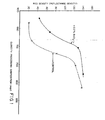
- Figure 1 is a graphic illustration showing the red reflectance densities measured for a series of colour transfer images processed with 0.2% barium chloride added to the processing composition compared to a series of colour transfer images processed without barium cation in the processing composition plotted against the quantity of processing composition employed in the preparation of images.
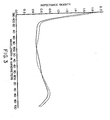
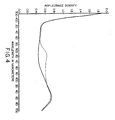
- FIGS 2 to 4 are graphic illustrations showing the effect of certain metal cations on the reflectance densities of pigmented processing compositions over the wavelength range of 380 to 700 nanometers wherein curve A in these figures represents the control processing composition.
- curve-B represents processing composition with 1.5% barium chloride added
- curve C represents processing composition with 0.25% zinc chloride added
- curve D represents processing composition with 1.5% cadmium chloride added.
- a multicolour photosensitive component using, as the cyan, magenta and yellow dye developers was prepared by coating an opaque polyethylene terephthalate film base with the following layers.
- An image-receiving component was prepared by coating a transparent polyethylene terephthalate film base with the following layers.
- the two components thus prepared were then taped together with a rupturable container retaining an aqueous alkaline processing composition mounted on the leading edge of these components, so that, upon application of compressive pressure to rupture the container, its contents are distributed in a layer between the inert bone gelatin layer 2 of the image-receiving component and the gelatin top coat layer (14) of the photosensitive component.
- the aqueous alkaline processing composition comprised: 3-(3'-carboxy-4'-hydroxy-1'-naphthyl)-3-(3"-carboxy-4"- hydroxy-7"-octadecyloxy-l"-naphthyl)naphthalide 3-(7-carboxyindol-3-yl)-3-(7-hexadecylsulfonamido indol-3-yl)naphthalide
- the unexposed film unit was passed between a pair of pressure rolls so that a layer approximately 0.0024 inch thick of processing composition was distributed between said layers 2 and (14).
- the resulting laminate was brought into and kept under simulated sunlight of 10,000 foot-candles for 30 seconds.
- Two additional film units were prepared in the same manner described above and were identical except for the processing compositions which contained 0.1% barium chloride and 0.2% barium chloride, respectively. These film units were processed in the same way by passing them through pressure rolls to distribute the processing composition in a layer approximately 0.0024 inch thick and then bringing them into simulated sunlight of 10,000 foot-candles for 30 seconds.
- the quantity of processing composition used for processing each of the three film units was 650 mgs/9.57 sq. in.
- film units were prepared as described in Example 1 and were processed in the same manner except for the quantity of processing composition employed.
- five film units were processed with the above-denoted processing composition (without barium cation present) using amounts ranging between about 640 and 820 mgs.
- Four film units were processed with the above-denoted processing composition containing 0.2% barium chloride using amounts ranging between about 620 and 775 mgs. After passing the film units through the pressure rolls and bringing them into simulated sunlight of 10,000 foot-candles for 30 seconds, the red density for each film unit was measured by reflectance.
- Curve A in Figures 2 to 4 represents the reflectance density for the control, i.e., the processing composition containing the following ingredients.
- Curve B in Fig. 2 represents the reflectance density obtained with 1.5% barium chloride added to the above-denoted processing composition;
- curve C in Fig. 3 represents the reflectance density obtained with 0.25% zinc chloride added to the above-denoted processing composition;
- curve D in Fig. 4 represents the reflectance density obtained with 1.5% cadium chloride added to the above-denoted processing composition.
- the addition of barium cation increases the reflectance density in the 400 to 700 nm wavelength range and the addition of zinc and cadmium cations selectively increase the reflectance density in the 500 to 600 nm wavelength range.
- the spreading characteristics of the three test compositions A, B and C were monitored over a period of time at storage temperatures of 50°C and 70°C and compared to control compositions which were identical to A, B and C, respectfully, except that the calcium chloride was omitted.
- the results obtained are set forth in Table II below wherein the days (or weeks) reflects the time period until the spreading characteristics began to change, i.e., the amount of composition spread at a gap of 0.0030 inch decreased from about 900 mg. utilized to about 750 mg/9.57 sq.in.
- viscosity-imparting reagents may be used in the above processing compositions, for example, the cellulosic polymers discussed in aforementioned U.S. Patent No. 3,776,726.
- other metal chelating agents may be employed, preferably alkylene polyamine polyacetic acids, such as, ethylenediamine tetraacetic acid, diethylene triamine pentaaccetic acid, triethylene tetramine hexacetic acid and similar chelating agents containing the group
- alkylene polyamine polyacetic acids such as, ethylenediamine tetraacetic acid, diethylene triamine pentaaccetic acid, triethylene tetramine hexacetic acid and similar chelating agents containing the group
- Other light-reflecting pigments also may be used though titanium dioxide is preferred.
- the present invention has-been illustrated employing dye developers as the preferred image providing material, it will be understood that this invention is applicable to a wide variety of photographic processes employing other image providing materials and that-the transfer image may be in silver or in dye.
- image dye-providing materials capable of providing an imagewise distribution of diffusible dye as a function of development include the initially diffusible and the initially non-diffusible materials discussed previously.
- the image providing material comprises an imagewise distribution of soluble silver complex capable of diffusing to the image-receiving layer and forming a silver image thereon. Since these image-forming processes are well known and form no part per se of the present invention, it is not necessary to describe them in detail.
- the transfer image may be positive or negative with respect to the photographed subject matter as a function of the particular image-forming system and that the silver halide emulsion may be negative-working or positive-working.
- the image-receiving layer or other layers of the negative and positive components may v.ry as appropriate for a given process.
Landscapes
- Physics & Mathematics (AREA)
- General Physics & Mathematics (AREA)
- Engineering & Computer Science (AREA)
- Architecture (AREA)
- Structural Engineering (AREA)
- Silver Salt Photography Or Processing Solution Therefor (AREA)
- Inks, Pencil-Leads, Or Crayons (AREA)
Priority Applications (1)
| Application Number | Priority Date | Filing Date | Title |
|---|---|---|---|
| DE8383306632T DE3379683D1 (en) | 1982-11-01 | 1983-10-31 | Colour transfer photographic processes and products |
Applications Claiming Priority (4)
| Application Number | Priority Date | Filing Date | Title |
|---|---|---|---|
| US43789682A | 1982-11-01 | 1982-11-01 | |
| US437896 | 1982-11-01 | ||
| US516597 | 1983-07-25 | ||
| US06/516,597 US4456674A (en) | 1982-11-01 | 1983-07-25 | Color transfer photographic processes and products |
Related Parent Applications (1)
| Application Number | Title | Priority Date | Filing Date |
|---|---|---|---|
| EP83306632.7 Division | 1983-10-31 |
Related Child Applications (3)
| Application Number | Title | Priority Date | Filing Date |
|---|---|---|---|
| EP83306632.7 Division-Into | 1983-10-31 | ||
| EP88200706A Division EP0288113A3 (de) | 1982-11-01 | 1983-10-31 | Photographische Verfahren und Produkte |
| EP88200706.5 Division-Into | 1988-04-13 |
Publications (3)
| Publication Number | Publication Date |
|---|---|
| EP0110578A2 true EP0110578A2 (de) | 1984-06-13 |
| EP0110578A3 EP0110578A3 (en) | 1986-07-16 |
| EP0110578B1 EP0110578B1 (de) | 1989-04-19 |
Family
ID=27031459
Family Applications (2)
| Application Number | Title | Priority Date | Filing Date |
|---|---|---|---|
| EP83306632A Expired EP0110578B1 (de) | 1982-11-01 | 1983-10-31 | Farbphotografisches Diffusionsverfahren und hierfür geeignete Verbindungen |
| EP88200706A Withdrawn EP0288113A3 (de) | 1982-11-01 | 1983-10-31 | Photographische Verfahren und Produkte |
Family Applications After (1)
| Application Number | Title | Priority Date | Filing Date |
|---|---|---|---|
| EP88200706A Withdrawn EP0288113A3 (de) | 1982-11-01 | 1983-10-31 | Photographische Verfahren und Produkte |
Country Status (4)
| Country | Link |
|---|---|
| US (1) | US4456674A (de) |
| EP (2) | EP0110578B1 (de) |
| AU (1) | AU558922B2 (de) |
| CA (1) | CA1210621A (de) |
Families Citing this family (5)
| Publication number | Priority date | Publication date | Assignee | Title |
|---|---|---|---|---|
| US4615966A (en) * | 1985-07-03 | 1986-10-07 | Polaroid Corporation | Color transfer photographic processes and products with indole phthalein filter dyes |
| US4886733A (en) * | 1988-10-03 | 1989-12-12 | Polaroid Corporation | Photographic products and processes |
| US4891298A (en) * | 1988-10-03 | 1990-01-02 | Polaroid Corporation | Photographic products and processes |
| US5206208A (en) * | 1991-11-20 | 1993-04-27 | Polaroid Corporation | Stabilization of thermal images |
| US5756253A (en) * | 1997-07-09 | 1998-05-26 | Polaroid Corporation | Photographic element and method |
Family Cites Families (14)
| Publication number | Priority date | Publication date | Assignee | Title |
|---|---|---|---|---|
| US3415645A (en) * | 1967-03-10 | 1968-12-10 | Polaroid Corp | Opaque permeable polymeric layer in photo-sensitive element |
| US3415644A (en) * | 1967-03-10 | 1968-12-10 | Polaroid Corp | Novel photographic products and processes |
| US3415646A (en) * | 1967-05-16 | 1968-12-10 | Polaroid Corp | Novel photographic products and processes |
| US3702245A (en) * | 1970-06-05 | 1972-11-07 | Polaroid Corp | Photographic diffusion-transfer processes and elements utilizing ph-sensitive optical filter agents to prevent fogging by extraneous actinic radiation during development |
| US3647437A (en) * | 1970-12-18 | 1972-03-07 | Polaroid Corp | Photographic products, processes and compositions |
| US3702244A (en) * | 1971-01-21 | 1972-11-07 | Polaroid Corp | Diffusion transfer photographic processes and elements utilizing ph-sensitive agents to prevent fogging by extraneous actinic radiation during development |
| US3819381A (en) * | 1972-01-10 | 1974-06-25 | Polaroid Corp | Dye diffusion transfer film containing alkali-dissociable inorganic salts |
| US3856521A (en) * | 1972-04-24 | 1974-12-24 | Polaroid Corp | Diffusion transfer color film and process |
| US3776726A (en) * | 1972-04-24 | 1973-12-04 | Polaroid Corp | Color diffusion transfer photographic products,processes and compositions |
| US4144065A (en) * | 1976-04-02 | 1979-03-13 | Polaroid Corporation | Polysilicates in photographic products and processes |
| US4028103A (en) * | 1976-04-12 | 1977-06-07 | Eastman Kodak Company | Processing compositions for color transfer processes comprising alkali metal fluorides and oxalates |
| US4298674A (en) * | 1979-04-24 | 1981-11-03 | Polaroid Corporation | Color transfer film and process |
| US4356250A (en) * | 1981-01-12 | 1982-10-26 | Eastman Kodak Company | Use of zinc salts to increase dye stability |
| US4367277A (en) * | 1981-05-26 | 1983-01-04 | Polaroid Corporation | Diffusion transfer product and process |
-
1983
- 1983-07-25 US US06/516,597 patent/US4456674A/en not_active Expired - Lifetime
- 1983-10-28 AU AU20684/83A patent/AU558922B2/en not_active Ceased
- 1983-10-28 CA CA000440012A patent/CA1210621A/en not_active Expired
- 1983-10-31 EP EP83306632A patent/EP0110578B1/de not_active Expired
- 1983-10-31 EP EP88200706A patent/EP0288113A3/de not_active Withdrawn
Also Published As
| Publication number | Publication date |
|---|---|
| EP0288113A3 (de) | 1989-10-25 |
| EP0288113A2 (de) | 1988-10-26 |
| US4456674A (en) | 1984-06-26 |
| AU558922B2 (en) | 1987-02-12 |
| CA1210621A (en) | 1986-09-02 |
| EP0110578A3 (en) | 1986-07-16 |
| EP0110578B1 (de) | 1989-04-19 |
| AU2068483A (en) | 1984-05-10 |
Similar Documents
| Publication | Publication Date | Title |
|---|---|---|
| US3594165A (en) | Novel photographic products and processes | |
| US3702244A (en) | Diffusion transfer photographic processes and elements utilizing ph-sensitive agents to prevent fogging by extraneous actinic radiation during development | |
| US3793022A (en) | Diffusion transfer films with anti-reflection layers and processes | |
| US4272594A (en) | Photographic product including a light-reflecting layer with carbon coated with reflecting material | |
| US4298674A (en) | Color transfer film and process | |
| US5422233A (en) | Photographic processing compositions including hydrophobically modified thickening agent | |
| US3776726A (en) | Color diffusion transfer photographic products,processes and compositions | |
| US3856521A (en) | Diffusion transfer color film and process | |
| US3594164A (en) | Photographic color diffusion transfer process and film unit for use therein | |
| EP0110578B1 (de) | Farbphotografisches Diffusionsverfahren und hierfür geeignete Verbindungen | |
| US3787209A (en) | Color diffusion transfer color process and film with silver precipitating layer | |
| US4329411A (en) | Multicolor diffusion transfer products | |
| US4401746A (en) | Stripping layer consisting of a mixture of cellulose acetate hydrogen phthalate and straight chain saturated polyester of adipic acid | |
| US4367277A (en) | Diffusion transfer product and process | |
| US3802881A (en) | Color diffusion transfer film with whitening agent | |
| US4496651A (en) | Color transfer photographic processes and products | |
| US4144065A (en) | Polysilicates in photographic products and processes | |
| EP0139963B1 (de) | Negativ- positive Diffusionsübertragungs-Filmeinheit mit einem Bildempfangselement, das eine Einheitsschicht für Bildempfang und Entfärbung enthält | |
| US3779753A (en) | Photographic processes and products employing aminomethyl-substituted phenolic phthaleins as optical filter agents | |
| US3996050A (en) | Whitening agents in color diffusion transfer film units | |
| US4777112A (en) | Polyoxyalkylene overcoats for image-receiving elements | |
| US3801318A (en) | Color diffusion transfer photographic products and processes with sulfur free silver halide solvents | |
| US4294907A (en) | Image-receiving elements | |
| US3841879A (en) | Diffusion transfer processing composition container with colloidal silica viscosity increasing agent | |
| EP0066341B1 (de) | Lichtempfindliches Element und photografisches Verfahren |
Legal Events
| Date | Code | Title | Description |
|---|---|---|---|
| PUAI | Public reference made under article 153(3) epc to a published international application that has entered the european phase |
Free format text: ORIGINAL CODE: 0009012 |
|
| AK | Designated contracting states |
Designated state(s): DE FR GB NL |
|
| PUAL | Search report despatched |
Free format text: ORIGINAL CODE: 0009013 |
|
| AK | Designated contracting states |
Kind code of ref document: A3 Designated state(s): DE FR GB NL |
|
| 17P | Request for examination filed |
Effective date: 19860819 |
|
| 17Q | First examination report despatched |
Effective date: 19870409 |
|
| GRAA | (expected) grant |
Free format text: ORIGINAL CODE: 0009210 |
|
| AC | Divisional application: reference to earlier application |
Ref document number: 110578 Country of ref document: EP |
|
| AK | Designated contracting states |
Kind code of ref document: B1 Designated state(s): DE FR GB NL |
|
| REF | Corresponds to: |
Ref document number: 3379683 Country of ref document: DE Date of ref document: 19890524 |
|
| ET | Fr: translation filed | ||
| PLBE | No opposition filed within time limit |
Free format text: ORIGINAL CODE: 0009261 |
|
| STAA | Information on the status of an ep patent application or granted ep patent |
Free format text: STATUS: NO OPPOSITION FILED WITHIN TIME LIMIT |
|
| 26N | No opposition filed | ||
| PGFP | Annual fee paid to national office [announced via postgrant information from national office to epo] |
Ref country code: FR Payment date: 19930914 Year of fee payment: 11 |
|
| PGFP | Annual fee paid to national office [announced via postgrant information from national office to epo] |
Ref country code: GB Payment date: 19930916 Year of fee payment: 11 |
|
| PGFP | Annual fee paid to national office [announced via postgrant information from national office to epo] |
Ref country code: DE Payment date: 19930920 Year of fee payment: 11 |
|
| PGFP | Annual fee paid to national office [announced via postgrant information from national office to epo] |
Ref country code: NL Payment date: 19931031 Year of fee payment: 11 |
|
| PG25 | Lapsed in a contracting state [announced via postgrant information from national office to epo] |
Ref country code: GB Effective date: 19941031 |
|
| PG25 | Lapsed in a contracting state [announced via postgrant information from national office to epo] |
Ref country code: NL Effective date: 19950501 |
|
| NLV4 | Nl: lapsed or anulled due to non-payment of the annual fee | ||
| GBPC | Gb: european patent ceased through non-payment of renewal fee |
Effective date: 19941031 |
|
| PG25 | Lapsed in a contracting state [announced via postgrant information from national office to epo] |
Ref country code: FR Effective date: 19950630 |
|
| PG25 | Lapsed in a contracting state [announced via postgrant information from national office to epo] |
Ref country code: DE Effective date: 19950701 |
|
| REG | Reference to a national code |
Ref country code: FR Ref legal event code: ST |