EP0110580A2 - Verfahren zur Entfernung pyrogener Stoffe mittels einer hydrophoben mikroporösen Membran - Google Patents
Verfahren zur Entfernung pyrogener Stoffe mittels einer hydrophoben mikroporösen Membran Download PDFInfo
- Publication number
- EP0110580A2 EP0110580A2 EP83306651A EP83306651A EP0110580A2 EP 0110580 A2 EP0110580 A2 EP 0110580A2 EP 83306651 A EP83306651 A EP 83306651A EP 83306651 A EP83306651 A EP 83306651A EP 0110580 A2 EP0110580 A2 EP 0110580A2
- Authority
- EP
- European Patent Office
- Prior art keywords
- membrane
- pyrogens
- liquid
- range
- steps
- Prior art date
- Legal status (The legal status is an assumption and is not a legal conclusion. Google has not performed a legal analysis and makes no representation as to the accuracy of the status listed.)
- Withdrawn
Links
Images


Classifications
-
- B—PERFORMING OPERATIONS; TRANSPORTING
- B01—PHYSICAL OR CHEMICAL PROCESSES OR APPARATUS IN GENERAL
- B01D—SEPARATION
- B01D71/00—Semi-permeable membranes for separation processes or apparatus characterised by the material; Manufacturing processes specially adapted therefor
- B01D71/06—Organic material
- B01D71/26—Polyalkenes
- B01D71/262—Polypropylene
-
- A—HUMAN NECESSITIES
- A61—MEDICAL OR VETERINARY SCIENCE; HYGIENE
- A61L—METHODS OR APPARATUS FOR STERILISING MATERIALS OR OBJECTS IN GENERAL; DISINFECTION, STERILISATION OR DEODORISATION OF AIR; CHEMICAL ASPECTS OF BANDAGES, DRESSINGS, ABSORBENT PADS OR SURGICAL ARTICLES; MATERIALS FOR BANDAGES, DRESSINGS, ABSORBENT PADS OR SURGICAL ARTICLES
- A61L2/00—Disinfection or sterilisation of materials or objects, in general; Accessories therefor
- A61L2/02—Disinfection or sterilisation of materials or objects, in general; Accessories therefor using physical processes
- A61L2/022—Filtration
-
- B—PERFORMING OPERATIONS; TRANSPORTING
- B01—PHYSICAL OR CHEMICAL PROCESSES OR APPARATUS IN GENERAL
- B01D—SEPARATION
- B01D61/00—Processes of separation using semi-permeable membranes, e.g. dialysis, osmosis or ultrafiltration; Apparatus, accessories or auxiliary operations specially adapted therefor
- B01D61/14—Ultrafiltration; Microfiltration
- B01D61/147—Microfiltration
-
- B—PERFORMING OPERATIONS; TRANSPORTING
- B01—PHYSICAL OR CHEMICAL PROCESSES OR APPARATUS IN GENERAL
- B01D—SEPARATION
- B01D61/00—Processes of separation using semi-permeable membranes, e.g. dialysis, osmosis or ultrafiltration; Apparatus, accessories or auxiliary operations specially adapted therefor
- B01D61/14—Ultrafiltration; Microfiltration
- B01D61/18—Apparatus therefor
-
- B—PERFORMING OPERATIONS; TRANSPORTING
- B01—PHYSICAL OR CHEMICAL PROCESSES OR APPARATUS IN GENERAL
- B01D—SEPARATION
- B01D63/00—Apparatus in general for separation processes using semi-permeable membranes
- B01D63/06—Tubular membrane modules
-
- B—PERFORMING OPERATIONS; TRANSPORTING
- B01—PHYSICAL OR CHEMICAL PROCESSES OR APPARATUS IN GENERAL
- B01D—SEPARATION
- B01D63/00—Apparatus in general for separation processes using semi-permeable membranes
- B01D63/08—Flat membrane modules
- B01D63/087—Single membrane modules
-
- B—PERFORMING OPERATIONS; TRANSPORTING
- B01—PHYSICAL OR CHEMICAL PROCESSES OR APPARATUS IN GENERAL
- B01D—SEPARATION
- B01D67/00—Processes specially adapted for manufacturing semi-permeable membranes for separation processes or apparatus
- B01D67/0002—Organic membrane manufacture
- B01D67/0023—Organic membrane manufacture by inducing porosity into non porous precursor membranes
- B01D67/003—Organic membrane manufacture by inducing porosity into non porous precursor membranes by selective elimination of components, e.g. by leaching
-
- B—PERFORMING OPERATIONS; TRANSPORTING
- B01—PHYSICAL OR CHEMICAL PROCESSES OR APPARATUS IN GENERAL
- B01D—SEPARATION
- B01D2325/00—Details relating to properties of membranes
- B01D2325/38—Hydrophobic membranes
Definitions
- This invention relates to a method for removing pyrogens, as well as particulate matter larger than about 0.1 micron, from water or aqueous solutions containing the same.
- Pyrogens are generally considered to be a class of materials which have bacterial by-products composed of protein organic matter or complex polysaccharides, which are of a fever producing nature. These pyrogens are produced by certain bacteria which are present in water during distillation and subsequent storage. During sterilization the bacteria are killed, leaving their residue and decomposition products in the water. Pyrogens are believed to be primarily responsible for the majority of reactions which occur subsequent to intravenous injections. With respect to mammals, the entity primarily responsible for pyrogenic reactions is the lipopolysaccharide from Gram-negative bacteria.
- U.S. Patent No. 4,261,834 there is disclosed a composite of two ultrafiltration membranes which may be used to remove pyrogens from water for injection.
- the composite may be produced by placing the asymmetric membranes in position such that their respective skins are in intimate contact with each other so that pinhole-free portions of one membrane can block pinholes in the other membrane. It is indicated in said patent that using such skin-to-skin composites, five orders of magnitude of pyrogen removal may be accomplished.
- W e have now developed an even more effective means for removing pyrogens from water or an aqueous solution at a reasonable flow rate.
- an improved process for simultaneously removing pyrogens and particular matter from a feed liquid which is water or an aqueous solution containing said particulate matter and containing said pyrogens, at a concentration in the range of from about 0.1 to 50 ng/ml which process comprises contacting the feed side of a hydrophobic microporous membrane with the feed liquid, allowing the liquid to pass through the membrane, and recovering the liquid from the filtrate side of the membrane, these steps being terminated before the membrane becomes saturated with pyrogens, the hydrophobic microporous membrane being made of polypropylene, being substantially skinless, and having (a) a bubble point in the range of from 25 to 50 psi; (b) a thickness in the range of from 3 to 7 mils; (c) a nitrogen flow rate of at least 0.5 litres per square centimetre-minute; (d) a burst strength of at least 10 psi; and (e) an S value of about 15, or less.
- hydrophobic microporous membranes may accomplish a feat which is quite surprising considering the nature of said membranes.
- Microporous membranes generally possess a porosity in the size range from about 0.05 to about 5 microns and such porosity is many orders of magnitude larger than pyrogens and thus would not appear to be efficacious in their removal.
- hydrophobic microporous membranes are quite efficient in removing pyrogens, until the membrane becomes saturated with pyrogens. The removal of pyrogens after such a saturation level has been surpassed is not effective and will result in contamination of the filtrate with pyrogens.
- microporous membranes of the present invention contain larger pores than, for example, reverse osmosis or ultrafiltration membranes, flow rates larger than that attainable with such prior art membranes may be employed while efficaciously removing pyrogens from the water or solution being processed.
- a critical aspect of the present invention is to cease the processing of such water or solution at a time prior to saturating the membrane with pyrogens.
- the use of microporous hydrophobia membranes also overcomes the potential for contaminating the filtrate due to pinhole defects, as exist in ultrafiltration membranes.
- the use of the particular membrane of the present invention is critical to obtain the unexpectedly superior performance over even the 0.2 micron polypropylene membranes used in the prior art.
- the membranes used in the present invention are made of polypropylene and are characterized by having
- the membrane used in the present invention may be made by heating a mixture of about 30 percent polypropylene and about 70 percent, N,N-bis(2-hydroxyethyl)tallowamine, by weight, to a temperature and for a time sufficient to form a homogenous solution, casting or extruding said solution at a thickness in the range of from 7 mils, onto a chill roll maintained at a temperature in the range of from 50 to 80°C, allowing the solution to solidify on the chill roll to form a solid sheet, removing the solid sheet from the chill roll and removing at least a substantial portion of the liquid from the sheet to form the microporous polypropylene membrane.
- the present invention provides a microporous polypropylene membrane which has a unique combination of properties, as contrasted with typical prior art polypropylene membranes.
- bubble point means the bubble point determined with isopropyl alcohol.
- the maximum pore-size value is directly related to the rated pore-size of the membrane.
- the maximum pore-size value should be from about 0.2 micron to about 0.4 micron, with about 0.3 micron being most typical. This translates to a bubble point of from about 50 psi to about 25 psi, with about 30 psi being typical.
- the maximum pore-size value should be about 0.4 micron to about 0.65 micron, preferably about 0.5 micron to about 0.6 micron.
- the necessary apparatus and reagents are:
- the thickness of the membranes of the present invention is from about 3 to about 7 mils, preferably from about 3.5 to about 4 mils.
- the necessary apparatus is a Starret No. 1015A-431 portable dial hand gauge. This gauge with 1/4" diameter presser foot exerts a pressure of 2.5 psi (+/- 10%) on the sample during a measurement.
- the thickness of the membranes of the present invention is similar to the thickness of prior art 0.2 micron rated membranes which typically have a thickness of about 6 to about 7 mils.
- a membrane must have the ability to withstand normally encountered processing conditions which usually require that the membrane have a burst strength of at least 10 psi, preferably at least 15 psi.
- the necessary apparatus to determine burst strength is:
- the burst strength of a typical 0.2 micron rated polypropylene membrane is also usually above 10 psi.
- any membrane In order for any membrane to be useful, it must not only be effective in removing any material present which is larger than a given size, such as 0.1 micron, it must also be capable of accomplishing such a filtration within a reasonable length of time.
- One way to project the anticipated filtration rate which may be obtained by using a given membrane is by determining the nitrogen flow rate for the membrane.
- a high nitrogen flow rate is usually indicative of a structure that has a low resistance to fluid passage, thus making such a membrane desirable for filtration provided that all of the other physical characteristics are suitable.
- Membranes of the present invention have a nitrogen flow rate of at least 0.5 and preferably at least 0.7, liters per square centimeter- minute.
- the necessary apparatus to determine nitrogen flow rate is:
- S sharpness factor
- the S factor is determined by analyzing a mercury intrusion curve for the given membrane. All mercury intrusion data discussed in this application was determined by use of a Micromeritics Mercury Penetration Porosimeter, Model 910 series. The S value is defined as the ratio of the pressure at which 85 percent of the mercury penetrated to the pressure at which 15 percent of the mercury penetrated. This ratio is a direct indication of the variation in pore diameter across the central 70 percent of the pores in any given sample, as pore diameter is equal to 176.8 divided by the pressure in psi.
- the S value is a ratio x of the diameter of the pores at which 15 percent of the mercury has intruded to the diameter of the pores at which 85 percent of the mercury has intruded.
- the range for 1 to 15 percent and 85 to 100 of mercury intrusion is ignored in determining the S factor.
- the range from 0 to 15 percent is ignored as penetration in this range may be due to cracks introduced into the material as a result of the freeze- fracturing to which the material was subjected prior to performing the mercury intrusion study.
- the range from 85 to 100 percent is ignored as data in such a range may be due to compression of the sample rather than to actual penetration of the mercury into the pores.
- the.usual S value for such structures is usually less than about 15 and thus is in the range of from about 1 to'15, with a range of about 8 to 14 being typical, and a value of about 11 being representative.
- Figure 1 shows a typical configuration for the batchwise production of membranes.
- N,N-bis(2-hydroxyethyl)tallowamine such as that sold by Armak Company, Chicago, Illinois, under the trademark Armostat 310, (ARMOSTAT is a Registered Trade Mark) is introduced into mixing tank 10, which is connected to casting box 50 through conduit 20.
- a valve 30 and a pump 40 are usually located along conduit 20.
- the mixing tank is heated by any convenient means and the temperature of the amine is raised to about 200°C.
- Polypropylene as sold by Phillips Petroleum Company, type No. BP-145, MFR 9.5, usually in the form of chips, is introduced into the mixing tank, in an appropriate weight ratio of amine to resin.
- the mixture is maintained at about 200°C for about 1.5 hours during which time the polymer dissolves in the amine, forming a homogeneous solution.
- the solution is pumped into casting box 50 through which the solution flows at an appropriate rate to cast a layer on chill roll 60 having a thickness. of about 3 to 7 mils.
- the space between the chill roll and the lip on the casting box can be adjusted and determines the film thickness.
- an extruder and die-head may be used to extrude a layer onto the chill roll.
- the chill roll temperature is typically at a temperature of about 75°C when one is making a 0.2 micron rated membrane and rotates "at a surface speed of about 15 feet per minute.
- phase separation occurs.
- the polypropylene solidifies. After the solidification has occurred, the solid film is removed from the chill roll 60 via a take-up system 70.
- Any suitable means may be employed to extract the amine from the solidified film, as by soaking in consecutive baths of isopropyl alcohol, to achieve an amine level of less than 0.2 percent in the final membrane.
- the ratio of amine to the weight of polypropylene is critical, as further reduction in the amount of polypropylene may result in a membrane with poor mechanical properties, such as a low burst strength. If the amount of polypropylene is increased, the result may be unacceptable nitrogen and/or water flow rates.
- the cooling rate of the solution of amine and polypropylene is critical inasmuch as a rapid cooling rate generally produces a smaller pore-size, and a slower cooling rate results in a larger pore size.
- the primary tool in controlling the cooling rate is the temperature of the chill roll. However, if the temperature of the chill roll is too slow, the result will be a substantial formation of skin on the membrane side in contact with the chill roll surface.
- a skin is simply a region which has an apparent polymer density different from that of the remainder of the membrane. For example, often times a skin having an apparent density much higher than that of the remainder of the membrane may be formed.
- the skin may extend from the surface of the membrane in contact with the chill roll, across 20 percent, or more, of the cross-section of the membrane. It would not be unusual to have the skin extend throughout even 30 to 50 percent of the membrane cross-section, and more, if an inappropriate chill roll temperature is employed.
- the membrane used in the present inventioh is substantially skinless.
- substantially skinless it is meant that the membrane has no more than about 20 percent of its cross-section occupied by a skin layer.
- the skin layer occupies no more than 10 percent of the cross-section, and most preferably, less than 5 percent.
- chill roll temperature is too warm, proper solidification may not occur in time to remove a solidified sheet from the layer on a continuous basis. Also, as stated, a warm chill roll will result in a slower cooling rate and possibly too large of a pore diameter.
- the thickness of the membrane affects the flow rate properties of the membrane, the thicker the membrane, the lower the flow rate, but having a thin membrane can result in a membrane having poor mechanical properties, such as a low burst strength.
- a critical aspect of the process of the present invention is to terminate the depyrogenation of the feed liquid prior to saturating the membrane with pyrogens. Based upon the results which were obtained in the following examples, it has been calculated that saturation occurs at a level greater than about 2,000, and probably at least about 20,000, micrograms of pyrogens, per cm 3 of membrane volume. A typical saturation level would therefore be at least about 2,000 micrograms per cm' of membrane volume, preferably at least about 20,000 micrograms per cm 3 of membrane volume.
- a typical microporous membrane will have a-thickness of from about 3 to about 7 mils (76 to 178 micrometers).
- a 3.8 mil thick membrane (96.5 micrometers), such as one having a surface of 12.5 cm 2 , which had a pyrogen removal capacity of at least 20 micrograms per cm 2 , would have a saturation point of about 2,074 ⁇ g/cm 3 , or greater.
- the depyrogenation may typically be continued until from about 0.02 to at least about 20 micrograms of pyrogens, or more, have been removed, per cm z of membrane surface area, preferably until at least about 200 micrograms of pyrogens per cm 2 of membrane surface area has been removed.
- any particulate matter present in the liquid to be filtered will usually have a particle size less than about 100 microns as such liquids will normally have been subjected to gross filtration, utilizing pre-filtration devices, before ever being subjected to depyrogenation.
- the liquid may be pure water or a solution which already contains some dissolved specie, such as a pharmaceutically active material.
- hydrophobic microporous membranes may be employed in any useful physical form. Typical forms are, for example, flat circular discs or pleated cartridges having a membrane thickness of from about 3 to about 7 mils, typically about 3.5 mils.
- Another particularly useful form of the membrane is a hollow tube.
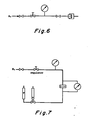
- feed solutions were prepared containing various amounts of endotoxin and the concen-. tration of endotoxin in the feed solution and in the filtrate were measured, using the published spectrophotometric procedure of the Associates of Cape Cod, Incorporated, Wood Hole, Massachusetts.
- the IV bottles and the Sartorius stainless steel connector were depyrogenated by dry heat at 180°C for 3 hours.
- the IV bottle stopper and vent tube and the Sartorius filter holder were depyrogenated.by autoclaving in dilue HCl.
- the pyrogen free disposable IV set was supplied sterile.
- Challenge solutions containing approximately 30 ng/ml of endotoxin were prepared and approximately 1000 ml of the various solutions were filtered at a flow rate of about 10.5 ml/minute with the experimental apparatus. The filtrate was collected and the endotoxin level measured.
- the membrane of the present invention was made in accordance with the standard procedure described above, utilizing a chill roll temperature of 60°C and a cloth wiper blade bar, to alleviate the sticking together of layers of solidified film.
- the wiper bar was installed on the chill roll at a location just prior to the casting bar.
- a Log 10 (RV), "LRV”, value of from about 2.43 to 3.74 may be attained with the membrane of the present invention when the challenge concentration is at a level from greater than 30 ng/ml, or less, and the total amount of endotoxin with which the membrane is challenged is at some value from greater than 4.40 ⁇ g/cm 2 of membrane surface, or less or in terms of membrane volume from greater than about 456 ⁇ g/cm 3 , or less.
Landscapes
- Chemical & Material Sciences (AREA)
- Chemical Kinetics & Catalysis (AREA)
- Engineering & Computer Science (AREA)
- Water Supply & Treatment (AREA)
- Manufacturing & Machinery (AREA)
- Health & Medical Sciences (AREA)
- Life Sciences & Earth Sciences (AREA)
- Animal Behavior & Ethology (AREA)
- General Health & Medical Sciences (AREA)
- Public Health (AREA)
- Veterinary Medicine (AREA)
- Epidemiology (AREA)
- Separation Using Semi-Permeable Membranes (AREA)
- Manufacture Of Porous Articles, And Recovery And Treatment Of Waste Products (AREA)
Applications Claiming Priority (2)
| Application Number | Priority Date | Filing Date | Title |
|---|---|---|---|
| US43882582A | 1982-11-03 | 1982-11-03 | |
| US438825 | 1982-11-03 |
Publications (2)
| Publication Number | Publication Date |
|---|---|
| EP0110580A2 true EP0110580A2 (de) | 1984-06-13 |
| EP0110580A3 EP0110580A3 (de) | 1986-06-11 |
Family
ID=23742178
Family Applications (1)
| Application Number | Title | Priority Date | Filing Date |
|---|---|---|---|
| EP83306651A Withdrawn EP0110580A3 (de) | 1982-11-03 | 1983-11-01 | Verfahren zur Entfernung pyrogener Stoffe mittels einer hydrophoben mikroporösen Membran |
Country Status (3)
| Country | Link |
|---|---|
| EP (1) | EP0110580A3 (de) |
| JP (1) | JPS59156485A (de) |
| CA (1) | CA1228032A (de) |
Cited By (3)
| Publication number | Priority date | Publication date | Assignee | Title |
|---|---|---|---|---|
| EP0188068A3 (en) * | 1984-11-16 | 1986-10-01 | Nitto Chemical Industry Co., Ltd. | Method for purifying reaction solution obtained by using microbial cell, immobilized microbial cell, or immobilized enzyme |
| EP0108601A3 (en) * | 1982-11-03 | 1987-05-20 | Akzona Incorporated | Polypropylene membranes |
| EP0312104A3 (en) * | 1987-10-16 | 1989-08-09 | Tanabe Seiyaku Co., Ltd. | Process for removing pyrogens |
Family Cites Families (2)
| Publication number | Priority date | Publication date | Assignee | Title |
|---|---|---|---|---|
| NO153879C (no) * | 1978-07-31 | 1986-06-11 | Akzo Nv | Fremstilling av en membran med poroes overflate. |
| JPS57171403A (en) * | 1981-04-15 | 1982-10-22 | Mitsubishi Rayon Co Ltd | Removal of pyrogen in water |
-
1983
- 1983-11-01 EP EP83306651A patent/EP0110580A3/de not_active Withdrawn
- 1983-11-02 CA CA000440216A patent/CA1228032A/en not_active Expired
- 1983-11-04 JP JP58207328A patent/JPS59156485A/ja active Pending
Cited By (3)
| Publication number | Priority date | Publication date | Assignee | Title |
|---|---|---|---|---|
| EP0108601A3 (en) * | 1982-11-03 | 1987-05-20 | Akzona Incorporated | Polypropylene membranes |
| EP0188068A3 (en) * | 1984-11-16 | 1986-10-01 | Nitto Chemical Industry Co., Ltd. | Method for purifying reaction solution obtained by using microbial cell, immobilized microbial cell, or immobilized enzyme |
| EP0312104A3 (en) * | 1987-10-16 | 1989-08-09 | Tanabe Seiyaku Co., Ltd. | Process for removing pyrogens |
Also Published As
| Publication number | Publication date |
|---|---|
| EP0110580A3 (de) | 1986-06-11 |
| JPS59156485A (ja) | 1984-09-05 |
| CA1228032A (en) | 1987-10-13 |
Similar Documents
| Publication | Publication Date | Title |
|---|---|---|
| US4490431A (en) | 0.1 Micron rated polypropylene membrane and method for its preparation | |
| Tracey et al. | Protein fouling of track-etched polycarbonate microfiltration membranes | |
| KR100356896B1 (ko) | 큰기공의합성폴리머막 | |
| Genne et al. | Effect of the addition of ZrO2 to polysulfone based UF membranes | |
| JP4461205B2 (ja) | 非対称親水性一体型スルホンポリマー膜を調製する方法 | |
| US4943374A (en) | Use of a microporous membrane constructed of polyether sulfon and hydrophilization agent for the filtration of beer | |
| US5906742A (en) | Microfiltration membranes having high pore density and mixed isotropic and anisotropic structure | |
| JP2747194B2 (ja) | インテグリティー試験の可能な湿潤−乾燥可逆性限外濾過膜およびその試験法 | |
| CA2293378C (en) | Highly asymmetric polyethersulfone filtration membrane | |
| US5215662A (en) | Heat resistant microporous material production and products | |
| Zeman | Adsorption effects in rejection of macromolecules by ultrafiltration membranes | |
| EP0846024B1 (de) | Mikrofiltrationsmembranen mit einer hohen porendichte und einer gemischten isotropen und anisotropen struktur | |
| JPH03110445A (ja) | 完全性試験方法 | |
| CA2086128C (en) | Narrow pore-size distribution polytetramethylene adipamide or nylon 46 membranes and process for making them | |
| Blanpain-Avet et al. | Investigation of mechanisms governing membrane fouling and protein rejection in the sterile microfiltration of beer with an organic membrane | |
| US6277281B1 (en) | Large pore synthetic polymer membranes | |
| EP0110580A2 (de) | Verfahren zur Entfernung pyrogener Stoffe mittels einer hydrophoben mikroporösen Membran | |
| Abaticchio et al. | Characterization of ultrafiltration polymeric membranes | |
| Bodzek et al. | Porous polycarbonate phase-inversion membranes | |
| EP0270647B1 (de) | Polyamid-membranen | |
| US5264165A (en) | Process of making polytetramethylene adipamide or nylon 46 membranes | |
| Fell et al. | Factors determining flux and rejection of ultrafiltration membranes | |
| EP0448647B1 (de) | Wärmebeständiges mikroporöses material, dessen herstellung und erzeugnis | |
| Low | A study of organic solvent nanofiltration |
Legal Events
| Date | Code | Title | Description |
|---|---|---|---|
| PUAI | Public reference made under article 153(3) epc to a published international application that has entered the european phase |
Free format text: ORIGINAL CODE: 0009012 |
|
| AK | Designated contracting states |
Designated state(s): DE FR GB IT SE |
|
| PUAL | Search report despatched |
Free format text: ORIGINAL CODE: 0009013 |
|
| RAP1 | Party data changed (applicant data changed or rights of an application transferred) |
Owner name: GELMAN SCIENCES, INC. |
|
| AK | Designated contracting states |
Kind code of ref document: A3 Designated state(s): DE FR GB IT SE |
|
| STAA | Information on the status of an ep patent application or granted ep patent |
Free format text: STATUS: THE APPLICATION IS DEEMED TO BE WITHDRAWN |
|
| 18D | Application deemed to be withdrawn |
Effective date: 19861212 |
|
| RIN1 | Information on inventor provided before grant (corrected) |
Inventor name: ROBINSON, JAMES ROBERT |