EP0115183A2 - Capteur sensible à l'hydrogène - Google Patents
Capteur sensible à l'hydrogène Download PDFInfo
- Publication number
- EP0115183A2 EP0115183A2 EP83307857A EP83307857A EP0115183A2 EP 0115183 A2 EP0115183 A2 EP 0115183A2 EP 83307857 A EP83307857 A EP 83307857A EP 83307857 A EP83307857 A EP 83307857A EP 0115183 A2 EP0115183 A2 EP 0115183A2
- Authority
- EP
- European Patent Office
- Prior art keywords
- gas
- hydrogen
- silicon
- sensing element
- semiconductor
- Prior art date
- Legal status (The legal status is an assumption and is not a legal conclusion. Google has not performed a legal analysis and makes no representation as to the accuracy of the status listed.)
- Granted
Links
- 239000001257 hydrogen Substances 0.000 title claims abstract description 43
- 229910052739 hydrogen Inorganic materials 0.000 title claims abstract description 43
- 125000004435 hydrogen atom Chemical class [H]* 0.000 title 1
- UFHFLCQGNIYNRP-UHFFFAOYSA-N Hydrogen Chemical compound [H][H] UFHFLCQGNIYNRP-UHFFFAOYSA-N 0.000 claims abstract description 27
- 150000002431 hydrogen Chemical class 0.000 claims abstract description 22
- 239000007789 gas Substances 0.000 claims abstract description 20
- 239000004065 semiconductor Substances 0.000 claims abstract description 20
- VYPSYNLAJGMNEJ-UHFFFAOYSA-N Silicium dioxide Chemical compound O=[Si]=O VYPSYNLAJGMNEJ-UHFFFAOYSA-N 0.000 claims abstract description 16
- 229910052814 silicon oxide Inorganic materials 0.000 claims abstract description 13
- 229910052581 Si3N4 Inorganic materials 0.000 claims abstract description 9
- HQVNEWCFYHHQES-UHFFFAOYSA-N silicon nitride Chemical compound N12[Si]34N5[Si]62N3[Si]51N64 HQVNEWCFYHHQES-UHFFFAOYSA-N 0.000 claims abstract description 9
- 230000003647 oxidation Effects 0.000 claims abstract description 8
- 238000007254 oxidation reaction Methods 0.000 claims abstract description 8
- 238000000034 method Methods 0.000 claims description 11
- 229910052710 silicon Inorganic materials 0.000 claims description 11
- 239000010703 silicon Substances 0.000 claims description 11
- -1 alkyl silicon halides Chemical class 0.000 claims description 10
- 229910010293 ceramic material Inorganic materials 0.000 claims description 10
- TWNQGVIAIRXVLR-UHFFFAOYSA-N oxo(oxoalumanyloxy)alumane Chemical compound O=[Al]O[Al]=O TWNQGVIAIRXVLR-UHFFFAOYSA-N 0.000 claims description 8
- 229910044991 metal oxide Inorganic materials 0.000 claims description 6
- 150000004706 metal oxides Chemical class 0.000 claims description 6
- XUIMIQQOPSSXEZ-UHFFFAOYSA-N Silicon Chemical compound [Si] XUIMIQQOPSSXEZ-UHFFFAOYSA-N 0.000 claims description 5
- 238000004519 manufacturing process Methods 0.000 claims description 5
- 239000000463 material Substances 0.000 claims description 5
- 229910052782 aluminium Inorganic materials 0.000 claims description 4
- 150000001875 compounds Chemical class 0.000 claims description 3
- 125000005234 alkyl aluminium group Chemical group 0.000 claims description 2
- XAGFODPZIPBFFR-UHFFFAOYSA-N aluminium Chemical compound [Al] XAGFODPZIPBFFR-UHFFFAOYSA-N 0.000 claims description 2
- 229910002113 barium titanate Inorganic materials 0.000 claims description 2
- PJXISJQVUVHSOJ-UHFFFAOYSA-N indium(III) oxide Inorganic materials [O-2].[O-2].[O-2].[In+3].[In+3] PJXISJQVUVHSOJ-UHFFFAOYSA-N 0.000 claims description 2
- 229910003145 α-Fe2O3 Inorganic materials 0.000 claims description 2
- 238000000151 deposition Methods 0.000 claims 2
- PNEYBMLMFCGWSK-UHFFFAOYSA-N Alumina Chemical compound [O-2].[O-2].[O-2].[Al+3].[Al+3] PNEYBMLMFCGWSK-UHFFFAOYSA-N 0.000 abstract description 4
- 238000005234 chemical deposition Methods 0.000 abstract 1
- 230000035945 sensitivity Effects 0.000 description 16
- IJOOHPMOJXWVHK-UHFFFAOYSA-N chlorotrimethylsilane Chemical compound C[Si](C)(C)Cl IJOOHPMOJXWVHK-UHFFFAOYSA-N 0.000 description 15
- XOLBLPGZBRYERU-UHFFFAOYSA-N tin dioxide Chemical compound O=[Sn]=O XOLBLPGZBRYERU-UHFFFAOYSA-N 0.000 description 14
- 229910001887 tin oxide Inorganic materials 0.000 description 10
- 239000005051 trimethylchlorosilane Substances 0.000 description 6
- CURLTUGMZLYLDI-UHFFFAOYSA-N Carbon dioxide Chemical compound O=C=O CURLTUGMZLYLDI-UHFFFAOYSA-N 0.000 description 4
- BASFCYQUMIYNBI-UHFFFAOYSA-N platinum Chemical compound [Pt] BASFCYQUMIYNBI-UHFFFAOYSA-N 0.000 description 4
- 150000003377 silicon compounds Chemical class 0.000 description 4
- 238000007740 vapor deposition Methods 0.000 description 4
- 238000005229 chemical vapour deposition Methods 0.000 description 3
- 238000005259 measurement Methods 0.000 description 3
- MWUXSHHQAYIFBG-UHFFFAOYSA-N nitrogen oxide Inorganic materials O=[N] MWUXSHHQAYIFBG-UHFFFAOYSA-N 0.000 description 3
- 239000004215 Carbon black (E152) Substances 0.000 description 2
- UGFAIRIUMAVXCW-UHFFFAOYSA-N Carbon monoxide Chemical compound [O+]#[C-] UGFAIRIUMAVXCW-UHFFFAOYSA-N 0.000 description 2
- PXHVJJICTQNCMI-UHFFFAOYSA-N Nickel Chemical compound [Ni] PXHVJJICTQNCMI-UHFFFAOYSA-N 0.000 description 2
- 229910002092 carbon dioxide Inorganic materials 0.000 description 2
- 239000001569 carbon dioxide Substances 0.000 description 2
- 229910002091 carbon monoxide Inorganic materials 0.000 description 2
- 239000000919 ceramic Substances 0.000 description 2
- 238000006243 chemical reaction Methods 0.000 description 2
- 238000001514 detection method Methods 0.000 description 2
- 229930195733 hydrocarbon Natural products 0.000 description 2
- 150000002430 hydrocarbons Chemical class 0.000 description 2
- VNWKTOKETHGBQD-UHFFFAOYSA-N methane Chemical compound C VNWKTOKETHGBQD-UHFFFAOYSA-N 0.000 description 2
- 150000004767 nitrides Chemical class 0.000 description 2
- 238000005979 thermal decomposition reaction Methods 0.000 description 2
- 230000008016 vaporization Effects 0.000 description 2
- 238000009834 vaporization Methods 0.000 description 2
- WPWHSFAFEBZWBB-UHFFFAOYSA-N 1-butyl radical Chemical compound [CH2]CCC WPWHSFAFEBZWBB-UHFFFAOYSA-N 0.000 description 1
- RFONJRMUUALMBA-UHFFFAOYSA-N 2-methanidylpropane Chemical compound CC(C)[CH2-] RFONJRMUUALMBA-UHFFFAOYSA-N 0.000 description 1
- IJGRMHOSHXDMSA-UHFFFAOYSA-N Atomic nitrogen Chemical compound N#N IJGRMHOSHXDMSA-UHFFFAOYSA-N 0.000 description 1
- 229910003676 SiBr4 Inorganic materials 0.000 description 1
- 229910003910 SiCl4 Inorganic materials 0.000 description 1
- 229910004480 SiI4 Inorganic materials 0.000 description 1
- 229910020175 SiOH Inorganic materials 0.000 description 1
- BOTDANWDWHJENH-UHFFFAOYSA-N Tetraethyl orthosilicate Chemical compound CCO[Si](OCC)(OCC)OCC BOTDANWDWHJENH-UHFFFAOYSA-N 0.000 description 1
- AZDRQVAHHNSJOQ-UHFFFAOYSA-N alumane Chemical class [AlH3] AZDRQVAHHNSJOQ-UHFFFAOYSA-N 0.000 description 1
- QVGXLLKOCUKJST-UHFFFAOYSA-N atomic oxygen Chemical compound [O] QVGXLLKOCUKJST-UHFFFAOYSA-N 0.000 description 1
- 238000010276 construction Methods 0.000 description 1
- YNLAOSYQHBDIKW-UHFFFAOYSA-M diethylaluminium chloride Chemical compound CC[Al](Cl)CC YNLAOSYQHBDIKW-UHFFFAOYSA-M 0.000 description 1
- LIKFHECYJZWXFJ-UHFFFAOYSA-N dimethyldichlorosilane Chemical compound C[Si](C)(Cl)Cl LIKFHECYJZWXFJ-UHFFFAOYSA-N 0.000 description 1
- JZZIHCLFHIXETF-UHFFFAOYSA-N dimethylsilicon Chemical compound C[Si]C JZZIHCLFHIXETF-UHFFFAOYSA-N 0.000 description 1
- 230000003292 diminished effect Effects 0.000 description 1
- 229910001873 dinitrogen Inorganic materials 0.000 description 1
- 238000006073 displacement reaction Methods 0.000 description 1
- 238000004880 explosion Methods 0.000 description 1
- 239000003350 kerosene Substances 0.000 description 1
- 230000002211 methanization Effects 0.000 description 1
- 229910052759 nickel Inorganic materials 0.000 description 1
- 239000001301 oxygen Substances 0.000 description 1
- 229910052760 oxygen Inorganic materials 0.000 description 1
- 229910052697 platinum Inorganic materials 0.000 description 1
- 229920001296 polysiloxane Polymers 0.000 description 1
- 239000000843 powder Substances 0.000 description 1
- 238000011160 research Methods 0.000 description 1
- LIVNPJMFVYWSIS-UHFFFAOYSA-N silicon monoxide Chemical group [Si-]#[O+] LIVNPJMFVYWSIS-UHFFFAOYSA-N 0.000 description 1
- AIFMYMZGQVTROK-UHFFFAOYSA-N silicon tetrabromide Chemical compound Br[Si](Br)(Br)Br AIFMYMZGQVTROK-UHFFFAOYSA-N 0.000 description 1
- FDNAPBUWERUEDA-UHFFFAOYSA-N silicon tetrachloride Chemical compound Cl[Si](Cl)(Cl)Cl FDNAPBUWERUEDA-UHFFFAOYSA-N 0.000 description 1
- 238000001179 sorption measurement Methods 0.000 description 1
- 238000003860 storage Methods 0.000 description 1
- XTQHKBHJIVJGKJ-UHFFFAOYSA-N sulfur monoxide Chemical class S=O XTQHKBHJIVJGKJ-UHFFFAOYSA-N 0.000 description 1
- VCZQFJFZMMALHB-UHFFFAOYSA-N tetraethylsilane Chemical compound CC[Si](CC)(CC)CC VCZQFJFZMMALHB-UHFFFAOYSA-N 0.000 description 1
- LFQCEHFDDXELDD-UHFFFAOYSA-N tetramethyl orthosilicate Chemical compound CO[Si](OC)(OC)OC LFQCEHFDDXELDD-UHFFFAOYSA-N 0.000 description 1
- CZDYPVPMEAXLPK-UHFFFAOYSA-N tetramethylsilane Chemical compound C[Si](C)(C)C CZDYPVPMEAXLPK-UHFFFAOYSA-N 0.000 description 1
- JLTRXTDYQLMHGR-UHFFFAOYSA-N trimethylaluminium Chemical compound C[Al](C)C JLTRXTDYQLMHGR-UHFFFAOYSA-N 0.000 description 1
- XLYOFNOQVPJJNP-UHFFFAOYSA-N water Chemical compound O XLYOFNOQVPJJNP-UHFFFAOYSA-N 0.000 description 1
Images


Classifications
-
- G—PHYSICS
- G01—MEASURING; TESTING
- G01N—INVESTIGATING OR ANALYSING MATERIALS BY DETERMINING THEIR CHEMICAL OR PHYSICAL PROPERTIES
- G01N27/00—Investigating or analysing materials by the use of electric, electrochemical, or magnetic means
- G01N27/02—Investigating or analysing materials by the use of electric, electrochemical, or magnetic means by investigating impedance
- G01N27/04—Investigating or analysing materials by the use of electric, electrochemical, or magnetic means by investigating impedance by investigating resistance
- G01N27/12—Investigating or analysing materials by the use of electric, electrochemical, or magnetic means by investigating impedance by investigating resistance of a solid body in dependence upon absorption of a fluid; of a solid body in dependence upon reaction with a fluid, for detecting components in the fluid
Definitions
- This invention relates to a hydrogen-selective sensor having a particularly high degree of sensitivity with respect to hydrogen gas and to a manufacturing method therefor.
- the method of detecting hydrocarbon employs an-FID (or hydrogen flame ionization detector) which has a high degree of detection sensitivity.
- catalyzer nickel is used to reduce it to methane for high sensitivity detection.
- an object of this invention is to form a thin coat or layer inactive for oxidation of hydrogen on a surface of a gas-sensing element, which coat permits easy passage of hydrogen molecules but checks passage of other molecules, thereby to reduce interference by the other molecules.
- a further object of this invention is to provide a hydrogen-selective sensor comprising a thin coat or layer of a ceramic material inactive for oxidation of hydrogen formed on an entire surface of a gas-sensing element or at least on a surface of a semiconductor in the gas-sensing element, the ceramic material being one or more kinds of hydrogen permeable material selected preferably from the group consisting of silicone oxide (SiO 2 ), aluminum oxide (Al 2 O 3 ) and silicon nitride (Si 3 N 4 ), whereby hydrogen molecules are allowed to reach a central part or inner portion of the semiconductor.
- silicone oxide SiO 2
- Al 2 O 3 aluminum oxide
- Si 3 N 4 silicon nitride
- the semiconductor in the gas-sensing element comprises a sintered piece preferably made from powder of metal oxides such as tin oxide (SnO 2 ).
- the thin ceramic coat is formed by applying, in vapor form, a silicon or aluminum compound which is to be thermally decomposed into a desired oxide or nitride, to the sintered piece under a desirable vapor pressure. At this time the silicon or aluminum compound becomes thermally decomposed and deposited on the surface of the sintered piece. This chemical vapor deposition process is carried out under strict control so that the resulting thin coat has a thickness and a fine structure permeable by hydrogen molecules.
- an excellent sensor having a.sharp hydrgen-sensitivity is obtained by a relatively simple method and at low cost.
- the semiconductor in the gas sensing element retains its excellent porosity at the center portion although its surfacial porosity is diminished by the thin ceramic coat. Therefore, a great advantage is obtained that the hydrogen having passed the thin coat is'detected by the gas-sensing element with a high degree of sensitivity.
- this sensor is highly durable because the ceramic material forming the thin coat is chemically and thermally stable. There is no chance of the thin coat peeling off the sintered piece, owing to good compatibility between the ceramic material and the sintered piece or semiconductor.
- the sensor according to this invention provides highly reliable measurement data at all times.
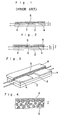
- Fig. 1 shows a configuration of one example of gas-sensing element used to manufacture a hydrogen-selective sensor according to this invention.
- This gas-sensing element 1 comprises a heater 2, a base plate 3 formed of alumina (A1 2 0 3 ), both heater 2 and base plate 3 being dispensable, a pair of flat, forkea vapor deposition layer 4 of platinum (Pt) printed on the base plate 3, and a piece of sintered metal oxide 5 such as tin oxide (Sn0 2 ) coated on the base plate 3 and the vapor deposition layers 4.
- the vapor deposition layers 4 constitute electrodes of the element 1, and'tin oxide forming the sintered piece 5 is a semiconductor.
- a silicon compound, trimethyl chlorosilane ((CH 3 ) 3 SiCl), and the gas-sensing element 1 of Fig. 1 are made available for use.
- trimethyl chlorosilane undergoes chemical vapor deposition onto the surface of the sintered piece of tin oxide 5 and turns into a layer 6 of silicon oxide (Si0 2 ) inactive for oxidation of hydrogen, realizing the hydrogen-selective sensor 7 as shown in Figs. 2 and 3.
- the layer o of silicon oxide thus formed is a compact uniform layer overlying the surface of the sintered piece 5 of tin oxide, as shown in the enlarged view of Fig. 4.
- the silicon compound such as trimethyl chlorosilane is controlled at a predetermined temperature and a predetermined vapor pressure. Since the silicon compound is thermally decomposed on the surface of the porous sintered piece of tin oxide heated to a certain temperature and silicon oxide forms a thin layer thereon through chemical vapor deposition, the resulting sensor 7 is manufactured uniformly and easily. Therefore, according to the described method, fine cavities of varied sizes scattered over the surface of the sintered piece 5 of tin oxide are thoroughly filled by silicon oxide produced by the thermal decomposition, and the surface becomes coated with a very thin layer 6 of silicon oxide which is inactive for oxidation of hydrogen.
- the layer 6 thus formed is readily permeable by small size molecules such as hydrogen molecules but not by larger molecules.
- the hydrogen-selective sensor 7 thereby obtained has a high degree of sensitivity owing to the property of the silicon oxide layer 6 which permits easy passage of hydrogen molecules but checks passage.of other molecules.
- the silicon oxide layer 6 is very stable both chemically and thermally and is therefore highly durable.
- the layer or coat formed on the sintered piece 5 of tin oxide may comprise aluminum oxide (A1203) or silicon nitride (Si 3 N 4 ).
- aluminum oxide A1203
- silicon nitride Si 3 N 4
- two or more layers of silicon oxide, aluminum oxide and silicon nitride may be placed one on top of another, .or they may be subjected to vapor deposition simultaneously.
- the highly sensitive hydrogen-selective sensor 7 is obtained by forming the described hydrogen selective layer 6 of silicon oxide or the like on the surface of the semiconductor which is not limited to the sintered piece of tin oxide 5 but may be any other material responsive to hydrogen.
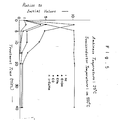
- Fig. 5 is a graph showing a relationship between the treating time and sensitivity of the gas-sensing element in respect of varied types of gas. As seen in this graph, the sensitivity increases with respect to all types of gas during the initial period (for about two minutes). Thereafter, in about five minutes the sensitivity reaches the saturation point with l espect to hydrogen, but lowers with respect to the other gases and levels off at certain values in about 20 minutes. It indicates that at this time a compact layer having a suitable thickness has been formed on the surface of the hydrogen-selective sensor 7 to permit easy passage of hydrogen only.
- a sensitivity curve of the hydrogen-selective sensor 7 thus manufactured with respect to the varied types of gas is shown in Fig. 6A.
- a sensitivity curve of the gas-sensing element of the hydrogen-selective sensor 7 prior to the treatment is shown in Fig. 6B for comparison purposes.
- Fig. 7 is a graph showing dependency of the output voltage in the case of 100 ppm hydrogen gas on bridge voltage.
- Fig. 8 is a view showing a measurement circuitry, in which reference Rs represents the semiconductor 5 of the hydrogen-selective sensor 7, R 0 , R 1 and R 2 denote -resistors having an equal value of resistance R 0 ', E denotes an electric source, and V denotes a voltmeter.
- the semiconductor Rs and the three resistors R 0 , R 1 and R 2 form a bridge circuit, and a certain voltage E' is applied to one diagonal line thereof. At both ends of the other diagonal line, displacements from the electric potential equilibrium resulting from resistance value variations caused by the gas adsorption on the semiconductor Rs are taken out as the output voltage Vout of the sensor.
- Rs 1 is a resistance value of the semiconductor in the gas
- Rs 0 is a resistance value of the semicondutor in the air
- Vgas is an output voltage in the gas
- Vair is an output voltage in the air.
- the semiconductor in the gas-sensing element 1 fit for use in this invention may comprise one of the following: SnO 2 , ZnO, Co 3 0 4 , WO 3 , In203+Pt, ⁇ -Fe 2 O 3 , BaTiO 3 +Np 2 O 3 :
- Alkylhalogenoalminum necessary for vaporization of the aluminum compounds include, for example, (CH 3 ) 3 Al 2 Cl 3 , (CH 3 ) 2 AlCl, CH 3 AlCl 2 , (C 2 H 5 ) 3 Al 2 Cl 3 , (C 2 H 5 ) 2 AlCl, and C 2 H 3 AlCl 2 .
- aluminum alcoxides i.e. alcoholates
- Alkylaluminum compounds include, for example, (CH 3 ) 3 Al, (C 2 H 5 ) 3 Al, (i-C 3 H 7 ) 3 Al, (i-C 4 H 9 ) 3 Al, and (n-C 4 H 9 ) 3 Al.
- Material necessary for vaporization of the silicon compound may be selected from alkylsilicon compounds such as (CH 3 ) 4 Si,-(CH 3 ) 2 (C 2 H 5 ) 2 Si, (C 2 H 5 ) 4 Si, ( C 6 H 5 ) 3 CH 3 Si, and (CH 3 ) 2 SiH 2 , alkylhalogenosiliconsuch as (CH 3 ) 2 SiCl 2 , (CH 3 ) 2 SiBr 2 , and (CH 3 ) 3 SiCl, silicon alcoxides such as Si (OCH 3 ) 4 and Si(OC 2 H 5 ) 4 or an oligomer thereof, (CH 3 ) 3 SiOH, and (CH 3 ) 3 SiOSi(CH 3 ) 3 , and silicon halides such as SiCl 4 , SiBr 4 and SiI 4 .
- alkylsilicon compounds such as (CH 3 ) 4 Si,-(CH 3 ) 2 (C 2 H 5 ) 2 Si, (C 2 H 5 ) 4 Si
- vapor of a silicon amide compound or the like may be decomposed in nitrogen gas.
Landscapes
- Chemical & Material Sciences (AREA)
- Chemical Kinetics & Catalysis (AREA)
- Electrochemistry (AREA)
- Physics & Mathematics (AREA)
- Health & Medical Sciences (AREA)
- Life Sciences & Earth Sciences (AREA)
- Analytical Chemistry (AREA)
- Biochemistry (AREA)
- General Health & Medical Sciences (AREA)
- General Physics & Mathematics (AREA)
- Immunology (AREA)
- Pathology (AREA)
- Investigating Or Analyzing Materials By The Use Of Fluid Adsorption Or Reactions (AREA)
- Investigating Or Analyzing Materials By The Use Of Electric Means (AREA)
Applications Claiming Priority (2)
| Application Number | Priority Date | Filing Date | Title |
|---|---|---|---|
| JP57227568A JPS59120945A (ja) | 1982-12-28 | 1982-12-28 | 水素選択性センサ |
| JP227568/82 | 1982-12-28 |
Publications (3)
| Publication Number | Publication Date |
|---|---|
| EP0115183A2 true EP0115183A2 (fr) | 1984-08-08 |
| EP0115183A3 EP0115183A3 (en) | 1985-09-25 |
| EP0115183B1 EP0115183B1 (fr) | 1989-03-01 |
Family
ID=16862951
Family Applications (1)
| Application Number | Title | Priority Date | Filing Date |
|---|---|---|---|
| EP83307857A Expired EP0115183B1 (fr) | 1982-12-28 | 1983-12-22 | Capteur sensible à l'hydrogène |
Country Status (5)
| Country | Link |
|---|---|
| US (1) | US4608549A (fr) |
| EP (1) | EP0115183B1 (fr) |
| JP (1) | JPS59120945A (fr) |
| CA (1) | CA1204474A (fr) |
| DE (1) | DE3379285D1 (fr) |
Cited By (8)
| Publication number | Priority date | Publication date | Assignee | Title |
|---|---|---|---|---|
| GB2180348A (en) * | 1985-08-30 | 1987-03-25 | Atomic Energy Authority Uk | Semiconducting oxide sensor |
| DE3604594A1 (de) * | 1986-02-14 | 1987-08-20 | Schott Glaswerke | Duennfilmgassensoren mit hoher messempfindlichkeit als mehrschichtsysteme auf der basis von indiumoxid-tauchschichten zum nachweis von gasspuren in traegergasen |
| EP0261275A1 (fr) * | 1985-03-29 | 1988-03-30 | Nohmi Bosai Ltd. | Elément de détection du gaz hydrogène et méthode de production de celui-ci |
| FR2606150A1 (fr) * | 1986-11-05 | 1988-05-06 | Osaka Gas Co Ltd | Detecteur de gaz et procede pour le fabriquer |
| WO1993018399A1 (fr) * | 1992-03-06 | 1993-09-16 | Siemens Aktiengesellschaft | Dispositif pour detecter la presence de gaz dans des liquides |
| WO1996007898A1 (fr) * | 1994-09-03 | 1996-03-14 | Robert Bosch Gmbh | Detecteur de gaz produit selon la technique des couches epaisses ou des couches minces |
| CN104237339A (zh) * | 2014-09-29 | 2014-12-24 | 南京理工大学 | 一种四氧化三钴-氧化锌/石墨烯三元复合物及其制备方法 |
| US20210116405A1 (en) * | 2018-08-07 | 2021-04-22 | New Cosmos Electric Co., Ltd. | Mems type semiconductor gas detection element |
Families Citing this family (20)
| Publication number | Priority date | Publication date | Assignee | Title |
|---|---|---|---|---|
| US4638286A (en) * | 1985-03-26 | 1987-01-20 | Enron Corp. | Reactive gas sensor |
| JPS6283641A (ja) * | 1985-10-08 | 1987-04-17 | Sharp Corp | 電界効果型半導体センサ |
| US4751022A (en) * | 1986-04-24 | 1988-06-14 | Mitsubishi Gas Chemical Company, Inc. | Humidity-sensing component composition |
| JPS63114629U (fr) * | 1987-01-21 | 1988-07-23 | ||
| JPS63124924U (fr) * | 1987-02-05 | 1988-08-15 | ||
| JPH0318833U (fr) * | 1989-02-28 | 1991-02-25 | ||
| JP2702279B2 (ja) * | 1990-11-30 | 1998-01-21 | 新コスモス電機株式会社 | ガス検知素子 |
| US6265222B1 (en) * | 1999-01-15 | 2001-07-24 | Dimeo, Jr. Frank | Micro-machined thin film hydrogen gas sensor, and method of making and using the same |
| JP4532671B2 (ja) * | 1999-06-01 | 2010-08-25 | 新コスモス電機株式会社 | 水素ガス検知素子 |
| US20020142478A1 (en) * | 2001-03-28 | 2002-10-03 | Hiroyuki Wado | Gas sensor and method of fabricating a gas sensor |
| US20060124448A1 (en) * | 2003-01-23 | 2006-06-15 | Jayaraman Raviprakash | Thin film semi-permeable membranes for gas sensor and catalytic applications |
| US7526942B2 (en) * | 2003-06-12 | 2009-05-05 | Riken Keiki Co., Ltd. | Contact combustion gas sensor |
| WO2005040781A1 (fr) * | 2003-10-22 | 2005-05-06 | Toyo Ink Mfg. Co., Ltd. | Capteur de type accepteur de protons, capteur de gaz hydrogene et capteur d'acide |
| JP4056987B2 (ja) * | 2004-04-28 | 2008-03-05 | アルプス電気株式会社 | 水素センサ及び水素の検知方法 |
| JP2007248424A (ja) * | 2006-03-20 | 2007-09-27 | Atsumi Tec:Kk | 水素センサ |
| GB2476122A (en) * | 2009-12-14 | 2011-06-15 | Graviner Ltd Kidde | MOS gas sensor apparatus and method of use |
| GB2476123A (en) * | 2009-12-14 | 2011-06-15 | Graviner Ltd Kidde | MOS gas sensor apparatus and method of use |
| FR3003626B1 (fr) * | 2013-03-20 | 2015-04-17 | Technip France | Panneau de protection pour une installation d'exploitation de fluide a basse temperature, ensemble, installation et procede associes |
| JP6761764B2 (ja) * | 2016-03-18 | 2020-09-30 | パナソニックセミコンダクターソリューションズ株式会社 | 水素センサ及び燃料電池自動車、並びに水素検出方法 |
| US20240410854A1 (en) * | 2023-06-12 | 2024-12-12 | Taiwan Semiconductor Manufacturing Company, Ltd. | Semiconductor structure, integrated circuit and manufacturing method thereof |
Family Cites Families (6)
| Publication number | Priority date | Publication date | Assignee | Title |
|---|---|---|---|---|
| GB1482584A (en) * | 1973-07-13 | 1977-08-10 | Tokyo Shibaura Electric Co | Moisture responsive resistance element |
| JPS5320318B2 (fr) * | 1973-12-20 | 1978-06-26 | ||
| GB1477082A (en) * | 1974-10-15 | 1977-06-22 | Tokyo Shibaura Electric Co | Gas-sensing material |
| US4347495A (en) * | 1979-01-31 | 1982-08-31 | Rosemount Engineering Company Limited | Method of detecting oxygen and an oxygen sensor therefor |
| JPS56168542A (en) * | 1980-05-30 | 1981-12-24 | Sharp Corp | Aging device for sno2 series semiconductor gas sensor |
| US4324761A (en) * | 1981-04-01 | 1982-04-13 | General Electric Company | Hydrogen detector |
-
1982
- 1982-12-28 JP JP57227568A patent/JPS59120945A/ja active Granted
-
1983
- 1983-12-22 EP EP83307857A patent/EP0115183B1/fr not_active Expired
- 1983-12-22 DE DE8383307857T patent/DE3379285D1/de not_active Expired
- 1983-12-22 US US06/564,446 patent/US4608549A/en not_active Expired - Lifetime
- 1983-12-22 CA CA000444091A patent/CA1204474A/fr not_active Expired
Cited By (11)
| Publication number | Priority date | Publication date | Assignee | Title |
|---|---|---|---|---|
| EP0261275A1 (fr) * | 1985-03-29 | 1988-03-30 | Nohmi Bosai Ltd. | Elément de détection du gaz hydrogène et méthode de production de celui-ci |
| GB2180348A (en) * | 1985-08-30 | 1987-03-25 | Atomic Energy Authority Uk | Semiconducting oxide sensor |
| DE3604594A1 (de) * | 1986-02-14 | 1987-08-20 | Schott Glaswerke | Duennfilmgassensoren mit hoher messempfindlichkeit als mehrschichtsysteme auf der basis von indiumoxid-tauchschichten zum nachweis von gasspuren in traegergasen |
| FR2606150A1 (fr) * | 1986-11-05 | 1988-05-06 | Osaka Gas Co Ltd | Detecteur de gaz et procede pour le fabriquer |
| GB2198240A (en) * | 1986-11-05 | 1988-06-08 | Osaka Gas Co Ltd | Gas sensor and method of manufacturing the same |
| GB2198240B (en) * | 1986-11-05 | 1991-03-06 | Osaka Gas Co Ltd | Gas sensor and method of manufacture thereof |
| WO1993018399A1 (fr) * | 1992-03-06 | 1993-09-16 | Siemens Aktiengesellschaft | Dispositif pour detecter la presence de gaz dans des liquides |
| WO1996007898A1 (fr) * | 1994-09-03 | 1996-03-14 | Robert Bosch Gmbh | Detecteur de gaz produit selon la technique des couches epaisses ou des couches minces |
| CN104237339A (zh) * | 2014-09-29 | 2014-12-24 | 南京理工大学 | 一种四氧化三钴-氧化锌/石墨烯三元复合物及其制备方法 |
| US20210116405A1 (en) * | 2018-08-07 | 2021-04-22 | New Cosmos Electric Co., Ltd. | Mems type semiconductor gas detection element |
| US11977043B2 (en) * | 2018-08-07 | 2024-05-07 | New Cosmos Electric Co., Ltd. | MEMS type semiconductor gas detection element |
Also Published As
| Publication number | Publication date |
|---|---|
| EP0115183A3 (en) | 1985-09-25 |
| DE3379285D1 (en) | 1989-04-06 |
| EP0115183B1 (fr) | 1989-03-01 |
| US4608549A (en) | 1986-08-26 |
| JPS59120945A (ja) | 1984-07-12 |
| JPS6131422B2 (fr) | 1986-07-19 |
| CA1204474A (fr) | 1986-05-13 |
Similar Documents
| Publication | Publication Date | Title |
|---|---|---|
| EP0115183A2 (fr) | Capteur sensible à l'hydrogène | |
| JP4195609B2 (ja) | 薄層金属水素化物水素センサ | |
| US5834627A (en) | Calorimetric gas sensor | |
| CA1208424A (fr) | Sonde detectrice de gaz | |
| JPH08313470A (ja) | ガス混合物中のメタンの検出法 | |
| EP0722565A1 (fr) | Detecteur catalytique de gaz inflammable et procede | |
| US5472591A (en) | Oxygen concentration detector having heat-treated support layer providing high responsivity endurance | |
| Me et al. | The thick-film route to selective gas sensors | |
| CN113544499A (zh) | 电阻式金属氧化物气体传感器及其制造方法和操作该传感器的方法 | |
| EP0159905A2 (fr) | Dispositif pour la détection de la concentration d'oxygène dans les gaz d'échappement | |
| US5820922A (en) | Method for localized deposition of noble metal catalysts with control of morphology | |
| JPS60228949A (ja) | 被検混合ガス中の還元ガスを検知する方法及びそのための装置 | |
| JPH0468586B2 (fr) | ||
| JP2002513930A (ja) | 水素センサ | |
| US4720421A (en) | Poison resistant combustible gas sensor | |
| JPH0633410Y2 (ja) | ガスセンサ | |
| Watson | The stannic oxide gas sensor | |
| JPH04269650A (ja) | 酸化物半導体ガスセンサ | |
| KR870001325B1 (ko) | 가스검지소자 | |
| RU2096774C1 (ru) | Датчик для определения концентрации газов | |
| HOSSEIN et al. | Thickness dependence of sensitivity in thin film tin oxide gas sensors deposited by vapor pyrolysis | |
| JPH0340817B2 (fr) | ||
| JPH06148112A (ja) | 水素ガス検知素子 | |
| RU2231779C1 (ru) | Полупроводниковый датчик для регистрации взрывоопасных газовых компонент в воздухе | |
| JP2002055073A (ja) | ガスセンサ |
Legal Events
| Date | Code | Title | Description |
|---|---|---|---|
| PUAI | Public reference made under article 153(3) epc to a published international application that has entered the european phase |
Free format text: ORIGINAL CODE: 0009012 |
|
| 17P | Request for examination filed |
Effective date: 19840102 |
|
| AK | Designated contracting states |
Designated state(s): DE FR GB |
|
| PUAL | Search report despatched |
Free format text: ORIGINAL CODE: 0009013 |
|
| AK | Designated contracting states |
Designated state(s): DE FR GB |
|
| 17Q | First examination report despatched |
Effective date: 19861223 |
|
| GRAA | (expected) grant |
Free format text: ORIGINAL CODE: 0009210 |
|
| AK | Designated contracting states |
Kind code of ref document: B1 Designated state(s): DE FR GB |
|
| REF | Corresponds to: |
Ref document number: 3379285 Country of ref document: DE Date of ref document: 19890406 |
|
| ET | Fr: translation filed | ||
| PLBE | No opposition filed within time limit |
Free format text: ORIGINAL CODE: 0009261 |
|
| STAA | Information on the status of an ep patent application or granted ep patent |
Free format text: STATUS: NO OPPOSITION FILED WITHIN TIME LIMIT |
|
| 26N | No opposition filed | ||
| REG | Reference to a national code |
Ref country code: GB Ref legal event code: IF02 |
|
| PGFP | Annual fee paid to national office [announced via postgrant information from national office to epo] |
Ref country code: FR Payment date: 20021210 Year of fee payment: 20 |
|
| PGFP | Annual fee paid to national office [announced via postgrant information from national office to epo] |
Ref country code: GB Payment date: 20021218 Year of fee payment: 20 |
|
| PGFP | Annual fee paid to national office [announced via postgrant information from national office to epo] |
Ref country code: DE Payment date: 20021231 Year of fee payment: 20 |
|
| PG25 | Lapsed in a contracting state [announced via postgrant information from national office to epo] |
Ref country code: GB Free format text: LAPSE BECAUSE OF EXPIRATION OF PROTECTION Effective date: 20031221 |
|
| REG | Reference to a national code |
Ref country code: GB Ref legal event code: PE20 |