EP0115954B1 - Dérivés du bicyclooctane, leur préparation et leur utilisation - Google Patents
Dérivés du bicyclooctane, leur préparation et leur utilisation Download PDFInfo
- Publication number
- EP0115954B1 EP0115954B1 EP84300597A EP84300597A EP0115954B1 EP 0115954 B1 EP0115954 B1 EP 0115954B1 EP 84300597 A EP84300597 A EP 84300597A EP 84300597 A EP84300597 A EP 84300597A EP 0115954 B1 EP0115954 B1 EP 0115954B1
- Authority
- EP
- European Patent Office
- Prior art keywords
- group
- hydroxy
- bicyclo
- cis
- octane
- Prior art date
- Legal status (The legal status is an assumption and is not a legal conclusion. Google has not performed a legal analysis and makes no representation as to the accuracy of the status listed.)
- Expired
Links
- 0 C(C1)*1C1C2(CC2)CCC1 Chemical compound C(C1)*1C1C2(CC2)CCC1 0.000 description 2
- AZMHGFJYZNERCF-DUXPYHPUSA-N C/C=C/C1C2(CC2)CCC1 Chemical compound C/C=C/C1C2(CC2)CCC1 AZMHGFJYZNERCF-DUXPYHPUSA-N 0.000 description 1
- OMXBQVPQEDZQIF-DGORSVRFSA-N OCC[C@H](C[C@H]1C[C@H]2CO)C[C@@H]1[C@H]2C=O Chemical compound OCC[C@H](C[C@H]1C[C@H]2CO)C[C@@H]1[C@H]2C=O OMXBQVPQEDZQIF-DGORSVRFSA-N 0.000 description 1
Classifications
-
- C—CHEMISTRY; METALLURGY
- C07—ORGANIC CHEMISTRY
- C07C—ACYCLIC OR CARBOCYCLIC COMPOUNDS
- C07C405/00—Compounds containing a five-membered ring having two side-chains in ortho position to each other, and having oxygen atoms directly attached to the ring in ortho position to one of the side-chains, one side-chain containing, not directly attached to the ring, a carbon atom having three bonds to hetero atoms with at the most one bond to halogen, and the other side-chain having oxygen atoms attached in gamma-position to the ring, e.g. prostaglandins ; Analogues or derivatives thereof
- C07C405/005—Analogues or derivatives having the five membered ring replaced by other rings
- C07C405/0075—Analogues or derivatives having the five membered ring replaced by other rings having the side-chains or their analogues or derivatives attached to a condensed ring system
- C07C405/0083—Analogues or derivatives having the five membered ring replaced by other rings having the side-chains or their analogues or derivatives attached to a condensed ring system which is only ortho or peri condensed, e.g. carbacyclins
-
- A—HUMAN NECESSITIES
- A61—MEDICAL OR VETERINARY SCIENCE; HYGIENE
- A61P—SPECIFIC THERAPEUTIC ACTIVITY OF CHEMICAL COMPOUNDS OR MEDICINAL PREPARATIONS
- A61P43/00—Drugs for specific purposes, not provided for in groups A61P1/00-A61P41/00
-
- C—CHEMISTRY; METALLURGY
- C07—ORGANIC CHEMISTRY
- C07C—ACYCLIC OR CARBOCYCLIC COMPOUNDS
- C07C309/00—Sulfonic acids; Halides, esters, or anhydrides thereof
-
- C—CHEMISTRY; METALLURGY
- C07—ORGANIC CHEMISTRY
- C07C—ACYCLIC OR CARBOCYCLIC COMPOUNDS
- C07C33/00—Unsaturated compounds having hydroxy or O-metal groups bound to acyclic carbon atoms
- C07C33/05—Alcohols containing rings other than six-membered aromatic rings
- C07C33/14—Alcohols containing rings other than six-membered aromatic rings containing six-membered rings
-
- Y—GENERAL TAGGING OF NEW TECHNOLOGICAL DEVELOPMENTS; GENERAL TAGGING OF CROSS-SECTIONAL TECHNOLOGIES SPANNING OVER SEVERAL SECTIONS OF THE IPC; TECHNICAL SUBJECTS COVERED BY FORMER USPC CROSS-REFERENCE ART COLLECTIONS [XRACs] AND DIGESTS
- Y02—TECHNOLOGIES OR APPLICATIONS FOR MITIGATION OR ADAPTATION AGAINST CLIMATE CHANGE
- Y02P—CLIMATE CHANGE MITIGATION TECHNOLOGIES IN THE PRODUCTION OR PROCESSING OF GOODS
- Y02P20/00—Technologies relating to chemical industry
- Y02P20/50—Improvements relating to the production of bulk chemicals
- Y02P20/55—Design of synthesis routes, e.g. reducing the use of auxiliary or protecting groups
Definitions
- the present invention relates to novel bicyclooctane compounds, their production and use.
- this invention relates to novel bicyclooctane compounds, to a pharmaceutical composition containing at least one of the bicyclooctane compounds and to a process for production thereof.
- EP-A-0055208 discloses 3-oxa-6a-carba-prostaglandin-1 2 derivatives useful for lowering blood pressure and as bronchodilators. Such compounds have a double bond at the 5,6-position.
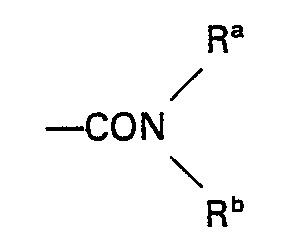
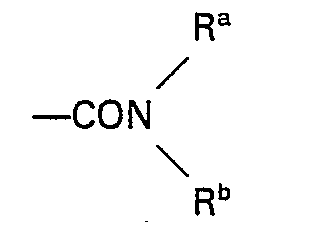
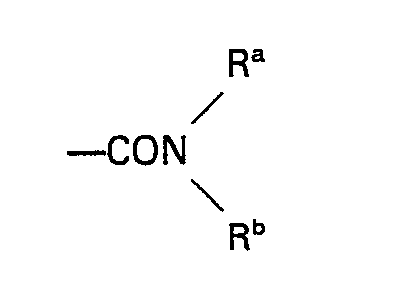
- novel bicyclooctane compounds provided by the present invention are those represented by the formula [I]: wherein X 1 is a free or an esterified carboxyl group, or a group of the formula: (R a and R b are each independently a hydrogen atom, a C 1 ⁇ C 4 alkyl group, a C 3 ⁇ C 7 cycloalkyl group, a benzyl group, a phenyl group, a phenyl group substituted with a halogen atom or a C 1 ⁇ C 4 alkyl group, or, when taken together with the adjacent nitrogen atom to which they are attached, they represent a 5 to 7 membered saturated heterocyclic group), Y 1 is a group of the formula: (R 6 is a hydrogen atom or C 1 -C 4 alkyl group), (R 6 is as defined above), R 1 is a hydrogen atom, a hydroxyl group or a protected hydroxyl group, R 2 is a hydrogen atom or R 1 and
- halogen used above, includes fluorine, chlorine, bromine and iodine;
- C 1 ⁇ C 4 alkyl and “C 1 ⁇ C 4 alkoxy” each mean straight or branched chain alkyl and alkoxy having from 1 to 4 carbon atoms (e.g. methyl, ethyl, n-propyl, isopropyl, n-butyl, methoxy, ethoxy, n-propoxy, isopropoxy, n-butoxy).
- the alkyl group-of both the "C 1 -C 12 alkyl” and the C 1 -C 12 alkoxy" groups mentioned above is a straight or branched chain alkyl group having from one to 12 carbon atoms (e.g. methyl, ethyl, n-propyl, isopropyl, n-butyl, isobutyl, n-pentyl, isopentyl, 1-methylpentyl, 2-methylpentyl, 1,1-dimethylpentyl, 1-ethylpentyl, 2-ethylpentyl, n-hexyl, 1-methylhexyl, 2-methylhexyl, 3-methylhexyl, heptyl, 1-methylheptyl, 2-methylheptyl, 1-ethylheptyl, 2-ethylheptyl, n-octyl, 1-methyloctyl, 2-methyloctyl, 1-ethy
- C 2 ⁇ C 12 alkenyl and “C 2 ⁇ C 12 alkynyl” groups are each a straight or branched chain alkenyl or alkynyl group respectively having from 2 to 12 carbon atoms (e.g.
- the cycloalkyl group in both of the cases, "C 3 ⁇ C 10 cycloalkyl” and “C 3 ⁇ C 10 cycloalkoxy” is a cyclic alkyl group which is optionally substituted with C 1 -C 4 alkyl group or alkenyl group and which has from 3 to 10 carbon atoms (e.g.
- the cycloalkenyl group in both of the cases, "C 4 ⁇ C 10 cycloalkenyl” and “C 4 ⁇ C 10 cycloalkenyloxy” is a cyclic alkenyl group having from 4 to 10 carbon atoms (e.g. bicyclo[4,3,0]nona-3-en-8-yl, 3-cyclopentenyl, 3-cyclohexenyl, 3-cycloheptenyl, tetrahydro-2-indanyl).
- hydroxy C 1 ⁇ C 12 alkyl group means a straight or branched alkyl group which has from one to 12 carbon atoms and is substituted with a hydroxyl group (e.g. hydroxymethyl, 2-hydroxyethyl, 3-hydroxypropyl, 4-hydroxybutyl, 5-hydroxypentyl, 6-hydroxyhexyl, 7-hydroxyheptyl, 8-hydroxyoctyl, 10-hydroxydecyl, 5-hydroxyhexyl, 4-hydroxypentyl, 5-hydroxy-1,1-dimethylpentyl, 5-hydroxy-2-methylpentyl, 5-hydroxy-1-methylpentyl, 6-hydroxy-2-methylhexyl).
- a hydroxyl group e.g. hydroxymethyl, 2-hydroxyethyl, 3-hydroxypropyl, 4-hydroxybutyl, 5-hydroxypentyl, 6-hydroxyhexyl, 7-hydroxyheptyl, 8-hydroxyoctyl, 10-hydroxydecyl, 5-hydroxyhexyl, 4-hydroxypent
- C 3 ⁇ C 10 heterocyclic group means a mono or dicyclic group having from 3 to 10 carbon atoms and at least one hetero atom selected from nitrogen, sulfur, and oxygen atoms (e.g. piperidine, morpholine, pyrrolidine, piperazine, tetrahydrofuran, tetrahydrothiophene, furan, thiophene, imidazole, pyridine, oxazole, isooxazole, pyrrole, pyrazole, pyrimidine, indole, benzofuran, purine, benzothiophene, quinoline, pyrrolidone, dihydrothiophene, dihydrobenzofuran, 1,4-benzodioxane).
- nitrogen, sulfur, and oxygen atoms e.g. piperidine, morpholine, pyrrolidine, piperazine, tetrahydrofuran, tetrahydrothiophene, furan, thioph
- C 1 ⁇ C 7 alkylene means a straight or branched alkylene chain having from one to 7 carbon atoms (e.g. methylene, ethylene, trimethylene, tetramethylene, pentamethylene, hexamethylene, heptamethylene, methylmethylene, dimethylmethylene, 1,1-dimethylethylene, 2-methyltetramethylene, 1-methylpentamethylene, 2-methylhexamethylene, 1-ethylethylene, 2-ethylethylene, 2-ethyltrimethylene).
- 5 to 7 membered saturated heterocyclic group includes piperidine, morpholine, pyrrolidine, homopiperidine, piperazine, N-(C 1 -C 4 ) alkylpiperazine, etc.).
- C 3 ⁇ C 7 cycloalkyl group means a cyclic alkyl group which is optionally substituted with a C 1 -C 4 alkyl group and has from 3 to 7 carbon atoms (e.g. cyclopropyl, cyclobutyl, cyclopentyl, cyclohexyl, cycloheptyl, 3-ethylcyclopentyl, 4-methylcyclohexyl).
- esterified carboxyl group includes C 1 -C 4 alkoxycarbonyl, aryloxycarbonyl (e.g. phenoxycarbonyl, naphthoxycarbonyl), aralkyloxycarbonyl (e.g. benzyloxycarbonyl, phenethyloxycarbonyl), (C 1 ⁇ C 4 alkoxy)-methoxycarbonyl, (C 2 ⁇ C 5 alkanoyloxy)methoxycarbonyl (e.g. acetoxymethoxycarbonyl), (C 3 ⁇ C 7 cycloalkyloxy)carbonyl, arylcarbonylmethoxycarbonyl and (hydroxy C 1 ⁇ C 4 alkoxy)carbonyl.
- aryloxycarbonyl e.g. phenoxycarbonyl, naphthoxycarbonyl
- aralkyloxycarbonyl e.g. benzyloxycarbonyl, phenethyloxycarbonyl
- protected hydroxy group means a hydroxy group protected with a C 1 -C 4 alkanoyl (e.g. acetyl, propionyl), benzoyl, substituted benzoyl, tetrahydropyranyl, tetrahydrofuryl or (C 1 -C 4 alkoxy)methyl.
- a C 1 -C 4 alkanoyl e.g. acetyl, propionyl
- benzoyl substituted benzoyl
- tetrahydropyranyl tetrahydrofuryl or (C 1 -C 4 alkoxy)methyl.
- Prostaglandin 1 2 [II] which is shown below, has several excellent pharmacological activities, for example, hypotensive, vasodilating, antiallergic, antiulcerogenic, antithrombotic and anti cancerous activity, and is expected to be useful in treating asthma, ulcer, thrombosis, hypertension or cancer.
- prostaglandin I 2 (referred to as “PGI 2 ", hereinafter) may not be used as medicine owing to its instability.
- novel bicyclooctane compounds [I] of the present invention have antithrombotic, anticancer, antihypertensive action or anti-ulcerous action and are useful in treatment of ulcer, thrombosis, hypertension or cancer.
- the present compounds [I] are useful as antithrombotic or anti-ulcerous drugs.
- the undesirable instability is absent in the compounds [I] of this invention.
- a basic object of the present invention is to provide novel and stable bicyclooctane compounds [I] having excellent pharmacological activity.
- Another object of the present invnetion is to provide a process for producing those compounds [I]. Further object of the present invention is to provide a pharmaceutical composition containing a compound of the formula [I].
- novel bicyclooctane compound [I] of the invention can be prepared by the following two methods.
- the carbonyl compound [III] can be converted into the corresponding alcohol compound by reacting of the former with a reducing agent in an inert solvent (e.g. THF, ether, dimethoxyethane, pentane, hexane, benzene, toluene, methanol, ethanol) at a temperature in the range from -70°C to room temperature.
- a reducing agent e.g. THF, ether, dimethoxyethane, pentane, hexane, benzene, toluene, methanol, ethanol
- trialkylborohydride e.g. lithium triisobutyl borohydride
- bis(2,4,6-tri-tert-butylphenoxy)aluminum hydride sodium borohydride, zinc borohydride, diisobutyl aluminum hydride, diisobutyl aluminum-2,6-di-t-butyl-4-methylphenol, ethoxy 1,1'-binaphthyl-2,2'-dioxyaluminum lithium hydride.
- the reduction of a vinylene group can be-accomplished by catalytic hydrogenation in an inert solvent (e.g. alkanol, aqueous alkanol) at a temperature in the range from 0°C to room temperature.
- an inert solvent e.g. alkanol, aqueous alkanol
- the dehydrohalogenation of halogenated vinylene group can be accomplished by reacting with a strong base (e.g. potassium t-butoxide, sodium methoxide) in an inert solvent (e.g. t-butanol) at a temperature in the range from 0°C to room temperature.
- a strong base e.g. potassium t-butoxide, sodium methoxide
- an inert solvent e.g. t-butanol
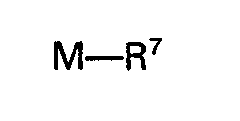
- the carbonyl compound [III] can be converted into the corresponding alcohol compound by reacting of the former with an organometallic compound [IV] in an inert solvent (e.g. ether, THF, dioxane) at a temperature in the range from -70°C to room temperature.
- an inert solvent e.g. ether, THF, dioxane
- the organometallic compound [IV] can be prepared by the conventional procedures.
- the alkylation of the alcohol [V] can be carried out by reacting of [V] with the halogeno compound [VI] in an inert solvent (e.g. benzene, toluene, xylene, DMF, DMSO, alkanol) in the presence of an alkali (e.g. alkali metal hydride, alkali metal amide, alkali metal, alkali metal t-butoxide) at a temperature in the range from room temperature to the boiling temperature of the solvent.
- an inert solvent e.g. benzene, toluene, xylene, DMF, DMSO, alkanol
- an alkali e.g. alkali metal hydride, alkali metal amide, alkali metal, alkali metal t-butoxide
- Amidation of a carboxyl group can be carried out by conventional procedure. For instance, it can be accomplished in an inert solvent (e.g. ether, THF) by treating a carboxyl compound [la] with an amine [VII] (R a and R are each as defined above) in the presence of dehydrolyzing agent (e.g. dicyclohexylcarbodiimide) at a temperature in the range from 0°C to room temperature, or by treating the functionally active derivative (e.g. mixed acid anhydride) of [la] with the amine [VII] in an inert solvent (e.g. ether, THF, chloroform) at a temperature in the range from -10°C to room temperature.
- dehydrolyzing agent e.g. dicyclohexylcarbodiimide
- R a and R are each as defined above
- the functionally active derivative e.g. mixed acid anhydride
- Amidation of an esterified carboxyl group can be carried out by treating an ester compound [Ib] with the amine [VII] in an inert solvent (e.g. DMF, methanol, ethanol, THF) at a temperature in the range from room temperature to the boiling temperature of the solvent.
- an inert solvent e.g. DMF, methanol, ethanol, THF
- Hydrolysis of a amido group into a carboxyl group can be carried out in the presence of an alkali (e.g. sodium hydroxide, potassium hydroxide) in an inert solvent (e.g. aqueous alkanol, DMSO) at a temperature in the range from 60°C to the boiling temperature of the solvent.
- an alkali e.g. sodium hydroxide, potassium hydroxide
- an inert solvent e.g. aqueous alkanol, DMSO
- the carbonyl compound [III] used as an intermediate in the present invention can be prepared from a olefin compound [VIII] by the process shown in the scheme C.
- X 3 is same as X 2 provided that X 3 is not a free carboxyl group
- R' is a C 1 ⁇ C 4 alkyl group
- R 5 ' is same as R 5 provided that R 5 ' is not a hydrogen atom
- R 1 , R 2 , R 5 , R 6 , R 12 , and Y 2 are each as defined above.
- the dialdehyde [IX] can be also obtained by ozonization of the compound [VIII] at a temperature in the range from -80°C to -30°C, followed by reductive cleavage with dialkyl sulfide, triphenylphosphine, sodium bisulfite, zinc or the like, or by the catalytic hydrogenation in the presence of a palladium on charcoal.
- inert solvent for ozonization examples include alkanols (methanol, ethanol), halogenated hydrocarbon and ester. Reduction of an ozonide may be accomplished by a per se conventional procedure at a temperature in the range from -30°C to 0°C.
- Aldol condensation of the dialdehyde [IX] into an aldole derivative [X] is carried out in the presence of an acid or a base in an inert solvent (e.g. water, alkanols, aqueous alkanols, ethers, esters) at a temperature in the range from -70°C to room temperature.
- an inert solvent e.g. water, alkanols, aqueous alkanols, ethers, esters
- alkali hydroxide e.g. potassium hydroxide, sodium hydroxide
- alkali carbonate e.g. potassium hydroxide, sodium hydroxide
- the compound [XI] can be obtained by treating the dialdehyde [IX] in the presence of an acid or a base in an inert solvent at a temperature in the range from room temperature to the boiling temperature of the solvent.
- the compound [XI] can be easily converted into the compound [XII] by conventional catalytic hydrogenation in the presence of a palladium on charcoal, if necessary, followed by epimerization.
- the compounds [X, XI, XII] can be each easily converted into a carbonyl compound [III] by reaction of the former with a compound [XIV] or a compound [XV] in an inert solvent (e.g. dioxane, ether, THF, dimethoxyethane, benzene, toluene, n-hexane, DMSO) at a temperature in the range from -10° to 50°C, optionally followed by protection of a hydroxy group, hydrolysis of an ester group and/or reduction of a vinylene group.
- an inert solvent e.g. dioxane, ether, THF, dimethoxyethane, benzene, toluene, n-hexane, DMSO
- the compound [XIVb] which is part of [XIV] can be obtained by reacting of the compound [XIVa] with N-bromosuccinimide in an inert solvent (e.g. THF, dimethoxyethane) at a temperature in the range from -10°C to room temperature.
- an inert solvent e.g. THF, dimethoxyethane
- halo and X 2 are each as defined above.
- Alkylation of the alcohol [XVII] can be carried out by reacting of [XVII] with the halogeno compound [VI] in an inert solvent (e.g. benzene, toluene, xylene, DMF, DMSO, alkanol) in the presence of an alkali (e.g. alkali metal hydride, alkali metal amide, alkali metal, alkali metal t-butoxide), at a temperature in the range from room temperature to the boiling temperature of the solvent.
- an inert solvent e.g. benzene, toluene, xylene, DMF, DMSO, alkanol
- an alkali e.g. alkali metal hydride, alkali metal amide, alkali metal, alkali metal t-butoxide
- Oxidation of the alcohol [XVIII] can be carried out by reacting with chromium oxide (e.g. with the solution of chromium oxide in dilute sulfuric acid in acetone at ambient temperature).
- the alcohol compound [XVII] can be prepared by way of the following three paths shown in the Scheme E, F, and G.
- the compound [XVII] can be obtained from the carbonyl compound [XIX] by the process shown in the Scheme E.
- the compound [XIX] can be easily converted into the ester compound [XX] by reacting of the former with a compound [XXI] in an inert solvent (e.g. dioxane, ether, THF, dimethoxyethane, benzene, DMSO) at a temperature in the range from -10° to 50°C.
- an inert solvent e.g. dioxane, ether, THF, dimethoxyethane, benzene, DMSO
- the compound [XX] can be easily converted into the alcohol compound [XVI] by Birch reduction of the former according to the known procedure [J. Org. Chem., 37 2871 (1972)].
- the reduction can be accomplished by treating the ester [XX] with lithium or sodium in the presence of liquid ammonia and alcoholo (e.g. methanol, ethanol) in an inert solvent (e.g. ether dioxane) at a temperature in the range from -70° to -40°C.
- alcoholo e.g. methanol, ethanol
- an inert solvent e.g. ether dioxane
- the compound [XVII] can be obtained from the compound [XIX] also by the process shown in the Scheme F.
- Reduction of the carbonyl compound [XIX] into the alcohol compound [XXII] can be easily carried out by a conventional procedure.
- the compound [XXII] can be converted into the compound [XXIII] by reacting the former with methanesulfonyl chloride and triethylamine in an inert solvent (e.g. THF) at a temperature in the range from 0° to 40°C.
- THF inert solvent
- the compound [XXIII] can be converted into the diester compound [XXIV] by reacting the former with diethylmalonate in the presence of sodium ethoxide in ethanol at a temperature in the range from 50°C to boiling point of the solvent.
- Decarboxylation of the diester [XXIV] into the ester compound [XXV] can be carried out by heating of the former in the presence of sodium chloride in an inert solvent (e.g. DMSO) at a temperature in the range from 80°C to a boiling point of the solvent.
- an inert solvent e.g. DMSO
- Reduction of the ester [XXV] into the alcohol [XVII] can be accomplished by reacting with lithium aluminum hydride or lithium trimethoxy aluminum hydride in an inert solvent (e.g. THF) at a temperature in the range from 0°C to a boiling point of the solvent.
- an inert solvent e.g. THF
- the compound [XXIII] can be converted into the compound [XXVJ] by reacting of the former with ethyl cyanoacetate in the presence of sodium ethoxide in ethanol at a temperature in the range from 50°C to a boiling point of the solvent.
- Decarboxylation of the ester [XXVI] into the compound [XXVII] can be carried out by heating in the presence of sodium chloride and water in an inert solvent (e.g. DMSO) at a temperature in the range from 80°C to a boiling point of the solvent.
- an inert solvent e.g. DMSO
- Reduction of the nitrile [XXVII] into the aldehyde [XXVIII] can be accomplished by reacting with diisobutyl aluminum hydride in an inert solvent (e.g. THF, ether, hexane) at a temperature in the range from -70°C to ambient temperature. Reduction of the aldehyde [XXVIII] into the alcohol [XVII] can be easily carried out by a conventional procedure,
- Ketalization of the aldehyde [XXVIII] into the compound [XXIX] can be easily carried out by conventional procedure.
- the compound [XXIX] can be converted into the alcohol [XVIII] by reacting the former with the complex of aluminum chloride and lithium aluminum hydride in an inert solvent (e.g. ether, THF) at a temperature in the range from 20°C to the boilding point of the solvent.
- an inert solvent e.g. ether, THF
- the alcohol compound [V] used as an intermediate in the present invention can be prepared according to the following three paths shown in the Scheme I, J, and K.
- the compound [V] can be obtained from the compound [XXX] by the process shown in the Scheme I.
- R 1 , R 2 , R 3 , R 4 , R 5 , R 7 , R B , R 9 , R 10 , R 11 , Y 1 and Y 2 are each as defined above.
- the compound [XXX] can be converted into the carbonyl compound [XXXV] by the same procedure as used in the synthesis of the carbonyl compound [III] shown in the Scheme C.
- Reduction of the compound [XXXV] and reaction of the compound [XXXV] with the compound [IV] can be carried out by the same procedure as used in the synthesis of the compound [I] from the compound [III].
- the compound [XXXVI] can be converted into the carbonyl [XXXVII] by reacting the former with pyridium p-toluenesulfonate in a solvent (e.g. acetone) at an ambient temperature, optionally followed by reduction of a vinylene group, dehydrohalogenation of halogenated vinylene group, protection of hydroxyl group. Reduction, dehydrohalogenation and protection can be carried out by the same procedure as used in the synthesis of the compound [I] shown in Scheme A.
- a solvent e.g. acetone
- the compound-[V] can be obtained from the compound [XXV] also by the process shown in the Scheme J.
- the compound [XXV] can be converted into the carbonyl compound [XLIV] by the same procedure as used in the synthesis of the carbonyl compound [III] shown in the Scheme C.
- the compound [XLIV] can be converted into the compound [XLV] by reacting of the former with the compound [IV] or reducint the carbonyl group, optionally followed by reduction of a vinylene group, dehydrohalogenation of a halogenated vinylene group.
- the ester compound [XLV] can be converted into the compound [V] by protecting of hydroxy group and reducing of the ester group. Reduction can be carried out by the same procedure as used in the synthesis of the compound [XVII] from the compound [XXV].
- the compound [V] can be obtained also from the compound [XXVII] by the process shown in the Scheme K.
- the compound [XXVII] can be converted into the carbonyl compound [L] by the same procedure as used in the synthesis of the carbonyl compound [III] shown in the Scheme C.
- the compound [L] can be converted into the compound [L] by reacting of the former with the compound [IV] or reducing of a carbonyl group, optionally followed by reduction of a vinylene group, dehydrohalogenation of a halogenated vinylene group, and protecting hydroxyl groups.
- the bicyclooctane compound [I] can be obtained as a mixture of these stereoisomers which can be easily separated by the conventional method (e.g. column chromatography) with high purity.
- bicyclooctane compound [I] can be separated into optical isomers by a conventional method.
- the compound [la] can be converted to its pharmacologically acceptable salt form.
- the pharmaceutically acceptable salts of these bicyclooctane compounds are those with pharmaceutically acceptable metal cation such as, sodium, potassium, magnesium and calcium, ammonium or amine cations.
- the bicyclooctane compounds [I] can be converted into inclusion compounds with some kinds of cyclodextrins.
- the preparation of pharmaceutical compositions can be carried out by a conventional method; for example, the bicyclooctane compounds [I] may be mixed with carriers, diluents, lubricants, fillers and/or binders such as lactose, sucrose, calcium, phosphate, starch, talcum, casein, magnesium stearate, methyl cellulose, polyglycols, tragacanth and the like, sometimes together with stabilizers and emulsifying agents.
- the resulting mixture may be processed in a usual manner to tablets, capsules, pills, ampoules and the like.
- the bicyclooctane compounds [I] can be administered orally, subcutaneously, intravenously, intramuscularly or the like. In general, the oral administration is preferred.
- the daily dosage may vary depending upon the administration route and the usual oral dosage of the active ingredient is between about 0.1 mg and about 100 mg daily for human beings.
- bicyclooctane compound [I] is as follows. Every compounds below has four isomers, that is, (3' ⁇ ,7 ⁇ ), 3' ⁇ ,7ß), 3' ⁇ ,7 ⁇ ) and (3' ⁇ ,7 ⁇ ).
- a tetrahydrofuran solution (100 ml) of 8-oxo-cis-bicyclo[4,3,0]nona-3-ene (80 g) was added to a tetrahydrofuran solution (1000 ml) of the ylide prepared with triethyl phosphonoacetate (160 g) and sodium hydride (60% mineral oil dispersion, 23.5 g).
- the mixture was stirred for 30 min. at room temperature and poured into water and then extracted with ethylacetate. The organic layer was washed with water, dried, concentrated under reduced pressure to give 8-ethoxycarbonylmethylene-cis-bicyclo[4,3,0]nona-3-ene.
- a methanol solution (500 ml) of 8-(2'-(N-benzylphenylcarbamoylmethoxy)ethyl)-cis-bicyclo[4,3,0]-nona-3-ene (22 g) was subjected to a stream of ozonized oxygen at -50° to -60°C. After the starting material was disappeared, dimethylsulfide (50 ml) was added and the mixture was stirred for 2 hr at -20° to 0°C. The mixture was then concentrated by introduction of a stream of nitrogen to give an oily dialdehyde.
- the dialdehyde thus obtained was dissolved in methanol (300 ml) and an aqueous sodium hydroxide (5%, 200 ml) was added at 5° to 10°C. The mixture was stirred for 1 hr at the same temperature and then poured into a mixture of water and ethylacetate. After separation, the organic layer was washed with water, dried and concentrated under reduced pressure to give an oily 2f3-formyl-3a-hydroxy-7-(2'-(N-benzyl- phenylcarbamoylmethoxy)ethyl)-cis-bicyclo[3,3,0]octane.
- THF tetrahydrofuran solution
- ylide prepared with dimethyl(2-oxo-heptyl)phosphonate (20 g) and sodium hydride (60%, 2.32 g).
- the mixture was stirred for 1 hr at room temperature, and then poured into water, and extracted with ethylacetate.
- a methanol solution (160 ml) of 8-(2'-(N-benzylphenylcarbamoylmethoxy)ethyl)-cis- bicyclo[4,3,0]nona-3-ene (4.5 g) was subjected to a stream of ozonized oxygen at -50° to -60°C. After the starting material had disappeared, dimethylsulfide (120 ml) was added and the mixture was stirred for 2 hr at -20° to 0°C. The mixture was then concentrated by introduction of a stream of nitrogen to give an oily dialdehyde.
- the dialdehyde thus obtained was dissolved in methanol (250 ml) and potassium carbonate (2.5 g) was added at room temperature. The mxture was stirred for 2.5 hr and was poured into water and then extracted with ethyl acetate.
- DME dimethoxyethane solution
- DME suspension 200 ml of sodium hydride (60%, 1.0 g)
- N-Bromosuccinimide 4.45 g was added at room temperature, and then the mixture was stirred for one hour.
- Lithium triisobutylborohydride (3 ml, 1M solution in THF) was added to a THF solution (25 ml) of 2 ⁇ -(3'-oxo-4'-methyl-trans-1'-octen-6'-ynyl)-3 ⁇ -hydroxy-7-(2'-(N-benzylphenylcarbamoylmethoxylethyl)-cis- bicyclo[3,3,0]octane (1.0 g) at -50°C to -60°C. The mixture was stirred for one hour at the same temperature, and then poured into water and extracted with ethyl acetate.
- Example 1 According to the same procedure as Example 1, Example 2, or Example 3, there were obtained the following compounds.
Landscapes
- Chemical & Material Sciences (AREA)
- Organic Chemistry (AREA)
- Health & Medical Sciences (AREA)
- Chemical Kinetics & Catalysis (AREA)
- Life Sciences & Earth Sciences (AREA)
- General Chemical & Material Sciences (AREA)
- Medicinal Chemistry (AREA)
- Nuclear Medicine, Radiotherapy & Molecular Imaging (AREA)
- Bioinformatics & Cheminformatics (AREA)
- Pharmacology & Pharmacy (AREA)
- Engineering & Computer Science (AREA)
- Animal Behavior & Ethology (AREA)
- General Health & Medical Sciences (AREA)
- Public Health (AREA)
- Veterinary Medicine (AREA)
- Organic Low-Molecular-Weight Compounds And Preparation Thereof (AREA)
- Acyclic And Carbocyclic Compounds In Medicinal Compositions (AREA)
- Pharmaceuticals Containing Other Organic And Inorganic Compounds (AREA)
- Pyrane Compounds (AREA)
Claims (22)









Priority Applications (1)
| Application Number | Priority Date | Filing Date | Title |
|---|---|---|---|
| AT84300597T ATE29024T1 (de) | 1983-02-01 | 1984-01-31 | Bicyclooctanderivate, ihre herstellung und ihre verwendung. |
Applications Claiming Priority (2)
| Application Number | Priority Date | Filing Date | Title |
|---|---|---|---|
| JP58015837A JPS59141536A (ja) | 1983-02-01 | 1983-02-01 | 新規ビシクロオクタン誘導体 |
| JP15837/83 | 1983-02-01 |
Publications (3)
| Publication Number | Publication Date |
|---|---|
| EP0115954A2 EP0115954A2 (fr) | 1984-08-15 |
| EP0115954A3 EP0115954A3 (en) | 1984-11-07 |
| EP0115954B1 true EP0115954B1 (fr) | 1987-08-19 |
Family
ID=11899945
Family Applications (1)
| Application Number | Title | Priority Date | Filing Date |
|---|---|---|---|
| EP84300597A Expired EP0115954B1 (fr) | 1983-02-01 | 1984-01-31 | Dérivés du bicyclooctane, leur préparation et leur utilisation |
Country Status (9)
| Country | Link |
|---|---|
| US (1) | US4680307A (fr) |
| EP (1) | EP0115954B1 (fr) |
| JP (1) | JPS59141536A (fr) |
| AT (1) | ATE29024T1 (fr) |
| AU (1) | AU567911B2 (fr) |
| CA (1) | CA1252461A (fr) |
| DE (1) | DE3465470D1 (fr) |
| DK (1) | DK171295B1 (fr) |
| ES (1) | ES529281A0 (fr) |
Families Citing this family (8)
| Publication number | Priority date | Publication date | Assignee | Title |
|---|---|---|---|---|
| DE3428266A1 (de) * | 1984-07-27 | 1986-01-30 | Schering AG, 1000 Berlin und 4709 Bergkamen | Neue carbacycline, verfahren zu ihrer herstellung und ihre verwendung als arzneimittel |
| US5523321A (en) * | 1985-07-19 | 1996-06-04 | Schering Aktiengeselleschaft | Prostacyclins, their analogs or prostaglandins and thromboxane antagonists for treatment of thrombotic and thromboembolic syndromes |
| JPS62153259A (ja) * | 1985-12-26 | 1987-07-08 | Sagami Chem Res Center | (2−クロロ−3−オキソ−1−アルケニル)−ビシクロ〔3.3.0〕オクテン誘導体及びその製法 |
| DE3608088C2 (de) * | 1986-03-07 | 1995-11-16 | Schering Ag | Pharmazeutische Präparate, enthaltend Cyclodextrinclathrate von Carbacyclinderivaten |
| GB2192395B (en) * | 1986-07-08 | 1990-11-14 | Kotobuki Seiyaku Co Ltd | Carbacyclin derivatives |
| JPH01110644A (ja) * | 1986-12-04 | 1989-04-27 | Sagami Chem Res Center | ホモイソカルバサイクリン類縁体並びにそれを有効成分とする循環改善剤及び抗潰瘍剤 |
| KR20020016938A (ko) | 1999-08-05 | 2002-03-06 | 야스이 쇼사꾸 | 함질소화합물을 유효성분으로 하는 신경장해개선제 |
| CN102655866B (zh) | 2009-11-13 | 2013-11-13 | 东丽株式会社 | 糖尿病的治疗或预防药 |
Family Cites Families (12)
| Publication number | Priority date | Publication date | Assignee | Title |
|---|---|---|---|---|
| US3923861A (en) * | 1969-07-29 | 1975-12-02 | Upjohn Co | 3-Oxa prostaglandin F{331 -type compounds |
| JPS5495552A (en) * | 1978-01-06 | 1979-07-28 | Sankyo Co Ltd | Prostacyline derivative and its preparation |
| GB2017699B (en) * | 1978-03-31 | 1983-01-12 | Ono Pharmaceutical Co | 6,9-methano-pgi2 analogues |
| US4493846A (en) * | 1980-03-21 | 1985-01-15 | Sumitomo Chemical Company, Limited | Bicyclooctane derivatives |
| DE3048906A1 (de) * | 1980-12-19 | 1982-07-15 | Schering Ag, 1000 Berlin Und 4619 Bergkamen | Neue carbacycline, verfahren zu ihrer herstellung und ihre verwendung als arzneimittel |
| DE3104044A1 (de) * | 1981-02-02 | 1982-08-26 | Schering Ag, 1000 Berlin Und 4619 Bergkamen | Neue prostacyclin-derivate, verfahren zu ihrer herstellung sowie ihre verwendung als arzneimittel |
| JPS58110539A (ja) * | 1981-12-25 | 1983-07-01 | Sankyo Co Ltd | カルバプロスタサイクリン類 |
| GR77976B (fr) * | 1982-03-12 | 1984-09-25 | Schering Ag | |
| DE3225288A1 (de) * | 1982-07-02 | 1984-01-19 | Schering AG, 1000 Berlin und 4709 Bergkamen | Neue carbacycline, verfahren zu ihrer herstellung und ihre verwendung als arzneimittel |
| DE3226550A1 (de) * | 1982-07-13 | 1984-01-19 | Schering AG, 1000 Berlin und 4709 Bergkamen | Neue carbacycline, verfahren zu ihrer herstellung und ihre verwendung als arzneimittel |
| JPS5913747A (ja) * | 1982-07-14 | 1984-01-24 | Ota Seiyaku Kk | シス−ビシクロ〔3,3,0〕オクタン化合物及びその製造法 |
| JPS5916852A (ja) * | 1982-07-19 | 1984-01-28 | Ota Seiyaku Kk | シス−ビシクロ〔3,3,0〕オクタン化合物 |
-
1983
- 1983-02-01 JP JP58015837A patent/JPS59141536A/ja active Granted
-
1984
- 1984-01-24 AU AU23726/84A patent/AU567911B2/en not_active Ceased
- 1984-01-25 CA CA000446010A patent/CA1252461A/fr not_active Expired
- 1984-01-26 US US06/574,125 patent/US4680307A/en not_active Expired - Lifetime
- 1984-01-30 ES ES529281A patent/ES529281A0/es active Granted
- 1984-01-31 EP EP84300597A patent/EP0115954B1/fr not_active Expired
- 1984-01-31 AT AT84300597T patent/ATE29024T1/de not_active IP Right Cessation
- 1984-01-31 DE DE8484300597T patent/DE3465470D1/de not_active Expired
- 1984-01-31 DK DK043384A patent/DK171295B1/da not_active IP Right Cessation
Also Published As
| Publication number | Publication date |
|---|---|
| AU2372684A (en) | 1984-08-02 |
| DK171295B1 (da) | 1996-08-26 |
| DK43384A (da) | 1984-08-02 |
| CA1252461A (fr) | 1989-04-11 |
| ES8600196A1 (es) | 1985-10-01 |
| JPS59141536A (ja) | 1984-08-14 |
| DE3465470D1 (en) | 1987-09-24 |
| AU567911B2 (en) | 1987-12-10 |
| ATE29024T1 (de) | 1987-09-15 |
| ES529281A0 (es) | 1985-10-01 |
| DK43384D0 (da) | 1984-01-31 |
| JPH0414091B2 (fr) | 1992-03-11 |
| US4680307A (en) | 1987-07-14 |
| EP0115954A2 (fr) | 1984-08-15 |
| EP0115954A3 (en) | 1984-11-07 |
Similar Documents
| Publication | Publication Date | Title |
|---|---|---|
| US5428062A (en) | Prostaglandins E and anti ulcers containing same | |
| US4564620A (en) | 5,6,7,-Trinor-4,8-inter-m-phenylene PGI2 derivatives and anti-ulcer, anti-thrombotic and anti-hypertensive pharmaceutical compositions containing them | |
| DE2902442A1 (de) | 9-deoxy-9a-methylen-isostere von pgi tief 2 , verfahren zu ihrer herstellung und sie enthaltende pharmazeutische und veterinaermedizinische mittel | |
| US4680307A (en) | Carbacyclin analogs | |
| US4073933A (en) | Novel bicycloheptene derivatives | |
| CA1275094A (fr) | Ethers cyclopentyliques et leur preparation, et formulations pharmaceutiques en contenant | |
| US4638002A (en) | 2,3,4-trinor-1,5-inter-meta-phenylene-prostacyclin compounds useful in inhibiting thrombocyte aggregation | |
| EP0260655A2 (fr) | Dérivés d'acides gras insaturés et leur production | |
| EP0036730B1 (fr) | Dérivés bicyclooctane, procédés pour leur préparation, compositions pharmaceutiques les contenant, leur utilisation comme produits pharmaceutiques et précurseurs | |
| EP0389162B1 (fr) | Dérivés de 2,5,6,7-tétranor-4,8-inter-m-phénylène PGI2 | |
| EP0183177A1 (fr) | Dérivés d'acides gras insaturés et leur production | |
| US4289707A (en) | Nitrogen heterocycles | |
| EP0274064A2 (fr) | Dérivés de 2,5,6,7-tétranor-18,18,19,19-tétradéhydro-4,8-inter-m-phénylène PGI2 | |
| US4320143A (en) | Fluoro-prostaglandins and process for their preparation | |
| US4400393A (en) | Novel bicyclooctane compounds | |
| EP0105288B1 (fr) | Carbacycline, preparation et utilisation | |
| FR2577927A1 (fr) | Analogues de prostaglandines a substituant 7-oxabicycloheptane, a proprietes therapeutiques | |
| US4537989A (en) | Imino-bicyclo (3.3.0) octane derivatives | |
| EP0139515A2 (fr) | Composés du bicyclooctane et leur production | |
| US4006179A (en) | 1-Alkoximino-2-(ω-substituted alkyl)-2-cyclopentenes | |
| US4888358A (en) | 13,14-dihydroprostaglandin C-type derivatives | |
| US4425359A (en) | Fluoro-prostaglandins and process for their preparation | |
| US5539128A (en) | Processes and intermediates for preparing cis(+)3-[4,6-dihydroxy chroman-3-ylmethyl]-4-methoxyaniline | |
| DE3717846C2 (de) | Carbacyclinderivate, Verfahren zu deren Herstellung und diese enthaltende Arzneimittel | |
| US4537972A (en) | 2,4-Diazabicyclo[3.3.0]octane-3,7-diones |
Legal Events
| Date | Code | Title | Description |
|---|---|---|---|
| PUAI | Public reference made under article 153(3) epc to a published international application that has entered the european phase |
Free format text: ORIGINAL CODE: 0009012 |
|
| AK | Designated contracting states |
Designated state(s): AT BE CH DE FR GB IT LI NL SE |
|
| PUAL | Search report despatched |
Free format text: ORIGINAL CODE: 0009013 |
|
| AK | Designated contracting states |
Designated state(s): AT BE CH DE FR GB IT LI NL SE |
|
| 17P | Request for examination filed |
Effective date: 19850325 |
|
| ITF | It: translation for a ep patent filed | ||
| GRAA | (expected) grant |
Free format text: ORIGINAL CODE: 0009210 |
|
| AK | Designated contracting states |
Kind code of ref document: B1 Designated state(s): AT BE CH DE FR GB IT LI NL SE |
|
| REF | Corresponds to: |
Ref document number: 29024 Country of ref document: AT Date of ref document: 19870915 Kind code of ref document: T |
|
| REF | Corresponds to: |
Ref document number: 3465470 Country of ref document: DE Date of ref document: 19870924 |
|
| ET | Fr: translation filed | ||
| PLBE | No opposition filed within time limit |
Free format text: ORIGINAL CODE: 0009261 |
|
| STAA | Information on the status of an ep patent application or granted ep patent |
Free format text: STATUS: NO OPPOSITION FILED WITHIN TIME LIMIT |
|
| 26N | No opposition filed | ||
| ITTA | It: last paid annual fee | ||
| EAL | Se: european patent in force in sweden |
Ref document number: 84300597.6 |
|
| PGFP | Annual fee paid to national office [announced via postgrant information from national office to epo] |
Ref country code: FR Payment date: 19991213 Year of fee payment: 17 |
|
| PGFP | Annual fee paid to national office [announced via postgrant information from national office to epo] |
Ref country code: AT Payment date: 19991215 Year of fee payment: 17 |
|
| PGFP | Annual fee paid to national office [announced via postgrant information from national office to epo] |
Ref country code: GB Payment date: 19991217 Year of fee payment: 17 |
|
| PGFP | Annual fee paid to national office [announced via postgrant information from national office to epo] |
Ref country code: SE Payment date: 19991220 Year of fee payment: 17 Ref country code: CH Payment date: 19991220 Year of fee payment: 17 |
|
| PGFP | Annual fee paid to national office [announced via postgrant information from national office to epo] |
Ref country code: NL Payment date: 19991223 Year of fee payment: 17 |
|
| PGFP | Annual fee paid to national office [announced via postgrant information from national office to epo] |
Ref country code: DE Payment date: 19991227 Year of fee payment: 17 |
|
| PGFP | Annual fee paid to national office [announced via postgrant information from national office to epo] |
Ref country code: BE Payment date: 20000107 Year of fee payment: 17 |
|
| PG25 | Lapsed in a contracting state [announced via postgrant information from national office to epo] |
Ref country code: BE Free format text: LAPSE BECAUSE OF NON-PAYMENT OF DUE FEES Effective date: 20010131 Ref country code: AT Free format text: LAPSE BECAUSE OF NON-PAYMENT OF DUE FEES Effective date: 20010131 Ref country code: CH Free format text: LAPSE BECAUSE OF NON-PAYMENT OF DUE FEES Effective date: 20010131 Ref country code: GB Free format text: LAPSE BECAUSE OF NON-PAYMENT OF DUE FEES Effective date: 20010131 Ref country code: LI Free format text: LAPSE BECAUSE OF NON-PAYMENT OF DUE FEES Effective date: 20010131 |
|
| PG25 | Lapsed in a contracting state [announced via postgrant information from national office to epo] |
Ref country code: SE Free format text: LAPSE BECAUSE OF NON-PAYMENT OF DUE FEES Effective date: 20010201 |
|
| BERE | Be: lapsed |
Owner name: SUMITOMO CHEMICAL CY LTD Effective date: 20010131 |
|
| PG25 | Lapsed in a contracting state [announced via postgrant information from national office to epo] |
Ref country code: NL Free format text: LAPSE BECAUSE OF NON-PAYMENT OF DUE FEES Effective date: 20010801 |
|
| REG | Reference to a national code |
Ref country code: CH Ref legal event code: PL |
|
| GBPC | Gb: european patent ceased through non-payment of renewal fee |
Effective date: 20010131 |
|
| PG25 | Lapsed in a contracting state [announced via postgrant information from national office to epo] |
Ref country code: FR Free format text: LAPSE BECAUSE OF NON-PAYMENT OF DUE FEES Effective date: 20010928 |
|
| NLV4 | Nl: lapsed or anulled due to non-payment of the annual fee |
Effective date: 20010801 |
|
| EUG | Se: european patent has lapsed |
Ref document number: 84300597.6 |
|
| PG25 | Lapsed in a contracting state [announced via postgrant information from national office to epo] |
Ref country code: DE Free format text: LAPSE BECAUSE OF NON-PAYMENT OF DUE FEES Effective date: 20011101 |
|
| REG | Reference to a national code |
Ref country code: FR Ref legal event code: ST |