EP0116781B1 - Pharmazeutische Zusammensetzung in oralen Darreichungsformen - Google Patents
Pharmazeutische Zusammensetzung in oralen Darreichungsformen Download PDFInfo
- Publication number
- EP0116781B1 EP0116781B1 EP83307861A EP83307861A EP0116781B1 EP 0116781 B1 EP0116781 B1 EP 0116781B1 EP 83307861 A EP83307861 A EP 83307861A EP 83307861 A EP83307861 A EP 83307861A EP 0116781 B1 EP0116781 B1 EP 0116781B1
- Authority
- EP
- European Patent Office
- Prior art keywords
- phenoxypyridine
- pharmaceutically acceptable
- rat
- eeg
- monosulfate
- Prior art date
- Legal status (The legal status is an assumption and is not a legal conclusion. Google has not performed a legal analysis and makes no representation as to the accuracy of the status listed.)
- Expired
Links
- 239000008194 pharmaceutical composition Substances 0.000 title claims description 6
- 239000006186 oral dosage form Substances 0.000 title claims 2
- KDGUIKPOZGYLQJ-UHFFFAOYSA-N 3-phenoxypyridine Chemical compound C=1C=CN=CC=1OC1=CC=CC=C1 KDGUIKPOZGYLQJ-UHFFFAOYSA-N 0.000 claims abstract description 47
- 150000003839 salts Chemical class 0.000 claims abstract description 28
- 239000002253 acid Substances 0.000 claims abstract description 12
- 239000003937 drug carrier Substances 0.000 claims abstract description 5
- 239000002775 capsule Substances 0.000 claims description 13
- 239000003826 tablet Substances 0.000 claims description 11
- 239000000843 powder Substances 0.000 claims description 5
- 239000002552 dosage form Substances 0.000 claims description 2
- 239000007937 lozenge Substances 0.000 claims description 2
- 239000006187 pill Substances 0.000 claims description 2
- 230000000971 hippocampal effect Effects 0.000 abstract description 16
- 238000000034 method Methods 0.000 abstract description 5
- 230000004064 dysfunction Effects 0.000 abstract description 3
- 239000008203 oral pharmaceutical composition Substances 0.000 abstract description 3
- 241000700159 Rattus Species 0.000 description 41
- 238000012360 testing method Methods 0.000 description 26
- JTIUHKZUVGVPGO-UHFFFAOYSA-N [3-[(4-bromophenyl)carbamoyl]phenyl]boronic acid Chemical compound OB(O)C1=CC=CC(C(=O)NC=2C=CC(Br)=CC=2)=C1 JTIUHKZUVGVPGO-UHFFFAOYSA-N 0.000 description 24
- 239000000203 mixture Substances 0.000 description 22
- 230000000694 effects Effects 0.000 description 16
- 206010039966 Senile dementia Diseases 0.000 description 15
- 208000024891 symptom Diseases 0.000 description 15
- 210000001320 hippocampus Anatomy 0.000 description 14
- 239000002585 base Substances 0.000 description 12
- 239000003814 drug Substances 0.000 description 12
- 238000004458 analytical method Methods 0.000 description 11
- 230000000638 stimulation Effects 0.000 description 11
- 229940079593 drug Drugs 0.000 description 10
- 208000000044 Amnesia Diseases 0.000 description 9
- GUBGYTABKSRVRQ-QKKXKWKRSA-N Lactose Natural products OC[C@H]1O[C@@H](O[C@H]2[C@H](O)[C@@H](O)C(O)O[C@@H]2CO)[C@H](O)[C@@H](O)[C@H]1O GUBGYTABKSRVRQ-QKKXKWKRSA-N 0.000 description 9
- 150000001875 compounds Chemical class 0.000 description 9
- 239000008101 lactose Substances 0.000 description 9
- HQKMJHAJHXVSDF-UHFFFAOYSA-L magnesium stearate Chemical compound [Mg+2].CCCCCCCCCCCCCCCCCC([O-])=O.CCCCCCCCCCCCCCCCCC([O-])=O HQKMJHAJHXVSDF-UHFFFAOYSA-L 0.000 description 8
- 238000001228 spectrum Methods 0.000 description 7
- 239000004480 active ingredient Substances 0.000 description 5
- 230000001054 cortical effect Effects 0.000 description 5
- 239000007903 gelatin capsule Substances 0.000 description 5
- GUBGYTABKSRVRQ-XLOQQCSPSA-N Alpha-Lactose Chemical compound O[C@@H]1[C@@H](O)[C@@H](O)[C@@H](CO)O[C@H]1O[C@@H]1[C@@H](CO)O[C@H](O)[C@H](O)[C@H]1O GUBGYTABKSRVRQ-XLOQQCSPSA-N 0.000 description 4
- 229920002261 Corn starch Polymers 0.000 description 4
- 241000282414 Homo sapiens Species 0.000 description 4
- 208000026139 Memory disease Diseases 0.000 description 4
- 210000003710 cerebral cortex Anatomy 0.000 description 4
- 239000008120 corn starch Substances 0.000 description 4
- 235000019359 magnesium stearate Nutrition 0.000 description 4
- 230000006984 memory degeneration Effects 0.000 description 4
- 208000023060 memory loss Diseases 0.000 description 4
- 208000031091 Amnestic disease Diseases 0.000 description 3
- 229920002153 Hydroxypropyl cellulose Polymers 0.000 description 3
- 241001465754 Metazoa Species 0.000 description 3
- DNIAPMSPPWPWGF-UHFFFAOYSA-N Propylene glycol Chemical compound CC(O)CO DNIAPMSPPWPWGF-UHFFFAOYSA-N 0.000 description 3
- 230000006986 amnesia Effects 0.000 description 3
- 238000010171 animal model Methods 0.000 description 3
- 230000037396 body weight Effects 0.000 description 3
- 230000008859 change Effects 0.000 description 3
- 208000037265 diseases, disorders, signs and symptoms Diseases 0.000 description 3
- IDGUHHHQCWSQLU-UHFFFAOYSA-N ethanol;hydrate Chemical compound O.CCO IDGUHHHQCWSQLU-UHFFFAOYSA-N 0.000 description 3
- 238000005469 granulation Methods 0.000 description 3
- 230000003179 granulation Effects 0.000 description 3
- 239000001863 hydroxypropyl cellulose Substances 0.000 description 3
- 235000010977 hydroxypropyl cellulose Nutrition 0.000 description 3
- 230000001939 inductive effect Effects 0.000 description 3
- 230000015654 memory Effects 0.000 description 3
- 206010027175 memory impairment Diseases 0.000 description 3
- 239000002664 nootropic agent Substances 0.000 description 3
- 230000000144 pharmacologic effect Effects 0.000 description 3
- 210000003625 skull Anatomy 0.000 description 3
- 238000005550 wet granulation Methods 0.000 description 3
- 208000024827 Alzheimer disease Diseases 0.000 description 2
- 241000194293 Apopestes spectrum Species 0.000 description 2
- 206010048909 Boredom Diseases 0.000 description 2
- 208000020401 Depressive disease Diseases 0.000 description 2
- PEDCQBHIVMGVHV-UHFFFAOYSA-N Glycerine Chemical compound OCC(O)CO PEDCQBHIVMGVHV-UHFFFAOYSA-N 0.000 description 2
- VEXZGXHMUGYJMC-UHFFFAOYSA-N Hydrochloric acid Chemical compound Cl VEXZGXHMUGYJMC-UHFFFAOYSA-N 0.000 description 2
- GMZVRMREEHBGGF-UHFFFAOYSA-N Piracetam Chemical compound NC(=O)CN1CCCC1=O GMZVRMREEHBGGF-UHFFFAOYSA-N 0.000 description 2
- 230000009471 action Effects 0.000 description 2
- 230000002146 bilateral effect Effects 0.000 description 2
- 230000004071 biological effect Effects 0.000 description 2
- 210000004556 brain Anatomy 0.000 description 2
- 230000006735 deficit Effects 0.000 description 2
- 201000010099 disease Diseases 0.000 description 2
- 230000000857 drug effect Effects 0.000 description 2
- 238000003255 drug test Methods 0.000 description 2
- 206010016256 fatigue Diseases 0.000 description 2
- 235000013305 food Nutrition 0.000 description 2
- 230000008801 hippocampal function Effects 0.000 description 2
- 230000001965 increasing effect Effects 0.000 description 2
- 231100000863 loss of memory Toxicity 0.000 description 2
- 238000013289 male long evans rat Methods 0.000 description 2
- 230000007246 mechanism Effects 0.000 description 2
- 230000036651 mood Effects 0.000 description 2
- 239000008188 pellet Substances 0.000 description 2
- 230000035939 shock Effects 0.000 description 2
- 230000037046 slow wave activity Effects 0.000 description 2
- 230000003595 spectral effect Effects 0.000 description 2
- 238000010183 spectrum analysis Methods 0.000 description 2
- 229910001220 stainless steel Inorganic materials 0.000 description 2
- 239000010935 stainless steel Substances 0.000 description 2
- XLYOFNOQVPJJNP-UHFFFAOYSA-N water Substances O XLYOFNOQVPJJNP-UHFFFAOYSA-N 0.000 description 2
- LNAZSHAWQACDHT-XIYTZBAFSA-N (2r,3r,4s,5r,6s)-4,5-dimethoxy-2-(methoxymethyl)-3-[(2s,3r,4s,5r,6r)-3,4,5-trimethoxy-6-(methoxymethyl)oxan-2-yl]oxy-6-[(2r,3r,4s,5r,6r)-4,5,6-trimethoxy-2-(methoxymethyl)oxan-3-yl]oxyoxane Chemical compound CO[C@@H]1[C@@H](OC)[C@H](OC)[C@@H](COC)O[C@H]1O[C@H]1[C@H](OC)[C@@H](OC)[C@H](O[C@H]2[C@@H]([C@@H](OC)[C@H](OC)O[C@@H]2COC)OC)O[C@@H]1COC LNAZSHAWQACDHT-XIYTZBAFSA-N 0.000 description 1
- 229920001817 Agar Polymers 0.000 description 1
- 206010002942 Apathy Diseases 0.000 description 1
- 241000282472 Canis lupus familiaris Species 0.000 description 1
- 244000025254 Cannabis sativa Species 0.000 description 1
- 229920000623 Cellulose acetate phthalate Polymers 0.000 description 1
- 241000282693 Cercopithecidae Species 0.000 description 1
- 206010010301 Confusion and disorientation Diseases 0.000 description 1
- FBPFZTCFMRRESA-FSIIMWSLSA-N D-Glucitol Natural products OC[C@H](O)[C@H](O)[C@@H](O)[C@H](O)CO FBPFZTCFMRRESA-FSIIMWSLSA-N 0.000 description 1
- FBPFZTCFMRRESA-JGWLITMVSA-N D-glucitol Chemical compound OC[C@H](O)[C@@H](O)[C@H](O)[C@H](O)CO FBPFZTCFMRRESA-JGWLITMVSA-N 0.000 description 1
- 206010013486 Distractibility Diseases 0.000 description 1
- 208000030453 Drug-Related Side Effects and Adverse reaction Diseases 0.000 description 1
- 239000001856 Ethyl cellulose Substances 0.000 description 1
- ZZSNKZQZMQGXPY-UHFFFAOYSA-N Ethyl cellulose Chemical compound CCOCC1OC(OC)C(OCC)C(OCC)C1OC1C(O)C(O)C(OC)C(CO)O1 ZZSNKZQZMQGXPY-UHFFFAOYSA-N 0.000 description 1
- 241000282326 Felis catus Species 0.000 description 1
- 108010010803 Gelatin Proteins 0.000 description 1
- 241000282412 Homo Species 0.000 description 1
- 206010022998 Irritability Diseases 0.000 description 1
- 206010024264 Lethargy Diseases 0.000 description 1
- 208000019914 Mental Fatigue Diseases 0.000 description 1
- 206010061285 Mental disorder due to a general medical condition Diseases 0.000 description 1
- AFVFQIVMOAPDHO-UHFFFAOYSA-N Methanesulfonic acid Chemical class CS(O)(=O)=O AFVFQIVMOAPDHO-UHFFFAOYSA-N 0.000 description 1
- 235000019483 Peanut oil Nutrition 0.000 description 1
- 239000002202 Polyethylene glycol Substances 0.000 description 1
- FAPWRFPIFSIZLT-UHFFFAOYSA-M Sodium chloride Chemical class [Na+].[Cl-] FAPWRFPIFSIZLT-UHFFFAOYSA-M 0.000 description 1
- 229920002472 Starch Polymers 0.000 description 1
- 235000021355 Stearic acid Nutrition 0.000 description 1
- CZMRCDWAGMRECN-UGDNZRGBSA-N Sucrose Chemical compound O[C@H]1[C@H](O)[C@@H](CO)O[C@@]1(CO)O[C@@H]1[C@H](O)[C@@H](O)[C@H](O)[C@@H](CO)O1 CZMRCDWAGMRECN-UGDNZRGBSA-N 0.000 description 1
- 229930006000 Sucrose Natural products 0.000 description 1
- 240000006474 Theobroma bicolor Species 0.000 description 1
- 206010070863 Toxicity to various agents Diseases 0.000 description 1
- 230000002159 abnormal effect Effects 0.000 description 1
- DPXJVFZANSGRMM-UHFFFAOYSA-N acetic acid;2,3,4,5,6-pentahydroxyhexanal;sodium Chemical compound [Na].CC(O)=O.OCC(O)C(O)C(O)C(O)C=O DPXJVFZANSGRMM-UHFFFAOYSA-N 0.000 description 1
- 239000008272 agar Substances 0.000 description 1
- 238000013019 agitation Methods 0.000 description 1
- 230000036626 alertness Effects 0.000 description 1
- 239000000783 alginic acid Substances 0.000 description 1
- 235000010443 alginic acid Nutrition 0.000 description 1
- 229920000615 alginic acid Polymers 0.000 description 1
- 229960001126 alginic acid Drugs 0.000 description 1
- 150000004781 alginic acids Chemical class 0.000 description 1
- 230000001668 ameliorated effect Effects 0.000 description 1
- 230000002238 attenuated effect Effects 0.000 description 1
- 230000003542 behavioural effect Effects 0.000 description 1
- 230000009286 beneficial effect Effects 0.000 description 1
- 239000004067 bulking agent Substances 0.000 description 1
- 230000001914 calming effect Effects 0.000 description 1
- 239000001768 carboxy methyl cellulose Substances 0.000 description 1
- 229920002678 cellulose Polymers 0.000 description 1
- 239000001913 cellulose Substances 0.000 description 1
- 229940081734 cellulose acetate phthalate Drugs 0.000 description 1
- 230000002490 cerebral effect Effects 0.000 description 1
- 238000006243 chemical reaction Methods 0.000 description 1
- 239000003795 chemical substances by application Substances 0.000 description 1
- HGAZMNJKRQFZKS-UHFFFAOYSA-N chloroethene;ethenyl acetate Chemical compound ClC=C.CC(=O)OC=C HGAZMNJKRQFZKS-UHFFFAOYSA-N 0.000 description 1
- 230000001684 chronic effect Effects 0.000 description 1
- 229940018560 citraconate Drugs 0.000 description 1
- HNEGQIOMVPPMNR-IHWYPQMZSA-N citraconic acid Chemical compound OC(=O)C(/C)=C\C(O)=O HNEGQIOMVPPMNR-IHWYPQMZSA-N 0.000 description 1
- 230000007278 cognition impairment Effects 0.000 description 1
- 239000003086 colorant Substances 0.000 description 1
- 235000005687 corn oil Nutrition 0.000 description 1
- 239000002285 corn oil Substances 0.000 description 1
- 235000012343 cottonseed oil Nutrition 0.000 description 1
- 239000002385 cottonseed oil Substances 0.000 description 1
- 230000000994 depressogenic effect Effects 0.000 description 1
- PBUNVLRHZGSROC-VTIMJTGVSA-N dihydro-alpha-ergocryptine Chemical compound C1=CC([C@H]2C[C@H](CN(C)[C@@H]2C2)C(=O)N[C@]3(C(=O)N4[C@H](C(N5CCC[C@H]5[C@]4(O)O3)=O)CC(C)C)C(C)C)=C3C2=CNC3=C1 PBUNVLRHZGSROC-VTIMJTGVSA-N 0.000 description 1
- SEALOBQTUQIVGU-QNIJNHAOSA-N dihydroergocornine Chemical compound C1=CC([C@H]2C[C@H](CN(C)[C@@H]2C2)C(=O)N[C@]3(C(=O)N4[C@H](C(N5CCC[C@H]5[C@]4(O)O3)=O)C(C)C)C(C)C)=C3C2=CNC3=C1 SEALOBQTUQIVGU-QNIJNHAOSA-N 0.000 description 1
- 229960004290 dihydroergocornine Drugs 0.000 description 1
- LIMAOLZSWRJOMG-HJPBWRTMSA-N dihydroergocristine Chemical compound C([C@H]1C(=O)N2CCC[C@H]2[C@]2(O)O[C@](C(N21)=O)(NC(=O)[C@H]1CN(C)[C@H]2[C@@H](C3=CC=CC4=NC=C([C]34)C2)C1)C(C)C)C1=CC=CC=C1 LIMAOLZSWRJOMG-HJPBWRTMSA-N 0.000 description 1
- 229960004318 dihydroergocristine Drugs 0.000 description 1
- 229960002032 dihydroergocryptine Drugs 0.000 description 1
- 230000003292 diminished effect Effects 0.000 description 1
- 208000035475 disorder Diseases 0.000 description 1
- 210000005110 dorsal hippocampus Anatomy 0.000 description 1
- 210000001951 dura mater Anatomy 0.000 description 1
- 238000000537 electroencephalography Methods 0.000 description 1
- 235000019325 ethyl cellulose Nutrition 0.000 description 1
- 229920001249 ethyl cellulose Polymers 0.000 description 1
- 125000001495 ethyl group Chemical group [H]C([H])([H])C([H])([H])* 0.000 description 1
- 239000001761 ethyl methyl cellulose Substances 0.000 description 1
- 235000010944 ethyl methyl cellulose Nutrition 0.000 description 1
- 238000011156 evaluation Methods 0.000 description 1
- 230000001747 exhibiting effect Effects 0.000 description 1
- 238000009472 formulation Methods 0.000 description 1
- 239000012458 free base Substances 0.000 description 1
- 210000005153 frontal cortex Anatomy 0.000 description 1
- 239000008273 gelatin Substances 0.000 description 1
- 229920000159 gelatin Polymers 0.000 description 1
- 235000019322 gelatine Nutrition 0.000 description 1
- 235000011852 gelatine desserts Nutrition 0.000 description 1
- 235000011187 glycerol Nutrition 0.000 description 1
- 230000036541 health Effects 0.000 description 1
- 238000002513 implantation Methods 0.000 description 1
- 230000006872 improvement Effects 0.000 description 1
- 239000004615 ingredient Substances 0.000 description 1
- 238000009413 insulation Methods 0.000 description 1
- 238000007917 intracranial administration Methods 0.000 description 1
- 238000007918 intramuscular administration Methods 0.000 description 1
- 239000007788 liquid Substances 0.000 description 1
- 230000007774 longterm Effects 0.000 description 1
- VZCYOOQTPOCHFL-UPHRSURJSA-N maleic acid Chemical compound OC(=O)\C=C/C(O)=O VZCYOOQTPOCHFL-UPHRSURJSA-N 0.000 description 1
- 239000000463 material Substances 0.000 description 1
- 238000005259 measurement Methods 0.000 description 1
- 230000010534 mechanism of action Effects 0.000 description 1
- 230000010387 memory retrieval Effects 0.000 description 1
- 201000003102 mental depression Diseases 0.000 description 1
- MYWUZJCMWCOHBA-VIFPVBQESA-N methamphetamine Chemical compound CN[C@@H](C)CC1=CC=CC=C1 MYWUZJCMWCOHBA-VIFPVBQESA-N 0.000 description 1
- 229920000609 methyl cellulose Polymers 0.000 description 1
- -1 monosulfate Chemical compound 0.000 description 1
- 230000001777 nootropic effect Effects 0.000 description 1
- 210000000103 occipital bone Anatomy 0.000 description 1
- QIQXTHQIDYTFRH-UHFFFAOYSA-N octadecanoic acid Chemical compound CCCCCCCCCCCCCCCCCC(O)=O QIQXTHQIDYTFRH-UHFFFAOYSA-N 0.000 description 1
- OQCDKBAXFALNLD-UHFFFAOYSA-N octadecanoic acid Natural products CCCCCCCC(C)CCCCCCCCC(O)=O OQCDKBAXFALNLD-UHFFFAOYSA-N 0.000 description 1
- 239000003921 oil Substances 0.000 description 1
- 235000019198 oils Nutrition 0.000 description 1
- 239000004006 olive oil Substances 0.000 description 1
- 235000008390 olive oil Nutrition 0.000 description 1
- 150000002894 organic compounds Chemical class 0.000 description 1
- 239000000312 peanut oil Substances 0.000 description 1
- 239000008024 pharmaceutical diluent Substances 0.000 description 1
- BASFCYQUMIYNBI-UHFFFAOYSA-N platinum Chemical compound [Pt] BASFCYQUMIYNBI-UHFFFAOYSA-N 0.000 description 1
- 229920001223 polyethylene glycol Polymers 0.000 description 1
- 230000004793 poor memory Effects 0.000 description 1
- 229920001592 potato starch Polymers 0.000 description 1
- 238000002360 preparation method Methods 0.000 description 1
- 239000003755 preservative agent Substances 0.000 description 1
- 230000001681 protective effect Effects 0.000 description 1
- 208000020016 psychiatric disease Diseases 0.000 description 1
- 230000001003 psychopharmacologic effect Effects 0.000 description 1
- 230000002441 reversible effect Effects 0.000 description 1
- 230000033764 rhythmic process Effects 0.000 description 1
- 239000008159 sesame oil Substances 0.000 description 1
- 235000011803 sesame oil Nutrition 0.000 description 1
- 235000019812 sodium carboxymethyl cellulose Nutrition 0.000 description 1
- 229920001027 sodium carboxymethylcellulose Polymers 0.000 description 1
- 239000007787 solid Substances 0.000 description 1
- 239000002904 solvent Substances 0.000 description 1
- 239000000600 sorbitol Substances 0.000 description 1
- 235000019698 starch Nutrition 0.000 description 1
- 239000008117 stearic acid Substances 0.000 description 1
- 239000000126 substance Substances 0.000 description 1
- 239000005720 sucrose Substances 0.000 description 1
- 235000000346 sugar Nutrition 0.000 description 1
- 150000008163 sugars Chemical class 0.000 description 1
- 231100000057 systemic toxicity Toxicity 0.000 description 1
- 239000000454 talc Substances 0.000 description 1
- 229910052623 talc Inorganic materials 0.000 description 1
- 238000010998 test method Methods 0.000 description 1
- 229940124597 therapeutic agent Drugs 0.000 description 1
- 238000002560 therapeutic procedure Methods 0.000 description 1
- JOXIMZWYDAKGHI-UHFFFAOYSA-N toluene-4-sulfonic acid Chemical compound CC1=CC=C(S(O)(=O)=O)C=C1 JOXIMZWYDAKGHI-UHFFFAOYSA-N 0.000 description 1
- 238000002627 tracheal intubation Methods 0.000 description 1
- 238000012549 training Methods 0.000 description 1
- VZCYOOQTPOCHFL-UHFFFAOYSA-N trans-butenedioic acid Natural products OC(=O)C=CC(O)=O VZCYOOQTPOCHFL-UHFFFAOYSA-N 0.000 description 1
- 230000001052 transient effect Effects 0.000 description 1
- 235000015112 vegetable and seed oil Nutrition 0.000 description 1
- 239000008158 vegetable oil Substances 0.000 description 1
- 238000005303 weighing Methods 0.000 description 1
Images


Classifications
-
- C—CHEMISTRY; METALLURGY
- C07—ORGANIC CHEMISTRY
- C07D—HETEROCYCLIC COMPOUNDS
- C07D213/00—Heterocyclic compounds containing six-membered rings, not condensed with other rings, with one nitrogen atom as the only ring hetero atom and three or more double bonds between ring members or between ring members and non-ring members
- C07D213/02—Heterocyclic compounds containing six-membered rings, not condensed with other rings, with one nitrogen atom as the only ring hetero atom and three or more double bonds between ring members or between ring members and non-ring members having three double bonds between ring members or between ring members and non-ring members
- C07D213/04—Heterocyclic compounds containing six-membered rings, not condensed with other rings, with one nitrogen atom as the only ring hetero atom and three or more double bonds between ring members or between ring members and non-ring members having three double bonds between ring members or between ring members and non-ring members having no bond between the ring nitrogen atom and a non-ring member or having only hydrogen or carbon atoms directly attached to the ring nitrogen atom
- C07D213/60—Heterocyclic compounds containing six-membered rings, not condensed with other rings, with one nitrogen atom as the only ring hetero atom and three or more double bonds between ring members or between ring members and non-ring members having three double bonds between ring members or between ring members and non-ring members having no bond between the ring nitrogen atom and a non-ring member or having only hydrogen or carbon atoms directly attached to the ring nitrogen atom with hetero atoms or with carbon atoms having three bonds to hetero atoms with at the most one bond to halogen, e.g. ester or nitrile radicals, directly attached to ring carbon atoms
- C07D213/62—Oxygen or sulfur atoms
- C07D213/63—One oxygen atom
- C07D213/64—One oxygen atom attached in position 2 or 6
-
- A—HUMAN NECESSITIES
- A61—MEDICAL OR VETERINARY SCIENCE; HYGIENE
- A61K—PREPARATIONS FOR MEDICAL, DENTAL OR TOILETRY PURPOSES
- A61K31/00—Medicinal preparations containing organic active ingredients
- A61K31/33—Heterocyclic compounds
- A61K31/395—Heterocyclic compounds having nitrogen as a ring hetero atom, e.g. guanethidine or rifamycins
- A61K31/435—Heterocyclic compounds having nitrogen as a ring hetero atom, e.g. guanethidine or rifamycins having six-membered rings with one nitrogen as the only ring hetero atom
- A61K31/44—Non condensed pyridines; Hydrogenated derivatives thereof
-
- A—HUMAN NECESSITIES
- A61—MEDICAL OR VETERINARY SCIENCE; HYGIENE
- A61P—SPECIFIC THERAPEUTIC ACTIVITY OF CHEMICAL COMPOUNDS OR MEDICINAL PREPARATIONS
- A61P25/00—Drugs for disorders of the nervous system
- A61P25/28—Drugs for disorders of the nervous system for treating neurodegenerative disorders of the central nervous system, e.g. nootropic agents, cognition enhancers, drugs for treating Alzheimer's disease or other forms of dementia
Definitions
- the present invention relates to oral pharmaceutical compositions capable of normalizing hippocampal function and to methods for treating hippocampal disfunctions.
- the invention relates to pharmaceutical compositions employing microdoses of 3-phenoxypyridine, a known compound which is represented by the formula or a pharmaceutically acceptable acid addition salt thereof.
- pharmaceutically acceptable acid addition salt forms are the hydrochloride, monosulfate, citraconate, maleate, p-toluene sulfonate, and methane sulfonate salts.
- the preferred salt being the monosulfate salt.
- These compositions comprise oral unit dosages within the range of from 0.005 mg to 0.999 mg of the above compound.
- the 3-phenoxypyridine and its acid addition salts can exist in anhydrous forms as well as in solvated, including hydrated, forms.
- the hydrated forms and the solvated forms with pharmaceutically acceptable solvents are equivalent to the anhydrous or unsolvated form for the purposes of the invention.
- a typical hydrate would be the aforementioned hydrochloride in the form of its hydrate.
- 3-phenoxypyridine compounds may exist in more than one crystalline form, such as the monosulfate, mp 114.5-117°C and mp 107-109°C, and all forms are intended to be included within the scope of this invention.
- 3-Phenoxypyridine and pharmaceutically acceptable salts thereof are known compounds. [Renshaw and Conn, J. Am. Chem. Soc. 59, 197 (1937), Butler et al, J. Med. Chem.; 14,575 (1971), and Butler et al, J. Med. Chem.; 24,346 (1981)].
- the preferred pharmaceutically acceptable salt is the subject matter of United States Patent Number, i.e. US-A-4,129,555, issued December 5,1978.
- the use of 3-phenoxypyridine and its pharmaceutically acceptable salts for psychostimulation is reported in United States Patent Number, i.e. US ⁇ A ⁇ 4,067,983, issued January 10, 1978.
- United States Patent Number i.e. US-A-4,067,983 teaches how to use 3-phenoxypyridine and its pharmaceutically acceptable salts for inducing psychostimulation.
- the aforementioned compounds and compositions are administered orally, in dosage unit form, with the dose adjusted to the needs and tolerances of the individual patient.
- the usual mammalian dosage range for a 70 kg subject is from 3.5 to 2,000 mg per day (.05 mg to 29 mg per kg of weight per day), preferably 25 to 750 mg per day (.36 mg to 10.7 mg per kg of weight per day), optionally in divided portions. According to the prior art use the following dosage scheme is usual:
- dosages on the lower side of the aforementioned dosage range are preferred (3.5 to 500 mg per day, .05 mg to 7 mg per kg per day) while in the treatment of depression dosages on the higher side of the dose range are preferred (1,000 to 2,000 mg per day, 14 mg td 29 mg per kg of weight per day).
- senility is not a monolithic disease, it is a complex of a number of symptoms which may be interrelated. It is considered that a single drug will not cope with the entire range of symptomatology. Thus drugs have to be designed to cope with 1) memory loss, 2) amnesia, 3) disorientation, 4) benign senescent forgetfulness, 5) affective disturbance, as well as 6) the almost totally debilitating senile dementia of the Alzheimer Type (SDAT). A drug dealing with any of the above would be beneficial in the treatment of senile patients, provided that the patients exhibit the particular symptom or symptoms the drug ameliorates.
- 3-phenoxypyridine and its pharmaceutically acceptable salts diminish certain symptoms associated with senility at a dose range of 0.0002 mg/kg to 0.03 mg/kg of body weight per day, preferably 0.0005 mg/kg to 0.01 mg/kg.
- the specific symptoms that are ameliorated by the use of 3-phenoxypyridine and its pharmaceutically acceptable salts are loss of memory, diminution of confusion and disorientation.
- the usual mammalian (such as rats, cats, dogs and monkeys) dosage range for a 70 kg subject is from 0.014to 2.1 mg per day (0.0002 mg to 0.03 mg per kg of weight per day), preferably 0.035 to 0.7 mg per day (0.0005 to 0.01 mg per kg of weight per day), optionally in divided portions.
- 3-phenoxypyridine and pharmaceutically acceptable acid addition salts thereof ameliorates disturbed hippocampal function when administered at extremely low dosages. Therefore, 3-phenoxypyridine and pharmaceutically acceptable acid addition salts thereof would be useful in the treatment of disorders involving hippocampal dysfunction, such as benign senescent forgetfulness and senile dementia of the Alzheimer type (SDAT), which are characterized by memory loss, disorientation (dislocation as to time and place) and confusion (failure to distinguish between different events, persons, ideas and times). While it appears that this is the mechanism for the desired biological effect one observes at extremely low dosages, other mechanisms may also contribute to the efficacy of these compounds and the invention is not intended to be bound to any one specific proposed mechanism of action.
- SDAT benign senescent forgetfulness and senile dementia of the Alzheimer type
- oral pharmaceutical compositions are produced by formulating an amount of from 0.005 mg to 0.999 mg of 3-phenoxypyridine, or a pharmaceutically acceptable acid addition salt thereof (as an active ingredient), in dosage unit form with a pharmaceutical carrier.
- dosage unit forms are tablets, capsules, lozenges, and pills; as well as powders packaged in containers containing either one or some larger number of dosage units and capable of being subdivided into individual doses by such means as measurement into a teaspoon or other standard container.
- suitable pharmaceutical carriers including pharmaceutical diluents
- suitable pharmaceutical carriers are gelatin capsules; sugars such as lactose and sucrose; starches such as corn starch and potato starch; cellulose derivatives such as sodium carboxymethyl cellulose, ethyl cellulose, methyl cellulose, and cellulose acetate phthalate; gelatin; talc; stearic acid; magnesium stearate; vegetable oils such as peanut oil, cottonseed oil, sesame oil, olive oil, corn oil, and oil of theobroma; propylene glycol; glycerine, sorbitol; polyethylene glycol; water; agar; alginic acid; as well as other compatible substances normally used in pharmaceutical formulations.
- the compositions of the invention can also contain other components such as coloring agents, flavoring.agents, and/or preservatives. These materials, if present, are usually used in relatively small amounts.
- the compositions can, if desired, also contain other therapeutic agents.
- compositions of the invention contain from 0.005 mg to 0.999 mg, of the active ingredient per dosage unit so that the entire amount to be administered during a day can be made up from a reasonable number of dosage units.
- the size by weight or volume of the ultimate dosage form is generally controlled by convenience in preparation and/or use by the subject under treatment. For ease in handling, significant bulking agents would be employed.
- 3-phenoxypyridine or a pharmaceutically acceptable acid addition salt thereof in the low dosages mentioned may be administered for the purpose of treating subjects suffering from
- 3-phenoxypyridine and pharmaceutically acceptable acid addition salts thereof are useful in the treatment of hippocampal dysfunction. It has been found that an amount in the range of from 0.00117 to 0.175 mmols/kg mammalian body weight per day of the active ingredient is suitable, preferably 0.0029 to 0.058 mmols/kg mammalian body weight per day.
- the 3-phenoxypyridine and pharmaceutically acceptable acid addition salts thereof may be employed in pharmaceutical compositions in conjunction with other medicaments for the treatment of senility.
- examples of such components are N-[2-(diisopropylamino)ethyl]2-oxo-1-pyrrolidinylacetamide, mixtures of dihydroergo-cornine, dihydroergo-cristine, and dihydroergo-cryptine, 2-oxo-1-pyrrolidinylacetamide, dihydro-lH-pyrrolizine-3,5 (2H,6H) dione, etc.
- the dosage regimens of these compounds are known and only minor adjustments might be desired when preparing formulations.
- the hippocampus is intimately involved with orientation in space and the conversion of immediate memory into more permanent memory. Recently, Poschel and Ninteman found that brief bilateral electrical stimulation of the hippocampus of rats produced a transient disruption of learning and memory retrieval in a spatial discrimination task.
- the Hippocampal Stimulation test is designed to measure the protective (ameliorative) effects of an organic compound against cognitive deficits (disruption) produced by bilateral electrical stimulation of the hippocampi.
- test subjects are male Long Evans rats. Intracranial electrodes are implanted bilaterally in the hippocampi of male Long Evans rats. The rats are then trained to run back and forth to obtain food pellets at either end of a 152 cm long runway. At the midpoint of the runway are two adjacent doorways. Passing through the correct doorway sets up a food pellet delivery at the end of the runway. Passing through the incorrect doorway merely registers as an error. Test sessions last 25 minutes, with accumulated correct and incorrect runs recorded every five minutes. The doorway designated as correct is changed each day throughout the training and testing periods. On those days when hippocampal stimulation is employed, continuous electrical stimulation is delivered to both electrodes throughout the 25 minute test session.
- the subjects are tested once a week, with either an oral dose of a drug or with the drug carrier (water control) one hour prior to testing.
- the rats are run without stimulation in a practice session.
- the rats are their own controls and control tests are run in the sessions just prior to drug testing and again immediately following drug testing.
- When calculating drug effects the average of both controls is used for each rat. This adjusts for any change in baseline from week to week.
- Aged rats male Fisher-344 supplied by Harlan Laboratory, are employed. They are initially 20 to 25 months old, weighing approximately 300 to 400 g.
- the rats are chronically implanted with electrodes: bilaterally in the medial-dorsal hippocampus and epidurally in the frontal cerebral cortices.
- the hippocampal electrodes are made from 30-gauge platinum wire with 0.5 mm of insulation scraped off at the tip.
- the frontal cortical electrodes consist of a stainless steel screw, 1.0 mm in diameter, screwed into the skull and brought into contact with the surface of the dura mater.
- the animal is grounded through a similar stainless steel screw secured to the occipital bone of the skull. All leads are brought to a miniature plug anchored to the rat's skull.
- a commutator device enables the rat to move freely about the floor area of the test chamber 28.5 cm long, 21.5 cm wide, and 45 cm high. Any movement artifacts are eliminated by passing the leads through a tygon tube filled with a saturated NaCl solution (electrically grounded).
- the recording system is a 12-channel, model 78D Grass polygraph, with outputs connected to a 12- channel, FM magnetic tape recorder.
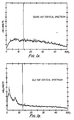
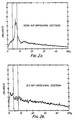
- the analog signals are first electronically summed and then led through a digital FFT computing spectrum analyzer and averager (Nicolet model 446) and finally displayed by the digital plotter with quantitative options.
- a digital FFT computing spectrum analyzer and averager Nicolaset model 446
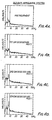
- isolated sections are set as follows - hippocampus: theta bandwidth (4 to 8 Hz); cortex: delta, theta, plus alpha bandwidths (1 to 13 Hz).
- the unit is read in millivolts root-mean-square (mVrms). Each rat serves as its own control and the results can be expressed in percent change from the predrug control level.
- the test session is generally about 180 minutes in length, with EEG samples taken every 30 minutes. These samples consist of 32 successive 8 second epochs analyzed with 400 line resolution. Each of the individual EEG spectral wave analyses therefore represents 4.25 minutes of recording.
- the general procedure, then, for testing 3-phenoxypyridine monosulfate is as follows.
- the rat is connected to the recording leads, placed into the test chamber, and allowed to acclimate to the situation for 1.0 hour.
- a predrug control EEG sample is recorded. (This sample represents the baseline against which all drug effects are evaluated).
- the animal is dosed (generally by oral intubation) and 30 minutes later the first posttreatment EEG sample is recorded. Similar EEG samples are repeated every 30 minutes.
- 3-phenoxypyridine and its pharmaceutically acceptable salts are able to cause this starting convergence of the abnormal EEG power spectra of aged rats at surprisingly low dosages.
- test is designed to show a compound's ability to reverse amnesia produced by electroconvulsive shock.
- the test is fully described in United States Patent Number, i.e. US-A-4,145,347, issued March 20, 1979, the only differences being that the test comnpounds in the present instance are administered orally and the length of electroconvulsive shock is 1.0 seconds.
- the 3-phenoxypyridine monosulfate, lactose and hydroxypropyl cellulose are blended and granulated with 50:50 ethanol-water.
- the wet granulation is screened, dried, and rescreened.
- the resulting dried granulation is blended with the magnesium stearate and the corn starch, and the mixture is compressed into 225 mg tablets using 8.73 mm (11/32 inch) standard concave punches. Yield equals approximately 6,000 tablets, each containing 3.14 mg of 3-phenoxypyridine monosulfate equivalent to 1.996 mg of 3-phenoxypyridine base.
- the 3-phenoxypyridine monosulfate, lactose and hydroxypropyl cellulose are blended and granulated with 50:50 ethanol-water.
- the wet granulation is screened, dried, and rescreened.
- the resulting dried granulation is blended with-the magnesium stearate and the corn starch, and the mixture is compressed into 375 mg tablets using 10.32 mm (13/32 inch) standard concave punches. Yield equals approximately 6,000 tablets, each containing 0.1572 mg of 3-phenoxypyridine monosulfate, equivalent to 0.0999 mg of 3-phenoxypyridine base.
- the 3-phenoxypyridine monosulfate, lactose and hydroxypropyl cellulose are blended and granulated with 50:50 ethanol-water.
- the wet granulation is screened, dried, and rescreened.
- the resulting dried granulation is blended with the magnesium stearate and the corn starch, and the mixture is compressed into 500 mg tablets using 12.7 mm (1/2 inch) standard concave punches. Yield equals approximately 6,000 tablets, each containing 393 mg of 3-phenoxypyridine monosulfate equivalent to 249.8 mg of 3-phenoxypyridine base.
- the mixture is blended and filled into Number Four hard gelatin capsules, filling each capsule with 200 mg of the powder mixture. Yield equals approximately 10,000 capsules, each containing 0.0393 mg of 3-phenoxypyridine monosulfate equivalent to 0.02498 mg of 3-phenoxypyridine base.
- the mixture is blended and filled into Number Two hard gelatin capsules filling each capsule with 320 mg of the powder mixture. Yield equals approximately 10,000 capsules, each containing 1.572 mg of 3-phenoxypyridine monosulfate equivalent to 0.999 mg of 3-phenoxypyridine base.
- the mixture is blended and filled into Number Zero hard gelatin capsules, filling each capsule with 580 mg of the powder mixture. Yield equal approximately 10,000 capsules, each containing 0.0786 mg of 3-phenoxypyridine monosulfate equivalent to 0.0499 mg of 3-phenoxypyridine base.
Landscapes
- Health & Medical Sciences (AREA)
- Chemical & Material Sciences (AREA)
- Organic Chemistry (AREA)
- General Health & Medical Sciences (AREA)
- Veterinary Medicine (AREA)
- Public Health (AREA)
- Medicinal Chemistry (AREA)
- Animal Behavior & Ethology (AREA)
- Pharmacology & Pharmacy (AREA)
- Life Sciences & Earth Sciences (AREA)
- Epidemiology (AREA)
- Neurology (AREA)
- Neurosurgery (AREA)
- Biomedical Technology (AREA)
- Bioinformatics & Cheminformatics (AREA)
- Engineering & Computer Science (AREA)
- Psychiatry (AREA)
- Nuclear Medicine, Radiotherapy & Molecular Imaging (AREA)
- General Chemical & Material Sciences (AREA)
- Chemical Kinetics & Catalysis (AREA)
- Hospice & Palliative Care (AREA)
- Pharmaceuticals Containing Other Organic And Inorganic Compounds (AREA)
- Acyclic And Carbocyclic Compounds In Medicinal Compositions (AREA)
- Electrical Discharge Machining, Electrochemical Machining, And Combined Machining (AREA)
- Dental Preparations (AREA)
- Saccharide Compounds (AREA)
- Medicines That Contain Protein Lipid Enzymes And Other Medicines (AREA)
- Medicinal Preparation (AREA)
- Pyridine Compounds (AREA)
Claims (2)
Priority Applications (1)
| Application Number | Priority Date | Filing Date | Title |
|---|---|---|---|
| AT83307861T ATE45090T1 (de) | 1983-01-03 | 1983-12-22 | Pharmazeutische zusammensetzung in oralen darreichungsformen. |
Applications Claiming Priority (2)
| Application Number | Priority Date | Filing Date | Title |
|---|---|---|---|
| US455396 | 1983-01-03 | ||
| US06/455,396 US4434169A (en) | 1983-01-03 | 1983-01-03 | Pharmaceutical compositions and methods |
Publications (2)
| Publication Number | Publication Date |
|---|---|
| EP0116781A1 EP0116781A1 (de) | 1984-08-29 |
| EP0116781B1 true EP0116781B1 (de) | 1989-08-02 |
Family
ID=23808634
Family Applications (1)
| Application Number | Title | Priority Date | Filing Date |
|---|---|---|---|
| EP83307861A Expired EP0116781B1 (de) | 1983-01-03 | 1983-12-22 | Pharmazeutische Zusammensetzung in oralen Darreichungsformen |
Country Status (9)
| Country | Link |
|---|---|
| US (1) | US4434169A (de) |
| EP (1) | EP0116781B1 (de) |
| JP (1) | JPS59134723A (de) |
| AT (1) | ATE45090T1 (de) |
| AU (1) | AU555496B2 (de) |
| CA (1) | CA1201656A (de) |
| DE (1) | DE3380294D1 (de) |
| DK (1) | DK1084A (de) |
| IE (1) | IE56399B1 (de) |
Families Citing this family (5)
| Publication number | Priority date | Publication date | Assignee | Title |
|---|---|---|---|---|
| US4666926A (en) * | 1986-02-27 | 1987-05-19 | Warner-Lambert Company | Transdermal formulations |
| US5173489A (en) * | 1986-04-10 | 1992-12-22 | The Dupont Merck Pharmaceutical Co. | α,α-disubstituted aromatics and heteroaromatics as cognition enhancers |
| US4760083A (en) * | 1986-04-10 | 1988-07-26 | E. I. Dupont De Nemours & Company | 3,3-disubstituted indolines |
| US4876259A (en) * | 1987-01-05 | 1989-10-24 | E. I. Du Pont De Nemours And Company | 3,3-disubstituted indolines |
| US5232934A (en) * | 1992-07-17 | 1993-08-03 | Warner-Lambert Co. | Method for the treatment of psychomotor stimulant addiction |
Family Cites Families (2)
| Publication number | Priority date | Publication date | Assignee | Title |
|---|---|---|---|---|
| US4067983A (en) | 1976-12-17 | 1978-01-10 | Parke, Davis & Company | Pharmaceutical compositions and methods |
| US4128555A (en) * | 1976-12-17 | 1978-12-05 | Warner-Lambert Company | 3-Phenoxypyridine monosulfate and a method for its production |
-
1983
- 1983-01-03 US US06/455,396 patent/US4434169A/en not_active Expired - Fee Related
- 1983-12-13 IE IE2939/83A patent/IE56399B1/xx unknown
- 1983-12-19 CA CA000443678A patent/CA1201656A/en not_active Expired
- 1983-12-20 AU AU22570/83A patent/AU555496B2/en not_active Ceased
- 1983-12-22 EP EP83307861A patent/EP0116781B1/de not_active Expired
- 1983-12-22 DE DE8383307861T patent/DE3380294D1/de not_active Expired
- 1983-12-22 AT AT83307861T patent/ATE45090T1/de not_active IP Right Cessation
- 1983-12-27 JP JP58244990A patent/JPS59134723A/ja active Pending
-
1984
- 1984-01-02 DK DK1084A patent/DK1084A/da not_active Application Discontinuation
Also Published As
| Publication number | Publication date |
|---|---|
| AU2257083A (en) | 1984-07-05 |
| DK1084A (da) | 1984-07-04 |
| DE3380294D1 (en) | 1989-09-07 |
| JPS59134723A (ja) | 1984-08-02 |
| EP0116781A1 (de) | 1984-08-29 |
| CA1201656A (en) | 1986-03-11 |
| IE56399B1 (en) | 1991-07-17 |
| US4434169A (en) | 1984-02-28 |
| IE832939L (en) | 1984-07-03 |
| ATE45090T1 (de) | 1989-08-15 |
| DK1084D0 (da) | 1984-01-02 |
| AU555496B2 (en) | 1986-09-25 |
Similar Documents
| Publication | Publication Date | Title |
|---|---|---|
| Walker et al. | Effects of exercise on sleep | |
| Solanto et al. | A dose‐response and time‐action analysis of autonomic and behavioral effects of methylphenidate in attention deficit disorder with hyperactivity | |
| Post et al. | The effect of orally administered cocaine on sleep of depressed patients | |
| EP0531155B1 (de) | Hirnaktivitätfördernde Zubereitungen | |
| JP6100692B2 (ja) | 睡眠の質改善剤 | |
| Simons et al. | Sustained-release theophylline for treatment of asthma in preschool children | |
| US4434169A (en) | Pharmaceutical compositions and methods | |
| Saletu et al. | Double-blind, placebo-controlled, clinical, psychometric and neurophysiological investigations with oxiracetam in the organic brain syndrome of late life | |
| Heath | Marijuana: Effects on deep and surface electroencephalograms of rhesus monkeys | |
| CN103284991B (zh) | 食品组合物 | |
| JP5039994B2 (ja) | 睡眠障害の治療のためのミルタザピンの使用 | |
| Caldwell et al. | Recovery sleep and performance following sleep deprivation with dextroamphetamine | |
| JPS63208524A (ja) | 睡眠リズム改善剤 | |
| BRPI0706865A2 (pt) | método para preparar extrato de shinyleaf yellowhorn e extrato de shinyleaf yellowhorn | |
| Timofeeva et al. | EEG spectra, behavioral states and motor activity in rats exposed to acetylcholinesterase inhibitor chlorpyrifos | |
| Poschel et al. | Arousal deficit shown in aged rat's quantitative EEG and ameliorative action of pramiracetam compared to piracetam | |
| US4067983A (en) | Pharmaceutical compositions and methods | |
| Moglia | Citicoline in patients with chronic cerebrovascular diseases (CCVD): Quantitative EEG study. | |
| Besser | Auditory flutter fusion as a measure of the actions of centrally acting drugs: modification of the threshold for fusion and the influence of adapting stimuli | |
| König et al. | The effect of frequent administration of sodium cromoglycate to asthmatic children who previously responded poorly | |
| Wyatt et al. | Abnormalities in skin potential fluctuations during the sleep of acute schizophrenic patients | |
| Bal et al. | Adverse effects of the use of unusual phenethylamine compounds sold as illicit amphetamine | |
| CA2056906C (en) | Use of phenylethanolaminotetralins for the preparation of anti-depressant and anti-stress pharmaceutical compositions | |
| JP2019006717A (ja) | 経口睡眠改善剤 | |
| Guazzelli et al. | Similarity of non-REM abnormalities in schizophrenia and depression |
Legal Events
| Date | Code | Title | Description |
|---|---|---|---|
| PUAI | Public reference made under article 153(3) epc to a published international application that has entered the european phase |
Free format text: ORIGINAL CODE: 0009012 |
|
| AK | Designated contracting states |
Designated state(s): AT BE CH DE FR GB IT LI LU NL SE |
|
| 17P | Request for examination filed |
Effective date: 19841221 |
|
| 17Q | First examination report despatched |
Effective date: 19860618 |
|
| D17Q | First examination report despatched (deleted) | ||
| ITF | It: translation for a ep patent filed | ||
| GRAA | (expected) grant |
Free format text: ORIGINAL CODE: 0009210 |
|
| AK | Designated contracting states |
Kind code of ref document: B1 Designated state(s): AT BE CH DE FR GB IT LI LU NL SE |
|
| REF | Corresponds to: |
Ref document number: 45090 Country of ref document: AT Date of ref document: 19890815 Kind code of ref document: T |
|
| REF | Corresponds to: |
Ref document number: 3380294 Country of ref document: DE Date of ref document: 19890907 |
|
| ET | Fr: translation filed | ||
| PG25 | Lapsed in a contracting state [announced via postgrant information from national office to epo] |
Ref country code: LU Free format text: LAPSE BECAUSE OF NON-PAYMENT OF DUE FEES Effective date: 19891231 |
|
| PLBE | No opposition filed within time limit |
Free format text: ORIGINAL CODE: 0009261 |
|
| STAA | Information on the status of an ep patent application or granted ep patent |
Free format text: STATUS: NO OPPOSITION FILED WITHIN TIME LIMIT |
|
| 26N | No opposition filed | ||
| PGFP | Annual fee paid to national office [announced via postgrant information from national office to epo] |
Ref country code: LU Payment date: 19901016 Year of fee payment: 8 |
|
| PGFP | Annual fee paid to national office [announced via postgrant information from national office to epo] |
Ref country code: GB Payment date: 19901119 Year of fee payment: 8 |
|
| PGFP | Annual fee paid to national office [announced via postgrant information from national office to epo] |
Ref country code: AT Payment date: 19901130 Year of fee payment: 8 |
|
| PGFP | Annual fee paid to national office [announced via postgrant information from national office to epo] |
Ref country code: SE Payment date: 19901205 Year of fee payment: 8 |
|
| PGFP | Annual fee paid to national office [announced via postgrant information from national office to epo] |
Ref country code: FR Payment date: 19901218 Year of fee payment: 8 |
|
| PGFP | Annual fee paid to national office [announced via postgrant information from national office to epo] |
Ref country code: DE Payment date: 19901221 Year of fee payment: 8 |
|
| ITTA | It: last paid annual fee | ||
| PGFP | Annual fee paid to national office [announced via postgrant information from national office to epo] |
Ref country code: NL Payment date: 19901231 Year of fee payment: 8 |
|
| PGFP | Annual fee paid to national office [announced via postgrant information from national office to epo] |
Ref country code: CH Payment date: 19910115 Year of fee payment: 8 |
|
| PGFP | Annual fee paid to national office [announced via postgrant information from national office to epo] |
Ref country code: BE Payment date: 19910227 Year of fee payment: 8 |
|
| EPTA | Lu: last paid annual fee | ||
| PG25 | Lapsed in a contracting state [announced via postgrant information from national office to epo] |
Ref country code: GB Effective date: 19911222 Ref country code: AT Effective date: 19911222 |
|
| PG25 | Lapsed in a contracting state [announced via postgrant information from national office to epo] |
Ref country code: SE Effective date: 19911223 |
|
| PG25 | Lapsed in a contracting state [announced via postgrant information from national office to epo] |
Ref country code: LI Effective date: 19911231 Ref country code: CH Effective date: 19911231 Ref country code: BE Effective date: 19911231 |
|
| BERE | Be: lapsed |
Owner name: WARNER-LAMBERT CY Effective date: 19911231 |
|
| PG25 | Lapsed in a contracting state [announced via postgrant information from national office to epo] |
Ref country code: NL Effective date: 19920701 |
|
| NLV4 | Nl: lapsed or anulled due to non-payment of the annual fee | ||
| GBPC | Gb: european patent ceased through non-payment of renewal fee | ||
| PG25 | Lapsed in a contracting state [announced via postgrant information from national office to epo] |
Ref country code: FR Effective date: 19920831 |
|
| REG | Reference to a national code |
Ref country code: CH Ref legal event code: PL |
|
| PG25 | Lapsed in a contracting state [announced via postgrant information from national office to epo] |
Ref country code: DE Effective date: 19920901 |
|
| REG | Reference to a national code |
Ref country code: FR Ref legal event code: ST |
|
| EUG | Se: european patent has lapsed |
Ref document number: 83307861.1 Effective date: 19920704 |