EP0117542A2 - Dépôt chimique à partir de la phase vapeur de revêtements de composés métalliques à l'aide de sous-halogénures métalliques - Google Patents
Dépôt chimique à partir de la phase vapeur de revêtements de composés métalliques à l'aide de sous-halogénures métalliques Download PDFInfo
- Publication number
- EP0117542A2 EP0117542A2 EP84101936A EP84101936A EP0117542A2 EP 0117542 A2 EP0117542 A2 EP 0117542A2 EP 84101936 A EP84101936 A EP 84101936A EP 84101936 A EP84101936 A EP 84101936A EP 0117542 A2 EP0117542 A2 EP 0117542A2
- Authority
- EP
- European Patent Office
- Prior art keywords
- reaction
- hydrogen
- substrate
- metal
- titanium
- Prior art date
- Legal status (The legal status is an assumption and is not a legal conclusion. Google has not performed a legal analysis and makes no representation as to the accuracy of the status listed.)
- Granted
Links
- 238000000576 coating method Methods 0.000 title claims abstract description 67
- 229910052751 metal Inorganic materials 0.000 title claims abstract description 60
- 239000002184 metal Substances 0.000 title claims abstract description 60
- 150000002736 metal compounds Chemical group 0.000 title claims description 8
- 238000005229 chemical vapour deposition Methods 0.000 title abstract description 15
- 238000006243 chemical reaction Methods 0.000 claims abstract description 125
- 239000000758 substrate Substances 0.000 claims abstract description 58
- 238000000034 method Methods 0.000 claims abstract description 49
- 239000010936 titanium Substances 0.000 claims abstract description 47
- RTAQQCXQSZGOHL-UHFFFAOYSA-N Titanium Chemical compound [Ti] RTAQQCXQSZGOHL-UHFFFAOYSA-N 0.000 claims abstract description 46
- 229910052719 titanium Inorganic materials 0.000 claims abstract description 46
- 230000008021 deposition Effects 0.000 claims abstract description 31
- 230000008569 process Effects 0.000 claims abstract description 19
- 150000002739 metals Chemical class 0.000 claims abstract description 12
- 239000000376 reactant Substances 0.000 claims abstract description 11
- 229910052720 vanadium Inorganic materials 0.000 claims abstract description 5
- VYZAMTAEIAYCRO-UHFFFAOYSA-N Chromium Chemical compound [Cr] VYZAMTAEIAYCRO-UHFFFAOYSA-N 0.000 claims abstract description 4
- 229910052804 chromium Inorganic materials 0.000 claims abstract description 4
- 239000011651 chromium Substances 0.000 claims abstract description 4
- IJGRMHOSHXDMSA-UHFFFAOYSA-N Atomic nitrogen Chemical compound N#N IJGRMHOSHXDMSA-UHFFFAOYSA-N 0.000 claims description 67
- 239000001257 hydrogen Substances 0.000 claims description 49
- 229910052739 hydrogen Inorganic materials 0.000 claims description 49
- QGZKDVFQNNGYKY-UHFFFAOYSA-N Ammonia Chemical compound N QGZKDVFQNNGYKY-UHFFFAOYSA-N 0.000 claims description 43
- UFHFLCQGNIYNRP-UHFFFAOYSA-N Hydrogen Chemical compound [H][H] UFHFLCQGNIYNRP-UHFFFAOYSA-N 0.000 claims description 36
- 239000011248 coating agent Substances 0.000 claims description 35
- 229910052757 nitrogen Inorganic materials 0.000 claims description 33
- NRTOMJZYCJJWKI-UHFFFAOYSA-N Titanium nitride Chemical compound [Ti]#N NRTOMJZYCJJWKI-UHFFFAOYSA-N 0.000 claims description 25
- 239000007789 gas Substances 0.000 claims description 24
- 239000008246 gaseous mixture Substances 0.000 claims description 21
- 229910021529 ammonia Inorganic materials 0.000 claims description 19
- IXCSERBJSXMMFS-UHFFFAOYSA-N hydrogen chloride Substances Cl.Cl IXCSERBJSXMMFS-UHFFFAOYSA-N 0.000 claims description 17
- 229910000041 hydrogen chloride Inorganic materials 0.000 claims description 17
- VEXZGXHMUGYJMC-UHFFFAOYSA-N Hydrochloric acid Chemical compound Cl VEXZGXHMUGYJMC-UHFFFAOYSA-N 0.000 claims description 15
- 150000002431 hydrogen Chemical class 0.000 claims description 13
- 239000004215 Carbon black (E152) Substances 0.000 claims description 12
- 229930195733 hydrocarbon Natural products 0.000 claims description 12
- 150000002430 hydrocarbons Chemical class 0.000 claims description 12
- XJDNKRIXUMDJCW-UHFFFAOYSA-J titanium tetrachloride Chemical compound Cl[Ti](Cl)(Cl)Cl XJDNKRIXUMDJCW-UHFFFAOYSA-J 0.000 claims description 11
- -1 nitro- Chemical class 0.000 claims description 10
- 229910052735 hafnium Inorganic materials 0.000 claims description 9
- PXHVJJICTQNCMI-UHFFFAOYSA-N Nickel Chemical compound [Ni] PXHVJJICTQNCMI-UHFFFAOYSA-N 0.000 claims description 8
- 238000004519 manufacturing process Methods 0.000 claims description 8
- 150000004767 nitrides Chemical class 0.000 claims description 8
- VBJZVLUMGGDVMO-UHFFFAOYSA-N hafnium atom Chemical compound [Hf] VBJZVLUMGGDVMO-UHFFFAOYSA-N 0.000 claims description 6
- QCWXUUIWCKQGHC-UHFFFAOYSA-N Zirconium Chemical compound [Zr] QCWXUUIWCKQGHC-UHFFFAOYSA-N 0.000 claims description 5
- QSHDDOUJBYECFT-UHFFFAOYSA-N mercury Chemical compound [Hg] QSHDDOUJBYECFT-UHFFFAOYSA-N 0.000 claims description 5
- 229910052753 mercury Inorganic materials 0.000 claims description 5
- 229910052726 zirconium Inorganic materials 0.000 claims description 5
- 150000004820 halides Chemical class 0.000 claims description 4
- 238000010438 heat treatment Methods 0.000 claims description 4
- 239000002923 metal particle Substances 0.000 claims description 4
- 238000002156 mixing Methods 0.000 claims description 4
- 239000000203 mixture Substances 0.000 claims description 4
- 229910052759 nickel Inorganic materials 0.000 claims description 4
- 239000010935 stainless steel Substances 0.000 claims description 4
- 229910001220 stainless steel Inorganic materials 0.000 claims description 4
- 229910000601 superalloy Inorganic materials 0.000 claims description 4
- 238000011144 upstream manufacturing Methods 0.000 claims description 4
- RYGMFSIKBFXOCR-UHFFFAOYSA-N Copper Chemical compound [Cu] RYGMFSIKBFXOCR-UHFFFAOYSA-N 0.000 claims description 3
- 229910052802 copper Inorganic materials 0.000 claims description 3
- 239000010949 copper Substances 0.000 claims description 3
- 239000012159 carrier gas Substances 0.000 claims description 2
- 229910052758 niobium Inorganic materials 0.000 claims description 2
- 239000010955 niobium Substances 0.000 claims description 2
- GUCVJGMIXFAOAE-UHFFFAOYSA-N niobium atom Chemical compound [Nb] GUCVJGMIXFAOAE-UHFFFAOYSA-N 0.000 claims description 2
- 229910052715 tantalum Inorganic materials 0.000 claims description 2
- GUVRBAGPIYLISA-UHFFFAOYSA-N tantalum atom Chemical compound [Ta] GUVRBAGPIYLISA-UHFFFAOYSA-N 0.000 claims description 2
- WFKWXMTUELFFGS-UHFFFAOYSA-N tungsten Chemical compound [W] WFKWXMTUELFFGS-UHFFFAOYSA-N 0.000 claims description 2
- 229910052721 tungsten Inorganic materials 0.000 claims description 2
- 239000010937 tungsten Substances 0.000 claims description 2
- 229910000039 hydrogen halide Inorganic materials 0.000 claims 3
- 239000012433 hydrogen halide Substances 0.000 claims 3
- 230000001276 controlling effect Effects 0.000 claims 2
- ZOKXTWBITQBERF-UHFFFAOYSA-N Molybdenum Chemical compound [Mo] ZOKXTWBITQBERF-UHFFFAOYSA-N 0.000 claims 1
- 229910001873 dinitrogen Inorganic materials 0.000 claims 1
- 125000004435 hydrogen atom Chemical group [H]* 0.000 claims 1
- 239000011817 metal compound particle Substances 0.000 claims 1
- 229910052750 molybdenum Inorganic materials 0.000 claims 1
- 239000011733 molybdenum Substances 0.000 claims 1
- 230000001105 regulatory effect Effects 0.000 claims 1
- LEONUFNNVUYDNQ-UHFFFAOYSA-N vanadium atom Chemical compound [V] LEONUFNNVUYDNQ-UHFFFAOYSA-N 0.000 claims 1
- 238000000151 deposition Methods 0.000 abstract description 31
- YONPGGFAJWQGJC-UHFFFAOYSA-K titanium(iii) chloride Chemical compound Cl[Ti](Cl)Cl YONPGGFAJWQGJC-UHFFFAOYSA-K 0.000 abstract description 9
- 150000001875 compounds Chemical class 0.000 abstract description 5
- GPPXJZIENCGNKB-UHFFFAOYSA-N vanadium Chemical compound [V]#[V] GPPXJZIENCGNKB-UHFFFAOYSA-N 0.000 abstract description 4
- 229910010062 TiCl3 Inorganic materials 0.000 abstract 1
- ATJFFYVFTNAWJD-UHFFFAOYSA-N Tin Chemical group [Sn] ATJFFYVFTNAWJD-UHFFFAOYSA-N 0.000 description 15
- 238000005660 chlorination reaction Methods 0.000 description 10
- 230000002349 favourable effect Effects 0.000 description 5
- 229910003074 TiCl4 Inorganic materials 0.000 description 4
- VNWKTOKETHGBQD-UHFFFAOYSA-N methane Chemical compound C VNWKTOKETHGBQD-UHFFFAOYSA-N 0.000 description 4
- 230000004048 modification Effects 0.000 description 4
- 238000012986 modification Methods 0.000 description 4
- 230000009467 reduction Effects 0.000 description 4
- 230000008859 change Effects 0.000 description 3
- 239000000463 material Substances 0.000 description 3
- 150000001247 metal acetylides Chemical class 0.000 description 3
- 239000011541 reaction mixture Substances 0.000 description 3
- 229910000831 Steel Inorganic materials 0.000 description 2
- 229910010061 TiC13 Inorganic materials 0.000 description 2
- 229910010066 TiC14 Inorganic materials 0.000 description 2
- 229910001315 Tool steel Inorganic materials 0.000 description 2
- 230000008901 benefit Effects 0.000 description 2
- 230000015572 biosynthetic process Effects 0.000 description 2
- 230000002708 enhancing effect Effects 0.000 description 2
- 238000011010 flushing procedure Methods 0.000 description 2
- 239000001307 helium Substances 0.000 description 2
- 229910052734 helium Inorganic materials 0.000 description 2
- SWQJXJOGLNCZEY-UHFFFAOYSA-N helium atom Chemical compound [He] SWQJXJOGLNCZEY-UHFFFAOYSA-N 0.000 description 2
- 230000006872 improvement Effects 0.000 description 2
- 238000011065 in-situ storage Methods 0.000 description 2
- 239000011261 inert gas Substances 0.000 description 2
- 238000005555 metalworking Methods 0.000 description 2
- 239000010959 steel Substances 0.000 description 2
- 238000009834 vaporization Methods 0.000 description 2
- 230000008016 vaporization Effects 0.000 description 2
- 229910045601 alloy Inorganic materials 0.000 description 1
- 239000000956 alloy Substances 0.000 description 1
- QVGXLLKOCUKJST-UHFFFAOYSA-N atomic oxygen Chemical compound [O] QVGXLLKOCUKJST-UHFFFAOYSA-N 0.000 description 1
- CFJRGWXELQQLSA-UHFFFAOYSA-N azanylidyneniobium Chemical compound [Nb]#N CFJRGWXELQQLSA-UHFFFAOYSA-N 0.000 description 1
- 230000009286 beneficial effect Effects 0.000 description 1
- 239000012320 chlorinating reagent Substances 0.000 description 1
- VNTLIPZTSJSULJ-UHFFFAOYSA-N chromium molybdenum Chemical compound [Cr].[Mo] VNTLIPZTSJSULJ-UHFFFAOYSA-N 0.000 description 1
- 239000004020 conductor Substances 0.000 description 1
- 239000000470 constituent Substances 0.000 description 1
- 230000003247 decreasing effect Effects 0.000 description 1
- 238000005137 deposition process Methods 0.000 description 1
- 230000001627 detrimental effect Effects 0.000 description 1
- 230000000694 effects Effects 0.000 description 1
- 238000011156 evaluation Methods 0.000 description 1
- WHJFNYXPKGDKBB-UHFFFAOYSA-N hafnium;methane Chemical group C.[Hf] WHJFNYXPKGDKBB-UHFFFAOYSA-N 0.000 description 1
- 239000004615 ingredient Substances 0.000 description 1
- 229910001507 metal halide Inorganic materials 0.000 description 1
- 150000005309 metal halides Chemical class 0.000 description 1
- 229910000069 nitrogen hydride Inorganic materials 0.000 description 1
- 230000003647 oxidation Effects 0.000 description 1
- 238000007254 oxidation reaction Methods 0.000 description 1
- 239000001301 oxygen Substances 0.000 description 1
- 229910052760 oxygen Inorganic materials 0.000 description 1
- 230000000717 retained effect Effects 0.000 description 1
- 238000005496 tempering Methods 0.000 description 1
- 238000012932 thermodynamic analysis Methods 0.000 description 1
- MTPVUVINMAGMJL-UHFFFAOYSA-N trimethyl(1,1,2,2,2-pentafluoroethyl)silane Chemical compound C[Si](C)(C)C(F)(F)C(F)(F)F MTPVUVINMAGMJL-UHFFFAOYSA-N 0.000 description 1
- XLYOFNOQVPJJNP-UHFFFAOYSA-N water Chemical compound O XLYOFNOQVPJJNP-UHFFFAOYSA-N 0.000 description 1
- ZVWKZXLXHLZXLS-UHFFFAOYSA-N zirconium nitride Chemical compound [Zr]#N ZVWKZXLXHLZXLS-UHFFFAOYSA-N 0.000 description 1
Images

Classifications
-
- C—CHEMISTRY; METALLURGY
- C23—COATING METALLIC MATERIAL; COATING MATERIAL WITH METALLIC MATERIAL; CHEMICAL SURFACE TREATMENT; DIFFUSION TREATMENT OF METALLIC MATERIAL; COATING BY VACUUM EVAPORATION, BY SPUTTERING, BY ION IMPLANTATION OR BY CHEMICAL VAPOUR DEPOSITION, IN GENERAL; INHIBITING CORROSION OF METALLIC MATERIAL OR INCRUSTATION IN GENERAL
- C23C—COATING METALLIC MATERIAL; COATING MATERIAL WITH METALLIC MATERIAL; SURFACE TREATMENT OF METALLIC MATERIAL BY DIFFUSION INTO THE SURFACE, BY CHEMICAL CONVERSION OR SUBSTITUTION; COATING BY VACUUM EVAPORATION, BY SPUTTERING, BY ION IMPLANTATION OR BY CHEMICAL VAPOUR DEPOSITION, IN GENERAL
- C23C16/00—Chemical coating by decomposition of gaseous compounds, without leaving reaction products of surface material in the coating, i.e. chemical vapour deposition [CVD] processes
- C23C16/22—Chemical coating by decomposition of gaseous compounds, without leaving reaction products of surface material in the coating, i.e. chemical vapour deposition [CVD] processes characterised by the deposition of inorganic material, other than metallic material
- C23C16/30—Deposition of compounds, mixtures or solid solutions, e.g. borides, carbides, nitrides
- C23C16/32—Carbides
-
- C—CHEMISTRY; METALLURGY
- C23—COATING METALLIC MATERIAL; COATING MATERIAL WITH METALLIC MATERIAL; CHEMICAL SURFACE TREATMENT; DIFFUSION TREATMENT OF METALLIC MATERIAL; COATING BY VACUUM EVAPORATION, BY SPUTTERING, BY ION IMPLANTATION OR BY CHEMICAL VAPOUR DEPOSITION, IN GENERAL; INHIBITING CORROSION OF METALLIC MATERIAL OR INCRUSTATION IN GENERAL
- C23C—COATING METALLIC MATERIAL; COATING MATERIAL WITH METALLIC MATERIAL; SURFACE TREATMENT OF METALLIC MATERIAL BY DIFFUSION INTO THE SURFACE, BY CHEMICAL CONVERSION OR SUBSTITUTION; COATING BY VACUUM EVAPORATION, BY SPUTTERING, BY ION IMPLANTATION OR BY CHEMICAL VAPOUR DEPOSITION, IN GENERAL
- C23C16/00—Chemical coating by decomposition of gaseous compounds, without leaving reaction products of surface material in the coating, i.e. chemical vapour deposition [CVD] processes
- C23C16/22—Chemical coating by decomposition of gaseous compounds, without leaving reaction products of surface material in the coating, i.e. chemical vapour deposition [CVD] processes characterised by the deposition of inorganic material, other than metallic material
- C23C16/30—Deposition of compounds, mixtures or solid solutions, e.g. borides, carbides, nitrides
- C23C16/34—Nitrides
-
- C—CHEMISTRY; METALLURGY
- C23—COATING METALLIC MATERIAL; COATING MATERIAL WITH METALLIC MATERIAL; CHEMICAL SURFACE TREATMENT; DIFFUSION TREATMENT OF METALLIC MATERIAL; COATING BY VACUUM EVAPORATION, BY SPUTTERING, BY ION IMPLANTATION OR BY CHEMICAL VAPOUR DEPOSITION, IN GENERAL; INHIBITING CORROSION OF METALLIC MATERIAL OR INCRUSTATION IN GENERAL
- C23C—COATING METALLIC MATERIAL; COATING MATERIAL WITH METALLIC MATERIAL; SURFACE TREATMENT OF METALLIC MATERIAL BY DIFFUSION INTO THE SURFACE, BY CHEMICAL CONVERSION OR SUBSTITUTION; COATING BY VACUUM EVAPORATION, BY SPUTTERING, BY ION IMPLANTATION OR BY CHEMICAL VAPOUR DEPOSITION, IN GENERAL
- C23C16/00—Chemical coating by decomposition of gaseous compounds, without leaving reaction products of surface material in the coating, i.e. chemical vapour deposition [CVD] processes
- C23C16/22—Chemical coating by decomposition of gaseous compounds, without leaving reaction products of surface material in the coating, i.e. chemical vapour deposition [CVD] processes characterised by the deposition of inorganic material, other than metallic material
- C23C16/30—Deposition of compounds, mixtures or solid solutions, e.g. borides, carbides, nitrides
- C23C16/36—Carbonitrides
-
- C—CHEMISTRY; METALLURGY
- C23—COATING METALLIC MATERIAL; COATING MATERIAL WITH METALLIC MATERIAL; CHEMICAL SURFACE TREATMENT; DIFFUSION TREATMENT OF METALLIC MATERIAL; COATING BY VACUUM EVAPORATION, BY SPUTTERING, BY ION IMPLANTATION OR BY CHEMICAL VAPOUR DEPOSITION, IN GENERAL; INHIBITING CORROSION OF METALLIC MATERIAL OR INCRUSTATION IN GENERAL
- C23C—COATING METALLIC MATERIAL; COATING MATERIAL WITH METALLIC MATERIAL; SURFACE TREATMENT OF METALLIC MATERIAL BY DIFFUSION INTO THE SURFACE, BY CHEMICAL CONVERSION OR SUBSTITUTION; COATING BY VACUUM EVAPORATION, BY SPUTTERING, BY ION IMPLANTATION OR BY CHEMICAL VAPOUR DEPOSITION, IN GENERAL
- C23C16/00—Chemical coating by decomposition of gaseous compounds, without leaving reaction products of surface material in the coating, i.e. chemical vapour deposition [CVD] processes
- C23C16/44—Chemical coating by decomposition of gaseous compounds, without leaving reaction products of surface material in the coating, i.e. chemical vapour deposition [CVD] processes characterised by the method of coating
- C23C16/448—Chemical coating by decomposition of gaseous compounds, without leaving reaction products of surface material in the coating, i.e. chemical vapour deposition [CVD] processes characterised by the method of coating characterised by the method used for generating reactive gas streams, e.g. by evaporation or sublimation of precursor materials
- C23C16/4488—Chemical coating by decomposition of gaseous compounds, without leaving reaction products of surface material in the coating, i.e. chemical vapour deposition [CVD] processes characterised by the method of coating characterised by the method used for generating reactive gas streams, e.g. by evaporation or sublimation of precursor materials by in situ generation of reactive gas by chemical or electrochemical reaction
Definitions
- This invention relates to chemical vapor deposition of compounds of the titanium sub-group of elements and applies in addition to the vanadium sub-group and chromium sub-group of elements as coatings on a chosen substrate at low temperatures.
- Such coatings can have various uses when applied to a substrate.
- coatings of the titanium sub-groups are desirable on metalworking tools to increase the useful life of the tool.
- Others, such as niobium nitride coatings are useful as a super conductive material.
- the temperature at which a coating can be deposited may be important. Critical temperatures are often involved above which the properties of the substrate are altered.
- nitrides, carbides and carbonitrides of titanium metal are desirable coatings.
- Compounds such as titanium nitride can be deposited as coatings by chemical vapor deposition (CVD) at temperatures of about 1000°C or higher.
- the coating of metalworking tools with titanium nitride is a typical example of a coating situation in which low temperature deposition of the coating is desirable.
- Present processes deposit titanium nitride by chemical vapor deposition by passing titanium tetrachloride, nitrogen and hydrogen over the substrate at temperatures of about 1000°C. or higher.
- Other existing processes also operating in the range of 1000°C. add a hydrocarbon gas, such as methane, to include titanium carbide in the coating deposit.
- These temperatures have detrimental effects on tool steel temper. Re-heat treating to re-establish temper detrimentally affects tolerances. For example, tempered steel will lose hardness above 500° to 600°C., stainless steel will sensitize above 550°C. and nickel based super alloys overage above 600°C.
- metal sub-halides refers to metal halides in which the metal exhibits a valency state (oxidation state) lower than the maximum valency state known for that metal.
- the maximum valency for titanium is 4, i.e., TiC1 4 . Therefore, the halide compounds of TiCl 3 and TiC12 where titanium exhibits a valency of 3 and 2, respectively, are titanium sub-halides and, in particular, titanium sub-chlorides.
- the maximum valency state of the metal is 5, any halide compound of that metal wherein the metal exhibits a valency state lower than 5, would be a sub-halide of that metal.
- titanium nitride coatings have been produced on a substrate by passing a controlled flow at about 400 volumes of hydrogen and about 10 volumes of hydrogen chloride over a bed of titanium metal particles heated to about 500°C., mixing 100 volumes of hydrogen and 150 volumes of nitrogen with the resulting hydrogen and titanium chloride and passing the gaseous mixture over a substrate heated to about 600°C.
- Further improvements and modifications in the process include mixing the nitrogen with the hydrogen before passing the mixture over the titanium metal particles and ammonia gas with the hydrogen and nitrogen mixture prior to introducing it to the substrate but continuing the addition of ammonia gas for a limited period of time. Further improvement and modification are obtained by varying the pressure of the gaseous mixture passed over the substrate and maintaining the pressure of the mixed gas around the substrate at a pressure not more than about 4 millimeters of mercury. The selection of pressure is such as to produce Knudsen flow of the gas.
- thermodynamic analysis indicates that the lower halides (or sub-halides) of titanium, and in particular, titanium bichloride (TiCl 2 ), and titanium trichloride (TiCl 3 ) (subchlorides of titanium) facilitate a larger reaction negative-free energy value and accordingly a greater potential for reaction involving the deposition of TiN by CVD at low temperatures.
- titanium bichloride and titanium trichloride to react with nitrogen and hydrogen in a gaseous environment to deposit titanium nitride continues to increase right down to 0°K. Nonetheless, reaction kinetics can inhibit the deposition of titanium nitride at low temperatures.
- reaction temperatures in the range of 250°C. to 850°C.
- the temperatures used are intended to take full advantage of the favorable coating rates at a temperature which does not result in loss of temper or hardness in the tool substrates or item being coated. It is essential to keep the free energy of the reaction at or about a predetermined negative value in order that the temperature at which the reaction and the deposition of titanium nitride, in the case of titanium, takes place will be maintained in this temperature range.
- the higher the equilibrium constant (K ) of the reaction the lower the reaction-free energy value will be, and accordingly, the partial pressure of the reactants and their flow rates are maintained at carefully controlled levels to permit the reaction to be carried out in the desired temperature range.
- the use of ammonia in the chemical vapor deposition stage assists in maintaining a higher equilibrium constant value and in enhancing the coating rates and quality.
- titanium nitride is deposited by chemical vapor deposition by reacting titanium bichloride and/or titanium trichloride with hydrogen and nitrogen, and optionally some ammonia, at a suitable temperature that will not detrimentally affect substrate properties and using flow rates which maintain partial pressures of the reactants, TiC1 2 and TiCl 3 , at relatively high levels.
- the favorable thermodynamics and kinetic factors are thereby utilized for the deposition of titanium nitride at the desirable temperature.
- Titanium bichloride and titanium trichloride because of their thermodynamic characteristics in reaction, are important ingredients in the reaction for the deposition of titanium nitride. Titanium bichloride and titanium trichloride can be produced by the reduction of titanium tetrachloride, but such reduction yields quantities of both that are smaller than are required to conduct the deposition of TiN at suitably high rates.
- Titanium bichloride and titanium trichloride can, of course, be obtained from other sources and simply be fed to a chemical vapor deposition chamber for the production of titanium nitride.
- a second embodiment of the invention involves a preliminary in situ step for the production of titanium sub-chlorides by passing hydrogen chloride over titanium metal. Such reaction will produce titanium bichloride, titanium trichloride, and titanium tetrachloride and their relative proportions in the gas reaction mixture can be varied by manipulating the titanium metal chlorination conditions such as temperature or the partial pressures of hydrogen and the chlorinating agents such as hydrogen chloride.
- the in situ chlorination of titanium metal and the deposition of TiN in the two stage process can also be conducted at low pressures. Reduction of pressure in the chlorination process facilitates vaporization of the sub-chlorides which have a higher vaporization temperature than TiCl 4 . This, in turn, permits chlorination to be performed at a lower temperature which, in turn, promotes production of the sub-chlorides.
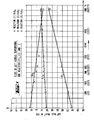
- Figure 1 includes a thermodynamic evaluation of the potential reactions available in a CVD coating process using titanium chlorides and indicates what reactant is preferable for reaction in any desired temperature range.
- Figure 1 shows the standard free energy versus temperature plots for reactions 1, 2 and 3 below:
- Figure 1 indicates the standard free energy values ( ⁇ G°) for these reactions at reaction temperatures ranging from -273°C. (0°K.) to 1627°C. (1900°K.) As indicated, the lower the free energy value the greater is the potential for reaction, although there is a point beyond which it is difficult to tap this potential due to unfavorable kinetics.
- TiC1 4 can be effective in depositing TiN at temperatures of 727°C. (1000°K.) and greater
- TiCl 3 and TiCl 2 have potential for participating in the above reactions and depositing TiN at reactions temperatures down to -273°C. (0°K.).
- the potential for reaction of the latter compounds is due to the large negative free energy change accompanying reactions (2) and (3).
- the formation of TiN from TiCl 2 or TiCl 3 becomes more favorable as the temperature is decreased. Nonetheless, at -273°C. (absolute 0°K.) any reaction would be very limited because of unfavorable kinetics.
- Kp and GOT relate as follows - (using reaction 3 for illustration purposes): wherein P-HCl denotes the partial pressure of HCl at the reaction temperature T.
- R is the universal gas constant
- T is the reaction temperature ln (Kp) T is the log to the base e of (Kp) T .
- Process apparatus for carrying out TiN deposition will now be described and will be followed by examples of deposition of TiN coatings on substrates at the desired reaction temperatures by varying and manipulating the process variables.
- Figure 2 shows a process apparatus which comprises two basic reaction chambers, a first chlorination chamber 1 upstream of and connected integrally with a coating chamber 2.
- the chlorination chamber is heated by a conventional resistively heated furnace 4.
- the tool substrate 3 is mounted within the coating chamber 2 and the chamber 2 is heated using conventional resistive heating means 5.
- the substrate 3 is independently heated in the coating chamber utilizing a conventional resistively heated cartridge heater 6.
- the resistance heated furnace 4 heats titanium Ti metal chips from 150°C. to 1100°C. and HC1 and H 2 are fed through flow meters 7, passed over the heated titanium 8 to produce TiC12 and TiCl 3 and hydrogen in accordance with the following resultant reactions:
- This reaction may also produce quantities of TiCl 4 .
- the parameters of this reaction are controlled by using suitable combinations of reaction temperatures, and relative flow rates of H 2 and HC1 to provide lower partial pressures of HC1, to steer the reaction towards predominant production of TiCl 3 and TiCl 2 .
- the TiCl 2 and TiCl 3 gases are carried by a carrier gas such as hydrogen or helium from chlorination chamber 1 to coating chamber 2 to which hydrogen and nitrogen are fed through flowmeters to foster reactions (2) and (3).
- a carrier gas such as hydrogen or helium from chlorination chamber 1 to coating chamber 2 to which hydrogen and nitrogen are fed through flowmeters to foster reactions (2) and (3).
- the hydrogen and nitrogen are preheated by passing through the furnace 4 in an annular chamber about reaction chamber 1.
- the value of Kp is fixed thermodynamically by formula (5) and a range of flow rates and partial pressure values can be determined.
- the flow rates chosen will affect the kinetics of the reaction. All the following examples are carried out on equipment of the type generally illustrated in Figure 2 and produced TiN coatings, and except where indicated otherwise the equipment is operated at 1 atm. pressure.
- substrate materials such as copper, stainless steel and nickel based super alloy are independently heated in the coating chamber by mounting them on a cartridge heater.
- the temperature of the cartridge heater was controlled using a temperature controller.
- Temperatures of the copper, stainless steel and nickel based super alloy substrate materials are monitored using a separate thermocouple attached to their surfaces.
- the walls of the coating chamber are maintained at a constant temperature using the resistively heated furnace arrangement, as in the previous examples in Tables II and III. It is, of course, always important to have the coating chamber and its walls at a temperature high enough to keep the metal sub-halides in the gas phase and avoid any condensing-out at the walls.
- a coating period of one hour and an operating pressure of 1 atm. is used for all the coating runs summarized in Table IV.
- the same chlorination step in chamber 1 is conducted at 500°C. and at flow rates of 10 ml/min. of HC1 and 400 ml/min. of H 2 . Details of the deposition conditions used are given in Table IV.
- ammonia is not only effective in enhancing the deposition of TiN thermodynamically as a comparison of the examples 1 with 4 shows; but also improves the kinetics of the deposition of TiN, as a comparison of the examples 3 with 1, 2, and 4 illustrates.
- Table V illustrate the advantages of pressure reduction in the chamber where a coating is occurring and in the chlorination process. It will be seen in Table V, with a pressure in the coating chamber of 2 millimeters of mercury and flow rates as shown and the addition of ammonia, good coatings are obtained. Table V also illustrates, in the third example, the effect of introducing the nitrogen in the first stage of the process during chlorination. Unexpectedly, the nitrogen does not result in nitrides being retained in the first reaction but permits a better control. In the third example with a flow rate of 20 millilitres of hydrogen and 6 millilitres of HC1 and 20 millilitres of N 2 with the chamber pressure of 1.5 millimeters of mercury a suitable coating could be obtained.
- the apparatus is partially evacuated through the exhaust with all inlet gas flows shut off.
- the whole apparatus is flushed with a gas such as hydrogen or helium which is not reactive with other materials. Flushing is continued to rid the apparatus of water vapor and oxygen.
- the temperature of the titanium is raised to 500°C. by furnace 4 and the temperature of substrate 3 is raised to 600°C. by heating means 5. These temperatures are measured by suitably located thermocouples.
- the mixed gases flow into chamber 2 and a total pressure of about 2mm.Hg. is maintained.
- the temperatures, gas flows and pressures are maintained for a suitable period of time, one hour for example.
- the apparatus is permitted to cool down, the gas flow reverted to inert gas and the workpiece removed.
- the stage 1 portion of the apparatus is at least partially sealed off before the chamber 2 is opened to atmosphere thus simplifying the flushing process in the next cycle.
- the invention applies to those metals of Group IVB, Group VB and Group VIB because these metals have a variable valency and it is possible to use those valencies which have the lower free energy of formation when forming metallic halides.
- the reactant gases in the deposition reaction are a hydrocarbon such as CH 4 , H2 and the metal sub-halide.
- the reactant gases in the deposition reaction are hydrocarbon such as CH 4 , H 2 and N 2 and/or NH 3 and the metal sub-halide.
- the substrates mentioned in this disclosure are exemplary, not exclusive. Other known substrates can be coated using the method and apparatus of this invention. Other known inert gas can be used.
Landscapes
- Chemical & Material Sciences (AREA)
- General Chemical & Material Sciences (AREA)
- Chemical Kinetics & Catalysis (AREA)
- Engineering & Computer Science (AREA)
- Materials Engineering (AREA)
- Mechanical Engineering (AREA)
- Metallurgy (AREA)
- Organic Chemistry (AREA)
- Inorganic Chemistry (AREA)
- Electrochemistry (AREA)
- Chemical Vapour Deposition (AREA)
Priority Applications (1)
| Application Number | Priority Date | Filing Date | Title |
|---|---|---|---|
| AT84101936T ATE77415T1 (de) | 1983-02-25 | 1984-02-23 | Chemische dampfabscheidung von ueberzuegen aus metallischen verbindungen unter verwendung von metallischen subhalogeniden. |
Applications Claiming Priority (4)
| Application Number | Priority Date | Filing Date | Title |
|---|---|---|---|
| US46985783A | 1983-02-25 | 1983-02-25 | |
| US469857 | 1983-02-25 | ||
| US57722584A | 1984-02-06 | 1984-02-06 | |
| US577225 | 1984-02-06 |
Publications (3)
| Publication Number | Publication Date |
|---|---|
| EP0117542A2 true EP0117542A2 (fr) | 1984-09-05 |
| EP0117542A3 EP0117542A3 (en) | 1987-08-12 |
| EP0117542B1 EP0117542B1 (fr) | 1992-06-17 |
Family
ID=27042876
Family Applications (1)
| Application Number | Title | Priority Date | Filing Date |
|---|---|---|---|
| EP19840101936 Expired EP0117542B1 (fr) | 1983-02-25 | 1984-02-23 | Dépôt chimique à partir de la phase vapeur de revêtements de composés métalliques à l'aide de sous-halogénures métalliques |
Country Status (2)
| Country | Link |
|---|---|
| EP (1) | EP0117542B1 (fr) |
| DE (1) | DE3485769T2 (fr) |
Cited By (8)
| Publication number | Priority date | Publication date | Assignee | Title |
|---|---|---|---|---|
| FR2612946A1 (fr) * | 1987-03-27 | 1988-09-30 | Chimie Metal | Procede et installation pour le depot chimique de revetements ultradurs a temperature moderee |
| EP0397131A3 (fr) * | 1989-05-09 | 1991-03-27 | Fujitsu Limited | Procédé de fabrication de contacts dans des dispositifs à semiconducteur |
| EP0360305A3 (fr) * | 1985-12-24 | 1991-06-05 | Sumitomo Electric Industries, Ltd. | Procédé de production de particules de matière composée et leur utilisation |
| US5261963A (en) * | 1991-12-04 | 1993-11-16 | Howmet Corporation | CVD apparatus comprising exhaust gas condensation means |
| US5264245A (en) * | 1991-12-04 | 1993-11-23 | Howmet Corporation | CVD method for forming uniform coatings |
| EP0899359A1 (fr) * | 1997-08-29 | 1999-03-03 | Commissariat A L'energie Atomique | Procédé de préparation par dépÔt chimique en phase vapeur (CVD) d'un revêtement multicouche à base de Ti-Al-N. |
| WO2008129528A3 (fr) * | 2007-04-23 | 2009-08-27 | Iscar Ltd. | Outil de coupe, organe de coupe ou pièce d'usure revêtu |
| CN115449745A (zh) * | 2022-08-08 | 2022-12-09 | 张欣欣 | 物理气相沉积技术制备氮碳化锆膜层的制备方法 |
Families Citing this family (2)
| Publication number | Priority date | Publication date | Assignee | Title |
|---|---|---|---|---|
| US7153586B2 (en) | 2003-08-01 | 2006-12-26 | Vapor Technologies, Inc. | Article with scandium compound decorative coating |
| US20070026205A1 (en) | 2005-08-01 | 2007-02-01 | Vapor Technologies Inc. | Article having patterned decorative coating |
Family Cites Families (6)
| Publication number | Priority date | Publication date | Assignee | Title |
|---|---|---|---|---|
| CH455856A (de) * | 1966-06-27 | 1968-07-15 | Suisse De Rech S Horlogeres La | Verfahren zur Herstellung von harten Überzügen auf Uhrbestandteilen |
| US3721577A (en) * | 1966-09-23 | 1973-03-20 | Teeg Research Inc | Process for the deposition of refractory metal and metalloid carbides on a base material |
| US3637422A (en) * | 1968-01-03 | 1972-01-25 | Atomic Energy Commission | Dispersion-hardened tungsten alloy |
| US3654895A (en) * | 1969-08-15 | 1972-04-11 | Texas Instruments Inc | Apparatus for forming a refractory coating on the inner periphery of a tubular object |
| US4196233A (en) * | 1974-02-07 | 1980-04-01 | Ciba-Geigy Corporation | Process for coating inorganic substrates with carbides, nitrides and/or carbonitrides |
| CA1087041A (fr) * | 1975-09-15 | 1980-10-07 | Westinghouse Canada Limited | Enduits a base de carbures et de nitrure d'hafnium |
-
1984
- 1984-02-23 EP EP19840101936 patent/EP0117542B1/fr not_active Expired
- 1984-02-23 DE DE19843485769 patent/DE3485769T2/de not_active Expired - Lifetime
Cited By (15)
| Publication number | Priority date | Publication date | Assignee | Title |
|---|---|---|---|---|
| EP0360305A3 (fr) * | 1985-12-24 | 1991-06-05 | Sumitomo Electric Industries, Ltd. | Procédé de production de particules de matière composée et leur utilisation |
| US5672382A (en) * | 1985-12-24 | 1997-09-30 | Sumitomo Electric Industries, Ltd. | Composite powder particle, composite body and method of preparation |
| FR2612946A1 (fr) * | 1987-03-27 | 1988-09-30 | Chimie Metal | Procede et installation pour le depot chimique de revetements ultradurs a temperature moderee |
| WO1988007596A1 (fr) * | 1987-03-27 | 1988-10-06 | Chimie Metal | Procede et installation pour le depot chimique de revetements ultradurs a temperature moderee |
| EP0397131A3 (fr) * | 1989-05-09 | 1991-03-27 | Fujitsu Limited | Procédé de fabrication de contacts dans des dispositifs à semiconducteur |
| US5407704A (en) * | 1991-12-04 | 1995-04-18 | Howmet Corporation | CVD apparatus and method |
| US5264245A (en) * | 1991-12-04 | 1993-11-23 | Howmet Corporation | CVD method for forming uniform coatings |
| US5462013A (en) * | 1991-12-04 | 1995-10-31 | Howmet Corporation | CVD apparatus and method for forming uniform coatings |
| US5261963A (en) * | 1991-12-04 | 1993-11-16 | Howmet Corporation | CVD apparatus comprising exhaust gas condensation means |
| EP0899359A1 (fr) * | 1997-08-29 | 1999-03-03 | Commissariat A L'energie Atomique | Procédé de préparation par dépÔt chimique en phase vapeur (CVD) d'un revêtement multicouche à base de Ti-Al-N. |
| FR2767841A1 (fr) * | 1997-08-29 | 1999-03-05 | Commissariat Energie Atomique | PROCEDE DE PREPARATION PAR DEPOT CHIMIQUE EN PHASE VAPEUR (CVD) D'UN REVETEMENT MULTICOUCHE A BASE DE Ti-Al-N |
| US6040012A (en) * | 1997-08-29 | 2000-03-21 | Commissariat A L'energie Atomique | Process for the preparation by chemical vapor deposition (CVD) of a Ti-A1-N based multilayer coating |
| WO2008129528A3 (fr) * | 2007-04-23 | 2009-08-27 | Iscar Ltd. | Outil de coupe, organe de coupe ou pièce d'usure revêtu |
| US8703245B2 (en) | 2007-04-23 | 2014-04-22 | Iscar, Ltd. | Coated cutting tool, cutting member or wear part |
| CN115449745A (zh) * | 2022-08-08 | 2022-12-09 | 张欣欣 | 物理气相沉积技术制备氮碳化锆膜层的制备方法 |
Also Published As
| Publication number | Publication date |
|---|---|
| DE3485769T2 (de) | 1992-12-24 |
| EP0117542A3 (en) | 1987-08-12 |
| DE3485769D1 (de) | 1992-07-23 |
| EP0117542B1 (fr) | 1992-06-17 |
Similar Documents
| Publication | Publication Date | Title |
|---|---|---|
| US4803127A (en) | Vapor deposition of metal compound coating utilizing metal sub-halides and coated metal article | |
| US4699082A (en) | Apparatus for chemical vapor deposition | |
| US6080477A (en) | Titanium carbonitride coated stratified substrate and cutting inserts made from the same | |
| US4239819A (en) | Deposition method and products | |
| US4619866A (en) | Method of making a coated cemented carbide body and resulting body | |
| US4196233A (en) | Process for coating inorganic substrates with carbides, nitrides and/or carbonitrides | |
| US6040012A (en) | Process for the preparation by chemical vapor deposition (CVD) of a Ti-A1-N based multilayer coating | |
| US4269899A (en) | Surface hafnium-titanium carbide coated hard alloy and method | |
| US5443662A (en) | Method of forming a nitride or carbonitride layer | |
| US6146697A (en) | MT CVD process | |
| EP0117542A2 (fr) | Dépôt chimique à partir de la phase vapeur de revêtements de composés métalliques à l'aide de sous-halogénures métalliques | |
| EP0166216A2 (fr) | Procédé de formation d'une couche de nitrure | |
| CA1309903C (fr) | Deposition d'aluminiure de titane | |
| US4830886A (en) | Process for making cutting insert with titanium carbide coating | |
| CA1224091A (fr) | Depot chimique en phase vapeur de couches metalliques, avec utilisation de sous-halogenures de metaux | |
| EP0045291B1 (fr) | Procédé pour la préparation d'un corps en carbure fritté revêtu et corps ainsi obtenu | |
| Rie et al. | Plasma-assisted chemical vapour deposition of hard coatings with metallo-organic compounds | |
| EP0084525B1 (fr) | Procédé d'obtention d'une pièce en carbure cémenté revêtue et pièce obtenue par ce procédé | |
| JPS6250466A (ja) | 窒化珪素膜を有する物品の製造法 | |
| JP2002241113A (ja) | 窒化クロム粉の製造方法 | |
| JPS6242996B2 (fr) | ||
| JPH0119469B2 (fr) | ||
| Sjöstrand | Limitations of present CVD technologies | |
| JPH0119468B2 (fr) | ||
| Laurent et al. | Organometallic Precursors to Vanadium and Titanium Carbonitride |
Legal Events
| Date | Code | Title | Description |
|---|---|---|---|
| PUAI | Public reference made under article 153(3) epc to a published international application that has entered the european phase |
Free format text: ORIGINAL CODE: 0009012 |
|
| AK | Designated contracting states |
Designated state(s): AT BE CH DE FR GB IT LI NL SE |
|
| PUAL | Search report despatched |
Free format text: ORIGINAL CODE: 0009013 |
|
| AK | Designated contracting states |
Kind code of ref document: A3 Designated state(s): AT BE CH DE FR GB IT LI NL SE |
|
| 17P | Request for examination filed |
Effective date: 19880122 |
|
| 17Q | First examination report despatched |
Effective date: 19880412 |
|
| GRAA | (expected) grant |
Free format text: ORIGINAL CODE: 0009210 |
|
| ITF | It: translation for a ep patent filed | ||
| AK | Designated contracting states |
Kind code of ref document: B1 Designated state(s): AT BE CH DE FR GB IT LI NL SE |
|
| REF | Corresponds to: |
Ref document number: 77415 Country of ref document: AT Date of ref document: 19920715 Kind code of ref document: T |
|
| REF | Corresponds to: |
Ref document number: 3485769 Country of ref document: DE Date of ref document: 19920723 |
|
| ET | Fr: translation filed | ||
| PLBE | No opposition filed within time limit |
Free format text: ORIGINAL CODE: 0009261 |
|
| STAA | Information on the status of an ep patent application or granted ep patent |
Free format text: STATUS: NO OPPOSITION FILED WITHIN TIME LIMIT |
|
| 26N | No opposition filed | ||
| ITTA | It: last paid annual fee | ||
| PGFP | Annual fee paid to national office [announced via postgrant information from national office to epo] |
Ref country code: SE Payment date: 19950127 Year of fee payment: 12 |
|
| EAL | Se: european patent in force in sweden |
Ref document number: 84101936.7 |
|
| PGFP | Annual fee paid to national office [announced via postgrant information from national office to epo] |
Ref country code: AT Payment date: 19950210 Year of fee payment: 12 |
|
| PGFP | Annual fee paid to national office [announced via postgrant information from national office to epo] |
Ref country code: GB Payment date: 19950214 Year of fee payment: 12 |
|
| PGFP | Annual fee paid to national office [announced via postgrant information from national office to epo] |
Ref country code: BE Payment date: 19950215 Year of fee payment: 12 |
|
| PGFP | Annual fee paid to national office [announced via postgrant information from national office to epo] |
Ref country code: CH Payment date: 19950221 Year of fee payment: 12 |
|
| PGFP | Annual fee paid to national office [announced via postgrant information from national office to epo] |
Ref country code: FR Payment date: 19950227 Year of fee payment: 12 |
|
| PGFP | Annual fee paid to national office [announced via postgrant information from national office to epo] |
Ref country code: NL Payment date: 19950228 Year of fee payment: 12 |
|
| PGFP | Annual fee paid to national office [announced via postgrant information from national office to epo] |
Ref country code: DE Payment date: 19950428 Year of fee payment: 12 |
|
| PG25 | Lapsed in a contracting state [announced via postgrant information from national office to epo] |
Ref country code: GB Effective date: 19960223 Ref country code: AT Effective date: 19960223 |
|
| PG25 | Lapsed in a contracting state [announced via postgrant information from national office to epo] |
Ref country code: SE Effective date: 19960224 |
|
| PG25 | Lapsed in a contracting state [announced via postgrant information from national office to epo] |
Ref country code: BE Effective date: 19960228 |
|
| PG25 | Lapsed in a contracting state [announced via postgrant information from national office to epo] |
Ref country code: LI Effective date: 19960229 Ref country code: CH Effective date: 19960229 |
|
| BERE | Be: lapsed |
Owner name: LIBURDI ENGINEERING LTD Effective date: 19960228 |
|
| PG25 | Lapsed in a contracting state [announced via postgrant information from national office to epo] |
Ref country code: NL Effective date: 19960901 |
|
| REG | Reference to a national code |
Ref country code: CH Ref legal event code: PL |
|
| GBPC | Gb: european patent ceased through non-payment of renewal fee |
Effective date: 19960223 |
|
| PG25 | Lapsed in a contracting state [announced via postgrant information from national office to epo] |
Ref country code: FR Effective date: 19961031 |
|
| NLV4 | Nl: lapsed or anulled due to non-payment of the annual fee |
Effective date: 19960901 |
|
| PG25 | Lapsed in a contracting state [announced via postgrant information from national office to epo] |
Ref country code: DE Effective date: 19961101 |
|
| REG | Reference to a national code |
Ref country code: FR Ref legal event code: ST |