EP0118915A2 - Lignée de cellules humaines cultivées - Google Patents
Lignée de cellules humaines cultivées Download PDFInfo
- Publication number
- EP0118915A2 EP0118915A2 EP84102681A EP84102681A EP0118915A2 EP 0118915 A2 EP0118915 A2 EP 0118915A2 EP 84102681 A EP84102681 A EP 84102681A EP 84102681 A EP84102681 A EP 84102681A EP 0118915 A2 EP0118915 A2 EP 0118915A2
- Authority
- EP
- European Patent Office
- Prior art keywords
- cell line
- human
- cells
- agr
- csf
- Prior art date
- Legal status (The legal status is an assumption and is not a legal conclusion. Google has not performed a legal analysis and makes no representation as to the accuracy of the status listed.)
- Granted
Links
Images








Classifications
-
- C—CHEMISTRY; METALLURGY
- C07—ORGANIC CHEMISTRY
- C07K—PEPTIDES
- C07K14/00—Peptides having more than 20 amino acids; Gastrins; Somatostatins; Melanotropins; Derivatives thereof
- C07K14/435—Peptides having more than 20 amino acids; Gastrins; Somatostatins; Melanotropins; Derivatives thereof from animals; from humans
- C07K14/52—Cytokines; Lymphokines; Interferons
- C07K14/53—Colony-stimulating factor [CSF]
Definitions
- This invention relates to a novel human cultured cell line, and more particularly to a cultured cell line which is derived from human T leukemic cells, produces a colony-stimulating factor (CSF) and can be cultured permanently.
- CSF colony-stimulating factor
- CSF is known as a body fluid factor which acts on granulocytic and macrophagic stem cells derived from bone marrow stem cells to grow them into matured hemopoietic cells, i.e., granulocytes and/or macrophages (Journal of Immunological Methods, 42, 253-284 (1981) and "Ketsueki no Byotaiseikagaku (Pathologic Biochemistry of Blood)", pp. 1-3, June 25, 1979, Asakura Shoten Co., Ltd.).
- CSF is useful for preventing and treating granulocytopenia and macrophago- cytopenia in patients under cancer therapy, for preventing and treating various infections and also for treating patients with implanted bone marrow.
- the present invention provides a human cultured cell line "AGR-ON" derived from human T leukemic cells and having the following characteristics:
- the cell line of the invention is useful for producing a human CSF in large quantities with high purity.
- the present cell line retains high ability to produce the CSF for a prolonged period of time with good stability.
- the cell line is HGPRT deficient cell line, is also useful as parental cells for fusion with human T cells and has a distinct cell surface phenotype, which use can be made of favorably in selecting fused cells derived from such cells.
- the cell line of the present invention which is characterized as above, has the cytologic and other properties to be described below in detail.
- the AGR-ON cells resemble lymphoid cells, have about two to three times the diameter of normal human peripheral blood T cells and are nearly spherical.
- the nucleus occupies a large proportion of the cell, and a small amount of protoplasm is observed.
- the protoplasm includes some granules. Deformed cells may be present occasionally.
- the number of chromosomes of "AGR-ON" of the present invention was counted by the following method.
- a 0.1 ⁇ g/ml quantity of demecolcine (trademark “Colcemid”, Sigma Chemical Co., Ltd., U.S.A.) was added to a culture of cells in the logarithmic proliferation stage. Two hours later, the suspension of cells was placed into a centrifugal tube and centrifuged at 1000 r.p.m. for 5 minutes. About 1 ml of 1Z sodium citrate solution was admixed with the sediment of cells with gentle stirring, and the mixture was allowed to stand at room temperature for about 15 minutes.
- Giemsa solution Merck & Co., Inc., U.S.A.
- Table 1 shows the result, which indicates that the number of chromosomes of the present cells ranges from 43 to 54 and is 45 on the average.
- AGR-ON of the invention was checked for cell surface phenotype in comparison with the known human T leukemic cell lines CCRF-CEM (ATCC No.CCLl19) and CEM-AG R (ACCC No.CRL-8081; Proc. Natl. Acd. Sci., U.S.A., Vol. 78, No.12, pp . 7717-7721 (1981)) and with human peripheral blood T cells.
- suitable monoclonal antibodies [ (Orthomune OKT series monoclonal antibody (Ortho Pharmaceutical Co., Raritan, New Jersey, U.S.A.) and Becton-Dickinson Leu series monoclonal antibody (Becton & Dickinson, Sunnyvale, California, U.S.A.)] at 4°C for 30 minutes.
- the cells were then washed twice with minimum essential Eagle's medium (MEM) containing 5% FCS, reacted with FITC (fluorescein isothiocyanate)-conjugated rabbit anti-mouse immunoglobulin (Miles-Yeda Ltd., Israel) and examined for the expression of T cell specific antigen by indirect immunofluorescence.
- MEM minimum essential Eagle's medium
- FITC fluorescein isothiocyanate
- Table 2 shows the result obtained by checking 100 cells, revealing that "AGR-ON" of the invention is 100% positive for Leu 1 and Leu 3a antibodies and is negative for T3, T8 and Leu 2a antibodies.
- the Leu 1-positive expression indicates that the present cells are a T cell line, and the T 4- and Leu 3a-positive expression shows that they belong to human inducer/helper T lymphocyte subclass.
- the AGR-ON cells proliferate satisfactorily in RPMI 1640 culture medium (Flow Laboratories, U.S.A.) containing 8-azaguanine (8-AG, 100 pM), 10% FCS, 100 ⁇ g/ml streptomycin, 100 units/ml penicillin G, 50 ⁇ g/ml gentamycin, 5 x 10 -5 M 2-mercaptoethanol and 1 mM glutamine.
- the AGR-ON cells generally proliferate satisfactorily at a temperature of 36 to 38°C and pH of 7.2 to 7.3. It is suitable to use an incubator containing 5% carbon dioxide and 95% air.
- the AGR-ON cells can be subcultured continuously and indefinitely.
- the AGR-ON cells can be preserved easily for a prolonged period of time in a mixture of 10% dimethyl sulfoxide (DMSO) and 90% of RPMI-1640 culture medium containing 20% FCS, as frozen in liquid nitrogen.
- DMSO dimethyl sulfoxide
- FCS RPMI-1640 culture medium containing 20% FCS
- the AGR-ON cells are resistant to 8-azaguanine (100 pM) and dies in a medium (HAT medium) containing 1 x 10 -4 M hypoxanthine, 4 x 10 -7 M aminopterin and 1.6 x 10- 5 thymidine. This indicates.that "AGR-ON" is deficient in hypoxanthine-guanine-phosphoribosyl-transferase (HGPRT).
- HGPRT hypoxanthine-guanine-phosphoribosyl-transferase
- concanavalin A Con A
- PHA phytohemagglutinin
- the cell line of the invention thus characterized can be obtained from 8-AG resistant human T leukemic cells by cloning in usual manner.
- Such 8-AG resistant human T leukemic cells are prepared by a usual method, for example, by the method disclosed in Published Unexamined Japanese Patent Application (Kokai) 206383/1982, from known human T leukemic cells, e.g., CCRF-CEM (J. Kaplan et al., Exp. Med., 139, 1070-1076 (1974)), by culturing such cells in RPMI 1640 medium containing 10% FCS and 8-azaguanine (8-AG) and then successively transferring these cells to such media with increased concentrations of 8-AG.
- Yamaokai Japanese Patent Application
- the cells are cultured in this type of medium containing, for example, 2 ⁇ M of 8-AG for 1 week first, then in the same medium containing 16 ⁇ M of 8-AG for 1 week and thereafter similarly in media with the concentration of 8-AG increased 2-fold in succession.
- an 8-AG resistant cell line is obtained alive in a medium containing 100 ⁇ M of 8-AG.
- Typical of such 8-AG resistant cell lines is, for example, the aforementioned CEM-AG R (ATCC No.CRL-8081).
- AGR-ON Cloning of "AGR-ON" is conducted by a usual method, for example, the soft agar method (Methods in Enzymology, Vol., 73, pp. 1-45 (1981)).
- a cell suspension diluted to 200 to 2000 cells/ml is prepared with use of a culture medium (e.g. RPMI 1640 containing 8-AG) of two-fold concentration.
- a quantity of the suspension is immediately mixed with an equal amount of 0.3% solution of soft agar (Difco Lab., Detroit. MI.), and the mixture is plated in a plastic dish.
- the amount of the mixture which varies with the size of the dish, is 1 to 1.5 ml for a dish of 3 cm in diameter or 2 to 2.5 ml for a dish of 5 to 6 cm in diameter.
- colonies are formed which can be observed with the unaided eye.
- each of the colonies are picked up under inverted microscope using a Pasteur pipette and placed into a culture medium in incubation plate(s) having a flat bottom with 96 wells.
- the colonies obtained are checked for CSF productivity by a usual method (e.g., Journal of Immunological Methods, 42, pp. 253-284 (1981)) to isolate "AGR-ON" as a single cell line.
- the cell line of the invention thus obtained has the foregoing characteristics.
- the cell line was deposited at the Amercian Type Culture Collection (ATCC), 12301 Parklawn Drive, Rockville, Maryland 20852, U.S.A. on January 24, 1983 and has been assigned "ATCC No.CRL-8199".
- CSF is prepared from the present cell line "AGR-ON" by incubating the cell line by the usual method of tissue culture and separating the factor from the supernatant of the culture.
- the cell line is incubated in a usual nutrient culture medium, which is not limited particularly.
- useful culture media are prepared from those generally used for such purposes, e.g., RPMI-1640, MEM (minimum essential Eagle's media), etc., by modifying them with FCS.
- the incubating conditions are not limited particularly, either; for example, the cell line is incubated at a concentration of 1-10 x 10 cells/ml under the foregoing conditions of proliferation usually for about 3 days.
- the resulting culture medium contains CSF, which is separated off and further purified by salting out, chromatography, electrophoresis, dialysis or like physicochemical method.
- the present cell line "AGR-ON" affords the desired CSF very easily in a high yield with high purity.
- the present invention assures mass production of the CSF on a commercial scale.
- the CSF thus obtained has high activity and low toxicity, remains free of degradation in its activity during the production process and is advantageously usable for the same applications as the known CSFs.
- CEM-AG R (ATCC No.CRL-8081) was diluted with the same culture medium containing 100 ⁇ M 8-AG to a concentration of 1000 cells/ml to obtain a cell suspension, which was immediately mixed with 0.3% solution of soft agar (Difco Lab.) heated to 37°C. The mixture was plated in plastic dishes (3 cm in diameter) in an amount of about 1 ml in each dish. In 14 days after the start of incubation, each of the colonies formed were picked up with a Pasteur pipette under inverted microscope and placed into the same culture medium as above in an incubation plate having a flat bottom with 96 wells, where the colonies were further incubated.
- Example 1 The cell line "AGR-ON" obtained in Example 1 was adjusted to a concentration of 5 x 10 5 cells/ml with RPMI-1640 medium containing 10Z FCS and was incubated in a plastic flask (25 cm 2 /70 ml, Corning Glass Works;
- the AGR-ON sample was tested for CSF activity according to the method of Ian et al (J. Immunol. 128, p. 168 (1982)), using the following culture media. * Culture medium I (MEM medium of 2-fold concentration) * Culture medium II (MEM medium) * Culture medium III
- Agar 1%, Difco Lab.
- a 10 ml of the solution was admixed with 23.3 ml of the culture medium III maintained at 37°C, and the mixture was maintained at 37°C.
- Bone marrow cells (BMC) collected from the femur of a BALB/c mouse were washed with Hank's balanced salt solution twice and adjusted to a concentration of 10 7 cells/ml with the medium II.
- a 1 ml quantity of the suspension was admixed with the agar culture medium, and the mixture was maintained at 37°C (2.9 x 10 5 cells/ml).
- a 1 ml quantity of the mixture was quickly admixed with each of 0.1 ml diluted portions of the AGR-ON sample having stepwise varying conentrations, and the mixture was allowed to stand at room temperature until the medium solidified. The mixture was then placed into a carbon dioxide gas incubator at 37°C to start incubation.
- Fig. 1 shows the result.
- the final dilution of the sample is plotted as abscissa v. CSF activity, i.e., the number of colonies per plated (C/P) as ordinate.
- the flexed lines shown represent the following.
- Fig. 1 demonstrates that the culture supernatant of the AGR-ON has CSF activity.
- the colonies examined were morphologically found to be granulocytes and macrophages.
- a comparative sample was prepared in the same manner as above using CCRF-CEM (ATCC No.CCL119). AGR-ON sample was also obtained by the same method as in para.
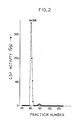
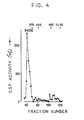
- Each of the samples in para. (2) was fractionated with a column of Ultrogel AcA 54 (2.2 x 90 cm, LKB, Bromma, Sweden). The column was brought to an equilibrium with 0.5M NaCl, 0.01M sodium phosphate buffer and 0.05% polyethylene glycol 6000 before fractionation. The sample was passed through the column at a flow rate of 19 ml/hr to give 2 ml fractions. Separation of proteins was monitored by measuring the absorbance at 280 mu. The CSF activity of the fractions was measured by the above method.
- CSF activity count of colonies/plate, abbreviated as "C/P”
- C/P the fraction number as abscissa.
- the AGR-ON sample was represented in Fig. 2, the sample prepared from human peripheral blood mononuclear cells in Fig. 3, and the sample prepared from human splenocytes in Fig. 4.
- the CSF from AGR-ON has a molecular weight of about 84,000, which nearly matches those of CSFs from human peripheral blood mononuclear cells and human splenocytes.
- conditioned medium (hereinafter referred to as "5637 CM”) similarly prepared from human bladder carcinoma line 5637 (Cell. Immunol., 71; 215 (1982)).
- Table 4 shows the result.
- AGR-ON sample were microclusters of less than 50 cells per colony and containing granulocytes and macrophages.
- the above assay was repeated with an incubation period of 2 weeks, and the activity of the mixed colony-CSF was examined.
- Table 5 shows the results granulocytes, macrophages and megakaryocytes.
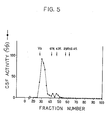
- Example 1 The AGR - ON obtained in Example 1 was adjusted to a concentration of 2 x 10 6 cells/ml with use of RPMI-1640 culture medium containing 20 mM of N-2-hydroxyethylpiperazine-N'-2-ethanesulfonic acid (hereinafter referred to as "HEPES”) and was incubated in a cell incubating flask (working vol, 2000 ml, Shibata-Hario Co., Ltd.) at 37°C for 4 days.
- HEPMS N-2-hydroxyethylpiperazine-N'-2-ethanesulfonic acid
- the above standard proteins are all products of Oriental Yeast Co., Ltd., Japan.
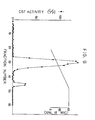
- Fig. 5 shows that the main activity was found in the fractions of 100K and above.
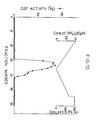
- Fig. 6 shows the result.
- the main CSF activity was observed around 37K and about 320K, while minor activity was observed around 600K and around 700K.
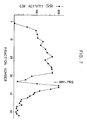
- (4) (a) The fraction (250 ml, 0.176 mg protein/ml) obtained with a retention time of 48 to 67 minutes in the above procedure (3) was passed through Con A column under the following conditions.
- Fig. 7 shows the result.
- Fig. 8 shows the result.
- Fig. 7 and 8 indicate that the CSF from AGR-ON includes two kinds; one having affinity for Con A, and the other having no affinity therefor.
- the concentrate was passed through DEAE-Sepharose CL-6B (Pharmacia Fine Chemicals) column (lcm (diameter) x 14.5 cm) already equilibrated with NaPB, washed with NaPB and then subjected to linear gradient elution with 0 to 1M NaCl (flow rate 1 ml/min, 10 ml/pass through fraction, 5 ml/eluate fraction).
- Fig. 9 shows the result.
- the fractions in the NaCI concentration range of 0.2 to 0.5M were found to exhibit main CSF activity. Minor activity was observed in the fraction in the NaCl concentration range of 0.9 to 1.OM.
- Fig. 10 shows the result.
- the fraction in the ammonium sulfate concentration range of 0.25 to OM and in the EG concentration range of 0 to 20 v/v % were found to exhibit CSF activity.
- Fig. 9 shows the result.
- the fractions in the NaCl concentration range of 0.2 to 0.5M were found to exhibit main CSF activity. Minor activity was observed in the fraction in the NaCl concentration range of 0.9 to 1.0M.
- Fig. 10 shows the result.
- the fraction in the ammonium sulfate concentration range of 0.25 to OM and in the EG concentration range df 0 to 20 v/v % were found to exhibit CSF activity.
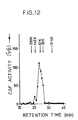
- Fig. 11 shows the result achieved with the normal concentrate
- Fig. 12 the result with the TM-treated concentrate.
- the main CSF activity resulting from the normal concentrate was observed with the fraction of about 60K, and the main CSF activity resulting from theTM-treated concentrate was observed with the fraction of about 70K. Minor CSF activity was observed with the fraction of about 140K to 290K only in the case of the normal concentrate.
- TM eliminated the CSF'activity from high-molecular-weight fractions presumably because glycosylation of CSF molecule was inhibited in the presence of TM.
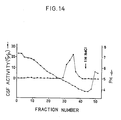
- Fig. 13 shows the result achieved with the normal concentrate
- Fig. 14 the result achieved with the TM-treated concentrate.
- the treatment with TM eliminated the CSF activity from the fraction eluted with 1M NaCl. This appears to indicate the presence of sialic acid in a carbohydrate moiety of the CSF of the fraction eluted with 1M NaCl.
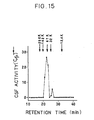
- Fig. 15 shows the result achieved by the fractions with Fraction Numbers 28 to 45
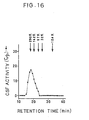
- Fig. 16 shows the result obtained by the fractions with Fraction Numbers 48 to 51.
- 1M NaCl-eluted fractions had a peak around 250K and were obtained at 67K and above.
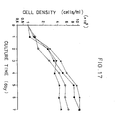
- Figs. 17 and 18 reveal that the proliferation of AGR-ON in vitro requires the presence of serum, and also show that AGR-ON proliferates satisfactorily in the presence of FCS, NCS or HS.
- the concentrate obtained by the procedure (1) was adjusted to the pH values listed in Table 6 with IN-NaOH or 1N-HC1 and tested for stability. Table 6 shows the results.
Landscapes
- Chemical & Material Sciences (AREA)
- Health & Medical Sciences (AREA)
- Life Sciences & Earth Sciences (AREA)
- Organic Chemistry (AREA)
- General Health & Medical Sciences (AREA)
- Gastroenterology & Hepatology (AREA)
- Biochemistry (AREA)
- Biophysics (AREA)
- Zoology (AREA)
- Genetics & Genomics (AREA)
- Medicinal Chemistry (AREA)
- Molecular Biology (AREA)
- Proteomics, Peptides & Aminoacids (AREA)
- Toxicology (AREA)
- Preparation Of Compounds By Using Micro-Organisms (AREA)
- Micro-Organisms Or Cultivation Processes Thereof (AREA)
Applications Claiming Priority (2)
| Application Number | Priority Date | Filing Date | Title |
|---|---|---|---|
| JP58043992A JPS59169489A (ja) | 1983-03-15 | 1983-03-15 | ヒト培養株化細胞 |
| JP43992/83 | 1983-03-15 |
Publications (3)
| Publication Number | Publication Date |
|---|---|
| EP0118915A2 true EP0118915A2 (fr) | 1984-09-19 |
| EP0118915A3 EP0118915A3 (en) | 1987-05-13 |
| EP0118915B1 EP0118915B1 (fr) | 1990-08-01 |
Family
ID=12679210
Family Applications (1)
| Application Number | Title | Priority Date | Filing Date |
|---|---|---|---|
| EP84102681A Expired EP0118915B1 (fr) | 1983-03-15 | 1984-03-12 | Lignée de cellules humaines cultivées |
Country Status (6)
| Country | Link |
|---|---|
| US (1) | US4675291A (fr) |
| EP (1) | EP0118915B1 (fr) |
| JP (1) | JPS59169489A (fr) |
| AU (1) | AU561081B2 (fr) |
| CA (1) | CA1218616A (fr) |
| DE (1) | DE3482843D1 (fr) |
Cited By (14)
| Publication number | Priority date | Publication date | Assignee | Title |
|---|---|---|---|---|
| EP0169566A1 (fr) * | 1984-07-25 | 1986-01-29 | Chugai Seiyaku Kabushiki Kaisha | CSF et méthode de préparation |
| EP0285429A3 (fr) * | 1987-03-31 | 1989-06-07 | Ube Industries, Ltd. | Cellules produisant de l'interleukine-3 et procédé de preparation d'interleukine-3 |
| EP0295432A3 (fr) * | 1987-05-21 | 1990-01-10 | BEHRINGWERKE Aktiengesellschaft | Sérum animal avec activité protéase et inhibiteur abaissée |
| US5043156A (en) * | 1986-10-18 | 1991-08-27 | Chugai Seiyaku Kabushiki Kaisha | Method of treating infectious diseases with granulocyte colony-stimulating factor |
| EP0399777A3 (fr) * | 1989-05-23 | 1992-03-11 | Chandra Choudhury | Facteur de croissance hématopoiétique dérivé de lymphocytes T etprocédé d'utilisation |
| US5104650A (en) * | 1985-02-05 | 1992-04-14 | Cetus Corporation | Uses of recombinant colony stimulating factor-1 |
| US5162111A (en) * | 1986-07-30 | 1992-11-10 | Grabstein Kenneth H | Treatment of bacterial diseases with granulocyte-macrophage colony stimulating factor |
| US5391706A (en) * | 1987-07-16 | 1995-02-21 | Schering Plough Corporation | Purification of GM-CSF |
| US5422105A (en) * | 1985-02-05 | 1995-06-06 | Cetus Oncology Corporation | Use of recombinant colony stimulating factor 1 |
| US5532341A (en) * | 1985-03-28 | 1996-07-02 | Sloan-Kettering Institute For Cancer Research | Human pluripotent hematopoietic colony stimulating factor |
| US5556620A (en) * | 1985-02-05 | 1996-09-17 | Cetus Oncology Corporation | Use of recombinant colony stimulating factor-1 to enhance wound healing |
| US5837229A (en) * | 1985-02-05 | 1998-11-17 | Chiron Corporation | Uses of recombinant colony stimulating factor-1 |
| US6254861B1 (en) | 1989-05-23 | 2001-07-03 | Chandra Choudhury | Hematopoietic growth factor derived from T lymphocytes |
| US7067128B2 (en) | 1994-08-05 | 2006-06-27 | Immunomedics, Inc. | Polyspecific immunoconjugates and antibody composites for targeting the multidrug resistant phenotype |
Families Citing this family (12)
| Publication number | Priority date | Publication date | Assignee | Title |
|---|---|---|---|---|
| NZ206699A (en) * | 1982-12-30 | 1989-08-29 | Bio Response Inc | Process for the production of serum independent cell lines |
| US4693975A (en) * | 1984-11-20 | 1987-09-15 | The Wistar Institute | Human hybridroma fusion partner for production of human monoclonal antibodies |
| US5078996A (en) * | 1985-08-16 | 1992-01-07 | Immunex Corporation | Activation of macrophage tumoricidal activity by granulocyte-macrophage colony stimulating factor |
| US5650297A (en) * | 1986-09-17 | 1997-07-22 | Otsuka Pharmaceutical Co., Ltd. | DNA encoding human colony-stimulating factors |
| JP2583770B2 (ja) | 1986-09-17 | 1997-02-19 | 大塚製薬株式会社 | 遺伝子 |
| US4847325A (en) * | 1988-01-20 | 1989-07-11 | Cetus Corporation | Conjugation of polymer to colony stimulating factor-1 |
| US20030232010A2 (en) * | 1988-03-29 | 2003-12-18 | Immunomedics, Inc. | Improved cytotoxic therapy |
| CA1329119C (fr) * | 1988-03-29 | 1994-05-03 | Milton David Goldenberg | Therapie faisant appel a des agents cytotoxiques |
| AU2882992A (en) * | 1991-11-06 | 1993-06-07 | Arthur A. Axelrad | Cell culture medium |
| US5322787A (en) * | 1992-04-30 | 1994-06-21 | Amrad Corporation Limited | Cytokine and bioassay therefor |
| US5827642A (en) * | 1994-08-31 | 1998-10-27 | Fred Hutchinson Cancer Research Center | Rapid expansion method ("REM") for in vitro propagation of T lymphocytes |
| ATE476496T1 (de) | 1996-03-04 | 2010-08-15 | Calyx Bio Ventures Inc | Modifizierte schnellvermehrungsmethode ('modified-rem') zur in vitro vermehrung von t-lymphozyten |
Family Cites Families (2)
| Publication number | Priority date | Publication date | Assignee | Title |
|---|---|---|---|---|
| US4438038A (en) * | 1981-02-17 | 1984-03-20 | Nuodex Inc. | Process for the production of oil-soluble metal salts |
| US4544632A (en) * | 1981-06-12 | 1985-10-01 | Yuichi Yamamura | Human T cell lines and method of producing same |
-
1983
- 1983-03-15 JP JP58043992A patent/JPS59169489A/ja active Granted
-
1984
- 1984-03-06 US US06/586,558 patent/US4675291A/en not_active Expired - Fee Related
- 1984-03-12 EP EP84102681A patent/EP0118915B1/fr not_active Expired
- 1984-03-12 DE DE8484102681T patent/DE3482843D1/de not_active Expired - Fee Related
- 1984-03-13 CA CA000449513A patent/CA1218616A/fr not_active Expired
- 1984-03-14 AU AU25635/84A patent/AU561081B2/en not_active Ceased
Cited By (19)
| Publication number | Priority date | Publication date | Assignee | Title |
|---|---|---|---|---|
| US4833127A (en) * | 1984-07-25 | 1989-05-23 | Chugai Seiyaku Kabushiki Kaisha | Novel CSF and method for obtaining the same |
| EP0169566A1 (fr) * | 1984-07-25 | 1986-01-29 | Chugai Seiyaku Kabushiki Kaisha | CSF et méthode de préparation |
| US5422105A (en) * | 1985-02-05 | 1995-06-06 | Cetus Oncology Corporation | Use of recombinant colony stimulating factor 1 |
| US5837229A (en) * | 1985-02-05 | 1998-11-17 | Chiron Corporation | Uses of recombinant colony stimulating factor-1 |
| US5725850A (en) * | 1985-02-05 | 1998-03-10 | Chiron Corporation | Use of CSF-1 to treat tumor burden |
| US5635175A (en) * | 1985-02-05 | 1997-06-03 | Chiron Corporation | Use of CSF-1 to treat viral infections |
| US5614183A (en) * | 1985-02-05 | 1997-03-25 | Chiron Corporation | Use of CSF-1 to treat bacterial infections |
| US5556620A (en) * | 1985-02-05 | 1996-09-17 | Cetus Oncology Corporation | Use of recombinant colony stimulating factor-1 to enhance wound healing |
| US5104650A (en) * | 1985-02-05 | 1992-04-14 | Cetus Corporation | Uses of recombinant colony stimulating factor-1 |
| US5532341A (en) * | 1985-03-28 | 1996-07-02 | Sloan-Kettering Institute For Cancer Research | Human pluripotent hematopoietic colony stimulating factor |
| US5162111A (en) * | 1986-07-30 | 1992-11-10 | Grabstein Kenneth H | Treatment of bacterial diseases with granulocyte-macrophage colony stimulating factor |
| US5043156A (en) * | 1986-10-18 | 1991-08-27 | Chugai Seiyaku Kabushiki Kaisha | Method of treating infectious diseases with granulocyte colony-stimulating factor |
| EP0287248A3 (fr) * | 1987-03-31 | 1989-06-14 | Ube Industries, Ltd. | Une lignée cellulaire humaine capable de produire de l'interleukine-3 humaine ayant une activité de croissance de cellules mammaires |
| EP0285429A3 (fr) * | 1987-03-31 | 1989-06-07 | Ube Industries, Ltd. | Cellules produisant de l'interleukine-3 et procédé de preparation d'interleukine-3 |
| EP0295432A3 (fr) * | 1987-05-21 | 1990-01-10 | BEHRINGWERKE Aktiengesellschaft | Sérum animal avec activité protéase et inhibiteur abaissée |
| US5391706A (en) * | 1987-07-16 | 1995-02-21 | Schering Plough Corporation | Purification of GM-CSF |
| EP0399777A3 (fr) * | 1989-05-23 | 1992-03-11 | Chandra Choudhury | Facteur de croissance hématopoiétique dérivé de lymphocytes T etprocédé d'utilisation |
| US6254861B1 (en) | 1989-05-23 | 2001-07-03 | Chandra Choudhury | Hematopoietic growth factor derived from T lymphocytes |
| US7067128B2 (en) | 1994-08-05 | 2006-06-27 | Immunomedics, Inc. | Polyspecific immunoconjugates and antibody composites for targeting the multidrug resistant phenotype |
Also Published As
| Publication number | Publication date |
|---|---|
| AU2563584A (en) | 1984-09-20 |
| US4675291A (en) | 1987-06-23 |
| AU561081B2 (en) | 1987-04-30 |
| EP0118915A3 (en) | 1987-05-13 |
| EP0118915B1 (fr) | 1990-08-01 |
| DE3482843D1 (de) | 1990-09-06 |
| JPS59169489A (ja) | 1984-09-25 |
| JPH0530437B2 (fr) | 1993-05-10 |
| CA1218616A (fr) | 1987-03-03 |
Similar Documents
| Publication | Publication Date | Title |
|---|---|---|
| EP0118915B1 (fr) | Lignée de cellules humaines cultivées | |
| US4438032A (en) | Unique T-lymphocyte line and products derived therefrom | |
| US4490289A (en) | Homogeneous human interleukin 2 | |
| US4908433A (en) | Uses of interleukin-2 | |
| EP0092163B1 (fr) | Purification d'interleukine-2 | |
| US5895646A (en) | Isolated native primate GM-CSF protein | |
| EP0291728A2 (fr) | Production d'interféron immun et son ARN-m | |
| US4613459A (en) | Lymphocyte growth factor | |
| AU601958B2 (en) | Hybridoma's to human pluripotent granulocyte colony stimulating factor | |
| US5037958A (en) | Immunosuppressive factor | |
| US4722998A (en) | Method of producing lymphocyte growth factors | |
| EP0225583A2 (fr) | Anticorps monoclonal contre le facteur stimulant de colonie de granulocyte humain | |
| JP2559035B2 (ja) | 細胞生長調節因子 | |
| EP0132359A2 (fr) | Interleucine-2 naturelle humaine et sa préparation | |
| Hirai et al. | Characterization of a human basophil-like cell promoting activity. | |
| US5795568A (en) | Method of treating infectious disease with GM-CSF | |
| US4720482A (en) | Pharmaceutical compositions containing one or more lymphocyte growth factors | |
| US5216133A (en) | Human monocyte growth factor | |
| WO1987004466A1 (fr) | Interleukine | |
| US5322787A (en) | Cytokine and bioassay therefor | |
| US4758513A (en) | Human T or B cell lines and a process for producing immunologically active substances using the same | |
| EP0234545A2 (fr) | Facteur angiogénique humain purifié, procédé pour sa préparation et préparations pharmaceutiques | |
| EP0285429A2 (fr) | Cellules produisant de l'interleukine-3 et procédé de preparation d'interleukine-3 | |
| Miyata et al. | Purification and characterization of lymphocytic clonal growth factor (LCGF) derived from human-human hybridoma SH-76 cells | |
| JP2846331B2 (ja) | 骨髄細胞分化増殖因子、その産生細胞及びその製法 |
Legal Events
| Date | Code | Title | Description |
|---|---|---|---|
| PUAI | Public reference made under article 153(3) epc to a published international application that has entered the european phase |
Free format text: ORIGINAL CODE: 0009012 |
|
| AK | Designated contracting states |
Designated state(s): CH DE FR GB LI NL SE |
|
| PUAL | Search report despatched |
Free format text: ORIGINAL CODE: 0009013 |
|
| AK | Designated contracting states |
Kind code of ref document: A3 Designated state(s): CH DE FR GB LI NL SE |
|
| 17P | Request for examination filed |
Effective date: 19870703 |
|
| 17Q | First examination report despatched |
Effective date: 19890424 |
|
| GRAA | (expected) grant |
Free format text: ORIGINAL CODE: 0009210 |
|
| AK | Designated contracting states |
Kind code of ref document: B1 Designated state(s): CH DE FR GB LI NL SE |
|
| PG25 | Lapsed in a contracting state [announced via postgrant information from national office to epo] |
Ref country code: NL Effective date: 19900801 Ref country code: FR Effective date: 19900801 |
|
| REF | Corresponds to: |
Ref document number: 3482843 Country of ref document: DE Date of ref document: 19900906 |
|
| EN | Fr: translation not filed | ||
| NLV1 | Nl: lapsed or annulled due to failure to fulfill the requirements of art. 29p and 29m of the patents act | ||
| PG25 | Lapsed in a contracting state [announced via postgrant information from national office to epo] |
Ref country code: GB Effective date: 19910312 |
|
| PG25 | Lapsed in a contracting state [announced via postgrant information from national office to epo] |
Ref country code: SE Effective date: 19910313 |
|
| PG25 | Lapsed in a contracting state [announced via postgrant information from national office to epo] |
Ref country code: LI Effective date: 19910331 Ref country code: CH Effective date: 19910331 |
|
| PLBE | No opposition filed within time limit |
Free format text: ORIGINAL CODE: 0009261 |
|
| STAA | Information on the status of an ep patent application or granted ep patent |
Free format text: STATUS: NO OPPOSITION FILED WITHIN TIME LIMIT |
|
| 26N | No opposition filed | ||
| GBPC | Gb: european patent ceased through non-payment of renewal fee | ||
| REG | Reference to a national code |
Ref country code: CH Ref legal event code: PL |
|
| PG25 | Lapsed in a contracting state [announced via postgrant information from national office to epo] |
Ref country code: DE Effective date: 19920101 |
|
| EUG | Se: european patent has lapsed |
Ref document number: 84102681.8 Effective date: 19911009 |