EP0121121B1 - Verbindung, Arugomycin - Google Patents
Verbindung, Arugomycin Download PDFInfo
- Publication number
- EP0121121B1 EP0121121B1 EP84102290A EP84102290A EP0121121B1 EP 0121121 B1 EP0121121 B1 EP 0121121B1 EP 84102290 A EP84102290 A EP 84102290A EP 84102290 A EP84102290 A EP 84102290A EP 0121121 B1 EP0121121 B1 EP 0121121B1
- Authority
- EP
- European Patent Office
- Prior art keywords
- arugomycin
- chloroform
- methanol
- water
- soluble
- Prior art date
- Legal status (The legal status is an assumption and is not a legal conclusion. Google has not performed a legal analysis and makes no representation as to the accuracy of the status listed.)
- Expired
Links
- 0 C*C1C(C)CCC1 Chemical compound C*C1C(C)CCC1 0.000 description 2
Images


Classifications
-
- C—CHEMISTRY; METALLURGY
- C07—ORGANIC CHEMISTRY
- C07H—SUGARS; DERIVATIVES THEREOF; NUCLEOSIDES; NUCLEOTIDES; NUCLEIC ACIDS
- C07H15/00—Compounds containing hydrocarbon or substituted hydrocarbon radicals directly attached to hetero atoms of saccharide radicals
- C07H15/20—Carbocyclic rings
- C07H15/24—Condensed ring systems having three or more rings
- C07H15/252—Naphthacene radicals, e.g. daunomycins, adriamycins
-
- A—HUMAN NECESSITIES
- A61—MEDICAL OR VETERINARY SCIENCE; HYGIENE
- A61P—SPECIFIC THERAPEUTIC ACTIVITY OF CHEMICAL COMPOUNDS OR MEDICINAL PREPARATIONS
- A61P35/00—Antineoplastic agents
-
- C—CHEMISTRY; METALLURGY
- C12—BIOCHEMISTRY; BEER; SPIRITS; WINE; VINEGAR; MICROBIOLOGY; ENZYMOLOGY; MUTATION OR GENETIC ENGINEERING
- C12N—MICROORGANISMS OR ENZYMES; COMPOSITIONS THEREOF; PROPAGATING, PRESERVING, OR MAINTAINING MICROORGANISMS; MUTATION OR GENETIC ENGINEERING; CULTURE MEDIA
- C12N1/00—Microorganisms; Compositions thereof; Processes of propagating, maintaining or preserving microorganisms or compositions thereof; Processes of preparing or isolating a composition containing a microorganism; Culture media therefor
- C12N1/20—Bacteria; Culture media therefor
- C12N1/205—Bacterial isolates
-
- C—CHEMISTRY; METALLURGY
- C12—BIOCHEMISTRY; BEER; SPIRITS; WINE; VINEGAR; MICROBIOLOGY; ENZYMOLOGY; MUTATION OR GENETIC ENGINEERING
- C12P—FERMENTATION OR ENZYME-USING PROCESSES TO SYNTHESISE A DESIRED CHEMICAL COMPOUND OR COMPOSITION OR TO SEPARATE OPTICAL ISOMERS FROM A RACEMIC MIXTURE
- C12P19/00—Preparation of compounds containing saccharide radicals
- C12P19/44—Preparation of O-glycosides, e.g. glucosides
- C12P19/56—Preparation of O-glycosides, e.g. glucosides having an oxygen atom of the saccharide radical directly bound to a condensed ring system having three or more carbocyclic rings, e.g. daunomycin, adriamycin
-
- C—CHEMISTRY; METALLURGY
- C12—BIOCHEMISTRY; BEER; SPIRITS; WINE; VINEGAR; MICROBIOLOGY; ENZYMOLOGY; MUTATION OR GENETIC ENGINEERING
- C12R—INDEXING SCHEME ASSOCIATED WITH SUBCLASSES C12C - C12Q, RELATING TO MICROORGANISMS
- C12R2001/00—Microorganisms ; Processes using microorganisms
- C12R2001/01—Bacteria or Actinomycetales ; using bacteria or Actinomycetales
- C12R2001/465—Streptomyces
Definitions
- the present invention relates to a novel anthracycline compound and a process for the production thereof.
- Anthracycline compounds as carcinostatic antibiotics assume an important position in medicine, and various anthracycline compounds have been proposed so far.
- this invention provides an anthracycline compound, Arugomycin, of formula (I) and having the physicochemical properties set forth below.
- This invention also provides a process for producing the anthracycline compound, Arugomycin, which process comprises aerobically cultivating an Arugomycin-producing Streptomyces strain in a suitable culture medium, and recovering from the culture the anthracycline compound, Arugomycin, having the following physicochemical properties.
- the anthracycline compound, Arugomycin, according to the present invention has a chemical structure as shown by the following formula (I).
- Arugomycin was dissolved in 40% formic acid and hydrolyzed at 85°C for 40 minutes, whereby an aglycone moiety and a sugar moiety were obtained.
- the aglycone moiety was found to have the following chemical structure wherein R, and R 2 are each hydrogen.
- the sugar moiety was found by the decoupling of the 1 H-NMR spectrum to comprise diginose, decilonitrose and 2-deoxyfucose.
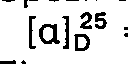
- the physicochemical properties of the anthracycline compound, Arugomycin, are as follows.
- the anthracycline compound, Arugomycin has been heretofore obtained only by the cultivation of micro-organisms. It may be possible, however, to produce this compound by synthetic chemical or microbiological modification of related compounds, or to produce it by total chemical synthesis.
- the cultivation technique uses a Streptomyces strain capable of producing Arugomycin. More specifically, we have isolated a strain called Streptomyces violochromogenes 1089-AV 2 (S92) and found that this strain produces Arugomycin. It may also be possible to increase Arugomycin output by subjecting S. violochromogenes 1089-AV 2 (S92) to irradiation by radioactive rays or to other treatments.
- S92 is a Streptomyces strain isolated from the soil collected from a paddy field in Motoyama-cho, Kanzaki-gun, Saga-ken, Japan. This strain was deposited on December 28, 1982 with the Fermentation Research Institute, Agency of Industrial Science and Technology, Ministry of International Trade and Industry of Japan, where it was assigned the accession number FERM P-6865. This strain now bears the accession number FERM BP-450 under the Budapest Treaty on the International Recognition of the Deposit of Microorganism for the Purposes of Patent Procedure.
- Aerial hyphae extend their main axis far, ramifying into short branches irregularly, and racemously in many cases (monopodial branching) while forming spore chains at the ends of the branches.
- the spore chain ordinarily consists of 10 to 25 spores and is tightly closed spiral in configuration (2 to 3 11 m in diameter, 1 to 4 turns).
- the spore has a smooth surface, and is of an elliptical shape 0.7 to 0.9 ⁇ m in length and 0.5 to 0.6 11 m in width.
- substrate mycelia may ramify into short curved branches monopodially or racemously, forming at the ends of the branches spore chains (2 to 15 spores) which are curved irregularly. No other particular forms are observed.
- the whole cell hydrolysate contains LL-type diaminopimelic acid.
- 1089-AV 2 is closest to Actinomyces (Streptomyces) violochromogenes. Since the sole difference between 1089-AV 2 and A. violochromogenes is the utilization of rhamnose and raffinose, and this difference cannot be considered to differentiate species of the two strains, 1089-AV 2 has been identified as a violochromogenes strain. Accordingly, this strain is designated as Streptomyces violochromogenes 1089-AV 2 . (3) Cultivation for production of Arugomycin
- the anthracycline compound, Arugomycin can be prepared by cultivating Streptomyces (violochromogenes 1089-AV 2 (S92) aerobically in a suitable medium and recovering the objective product from the culture.
- the culture media may be those containing any nutrient sources which can be utilized by Arugomycin-producing organisms.
- glucose, sucrose, maltose, starch, oils and fats are useful as carbon sources.
- nitrogen sources are organic materials such as soybean meal, cotton seed meal, meat extract, peptone, dry yeast, yeast extract and corn steep liquor, and inorganic materials such as ammonium salts and nitrates, e.g., ammonium sulfate, sodium nitrate and ammonium chloride.
- inorganic salts such as sodium chloride, potassium chloride, phosphates, and salts of heavy metals can also be added.
- suitable anti-foaming agents such as silicone may be added by a conventional method.
- the most suitable method of cultivation is aerobic submerged cultivation which is employed widely for the production of antibiotics.
- a suitable cultivation temperature is 20 to 42°C, preferably 27 to 37°C.
- the production output of Arugomycin reaches a maximum after 3 to 6 days of either shaking cultivation or cultivation under aeration and stirring.
- a cultivated broth in which Arugomycin is accumulated can thus be obtained.
- a part of Arugomycin is present in the mycelial cake, while a greater part thereof is present in the filtrate of the cultivated broth.
- Arugomycin can be recovered from the cultivated broth by any method suitable for the recovery.
- One of such methods is based on extraction.
- Arugomycin in the cultivated broth filtrate can be recovered by extraction with a water-immiscible solvent for Arugomycin such as ethyl acetate, butyl acetate, chloroform, or butanol.
- Arugomycin in the mycelial cake can be recovered by the extraction thereof from the cake, which have been obtained by filtration or centrifugation, with chloroform, ethyl acetate, butanol, methanol, ethanol, acetone, methyl ethyl ketone, a hydrochloric acid solution, or an acetic acid solution. It is also possible to subject the cultivated broth as such to the above-mentioned extraction procedure without preliminary isolation of the mycelial cake. Countercurrent distribution using a suitable solvent may be included in the extraction methods.
- Arugomycin-containing liquid material such as a cultivated broth filtrate or an extract obtained by the extraction procedure described hereinbefore, is subjected, for example, to column chromatography or liquid chromatography using a suitable adsorbent such as activated carbon, alumina, silica gel or Diaion® HP20 (supplied by Mitsubishi Kasei Kogyo K.K., Japan).
- a suitable adsorbent such as activated carbon, alumina, silica gel or Diaion® HP20 (supplied by Mitsubishi Kasei Kogyo K.K., Japan).
- the desired Arugomycin adsorbed onto the adsorbent is then eluted therefrom.
- the resulting Arugomycin solution is concentrated to dryness in vacuo to obtain a crude product of Arugomycin.
- the crude Arugomycin product can be purified by carrying out the aforementioned extraction or adsorption procedure, if necessary, in combination, over a necessary number of times.
- purification can be accomplished by an appropriate combination of column chromatography using an adsorbent or a gel filter such as silica gel or Diaion O HP20, liquid chromatography using a suitable solvent, and countercurrent distribution.
- a specific example of the purification method comprises dissolving the crude Arugomycin product in a small quantity of chloroform, applying the solution to a column packed with acidic silica, and developing the column with a suitable solvent to elute the active component of Arugomycin.
- the eluate is concentrated in vacuo and further eluted in a column packed with Sephadex O LH20 (supplied by Pharmacia Fine Chemical AB) whereby Arugomycin is isolated as a single substance which is concentrated to dryness to obtain Arugomycin.
- Sephadex O LH20 supplied by Pharmacia Fine Chemical AB
- the anthracycline compound, Arugomycin, in accordance with the present invention has carcinostatic activity and antimicrobial activity, and is therefore useful as a medicine.
- Arugomycin exhibits remarkable antitumor activity against leukemia of subject animals.
- mice were intraperitoneally transplanted P388 leukemia 1 x 10 6 cells/mouse as a suspension, and 0.5 mg/kg of Arugomycin was administered to the mice 1 day and 5 days respectively after the transplantation.
- the effect of Arugomycin in terms of the increase of life span (%) was 110% as calculated by determining the survival days of the control group consisting of mice administered with physiological saline solution as 100.
- Arugomycin exhibits antimicrobial activity principally against gram-positive bacteria, and the minimum inhibitory concentration (MIC) of this compound obtained by the tube dilution test was as shown in Table 4 below.
- LD 50 of Arugomycin given by intraperitoneal injection to mice was 1.75 mg/kg.
- a medium used to grow a primary inoculum was prepared by dissolving the following ingredients in 1 liter of water and adjusting the pH of the resultant solution to 7.0.
- the vitamin complex used herein was prepared by dissolving the following ingredients in 10 ml of distilled water.
- Each of 15-ml lots of the medium thus prepared was sterilized in a large-sized test tube and inoculated with a loopful of spores collected from a slant culture of Streptomyces violochromogenes 1089-AV 2 (S92). Each lot of the inoculated medium was shaken at 27°C for 72 hours on a rotary shaker operating at 230 r.p.m. to prepare an inoculum.
- a fermentation medium was prepared by dissolving the following ingredients in 1 liter of water and adjusting the pH of the resultant solution to 7.0.
- the culture fluid was filtered. 1 liter of the filtrate, after pH adjustment to 2.0, was adsorbed onto Diaion HP20, washed with water and then with 50% methanol, and eluted with 100% methanol.
- the eluate was concentrated in vacuo, and extracted with chloroform.
- the chloroform layer thus formed was concentrated to dryness in vacuo to obtain 1 g of a red powder (crude Arugomycin powder).
- Example 1 1 g of the crude Arugomycin powder obtained in Example 1 was dissolved in a 20:1 chloroform-methanol mixture, applied onto a column (6 x 60 cm) packed with 500 g of acidic silica and equilibrated with a 20:1 chloroform-methanol mixture, and eluted with a 20:1 chloroform-methanol mixture.
- the active fraction obtained was concentrated to dryness in vacuo, dissolved in a 1:1 chloroform-methanol mixture, applied onto a Sephadex® LH20 column equilibrated with a 1:1 chloroform-methanol mixture, and eluted with a 1:1 chloroform-methanol mixture.
- the active fraction thus obtained was concentrated to dryness in vacuo to yield 100 mg of an orange powder of Arugomycin.
Landscapes
- Chemical & Material Sciences (AREA)
- Organic Chemistry (AREA)
- Life Sciences & Earth Sciences (AREA)
- Health & Medical Sciences (AREA)
- Engineering & Computer Science (AREA)
- Genetics & Genomics (AREA)
- Zoology (AREA)
- Biotechnology (AREA)
- Wood Science & Technology (AREA)
- General Health & Medical Sciences (AREA)
- Bioinformatics & Cheminformatics (AREA)
- Biochemistry (AREA)
- General Engineering & Computer Science (AREA)
- Microbiology (AREA)
- Chemical Kinetics & Catalysis (AREA)
- Medicinal Chemistry (AREA)
- General Chemical & Material Sciences (AREA)
- Virology (AREA)
- Molecular Biology (AREA)
- Biomedical Technology (AREA)
- Tropical Medicine & Parasitology (AREA)
- Nuclear Medicine, Radiotherapy & Molecular Imaging (AREA)
- Pharmacology & Pharmacy (AREA)
- Animal Behavior & Ethology (AREA)
- Veterinary Medicine (AREA)
- Public Health (AREA)
- Preparation Of Compounds By Using Micro-Organisms (AREA)
- Pharmaceuticals Containing Other Organic And Inorganic Compounds (AREA)
- Micro-Organisms Or Cultivation Processes Thereof (AREA)
- Medicines Containing Material From Animals Or Micro-Organisms (AREA)
- Compounds Of Unknown Constitution (AREA)
Claims (2)



Applications Claiming Priority (2)
| Application Number | Priority Date | Filing Date | Title |
|---|---|---|---|
| JP58035663A JPS59159786A (ja) | 1983-03-04 | 1983-03-04 | 新規物質アルゴマイシン |
| JP35663/83 | 1983-03-04 |
Publications (3)
| Publication Number | Publication Date |
|---|---|
| EP0121121A2 EP0121121A2 (de) | 1984-10-10 |
| EP0121121A3 EP0121121A3 (en) | 1984-12-12 |
| EP0121121B1 true EP0121121B1 (de) | 1987-12-09 |
Family
ID=12448105
Family Applications (1)
| Application Number | Title | Priority Date | Filing Date |
|---|---|---|---|
| EP84102290A Expired EP0121121B1 (de) | 1983-03-04 | 1984-03-03 | Verbindung, Arugomycin |
Country Status (5)
| Country | Link |
|---|---|
| US (1) | US4598146A (de) |
| EP (1) | EP0121121B1 (de) |
| JP (1) | JPS59159786A (de) |
| CA (1) | CA1207693A (de) |
| DE (1) | DE3468029D1 (de) |
Family Cites Families (1)
| Publication number | Priority date | Publication date | Assignee | Title |
|---|---|---|---|---|
| US4329450A (en) * | 1981-02-25 | 1982-05-11 | The Upjohn Company | Nogalamycin analog containing compounds |
-
1983
- 1983-03-04 JP JP58035663A patent/JPS59159786A/ja active Pending
-
1984
- 1984-02-24 US US06/583,180 patent/US4598146A/en not_active Expired - Lifetime
- 1984-03-01 CA CA000448598A patent/CA1207693A/en not_active Expired
- 1984-03-03 DE DE8484102290T patent/DE3468029D1/de not_active Expired
- 1984-03-03 EP EP84102290A patent/EP0121121B1/de not_active Expired
Also Published As
| Publication number | Publication date |
|---|---|
| DE3468029D1 (en) | 1988-01-21 |
| EP0121121A2 (de) | 1984-10-10 |
| EP0121121A3 (en) | 1984-12-12 |
| JPS59159786A (ja) | 1984-09-10 |
| US4598146A (en) | 1986-07-01 |
| CA1207693A (en) | 1986-07-15 |
Similar Documents
| Publication | Publication Date | Title |
|---|---|---|
| CA1156578A (en) | Rhodomycin-group of antibiotics and process for preparing same | |
| EP0132082A2 (de) | Antibiotikum/Antitumor-Verbindungen und deren Herstellung | |
| US5108912A (en) | Antitumor antibiotics (LL-E33288 complex) | |
| EP0182152A2 (de) | Antitumorale Antibiotika (Komplex LL-E-33288) | |
| US4734493A (en) | Novel anthracycline antibiotics | |
| EP0318056A2 (de) | Antibiotika und Verfahren zu deren Herstellung | |
| EP0050724B1 (de) | Herstellung von Anthracyclinglycosiden | |
| EP0030255B1 (de) | 2-Hydroxyaclacinomycin A, dies enthaltende pharmazeutische Zusammensetzung; 2-Hydroxyaclavinon und fermentatives Verfahren zu dessen Herstellung | |
| EP0171677B1 (de) | Anthrazykline Antibiotika | |
| EP0110155B1 (de) | Anthracyclinderivate, Verfahren zu ihrer Herstellung ausgehend von einem Stamm von Mikroorganismen, der neue Stamm Streptomyces Cyaneus und die Verwendung der Anthracyclinderivate als pharmazeutische Präparate | |
| EP0121121B1 (de) | Verbindung, Arugomycin | |
| US4981954A (en) | Novel azoxy compounds and process for production thereof | |
| EP1001957B1 (de) | Macrolide mit antitumoraktivität | |
| EP0206138B1 (de) | Anthracyclinderivate, Verfahren zu ihrer Herstellung und die sie enthaltenden pharmazeutischen Zusammensetzungen | |
| EP0187049B1 (de) | Mikromonospora-Mikroorganismen und hergestellte makrolide Antibiotika | |
| US4626503A (en) | Antitumor agents LL-D49194α1, LL-D49194β1, LL-D49194β2, LL-D49194β3, LL-D49194γ, LL-D49194δ, LL-D49194ε, LL-D49194ξ, LL-D49194η, LL-D49194ω1, LL-D49194ω2, and LL-D49194ω3 | |
| EP0526906B1 (de) | Verfahren zur Herstellung von 3-deacylierten Derivaten eines 16-gliedrigen Macrolid-Antibiotikums, hierfür verwendeter Mikroorganismus, sowie neues Macrolid-Antibiotikum | |
| US4565781A (en) | Antibiotic, Spicamycin | |
| US4401812A (en) | Anthracycline antibiotics | |
| JPH0912550A (ja) | 2, 2’ −ビピリジン誘導体、その製造方法及び該誘導体を含有する抗腫瘍剤 | |
| EP0205981B1 (de) | Antitumor- und Antimikroben-Verbindung, deren mikrobiologische Herstellung und deren Benutzung als Arzneimittel | |
| EP0167935B1 (de) | Anthracyclinderivate, deren Verfahren zur Herstellung und deren pharmazeutische Zusammensetzung und deren Benützung als Arznei | |
| EP0174181B1 (de) | Vasodilator und dessen Verfahren zur Herstellung | |
| US5484712A (en) | Method for producing aclacinomycins A, B, Y using Strepomyces lavendofoliae DKRS | |
| US5126436A (en) | Physiologically active sn-198c compounds |
Legal Events
| Date | Code | Title | Description |
|---|---|---|---|
| PUAI | Public reference made under article 153(3) epc to a published international application that has entered the european phase |
Free format text: ORIGINAL CODE: 0009012 |
|
| PUAL | Search report despatched |
Free format text: ORIGINAL CODE: 0009013 |
|
| AK | Designated contracting states |
Designated state(s): CH DE FR GB IT LI |
|
| AK | Designated contracting states |
Designated state(s): CH DE FR GB IT LI |
|
| 17P | Request for examination filed |
Effective date: 19850325 |
|
| 17Q | First examination report despatched |
Effective date: 19860811 |
|
| GRAA | (expected) grant |
Free format text: ORIGINAL CODE: 0009210 |
|
| AK | Designated contracting states |
Kind code of ref document: B1 Designated state(s): CH DE FR GB IT LI |
|
| PG25 | Lapsed in a contracting state [announced via postgrant information from national office to epo] |
Ref country code: LI Effective date: 19871209 Ref country code: IT Free format text: LAPSE BECAUSE OF FAILURE TO SUBMIT A TRANSLATION OF THE DESCRIPTION OR TO PAY THE FEE WITHIN THE PRESCRIBED TIME-LIMIT;WARNING: LAPSES OF ITALIAN PATENTS WITH EFFECTIVE DATE BEFORE 2007 MAY HAVE OCCURRED AT ANY TIME BEFORE 2007. THE CORRECT EFFECTIVE DATE MAY BE DIFFERENT FROM THE ONE RECORDED. Effective date: 19871209 Ref country code: CH Effective date: 19871209 |
|
| ET | Fr: translation filed | ||
| REF | Corresponds to: |
Ref document number: 3468029 Country of ref document: DE Date of ref document: 19880121 |
|
| REG | Reference to a national code |
Ref country code: CH Ref legal event code: PL |
|
| PLBE | No opposition filed within time limit |
Free format text: ORIGINAL CODE: 0009261 |
|
| STAA | Information on the status of an ep patent application or granted ep patent |
Free format text: STATUS: NO OPPOSITION FILED WITHIN TIME LIMIT |
|
| GBPC | Gb: european patent ceased through non-payment of renewal fee | ||
| PG25 | Lapsed in a contracting state [announced via postgrant information from national office to epo] |
Ref country code: GB Free format text: LAPSE BECAUSE OF NON-PAYMENT OF DUE FEES Effective date: 19881122 |
|
| 26N | No opposition filed | ||
| PGFP | Annual fee paid to national office [announced via postgrant information from national office to epo] |
Ref country code: FR Payment date: 20020226 Year of fee payment: 19 |
|
| PGFP | Annual fee paid to national office [announced via postgrant information from national office to epo] |
Ref country code: DE Payment date: 20020419 Year of fee payment: 19 |
|
| PG25 | Lapsed in a contracting state [announced via postgrant information from national office to epo] |
Ref country code: DE Free format text: LAPSE BECAUSE OF NON-PAYMENT OF DUE FEES Effective date: 20031001 |
|
| PG25 | Lapsed in a contracting state [announced via postgrant information from national office to epo] |
Ref country code: FR Free format text: LAPSE BECAUSE OF NON-PAYMENT OF DUE FEES Effective date: 20031127 |
|
| REG | Reference to a national code |
Ref country code: FR Ref legal event code: ST |