EP0128332A1 - Bestimmungsmethode unter Verwendung von Polynucleotidsequenzen - Google Patents
Bestimmungsmethode unter Verwendung von Polynucleotidsequenzen Download PDFInfo
- Publication number
- EP0128332A1 EP0128332A1 EP84105028A EP84105028A EP0128332A1 EP 0128332 A1 EP0128332 A1 EP 0128332A1 EP 84105028 A EP84105028 A EP 84105028A EP 84105028 A EP84105028 A EP 84105028A EP 0128332 A1 EP0128332 A1 EP 0128332A1
- Authority
- EP
- European Patent Office
- Prior art keywords
- entity
- polynucleotide
- analyte
- dna
- poly
- Prior art date
- Legal status (The legal status is an assumption and is not a legal conclusion. Google has not performed a legal analysis and makes no representation as to the accuracy of the status listed.)
- Granted
Links
Images
Classifications
-
- G—PHYSICS
- G01—MEASURING; TESTING
- G01N—INVESTIGATING OR ANALYSING MATERIALS BY DETERMINING THEIR CHEMICAL OR PHYSICAL PROPERTIES
- G01N33/00—Investigating or analysing materials by specific methods not covered by groups G01N1/00 - G01N31/00
- G01N33/48—Biological material, e.g. blood, urine; Haemocytometers
- G01N33/50—Chemical analysis of biological material, e.g. blood, urine; Testing involving biospecific ligand binding methods; Immunological testing
- G01N33/53—Immunoassay; Biospecific binding assay; Materials therefor
-
- C—CHEMISTRY; METALLURGY
- C12—BIOCHEMISTRY; BEER; SPIRITS; WINE; VINEGAR; MICROBIOLOGY; ENZYMOLOGY; MUTATION OR GENETIC ENGINEERING
- C12Q—MEASURING OR TESTING PROCESSES INVOLVING ENZYMES, NUCLEIC ACIDS OR MICROORGANISMS; COMPOSITIONS OR TEST PAPERS THEREFOR; PROCESSES OF PREPARING SUCH COMPOSITIONS; CONDITION-RESPONSIVE CONTROL IN MICROBIOLOGICAL OR ENZYMOLOGICAL PROCESSES
- C12Q1/00—Measuring or testing processes involving enzymes, nucleic acids or microorganisms; Compositions therefor; Processes of preparing such compositions
- C12Q1/68—Measuring or testing processes involving enzymes, nucleic acids or microorganisms; Compositions therefor; Processes of preparing such compositions involving nucleic acids
- C12Q1/6813—Hybridisation assays
-
- C—CHEMISTRY; METALLURGY
- C12—BIOCHEMISTRY; BEER; SPIRITS; WINE; VINEGAR; MICROBIOLOGY; ENZYMOLOGY; MUTATION OR GENETIC ENGINEERING
- C12Q—MEASURING OR TESTING PROCESSES INVOLVING ENZYMES, NUCLEIC ACIDS OR MICROORGANISMS; COMPOSITIONS OR TEST PAPERS THEREFOR; PROCESSES OF PREPARING SUCH COMPOSITIONS; CONDITION-RESPONSIVE CONTROL IN MICROBIOLOGICAL OR ENZYMOLOGICAL PROCESSES
- C12Q1/00—Measuring or testing processes involving enzymes, nucleic acids or microorganisms; Compositions therefor; Processes of preparing such compositions
- C12Q1/68—Measuring or testing processes involving enzymes, nucleic acids or microorganisms; Compositions therefor; Processes of preparing such compositions involving nucleic acids
- C12Q1/6876—Nucleic acid products used in the analysis of nucleic acids, e.g. primers or probes
-
- Y—GENERAL TAGGING OF NEW TECHNOLOGICAL DEVELOPMENTS; GENERAL TAGGING OF CROSS-SECTIONAL TECHNOLOGIES SPANNING OVER SEVERAL SECTIONS OF THE IPC; TECHNICAL SUBJECTS COVERED BY FORMER USPC CROSS-REFERENCE ART COLLECTIONS [XRACs] AND DIGESTS
- Y10—TECHNICAL SUBJECTS COVERED BY FORMER USPC
- Y10T—TECHNICAL SUBJECTS COVERED BY FORMER US CLASSIFICATION
- Y10T436/00—Chemistry: analytical and immunological testing
- Y10T436/14—Heterocyclic carbon compound [i.e., O, S, N, Se, Te, as only ring hetero atom]
- Y10T436/142222—Hetero-O [e.g., ascorbic acid, etc.]
- Y10T436/143333—Saccharide [e.g., DNA, etc.]
Definitions
- the present invention relates to assays, both immunoassays and nucleic acid assays of analytes, which utilize a universal detection system based on polynucleotide interactions.
- the analytical techniques can be divided into those based on ligand- receptor interactions (e.g., immunoassay-based techniques), and those based on nucleic acid hybridization (polynucleotide sequence-based techniques).
- immunoassay techniques involve, at some stage or step in the process, the non-covalent association between an antibody binding site and an antigen complementary therefor. See, for example, "An Introduction to Radioimmunoassay and Related Techniques” by T. Chard, North Holland Publishing Company, Amsterdam, New York, Oxford, 1978.
- the process at some step or another, involves the non-covalent binding of a polynucleotide sequence to a complementary sequence under hybridization conditions. (See for example, Falkow et al, U.S. Patent 4,358,535, Wahl et al, U.S. Patent 4,302,204, and Heimer, U.S. Patent 3,755,086.)
- both the aforementioned techniques involve a primary recognition event, brought about by precise molecular alignment and interaction, and energetically favored by the release of non-covalent bonding free energy (e.g., hydrogen bonding, dispersion bonding, ionic bonding, dipolar bonding, and the like).
- both techniques also involve, at one step or another, a signalling event. This step or event relates to the necessity of detecting, in some demonstrable manner to a human or instrument detection system, the primary recognition event.
- Radioactive signalling has relied on radiolabeling of one or more components involved in the system, with such atoms as 32p, 131 I , 14 C, 3 H , and the like. Detection is usually by means of a radioactivity detector.
- Non-radioactive techniques have been increasingly used in the last few years, since they involve no radioactivity, thus making such techniques safer, cleaner and more stable towards storage. They have been developed to sensitivities as high if not higher than radiolabeling techniques.
- enzyme linked immunoassays see, for example, Schuurs, A.H.
- the primary recognition event and the signalling event need to be coupled to each other, directly or indirectly, proportionately or inversely proportionately.
- the amount of radioactivity is usually directly proportional to the amount of analyte present.
- a system such as a sandwich immunoassay, wherein the amount of labeled second antibody being detected is normally directly proportional to the amount of antigen present in the sample.
- Inversely proportional techniques include, for example, competitive immunoassays, wherein the amount of detected signal decreases the more analyte present in the sample.
- the prior art has also utilized amplification techiques, wherein the signalling event is related to the primary recognition event in a ratio greater than 1:1.
- the signalling component of the assay may be present in a ratio of 10:1 to each recognition component, thereby providing a 10-fold increase in sensitivity.
- the chemical reaction conditions involved in the modification of a polynucleotide polymer are generally too vigorous to be sufficiently selective for any one nucleotide in particular.
- dicarbonyl reagents such as kethoxal or glyoxal will indiscriminately react with guanine (see for example Shapiro, R. et al, Biochemistry, 5: 2799-2807 (1966), Litt, M, ibid, 8: 3249-3253 (1969), or Politz, S.M. et al, ibid, 20: 372-378 (1981)).
- a second problem is associated with the attachment of signalling groups to polynucleotides and is somewhat related to the first.
- the problem is based on the necessity of synthesizing, by sometimes sophisticated and elaborate synthetic techniques, the modified monomeric nucleotide units themselves, prior to their enzymatic incorporation into polymer.
- radiolabeled nucleotides or biotin-labelled nucleotides have to be independently synthesized.
- the amount of incorporation of a chemically modified nucleotide into final nucleic acid polymer may also influence the ability of a probe to recognize a given sequence on the analyte. This is particularly important if amplification techniques are utilized wherein signalling groups greatly outnumber recognition groups.
- the present invention provides a universal assay system which takes advantage of polynucleotide sequence recognitions, which allows for the use of chemical modification reactions, which is also capable of utilizing recognition events based on any type of non- bonding interaction, and which can use any of the myriad of available signalling methods.
- the process of the invention comprises a method of detecting in a sample an analyte (A) having a molecularly recognizable portion thereon, which comprises:
- the invention provides, in addition to the aforementioned process, various elements and components to be used therein, such as various molecular bridging entities, and various signalling entities, as well as kits comprising said entities, and other components for use in the process.
- the invention is based on the realization that the recognition portion and the signalling portion of the multi-component assay system should be present on different components of the system, thereby separating them, and avoiding the interference of the signalling portion on the recognition portion.
- This separation into multi-component entities also allows the signalling portion to be attached to one of the components by chemical modification techniques, without affecting the recognition component.
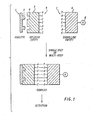
- FIGURE 1 represents a generalized scheme for the assay system of the invention.
- Analyte 1 having a molecularly recognizable portion 2 thereon, is brought into contact with molecular bridging entity 3, having a portion 4 thereon capable of recognizing the molecularly recognizable portion 2 on analyte 1.
- Bridging entity 3 in addition, carries a portion 5 comprising a polynucleotide sequence, generally denoted as ATCGATC....
- signalling entity 6 having thereon a polynucleotide portion 7 capable of annealing to polynucleotide portion 5 of the bridging entity 3.
- the signalling entity 6 also carries a signal generating portion 8.
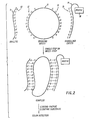
- FIGURE 2 shows a preferred system under the broader concept of the invention, wherein analyte 9 comprises a DNA sequence 10 (generally indicated as ATCGATCGATC).
- Bridging entity 11 shown as a single-stranded circular polynucleotide polymer, carries a recognizing portion 12 which is a DNA sequence complementary to the DNA sequence of the analyte.
- Bridging entity 11 also carries, in addition, a poly G sequence 13, which is capable of annealing and forming a stable hybrid with complementary poly C sequence 15 on signalling entity 14.
- Signalling entity 14 also carries a biotin portion 16 as its signal generating group.
- Presence of the DNA sequence 10 in the sample being analyzed causes the bridging entity 11 to hybridize thereto, and subsequent annealing of the signalling entity to the thus formed complex attaches the biotin portion, through the network, to the analyte.
- the biotin portion 16 can then be detected, for example by addition of an avidin/enzyme couple, followed by addition of enzyme substrate, and color detection.
- analyte as used in the specification and claims includes any substance or substances either alone or in admixtures, which presence is to be detected and, if necessary, quantitated.
- the analyte may be a molecule of small or high molecular weight, a molecular complex, or a biological system, such as a virus, a cell, or group of cells.
- proteins polysaccharides, lipopolysaccharides, protein complexes, nucleic acids or segments thereof, either single- or double-stranded, whole viruses or viral components such as cores or capsids, bacteria of various different types, tissue cells, and the like.
- proteins include the structural proteins, enzymes, immunoglobulins, or fragments thereof.
- nucleic acids include DNA and RNA of various different types, such as tRNA, mRNA, rRNA, and the like.
- Bacteria, either whole or fragments thereof, such as cell walls or other recognizable portions, include both gram positive and gram negative bacteria.
- Fungii, algae, and other submicroscopic microorganisms are also included, as well as animal (e.g., mammalian) cells.
- the analyte should have a "molecularly recognizable portion" thereon.
- This phrase denotes any molecular portion of the analyte which is capable of being recognized by a complementary molecular portion on the bridging entity of the system.
- Molecular recognition includes the non-covalent binding in three dimensions between complementary portions of two molecules.
- a molecularly recognizable portion on an analyte may be, for example, a polynucleotide sequence, such as RNA or DNA, to be recognized by its complementary sequence; an antigen portion, to be recognized by its corresponding monoclonal or polyclonal antibody; an antibody portion, to be recognized by its corresponding antigen; a lectin portion, to be recognized by its sugar; a sugar portion, to be recognized by its lectin; a hormone portion, to be recognized by its receptor; a receptor portion, to be recognized by its hormone; an inhibitor portion, to be recognized by its enzyme; an enzyme portion, to be recognized by its inhibitor; a cofactor portion, to be recognized by a cofactor enzyme binding site; a cofactor enzyme binding site portion, to recognized by its cofactor; binding ligand recognized by its substrate and vice versa (i.e. biotin-avidin); or any permutation or combinations thereof.
- a polynucleotide sequence such as RNA or DNA, to be recognized by its complementary sequence
- the most common molecularly recognizable portions are the three-dimensional protein arrangements in antigens of various different sorts, the cell wall structures present in various cells, or the nucleic acid sequences present in the DNA or RNA of organisms.
- the second component of the system is the "molecular bridging entity".
- This entity need only contain a first portion capable of recognizing the molecularly recognizable portion on the analyte, and a second portion which comprises a polynucleotide sequence.
- These two portions of the bridging entity may be of the same type (i.e., both of them polynucleotide sequences, albeit different ones) or of a different type (one being, for example, an antibody portion and the other the polynucleotide portion.)
- the portion on the bridging entity capable of recognizing the molecularly recognizable portion on the analyte must contain a molecule or molecular fragment complementary to the recognizable portion on the analyte. Therefore, if the analyte contains a polynucleotide sequence, the recognizing portion of the bridging entity should be a complementary polynucleotide sequence or "probe". If the molecularly recognizable portion on the analyte is a generalized antigen, the recognizing portion on the bridging entity should be an antibody thereto. The same is true with respect to the complementary pairs sugar/lectin, receptor/hormone, inhibitor/enzyme, and the like, described previously.
- the second portion of the molecular bridging entity must comprise a polynucleotide sequence.
- the polynucleotide sequence can be any chosen sequence, provided that it is long enough to provide stable annealing with a complementary sequence under given stringency conditions, that it be complementary to the polynucleotide sequence on the signalling entity, and, if the recognizing portion on the bridging entity is itself a polynucleotide sequence, that it be sufficiently different from said recognizing sequence portion, to avoid hybrid formation between the.analyte sequence and the second polynucleotide portion on the bridging entity.
- the latter of the three conditions is required to prevent molecular confusion with concommitant appearance of false results.
- the second portion polynucleotide sequence on the bridging entity may code for a particular gene product or products, or may code for no gene product at all.
- any structural gene or portion thereof could be used as the polynucleotide sequence portion on the bridging entity.
- a preferred sequence would not code for a given gene since such coding may interfere with complementary gene sequences present in the analyte.
- polynucleotide sequence portions on the bridging entity which are non-coding, and not likely to be complementary to sequences on the analyte such as, for example, sequences comprising poly deoxy G, poly deoxy A, poly deoxy GT, poly deoxy GA, poly deoxy GAT, poly deoxy GTA, or any other low complexity (repeating) sequence.
- polynucleotide is meant to include both polyribonucleotides, polydeoxyribonucleotides, or any poly-purine, -pyrimidine or analog and combinations thereof.
- bridging entities as used in this invention are covalently attached entities of monoclonal or polyclonal antibodies with polynucleotides, polynucleotides with polynucleotides, protein antigens with polynucleotides, saccharides with polynucleotides, small molecular weight organic compounds with polynucleotides, lectins with polynucleotides, receptors with polynucleotides, hormones with polynucleotides, enzyme inhibitors with polynucleotides, enzyme cofactors with polynucleotides, and combinations and permutations thereof.
- the molecular ratio of the recognizing portion on the bridging entity, to the polynucleotides sequence portion thereon need not necessarily be 1:1. There may be many more polynucleotide sequence portions than recognizing portions, or vice versa. In the case when the ratio of polynucleotide sequence portion to recognizing portion on the bridging entity is greater than 1, for example, 5, 10 or greater, the system amplifies the primary recognition event by a factor equal to the ratio.
- bridging entities of the invention are circular polymers of single- or double-stranded DNA.
- the single-stranded ones include so-called filamentous phages, such as fd, fl and M13 (see Van Wezenbeek, P., Gene, 11: 129 (1980).) These filamentous phages do not lyse their host; rather, they are released from infected cells as the cells continue to grow and divide.
- M13 is commercially available (Bethesda Research Labs, Inc.) and has been extensively used as a cloning and sequencing system. It can be cut at a restriction endonuclease site to incorporate therein any desired polynucleotide probe sequence, to serve as the recognizing portion of the bridging entity.
- the circular DNA can be opened to incorporate the polynucleotide portion of the bridging entity, capable of annealing to the complementary portion on the signalling entity.
- a bridging entity is obtained which is capable or recognizing a gene sequence on an analyte by hybridization, and is also capable of annealing to the signalling entity through - another sequence thereon. (A generalized system of this sort is shown in FIGURE 2.)
- the bridging entity comprises a DNA polymer which carries the sequence for a given gene (for example, a viral probe such as Hepatitis B virus, EBV and the like), and, at another place in the polymer, a poly G, or poly GT, or poly dG, or poly dC, or poly dCA, or poly dGdT polynucleotide portion.
- a single-stranded DNA polymer can be provided carrying the polynucleotide portion capable of annealing to the signalling entity (e.g., poly dGT), and also carrying a restriction endonuclease site, so that the user can incorporate any desired DNA probe thereinto.
- the DNA polymer bridging entity can be quickly transformed into a wide variety of bridging entities.
- the signalling entity of the invention needs to carry-both a polynucleotide portion capable of annealing to the complementary portion on the bridging entity, and a signal generating portion.
- the polynucleotide portion on the signalling entity is defined by the same parameters as the complementary portion on the molecular bridging entity. It should be of a length capable of forming stable polynucleotide hybrids with the corresponding polynucleotide on the bridging entity.
- “Annealing” as used in this part of the invention refers to the required base pair matching between two complementary polynucleotide strands, under any given set of stringency conditions. It is generally understood in the art that about 12 to 13 nucleotides in a row are necessary for stable annealing.
- the number of nucleotides in the sequence should be that necessary for stable annealing with the polynucleotide portion of the bridging entity.
- the formation of the hybrid should be stable enough to withstand any washing, elution, or signal detection procedures which follow hybridization.
- the "signal generating" portion of the signalling entity can encompass virtually any of the signal generating systems used in the prior art, and any system to be developed in the future. It comprises a moiety which generates a signal itself (e.g., a radiolabel), or a moiety which, upon further reaction or manipulation will give rise to a signal (e.g., an enzyme-linked system). Both types are herein called “signal generating” portions.
- the signal generating portion may comprise a radiolabel (e.g., 14 C , 32p , 3 H, and the like), an enzyme (e.g., peroxidase, alkaline or acid phosphatase, and the like), a bacterial label, a fluorescent label, an antibody (which may be used in a double antibody system), an antigen (to be used with a labeled antibody), a small molecule such as biotin (to be used with an avidin, streptavidin, or antibiotin system), a latex particle (to be used in a buoyancy or latex agglutination system), an electron dense compound such as ferritin (to be used with electron microscopy), or any combinations or permutations thereof.
- a radiolabel e.g., 14 C , 32p , 3 H, and the like
- an enzyme e.g., peroxidase, alkaline or acid phosphatase, and the like
- a bacterial label e.g
- the signal generating portion of the signalling entity is an antigen
- a signal can be generated by complexing said antigen with an antibody/enzyme conjugate, followed by addition of enzyme substrate.
- the signal generating portion of the signalling entity were an antibody
- signal can be generated by complexing anti-antibody or an F c binding protein such as Protein A therewith, which second antibody or Protein A have been conjugated to an enzyme.
- the preferred signal generating portions are those based on the biotin/avidin system.
- This system can be incorporated into the signalling entity by a variety of means.
- the polynucleotide portion of the signalling entity can be covalently attached to biotin via a cytochrome c bridge (Manning et al, Biochemistry, 16: 1364-1370 (1977), Manning et al, Chromosoma, 53: 107-117 (1975), Sodja, A., Nucleic Acids Research, 5: 385-401 (1978)), or the biotin can be covalently incorporated into specific nucleotide residues (Langer, P.R., Proceedings of the National Academy of Sciences, USA, 78: 6633-6637 (1981)), or the biotin can be attached to a polynucleotide by means of a diamine (e.g., pentane diamine) bridge (Broker, T.R., et al.
- Biotin molecules in the signal generating portion Interaction of the biotin molecules in the signal generating portion with avidin, streptavidin or anti- biotin antibodies is then carried out, wherein the avidin, streptavidin or the antibodies are conjugated to such signalling components as latex particles (Sodja, A., et al, supra, or Manning, et al Chromosoma, supra), ferritin (Broker, supra), a fluorogen such as fluorescein, an enzyme, or the like.
- signalling components as latex particles (Sodja, A., et al, supra, or Manning, et al Chromosoma, supra), ferritin (Broker, supra), a fluorogen such as fluorescein, an enzyme, or the like.
- the signal generating portion of the signalling entity need not be a polynucleotide which has been chemically modified or artificially altered in any way.
- Some biological systems perform in vivo modifications which can be utilized by this sytem.
- One such system is the phage T 4 grown in E. coli.
- T 4 DNA has a very high content of glycosylated C residues. It is possible to insert (clone) a low complexity repeating polynucleotide sequence into phage T 4 . This phage would then be naturally propagated and glycosylated in the host.
- the viral DNA can be isolated from E. coli and bound to a complementary sequence on the bridging moiety.
- Detection could then be accomplished via a lectin/enzyme system, or lectin/fluorescent dye, or lectin/electron dense material, or lectin/radioactive label, using the natural glucose residues on the T4 DNA as points of anchorage.
- Other T (even) phages such as T 2 , T 6' or T 8 can also be used.
- the number of signal generating portions need not have a 1:1 stoichiometry with the number of polynucleotide portions on the signalling entity.
- the ratio of signal generating portions to polynucleotide portion in the signalling portion of the signalling entity is greater than 1 (e.g. greater than 5, or greater than 10)
- the system functions as an amplification system.
- a 10:1 signal amplification over the bridging entity is obtained.
- the bridging entity has a signal amplification system itself, i.e., the ratio of polynucleotide portions to recognizing portions on the bridging entity is greater than 1, the overall signal amplification system is the product of both ratios. This means that for every primary recognition event occurring at the level of analyte, the amplification quickly increases and leads to very sensitive systems. This factor can be readily controlled by the design of the system components.
- the bridging entity needs to comprise a recognizing portion and a polynucleotide portion.
- the signalling entity requires a polynucleotide portion and a signal generating portion.
- the method of preparation of individual components in the system will relate to the covalent attachment of polynucleotides, or individual components thereof, to 1) protein moieties, 2) saccharide moieties, 3) other polynucleotide moieties, 4) small molecular weight compounds (e.g., MW less than about 1000), 5) radiolabels, or 6) insoluble phases such as bacterial particles, or latex particles. Therefore, the chemistry involved in the covalent attachment or conjugation of nucleic acids to their corresponding partner or partners is well within the skill of the art.
- dicarbonyl reagents for chemical modification of guanine bases in the preparation of the signalling entity. This represents one of the particularly useful-advantages of the present multi-component assay system. If the polynucleotide portion on the signalling entity has very low G content, it is possible to chemically react said polynucleotide portion with any material via a cross-linking agent such as a dicarbonyl compound, without fear of irreversibly modifying the annealing properties of the polynucleotide portion in question.
- a cross-linking agent such as a dicarbonyl compound
- polynucleotide sequences to other polynucleotide sequences is carried out by either chemical or enzymatic techniques, such as using blunt end ligation or ligation based on the presence of cohesive terminii generated by endonuclease digestion enzymes.
- chemical or enzymatic techniques such as using blunt end ligation or ligation based on the presence of cohesive terminii generated by endonuclease digestion enzymes.
- DNA derivatives of compounds (1) or (2), above, can subsequently be coupled to proteins via water- souble carbodiimide derivatives (Inman, J.K. in Meth in Enz., XXXIV, 52-53) (1974).
- the protein can be activated with the N-hydroxy succinimide ester of bromoacetic acid.
- the resulting activated protein can be covalently linked to the thiolated nucleic acid at room temperature.
- radiolabels such as 32 P into D NA sequences
- covalent incorporation of radiolabels such as 32 P into D NA sequences can be done by any of a variety of methods, such as direct incorporation of radiolabeled nucleotides by enzymatic polymerization, nick translation, and the like (Rigby et al, J. Mol. Biol. 113: 237-251 (1977).)
- polynucleotide sequences are also well understood by those of skill in the art.
- a polynucleotide sequence comprises a gene or genes
- the same can be prepared by synthetic procedures, or can be prepared by reverse transcription of mRNA using reverse transcriptase to generate a complementary DNA.
- the polynucleotide sequence comprises a strand of any one nucleotide (e.g., poly dG or poly dC) or a strand of any dinucleotide pair (e.g., poly dGT, or the like)
- the same can be readily prepared by enzymatic-based reactions such as by using DNA polymerase, or by synthetic methodology.
- the analyte being detected can be present in any biological or non-biological sample, such as clinical samples, for example, blood, urine, feces, saliva, pus, semen, serum, other tissues, fermentation broths, culture media, and the like.
- clinical samples for example, blood, urine, feces, saliva, pus, semen, serum, other tissues, fermentation broths, culture media, and the like.
- the analyte is preextracted or purified by methods known to concentrate the particular type of analyte from its admixing components. For example, if the analyte is a protein or protein- containing fraction, protein extraction procedures such as salt precipitations, alcohol precipitations or chromatography can be utilized. If the analyte comprises a nucleic acid segment to be identified, nucleic acid extraction procedures, such as phenol extraction, can be utilized. The analyte, together with impurifying materials if such be the case, can be tested in the mixture as purified or, especially when it is a nucleic acid segment, can be immobilized (see for example, Wahl et al U.S. Patent 4,302,204.)
- the composition suspected of containing the analyte is incubated with the bridging entity for a time and under conditions sufficient to allow complexation between the recognizable portion of the analyte and the recognizing portion on the bridging entity. These conditions will vary depending on the nature and amount of the analyte and of the bridging entity. Normally, after complexation has occurred, the sample is washed with neutral solution to remove excess bridging entity. Alternatively, no wash is carried out at this stage but signalling entity is added to the mixture and a wash is carried out after annealing has occurred between the polynucleotide strands on the bridging entity and on the signalling entity respectively. Hybridization of the bridging entity strand to the signalling entity strand is carried out under hybridizing conditions and under any set of stringency conditions. A final wash may be necessary prior to generation of signal.
- Signal generation is carried out by any given technique, depending on the nature of the signal generating system.
- the ternary complex between analyte, bridging entity and signalling entity is allowed to incubate with the enzyme carrying reagent (e.g., enzyme/antibody conjugate), and substrate is added thereto to develop color.
- enzyme might be attached directly to the polynucleotide strand on the signalling entity, in which case substrate is added immediately thereafter to obtain color development.
- the signal generating portion of the signalling entity is a biotin moiety, then a biotin reactive molecule such as avidin, streptavidin or anti-biotin antibody, is added thereto.
- the biotin reactive molecule is conjugated to an enzyme, a fluorescent compound, an electron dense compound, or an insoluble solid phase, and detection is carried out by appropriate means.
- the system can be used for microorganism detection and identification, by using any of a variety of recognizable portions and recognizing portions in the analyte and the bridging entity respectively.
- the method can be utilized to diagnose genetic disorders by preparing a polynucleotide complementary to a DNA gene sequence which is associated with the genetic disorder, and detecting the presence of any primary recognition events.
- genetic diseases for example, can be mentioned thalassemia.
- the determination of thalassemia can be made (for known genetic defects) by hybridization of oligonucleotides to genomic DNA followed by specific washing procedures or by restriction analysis and Southern, Northern, or Dot blots.
- chromosomal karyotyping comprises using a series of modified polynucleotides corresponding to a series of defined genetic sequences located on chromosomes, and then detecting primary recognition events thereon.
- Another use includes a method for identifying or locating hormone receptor sites on the surface of cells, which comprises binding a hormone receptor binding compound present in the bridging entity to the receptor site, and then detecting primary recognition events by means of the signalling system of the invention.
- Another use comprises the detection of cancer, by detecting in the blood or serum of suspect subjects, the presence of cancer associated antigens such as CEA (carcinoembryonic antigen).
- Another use includes a method of tumor or cancer cell identification or detection which comprises identifying malignant cells by detecting the absence of normal receptors sites by the technique of the invention.
- Another use includes a method of detecting antibodies against certain infectious diseases in animals, by using antigen therefor as a recognizing portion in the molecular bridging entity.
- Sugar levels or differential glycosylated hemoglobin levels can be detected in diabetes by using a lectin as the recognizing portion on the molecular bridging entity.
- the "signalling entity" is designed so that the signal generating portion comprises or is capable of specifically binding to an insoluble solid phase, such as a natural or synthetic aqueous insoluble resin, a glass, a plastic such as an acrylate or methacrylate, the inside of a test tube wall, or of a well, and the like.
- the bridging entity is allowed to incubate with the solid phase, thus creating recognition sites (i.e., affinity surfaces) for the analyte, which is then bound thereto.
- kits comprising one or more of the elements necessary to perform the detection and identification process.
- a kit may comprise a carrier being compartmentalized to receive in close confinement therein one or more container means or series of container means such as test tubes, vials, flasks, bottles, syringes, or the like.
- a first of said container means or series of container means may contain the bridging entity, for recognition of any of a wide variety of analytes.
- a second container means or series of container means may contain signalling entities.
- a third container means or series of container means may contain predetermined amounts of analyte, so as to provide the ability to construct a standard curve into which results can be interpolated.
- Other container means or series of container means may contain the elements necessary to generate the signal, such as enzyme linked conjugates, avidin linked conjugates, ferritin linked conjugates, latex linked conjugates, fluorogen linked conjugates, and the like.
- the kit carrier contains a first container means comprising a bridging system which is DNA carrying a polynucleotide portion of predetermined sequence and a restriction site or cleavage site on the DNA which can be used to incorporate any of a number of gene probes for testing and identifying genetic sequences associated with the analyte.
- Another container means in this preferred kit would comprise a signalling entity carrying a polynucleotide portion complementary to the polynucleotide portion present in the DNA present in the first container means, and a signal generating portion which may be any of the aforementioned systems.
- a third container means or series of container means in this preferred kit may comprise a variety of DNA probes complementary to the genetic sequences present on one or more polynucleotide- containing analytes such as viruses, bacteria, cells and the like.
- the user would utilize a cleavage method (such as use of a restriction endonuclease) to open the DNA in the first container, incorporate thereinto any desired DNA probe present in the third container or container series, ligate the polymer and then utilize the bridging entity and the signalling entity to detect and identify the presence of any desired genetic sequence present in the analyte.
- a cleavage method such as use of a restriction endonuclease
- Examples 1-31 relate to processes of preparation of bridging and signalling moeties.
- the examples show preparation methods which may be classified within the following categories:
- Fd DNA activated with 3,4,5-Trichloroaniline (Example 1) was dissolved in 0.1M sodium hydroxide with an equal amount of 0.lM K 2 HP0 4 . This solution was treated with an equal volume of 0.lM DCTA-SH (Example 3) or thiol activated mannose (Ex. 6 and 9), and incubated under argon at 65° for 2 hours. The precipitated disulfides were removed by centrifugation and the DNA was purified by G50 chromatography and stored at -20°C. Using radioactive Ni to level the derivatized DNA, it was determined that 60% of guanines had been labelled.
- DCTA-bromide was added to 5 ml of 50% DMF containing 0.2 ml of 2,3-dithioethylene and 0.5 ml of triethylamine. The mixture was incubated under argon for 2 hours at 60-70°C. The solution was then mixed with 20 ml of water and loaded onto a Dowex AG-1 column of 9 ml bed volume. The column was washed with 50 ml of 0.lM acetic acid solution until the flowthrough was thiol free. The DCTA-SH was then eluted with 0.25M HC1. The thiol containing fractions were combined, evaporated to dryness under reduced pressure at 40°C and the free acid (300mg) was stored at -20°C under argon.
- Non-reducing saccharides were activated through the primary alcohol group by forming the tosylate, and displacing it with ammonia to form an amino group, or with a dithiol to form a thiol group.
- An example is described here, the activation of a-methyl-d-mannoside, a non-reducing sugar and of mannose as a reducing one.
- the tosylation was performed analogous to a published procedure (F. Cramer et al. Chem. Ber. 92, 384-391 (1979).)
- This compound was prepared analogously to a published procedure . (D. Horton, Organic Synthesis Vol 46 p. 1, Wiley N.Y. 1966). 25 g of dried mannose were added slowly with stirring to 60 ml of acetyl chloride. The vessel was connected to a reflux condenser and the mixture was stirred for 16 hours at room temperature. Chloroform, 300 ml, was added through the condenser and the mixture was poured with vigorous stirring onto 300 g of ice and 100 ml of water. The mixture was transferred to a separatory funnel, and the organic phase was poured as fast as possible into a beaker containing ice and 300 ml of saturated sodium bicarbonate solution.
- the organic phase was separated and dried with 25 g of anhydrous magnesium sulfate. The drying agent was removed, washed with dry alcohol free chloroform and the combined chloroform solution was concentrated to 35 ml at a reduced pressure in a rotatory evaporator. At 50°C ether was added to the solution until slightly turbid and the solution left at room temperature. The crystals were removed by filtration and washed with dry ether. Yield 39 g.
- Guanosine couples with certain diazonium salts at the 8 position to give stable colored products (H. Fischer, Z. Physiol. Chem. 60, 696-78, (1909)), and at position 2 to form yellow products which are acid labile ( H . Kossel, Z. Physiol. Chem. 340, 210, 1965, E.N. Moudrianakis et al, Biochim. Biophys. Acta 123, 421 (1966)).
- the guanosine residues in the single stranded nucleic acids can couple with diazonium salts and this reaction has been.used to fix single stranded nucleic acids to cellulose (J.C. Alwine et al. Methods in Enzymology Vol. 68.
- the coupled diazonium compound contains an active group that can be easily substituted by thiols or amines, then this constitutes an easy method to attach biotin or other groups to single stranded nucleic acids.
- 3,4,5-trichlorophenyl diazonium chloride is such a substance which has been used by the inventors to add biotin, l,2-diaminocyclohexane-N,N,N,N-tetraacetic acid (DCTA), and some sugars to a single stranded DNA.
- the incubation mixture of 600 ⁇ l contained: 400 pg of DNA, 1mM CoCl 2 , 0.2 mM dithiothreitol, 0.1 M cacodylic acid, 25 mM tris base, 1 mM UTP and 400 units of terminal transferase.
- the final pH of the mixture was 6.9-7.0.
- the mixture was incubated for 2 hours at 35°C.
- the DNA was precipitated with ethanol and dissolved in 400 ⁇ l 0.2 M sodium acetate pH 4.7.
- the incubation mixture of 450 ⁇ l contained: 400 ⁇ g terminal labeled DNA (Example 11), 0.2 M sodium acetate pH 4.7 and 0.1 M NaI0 4 . It was incubated for two hours at room temperature in the dark and the mixture was passed through a G 50 column equilibrated in 0.3 M potassium borate pH 9.0-9.3, fractions of 0.2 ml were collected. All radioactive fractions were combined in a total volume 1.2 ml.
- the DNA solution was made 0.4 M with one of the amino components
- the resulting Schiff base was reduced with NaBH 4 as follows: NaBH 4 freshly dissolved to 0.2 M in water (1 ml) to M was added in four portions over 30 minute intervals. The incubation was continued for a total of 3 hours. The salts and the excess of the amino component were removed by G 50 filtration in a column equilibrated in 0.4 M sodium acetate containing lmM beta-mercaptoethanol, the DNA-containing fractions were then combined and stored over argon at -70°C. Before use, DNA.was precipitated with ethanol and dissolved in the desired buffer.
- the NHS (N-hydroxy succinimide) ester of bromoacetic acid was prepared as follows: 100 mmoles of (13.9 g) of bromoacetic acid were dissolved in 50 ml of anhydrous DMF, to this solution 100 mmoles (20.6 g) of N-N-Dicyclohexylcarbodiimide were added with stirring followed by 100 mmoles of N-hydroxysuccinimide (11.9 g adjusted for 100% purity), and the mixture was stirred for 6 hours at 37°C. The mixture was then placed for 2 hours at -20°C to accelerate the precipitation of hydroxyurea, which was removed by filtration. In the filtrate the DMF was removed under reduced pressure at 45°C and the active ester was recrystallized from 2-propanal.
- IgG (20 mg/ml) in 0.3M potassium borate buffer pH 9.9 was mixed with 0.06 vol of a 10 mg/ml solution of the NHS ester of bromoacetic acid (Example 13) in DMSO, and the mixture was gently mixed for 1 hour at room temperature. The sample was then dialyzed against 0.1 M NaCl 0.lM phosphate buffer pH 7.5.
- the DNA-IgG conjugate and the unreacted IgG were eluted with isothiocyanate, and dialyzed against 0.1M phosphate buffer, pH 7.2 to remove isothiocyanate.
- the conjugated IgG and the free IgG were then precipitated with ammonium sulfate 50%, the pellet dissolved in 1.0 ml phosphate buffer and the free IgG was separated from the conjugated IgG by fractionation on a Bio-Gel p-300 column equilibrated in .01M NaCl, 0.lM phosphate pH 7.2.
- pBR322 DNA (100 pg) dissolved in 1 ml of 5mM sodium acetate pH 7.5 containing mercuric acetate (3 mg, .01 mmol) was reacted for 4 hours at 50°C according to a procedure of Dale et al (Nucl. Acid Res. 2:915, 1975).
- the 5-cytosine mercurated DNA was exhaustively dialyzed in 0.01 M Tris HC1, pH 7.5, containing 0.02 sodium chloride 2mM EDT A .
- Carboxy end substituted DNA (Example 19) (50 ⁇ g) was converted to the triethylamonium salt by shaking an aqueous solution with Dowex 50-WX (Et 3N +). The solution was lyophylized and the dried DNA was dissolved in anhydrous dimethyl formamide (0.5 ml) to which was added dicyclohexylcarbodiimide (10.3 mg, 0.05 mol) and N-Hydroxysuccinimide (5.8 mg 0.05 Mol). After incubating at room temperature for 20 hours the reaction was centrifugated and the supernatant dialyzed for 2 hours into 10 mM NaCl.
- Streptavidin 50 pg dissolved in 0.2 M borate, pH 8.5 (1 ml) was added to the N-hydroxysuccinimide activated DNA and the reaction was incubated 20 hours and dialyzed into 0.01M NaCl.
- the Streptaviden coupled DNA was purified by CaCl 2 precipitation and iminobiotin affinity chromatography as previously described.
- DNA (1 ug) (BAM insert from plasmid pDK14) was dissolved in 0.025 M glyoxal (0.2 ml) and heated at 100°C for 30 minutes in a sealed tube. The reaction was dialyzed against 10 mM NaCl. In order to assess degree of reaction on guanosine, a portion of the reaction was subjected to acid depurination by lowering the pH to 1.0 with HC1, and heating at 100°C for 30 minutes. The depurinated DNA was removed by elution through DE-52 amino cellulose and the eluted purines analyzed by HPLC on reverse phase.
- Biotin-N-hydroxysuccinimide ester (1.0 g, 2.9 mmol) dissolved in dimethylformamide (5pm) was added to a solution of diaminohexane (1.15g, 10 mmol) in 0.1 M sodium borate (500 ml). After reacting at room temperature for 5 hours, the solution was rotary evaporated, redissolved in 10 ml water and chromatographed on Dowex 50 wx (H+). The column was washed with 50% aqueous methanol and the fraction eluted with triethylamine dissolved in 50% aqueous methanol (.3M) was collected. The evaporated residue was thoroughly triturated with ether and recrystallized from DMF/ether.
- DNA (1 ⁇ g) as a triethylammonium salt was dissolved in 100 ⁇ l water. To this was added 100 ⁇ l of a solution of (N-biotinyl (4-aminophenyl)) glyoxal (0.05 M) or CHO-CO-CONH-(CH 2 ) 6 -NH-Biotin (0.05M) in dimethylformamide. The mixture was heated at 100°C for 30 minutes in a sealed tube and subsequently dialyzed against 0.01 M NaCl. Extent of reaction was determined by acid depurification and HPLC assay of purine nucleosides, as described previously.
- Fd DNA was end labelled with UMP using terminal transferase under conditions described in Example 11.
- the end labelled DNA was derivatized with 2,4,5-trichloroaniline (Example 1) and reacted with DCTA-SH under identical conditions to those described in Example la.
- the end labelled, DCTA derivatized DNA was oxidized with sodium periodate, reacted with cysteamine and reduced with sodium borohydride as described in Example 12. This was in turn reacted with bromoacetylated IgG (Example 14) using conditions described in Example 15.
- an asymmetric DNA sequence can be inserted in the replicative (double-stranded form) of a single-stranded phage such as M13.
- One strand of the insert will be deficient in guanine residues.
- two single-stranded phages will be obtained in both polarities, one containing the (G-) strand, i.e., no g uanylate residues of the asymmetric sequence, the other containing the sequence complementary to the G(-) sequence, to be called the G(+) sequence.
- the G(+) phage is used as the vector (bridging entity) for carrying a DNA probe of interest such as, for example, herpes simplex virus I DNA sequences.
- the G(-) phage (signalling entity) is chemically reacted with a guanosine specific reagent, such as a 1,2-dicarbonyl reagent.
- a guanosine specific reagent such as a 1,2-dicarbonyl reagent.
- the G(-) insert in the G(-) phage would not be modified because it lacks guanylate residues.
Landscapes
- Life Sciences & Earth Sciences (AREA)
- Chemical & Material Sciences (AREA)
- Health & Medical Sciences (AREA)
- Engineering & Computer Science (AREA)
- Organic Chemistry (AREA)
- Immunology (AREA)
- Proteomics, Peptides & Aminoacids (AREA)
- Molecular Biology (AREA)
- Zoology (AREA)
- Wood Science & Technology (AREA)
- Analytical Chemistry (AREA)
- Microbiology (AREA)
- Physics & Mathematics (AREA)
- Biochemistry (AREA)
- General Health & Medical Sciences (AREA)
- Biotechnology (AREA)
- Hematology (AREA)
- Biomedical Technology (AREA)
- Urology & Nephrology (AREA)
- Genetics & Genomics (AREA)
- Biophysics (AREA)
- Bioinformatics & Cheminformatics (AREA)
- General Engineering & Computer Science (AREA)
- Pathology (AREA)
- Cell Biology (AREA)
- General Physics & Mathematics (AREA)
- Medicinal Chemistry (AREA)
- Food Science & Technology (AREA)
- Measuring Or Testing Involving Enzymes Or Micro-Organisms (AREA)
- Investigating Or Analysing Biological Materials (AREA)
- Saccharide Compounds (AREA)
- Investigating Or Analyzing Non-Biological Materials By The Use Of Chemical Means (AREA)
Priority Applications (1)
| Application Number | Priority Date | Filing Date | Title |
|---|---|---|---|
| EP94102973A EP0611828B1 (de) | 1983-05-05 | 1984-05-04 | Zusammensetzung zur Anwendung in einem Bestimmungsverfahren unter Verwendung von Polynukleotidsequenzen |
Applications Claiming Priority (2)
| Application Number | Priority Date | Filing Date | Title |
|---|---|---|---|
| US49192983A | 1983-05-05 | 1983-05-05 | |
| US491929 | 1983-05-05 |
Related Child Applications (2)
| Application Number | Title | Priority Date | Filing Date |
|---|---|---|---|
| EP94102973A Division EP0611828B1 (de) | 1983-05-05 | 1984-05-04 | Zusammensetzung zur Anwendung in einem Bestimmungsverfahren unter Verwendung von Polynukleotidsequenzen |
| EP94102973.8 Division-Into | 1984-05-04 |
Publications (2)
| Publication Number | Publication Date |
|---|---|
| EP0128332A1 true EP0128332A1 (de) | 1984-12-19 |
| EP0128332B1 EP0128332B1 (de) | 1995-08-02 |
Family
ID=23954256
Family Applications (2)
| Application Number | Title | Priority Date | Filing Date |
|---|---|---|---|
| EP94102973A Expired - Lifetime EP0611828B1 (de) | 1983-05-05 | 1984-05-04 | Zusammensetzung zur Anwendung in einem Bestimmungsverfahren unter Verwendung von Polynukleotidsequenzen |
| EP84105028A Expired - Lifetime EP0128332B1 (de) | 1983-05-05 | 1984-05-04 | Bestimmungsmethode unter Verwendung von Polynucleotidsequenzen |
Family Applications Before (1)
| Application Number | Title | Priority Date | Filing Date |
|---|---|---|---|
| EP94102973A Expired - Lifetime EP0611828B1 (de) | 1983-05-05 | 1984-05-04 | Zusammensetzung zur Anwendung in einem Bestimmungsverfahren unter Verwendung von Polynukleotidsequenzen |
Country Status (11)
| Country | Link |
|---|---|
| US (1) | US9134302B2 (de) |
| EP (2) | EP0611828B1 (de) |
| JP (1) | JP2577881B2 (de) |
| AT (2) | ATE125947T1 (de) |
| AU (1) | AU583787B2 (de) |
| CA (1) | CA1228811A (de) |
| DE (2) | DE3486478T2 (de) |
| DK (1) | DK223384A (de) |
| ES (2) | ES8608169A1 (de) |
| IL (1) | IL71666A (de) |
| NO (1) | NO165975C (de) |
Cited By (39)
| Publication number | Priority date | Publication date | Assignee | Title |
|---|---|---|---|---|
| FR2575493A1 (fr) * | 1985-01-02 | 1986-07-04 | Orion Yhtymae Oy | Methode pour l'identification d'acides nucleiques |
| EP0198662A1 (de) * | 1985-04-12 | 1986-10-22 | AMERSHAM INTERNATIONAL plc | Verfahren für Nukleinsäurehybridisierung |
| JPS61293399A (ja) * | 1985-05-31 | 1986-12-24 | アモコ・コ−ポレ−シヨン | 相補的dna鎖を使用することによるハイブリダイゼ−シヨンシグナルの増幅方法 |
| WO1987005026A1 (en) * | 1986-02-24 | 1987-08-27 | The Trustees Of Columbia University In The City Of | Dna encoding streptavidin, streptavidin produced therefrom, fused polypeptides which include amino acid sequences present in streptavidin and uses thereof |
| EP0153873A3 (de) * | 1984-03-01 | 1987-10-07 | AMERSHAM INTERNATIONAL plc | Nachweis von Polynukleotidsequenzen |
| EP0151492A3 (en) * | 1984-02-09 | 1988-11-09 | Enzo Biochem, Inc. | Heterologous system for the detection of chemically-labeled dna and other biological materials providing a receptor or target moiety thereon |
| US4824775A (en) * | 1985-01-03 | 1989-04-25 | Molecular Diagnostics, Inc. | Cells labeled with multiple Fluorophores bound to a nucleic acid carrier |
| US4868105A (en) * | 1985-12-11 | 1989-09-19 | Chiron Corporation | Solution phase nucleic acid sandwich assay |
| EP0339686A1 (de) * | 1984-06-01 | 1989-11-02 | Miles Inc. | Hybridisierungstest für Nukleinsäure |
| US4882269A (en) * | 1985-12-13 | 1989-11-21 | Princeton University | Amplified hybridization assay |
| US4925785A (en) * | 1986-03-07 | 1990-05-15 | Biotechnica Diagnostics, Inc. | Nucleic acid hybridization assays |
| EP0237737A3 (en) * | 1986-01-30 | 1990-05-23 | Enzo Biochem, Inc. | Nucleic-acid probes specific for neisseria gonorrhoea and method for screening for a nucleic-acid sequence specific for a genetically distinct group |
| EP0154788A3 (de) * | 1984-01-30 | 1990-08-01 | Enzo Biochem, Inc. | Nachweisbare Moleküle, Verfahren zur Herstellung und Verwendung |
| US5329461A (en) * | 1992-07-23 | 1994-07-12 | Acrogen, Inc. | Digital analyte detection system |
| EP0353124B1 (de) * | 1988-07-13 | 1996-03-06 | Bioprobe Systems | Verfahren zur Markierung einer Nucleinsäure-Sonde und Reagenzienkit zur Ausführung dieses Verfahrens |
| EP0579771A4 (en) * | 1991-03-27 | 1997-06-11 | Res Corp Technologies Inc | Single-stranded circular oligonucleotides |
| WO1998002580A3 (en) * | 1996-07-12 | 1998-05-14 | Tm Technologies Inc | Signal amplification method |
| US5872105A (en) * | 1991-03-27 | 1999-02-16 | Research Corporation Technologies Inc. | Single-stranded circular oligonucleotides useful for drug delivery |
| US6124120A (en) * | 1997-10-08 | 2000-09-26 | Yale University | Multiple displacement amplification |
| US6143495A (en) * | 1995-11-21 | 2000-11-07 | Yale University | Unimolecular segment amplification and sequencing |
| US6183960B1 (en) | 1995-11-21 | 2001-02-06 | Yale University | Rolling circle replication reporter systems |
| US6255082B1 (en) | 1998-09-15 | 2001-07-03 | Yale University | Artificial long terminal repeat vectors |
| US6287824B1 (en) * | 1998-09-15 | 2001-09-11 | Yale University | Molecular cloning using rolling circle amplification |
| US6316229B1 (en) | 1998-07-20 | 2001-11-13 | Yale University | Single molecule analysis target-mediated ligation of bipartite primers |
| US6613516B1 (en) | 1999-10-30 | 2003-09-02 | Affymetrix, Inc. | Preparation of nucleic acid samples |
| US6686157B2 (en) | 2000-06-30 | 2004-02-03 | Molecular Staging Inc. | Signal amplification with lollipop probes |
| US6986985B1 (en) | 1994-01-13 | 2006-01-17 | Enzo Life Sciences, Inc. | Process for producing multiple nucleic acid copies in vivo using a protein-nucleic acid construct |
| US7087742B1 (en) | 1986-11-24 | 2006-08-08 | Gen-Probe Incorporated | Oligonucleotide probes for the detection and/or quantitation of non-viral organisms |
| US7090972B1 (en) | 1986-11-24 | 2006-08-15 | Gen-Probe Incorporated | Methods for determining the presence of non-viral organisms in a sample |
| US7172863B1 (en) | 1988-12-09 | 2007-02-06 | Gen-Probe Incorporated | Nucleic acid probes and methods for detecting Neisseria gonorrhoeae |
| EP2065465A2 (de) | 1994-01-13 | 2009-06-03 | Enzo Diagnostics, Inc. | Prozess, Konstrukt und Konjugat zur Herstellung mehrerer Nukleinsäurekopien |
| US7713528B1 (en) | 1993-02-18 | 2010-05-11 | Enzo Therapeutics, Inc. | Method for in vivo delivery of active compounds using reagent conjugate |
| EP1489422A3 (de) * | 2003-04-03 | 2010-09-08 | Enzo Life Sciences, Inc., c/o Enzo Biochem, Inc. | Multisignal-Markierungsreagentien, Verfahren und ihre Verwendung |
| US8093030B2 (en) | 2005-10-06 | 2012-01-10 | Lucigen Corporation | Thermostable viral polymerases and methods of use |
| US9156986B2 (en) | 2003-04-03 | 2015-10-13 | Enzo Life Sciences, Inc. | Multisignal labeling reagents and processes and uses therefor |
| EP2855425A4 (de) * | 2012-06-04 | 2016-05-18 | Scripps Research Inst | Neuartige phenylglyoxalsonden |
| US9683255B2 (en) | 2005-09-09 | 2017-06-20 | Qiagen Gmbh | Method for activating a nucleic acid for a polymerase reaction |
| US9696298B2 (en) | 2003-04-03 | 2017-07-04 | Enzo Life Sciences, Inc. | Multisignal reagents for labeling analytes |
| US10196672B2 (en) | 2007-12-20 | 2019-02-05 | Enzo Biochem, Inc. | Affinity tag nucleic acid and protein compositions, and processes for using same |
Families Citing this family (29)
| Publication number | Priority date | Publication date | Assignee | Title |
|---|---|---|---|---|
| CA1338856C (en) * | 1983-07-05 | 1997-01-21 | Jannis Stavrianopoulos | In vivo labelling of polynucleotide sequences |
| ES8707343A1 (es) * | 1985-06-13 | 1987-07-16 | Amgen | Un metodo para aislar una secuencia de acido nucleico objetivo seleccionada |
| US4822731A (en) * | 1986-01-09 | 1989-04-18 | Cetus Corporation | Process for labeling single-stranded nucleic acids and hybridizaiton probes |
| JP2565552B2 (ja) * | 1987-10-15 | 1996-12-18 | カイロン コーポレイション | 核酸マルチマーおよびそれを用いた増幅核酸ハイブリダイゼーション分析法 |
| IL131979A0 (en) | 1997-03-21 | 2001-03-19 | Enzo Therapeutics Inc | Vectors and viral vectors and packaging cell lines for propagating the same |
| US8703480B1 (en) | 1997-03-21 | 2014-04-22 | Enzo Therapeutics, Inc. | Biological function effecting viral vectors and chimeric cells useful as packaging cell lines and target cells |
| US20040161741A1 (en) | 2001-06-30 | 2004-08-19 | Elazar Rabani | Novel compositions and processes for analyte detection, quantification and amplification |
| ATE365211T1 (de) * | 2001-08-20 | 2007-07-15 | Regenesis Bioremediation Produ | Biosensor für kleinmolekulare analyten |
| US7553619B2 (en) | 2002-02-08 | 2009-06-30 | Qiagen Gmbh | Detection method using dissociated rolling circle amplification |
| US9487823B2 (en) | 2002-12-20 | 2016-11-08 | Qiagen Gmbh | Nucleic acid amplification |
| US6977153B2 (en) | 2002-12-31 | 2005-12-20 | Qiagen Gmbh | Rolling circle amplification of RNA |
| US8043834B2 (en) | 2003-03-31 | 2011-10-25 | Qiagen Gmbh | Universal reagents for rolling circle amplification and methods of use |
| EP1863908B1 (de) | 2005-04-01 | 2010-11-17 | Qiagen GmbH | Reverse transkription und amplifikation von rna bei simultaner degradierung von dna |
| EP2794928B1 (de) | 2011-12-22 | 2019-02-20 | President and Fellows of Harvard College | Zusammensetzungen und verfahren zum nachweis von analyten |
| CN104919055B (zh) | 2012-03-09 | 2018-06-19 | 因威瑟堡善迪诺有限公司 | 用单一信号检测多种分析物的方法和组合物 |
| US10060910B2 (en) | 2012-07-24 | 2018-08-28 | Enzo Life Sciences, Inc. | Multisignal reagents for labeling analytes |
| EP2943593B1 (de) | 2013-01-08 | 2019-04-24 | Enzo Biochem, Inc. | Diagnose und behandlung von herpesvirus saimiri-assozierten erkrankungen |
| US9617607B2 (en) | 2013-01-08 | 2017-04-11 | Enzo Biochem, Inc. | Diagnosis and treatment of viral diseases |
| KR102368591B1 (ko) | 2013-04-30 | 2022-02-25 | 캘리포니아 인스티튜트 오브 테크놀로지 | 순차적 하이브리드화 바코딩에 의한 분자의 멀티플렉스 표지화 |
| US12421540B2 (en) | 2016-08-01 | 2025-09-23 | California Institute Of Technology | Sequential probing of molecular targets based on pseudo-color barcodes with embedded error correction mechanism |
| EP3754028A1 (de) | 2019-06-18 | 2020-12-23 | Apollo Life Sciences GmbH | Verfahren zur signalcodierung von analyten in einer probe |
| JP7828901B2 (ja) | 2020-06-18 | 2026-03-12 | リゾルブ バイオサイエンシズ ゲゼルシャフト ミット ベシュレンクテル ハフツング | 試料中の異なる分析物及び分析物の異なるサブグループ/変形物を検出するための多重的方法 |
| JP2024528255A (ja) | 2021-08-06 | 2024-07-26 | リゾルブ バイオサイエンシズ ゲーエムベーハー | 病原体含有試料中の分析物の検出方法 |
| WO2023072448A1 (en) | 2021-10-25 | 2023-05-04 | Resolve Biosciences Gmbh | Method of mounting a biological sample on a surface |
| WO2024002726A1 (en) | 2022-06-30 | 2024-01-04 | Resolve Biosciences Gmbh | High resolution multiplex method for detecting at least two targets with a distance of beyond the diffraction limit in a sample |
| WO2025093690A1 (en) | 2023-11-02 | 2025-05-08 | Resolve Biosciences Gmbh | Method for preparing tissue sections |
| WO2025099313A1 (en) | 2023-11-10 | 2025-05-15 | Resolve Biosciences Gmbh | Reducing background fluorescence in single molecule fluorescence in situ hybridization applications |
| WO2025125442A1 (en) | 2023-12-13 | 2025-06-19 | Resolve Biosciences Gmbh | High resolution multiplex method for detecting at least two targets |
| WO2025132546A1 (en) | 2023-12-19 | 2025-06-26 | Resolve Biosciences Gmbh | Method for reducing nonspecific signals in in-situ hybridization assays |
Citations (1)
| Publication number | Priority date | Publication date | Assignee | Title |
|---|---|---|---|---|
| US4358535A (en) * | 1980-12-08 | 1982-11-09 | Board Of Regents Of The University Of Washington | Specific DNA probes in diagnostic microbiology |
Family Cites Families (16)
| Publication number | Priority date | Publication date | Assignee | Title |
|---|---|---|---|---|
| US3755086A (en) | 1971-02-09 | 1973-08-28 | Hoffmann La Roche | Diagnostic method utilizing synthetic deoxyrilionucleotide oligomer template |
| US3798131A (en) | 1972-04-24 | 1974-03-19 | Pasadena Foundation For Medica | Assay for polymeric dna as a method for detecting malignancy |
| FR2422956A1 (fr) | 1978-04-13 | 1979-11-09 | Pasteur Institut | Procede de detection et de caracterisation d'un acide nucleique ou d'une sequence de celui-ci, et reactif enzymatique pour la mise en oeuvre de ce procede |
| US4302204A (en) | 1979-07-02 | 1981-11-24 | The Board Of Trustees Of Leland Stanford Junior University | Transfer and detection of nucleic acids |
| US4366241A (en) | 1980-08-07 | 1982-12-28 | Syva Company | Concentrating zone method in heterogeneous immunoassays |
| CA1219824A (en) * | 1981-04-17 | 1987-03-31 | David C. Ward | Modified nucleotides and methods of preparing and using same |
| US4711955A (en) | 1981-04-17 | 1987-12-08 | Yale University | Modified nucleotides and methods of preparing and using same |
| CA1180647A (en) | 1981-07-17 | 1985-01-08 | Cavit Akin | Light-emitting polynucleotide hybridization diagnostic method |
| CA1190838A (en) | 1981-07-17 | 1985-07-23 | Cavit Akin | Homogeneous nucleic acid hybridization diagnostics by non-radiative energy transfer |
| FI63596C (fi) * | 1981-10-16 | 1983-07-11 | Orion Yhtymae Oy | Mikrobdiagnostiskt foerfarande som grundar sig pao skiktshybridisering av nukleinsyror och vid foerfarandet anvaenda kombinationer av reagenser |
| AU1606083A (en) * | 1982-05-07 | 1983-12-02 | Paragon Diagnostics | Competitive immunofluorescence assay and test kit |
| CA1223831A (en) * | 1982-06-23 | 1987-07-07 | Dean Engelhardt | Modified nucleotides, methods of preparing and utilizing and compositions containing the same |
| US5260433A (en) | 1982-06-23 | 1993-11-09 | Enzo Diagnostics, Inc. | Saccharide specific binding system labeled nucleotides |
| US5241060A (en) | 1982-06-23 | 1993-08-31 | Enzo Diagnostics, Inc. | Base moiety-labeled detectable nucleatide |
| US4556643A (en) | 1982-07-26 | 1985-12-03 | Agracetus | Assay method and probe for polynucleotide sequences |
| GB8306426D0 (en) | 1983-03-09 | 1983-04-13 | Malcolm A D B | Detecting polynucleotide sequence |
-
1984
- 1984-03-30 CA CA000451043A patent/CA1228811A/en not_active Expired
- 1984-04-18 NO NO841581A patent/NO165975C/no unknown
- 1984-04-27 IL IL71666A patent/IL71666A/xx not_active IP Right Cessation
- 1984-05-04 AT AT84105028T patent/ATE125947T1/de not_active IP Right Cessation
- 1984-05-04 JP JP59090041A patent/JP2577881B2/ja not_active Expired - Lifetime
- 1984-05-04 AT AT94102973T patent/ATE197480T1/de active
- 1984-05-04 ES ES532182A patent/ES8608169A1/es not_active Expired
- 1984-05-04 EP EP94102973A patent/EP0611828B1/de not_active Expired - Lifetime
- 1984-05-04 AU AU27675/84A patent/AU583787B2/en not_active Ceased
- 1984-05-04 DK DK223384A patent/DK223384A/da not_active Application Discontinuation
- 1984-05-04 DE DE3486478T patent/DE3486478T2/de not_active Expired - Lifetime
- 1984-05-04 EP EP84105028A patent/EP0128332B1/de not_active Expired - Lifetime
- 1984-05-04 DE DE3486400T patent/DE3486400T2/de not_active Expired - Lifetime
-
1985
- 1985-09-16 ES ES547003A patent/ES8802261A1/es not_active Expired
-
1995
- 1995-06-07 US US08/479,995 patent/US9134302B2/en active Active
Patent Citations (2)
| Publication number | Priority date | Publication date | Assignee | Title |
|---|---|---|---|---|
| US4358535A (en) * | 1980-12-08 | 1982-11-09 | Board Of Regents Of The University Of Washington | Specific DNA probes in diagnostic microbiology |
| US4358535B1 (de) * | 1980-12-08 | 1986-05-13 |
Non-Patent Citations (4)
| Title |
|---|
| CHROMOSOMA, vol. 53, 1975, Berlin, Heidelberg, New York J.E. MANNING et al. "A New Method of in situ Hybridization" pages 107-117 * |
| JOURNAL OF MOLECULAR BIOLOGY, vol. 113, June 15 - July 15, 1977, London, New York, San Francisco P.W.J. RIGBY et al. "Labeling Deoxribonucleic Acid to High Specific Activity in Vitro by Nick Translation with DNA Polymerase I" pages 237-251 * |
| NATURE, vol 265, February 1977 G.T. RUDKIN and B.D. STOLLAR "High resolution detection of DNA-RNA hybrids in situ by indirect immuno-fluorescence" pages 472-473 * |
| PROCEEDINGS OF THE NATIONAL ACADEMY OF SCIENCES OF THE UNITED STATES OF AMERICA, vol. 78, no. 11, November 1981 P.R. LANGER et al. "Enzymatic synthesis of biotinlabeled polynucleotides: Novel nucleic acid affinity probes" pages 6633-6637 * |
Cited By (61)
| Publication number | Priority date | Publication date | Assignee | Title |
|---|---|---|---|---|
| EP0154788A3 (de) * | 1984-01-30 | 1990-08-01 | Enzo Biochem, Inc. | Nachweisbare Moleküle, Verfahren zur Herstellung und Verwendung |
| EP0810435A3 (de) * | 1984-01-30 | 2000-06-07 | Enzo Biochem, Inc. | Nachweisbare Moleküle, Verfahren zur Herstellung und Verwendung |
| EP0151492A3 (en) * | 1984-02-09 | 1988-11-09 | Enzo Biochem, Inc. | Heterologous system for the detection of chemically-labeled dna and other biological materials providing a receptor or target moiety thereon |
| EP0153873A3 (de) * | 1984-03-01 | 1987-10-07 | AMERSHAM INTERNATIONAL plc | Nachweis von Polynukleotidsequenzen |
| EP0339686A1 (de) * | 1984-06-01 | 1989-11-02 | Miles Inc. | Hybridisierungstest für Nukleinsäure |
| NL8503597A (nl) * | 1985-01-02 | 1986-08-01 | Orion Yhtymae Oy | Werkwijze voor het identificeren van nucleinezuren. |
| FR2575493A1 (fr) * | 1985-01-02 | 1986-07-04 | Orion Yhtymae Oy | Methode pour l'identification d'acides nucleiques |
| US4824775A (en) * | 1985-01-03 | 1989-04-25 | Molecular Diagnostics, Inc. | Cells labeled with multiple Fluorophores bound to a nucleic acid carrier |
| EP0198662A1 (de) * | 1985-04-12 | 1986-10-22 | AMERSHAM INTERNATIONAL plc | Verfahren für Nukleinsäurehybridisierung |
| EP0204510A3 (en) * | 1985-05-31 | 1987-01-28 | Amoco Corporation | Amplification of hybridization signals by employing complementary dna strands |
| JPS61293399A (ja) * | 1985-05-31 | 1986-12-24 | アモコ・コ−ポレ−シヨン | 相補的dna鎖を使用することによるハイブリダイゼ−シヨンシグナルの増幅方法 |
| US4868105A (en) * | 1985-12-11 | 1989-09-19 | Chiron Corporation | Solution phase nucleic acid sandwich assay |
| US5424188A (en) * | 1985-12-13 | 1995-06-13 | The Trustees Of Princeton University | Amplified hybridization assay |
| US4882269A (en) * | 1985-12-13 | 1989-11-21 | Princeton University | Amplified hybridization assay |
| EP0237737A3 (en) * | 1986-01-30 | 1990-05-23 | Enzo Biochem, Inc. | Nucleic-acid probes specific for neisseria gonorrhoea and method for screening for a nucleic-acid sequence specific for a genetically distinct group |
| WO1987005026A1 (en) * | 1986-02-24 | 1987-08-27 | The Trustees Of Columbia University In The City Of | Dna encoding streptavidin, streptavidin produced therefrom, fused polypeptides which include amino acid sequences present in streptavidin and uses thereof |
| US4839293A (en) * | 1986-02-24 | 1989-06-13 | The Trustees Of Columbia University In The City Of New York | DNA encoding streptavidin, streptavidin produced therefrom, fused polypeptides which include amino acid sequences present in streptavidin and uses thereof |
| EP0258411A4 (de) * | 1986-02-24 | 1988-08-23 | Univ Columbia | Dns, kodierend für streptavidin, daraus erzeugtes streptavidin, fusierte polypeptide mit aminosäurensequenzen aus streptavidin und verwendungen. |
| US4925785A (en) * | 1986-03-07 | 1990-05-15 | Biotechnica Diagnostics, Inc. | Nucleic acid hybridization assays |
| US7138516B1 (en) | 1986-11-24 | 2006-11-21 | Gen-Probe Incorporated | Oligonucleotide probes for the detection and/or quantitation of non-viral organisms |
| US7090972B1 (en) | 1986-11-24 | 2006-08-15 | Gen-Probe Incorporated | Methods for determining the presence of non-viral organisms in a sample |
| US7087742B1 (en) | 1986-11-24 | 2006-08-08 | Gen-Probe Incorporated | Oligonucleotide probes for the detection and/or quantitation of non-viral organisms |
| EP0353124B1 (de) * | 1988-07-13 | 1996-03-06 | Bioprobe Systems | Verfahren zur Markierung einer Nucleinsäure-Sonde und Reagenzienkit zur Ausführung dieses Verfahrens |
| US7172863B1 (en) | 1988-12-09 | 2007-02-06 | Gen-Probe Incorporated | Nucleic acid probes and methods for detecting Neisseria gonorrhoeae |
| US5872105A (en) * | 1991-03-27 | 1999-02-16 | Research Corporation Technologies Inc. | Single-stranded circular oligonucleotides useful for drug delivery |
| EP0579771A4 (en) * | 1991-03-27 | 1997-06-11 | Res Corp Technologies Inc | Single-stranded circular oligonucleotides |
| US5329461A (en) * | 1992-07-23 | 1994-07-12 | Acrogen, Inc. | Digital analyte detection system |
| US7713528B1 (en) | 1993-02-18 | 2010-05-11 | Enzo Therapeutics, Inc. | Method for in vivo delivery of active compounds using reagent conjugate |
| EP2065465A2 (de) | 1994-01-13 | 2009-06-03 | Enzo Diagnostics, Inc. | Prozess, Konstrukt und Konjugat zur Herstellung mehrerer Nukleinsäurekopien |
| US6986985B1 (en) | 1994-01-13 | 2006-01-17 | Enzo Life Sciences, Inc. | Process for producing multiple nucleic acid copies in vivo using a protein-nucleic acid construct |
| US6632609B2 (en) | 1995-11-21 | 2003-10-14 | Yale University | Unimolecular segment amplification and sequencing |
| US6210884B1 (en) | 1995-11-21 | 2001-04-03 | Yale University | Rolling circle replication reporter systems |
| US6797474B2 (en) | 1995-11-21 | 2004-09-28 | Yale University | Rolling circle replication reporter systems |
| US6143495A (en) * | 1995-11-21 | 2000-11-07 | Yale University | Unimolecular segment amplification and sequencing |
| US6329150B1 (en) | 1995-11-21 | 2001-12-11 | Yale University | Unimolecular segment amplification and sequencing |
| US6344329B1 (en) | 1995-11-21 | 2002-02-05 | Yale University | Rolling circle replication reporter systems |
| US6183960B1 (en) | 1995-11-21 | 2001-02-06 | Yale University | Rolling circle replication reporter systems |
| WO1998002580A3 (en) * | 1996-07-12 | 1998-05-14 | Tm Technologies Inc | Signal amplification method |
| US5902724A (en) * | 1996-07-12 | 1999-05-11 | Tm Technologies, Inc. | Signal amplification method |
| US6245513B1 (en) | 1996-07-12 | 2001-06-12 | Tm Technologies, Inc. | Signal amplification method |
| US6642034B2 (en) | 1997-10-08 | 2003-11-04 | Yale University | Multiple displacement amplification |
| US6280949B1 (en) | 1997-10-08 | 2001-08-28 | Yale University | Multiple displacement amplification |
| US6124120A (en) * | 1997-10-08 | 2000-09-26 | Yale University | Multiple displacement amplification |
| US6316229B1 (en) | 1998-07-20 | 2001-11-13 | Yale University | Single molecule analysis target-mediated ligation of bipartite primers |
| US6287824B1 (en) * | 1998-09-15 | 2001-09-11 | Yale University | Molecular cloning using rolling circle amplification |
| US6255082B1 (en) | 1998-09-15 | 2001-07-03 | Yale University | Artificial long terminal repeat vectors |
| US6613516B1 (en) | 1999-10-30 | 2003-09-02 | Affymetrix, Inc. | Preparation of nucleic acid samples |
| US6686157B2 (en) | 2000-06-30 | 2004-02-03 | Molecular Staging Inc. | Signal amplification with lollipop probes |
| US10640529B2 (en) | 2003-04-03 | 2020-05-05 | Enzo Life Sciences, Inc. | Multisignal labeling reagents and processes and uses therefor |
| US9156986B2 (en) | 2003-04-03 | 2015-10-13 | Enzo Life Sciences, Inc. | Multisignal labeling reagents and processes and uses therefor |
| US9696298B2 (en) | 2003-04-03 | 2017-07-04 | Enzo Life Sciences, Inc. | Multisignal reagents for labeling analytes |
| US9884889B2 (en) | 2003-04-03 | 2018-02-06 | Enzo Life Sciences, Inc. | Multisignal labeling reagents and processes and uses therefor |
| EP1489422A3 (de) * | 2003-04-03 | 2010-09-08 | Enzo Life Sciences, Inc., c/o Enzo Biochem, Inc. | Multisignal-Markierungsreagentien, Verfahren und ihre Verwendung |
| US10647740B2 (en) | 2003-04-03 | 2020-05-12 | Enzo Life Science, Inc. | Multisignal labeling reagents and processes and uses therefor |
| US11028121B2 (en) | 2003-04-03 | 2021-06-08 | Enzo Life Sciences, Inc. | Multisignal labeling reagents and processes and uses therefor |
| US11073512B2 (en) | 2003-04-03 | 2021-07-27 | Enzo Life Sciences, Inc. | Multisignal reagents for labeling analytes |
| US9683255B2 (en) | 2005-09-09 | 2017-06-20 | Qiagen Gmbh | Method for activating a nucleic acid for a polymerase reaction |
| US8093030B2 (en) | 2005-10-06 | 2012-01-10 | Lucigen Corporation | Thermostable viral polymerases and methods of use |
| US10196672B2 (en) | 2007-12-20 | 2019-02-05 | Enzo Biochem, Inc. | Affinity tag nucleic acid and protein compositions, and processes for using same |
| US11066694B2 (en) | 2007-12-20 | 2021-07-20 | Enzo Biochem, Inc. | Affinity tag nucleic acid and protein compositions, and processes for using same |
| EP2855425A4 (de) * | 2012-06-04 | 2016-05-18 | Scripps Research Inst | Neuartige phenylglyoxalsonden |
Also Published As
| Publication number | Publication date |
|---|---|
| DE3486478T2 (de) | 2001-06-28 |
| AU583787B2 (en) | 1989-05-11 |
| ES532182A0 (es) | 1986-06-01 |
| US20100273145A1 (en) | 2010-10-28 |
| ES547003A0 (es) | 1988-04-16 |
| EP0611828B1 (de) | 2000-11-08 |
| DE3486400D1 (de) | 1995-09-07 |
| NO841581L (no) | 1984-11-06 |
| JPS59220647A (ja) | 1984-12-12 |
| IL71666A0 (en) | 1984-07-31 |
| AU2767584A (en) | 1984-11-08 |
| NO165975C (no) | 1991-05-08 |
| ATE197480T1 (de) | 2000-11-11 |
| DK223384A (da) | 1984-11-06 |
| CA1228811A (en) | 1987-11-03 |
| JP2577881B2 (ja) | 1997-02-05 |
| EP0128332B1 (de) | 1995-08-02 |
| DK223384D0 (da) | 1984-05-04 |
| ES8608169A1 (es) | 1986-06-01 |
| DE3486478D1 (de) | 2000-12-14 |
| EP0611828A1 (de) | 1994-08-24 |
| US9134302B2 (en) | 2015-09-15 |
| NO165975B (no) | 1991-01-28 |
| DE3486400T2 (de) | 1996-01-04 |
| ATE125947T1 (de) | 1995-08-15 |
| IL71666A (en) | 1989-02-28 |
| ES8802261A1 (es) | 1988-04-16 |
Similar Documents
| Publication | Publication Date | Title |
|---|---|---|
| EP0611828B1 (de) | Zusammensetzung zur Anwendung in einem Bestimmungsverfahren unter Verwendung von Polynukleotidsequenzen | |
| US4775619A (en) | Polynucleotide determination with selectable cleavage sites | |
| EP0360940B1 (de) | Polynukleotid-Bestimmung mit selektierbaren Spaltstellen | |
| US4824775A (en) | Cells labeled with multiple Fluorophores bound to a nucleic acid carrier | |
| EP0117440B1 (de) | Verfahren und Strukturen in welchen chemisch markierte, nichtradioaktive Polynucleotidesonden benutzt werden | |
| US4749647A (en) | Polymerization-induced separation assay using recognition pairs | |
| DK175384B1 (da) | Forbedret fremgangsmåde til bestemmelse af nukleinsyrer samt reagenskombination og reagenssæt dertil | |
| EP0163220B1 (de) | Hybridisierungstest für Nukleinsäure mittels Anwendung von nachweisbaren Anti-Hybridantikörpern | |
| KR0173133B1 (ko) | 생체외 증폭을 이용한 폴리뉴클레오티드 검체분석 | |
| US4670380A (en) | Assays utilizing labeled nucleic acid probes | |
| US5283174A (en) | Homogenous protection assay | |
| EP0703296B1 (de) | Nachweis eines Polynukleotids durch Ersätzung einer Kette an einer Fangsonde | |
| US6054266A (en) | Nucleic acid detection with separation | |
| EP0204510A2 (de) | Verstärkung von Hybridisierungssignalen durch Verwendung von komplementarischen DNS-Strängen | |
| DE3888653T2 (de) | Verfahren und Testsatz zum Nachweis einer Nukleinsäure-Sequenz. | |
| CA2129444A1 (en) | Amplification of assay reporters by nucleic acid replication | |
| EP1552008A1 (de) | Signalamplifikation auf mikropartikelbasis zum nachweis von analyten | |
| CA1238575A (en) | Nucleic acid hybridization assay employing antibodies to intercalation complexes | |
| EP0146039A2 (de) | Hybridisierungstest mit Immobilisierung von Hybriden mittels Antihybridbindung | |
| US6270972B1 (en) | Kit for detecting nucleic acid sequences using competitive hybridization probes | |
| EP0133473A2 (de) | In vivo-Markierung von Polynucleotide-Sequenzen | |
| US6027879A (en) | Detection and isolation of nucleic acid sequences using a bifunctional hybridization probe | |
| US5783387A (en) | Method for identifying and quantifying nucleic acid sequence aberrations | |
| CA1341365C (en) | Analyte detecting composition utilizing polynucleotide sequences | |
| EP0610215A1 (de) | Polynukleotid-Bestimmung mit selektierbaren Spaltstellen. |
Legal Events
| Date | Code | Title | Description |
|---|---|---|---|
| PUAI | Public reference made under article 153(3) epc to a published international application that has entered the european phase |
Free format text: ORIGINAL CODE: 0009012 |
|
| AK | Designated contracting states |
Designated state(s): AT BE CH DE FR GB IT LI LU NL SE |
|
| 17P | Request for examination filed |
Effective date: 19850605 |
|
| 17Q | First examination report despatched |
Effective date: 19870814 |
|
| GRAA | (expected) grant |
Free format text: ORIGINAL CODE: 0009210 |
|
| ITF | It: translation for a ep patent filed | ||
| AK | Designated contracting states |
Kind code of ref document: B1 Designated state(s): AT BE CH DE FR GB IT LI LU NL SE |
|
| PG25 | Lapsed in a contracting state [announced via postgrant information from national office to epo] |
Ref country code: NL Free format text: LAPSE BECAUSE OF FAILURE TO SUBMIT A TRANSLATION OF THE DESCRIPTION OR TO PAY THE FEE WITHIN THE PRESCRIBED TIME-LIMIT Effective date: 19950802 Ref country code: LI Effective date: 19950802 Ref country code: CH Effective date: 19950802 Ref country code: BE Effective date: 19950802 Ref country code: AT Effective date: 19950802 |
|
| REF | Corresponds to: |
Ref document number: 125947 Country of ref document: AT Date of ref document: 19950815 Kind code of ref document: T |
|
| XX | Miscellaneous (additional remarks) |
Free format text: TEILANMELDUNG 94102973.8 EINGEREICHT AM 04/05/84. |
|
| REF | Corresponds to: |
Ref document number: 3486400 Country of ref document: DE Date of ref document: 19950907 |
|
| ET | Fr: translation filed | ||
| PG25 | Lapsed in a contracting state [announced via postgrant information from national office to epo] |
Ref country code: SE Effective date: 19951102 |
|
| NLV1 | Nl: lapsed or annulled due to failure to fulfill the requirements of art. 29p and 29m of the patents act | ||
| PLBQ | Unpublished change to opponent data |
Free format text: ORIGINAL CODE: EPIDOS OPPO |
|
| PLBI | Opposition filed |
Free format text: ORIGINAL CODE: 0009260 |
|
| PG25 | Lapsed in a contracting state [announced via postgrant information from national office to epo] |
Ref country code: LU Free format text: LAPSE BECAUSE OF NON-PAYMENT OF DUE FEES Effective date: 19960531 |
|
| PLBF | Reply of patent proprietor to notice(s) of opposition |
Free format text: ORIGINAL CODE: EPIDOS OBSO |
|
| 26 | Opposition filed |
Opponent name: TM TECHNOLOGIES, INC Effective date: 19960502 |
|
| PLBF | Reply of patent proprietor to notice(s) of opposition |
Free format text: ORIGINAL CODE: EPIDOS OBSO |
|
| PLBQ | Unpublished change to opponent data |
Free format text: ORIGINAL CODE: EPIDOS OPPO |
|
| PLAB | Opposition data, opponent's data or that of the opponent's representative modified |
Free format text: ORIGINAL CODE: 0009299OPPO |
|
| R26 | Opposition filed (corrected) |
Opponent name: TM TECHNOLOGIES, INC Effective date: 19960502 |
|
| PLBF | Reply of patent proprietor to notice(s) of opposition |
Free format text: ORIGINAL CODE: EPIDOS OBSO |
|
| PLBF | Reply of patent proprietor to notice(s) of opposition |
Free format text: ORIGINAL CODE: EPIDOS OBSO |
|
| REG | Reference to a national code |
Ref country code: GB Ref legal event code: IF02 |
|
| PLBO | Opposition rejected |
Free format text: ORIGINAL CODE: EPIDOS REJO |
|
| PLBN | Opposition rejected |
Free format text: ORIGINAL CODE: 0009273 |
|
| STAA | Information on the status of an ep patent application or granted ep patent |
Free format text: STATUS: OPPOSITION REJECTED |
|
| 27O | Opposition rejected |
Effective date: 20020912 |
|
| PGFP | Annual fee paid to national office [announced via postgrant information from national office to epo] |
Ref country code: GB Payment date: 20030430 Year of fee payment: 20 |
|
| PGFP | Annual fee paid to national office [announced via postgrant information from national office to epo] |
Ref country code: FR Payment date: 20030520 Year of fee payment: 20 |
|
| PGFP | Annual fee paid to national office [announced via postgrant information from national office to epo] |
Ref country code: DE Payment date: 20030626 Year of fee payment: 20 |
|
| PG25 | Lapsed in a contracting state [announced via postgrant information from national office to epo] |
Ref country code: GB Free format text: LAPSE BECAUSE OF EXPIRATION OF PROTECTION Effective date: 20040503 |
|
| REG | Reference to a national code |
Ref country code: GB Ref legal event code: PE20 |