EP0129059B1 - Dérivés d'oxazole, procédé pour leur préparation et leur utilisation comme matériau photoconducteur - Google Patents
Dérivés d'oxazole, procédé pour leur préparation et leur utilisation comme matériau photoconducteur Download PDFInfo
- Publication number
- EP0129059B1 EP0129059B1 EP19840105515 EP84105515A EP0129059B1 EP 0129059 B1 EP0129059 B1 EP 0129059B1 EP 19840105515 EP19840105515 EP 19840105515 EP 84105515 A EP84105515 A EP 84105515A EP 0129059 B1 EP0129059 B1 EP 0129059B1
- Authority
- EP
- European Patent Office
- Prior art keywords
- oxazole
- formula
- compound
- dimethylaminophenyl
- oxazole derivative
- Prior art date
- Legal status (The legal status is an assumption and is not a legal conclusion. Google has not performed a legal analysis and makes no representation as to the accuracy of the status listed.)
- Expired
Links
Images






Classifications
-
- C—CHEMISTRY; METALLURGY
- C07—ORGANIC CHEMISTRY
- C07C—ACYCLIC OR CARBOCYCLIC COMPOUNDS
- C07C255/00—Carboxylic acid nitriles
-
- C—CHEMISTRY; METALLURGY
- C07—ORGANIC CHEMISTRY
- C07D—HETEROCYCLIC COMPOUNDS
- C07D263/00—Heterocyclic compounds containing 1,3-oxazole or hydrogenated 1,3-oxazole rings
- C07D263/02—Heterocyclic compounds containing 1,3-oxazole or hydrogenated 1,3-oxazole rings not condensed with other rings
- C07D263/30—Heterocyclic compounds containing 1,3-oxazole or hydrogenated 1,3-oxazole rings not condensed with other rings having two or three double bonds between ring members or between ring members and non-ring members
- C07D263/32—Heterocyclic compounds containing 1,3-oxazole or hydrogenated 1,3-oxazole rings not condensed with other rings having two or three double bonds between ring members or between ring members and non-ring members with only hydrogen atoms, hydrocarbon or substituted hydrocarbon radicals, directly attached to ring carbon atoms
-
- G—PHYSICS
- G03—PHOTOGRAPHY; CINEMATOGRAPHY; ANALOGOUS TECHNIQUES USING WAVES OTHER THAN OPTICAL WAVES; ELECTROGRAPHY; HOLOGRAPHY
- G03G—ELECTROGRAPHY; ELECTROPHOTOGRAPHY; MAGNETOGRAPHY
- G03G5/00—Recording-members for original recording by exposure, e.g. to light, to heat or to electrons; Manufacture thereof; Selection of materials therefor
- G03G5/02—Charge-receiving layers
- G03G5/04—Photoconductive layers; Charge-generation layers or charge-transporting layers; Additives therefor; Binders therefor
- G03G5/06—Photoconductive layers; Charge-generation layers or charge-transporting layers; Additives therefor; Binders therefor characterised by the photoconductive material being organic
- G03G5/0622—Heterocyclic compounds
- G03G5/0624—Heterocyclic compounds containing one hetero ring
- G03G5/0627—Heterocyclic compounds containing one hetero ring being five-membered
- G03G5/0631—Heterocyclic compounds containing one hetero ring being five-membered containing two hetero atoms
Definitions
- This invention relates to oxazole derivatives, a process for production thereof and use thereof as photo-conductive materials.
- This invention aims at solving these problems and providing an oxazole derivative which is stable to ultraviolet light and useful as an electrophotographic photosensitive material or electrochromism display materials, a process for producing the same and a process for using the same.
- This invention provides an oxazole derivative represented by the formula: wherein R is an alkyl group having 1 to 3 carbon atoms.
- This invention further provides a process for producing an oxazole derivative of the formula (I) by reacting a compound represented by the formula: with a compound represented by the formula: wherein R is an alkyl group having 1 to 3 carbon atoms.
- This invention still further provides a process for using the oxazole derivative of the formula (I) as a photoconductive material.
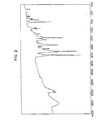
- Fig. 1 is an NMR spectrum of the oxazole derivative obtained in Example 1
- Fig. 2 is an Ir spectrum thereof
- Fig. 3 is an NMR spectrum of the oxazole derivative obtained in Example 2
- Fig. 4 is an IR spectrum thereof
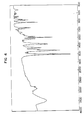
- Fig. 5 is an NMR spectrum of the oxazole derivative obtained in Example 3
- Fig. 6 is an IR spectrum thereof
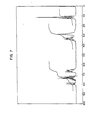
- Fig. 7 is an NMR spectrum of the oxazole derivative obtained in the Comparative Example
- Fig. 8 is an IR spectrum thereof
- Fig. 9 is the changes with the lapse of time in the rates of decomposition of respective acetonitrile solutions of the compounds (VIII), (IX), (X) and (V), by irradiation from a high pressure mercury arc lamp.
- the oxazole derivative represented by wherein R is preferably a methyl group, an ethyl group or a propyl group, is a novel compound, and has a F atom in place of the CI atom in each of the well-known compounds (IV), (V) and (VI); therefore it is so stable to ultraviolet light that it is not or difficult to be decomposed by irridiation with ultraviolet light.
- the oxazole derivative of the formula (I) can be produced by reacting a compound represented by the formula: with a compound represented by the formula: wherein R is preferably a methyl group, an ethyl group or a propyl group.
- the compound represented by the formula (II) can be produced, for example, by adding, to a 50% aqueous ethanol solution, 4-dimethylaminobenzaldehyde, 2-fluoro-benzaldehyde and KCN in proportions of 1 mole, 1 mole and 0.1 to 1.5 moles, respectively, and refluxing the resulting mixture for 1.5 to 4 hours.
- the compound represented by the formula (111) can be synthesized, for example, by the following reaction path.
- One mole of aniline is reacted with 0.67 mole of a compound represented by the formula: wherein R is preferably a methyl group, an ethyl group or a propyl group, under reflux for 2 hours, and the reaction solution is distilled under reduced pressure to obtain a dialkylaniline (in which the alkyl group is a methyl group, an ethyl group or a propyl group; hereinafter the same applies).
- dialkylaminobenzaldehyde 0.3 to 0.4 mole of the dialkylaniline is added dropwise to 1 mole of N,N-dimethylformamide at 19° to 22°C, and after completion of the addition, the resulting mixture is heated at 90°C to 95°C for 2 hours, after which the reaction solution thus obtained is distilled under reduced pressure to obtain a dialkylaminobenzaldehyde.
- 1 mole of the dialkylaminobenzaldehyde is reacted 1.0 to 1.3 moles of hydroxylamine hydrochloride at room temperature for 20 minutes, and the reaction solution is allowed to stand in a refrigerator to deposit a dialkylaminobenzaldehyde oxime.
- the oxazole derivative represented by the formula (I) can be obtained by mixing well the compound of the formulae (II) and (III) and then adding the resulting mixture to concentrated sulfuric acid with stirring in the dark.
- the reaction temperature is preferably 20° to 70°C. When the reaction temperature is adjusted to 50° to 70°C, the reaction is completed in 0.5 to 2 hours.
- the reaction product can be purified by recrystallization from methanol.
- the oxazole derivative represented by the formula (I) can effectively be used as a photoconductive material.
- This photoconductive material can be used as a charge transport material in an electrophotographic plate by taking advantage of its photoconductivity.
- a monolayer comprising a mixture of the compound represented by the formula (I) and a charge generating material can be formed as a photoconductive layer on an electroconductive layer. It is also possible to form a so-called double layer structure as a photoconductive layer on an electroconductive layer by forming individual layers of a charge generating material and a charge transport material.
- the proportion of the aforesaid charge transport material to the charge generating material is usually 1 to 50 parts by weight of the former to 1 part by weight of the latter.
- the thickness of the whole photoconductive layer is usually adjusted to 5 to 100 um.
- the thickness of the photoconductive layer is too large, the flexibility of the layer itself tends to be lowered, and therefore care must be taken.
- the aforesaid charge generating material includes Si, Se, AS 2 S 3 , Sb Z S 3 , Sb Z Se 3 , CdS, CdSe, CdTe, ZnO, phthalocynine pigments, azo pigments anthraquinone pigments, indigoid pigments, quinacridone pigments, perylene pigments, polycyclic quinone pigments, methine squalate pigments, dyes, etc.
- Already-known binding agents may be used in the photoconductive layer.
- the binding agent is selected from linear saturated polyester resins, polycarbonate resins, acrylic resins, butyral resins, polyketone resins, polyurethane resins, poly-N-vinyl-carbazole, poly(p-vinylphenyl)anthracene and the like.
- the amount of the binding agent used is suitably 1 to 50 parts by weight per 1 part by weight of the charge generating material in the case of a photoconductor having a monolayer structure.
- the binding agent should be added to at least the layer comprising a charge transport material, and in this case, the amount of the binding agent is suitably 1 to 50 parts by weight per 1 part by weight of the charge transport material.
- the electroconductive layer aluminium, brass, copper, gold or the like is used.
- the crystals were then recrystallized from methanol to obtain 1.73 g (yield 43%) of a light-yellow solid.
- the light-yellow solid was identified as 2-(4- dipropylaminophenyl)-4-(4-dimethylaminophenyl)-5-(2-fluorophenyl)-1,3-oxazole (the compound VIII) from the following analysis results
- the crystals were then recrystallized from methanol to obtain 1.56 g (yield 44%) of a light-yellow solid.
- the light-yellow solid was identified as 2-(4-dimethylaminophenyl)-4-(4-dimethylaminophenyl)-5-(2-fluorophenyl)-1,3-oxazole (the compound IX) from the following analysis results.
- the crystals were then recrystallized from methanol to obtain 1.39 g (yield 40%) of a light-yellow solid.
- the light-yellow solid was identified as 2-(4-diethylaminophenyl)-4-(4-dimethylaminophenyl)-5-(2-fluorophenyl)-1,3-oxazole (the compound X) from the following analysis results.
- the crystals were then recrystallized from methanol to obtain 0.72 g (yield 37%) of a light-yellow solid.
- the light-yellow solid was identified as 2-(4-diethylaminophenyl)-4-(4-dimethylaminophenyl)-5-(2-chlorophenyl)-1,3 oxazole (the compound V) from the following analysis results.
- each of the solutions was irridiated from a 150-W high pressure mercury arc lamp while bubbling therethrough nitrogen gas. Samples were collected at 5-minutes intervals after the beginning of the irridiation and diluted with acetonitrile in a definite dilution ratio, after which the change of the absorption spectrum was investigated by means of an ultraviolet spectrophotometer.
- the decomposition rate of the compound (V) shown in Comparative Example was calculated from the concentration of the decomposition product produced according to Lambert-Beer's law by measurement of the absorbance at 258.0 nm in the absorption spectrum at each time which absorbance appeared owing to the decomposition.
- the decomposition rate of each of these compounds was evaluated from the ratio of the absorbance at 310.0 nm (A 310.0 ) to the absorbance at ⁇ max (A ⁇ maX ) (A 310.0 /-A ⁇ max ) in the absorption spectrum at each time.
- Fig. 9 are shown the changes with the lapse of time of the rates of photolysis of the acetonitrile solution of the compounds (VIII), (IX), (X) and (V) by the irradiation from the high pressure mercury arc lamp.
- the curve 1 shows the decomposition rate of the compound (VIII), the curve 2 that of the compound (IX), the curve 3 that of the compound (X), and the curve 4 that of the compound (V).
- a 5% by weight solution of 1 part by weight of a type metal-free phthalocyanine (Heliogen Blue 7560, a trade name, manufactured by BASF A. G. and 6.7 parts by weight of a silicone resin (KR255, a trade name, manufactured by Shin-etsu Chemical Industry Co., Ltd.) in tetrahydrofuran as a solvent was prepared, and then kneaded in a ball mill for 5 hours.
- the pigment dispersion thus obtained was applied to an aluminum plate (an electric conductor) by means of an applicator and dried at 90°C for 40 minutes to form a charge generating material layer of 1 ⁇ m in thickness.
- the electrophotographic characteristics of the double-layer type electrophotographic plates thus produced were measured by means of an electrostatic recording paper analyzer (SP-428, a trade name, manufactured by Kawaguchi Electric Works Co., Ltd.).
- SP-428 electrostatic recording paper analyzer
- Table 1 are shown the half decay exposure sensitivities measured by using a white lamp (a tungsten lamp) after corona electrical charging at negative 5 KV for 10 seconds followed by standing in the dark for 30 minutes.
- the oxazole derivative of this invention is so stable to ultraviolet light that it is not decomposed by irridiation therewith. Accordingly, at the time of use and when used for various purposes, said oxazole derivative is easy to handle and does not lose its characteristics. Further, its production is easy and therfore said oxazole derivative can be used as a photoconductive material, an electrochromium display material or the like.
Landscapes
- Chemical & Material Sciences (AREA)
- Organic Chemistry (AREA)
- Physics & Mathematics (AREA)
- General Physics & Mathematics (AREA)
- Heterocyclic Carbon Compounds Containing A Hetero Ring Having Nitrogen And Oxygen As The Only Ring Hetero Atoms (AREA)
- Photoreceptors In Electrophotography (AREA)
- Light Receiving Elements (AREA)
Claims (9)




Applications Claiming Priority (2)
| Application Number | Priority Date | Filing Date | Title |
|---|---|---|---|
| JP58088233A JPS6033830B2 (ja) | 1983-05-19 | 1983-05-19 | オキサゾ−ル誘導体,その製造法および電子写真感光材料 |
| JP88233/83 | 1983-05-19 |
Publications (2)
| Publication Number | Publication Date |
|---|---|
| EP0129059A1 EP0129059A1 (fr) | 1984-12-27 |
| EP0129059B1 true EP0129059B1 (fr) | 1987-01-28 |
Family
ID=13937144
Family Applications (1)
| Application Number | Title | Priority Date | Filing Date |
|---|---|---|---|
| EP19840105515 Expired EP0129059B1 (fr) | 1983-05-19 | 1984-05-15 | Dérivés d'oxazole, procédé pour leur préparation et leur utilisation comme matériau photoconducteur |
Country Status (3)
| Country | Link |
|---|---|
| EP (1) | EP0129059B1 (fr) |
| JP (1) | JPS6033830B2 (fr) |
| DE (1) | DE3462258D1 (fr) |
Families Citing this family (5)
| Publication number | Priority date | Publication date | Assignee | Title |
|---|---|---|---|---|
| EP0534005A1 (fr) * | 1991-09-24 | 1993-03-31 | Agfa-Gevaert N.V. | Matériau d'enregistrement électrophotographique |
| US5348969A (en) * | 1992-04-03 | 1994-09-20 | Bristol-Myers Squibb Company | Diphenyloxazolyl-oxazoles as platelet aggregation inhibitors |
| DE102005007615B3 (de) | 2005-02-18 | 2006-11-02 | Kodak Polychrome Graphics Gmbh | Verfahren zur Herstellung von Lithographie-Druckplatten |
| JP4877228B2 (ja) * | 2005-05-31 | 2012-02-15 | コニカミノルタホールディングス株式会社 | エレクトロクロミック表示素子及びフルカラーエレクトロクロミック表示素子 |
| US8004742B2 (en) * | 2006-07-12 | 2011-08-23 | Konica Minolta Holdings, Inc. | Electrochromic display device |
-
1983
- 1983-05-19 JP JP58088233A patent/JPS6033830B2/ja not_active Expired
-
1984
- 1984-05-15 EP EP19840105515 patent/EP0129059B1/fr not_active Expired
- 1984-05-15 DE DE8484105515T patent/DE3462258D1/de not_active Expired
Also Published As
| Publication number | Publication date |
|---|---|
| DE3462258D1 (en) | 1987-03-05 |
| EP0129059A1 (fr) | 1984-12-27 |
| JPS6033830B2 (ja) | 1985-08-05 |
| JPS59231073A (ja) | 1984-12-25 |
Similar Documents
| Publication | Publication Date | Title |
|---|---|---|
| US4315982A (en) | Styryl pyrazoline compounds, process for production thereof, and electrophoto graphic material comprising said compounds | |
| DE3031595C2 (fr) | ||
| DE3626497C2 (de) | Elektrophotographisches Aufzeichnungsmaterial | |
| DE2935536A1 (de) | Neue pyrazolinverbindungen, verfahren zu deren herstellung und diese enthaltendes elektrofotografisches material | |
| EP0234247B1 (fr) | Photorécepteur électrophotographique et procédé électrophotographique | |
| US4568623A (en) | Photoconductive compositions containing novel disazo compounds and electrophotographic photoreceptors using the same | |
| US4609602A (en) | Photoresponsive imaging members with electron transporting layers | |
| US4618672A (en) | Bisazo compounds useful as charge generating pigments in electrophotography | |
| US4332948A (en) | Novel hydrazone compounds and process for preparing the same | |
| EP0129059A1 (fr) | Dérivés d'oxazole, procédé pour leur préparation et leur utilisation comme matériau photoconducteur | |
| EP0392805B1 (fr) | Hydrazones et photorécepteurs électrophotographiques les contenant | |
| GB2055803A (en) | Hydrazones of 9-ethylcarbazole-3- aldehyde and their use in electrophotography | |
| US5011969A (en) | Fluorene derivative and process for preparation thereof | |
| US4504559A (en) | Disazo compounds and photoconductive composition as well as electrophotographic light sensitive element containing the same | |
| JPS58105155A (ja) | 電子写真感光体 | |
| DE60216307T2 (de) | Derivate von Stilbenamin und elektrophotoempfindliches Material unter Verwendung desselben | |
| JPS6037561A (ja) | 電子写真感光体 | |
| DE3630389A1 (de) | Elektrophotographisches lichtempfindliches matrial | |
| US4557988A (en) | Disazo compounds, photoconductive compositions and electrophotographic light-sensitive materials containing the same | |
| US5008431A (en) | Benzophenone derivative | |
| JP3611370B2 (ja) | ビスアゾ化合物及びその製造用の中間体 | |
| JP3290875B2 (ja) | 電子写真感光体、並びに、ビスアゾ化合物、中間体及びビスアゾ化合物の製造方法 | |
| JP2747854B2 (ja) | トリアリールアミン誘導体およびその製造方法 | |
| JP2504989B2 (ja) | 1,10−ビス(4−アミノフエニル)−1,3,5,7,9−デカペンタエン及びその製造法 | |
| JP2897133B2 (ja) | ビスアゾ化合物およびその製造方法 |
Legal Events
| Date | Code | Title | Description |
|---|---|---|---|
| PUAI | Public reference made under article 153(3) epc to a published international application that has entered the european phase |
Free format text: ORIGINAL CODE: 0009012 |
|
| AK | Designated contracting states |
Designated state(s): DE GB |
|
| 17P | Request for examination filed |
Effective date: 19850423 |
|
| 17Q | First examination report despatched |
Effective date: 19860411 |
|
| GRAA | (expected) grant |
Free format text: ORIGINAL CODE: 0009210 |
|
| AK | Designated contracting states |
Kind code of ref document: B1 Designated state(s): DE GB |
|
| REF | Corresponds to: |
Ref document number: 3462258 Country of ref document: DE Date of ref document: 19870305 |
|
| PLBE | No opposition filed within time limit |
Free format text: ORIGINAL CODE: 0009261 |
|
| STAA | Information on the status of an ep patent application or granted ep patent |
Free format text: STATUS: NO OPPOSITION FILED WITHIN TIME LIMIT |
|
| 26N | No opposition filed | ||
| PGFP | Annual fee paid to national office [announced via postgrant information from national office to epo] |
Ref country code: DE Payment date: 19950426 Year of fee payment: 12 |
|
| PGFP | Annual fee paid to national office [announced via postgrant information from national office to epo] |
Ref country code: GB Payment date: 19950504 Year of fee payment: 12 |
|
| PG25 | Lapsed in a contracting state [announced via postgrant information from national office to epo] |
Ref country code: GB Effective date: 19960515 |
|
| GBPC | Gb: european patent ceased through non-payment of renewal fee |
Effective date: 19960515 |
|
| PG25 | Lapsed in a contracting state [announced via postgrant information from national office to epo] |
Ref country code: DE Effective date: 19970201 |