EP0133473A2 - Marquage in vivo de séquences nucléotides - Google Patents
Marquage in vivo de séquences nucléotides Download PDFInfo
- Publication number
- EP0133473A2 EP0133473A2 EP84107772A EP84107772A EP0133473A2 EP 0133473 A2 EP0133473 A2 EP 0133473A2 EP 84107772 A EP84107772 A EP 84107772A EP 84107772 A EP84107772 A EP 84107772A EP 0133473 A2 EP0133473 A2 EP 0133473A2
- Authority
- EP
- European Patent Office
- Prior art keywords
- polynucleotide sequence
- moiety
- host
- signalling
- dna
- Prior art date
- Legal status (The legal status is an assumption and is not a legal conclusion. Google has not performed a legal analysis and makes no representation as to the accuracy of the status listed.)
- Granted
Links
- 239000002157 polynucleotide Substances 0.000 title claims abstract description 122
- 108091033319 polynucleotide Proteins 0.000 title claims abstract description 121
- 102000040430 polynucleotide Human genes 0.000 title claims abstract description 121
- 238000001727 in vivo Methods 0.000 title claims abstract description 20
- 238000002372 labelling Methods 0.000 title claims abstract description 18
- 238000000034 method Methods 0.000 claims abstract description 81
- 238000001514 detection method Methods 0.000 claims abstract description 52
- 230000008569 process Effects 0.000 claims abstract description 41
- 108091028043 Nucleic acid sequence Proteins 0.000 claims description 76
- 230000011664 signaling Effects 0.000 claims description 76
- 108020004414 DNA Proteins 0.000 claims description 54
- 239000012491 analyte Substances 0.000 claims description 32
- YBJHBAHKTGYVGT-ZKWXMUAHSA-N (+)-Biotin Chemical compound N1C(=O)N[C@@H]2[C@H](CCCCC(=O)O)SC[C@@H]21 YBJHBAHKTGYVGT-ZKWXMUAHSA-N 0.000 claims description 30
- 125000003729 nucleotide group Chemical group 0.000 claims description 27
- 238000009396 hybridization Methods 0.000 claims description 26
- 229940088598 enzyme Drugs 0.000 claims description 23
- 108010062580 Concanavalin A Proteins 0.000 claims description 22
- 239000002773 nucleotide Substances 0.000 claims description 22
- 102000004190 Enzymes Human genes 0.000 claims description 21
- 108090000790 Enzymes Proteins 0.000 claims description 21
- 229960002685 biotin Drugs 0.000 claims description 15
- 235000020958 biotin Nutrition 0.000 claims description 15
- 239000011616 biotin Substances 0.000 claims description 15
- 230000002285 radioactive effect Effects 0.000 claims description 15
- 239000002585 base Substances 0.000 claims description 13
- 230000010076 replication Effects 0.000 claims description 13
- 230000000295 complement effect Effects 0.000 claims description 12
- 150000001875 compounds Chemical class 0.000 claims description 12
- IQFYYKKMVGJFEH-XLPZGREQSA-N Thymidine Chemical compound O=C1NC(=O)C(C)=CN1[C@@H]1O[C@H](CO)[C@@H](O)C1 IQFYYKKMVGJFEH-XLPZGREQSA-N 0.000 claims description 11
- 239000002777 nucleoside Substances 0.000 claims description 11
- RWQNBRDOKXIBIV-UHFFFAOYSA-N thymine Chemical compound CC1=CNC(=O)NC1=O RWQNBRDOKXIBIV-UHFFFAOYSA-N 0.000 claims description 11
- 150000003833 nucleoside derivatives Chemical class 0.000 claims description 10
- 238000010367 cloning Methods 0.000 claims description 9
- 238000012258 culturing Methods 0.000 claims description 9
- 108010001336 Horseradish Peroxidase Proteins 0.000 claims description 7
- 108090001090 Lectins Proteins 0.000 claims description 7
- 102000004856 Lectins Human genes 0.000 claims description 7
- 239000002523 lectin Substances 0.000 claims description 7
- 239000002243 precursor Substances 0.000 claims description 7
- 239000004366 Glucose oxidase Substances 0.000 claims description 6
- 239000002738 chelating agent Substances 0.000 claims description 6
- 229940116332 glucose oxidase Drugs 0.000 claims description 6
- 108010051457 Acid Phosphatase Proteins 0.000 claims description 5
- 102000013563 Acid Phosphatase Human genes 0.000 claims description 5
- DWRXFEITVBNRMK-UHFFFAOYSA-N Beta-D-1-Arabinofuranosylthymine Natural products O=C1NC(=O)C(C)=CN1C1C(O)C(O)C(CO)O1 DWRXFEITVBNRMK-UHFFFAOYSA-N 0.000 claims description 5
- 241000588724 Escherichia coli Species 0.000 claims description 5
- 108010015776 Glucose oxidase Proteins 0.000 claims description 5
- IQFYYKKMVGJFEH-UHFFFAOYSA-N beta-L-thymidine Natural products O=C1NC(=O)C(C)=CN1C1OC(CO)C(O)C1 IQFYYKKMVGJFEH-UHFFFAOYSA-N 0.000 claims description 5
- 235000019420 glucose oxidase Nutrition 0.000 claims description 5
- 108090000623 proteins and genes Proteins 0.000 claims description 5
- 229940104230 thymidine Drugs 0.000 claims description 5
- 229940113082 thymine Drugs 0.000 claims description 5
- 108020004774 Alkaline Phosphatase Proteins 0.000 claims description 4
- 102000002260 Alkaline Phosphatase Human genes 0.000 claims description 4
- 241000701533 Escherichia virus T4 Species 0.000 claims description 4
- -1 antibodies Proteins 0.000 claims description 4
- 239000000427 antigen Substances 0.000 claims description 4
- 108091007433 antigens Proteins 0.000 claims description 4
- 102000036639 antigens Human genes 0.000 claims description 4
- 229920001184 polypeptide Polymers 0.000 claims description 4
- 108090000765 processed proteins & peptides Proteins 0.000 claims description 4
- 102000004196 processed proteins & peptides Human genes 0.000 claims description 4
- 241001515965 unidentified phage Species 0.000 claims description 4
- GZCWLCBFPRFLKL-UHFFFAOYSA-N 1-prop-2-ynoxypropan-2-ol Chemical compound CC(O)COCC#C GZCWLCBFPRFLKL-UHFFFAOYSA-N 0.000 claims description 3
- LRSASMSXMSNRBT-UHFFFAOYSA-N 5-methylcytosine Chemical compound CC1=CNC(=O)N=C1N LRSASMSXMSNRBT-UHFFFAOYSA-N 0.000 claims description 3
- 102000005936 beta-Galactosidase Human genes 0.000 claims description 3
- 108010005774 beta-Galactosidase Proteins 0.000 claims description 3
- 125000001295 dansyl group Chemical group [H]C1=C([H])C(N(C([H])([H])[H])C([H])([H])[H])=C2C([H])=C([H])C([H])=C(C2=C1[H])S(*)(=O)=O 0.000 claims description 3
- GNBHRKFJIUUOQI-UHFFFAOYSA-N fluorescein Chemical compound O1C(=O)C2=CC=CC=C2C21C1=CC=C(O)C=C1OC1=CC(O)=CC=C21 GNBHRKFJIUUOQI-UHFFFAOYSA-N 0.000 claims description 3
- 102000004169 proteins and genes Human genes 0.000 claims description 3
- PYWVYCXTNDRMGF-UHFFFAOYSA-N rhodamine B Chemical compound [Cl-].C=12C=CC(=[N+](CC)CC)C=C2OC2=CC(N(CC)CC)=CC=C2C=1C1=CC=CC=C1C(O)=O PYWVYCXTNDRMGF-UHFFFAOYSA-N 0.000 claims description 3
- 241000702194 Bacillus virus SPO1 Species 0.000 claims description 2
- 241000701542 Enterobacteria phage T2 Species 0.000 claims 1
- 241000701536 Enterobacteria phage T6 Species 0.000 claims 1
- 241000589652 Xanthomonas oryzae Species 0.000 claims 1
- 230000002452 interceptive effect Effects 0.000 claims 1
- 239000000523 sample Substances 0.000 description 66
- 239000000243 solution Substances 0.000 description 14
- WOVKYSAHUYNSMH-RRKCRQDMSA-N 5-bromodeoxyuridine Chemical compound C1[C@H](O)[C@@H](CO)O[C@H]1N1C(=O)NC(=O)C(Br)=C1 WOVKYSAHUYNSMH-RRKCRQDMSA-N 0.000 description 13
- ZMXDDKWLCZADIW-UHFFFAOYSA-N N,N-Dimethylformamide Chemical compound CN(C)C=O ZMXDDKWLCZADIW-UHFFFAOYSA-N 0.000 description 12
- FAPWRFPIFSIZLT-UHFFFAOYSA-M Sodium chloride Chemical compound [Na+].[Cl-] FAPWRFPIFSIZLT-UHFFFAOYSA-M 0.000 description 12
- WOVKYSAHUYNSMH-UHFFFAOYSA-N BROMODEOXYURIDINE Natural products C1C(O)C(CO)OC1N1C(=O)NC(=O)C(Br)=C1 WOVKYSAHUYNSMH-UHFFFAOYSA-N 0.000 description 11
- 108091060296 Glucosylated DNA Proteins 0.000 description 11
- 229950004398 broxuridine Drugs 0.000 description 11
- 108091003079 Bovine Serum Albumin Proteins 0.000 description 9
- 229940098773 bovine serum albumin Drugs 0.000 description 9
- 239000000872 buffer Substances 0.000 description 9
- 239000000203 mixture Substances 0.000 description 9
- 102000039446 nucleic acids Human genes 0.000 description 7
- 108020004707 nucleic acids Proteins 0.000 description 7
- 150000007523 nucleic acids Chemical class 0.000 description 7
- 239000003298 DNA probe Substances 0.000 description 6
- 239000000020 Nitrocellulose Substances 0.000 description 6
- 238000006243 chemical reaction Methods 0.000 description 6
- 238000011534 incubation Methods 0.000 description 6
- 238000003780 insertion Methods 0.000 description 6
- 230000037431 insertion Effects 0.000 description 6
- 229920001220 nitrocellulos Polymers 0.000 description 6
- 230000007781 signaling event Effects 0.000 description 6
- 239000011780 sodium chloride Substances 0.000 description 6
- 102000053602 DNA Human genes 0.000 description 5
- 108020004511 Recombinant DNA Proteins 0.000 description 5
- 210000004027 cell Anatomy 0.000 description 5
- 230000002255 enzymatic effect Effects 0.000 description 5
- 238000004519 manufacturing process Methods 0.000 description 5
- 239000000126 substance Substances 0.000 description 5
- 208000026350 Inborn Genetic disease Diseases 0.000 description 4
- 108010078511 TTTAAA -specific type II deoxyribonucleases Proteins 0.000 description 4
- 230000015572 biosynthetic process Effects 0.000 description 4
- 208000016361 genetic disease Diseases 0.000 description 4
- LEQAOMBKQFMDFZ-UHFFFAOYSA-N glyoxal Chemical compound O=CC=O LEQAOMBKQFMDFZ-UHFFFAOYSA-N 0.000 description 4
- 238000000338 in vitro Methods 0.000 description 4
- 239000000047 product Substances 0.000 description 4
- 230000035945 sensitivity Effects 0.000 description 4
- 239000012279 sodium borohydride Substances 0.000 description 4
- 229910000033 sodium borohydride Inorganic materials 0.000 description 4
- 108090001008 Avidin Proteins 0.000 description 3
- 241000894006 Bacteria Species 0.000 description 3
- 229920005654 Sephadex Polymers 0.000 description 3
- 239000012507 Sephadex™ Substances 0.000 description 3
- VMHLLURERBWHNL-UHFFFAOYSA-M Sodium acetate Chemical compound [Na+].CC([O-])=O VMHLLURERBWHNL-UHFFFAOYSA-M 0.000 description 3
- 238000004458 analytical method Methods 0.000 description 3
- 230000006287 biotinylation Effects 0.000 description 3
- 238000007413 biotinylation Methods 0.000 description 3
- 239000003153 chemical reaction reagent Substances 0.000 description 3
- 230000002616 endonucleolytic effect Effects 0.000 description 3
- 125000002791 glucosyl group Chemical group C1([C@H](O)[C@@H](O)[C@H](O)[C@H](O1)CO)* 0.000 description 3
- UYTPUPDQBNUYGX-UHFFFAOYSA-N guanine Chemical compound O=C1NC(N)=NC2=C1N=CN2 UYTPUPDQBNUYGX-UHFFFAOYSA-N 0.000 description 3
- 239000001257 hydrogen Substances 0.000 description 3
- 229910052739 hydrogen Inorganic materials 0.000 description 3
- 238000012986 modification Methods 0.000 description 3
- 230000004048 modification Effects 0.000 description 3
- 238000007899 nucleic acid hybridization Methods 0.000 description 3
- 238000011160 research Methods 0.000 description 3
- 108091008146 restriction endonucleases Proteins 0.000 description 3
- 239000000758 substrate Substances 0.000 description 3
- 238000003786 synthesis reaction Methods 0.000 description 3
- YMXHPSHLTSZXKH-RVBZMBCESA-N (2,5-dioxopyrrolidin-1-yl) 5-[(3as,4s,6ar)-2-oxo-1,3,3a,4,6,6a-hexahydrothieno[3,4-d]imidazol-4-yl]pentanoate Chemical compound C([C@H]1[C@H]2NC(=O)N[C@H]2CS1)CCCC(=O)ON1C(=O)CCC1=O YMXHPSHLTSZXKH-RVBZMBCESA-N 0.000 description 2
- 108091032973 (ribonucleotides)n+m Proteins 0.000 description 2
- YRCRRHNVYVFNTM-UHFFFAOYSA-N 1,1-dihydroxy-3-ethoxy-2-butanone Chemical compound CCOC(C)C(=O)C(O)O YRCRRHNVYVFNTM-UHFFFAOYSA-N 0.000 description 2
- QKNYBSVHEMOAJP-UHFFFAOYSA-N 2-amino-2-(hydroxymethyl)propane-1,3-diol;hydron;chloride Chemical compound Cl.OCC(N)(CO)CO QKNYBSVHEMOAJP-UHFFFAOYSA-N 0.000 description 2
- ZATZIBWEALYTHN-UHFFFAOYSA-N 4-methyl-n-[(4-nitrophenyl)methyldiazenyl]aniline Chemical compound C1=CC(C)=CC=C1NN=NCC1=CC=C([N+]([O-])=O)C=C1 ZATZIBWEALYTHN-UHFFFAOYSA-N 0.000 description 2
- TVNSATFCUCQBGE-ZKWXMUAHSA-N 5-[(3as,4s,6ar)-2-oxo-1,3,3a,4,6,6a-hexahydrothieno[3,4-d]imidazol-4-yl]pentanethioic s-acid Chemical compound N1C(=O)N[C@@H]2[C@H](CCCCC(=O)S)SC[C@@H]21 TVNSATFCUCQBGE-ZKWXMUAHSA-N 0.000 description 2
- JDBGXEHEIRGOBU-UHFFFAOYSA-N 5-hydroxymethyluracil Chemical compound OCC1=CNC(=O)NC1=O JDBGXEHEIRGOBU-UHFFFAOYSA-N 0.000 description 2
- XKRFYHLGVUSROY-UHFFFAOYSA-N Argon Chemical compound [Ar] XKRFYHLGVUSROY-UHFFFAOYSA-N 0.000 description 2
- 244000063299 Bacillus subtilis Species 0.000 description 2
- 235000014469 Bacillus subtilis Nutrition 0.000 description 2
- 241000195493 Cryptophyta Species 0.000 description 2
- 108020003215 DNA Probes Proteins 0.000 description 2
- 108010014303 DNA-directed DNA polymerase Proteins 0.000 description 2
- 102000016928 DNA-directed DNA polymerase Human genes 0.000 description 2
- 241000196324 Embryophyta Species 0.000 description 2
- 241000233866 Fungi Species 0.000 description 2
- ISWSIDIOOBJBQZ-UHFFFAOYSA-N Phenol Chemical compound OC1=CC=CC=C1 ISWSIDIOOBJBQZ-UHFFFAOYSA-N 0.000 description 2
- NBIIXXVUZAFLBC-UHFFFAOYSA-N Phosphoric acid Chemical compound OP(O)(O)=O NBIIXXVUZAFLBC-UHFFFAOYSA-N 0.000 description 2
- 229920001213 Polysorbate 20 Polymers 0.000 description 2
- 108020004682 Single-Stranded DNA Proteins 0.000 description 2
- 208000002903 Thalassemia Diseases 0.000 description 2
- 239000007983 Tris buffer Substances 0.000 description 2
- 241000700605 Viruses Species 0.000 description 2
- SXEHKFHPFVVDIR-UHFFFAOYSA-N [4-(4-hydrazinylphenyl)phenyl]hydrazine Chemical compound C1=CC(NN)=CC=C1C1=CC=C(NN)C=C1 SXEHKFHPFVVDIR-UHFFFAOYSA-N 0.000 description 2
- 239000002253 acid Substances 0.000 description 2
- 238000003556 assay Methods 0.000 description 2
- 239000012472 biological sample Substances 0.000 description 2
- AIYUHDOJVYHVIT-UHFFFAOYSA-M caesium chloride Chemical compound [Cl-].[Cs+] AIYUHDOJVYHVIT-UHFFFAOYSA-M 0.000 description 2
- 238000007385 chemical modification Methods 0.000 description 2
- 238000003776 cleavage reaction Methods 0.000 description 2
- 238000010276 construction Methods 0.000 description 2
- 230000008878 coupling Effects 0.000 description 2
- 238000010168 coupling process Methods 0.000 description 2
- 238000005859 coupling reaction Methods 0.000 description 2
- OPTASPLRGRRNAP-UHFFFAOYSA-N cytosine Chemical compound NC=1C=CNC(=O)N=1 OPTASPLRGRRNAP-UHFFFAOYSA-N 0.000 description 2
- 230000000694 effects Effects 0.000 description 2
- 238000005516 engineering process Methods 0.000 description 2
- 238000001914 filtration Methods 0.000 description 2
- 125000003147 glycosyl group Chemical group 0.000 description 2
- 229940015043 glyoxal Drugs 0.000 description 2
- 239000001963 growth medium Substances 0.000 description 2
- 238000003018 immunoassay Methods 0.000 description 2
- 238000010348 incorporation Methods 0.000 description 2
- 230000003993 interaction Effects 0.000 description 2
- 229950001103 ketoxal Drugs 0.000 description 2
- 239000000463 material Substances 0.000 description 2
- 239000002609 medium Substances 0.000 description 2
- 244000005700 microbiome Species 0.000 description 2
- 239000000256 polyoxyethylene sorbitan monolaurate Substances 0.000 description 2
- 235000010486 polyoxyethylene sorbitan monolaurate Nutrition 0.000 description 2
- 230000007017 scission Effects 0.000 description 2
- 238000012216 screening Methods 0.000 description 2
- 239000001632 sodium acetate Substances 0.000 description 2
- 235000017281 sodium acetate Nutrition 0.000 description 2
- 239000011550 stock solution Substances 0.000 description 2
- 210000001519 tissue Anatomy 0.000 description 2
- 239000001226 triphosphate Substances 0.000 description 2
- 235000011178 triphosphate Nutrition 0.000 description 2
- 125000002264 triphosphate group Chemical class [H]OP(=O)(O[H])OP(=O)(O[H])OP(=O)(O[H])O* 0.000 description 2
- LENZDBCJOHFCAS-UHFFFAOYSA-N tris Chemical compound OCC(N)(CO)CO LENZDBCJOHFCAS-UHFFFAOYSA-N 0.000 description 2
- 230000003612 virological effect Effects 0.000 description 2
- UHDGCWIWMRVCDJ-UHFFFAOYSA-N 1-beta-D-Xylofuranosyl-NH-Cytosine Natural products O=C1N=C(N)C=CN1C1C(O)C(O)C(CO)O1 UHDGCWIWMRVCDJ-UHFFFAOYSA-N 0.000 description 1
- MJEQLGCFPLHMNV-UHFFFAOYSA-N 4-amino-1-(hydroxymethyl)pyrimidin-2-one Chemical compound NC=1C=CN(CO)C(=O)N=1 MJEQLGCFPLHMNV-UHFFFAOYSA-N 0.000 description 1
- PFJBDCNEHIXTLU-VPCXQMTMSA-N 4-amino-1-[(2r,3r,4s,5r)-3,4-dihydroxy-2,5-bis(hydroxymethyl)oxolan-2-yl]pyrimidin-2-one Chemical compound O=C1N=C(N)C=CN1[C@@]1(CO)[C@H](O)[C@H](O)[C@@H](CO)O1 PFJBDCNEHIXTLU-VPCXQMTMSA-N 0.000 description 1
- AMIOJPURYLGJEG-UHFFFAOYSA-N 5-(4,5-dihydroxypentyl)uracil Chemical class OCC(O)CCCC1=CNC(=O)NC1=O AMIOJPURYLGJEG-UHFFFAOYSA-N 0.000 description 1
- RXGJTUSBYWCRBK-UHFFFAOYSA-M 5-methylphenazinium methyl sulfate Chemical compound COS([O-])(=O)=O.C1=CC=C2[N+](C)=C(C=CC=C3)C3=NC2=C1 RXGJTUSBYWCRBK-UHFFFAOYSA-M 0.000 description 1
- 102000007469 Actins Human genes 0.000 description 1
- 108010085238 Actins Proteins 0.000 description 1
- 229930024421 Adenine Natural products 0.000 description 1
- GFFGJBXGBJISGV-UHFFFAOYSA-N Adenine Chemical compound NC1=NC=NC2=C1N=CN2 GFFGJBXGBJISGV-UHFFFAOYSA-N 0.000 description 1
- 241000193830 Bacillus <bacterium> Species 0.000 description 1
- 108020000946 Bacterial DNA Proteins 0.000 description 1
- 208000035143 Bacterial infection Diseases 0.000 description 1
- OYPRJOBELJOOCE-UHFFFAOYSA-N Calcium Chemical compound [Ca] OYPRJOBELJOOCE-UHFFFAOYSA-N 0.000 description 1
- UXVMQQNJUSDDNG-UHFFFAOYSA-L Calcium chloride Chemical compound [Cl-].[Cl-].[Ca+2] UXVMQQNJUSDDNG-UHFFFAOYSA-L 0.000 description 1
- KRKNYBCHXYNGOX-UHFFFAOYSA-K Citrate Chemical compound [O-]C(=O)CC(O)(CC([O-])=O)C([O-])=O KRKNYBCHXYNGOX-UHFFFAOYSA-K 0.000 description 1
- 108091028732 Concatemer Proteins 0.000 description 1
- UHDGCWIWMRVCDJ-PSQAKQOGSA-N Cytidine Natural products O=C1N=C(N)C=CN1[C@@H]1[C@@H](O)[C@@H](O)[C@H](CO)O1 UHDGCWIWMRVCDJ-PSQAKQOGSA-N 0.000 description 1
- 102000004594 DNA Polymerase I Human genes 0.000 description 1
- 108010017826 DNA Polymerase I Proteins 0.000 description 1
- 108010008286 DNA nucleotidylexotransferase Proteins 0.000 description 1
- 102100033215 DNA nucleotidylexotransferase Human genes 0.000 description 1
- 230000004543 DNA replication Effects 0.000 description 1
- AHCYMLUZIRLXAA-SHYZEUOFSA-N Deoxyuridine 5'-triphosphate Chemical compound O1[C@H](COP(O)(=O)OP(O)(=O)OP(O)(O)=O)[C@@H](O)C[C@@H]1N1C(=O)NC(=O)C=C1 AHCYMLUZIRLXAA-SHYZEUOFSA-N 0.000 description 1
- KCXVZYZYPLLWCC-UHFFFAOYSA-N EDTA Chemical compound OC(=O)CN(CC(O)=O)CCN(CC(O)=O)CC(O)=O KCXVZYZYPLLWCC-UHFFFAOYSA-N 0.000 description 1
- 108010042407 Endonucleases Proteins 0.000 description 1
- 102000004533 Endonucleases Human genes 0.000 description 1
- 206010017533 Fungal infection Diseases 0.000 description 1
- 241000287828 Gallus gallus Species 0.000 description 1
- 102000000340 Glucosyltransferases Human genes 0.000 description 1
- 108010055629 Glucosyltransferases Proteins 0.000 description 1
- XQFRJNBWHJMXHO-RRKCRQDMSA-N IDUR Chemical compound C1[C@H](O)[C@@H](CO)O[C@H]1N1C(=O)NC(=O)C(I)=C1 XQFRJNBWHJMXHO-RRKCRQDMSA-N 0.000 description 1
- 241000829100 Macaca mulatta polyomavirus 1 Species 0.000 description 1
- FYYHWMGAXLPEAU-UHFFFAOYSA-N Magnesium Chemical compound [Mg] FYYHWMGAXLPEAU-UHFFFAOYSA-N 0.000 description 1
- PWHULOQIROXLJO-UHFFFAOYSA-N Manganese Chemical compound [Mn] PWHULOQIROXLJO-UHFFFAOYSA-N 0.000 description 1
- 229910021380 Manganese Chloride Inorganic materials 0.000 description 1
- GLFNIEUTAYBVOC-UHFFFAOYSA-L Manganese chloride Chemical compound Cl[Mn]Cl GLFNIEUTAYBVOC-UHFFFAOYSA-L 0.000 description 1
- 241001465754 Metazoa Species 0.000 description 1
- 208000031888 Mycoses Diseases 0.000 description 1
- 238000000636 Northern blotting Methods 0.000 description 1
- 229910019142 PO4 Inorganic materials 0.000 description 1
- 208000030852 Parasitic disease Diseases 0.000 description 1
- 241000589516 Pseudomonas Species 0.000 description 1
- 101710086015 RNA ligase Proteins 0.000 description 1
- 241000701835 Salmonella virus P22 Species 0.000 description 1
- 239000002262 Schiff base Substances 0.000 description 1
- 150000004753 Schiff bases Chemical class 0.000 description 1
- 238000002105 Southern blotting Methods 0.000 description 1
- 108010090804 Streptavidin Proteins 0.000 description 1
- 241000187747 Streptomyces Species 0.000 description 1
- ZMANZCXQSJIPKH-UHFFFAOYSA-N Triethylamine Chemical class CCN(CC)CC ZMANZCXQSJIPKH-UHFFFAOYSA-N 0.000 description 1
- 239000013504 Triton X-100 Substances 0.000 description 1
- 229920004890 Triton X-100 Polymers 0.000 description 1
- HSCJRCZFDFQWRP-JZMIEXBBSA-N UDP-alpha-D-glucose Chemical compound O[C@@H]1[C@@H](O)[C@H](O)[C@@H](CO)O[C@@H]1OP(O)(=O)OP(O)(=O)OC[C@@H]1[C@@H](O)[C@@H](O)[C@H](N2C(NC(=O)C=C2)=O)O1 HSCJRCZFDFQWRP-JZMIEXBBSA-N 0.000 description 1
- HSCJRCZFDFQWRP-UHFFFAOYSA-N Uridindiphosphoglukose Natural products OC1C(O)C(O)C(CO)OC1OP(O)(=O)OP(O)(=O)OCC1C(O)C(O)C(N2C(NC(=O)C=C2)=O)O1 HSCJRCZFDFQWRP-UHFFFAOYSA-N 0.000 description 1
- 108020005202 Viral DNA Proteins 0.000 description 1
- 241000726445 Viroids Species 0.000 description 1
- RPLKOJPSPZIYKF-PJKMHFRUSA-N [(2r,3s,5s)-5-(4-amino-2-oxopyrimidin-1-yl)-3-hydroxy-5-(hydroxymethyl)oxolan-2-yl]methyl dihydrogen phosphate Chemical class O=C1N=C(N)C=CN1[C@]1(CO)O[C@H](COP(O)(O)=O)[C@@H](O)C1 RPLKOJPSPZIYKF-PJKMHFRUSA-N 0.000 description 1
- 229960000643 adenine Drugs 0.000 description 1
- 229910000147 aluminium phosphate Inorganic materials 0.000 description 1
- 230000003321 amplification Effects 0.000 description 1
- 230000001745 anti-biotin effect Effects 0.000 description 1
- 229910052786 argon Inorganic materials 0.000 description 1
- 208000022362 bacterial infectious disease Diseases 0.000 description 1
- WQZGKKKJIJFFOK-VFUOTHLCSA-N beta-D-glucose Chemical compound OC[C@H]1O[C@@H](O)[C@H](O)[C@@H](O)[C@@H]1O WQZGKKKJIJFFOK-VFUOTHLCSA-N 0.000 description 1
- 230000000903 blocking effect Effects 0.000 description 1
- 210000004369 blood Anatomy 0.000 description 1
- 239000008280 blood Substances 0.000 description 1
- 229910021538 borax Inorganic materials 0.000 description 1
- 235000010633 broth Nutrition 0.000 description 1
- 239000006227 byproduct Substances 0.000 description 1
- 239000011575 calcium Substances 0.000 description 1
- 229910052791 calcium Inorganic materials 0.000 description 1
- 239000001110 calcium chloride Substances 0.000 description 1
- 229910001628 calcium chloride Inorganic materials 0.000 description 1
- 238000005119 centrifugation Methods 0.000 description 1
- 230000009920 chelation Effects 0.000 description 1
- 238000001311 chemical methods and process Methods 0.000 description 1
- BKHZIBWEHPHYAI-UHFFFAOYSA-N chloroform;3-methylbutan-1-ol Chemical compound ClC(Cl)Cl.CC(C)CCO BKHZIBWEHPHYAI-UHFFFAOYSA-N 0.000 description 1
- MVWKRECLSFGFPK-UHFFFAOYSA-N chloroform;octan-1-ol Chemical compound ClC(Cl)Cl.CCCCCCCCO MVWKRECLSFGFPK-UHFFFAOYSA-N 0.000 description 1
- 230000002759 chromosomal effect Effects 0.000 description 1
- 210000000349 chromosome Anatomy 0.000 description 1
- 238000004440 column chromatography Methods 0.000 description 1
- 238000002967 competitive immunoassay Methods 0.000 description 1
- 239000012141 concentrate Substances 0.000 description 1
- 238000007796 conventional method Methods 0.000 description 1
- UHDGCWIWMRVCDJ-ZAKLUEHWSA-N cytidine Chemical compound O=C1N=C(N)C=CN1[C@H]1[C@H](O)[C@@H](O)[C@H](CO)O1 UHDGCWIWMRVCDJ-ZAKLUEHWSA-N 0.000 description 1
- IERHLVCPSMICTF-XVFCMESISA-N cytidine 5'-monophosphate Chemical compound O=C1N=C(N)C=CN1[C@H]1[C@H](O)[C@H](O)[C@@H](COP(O)(O)=O)O1 IERHLVCPSMICTF-XVFCMESISA-N 0.000 description 1
- IERHLVCPSMICTF-UHFFFAOYSA-N cytidine monophosphate Natural products O=C1N=C(N)C=CN1C1C(O)C(O)C(COP(O)(O)=O)O1 IERHLVCPSMICTF-UHFFFAOYSA-N 0.000 description 1
- 229940104302 cytosine Drugs 0.000 description 1
- SUYVUBYJARFZHO-RRKCRQDMSA-N dATP Chemical compound C1=NC=2C(N)=NC=NC=2N1[C@H]1C[C@H](O)[C@@H](COP(O)(=O)OP(O)(=O)OP(O)(O)=O)O1 SUYVUBYJARFZHO-RRKCRQDMSA-N 0.000 description 1
- SUYVUBYJARFZHO-UHFFFAOYSA-N dATP Natural products C1=NC=2C(N)=NC=NC=2N1C1CC(O)C(COP(O)(=O)OP(O)(=O)OP(O)(O)=O)O1 SUYVUBYJARFZHO-UHFFFAOYSA-N 0.000 description 1
- HAAZLUGHYHWQIW-KVQBGUIXSA-N dGTP Chemical compound C1=NC=2C(=O)NC(N)=NC=2N1[C@H]1C[C@H](O)[C@@H](COP(O)(=O)OP(O)(=O)OP(O)(O)=O)O1 HAAZLUGHYHWQIW-KVQBGUIXSA-N 0.000 description 1
- NHVNXKFIZYSCEB-XLPZGREQSA-N dTTP Chemical compound O=C1NC(=O)C(C)=CN1[C@@H]1O[C@H](COP(O)(=O)OP(O)(=O)OP(O)(O)=O)[C@@H](O)C1 NHVNXKFIZYSCEB-XLPZGREQSA-N 0.000 description 1
- 230000007423 decrease Effects 0.000 description 1
- 238000011161 development Methods 0.000 description 1
- 238000003745 diagnosis Methods 0.000 description 1
- 125000004989 dicarbonyl group Chemical group 0.000 description 1
- 239000000539 dimer Substances 0.000 description 1
- 239000012149 elution buffer Substances 0.000 description 1
- 238000005538 encapsulation Methods 0.000 description 1
- 230000002708 enhancing effect Effects 0.000 description 1
- 238000001704 evaporation Methods 0.000 description 1
- 230000008020 evaporation Effects 0.000 description 1
- 238000002474 experimental method Methods 0.000 description 1
- 238000000605 extraction Methods 0.000 description 1
- 210000003608 fece Anatomy 0.000 description 1
- 238000000855 fermentation Methods 0.000 description 1
- 230000004151 fermentation Effects 0.000 description 1
- 239000007850 fluorescent dye Substances 0.000 description 1
- 239000012634 fragment Substances 0.000 description 1
- 230000002538 fungal effect Effects 0.000 description 1
- 239000007789 gas Substances 0.000 description 1
- 230000014509 gene expression Effects 0.000 description 1
- 239000011521 glass Substances 0.000 description 1
- 108091005608 glycosylated proteins Proteins 0.000 description 1
- 102000035122 glycosylated proteins Human genes 0.000 description 1
- NAQMVNRVTILPCV-UHFFFAOYSA-N hexane-1,6-diamine Chemical compound NCCCCCCN NAQMVNRVTILPCV-UHFFFAOYSA-N 0.000 description 1
- 210000005260 human cell Anatomy 0.000 description 1
- 229910052588 hydroxylapatite Inorganic materials 0.000 description 1
- 125000004029 hydroxymethyl group Chemical group [H]OC([H])([H])* 0.000 description 1
- 238000007901 in situ hybridization Methods 0.000 description 1
- 238000011065 in-situ storage Methods 0.000 description 1
- 238000002955 isolation Methods 0.000 description 1
- 238000001738 isopycnic centrifugation Methods 0.000 description 1
- 239000011777 magnesium Substances 0.000 description 1
- 229910052749 magnesium Inorganic materials 0.000 description 1
- 229910052748 manganese Inorganic materials 0.000 description 1
- 239000011572 manganese Substances 0.000 description 1
- 239000011565 manganese chloride Substances 0.000 description 1
- 210000003205 muscle Anatomy 0.000 description 1
- VTPSNRIENVXKCI-UHFFFAOYSA-N n-(2,4-dimethylphenyl)-3-hydroxynaphthalene-2-carboxamide Chemical compound CC1=CC(C)=CC=C1NC(=O)C1=CC2=CC=CC=C2C=C1O VTPSNRIENVXKCI-UHFFFAOYSA-N 0.000 description 1
- JPXMTWWFLBLUCD-UHFFFAOYSA-N nitro blue tetrazolium(2+) Chemical compound COC1=CC(C=2C=C(OC)C(=CC=2)[N+]=2N(N=C(N=2)C=2C=CC=CC=2)C=2C=CC(=CC=2)[N+]([O-])=O)=CC=C1[N+]1=NC(C=2C=CC=CC=2)=NN1C1=CC=C([N+]([O-])=O)C=C1 JPXMTWWFLBLUCD-UHFFFAOYSA-N 0.000 description 1
- 238000003199 nucleic acid amplification method Methods 0.000 description 1
- 125000003835 nucleoside group Chemical group 0.000 description 1
- 238000006384 oligomerization reaction Methods 0.000 description 1
- 238000007254 oxidation reaction Methods 0.000 description 1
- 238000004806 packaging method and process Methods 0.000 description 1
- 230000003071 parasitic effect Effects 0.000 description 1
- XYJRXVWERLGGKC-UHFFFAOYSA-D pentacalcium;hydroxide;triphosphate Chemical compound [OH-].[Ca+2].[Ca+2].[Ca+2].[Ca+2].[Ca+2].[O-]P([O-])([O-])=O.[O-]P([O-])([O-])=O.[O-]P([O-])([O-])=O XYJRXVWERLGGKC-UHFFFAOYSA-D 0.000 description 1
- 235000021317 phosphate Nutrition 0.000 description 1
- 125000002467 phosphate group Chemical group [H]OP(=O)(O[H])O[*] 0.000 description 1
- 150000003013 phosphoric acid derivatives Chemical class 0.000 description 1
- 229920003023 plastic Polymers 0.000 description 1
- 229920000642 polymer Polymers 0.000 description 1
- 238000002360 preparation method Methods 0.000 description 1
- 210000004915 pus Anatomy 0.000 description 1
- 230000005855 radiation Effects 0.000 description 1
- 238000000163 radioactive labelling Methods 0.000 description 1
- 238000003127 radioimmunoassay Methods 0.000 description 1
- 238000012552 review Methods 0.000 description 1
- 210000003296 saliva Anatomy 0.000 description 1
- 238000013341 scale-up Methods 0.000 description 1
- 210000000582 semen Anatomy 0.000 description 1
- 210000002966 serum Anatomy 0.000 description 1
- 239000011734 sodium Substances 0.000 description 1
- 239000007974 sodium acetate buffer Substances 0.000 description 1
- 239000001488 sodium phosphate Substances 0.000 description 1
- 229910000162 sodium phosphate Inorganic materials 0.000 description 1
- 235000010339 sodium tetraborate Nutrition 0.000 description 1
- 239000007790 solid phase Substances 0.000 description 1
- 239000002904 solvent Substances 0.000 description 1
- 238000003860 storage Methods 0.000 description 1
- 239000006228 supernatant Substances 0.000 description 1
- 238000012360 testing method Methods 0.000 description 1
- 238000012546 transfer Methods 0.000 description 1
- 238000013519 translation Methods 0.000 description 1
- BSVBQGMMJUBVOD-UHFFFAOYSA-N trisodium borate Chemical compound [Na+].[Na+].[Na+].[O-]B([O-])[O-] BSVBQGMMJUBVOD-UHFFFAOYSA-N 0.000 description 1
- RYFMWSXOAZQYPI-UHFFFAOYSA-K trisodium phosphate Chemical compound [Na+].[Na+].[Na+].[O-]P([O-])([O-])=O RYFMWSXOAZQYPI-UHFFFAOYSA-K 0.000 description 1
- 241001529453 unidentified herpesvirus Species 0.000 description 1
- 210000002700 urine Anatomy 0.000 description 1
- XLYOFNOQVPJJNP-UHFFFAOYSA-N water Substances O XLYOFNOQVPJJNP-UHFFFAOYSA-N 0.000 description 1
Images
Classifications
-
- G—PHYSICS
- G01—MEASURING; TESTING
- G01N—INVESTIGATING OR ANALYSING MATERIALS BY DETERMINING THEIR CHEMICAL OR PHYSICAL PROPERTIES
- G01N33/00—Investigating or analysing materials by specific methods not covered by groups G01N1/00 - G01N31/00
- G01N33/48—Biological material, e.g. blood, urine; Haemocytometers
- G01N33/50—Chemical analysis of biological material, e.g. blood, urine; Testing involving biospecific ligand binding methods; Immunological testing
- G01N33/58—Chemical analysis of biological material, e.g. blood, urine; Testing involving biospecific ligand binding methods; Immunological testing involving labelled substances
-
- C—CHEMISTRY; METALLURGY
- C12—BIOCHEMISTRY; BEER; SPIRITS; WINE; VINEGAR; MICROBIOLOGY; ENZYMOLOGY; MUTATION OR GENETIC ENGINEERING
- C12N—MICROORGANISMS OR ENZYMES; COMPOSITIONS THEREOF; PROPAGATING, PRESERVING, OR MAINTAINING MICROORGANISMS; MUTATION OR GENETIC ENGINEERING; CULTURE MEDIA
- C12N15/00—Mutation or genetic engineering; DNA or RNA concerning genetic engineering, vectors, e.g. plasmids, or their isolation, preparation or purification; Use of hosts therefor
-
- C—CHEMISTRY; METALLURGY
- C12—BIOCHEMISTRY; BEER; SPIRITS; WINE; VINEGAR; MICROBIOLOGY; ENZYMOLOGY; MUTATION OR GENETIC ENGINEERING
- C12Q—MEASURING OR TESTING PROCESSES INVOLVING ENZYMES, NUCLEIC ACIDS OR MICROORGANISMS; COMPOSITIONS OR TEST PAPERS THEREFOR; PROCESSES OF PREPARING SUCH COMPOSITIONS; CONDITION-RESPONSIVE CONTROL IN MICROBIOLOGICAL OR ENZYMOLOGICAL PROCESSES
- C12Q1/00—Measuring or testing processes involving enzymes, nucleic acids or microorganisms; Compositions therefor; Processes of preparing such compositions
- C12Q1/68—Measuring or testing processes involving enzymes, nucleic acids or microorganisms; Compositions therefor; Processes of preparing such compositions involving nucleic acids
- C12Q1/6813—Hybridisation assays
- C12Q1/6816—Hybridisation assays characterised by the detection means
Definitions
- This invention relates to in vivo labelling of polynucleotide sequences. More specifically, it relates to the biological labelling of DNA sequences that allows their detection upon hybridization to analytes. As will be appreciated, the. biologically-labelled polynucleotide sequences produced in accordance with the methods of this invention are useful in many laboratory, industrial and medical applications wherein detection of analytes is desired.
- Label - That moiety attached to a polynucleotide sequence which as is, which after covalent attachment to it of a signalling moiety or a combination of bridging moiety and signalling moiety or which after non-covalent binding to it of a signalling moiety or a combination of bridging moiety and signalling moiety, gives rise to a signal which is detectable, and in some cases quantifiable.
- Compounds carrying such labels include, for example, glucosylated nucleotides, glycosylated nucleotides, 5-hydroxymethyluracil, BrdUR, and 5-methylcytosine.
- Bridging Moiety That moiety which on covalent attachment or non-covalent binding to the label of a polynucleotide sequence acts as a link or a bridge between that label and a signalling moiety.
- Signalling Moiety That, moiety which on covalent attachment or non-covalent binding to the label of a polynucleotide sequence or to a bridging moiety attached or bound to that label provides a signal for detection of the label.
- detection techniques can be divided into two major classes: (1) those based on ligand-receptor interactions (e.g., immunoassay-based techniques), and (2) those based on nucleic acid hybridization (polynucleotide sequence-based techniques).
- Immunoassay-based techniques are characterized by a sequence of steps comprising the non-covalent binding of an antibody and antigen complementary to it. See for example, T. Chard, An Introduction To Radioimmunoassay And Related Techniques (1978).
- Polynucleotide sequence-based detection techniques are characterized by a sequence of steps comprising the non-covalent binding of a labelled polynucleotide sequence or probe to a complementary sequence of the analyte under hybridization conditions in accordance with the Watson-Crick base pairing of adenine (A) and thymidine (T), and guanine (G) and cytidine (C), and the detection of that hybridization.
- A adenine
- T thymidine
- G guanine
- C cytidine
- the non-covalent binding of a labelled sequence or probe to a complementary sequence of an analyte is the primary recognition event of polynucleotide sequence-based detection techniques. This binding event is brought about by a precise molecular alignment and interaction of complementery nucleotides of the probe and analyte. It is energetically favored by the release of non-covalent bonding free energy, e.g., hydrogen bonding, stacking free energy and the like.
- a signalling step or event allows detection in some quantitative or qualitative manner, e.g., a human or instrument detection system, of the occurrence of the primary recognition event.
- the primary recognition event and the signalling event of polynucleotide sequence based detection techniques may be coupled either directly or indirectly, proportionately or inversely proportionately.
- the amount of radio-activity is usually directly proportional to the amount of analyte present.
- Inversely proportional techniques include, for- example, competitive immuno-assays, wherein the amount of detected signal decreases with the greater amount of analyte that is present in the sample.
- Amplification techniques are also employed for enhancing detection wherein the signalling event is related to the primary recognition event in a ratio greater than 1:1.
- the signalling component of the assay may be present in a ratio of 10:1 to each recognition component,. thereby providing a 10-fold increase in sensitivity.
- a wide .variety of signalling events may be employed to detect the occurrence of the primary recognition event.
- the signalling event chosen depends on the particular signal that characterizes the label or signalling moiety of the polynucleotide sequence employed in the primary recognition event.
- the label itself without further treatment to attach or to bind to it a signalling moiety or a combination of bridging moiety and signalling moiety, may be detectable, it is more usual either to attach covalently or to bind non-covalently to the label a signalling moiety or a combination of bridging moiety and signalling moiety that is itself detectable or that becomes detectable after further modification.
- bridging moiety and signalling moiety may be constructed before attachment or binding to the label, or it may be sequencially attached or bound to the label.
- the bridging moiety may be first bound or attached to the label and then the signalling moiety combined with that bridging moiety.
- several bridging moieties and/or signalling moieties may be employed together in any one combination of bridging moiety and signalling moiety.
- Examples of the covalent attachment of a signalling moiety or a combination of bridging moiety and signalling moiety to a label are the chemical modification of the label with signalling moieties, such as radioactive moieties, fluorescent moieties or other moieties that themselves provide signals to available detection means or the chemical modification of the label with at least one combination of bridging moiety and signalling moiety to provide that signal.
- signalling moieties such as radioactive moieties, fluorescent moieties or other moieties that themselves provide signals to available detection means or the chemical modification of the label with at least one combination of bridging moiety and signalling moiety to provide that signal.
- Examples of the non-covalent binding of a signalling moiety or a combination of bridging moiety and signalling moiety to a label are the non-covalent binding to the label of a signalling moiety'that itself can be detected by appropriate means, or the non-covalent binding to the label of a combination of bridging moiety and signalling moiety to provide a signal that may be detected by one of those means.
- the label of the polynucleotide sequence may be non-covalently bound to an antibody, a fluorescent moiety or another moiety which is detectable by appropriate means.
- the label could be bound to a bridging moiety, e.g., a lectin, and then bound through the lectin, or bridging moiety, to another moiety that is detectable by appropriate means.
- signalling moieties and bridging moieties that may be employed for covalent attachment or non-covalent binding to the labels of polynucleotide sequences useful as probes in analyte detection systems. They include both a wide variety of radioactive and non-radioactive signalling moieties and a wide variety of non-radioactive bridging moieties. All that is required is that the signalling moiety provide a signal that may be detected by appropriate means and that the bridging moiety, if any, be characterized by the ability to attach covalently or to bind non-covalently to the label and also the ability to combine with a signalling moiety.
- Radioactive signalling moieties and combinations of various bridging moieties and radioactive signalling moieties are characterized by one or more radioisotopes such as 32p , 131 I, 14 C, 3 H, 6 °Co, 59 Ni, 63 Ni and the like.
- the isotope employed emits ⁇ or y radiation and has a long half life. Detection of the radioactive signal is then, most usually, accomplished by means of a radioactivity detector, such as exposure to a film.
- Non-radioactive signalling moieties and- combinations of bridging moieties and non-radioactive signalling moieties are being increasingly used both in research and clinical settings. Because these signalling and bridging moieties do not involve radio- activity,. the techniques and labelled probes using them are safer, cleaner, generally more stable when stored,' and consequently cheaper to use. Detection sensitivities of the non-radioactive signalling moieties also are as high or higher than radiolabelling techniques.
- non-radioactive signalling moieties or combinations of bridging - signalling moieties useful with non-radioactive labels are those based on the biotin/avidin binding system.
- Non-radioactively labelled polynucleotides are not more widely used in detection systems because the attachment of a label, which does not interfere with hybridization, to the polynucleotide sequences. that are useful as probes in those detection systems is expensive.
- the chemical reaction conditions that might be useful for modification of a polynucleotide polymer to add to it a label are often too vigorous to be sufficiently selective for a particular nucleotide.
- chemical labelling of polynucleotide sequences often interferes with hybridization because the label interferes with the hydrogen bonding necessary for hybridization.
- dicarbonyl reagents such as kethoxal or glyoxal, react with guanine residues [Shapiro et al., Biochemistry, 5, p]:. 2799-2807 (1966); M. Litt, Biochemistry, 8,, pp. 3249-53 (1969); Politz et al., Biochemistry, 20, pp. 372-78 (1981)].
- the kethoxal and glyoxal labelled nucleotides do not hybridize to complementary sequences in the analyte because the label interferes with the hydrogen bonding necessary for hybridization.
- a labelled monomeric nucleotide in order to label a polynucleotide sequence for use as a probe, a labelled monomeric nucleotide must be synthesized and then incorporated into a polynucleotide sequence.
- Various methods are available to label an individual nucleotide in such a way that the label does not interfere with hybridization.
- Various methods, both chemical and enzymatic, are also available to attach those labellec monomeric nucleotides to a polynucleotide probe.
- a labelled nucleotide such as 2'-deoxyuridin 5'-triphosphate 5-allylamine biotin may be substituted in DNA probes by nick translation [P. R.
- the present invention solves the production limitations referred to above by providing in vivo or biologically labelled polynucleotide sequences that are useful as probes in detection of analytes. These sequences may be utilized in methods and kits for detecting analytes of interest.
- the processes for preparing the labelled DNA sequences of this invention generally involve, in one embodiment, the in vivo labelling of desired polynucleotide sequences.
- the processes of this invention may be employed to incorporate in vivo into a desired polynucleotide sequence a previously labelled base, nucleoside or nucleotide.
- Both embodiments of this invention are improvements over prior processes for labelling polynucleotides. Both make non-radioactively-labelled probes more readily available at less cost for use in various detection systems.
- the first embodiment of the process for in vivo labelling of polynucleotide sequences of this invention comprises the step of culturing a host characterized by a polynucleotide sequence that is desired to be labelled and at least another polynucleotide sequence that expresses a product that labels the desired polynucleotide sequence on its replication in the cultured host.
- the method also includes the step of isolating from the cultured host at least a polynucleotide sequence comprising the labelled polynucleotide sequence. More preferably, the DNA sequence isolated from the cultured host is part or all of the labelled polynucleotide sequence itself.
- a heterologous DNA sequence that is desired to be labelled is inserted into the T4 bacteriophage genome (which normally contains hydroxymethylated and glucosylated DNA).
- the host T4 phage is grown under conditions wherein it produces hydroxymethylated and glucosylated DNA.
- the T4 phage containing the inserted probe DNA sequence is harvested, and the probe DNA sequence is preferably excised for use as a hybridization probe in any of the well-known in situ or in vitro hybridization procedures (e.g., Southern blot, Northern blot, dot blot, colony hybridization or plaque lift).
- the entire T4 phage genome containing the inserted, in vivo labelled probe DNA sequence may be used as the probe.
- Concanavalin A (“Con A”) is bound to the glucosylated probe DNA sequence and there acts as a bridge to a naturally glycosylated enzyme.
- the enzyme e.g., horseradish peroxidase
- the proper substrate e.g., H 2 0 2 and diaminobenzidine
- other lectin detection systems or antibody or other detection systems utilizing well-known processes may also be used to detect the hybridized DNA sequence.
- a base, nucleoside or nucleotide, or analogue or precursor thereof, that carries the desired label is incorporated in vivo into a polynucleotide sequence.
- the process for in vivo labelling of polynucleotide sequences of this invention comprises the step of culturing a host characterized by the polynucleotide sequence that is desired to be labelled in the presence of a base, nucleoside or nucleotide, or analogue or precursor thereof, that carries the label, the host requiring the base, nucleoside or nucleotide for its growth, thereby incorporating the label into the polynucleotide sequence.
- the sequence isolated from the cultured host is part or all of the labelled polynucleotide sequence itself.
- a thymine or thymidine requiring mutant of E.coli characterized by the polynucleotide sequence that is desired to be labelled is grown on a medium supplemented with BrdUR in place of thymidine or thymine to label.
- BrdUR a medium supplemented with BrdUR in place of thymidine or thymine to label.
- Detection of the probe/analyte,hybridization event may be effectuated through the biotinylation of the BrdUR labelled probe DNA sequence and subsequent detection of the biotin moieties by any of several known methods. Alternatively, antibody or other detection systems may also be used to detect BrdUR-substituted DNA directly. [H. G. Gratzner, "Monoclonal Antibody To 5-Bromo-and 5-Iodo-deoxyuridine: A New Reagent For Detection Of DNA Replication", Science, 218, pp. 474-75 (1982)].
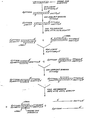
- Figure 1 is a schematic outline of one embodiment of a process for attaching an AhaIII restriction endonuclease site to both ends of a probe DNA sequence for'use in the in vivo labelling process of this invention.
- polynucleotide sequences may be employed in the processes of this invention to be labelled and to be used in the detection of analytes. Included, for example, are polynucleotide sequences that characterize various viral, viroid, fungal, parasitic or bacterial infections, genetic disorders or other sequences in analytes that it is desired to detect. They may be of synthetic, semi-synthetic or natural origin.
- any of a large number of available sources may be used to produce in vivo labelled polynucleotides. Included are, for example, the T-even phages (i.e., T2, T4, and T6), which naturally substitute glucosylated hydroxymethyldeoxycytidine monophosphate for cytidine monophosphate [I. R. Lehman et al., J. Biol. Chem., 235, pp. 3254-59 (1960)]; the Bacillus subtilis phage SPO1, which replaces thymidine residues with 5-hydroxymethyluracil [R. G. Kallen et al., J. Mol. Biol., 5, pp.
- the polynucleotide sequence that is desired to be labelled and the source of the label may be combined in the host in a large variety of ways.
- the polynucleotide sequence to be labelled may be originally part of the native genome of a particular host or it may be inserted into that genome using, for example, the Methodology of recombinant DNA technology.
- the polynucleotide sequence to be labelled may be part of a cloning vehicle, phage DNA or other DNA sequence used to transfect a host for replication therein and labelling.
- the source of the label may also be present in the host in a variety of ways.
- the source of the label is a DNA sequence that expresses a product that labels the desired polynucleotide sequence on its replication in a host characterized by that polynucleotide sequence
- that DNA sequence may be present in the host because it was originally part of the natural genome of the host or because it was inserted into that genome.
- the DNA sequence that is the source of the label may be part of a cloning vehicle, phage DNA or other DNA sequence used to transfect the host for replication therein.
- the polynucleotide sequence to be labelled is present in the same cloning vehicle or phage DNA as the DNA sequence, that is the source of the label.
- the two DNA sequences may be separately present in the host.
- the polynucleotide sequence to be labelled is cloned into the DNA sequence that is the source of the label. In any event, on culturing the host the desired DNA sequence is labelled during or after replication as a result of the product expressed by the DNA sequence that is the source of the label.
- the source of the label is a base, nucleoside or nucleotide, or analogue or precursor thereof, that is incorporated into the desired polynucleotide sequence on replication in a host because the host is a variant which requires that label carrying moiety for growth
- the base, nucleoside or nucleotide or an analogue or a precursor thereof, that carries the desired label is added to the culture medium.
- the desired.polynucleotide sequence is labelled in vivo on its replication in the host by incorporation of the label.
- Hosts useful in the processes of this invention may be selected from a wide variety of known organisms. They include, for example, various microorganisms, such as E.coli, Bacillus, Pseudomonas, Streptomyces, as well as a variety of fungi, algae, and plant and human cells in culture. It is only necessary that the polynucleotide sequence that is desired to be labelled will replicate in the host and that it will be labelled by the source of the label under the culture conditions selected for growth of the host.
- the biologically-produced probe DNA sequences of this invention have many practical uses.
- One use is in the detection.of analytes.'
- the analyte to be detected can be present in any biological or non-biological sample, such as clinical samples, for example, blood, urine, feces, saliva, pus, semen, serum, other tissues, fermentation broths, culture media, and the like.
- the analyte may be pre-extracted or purified by known methods to concentrate its nucleic acids.
- nucleic acid concentration procedures include, for example, phenol extraction, treatment with chloroform-isoamyl alcohol or chloroform-octanol, column chromatography (e.g., Sephadex, hydroxyl apatite), and CsCl equilibrium centrifugation.
- the analyte, together with.contaminating materials, if present, may be tested in the mixture, as purified, or the analyte may be immobilized before analysis.
- any analyte desired to be detected and analyzed in any sample can be subject to the methods and kits of the invention.
- the methods and kits may be employed to detect and to identify viral and bacterial DNA sequences, e.g., the detection of herpes virus.
- the methods and kits of this invention can also be utilized to diagnose human genetic disorders by preparing a probe complementary to a DNA sequence which is associated with the genetic disorder and detecting the presence or absence of any primary recognition events.
- these genetic disorders for example, 'is thalassemia.
- the diagnosis of thalassemia can be made by hybridization of probe polynucleotide sequences to genomic DNA.
- chromosomal karyotyping comprises using a series of labelled polynucleotide sequences, corresponding to a series of defined DNA sequences uniquely located on each of the chromosomes,.and then detecting primary recognition events thereon.
- the composition suspected of containing the analyte is incubated with the labelled probe polynucleotide sequence for a time and under conditions sufficient to allow hybridization between the polynucleotide sequence of the analyte and the recognizing polynucleotide sequence on the probe.
- These conditions will vary depending on the nature and amount of the analyte and of the probe [D. E. Kennell, "Principles And Practices Of Nucleic Acid Hybridization", Progr. Nucl. Acid Res. Mol. Biol., 11, pp. 259-301 (1971)].
- a wide variety of signalling events may be employed to detect the occurrence of the primary recognition event -- the hybridization of the labelled DNA sequence to a complementary sequence in the analyte.
- the particular signalling event chosen depends on the particular signal that characterizes the label-or modified label of the polynucleotide sequence.
- the label carried by the polynucleotide sequence may, without further treatment to attach or to bind to it a signalling moiety or at least one combination of bridging moiety and signalling moiety, be detectable.
- a signalling moiety or at least one combination of bridging moiety and signalling moiety
- Examples of signalling and bridging moieties that may be covalently attached to the labels of polynucleotide sequences include radioactive compounds, fluorescent compounds, fluorescein, rhodamine, dansyl, magnetic compounds, chelating agents and other signalling and bridging moieties which may be covalently attached-to those labels.
- Examples of signalling and bridging moieties that may be non-covalently bound to the labels of polynucleotide sequences include polypeptides, proteins, lectins, Concanavalin A, enzymes, alkaline phosphatases, acid phosphatases, antigens, antibodies, polypeptides having strepatvidin groups attached thereto, ⁇ -galactosidase, glucose oxidase, horseradish peroxidase, chelating agents and other signalling and bridging moieties that may be non-covalently bound to those labels.
- an enzyme might be non-covalently bound as a signalling moiety to the label on the polynucleotide probe sequence. Then substrate would be added to obtain color development (fluorescence, radioactivity or chelation detection systems may also be used).
- a biotin binding molecule such as avidin, streptavidin or anti-biotin antibody, would then be added thereto. The biotin binding molecule would then be conjugated to an enzyme, a fluorescent compound, an electron dense compound, or an insoluble solid phase, and detection carried out by appropriate means.
- a probe DNA sequence can be inserted into a T4 bacteriophage for labelling with glucosyl residues.
- T4 DNA is naturally glucosylated. Because most of the commonly used restriction endonucleases do not hydrolyze glucosylated DNA, it may be necessary to remove the glucose residues from the T4 DNA prior to endonucleolytic cleavage and insertion of the probe DNA. Hydroxymethyl cytidine glucosylase, a phage induced enzyme, removes glucose moieties from glucosylated DNA and transfers them to UDP in its reverse reaction [J. Josse et al., J. Biol. Chem., 237, pp. 1968-76 (1962); S. R. Zimmerman et al., J. Biol. Chem., 237, pp. 512-18 (1962)].
- T4 phages may be grown under conditions in which cytosine replaces the hydroxymethyl derivatives.
- cytosine replaces the hydroxymethyl derivatives.
- the probe DNA sequence is inserted into the deglucosylated T4 genome.
- insertion of the probe DNA sequence into the deglucosylated T4 genome may be effected in a variety of known ways, it is preferable to insert it in such a manner that it may be removed from the T4 DNA subsequent to labelling
- the restriction endonuclease Aha III which recognizes and cleaves the DNA sequence TTTAAA, is one of the few endonucleases which can cleave native T4 DNA. Accordingly, in one preferred embodiment of this invention, the probe DNA sequence is modified so that it carries an AhaIII restriction site at both ends before insertion into the partially deglucosylated T4 DNA ( Figure 1). In such a construction, the probe DNA sequence may then be isolated after labelling from the T4 DNA by restriction with AhaIII.
- Primer DNA sequence TTTAAAp (synthesized by conventional methods) is then non-covalently bound to the above-produced DNA sequence ( Figure 1).
- This DNA sequence (TTTAAAp) serves as a primer so that on replication in the presence of DNA polymerase and the deoxynucleotide triphosphates dATP, dTTP, dGTP and deoxyhydroxymethyl CTP (dHMCTP) two DNA sequences are produced ( Figure 1).
- These sequences carry the AhaIII restriction endonuclease site at opposite ends of the probe DNA sequence ( Figure 1). They also carry a label (?) on one of the DNA strands.
- Phosphate groups are then removed from the ends of the probe D NA sequence with alkaline phosphatase prior to insertion of the probe DNA sequence into the T4 genome.
- Partially deglucosylated phage T4 DNA is cleaved with restriction endonucleases preparatory to insertion of the probe DNA into a nonessential portion of the T4 genome,-i.e., those genes not necessary for phage replication, hydroxymethyl cytosine production and DNA glucosylation.
- BamHI cleaves T4 DNA at such a site. After restriction, if necessary, the single-stranded tails are filled in by DNA polymerase I in the presence of ATP, TTP, GTP and deoxyhydroxymethyl CTP.
- the entire recombinant DNA molecule is preferably glucosylated with the a and p glucosyl transferases in the presence of UDP-glucose [J. Josse et al., supra] in vitro to protect the recombinant - DNA molecule from phage endonucleolytic attack.
- the in vivo labelled probe DNA sequences may be excised from the recombinant T4 genome for subsequent use in detection systems by cleaving with the AhaIII restriction endonuclease at the flanking sequences produced as set forth above. Alternatively, the entire recombinant T4 genome containing.the probe DNA sequence may be utilized as the probe.
- Con A a bridging moiety, binds to both glucosylated DNA and to glycosylated proteins (a signalling moiety).
- Con A is a dimer having two glycosyl-binding sites.
- native Con A is a tetramer and contains four binding sites.
- Con A dissociates into inactive subunits. Manganese or magnesium and calcium are required for Con A to bind glycosyl residues..
- Con A Stock solutions of Con A are kept in glass tubes at a concentration of 1-5 mg/ml in TCMN buffer (5 mM Tris HC1, pH 7.0, 1 mM CaCl 2 , 1 mM MnCl 2 , 1 M NaCl) because Con A adheres to plastic surfaces and aggregates at concentrations greater than 5 mg/ml. Con A can be stored at 4°C for about 3 months.
- Nitrocellulose paper containing glucosylated T4 DNA dots was blocked overnight at 42°C in a humidity chamber in a buffer containing 2% acidified bovine serum albumin (BSA), 1 X TCMN and 0.1% V/V Triton X-100.
- BSA bovine serum albumin
- the nitrocellulose filters were then rinsed three times, for 5 minutes each time, with a buffer containing 1% BSA and 1 X TCMN.
- the nitrocellulose filters were then incubated in a Con A solution consisting of 100-200 ⁇ g Con A/ml in 0.1% BSA and 1 X TCMN.
- the solution was applied at 0.018 ml/cm 2 of nitrocellulose filter or 0.2 ml/cm 2 of Whatman® 3 MM paper, and was incubated for 1 h at 37°C. Following incubation, the filters were rinsed 3-4 times, for 5 min each time, in a 0.1% BSA and 1 X TCMN buffer. The filters were incubated in a solution of 0.1% BSA and 1 X TCMN containing 2-10 units of enzyme. The solutions were applied at 0.018 ml/cm 2 of nitrocellulose and 0.2 ml/cm 2 of Whatman® 3 ' MM filters. Incubation was at 37°C for 1 h.
- the filters were then rinsed 3 times, for 5 min each time, in NBTT buffer (0.5 M NaCl, 0.1% BSA, 0.05% Tween 20, 10 mM Tris HCl, pH 7.2) and 2 times, for 5 min each time, in NCBT buffer (0.3 M NaCl, 0.03 M Na citrate, 0.1% BSA, and 0.05% Tween 20).
- NBTT buffer 0.5 M NaCl, 0.1% BSA, 0.05% Tween 20, 10 mM Tris HCl, pH 7.2
- NCBT buffer 0.3 M NaCl, 0.03 M Na citrate, 0.1% BSA, and 0.05% Tween 20.
- glycosylated enzyme-Con A-derivatized DNA sequences were detected as follows:'
- Con A and glycosylated enzyme were mixed in a 1:1 molar ratio in TCMN buffer and incubated at 37°C for 2 h or at 25°C for 4-6 h or at 4°C overnight to 48 h. (At the end of the incubation period the mixture should be clear. If it is not, Con A is present in excess and more enzyme must be added.)
- nitrocellulose filters containing T4 glucosylated DNA was done as set forth above.
- the filters were then rinsed 3 times, for 5 min each time, in TCMN buffer and 1% BSA.
- the Con A-enzyme complex prepared above was then contacted to the filter at a volume of 0.018 ml/cm 2 , or in an amount containing about 2-10 units of enzyme. Incubation was at 37°C for 1 h. After incubation the filters were first rinsed 3 times, for 5 min each time, in NBTT and then 2 times, for 5 min each time, in NCBT.
- the horseradish peroxidase reaction was performed as set forth above. With this procedure it was possible to detect 31.25 picograms of DNA and there was significantly less background than with the previously described detection technique. Similar detection procedures can also be performed utilizing a Con A-acid phosphotase complex, a Con A-glucose oxidase complex, as well as other similiar Con A-enzyme complexes.
- Lectin/antibody and other detection systems may also be used [see Ward et al., supra.].
- the glucosylated probe DNA may be further derivatized with biotin moieties, for which standard detection systems are known.
- the solution was dialyzed at 4°C, in the dark, against 2 changes of 0.05 M sodium acetate at pH 4.0, 0.1 M NaCl and 2 changes of 0.3 M sodium borate at pH 9.0-9.3, 0.1 M NaCl.
- the solution was then made 0.4 M in 1,6-diaminohexane from a pH 9.3 stock solution of-diamine.
- the mixture was incubated in the dark for 90 min.
- the resulting Schiff base was reduced with NaBH 4 .
- NaBH4 freshly dissolved in water to a concentration of 2 M, was added to the mixture at four 30 min intervals, producing incremental concentrations of NaBH 4 of 0.025 M to 0.1 M. Total incubation time was 3 h.
- the NaBH 4 was quenched by adjusting the pH to 5.0-5.5 by adding 4 M sodium acetate, pH 4.0.
- the DNA containing solution was dialyzed 12 h in 0.1 M sodium phosphate, pH 6.7, and then made 40% V/V DMF and 20 mM biotin NHS ester. Ths solution was incubated for 12 h. Excess biotin and biotin NHS ester were removed by filtration through a G50 Sephadex column using 1 x SSC as the eluting buffer. Fractions containing DNA were collected from the column, combined, and dialyzed against a solution containing 0.1 M NaCl, 0.001 M EDTA, pH 7.0, and stored until further use at -20°C.
- a label is incorporated in vivo into a polynucleotide sequence by culturing a host containing the polynucleotide sequence desired to be labelled in the presence of an analogue of a nucleotide, base or nucleoside carrying that label, because the host is a variant which requires the label-carrying analogue.
- the polynucleotide sequence desired to be labelled may be part of the genome of the host or added to the genome. It may also be part of a DNA sequence or other cloning vehicle or phage employed to transfect the host.
- thy A A thymine requiring mutant of E. coli (th y A) characterized by a DNA sequence that is desired to be labelled is grown in a medium supplemented with 5-bromodeoxyuridine (BrdUR) in place of thymidine according to the technique of Miller, Experiments In Molecular Genetics, Cold Spring Harbor Laboratory (1972). The cells are harvested and a DNA sequence containing the 'labelled probe DNA sequence is isolated. This DNA sequence can be used directly for hybridization studies. Alternatively, all or part of the labelled probe sequence may first be removed from the remainder of the DNA sequence by endonucleolytic cleavage, and used alone for detection of analytes.
- PrdUR 5-bromodeoxyuridine
- Hybridization of labelled probe to analyte can be detected by reaction with monoclonal or polyclonal antibodies to BrdUR [Gratzrer, "Monoclonal Antibody To 5-Bromo- And 5-Iododecryuridine: A New Reagent For Detection Of DNA Replisation", Science, 218, pp. 474-75 (1982)].
- the probe can be further chemically derivatized by adding a moiety such as thiobiotin.
- the thiobiotinized 0133473 DNA probe can then be detected when hybridized to analytes by the use of biotin detection systems such as Detek® I-hrp, or other such biotin detection systems.
- BrdUR-labelled probe DNA As produced in Example III, hybridized to an analyte, BrdUR-labelled probe DNA may be further derivatized with biotin.
Landscapes
- Life Sciences & Earth Sciences (AREA)
- Health & Medical Sciences (AREA)
- Chemical & Material Sciences (AREA)
- Engineering & Computer Science (AREA)
- Organic Chemistry (AREA)
- Biomedical Technology (AREA)
- Biotechnology (AREA)
- Genetics & Genomics (AREA)
- Zoology (AREA)
- Wood Science & Technology (AREA)
- Molecular Biology (AREA)
- Microbiology (AREA)
- Immunology (AREA)
- General Engineering & Computer Science (AREA)
- Physics & Mathematics (AREA)
- Bioinformatics & Cheminformatics (AREA)
- Biochemistry (AREA)
- General Health & Medical Sciences (AREA)
- Urology & Nephrology (AREA)
- Hematology (AREA)
- Biophysics (AREA)
- Proteomics, Peptides & Aminoacids (AREA)
- Analytical Chemistry (AREA)
- Cell Biology (AREA)
- General Physics & Mathematics (AREA)
- Food Science & Technology (AREA)
- Medicinal Chemistry (AREA)
- Pathology (AREA)
- Plant Pathology (AREA)
- Measuring Or Testing Involving Enzymes Or Micro-Organisms (AREA)
- Pharmaceuticals Containing Other Organic And Inorganic Compounds (AREA)
- Saccharide Compounds (AREA)
- Medicines That Contain Protein Lipid Enzymes And Other Medicines (AREA)
- Investigating Or Analysing Biological Materials (AREA)
- Medicines Containing Antibodies Or Antigens For Use As Internal Diagnostic Agents (AREA)
Priority Applications (1)
| Application Number | Priority Date | Filing Date | Title |
|---|---|---|---|
| AT84107772T ATE103327T1 (de) | 1983-07-05 | 1984-07-04 | In vivo-markierung von polynucleotide-sequenzen. |
Applications Claiming Priority (2)
| Application Number | Priority Date | Filing Date | Title |
|---|---|---|---|
| US51097583A | 1983-07-05 | 1983-07-05 | |
| US510975 | 1983-07-05 |
Publications (3)
| Publication Number | Publication Date |
|---|---|
| EP0133473A2 true EP0133473A2 (fr) | 1985-02-27 |
| EP0133473A3 EP0133473A3 (en) | 1987-02-04 |
| EP0133473B1 EP0133473B1 (fr) | 1994-03-23 |
Family
ID=24032961
Family Applications (1)
| Application Number | Title | Priority Date | Filing Date |
|---|---|---|---|
| EP84107772A Expired - Lifetime EP0133473B1 (fr) | 1983-07-05 | 1984-07-04 | Marquage in vivo de séquences nucléotides |
Country Status (10)
| Country | Link |
|---|---|
| EP (1) | EP0133473B1 (fr) |
| JP (2) | JP2540482B2 (fr) |
| AT (1) | ATE103327T1 (fr) |
| AU (1) | AU581620B2 (fr) |
| CA (1) | CA1338856C (fr) |
| DE (1) | DE3486290T2 (fr) |
| DK (1) | DK328084A (fr) |
| ES (2) | ES8606229A1 (fr) |
| IL (1) | IL72302A0 (fr) |
| NO (1) | NO842720L (fr) |
Cited By (11)
| Publication number | Priority date | Publication date | Assignee | Title |
|---|---|---|---|---|
| EP0172153A1 (fr) * | 1984-05-15 | 1986-02-19 | Smithkline Beckman Corporation | Sonde-hybridation polynucléotidiques |
| EP0168933A3 (en) * | 1984-06-05 | 1987-08-26 | Shimon Ulitzur | Detection and/or identification of microorganisms in a test sample using bioluminescence or other exogenous genetically-introduced marker |
| FR2596773A1 (fr) * | 1986-04-04 | 1987-10-09 | Pasteur Institut | Sonde monocatenaire marquee, non radioactive, procede pour sa fabrication et procede de detection d'une sequence nucleotidique determinee a l'aide de cette sonde |
| WO1988003956A1 (fr) * | 1986-11-27 | 1988-06-02 | Svalöf Ab | Procede pour detecter un virus dans une plante |
| WO1989002475A1 (fr) * | 1987-09-17 | 1989-03-23 | Thomas Lee Mattson | Polynucleotides polyaldehydiques utilises comme sondes, leur preparation et utilisation |
| EP0235726A3 (en) * | 1986-03-05 | 1989-05-10 | Molecular Diagnostics, Inc. | Rapid detection of nucleic acid sequences in a sample by labeling the sample |
| EP0281927A3 (fr) * | 1987-03-11 | 1991-04-17 | Bayer Corporation | Procédé pour déterminer une sequence d'acide nucléique dans un échantillon |
| WO1993011261A1 (fr) * | 1991-11-25 | 1993-06-10 | Keygene N.V. | Nouveau procede d'amplification enzymatique du genome a l'aide d'une seule amorce a des fins d'analyse de l'acide nucleique |
| EP0851939A4 (fr) * | 1995-08-30 | 2001-02-28 | New York Medical College | Methodes de marquage des extremites d'adn par des nucleotides halogenes et de detection de ceux-ci a l'aide d'anticorps |
| US6326136B1 (en) | 1988-04-01 | 2001-12-04 | Digene Corporation | Macromolecular conjugate made using unsaturated aldehydes |
| EP1889923A1 (fr) * | 2006-08-17 | 2008-02-20 | Forschungszentrum Karlsruhe GmbH | Procédé destiné au marquage non radioactif d'acides ribonucléiques in vivo |
Families Citing this family (1)
| Publication number | Priority date | Publication date | Assignee | Title |
|---|---|---|---|---|
| DE19850594A1 (de) * | 1998-11-03 | 2000-05-04 | Biochip Technologies Gmbh | Verfahren zur Markierung von Nukleinsäuren |
Family Cites Families (4)
| Publication number | Priority date | Publication date | Assignee | Title |
|---|---|---|---|---|
| CA1223831A (fr) * | 1982-06-23 | 1987-07-07 | Dean Engelhardt | Nucleotides modifies, methodes de preparation et d'utilisation et composes les contenant |
| US4556643A (en) * | 1982-07-26 | 1985-12-03 | Agracetus | Assay method and probe for polynucleotide sequences |
| IL70765A (en) * | 1983-01-27 | 1988-07-31 | Enzo Biochem Inc | Substrates containing non-radioactive chemically-labeled polynucleotides and methods using them |
| CA1228811A (fr) * | 1983-05-05 | 1987-11-03 | Robert G. Pergolizzi | Methode d'analyse utilisant des sequences de polynucleotides |
-
1984
- 1984-06-28 CA CA000457804A patent/CA1338856C/fr not_active Expired - Lifetime
- 1984-07-03 AU AU30205/84A patent/AU581620B2/en not_active Ceased
- 1984-07-04 DK DK328084A patent/DK328084A/da not_active Application Discontinuation
- 1984-07-04 AT AT84107772T patent/ATE103327T1/de not_active IP Right Cessation
- 1984-07-04 EP EP84107772A patent/EP0133473B1/fr not_active Expired - Lifetime
- 1984-07-04 ES ES534014A patent/ES8606229A1/es not_active Expired
- 1984-07-04 NO NO842720A patent/NO842720L/no unknown
- 1984-07-04 JP JP59137381A patent/JP2540482B2/ja not_active Expired - Lifetime
- 1984-07-04 DE DE3486290T patent/DE3486290T2/de not_active Expired - Lifetime
- 1984-07-05 IL IL72302A patent/IL72302A0/xx unknown
-
1985
- 1985-04-16 ES ES542287A patent/ES8606651A1/es not_active Expired
-
1995
- 1995-12-20 JP JP7332416A patent/JP2607058B2/ja not_active Expired - Fee Related
Cited By (12)
| Publication number | Priority date | Publication date | Assignee | Title |
|---|---|---|---|---|
| EP0172153A1 (fr) * | 1984-05-15 | 1986-02-19 | Smithkline Beckman Corporation | Sonde-hybridation polynucléotidiques |
| EP0168933A3 (en) * | 1984-06-05 | 1987-08-26 | Shimon Ulitzur | Detection and/or identification of microorganisms in a test sample using bioluminescence or other exogenous genetically-introduced marker |
| EP0235726A3 (en) * | 1986-03-05 | 1989-05-10 | Molecular Diagnostics, Inc. | Rapid detection of nucleic acid sequences in a sample by labeling the sample |
| FR2596773A1 (fr) * | 1986-04-04 | 1987-10-09 | Pasteur Institut | Sonde monocatenaire marquee, non radioactive, procede pour sa fabrication et procede de detection d'une sequence nucleotidique determinee a l'aide de cette sonde |
| EP0242264A1 (fr) * | 1986-04-04 | 1987-10-21 | Institut Pasteur | Sonde monocaténaire marquée, non radioactive, procédé pour sa fabrication et procédé de détection d'une séquence nucléotidique déterminée à l'aide de cette sonde |
| WO1988003956A1 (fr) * | 1986-11-27 | 1988-06-02 | Svalöf Ab | Procede pour detecter un virus dans une plante |
| EP0281927A3 (fr) * | 1987-03-11 | 1991-04-17 | Bayer Corporation | Procédé pour déterminer une sequence d'acide nucléique dans un échantillon |
| WO1989002475A1 (fr) * | 1987-09-17 | 1989-03-23 | Thomas Lee Mattson | Polynucleotides polyaldehydiques utilises comme sondes, leur preparation et utilisation |
| US6326136B1 (en) | 1988-04-01 | 2001-12-04 | Digene Corporation | Macromolecular conjugate made using unsaturated aldehydes |
| WO1993011261A1 (fr) * | 1991-11-25 | 1993-06-10 | Keygene N.V. | Nouveau procede d'amplification enzymatique du genome a l'aide d'une seule amorce a des fins d'analyse de l'acide nucleique |
| EP0851939A4 (fr) * | 1995-08-30 | 2001-02-28 | New York Medical College | Methodes de marquage des extremites d'adn par des nucleotides halogenes et de detection de ceux-ci a l'aide d'anticorps |
| EP1889923A1 (fr) * | 2006-08-17 | 2008-02-20 | Forschungszentrum Karlsruhe GmbH | Procédé destiné au marquage non radioactif d'acides ribonucléiques in vivo |
Also Published As
| Publication number | Publication date |
|---|---|
| JP2607058B2 (ja) | 1997-05-07 |
| EP0133473B1 (fr) | 1994-03-23 |
| EP0133473A3 (en) | 1987-02-04 |
| ES8606229A1 (es) | 1986-04-01 |
| IL72302A0 (en) | 1984-11-30 |
| DE3486290D1 (de) | 1994-04-28 |
| ES8606651A1 (es) | 1986-04-01 |
| ES542287A0 (es) | 1986-04-01 |
| CA1338856C (fr) | 1997-01-21 |
| NO842720L (no) | 1985-01-07 |
| JPH08224084A (ja) | 1996-09-03 |
| DK328084D0 (da) | 1984-07-04 |
| DE3486290T2 (de) | 1994-07-14 |
| DK328084A (da) | 1985-01-06 |
| JP2540482B2 (ja) | 1996-10-02 |
| AU581620B2 (en) | 1989-03-02 |
| JPS6076667A (ja) | 1985-05-01 |
| ATE103327T1 (de) | 1994-04-15 |
| ES534014A0 (es) | 1986-04-01 |
| AU3020584A (en) | 1985-01-10 |
Similar Documents
| Publication | Publication Date | Title |
|---|---|---|
| US4987065A (en) | In vivo labelling of polynucleotide sequences | |
| US9134302B2 (en) | Analyte detection utilizing polynucleotide sequences, composition, process and kit | |
| US5082935A (en) | Diagnostic reagents made by attaching cytidine containing nucleic acid probes to amino functionalized solid supports by bisulfite mediated transamination | |
| US5928862A (en) | Competitive homogeneous assay | |
| US5679524A (en) | Ligase/polymerase mediated genetic bit analysis of single nucleotide polymorphisms and its use in genetic analysis | |
| EP0457824B2 (fr) | Detection d'une sequence d'acides nucleiques ou d'un changement dans celle-ci | |
| US5109124A (en) | Nucleic acid probe linked to a label having a terminal cysteine | |
| US4670380A (en) | Assays utilizing labeled nucleic acid probes | |
| DE69734576T2 (de) | Methode zur vervielfältigung und zum nachweis eines gewünschten nukleinsäurefragments | |
| EP0133473B1 (fr) | Marquage in vivo de séquences nucléotides | |
| EP0530998B1 (fr) | Détection de sequences nucléotidiques complémentaires | |
| US5545521A (en) | Method for detecting bioindividuals by use of nonnatural type nucleic acid probe | |
| WO1997032044A9 (fr) | Procede d'amplification et de detection d'un fragment d'acide nucleique d'interet | |
| US4812394A (en) | Flow cytomeric measurement of DNA and incorporated nucleoside analogs | |
| EP0128018B1 (fr) | Sonde moléculaire génétique et méthode pour sa préparation, technique d'analyse et trousse utilisant cette sonde moléculaire génétique | |
| US20040137497A1 (en) | Isometric primer extension method and kit for detection and quantification of polynucleotides | |
| Reusch Jr et al. | Distribution of marker enzymes between mesosomal and protoplast membranes | |
| US5670327A (en) | Enzymatic method for detecting a labelled segment and a solution or composition therefor | |
| JPS63282659A (ja) | 核酸の測定方法および測定剤 | |
| US5221609A (en) | Molecular genetic probe, and method of forming same, assay technique and kit using said molecular genetic probe | |
| SU1613493A1 (ru) | Способ флуоресцентной детекции иммобилизованных нуклеиновых кислот | |
| EP0562765A2 (fr) | Essai rapide pour la détection des facteurs de liaison d'acide nucléique | |
| DD281421A5 (de) | Markierte molekulare sonden und verfahren zu deren herstellung | |
| EP0725834A1 (fr) | Dosage destine a la detection d'anomalies genetiques |
Legal Events
| Date | Code | Title | Description |
|---|---|---|---|
| PUAI | Public reference made under article 153(3) epc to a published international application that has entered the european phase |
Free format text: ORIGINAL CODE: 0009012 |
|
| AK | Designated contracting states |
Designated state(s): AT BE CH DE FR GB IT LI LU NL SE |
|
| RIN1 | Information on inventor provided before grant (corrected) |
Inventor name: KELKER, NORMAN E. Inventor name: HEUY-LAN, YANG Inventor name: STAVRIANOPOULOS, JANNIS |
|
| PUAL | Search report despatched |
Free format text: ORIGINAL CODE: 0009013 |
|
| AK | Designated contracting states |
Kind code of ref document: A3 Designated state(s): AT BE CH DE FR GB IT LI LU NL SE |
|
| 17P | Request for examination filed |
Effective date: 19870803 |
|
| 17Q | First examination report despatched |
Effective date: 19890410 |
|
| GRAA | (expected) grant |
Free format text: ORIGINAL CODE: 0009210 |
|
| ITF | It: translation for a ep patent filed | ||
| AK | Designated contracting states |
Kind code of ref document: B1 Designated state(s): AT BE CH DE FR GB IT LI LU NL SE |
|
| PG25 | Lapsed in a contracting state [announced via postgrant information from national office to epo] |
Ref country code: SE Free format text: THE PATENT HAS BEEN ANNULLED BY A DECISION OF A NATIONAL AUTHORITY Effective date: 19940323 Ref country code: NL Effective date: 19940323 Ref country code: LI Effective date: 19940323 Ref country code: CH Effective date: 19940323 Ref country code: BE Effective date: 19940323 Ref country code: AT Effective date: 19940323 |
|
| REF | Corresponds to: |
Ref document number: 103327 Country of ref document: AT Date of ref document: 19940415 Kind code of ref document: T |
|
| REF | Corresponds to: |
Ref document number: 3486290 Country of ref document: DE Date of ref document: 19940428 |
|
| ET | Fr: translation filed | ||
| REG | Reference to a national code |
Ref country code: CH Ref legal event code: PL |
|
| PG25 | Lapsed in a contracting state [announced via postgrant information from national office to epo] |
Ref country code: LU Free format text: LAPSE BECAUSE OF NON-PAYMENT OF DUE FEES Effective date: 19940731 |
|
| NLV1 | Nl: lapsed or annulled due to failure to fulfill the requirements of art. 29p and 29m of the patents act | ||
| PLBE | No opposition filed within time limit |
Free format text: ORIGINAL CODE: 0009261 |
|
| STAA | Information on the status of an ep patent application or granted ep patent |
Free format text: STATUS: NO OPPOSITION FILED WITHIN TIME LIMIT |
|
| 26N | No opposition filed | ||
| REG | Reference to a national code |
Ref country code: GB Ref legal event code: IF02 |
|
| PGFP | Annual fee paid to national office [announced via postgrant information from national office to epo] |
Ref country code: GB Payment date: 20030625 Year of fee payment: 20 |
|
| PGFP | Annual fee paid to national office [announced via postgrant information from national office to epo] |
Ref country code: FR Payment date: 20030718 Year of fee payment: 20 |
|
| PGFP | Annual fee paid to national office [announced via postgrant information from national office to epo] |
Ref country code: DE Payment date: 20030731 Year of fee payment: 20 |
|
| PG25 | Lapsed in a contracting state [announced via postgrant information from national office to epo] |
Ref country code: GB Free format text: LAPSE BECAUSE OF EXPIRATION OF PROTECTION Effective date: 20040703 |
|
| REG | Reference to a national code |
Ref country code: GB Ref legal event code: PE20 |