EP0135111B1 - Polyuréthanes thermoplastiques à haute stabilité contre la chaleur à base de diisocyanate de naphthylène, procédé de leur préparation et leur utilisation - Google Patents
Polyuréthanes thermoplastiques à haute stabilité contre la chaleur à base de diisocyanate de naphthylène, procédé de leur préparation et leur utilisation Download PDFInfo
- Publication number
- EP0135111B1 EP0135111B1 EP84109395A EP84109395A EP0135111B1 EP 0135111 B1 EP0135111 B1 EP 0135111B1 EP 84109395 A EP84109395 A EP 84109395A EP 84109395 A EP84109395 A EP 84109395A EP 0135111 B1 EP0135111 B1 EP 0135111B1
- Authority
- EP
- European Patent Office
- Prior art keywords
- diol
- equivalent
- diisocyanate
- prepolymer
- nco
- Prior art date
- Legal status (The legal status is an assumption and is not a legal conclusion. Google has not performed a legal analysis and makes no representation as to the accuracy of the status listed.)
- Expired
Links
- 238000000034 method Methods 0.000 title claims description 28
- 239000004433 Thermoplastic polyurethane Substances 0.000 title claims description 27
- 229920002803 thermoplastic polyurethane Polymers 0.000 title claims description 27
- 230000008569 process Effects 0.000 title claims description 25
- 239000000203 mixture Substances 0.000 claims description 47
- 150000002009 diols Chemical class 0.000 claims description 43
- 239000004970 Chain extender Substances 0.000 claims description 37
- WERYXYBDKMZEQL-UHFFFAOYSA-N butane-1,4-diol Chemical compound OCCCCO WERYXYBDKMZEQL-UHFFFAOYSA-N 0.000 claims description 37
- 125000002887 hydroxy group Chemical group [H]O* 0.000 claims description 31
- 150000003077 polyols Chemical class 0.000 claims description 24
- 229920005862 polyol Polymers 0.000 claims description 23
- 229920001971 elastomer Polymers 0.000 claims description 21
- 239000000806 elastomer Substances 0.000 claims description 21
- MTHSVFCYNBDYFN-UHFFFAOYSA-N diethylene glycol Chemical compound OCCOCCO MTHSVFCYNBDYFN-UHFFFAOYSA-N 0.000 claims description 18
- -1 auxiliaries Substances 0.000 claims description 17
- 238000006243 chemical reaction Methods 0.000 claims description 17
- ZJCCRDAZUWHFQH-UHFFFAOYSA-N Trimethylolpropane Chemical compound CCC(CO)(CO)CO ZJCCRDAZUWHFQH-UHFFFAOYSA-N 0.000 claims description 16
- 150000001875 compounds Chemical class 0.000 claims description 16
- XXMIOPMDWAUFGU-UHFFFAOYSA-N hexane-1,6-diol Chemical compound OCCCCCCO XXMIOPMDWAUFGU-UHFFFAOYSA-N 0.000 claims description 15
- 238000004519 manufacturing process Methods 0.000 claims description 14
- UPMLOUAZCHDJJD-UHFFFAOYSA-N 4,4'-Diphenylmethane Diisocyanate Chemical compound C1=CC(N=C=O)=CC=C1CC1=CC=C(N=C=O)C=C1 UPMLOUAZCHDJJD-UHFFFAOYSA-N 0.000 claims description 12
- 125000005442 diisocyanate group Chemical group 0.000 claims description 12
- 238000000465 moulding Methods 0.000 claims description 11
- 239000004814 polyurethane Substances 0.000 claims description 11
- 229920002635 polyurethane Polymers 0.000 claims description 11
- 150000004072 triols Chemical class 0.000 claims description 9
- XSTXAVWGXDQKEL-UHFFFAOYSA-N Trichloroethylene Chemical compound ClC=C(Cl)Cl XSTXAVWGXDQKEL-UHFFFAOYSA-N 0.000 claims description 7
- WTPYFJNYAMXZJG-UHFFFAOYSA-N 2-[4-(2-hydroxyethoxy)phenoxy]ethanol Chemical compound OCCOC1=CC=C(OCCO)C=C1 WTPYFJNYAMXZJG-UHFFFAOYSA-N 0.000 claims description 4
- 239000006096 absorbing agent Substances 0.000 claims description 4
- 239000003963 antioxidant agent Substances 0.000 claims description 4
- 230000007062 hydrolysis Effects 0.000 claims description 4
- 238000006460 hydrolysis reaction Methods 0.000 claims description 4
- 238000012545 processing Methods 0.000 claims description 4
- 239000001993 wax Substances 0.000 claims description 4
- 239000003795 chemical substances by application Substances 0.000 claims description 3
- 239000000975 dye Substances 0.000 claims description 3
- 239000000945 filler Substances 0.000 claims description 3
- 239000004611 light stabiliser Substances 0.000 claims description 3
- 238000003541 multi-stage reaction Methods 0.000 claims description 3
- SLCVBVWXLSEKPL-UHFFFAOYSA-N neopentyl glycol Chemical compound OCC(C)(C)CO SLCVBVWXLSEKPL-UHFFFAOYSA-N 0.000 claims description 3
- 239000003381 stabilizer Substances 0.000 claims description 3
- 238000011084 recovery Methods 0.000 claims description 2
- PUPZLCDOIYMWBV-UHFFFAOYSA-N (+/-)-1,3-Butanediol Chemical compound CC(O)CCO PUPZLCDOIYMWBV-UHFFFAOYSA-N 0.000 claims 1
- QIGBRXMKCJKVMJ-UHFFFAOYSA-N Hydroquinone Chemical compound OC1=CC=C(O)C=C1 QIGBRXMKCJKVMJ-UHFFFAOYSA-N 0.000 description 14
- 238000002474 experimental method Methods 0.000 description 13
- 229920003225 polyurethane elastomer Polymers 0.000 description 13
- 230000000052 comparative effect Effects 0.000 description 11
- WNLRTRBMVRJNCN-UHFFFAOYSA-N adipic acid Chemical compound OC(=O)CCCCC(O)=O WNLRTRBMVRJNCN-UHFFFAOYSA-N 0.000 description 10
- 229920000728 polyester Polymers 0.000 description 8
- 239000000047 product Substances 0.000 description 8
- LYCAIKOWRPUZTN-UHFFFAOYSA-N Ethylene glycol Chemical compound OCCO LYCAIKOWRPUZTN-UHFFFAOYSA-N 0.000 description 7
- 238000004898 kneading Methods 0.000 description 7
- 238000003756 stirring Methods 0.000 description 7
- 229920001169 thermoplastic Polymers 0.000 description 7
- 239000004416 thermosoftening plastic Substances 0.000 description 7
- WSFSSNUMVMOOMR-UHFFFAOYSA-N Formaldehyde Chemical compound O=C WSFSSNUMVMOOMR-UHFFFAOYSA-N 0.000 description 6
- DNIAPMSPPWPWGF-UHFFFAOYSA-N Propylene glycol Chemical compound CC(O)CO DNIAPMSPPWPWGF-UHFFFAOYSA-N 0.000 description 5
- 235000011037 adipic acid Nutrition 0.000 description 5
- 239000001361 adipic acid Substances 0.000 description 5
- 238000001746 injection moulding Methods 0.000 description 5
- 239000004417 polycarbonate Substances 0.000 description 5
- 229920000515 polycarbonate Polymers 0.000 description 5
- 238000012360 testing method Methods 0.000 description 5
- 238000013459 approach Methods 0.000 description 4
- 230000001588 bifunctional effect Effects 0.000 description 4
- 239000003054 catalyst Substances 0.000 description 4
- 238000013016 damping Methods 0.000 description 4
- RRAMGCGOFNQTLD-UHFFFAOYSA-N hexamethylene diisocyanate Chemical compound O=C=NCCCCCCN=C=O RRAMGCGOFNQTLD-UHFFFAOYSA-N 0.000 description 4
- PEDCQBHIVMGVHV-UHFFFAOYSA-N Glycerine Chemical compound OCC(O)CO PEDCQBHIVMGVHV-UHFFFAOYSA-N 0.000 description 3
- 239000005057 Hexamethylene diisocyanate Substances 0.000 description 3
- REYJJPSVUYRZGE-UHFFFAOYSA-N Octadecylamine Chemical compound CCCCCCCCCCCCCCCCCCN REYJJPSVUYRZGE-UHFFFAOYSA-N 0.000 description 3
- CZMRCDWAGMRECN-UGDNZRGBSA-N Sucrose Chemical compound O[C@H]1[C@H](O)[C@@H](CO)O[C@@]1(CO)O[C@@H]1[C@H](O)[C@@H](O)[C@H](O)[C@@H](CO)O1 CZMRCDWAGMRECN-UGDNZRGBSA-N 0.000 description 3
- 229930006000 Sucrose Natural products 0.000 description 3
- 239000004809 Teflon Substances 0.000 description 3
- 229920006362 Teflon® Polymers 0.000 description 3
- ZMANZCXQSJIPKH-UHFFFAOYSA-N Triethylamine Chemical compound CCN(CC)CC ZMANZCXQSJIPKH-UHFFFAOYSA-N 0.000 description 3
- 238000005266 casting Methods 0.000 description 3
- RTZKZFJDLAIYFH-UHFFFAOYSA-N ether Substances CCOCC RTZKZFJDLAIYFH-UHFFFAOYSA-N 0.000 description 3
- ACCCMOQWYVYDOT-UHFFFAOYSA-N hexane-1,1-diol Chemical compound CCCCCC(O)O ACCCMOQWYVYDOT-UHFFFAOYSA-N 0.000 description 3
- WPEOOEIAIFABQP-UHFFFAOYSA-N hexanedioic acid;hexane-1,6-diol Chemical compound OCCCCCCO.OC(=O)CCCCC(O)=O WPEOOEIAIFABQP-UHFFFAOYSA-N 0.000 description 3
- 239000012948 isocyanate Substances 0.000 description 3
- 150000002513 isocyanates Chemical class 0.000 description 3
- LYRFLYHAGKPMFH-UHFFFAOYSA-N octadecanamide Chemical compound CCCCCCCCCCCCCCCCCC(N)=O LYRFLYHAGKPMFH-UHFFFAOYSA-N 0.000 description 3
- 238000005507 spraying Methods 0.000 description 3
- 238000003860 storage Methods 0.000 description 3
- 229960004793 sucrose Drugs 0.000 description 3
- XSQUKJJJFZCRTK-UHFFFAOYSA-N urea group Chemical group NC(=O)N XSQUKJJJFZCRTK-UHFFFAOYSA-N 0.000 description 3
- XLYOFNOQVPJJNP-UHFFFAOYSA-N water Chemical compound O XLYOFNOQVPJJNP-UHFFFAOYSA-N 0.000 description 3
- CSCPPACGZOOCGX-UHFFFAOYSA-N Acetone Chemical compound CC(C)=O CSCPPACGZOOCGX-UHFFFAOYSA-N 0.000 description 2
- IJGRMHOSHXDMSA-UHFFFAOYSA-N Atomic nitrogen Chemical compound N#N IJGRMHOSHXDMSA-UHFFFAOYSA-N 0.000 description 2
- NLZUEZXRPGMBCV-UHFFFAOYSA-N Butylhydroxytoluene Chemical compound CC1=CC(C(C)(C)C)=C(O)C(C(C)(C)C)=C1 NLZUEZXRPGMBCV-UHFFFAOYSA-N 0.000 description 2
- SOGAXMICEFXMKE-UHFFFAOYSA-N Butylmethacrylate Chemical compound CCCCOC(=O)C(C)=C SOGAXMICEFXMKE-UHFFFAOYSA-N 0.000 description 2
- 239000004971 Cross linker Substances 0.000 description 2
- ROSDSFDQCJNGOL-UHFFFAOYSA-N Dimethylamine Chemical compound CNC ROSDSFDQCJNGOL-UHFFFAOYSA-N 0.000 description 2
- JOYRKODLDBILNP-UHFFFAOYSA-N Ethyl urethane Chemical compound CCOC(N)=O JOYRKODLDBILNP-UHFFFAOYSA-N 0.000 description 2
- 239000005909 Kieselgur Substances 0.000 description 2
- VYPSYNLAJGMNEJ-UHFFFAOYSA-N Silicium dioxide Chemical compound O=[Si]=O VYPSYNLAJGMNEJ-UHFFFAOYSA-N 0.000 description 2
- 238000005299 abrasion Methods 0.000 description 2
- 125000003118 aryl group Chemical group 0.000 description 2
- TZCXTZWJZNENPQ-UHFFFAOYSA-L barium sulfate Chemical compound [Ba+2].[O-]S([O-])(=O)=O TZCXTZWJZNENPQ-UHFFFAOYSA-L 0.000 description 2
- 239000000872 buffer Substances 0.000 description 2
- CDQSJQSWAWPGKG-UHFFFAOYSA-N butane-1,1-diol Chemical compound CCCC(O)O CDQSJQSWAWPGKG-UHFFFAOYSA-N 0.000 description 2
- 229920001577 copolymer Polymers 0.000 description 2
- 230000008878 coupling Effects 0.000 description 2
- 238000010168 coupling process Methods 0.000 description 2
- 238000005859 coupling reaction Methods 0.000 description 2
- 239000003431 cross linking reagent Substances 0.000 description 2
- 239000008187 granular material Substances 0.000 description 2
- 238000002844 melting Methods 0.000 description 2
- 230000008018 melting Effects 0.000 description 2
- 238000012986 modification Methods 0.000 description 2
- 230000004048 modification Effects 0.000 description 2
- 239000003921 oil Substances 0.000 description 2
- 150000002989 phenols Chemical class 0.000 description 2
- 229920000570 polyether Polymers 0.000 description 2
- 239000011814 protection agent Substances 0.000 description 2
- 238000005496 tempering Methods 0.000 description 2
- ZBBLRPRYYSJUCZ-GRHBHMESSA-L (z)-but-2-enedioate;dibutyltin(2+) Chemical compound [O-]C(=O)\C=C/C([O-])=O.CCCC[Sn+2]CCCC ZBBLRPRYYSJUCZ-GRHBHMESSA-L 0.000 description 1
- ALQLPWJFHRMHIU-UHFFFAOYSA-N 1,4-diisocyanatobenzene Chemical compound O=C=NC1=CC=C(N=C=O)C=C1 ALQLPWJFHRMHIU-UHFFFAOYSA-N 0.000 description 1
- SBJCUZQNHOLYMD-UHFFFAOYSA-N 1,5-Naphthalene diisocyanate Chemical compound C1=CC=C2C(N=C=O)=CC=CC2=C1N=C=O SBJCUZQNHOLYMD-UHFFFAOYSA-N 0.000 description 1
- GGPLWEZGITVTJX-UHFFFAOYSA-N 2,2,4-trimethyl-1,4,2-oxazasilinane Chemical compound CN1CCO[Si](C)(C)C1 GGPLWEZGITVTJX-UHFFFAOYSA-N 0.000 description 1
- PTPIRFSXRFIROJ-UHFFFAOYSA-N 2-(3-hydroxyphenoxy)ethane-1,1-diol Chemical compound OC(O)COC1=CC=CC(O)=C1 PTPIRFSXRFIROJ-UHFFFAOYSA-N 0.000 description 1
- RREANTFLPGEWEN-MBLPBCRHSA-N 7-[4-[[(3z)-3-[4-amino-5-[(3,4,5-trimethoxyphenyl)methyl]pyrimidin-2-yl]imino-5-fluoro-2-oxoindol-1-yl]methyl]piperazin-1-yl]-1-cyclopropyl-6-fluoro-4-oxoquinoline-3-carboxylic acid Chemical compound COC1=C(OC)C(OC)=CC(CC=2C(=NC(\N=C/3C4=CC(F)=CC=C4N(CN4CCN(CC4)C=4C(=CC=5C(=O)C(C(O)=O)=CN(C=5C=4)C4CC4)F)C\3=O)=NC=2)N)=C1 RREANTFLPGEWEN-MBLPBCRHSA-N 0.000 description 1
- 229920001651 Cyanoacrylate Polymers 0.000 description 1
- CZMRCDWAGMRECN-FBXJDJJESA-N D-sucrose Chemical compound O[C@@H]1[C@@H](O)[C@H](CO)O[C@]1(CO)O[C@H]1[C@@H](O)[C@H](O)[C@@H](O)[C@H](CO)O1 CZMRCDWAGMRECN-FBXJDJJESA-N 0.000 description 1
- 239000004606 Fillers/Extenders Substances 0.000 description 1
- 239000005058 Isophorone diisocyanate Substances 0.000 description 1
- 239000004472 Lysine Substances 0.000 description 1
- KDXKERNSBIXSRK-UHFFFAOYSA-N Lysine Natural products NCCCCC(N)C(O)=O KDXKERNSBIXSRK-UHFFFAOYSA-N 0.000 description 1
- MWCLLHOVUTZFKS-UHFFFAOYSA-N Methyl cyanoacrylate Chemical compound COC(=O)C(=C)C#N MWCLLHOVUTZFKS-UHFFFAOYSA-N 0.000 description 1
- KWYHDKDOAIKMQN-UHFFFAOYSA-N N,N,N',N'-tetramethylethylenediamine Chemical compound CN(C)CCN(C)C KWYHDKDOAIKMQN-UHFFFAOYSA-N 0.000 description 1
- KYIMHWNKQXQBDG-UHFFFAOYSA-N N=C=O.N=C=O.CCCCCC Chemical class N=C=O.N=C=O.CCCCCC KYIMHWNKQXQBDG-UHFFFAOYSA-N 0.000 description 1
- 239000006057 Non-nutritive feed additive Substances 0.000 description 1
- WYNCHZVNFNFDNH-UHFFFAOYSA-N Oxazolidine Chemical compound C1COCN1 WYNCHZVNFNFDNH-UHFFFAOYSA-N 0.000 description 1
- 229920003171 Poly (ethylene oxide) Polymers 0.000 description 1
- 239000005062 Polybutadiene Substances 0.000 description 1
- 239000004698 Polyethylene Substances 0.000 description 1
- 239000004721 Polyphenylene oxide Substances 0.000 description 1
- CZMRCDWAGMRECN-UHFFFAOYSA-N Rohrzucker Natural products OCC1OC(CO)(OC2OC(CO)C(O)C(O)C2O)C(O)C1O CZMRCDWAGMRECN-UHFFFAOYSA-N 0.000 description 1
- 239000012963 UV stabilizer Substances 0.000 description 1
- UKLDJPRMSDWDSL-UHFFFAOYSA-L [dibutyl(dodecanoyloxy)stannyl] dodecanoate Chemical compound CCCCCCCCCCCC(=O)O[Sn](CCCC)(CCCC)OC(=O)CCCCCCCCCCC UKLDJPRMSDWDSL-UHFFFAOYSA-L 0.000 description 1
- BAPJBEWLBFYGME-UHFFFAOYSA-N acrylic acid methyl ester Natural products COC(=O)C=C BAPJBEWLBFYGME-UHFFFAOYSA-N 0.000 description 1
- 239000000654 additive Substances 0.000 description 1
- 150000001299 aldehydes Chemical class 0.000 description 1
- 238000005575 aldol reaction Methods 0.000 description 1
- 125000001931 aliphatic group Chemical group 0.000 description 1
- 150000001408 amides Chemical class 0.000 description 1
- 238000000137 annealing Methods 0.000 description 1
- 239000002216 antistatic agent Substances 0.000 description 1
- 239000000022 bacteriostatic agent Substances 0.000 description 1
- 230000008901 benefit Effects 0.000 description 1
- RWCCWEUUXYIKHB-UHFFFAOYSA-N benzophenone Chemical compound C=1C=CC=CC=1C(=O)C1=CC=CC=C1 RWCCWEUUXYIKHB-UHFFFAOYSA-N 0.000 description 1
- 239000012965 benzophenone Substances 0.000 description 1
- QRUDEWIWKLJBPS-UHFFFAOYSA-N benzotriazole Chemical compound C1=CC=C2N[N][N]C2=C1 QRUDEWIWKLJBPS-UHFFFAOYSA-N 0.000 description 1
- 239000012964 benzotriazole Substances 0.000 description 1
- HIFVAOIJYDXIJG-UHFFFAOYSA-N benzylbenzene;isocyanic acid Chemical class N=C=O.N=C=O.C=1C=CC=CC=1CC1=CC=CC=C1 HIFVAOIJYDXIJG-UHFFFAOYSA-N 0.000 description 1
- 230000015572 biosynthetic process Effects 0.000 description 1
- QPKOBORKPHRBPS-UHFFFAOYSA-N bis(2-hydroxyethyl) terephthalate Chemical compound OCCOC(=O)C1=CC=C(C(=O)OCCO)C=C1 QPKOBORKPHRBPS-UHFFFAOYSA-N 0.000 description 1
- 239000001273 butane Substances 0.000 description 1
- 235000010354 butylated hydroxytoluene Nutrition 0.000 description 1
- 239000004202 carbamide Substances 0.000 description 1
- 150000001718 carbodiimides Chemical class 0.000 description 1
- 239000006229 carbon black Substances 0.000 description 1
- 125000003178 carboxy group Chemical group [H]OC(*)=O 0.000 description 1
- 239000007795 chemical reaction product Substances 0.000 description 1
- 238000004140 cleaning Methods 0.000 description 1
- 238000007906 compression Methods 0.000 description 1
- 230000006835 compression Effects 0.000 description 1
- 238000010276 construction Methods 0.000 description 1
- XLJMAIOERFSOGZ-UHFFFAOYSA-M cyanate Chemical compound [O-]C#N XLJMAIOERFSOGZ-UHFFFAOYSA-M 0.000 description 1
- FNTHQRXVZDCWSP-UHFFFAOYSA-N cyclohexane-1,1,2-triol Chemical compound OC1CCCCC1(O)O FNTHQRXVZDCWSP-UHFFFAOYSA-N 0.000 description 1
- UYFMQPGSLRHGFE-UHFFFAOYSA-N cyclohexylmethylcyclohexane;isocyanic acid Chemical class N=C=O.N=C=O.C1CCCCC1CC1CCCCC1 UYFMQPGSLRHGFE-UHFFFAOYSA-N 0.000 description 1
- 238000000354 decomposition reaction Methods 0.000 description 1
- PNOXNTGLSKTMQO-UHFFFAOYSA-L diacetyloxytin Chemical compound CC(=O)O[Sn]OC(C)=O PNOXNTGLSKTMQO-UHFFFAOYSA-L 0.000 description 1
- RJGHQTVXGKYATR-UHFFFAOYSA-L dibutyl(dichloro)stannane Chemical compound CCCC[Sn](Cl)(Cl)CCCC RJGHQTVXGKYATR-UHFFFAOYSA-L 0.000 description 1
- 239000012975 dibutyltin dilaurate Substances 0.000 description 1
- 239000004205 dimethyl polysiloxane Substances 0.000 description 1
- 235000013870 dimethyl polysiloxane Nutrition 0.000 description 1
- XXBDWLFCJWSEKW-UHFFFAOYSA-N dimethylbenzylamine Chemical compound CN(C)CC1=CC=CC=C1 XXBDWLFCJWSEKW-UHFFFAOYSA-N 0.000 description 1
- 125000004185 ester group Chemical group 0.000 description 1
- 150000002148 esters Chemical class 0.000 description 1
- 150000002170 ethers Chemical class 0.000 description 1
- SHZIWNPUGXLXDT-UHFFFAOYSA-N ethyl hexanoate Chemical compound CCCCCC(=O)OCC SHZIWNPUGXLXDT-UHFFFAOYSA-N 0.000 description 1
- 239000003063 flame retardant Substances 0.000 description 1
- 230000001408 fungistatic effect Effects 0.000 description 1
- 239000003365 glass fiber Substances 0.000 description 1
- 150000002334 glycols Chemical class 0.000 description 1
- 229920000578 graft copolymer Polymers 0.000 description 1
- 238000005469 granulation Methods 0.000 description 1
- 230000003179 granulation Effects 0.000 description 1
- 229910052736 halogen Inorganic materials 0.000 description 1
- 150000002367 halogens Chemical class 0.000 description 1
- 235000019589 hardness Nutrition 0.000 description 1
- 238000010438 heat treatment Methods 0.000 description 1
- TZMQHOJDDMFGQX-UHFFFAOYSA-N hexane-1,1,1-triol Chemical class CCCCCC(O)(O)O TZMQHOJDDMFGQX-UHFFFAOYSA-N 0.000 description 1
- 150000004000 hexols Chemical class 0.000 description 1
- 239000003112 inhibitor Substances 0.000 description 1
- IQPQWNKOIGAROB-UHFFFAOYSA-N isocyanate group Chemical group [N-]=C=O IQPQWNKOIGAROB-UHFFFAOYSA-N 0.000 description 1
- NIMLQBUJDJZYEJ-UHFFFAOYSA-N isophorone diisocyanate Chemical compound CC1(C)CC(N=C=O)CC(C)(CN=C=O)C1 NIMLQBUJDJZYEJ-UHFFFAOYSA-N 0.000 description 1
- 150000002576 ketones Chemical class 0.000 description 1
- 239000007788 liquid Substances 0.000 description 1
- 239000000463 material Substances 0.000 description 1
- 239000000155 melt Substances 0.000 description 1
- 150000002736 metal compounds Chemical class 0.000 description 1
- 125000002496 methyl group Chemical group [H]C([H])([H])* 0.000 description 1
- 238000002156 mixing Methods 0.000 description 1
- XFLSMWXCZBIXLV-UHFFFAOYSA-N n,n-dimethyl-2-(4-methylpiperazin-1-yl)ethanamine Chemical compound CN(C)CCN1CCN(C)CC1 XFLSMWXCZBIXLV-UHFFFAOYSA-N 0.000 description 1
- MJNLXAZOTQSLTM-UHFFFAOYSA-N n-[[[ethylaminomethyl(dimethyl)silyl]oxy-dimethylsilyl]methyl]ethanamine Chemical compound CCNC[Si](C)(C)O[Si](C)(C)CNCC MJNLXAZOTQSLTM-UHFFFAOYSA-N 0.000 description 1
- IJDNQMDRQITEOD-UHFFFAOYSA-N n-butane Chemical compound CCCC IJDNQMDRQITEOD-UHFFFAOYSA-N 0.000 description 1
- OFBQJSOFQDEBGM-UHFFFAOYSA-N n-pentane Natural products CCCCC OFBQJSOFQDEBGM-UHFFFAOYSA-N 0.000 description 1
- 229910052757 nitrogen Inorganic materials 0.000 description 1
- UKODFQOELJFMII-UHFFFAOYSA-N pentamethyldiethylenetriamine Chemical compound CN(C)CCN(C)CCN(C)C UKODFQOELJFMII-UHFFFAOYSA-N 0.000 description 1
- AQSJGOWTSHOLKH-UHFFFAOYSA-N phosphite(3-) Chemical class [O-]P([O-])[O-] AQSJGOWTSHOLKH-UHFFFAOYSA-N 0.000 description 1
- XRBCRPZXSCBRTK-UHFFFAOYSA-N phosphonous acid Chemical class OPO XRBCRPZXSCBRTK-UHFFFAOYSA-N 0.000 description 1
- 229920000435 poly(dimethylsiloxane) Polymers 0.000 description 1
- 229920000058 polyacrylate Polymers 0.000 description 1
- 229920002857 polybutadiene Polymers 0.000 description 1
- 229920001610 polycaprolactone Polymers 0.000 description 1
- 239000004632 polycaprolactone Substances 0.000 description 1
- 229920006149 polyester-amide block copolymer Polymers 0.000 description 1
- 229920000573 polyethylene Polymers 0.000 description 1
- 229920005903 polyol mixture Polymers 0.000 description 1
- 229920006324 polyoxymethylene Polymers 0.000 description 1
- 229920001451 polypropylene glycol Polymers 0.000 description 1
- 229920000909 polytetrahydrofuran Polymers 0.000 description 1
- 229920006295 polythiol Polymers 0.000 description 1
- 239000000843 powder Substances 0.000 description 1
- 238000003672 processing method Methods 0.000 description 1
- 239000011541 reaction mixture Substances 0.000 description 1
- 230000009467 reduction Effects 0.000 description 1
- 150000003335 secondary amines Chemical class 0.000 description 1
- 229920002545 silicone oil Polymers 0.000 description 1
- 239000002904 solvent Substances 0.000 description 1
- 239000007858 starting material Substances 0.000 description 1
- 230000008961 swelling Effects 0.000 description 1
- 150000003512 tertiary amines Chemical class 0.000 description 1
- 238000003856 thermoforming Methods 0.000 description 1
- 229920002725 thermoplastic elastomer Polymers 0.000 description 1
- 150000003573 thiols Chemical class 0.000 description 1
- 150000003606 tin compounds Chemical class 0.000 description 1
- IUTCEZPPWBHGIX-UHFFFAOYSA-N tin(2+) Chemical compound [Sn+2] IUTCEZPPWBHGIX-UHFFFAOYSA-N 0.000 description 1
- SYRHIZPPCHMRIT-UHFFFAOYSA-N tin(4+) Chemical class [Sn+4] SYRHIZPPCHMRIT-UHFFFAOYSA-N 0.000 description 1
- DVKJHBMWWAPEIU-UHFFFAOYSA-N toluene 2,4-diisocyanate Chemical compound CC1=CC=C(N=C=O)C=C1N=C=O DVKJHBMWWAPEIU-UHFFFAOYSA-N 0.000 description 1
- IMNIMPAHZVJRPE-UHFFFAOYSA-N triethylenediamine Chemical compound C1CN2CCN1CC2 IMNIMPAHZVJRPE-UHFFFAOYSA-N 0.000 description 1
- QXJQHYBHAIHNGG-UHFFFAOYSA-N trimethylolethane Chemical compound OCC(C)(CO)CO QXJQHYBHAIHNGG-UHFFFAOYSA-N 0.000 description 1
- 238000011144 upstream manufacturing Methods 0.000 description 1
- 229920002554 vinyl polymer Polymers 0.000 description 1
- PAPBSGBWRJIAAV-UHFFFAOYSA-N ε-Caprolactone Chemical compound O=C1CCCCCO1 PAPBSGBWRJIAAV-UHFFFAOYSA-N 0.000 description 1
Images


Classifications
-
- C—CHEMISTRY; METALLURGY
- C08—ORGANIC MACROMOLECULAR COMPOUNDS; THEIR PREPARATION OR CHEMICAL WORKING-UP; COMPOSITIONS BASED THEREON
- C08G—MACROMOLECULAR COMPOUNDS OBTAINED OTHERWISE THAN BY REACTIONS ONLY INVOLVING UNSATURATED CARBON-TO-CARBON BONDS
- C08G18/00—Polymeric products of isocyanates or isothiocyanates
- C08G18/06—Polymeric products of isocyanates or isothiocyanates with compounds having active hydrogen
- C08G18/70—Polymeric products of isocyanates or isothiocyanates with compounds having active hydrogen characterised by the isocyanates or isothiocyanates used
- C08G18/72—Polyisocyanates or polyisothiocyanates
- C08G18/74—Polyisocyanates or polyisothiocyanates cyclic
- C08G18/76—Polyisocyanates or polyisothiocyanates cyclic aromatic
- C08G18/7657—Polyisocyanates or polyisothiocyanates cyclic aromatic containing two or more aromatic rings
- C08G18/7678—Polyisocyanates or polyisothiocyanates cyclic aromatic containing two or more aromatic rings containing condensed aromatic rings
-
- C—CHEMISTRY; METALLURGY
- C08—ORGANIC MACROMOLECULAR COMPOUNDS; THEIR PREPARATION OR CHEMICAL WORKING-UP; COMPOSITIONS BASED THEREON
- C08G—MACROMOLECULAR COMPOUNDS OBTAINED OTHERWISE THAN BY REACTIONS ONLY INVOLVING UNSATURATED CARBON-TO-CARBON BONDS
- C08G18/00—Polymeric products of isocyanates or isothiocyanates
- C08G18/06—Polymeric products of isocyanates or isothiocyanates with compounds having active hydrogen
- C08G18/08—Processes
- C08G18/10—Prepolymer processes involving reaction of isocyanates or isothiocyanates with compounds having active hydrogen in a first reaction step
Definitions
- the invention relates to a process for the production of novel thermoplastically processable, branched polyurethanes based on naphthylene-1,5-diisocyanate and a process for the production of moldings using the polyurethanes obtained according to the invention.
- This process can be used to produce medium-hard, thermoplastic polyurethane elastomers with good thermoforming behavior, good rebound resilience (even at higher temperatures), acceptable low-temperature flexibility and excellent wear resistance, which are used to manufacture hydraulic seals, seals, rollers, buffers, hoses, bellows, plugs, Rollers, couplings and similar moldings can be used.
- Thermoplastic polyurethane elastomers are mostly made on the basis of 4,4-diisocyanatodiphenylmethane (MDI). These elastomers do not have good resilience at elevated temperatures (around 80 to 100 ° C). Elastomers with high resilience in this temperature range and good dynamic properties can be produced on the basis of naphthylene-1,5-diisocyanate as cast elastomers, but such elastomers generally cannot be thermoformed or elastomers can only be deformed with difficulty (if the elastomers are set very softly) . For this reason, no thermoplastic polyurethane based on naphthylene-1,5-diisocyanate is currently available on the market. However, thermoplastic deformability of the polyurethane elastomers is preferred over the (reaction) casting process for a very large number of applications.
- MDI 4,4-diisocyanatodiphenylmethane
- DE-A-2 248 382 describes a thermoplastic polyurethane elastomer based on diphenylmethane diisocyanate, in which an OH prepolymer is formed in a first reaction step by reacting higher molecular weight polyhydroxyl compounds with tolylene diisocyanate or hexamethylene diisocyanate. This OH prepolymer is then reacted with excess amounts of 4,4'-diisocyanatodiphenylmethane and glycols with a molecular weight below 500 to give the thermoplastic polyurethane.
- thermoplastically processable polyurethane elastomers which are used by reacting certain higher molecular weight mixed polyester diols based on succinic / glutaric / and adipic acid, organic diisocyanates and difunctional chain extenders are built up from tri to hexafunctional crosslinking agents.
- these partially branched polyurethane elastomers are not produced with the use of naphthylene diisocyanate and therefore do not show the high-quality elastic properties at elevated temperatures.
- FR-A-1 290 662 relates to a multi-stage process for the production of crosslinked elastomers without reference to thermoplastic polyurethanes.
- the object of the invention was to produce usable thermoplastic polyurethanes based on naphthylene-1,5-diisocyanate with excellent initial and final strengths.
- Preferred isocyanates for stage A) are diphenylmethane diisocyanates, tolylene diisocyanates, dicyclohexylmethane diisocyanates, hexane diisocyanates and in particular diphenylmethane 4,4'-diisocyanate.
- the OH / NCO equivalent ratio in stage A) is preferably 3: 1 to 1.5: 1 and particularly preferably 2.5: 1 to 1.75: 1.
- the preferred molecular weight of the chain extender C) is 62 to 254.
- preferably 75 to 90 equivalent% of the OH groups come from diols.
- Preferred diols of chain extender C) which differ from the main component are 1,6-hexanediol, 1,4-butanediol, ethylene glycol or diethylene glycol.
- 25 to 10 equivalent% of the OH groups derive from trifunctional and / or higher-functional polyols, particularly preferably trimethylolpropane.
- the chain extender C) consists of a mixture containing 75 to 90 equivalent% of OH hydroquinone di ( ⁇ -hydroxyethyl) ether and 25 to 10 equivalent% of OH triol.
- trimethylolpropane is used as the triol.
- the invention furthermore relates to the thermoplastically processable elastomers obtainable by the above process, and to their use for the production of moldings, such as hydraulic seals, seals, rollers, buffers, hoses, bellows, plugs, rollers, couplings and similar moldings, by thermoplastic deformation.
- the higher molecular weight, essentially linear polyols with molecular weights between 550 and 10,000, preferably 800 and 6000 are practically all known, preferably bifunctional, optionally in minor amounts, preferably up to 10%, including trifunctional polyesters, polylactones, polyethers, polythioethers, Polyesteramides, polycarbonates, polyacetals, vinyl polymers such as B. polybutadiene diols or polyhydroxyl compounds already containing urethane or urea groups, optionally modified natural polyols, and also other Zerewitinoffactive groups which are able to react with isocyanates, for. B. amino, carboxyl or thiol containing compounds.
- Preferred according to the invention are essentially bifunctional hydroxyl group-containing polyesters from diols and adipic acid, hydroxyl polycarbonates, hydroxyl caprolactones, hydroxyl polytetrahydrofurans or hydroxypolyethers based on polyethylene oxide and / or polypropylene oxide and corresponding mixed ethers composed of such components.
- Polyesters from diols and adipic acid and polycaprolactone ester diols in particular hexanediol-1.6 / butanediol-1.4 adipates, and mixtures of hexanediol-1.6-polycarbonate and butanediol-1.4-adipate, and also adipic acid-containing hexanediol polycarbonates or polycarbonates based on reaction products of hexanediols-1 are particularly preferred , 6 with e-caprolactone.
- Said higher molecular weight, essentially bifunctional polyhydroxy compounds with a molecular weight of 550 to 10,000 are mixed with amounts of diisocyanates other than naphthylene-1,5-diisocyanate which are inferior to the OH groups, e.g. B.
- aromatic, cycloaliphatic or aliphatic diisocyanates such as phenylene-1,4-diisocyanate, toluene-2,4- and / or -2,6-diisocyanate, diphenyl-4,4'-diisocyanate, diphenytether-4,4'-diisocyanate, the diphenylmethane-4, 4'- and / or 2,4'- and / or 2,2'-diisocyanates or their halogen or mono-bis-tetraalkyl-C t -C 8 -alkyl derivatives, e.g. B.
- diphenylmethane-4,4'- and / or 2,4'- and / or 2,2'-diisocyanates, the tolylene-2,4-and / or 2,8-diisocyanates, the isophorone diisocyanate, dicyciohexyimethane are preferably used 4,4'-diisocyanate and the hexane-1,6-diisocyanate.
- Diphenylmethane-4,4'-diisocyanate is very particularly preferred.
- the higher molecular weight dihydroxy compounds and these diisocyanates are in OH / NCO ratios of> 1 z.
- This reaction can take place in an independent, upstream stage, but it can also take place on a multi-stage reaction screw in the first parts of the reaction space before the further reaction with the naphthylene-1,5-diisocyanate and the chain extender mixture takes place.
- the naphthylene-1,5-diisocyanate is added to the OH prepolymer in excess amounts (compared to the OH prepolymer), an NCO prepolymer now forming which is further reacted with the chain extender mixture C) to form the polyurethane elastomer.
- the naphthyene-1,5-diisocyanate is preferably reacted with the OH prepolymer in such amounts that NCO prepolymers with NCO contents between 4 and 12% by weight NCO, preferably 5 -10% NCO, form.
- the chain extender mixtures C) consist of a diol or diol mixtures and triols and / or higher functional polyols or their mixtures in certain proportions.
- chain extender used is the hydroquinone di ( ⁇ ) -hydroxyethyl ether
- this compound can be used as the sole diol, although the stated amounts of short-chain triol (and / or polyol), preferably trimethylol propane, must be added to the chain extender.
- chain extender diol if 1,4-butanediol or 1,6-hexanediol are used as chain extender diol, this can only be used in combination with one or more other chain extender diols, so-called co-diols, e.g. B. butanediol-1.4 together with hexanediol-1.6 and / or diethylene glycol and / or neopentyl glycol and / or ethanediol.
- co-diols e.g. B. butanediol-1.4 together with hexanediol-1.6 and / or diethylene glycol and / or neopentyl glycol and / or ethanediol.
- thermoplastically processable (medium-hard) polyurethane elastomers it is only with such diol mixtures that, in the case of butane and hexanediol, in combination with the amounts of triols (and / or polyols), preferably trimethylolpropane, according to the invention, for the construction of thermoplastically processable (medium-hard) polyurethane elastomers.
- hydroquinone di ( ⁇ -hydroxyethyl ether) In the case of the hydroquinone di ( ⁇ -hydroxyethyl ether), the use of a second chain extender diol such as 1,4-butanediol or 1,6-hexanediol is not necessary - but also not harmful. In hydroquinone di ( ⁇ -hydroxyethyl ether) settings without a co-extender diol (e) are preferred.
- 70 to 92 equivalent percent, preferably 75 to 90 equivalent percent of the OH groups come from diols and 30 to 8 equivalent percent of the OH groups come from tri- and / or higher-functional polyols.
- hydroquinone di ( ⁇ -hydroxyethyl ether) can be used as the sole diol for the diols, while when using z. B. butanediol-1.4 or hexanediol-1.6 must be used as the main component diol mixtures.
- diol mixtures consist of at least half the equivalent percent OH from 1,4-butanediol or 1.6-hexanediol in addition to at least 15 equivalent percent OH up to a maximum of half the equivalent% OH from other diols of the molecular weight range 62 to 500, preferably 62 to 254, preferably straight-chain or branched-chain alkylene diols, optionally containing ether and / or ester groups, particularly preferably 1,6-hexanediol, 1,4-butanediol, ethylene glycol, diethylene glycol and / or neopentyl glycol, but optionally also cycloalkylenediols such as quinite or from resorcinol-bis-hydroxyethyl ether or terephthalic acid-bis-hydroxyethyl ester.
- the tri- and / or higher functional polyols in the chain extender mixture C) are preferably triols, e.g. As trimethylolethane, trimethylolpropane, hexanetriols, glycerol or trihydroxycyclohexane. However, trimethylolpropane is very particularly preferred as the triol.
- higher-functional polyols e.g. B. tetrols, pentols or hexols or their mixtures (z. B.
- the formite mixtures as they result from the aldol reaction of formaldehyde and subsequent reduction or mixtures of propoxylated cane sugar with diols or triols, eg. B. with a functionality between 5 and 6 can be used.
- diols or triols eg. B. with a functionality between 5 and 6 can be used.
- amounts below 15 equivalent percent of the OH groups are generally used in the chain extender mixture.
- the conventional hydrolysis inhibitors and UV stabilizers according to the prior art can of course be added to the polyurethane components.
- it is advisable to stabilize the polyurethane antioxidants such as 2,6-di-tert-butyl-4-methylphenoi, other sterically hindered phenols and / or organic phosphites and / or phosphonites and / or other conventional antioxidants individually or in a mixture in an amount of about 0.1 to 1.5% by weight, based on thermoplastic polyurethane elastomer.
- UV absorbers and light stabilizers based on benzotriazole, cyanoacrylate, 2,2,6,6-tetraalkyl-piperidine, 1; 2,2,6,6-pentaalkyl-piperidine or also on benzophenone, as well as other UV -Absorber types can be added individually or as a mixture to the thermoplastic polyurethane.
- the hydrolysis protection agents are usually based on carbodiimide, urea, cyanate or oxazolidine.
- Catalysts for the reaction between hydroxyl and isocyanate groups can optionally be used, preferably those of the type known per se in polyurethane chemistry, e.g. B. tertiary amines such as triethylamine, tetramethylethylenediamine, 1,4-diaza-bicyclo- (2,2,2) -octane, N, N-dimethyl-benzylamine, N-methyl-N'-dimethylaminoethyl-piperazine, pentamethyl-diethylenetriamine, or also known as catalysts Mannich bases from secondary amines such as dimethylamine and aldehydes (formaldehyde) or ketones (acetone) and phenols, and also silaamides with carbon-silicon bonds, e.g.
- organic metal compounds in particular organic tin compounds, can also be used as catalysts, for.
- B. tin (II) acetate, tin (II) ethylhexoate and the tin (IV) compounds e.g. B. dibutyltin dichloride, dibutyltin dilaurate, dibutyltin maleate.
- tin (II) acetate tin (II) ethylhexoate
- tin (IV) compounds e.g. B. dibutyltin dichloride, dibutyltin dilaurate, dibutyltin maleate.
- antistatic agents such as flame retardants (see, for example, DE-A-3 113 385), fungistatic and bacteriostatic substances, and fillers such as barium sulfate, chalk, diatomaceous earth, diatomaceous earth, carbon black and dyes or glass fibers can be added.
- fillers such as barium sulfate, chalk, diatomaceous earth, diatomaceous earth, carbon black and dyes or glass fibers can be added.
- silicone oils or Dimethylpolysiloxane / polyoxyalkylene compounds (polyether siloxanes) can advantageously be used as additives.
- the amounts of reaction components in the process according to the invention are generally chosen so that the NCO / OH ratio of 1,5-naphthylene diisocyanate and the diisocyanate used to form the OH prepolymer to the higher molecular weight, essentially bifunctional polyhydroxyl compounds and the chain extender mixtures C), depending on the processing method used, is between 0.95 and 1.15, preferably between 1.0 and 1.1.
- thermoplastic polyurethanes according to the invention can be applied to multi-shaft reaction screws in a continuously conducted multi-stage process by metering them in at various points in the reaction screw, the OH prepolymer being formed in the starting zones of the reaction screw, in accordance with DE-A-2 302 564 or also preferably in casting processes, as follows described, manufactured.
- the OH prepolymer can also be built up discontinuously in multistage form and metered continuously into the reaction screw, or continuously mixed with the other components B) and C) in a stirring head and then applied continuously or discontinuously to a tape.
- the products mentioned can also be mixed in a pot and then on a Teflon-coated tape or on z. B.
- Teflon-coated sheets are discharged.
- the products can also be produced by a two-stage process as follows: the higher molecular weight polyol is mixed with e.g. B. Diphenylmethane-4,4'-diisocyanate for OH prepolymers. A smaller part (e.g. 1/4) of this OH prepolymer is reacted with the total amount of the naphthylene-1,5-diisocyanate to form an NCO prepolymer and metered into a twin-screw kneading machine, with the same at the same or differently located entry point major part of the OH prepolymer and the chain extender mixture C) is metered in. After passing through the screw machine, the elastomer formed is continuously poured onto a belt or quenched in liquids.
- the mixing can also take place in a stirring head instead of in a screw machine. Any of these processes mentioned or customary modifications of these processes can be used for the production of the polyurethane elastomers according to the invention.
- thermoplastic polyurethanes produced according to the invention have good resilience, especially at high temperatures such as 80 to 100 ° C.
- the compression set at 100 ° C is, for example, about 40 to 50% (after 24 hours, determined according to DIN 53 517).
- Thermoplastics based on MDI as the sole isocyanate component and butanediol-1.4 as a chain extender only achieve a resilience value of 60 to 70% or worse. Due to their particularly good resilience, the products according to the invention are very suitable for seals which are subjected to high temperatures.
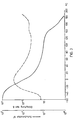
- the torsional vibration test also shows a high heat resistance, which is better than that of thermoplastic polyurethanes based on pure MDI (with a comparable module) (see Examples 1A, 1B B and Comparative Example 1.P, FIGS. 1-3).
- the dynamic property values are very good for polyurethane thermoplastics. Therefore, this material is also very suitable for heavily loaded rollers. These products also have high abrasion resistance and low swelling when exposed to oil. The solvent resistance to aliphatic and aromatic agents is quite good.
- the cold flexibility of these products is also improved compared to thermoplastic polyurethanes based solely on MDr.
- the damping maximum of the product according to the invention is about -30 °, while the conventional products have their maximum at about 0 ° C. This results in an advantage of the type according to the invention of ⁇ 30 ° C.
- parts always mean parts by weight.
- amount of OH equivalents in the chain extenders is also given in the form of OH equivalent percentages (OH equivalent%), from which it can be seen how many OH groups from diols and how many OH Groups come from the higher-functional tri- and / or polyols.
- OH equivalent% OH equivalent percentages
- the total NCO-OH ratio (a + d a + e is 1.025: 1).
- the ratio of the OH groups from the alkylene diol mixture to OH groups from the trifunctional compound is 85 to 15 equivalent percent here.
- Components a) and b) are added to the OH prepolymer with stirring for 15 minutes at 120 ° C. in a reaction kettle. After the addition of c) and the heating of the mixture a) to c) to 145 °, the naphthylene diisocyanate d) is added with stirring and converted to the NCO prepolymer for about 10 minutes. The final temperature of the prepolymer mixture is approx. 130 ° C. With vigorous stirring, the NCO prepolymer formed is reacted with the chain extender mixture e) preheated to 60 °. After about 30 seconds, the reaction mixture is poured into a 80 to 100 ° C hot tub with a Teflon base and heated at 100 to 110 ° for about an hour. The fur obtained is cut into strips and granulated.
- the polyurethane elastomer granules After storage for two to three days, spraying the granules on an injection molding machine at about 240 ° C. and then tempering the moldings (15 hours at 110 ° C.), the polyurethane elastomer granules have the properties described in Table 1).
- Thermoplastic polyurethanes according to the invention are also produced according to recipes 1 C) to 1K) listed in Table 3, the procedure being as in Example 1A) or 1B).
- Experiments 1C) to 1 E) represent variations of the chain extender mixtures e).
- Examples 1F) to 11) the higher molecular weight polyester diol is varied.
- experiment 1 K) the diisocyanate was changed for the pre-extension of the OH prepolymer.
- the polyurethane elastomers described in experiments 1A) to 1K) can be processed thermoplastically on commercially available injection molding machines. They generally have good flexibility at low temperatures and, for thermoplastic polyurethanes, a remarkably high heat resistance combined with high elasticity. This is in Figure 1) and Figure 2) with the curves for the thrust module G 'and the damping tan. 8 (corresponding to the torsional vibration test according to DIN 53 445) depending on the temperature for examples 1A and 1B.
- thermoplastic polyurethane based on 4,4'-diisocyanatodiphenylmethane (Comparative Example 1 P) (FIG. 3) has a damping maximum of 0 ° compared to a damping maximum for polyurethane elastomers according to the invention such as 1A) or 1B) of -30 ° C.
- the examples 1L) to 1.0) belong to the examples not according to the invention.
- these cannot be processed thermoplastically into perfect moldings.
- Such moldings have cracks on the surface, for example. It is only with great difficulty (narrow melting range, signs of decomposition) that it is only possible to produce simple plates (sometimes inhomogeneous) and to reproduce the tests extremely badly (see Table 4).
- Experiments 1L) and 1M) are comparable to batch 1A) according to the invention; however, comparative experiment 1L) is without a trifunctional crosslinking agent polyol and comparative experiment 1M) is with only one alkylene diol (hexanediol-1.6) and trimethylolpropane, but not, as required according to the invention, in a mixture with a second diol (e.g. butanediol -1.4).
- a second diol e.g. butanediol -1.4
- Comparative experiments 1M) and 10) correspond to approach 1B) according to the invention; comparative experiment 1N) is, however, without the short-chain trifunctional crosslinker (instead with a branched long-chain adipic acid ester), and comparative experiment 1.0) is carried out without OH prepolymer formation with a diisocyanate.
- Example 1 C) to 1 K) and Comparative Experiments 1 L) to 1 0) is shown in Table 3.
- the comparative experiment 1 P is based on diphenylmethane-4,4'-diisocyanate, corresponding to conventional thermoplastic elastomers.
- thermoplastically processed polyurethane elastomers according to Example 1 C) to 1 K) or according to the comparative tests 1 L) to 1.0) composition according to the information in Table 3
- thermoplastic PU elastomers according to the invention on a twin-shaft kneading machine
- twin-shaft kneading machine e.g. ZSK-53 from Werner and Pfleiderer, Stuttgart
- the residence times of the reaction melt in the screw machine are generally 0.3-30, preferably 0.5 to 4 minutes.
- the temperature of the screw housing is between approx. 60 and 300 ° C (approx. 80 to 280 ° C in the inlet zone; approx. 100 to 300 ° C in the middle of the extruder and approx. 120 to 250 ° C in the discharge zone).
- the melt emerging from the extruder is quenched and comminuted by methods known per se.
- the process products can be processed in the usual way thermoplastic to moldings, such as gears, seals, etc.
- the following example illustrates the invention.
- a ZSK 53 V twin-screw kneading press from Werner & Pfleiderer, Stuttgart, with a self-cleaning shaft set is used.
- the length of the process section corresponds to approximately 20 times the shaft diameter.
- a shaft with a kneading element content of approx. 20% is used for the example.
- the process part consists of 12 housings. The function and mode of operation of the screw machine, of kneading and conveying elements of the shaft stock etc. are described in detail in the company publications Werner & Pfleiderer and in DE-B-2 302 564.
- the total NCO / OH ratio is 1.03: 1.
- Components a) and b) are divided 25 to 75 and implemented in separate feed tanks at 130 ° C. After about 30 minutes, components d) are stirred into the kettle with 3/4 of the OH prepolymer. Component e) is added in powder form to 1/4 of the OH prepolymer and reacted for one hour at 130 ° with stirring. Component f) is located in another storage tank at room temperature. Both prepolymer batches are metered into the housing 2 of the twin-screw kneading machine via gear pumps. Component b) is fed via a small piston pump into the hopper covered with nitrogen at the beginning of the screw machine. The chain extender mixture component f) is placed in housing 4 via a piston pump.
- thermoplastic polyurethane obtained After three days of storage, spraying on conventional injection molding machines and tempering of the test specimens (15 hours at 110 ° C.), the thermoplastic polyurethane obtained has the properties described in Table 5.
- mixtures f) aromatic diols are used as chain extenders, the inlet temperature for mixture f) must be above the melting point of the aromatic diol.
Landscapes
- Chemical & Material Sciences (AREA)
- Health & Medical Sciences (AREA)
- Chemical Kinetics & Catalysis (AREA)
- Medicinal Chemistry (AREA)
- Polymers & Plastics (AREA)
- Organic Chemistry (AREA)
- Polyurethanes Or Polyureas (AREA)
Claims (10)
Applications Claiming Priority (2)
| Application Number | Priority Date | Filing Date | Title |
|---|---|---|---|
| DE19833329775 DE3329775A1 (de) | 1983-08-18 | 1983-08-18 | Thermoplastische polyurethane hoher waermestandfestigkeit auf basis von naphthylendiisocyanat, verfahren zu ihrer herstellung und ihre verwendung |
| DE3329775 | 1983-08-18 |
Publications (3)
| Publication Number | Publication Date |
|---|---|
| EP0135111A2 EP0135111A2 (fr) | 1985-03-27 |
| EP0135111A3 EP0135111A3 (en) | 1986-06-04 |
| EP0135111B1 true EP0135111B1 (fr) | 1989-05-31 |
Family
ID=6206812
Family Applications (1)
| Application Number | Title | Priority Date | Filing Date |
|---|---|---|---|
| EP84109395A Expired EP0135111B1 (fr) | 1983-08-18 | 1984-08-08 | Polyuréthanes thermoplastiques à haute stabilité contre la chaleur à base de diisocyanate de naphthylène, procédé de leur préparation et leur utilisation |
Country Status (4)
| Country | Link |
|---|---|
| US (1) | US4521582A (fr) |
| EP (1) | EP0135111B1 (fr) |
| JP (1) | JPS6060125A (fr) |
| DE (2) | DE3329775A1 (fr) |
Cited By (3)
| Publication number | Priority date | Publication date | Assignee | Title |
|---|---|---|---|---|
| DE102005039933A1 (de) * | 2005-08-24 | 2007-03-01 | Bayer Materialscience Ag | Verfahren zur Herstellung von thermoplastisch verarbeitbaren Polyurethanen |
| EP2119735A1 (fr) | 2008-05-13 | 2009-11-18 | tesa SE | Procédé de fabrication par voie fondue d'un film de polyuréthane réticulé chimiquement |
| DE102009046657A1 (de) | 2009-11-12 | 2011-05-19 | Tesa Se | Haftklebstoff auf Basis von Polyurethan |
Families Citing this family (32)
| Publication number | Priority date | Publication date | Assignee | Title |
|---|---|---|---|---|
| JPH0730158B2 (ja) * | 1986-05-22 | 1995-04-05 | イハラケミカル工業株式会社 | ポリウレタンエラストマ−の製造方法 |
| JPH0622607B2 (ja) * | 1987-03-31 | 1994-03-30 | 三洋化成工業株式会社 | 人工臓器用シ−ル材 |
| JPH01126318A (ja) * | 1987-11-11 | 1989-05-18 | Nippon Polyurethan Kogyo Kk | 熱硬化性ポリウレタンエラストマー用組成物 |
| US4873308A (en) * | 1988-09-30 | 1989-10-10 | Medtronic, Inc. | Biostable, segmented aliphatic polyurethanes and process therefor |
| DE4217364A1 (de) * | 1992-05-26 | 1993-12-02 | Bayer Ag | Verfahren zur Herstellung von thermoplastisch verarbeitbaren Polyurethan-Elastomeren durch einen mehrstufigen Prozeß |
| US5795948A (en) * | 1992-05-26 | 1998-08-18 | Bayer Aktiengesellschaft | Multistage process for production of thermoplastic polyurethane elastomers |
| DE4217365A1 (de) * | 1992-05-26 | 1993-12-02 | Bayer Ag | Verfahren zur Herstellung von thermoplastisch verarbeitbaren Polyurethan-Elastomeren durch einen mehrstufigen Prozeß |
| JP2916967B2 (ja) * | 1992-06-15 | 1999-07-05 | 日本ポリウレタン工業株式会社 | 架橋ポリウレタンエラストマーの製造方法 |
| JP3220873B2 (ja) * | 1992-07-02 | 2001-10-22 | イハラケミカル工業株式会社 | ポリウレタンウレアエラストマー |
| DE4428458A1 (de) * | 1994-08-11 | 1996-02-15 | Bayer Ag | Cycloaliphatische thermoplastische Polyurethanelastomere |
| DE4437586A1 (de) | 1994-10-20 | 1996-04-25 | Basf Schwarzheide Gmbh | Verfahren zur Herstellung von thermoplastischen Polyurethanen |
| DE19512310A1 (de) * | 1995-04-01 | 1996-10-17 | Parker Praedifa Gmbh | Thermoplastische Polyurethane sowie ihre Verwendung |
| US5670601A (en) † | 1995-06-15 | 1997-09-23 | Arco Chemical Technology, L.P. | Polyurethane elastomers having improved green strength and demold time and polyoxyalkylene polyols suitable for their preparation |
| DE19534163A1 (de) * | 1995-09-15 | 1997-03-20 | Basf Ag | Verfahren zur Herstellung von kompakten oder zelligen Polyurethan-Elastomeren und hierfür geeignete Isocyanatpräpolymere |
| US6521164B1 (en) | 1996-02-06 | 2003-02-18 | Parker-Hannifin Corporation | Injection-moldable thermoplastic polyurethane elastomer |
| DE19648012A1 (de) * | 1996-11-20 | 1998-05-28 | Bayer Ag | Zweistufiges Verfahren zur Fertigung von halbharten massiven Polyurethan-Formkörpern |
| US6111052A (en) | 1997-04-30 | 2000-08-29 | Medtronic, Inc. | Polyurethane and polyurea biomaterials for use in medical devices |
| DE29807486U1 (de) * | 1998-04-24 | 1998-09-24 | Tschan GmbH, 66538 Neunkirchen | Elastisches antistatisches Kupplungselement |
| US6352771B1 (en) * | 1999-02-24 | 2002-03-05 | Mearthane Products Corporation | Conductive urethane roller |
| WO2006121549A1 (fr) * | 2005-04-13 | 2006-11-16 | Lubrizol Advanced Materials, Inc. | Polyurethanne thermoplastique retardateur de flamme non halogene |
| US8716379B2 (en) | 2005-04-13 | 2014-05-06 | Lubrizol Advanced Materials, Inc. | Non halogen flame retardant thermoplastic polyurethane |
| US8357768B2 (en) * | 2005-12-09 | 2013-01-22 | Hani Farah | Low haze thermoplastic polyurethane using co-chain extenders |
| CN102532464A (zh) * | 2012-03-12 | 2012-07-04 | 烟台美瑞化学材料有限公司 | 一种低压缩永久变形热塑性聚氨酯弹性体 |
| KR101911001B1 (ko) * | 2012-11-30 | 2018-10-23 | 에이치피프린팅코리아 주식회사 | 클리닝 성능 및 내구성이 우수한 클리닝 블레이드, 이를 채용한 클리닝 유닛, 전자 사진 화상 형성장치, 및 전자사진 카트리지 |
| CN104696437B (zh) * | 2015-03-18 | 2017-01-04 | 宁波伏龙同步带有限公司 | 一种耐高温同步带及其制备方法 |
| KR102097818B1 (ko) * | 2015-07-01 | 2020-04-07 | 주식회사 엘지화학 | 기재 필름 |
| WO2020053348A1 (fr) * | 2018-09-14 | 2020-03-19 | Basf Polyurethanes Gmbh | Procédé de fabrication de corps moulés en élastomères de polyuréthane microcellulaires |
| WO2021041724A1 (fr) * | 2019-08-30 | 2021-03-04 | Heon Reno N | Soufflet de ressort pneumatique destiné à des systèmes de suspension pneumatique |
| CN112538149B (zh) * | 2019-09-23 | 2022-07-12 | 万华化学集团股份有限公司 | 一种浇注型聚氨酯弹性体的制备工艺 |
| CN110627990A (zh) * | 2019-09-25 | 2019-12-31 | 九江智达环能科技有限公司 | 一种可降解液态交联型封堵材料及其制备方法和应用 |
| EP3838942A1 (fr) | 2019-12-17 | 2021-06-23 | Covestro Deutschland AG | Procédé de fabrication de polyuréthanes à enthalpie de réaction élevée |
| EP3838943A1 (fr) * | 2019-12-17 | 2021-06-23 | Covestro Deutschland AG | Procédé de fabrication de polyuréthanes semi-cristallins à enthalpie de réaction élevée |
Family Cites Families (14)
| Publication number | Priority date | Publication date | Assignee | Title |
|---|---|---|---|---|
| BE547783A (fr) * | 1955-05-13 | |||
| DE1114318B (de) * | 1960-05-31 | 1961-09-28 | Bayer Ag | Verfahren zur Herstellung von vernetzten homogenen Elastomeren |
| DE2107678A1 (de) * | 1971-02-18 | 1972-09-07 | Bayer | Verfahren zur Herstellung von vernetzten hochelastischen Kunststoffen |
| US3963656A (en) * | 1972-10-03 | 1976-06-15 | Bayer Aktiengesellschaft | Thermoplastic polyurethanes and a two-stage process for their preparation |
| DE2248382C2 (de) * | 1972-10-03 | 1982-12-02 | Bayer Ag, 5090 Leverkusen | Polyurethan-Elastomere, deren Herstellung und Verwendung |
| IT995244B (it) * | 1973-08-31 | 1975-11-10 | Pirelli | Polimero poliuretanico per la costruzione di elementi deformabili atti ad assorbire elevata energia d urto utilizzabili in particolare neoli ammortizzatori per veicoli ferroviari |
| DE2817456A1 (de) * | 1978-04-21 | 1979-10-31 | Bayer Ag | Verfahren zur herstellung von thermoplastischen polyurethanelastomeren |
| DE2843739C3 (de) * | 1978-10-06 | 1982-04-22 | Bayer Ag, 5090 Leverkusen | Verfahren zur Herstellung von im wesentlichen homogenen Polyurethan-Elastomeren |
| DE2940856A1 (de) * | 1979-10-09 | 1981-04-23 | Elastogran GmbH, 2844 Lemförde | Verfahren zur herstellung von gegebenenfalls zellhaltigen polyurethan-elastomeren |
| DE3028501A1 (de) * | 1980-07-26 | 1982-03-04 | Basf Ag, 6700 Ludwigshafen | Thermoplastisch verarbeitbare polyurethan-elastomere mit verbesserter abriebbestaendigkeit und ein verfahren zu deren herstellung |
| US4311765A (en) * | 1980-07-28 | 1982-01-19 | The Goodyear Tire & Rubber Company | Polyurethane shock absorbing unit and said polyurethane |
| JPS57190012A (en) * | 1981-05-19 | 1982-11-22 | Mitui Toatsu Chem Inc | Preparation of thermoplastic polyurethane resin |
| JPS585325A (ja) * | 1981-07-02 | 1983-01-12 | Mitui Toatsu Chem Inc | 熱可塑性ポリウレタン樹脂の製造法 |
| US4413111A (en) * | 1982-09-29 | 1983-11-01 | Mobay Chemical Corporation | Isocyanate-terminated prepolymers with low free monomer contents |
-
1983
- 1983-08-18 DE DE19833329775 patent/DE3329775A1/de not_active Withdrawn
-
1984
- 1984-08-02 US US06/637,242 patent/US4521582A/en not_active Expired - Fee Related
- 1984-08-08 DE DE8484109395T patent/DE3478452D1/de not_active Expired
- 1984-08-08 EP EP84109395A patent/EP0135111B1/fr not_active Expired
- 1984-08-17 JP JP59170557A patent/JPS6060125A/ja active Pending
Cited By (6)
| Publication number | Priority date | Publication date | Assignee | Title |
|---|---|---|---|---|
| DE102005039933A1 (de) * | 2005-08-24 | 2007-03-01 | Bayer Materialscience Ag | Verfahren zur Herstellung von thermoplastisch verarbeitbaren Polyurethanen |
| DE102005039933B4 (de) * | 2005-08-24 | 2007-12-27 | Bayer Materialscience Ag | Verfahren zur Herstellung von thermoplastisch verarbeitbaren Polyurethanen |
| EP2119735A1 (fr) | 2008-05-13 | 2009-11-18 | tesa SE | Procédé de fabrication par voie fondue d'un film de polyuréthane réticulé chimiquement |
| DE102008023252A1 (de) | 2008-05-13 | 2009-11-19 | Tesa Se | Hotmelt-Verfahren zur Herstellung eines chemisch vernetzten Polyurethanfilms |
| DE102009046657A1 (de) | 2009-11-12 | 2011-05-19 | Tesa Se | Haftklebstoff auf Basis von Polyurethan |
| EP2325220A1 (fr) | 2009-11-12 | 2011-05-25 | tesa SE | Adhésif sensible à la pression à base de polyuréthane |
Also Published As
| Publication number | Publication date |
|---|---|
| JPS6060125A (ja) | 1985-04-06 |
| DE3478452D1 (en) | 1989-07-06 |
| EP0135111A2 (fr) | 1985-03-27 |
| EP0135111A3 (en) | 1986-06-04 |
| DE3329775A1 (de) | 1985-02-28 |
| US4521582A (en) | 1985-06-04 |
Similar Documents
| Publication | Publication Date | Title |
|---|---|---|
| EP0135111B1 (fr) | Polyuréthanes thermoplastiques à haute stabilité contre la chaleur à base de diisocyanate de naphthylène, procédé de leur préparation et leur utilisation | |
| DE3852168T2 (de) | Prozess zur Herstellung eines thermoplastischen Polyurethanharzes. | |
| EP0010601B1 (fr) | Procédé de préparation d'élastomères de polyuréthane | |
| EP0670339B1 (fr) | Procédé de préparation d'élastomères de polyuréthanes thermoplastiques (TPU) | |
| EP0154768B1 (fr) | Procédé de préparation de polyuréthanes, polyuréthanes ayant des groupes amino terminaux aromatiques et leur utilisation | |
| DE3613790A1 (de) | Verfahren zur herstellung von thermoplastischen polyurethanen fuer die strahlenvernetzung und ihre verwendung | |
| DE1158246B (de) | Verfahren zur Herstellung von vernetzten Polyurethanen | |
| DE10061067C1 (de) | Kontinuierliches Verfahren zur Herstellung von thermoplastisch verarbeitbaren Polyurethanelastomeren mit definiertem und standardisiertem Schmelze-Fließ-Verhalten und hoher Thermostabilität | |
| DE1153900B (de) | Verfahren zur Herstellung von kautschukartigen thermoplastischen Polyurethanen | |
| DE2248382A1 (de) | Thermoplastische polyurethane | |
| EP0152049B1 (fr) | Procédé pour la préparation d'élastomères de polyuréthane thermoplastique et leur application | |
| DE1694080B1 (de) | Verfahren zur herstellung von vernetzten polyurethanen auf grundlage von hydroxylpolykohlensaeureestern | |
| DE3042558A1 (de) | Verfahren zur herstellung von kaelteflexiblen, gegebenenfalls zellhaltigen polyurethanelastomeren | |
| DE19520731A1 (de) | Thermoplastische Polyurethanharnstoff-Elastomere | |
| EP0021323B1 (fr) | Procédé pour la préparation de polyuréthanne-urées | |
| DE2618637A1 (de) | Polyharnstoff/polyurethan-elastomere mit verbessertem druckverformungsrest und verfahren zu ihrer herstellung | |
| DE4428458A1 (de) | Cycloaliphatische thermoplastische Polyurethanelastomere | |
| DE19754601A1 (de) | Verfahren zur Herstellung von Polyisocyanat-Polyadditionsprodukten | |
| EP0017060B2 (fr) | Procédé de préparation d'élastomères de polyuréthane | |
| DE4412329A1 (de) | Verfahren zur thermoplastischen Verarbeitung von Polyurethanen und/oder Polyurethanharnstoffen unter Zugabe von Polyisocyanaten | |
| DE3347247A1 (de) | Verfahren zur in situ-herstellung von harnstoffgruppen-enthaltenden diisocyanaten in polyolen, dem verfahren entsprechende dispersionen oder loesungen sowie ihre verwendung | |
| EP0615989A1 (fr) | Procédé de traitement thermoplastique de polyuréthanes | |
| DE19706452C2 (de) | Verwendung von Fettsäuren zur Herstellung von thermoplastischen Polyisocyanat-Polyadditionsprodukten | |
| EP0735068B1 (fr) | Polyuréthanes thermoplastiques et leur utilisation | |
| EP1028132A1 (fr) | Procédé de préparation de polyuréthanes thermoplastiques |
Legal Events
| Date | Code | Title | Description |
|---|---|---|---|
| PUAI | Public reference made under article 153(3) epc to a published international application that has entered the european phase |
Free format text: ORIGINAL CODE: 0009012 |
|
| 17P | Request for examination filed |
Effective date: 19840808 |
|
| AK | Designated contracting states |
Designated state(s): BE DE FR GB IT NL |
|
| PUAL | Search report despatched |
Free format text: ORIGINAL CODE: 0009013 |
|
| AK | Designated contracting states |
Kind code of ref document: A3 Designated state(s): BE DE FR GB IT NL |
|
| 17Q | First examination report despatched |
Effective date: 19870812 |
|
| GRAA | (expected) grant |
Free format text: ORIGINAL CODE: 0009210 |
|
| ITF | It: translation for a ep patent filed | ||
| AK | Designated contracting states |
Kind code of ref document: B1 Designated state(s): BE DE FR GB IT NL |
|
| REF | Corresponds to: |
Ref document number: 3478452 Country of ref document: DE Date of ref document: 19890706 |
|
| ET | Fr: translation filed | ||
| GBT | Gb: translation of ep patent filed (gb section 77(6)(a)/1977) | ||
| PLBE | No opposition filed within time limit |
Free format text: ORIGINAL CODE: 0009261 |
|
| STAA | Information on the status of an ep patent application or granted ep patent |
Free format text: STATUS: NO OPPOSITION FILED WITHIN TIME LIMIT |
|
| 26N | No opposition filed | ||
| PGFP | Annual fee paid to national office [announced via postgrant information from national office to epo] |
Ref country code: DE Payment date: 19940714 Year of fee payment: 11 |
|
| PGFP | Annual fee paid to national office [announced via postgrant information from national office to epo] |
Ref country code: FR Payment date: 19940824 Year of fee payment: 11 Ref country code: BE Payment date: 19940824 Year of fee payment: 11 |
|
| PGFP | Annual fee paid to national office [announced via postgrant information from national office to epo] |
Ref country code: GB Payment date: 19940826 Year of fee payment: 11 |
|
| ITTA | It: last paid annual fee | ||
| PGFP | Annual fee paid to national office [announced via postgrant information from national office to epo] |
Ref country code: NL Payment date: 19940831 Year of fee payment: 11 |
|
| PG25 | Lapsed in a contracting state [announced via postgrant information from national office to epo] |
Ref country code: GB Effective date: 19950808 |
|
| PG25 | Lapsed in a contracting state [announced via postgrant information from national office to epo] |
Ref country code: BE Effective date: 19950831 |
|
| BERE | Be: lapsed |
Owner name: BAYER A.G. Effective date: 19950831 |
|
| PG25 | Lapsed in a contracting state [announced via postgrant information from national office to epo] |
Ref country code: NL Effective date: 19960301 |
|
| GBPC | Gb: european patent ceased through non-payment of renewal fee |
Effective date: 19950808 |
|
| PG25 | Lapsed in a contracting state [announced via postgrant information from national office to epo] |
Ref country code: FR Effective date: 19960430 |
|
| NLV4 | Nl: lapsed or anulled due to non-payment of the annual fee |
Effective date: 19960301 |
|
| PG25 | Lapsed in a contracting state [announced via postgrant information from national office to epo] |
Ref country code: DE Effective date: 19960501 |
|
| REG | Reference to a national code |
Ref country code: FR Ref legal event code: ST |