EP0136506A2 - Matériau d'enregistrement photographique à l'halogénure d'argent - Google Patents
Matériau d'enregistrement photographique à l'halogénure d'argent Download PDFInfo
- Publication number
- EP0136506A2 EP0136506A2 EP84109878A EP84109878A EP0136506A2 EP 0136506 A2 EP0136506 A2 EP 0136506A2 EP 84109878 A EP84109878 A EP 84109878A EP 84109878 A EP84109878 A EP 84109878A EP 0136506 A2 EP0136506 A2 EP 0136506A2
- Authority
- EP
- European Patent Office
- Prior art keywords
- particle size
- particles
- recording material
- silver halide
- photographic silver
- Prior art date
- Legal status (The legal status is an assumption and is not a legal conclusion. Google has not performed a legal analysis and makes no representation as to the accuracy of the status listed.)
- Granted
Links
Images



Classifications
-
- G—PHYSICS
- G03—PHOTOGRAPHY; CINEMATOGRAPHY; ANALOGOUS TECHNIQUES USING WAVES OTHER THAN OPTICAL WAVES; ELECTROGRAPHY; HOLOGRAPHY
- G03C—PHOTOSENSITIVE MATERIALS FOR PHOTOGRAPHIC PURPOSES; PHOTOGRAPHIC PROCESSES, e.g. CINE, X-RAY, COLOUR, STEREO-PHOTOGRAPHIC PROCESSES; AUXILIARY PROCESSES IN PHOTOGRAPHY
- G03C1/00—Photosensitive materials
- G03C1/76—Photosensitive materials characterised by the base or auxiliary layers
- G03C1/95—Photosensitive materials characterised by the base or auxiliary layers rendered opaque or writable, e.g. with inert particulate additives
-
- C—CHEMISTRY; METALLURGY
- C08—ORGANIC MACROMOLECULAR COMPOUNDS; THEIR PREPARATION OR CHEMICAL WORKING-UP; COMPOSITIONS BASED THEREON
- C08F—MACROMOLECULAR COMPOUNDS OBTAINED BY REACTIONS ONLY INVOLVING CARBON-TO-CARBON UNSATURATED BONDS
- C08F255/00—Macromolecular compounds obtained by polymerising monomers on to polymers of hydrocarbons as defined in group C08F10/00
-
- C—CHEMISTRY; METALLURGY
- C08—ORGANIC MACROMOLECULAR COMPOUNDS; THEIR PREPARATION OR CHEMICAL WORKING-UP; COMPOSITIONS BASED THEREON
- C08F—MACROMOLECULAR COMPOUNDS OBTAINED BY REACTIONS ONLY INVOLVING CARBON-TO-CARBON UNSATURATED BONDS
- C08F257/00—Macromolecular compounds obtained by polymerising monomers on to polymers of aromatic monomers as defined in group C08F12/00
- C08F257/02—Macromolecular compounds obtained by polymerising monomers on to polymers of aromatic monomers as defined in group C08F12/00 on to polymers of styrene or alkyl-substituted styrenes
-
- Y—GENERAL TAGGING OF NEW TECHNOLOGICAL DEVELOPMENTS; GENERAL TAGGING OF CROSS-SECTIONAL TECHNOLOGIES SPANNING OVER SEVERAL SECTIONS OF THE IPC; TECHNICAL SUBJECTS COVERED BY FORMER USPC CROSS-REFERENCE ART COLLECTIONS [XRACs] AND DIGESTS
- Y10—TECHNICAL SUBJECTS COVERED BY FORMER USPC
- Y10S—TECHNICAL SUBJECTS COVERED BY FORMER USPC CROSS-REFERENCE ART COLLECTIONS [XRACs] AND DIGESTS
- Y10S430/00—Radiation imagery chemistry: process, composition, or product thereof
- Y10S430/151—Matting or other surface reflectivity altering material
Definitions
- the invention relates to a photographic silver halide recording material which, in an outer transparent layer attached to the front and / or back, dispersed in a hydrophilic colloid, contains polymer particles of a particle size of less than 10 ⁇ m which are soluble in alkaline processing liquids.
- DE-A 2 758 767 discloses a photographic light-sensitive material which has an outer light-insensitive gelatin layer which contains colloidal silica particles with a size of 7 to 120 nm and a polymer latex, the particles of which are 30 to 80 nm in size. This gelatin layer gives the photographic material increased fracture and dimensional stability.
- a disadvantage of such photographic material is, however, that the additives reduce the transparency of the layers and, particularly at higher humidities (for example more than 85% RH) and temperatures around 35 to 40 ° C., it is not possible to avoid contact spots which are disadvantageously sensitometric when the materials are rolled up .
- emulsion polymerization can produce polymer particles having a particle diameter of about 5 to about 0.01 ⁇ m if the amount of the emulsifier (the surface active agent), the polymerization temperature and the stirring conditions are appropriately controlled.
- the procedure is e.g. by H. Reinhard, Dispersions of Synthetic High Polymers ", Part II, page 3 ff., Springer Verlag or by F. Hölscher in the corresponding Part I, page 31 ff.,
- mechanical pulverization which is followed by classification according to particle sizes, gives polymer particles having a broad particle size distribution, the shape of which is not spherical but rather completely irregular.
- Spherical polymer particles can be prepared by dissolving a polymer in a water-immiscible organic solvent and spraying the solution from a fine nozzle into an aqueous Medium under high pressure.
- the particle size achieved is far from uniform and a device with a large volume is required. So far, there is generally no usable, economical process for producing uniform polymer particles with a particle size within the range from 1 to 10 ⁇ m.
- Fine-particle polymer particles can also be produced by dispersing.
- one or more polymers are dissolved in a solvent which is insoluble or essentially immiscible in water and has a lower boiling point than water or forms an azeotropic mixture with water having a lower boiling point than water.
- the polymer solution is dispersed in an aqueous medium as a dispersing agent in the form of droplets, the viscosity and surface tension being adjusted in a suitable manner and the solvent being removed from the droplets to form fine polymer particles.
- These particles can be separated off by subsequent centrifugation and drying in the form of a powder (DE-OS 2 522 692).
- a disadvantage of this process is that the particles have to be generated during the stirring process, ie are not preformed.
- the particle size depends on the concentration of the polymer solution, the ratio between the polymer solution and the aqueous medium, the type and amount of the hydrophilic colloid, the temperature, the stirring speed and the pH of the aqueous medium.
- the low-boiling solvent must be carefully distilled off so as not to destroy the particles.
- Preformed water-insoluble polymer particles with a relatively narrow particle size distribution which are suitable as matting agents for photographic layers, can be obtained by suspension copolymerization of maleic anhydride and 1-olefins (DE-A 2 501 123, 2 919 822 and 3 144 793).
- the process leads to particles which are obtained with sufficient uniformity with regard to the particle size, but the particles are insoluble in alkali. They therefore remain on the surface after the processing of the photographic material and thus increase the granularity of the light-sensitive material.
- the invention has for its object to develop outer layers which suppress the stickiness of a photographic material and which have high gloss and high transparency after processing.
- the invention relates to a photographic silver halide recording material which, in an outer transparent layer attached to the front and / or back, dispersed in a hydrophilic colloid, contains preformed polymer particles of a particle size smaller than 10 ⁇ m which are soluble in ⁇ 1-cal processing fluids, and which are characterized in that is that the layer contains 10 to 500 mg / m 2 spherical particles of a graft copolymer of methacrylic acid and methyl methacrylate based on the graft of an ⁇ -olefin or styrene-maleic acid halamide copolymer or the alkali salts of alternating copolymers of maleic anhydride and ⁇ -olefins or styrene of a particle size contains from 0.5 to 8 pm and a particle size distribution of + 1 ⁇ m dispersed.
- the graft copolymers used in the outer layer of the recording material of the invention are insoluble at pH values below 7, but soluble above pH 8. They consist of 80 to 99% methacrylic acid and methacrylic acid methyl ester and 1 to 20% of an alternating copolymer of maleic acid halamide and an ⁇ -olefin or styrene as the grafting substrate.
- the Particles of the graft copolymer have a size of 1 to 8 ⁇ m, preferably 1.5 to 5 ⁇ m, and the acid number of the polymer is 200 to 300, preferably 210 to 270.
- the insoluble at a pH value of 6, but soluble in alkaline medium P are olymerisatteilchen by radically initiated graft copolymerization of mixtures of methacrylic acid and methyl methacrylate in the presence of dilute aqueous / alcoholic solutions of the half amide / half ammonium salts or alkali metal salts of alternating copolymers of maleic anhydride and olefins or styrene available.
- the preformed, polymeric alkali-soluble polymer particles are formed in finely divided aqueous / alcoholic suspension as spherical particles with a relatively narrow particle size distribution.
- the particle sizes of the polymers are between 0.5 and 8 pm, but preferably between 1.5 and 5 pm.
- these particles Since an essential prerequisite for the usability of these particles is their insolubility in the acidic medium and in the pH range between 6 and 8 on the one hand and their rapid and good solubility in the alkaline medium of photographic developer solutions (pH greater than 8), these particles are required both in terms of their molecular weight and their content of carboxyl groups so that they meet the criteria mentioned.
- the most suitable are P fropfcopolymerisate, the intrinsic viscosities [ ⁇ ] between 0.3 and 1.2 (dl / g), preferably between 0.3 and 0.8 (dl / g) as measured in 1% strength aqueous Na 2 CO 3 solution, as well as acid numbers between 200 and 300, or a content of methacrylic acid between approx. 30 and 46% by weight.
- the acid number of the polymer particles is, for example, below 200, they are either not soluble at all or are too slowly soluble in a photographic developer solution. At acid numbers above 300 there is a risk that the polymer particles will already dissolve in the aqueous gelatin dispersions and will then no longer be able to act in the desired manner. Preferred acid number ranges are between 210 and 270. Even if the acid numbers of the polymer particles are within the preferred range, this is not the only requirement for rapid dissolution during the photographic development process. It is also necessary that the molecular weight is not too high, but in a preferred intrinsic viscosity range between 0.3 and 0.8 (dl / g), measured in 1% aqueous Na-CO 3 solution.
- the desired molecular weight range can be set by adding 0.1 to 2.0% by weight, based on the monomers used, of polymerization regulators of the enol ether type to the polymerization batch.
- polymerization regulators of the enol ether type are suitable as preferred regulators wherein R is alkyl C 1-20 , cycloalkyl C 5-10 , e.g. B. cyclohexyl, aralkyl C 7-20 , e.g. B. benzyl means.
- the regulators of the enol ether type have the advantage that they are practically odorless and do not adversely affect photographic layers.
- the polymer particles are prepared in the aqueous / alcoholic phase, the phase ratio of water to alcohol being in the range from 90 to 70 to 10 to 30 parts by weight, by means of a radical-initiated graft copolymerization of a mixture of methacrylic acid and methyl methacrylate onto the water-soluble salt alternating copolymers of maleic anhydride or maleic halamide and an ot-olefin or styrene.
- ⁇ -olefins there are primarily ethylene, propylene, isobutylene or diisobutylene.
- the molecular weight of these alternating copolymers is in the range between 15,000 and 500,000 and they are converted into water-soluble polyelectrolytes by reaction with alkali hydroxides or the aqueous solutions of ammonia or aliphatic mono- or diamines, such as methylamine, ethylamine, ethanolamine, dimethylamine, diethylamine or diethanolamine.
- alkali hydroxides or the aqueous solutions of ammonia or aliphatic mono- or diamines such as methylamine, ethylamine, ethanolamine, dimethylamine, diethylamine or diethanolamine.
- the reaction with the amines does not result in the formation of the di-salts as in the reaction with the alkali metal hydroxides, but rather the respective half-amide / half-ammonium salts are formed.
- the amount of water-soluble polymeric graft substrate, based on the pair of comonomers to be polymerized, is between 1 and 20% by weight, the range between 2 and 6% by weight being preferred.
- the polymeric particles are obtained as aqueous / alcoholic suspensions with a content of between 10 and 30% by weight of polymeric particles, based on the suspension.
- the suspensions obtained in this way can also contain a certain proportion of linear copolymers. In no case, however, do cross-linked products arise and the particles are completely free of microgel.
- the particle size or the particle size distribution of the polymer particles can be influenced to a certain extent by the proportion by weight of the polymeric graft substrate.
- the particle size decreases and the particle size distribution becomes narrower. This shows that the dissolved polyelectrolytes act not only as a graft substrate but also as dispersants which prevent agglomeration of the discrete polymer particles.
- the particle sizes are in the range between 0.5 and 8 ⁇ m, a particle size range of 1.5 to 5 ⁇ m being preferred for the claimed use.
- the protective colloid effect of the graft substrate is also evident when the particles are dispersed in the aqueous solution of a colloid, e.g. Gelatin. When such dispersions are viewed microscopically, only individual particles but no aggregation of particles can be seen.
- a colloid e.g. Gelatin.
- the composition of the methacrylic acid / methyl methacrylate copolymers is responsible for the easy solubility of the particles in an alkaline medium.
- copolymers can also be prepared whose acid numbers are outside the specified range.
- the resulting fine suspension is then cooled to room temperature and drained.
- Microgel content 0% particle size: 1 - 3 ⁇ m
- the graft copolymer slurries are stirred into a water-glycerol mixture (1: 1) and counted and measured with a light microscope with a phase contrast device at a magnification of 1,000 times.
- the dispersions obtained in the manner described can be distributed in aqueous solutions of hydrophilic colloids with any wetting agents.
- the following compounds can serve as hydrophilic colloids: proteins, such as gelatin, gelatin derivatives, for example acetylated gelatin, phthaloyl gelatin or succinyl Gelatin, albumin, casein, gum arabic, agar-agar, alginic acid, cellulose derivatives, for example alkyl esters of carboxymethyl cellulose, preferably the methyl or ethyl esters, hydroxyethyl cellulose, carboxymethyl cellulose, synthetic polymers, for example polyvinyl alcohol, polyvinylpyrrolidone, polyacrylamide, salts of polyacrylic acid, salts, polyacrylic acid, salts Salts of polymaleic acid, salts of polystyrene sulfonic acid, preferably the sodium or potassium salts, and copolymers which contain at least one of the monomers of the abovementioned polymers.
- hydrophilic colloids amphoteric polymeric electrolytes, such as gelatin, gelatin derivatives, casein and other protein compounds, have a particularly pronounced effect.
- the hydrophilic colloids can also be used individually or in combination.
- Preferred colloids include gelatin, gelatin derivatives, casein and other protein compounds.
- the colloid is advantageously used in an amount of about 1 to about 15% by weight, preferably in an amount of 5 to 10% by weight, in each case based on the weight of the dispersion.
- a further 0.1 to 1% by weight of surface-active agents can be added to the aqueous solutions containing the dispersion.
- suitable surfactants are saponin and other compounds of natural origin, nonionic surfactants such as polyalkylene oxides, glycerol compounds such as monoglycerides or glycidol compounds, anionic surfactants with one or more acid groups, such as, for example one or more carboxylic acid, sulfonic acid, phosphoric acid, sulfonic acid ester or phosphoric acid ester groups.
- suitable surface-active agents are described in US Pat. Nos.
- OS0 3 M group such as, for example, sulfonate esters of common alcohols of the general formula RO-S0 3 M or R- (OCH2CH2) n OSO 3 M (wherein R is an alkyl group having 8 to 30 carbon atoms, M is an alkali metal or ammonium ion and n is a positive integer of up to 20) and alkylbenzenesulfonic acid compounds having the general formula
- R ' is hydrogen or an alkyl group having 1 to 18 carbon atoms
- R * is an alkyl group having 1 to 18 carbon atoms
- M is an alkali metal or ammonium ion
- m is a positive integer from 0 to 20 and n is 3 or 4.
- the resulting dispersions of the graft copolymers with the particle size 1-8 pm, preferably 1.5-5 pm, are obtained in each case to 70-80% in the same size or as particles with the same grain diameter. Only 20-30% of the particles have a larger or smaller particle diameter.
- the dispersions can either be added directly to the photographic coating solutions for the outer layer or the particles can be isolated in the form of pastes as a solid residue by centrifugation. In this way, so-called "instant matting agents" are obtained, ie matting agents which can be stirred into any photographic casting composition without dispersing agents.
- the polymers are photographically inert and do not change the granularity of the recording material if they are used in the appropriate amount of 10 to 500 mg / m 2 .
- the advantageous surface roughening achieved with the polymer particles of the invention can be further improved by adding colloidal silica in the form of a hydrosol to the casting composition containing the polymer particles before it is applied to the surface of the photographic material.
- the casting compositions used to produce the outer layers according to the invention may contain further additives which have no influence on the desired surface quality.
- Examples include: very fine-grained ( ⁇ ⁇ 0.1 Nm ) latices of hard polymers such as polystyrene, poly-methyl methacrylate. Further very fine-grained (particle diameter ⁇ 0.1 pm) latices of soft homopolymers and copolymers such as polyethylacrylate, polyacrylate butyl ester ethyl acrylate or latices of polyether or polyester polyurethanes, as described in the journal Research Dischlosure, Dec. 1978, Industrial Opportunities Ltd.
- the outer layers of the invention can be used to add the hardener to the gelatin layers of the photographic material.
- the hardening agent reaches the deeper layers by diffusion.
- B. harden a color photographic multilayer material in one step.
- fast-acting hardening agents are particularly common for this method of working. Examples of such curing agents are N-carbamoyl and N-carbamoyloxypyridinium compounds (US Pat. No. 3,880,665), sulfo group-containing N-carbamoyl pyridinium compounds in the form of the free betaines and as metal salts (US Pat. No.
- the polymers used according to the invention can advantageously be used in the protective or surface layers of black-and-white photographic materials, in color materials and in the so-called non-curling layers of roll and small-format films or flat films.
- the following examples serve to illustrate the invention.
- Methacrylic acid content 33%; Methyl methacrylate content: 64.5%; 2.5% copolymer styrene-maleic acid halamide, insoluble at pH ⁇ 8.
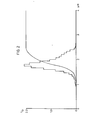
- the particle size distribution is shown in Fig. 2.
- Methacrylic acid content 39.9%; Methyl methacrylate content: 57.7%; 2.5% copolymer styrene-maleic acid halamide, insoluble at pH ⁇ 8.
- the particle size distribution is shown in FIG. 3.
- Methacrylic acid content 36.2%, methyl methacrylate content: 61.3%;
- the particle size distribution is shown in FIG. 4.
- the graft copolymers 3 and 4 are mixtures of 2 dispersions with a narrow particle size distribution (bimodal distribution).
- the casting compositions are applied with a casting machine to an uncured color negative film as the top cover layer (wet application 50 g composition per m 2 ) and the layer at 25 ° C and 60% rel. Humidity dried.
- the cover layers form a dry layer of 0.6 - 0.7 g / m 2 .
- the color negative film used has a conventional structure.
- a red-sensitized silver halide layer with emulsified cyan color coupler, an intermediate layer, a green-sensitized silver halide layer with a magenta coupler, a yellow filter layer and a blue-sensitized yellow coupler-containing silver halide layer are applied in succession to a cellulose triacet substrate.
- the intermediate layers consist of gelatin and a casting aid, the yellow filter layer also contains yellow colloidal silver.
- the layer thicknesses of the layers containing silver halide are between 5 and 6 ⁇ m, those of the intermediate layer between 1 and 2 pm.
- the film is cast without curing agent and cured by overlaying the top coat composition.
- the samples are cut into 5 cm 2 large pieces and conditioned for 2 days at 30 ° C and 90% humidity. The samples are then stored under pressure on the layer side against the back for one day. Then the samples are torn apart and the size of the bonded surface is estimated (bare spots in the surface).
- a film 35 mm wide and 125 cm long is wound into a film cartridge and 7 days at 90% RH. F. and 35 ° c stored.
- the pulling force (g) is then determined and registered when the film is pulled out of the cartridge.
- the maximum value is shown in the table below. In practice, the pull-out force should not exceed 300 g.
- the film stored according to test 2 is developed photographically and checked for visible defects which have arisen as a result of storage, pressure and moisture. The number and size of the differently sized colored spots is evaluated in%, based on the area tested. A film with a suitable protective layer should show less than 5% yellow spots.
- the graininess of a photographic image is caused by the color grain developed and by dispersions and matting agents, especially in the top layers. It is determined by determining the ⁇ -D value with a 29 ⁇ m pinhole as described by J.H. Altmann in Appl. Optics, Volume 3, (1964) pages 35-38. The graininess of 1.8 is a value sought in photography.
- the reflection (in%) of a light beam on the layer surface is determined.
- a gelatin layer containing no dispersed particles shows 100% reflection.
- Each of the samples is mixed with 4 g of one of the graft copolymers 1 to 4. Then the mixtures are digested for half an hour with stirring. The samples are then poured through a gauze filter and centrifuged. A stock paste is obtained which contains 50 to 60% by weight of graft copolymer particles.
- the pastes are added to individual top layer casting compositions and the casting compositions are applied to the layer side of a color negative film.
- top layers are obtained in which the particles are present free of aggregates.
- the results are determined by microscopic comparison of the samples.
- Example 1 The test of the samples for effectiveness of the outer layers is carried out according to the 4 methods given in Example 1.
- Sample A contains graft copolymer 1, coated with acid-washed gelatin; B contains graft copolymer 2, coated with acetyl gelatin C contains graft copolymer 3, coated with polyvinylpyrrolidone D contains graft copolymer 4, coated with cellulose sulfate.
- a layer structure serves as comparative sample E, the one Contains top layer without graft copolymer.
- the dry cover layers are 0.6 - 0.7 ⁇ m thick (approx. 0.6 - 0.7 g / m 2 application).
- test 2 The pull-out force (test 2) of sample E, which does not contain a graft copolymer, is extremely high (strong adhesion). In practice, the value of 300 g must not be exceeded. The sample is therefore unusable.
- the results show that the alkali-soluble graft copolymer particles of the invention work excellently and regardless of the enveloping colloid.
- the particles prevent the contact of an emulsion side with a back side of a wound photographic film material, since they partially protrude beyond the surface of the cover layer.
- a comparison of the amounts of particles present per unit area of the photographic material before and after the color processing in the protective layer shows that the particles were 80% dissolved in the alkaline developer.
- the effect of the graft copolymers according to the invention can be obtained by adding colloidal silica in the form of SiO 2 hydrosols or by adding a latex of a hard polymer or copolymer with a glass transition temperature of over 40 ° C. and a particle size of less than 0.5 ⁇ m, such as polymethyl methacrylate , to increase the protective layer composition.
- a latex of a hard polymer or copolymer with a glass transition temperature of over 40 ° C. and a particle size of less than 0.5 ⁇ m, such as polymethyl methacrylate to increase the protective layer composition.
- Sodium polystyrene sulfonic acid or a copolymer of the structure is added as a viscosity-increasing agent
- top layer compositions are produced:
- the pH of the solutions is 6.5 - 7; the wet application 50 g / m 2 .
- the hardening agent corresponds to the formula
- the top layer solution is poured onto an uncured color negative film and dried.
- Glossy spots and color spots can be practically completely avoided by combining the graft copolymers according to the invention with silica sol or latex such as samples B and C.
- a dispersion of a porous alkali-soluble substance (corresponding to US Pat. No. 4,094,848) is prepared in an aqueous gelatin solution: 20 g of gelatin are swollen in 160 g of water and dissolved at 40.degree. 0.75 g of the sodium salt of dodecylbenzene sulfonic acid dissolved in 40 g of water is added as a wetting agent. The mixture is cooled to 35 ° C., then a solution of 20 g copolymer of 63% methyl methacrylate and 37% methacrylic acid 70 g tert is dispersed by means of a mixer at 1,500 rpm. Butanol and 70 g of ethyl acetate in the gelatin solution.
- the solvent mixture is slowly evaporated off over 2 hours with gentle stirring. After filtering through a filter cloth, particles with a particle size mixture of 1-5 ⁇ m are obtained. The largest particles have a size of 10 to 15 ⁇ m. The particles have a grained porous surface and are opaque. 5 shows an electron microscopic magnification of these particles.
- the mixture is suitable as a stock solution.
- the advantage of the sample according to the invention over the comparative sample is that the particle size and its distribution are predetermined by the graft polymerization and the slurry of the graft copolymers can be added to a casting solution without the particles agglomerating.
- the particles according to the invention are clear and have a smooth surface (see FIG. 6).
- the particle size depends on the amount and type of solvent, the amount and type of wetting agent, on the temperature and on the type of dispersion.
- the mixture also contains flammable solvents, which must be carefully removed to avoid the formation of aggregates.
- Sample A contains the comparison dispersion (A).
- Sample B contains the graft copolymer 1 according to the invention as dispersion (B).
- Sample C contains no polymers.
- Samples A to C are tested for the effectiveness of the polymers as spacers as described in Example 1: It can be seen that the photographic material with the particles has a high surface gloss after processing. The particles according to the invention with their smooth surface have left no disturbing traces in the surface of the cover layer.
- the particles used for comparison on the other hand, left craters on the surface, which impair the gloss of the surface and caused an increased granularity.
Landscapes
- Chemical & Material Sciences (AREA)
- Health & Medical Sciences (AREA)
- Chemical Kinetics & Catalysis (AREA)
- Medicinal Chemistry (AREA)
- Polymers & Plastics (AREA)
- Organic Chemistry (AREA)
- Engineering & Computer Science (AREA)
- Materials Engineering (AREA)
- Physics & Mathematics (AREA)
- General Physics & Mathematics (AREA)
- Compositions Of Macromolecular Compounds (AREA)
- Silver Salt Photography Or Processing Solution Therefor (AREA)
Applications Claiming Priority (2)
| Application Number | Priority Date | Filing Date | Title |
|---|---|---|---|
| DE19833331542 DE3331542A1 (de) | 1983-09-01 | 1983-09-01 | Photographisches silberhalogenidaufzeichnungsmaterial |
| DE3331542 | 1983-09-01 |
Publications (3)
| Publication Number | Publication Date |
|---|---|
| EP0136506A2 true EP0136506A2 (fr) | 1985-04-10 |
| EP0136506A3 EP0136506A3 (en) | 1987-03-25 |
| EP0136506B1 EP0136506B1 (fr) | 1988-08-03 |
Family
ID=6207987
Family Applications (1)
| Application Number | Title | Priority Date | Filing Date |
|---|---|---|---|
| EP84109878A Expired EP0136506B1 (fr) | 1983-09-01 | 1984-08-20 | Matériau d'enregistrement photographique à l'halogénure d'argent |
Country Status (5)
| Country | Link |
|---|---|
| US (1) | US4524131A (fr) |
| EP (1) | EP0136506B1 (fr) |
| JP (1) | JPS60156056A (fr) |
| CA (1) | CA1217081A (fr) |
| DE (2) | DE3331542A1 (fr) |
Cited By (5)
| Publication number | Priority date | Publication date | Assignee | Title |
|---|---|---|---|---|
| EP0226120A3 (en) * | 1985-12-13 | 1989-01-04 | Agfa-Gevaert Ag | Photographic recording material with an improved protective layer |
| EP0282171A3 (fr) * | 1987-03-09 | 1989-07-19 | Minnesota Mining And Manufacturing Company | Surfaces pour l'enregistrement d'images |
| EP0399729A3 (fr) * | 1989-05-23 | 1991-09-25 | ILFORD Limited | Préparation d'une dispersion de polymère et éléments photographiques contenant des particules de polymère |
| EP0466982A1 (fr) * | 1990-07-20 | 1992-01-22 | Agfa-Gevaert N.V. | Méthode pour la préparation de perles de polymères résistantes aux solvants |
| EP0643326A1 (fr) * | 1993-09-09 | 1995-03-15 | Agfa-Gevaert N.V. | Nouveau type de latex polymère et son utilisation comme plastifiant dans un matériau photographique |
Families Citing this family (16)
| Publication number | Priority date | Publication date | Assignee | Title |
|---|---|---|---|---|
| US4940653A (en) * | 1987-09-14 | 1990-07-10 | Agfa-Gevaert Aktiengesellschaft | Multilayered color photographic material having an alkali soluble interlayer |
| US4855219A (en) * | 1987-09-18 | 1989-08-08 | Eastman Kodak Company | Photographic element having polymer particles covalently bonded to gelatin |
| JP2681163B2 (ja) * | 1988-07-07 | 1997-11-26 | コニカ株式会社 | ハロゲン化銀カラー写真感光材料 |
| DE3930141A1 (de) * | 1989-09-09 | 1991-03-21 | Bayer Ag | Vernetzte perlpolymerisate und ihre herstellung |
| US5258275A (en) * | 1989-10-13 | 1993-11-02 | Konica Corporation | Silver halide photographic light-sensitive material and the process of preparing the same |
| US5066572A (en) * | 1990-03-22 | 1991-11-19 | Eastman Kodak Company | Control of pressure-fog with gelatin-grafted and case-hardened gelatin-grafted soft polymer latex particles |
| DE4131142A1 (de) * | 1991-09-19 | 1993-03-25 | Bayer Ag | Elektroviskose fluessigkeit |
| US5288598A (en) * | 1992-10-30 | 1994-02-22 | Eastman Kodak Company | Photographic light-sensitive elements |
| EP0618490A1 (fr) * | 1993-03-30 | 1994-10-05 | Minnesota Mining And Manufacturing Company | Matériau photographique à l'halogénure d'argent ayant des propriétés antistatiques améliorées |
| US5399480A (en) * | 1993-09-14 | 1995-03-21 | Eastman Kodak Company | Attachment of gelatin-grafted polymer particles to pre-precipitated silver halide grains |
| US5834174A (en) * | 1995-10-24 | 1998-11-10 | Eastman Kodak Company | Photographic elements containing highly crosslinked matting agent |
| US5916741A (en) * | 1997-08-26 | 1999-06-29 | Eastman Kodak Company | Photographic elements containing elastomeric matting agent |
| DE19749082A1 (de) * | 1997-11-06 | 1999-05-12 | Bayer Ag | Nanoskalige anorganische Pigmente enthaltende Ink-Jet-Tinten |
| US6475712B1 (en) | 2001-11-28 | 2002-11-05 | Eastman Kodak Company | Photographic element having improved surface protective layer containing composite wax particles |
| US6913874B2 (en) * | 2003-10-21 | 2005-07-05 | Eastman Kodak Company | Highly lubricated imaging element with elastomeric matte |
| EP4316804A4 (fr) * | 2021-03-31 | 2025-03-19 | Yupo Corporation | Stratifié, matière imprimée, liquide de dispersion aqueux et procédé de fabrication de stratifié |
Family Cites Families (6)
| Publication number | Priority date | Publication date | Assignee | Title |
|---|---|---|---|---|
| JPS537231A (en) * | 1976-07-08 | 1978-01-23 | Fuji Photo Film Co Ltd | Image formation |
| JPS53116143A (en) * | 1977-03-18 | 1978-10-11 | Fuji Photo Film Co Ltd | Adhesion preventing method for silver halide photographic material |
| JPS5494319A (en) * | 1978-01-09 | 1979-07-26 | Konishiroku Photo Ind Co Ltd | Silver halide photographic material |
| DE2919822A1 (de) * | 1979-05-16 | 1980-11-27 | Agfa Gevaert Ag | Verfahren zur herstellung von mattierungsschichten |
| JPS5714835A (en) * | 1980-07-01 | 1982-01-26 | Fuji Photo Film Co Ltd | Photographic sensitive silver halide material |
| EP0080225B1 (fr) * | 1981-11-23 | 1985-08-07 | Agfa-Gevaert N.V. | Méthode pour la préparation de dispersions aqueuses et stables de perles polymériques, ainsi que l'utilisation de ces dispersions dans des éléments photographiques |
-
1983
- 1983-09-01 DE DE19833331542 patent/DE3331542A1/de not_active Withdrawn
-
1984
- 1984-08-20 EP EP84109878A patent/EP0136506B1/fr not_active Expired
- 1984-08-20 DE DE8484109878T patent/DE3473183D1/de not_active Expired
- 1984-08-22 US US06/643,159 patent/US4524131A/en not_active Expired - Fee Related
- 1984-08-30 JP JP59179524A patent/JPS60156056A/ja active Granted
- 1984-08-30 CA CA000462142A patent/CA1217081A/fr not_active Expired
Cited By (5)
| Publication number | Priority date | Publication date | Assignee | Title |
|---|---|---|---|---|
| EP0226120A3 (en) * | 1985-12-13 | 1989-01-04 | Agfa-Gevaert Ag | Photographic recording material with an improved protective layer |
| EP0282171A3 (fr) * | 1987-03-09 | 1989-07-19 | Minnesota Mining And Manufacturing Company | Surfaces pour l'enregistrement d'images |
| EP0399729A3 (fr) * | 1989-05-23 | 1991-09-25 | ILFORD Limited | Préparation d'une dispersion de polymère et éléments photographiques contenant des particules de polymère |
| EP0466982A1 (fr) * | 1990-07-20 | 1992-01-22 | Agfa-Gevaert N.V. | Méthode pour la préparation de perles de polymères résistantes aux solvants |
| EP0643326A1 (fr) * | 1993-09-09 | 1995-03-15 | Agfa-Gevaert N.V. | Nouveau type de latex polymère et son utilisation comme plastifiant dans un matériau photographique |
Also Published As
| Publication number | Publication date |
|---|---|
| EP0136506A3 (en) | 1987-03-25 |
| EP0136506B1 (fr) | 1988-08-03 |
| US4524131A (en) | 1985-06-18 |
| DE3331542A1 (de) | 1985-03-21 |
| JPH0574808B2 (fr) | 1993-10-19 |
| CA1217081A (fr) | 1987-01-27 |
| JPS60156056A (ja) | 1985-08-16 |
| DE3473183D1 (en) | 1988-09-08 |
Similar Documents
| Publication | Publication Date | Title |
|---|---|---|
| EP0167081B1 (fr) | Matériau d'enregistrement photographique à l'halogénure d'argent | |
| EP0136506B1 (fr) | Matériau d'enregistrement photographique à l'halogénure d'argent | |
| EP0019178B1 (fr) | Procédé pour la préparation de couches de matissement | |
| EP0003043B1 (fr) | Matériel photographique | |
| DE68911965T2 (de) | Mit einer antistatischen Schicht versehenes Blatt oder Band. | |
| DE2354715C2 (de) | Verfahren zur Herstellung bindemittelhaltiger Schutzschichten lichtempfindlicher photographischer Materialien | |
| DE69032024T2 (de) | Ausgefällte photographische materialien erhöhter aktivität | |
| DE2003993C3 (de) | Mehrschichtiges photographisches Aufzeichnungsmaterial | |
| DE68927687T2 (de) | Photographisches Silberhalogenidmaterial | |
| DE1815944C3 (de) | Antistatisches photographisches Material | |
| EP0872761B1 (fr) | Compositions redispersables en poudre pour la production de matériaux photographiques d'enregistrement | |
| DE1547747A1 (de) | Photographisches Material | |
| DE2404162A1 (de) | Polypropylen-schichttraeger und dessen verwendung in einem lichtempfindlichen photographischen silberhalogenidmaterial | |
| DE69018079T2 (de) | Verfahren zur Herstellung wässriger beladener Latexzusammensetzungen. | |
| DE69324564T2 (de) | Photographisches Silberhalogenidmaterial, das monodisperse Polymerteilchen enthält | |
| DE2219004C2 (de) | Photographisches Material | |
| DE2444421A1 (de) | Verfahren zur verbesserung der oberflaecheneigenschaften von photographischem material | |
| DE2601377C2 (de) | Verfahren zur Herstellung äußerer Rück- und Vorderseitenschichten auf photographischen Materialien | |
| DE2835856A1 (de) | Verfahren zur herstellung von impraegnierten polymerlatex-zusammensetzungen | |
| DE2309096A1 (de) | Verfahren zur herstellung einer beschichtungsmasse fuer photographische aufzeichnungsmaterialien | |
| DE69126859T2 (de) | Aufzeichnungsmaterial mit antistatischen Eigenschaften | |
| DE69419629T2 (de) | Mit einer Sauerstoff-Barriere beschichtetes photographisches Mittel, durch Vermahlen erhaltene Teilchendispersion für erhöhte Farbstoffstabilität | |
| EP0226120B1 (fr) | Matériau d'enregistrement photographique avec une couche de protection | |
| DE1547744C (de) | Photographisches Aufzeichnungsma tenal | |
| DE69602298T2 (de) | Emulgier- und Dispersionsverfahren für eine photographisch nützliche hydrophobe Verbindung |
Legal Events
| Date | Code | Title | Description |
|---|---|---|---|
| PUAI | Public reference made under article 153(3) epc to a published international application that has entered the european phase |
Free format text: ORIGINAL CODE: 0009012 |
|
| 17P | Request for examination filed |
Effective date: 19840820 |
|
| AK | Designated contracting states |
Designated state(s): BE CH DE FR GB LI |
|
| RTI1 | Title (correction) | ||
| PUAL | Search report despatched |
Free format text: ORIGINAL CODE: 0009013 |
|
| AK | Designated contracting states |
Kind code of ref document: A3 Designated state(s): BE CH DE FR GB LI |
|
| RAP1 | Party data changed (applicant data changed or rights of an application transferred) |
Owner name: AGFA-GEVAERT AG |
|
| 17Q | First examination report despatched |
Effective date: 19870824 |
|
| GRAA | (expected) grant |
Free format text: ORIGINAL CODE: 0009210 |
|
| AK | Designated contracting states |
Kind code of ref document: B1 Designated state(s): BE CH DE FR GB LI |
|
| REF | Corresponds to: |
Ref document number: 3473183 Country of ref document: DE Date of ref document: 19880908 |
|
| ET | Fr: translation filed | ||
| GBT | Gb: translation of ep patent filed (gb section 77(6)(a)/1977) | ||
| PLBE | No opposition filed within time limit |
Free format text: ORIGINAL CODE: 0009261 |
|
| STAA | Information on the status of an ep patent application or granted ep patent |
Free format text: STATUS: NO OPPOSITION FILED WITHIN TIME LIMIT |
|
| 26N | No opposition filed | ||
| PGFP | Annual fee paid to national office [announced via postgrant information from national office to epo] |
Ref country code: BE Payment date: 19900816 Year of fee payment: 7 |
|
| PGFP | Annual fee paid to national office [announced via postgrant information from national office to epo] |
Ref country code: CH Payment date: 19900824 Year of fee payment: 7 |
|
| PG25 | Lapsed in a contracting state [announced via postgrant information from national office to epo] |
Ref country code: LI Effective date: 19910831 Ref country code: CH Effective date: 19910831 Ref country code: BE Effective date: 19910831 |
|
| BERE | Be: lapsed |
Owner name: AGFA-GEVAERT A.G. Effective date: 19910831 |
|
| REG | Reference to a national code |
Ref country code: CH Ref legal event code: PL |
|
| REG | Reference to a national code |
Ref country code: GB Ref legal event code: 732 |
|
| PGFP | Annual fee paid to national office [announced via postgrant information from national office to epo] |
Ref country code: DE Payment date: 19940714 Year of fee payment: 11 |
|
| PGFP | Annual fee paid to national office [announced via postgrant information from national office to epo] |
Ref country code: FR Payment date: 19940727 Year of fee payment: 11 |
|
| PGFP | Annual fee paid to national office [announced via postgrant information from national office to epo] |
Ref country code: GB Payment date: 19940810 Year of fee payment: 11 |
|
| PG25 | Lapsed in a contracting state [announced via postgrant information from national office to epo] |
Ref country code: GB Effective date: 19950820 |
|
| GBPC | Gb: european patent ceased through non-payment of renewal fee |
Effective date: 19950820 |
|
| PG25 | Lapsed in a contracting state [announced via postgrant information from national office to epo] |
Ref country code: FR Effective date: 19960430 |
|
| PG25 | Lapsed in a contracting state [announced via postgrant information from national office to epo] |
Ref country code: DE Effective date: 19960501 |
|
| REG | Reference to a national code |
Ref country code: FR Ref legal event code: ST |