EP0136767B1 - Verfahren zur Herstellung von keramischen Fasern, die hauptsächlich Alumina und Kieselsäure enthalten - Google Patents
Verfahren zur Herstellung von keramischen Fasern, die hauptsächlich Alumina und Kieselsäure enthalten Download PDFInfo
- Publication number
- EP0136767B1 EP0136767B1 EP84300522A EP84300522A EP0136767B1 EP 0136767 B1 EP0136767 B1 EP 0136767B1 EP 84300522 A EP84300522 A EP 84300522A EP 84300522 A EP84300522 A EP 84300522A EP 0136767 B1 EP0136767 B1 EP 0136767B1
- Authority
- EP
- European Patent Office
- Prior art keywords
- fibres
- weight
- temperature
- sub
- alumina
- Prior art date
- Legal status (The legal status is an assumption and is not a legal conclusion. Google has not performed a legal analysis and makes no representation as to the accuracy of the status listed.)
- Expired
Links
- VYPSYNLAJGMNEJ-UHFFFAOYSA-N Silicium dioxide Chemical compound O=[Si]=O VYPSYNLAJGMNEJ-UHFFFAOYSA-N 0.000 title claims description 21
- 239000000919 ceramic Substances 0.000 title claims description 21
- PNEYBMLMFCGWSK-UHFFFAOYSA-N aluminium oxide Inorganic materials [O-2].[O-2].[O-2].[Al+3].[Al+3] PNEYBMLMFCGWSK-UHFFFAOYSA-N 0.000 title claims description 11
- 238000000034 method Methods 0.000 title claims description 9
- 239000000377 silicon dioxide Substances 0.000 title claims description 9
- 238000004519 manufacturing process Methods 0.000 title claims description 6
- OKTJSMMVPCPJKN-UHFFFAOYSA-N Carbon Chemical compound [C] OKTJSMMVPCPJKN-UHFFFAOYSA-N 0.000 claims abstract description 11
- 229910052799 carbon Inorganic materials 0.000 claims abstract description 11
- 238000007664 blowing Methods 0.000 claims abstract description 5
- 239000012535 impurity Substances 0.000 claims abstract description 5
- 238000009987 spinning Methods 0.000 claims abstract description 4
- 239000000463 material Substances 0.000 claims description 7
- 238000010438 heat treatment Methods 0.000 claims description 6
- 229910052681 coesite Inorganic materials 0.000 claims description 5
- 229910052906 cristobalite Inorganic materials 0.000 claims description 5
- 239000012768 molten material Substances 0.000 claims description 5
- 229910052682 stishovite Inorganic materials 0.000 claims description 5
- 229910052905 tridymite Inorganic materials 0.000 claims description 5
- 238000002844 melting Methods 0.000 claims description 3
- 230000008018 melting Effects 0.000 claims description 3
- 238000001816 cooling Methods 0.000 claims description 2
- 239000000203 mixture Substances 0.000 abstract 2
- 239000013078 crystal Substances 0.000 description 17
- KZHJGOXRZJKJNY-UHFFFAOYSA-N dioxosilane;oxo(oxoalumanyloxy)alumane Chemical compound O=[Si]=O.O=[Si]=O.O=[Al]O[Al]=O.O=[Al]O[Al]=O.O=[Al]O[Al]=O KZHJGOXRZJKJNY-UHFFFAOYSA-N 0.000 description 8
- 229910052863 mullite Inorganic materials 0.000 description 8
- 230000015572 biosynthetic process Effects 0.000 description 7
- WGLPBDUCMAPZCE-UHFFFAOYSA-N Trioxochromium Chemical compound O=[Cr](=O)=O WGLPBDUCMAPZCE-UHFFFAOYSA-N 0.000 description 6
- 229910000423 chromium oxide Inorganic materials 0.000 description 6
- 238000002441 X-ray diffraction Methods 0.000 description 4
- 239000011521 glass Substances 0.000 description 4
- 238000000926 separation method Methods 0.000 description 4
- 238000002425 crystallisation Methods 0.000 description 3
- 230000008025 crystallization Effects 0.000 description 3
- 239000000835 fiber Substances 0.000 description 3
- 239000000470 constituent Substances 0.000 description 2
- 238000001953 recrystallisation Methods 0.000 description 2
- 229910021398 atomic carbon Inorganic materials 0.000 description 1
- 230000006835 compression Effects 0.000 description 1
- 238000007906 compression Methods 0.000 description 1
- 238000007796 conventional method Methods 0.000 description 1
- 238000004031 devitrification Methods 0.000 description 1
- 238000009792 diffusion process Methods 0.000 description 1
- 238000000635 electron micrograph Methods 0.000 description 1
- 238000005530 etching Methods 0.000 description 1
- 230000000704 physical effect Effects 0.000 description 1
- 230000008707 rearrangement Effects 0.000 description 1
Images


Classifications
-
- C—CHEMISTRY; METALLURGY
- C03—GLASS; MINERAL OR SLAG WOOL
- C03B—MANUFACTURE, SHAPING, OR SUPPLEMENTARY PROCESSES
- C03B37/00—Manufacture or treatment of flakes, fibres, or filaments from softened glass, minerals, or slags
-
- C—CHEMISTRY; METALLURGY
- C03—GLASS; MINERAL OR SLAG WOOL
- C03C—CHEMICAL COMPOSITION OF GLASSES, GLAZES OR VITREOUS ENAMELS; SURFACE TREATMENT OF GLASS; SURFACE TREATMENT OF FIBRES OR FILAMENTS MADE FROM GLASS, MINERALS OR SLAGS; JOINING GLASS TO GLASS OR OTHER MATERIALS
- C03C13/00—Fibre or filament compositions
-
- Y—GENERAL TAGGING OF NEW TECHNOLOGICAL DEVELOPMENTS; GENERAL TAGGING OF CROSS-SECTIONAL TECHNOLOGIES SPANNING OVER SEVERAL SECTIONS OF THE IPC; TECHNICAL SUBJECTS COVERED BY FORMER USPC CROSS-REFERENCE ART COLLECTIONS [XRACs] AND DIGESTS
- Y10—TECHNICAL SUBJECTS COVERED BY FORMER USPC
- Y10S—TECHNICAL SUBJECTS COVERED BY FORMER USPC CROSS-REFERENCE ART COLLECTIONS [XRACs] AND DIGESTS
- Y10S264/00—Plastic and nonmetallic article shaping or treating: processes
- Y10S264/19—Inorganic fiber
Definitions
- This invention relates to a process for manufacturing ceramic fibres consisting mainly of alumina and silica.
- amorphous ceramic fibers consisting mainly of alumina (AI 2 0 3 ) and silica (Si0 2 ) can be produced by melting a material containing 40 to 70% by weight of alumina, 30 to 60% by weight of silica and minor quantities of impurities, and blowing or spinning the molten material. It is also known that the thermal shrinkability of these ceramic fibres can be lowered if they are heated at a temperature not lower than their devitrification temperature so that the crystallization of mullite (3A1 2 0 3 .2Si0 2 ) mauy take place in the various material:
- U.S. Patent No. 3,449,137 teaches the manufacture of ceramic fibres containing about 1 to 6% by weight of chromium oxide (Cr 2 0 3 ) in addition to alumina and silica. This process has been tested, but the ceramic fibres thereby obtained have not shown any appreciable improvement in physical properties. The addition of chromium oxide is not sufficient to prevent the formation of coarse crystals by recrystallization, which results in higher degrees of thermal shrinkage and embrittlement of ceramic fibres, when they are exposed to a high temperature for a long time.
- chromium oxide Cr 2 0 3
- One object of this invention is to enable the manufacture of ceramic fibres which have a high degree of thermal stability even at high temperature.
- This invention is particularly featured by employing a small quantity of carbon.
- a process for manufacturing ceramic fibres which comprises melting a material containing 35 to 65% by weight of alumina, 30 to 60% by weight of silica, 1.5 to 4% by weight of chromium oxide and 0.01 to 0.1 % by weight of carbon, forming amorphous fibres from the molten material, heating the fibres rapidly to a temperature of 950°C to 1,150°C, holding them at that temperature for a predetermined time, preferably for several to a dozen or so minutes, and cooling them rapidly to ordinary room temperature.
- the high thermal stability of the fibres is due to the separation of phases which takes place in the vitreous structure as a result of the heat treatment at a relatively low temperature.
- the fibres have a coefficient of linear shrinkage not exceeding 2% even if they are exposed to a temperature of 1,300°C or above. They do not undergo any appreciable embrittlement.
- a material containing 35 to 65% by weight of alumina (AI 2 0 3 ), 30 to 60% by weight of silica (Si0 2 ), 1.5 to 4% by weight of chromium oxide (Cr 2 0 3 ) and 0.01 to 0.1 % by weight of carbon, the balance being unavoidable impurities is first melted, for example, in an electric furnace.
- Amorphous fibres are then formed from the molten material by any conventional method, such as blowing or spinning, known to those skilled in the art.
- the fibres are heated to a temperature of 950°C to 1,150°C, and held at that temperature for a period of several to a dozen or so minutes. These conditions have been experimentally found necessary and sufficient for causing the separation of phases in the amorphous structure of the ceramic fibres. If the fibres are held at a temperature below 950°C for a shorter time than the specified range, no satisfactory improvement in their resistance to thermal shrinkage can be expected, as will be obvious from the following description.
- the fibres are heated rapidly to a temperature of 950°C to 1,150°C, since only rapid heating enables the separation of phases in the ceramic structure. If the fibres are heated slowly, they have a linear shrinkage coefficient exceeding 2% when they are exposed to a temperature of 1,300°C or above for a long time, and moreover, the embrittlement of the fibres takes place. Experimental results, indicate that it is preferable to heat the fibres at a rate of 100°C to 1,000°C per minute.
- the molten material was formed by blowing into amorphous fibres having an average diameter of 2.5 micrometers and a maximum length of 150mm.
- a blanket having a thickness of 25mm and a bulk specific density of 0.14 was formed from the fibres, and heat treated under the conditions shown in Tables 1 and 2.
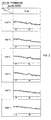
- Table 1 shows the linear shrinkage of the blankets heated at a temperature of 1,000°C to 1,400°C for 24 hours.
- Table 2 shows the resiliency of the fibres in terms of the restorability of blanket thickness after compression under heat. The blanket was heated under the conditions shown in Table 2, and compressed to a half in thickness.
- the thermal stability and resiliency of a blanket of ceramic fibers produced by the method of this invention are apparently due to the separation of phases.
- the chromium oxide (Cr 2 0 3 ) replaces a part of AI 2 0 3 in the Al 2 O 3 -SiO 2 glass structure, and causes a stress in its lattice to inhibit crystallization. In the presence of a small quantity of atomic carbon, it is scattered in the lattices of the glass structure, and restricts their rearrangement.
- the rapid heating shortens the distance of diffusion of the constituents in the glass structure, and inhibits their crystallization, whereby there are formed a lot of finely divided separate phases consisting mainly of Cr 2 0 3 and having different proportions of constituents.
- the ceramic fibres having separate phases hardly undergo recyrstallization even if they are exposed to a high temperature. Even if recrystallization occurs following exposure to a higher temperature for a long time, the crystals are very small, since the separate phases forming the crystal grains, in which Cr 2 0 3 forming the nucleus of the crystal coexists with carbon, are scattered numerously. The adjoining crystal grains mutually restrict their growth, and yield fibres composed of numerous fine crystals. These fibres provide a thermally stable and resilient blanket. As will be seen from Figure 3, the fibres as a whole comprise finely divided separate phases. On the other hand, fibres not containing such separate phases and crystals are totally melted by similar etching treatment.
Landscapes
- Chemical & Material Sciences (AREA)
- Engineering & Computer Science (AREA)
- Life Sciences & Earth Sciences (AREA)
- Geochemistry & Mineralogy (AREA)
- Materials Engineering (AREA)
- Organic Chemistry (AREA)
- Chemical Kinetics & Catalysis (AREA)
- General Chemical & Material Sciences (AREA)
- General Life Sciences & Earth Sciences (AREA)
- Manufacturing & Machinery (AREA)
- Inorganic Fibers (AREA)
- Glass Compositions (AREA)
- Re-Forming, After-Treatment, Cutting And Transporting Of Glass Products (AREA)
- Manufacture, Treatment Of Glass Fibers (AREA)
- Artificial Filaments (AREA)
- Compositions Of Oxide Ceramics (AREA)
Claims (4)
Priority Applications (1)
| Application Number | Priority Date | Filing Date | Title |
|---|---|---|---|
| AT84300522T ATE26968T1 (de) | 1983-10-04 | 1984-01-27 | Verfahren zur herstellung von keramischen fasern, die hauptsaechlich alumina und kieselsaeure enthalten. |
Applications Claiming Priority (2)
| Application Number | Priority Date | Filing Date | Title |
|---|---|---|---|
| JP58186578A JPS6077147A (ja) | 1983-10-04 | 1983-10-04 | Al↓2O↓3−SiO↓2系セラミツク繊維とその製造法 |
| JP186578/83 | 1983-10-04 |
Publications (3)
| Publication Number | Publication Date |
|---|---|
| EP0136767A2 EP0136767A2 (de) | 1985-04-10 |
| EP0136767A3 EP0136767A3 (en) | 1985-07-03 |
| EP0136767B1 true EP0136767B1 (de) | 1987-05-06 |
Family
ID=16190986
Family Applications (1)
| Application Number | Title | Priority Date | Filing Date |
|---|---|---|---|
| EP84300522A Expired EP0136767B1 (de) | 1983-10-04 | 1984-01-27 | Verfahren zur Herstellung von keramischen Fasern, die hauptsächlich Alumina und Kieselsäure enthalten |
Country Status (7)
| Country | Link |
|---|---|
| US (1) | US4511664A (de) |
| EP (1) | EP0136767B1 (de) |
| JP (1) | JPS6077147A (de) |
| KR (1) | KR870001623B1 (de) |
| AT (1) | ATE26968T1 (de) |
| AU (1) | AU547034B2 (de) |
| DE (1) | DE3463491D1 (de) |
Families Citing this family (10)
| Publication number | Priority date | Publication date | Assignee | Title |
|---|---|---|---|---|
| FI85689B (fi) * | 1984-12-21 | 1992-02-14 | Outokumpu Oy | Saett att utnyttja av ferrolegeringstillverkning. |
| JPS61291445A (ja) * | 1985-06-18 | 1986-12-22 | イソライト工業株式会社 | セラミツクフアイバ−ブランケツトの処理方法 |
| US4824623A (en) * | 1985-12-13 | 1989-04-25 | Minnesota Mining And Manufacturing Company | A method of making bicomponent green and ceramic fibers |
| US4942020A (en) * | 1988-06-27 | 1990-07-17 | W.R. Grace & Co.-Conn. | Converter for removing pollutants from a gas stream |
| US5229093A (en) * | 1990-03-15 | 1993-07-20 | Chichibu Cement Co., Ltd. | Method for making mullite whiskers using hydrofluoric acid |
| AU654698B2 (en) * | 1991-03-13 | 1994-11-17 | Toshiba Monofrax Co., Ltd. | A method and apparatus for producing fibers |
| AU2156999A (en) * | 1997-12-02 | 1999-06-16 | Rockwool International A/S | Briquettes for mineral fibre production and their use |
| KR100413033B1 (ko) * | 2001-07-04 | 2003-12-31 | 주식회사 코스마 | 와이어 본딩용 다결정 루비 캐필러리 소결체 및 그의 제조방법 |
| US8056370B2 (en) * | 2002-08-02 | 2011-11-15 | 3M Innovative Properties Company | Method of making amorphous and ceramics via melt spinning |
| US7824602B2 (en) * | 2006-03-31 | 2010-11-02 | Massachusetts Institute Of Technology | Ceramic processing and shaped ceramic bodies |
Family Cites Families (8)
| Publication number | Priority date | Publication date | Assignee | Title |
|---|---|---|---|---|
| US3449137A (en) * | 1965-10-13 | 1969-06-10 | Johns Manville | Refractory fibers for service to 2700 f. |
| AR204579A1 (es) * | 1974-05-30 | 1976-02-12 | Babcock & Wilcox Co | Procedimiento para la formacion de un producto eristalino elastico de grano fino y material obtenido |
| JPS6054246B2 (ja) * | 1977-12-05 | 1985-11-29 | ジヨ−ンズ・マンヴイル・コ−パレイシヤン | Cr↓2O↓3含有酸化物混合物の溶融取出し方法 |
| GB1568651A (en) * | 1978-01-19 | 1980-06-04 | Johns Manville | Method of reducing deterioration of electric furnace refractory metal components |
| EP0007485A1 (de) * | 1978-07-26 | 1980-02-06 | Kennecott Corporation | Verfahren zur Herstellung einer schrumpfstabilisierten feuerfesten Keramikfaser, und eine Faser dieser Art |
| US4251279A (en) * | 1979-03-05 | 1981-02-17 | Johns-Manville Corporation | Method of producing alumina-containing fiber and composition therefor |
| JPS5733394A (en) * | 1980-08-08 | 1982-02-23 | Hitachi Ltd | Pressure suppression chamber cleaning device |
| JPS5921567A (ja) * | 1982-07-23 | 1984-02-03 | イソライト工業株式会社 | 耐火断熱材料の処理法 |
-
1983
- 1983-10-04 JP JP58186578A patent/JPS6077147A/ja active Granted
-
1984
- 1984-01-27 DE DE8484300522T patent/DE3463491D1/de not_active Expired
- 1984-01-27 EP EP84300522A patent/EP0136767B1/de not_active Expired
- 1984-01-27 AT AT84300522T patent/ATE26968T1/de not_active IP Right Cessation
- 1984-02-01 AU AU23977/84A patent/AU547034B2/en not_active Expired
- 1984-02-14 KR KR1019840000682A patent/KR870001623B1/ko not_active Expired
- 1984-06-04 US US06/617,192 patent/US4511664A/en not_active Expired - Lifetime
Also Published As
| Publication number | Publication date |
|---|---|
| AU547034B2 (en) | 1985-10-03 |
| AU2397784A (en) | 1985-04-18 |
| EP0136767A3 (en) | 1985-07-03 |
| KR870001623B1 (ko) | 1987-09-17 |
| JPS6319458B2 (de) | 1988-04-22 |
| US4511664A (en) | 1985-04-16 |
| DE3463491D1 (en) | 1987-06-11 |
| KR850003363A (ko) | 1985-06-17 |
| JPS6077147A (ja) | 1985-05-01 |
| EP0136767A2 (de) | 1985-04-10 |
| ATE26968T1 (de) | 1987-05-15 |
Similar Documents
| Publication | Publication Date | Title |
|---|---|---|
| AU590393B2 (en) | Inorganic fiber composition | |
| US4199336A (en) | Method for making basalt glass ceramic fibers | |
| KR100773602B1 (ko) | 인공체액에 대한 용해도가 우수한 고온단열재용 생분해성세라믹 섬유조성물 | |
| US4687749A (en) | Refractory glass-ceramics containing enstatite | |
| EP0114101B1 (de) | Osumilith enthaltende glaskeramische Artikel | |
| US3997352A (en) | Mica-spodumene glass-ceramic articles | |
| EP0710627B1 (de) | Glaskeramiken mit hohem Modul die feinkörnige Kristalle des Spinel-Typs enthalten | |
| US4443550A (en) | Glass composition suitable for production of fibrous wollastonite, method for producing said wollastonite, and wollastonite obtained thereby | |
| EP0051390B1 (de) | Glaskeramische Körper, welche extrem widerstandsfähig gegen Schlag und plötzlichen, verzögert eintretenden Bruch sind, sowie deren Herstellungsverfahren | |
| KR20050053693A (ko) | 결정화 가능한 글라스와, 용이하게 연마된 표면을 갖는매우 단단한 브레이크-저항성의 글라스 세라믹을 생산하기위한 이들의 용도 | |
| US3531303A (en) | Alkaline earth aluminosilicate glass-ceramic articles | |
| EP0136767A2 (de) | Verfahren zur Herstellung von keramischen Fasern, die hauptsächlich Alumina und Kieselsäure enthalten | |
| US4240833A (en) | Shrink-resistant refractory fiber and process for making same | |
| RU2580846C2 (ru) | Композиция для изготовления керамического волокна и биорастворимое керамическое волокно, полученное из нее для теплоизоляционного материала при высокой температуре | |
| US3467534A (en) | Barium silicate glass-ceramic body and method of making it | |
| US3801295A (en) | Mica glass-ceramics | |
| JP4287119B2 (ja) | ガラスセラミックおよびその製造方法 | |
| EP0202751A1 (de) | B2O3-P2O5-SiO2-Glaskeramikartikel | |
| DE3925486A1 (de) | Erdalkalialuminoborat-glaskeramik | |
| CA1215838A (en) | Process for manufacturing ceramic fibers consisting mainly of alumina and silica | |
| US3544293A (en) | Production of alpha-cristobalite fibers | |
| JPH0114182B2 (de) | ||
| JPH10130961A (ja) | 高純度アルミナシリカ繊維及びそれを用いた耐火断熱材 | |
| JP2827023B2 (ja) | 結晶化ガラス | |
| JP2000160434A (ja) | 高純度アルミナ長繊維及びその繊維製品と耐火断熱材 |
Legal Events
| Date | Code | Title | Description |
|---|---|---|---|
| PUAI | Public reference made under article 153(3) epc to a published international application that has entered the european phase |
Free format text: ORIGINAL CODE: 0009012 |
|
| AK | Designated contracting states |
Designated state(s): AT BE DE FR GB IT LU NL SE |
|
| PUAL | Search report despatched |
Free format text: ORIGINAL CODE: 0009013 |
|
| AK | Designated contracting states |
Designated state(s): AT BE DE FR GB IT LU NL SE |
|
| 17P | Request for examination filed |
Effective date: 19850921 |
|
| 17Q | First examination report despatched |
Effective date: 19860728 |
|
| GRAA | (expected) grant |
Free format text: ORIGINAL CODE: 0009210 |
|
| AK | Designated contracting states |
Kind code of ref document: B1 Designated state(s): AT BE DE FR GB IT LU NL SE |
|
| PG25 | Lapsed in a contracting state [announced via postgrant information from national office to epo] |
Ref country code: AT Effective date: 19870506 Ref country code: BE Effective date: 19870506 Ref country code: NL Effective date: 19870506 |
|
| REF | Corresponds to: |
Ref document number: 26968 Country of ref document: AT Date of ref document: 19870515 Kind code of ref document: T |
|
| PG25 | Lapsed in a contracting state [announced via postgrant information from national office to epo] |
Ref country code: SE Effective date: 19870531 |
|
| ET | Fr: translation filed | ||
| REF | Corresponds to: |
Ref document number: 3463491 Country of ref document: DE Date of ref document: 19870611 |
|
| ITF | It: translation for a ep patent filed | ||
| NLV1 | Nl: lapsed or annulled due to failure to fulfill the requirements of art. 29p and 29m of the patents act | ||
| PG25 | Lapsed in a contracting state [announced via postgrant information from national office to epo] |
Ref country code: LU Free format text: LAPSE BECAUSE OF NON-PAYMENT OF DUE FEES Effective date: 19880131 |
|
| PLBE | No opposition filed within time limit |
Free format text: ORIGINAL CODE: 0009261 |
|
| STAA | Information on the status of an ep patent application or granted ep patent |
Free format text: STATUS: NO OPPOSITION FILED WITHIN TIME LIMIT |
|
| 26N | No opposition filed | ||
| ITTA | It: last paid annual fee | ||
| REG | Reference to a national code |
Ref country code: GB Ref legal event code: IF02 |
|
| PGFP | Annual fee paid to national office [announced via postgrant information from national office to epo] |
Ref country code: GB Payment date: 20030117 Year of fee payment: 20 |
|
| PGFP | Annual fee paid to national office [announced via postgrant information from national office to epo] |
Ref country code: FR Payment date: 20030131 Year of fee payment: 20 |
|
| PGFP | Annual fee paid to national office [announced via postgrant information from national office to epo] |
Ref country code: DE Payment date: 20030327 Year of fee payment: 20 |
|
| PG25 | Lapsed in a contracting state [announced via postgrant information from national office to epo] |
Ref country code: GB Free format text: LAPSE BECAUSE OF EXPIRATION OF PROTECTION Effective date: 20040126 |
|
| REG | Reference to a national code |
Ref country code: GB Ref legal event code: PE20 |