EP0138577A2 - Farbkopiersystem - Google Patents
Farbkopiersystem Download PDFInfo
- Publication number
- EP0138577A2 EP0138577A2 EP84306937A EP84306937A EP0138577A2 EP 0138577 A2 EP0138577 A2 EP 0138577A2 EP 84306937 A EP84306937 A EP 84306937A EP 84306937 A EP84306937 A EP 84306937A EP 0138577 A2 EP0138577 A2 EP 0138577A2
- Authority
- EP
- European Patent Office
- Prior art keywords
- color
- paper
- strips
- process according
- exposure
- Prior art date
- Legal status (The legal status is an assumption and is not a legal conclusion. Google has not performed a legal analysis and makes no representation as to the accuracy of the status listed.)
- Granted
Links
Images

Classifications
-
- G—PHYSICS
- G03—PHOTOGRAPHY; CINEMATOGRAPHY; ANALOGOUS TECHNIQUES USING WAVES OTHER THAN OPTICAL WAVES; ELECTROGRAPHY; HOLOGRAPHY
- G03B—APPARATUS OR ARRANGEMENTS FOR TAKING PHOTOGRAPHS OR FOR PROJECTING OR VIEWING THEM; APPARATUS OR ARRANGEMENTS EMPLOYING ANALOGOUS TECHNIQUES USING WAVES OTHER THAN OPTICAL WAVES; ACCESSORIES THEREFOR
- G03B27/00—Photographic printing apparatus
- G03B27/72—Controlling or varying light intensity, spectral composition, or exposure time in photographic printing apparatus
- G03B27/73—Controlling exposure by variation of spectral composition, e.g. multicolor printers
-
- G—PHYSICS
- G03—PHOTOGRAPHY; CINEMATOGRAPHY; ANALOGOUS TECHNIQUES USING WAVES OTHER THAN OPTICAL WAVES; ELECTROGRAPHY; HOLOGRAPHY
- G03C—PHOTOSENSITIVE MATERIALS FOR PHOTOGRAPHIC PURPOSES; PHOTOGRAPHIC PROCESSES, e.g. CINE, X-RAY, COLOUR, STEREO-PHOTOGRAPHIC PROCESSES; AUXILIARY PROCESSES IN PHOTOGRAPHY
- G03C5/00—Photographic processes or agents therefor; Regeneration of such processing agents
- G03C5/02—Sensitometric processes, e.g. determining sensitivity, colour sensitivity, gradation, graininess, density; Making sensitometric wedges
Definitions
- the present invention relates to the field of calibrating photograph printing systems.
- the present invention eliminates the previously known trial and error procedure for establishing enlarger calibration settings.
- the product by process herein described will enable the photographer to use only one sheet of photography paper in establishing the enlarger calibration settings.
- An object of the present invention is to allow the photographer to calibrate photograph enlargement settings using a single sheet of photography paper.
- Another object of the present invention is to lower the cost in calibrating photograph enlargers.
- Yet another object of the present invention is to eliminate the trial and error procedure for calibrating photograph enlargers.
- Still another object of the present invention is to obtain high quality photograph enlargements from slide and/or negative film.
- Another object of the present invention is to obtain a plurality of distinct shades of grey between white and black for high quality exposure of black and white prints.
- Another object of the present invention is the generation of a color spectrum chart to assist in calibrating photograph printing systems.
- a process for making color prints comprising the steps of: exposing photography paper to a first color light source; progressively and sequentially exposing first strips of said paper to decreasing amounts of light of a second color; and progressively and sequentially exposing second strips of said paper to decreasing amounts of light of a third color, said second strips being normal to said first strips.
- the previous method for accounting for all the sources of error was a trial and error procedure of adjusting and readjusting the time of exposure, enlarger stop opening (f-stop), and varying the filters until the approximate correct exposure was reached and then color balance achieved.
- Film varies slightly from roll to roll. Enlargers vary enormously between types and within types, but vary slowly with time for a particular enlarger. Development chemistry varies slightly from batch to batch, but varies enormously with time. Printing paper varies widely in manufacture and also changes drastically with time. variations in the chemistry of undeveloped film, paper, and development solutions can be minimized by refrigeration, but the variations still exist.
- Photographic paper is labeled with an emulsion number.
- Color film is usually accompanied by suggested filter corrections and an exposure factor which has been found for a particular printing system at the paper manufacturer, but usually bears no resemblance to an individual enlarger system. Further, this labeling is only correct at the time of manufacture. As the paper ages and encounters temperature changes, these determination change, but these determinations can provide the photographer with an initial reference for practicing the present invention as will become apparent from the explanation hereinafter.
- Typical paper emulsions will specify a yellow correction from -10 points to +50 points, and magenta correction from -10 points to +50 points. Sometimes an exposure factor is given. These are so-called “white light corrections" given by the manufacturer.
- the exposure factor is often printed on the label.
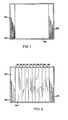
- the invention consists of a tray 30 with a depression sufficiently large to fit a sheet of printing paper 60.
- a sheet of printing paper 60 For the sake of example, we will use an 8" x 10" piece of printing material, although any standard size piece of paper could be similarly accommodated.
- the photo tray 30 is of a rectangular design with its sides being 1/8 to 1 inch in height, preferably 1/4 to 3/4 inch.
- the photo paper 60 is laid face up in the tray 30 and the tray and paper are then placed under an enlarger. The enlarger is focused on this paper and set to a specified f-stop and exposure time.
- a test negative or a slide is placed in the enlarger.
- This slide or negative will be color- balanced, that is, a representation of a neutral image on a particular kind of film.
- An example would be a shot of an 18% grey card on V R -100 film.
- this slide or negative should be from the same film the operator wishes to print, since film emulsions do vary from roll to roll. It is important that this slide negative be exposed with light of the same color temperature (daylight is 5800° K).
- the photo paper 60 is first exposed to red light only. This is accomplished by placing the cyan filter at zero and the magenta and yellow filters at their maximum settings. Exposure is made at a specified f-stop and time, for example, f5.6 for five seconds.
- strips 28 and 29 are placed vertically on the photo paper 60 at the extreme ends.
- these rectangular strips are 1 inch wide and 8 inches long. These strips form the border of an 8" x 8" square.
- Strips 31-39 are placed vertically on the photo paper 60 as shown in Fig. 2.
- the strips 31-39 are of a rectangular shape and vary in number from 5 to 50, preferably 5 to 10.
- the strips 31-39 cover between 80 to 95%, preferably 80 to 90%, of the photo paper 60, thus exposing only 5 to 20%, preferably 5 to 10%, of the photo paper.
- the tray 30 is again placed under the enlarger with the strips in their vertical positions.
- the enlarger is set with red and green light completely filtered out (cyan and magenta filters are placed at maximum settings). Blue light is varied in specific intervals of 1 to 20 points of density through the anticipated range for 1 to 20 seconds, preferably 2 to 7 seconds, at an exposure setting (f-stop) from 2.8 to 11, preferably 4 to 8.
- the first exposure is made in chute 40, as shown in Fig. 2, at the lowest point of yellow filtration anticipated, for example, yellow filtration set at zero to 120, preferably from zero to 90.
- the enlarger is deactivated.
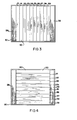
- the first incremental vertical strip 31 is slid over sequentially one increment, thus covering chute 40 that had previously been exposed to blue light and uncovering the next immediate chute 41 for increased exposure, as shown in Fig. 3.
- the blue light setting is then decreased by an increment of 1 to 30 points of density, preferably 2-1/2 to 20, and then the enlarger is activated for the same period of time at the same f-stop. This process is repeated until all of the vertical chutes have been incrementally exposed to decreasing amounts of blue light, with the exposure of each successive chute being decreased over that of the previous chutes, sequentially across the paper.
- the strips 31-39 are removed, leaving in place strips 28 and 29, and placed in the horizontal position of Fig. 4, leaving chute 50 uncovered.
- the tray 30 is placed under the enlarger with the strips 31-39 in their horizontal position as shown, exposing only the top chute 50.
- the enlarger is set with red and blue light completely filtered out, with the green light being free to vary over the anticipated range of values (cyan and yellow filters at maximum settings).
- the enlarger is activated and the chute 50 of the paper 60 is exposed to green light for the same time period at the same f-stop as before.
- the enlarger is deactivated.
- the first incremental horizontal strip 31 is slid up sequentially one increment, thus covering the chute 50 that had previously been exposed to the first setting of green light and exposing the next horizontal chute 51.
- the green light setting is then decreased by an increment of 1 to 30 points of density, preferably 2-1/2 to 10 points, and then the enlarger is activated for the identical exposure time and f-stop as before. This repetitive process is continued until the entire paper 60 has been incrementally exposed to green light one horizontal chute at a time, and sequentially down the paper.
- the photo paper is removed from the tray, developed normally, and dried.
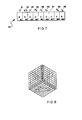
- a photograph 70 is thus produced having 25 to 256, preferably 25 to 100, color squares. These squares vary in color and, in combination, create a color spectrum or matrix. Somewhere on the photograph 70 there should appear neutral color squares of varying shades. The nearest neutral square is used to calibrate the enlarger. Each square is labeled with its particular yellow filter correction and magenta filter correction incremental setting in a matrix form. Thus, the squares vary from (0,0) to (Y max; M max), according to the particular photo paper used, as seen in Fig. 6. As further shown, the matrix squares of the photograph 70 will vary over the color spectrum with distinct areas appearing for the primary colors and their complements, with blends therebetween. In the example given, neutral grey squares could appear, for example, at the square 40,50.
- F ig. 7 is an exposure chart 80. It is divided into 5 to 15, preferably 7 to 12, equal spaces 81-89. Each space 81-89 has a corresponding exposure value 91-99 from 5 to 1/4, preferably 3-1/2 to 3/8. This exposure value is a function of f-stop and time, as is well known in the art. Each space varies in density with space 81 being white, space 89 being black, and the spaces 82-88 each being a different shade of grey. An exposure factor of 1.0 corresponds to an 18% grey shade and would indicate no exposure correction is required.
- the photographer analyzes the photograph 70 and chooses one of the squares that he feels is the aesthetically best shade of grey. After this choice, he matches this grey, on the photograph 70, with one of the greys 82-88 of the exposure chart 80. Once he has found the color density 80 that most nearly matches his selected square of the photograph 70, he has determined the filter settings and the exposure correction of the exposure used for the test negative.
- the exposure setting is ascertained from the particular grey chosen from the exposure chart 80.
- the red, blue, and green filter settings are ascertained from the labeled incremental setting on the color chart 70 which corresponds to the matching shade of grey.
- red and blue would be varied in like manner to blue and green in the description above.
- a slide or negative can be produced for a given film type to give color and exposure correction values without the use of the mechanical tray of F ig. 1 or the strips 31-39.
- the three color correction tri- sectors can.be printed with the neutral color at the (0,0) origin.
- Three matrices result, one with red as the background and green and blue light varied over a selected spectrum, another with green light as the background and blue and red light varied over a selected spectrum, and thirdly, with a blue background varying red and green light over a selected spectrum. This can be done for either slide film or with negatives.
- each axis represents one of the complementary colors being used, that is, yellow, magenta, and cyan.
- the conical shape resulting from rounding the sides of the tri- sectors can be stood on end and photographed.
- the resulting slide or negative can be used as a single exposure calibration for the enlarger, paper, developer, film system. Variations from one roll of film to the next are not considered here and the error resulting therefrom is neglected for sake of speed in printing.
- the corrections can be read directly from the print in like manner as before.
- the tray of Fig. 1 and strips 31-39 can be used to enhance black and white photography as well.
- the negative resulting therefrom can be projected on the tray so that the different shades of grey coincide with the vertical chutes 40-49 of Fig. 3.
- the enlarger is deactivated, and the time of exposure set for 2 to 50 seconds, preferably 10 to 20 seconds.
- the strips are then placed horizontally in the tray after strips 28 and 29 have been set in position leaving one chute open at one end.
- the first chute is exposed at an exposure (f-stop) lower than that anticipated for perfect exposure.
- Each successive strip is moved to expose the next successive chute at a slightly higher f-stop until the entire paper 60 has been exposed.
- the paper is then developed normally and dried.
- the horizontal chute 40-49 that displays the most distinct gradations of grey from white to black is the correct exposure for that film and paper.
Landscapes
- Physics & Mathematics (AREA)
- Spectroscopy & Molecular Physics (AREA)
- General Physics & Mathematics (AREA)
- Silver Salt Photography Or Processing Solution Therefor (AREA)
- Control Of Exposure In Printing And Copying (AREA)
- Projection-Type Copiers In General (AREA)
Applications Claiming Priority (3)
| Application Number | Priority Date | Filing Date | Title |
|---|---|---|---|
| US54872083A | 1983-10-17 | 1983-10-17 | |
| US06/542,720 US4529301A (en) | 1983-10-17 | 1983-10-17 | Color print system |
| US542720 | 2000-05-04 |
Publications (3)
| Publication Number | Publication Date |
|---|---|
| EP0138577A2 true EP0138577A2 (de) | 1985-04-24 |
| EP0138577A3 EP0138577A3 (en) | 1986-12-30 |
| EP0138577B1 EP0138577B1 (de) | 1989-12-27 |
Family
ID=27067120
Family Applications (1)
| Application Number | Title | Priority Date | Filing Date |
|---|---|---|---|
| EP19840306937 Expired EP0138577B1 (de) | 1983-10-17 | 1984-10-11 | Farbkopiersystem |
Country Status (1)
| Country | Link |
|---|---|
| EP (1) | EP0138577B1 (de) |
Family Cites Families (6)
| Publication number | Priority date | Publication date | Assignee | Title |
|---|---|---|---|---|
| US3737224A (en) * | 1971-07-30 | 1973-06-05 | Kms Ind Inc | Apparatus for calculating exposure times and subtractive color filtration in dark room photography |
| CA969400A (en) * | 1971-12-08 | 1975-06-17 | Monrick Holdings Limited | Printing of colour photographs |
| JPS5931056B2 (ja) * | 1975-05-15 | 1984-07-31 | 直司 西川 | カラ−プリントの色補正方法およびカラ−プリントスケ−ル |
| GB2008276B (en) * | 1977-09-21 | 1982-07-14 | Kodak Ltd | Photographic colour printing |
| US4167327A (en) * | 1978-03-22 | 1979-09-11 | Dinatale Robert F | Photographic printing method |
| GB2102978A (en) * | 1981-06-05 | 1983-02-09 | Barrett Gowers Colin Anthony | Improvements in and relating to colour photography |
-
1984
- 1984-10-11 EP EP19840306937 patent/EP0138577B1/de not_active Expired
Also Published As
| Publication number | Publication date |
|---|---|
| EP0138577A3 (en) | 1986-12-30 |
| EP0138577B1 (de) | 1989-12-27 |
Similar Documents
| Publication | Publication Date | Title |
|---|---|---|
| US4529301A (en) | Color print system | |
| EP0857998B1 (de) | Vorrichtung und Verfahren zum Kalibrieren eines Fotobehandlungssystems | |
| US3685900A (en) | Exposure calculator and filter device for darkroom color photography | |
| JPH0640194B2 (ja) | 写真焼付条件の設定管理方法 | |
| AU663805B2 (en) | A full frame/panoramic photographic printing apparatus and method | |
| US3447871A (en) | Photographic colour printers and processes | |
| US4492474A (en) | Method and apparatus for ascertaining color balance of photographic printing paper | |
| GB2158955A (en) | Colour photography | |
| US3967897A (en) | Apparatus and method for evaluating color negatives | |
| US4299479A (en) | Photographic printer with sensitivity control for classification of negatives | |
| EP0138577A2 (de) | Farbkopiersystem | |
| US5815244A (en) | Apparatus for recording information on printing of photographs | |
| EP0376146B1 (de) | Verfahren zum Einstellen der Belichtungsbedingungen in einem photographischen Printer | |
| US6141080A (en) | Control negative for use in setting up exposure condition of photo-printer | |
| KR100244079B1 (ko) | 화상노광수단을 구비한 화상프린터 | |
| US5876876A (en) | Control negative for use in setting up exposure condition of photo-printer | |
| US4885607A (en) | Method and device for selecting the appropriate contrast grade photographic for printing a black and white transparency | |
| EP0935161B1 (de) | Belichtungssteuerung für einen photographischen Drucker | |
| US4901106A (en) | Method of determining exposure time for photographic printer | |
| US5798821A (en) | Copying of film under different conditions | |
| JPH06208178A (ja) | 写真焼付方法 | |
| US5552855A (en) | Detecting apparatus for finding a reference exposure made on a leading and/or trailing portion of a filmstrip | |
| JP2520020B2 (ja) | 画像複写装置の露光量決定方法 | |
| SU1140088A1 (ru) | Способ получени изображени на цветном позитивном фотоматериале | |
| JP2520021B2 (ja) | 画像複写装置の露光量決定方法 |
Legal Events
| Date | Code | Title | Description |
|---|---|---|---|
| PUAI | Public reference made under article 153(3) epc to a published international application that has entered the european phase |
Free format text: ORIGINAL CODE: 0009012 |
|
| AK | Designated contracting states |
Designated state(s): DE GB NL |
|
| PUAL | Search report despatched |
Free format text: ORIGINAL CODE: 0009013 |
|
| AK | Designated contracting states |
Kind code of ref document: A3 Designated state(s): DE GB NL |
|
| 17P | Request for examination filed |
Effective date: 19870525 |
|
| 17Q | First examination report despatched |
Effective date: 19880429 |
|
| GRAA | (expected) grant |
Free format text: ORIGINAL CODE: 0009210 |
|
| AK | Designated contracting states |
Kind code of ref document: B1 Designated state(s): DE GB NL |
|
| REF | Corresponds to: |
Ref document number: 3480876 Country of ref document: DE Date of ref document: 19900201 |
|
| PGFP | Annual fee paid to national office [announced via postgrant information from national office to epo] |
Ref country code: GB Payment date: 19900906 Year of fee payment: 7 |
|
| PLBE | No opposition filed within time limit |
Free format text: ORIGINAL CODE: 0009261 |
|
| STAA | Information on the status of an ep patent application or granted ep patent |
Free format text: STATUS: NO OPPOSITION FILED WITHIN TIME LIMIT |
|
| PGFP | Annual fee paid to national office [announced via postgrant information from national office to epo] |
Ref country code: NL Payment date: 19901031 Year of fee payment: 7 |
|
| PGFP | Annual fee paid to national office [announced via postgrant information from national office to epo] |
Ref country code: DE Payment date: 19901102 Year of fee payment: 7 |
|
| 26N | No opposition filed | ||
| PG25 | Lapsed in a contracting state [announced via postgrant information from national office to epo] |
Ref country code: GB Effective date: 19911011 |
|
| PG25 | Lapsed in a contracting state [announced via postgrant information from national office to epo] |
Ref country code: NL Effective date: 19920501 |
|
| GBPC | Gb: european patent ceased through non-payment of renewal fee | ||
| NLV4 | Nl: lapsed or anulled due to non-payment of the annual fee | ||
| PG25 | Lapsed in a contracting state [announced via postgrant information from national office to epo] |
Ref country code: DE Effective date: 19920701 |