EP0139221A2 - Substituted dihydroazepines useful as calcium channel blockers, methods for preparing and compositions containing the same - Google Patents
Substituted dihydroazepines useful as calcium channel blockers, methods for preparing and compositions containing the same Download PDFInfo
- Publication number
- EP0139221A2 EP0139221A2 EP84111105A EP84111105A EP0139221A2 EP 0139221 A2 EP0139221 A2 EP 0139221A2 EP 84111105 A EP84111105 A EP 84111105A EP 84111105 A EP84111105 A EP 84111105A EP 0139221 A2 EP0139221 A2 EP 0139221A2
- Authority
- EP
- European Patent Office
- Prior art keywords
- carbon atoms
- loweralkyl
- alkyl
- hydrogen
- compound
- Prior art date
- Legal status (The legal status is an assumption and is not a legal conclusion. Google has not performed a legal analysis and makes no representation as to the accuracy of the status listed.)
- Ceased
Links
- 0 C*(C)CC(C1C(*)=C(C)NC(C)=C1*)O Chemical compound C*(C)CC(C1C(*)=C(C)NC(C)=C1*)O 0.000 description 5
Classifications
-
- C—CHEMISTRY; METALLURGY
- C07—ORGANIC CHEMISTRY
- C07D—HETEROCYCLIC COMPOUNDS
- C07D413/00—Heterocyclic compounds containing two or more hetero rings, at least one ring having nitrogen and oxygen atoms as the only ring hetero atoms
- C07D413/02—Heterocyclic compounds containing two or more hetero rings, at least one ring having nitrogen and oxygen atoms as the only ring hetero atoms containing two hetero rings
- C07D413/04—Heterocyclic compounds containing two or more hetero rings, at least one ring having nitrogen and oxygen atoms as the only ring hetero atoms containing two hetero rings directly linked by a ring-member-to-ring-member bond
-
- A—HUMAN NECESSITIES
- A61—MEDICAL OR VETERINARY SCIENCE; HYGIENE
- A61P—SPECIFIC THERAPEUTIC ACTIVITY OF CHEMICAL COMPOUNDS OR MEDICINAL PREPARATIONS
- A61P21/00—Drugs for disorders of the muscular or neuromuscular system
- A61P21/02—Muscle relaxants, e.g. for tetanus or cramps
-
- A—HUMAN NECESSITIES
- A61—MEDICAL OR VETERINARY SCIENCE; HYGIENE
- A61P—SPECIFIC THERAPEUTIC ACTIVITY OF CHEMICAL COMPOUNDS OR MEDICINAL PREPARATIONS
- A61P3/00—Drugs for disorders of the metabolism
-
- A—HUMAN NECESSITIES
- A61—MEDICAL OR VETERINARY SCIENCE; HYGIENE
- A61P—SPECIFIC THERAPEUTIC ACTIVITY OF CHEMICAL COMPOUNDS OR MEDICINAL PREPARATIONS
- A61P3/00—Drugs for disorders of the metabolism
- A61P3/12—Drugs for disorders of the metabolism for electrolyte homeostasis
- A61P3/14—Drugs for disorders of the metabolism for electrolyte homeostasis for calcium homeostasis
-
- A—HUMAN NECESSITIES
- A61—MEDICAL OR VETERINARY SCIENCE; HYGIENE
- A61P—SPECIFIC THERAPEUTIC ACTIVITY OF CHEMICAL COMPOUNDS OR MEDICINAL PREPARATIONS
- A61P9/00—Drugs for disorders of the cardiovascular system
-
- A—HUMAN NECESSITIES
- A61—MEDICAL OR VETERINARY SCIENCE; HYGIENE
- A61P—SPECIFIC THERAPEUTIC ACTIVITY OF CHEMICAL COMPOUNDS OR MEDICINAL PREPARATIONS
- A61P9/00—Drugs for disorders of the cardiovascular system
- A61P9/04—Inotropic agents, i.e. stimulants of cardiac contraction; Drugs for heart failure
-
- A—HUMAN NECESSITIES
- A61—MEDICAL OR VETERINARY SCIENCE; HYGIENE
- A61P—SPECIFIC THERAPEUTIC ACTIVITY OF CHEMICAL COMPOUNDS OR MEDICINAL PREPARATIONS
- A61P9/00—Drugs for disorders of the cardiovascular system
- A61P9/06—Antiarrhythmics
-
- A—HUMAN NECESSITIES
- A61—MEDICAL OR VETERINARY SCIENCE; HYGIENE
- A61P—SPECIFIC THERAPEUTIC ACTIVITY OF CHEMICAL COMPOUNDS OR MEDICINAL PREPARATIONS
- A61P9/00—Drugs for disorders of the cardiovascular system
- A61P9/08—Vasodilators for multiple indications
-
- A—HUMAN NECESSITIES
- A61—MEDICAL OR VETERINARY SCIENCE; HYGIENE
- A61P—SPECIFIC THERAPEUTIC ACTIVITY OF CHEMICAL COMPOUNDS OR MEDICINAL PREPARATIONS
- A61P9/00—Drugs for disorders of the cardiovascular system
- A61P9/10—Drugs for disorders of the cardiovascular system for treating ischaemic or atherosclerotic diseases, e.g. antianginal drugs, coronary vasodilators, drugs for myocardial infarction, retinopathy, cerebrovascula insufficiency, renal arteriosclerosis
-
- A—HUMAN NECESSITIES
- A61—MEDICAL OR VETERINARY SCIENCE; HYGIENE
- A61P—SPECIFIC THERAPEUTIC ACTIVITY OF CHEMICAL COMPOUNDS OR MEDICINAL PREPARATIONS
- A61P9/00—Drugs for disorders of the cardiovascular system
- A61P9/12—Antihypertensives
-
- C—CHEMISTRY; METALLURGY
- C07—ORGANIC CHEMISTRY
- C07D—HETEROCYCLIC COMPOUNDS
- C07D211/00—Heterocyclic compounds containing hydrogenated pyridine rings, not condensed with other rings
- C07D211/04—Heterocyclic compounds containing hydrogenated pyridine rings, not condensed with other rings with only hydrogen or carbon atoms directly attached to the ring nitrogen atom
- C07D211/80—Heterocyclic compounds containing hydrogenated pyridine rings, not condensed with other rings with only hydrogen or carbon atoms directly attached to the ring nitrogen atom having two double bonds between ring members or between ring members and non-ring members
- C07D211/84—Heterocyclic compounds containing hydrogenated pyridine rings, not condensed with other rings with only hydrogen or carbon atoms directly attached to the ring nitrogen atom having two double bonds between ring members or between ring members and non-ring members with hetero atoms or with carbon atoms having three bonds to hetero atoms, with at the most one bond to halogen directly attached to ring carbon atoms
- C07D211/90—Carbon atoms having three bonds to hetero atoms with at the most one bond to halogen
-
- C—CHEMISTRY; METALLURGY
- C07—ORGANIC CHEMISTRY
- C07D—HETEROCYCLIC COMPOUNDS
- C07D223/00—Heterocyclic compounds containing seven-membered rings having one nitrogen atom as the only ring hetero atom
- C07D223/02—Heterocyclic compounds containing seven-membered rings having one nitrogen atom as the only ring hetero atom not condensed with other rings
- C07D223/06—Heterocyclic compounds containing seven-membered rings having one nitrogen atom as the only ring hetero atom not condensed with other rings with hetero atoms or with carbon atoms having three bonds to hetero atoms with at the most one bond to halogen, e.g. ester or nitrile radicals, directly attached to ring carbon atoms
-
- C—CHEMISTRY; METALLURGY
- C07—ORGANIC CHEMISTRY
- C07D—HETEROCYCLIC COMPOUNDS
- C07D487/00—Heterocyclic compounds containing nitrogen atoms as the only ring hetero atoms in the condensed system, not provided for by groups C07D451/00 - C07D477/00
- C07D487/12—Heterocyclic compounds containing nitrogen atoms as the only ring hetero atoms in the condensed system, not provided for by groups C07D451/00 - C07D477/00 in which the condensed system contains three hetero rings
- C07D487/14—Ortho-condensed systems
-
- C—CHEMISTRY; METALLURGY
- C07—ORGANIC CHEMISTRY
- C07D—HETEROCYCLIC COMPOUNDS
- C07D491/00—Heterocyclic compounds containing in the condensed ring system both one or more rings having oxygen atoms as the only ring hetero atoms and one or more rings having nitrogen atoms as the only ring hetero atoms, not provided for by groups C07D451/00 - C07D459/00, C07D463/00, C07D477/00 or C07D489/00
- C07D491/02—Heterocyclic compounds containing in the condensed ring system both one or more rings having oxygen atoms as the only ring hetero atoms and one or more rings having nitrogen atoms as the only ring hetero atoms, not provided for by groups C07D451/00 - C07D459/00, C07D463/00, C07D477/00 or C07D489/00 in which the condensed system contains two hetero rings
- C07D491/04—Ortho-condensed systems
-
- C—CHEMISTRY; METALLURGY
- C07—ORGANIC CHEMISTRY
- C07F—ACYCLIC, CARBOCYCLIC OR HETEROCYCLIC COMPOUNDS CONTAINING ELEMENTS OTHER THAN CARBON, HYDROGEN, HALOGEN, OXYGEN, NITROGEN, SULFUR, SELENIUM OR TELLURIUM
- C07F7/00—Compounds containing elements of Groups 4 or 14 of the Periodic Table
- C07F7/02—Silicon compounds
- C07F7/08—Compounds having one or more C—Si linkages
- C07F7/18—Compounds having one or more C—Si linkages as well as one or more C—O—Si linkages
- C07F7/1804—Compounds having Si-O-C linkages
Landscapes
- Chemical & Material Sciences (AREA)
- Organic Chemistry (AREA)
- Health & Medical Sciences (AREA)
- Engineering & Computer Science (AREA)
- Bioinformatics & Cheminformatics (AREA)
- General Health & Medical Sciences (AREA)
- Animal Behavior & Ethology (AREA)
- Veterinary Medicine (AREA)
- Chemical Kinetics & Catalysis (AREA)
- General Chemical & Material Sciences (AREA)
- Medicinal Chemistry (AREA)
- Nuclear Medicine, Radiotherapy & Molecular Imaging (AREA)
- Public Health (AREA)
- Pharmacology & Pharmacy (AREA)
- Life Sciences & Earth Sciences (AREA)
- Cardiology (AREA)
- Heart & Thoracic Surgery (AREA)
- Diabetes (AREA)
- Obesity (AREA)
- Hematology (AREA)
- Vascular Medicine (AREA)
- Hospice & Palliative Care (AREA)
- Urology & Nephrology (AREA)
- Endocrinology (AREA)
- Rheumatology (AREA)
- Pain & Pain Management (AREA)
- Neurology (AREA)
- Orthopedic Medicine & Surgery (AREA)
- Physical Education & Sports Medicine (AREA)
- Pharmaceuticals Containing Other Organic And Inorganic Compounds (AREA)
- Plural Heterocyclic Compounds (AREA)
- Nitrogen Condensed Heterocyclic Rings (AREA)
- Hydrogenated Pyridines (AREA)
Abstract
Substituted dihydroazepines are disclosed which have the formula:
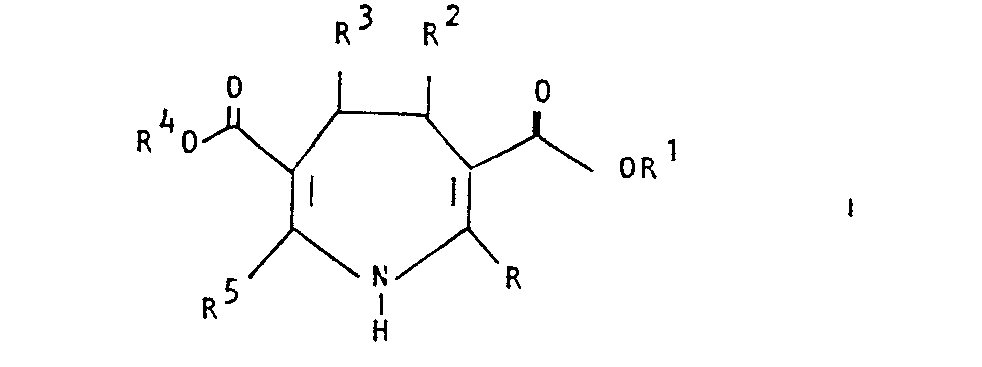
wherein:
- R' and R4 can independently be, e.g., loweralkyl having up to 8 carbon atoms or NR6R7 substituted loweralkyl having up to 5 carbon atoms wherein
- R6 and R7 can independently be, e.g., hydrogen or loweralkyl of C1-C8;
- R2 and R3 can independently be, e.g., hydrogen provided both R2 and R3 are not hydrogen at the same time; pentafluorophenyl;
- substituted aryl wherein the ring contains 6 or 10 carbon atoms and bears 1-3 substituents; and
- R and R5 can independently be hydrogen or strain chain or branched lower alkyl having up to 8 carbon atoms.
Their preparation and the use thereof as calcium channel blockers are also disclosed.
Description
- The pharmacological function and importance of calcium antagonists, or calcium channel blockers, is well known and has been extensively reported in the literature [see; e.g., P. D. Henry, "Comparative Pharmacology of Calcium Antagonists: Nifedipine, Verapamil and Diltiazem", The American Journal of Cardiology, 46, 1047-1058 (1980); K. H. Dangman, et al., "Effects of Nifedipine on Electrical Activity of Cardiac Cells", The American Journal of Cardiology, 46, 1061-1067 (1980); E. Braunwald, "Introduction: Calcium Channel Blockers", The American Journal of Cardiology, 46,1045 (1980); L. D. Hillis, "The New Coronary Vasodilators: Calcium Blockers", J. Card. Med., 5(6), 583 (1980); M. J. Berridge, "Receptors and Calcium Signalling", Trends in Pharmacological Sciences 1, 419, (1980); W. G. Nayler, et al., "Calcium Antagonists: definition and mode of action", Basic Research in Cardiology, 76, No. 1, 1-15 (1981)].
- Dihydropyridines have been employed to prepare dihydroazepines. For example, Anderson, et al. [J. Chem. Soc., 2411 (1965)] disclose solvolysis of esters of dihydropyridines to obtain alkoxy dihydroazepines, and Turchi, et al. [J. Heterocyclic Chem., 17, 1593-95 (1980)] dislcose the preparation of 4,5-dihydroazepines via mesoionic oxazolium 5-oxides by heating primary or secondary a-amino acids in acetic anhydride in the presence of 1,2-dicyanocyclobutene.
- This invention relates to novel substituted dihydroazepines and related compounds which are useful calcium channel blockers and to methods for preparing such compounds. The compounds of this invention can be represented by the general formula:

- R1 and R4 can independently be straight chain and branched loweralkyl or loweralkenyl having up to 8 carbon atoms;
- cycloalkyl of C3-C8;
- loweralkyl having up to 8 carbon atoms substituted with 1 to 2 OH groups, NR6R7 and/or interrupted by 1 to 2 oxygen atoms in the chain wherein R6 and R7 can independently be hydrogen; loweralkyl of C1-C8; aralkyl wherein the aryl group has 6 carbon atoms; or, R6 and R7 with the N atom can be joined together with O, S, SO or SO2 to form a 6-membered ring or with CH2 to form a 5- or 6-membered ring;
- R 2 and R3 can independently be hydrogen
- provided both R2 and R3 are not hydrogen at the same time;
- straight chain and branched loweralkyl, loweralkenyl, or loweralkynyl having up to 8 carbon atoms;
- substituted loweralkyl of C1-C8 wherein the substituent can be trialkylsilyloxy or acyloxy wherein the acyl is derived from a branched or unbranched loweralkanoic acid of
- C2-C8;
- cyano provided that when either R or R is cyano, the other is not hydrogen;
- 1C=ONR6R7 wherein R6 and R are as defined above;
- cycloalkyl of C3-C8;
- aralkyl wherein the aryl ring contains 6 or 10 carbon atoms and the alkyl contains up to 8 carbon atoms, which aryl group can contain up to three substituents selected from C -C alkyl, CF, cyano,3alkoxy containing up to 8 carbon atoms, nitro, halo (F, Br or Cl), CONR6R7 wherein R6 and R7 are as defined above; thioalkyl of up to 8 carbon atoms, SO-alkyl of up to 8 carbon atoms, SO2-alkyl of up to 8 carbon atoms;
- pentafluorophenyl; aryl or substituted aryl wherein the aryl ring contains 6 or 10 carbon atoms and the aryl group can contain up to three substituents selected from C1-C8 alkyl, CF3, cyano, alkoxy containing up to 8 carbon atoms, nitro, halo, (F, Br, or Cl), CONR6R7 wherein R6 and R7 are as defined above, thioalkyl of up to 8 carbon atoms SO-alkyl of up to 8 carbon atoms, SO2-alkyl of up to 8 carbon atoms;
- a heteroaryl group of 5-6 atoms containing up to 3 heteroatoms which can be N, O, or S; substituted heteroaryl wherein the heteroaryl ring contains 5-6 atoms and the substituent can be CF3, thioalkyl of up to 8 carbon atoms;
- benzofused heteroaryl wherein the heterocyclic ring contains 5-6 atoms having up to 3 heteroatoms selected from N, O, or S; or either R2 or R3, together with R or R 4, respectively, can be joined to form a fused ring as shown in the following structures:

- hydrogen;
- straight chain or branched lower alkyl, alkynyl or alkenyl having up to 8 carbon atoms;
- hydroxyalkyl of C1-C8; cyano;
- cycloalkyl of C3-C8; or when R or R5 are hydroxyalkyl they can be respectively joined with either R1 or R 4 to form the structure:

- Preferred compounds of Formula I are those wherein:
- R 1 and R 4 are independently loweralkyl or NR6R7 substituted loweralkyl;
- R2 and R3 are independently hydrogen provided both R2 and R3 are not hydrogen at the same time;
- pentafluorophenyl;
- substituted aryl wherein the ring contains 6 or 10 carbon atoms and bears 1-3 substituents selected from alkyl, CF3, cyano, alkoxy, nitro, halo, CONR6R7 wherein R6 and R 7 are as defined above, thioalkyl, SO-alkyl, or SO2-alkyl;
- acyloxyalkyl; and
- R and R5 are loweralkyl.
- More preferred are those compounds of Formula I wherein:
- R1 and R 4 are independently loweralkyl or
- NR6R7 substituted loweralkyl of C1-C8; either R or R is hydrogen and the other is
- pentafluorophenyl,
- o- or m-trifluoromethylphenyl; and, R and R5 are methyl.
- The products of Formula I can be prepared by the method shown in the following Reaction Scheme wherein R, R1, R2, R 3, R4 and RS are as defined above unless otherwise indicated and X is Cl, Br, I and sulfonate esters such as, for example, methanesulfonate, para-toluenesulfonate, and the like. In the following Reaction Scheme, it should be noted that compound II, when R2=H and X=C1 and when R2=CH3 and X=C1 and, in each instance, R1=R4=CH3 or C2H5 and R=R5=CH3, are known compounds which can be prepared according to Method C in the Reaction Scheme. [See; e.g., E. Benary, Chem. Ber., 44, 489 (1911)].

- In the Reaction Scheme, the applicability of Method B to the synthesis of the desired intermediates (II) depends upon the availability of the required a-keto aldehydes. Many of these aldehydes, particularly when R2=aryl or heteroaryl, can be readily prepared by oxidation, such as with SeO2, and the like, of the corresponding aryl or heteroaryl methyl ketones which are well known in the literature.
- The utilization of Method A depends upon the availability of the required aldehydes and numerous, efficient methods for the synthesis of such aldehydes are well known in the literature. The use of aldehydes wherein R2=aryl or heteroaryl are known from such patents as, for example, Belgian Patents 710,391; 742,737; 750,139; 760,483; 796,274; 796,278; 845,104; 892,441; European Patents 7,293; 9,206; 60,674; Japanese Patents 0,032,183; 0,101,365; 6,140,989; 7,118,565; 8,099,181; Netherlands Patents 6,803,501; 7,303,134; 7,308,059; 7,401,914; U.S. Patents 3,455,939; 3,455,945; 4,258,042; and, West German Patents 2,003,146; 2,117,571; 2,210,667; 2,349,538; 2,837,477; 2,847,236; 2,935,772; 2,949,491; 3,022,030.
- The alteration of R, R l, R 4 and R 5 will depend upon the use of substituted 3-aminocrotonates and/or substituted acetoacetates. These are readily available through standard procedures known in the art [see, for example, M. Twanami et al., Chem. Pharm. Bull., 27, 1426 (1979)] and from procedures disclosed in such patents as, for example, Belgian Patents 816,157; 843,576; 861,964; 879,263; British Patent 2,026,471; Japanese Patents 0,117,778; 2,087,174; 7,031,663; 7,062,258; West German Patent 2,904,552; and, W082/01185,
- As shown in the foregoing Reaction Scheme, dihydropyridine compound II can be rearranged to the substituted dihydroazepine compound I of the invention by reacting compound II in an inert aprotic organic solvent such as, for example, tetrahydrofuran (THF), toluene, dimethoxyethane, and the like, with about two molar equivalents (Meq) of an organometallic reagent that is useful to promote the formation of carbon-to-carbon bonds; e.g.; Grignard reagents, or other organo-magnesium, -copper, -lithium, and the like reagents, but preferably Grignard reagents.
- Compounds of Formula I can exist in different isomeric forms such as, for example, threo, erythro, diastereomeric, enantiomeric, and all such forms are included within the scope of this invention.
- As indicated above, the calcium channel blocking compounds of this invention have a broad pharmacological spectrum in that they have (i) pronounced and long-lasting vasodilating effect accompanied by an energy-sparing effect on cardiac metabolism; (ii) antiarrhythmic action on cardiac muscle; (iii) vascular spasmolytic action; (iv) antihypertensive action; (v) spasmolytic action on the smooth muscle of the gastrointestinal and urogenital tracts and the respiratory system; (vi) are useful cholesterolaemic and lipidaemic agents and for treating cerebral and peripheral circulatory disorders; and (vii) protect ischemic myocardium. Some of these compounds are also useful cardiotonic agents.
- The compounds of the present invention were found to inhibit vascular calcium contraction, reduce cardiac contractile force, inhibit tracheal calcium contraction, inhibit calcium uptake in pituitary cells, and displace tritiated nitrendipine.
- The compounds of the present invention can be administered orally, sublingually, or parenterally i.e. intravenously, interperitoneally, etc. and in any suitable dosage form. The compounds can be offered in a form (a) for oral administration e.q. as tablets in combination with other compounding ingredients customarily used such as talc, vegetable oils, polyols, benzyl alcohols, gums, gelatin, starches and other carriers; dissolved or dispersed or emulsified in a suitable liquid carrier; in capsules or encapsulated in a suitable encapsulating material; or (b) for sublingual administration; e.g., nitroglycerine tablets, lactose tablets, and the like, for rapid dissolution or high molecular weight methylcellulose tablets, carboxymethylcellulose tablets, and the like, for slower, time-releasing delivery; or, (c) for parenteral administration e.g. dissolved or dispersed in a suitable liquid carrier or emulsified. The ratio of active compound to compounding ingredients i.e. carrier, diluent etc. will vary as the dosage form requires. Whatever dosage form is used, the amount of compound of the present invention administered should be sufficient to achieve the pharmaceutical and/or therapeutic effect desired or required in the patient. Generally, doses of the compounds of the invention of from about 300 to about 3000 mg per day may be used, preferably about 500 to about 1500 mg per day. Dosage may be single or multiple depending on the daily total required and the unit dosage. Of course, the dose will vary depending upon the nature and severity of disease, weight of the patient, and other factors which a person skilled in the art will recognize.
- It is often advantageous to administer compounds of this invention in combination with angiotensin converting enzyme inhibitors and/or antihypertensives and/or diuretics and/or B-blocking agents. For example, the compounds of this invention can be given in combination with such compounds as enalapril, hydralazine hydrochloride, hydrochlorothiazide, methyldopa, timolol, and-the like, as well as admixtures and combinations thereof.
- Typically, the individual daily dosages for these combinations can range from about one-fifth of the minimally recommended clinical dosages to the maximum recommended levels for the entities when they are given singly. Naturally, these dose ranges can be adjusted on a unit basis so necessary to permit divided daily dosages and, as noted above, the dose will vary depending on the nature and severity of the disease, weight of patient, special diets and other factors.
- The following Examples are provided to further illustrate the best mode currently known for obtaining the compounds of the invention, but are not to be construed as being limitative of the invention. Unless otherwise indicated, all temperatures are in °C.

- Phenyl glyoxal (1.52 g), methyl acetoacetate (1.16 g), and methyl aminocrotonate (1.15 g) were refluxed in 5 mL of isopropyl alcohol for 12 hours. The resulting product was evaporated and chromatographed (silica, 1% MeOH in CH2Cl2) and gave, upon concentration of appropriate fractions, 0.50 grams of product 1. m.p. 189-191°C.

- To 360 mg. of the ketone 1 in 3 mL of methanol there was added with stirring at 0°C under argon 40.0 mg of NaBH4. Stirring was continued for 1 hour followed by addition of saturated aqueous sodium potassium tartrate and ethyl acetate. The organic portion was separated and the aqueous phase extracted with 3 more portions of ethyl acetate. The combined organic phases were washed with H20 and brine, dried (MgSO4), filtered and concentrated to give 350 mg of crude alcohol which was crystallized to give product 2 from CH2C12/hexane. m.p. 179-181°C.

- To 100 mg of the alcohol 2 in 2.0 mL of dry CH2Cl2 at -20°C under argon there was added with stirring 0.186 mL of triethylamine in 3 equal portions followed, after each addition, by 3 equal portions of 0.105 mL of methanesulfonyl chloride. Stirring was continued for an additional 1/2 hour. The whole was then diluted with ethyl acetate and washed with 5% aqueous sodium bicarbonate and saturated aqueous NaCl. The combined organic extracts were then dried (MgSO4), filtered, and evaporated to give the crude mesylate 3 (100 mgs) IR= 1200 cm-1.


- Methyl acetoacetate (1.116 g), 1.15 grams of methyl aminocrotonate and 0.90 gram of glyceraldehyde were stirred in 5 mL of THF for 12 hours at 65°C. The whole was then diluted in CH2Cl2 and washed with saturated aqueous NaCl. The organic phase was dried, (Na2SO4) filtered, and evaporated. The crude mixture was chromatographed (silica; 10% methanol in CH2Cl2) to give 280 mg of product 4. NMR δ= 4.00 (bd, J=6Hz, 1H).

- To 280 mg of the diol 4 in 1.0 mL of pyridine with stirring at 0°C there was added 0.15 mL of pivaloylchloride. After 1 hour at 0°C, the mixture was diluted with CH2C12 and washed with l.ON HC1, 5% aqueous NaHCO3, and brine, then dried (MgSO4), filtered, and evaporated to give 350 mg of product 5 NMR δ=4.20 (d, J=6.0 Hz, 1H).

- To 350 mg of the pivaloate 5 in 1.5 mL of CH2Cl2 at -20°C under argon there was added 0.21 mL of triethylamine and 0.12 mL of methanesulfonyl chloride. After stirring at -20°C for 15 minutes, the mixture was diluted with ethyl acetate, and washed with 5% aqueous NaHCO3, and saturated aqueous NaCl. The organics were dried (MgSO4) and concentrated to give product 6 (360 mg). This foam was dissolved in dry benzene (20 mL) and concentrated under vacuum.

- To 359 mg of diol 4 suspended in 2.0 mL of CH2Cl2 there was added in sequence 10 mg of N,N-dimethylaminopyridine (DMAP), 0.33 mL of triethylamine, and 190 mg of t-butyldimethyl chlorosilane. After stirring at 25°C for 6 hours, the reaction was diluted with CH2Cl2 and washed with H20, 1.0 N HC1, saturated aqueous NaHCO3 and brine. The organic portion was dried (MgSO4), filtered, and concentrated to give a pale yellow solid which was then triturated with ether to give product 7 (260 mg). NMR δ=4.20 (bd, J=4.5 Hz, 1H), (90 MHz), (CDCl3).

- To 500 mg of monosilyl ether 7 in 2.0 mL of CH2C12 and 0.50 mL of dimethylformamide stirred and cooled to -15°C there was added 2 aliquots each of triethylamine (0.26 mL) followed by methanesulfonyl chloride (0.145 mL). After 40 minutes, (Temp. -10°C), the reaction was diluted with CH2Cl2 and washed with 1.0 N HC1, 5% aqueous NaHCO3, and brine. The organic portion was dried, filtered and concentrated. Benzene (20 mL) was added and the crude product reconcentrated to give product 8 in a form suitable for subsequent use.

- To 43 mL of 1.0 M vinyl magnesium bromide solution in THF cooled to -78°C under an Argon atmosphere there was added dropwise 5.00 grams (3.75 mL) of o-trifluoromethyl benzaldehyde. This was warmed to 0°C and quenched with saturated aqueous ammonium chloride. The whole was extracted with ethyl acetate, and the organic portion washed with H20 and brine, then dried (MgSO4), filtered, and evaporated to a give a crude oily alcohol (5.05 grams).
- The crude alcohol was stirred in 25 mL of dry DMF and treated with 5.83 grams of imidazole and 8.90 mL of tert-butyldiphenyl chlorosilane under argon for 18 hrs at 25°C. The mixture was then dissolved in ether and washed with H20, 1.2 M HCl, 5% NaHC03, and brine, then dried (MgS04), filtered, and evaporated to give a crude silyl ether 12.65 grams.
- The crude silyl ether was dissolved in 200 mL of CH2Cl2 and treated with 2 mg of Sudan III. This was cooled to -78°C and ozone was introduced through a gas inlet tube. The reaction was stopped when the red color of SUDAN III disappeared by bubbling 02 through and adding 5 mL of dimethyl sulfide. The reaction was allowed to reach 25°C and washed with H20 and brine, then dried (MgSO4), filtered, and evaporated to give a crude aldehyde (12.00 grams)
- The crude aldehyde was dissolved in 25 mL of isopropyl alcohol and treated with 3.70 grams of methyl acetoacetate and 3.70 grams of methyl aminocrotonate. The mixture was refluxed for 16 hrs and evaporated to dryness under reduced pressure to give crude dihydropyridine (18.5 grams).
- The crude dihydropyridine was dissolved in 200 mL CH2C12 in a nalgene bottle and stirred at -50°C, pyridinium hydrogen fluoride complex was added and stirring continued for 3 hrs. Saturated aqueous NaHC03 was added and the organic portion was separated and washed with 1.2 M HC1, H20, 5% NaHCO3, dried (MgS04) filtered, and evaporated to give 9 which was recrystallized from ethyl acetate- hexane to give a white solid product.
- 90 MHz'HNMR δ=4.20 (d,J=5.5 Hz, 1H, pyridine CH) (CDC13/DMSOd6)

- Following the procedure of Example 3, but substituting compound 9 as the starting material, the corresponding mesylate 10 was obtained.
- Phenyl magnesium bromide (2.68 mL) in diethylether (3.0 M) was added dropwise to 1.00 gram of dimethyl-2,5-dimethyl-4-chloromethyl-1,4-dihydropyridine-3,5-dicarboxylate lla (3.66 mm) [See; e.g., E. Benary, Chem. Ber., 44, 489 (1911)] in dry tetrahydrofuran under an argon atmosphere at -78°C. Stirring was continued at -78° for 15 minutes followed by warming to -10°C for 1 hour. The excess Grignard reagent was quenched with saturated aqueous ammonium chloride. Extraction with ethyl acetate (3 x 75 mL), washing the organic portion with saturated aqueous NaCl, drying (MgSO4), filtering, and evaporation gave crude product. Crystallization from toluene/hexane (1/1) gave 1.10 gr (92%) of pure dimethyl-4-phenyl-4,5-dihydro-2,7-dimethylazepine-3,6-dicarboxylate (11).
- Following the same procedure as described in Example 11 above, additional compounds of Formula I were obtained and are set forth in Table I below showing the organometallic reagents, solvents and temperatures employed and the products obtained. In Table I, the amount of organometallic employed was 2.2 Meq., Ph is phenyl, Ar is aryl, Me is methyl, Ms is mesylate (methansulfonate), Et is ethyl, THF is tetrahydrofuran, and DMSO is dimethylsulfoxide.
- Also, in Table I, the Starting Materials are either products 1-11 obtained from the Examples hereinabove or known compounds; i.e., llb [dimethyl -4-(1-chloroethyl)-1,4-dihydropyridine-3,5-dicarboxylate]. [See, e.g., E. Benary, Chem. Ber., 44, 489 (1911)]. Further, in Table I, unless otherwise indicated, R=R5=methyl and R l=R 4=methyl.


- Physical data for the Formula I compounds shown in Table I are set forth in Table II below:


- To 65.0 mg of the silyl ether (29) in 0.5 ml of anhydrous THF at 25°, there was added 0.42 mL of 1M tetrabutylammonium fluoride in THF. The mixture was stirred for 12 hours, then diluted with ethyl acetate and saturated aqueous ammonium chloride. The organic layer was separated, washed with water and brine then dried (MgS04) and concentrated to give a pale yellow solid.
- NMR: δ=4.47 (d, J=3 Hz, 1H, ArCH)
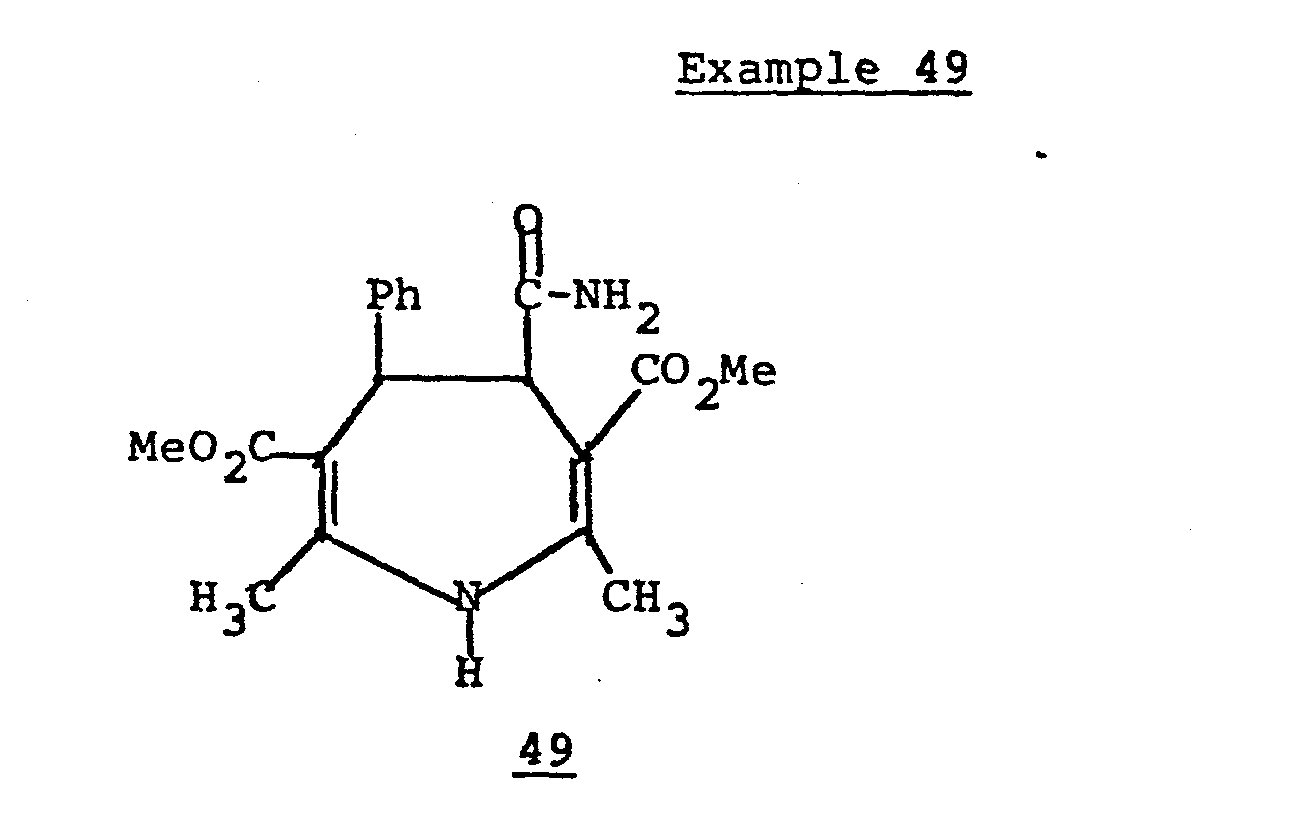
- To 130 mg of the nitrile 38 in 2 mL of THF/MeOH (1/1) under an Argon atmosphere at 20°C there was added 0.76 mL of 1M aqueous NaOH and 0.2 mL of 30% H202 in H20. After 6 hours of stirring, the whole was cooled to 0°C and sodium bisulfite was added. The whole was warmed to room temperature and then extracted with ethyl acetate. The organic portion was washed with water and brine, dried over anhydrous MgSO4, filtered, and then evaporated to an oily solid. This solid was chromatographed (silica, 7% methanol in CH2C12) and the appropriate fractions concentrated to give a solid which was then dried over P205 for 15 hours at room temperature.
-


- To 18.4 mmol of pyrrole magnesium chloride (generated from pyrrole and MeMgCl at -30°C) in 20 mL of toluene there was added 1.00 grams of 9 in 10 mL of toluene at -78°C. This was stirred at -78°C for 1 hr and warmed to -5°C for 3 hrs. The excess Grignard reagent was quenched with saturated aqueous NH4Cl and extracted with ethyl acetate. The organic portion was washed with brine then dried (MgS04), filtered, and evaporated to a crude solid. This solid was recrystalized from ethylacetate-hexane and then from methanol to give 50 as a white solid (500 mg) product. H NMR (90 MHz, CDCl3)δ =3.76 (M, 1H, C-4 H).

- To a hot solution of mesylate 10 in ethanol there can be added guanidine (1.25 m. equiv.) followed by the addition of a large excess of NaBH4 (5 m. equiv.) portionwise at 15 minute intervals over the refluxing time period of 90 minutes. The mixture can then be poured into water and then extracted with CH2C12. After drying (Na2SO4) and concentration, the product can be crystallized from toluene/ hexane to leave 51, the same product as that prepared in Example 25.
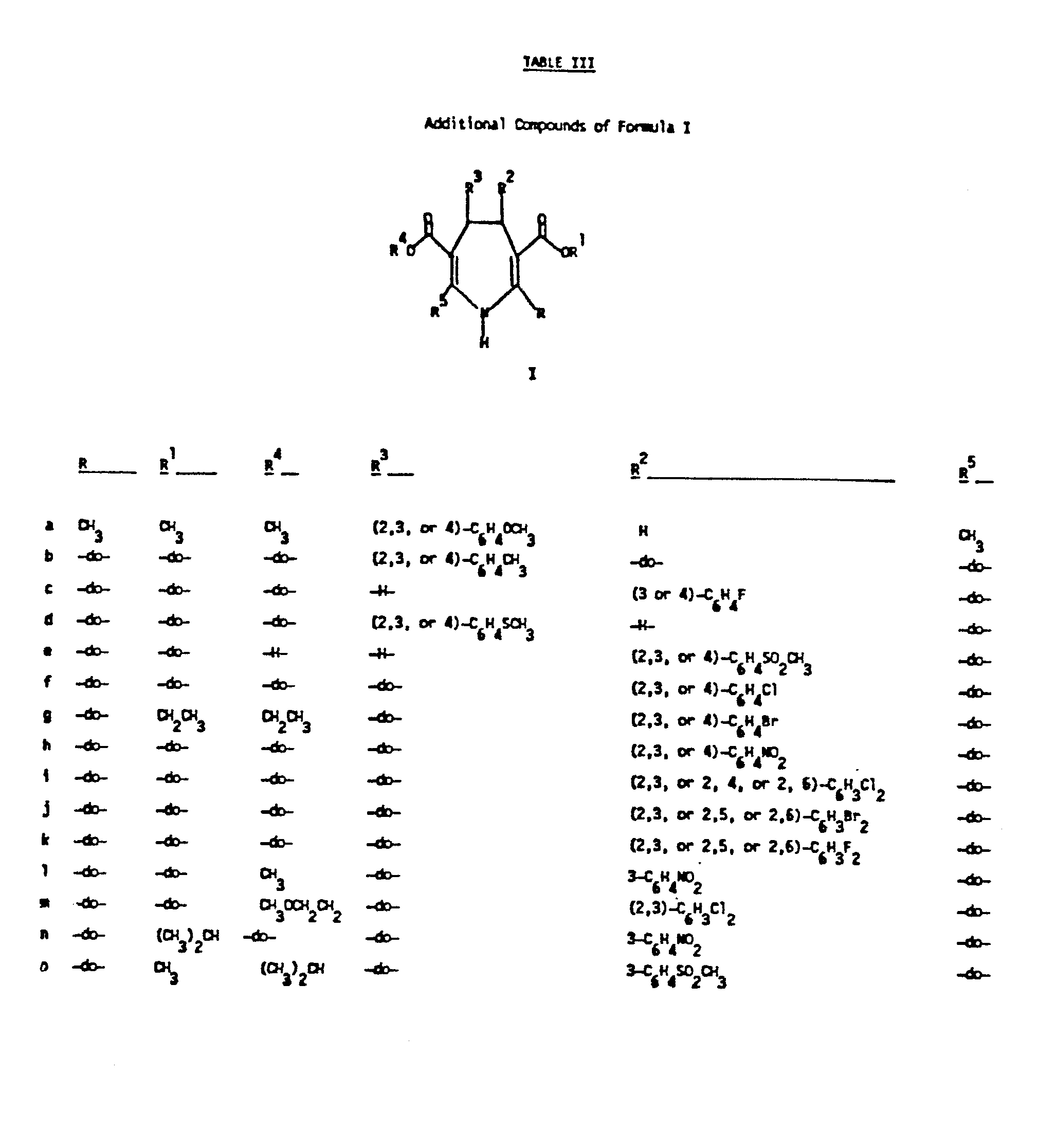
- Following the same procedures as described in Example 11 above and shown in tabulated Examples 12-47, and using procedures similar to those in Examples 1-10 for preparing the required Starting Materials and as described in connection with Methods A, B and C of the Reaction Scheme, additional compounds of Formula I can be obtained as illustrated in Table III below:

Claims (9)
1. A compound having the formula:

wherein:
R1 and R4 can independently be straight chain and branched loweralkyl or loweralkenyl having up to 8 carbon atoms;
cycloalkyl of C 3-C 8;
loweralkyl having up to 5 carbon atoms substituted with 1 to 2 OH groups, NR6R7 and/or interrupted by 1 to 2 oxygen atoms in the chain wherein R6 and R7 can independently be hydrogen;-loweralkyl of C1-C8; aralkyl wherein the aryl group has 6 carbon atoms; or, R6 and R7 with the N atom can be joined together with O, S, SO, SO2 to form a 6-membered ring or with CH2 to form a 5- or 6-membered ring;
R 2 and R3 can independently be hydrogen .
provided both R2 and R3 are not hydrogen at the same time;
straight chain and branched loweralkyl, loweralkenyl, or loweralkynyl having up to 8 carbon atoms;
substituted loweralkyl of C1-C8 wherein the substituent can be trialkylsilyloxy or acyloxy wherein the acyl group is derived from a branched or unbranched loweralkanoic acid of C2-C8;
cyano provided that when either R or R
is cyano, the other is not hydrogen; C=ONR6R7 wherein R6 and R7 are as
defined above;
cycloalkyl of C3-C 8;
aralkyl wherein the aryl ring contains 6 or 10 carbon atoms and the alkyl contains up to 8 carbon atoms, which aryl group can contain up to three substituents selected from C1-C8 alkyl, CF3, cyano, alkoxy
containing up to 8 carbon atoms, nitro, halo (F, Br or Cl), CONR6R7 wherein R6 and
R7 are as defined above; thioalkyl of up
to 8 carbon atoms, SO-alkyl of up to 8 carbon atoms, SO2-alkyl of up to 8 carbon atoms;
unsubstituted aryl wherein the ring contains 6 or 10 carbon atoms;
pentafluorophenyl; substituted aryl wherein the aryl ring contains 6 or 10 carbon atoms and the aryl group can contain up to three substituents selected from C1-C8 alkyl, CF3, cyano, alkoxy containing up to 8 carbon atoms, nitro, halo, (F, Br or Cl), CONR6R7 wherein R6 and R7 are as defined above, thioalkyl of up to 8 carbon atoms,
SO-alkyl of up to 8 carbon atoms,
SO2-alkyl of up to 8 carbon atoms;
a heteroaryl group of 5-6 atoms containing up to 3 heteroatoms which can be N, O, or S; substituted heteroaryl wherein the heteroaryl ring contains 5-6 atoms and the substituent can be CF3, thioalkyl of up to 8 carbon atoms;
benzofused heteroaryl wherein the heterocyclic ring contains 5-6 atoms having up to 3 heteroatoms selected from N, O, or S; or either R 2 or R 3, together with R 1 or R 4, respectively, can be joined to form a fused ring as shown in the following structure:

wherein R8 can be hydrogen or loweralkyl of C1-C8; R and R can independently be hydrogen;
straight chain or branched lower alkyl, alkynyl, or alkenyl having up to 8 carbon atoms;
hydroxyalkyl of C1-C8; cyano
cycloalkyl of C3-C8;
or when R or R5 are hydroxyalkyl they can be respectively joined with either R1 or R4 to form the structure:
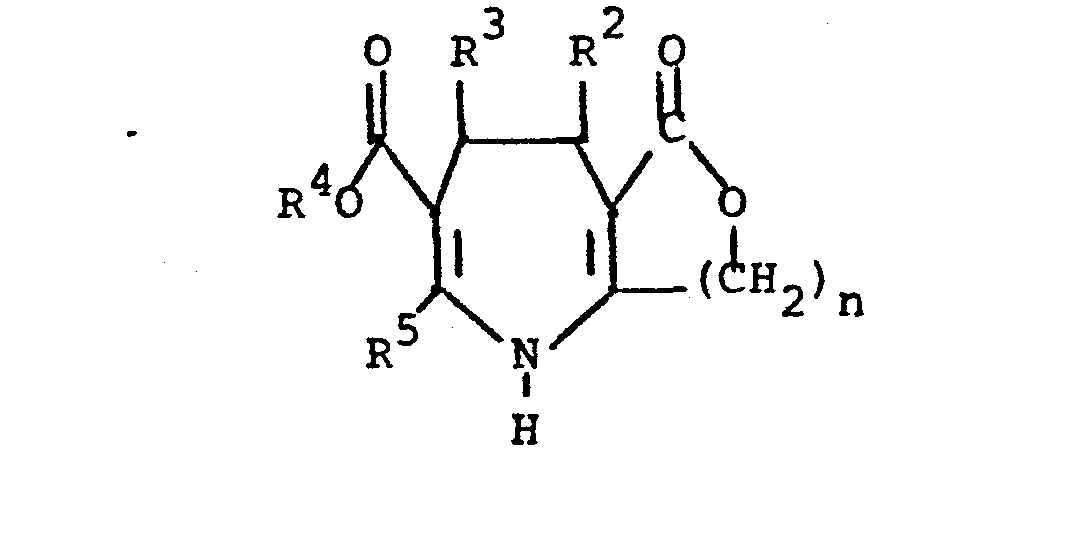
wherein n is 1 or 2.
2. A compound of Claim 1 wherein:
R 1 and R 4 are independently loweralkyl or NR 6 R 7 substituted loweralkyl;
R 2 and R 3 are independently hydrogen provided both R 2 and R3 are not hydrogen at the same time;
pentafluorophenyl;
substituted aryl wherein the ring contains 6 or 10 carbon atoms and bears 1-3 substituents selected from alkyl, CF3, cyano, alkoxy, nitro, halo, CONR6R7 wherein R6 and R7 are as defined above, thioalkyl, SO-alkyl, or SO2-alkyl;
acyloxyalkyl; and
R and R5 are loweralkyl.
3. A compound of Claim 1 wherein:
R 1 and R 4 are independently loweralkyl or NR6R7 substituted loweralkyl;
either R 2 or R3 is hydrogen and the other is pentafluorophenyl, o- or m-trifluoromethylphenyl; and,
R and R5 are methyl.
4. A compound having the formula:

or, a compound having the formula:

or a compound having the formula:

5. A compound having the formula:

wherein:
R1 and R4 can each independently be methyl or ethyl; and,
R 3 is o- or m- trifluoromethylphenyl or pentafluorophenyl.
6. A pharmaceutical composition useful for providing a cardiotonic effect, a vasodilating effect, an antiarrhythmic action on cardiac muscle, vascular spasmolytic action, antihypertensive effect, spasmolytic action on the smooth muscle of the gastrointestinal and urogenital tracts and the respiratory system, for treating cerebral and peripheral circulation disorders and protecting ischemic myocardium which composition consists essentially of a pharmaceutically acceptable carrier and a pharmaceutically effective amount of a compound of Claim 1.
7. The composition of Claim 6 wherein said pharmaceutical composition includes an additional pharmaceutical agent selected from the group: an angiotensin converting enzyme inhibitor, an antihypertensive, a diuretic, and a B-blocker as well as admixtures and combinations thereof.
8. The composition of Claim 7 wherein said additional pharmaceutical agent is selected from the group: enalapril, hydralazine hydrochloride, hydrochlorothiazide, and timolol.
9. A process for preparing a compound having the formula:

wherein R, R1, R2, R 3, R4 and R5 are as defined in Claim 1 which process comprises reacting a compound having the formula:

wherein R, R1, R2, R 4 and R 5 are as defined in Claim 1 and X is chlorine, bromine, iodine, or sulfonate esters with an organometallic reagent in an inert, aprotic organic solvent to produce said Formula I compound.
Applications Claiming Priority (2)
| Application Number | Priority Date | Filing Date | Title |
|---|---|---|---|
| US06/535,502 US4677101A (en) | 1983-09-26 | 1983-09-26 | Substituted dihydroazepines useful as calcium channel blockers |
| US535502 | 1983-09-26 |
Publications (2)
| Publication Number | Publication Date |
|---|---|
| EP0139221A2 true EP0139221A2 (en) | 1985-05-02 |
| EP0139221A3 EP0139221A3 (en) | 1985-08-07 |
Family
ID=24134514
Family Applications (1)
| Application Number | Title | Priority Date | Filing Date |
|---|---|---|---|
| EP84111105A Ceased EP0139221A3 (en) | 1983-09-26 | 1984-09-18 | Substituted dihydroazepines useful as calcium channel blockers, methods for preparing and compositions containing the same |
Country Status (3)
| Country | Link |
|---|---|
| US (1) | US4677101A (en) |
| EP (1) | EP0139221A3 (en) |
| JP (1) | JPS6092267A (en) |
Families Citing this family (11)
| Publication number | Priority date | Publication date | Assignee | Title |
|---|---|---|---|---|
| US5688938A (en) * | 1991-08-23 | 1997-11-18 | The Brigham & Women's Hospital, Inc. | Calcium receptor-active molecules |
| US6031003A (en) * | 1991-08-23 | 2000-02-29 | Nps Pharmaceuticals, Inc. | Calcium receptor-active molecules |
| US5763569A (en) * | 1991-08-23 | 1998-06-09 | The Brigham And Women's Hospital, Inc | Calcium receptor-active molecules |
| US6001884A (en) * | 1991-08-23 | 1999-12-14 | Nps Pharmaceuticals, Inc. | Calcium receptor-active molecules |
| US6011068A (en) * | 1991-08-23 | 2000-01-04 | Nps Pharmaceuticals, Inc. | Calcium receptor-active molecules |
| US5858684A (en) * | 1991-08-23 | 1999-01-12 | The Brigham And Women's Hospital, Inc. | Method of screening calcium receptor-active molecules |
| US6313146B1 (en) | 1991-08-23 | 2001-11-06 | Nps Pharmaceuticals, Inc. | Calcium receptor-active molecules |
| US5962314A (en) * | 1993-02-23 | 1999-10-05 | Nps Pharmaceuticals, Inc. | Calcium receptor-active molecules |
| EP1203761B1 (en) | 1994-10-21 | 2005-01-19 | Nps Pharmaceuticals, Inc. | Calcium receptor-active compounds |
| DK0907631T3 (en) | 1996-05-01 | 2003-09-22 | Nps Pharma Inc | Inorganic ion receptor active compounds |
| US8853189B2 (en) | 2012-05-31 | 2014-10-07 | Prima Innovations, Llc | Antispasmodic 1,2-Diols and 1,2,3-triols |
Family Cites Families (3)
| Publication number | Priority date | Publication date | Assignee | Title |
|---|---|---|---|---|
| US3441648A (en) * | 1967-02-07 | 1969-04-29 | Smithkline Corp | Compositions and methods for lowering blood pressure with 1,4-dihydropyridines |
| DE1670827C3 (en) * | 1967-03-20 | 1974-10-24 | Bayer Ag, 5090 Leverkusen | 4- (2'-nitrophenyl) -2,6-dimethyl-3,5-dicarbmethoxy-1,4-dihydropyridine |
| DE2841667A1 (en) * | 1978-09-25 | 1980-04-10 | Bayer Ag | FLUORINE 1,4-DIHYDROPYRIDINE, METHOD FOR THE PRODUCTION THEREOF AND THEIR USE AS A MEDICINAL PRODUCT |
-
1983
- 1983-09-26 US US06/535,502 patent/US4677101A/en not_active Expired - Fee Related
-
1984
- 1984-09-18 EP EP84111105A patent/EP0139221A3/en not_active Ceased
- 1984-09-21 JP JP59196953A patent/JPS6092267A/en active Pending
Non-Patent Citations (2)
| Title |
|---|
| CHEMICAL ABSTRACTS, vol. 61, no. 11, November 23, 1964, columns 13280g-13281b Columbus Ohio, US M. ANDERSON et al.: "Preparation and reactions of some derivatives of azepine" & Proc. Chem. Soc. (Aug), 263-4 (1964) * |
| CHEMICAL ABSTRACTS, vol. 92, no. 21, May 26, 1980, page 634, column 2, abstract 180 973a Columbus, Ohio, US B. GREGORY et al .: "Intramolecular Michael-type additions" & J. Chem. Soc. Chem. Commun., (23), 1070-1 (1979) * |
Also Published As
| Publication number | Publication date |
|---|---|
| JPS6092267A (en) | 1985-05-23 |
| EP0139221A3 (en) | 1985-08-07 |
| US4677101A (en) | 1987-06-30 |
Similar Documents
| Publication | Publication Date | Title |
|---|---|---|
| KR880002357B1 (en) | Process for preparing dihydropyridine derivatives | |
| US4430333A (en) | Dihydropyridine anti-ischaemic and antihypertensive agents | |
| US4675321A (en) | Substituted pyrimidines useful as calcium channel blockers | |
| US4735956A (en) | Certain 1,4-dihydro-2,6-di-lower hydrocarbyl-4-heterocyclic-3,5-pyridine dicarboxylates which are useful as calcium channel blockers | |
| JPS6132308B2 (en) | ||
| US4677101A (en) | Substituted dihydroazepines useful as calcium channel blockers | |
| US4587253A (en) | Bridged pyridine compounds useful as calcium channel blockers and analgesics | |
| FR2566404A1 (en) | NOVEL 1,4-DIHYDROPYRIDINE DERIVATIVES, THEIR SALTS, PROCESS FOR THEIR PREPARATION, AND PHARMACEUTICAL COMPOSITIONS CONTAINING THEM | |
| US4808718A (en) | Fused polycyclic and bridged compounds useful as calcium channel blockers | |
| HK65184A (en) | Dihydropyridine derivatives, process for their production and pharmaceutical compositions containing them | |
| EP0107619B1 (en) | Dihydropyrazolo(3,4-b)pyridine derivatives and production thereof | |
| JPS6026106B2 (en) | Aminoalkylidene amino-1,4-dihydropyridine and its manufacturing method | |
| IE51267B1 (en) | 1,4-dihydropyridine compounds having different substituents in the 2-position and 6-position,their production,and their medicinal use | |
| HU189849B (en) | Process for producing 1,4-dihydropyridine-lactone derivatives substituted with chromone - and thiochromone-groups | |
| EP0161917A2 (en) | Dihydropyridines | |
| EP0257616A2 (en) | Dihydropyridine derivates and pharmaceutical composition thereof | |
| US4136188A (en) | Treatment of diabetes with 2-substituted-1,3-diazacyclic compounds | |
| US4599341A (en) | Substituted and bridged pyridines useful as calcium channel blockers | |
| US4548941A (en) | 1,5-Methano-1H-4-benzazonine dicarboxylates, process for preparing and use as calcium blockers | |
| US4280998A (en) | 1,4-Dihydropyridazine-3-carboxylic acid derivatives, a process for their preparation and their use as antihypertensives | |
| EP0212340A1 (en) | 2-(heteroalkyl)-1,4-dihydropyridines, process for their preparations and pharmaceutical compositions containing them | |
| US4532237A (en) | Substituted and bridged pyridines useful as calcium channel blockers | |
| US4677102A (en) | Substituted diazapines and derivatives thereof useful in the treatment of cardiovascular disorders | |
| US4348395A (en) | 1,4-Dihydropyridazine compounds | |
| JPH0342276B2 (en) |
Legal Events
| Date | Code | Title | Description |
|---|---|---|---|
| PUAI | Public reference made under article 153(3) epc to a published international application that has entered the european phase |
Free format text: ORIGINAL CODE: 0009012 |
|
| AK | Designated contracting states |
Designated state(s): BE CH DE FR GB IT LI NL |
|
| ITCL | It: translation for ep claims filed |
Representative=s name: SOCIETA' ITALIANA BREVETTI S.P.A. |
|
| PUAL | Search report despatched |
Free format text: ORIGINAL CODE: 0009013 |
|
| AK | Designated contracting states |
Designated state(s): BE CH DE FR GB IT LI NL |
|
| 17P | Request for examination filed |
Effective date: 19860207 |
|
| 17Q | First examination report despatched |
Effective date: 19880210 |
|
| STAA | Information on the status of an ep patent application or granted ep patent |
Free format text: STATUS: THE APPLICATION HAS BEEN REFUSED |
|
| 18R | Application refused |
Effective date: 19910902 |