EP0139313B1 - Systeme zur Blindunterschrift - Google Patents
Systeme zur Blindunterschrift Download PDFInfo
- Publication number
- EP0139313B1 EP0139313B1 EP84201160A EP84201160A EP0139313B1 EP 0139313 B1 EP0139313 B1 EP 0139313B1 EP 84201160 A EP84201160 A EP 84201160A EP 84201160 A EP84201160 A EP 84201160A EP 0139313 B1 EP0139313 B1 EP 0139313B1
- Authority
- EP
- European Patent Office
- Prior art keywords
- party
- key
- provider
- signing
- data
- Prior art date
- Legal status (The legal status is an assumption and is not a legal conclusion. Google has not performed a legal analysis and makes no representation as to the accuracy of the status listed.)
- Expired - Lifetime
Links
Images


Classifications
-
- G—PHYSICS
- G07—CHECKING-DEVICES
- G07F—COIN-FREED OR LIKE APPARATUS
- G07F7/00—Mechanisms actuated by objects other than coins to free or to actuate vending, hiring, coin or paper currency dispensing or refunding apparatus
- G07F7/08—Mechanisms actuated by objects other than coins to free or to actuate vending, hiring, coin or paper currency dispensing or refunding apparatus by coded identity card or credit card or other personal identification means
- G07F7/10—Mechanisms actuated by objects other than coins to free or to actuate vending, hiring, coin or paper currency dispensing or refunding apparatus by coded identity card or credit card or other personal identification means together with a coded signal, e.g. in the form of personal identification information, like personal identification number [PIN] or biometric data
- G07F7/1016—Devices or methods for securing the PIN and other transaction-data, e.g. by encryption
-
- H—ELECTRICITY
- H04—ELECTRIC COMMUNICATION TECHNIQUE
- H04L—TRANSMISSION OF DIGITAL INFORMATION, e.g. TELEGRAPHIC COMMUNICATION
- H04L9/00—Cryptographic mechanisms or cryptographic arrangements for secret or secure communications; Network security protocols
- H04L9/32—Cryptographic mechanisms or cryptographic arrangements for secret or secure communications; Network security protocols including means for verifying the identity or authority of a user of the system or for message authentication, e.g. authorization, entity authentication, data integrity or data verification, non-repudiation, key authentication or verification of credentials
- H04L9/3247—Cryptographic mechanisms or cryptographic arrangements for secret or secure communications; Network security protocols including means for verifying the identity or authority of a user of the system or for message authentication, e.g. authorization, entity authentication, data integrity or data verification, non-repudiation, key authentication or verification of credentials involving digital signatures
- H04L9/3257—Cryptographic mechanisms or cryptographic arrangements for secret or secure communications; Network security protocols including means for verifying the identity or authority of a user of the system or for message authentication, e.g. authorization, entity authentication, data integrity or data verification, non-repudiation, key authentication or verification of credentials involving digital signatures using blind signatures
-
- G—PHYSICS
- G06—COMPUTING OR CALCULATING; COUNTING
- G06K—GRAPHICAL DATA READING; PRESENTATION OF DATA; RECORD CARRIERS; HANDLING RECORD CARRIERS
- G06K7/00—Methods or arrangements for sensing record carriers, e.g. for reading patterns
Definitions
- the invention relates to a digital signature cryptographic method for at least a first provider party and a second provider party to develop digital signatures checkable as corresponding to a public key of a signing party, the method comprising the steps of: communicating data between the first provider party and the signing party where data sent by the first provider party is responsive to at least a first key of the first provider party and data sent by the signing party is responsive to at least the private key of the signing party which is related to the public key of the signing party; communicating data between the second provider party and the signing party where data sent by the second provider party is responsive to at least a second key of the second provider party and data sent by the signing party is responsive to at least the private key of the signing party which is related to the public key of the signing party; processing responsive to the first key by the first provider party of data received in the communication to produce a first digital signature checkable as related to the public key of the signing party; processing responsive to the second key by the second provider party of data received in the communication to produce a second digital signature checkable as corresponding to the public key of
- the invention also relates to a cryptographic apparatus for at least a first provider party and a second provider party to develop digital signatures checkable as corresponding to a public key of a signing party, the apparatus comprising: means for communicating data between the first provider party and the signing party including means for developing data sent by the first provider party responsive to at least a first key of the first provider party, and means for developing data sent by the signing party responsive to at least the private key of the signing party related to the public key of the signing party; means for communicating data between the second provider party and the signing party including means for developing data sent by the second provider party responsive to at least a second key of the second provider party and means for developing data sent by the signing party responsive to at least the private key of the signing party related to the public key of the signing party; means for processing data received by the first provider party responsive to the first key to produce a first digital signature checkable as related to the public key of the signing party; and means for processing data received by the second provider party responsive to the second key to produce a second digital signature checkable as corresponding to the public
- the concept of digital signatures promises to be an important one in commercial applications of cryptographic techniques.
- the digital signatures concept is quite simple.
- a bank wishes to be able to make digital signatures that can be checked by all its customers.
- the bank develops a mathematical function, and supplies all its customers, and anyone else who cares to know, complete instructions for efficiency computing the function.
- the trick is, that when the bank developed the function, it included in it a trapdoor.
- This trapdoor allows the bank to efficiently compute the inverse of the function. Because it is infeasible to compute the inverse of the function without knowing the trapdoor, only the bank can compute the inverse of the function.
- a customer of the bank sees a message that could only have been created by someone who knows how to compute the inverse of the function, then the customer knows that the message must have come from the bank.
- a bank may wish to use digital signatures to validate various numbers that are to serve as electronic money.
- the bank will form digital signatures of valid numbers, and sell them to individuals by charging the individuals' accounts say one dollar for each signed number.
- These digitally signed numbers might be thought of as electronic bank "notes”.
- An individual can check the digital signature on such a digitally signed note by applying the public signature function of the bank to the note and verifying that the result is a valid message.
- the individual wishes to pay for some goods or services, say for example, buying something costing one dollar at a shop, the individual gives the digitally signed note to the shop as payment. The shop can then check the digital signature on the note.
- the shop can supply the digital signature to the bank, who can deposit one dollar in the shop's account, after again checking the signature on the note.
- the bank could, for example, also keep a list of the valid numbers which have been previously cleared, to prevent the same one from being used more than once.
- many different denominations of such digitally signed bank notes might actually be offered for sale by the bank, each denomination using a different pair of signature functions.
- This example illustrates the need for signature systems that do not allow the signer to trace all things validated with his signature. Many other similar situations, such as, notaries, stock, bond, and other certificates, credentials, authorizations etc. are also anticipated.
- An example illustrating the need for a signature system having such properties is described in the aforementioned article of D. Chaum, but this article neither teaches how to achieve such a system nor does it anticipate cryptographic methods having properties in the direction of "complete unlinkability", which make it possible for providers using different keys, and having interchanged communications with the signer, to get unchanged signatures.
- the method according to the invention is characterized in that there exists at least a third key and at least a fourth key such that: when the third key is substituted for the first key by the first provider party and the fourth key is substituted for the second key by the second provider party, and when the message content of the data that was communicated between the first provider party (101) and the signing party is instead communicated between the second provider party and the signing party, and when the message content of the data that was communicated between the second provider party and the signing party is instead communicated between the first provider party and the signing party, then the processing step of the first provider party still yields the first digital signature and the processing step of the second provider party still yields the second digital signature.
- the apparatus according to the invention which makes it possible to carry out a completely unlinkable cryptographic method is characterized in that the key sources are able to provide at least a third key and at least a fourth key such that: when the third key is substituted for the first key by the first provider party and the fourth key is substituted for the second key by the second provider party, and when the message content of the data that was communicated between the first provider party and the signing party is instead communicated between the second provider party and the signing party, and when the message content of the data that was communicated between the second provider party and signing party is instead communicated between the first provider party and the signing party, then the processing means of the first provider party still yields the first digital signature and the processing means of the second provider party still yields the second digital signature.
- the concept of blind signatures may be understood by an analogy based on carbon paper lined envelopes.
- Alice supplies Bob with a first envelope and a second envelope, each containing a piece of carbon paper facing a blank white slip of paper.
- Bob signs both envelopes on the outside with identical signatures and returns them to Alice.
- Alice privately removes the paper slips from the envelopes, each slip now bearing a carbon image of Bob's signature; places the slips in a random order; presents them to Bob; and asks him which slip was in the first envelope.
- Bob can not answer with certainty, though he knows each slip was in an envelope he signed, because he does not know which slip was in which envelope.
- FIG. 2a one exemplary embodiment will be described in simplified form to introduce some central concepts, but such description should not be taken to limit the scope of the invention, which is described more fully elsewhere in the present specification.
- Two cryptographic transformations, "blinding" 203 and “unblinding” 204, are shown depending on a secret cryptographic key k.
- a digital signature transformation 202 is shown, which depends of secret signing information not shown for clarity.
- the original message m (corresponding to the blank slip of paper in the analogy above) is first encrypted by blinding transformation 203 (which corresponds with placing the slip in the special envelope), resulting in transformed message t (corresponding to the slip in the envelope).
- a digital signature responsive to the transformed message t is then developed by signing transformation 202 (corresponding with Bob signing the outside of the envelope), and is shown as t' (corresponding to the signed envelope).
- the unblinding transformation 204 takes t' and converts it, by use of key k into a variant m' of the original message m which retains a signature property (corresponding to the signed slip removed from the envelope by the party who placed it there).
- the following congruences might hold: t ⁇ [m] ⁇ k e (mod n), t' ⁇ [m ⁇ k e ] d ⁇ m d ⁇ k (mod n),and m' ⁇ [m d ⁇ k] ⁇ k ⁇ 1 ⁇ m d (mod n), where n is the publicly known modulus and e and d are exemplary public and private signature exponents respectively.
- the square brackets show the input to the transformation whose output is shown on the right hand side, and thus they define the function of each of the three transformations.
- the signature property of m' might be checked by anyone with access to the public signing function based on e, simply by forming m' e mod n and checking whether the result is a valid message m.
- Line 155 shows the output of blinding transformation 103 being input to signing transformation 102; line 157 shows the output of signing transformation 102 being input to unblinding transformation 104; line 159 shows the output of unblinding transformation 104 being input to signature checker 105.
- the method or means whereby such information is transferred as shown by these lines is not essential to the present invention, and may be accomplished in any suitable way.
- the output or input means may be brought into physical proximity with each other, or they may communicate remotely by any kind of communication network or other technique.
- the information may be encoded in various forms, some of them cryptographic, and decoded and transformed between codings on its way. Similarly the information may be stored and/or detained in various forms along its way.
- a party is used herein to indicate an entity with control over some secret information.
- a party might be a person who knows a secret cryptographic key. It is anticipated that a plurality of people may each know part or all of some key matter, and then they might collectively be thought of as a party.
- a key may normally be known only to apparatus and not people, and the apparatus or the people able to utilize the apparatus may be regarded as parties. Different people may use the same apparatus each with different keys, assuming they all have some trust in the apparatus, and then they might be regarded as separate parties.
- signature transformation 102 may be regarded as a step in a method or part of an apparatus, and/or it may be regarded as a party, and it may be called signer 102 or signer party 102.
- Key source 123 is shown without inputs and with output 153.
- the function of key source 123 is to output a value normally at least partially unknown to at least the signer party 102. It is preferred that the output is nearly completely unknown outside the provider 101, and may not even be known to any persons but to only apparatus.
- secret key may be used herein to refer to information, such as the output of key source 123, that is normally supposed to be unknown to various parties.
- Many means and methods are known in the art for generating such keys.
- One approach uses unpredictable physical phenomena, such as noise in a semiconductor or other electronic component or radioactive decay, or timing of events generated by asynchronous processes, such as humans pushing buttons.
- Another approach uses algorithmic transformations on other secret information. Of course these two approaches can readily be combined.
- the output of the key source is shown as input to transformations 103 and 104.
- the probability distribution of keys is obviously of interest. In the preferred embodiment, they are preferably as nearly uniformly distributed as practical.
- the output may be generated initially for one, and then retained, possibly in encrypted form, and/or in some protected and/or tamper indicating or tamper responding apparatus.
- An equivalent approach for the present invention would be re-generating the key algorithmically each time it is needed.
- Signature checker 105 is shown taking its input from the output of unblinding transformation 104, line 159, and producing output 161, shown in the preferred embodiment as m.
- the function of checker 105 is to produce an indication of whether the input value has the properties of a valid signature.
- An implicit input is the public signature information, shown as e in the preferred embodiment. The authenticity of this information forms the basis for the authenticity decision about the signature input, and thus such information may be shown contained within checker 105.
- Checker 105 serves a logical function of indicating whether or not the signature appears to have been transformed using the secret signature information corresponding to the public signature information; any means or method performing this function may be regarded as a signature checker. (Other data may also be output by the checker 105, such as parameter values included during formation of the signature.)
- One-way functions may be thought of as public functions without publicly known inverses, such functions being well known in the art, such as the public function of an RSA system as earlier described, or those first disclosed by Purdy in "A High Security Log-in Procedure," Communications of the ACM, Vol. 17, No. 8, August 1974, p442.
- the range of a one-way function y(x) is the domain of a private signing function g(x), with public signature function inverse f(x).
- Signing transformation 102 outputs some transformation of its input which depends on signing information at least secret from the other parties, shown as d in the preferred embodiment.
- Various exemplary signing transformations have been described above, but the function of the signing transformation should be regarded as any transformation at least partially responsive to the information to be signed and to secret signing information, such that some suitable checking function can be performed meaningfully.
- the term party as mentioned earlier, may be used when referring to the signing transformation 102, and then it would be appropriate to say signer 102.
- Blinding transformation 103 takes a message from line 151, shown as m in the preferred embodiment, and a secret key from line 153.
- the nature of the source of m is not essential to the present invention, but the particular value of m resulting in an actual particular output of blinding transformation 103 received by signer 102 should not normally be revealed to the signer 102 by such a source, as this would allow the correspondence to be learned by the signer.
- the function of blinding transformation 103 is to produce output that does not normally reveal the actual message input to those not in possession of the secret key k, and to cooperate with the singing and unblinding transformations, as will be described.
- the blinding transformation may be thought of as a cryptographic transformation which hides some message by use of a key, with additional properties that allow it to cooperate with the other transformations.
- Unblinding transformation 104 takes a key from line 153 and a value from the signature transformation 102 on life 157, and produces an output shown as line 159.
- the function of unblinding transformation 104 is to transform its input into a form which "retains a digital signature property related to original message m".
- a checker 105 should be able to return a positive result when supplied output of unblinding transformation 104, and possibly other appropriate information, such result indicating that a signature related to the original message m has been authenticated.
- the blinding transformation should make it difficult, if not impossible, to determine the message m with certainty from the transformed message t without key k.
- this property will be referred to as "hiding”, and thus it may be said that the blinding transformation hides the message.
- the blinding transformation includes multiplying modulo n by k e . If e is non-zero and fixed and coprime with ⁇ (n), and k is chosen from the interval 0 to n-1, then, the signing function g(k) ⁇ k e (mod n) is one-to-one and onto.
- Another property of a blind signature scheme which may be important in some anticipated applications will be called “conservation of signatures”.
- This property requires that it not usually be easy for someone to construct a set of transformed messages such that after each member of the set is signed, more authenticatable signatures can be derived than original members of the set were signed.
- suitable signature authentication techniques such as when a strong one-way function of suitably large range and domain is used in the signature authentication scheme, as described earlier.
- One possible explanation for this property holding is that a set of l signed things can be thought of as giving at most l equations, and these can be solved for at most l unknowns.
- each provider applies the appropriate unblinding transformation to each t' j , yielding a collection of l unique messages m' j , each bearing a signature property.
- the signer receives an unordered set whose l elements are exactly the m' j , which may be denoted ⁇ m' j ⁇ for 1 ⁇ i ⁇ l.
- the signer knows only the l things he has signed, t j , and the set ⁇ m' j ⁇ , and no outside information about the provider(s), their keys, or information flows from or to the provider(s).
- the signer can "link" the things received for signing t j with the things known to have the signature property ⁇ m' j ⁇ , if and only if he can determine with certainty for every element of ⁇ m' j ⁇ , the unique t j which corresponds with the same message m, under the assumptions above. If nothing at all can be known about the correspondence, under the assumptions above, not even associating different probabilities with different correspondences, then the blind signature system may be said to be "completely unlinkable.”
- blind signature system may be said to be “completely unlinkable.”
- blind may be used to indicate that it is not usually easy to completely link. For example, one m' and one t may be said to be blinded from each other without k, if it can not usually easily be determined without k that the two correspond.
- t v corresponds with m' u
- FIG. 2 several exemplary modes of use in accordance with the teachings of the present invention will be presented.
- FIG. 2a shows a mode of use with only a single cryptographic blinding and corresponding cryptographic unblinding transformation, as mentioned earlier.
- the message m is transformed by cryptographic blinding transformation 203 into transformed message t, which is input to signature transformation 202, which transformation depends on secret signing information, not shown for clarity.
- signature transformation 202 which transformation depends on secret signing information, not shown for clarity.
- the output of the signing transformation, t' is input to the unblinding transformation 204, which transformation depends on key k, and which transformation produces output m', bearing a signature property related to the m.
- blinding transformation 203, signature transformation 202 and unblinding transformation 204 of FIG. 2a correspond with blinding transformation 103, signature transformation 102 and unblinding transformation 104 of FIG. 1, respectively.
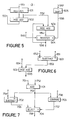
- a first mode of use is shown with two cryptographic blinding transformations, two cryptographic unblinding transformations, and two separate keys for these transformations.
- the original message m is transformed by blinding transformation 221, which transformation depends on key k1, producing output shown as t1, and then supplied as input to blinding transformation 222, which transformation depends on key k2, and whose output is shown as t 1,2 .
- Signing transformation 223 takes this multiply transformed message as input and produces, in a way depending on secret signing information, not shown for clarity, output shown as t' 1,2 .
- This output is shown as input to unblinding transformation 224, which depends on key k2, and produces output shown as t'1.
- This output is input to unblinding transformation 225, which depends on key k1, and which produces output shown as m' retaining a digital signature property related to m.
- the following congruences might hold: and the checking function can be based on the congruence m' e ⁇ m (mod n).
- the blinding transformation 221 and 225 as well as the unblinding transformation 222 and 224 are each nearly the same as in the single key mode of the preferred embodiment to be described in detail.
- the first party is in a position to check the signature function performed by signer 223 by checking that t1 ⁇ t ⁇ e 1 (mod n), but this function is also available to the single provider party in a single non-signer party mode of use, but it is anticipated that the signature would normally be checked by the single party by checking that m ⁇ m' e (mod n).
- the communication between the second party and signer 223 in the present mode is obscured from the first party.
- the second party may be second party to several first parties, and they may not know which of the communications with signer 223 include their particular values of m.
- the second party may obscure from the signer which of the communications with first party(s) correspond to particular signature transformations made by signer 223. In some embodiments, such as the preferred embodiment, it may even be the case that cooperation between the first party and signer 223 to determine the correspondence between communications known to one and communications known to the other can be thwarted by the second party.
- each party performs transformations just as if they were in a single or two non-signer party use as described herein; parties may readily check that the signature property has been properly applied and transferred by the signer and those parties on the signer's side; and any intermediary party is able to thwart attempted linking even by cooperation of all other parties.
- the original message m is transformed by blinding transformation 231, which transformation depends on key k1, producing output shown as t1, and then supplied as input to blinding transformation 232, which transformation depends on key k2, and whose output is shown as t 1,2 .
- Signing transformation 233 takes this multiply transformed message as input and produces, in a way depending on secret signing information, not shown for clarity, output shown as t' 1,2 .
- This output is shown as input to unblinding transformation 234, which depends on key k1, and produces output shown as t'2.
- This output is input to unblinding transformation 235, which depends on key k2, and which produces output shown as m', retaining a digital signature property.
- the following congruences might hold: and the checking function can be based on the congruence m' e ⁇ m (mod n).
- the blinding transformation 231 and 235 as well as the unblinding transformation 232 and 234 are each nearly the same as in the single key mode of of the preferred embodiment to be described in detail.
- the present mode may have additional benefits, advantages and features, however in some anticipated applications.
- one party holds k1 and a second holds k2, as before.
- the second party could cheat the first party by simply discarding t1 and supplying some t2 of the second parties' choice to signer 223. Then the second party could unblind the resulting t'2 received from signer 223, and obtain the signature property on something chosen only by the second party, leaving the first party without the expected message bearing the signature property.
- the signer only signs t 1,2 when supplied by the second party, and returns the t' 1,2 only to the first party, then neither party can cheat the other.
- both modes shown with two non-signer parties can readily be generalized in combination: a message travels through one permutation of the parties on the way to the signer and through a possibly different permutation on the way back.
- the no linking property is believed to still hold for any single intermediary party; the no cheating property holds for a party if no cheating party is between the party and the signer in at least one direction.
- FIG. 1 a detailed description of a preferred embodiment of the present invention is presented.
- One party to the system will be referred to as the "provider”, shown as contained in the dashed box 101.
- Another distinguished party in the system is the “signer”, shown as contained within dashed box 102.
- a key source for developing a secret key preferably confidential to the provider is shown contained within the provider 101.
- a secret signing key, d is shown contained within signer 102.
- the provider also contains the ability to perform two transformations.
- a checking function 105 is also shown.
- the message m appear on line 151 as one multiplicand input to modular multiplier 121, such multipliers to be described.
- the other multiplicand input to modular multiplier 121 is from line 152, which is the output of modular exponentiator 122, such modular exponentiators to be described.
- the base input to exponentiator 122 appears on line 153, and is the key output from key source 123, such key sources described earlier.
- the exponent, or as used equivalently herein, the powerer input to exponentiator 122 is from line 154, and is the public signature exponent shown as e.
- the product output of multiplier 121 appears on line 155, which line is the base input to modular exponentiator 124.
- the exponent to exponentiator 124 is the secret signing key shown as d, which appears on line 156.
- the output of the exponentiator 124 in this embodiment, is the digital signature of its input base from line 155, and appears on line 157, which is input to modular multiplier 125.
- the other multiplicand input to multiplier 125 appears on line 158, which is the output of modular inverter 126, such modular inverters to be described.
- the modular inverter takes its input from the key source 123 mentioned earlier as line 153.
- the product output of modular multiplier 125 appears on line 159, which is base input to modular exponentiator 127.
- the power input to exponentiator 127 is shown as e on line 160.
- the output of exponentiator 127 is shown as m on line 161.
- a message m is obtained on line 151 by the provider.
- a key appears on line 153, denoted as k, preferably secret to the provider, is developed by key source 123, and is preferably chosen from the interval 0 to n-1 with each value as nearly equally likely as practical.
- the blinding transformation 103 takes these two inputs, lines 151 and 153, and forms a blinded message denoted as t on its output line 155, such that t ⁇ m ⁇ k e (mod n). These functions of the blinding transformation 103 are accomplished as follows.
- Modular exponentiator 122 takes the key k as its base input from line 153 and takes the public signature key e from line 154, and outputs on line 152 a value congruent modulo n to k e .
- Modular multiplier 121 takes this value from line 152 and forms the modulo n product with the input m from line 151, and the product output appears on line 155.
- the signer 102 may obtain the blinded message t from line 155, and will normally output a digital signature of t on line 157, the output denoted as t', such that t' ⁇ t d (mod n), where d is the secret signing exponent of the signer mentioned earlier.
- the provider may perform the unblinding transformation, shown as 104.
- the output of the signer, t', and the secret key k are inputs to this function and it produces, in this embodiment, a digital signature on m, denoted m', such that m' ⁇ m d (mod n).
- This function of the unblinding transformation is performed as follows.
- the multiplicative inverse of the secret key k is formed by the modular inverter 126.
- the product modulo n of the multiplicative inverse, shown as k ⁇ 1 and the signed blinded message t' from line 157 is formed by modular multiplier 125, and its output appears on line 159.
- one or more parties may wish to check or authenticate the digital signature m' on the original message m.
- This function may be performed by checking that m ⁇ m' e , and that m is a valid message, as described earlier.
- This function can be performed by the modular exponentiator 127, which takes its base input from line 159 and its power from line 160, and whose output appears on line 161.
- a specific example of further checking for valid messages or the like is not shown for clarity, but such techniques would be obvious from the earlier description, and are well known to those of ordinary skill in the art.
- the binary representation of the value on line 161 could be split into two halves, and the number considered valid if the result of comparing the two halves indicates they are identical.
- the following table illustrates the operation of one use of the preferred embodiment by associating the various line numbers in the first row and their symbolic names in the second, with the exemplary values in the remaining nine data rows.
- FIG. 3 a detailed description of an exemplary embodiment of a modular multiplicative inverter, herein called a modular inverter, is presented.
- the number to be inverted appears on line 351, and is initially loaded into register 301.
- the output of register 301 appears on line 352, which is input to register 302, which takes its initial value, the modulus n, from line 353, and has output on line 354.
- Ordinary arithmetic divider 303 takes its dividend from line 354 and its divisor from line 352, its quotient output appears on line 355 and its remainder output appears on line 356.
- Such binary arithmetic dividers for unsigned integers are well known in the art, for example see K.
- Line 356 is input to register 301, described earlier.
- Line 355 is input to modular multiplier 304, such multipliers to be described.
- the output of modular multiplier 304 is line 357, which is subtrahend input to modular subtractor 305, such subtractors to be described.
- the difference output of modular subtractor 305 is line 358, which is input to register 306, which takes its initial value of 1 from line 359 and whose output appears on line 360.
- Modular multiplier 304 already described takes one of its multiplicand inputs from line 360.
- Register 307 takes input from line 360, takes its initial value of 0 from line 361, and its output appears on line 362.
- Line 362 is minuend input for modular subtractor 305 already described, and is the output of the modular inverter.
- the modular inverter takes an input from line 351 whose value is between 0 and n-1, and produces on the output line 362 a value between 0 and n-1 which is congruent to the multiplicative inverse modulo n of the value input.
- the principle of operation is based on a variation of Euclid's algorithm, and is well known in the art. See Knuth, D.E., "The Art of Computer Programming: Volume 2/ Seminumerical Algorithms,” Addison-Wesley, 1969, Euclid's algorithm, page 297, exercise 4.5.2 #15 on page 315, and answer to exercise 4.5.2 #15 on page 523.
- register 302 contains n
- register 301 contains the input from line 351
- register 306 contains 1
- register 307 contains 0.
- the operation proceeds synchronously by clock pulses sufficiently spaced to allow all lines to settle between pulses. Clock pulses occur until the first time that the contents of register 301 are 0.
- the clock and associated lines, as well zero detector for register 301, are not shown for clarity, but would be obvious to those skilled in the art from the present description.
- divider 303 divides the contents of register 302 by the contents of register 301 and supplies the quotient to modular multiplier 304 and the remainder to the input to register 301.
- modular multiplier 304 forms the modulo n product of the quotient and the contents of register 306, and supplies the product as the minuend input to modular subtractor 305.
- modular subtractor 305 subtracts modulo n the product from the contents of register 307 and supplies the difference to an input of register 306.
- register 302 latches in new contents from line 352
- register 307 latches in new contents from line 360.
- register 301 latches in new contents from line 356, and register 306 latches in new contents from line 358.
- the duration of each clock pulse is short enough that the output of modular subtractor 305 and the remainder output 356 of divider 303 do not change between the rising and falling edge of a clock pulse.
- the base input appears on line 451, which is an initial input to register 401.
- the output of register 401 appears on line 452, which is both multiplicand inputs to modular multiplier 402, to be described.
- the output of modular multiplier 402, line 453, is an data input to register 401.
- the output of register 401, line 452, is one multiplicand input to modular multiplier 403.
- the product output of modular multiplier 403 appears on line 454 and is a data input for register 404.
- the initial value for register 404 is 1 and is shown on line 455.
- the contents of register 404 appear on line 456, which is input to modular multiplier 403 and also output of the modular exponentiator.
- the exponent input appears on line 457 and is initial data input for ordinary right shifting binary shift register 405.
- the rightmost bit of shift register 405 appears as its output on line 458, which line enables the latching function of register 404, to be described.
- the modular exponentiator takes two inputs, a base from line 451 (represented as a value between 0 and n-1) and a power from line 457 (a positive binary integer), and produces on its output line 456 a value between 0 and n-1 that is congruent modulo n to the base raised to the power.
- the operation proceeds in l cycles, where l is the number of bits used to represent numbers between 0 and n-1. At the end of each of the l cycles a clock line (not shown for clarity) is raised briefly from the zero state to the one state and then returned to the zero state.
- a clock line (not shown for clarity) is raised briefly from the zero state to the one state and then returned to the zero state.
- the contents of register 401 is squared (modulo n) by modular multiplier 402 and appears on line 453
- the modulo n product of the content of register 401 and register 404 is developed by modular multiplier 403 and appears on line 454.
- the value on line 453 is latched into register 401, the value on line 454 is latched into register 404 only when the enabling value on line 458 is a one bit, and on the falling edge of the clock the contents of register 405 is shifted one bit to the right.
- register 401 contains a number congruent modulo n to the value on line 451 squared l times, and the content of register 404 is the desired value and is on the output line 456 of the modular exponentiator.
- One multiplicand input appears on line 551, which is an input to register 501.
- the output of register 501 appears on line 552, which is both addend inputs to modular adder 502, to be described described.
- the output of modular adder 502, line 553, is an input to register 501.
- the output of register 501, line 552, is one addend input to modular adder 503.
- the sum output by modular adder 503 appears on line 554 and is a data input for register 504.
- the initial value for register 504 is 0 and is shown on line 555.
- the contents of register 504 appear on line 556, which is input to modular adder 503 and also output of the modular multiplier.
- the second multiplicand input appears on line 557 and is data input for ordinary right shifting binary shift register 505.
- the rightmost bit of shift register 505 appears as its output on line 558, which line enables the latching function of register 504, to be described.
- the modular multiplier takes two multiplicands, one from each of lines 551 and 557, each represented as a value between 0 and n-1, and produces on its output line 503 a value between 0 and n-1 that is congruent modulo n to the product of the multiplicands.
- the principle of operation is to form the sum of one multiplicand multiplied by all powers of two that correspond with set bits in the other multiplicand.
- the contents of register 501 is doubled (modulo n) by modular adder 502 and appear on line 553, and the modulo n sum of the content of register 501 and register 504 is developed by modular adder 503 and appears on line 554.
- the value on line 553 is latched into register 501
- the value on line 554 is latched into register 504 only when the enabling value on line 558 is a one bit
- the contents of register 505 is shifted one bit to the right.
- register 501 contains a number congruent modulo n to the value on line 551 doubled l times, and the content of register 504 is the desired value and is on the output line 556 of the modular multiplier.
- the subtrahend to the modular subtractor is on line 651 which is the subtrahend to ordinary arithmetic subtractor 601, such ordinary arithmetic binary subtractors with positive integer inputs being well known in the art.
- the minuend input to subtractor 601 is on line 652 and is the modulus n.
- the result of the ordinary subtractor 601 appears on line 653.
- Modular adder 602, to be described, takes the difference from line 653 and the minuend for the modular subtractor from line 654, and produces the modulo n sum as its output on line 655.
- the two numbers to be added are supplied on lines 751 and 752, which are the summand inputs to ordinary binary adder 701, such ordinary binary arithmetic adders being well known in the art.
- the output of adder 701 is supplied by line 753 to the subtrahend input to ordinary binary subtractor 702.
- the minuend supplied subtractor 702 on line 754 is the modulus n for the modular addition.
- the result of the ordinary subtraction by subtractor 702 appears on line 755.
- Ordinary binary comparator 703 such comparators being well known in the art, takes one comparend input from line 753 and the other comparend from line 756, which is the modulus n, and develops a single output bit indicating the result of the comparison, which output appears on line 757.
- Selector 704 takes its two data inputs from lines 755 and 753, and its control input from line 757, has output on line 758, the output of the modular adder, and outputs data from line 753 if comparator output 757 indicates that data value on line 753 is less than the data value on line 756, and outputs data from line 755 otherwise.
- the modular adder takes two numbers between 0 and n, not both n, and produces as output a third numbers between 0 and n-1 which is congruent to the sum of the inputs modulo n.
- Two numbers to be added modulo n appear on lines 751 and 752 and are added by ordinary arithmetic producing a sum on line 753.
- the sum is subtracted from n by subtractor 702 with the result on line 755.
- the sum is compared with n by comparator 703, with the result on line 757. If the comparison indicates that the sum is less than n then the sum is between 0 and n-1 and is output on line 758; otherwise the sum is at most n too large, and the difference of the sum and n from line 755 is output on line 758.
Landscapes
- Engineering & Computer Science (AREA)
- Computer Security & Cryptography (AREA)
- Physics & Mathematics (AREA)
- General Physics & Mathematics (AREA)
- Computer Networks & Wireless Communication (AREA)
- Signal Processing (AREA)
- Storage Device Security (AREA)
- Manipulator (AREA)
- Non-Silver Salt Photosensitive Materials And Non-Silver Salt Photography (AREA)
- Burglar Alarm Systems (AREA)
- Paper (AREA)
- Massaging Devices (AREA)
Claims (27)
- Verfahren zur Verschlüsselung einer digitalen Unterschrift, bei dem mindestens eine erste Ausgeberpartei (101) und eine zweite Ausgeberpartei digitale Unterschriften entwickeln, die dahingehend überprüfbar sind, daß sie dem öffentlichen Schlüssel (154) einer unterzeichnenden Partei (102) entsprechen, wobei das Verfahren folgende Schritte aufweist:
Übermitteln von Daten (155; 157) zwischen der ersten Ausgeberpartei (101) und der unterzeichnenden Partei (102), wobei die von der ersten Ausgeberpartei übermittelten Daten (155) auf mindestens einen ersten Schlüssel (153) der ersten Ausgeberpartei ansprechen, während Daten (157), die von der unterzeichnenden Partei übermittelt werden, mindestens auf den privaten Schlüssel (156) der unterzeichnenden Partei ansprechen, wobei dieser Schüssel mit dem öffentlichen Schlüssel (154) der unterzeichnenden Partei in Beziehung steht;
Übermitteln von Daten zwischen der zweiten Ausgeberpartei und der unterzeichnenden Partei (102), wobei die von der zweiten Ausgeberpartei übermittelten Daten auf mindestens einen zweiten Schlüssel der zweiten Ausgeberpartei ansprechen, während Daten, die von der unterzeichnenden Partei übermittelt werden, auf mindestens den privaten Schlüssel (156) der unterzeichnenden Partei ansprechen, wobei dieser Schlüssel mit dem öffentlichen Schlüssel (154) der unterzeichnenden Partei in Beziehung steht;
Verarbeiten der auf den ersten Schlüssel (153) ansprechenden und durch die Übermittlung empfangenen Daten (157) durch die erste Ausgeberpartei (101), um eine erste digitale Unterschrift (159) herzustellen, die dahingehend überprüfbar ist, daß sie mit dem öffentlichen Schlüssel (154) der unterzeichnenden Partei (102) in Beziehung steht;
Verarbeiten der auf den zweiten Schlüssel ansprechenden und durch die Übermittlung erhaltenen Daten durch die zweite Ausgeberpartei, zur Erzeugung einer zweiten digitalen Unterschrift, die dahingehend überprüfbar ist, daß sie dem öffentlichen Schlüssel (154) der unterzeichnenden Partei (102) entspricht;
wobei die genannten Schritte dadurch gekennzeichnet sind, daß mindestens ein dritter Schlüssel und mindestens ein vierter Schlüssel besteht, derart, daß:
wenn der erste Schlüssel (153) von seiten der ersten Ausgeberpartei (101) durch den dritten Schlüssel ersetzt wird, und der zweite Schlüssel von seiten der zweiten Ausgeberpartei durch den vierten Schlüssel ersetzt wird;
und wenn der Nachrichteninhalt der Daten (155; 157), der zwischen der ersten Ausgeberpartei (101) und der unterzeichnenden Partei (102) übermittelt wurde, jetzt zwischen der zweiten Ausgeberpartei (101) und der unterzeichnenden Partei übermittelt wird;
und wenn der Nachrichteninhalt der Daten, der zwischen der zweiten Ausgeberpartei und der unterzeichnenden Partei (102) übermittelt wurde, jetzt zwischen der ersten Ausgeberpartei (101) und der unterzeichnenden Partei übermittelt wird;
daß dann der Verarbeitungsschritt der ersten Ausgeberpartei (101) nach wie vor die erste digitale Unterschrift (159) liefeft, und der zweite Verarbeitungsschritt der zweiten Ausgeberpartei nach wie vor die zweite digitale Unterschrift liefert. - Verfahren nach Anspruch 1, dadurch gekennzeichnet, daß es eine Wahrscheinlichkeitsverteilung für die unabhängige Wahl des ersten Schlüssels und des zweiten Schlüssels gibt, so daß bei jeder beliebigen resultierenden Unterschrift im wesentlichen die gleiche Wahrscheinlichkeit besteht, daß sie aus einer Verarbeitung hervorgegangen ist, die auf die Datennachrichten der ersten Mitteilung, wie auch auf die Datennachrichten der zweiten Mitteilung anspricht.
- Verfahren nach Anspruch 2, dadurch gekennzeichnet, daß der erste und der zweite Schlüssel im wesentlichen unabhängig voneinander und im wesentlichen entsprechend der Verteilung gewählt werden.
- Verfahren nach einem beliebigen vorhergehenden Anspruch, dadurch gekennzeichnet, daß Algorithmentransformationen mindestens zum Teil als Quelle für den ersten und den zweiten Schlüssel benutzt werden.
- Verfahren nach einem beliebigen vorhergehenden Anspruch, dadurch gekennzeichnet, daß unvorhersehbare physikalische Phänomene mindestens zum Teil als Quelle für den ersten und zweiten Schlüssel benutzt werden.
- Verfahren nach einem beliebigen vorhergehenden Anspruch, dadurch gekennzeichnet, daß eine Ausgeberpartei die Nachricht wählt, auf der die digitale Unterschrift erzeugt wird.
- Verfahren nach einem beliebigen vorhergehenden Anspruch, dadurch gekennzeichnet, daß mehr als zwei Ausgeberparteien jeweils eine digitale Unterschrift entwickeln.
- Verfahren nach Anspruch 6, gekennzeichnet durch eine im wesentlichen totale Unverknüpfbarkeit einer Gruppe digitaler Unterschriften mit der entsprechenden Gruppe von Nachrichten, die zwischen den Lieferparteien übermittelt werden.
- Verfahren nach einem beliebigen vorhergehenden Anspruch, dadurch gekennzeichnet, daß mindestens eine Ausgeberpartei mehrere digitale Unterschriften entwickelt.
- Verfahren nach einem beliebigen vorhergehenden Anspruch, dadurch gekennzeichnet, daß eine Ausgeberpartei (101) eine entwickelte digitale Unterschrift (159) überprüft.
- Verfahren nach einem beliebigen vorhergehenden Anspruch, dadurch gekennzeichnet, daß eine von einer Ausgeberpartei (101) entwickelte digitale Unterschrift von einer anderen Partei (105) überprüft wird.
- Verfahren nach einem beliebigen vorhergehenden Anspruch, dadurch gekennzeichnet, daß bei einer Gruppe von Ausgeberparteien jede Partei ein Multiplikationsprodukt mit einem Element bildet, das einem entsprechenden Schlüssel bei der Erstellung der entsprechenden Datennachricht entnommen wird, die an die unterzeichnende Partei (102) übermittelt wird, und daß die Verarbeitungsschritte der Ausgeberparteien die Bildung eines Produktes der jeweiligen empfangenen Daten und einer multiplikativen Umkehrung einer unterschriebenen Form des jeweiligen Schlüssels in eine finite Struktur einbeziehen, in der die Multiplikation und multiplikative Umkehrungen definiert werden.
- Verfahren nach einem beliebigen vorhergehenden Anspruch, dadurch gekennzeichnet, daß:
ein erstes Nachrichtensignal t (155) durch Transformation eines ersten Wertes m unter Benutzung eines ersten Schlüsselst k (153) entsprechend der Formel t ≡ m x ke (mod n) gebildet wird, wobei e ein öffentlicher Unterschriftsleistungsschlüssel und n ein öffentlicher Unterschriftsmodul ist;
ein zweites Nachrichtensignal t' (157) durch Transformation des ersten Nachrichtensignals t (155) unter Verwendung eines geheimen Unterschriftsleistungsschlüssels d entsprechend der Formel t'≡ td (mod n) gebildet wird;
das zweite Nachrichtensignal t' unter Benutzung des ersten Schlüssels k verarbeitet wird, um eine digitale Unterschrift m' zu erzeugen, die durch die Formel m' ≡ md (mod n) beschrieben wird; und
die digitale Unterschrift m' dadurch überprüft wird, daß die Formel m'e ≡ m (mod n) erfüllt wird. - Verfahren nach einem beliebigen vorhergehenden Anspruch, dadurch gekennzeichnet, daß es im Hinblick auf die Erzielung der Unnachvollziehbarkeit des Wertetransfers benutzt wird.
- Verfahren nach Anspruch 14, dadurch gekennzeichnet, daß eine digitale Unterschrift, die im Austausch von Werten empfangen wird, überprüft wird.
- Verfahren nach Anspruch 15, dadurch gekennzeichnet, daß die prüfende Partei ein Verzeichnis über früher geprüfte Unterschriften führt, um Unterschriften ermitteln zu können, die mehr als einmal präsentiert worden sind.
- Verschlüsselungsgerät für mindestens eine Ausgeberpartei (101) und eine zweite Ausgeberpartei zur Entwicklung digitaler Unterschriften (159), die dahingehend überprüfbar sind, daß sie einem öffentlichen Schlüssel (154) einer unterzeichnenden Partei (102) entsprechen, wobei das Gerät folgende Komponenten aufweist:
Einrichtungen zum Übermitteln von Daten (155; 157) zwischen der ersten Ausgeberpartei (101) und der unterzeichnenden Partei (102), mit Einrichtungen zur Ermittlung von durch die erste Ausgeberpartei übermittelten Daten, die mindestens auf einen ersten Schlüssel (153) der ersten Ausgeberpartei ansprechen, und mit Einrichtungen zur Ermittlung von durch die unterzeichnende Partei übermittelten Daten (157), die auf mindestens den privaten Schlüssel (156) der unterzeichnenden Partei ansprechen, wobei dieser Schlüssel mit dem öffentlichen Schlüssel der unterzeichnenden Partei (154) in Beziehung steht;
Einrichtungen zum Übermitteln von Daten zwischen der zweiten Ausgeberpartei und der unterzeichnenden Partei (102), mit Einrichtungen zur Entwicklung von durch die zweite Ausgeberpartei übermittelten Daten, die auf mindestens einen zweiten Schlüssel der zweiten Ausgeberpartei ansprechen, und mit Einrichtungen zur Entwicklung von durch die unterzeichnende Partei übermittelten Daten, die auf mindestens den privaten Schlüssel (156) der unterzeichnenden Partei ansprechen, wobei dieser Schlüssel mit dem öffentlichen Schlüssel (154) der unterzeichnenden Partei in Beziehung steht;
Einrichtungen zur Verarbeitung von Daten (157), die von der ersten Ausgeberpartei (101) empfangen wurden und auf den ersten Schlüssel (153) ansprechen, um eine erste digitale Unterschrift (159) zu erzeugen, die dahingehend überprüfbar ist, daß sie mit dem öffentlichen Schlüssel (154) der unterzeichnenden Partei (102) in Beziehung steht; und
Einrichtungen zur Verarbeitung von Daten, die von der zweiten Ausgeberpartei empfangen wurden und auf den zweiten Schlüssel ansprechen, um eine zweite digitale Unterschrift zu erzeugen, die dahingehend überprüfbar ist, daß sie mit dem öffentlichen Schlüssel (154) der unterzeichnenden Partei (102) entspricht;
dadurch gekennzeichnet,
daß die Schlüsselquellen mindestens einen dritten Schlüssel und mindestens einen vierten Schlüssel liefern können, derart, daß:
wenn von der ersten Ausgeberpartei (101) der erste Schlüssel (153) durch den dritten Schlüssel ersetzt wird, und von der zweiten Ausgeberpartei der zweite Schlüssel durch den vierten Schlüssel ersetzt wird;
und wenn der Nachrichteninhalt der Daten (155; 157), der zwischen der ersten Ausgeberpartei (101) und der unterzeichnenden Partei (102) übermittelt wurde, jetzt zwischen der zweiten Ausgeberpartei und der unterzeichnenden Partei übermittel wird;
und wenn der Nachrichteninhalt der Daten, der zwischen der zweiten Ausgeberpartei und der unterzeichnenden Partei (102) übermittelt wurde, jetzt zwischen der ersten Ausgeberpartei (101) und der unterzeichnenden Partei übermittelt wird;
daß dann die Verarbeitungseinrichtungen der ersten Ausgeberpartei (101) nach wie vor die erste digitale Unterschrift (159) liefern, und die Verarbeitungseinrichtungen der zweiten Ausgeberpartei nach wie vor die zweite digitale Unterschrift liefern. - Gerät nach Anspruch 17, dadurch gekennzeichnet, daß Einrichtungen für eine Gruppe von Ausgeberparteien vorgesehen sind, wobei jede Gruppe ein Multiplikationsprodukt mit einem Element bildet, das einem entsprechenden Schlüssel bei der Bildung von an die unterzeichnende Partei (102) übermittelten Datennachrichten entnommen wird, und daß die Verarbeitungseinrichtungen jedes Ausgebers Einrichtungen aufweisen, die zur Bildung eines Produktes der empfangenen Daten und einer multiplikativen Umkehrung einer unterschriebenen Form des entsprechenden Schlüssels in einer finiten Struktur dienen, in der die Multiplikation und die multiplikativen Umkehrungen definiert werden.
- Gerät nach Anspruch 17 oder 18, dadurch gekennzeichnet, daß Einrichtungen vorgesehen sind, um Algorithmentransformationen mindestens teilweise als Quelle für den ersten und den zweiten Schlüssel zu benutzen.
- Gerät nach einem beliebigen Anspruch 17 bis 19, dadurch gekennzeichnet, daß Mittel vorgesehen sind, um unvorhersehbare physikalische Phänomene mindestens zum Teil als Quelle für den ersten und den zweiten Schlüssel zu benutzen.
- Gerät nach einem beliebigen Anspruch 17 bis 20, dadurch gekennzeichnet, daß bei einer Ausgeberpartei Einrichtungen vorgesehen sind, um die Nachricht auszuwählen, auf der die digitale Unterschrift angebracht ist.
- Gerät nach einem beliebigen Anspruch 17 bis 21, dadurch gekennzeichnet, daß bei einer Ausgeberpartei (101) Einrichtungen vorgesehen sind, um eine entwickelte digitale Unterschrift (159) zu überprüfen.
- Gerät nach einem beliebigen Anspruch 17 bis 22, dadurch gekennzeichnet, daß bei einer Gruppe von Ausgeberparteien jede Partei ein entsprechendes erstes Nachrichtensignal mindestens durch Bilden eines Produktes mit einem Element transformiert, das einem entsprechenden Schlüssel entnommen wird, und daß die Einrichtungen zur Verarbeitung der durch die Ausgeberparteien entstehenden Datennachrichten Einrichtungen aufweisen, die zur Bildung eines Produktes empfangener Daten mit einer multiplikativen Umkehrung einer unterschriebenen Form des entsprechenden Schlüssels in einer finiten Struktur dienen, in der die Multiplikation und die multiplikativen Umkehrungen definiert sind.
- Gerät nach einem beliebigen Anspruch 17 bis 23, dadurch gekennzeichnet, daß:
Einrichtungen zur Bildung eines ersten Informationssignals t (155) durch Transformation erster Daten m unter Verwendung eines ersten Schlüssels k (153) entsprechend der Formel: t ≡ m x ke (mod n) vorgesehen sind, wobei e ein öffentlicher Unterschriftsleistungsschlüssel und n ein öffentlicher Unterschriftsmodul ist;
Einrichtungen zur Erzeugung eines zweiten Informationssignals t' (157) durch Transformation des ersten Informationssignals t (155) unter Verwendung eines geheimen Unterschriftsleistungsschlüssels d entsprechend der Formel: t' ≡ te (mod n) vorgesehen sind;
Einrichtungen zur Verarbeitung des zweiten Informationssignals t' unter Verwendung des ersten Schlüssels k zur Erzeugung einer digitalen Unterschrift m' vorgesehen sind, die durch die Formel m' ≡ md (mod n) beschrieben wird; und
Einrichtungen zur Überprüfung der digitalen Unterschrift m' durch den Nachweis vorgesehen sind, daß die Formel: m'e ≡ m (mod n) erfüllt wird. - Gerät nach einem beliegigen Anspruch 17 bis 24, dadurch gekennzeichnet, daß es im Hinblick auf die Erzielung der Unnachvollziehbarkeit des Wertetransfers benutzt wird.
- Gerät nach Anspruch 25, dadurch gekennzeichnet, daß Einrichtungen zur Überprüfung eines im Austausch für Werte empfangenen Digitalsignals vorgesehen sind.
- Gerät nach Anspruch 26, dadurch gekennzeichnet, daß bei der überprüfenden Partei Einrichtungen vorgesehen sind, um ein Verzeichnis von früher überprüften Unterschriften zu führen, anhand dessen Unterschriften ermittelt werden, die mehr als einmal präsentiert worden sind.
Priority Applications (1)
| Application Number | Priority Date | Filing Date | Title |
|---|---|---|---|
| AT84201160T ATE78127T1 (de) | 1983-08-22 | 1984-08-13 | Systeme zur blindunterschrift. |
Applications Claiming Priority (2)
| Application Number | Priority Date | Filing Date | Title |
|---|---|---|---|
| US06/524,896 US4759063A (en) | 1983-08-22 | 1983-08-22 | Blind signature systems |
| US524896 | 1983-08-22 |
Publications (3)
| Publication Number | Publication Date |
|---|---|
| EP0139313A2 EP0139313A2 (de) | 1985-05-02 |
| EP0139313A3 EP0139313A3 (en) | 1987-02-04 |
| EP0139313B1 true EP0139313B1 (de) | 1992-07-08 |
Family
ID=24091095
Family Applications (1)
| Application Number | Title | Priority Date | Filing Date |
|---|---|---|---|
| EP84201160A Expired - Lifetime EP0139313B1 (de) | 1983-08-22 | 1984-08-13 | Systeme zur Blindunterschrift |
Country Status (4)
| Country | Link |
|---|---|
| US (1) | US4759063A (de) |
| EP (1) | EP0139313B1 (de) |
| AT (1) | ATE78127T1 (de) |
| DE (1) | DE3485804T2 (de) |
Cited By (1)
| Publication number | Priority date | Publication date | Assignee | Title |
|---|---|---|---|---|
| US7584363B2 (en) | 2004-03-02 | 2009-09-01 | France Telecom | Fair blind signature process |
Families Citing this family (157)
| Publication number | Priority date | Publication date | Assignee | Title |
|---|---|---|---|---|
| US4759064A (en) * | 1985-10-07 | 1988-07-19 | Chaum David L | Blind unanticipated signature systems |
| US4947430A (en) * | 1987-11-23 | 1990-08-07 | David Chaum | Undeniable signature systems |
| US4926480A (en) * | 1983-08-22 | 1990-05-15 | David Chaum | Card-computer moderated systems |
| US5018196A (en) * | 1985-09-04 | 1991-05-21 | Hitachi, Ltd. | Method for electronic transaction with digital signature |
| EP0257585B1 (de) * | 1986-08-22 | 1992-11-25 | Nec Corporation | Schlüsselverteilungsverfahren |
| DE3752367T2 (de) * | 1986-09-30 | 2004-02-19 | Canon K.K. | Fehlerkorrekturgerät |
| US4853961A (en) * | 1987-12-18 | 1989-08-01 | Pitney Bowes Inc. | Reliable document authentication system |
| US4868877A (en) * | 1988-02-12 | 1989-09-19 | Fischer Addison M | Public key/signature cryptosystem with enhanced digital signature certification |
| US5005200A (en) * | 1988-02-12 | 1991-04-02 | Fischer Addison M | Public key/signature cryptosystem with enhanced digital signature certification |
| US4914698A (en) * | 1988-03-16 | 1990-04-03 | David Chaum | One-show blind signature systems |
| AU3560989A (en) * | 1988-03-16 | 1989-10-05 | David Chaum | One-show blind signature systems |
| JP2683022B2 (ja) * | 1988-04-13 | 1997-11-26 | 株式会社日立製作所 | データ秘匿方式 |
| US4969189A (en) * | 1988-06-25 | 1990-11-06 | Nippon Telegraph & Telephone Corporation | Authentication system and apparatus therefor |
| US4949380A (en) * | 1988-10-20 | 1990-08-14 | David Chaum | Returned-value blind signature systems |
| EP0383985A1 (de) * | 1989-02-24 | 1990-08-29 | Claus Peter Prof. Dr. Schnorr | Verfahren zur Identifikation von Teilnehmern sowie zur Generierung und Verifikation von elektronischen Unterschriften in einem Datenaustauschsystem |
| US4932056A (en) * | 1989-03-16 | 1990-06-05 | Yeda Research And Development Company Limited | Method and apparatus for user identification based on permuted kernels |
| US4977595A (en) * | 1989-04-03 | 1990-12-11 | Nippon Telegraph And Telephone Corporation | Method and apparatus for implementing electronic cash |
| US4956863A (en) * | 1989-04-17 | 1990-09-11 | Trw Inc. | Cryptographic method and apparatus for public key exchange with authentication |
| US4991210A (en) * | 1989-05-04 | 1991-02-05 | David Chaum | Unpredictable blind signature systems |
| US4996711A (en) * | 1989-06-21 | 1991-02-26 | Chaum David L | Selected-exponent signature systems |
| NL9102144A (nl) * | 1991-12-20 | 1993-07-16 | Nederlanden Staat | Werkwijze en stelsel voor het groepsgewijs waarmerken van digitale gegevens. |
| US6415271B1 (en) | 1993-02-10 | 2002-07-02 | Gm Network Limited | Electronic cash eliminating payment risk |
| US5983207A (en) * | 1993-02-10 | 1999-11-09 | Turk; James J. | Electronic cash eliminating payment risk |
| US5299263A (en) * | 1993-03-04 | 1994-03-29 | Bell Communications Research, Inc. | Two-way public key authentication and key agreement for low-cost terminals |
| NL9301348A (nl) * | 1993-08-02 | 1995-03-01 | Stefanus Alfonsus Brands | Elektronisch betalingssysteem. |
| US5485520A (en) * | 1993-10-07 | 1996-01-16 | Amtech Corporation | Automatic real-time highway toll collection from moving vehicles |
| US5371794A (en) * | 1993-11-02 | 1994-12-06 | Sun Microsystems, Inc. | Method and apparatus for privacy and authentication in wireless networks |
| WO1995016971A1 (en) | 1993-12-16 | 1995-06-22 | Open Market, Inc. | Digital active advertising |
| US5712913A (en) * | 1994-02-08 | 1998-01-27 | Digicash Incorporated | Limited-traceability systems |
| US5511121A (en) * | 1994-02-23 | 1996-04-23 | Bell Communications Research, Inc. | Efficient electronic money |
| US5604805A (en) * | 1994-02-28 | 1997-02-18 | Brands; Stefanus A. | Privacy-protected transfer of electronic information |
| US5668878A (en) * | 1994-02-28 | 1997-09-16 | Brands; Stefanus Alfonsus | Secure cryptographic methods for electronic transfer of information |
| US5544255A (en) * | 1994-08-31 | 1996-08-06 | Peripheral Vision Limited | Method and system for the capture, storage, transport and authentication of handwritten signatures |
| US5826241A (en) | 1994-09-16 | 1998-10-20 | First Virtual Holdings Incorporated | Computerized system for making payments and authenticating transactions over the internet |
| US5606617A (en) * | 1994-10-14 | 1997-02-25 | Brands; Stefanus A. | Secret-key certificates |
| US5715314A (en) * | 1994-10-24 | 1998-02-03 | Open Market, Inc. | Network sales system |
| US5758257A (en) * | 1994-11-29 | 1998-05-26 | Herz; Frederick | System and method for scheduling broadcast of and access to video programs and other data using customer profiles |
| US8799461B2 (en) | 1994-11-29 | 2014-08-05 | Apple Inc. | System for collecting, analyzing, and transmitting information relevant to transportation networks |
| US6460036B1 (en) * | 1994-11-29 | 2002-10-01 | Pinpoint Incorporated | System and method for providing customized electronic newspapers and target advertisements |
| US9832610B2 (en) | 1994-11-29 | 2017-11-28 | Apple Inc. | System for collecting, analyzing, and transmitting information relevant to transportation networks |
| US5832460A (en) * | 1995-06-02 | 1998-11-03 | International Business Machines Corporation | Method and system for bill presentation and payment reconciliation |
| US7272639B1 (en) | 1995-06-07 | 2007-09-18 | Soverain Software Llc | Internet server access control and monitoring systems |
| US5794221A (en) | 1995-07-07 | 1998-08-11 | Egendorf; Andrew | Internet billing method |
| US20020178051A1 (en) | 1995-07-25 | 2002-11-28 | Thomas G. Scavone | Interactive marketing network and process using electronic certificates |
| JPH0954808A (ja) | 1995-08-18 | 1997-02-25 | Fujitsu Ltd | オンライン決済システム、電子小切手の発行システム及び検査システム |
| US5638445A (en) * | 1995-09-19 | 1997-06-10 | Microsoft Corporation | Blind encryption |
| US5799090A (en) * | 1995-09-25 | 1998-08-25 | Angert; Joseph C. | pad encryption method and software |
| US5774670A (en) * | 1995-10-06 | 1998-06-30 | Netscape Communications Corporation | Persistent client state in a hypertext transfer protocol based client-server system |
| US6075858A (en) * | 1995-10-27 | 2000-06-13 | Scm Microsystems (U.S.) Inc. | Encryption key system and method |
| US5757917A (en) * | 1995-11-01 | 1998-05-26 | First Virtual Holdings Incorporated | Computerized payment system for purchasing goods and services on the internet |
| US5901229A (en) * | 1995-11-06 | 1999-05-04 | Nippon Telegraph And Telephone Corp. | Electronic cash implementing method using a trustee |
| US6076078A (en) * | 1996-02-14 | 2000-06-13 | Carnegie Mellon University | Anonymous certified delivery |
| WO1997037461A1 (en) | 1996-04-01 | 1997-10-09 | Hewlett-Packard Company | Transmitting messages over a network |
| EP0804003A3 (de) * | 1996-04-26 | 2000-11-15 | Canon Kabushiki Kaisha | Verfahren zur digitalen Unterschrift und Kommunikationssystem |
| US6945457B1 (en) | 1996-05-10 | 2005-09-20 | Transaction Holdings Ltd. L.L.C. | Automated transaction machine |
| WO1997045796A1 (en) * | 1996-05-10 | 1997-12-04 | Barcelou David M | Automated transaction machine |
| US5796833A (en) * | 1996-09-23 | 1998-08-18 | Cylink Corporation | Public key sterilization |
| GB2317790B (en) * | 1996-09-26 | 1998-08-26 | Richard Billingsley | Improvements relating to electronic transactions |
| US6029150A (en) * | 1996-10-04 | 2000-02-22 | Certco, Llc | Payment and transactions in electronic commerce system |
| US6317832B1 (en) | 1997-02-21 | 2001-11-13 | Mondex International Limited | Secure multiple application card system and process |
| US6575372B1 (en) | 1997-02-21 | 2003-06-10 | Mondex International Limited | Secure multi-application IC card system having selective loading and deleting capability |
| US6220510B1 (en) | 1997-05-15 | 2001-04-24 | Mondex International Limited | Multi-application IC card with delegation feature |
| US6488211B1 (en) | 1997-05-15 | 2002-12-03 | Mondex International Limited | System and method for flexibly loading in IC card |
| US6328217B1 (en) | 1997-05-15 | 2001-12-11 | Mondex International Limited | Integrated circuit card with application history list |
| US6164549A (en) * | 1997-05-15 | 2000-12-26 | Mondex International Limited | IC card with shell feature |
| US6385723B1 (en) | 1997-05-15 | 2002-05-07 | Mondex International Limited | Key transformation unit for an IC card |
| US7222087B1 (en) | 1997-09-12 | 2007-05-22 | Amazon.Com, Inc. | Method and system for placing a purchase order via a communications network |
| US5960411A (en) | 1997-09-12 | 1999-09-28 | Amazon.Com, Inc. | Method and system for placing a purchase order via a communications network |
| AU2085199A (en) | 1997-11-19 | 1999-06-07 | Security Dynamics Technologies, Inc. | Digital coin tracing using trustee tokens |
| EP1050133B2 (de) | 1998-01-02 | 2009-05-27 | Cryptography Research Inc. | Leckresistentes kryptographisches verfahren und vorrichtung |
| US6278783B1 (en) | 1998-06-03 | 2001-08-21 | Cryptography Research, Inc. | Des and other cryptographic, processes with leak minimization for smartcards and other cryptosystems |
| US7587044B2 (en) | 1998-01-02 | 2009-09-08 | Cryptography Research, Inc. | Differential power analysis method and apparatus |
| US9900305B2 (en) | 1998-01-12 | 2018-02-20 | Soverain Ip, Llc | Internet server access control and monitoring systems |
| US6736325B1 (en) | 1998-01-22 | 2004-05-18 | Mondex International Limited | Codelets |
| US6357665B1 (en) | 1998-01-22 | 2002-03-19 | Mondex International Limited | Configuration of IC card |
| US6742120B1 (en) | 1998-02-03 | 2004-05-25 | Mondex International Limited | System and method for controlling access to computer code in an IC card |
| US6108644A (en) * | 1998-02-19 | 2000-08-22 | At&T Corp. | System and method for electronic transactions |
| EP1064611A1 (de) | 1998-03-24 | 2001-01-03 | Telcordia Technologies, Inc. | Verfahren zum benutzen einer telefonkarte für geschäftliche transaktionen |
| EP1084548B1 (de) | 1998-06-03 | 2008-12-17 | Cryptography Research Inc. | Gesicherte moduläre potenzierung mit leckminimierung für chipkarten und andere kryptosysteme |
| EP2280502B1 (de) | 1998-06-03 | 2018-05-02 | Cryptography Research, Inc. | Verwenden von unvorhersehbaren Informationen zu widerstehen die Entdeckung von Geheimnissen durch externe Überwachung |
| JP4216475B2 (ja) * | 1998-07-02 | 2009-01-28 | クリプターグラフィー リサーチ インコーポレイテッド | 漏洩抵抗力を有する暗号索引付き鍵の更新方法及びデバイス |
| US6268803B1 (en) | 1998-08-06 | 2001-07-31 | Altra Technologies Incorporated | System and method of avoiding collisions |
| US6236975B1 (en) * | 1998-09-29 | 2001-05-22 | Ignite Sales, Inc. | System and method for profiling customers for targeted marketing |
| RU2153191C2 (ru) | 1998-09-29 | 2000-07-20 | Закрытое акционерное общество "Алкорсофт" | Способ изготовления вслепую цифровой rsa-подписи и устройство для его реализации (варианты) |
| RU2157001C2 (ru) | 1998-11-25 | 2000-09-27 | Закрытое акционерное общество "Алкорсофт" | Способ проведения платежей (варианты) |
| US6894608B1 (en) | 1999-07-22 | 2005-05-17 | Altra Technologies Incorporated | System and method for warning of potential collisions |
| US20040133782A1 (en) * | 1999-08-11 | 2004-07-08 | International Computer Science Institute, A California Corporation | Anonymous electronic transactions using auditable membership proofs |
| US7630986B1 (en) | 1999-10-27 | 2009-12-08 | Pinpoint, Incorporated | Secure data interchange |
| US8024266B1 (en) * | 1999-12-20 | 2011-09-20 | Kount Inc. | Method for secure, closed-loop money transfer via electronic mail |
| DE19963407A1 (de) * | 1999-12-28 | 2001-07-12 | Giesecke & Devrient Gmbh | Tragbarer Datenträger mit Zugriffsschutz durch Nachrichtenverfremdung |
| US6642839B1 (en) | 2000-02-16 | 2003-11-04 | Altra Technologies Incorporated | System and method of providing scalable sensor systems based on stand alone sensor modules |
| US6766456B1 (en) * | 2000-02-23 | 2004-07-20 | Micron Technology, Inc. | Method and system for authenticating a user of a computer system |
| US20060206403A1 (en) * | 2000-02-29 | 2006-09-14 | Geoffrey H. Gill | System for anonymously purchasing goods and services over the Internet |
| US7716484B1 (en) * | 2000-03-10 | 2010-05-11 | Rsa Security Inc. | System and method for increasing the security of encrypted secrets and authentication |
| US7359507B2 (en) | 2000-03-10 | 2008-04-15 | Rsa Security Inc. | Server-assisted regeneration of a strong secret from a weak secret |
| US8706618B2 (en) | 2005-09-29 | 2014-04-22 | Ebay Inc. | Release of funds based on criteria |
| US7499875B1 (en) | 2000-03-17 | 2009-03-03 | Ebay Inc. | Method and apparatus for facilitating online payment transactions in a network-based transaction facility using multiple payment instruments |
| WO2001071452A2 (en) | 2000-03-17 | 2001-09-27 | Ebay, Inc. | Method and apparatus for facilitating online payment transactions in a network-based transaction facility using multiple payment instruments |
| US6871276B1 (en) * | 2000-04-05 | 2005-03-22 | Microsoft Corporation | Controlled-content recoverable blinded certificates |
| US6976162B1 (en) * | 2000-06-28 | 2005-12-13 | Intel Corporation | Platform and method for establishing provable identities while maintaining privacy |
| US7257581B1 (en) * | 2000-08-04 | 2007-08-14 | Guardian Networks, Llc | Storage, management and distribution of consumer information |
| US9928508B2 (en) | 2000-08-04 | 2018-03-27 | Intellectual Ventures I Llc | Single sign-on for access to a central data repository |
| US8566248B1 (en) | 2000-08-04 | 2013-10-22 | Grdn. Net Solutions, Llc | Initiation of an information transaction over a network via a wireless device |
| US6700076B2 (en) * | 2000-09-28 | 2004-03-02 | Eic Corporation | Multi-layer interconnect module and method of interconnection |
| US20070022375A1 (en) * | 2000-10-19 | 2007-01-25 | David Walker | Apparatus, system, and method for an electronic payment system |
| US7013295B2 (en) * | 2000-12-01 | 2006-03-14 | Lucent Technologies Inc. | Tagged private information retrieval |
| RU2195021C1 (ru) * | 2001-03-27 | 2002-12-20 | Дочернее Государственное Унитарное Предприятие Научно-Технический Центр "Атлас-Северо-Запад" | Система защитной маркировки и верификации документов |
| US20020198829A1 (en) * | 2001-04-03 | 2002-12-26 | Bottomline Technologies, Inc. | Modular business transactions platform |
| US20020198798A1 (en) * | 2001-04-03 | 2002-12-26 | Bottomline Technologies, Inc. | Modular business transactions platform |
| US20030023862A1 (en) * | 2001-04-26 | 2003-01-30 | Fujitsu Limited | Content distribution system |
| US6950937B2 (en) * | 2001-05-30 | 2005-09-27 | Lucent Technologies Inc. | Secure distributed computation in cryptographic applications |
| US20030056100A1 (en) * | 2001-09-14 | 2003-03-20 | Rodney Beatson | Method and system for authenticating a digitized signature for execution of an electronic document |
| US7191333B1 (en) * | 2001-10-25 | 2007-03-13 | Cisco Technology, Inc. | Method and apparatus for calculating a multiplicative inverse of an element of a prime field |
| GB2381423B (en) * | 2001-10-26 | 2004-09-15 | Ericsson Telefon Ab L M | Addressing mechanisms in mobile IP |
| ATE424593T1 (de) * | 2001-12-12 | 2009-03-15 | Scytl Secure Electronic Voting | Verfahren zum sicheren elektronischen wählen und kryptographische protokolle und computerprogramme dafür |
| US7996888B2 (en) * | 2002-01-11 | 2011-08-09 | Nokia Corporation | Virtual identity apparatus and method for using same |
| US6933837B2 (en) * | 2002-01-25 | 2005-08-23 | Altra Technologies Incorporated | Trailer based collision warning system and method |
| US20030195857A1 (en) * | 2002-04-10 | 2003-10-16 | Alessandro Acquisti | Communication technique to verify and send information anonymously among many parties |
| WO2003104947A2 (en) * | 2002-06-06 | 2003-12-18 | Hardt Dick C | Distributed hierarchical identity management |
| KR20030062401A (ko) * | 2003-07-04 | 2003-07-25 | 학교법인 한국정보통신학원 | 겹선형쌍을 이용한 개인식별정보 기반의 은닉서명 장치 및방법 |
| US7363499B2 (en) * | 2003-09-18 | 2008-04-22 | Sun Microsystems, Inc. | Blinded encryption and decryption |
| US20050131836A1 (en) * | 2003-12-12 | 2005-06-16 | Armstrong Thomas W. | Method, device and software for ordering and paying for a purchase |
| US9245266B2 (en) * | 2004-06-16 | 2016-01-26 | Callahan Cellular L.L.C. | Auditable privacy policies in a distributed hierarchical identity management system |
| US8527752B2 (en) | 2004-06-16 | 2013-09-03 | Dormarke Assets Limited Liability | Graduated authentication in an identity management system |
| US8504704B2 (en) * | 2004-06-16 | 2013-08-06 | Dormarke Assets Limited Liability Company | Distributed contact information management |
| US8363835B2 (en) * | 2004-07-21 | 2013-01-29 | Sanyo Electric Co., Ltd. | Method for transmission/reception of contents usage right information in encrypted form, and device thereof |
| US7788483B1 (en) * | 2004-10-22 | 2010-08-31 | Winbond Electronics Corporation | Method and apparatus of identifying and enabling of functions of a trusted platform module device |
| EP1770901B1 (de) * | 2005-09-28 | 2009-12-09 | Nortel Networks Limited | Authentifizierungsverfahren und dazugehörige Vorrichtungen |
| US8706635B2 (en) * | 2005-10-11 | 2014-04-22 | Microsoft Corporation | Use of licensed content without identification thereof |
| US7606738B2 (en) * | 2005-11-29 | 2009-10-20 | Target Brands, Inc. | E-mail based gift delivery |
| US20090031137A1 (en) * | 2006-02-01 | 2009-01-29 | Nec Cororation | Blind signature method and its system |
| EP2016535A4 (de) * | 2006-04-19 | 2010-06-23 | Stepnexus Holdings | Verfahren und systeme zum laden einer ic-card-anwendung |
| US8769636B1 (en) | 2006-12-22 | 2014-07-01 | Google Inc. | Systems and methods for authenticating web displays with a user-recognizable indicia |
| US8060750B2 (en) * | 2007-06-29 | 2011-11-15 | Emc Corporation | Secure seed provisioning |
| US7890763B1 (en) * | 2007-09-14 | 2011-02-15 | The United States Of America As Represented By The Director, National Security Agency | Method of identifying invalid digital signatures involving batch verification |
| US8059814B1 (en) | 2007-09-28 | 2011-11-15 | Emc Corporation | Techniques for carrying out seed or key derivation |
| US9177313B1 (en) | 2007-10-18 | 2015-11-03 | Jpmorgan Chase Bank, N.A. | System and method for issuing, circulating and trading financial instruments with smart features |
| US8185476B2 (en) * | 2008-01-07 | 2012-05-22 | Microsoft Corporation | Digital rights management system protecting consumer privacy |
| JP5378702B2 (ja) * | 2008-04-23 | 2013-12-25 | パナソニック株式会社 | 秘匿認証システム |
| JP2009272671A (ja) * | 2008-04-30 | 2009-11-19 | Panasonic Corp | 秘匿認証システム |
| JP2009272737A (ja) * | 2008-05-01 | 2009-11-19 | Panasonic Corp | 秘匿認証システム |
| US8307210B1 (en) | 2008-05-02 | 2012-11-06 | Emc Corporation | Method and apparatus for secure validation of tokens |
| JP2009278223A (ja) * | 2008-05-13 | 2009-11-26 | Panasonic Corp | 電子証明システム及び秘匿通信システム |
| JP2009296190A (ja) | 2008-06-04 | 2009-12-17 | Panasonic Corp | 秘匿通信方法 |
| US20100329460A1 (en) * | 2009-06-30 | 2010-12-30 | Sun Microsystems, Inc. | Method and apparatus for assuring enhanced security |
| US8775245B2 (en) | 2010-02-11 | 2014-07-08 | News America Marketing Properties, Llc | Secure coupon distribution |
| IL210169A0 (en) | 2010-12-22 | 2011-03-31 | Yehuda Binder | System and method for routing-based internet security |
| WO2012122994A1 (en) | 2011-03-11 | 2012-09-20 | Kreft Heinz | Off-line transfer of electronic tokens between peer-devices |
| IL217478A0 (en) | 2012-01-10 | 2012-03-29 | Nds Ltd | Anonymous authentication |
| US9084218B2 (en) * | 2013-05-23 | 2015-07-14 | Pitney Bowes Inc. | Location-based service provider method and system having a user controlled location privacy mechanism |
| US9755822B2 (en) | 2013-06-19 | 2017-09-05 | Cryptography Research, Inc. | Countermeasure to power analysis attacks through time-varying impedance of power delivery networks |
| US11245653B2 (en) | 2014-01-07 | 2022-02-08 | Elementum, LLC | Methods and systems for creating and using massless currency |
| US10643203B2 (en) | 2016-04-12 | 2020-05-05 | Digicash Pty Ltd. | Secure transaction controller for value token exchange systems |
| US11532040B2 (en) | 2019-11-12 | 2022-12-20 | Bottomline Technologies Sarl | International cash management software using machine learning |
| US11526859B1 (en) | 2019-11-12 | 2022-12-13 | Bottomline Technologies, Sarl | Cash flow forecasting using a bottoms-up machine learning approach |
| US11704671B2 (en) | 2020-04-02 | 2023-07-18 | Bottomline Technologies Limited | Financial messaging transformation-as-a-service |
| US12002297B1 (en) | 2020-04-04 | 2024-06-04 | David Lane Smith | System and method for reliable opinion polls |
Family Cites Families (8)
| Publication number | Priority date | Publication date | Assignee | Title |
|---|---|---|---|---|
| US4086634A (en) * | 1975-07-30 | 1978-04-25 | Cook Laboratories, Inc. | Method and apparatus for preparing recorded program material to prevent unauthorized duplication by magnetic tape recording |
| US4200770A (en) * | 1977-09-06 | 1980-04-29 | Stanford University | Cryptographic apparatus and method |
| US4218582A (en) * | 1977-10-06 | 1980-08-19 | The Board Of Trustees Of The Leland Stanford Junior University | Public key cryptographic apparatus and method |
| US4405829A (en) * | 1977-12-14 | 1983-09-20 | Massachusetts Institute Of Technology | Cryptographic communications system and method |
| US4424414A (en) * | 1978-05-01 | 1984-01-03 | Board Of Trustees Of The Leland Stanford Junior University | Exponentiation cryptographic apparatus and method |
| US4308536A (en) * | 1979-02-26 | 1981-12-29 | Collision Avoidance Systems | Anti-collision vehicular radar system |
| US4351982A (en) * | 1980-12-15 | 1982-09-28 | Racal-Milgo, Inc. | RSA Public-key data encryption system having large random prime number generating microprocessor or the like |
| US4458109A (en) * | 1982-02-05 | 1984-07-03 | Siemens Corporation | Method and apparatus providing registered mail features in an electronic communication system |
-
1983
- 1983-08-22 US US06/524,896 patent/US4759063A/en not_active Expired - Lifetime
-
1984
- 1984-08-13 AT AT84201160T patent/ATE78127T1/de not_active IP Right Cessation
- 1984-08-13 EP EP84201160A patent/EP0139313B1/de not_active Expired - Lifetime
- 1984-08-13 DE DE8484201160T patent/DE3485804T2/de not_active Expired - Lifetime
Cited By (1)
| Publication number | Priority date | Publication date | Assignee | Title |
|---|---|---|---|---|
| US7584363B2 (en) | 2004-03-02 | 2009-09-01 | France Telecom | Fair blind signature process |
Also Published As
| Publication number | Publication date |
|---|---|
| EP0139313A2 (de) | 1985-05-02 |
| DE3485804D1 (de) | 1992-08-13 |
| EP0139313A3 (en) | 1987-02-04 |
| ATE78127T1 (de) | 1992-07-15 |
| DE3485804T2 (de) | 1993-02-11 |
| US4759063A (en) | 1988-07-19 |
Similar Documents
| Publication | Publication Date | Title |
|---|---|---|
| US4759063A (en) | Blind signature systems | |
| US4759064A (en) | Blind unanticipated signature systems | |
| CA1322600C (en) | Authentication system and apparatus therefor | |
| Franklin et al. | Secure and efficient off-line digital money | |
| EP0391261B1 (de) | Verfahren und Vorrichtung zur Darstellung von elektronischem Geld | |
| US5373558A (en) | Desinated-confirmer signature systems | |
| US7472276B2 (en) | Data card verification system | |
| Chaum | Showing credentials without identification transferring signatures between unconditionally unlinkable pseudonyms | |
| EP0755136B1 (de) | Verfahren und Einrichtung für ein elektronisches Geldsystem mit Ursprungserkennung | |
| US4947430A (en) | Undeniable signature systems | |
| US20030120931A1 (en) | Group signature generation system using multiple primes | |
| Traoré | Group signatures and their relevance to privacy-protecting offline electronic cash systems | |
| WO1995023465A1 (en) | Efficient electronic money | |
| WO1998034202A9 (en) | Data card verification system | |
| US6212637B1 (en) | Method and apparatus for en-bloc verification of plural digital signatures and recording medium with the method recorded thereon | |
| Islam et al. | Provably secure pairing-free identity-based partially blind signature scheme and its application in online e-cash system | |
| Au et al. | Practical compact e-cash | |
| EP1128599A1 (de) | Verfahren und vorrichtung zur erzeugung von blindunterschriften | |
| Chida et al. | Digital money–a survey | |
| CN1618200B (zh) | 在若干实体与设备间分布负荷的密码法 | |
| JPS613254A (ja) | 利用者認証方式 | |
| M'Raïhi | Cost-effective payment schemes with privacy regulation | |
| JPH0752460B2 (ja) | 電子現金実施方法及びその装置 | |
| Liu et al. | Multi-application smart card with elliptic curve cryptosystem certificate | |
| JPH0695590A (ja) | 電子署名システム及び電子署名方法 |
Legal Events
| Date | Code | Title | Description |
|---|---|---|---|
| PUAI | Public reference made under article 153(3) epc to a published international application that has entered the european phase |
Free format text: ORIGINAL CODE: 0009012 |
|
| AK | Designated contracting states |
Designated state(s): AT BE CH DE FR GB IT LI NL SE Kind code of ref document: A2 Designated state(s): AT BE CH DE FR GB IT LI NL SE |
|
| PUAL | Search report despatched |
Free format text: ORIGINAL CODE: 0009013 |
|
| AK | Designated contracting states |
Kind code of ref document: A3 Designated state(s): AT BE CH DE FR GB IT LI NL SE |
|
| 17P | Request for examination filed |
Effective date: 19870929 |
|
| 17Q | First examination report despatched |
Effective date: 19890615 |
|
| GRAA | (expected) grant |
Free format text: ORIGINAL CODE: 0009210 |
|
| RAP1 | Party data changed (applicant data changed or rights of an application transferred) |
Owner name: SECURITY TECHNOLOGY CORPORATION |
|
| RIN1 | Information on inventor provided before grant (corrected) |
Inventor name: CHAUM, DAVID, PROF. DR. |
|
| AK | Designated contracting states |
Kind code of ref document: B1 Designated state(s): AT BE CH DE FR GB IT LI NL SE |
|
| REF | Corresponds to: |
Ref document number: 78127 Country of ref document: AT Date of ref document: 19920715 Kind code of ref document: T |
|
| REF | Corresponds to: |
Ref document number: 3485804 Country of ref document: DE Date of ref document: 19920813 |
|
| ET | Fr: translation filed | ||
| ITF | It: translation for a ep patent filed | ||
| PLBE | No opposition filed within time limit |
Free format text: ORIGINAL CODE: 0009261 |
|
| STAA | Information on the status of an ep patent application or granted ep patent |
Free format text: STATUS: NO OPPOSITION FILED WITHIN TIME LIMIT |
|
| 26N | No opposition filed | ||
| EAL | Se: european patent in force in sweden |
Ref document number: 84201160.3 |
|
| REG | Reference to a national code |
Ref country code: FR Ref legal event code: TP |
|
| NLS | Nl: assignments of ep-patents |
Owner name: DIGICASH INCORPORATED |
|
| REG | Reference to a national code |
Ref country code: CH Ref legal event code: PFA Free format text: SECURITY TECHNOLOGY CORPORATION TRANSFER- DIGICASH INCORPORATED |
|
| REG | Reference to a national code |
Ref country code: GB Ref legal event code: 732E |
|
| REG | Reference to a national code |
Ref country code: CH Ref legal event code: PUE Owner name: DIGICASH INCORPORATED TRANSFER- ECASH TECHNOLOGIES |
|
| NLS | Nl: assignments of ep-patents |
Owner name: ECASH TECHNOLOGIES, INC. |
|
| REG | Reference to a national code |
Ref country code: FR Ref legal event code: TP |
|
| REG | Reference to a national code |
Ref country code: GB Ref legal event code: IF02 |
|
| PGFP | Annual fee paid to national office [announced via postgrant information from national office to epo] |
Ref country code: NL Payment date: 20030721 Year of fee payment: 20 |
|
| PGFP | Annual fee paid to national office [announced via postgrant information from national office to epo] |
Ref country code: AT Payment date: 20030722 Year of fee payment: 20 |
|
| PGFP | Annual fee paid to national office [announced via postgrant information from national office to epo] |
Ref country code: GB Payment date: 20030806 Year of fee payment: 20 |
|
| PGFP | Annual fee paid to national office [announced via postgrant information from national office to epo] |
Ref country code: FR Payment date: 20030820 Year of fee payment: 20 |
|
| PGFP | Annual fee paid to national office [announced via postgrant information from national office to epo] |
Ref country code: SE Payment date: 20030821 Year of fee payment: 20 |
|
| PGFP | Annual fee paid to national office [announced via postgrant information from national office to epo] |
Ref country code: CH Payment date: 20030825 Year of fee payment: 20 |
|
| PGFP | Annual fee paid to national office [announced via postgrant information from national office to epo] |
Ref country code: BE Payment date: 20030911 Year of fee payment: 20 |
|
| REG | Reference to a national code |
Ref country code: CH Ref legal event code: PUE Owner name: INFOSPACE, INC, US Free format text: ECASH TECHNOLOGIES, INC.#19015 NORTH CREEK PARKWAY SUITE 105#BOTHELL,WASHINGTON 98011 (US) -TRANSFER TO- INFOSPACE, INC.#601-108TH AVENUE N.E. SUITE 1200#BELLEVUE (WA 98004) (US) Ref country code: CH Ref legal event code: PUE Owner name: INFOSPACE, INC. Free format text: ECASH TECHNOLOGIES, INC.#19015 NORTH CREEK PARKWAY SUITE 105#BOTHELL,WASHINGTON 98011 (US) -TRANSFER TO- INFOSPACE, INC.#601-108TH AVENUE N.E. SUITE 1200#BELLEVUE (WA 98004) (US) |
|
| PGFP | Annual fee paid to national office [announced via postgrant information from national office to epo] |
Ref country code: DE Payment date: 20030930 Year of fee payment: 20 |
|
| NLS | Nl: assignments of ep-patents |
Owner name: INFOSPACE, INC. |
|
| REG | Reference to a national code |
Ref country code: GB Ref legal event code: 732E |
|
| REG | Reference to a national code |
Ref country code: FR Ref legal event code: TP |
|
| PG25 | Lapsed in a contracting state [announced via postgrant information from national office to epo] |
Ref country code: LI Free format text: LAPSE BECAUSE OF EXPIRATION OF PROTECTION Effective date: 20040812 Ref country code: GB Free format text: LAPSE BECAUSE OF EXPIRATION OF PROTECTION Effective date: 20040812 Ref country code: CH Free format text: LAPSE BECAUSE OF EXPIRATION OF PROTECTION Effective date: 20040812 |
|
| PG25 | Lapsed in a contracting state [announced via postgrant information from national office to epo] |
Ref country code: NL Free format text: LAPSE BECAUSE OF EXPIRATION OF PROTECTION Effective date: 20040813 Ref country code: AT Free format text: LAPSE BECAUSE OF EXPIRATION OF PROTECTION Effective date: 20040813 |
|
| BE20 | Be: patent expired |
Owner name: *INFOSPACE INC. Effective date: 20040813 |
|
| REG | Reference to a national code |
Ref country code: GB Ref legal event code: PE20 |
|
| REG | Reference to a national code |
Ref country code: CH Ref legal event code: PL |
|
| EUG | Se: european patent has lapsed | ||
| NLV7 | Nl: ceased due to reaching the maximum lifetime of a patent |