EP0139526A2 - Unlöslich gemachtes stabiles spezifisches Bindungsprotein - Google Patents
Unlöslich gemachtes stabiles spezifisches Bindungsprotein Download PDFInfo
- Publication number
- EP0139526A2 EP0139526A2 EP19840307169 EP84307169A EP0139526A2 EP 0139526 A2 EP0139526 A2 EP 0139526A2 EP 19840307169 EP19840307169 EP 19840307169 EP 84307169 A EP84307169 A EP 84307169A EP 0139526 A2 EP0139526 A2 EP 0139526A2
- Authority
- EP
- European Patent Office
- Prior art keywords
- binding protein
- specific binding
- reducing agent
- insolubilized
- aldehyde
- Prior art date
- Legal status (The legal status is an assumption and is not a legal conclusion. Google has not performed a legal analysis and makes no representation as to the accuracy of the status listed.)
- Withdrawn
Links
Images

Classifications
-
- G—PHYSICS
- G01—MEASURING; TESTING
- G01N—INVESTIGATING OR ANALYSING MATERIALS BY DETERMINING THEIR CHEMICAL OR PHYSICAL PROPERTIES
- G01N33/00—Investigating or analysing materials by specific methods not covered by groups G01N1/00 - G01N31/00
- G01N33/48—Biological material, e.g. blood, urine; Haemocytometers
- G01N33/50—Chemical analysis of biological material, e.g. blood, urine; Testing involving biospecific ligand binding methods; Immunological testing
- G01N33/53—Immunoassay; Biospecific binding assay; Materials therefor
- G01N33/531—Production of immunochemical test materials
-
- G—PHYSICS
- G01—MEASURING; TESTING
- G01N—INVESTIGATING OR ANALYSING MATERIALS BY DETERMINING THEIR CHEMICAL OR PHYSICAL PROPERTIES
- G01N33/00—Investigating or analysing materials by specific methods not covered by groups G01N1/00 - G01N31/00
- G01N33/48—Biological material, e.g. blood, urine; Haemocytometers
- G01N33/50—Chemical analysis of biological material, e.g. blood, urine; Testing involving biospecific ligand binding methods; Immunological testing
- G01N33/53—Immunoassay; Biospecific binding assay; Materials therefor
- G01N33/543—Immunoassay; Biospecific binding assay; Materials therefor with an insoluble carrier for immobilising immunochemicals
Definitions
- the present invention relates to a insolubilized stable specific binding protein and method for preparing a solid phase immunoassay and more particularly to an aldehyde protein conjugate bound in the presence of a reducing agent to an insoluble support and its use as a solid phase immunoassay.
- Parsons discloses a solid phase immunoadsorbent prepared by crosslinking a low titre antiserum to form a protein structure having an increased molecular weight. In general the extent of crosslinking desired for optimum results is from two to five times the molecular weight of the uncrosslinked starting material; that is the uncrosslinked antibody or binding protein. This crosslinked low titre material is then absorbed onto the surface of a water insoluble polymeric material such as a test tube. The absorption reaction is performed at a pH of 8 to 10. Parsons discloses performing the crosslinking procedure with a bifunctional reagent, such as glutaraldehyde before bringing the antiserum into contact with the surface of the polymeric material at this critical pH.
- a bifunctional reagent such as glutaraldehyde
- the invention involves an insolublized, stable specific binding protein and a method for preparing a solid phase immunoassay using specific binding protein reacted with an aldehyde and incubated in the presence of a reducing agent.
- a reducing agent When the aldehyde/reducing agent is in combination with a specific binding protein, significant enhancement in immunoreactive stability of the coating solution and/or improvement in the percent bound fraction of the labeled analyte is observed.
- the term "specific binding protein” means a group of serum proteins, also referred to as gamma globulins or immunoglobulins, that will specifically react with an antibody, antigen or hapten. Most of the specific binding proteins belong to the immunoglobulin subclass known as IgG, while other sub-classes are referred to as IgA, IgM, IgD and IgE. This term is also used to include certain binding proteins which recognize certain antigens, such as thyroxine binding globulin for thyroxine.
- the invention has been found to be quite effective with low molecular weight substances, for example, steroids, vitamin B 12' thyroxine and triiodothyronine, releasing factors, histamine, serotonin and other biogenic amines, digoxine, digitoxin, prostanglandins, adrenalin, nor-adrenalin, vegatable hormones such as auxin, kinetin and gibberellic acid.
- steroids for example, steroids, vitamin B 12' thyroxine and triiodothyronine, releasing factors, histamine, serotonin and other biogenic amines, digoxine, digitoxin, prostanglandins, adrenalin, nor-adrenalin, vegatable hormones such as auxin, kinetin and gibberellic acid.
- kit means a collection of all or some of the chemicals, including the assay tubes, and instructions necessary to do an immunoassay.
- Figure 1 depicts the amount of bound analyte in the presence and absence of 1,4-dithiothreitol of Example 1.
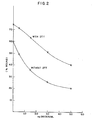
- Figure II depicts the amount of bound analyte in the presence and absence of 1,4-dithiothreitol of Example 2.
- the specific binding protein used in the inventive process may be any purified or non-purified antiserum.
- the specific binding protein is purified to enhance the specific immunoglobulin efficiency of the specific binding proteins active constituents when bonded to the insoluble support while concurrently decreasing the nonspecific binding of the nonimmunoglobulin fraction.
- Any conventional purification procedure may be employed to purify the specific binding protein to remove nonessential fractions. Such procedures preferably result in the removal of serum albumin; ⁇ -1 and a-2 from the remaining mixed serum globulins. Removal of beta-globulin fraction is not required and if removed, may reduce the quantitative amount of specific binding protein present in the original sample.
- Representative purification procedures include precipitation of the immunoglobulins with ammonium sulfate by conventional precipitation methods (see for example U.S. Patent 4,069,352) or removal of unwanted material using solubilizing organic solvents such as ethoxyacridine. These latter techniques involve selective solubilization of the specific binding protein and precipitation of the remaining nonessential fractions. Once recovered, the purified specific binding protein is used or stored until ready for use.
- the reducing agent has the chemical ability to prevent the formation of intramolecular sulfide bonds by rendering the sulfur group in a reduced sulfhydryl form, i.e., -SH.
- the specific binding protein/antibody is then stabilized in terms of immunoreactivity in the respective coating solution.
- the specific binding protein When coated on an insoluble plastic support, the specific binding protein generally exhibits greater binding of the labeled analyte than when the reducing agent is not incorporated. Immunoreactive stability of the specific binding protein, once bound to the solid phase surface, has been found to be quite good for long periods of time, even up to several months at 25°C.
- the order in which the specific binding protein is contacted with the aldehyde compound and the reducing agent is not critical. It is only necessary that the specific binding protein be in contact with both the aldehyde compound and reducing agent prior to contact with the insoluble support. Contacting the insoluble support with either the antibody, aldehyde compound, or reducing agent prior to coating the supporting does not result in any added benefit by reducing loss of analyte inhibitory activity.
- a buffer to control pH during the reaction.
- Acceptable material is obtained when buffer is employed in suitable amounts to control pH between 6.0 and 7.8 and preferably 7.0 and 7.5, Any suitable buffer may be selected for this purpose which does not affect the protein properties.
- illustrative buffers include sodium carbonate, potassium carbonate, sodium or potassium phosphate (monobasic and/or dibasic), sodium chloride in a suitable buffer base and potassium chloride in a suitable buffer, and mixtures thereof.
- the components are mixed they are allowed to react for a sufficient time at temperatures below about 37°C to form the aldehyde-analyte conjugate. Temperatures should be maintained between 4°C and 37°C and preferably between 20°C and 30°C for optimum efficiency.
- the reaction time may vary greatly from a few minutes to several hours and preferably from 5 to 60 minutes.
- the aldehyde compounds used in the invention may be selected from a wide variety of monofunctional and bifunctional reagents which are water-soluble.
- Exemplary water-soluble monofunctional material may be represented by the formula OCH-R 1 wherein R 1 hydrogen, an alkyl group, and an aryl group.
- Representative compounds include formaldehyde, acetaldehyde, propionaldehyde, n-butylaldehyde and benzaldehyde, and mixtures thereof, with formaldehyde being preferred.
- Exemplary water-soluble bifunctional material may be represented by the formula OHC-(R 2 )n-CHO, wherein R may be -(CH 2 )-, and wherein n is an integer from 2 to 10; such as an alkyl group, for example, glutaraldehyde; monocyclic alkyl group, for example, cyclopentyl or cyclohexyl; monocyclic aryl group, for example, phenyl; bicyclic aryl group, for example, naphthyl; substituted monocyclic alkane group, or substituted monocyclic aryl group, for example, tolyl and mixtures thereof.
- the preferred bifunctional aldehyde is glutaraldehyde.
- the thus obtained aldehyde reacted specific binding protein is then brought into contact with an insoluble support and permitted to bond to the support in the presence of the reducing agent.
- the reducing agents used in the invention may be selected from a wide variety of reagents which are reactive with disulfides to enable reduction of the sulfur moiety to the sulfhydryl form.
- Illustrative reducing agents include 1,4-dithiothreitol, 2-mercaptoethanol, thioglycollate, sodium borohydride, cysteine and mixtures thereof.
- the preferred material is 1,4-dithiothreitol because it is quite reactive in preventing the reoxidation of the sulfhydryl groups in the absence of blocking agents, and it enables retention of analyte activity over prolonged storage conditions.
- the amount of reducing agent used is dependent upon the particular binding protein employed and the amount of sulfur containing amino acids, namely cysteine, present in the structure. In general, amounts of about O.1milliMolar to about 2.0milliMolar, and preferably about 0.2milliMolar to about 0.8milliMolar have been found effective .
- the aldehyde-specific binding protein complex is then brought into contact with an insoluble support in the presence of a reducing agent and permitted to bond to the internal surface of the support.
- This reaction can be obtained by incubation of the reaction product in the presence of the insoluble support under suitable temperature in the essential presence of a buffered solution.
- the temperature may vary widely depending upon the reaction time and coating efficiency desired and is preferably performed at temperatures from about 4°C to about 30°C. Buffering is essential to achieve maximum coating efficiency and is performed at pH values below 8.0, preferably between about 6.0 and about 7.5 and most preferably between about 7.0 and about 7.5. The pH value should be maintained during the entire coating period.
- Illustrative buffers include sodium carbonate, potassium carbonate, sodium phosphate (monobasic and dibasic), potassium phosphate (monobasic and dibasic), sodium chloride in a suitable buffer and potassium chloride in a suitable buffer, and mixtures thereof.
- the incubation time may vary widely depending on the degree of binding desired. Residence time of from 3 hours to 24 hours and preferably 10 hours to 20 hours have been found suitable to achieve % bindings greater than 40%.
- the excess solution is decanted and the solid support preferably rinsed with distilled water to remove unbound components.
- the resulting aldehyde-reducing agent-specific bonding protein reactant enhibits enhanced coating efficiency and long term storage stability.
- Suitable solid support surfaces are formed from water-insoluble polymeric material capable of absorbing the specific binding protein.
- exemplary materials include hydrocarbon polymers such as polystyrene, polyethylene, polypropylene and polybutylene.
- suitable organic polymers include silastic rubber, polyesters, polyamides, cellulose and cellulosic derivatives, acrylates, methacrylates, and vinyl polymers such as vinyl chloride, and polyvinyl fluoride. Copolymers such as graft copolymers of polystyrene are also useful.
- a particularly effective form for the solid support surface is a test tube, bead, fin, well or microtitre plate.
- unbound protein and solution are removed from the insoluble support and the support surface is allowed to dry. Drying may be achieved by conventional techniques such as air drying or oven drying overnight at ambient temperatures up to 50°C.
- the resulting immunoassay tube has long term stability and excellent reproducibility. Storage may be undertaken at suitable temperatures such as from about 4°C to about 30°C.
- the solid phase immunoassay system prepared by this process demonstrates a high degree of specific binding protein absorption without apparent loss by desorption when in use, this assay is a simple, rapid and practical means to provide an accurate analysis of small amounts of sample substances and is well suited for quantitative and qualitative determinations.
- This invention encompasses a means for assaying for a specific analyte, such as an antigen, hapten or antibody in which a solid support surface is provided with a conjugate specific binding protein by the procedure of this invention.
- the insoluble support is then treated by conventional procedures to determine the quantitative and/or qualitative amount of material to be analyzed.
- an unlabeled specimen analyte and a labeled specific analyte may contact the surface of the solid support of this invention to permit competitive reaction, followed by separation of bound and unbound material and measurement of the labeled component on the surface or in the removed solution to calculate the amount of specimen analyte present.
- the labeled material used in the immunoassay of this invention may be any convention label, such as a radioactive isotope, an enzyme or a fluormetric material.
- a radioactive isotope such as a radioactive isotope, an enzyme or a fluormetric material.
- the amount of labeled analyte can be determined by measuring enzymatic activity of the tube.
- the amount of labeled antigen can be determined by measuring fluorescense as described by U.S. Patent 3,789,116 to Kay.
- the labeled material serves as a tracer.
- a particularly preferred method involves labeling the specific binding protein with a radioactive isotope in a conventional manner.
- Suitable isotopes include I 125 , I 131' C14 or H 3.
- a particularly suitable isotope is the radioactive isotope of iodine, I 125 since labeling with this isotope is simple and many hospital laboratories have the equipment necessary to measure this material.
- kits for assaying a specimen for a specific analyte which may contain all or some of the materials including the assay tubes and instructions.
- the kit will contain the insoluble support with its surface coated with a specific binding protein according to the process of this invention and a labeled analyte.
- the present invention is further illustrated by the following examples. All parts and percentages in the examples as well as in the specification and claims are by weight unless otherwise specified.
- Purified rabbit antiserum for L-3,5,3-triiodothyronine (T 3 ) is diluted 1 : 15,000 in a 0.5molar phosphate buffer having a pH of 7.5.
- Glutaldehyde is added to a final concentration of 5milliMolar (mM) and reacted for 20 minutes at room temperature.
- 1,4-dithiothreitol (DTT) is added to a final concentration of 0.6 mM in Inventive Run 1 but not in comparative Run A.
- the solution is allowed to mix and one milliliter is then dispersed into polypropylene tubes, incubated overnight at 24°C, decanted, washed one time with a tris-gelatin buffer having a pH of 7.4 and allowed to air dry at 25°C.
- Rabbit digoxin antiserum is purified with ethoxy- acrydine (0.04%) and the soluble portion is dialyzed against dilute phosphate buffer.
- the purified antiserum is diluted 1 : 15,000 in a buffer containing 0.45m NaCl + 0.01 mP0 4 and reacted with glutaraldehyde at a 5.0 mM concentration for 20 minutes.
- 1,4-dithiothreitol is then added to a concentration of 0.6 mM in Inventive Run 2 but not in Comparative Run B.
- the solution is then mixed and 1.0 ml is added to polypropylene tubes and incubated 0/N at 25°C.
- Tubes are decanted, washed once with a tris-gelatin buffered solution at pH 7.4, and then air dried.
- Figure II shows that binding of the digoxin antiserum is significantly increased over tubes made without the use of the 1,4-dithiothreitol.
- This example demonstrates use of the solid phase immunoassay of this invention in the determination of a specific analyte.
- analyte present in a sample specimen 10 microliters of the specimen is placed into a previously prepared antibody analyte coated tube, which tube is prepared by the procedure of Example 1 and contained the ingredients recited in the Table. All ingredients were added in the order recited. Subsequently, a 1.0 milliliter sample of a radioactively labeled complementary antigen using an I 125 tracer in a buffer at pH 7.0, is added to the antibody coated tube. The reactants are incubated for 45 minutes at 24°C. The reactants are decanted and the percent bound fraction determined by a gamma counter which measures the I125 activity and the percent bound of the specimen analyte computed from a dose response curve using known standards.
- results indicate the presence of a synergistic effect when both the aldehyde and reducing agent are present during the bonding reaction.
- results also indicate that the order of addition of the aldehyde and reducing agent are not critical.
Landscapes
- Health & Medical Sciences (AREA)
- Immunology (AREA)
- Life Sciences & Earth Sciences (AREA)
- Engineering & Computer Science (AREA)
- Molecular Biology (AREA)
- Biomedical Technology (AREA)
- Chemical & Material Sciences (AREA)
- Hematology (AREA)
- Urology & Nephrology (AREA)
- Biotechnology (AREA)
- Biochemistry (AREA)
- Cell Biology (AREA)
- Food Science & Technology (AREA)
- Medicinal Chemistry (AREA)
- Physics & Mathematics (AREA)
- Analytical Chemistry (AREA)
- Microbiology (AREA)
- General Health & Medical Sciences (AREA)
- General Physics & Mathematics (AREA)
- Pathology (AREA)
- Medicines Containing Antibodies Or Antigens For Use As Internal Diagnostic Agents (AREA)
- Peptides Or Proteins (AREA)
- Investigating Or Analysing Biological Materials (AREA)
Applications Claiming Priority (2)
| Application Number | Priority Date | Filing Date | Title |
|---|---|---|---|
| US54372483A | 1983-10-20 | 1983-10-20 | |
| US543724 | 1983-10-20 |
Publications (1)
| Publication Number | Publication Date |
|---|---|
| EP0139526A2 true EP0139526A2 (de) | 1985-05-02 |
Family
ID=24169321
Family Applications (1)
| Application Number | Title | Priority Date | Filing Date |
|---|---|---|---|
| EP19840307169 Withdrawn EP0139526A2 (de) | 1983-10-20 | 1984-10-18 | Unlöslich gemachtes stabiles spezifisches Bindungsprotein |
Country Status (3)
| Country | Link |
|---|---|
| EP (1) | EP0139526A2 (de) |
| JP (1) | JPS60126300A (de) |
| AU (1) | AU549315B2 (de) |
Cited By (2)
| Publication number | Priority date | Publication date | Assignee | Title |
|---|---|---|---|---|
| FR2547057A1 (fr) * | 1983-05-13 | 1984-12-07 | Lofarma Farma Lab | Procede pour fixer d'une facon stable des antigenes et des allergenes sur des supports solides, et supports destines a cet usage |
| WO1999054735A1 (en) * | 1998-04-17 | 1999-10-28 | Innogenetics N.V. | Improved immunodiagnostic assays using reducing agents |
Families Citing this family (1)
| Publication number | Priority date | Publication date | Assignee | Title |
|---|---|---|---|---|
| JPS61213673A (ja) * | 1985-03-19 | 1986-09-22 | Morinaga Milk Ind Co Ltd | 免疫学的測定試薬の製造法 |
-
1984
- 1984-10-18 EP EP19840307169 patent/EP0139526A2/de not_active Withdrawn
- 1984-10-19 JP JP21879984A patent/JPS60126300A/ja active Pending
- 1984-10-19 AU AU34485/84A patent/AU549315B2/en not_active Ceased
Cited By (6)
| Publication number | Priority date | Publication date | Assignee | Title |
|---|---|---|---|---|
| FR2547057A1 (fr) * | 1983-05-13 | 1984-12-07 | Lofarma Farma Lab | Procede pour fixer d'une facon stable des antigenes et des allergenes sur des supports solides, et supports destines a cet usage |
| EP0131546A3 (en) * | 1983-05-13 | 1987-02-04 | Laboratorio Farmaceutico Lofarma S.R.L. | Method for stably binding antigens and allergens to solid supports and supports obtained |
| WO1999054735A1 (en) * | 1998-04-17 | 1999-10-28 | Innogenetics N.V. | Improved immunodiagnostic assays using reducing agents |
| AU751362B2 (en) * | 1998-04-17 | 2002-08-15 | Innogenetics N.V. | Improved immunodiagnostic assays using reducing agents |
| CZ298268B6 (cs) * | 1998-04-17 | 2007-08-08 | Innogenetics N. V. | Imunodiagnostický test používající redukující cinidla |
| US7935490B2 (en) | 1998-04-17 | 2011-05-03 | N.V. Innogenetics | Immunodiagnostic assays using reducing agents |
Also Published As
| Publication number | Publication date |
|---|---|
| JPS60126300A (ja) | 1985-07-05 |
| AU3448584A (en) | 1985-04-26 |
| AU549315B2 (en) | 1986-01-23 |
Similar Documents
| Publication | Publication Date | Title |
|---|---|---|
| US4217338A (en) | Novel supports carrying side chains, processes for obtaining these supports, process for attaching organic compounds having carbohydrate residues on said supports, products and reagents resulting from said _chemical fixation | |
| US4243749A (en) | Immunoassay employing an enzyme label | |
| US4001583A (en) | Covalently bound biological substances to plastic materials and use in radioassay | |
| US4210418A (en) | Container for immunochemical and enzymatical determinations or procedures | |
| Quash et al. | The preparation of latex particles with covalently bound polyamines, IgG and measles agglutinins and their use in visual agglutination tests | |
| US4478946A (en) | Carrier bound immunosorbent | |
| US4108974A (en) | Radioimmunoassay for thyroid hormone | |
| JPS6262289B2 (de) | ||
| US4427781A (en) | Particle agglutination immunoassay with agglutinator for determining haptens; PACIA | |
| US4230683A (en) | Hapten conjugated antibody for antibody or antigen detection | |
| US5175112A (en) | Submicron particles, preparation and utilization in immunodiagnosis | |
| US4225784A (en) | Covalently bound biological substances to plastic materials and use in radioassay | |
| JPH0616044B2 (ja) | 免疫学的ラテツクス凝集法 | |
| US4430318A (en) | Immunoassay utilizing 125 I Protein A | |
| EP0139526A2 (de) | Unlöslich gemachtes stabiles spezifisches Bindungsprotein | |
| EP0083869A1 (de) | Immunoassay-Verfahren | |
| JPS58211662A (ja) | 試験試料中の被検体を測定するための均一系結合分析方法および該方法に用いる試薬系 | |
| US4467030A (en) | Determination of the thyroxine-binding index in serum | |
| Pines et al. | Polyacrolein microspheres as a new solid phase for radioimmunoassay | |
| US4066410A (en) | Thyroid hormone assay | |
| US5591598A (en) | Method for quantitating hydrazide groups | |
| EP0115681A1 (de) | Verfahren zur Herstellung eines Fest-Phasen-Immunoassays | |
| JP7661773B2 (ja) | L-サイロキシン特異的イムノアッセイ | |
| JPS58221166A (ja) | 免疫化学的測定用担体および該担体を使用した測定試薬 | |
| EP0080108A1 (de) | Diagnostisches Reagent und dessen Verwendung |
Legal Events
| Date | Code | Title | Description |
|---|---|---|---|
| PUAI | Public reference made under article 153(3) epc to a published international application that has entered the european phase |
Free format text: ORIGINAL CODE: 0009012 |
|
| AK | Designated contracting states |
Designated state(s): BE CH DE FR GB LI NL SE |
|
| STAA | Information on the status of an ep patent application or granted ep patent |
Free format text: STATUS: THE APPLICATION HAS BEEN WITHDRAWN |
|
| 18W | Application withdrawn |
Withdrawal date: 19860515 |
|
| RIN1 | Information on inventor provided before grant (corrected) |
Inventor name: GUZZALDO, CAROLE Inventor name: BARNES, WAYNE R. Inventor name: MORRISON, JULIE D. |