EP0142356A2 - Méthode analytique pour la détermination du formaldéhyde dans un bain de placage de cuivre sans courant - Google Patents
Méthode analytique pour la détermination du formaldéhyde dans un bain de placage de cuivre sans courant Download PDFInfo
- Publication number
- EP0142356A2 EP0142356A2 EP84307769A EP84307769A EP0142356A2 EP 0142356 A2 EP0142356 A2 EP 0142356A2 EP 84307769 A EP84307769 A EP 84307769A EP 84307769 A EP84307769 A EP 84307769A EP 0142356 A2 EP0142356 A2 EP 0142356A2
- Authority
- EP
- European Patent Office
- Prior art keywords
- formaldehyde
- electrode
- electroless copper
- copper plating
- plating bath
- Prior art date
- Legal status (The legal status is an assumption and is not a legal conclusion. Google has not performed a legal analysis and makes no representation as to the accuracy of the status listed.)
- Granted
Links
Images





Classifications
-
- G—PHYSICS
- G01—MEASURING; TESTING
- G01N—INVESTIGATING OR ANALYSING MATERIALS BY DETERMINING THEIR CHEMICAL OR PHYSICAL PROPERTIES
- G01N31/00—Investigating or analysing non-biological materials by the use of the chemical methods specified in the subgroup; Apparatus specially adapted for such methods
- G01N31/16—Investigating or analysing non-biological materials by the use of the chemical methods specified in the subgroup; Apparatus specially adapted for such methods using titration
- G01N31/162—Determining the equivalent point by means of a discontinuity
- G01N31/164—Determining the equivalent point by means of a discontinuity by electrical or electrochemical means
Definitions
- the present invention relates to an analytical method for determining formaldehyde in an electroless copper plating bath.
- An electroless copper plating bath usually contains cupric ions, a complexing agent that forms a complex compound with cupric ions, and formaldehyde as a reducing agent. It has a comparatively high pH value. As the electroless copper plating proceeds, the concentrations of cupric ions and formaldehyde decrease and the pH goes down. The change in concentrations lowers the deposition rate of electroless copper plating and fluctuates the physical properties of the electroless copper deposit. Thus it is necessary to measure the concentrations of cupric ions and formaldehyde in the electroless copper plating bath and the pH of the bath continuously or intermittently, and to keep a prescribed level of concentrations by replenishing them and to keep the pH at a prescribed value.
- the quantity of formaldehyde in the plating bath is determined by using a sulfite (sodium sulfite).
- This method utilizes the addition reaction of formaldehyde with sodium sulfite.
- the plating solution is neutralized to a certain level of pH with a prescribed amount of acid aqueous solution of predetermined concentration, and then sodium sulfite is added to the neutralized plating solution.
- Formaldehyde reacts with sodium sulfite to give sodium hydroxide as shown in the following equation. HCHO + Na 2 S0 3 + H 2 0 ⁇ CH 2 (NaSO 3 )OH + NaOH
- the sodium hydroxide thus formed changes the pH. Therefore, the quantity of formaldehyde can be determined by measuring the pH change with a pH meter, or by determining the quantity of sodium hydroxide with acidimetry to restore the original pH of the neutralized plating solution.
- This method has a disadvantage of causing errors that make analytical values smaller than correct ones. This is inevitable because the plating solution is adjusted to pH 9 - 10 before the addition of sodium sulfite in order to avoid the effect of other components in the plating bath. At this pH level, the above-mentioned reaction is slow and incomplete, particularly where the concentration of formaldehyde is low. In practice, the analytical values obtained by this method are corrected by an empirical factor. Moreover, this method has another disadvantage attributable to the use of a pH meter. The glass electrode of a pH meter tends to cause errors when deteriorated by the strong basicity (pH 13 - 14) resulting from sodium sulfite added.
- the present inventors carried out extensive studies on the analytical method for determining formaldehyde in the electroless copper plating bath, with great emphasis on the method that gives accurate results even in the case where the concentration of formaldehyde is low and on the method capable of determining free formaldehyde directly in the case where the plating solution is incorporated with a compound that forms an addition product with formaldehyde.
- this object can be achieved by potentiometric titration in which a hydroxylamine salt such as hydroxylamine hydrochloride is used as the titrant and a silver electrode as the indicator electrode.
- the present invention was completed based on this finding.
- an object of this invention to provide an analytical method for determining by potentiometric titration formaldehyde in an electroless copper plating bath which comprises using a hydroxylamine salt such as hydroxylamine hydrochloride as the titrant and a silver electrode as the indicator electrode.
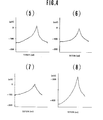
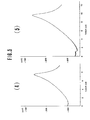
- the silver electrode indicates clearly the end point of the potentiometric titration of the electroless copper plating solution sample containing copper ions and a complexing agent, resulting in the accurate determination of formaldehyde in the bath, even when the concentration of formaldehyde is as low as 0.006 mol/liter and the concentrations of copper and complexing agent fluctuate.
- a compound that forms an addition product with formaldehyde is added to the electroless plating bath, it is possible to determine selectively and directly free formaldehyde which remains unreacted with the compound to form an addition product and exists in HCHO as it is. Since the free formaldehyde directly takes part in the plating reaction, the analytical method of formaldehyde according to the present invention is very effective for an electroless plating bath containing a compound that forms an addition product with formaldehyde.
- a potentiometric titration method is employed in which formaldehyde in the electroless plating solution sample is titrated with a hydroxylamine salt and the end point of the titration is detected by using an indicator electrode consisting of a silver electrode and a reference electrode.
- hydroxylamine salt hydroxylamine hydrochloride, hydroxylamine sulfate, hydroxylamine oxalate and the like are used. Among them, hydroxylamine hydrochloride is most preferred.
- the hydroxylamine salt such as hydroxylamine hydrochloride used in this invention is not specifically limited in concentration. In general, it may be used in the form of aqueous solution of 0.01 to 0.1 mol/liter in concentration, depending on the sample quantity of electroless copper plating bath.
- the titration is carried out in an alkali pH range by adding an alkali such as an alkali metal hydroxide (including sodium hydroxide and potassium hydroxide), an alkali metal carbonate, an alkali metal becarbonate, an alkali earth metal hydroxide and the like to a sample solution.
- the hydroxylamine salt is dropped to this alkali sample solution.
- the potentiometric titration is performed in the usual way, except that a silver electrode is used as the indicator electrode.
- the silver electrode indicates clearly the end point of titration as shown in the Examples given later. This permits the accurate determination of formaldehyde.
- Other indicator electrodes such as platinum electrode and gold electrode do not indicate the end point clearly and often cause considerable errors in the determination of formaldehyde.
- the reference electrode is selected from a silver chloride electrode, calomel electrode, platinum electrode, gold electrode, and silver electrode.
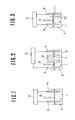
- a reference electrode such as silver chloride electrode and calomel electrode which contains an internal solution therein can be immersed directly in the plating solution as Fig. 1 shows.
- Fig. 1 there are shown a plating solution container 1, a plating solution 2, an indicator electrode (silver electrode) 3, a reference electrode 4, a recording potentiometer 5, and a buret for dropping hydroxylamine hydrochloride 6.
- the reference electrode 4 is immersed in the electrode solution 7, and the electrode solution 7 and the plating solution 2 are connected by a salt bridge 9.
- the plating solution container 1 is divided into two compartments by a partition 11 having a porous part 10 such as ceramics and sintered glass as shown in Fig. 3.
- the electrode solution is selected from potassium chloride solution, which is usually used as an internal solution of an electrode, and any other solutions which transmit the potential in a stable manner.
- Examples of such solutions include an aqueous solution of EDTA or a mixture solution of EDTA and sodium hydroxide which may be a constituent of the electroless copper plating solution.
- the analytical method of this invention can be applied to electroless copper plating baths of any type so long as they contains formaldehyde.
- the electroless copper plating bath contains copper ions which is supplied by copper sulfate or the like in an amount of 0.005 to 1 mol/liter, the agent for complexing cupric ions including ethylenediamine derivatives such as ethylenediaminetetraacetic acid, tetrahydroxy propyl ethylenediamine, N-hydroxy ethyl ethylenediaminetriacetic acid and the salts of these compounds; diethylenetriaminetriacetic acid, diethylenetriaminepentaacetic acid, nitrotriacetic acid, cyclohexylenediaminetetraacetic acid, citric acid, tartaric acid and the salts of these compounds in an amount of 0.01 to 3 mol/liter, formaldehyde in an amount of 0.01 to 0.5 mol/liter, and, as required, a stabilizer and other compounds.
- the agent for complexing cupric ions including ethylenediamine derivatives such as ethylenediaminetetraacetic acid, tetrahydroxy propyl
- the present invention accurately determines the concentration of formaldehyde even when the concentrations of copper and complexing agent fluctuate in the electroless copper plating bath. Moreover, it can determine formaldehyde in as low concentration as 0.01 mol/liter.
- the analytical method of this invention is suitably applied to the determination of formaldehyde in an electroless copper plating bath containing a compound that forms an addition product with formaldehyde.
- the compound that forms an addition product with formaldehyde is a water-soluble organic compound having at least two polar groups, at least one of which is an amino group or imino group, and it is preferably one in which the main chain is a saturated or unsaturated linear hydrocarbon having 1 to 200 carbon atoms.
- Examples of the compound include aminocarboxylic acids such as glycine and alanine, aminosulfonic acids, aminophosphonic acids, polyamines such as ethylene diamine, aminoalkanols, aminoethers, aminoketones, iminocarboxylic acids, iminosulfonic acids, iminophosphonic acids, iminoalcohols, iminoethers, and iminoketones.
- the compound may be added in an amount of 0.004 to 1 mole/liter.
- the analytical method of this invention can be applied to an automatic apparatus designed to determine the concentration of formaldehyde in the electroless copper plating bath continuously or intermittently.
- Such an apparatus may be connected to a computer-controlled apparatus that replenished formaldehyde when the concentration of formaldehyde decreases below the prescribed level.
- An electroless copper plating solution of the following composition was used as a sample.
- Electroless copper plating solutions of the following compositions were used as samples.
- results in this example indicate that the potentiometric titration with hydroxylamine hydrochloride using a silver electrode as the indicator electrode can determine formaldehyde of low concentration in an electroless copper plating bath.
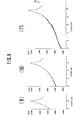
- Fig. 6 shows the results of determination of formaldehyde of different concentrations in electroless copper plating baths.
- the determination was performed according to the potentiometric titration (with A g-Ag/AgCl electrodes) of this invention, and also according to the conventional titration with sodium sulfite.
- the analytical values plotted on the ordinate in Fig. 6 are those which are expressed by A/B x 100%, where A is the analytical value of formaldehyde and B is the quantity of formaldehyde added to the plating solution.
- "I" indicates the results of the invention method and "P" indicates the results of conventional sodium sulfite method.
- a 5-ml sample was taken from an electroless copper plating solution of the following composition, and it was diluted with 30 ml of deionized water and 10 ml of 1 N NaOH. Potentiometric titration was performed with a 0.05 mol/liter aqueous solution of hydroxylamine hydrochloride by using the Ag-Ag/AgCl electrodes.
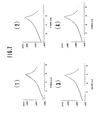
- Table 3 shows the concentrations of copper and EDTA.4Na in the electroless copper plating solutions analyzed, and Fig. 7 shows the results of analyses.
- Fig. 7 indicate that the analytical method of this invention gives correct analytical values of formaldehyde even when the concentrations of copper and complexing agent (EDTA.4Na) in the plating bath fluctuate.
- a 5-ml sample was taken from an electroless copper plating solution of the following composition, and it was diluted with 30 ml of deionized water and 10 ml of 1 N NaOH. Potentiometric titration was performed with a 0.05 mol/liter aqueous solution of hydroxylamine hydrochloride by using the Ag-Ag/AgCl electrodes.
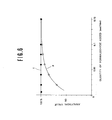
- Table 4 shows the concentrations of glycine in the electroless copper plating solutions analyzed, and Fig. 8 shows the results of analyses.
- Table 4 and Fig. 8 indicate that-the quantity of formaldehyde determined by the potentiometric titration with hydroxylamine hydrochloride decreases as the quantity of glycine increases. This suggests that the potentiometric titration determines the concentration of free formaldehyde.
- Table 4 and Fig. 8 indicate that the analytical method of this invention is very practical in view of the fact that it is capable of determining the concentration of free formaldehyde which directly takes part in the plating reaction.
- the conventional titration with sodium sulfite invariably gives a value of about 0.06 mol/liter for the concentration of formaldehyde regardless of the quantity of glycine added. This suggests that the conventional method determines the quantity of total formaldehyde, some of which does not take part in the plating reaction.
Landscapes
- Health & Medical Sciences (AREA)
- Chemical & Material Sciences (AREA)
- Life Sciences & Earth Sciences (AREA)
- Physics & Mathematics (AREA)
- Electrochemistry (AREA)
- Molecular Biology (AREA)
- Chemical Kinetics & Catalysis (AREA)
- Analytical Chemistry (AREA)
- Biochemistry (AREA)
- General Health & Medical Sciences (AREA)
- General Physics & Mathematics (AREA)
- Immunology (AREA)
- Pathology (AREA)
- Chemically Coating (AREA)
- Investigating Or Analyzing Non-Biological Materials By The Use Of Chemical Means (AREA)
Applications Claiming Priority (2)
| Application Number | Priority Date | Filing Date | Title |
|---|---|---|---|
| JP58212066A JPS60104246A (ja) | 1983-11-11 | 1983-11-11 | 化学銅めつき浴中のホルムアルデヒドの分析方法 |
| JP212066/83 | 1983-11-11 |
Publications (3)
| Publication Number | Publication Date |
|---|---|
| EP0142356A2 true EP0142356A2 (fr) | 1985-05-22 |
| EP0142356A3 EP0142356A3 (en) | 1986-01-15 |
| EP0142356B1 EP0142356B1 (fr) | 1988-08-31 |
Family
ID=16616298
Family Applications (1)
| Application Number | Title | Priority Date | Filing Date |
|---|---|---|---|
| EP84307769A Expired EP0142356B1 (fr) | 1983-11-11 | 1984-11-09 | Méthode analytique pour la détermination du formaldéhyde dans un bain de placage de cuivre sans courant |
Country Status (4)
| Country | Link |
|---|---|
| US (1) | US4541902A (fr) |
| EP (1) | EP0142356B1 (fr) |
| JP (1) | JPS60104246A (fr) |
| DE (1) | DE3473798D1 (fr) |
Cited By (2)
| Publication number | Priority date | Publication date | Assignee | Title |
|---|---|---|---|---|
| CN108828133A (zh) * | 2018-08-20 | 2018-11-16 | 上海添蓝生物科技有限公司 | 一种用于甲醛缩合物杀菌剂有效含量的测定方法 |
| CN111398363A (zh) * | 2020-04-29 | 2020-07-10 | 中国科学院上海硅酸盐研究所 | 一种基于二硫化钼和羟胺的甲醛气敏传感器及其制备方法 |
Families Citing this family (17)
| Publication number | Priority date | Publication date | Assignee | Title |
|---|---|---|---|---|
| DE3668915D1 (de) * | 1985-02-28 | 1990-03-15 | Uemura Kogyo Kk | Verfahren und vorrichtung zum feststellen des beginns des stromlosen plattierungsvorgangs. |
| US4814197A (en) * | 1986-10-31 | 1989-03-21 | Kollmorgen Corporation | Control of electroless plating baths |
| US4812210A (en) * | 1987-10-16 | 1989-03-14 | The United States Department Of Energy | Measuring surfactant concentration in plating solutions |
| US5286363A (en) * | 1990-10-18 | 1994-02-15 | Georgia-Pacific Resins, Inc. | Dynamic microchamber for measuring formaldehyde emissions |
| FR2681139B1 (fr) * | 1991-09-10 | 1993-11-05 | Matieres Nucleaires Cie Gle | Installation pour effectuer plusieurs reactions chimiques successives dans un meme recipient. |
| US5419926A (en) * | 1993-11-22 | 1995-05-30 | Lilly London, Inc. | Ammonia-free deposition of copper by disproportionation |
| US5501777A (en) * | 1994-12-30 | 1996-03-26 | At&T Corp. | Method for testing solder mask material |
| US6139801A (en) * | 1996-11-19 | 2000-10-31 | Obayashi Corporation | Gas collecting apparatus |
| US6899805B2 (en) * | 1998-05-01 | 2005-05-31 | Semitool, Inc. | Automated chemical management system executing improved electrolyte analysis method |
| USRE38931E1 (en) | 1998-05-01 | 2006-01-10 | Semitool, Inc. | Methods for controlling and/or measuring additive concentration in an electroplating bath |
| US6814855B2 (en) * | 1998-05-01 | 2004-11-09 | Semitool, Inc. | Automated chemical management system having improved analysis unit |
| US6365033B1 (en) * | 1999-05-03 | 2002-04-02 | Semitoof, Inc. | Methods for controlling and/or measuring additive concentration in an electroplating bath |
| US6592736B2 (en) | 2001-07-09 | 2003-07-15 | Semitool, Inc. | Methods and apparatus for controlling an amount of a chemical constituent of an electrochemical bath |
| US20040108213A1 (en) * | 2002-12-09 | 2004-06-10 | Talasek Robert T. | Plating bath composition control |
| US6890758B2 (en) * | 2003-06-13 | 2005-05-10 | Eci Technology, Inc. | Measurement of complexing agent concentration in an electroless plating bath |
| EP2659027A2 (fr) * | 2010-12-27 | 2013-11-06 | Council of Scientific & Industrial Research | Procédé de placage anélectrolytique |
| JP6462402B2 (ja) * | 2015-02-19 | 2019-01-30 | ラボテック株式会社 | 塩化ナトリウムの濃度分析方法、塩化ナトリウムの濃度分析計及び次亜塩素酸ナトリウム分析計 |
Family Cites Families (5)
| Publication number | Priority date | Publication date | Assignee | Title |
|---|---|---|---|---|
| US3551109A (en) * | 1967-12-13 | 1970-12-29 | Harald Dahms | Method and apparatus for the titration of chloride and bicarbonate in serum |
| US3655526A (en) * | 1969-11-20 | 1972-04-11 | Miles Lab | Potentiometric titration process |
| US3697224A (en) * | 1970-10-30 | 1972-10-10 | Nalco Chemical Co | Titration of excess chelating agent |
| GB1577565A (en) * | 1978-05-25 | 1980-10-29 | Ciba Geigy Ag | Preparation of sensitive silver electrode |
| JPS56120943A (en) * | 1980-02-29 | 1981-09-22 | Hitachi Ltd | Manufacture of ph-detecting electrode |
-
1983
- 1983-11-11 JP JP58212066A patent/JPS60104246A/ja active Granted
-
1984
- 1984-11-07 US US06/668,956 patent/US4541902A/en not_active Expired - Lifetime
- 1984-11-09 DE DE8484307769T patent/DE3473798D1/de not_active Expired
- 1984-11-09 EP EP84307769A patent/EP0142356B1/fr not_active Expired
Cited By (2)
| Publication number | Priority date | Publication date | Assignee | Title |
|---|---|---|---|---|
| CN108828133A (zh) * | 2018-08-20 | 2018-11-16 | 上海添蓝生物科技有限公司 | 一种用于甲醛缩合物杀菌剂有效含量的测定方法 |
| CN111398363A (zh) * | 2020-04-29 | 2020-07-10 | 中国科学院上海硅酸盐研究所 | 一种基于二硫化钼和羟胺的甲醛气敏传感器及其制备方法 |
Also Published As
| Publication number | Publication date |
|---|---|
| DE3473798D1 (en) | 1988-10-06 |
| US4541902A (en) | 1985-09-17 |
| JPS64658B2 (fr) | 1989-01-09 |
| EP0142356A3 (en) | 1986-01-15 |
| EP0142356B1 (fr) | 1988-08-31 |
| JPS60104246A (ja) | 1985-06-08 |
Similar Documents
| Publication | Publication Date | Title |
|---|---|---|
| US4541902A (en) | Analytical method for determining formaldehyde in electroless copper plating bath | |
| Frant et al. | Electrode indicator technique for measuring low levels of cyanide | |
| Langmuir et al. | Specific-ion electrode determination of nitrate in some fresh waters and sewage effluents | |
| Nakagawa et al. | Use of the copper (II)-selective electrode for the determination of the stability constants of copper (II) complexes | |
| Kölling | Comparison of different methods for redox potential determination in natural waters | |
| US4565575A (en) | Apparatus and method for automatically maintaining an electroless plating bath | |
| KR810000219B1 (ko) | 크롬 전기도금 방법 | |
| Brunt | Rapid determination of sulfide in waste waters by continuous flow analysis and gas diffusion and a potentiometric detector | |
| CN112326872B (zh) | 多元混合电镀镍溶液中硫酸镁、硫酸镍浓度的检测方法 | |
| Nomura et al. | Adsorptive determination of copper (II) in solution as its N, N-diethyldithiocarbamate on an electrode-separated piezoelectric quartz crystal | |
| Van Staden et al. | Flow-injection analysis with a coated tubular solid-state copper (II)-selective electrode | |
| US4674440A (en) | Apparatus for automatically replenishing an electroless plating bath | |
| US20040203165A1 (en) | Analytical reagent for acid copper sulfate solutions | |
| Karchmer et al. | Use of Empirically Derived Correction Factors: Polarographic Determination of Free Cyanide in Presence of Sulfides | |
| US4002428A (en) | Deductive method for measuring ion concentration electrically | |
| US4597806A (en) | Process for maintaining the zinc content in zinc phosphate baths | |
| Tombara et al. | A silver electrode in the potentiometric titration of thiols | |
| Trojanowicz et al. | Microdetermination of aluminium with fluoride-selective electrode | |
| US3923608A (en) | Method of detecting low levels of cyanide | |
| US3857762A (en) | Continuous analysis for copper concentration | |
| KR940004666B1 (ko) | 전기도금액중의 아민계 첨가제의 농도분석방법 | |
| EP0182102A2 (fr) | Méthode pour la détermination quantitative d'un matériel anionique | |
| SU1054758A1 (ru) | Способ определени осми | |
| US5137834A (en) | Process for selective complexometric analysis of n-phosphoromethyl-glycine, n-carboxymethyl-n-phosphonomethyl-glycine and n,n-bisphosphono-methyl-glycine | |
| Arey et al. | Determination of calcium and magnesium by chelometric indicator titrations with the cupric ion electrode |
Legal Events
| Date | Code | Title | Description |
|---|---|---|---|
| PUAI | Public reference made under article 153(3) epc to a published international application that has entered the european phase |
Free format text: ORIGINAL CODE: 0009012 |
|
| AK | Designated contracting states |
Designated state(s): BE CH DE FR GB IT LI NL SE |
|
| PUAL | Search report despatched |
Free format text: ORIGINAL CODE: 0009013 |
|
| AK | Designated contracting states |
Designated state(s): BE CH DE FR GB IT LI NL SE |
|
| 17P | Request for examination filed |
Effective date: 19860217 |
|
| 17Q | First examination report despatched |
Effective date: 19871105 |
|
| GRAA | (expected) grant |
Free format text: ORIGINAL CODE: 0009210 |
|
| AK | Designated contracting states |
Kind code of ref document: B1 Designated state(s): DE FR GB |
|
| REF | Corresponds to: |
Ref document number: 3473798 Country of ref document: DE Date of ref document: 19881006 |
|
| ET | Fr: translation filed | ||
| PLBE | No opposition filed within time limit |
Free format text: ORIGINAL CODE: 0009261 |
|
| STAA | Information on the status of an ep patent application or granted ep patent |
Free format text: STATUS: NO OPPOSITION FILED WITHIN TIME LIMIT |
|
| 26N | No opposition filed | ||
| PGFP | Annual fee paid to national office [announced via postgrant information from national office to epo] |
Ref country code: GB Payment date: 20001030 Year of fee payment: 17 |
|
| PGFP | Annual fee paid to national office [announced via postgrant information from national office to epo] |
Ref country code: FR Payment date: 20001117 Year of fee payment: 17 |
|
| PGFP | Annual fee paid to national office [announced via postgrant information from national office to epo] |
Ref country code: DE Payment date: 20001120 Year of fee payment: 17 |
|
| PG25 | Lapsed in a contracting state [announced via postgrant information from national office to epo] |
Ref country code: GB Free format text: LAPSE BECAUSE OF NON-PAYMENT OF DUE FEES Effective date: 20011109 |
|
| REG | Reference to a national code |
Ref country code: GB Ref legal event code: IF02 |
|
| GBPC | Gb: european patent ceased through non-payment of renewal fee |
Effective date: 20011109 |
|
| PG25 | Lapsed in a contracting state [announced via postgrant information from national office to epo] |
Ref country code: DE Free format text: LAPSE BECAUSE OF NON-PAYMENT OF DUE FEES Effective date: 20020702 |
|
| PG25 | Lapsed in a contracting state [announced via postgrant information from national office to epo] |
Ref country code: FR Free format text: LAPSE BECAUSE OF NON-PAYMENT OF DUE FEES Effective date: 20020730 |
|
| REG | Reference to a national code |
Ref country code: FR Ref legal event code: ST |
|
| REG | Reference to a national code |
Ref country code: FR Ref legal event code: ST |