EP0143863A2 - Procédé pour la fabrication de matière polyéthylène de dimensions précises avec un poids moléculaire très élevé - Google Patents
Procédé pour la fabrication de matière polyéthylène de dimensions précises avec un poids moléculaire très élevé Download PDFInfo
- Publication number
- EP0143863A2 EP0143863A2 EP83307248A EP83307248A EP0143863A2 EP 0143863 A2 EP0143863 A2 EP 0143863A2 EP 83307248 A EP83307248 A EP 83307248A EP 83307248 A EP83307248 A EP 83307248A EP 0143863 A2 EP0143863 A2 EP 0143863A2
- Authority
- EP
- European Patent Office
- Prior art keywords
- molecular weight
- ultra high
- high molecular
- parts
- product
- Prior art date
- Legal status (The legal status is an assumption and is not a legal conclusion. Google has not performed a legal analysis and makes no representation as to the accuracy of the status listed.)
- Granted
Links
Images
Classifications
-
- H—ELECTRICITY
- H01—ELECTRIC ELEMENTS
- H01B—CABLES; CONDUCTORS; INSULATORS; SELECTION OF MATERIALS FOR THEIR CONDUCTIVE, INSULATING OR DIELECTRIC PROPERTIES
- H01B1/00—Conductors or conductive bodies characterised by the conductive materials; Selection of materials as conductors
- H01B1/20—Conductive material dispersed in non-conductive organic material
- H01B1/24—Conductive material dispersed in non-conductive organic material the conductive material comprising carbon-silicon compounds, carbon or silicon
-
- B—PERFORMING OPERATIONS; TRANSPORTING
- B29—WORKING OF PLASTICS; WORKING OF SUBSTANCES IN A PLASTIC STATE IN GENERAL
- B29C—SHAPING OR JOINING OF PLASTICS; SHAPING OF MATERIAL IN A PLASTIC STATE, NOT OTHERWISE PROVIDED FOR; AFTER-TREATMENT OF THE SHAPED PRODUCTS, e.g. REPAIRING
- B29C48/00—Extrusion moulding, i.e. expressing the moulding material through a die or nozzle which imparts the desired form; Apparatus therefor
- B29C48/022—Extrusion moulding, i.e. expressing the moulding material through a die or nozzle which imparts the desired form; Apparatus therefor characterised by the choice of material
-
- B—PERFORMING OPERATIONS; TRANSPORTING
- B29—WORKING OF PLASTICS; WORKING OF SUBSTANCES IN A PLASTIC STATE IN GENERAL
- B29C—SHAPING OR JOINING OF PLASTICS; SHAPING OF MATERIAL IN A PLASTIC STATE, NOT OTHERWISE PROVIDED FOR; AFTER-TREATMENT OF THE SHAPED PRODUCTS, e.g. REPAIRING
- B29C48/00—Extrusion moulding, i.e. expressing the moulding material through a die or nozzle which imparts the desired form; Apparatus therefor
- B29C48/25—Component parts, details or accessories; Auxiliary operations
- B29C48/36—Means for plasticising or homogenising the moulding material or forcing it through the nozzle or die
- B29C48/475—Means for plasticising or homogenising the moulding material or forcing it through the nozzle or die using pistons, accumulators or press rams
-
- B—PERFORMING OPERATIONS; TRANSPORTING
- B29—WORKING OF PLASTICS; WORKING OF SUBSTANCES IN A PLASTIC STATE IN GENERAL
- B29C—SHAPING OR JOINING OF PLASTICS; SHAPING OF MATERIAL IN A PLASTIC STATE, NOT OTHERWISE PROVIDED FOR; AFTER-TREATMENT OF THE SHAPED PRODUCTS, e.g. REPAIRING
- B29C48/00—Extrusion moulding, i.e. expressing the moulding material through a die or nozzle which imparts the desired form; Apparatus therefor
- B29C48/25—Component parts, details or accessories; Auxiliary operations
- B29C48/94—Lubricating
-
- C—CHEMISTRY; METALLURGY
- C08—ORGANIC MACROMOLECULAR COMPOUNDS; THEIR PREPARATION OR CHEMICAL WORKING-UP; COMPOSITIONS BASED THEREON
- C08K—Use of inorganic or non-macromolecular organic substances as compounding ingredients
- C08K5/00—Use of organic ingredients
- C08K5/04—Oxygen-containing compounds
- C08K5/14—Peroxides
-
- C—CHEMISTRY; METALLURGY
- C08—ORGANIC MACROMOLECULAR COMPOUNDS; THEIR PREPARATION OR CHEMICAL WORKING-UP; COMPOSITIONS BASED THEREON
- C08L—COMPOSITIONS OF MACROMOLECULAR COMPOUNDS
- C08L23/00—Compositions of homopolymers or copolymers of unsaturated aliphatic hydrocarbons having only one carbon-to-carbon double bond; Compositions of derivatives of such polymers
- C08L23/02—Compositions of homopolymers or copolymers of unsaturated aliphatic hydrocarbons having only one carbon-to-carbon double bond; Compositions of derivatives of such polymers not modified by chemical after-treatment
- C08L23/04—Homopolymers or copolymers of ethene
- C08L23/06—Polyethylene
-
- H—ELECTRICITY
- H01—ELECTRIC ELEMENTS
- H01B—CABLES; CONDUCTORS; INSULATORS; SELECTION OF MATERIALS FOR THEIR CONDUCTIVE, INSULATING OR DIELECTRIC PROPERTIES
- H01B1/00—Conductors or conductive bodies characterised by the conductive materials; Selection of materials as conductors
- H01B1/20—Conductive material dispersed in non-conductive organic material
-
- H—ELECTRICITY
- H01—ELECTRIC ELEMENTS
- H01B—CABLES; CONDUCTORS; INSULATORS; SELECTION OF MATERIALS FOR THEIR CONDUCTIVE, INSULATING OR DIELECTRIC PROPERTIES
- H01B1/00—Conductors or conductive bodies characterised by the conductive materials; Selection of materials as conductors
- H01B1/20—Conductive material dispersed in non-conductive organic material
- H01B1/22—Conductive material dispersed in non-conductive organic material the conductive material comprising metals or alloys
-
- B—PERFORMING OPERATIONS; TRANSPORTING
- B29—WORKING OF PLASTICS; WORKING OF SUBSTANCES IN A PLASTIC STATE IN GENERAL
- B29C—SHAPING OR JOINING OF PLASTICS; SHAPING OF MATERIAL IN A PLASTIC STATE, NOT OTHERWISE PROVIDED FOR; AFTER-TREATMENT OF THE SHAPED PRODUCTS, e.g. REPAIRING
- B29C48/00—Extrusion moulding, i.e. expressing the moulding material through a die or nozzle which imparts the desired form; Apparatus therefor
- B29C48/03—Extrusion moulding, i.e. expressing the moulding material through a die or nozzle which imparts the desired form; Apparatus therefor characterised by the shape of the extruded material at extrusion
- B29C48/06—Rod-shaped
-
- B—PERFORMING OPERATIONS; TRANSPORTING
- B29—WORKING OF PLASTICS; WORKING OF SUBSTANCES IN A PLASTIC STATE IN GENERAL
- B29C—SHAPING OR JOINING OF PLASTICS; SHAPING OF MATERIAL IN A PLASTIC STATE, NOT OTHERWISE PROVIDED FOR; AFTER-TREATMENT OF THE SHAPED PRODUCTS, e.g. REPAIRING
- B29C48/00—Extrusion moulding, i.e. expressing the moulding material through a die or nozzle which imparts the desired form; Apparatus therefor
- B29C48/03—Extrusion moulding, i.e. expressing the moulding material through a die or nozzle which imparts the desired form; Apparatus therefor characterised by the shape of the extruded material at extrusion
- B29C48/09—Articles with cross-sections having partially or fully enclosed cavities, e.g. pipes or channels
-
- B—PERFORMING OPERATIONS; TRANSPORTING
- B29—WORKING OF PLASTICS; WORKING OF SUBSTANCES IN A PLASTIC STATE IN GENERAL
- B29K—INDEXING SCHEME ASSOCIATED WITH SUBCLASSES B29B, B29C OR B29D, RELATING TO MOULDING MATERIALS OR TO MATERIALS FOR MOULDS, REINFORCEMENTS, FILLERS OR PREFORMED PARTS, e.g. INSERTS
- B29K2023/00—Use of polyalkenes or derivatives thereof as moulding material
-
- B—PERFORMING OPERATIONS; TRANSPORTING
- B29—WORKING OF PLASTICS; WORKING OF SUBSTANCES IN A PLASTIC STATE IN GENERAL
- B29K—INDEXING SCHEME ASSOCIATED WITH SUBCLASSES B29B, B29C OR B29D, RELATING TO MOULDING MATERIALS OR TO MATERIALS FOR MOULDS, REINFORCEMENTS, FILLERS OR PREFORMED PARTS, e.g. INSERTS
- B29K2105/00—Condition, form or state of moulded material or of the material to be shaped
- B29K2105/06—Condition, form or state of moulded material or of the material to be shaped containing reinforcements, fillers or inserts
- B29K2105/16—Fillers
-
- B—PERFORMING OPERATIONS; TRANSPORTING
- B29—WORKING OF PLASTICS; WORKING OF SUBSTANCES IN A PLASTIC STATE IN GENERAL
- B29K—INDEXING SCHEME ASSOCIATED WITH SUBCLASSES B29B, B29C OR B29D, RELATING TO MOULDING MATERIALS OR TO MATERIALS FOR MOULDS, REINFORCEMENTS, FILLERS OR PREFORMED PARTS, e.g. INSERTS
- B29K2105/00—Condition, form or state of moulded material or of the material to be shaped
- B29K2105/24—Condition, form or state of moulded material or of the material to be shaped crosslinked or vulcanised
Definitions
- This invention relates to the forming of sintered material of ultra high molecular weight polyethylene (hereinafter abbreviated to "UHMW-PE”) and, more particularly, to a method of producing a sintered material of UHMW-PE having an extremely high dimensional accuracy, i.e. a very small displacement (the difference between the maximum diameter and the minimum diameter) at longitudinally spaced positions such as in a rod or a pipe.
- UHMW-PE ultra high molecular weight polyethylene
- the invention provides a highly accurate roundness thereof.
- the invention is concerned with providing a product having a highly uniform electric conductivity by ram extruding a mixture of the UHMW-PE with a lubricant, a cross-linking agent and/or an electroconductive agent.
- the formed product has improved wear resistance, low temperature properties, impact resistance, stress cracking resistance, etc., as compared with the ordinary polyethylene.
- Round rods and pipes produced by the invention are advantageously adapted for use as bearings, gears, rollers, guide rails, timing screws, and other products requiring self-lubricating properties, a low friction coefficient and/or wear resistance.
- UHMW-PE has been heretofore extruded into rods and pipe products.
- these products have had poor displacement characteristics, i.e. high displacement.
- round rods or pipes extruded from a conventional ram extruder and fed to a cooling stand are irregularly cooled, and have been found to have variations in the dimensions of the outer diameter (i.e. displacement) of over approximately 2 mm.
- the external appearance of such products is deteriorated, thereby further decreasing the value of a product.
- extruded conventional UH MW-PE has been found to have greater than 10 18 ⁇ cm volumetric intrinsic resistance, and greater than 10 13 ⁇ surface resistance, i.e. large electric insulation.
- static electricity is readily charged on the surface of the extruded product, with the result that dust and particulate contaminants readily adhere to the surface of the product, presenting serious problems in many applications.
- the use of such a product in handling foodstuffs and the like is seriously limited.
- UHMW-PE products cannot be employed in atmospheres of inflammable powder dust, such as coal or coke dust capable of being exploded by a spark of a static electricity or a flame, or in an atmosphere using an organic solvent.
- particulate carbon black, carbon fibers, or metallic powder are generally employed as an electroconductive agent to impart increased electric conductivity to the formed UHMW-PE product.
- the ratio of the electroconductive agent to the UHMW-PE is more than 1 wt percent, the extrusion pressure increases greatly, thereby causing substantial difficulty in ram extrusion thereof to form a sintered material. If a lubricant is added to the mixture to decrease the extrusion pressure, the conductivity of the extruded product surface portion is undesirably reduced.
- Another object of this invention is to provide a method of extruding a sintered material of UHMW-PE having substantially uniform electric conductivity throughout in a product which may also have excellent roundness uniformity characteristics.
- a method of extruding a sintered material of UHMW-PE in which a predetermined amount of a lubricant and an organic peroxide is uniformly dispersed with the UHMW-PE powder is extruded by a ram extruder to form selectively a cylindrical rod or tube of sintered material.
- the invention further comprehends a method of extruding a sintered UHMW-PE product in which an electroconductive agent, an organic peroxide, and a lubricant are mixed with the UHMW-PE powder.
- the uniformly dispersed mixture is extruded by a ram extruder to form a UHMW-PE product.
- the additive of the organic peroxide to the UHMW-PE increases the melting viscosity in the sintering step due to cross-linking, so that the shape-holding property of the sintered material is substantially improved, and the resultant cylindrical rod or tubular product has high uniform roundness.
- the length of the cooling stand of the extruder can be greatly reduced, such as to less than one-half of the conventional length.
- the density of the electroconductive agent in the surface layer remains similar to that of the interior of the product, thereby providing improved uniform conductivity.
- the lubricant is added to reduce the extruding pressure.
- the amount of lubricant added should be carefully controlled to maintain desirable mechanical characteristics of the product.
- the UHMW-PE powder used in the method of this invention preferably has a molecular weight greater than 3,000,000, as determined by a light scattering method, and more than 1,000,000 as determined by a viscosity method, such as, for example, utilizing the "Hostalen” GUR manufactured by Hoechst A.G., or the "Hi-zex Million” manufactured by Mitsui Petro Chemical Industries, Ltd.
- the organic peroxide cross-linking agent preferably includes dialkyl peroxide, such as 2,5-dimethyl-2,5-di (t-butyl peroxy) hexane, dicumyl peroxide; and peroxy- ketal, such as 1,1-bis(t-butyl peroxy)3,3,5-trimethylcyclohexane, which has 10 hours half life temperature of 90° to 135°C for generally cross-linking polyethylene.
- the cross-linking agent is preferably provided in powder form for improved dispersion in the UHMW-PE powder.
- the cross-linking agent preferably is provided in the amount of approximately 0.004 to 0.50 wt. parts (effective weight part) to 100 wt. parts of UHMW-PE.
- it is present in 0.002 to 0.2 wt. parts, and further more specifically, in 0.012 to 0.12 wt. parts. It has been found that if more than approximately 0.5 wt. part is added, cracks tend to occur on the surface of the product during exyrusion. Such crack formation tends to occur when more than 0.2 wt. part is added, and thus, preferably, the amount added should be less.
- the lubricant used in carrying out the invention includes wax of montanic acid ester series, and wax of fatty acid derivatives (dicarboxylic acid ester, glycerin fatty acid ester, amide wax) in powdered state.
- the preferred amount is approximately 0.2 to 10 wt. parts to 100 wt. parts of the UHMW-PE, and more specifically, preferably 0.5 to 6 wt parts. If the content is greater than approximately 10 wt. parts, mechanical properties of the product are degraded.
- the electroconductive agents preferably include conductive carbon black, such as acetylene black (trade name - Denka black, manufactured by Denki Kagaku Kogyo K.K.), Ketchen black EC, manufactured by Nippon E.C. Company), carbon fiber, and metallic powder, such as copper powder, iron powder, and silver powder.
- conductive carbon black such as acetylene black (trade name - Denka black, manufactured by Denki Kagaku Kogyo K.K.), Ketchen black EC, manufactured by Nippon E.C. Company)
- carbon fiber such as a carbon black, such as acetylene black (trade name - Denka black, manufactured by Denki Kagaku Kogyo K.K.), Ketchen black EC, manufactured by Nippon E.C. Company), carbon fiber, and metallic powder, such as copper powder, iron powder, and silver powder.
- metallic powder such as copper powder, iron powder, and silver powder.
- the electroconductive agent is preferably provided in the amount of approximately 0.5 to
- electroconductive agents used in the method of the invention include zinc oxide modified by metallic oxide, such as obtained by mixing a suitable amount of a metallic oxide, such as aluminum oxide, indium oxide or potassium oxide, with the zinc oxide and sintering the mixture at approxiamtely 1000°C in a reduced atmosphere.
- the amount added is preferably approximately 15 to 50 wt. parts of UHMW-PE, and more specifically, preferably 15 to 20 wt. parts. If the content is less than approximately 15 wt. parts, sufficient conductivity is not obtained, and if more than approximately 50 wt.parts is provided, the conductivity does not correspondingly increase while other mechanical properties, such as impact strength, are degraded.
- a filler, or adding agent may be added for the purpose of improving various physical properties and reducing the cost.
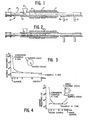
- the ram extruder 10 may comprise a conventional plunger-type extruder comprising a tubular barrel 11 having concentric heaters 12, a ram 13 which is reciprocated by a conventional hydraulic unit 14 in one end 15 of barrel 11.
- a supply unit 16 feeds the charge into end 15 of the barrel to be acted on by the ram therein.
- the material forms a sintered extrusion 17 which is delivered to a cooling stand 18 supported on legs 19.
- the extrusion speed is suitably adjusted as a function of the barrel bore, the length of ram 13, and the heat capacity and temperature of heaters 12.
- the temperature of the heaters is preferably approximately 200° to 300°C for a high temperature unit, and more specifically, preferably approximately 220° to 270°C. It is preferably 150° to 200°C for a low temperature unit, and more specifically, preferably 150° to 180°C therein. It has been found that if the temperature is higher than approximately 300°C, the UHMW-PE is thermally decomposed and deteriorated, and if the temperature is lower than approximately 150°C, the UHMW-PE is thermally expanded, thereby causing a size variation in the extruded product and/or insufficient sintering.
- the amount of the organic peroxide is preferably no more than approximately 0.50 wt. parts (0.20 of effective wt. part converted to peroxide).
- the cross section displacement of the extruded rod i.e. the difference between maximum and minimum diameters thereof
- the displacement of the No. 1 rod was excessive, requiring cutting off approximately 0.5 to 0.6 mm of the surface layer to produce the desired uniform roundness.
- the amount of peroxide was more than 0.01 wt. parts (0.004 of effective wt. part converted to peroxide), the desired uniform roundness was obtained without the need for cutting the rod surface.
- a round rod was extruded in the same manner as in Example 3 except that the cross-linking agent used in the Example 3 (Perhexa 25B-40 and Percumyl D-40) was not added.
- the extrusion pressure was 15 to 20 kg/cm 2 lower than in Example 3, and when the displacement of the cross section was measured, it was found to be 2 to 3 mm.
- a tubular extrusion, or pipe, of UHMW-PE having an approximate 75 mm outer diameter and approximate 45 mm inner diamter was extruded by ram extruder 10 under the extruding conditions listed in Table 4 by employing a ram extruder having a 79.5 mm outer diameter and 400 mm ram length, a 50 mm outer diameter and 80 mm length of a mandrel 20 (as seen in Fig. 2).
- the barrel 11 had an 80 mm inner diameter and 1000 mm length, with 2 adiabatic heaters of 1 kW electric capacity.
- the six different mixtures used are listed in Table 4. When the displacement of the section of the extruded pipe was measured, the outer diameter displacement was only 0.4 to 0.6 mm, the inner diameter displacement was only 0.2 to 0.4 mm. Thus,excellent roundness was obtained.
- a pipe of UHMW-PE was extruded in the same manner as in Example 4 except a mixture was used in.which the cross-linking agent in the Example 4 (Perhexa25B-40 and Percumyl D-40) was not added.
- the displacement of the section was measured, it was found to be 3 to 4 mm in the outer diameter and 2 to 3 mm in the inner diameter. The roundness was unsatisfactory.
- UHMW-PE trade name - Hostalen GUR 412, manufactured by Hoechst A.G.
- the uniformly mixed material was then ram extruded by a ram extruder 10 having adiabatic heaters providing 1 kW capacity, and having a 50 mm inner di-2000 mm ameter and length for extruding a round rod of conductive cross-linking type having an approximate 48 mm outer diameter.
- the obtained round rod was sectioned, and the surface resistance of the section was measured incrementally from the outer diameter to the center of the rod with 8 mm spacing between the measuring terminals.
- the surface resistance was substantially constant at approximately 10 3 ohms from the outer circumference to the center of the rod, as shown in Fig. 2. Further, the surface condition of the extruded round rod was good, and the displacement of the section was only 0.1 to 0.2 mm.
- a conductive round rod was extruded in the same manner as in Example 5 except the cross-linking agent used in Example 3 (Perhexa25B-40) was not added.
- the extrusion pressure was 862 to 902 kg/cm 2 (slightly lower than the case of the Example 5).
- the surface resistance in the vicinity of the outer circumference of the extruded rod abruptly increased, as shown in Fig. 2. To make the surface resistance less than 10 3 ohms, it was necessary to cut the surface layer by approximately 1 to 2 mm, with a large loss of the rod material. Further, the outer surface of the extruded rod was degraded having an 0.5 to 1.0 mm displacement and without gloss.
- a conductive tube, or pipe, of UHMW-PE having an approximate 75 mm outer diameter and an approximate 45 mm inner diameter was extruded by a ram extruder having a ram of 79.5 mm outer diameter and 400 mm length.
- the mandrel had a 50 mm outer diameter and an 800 mm length.
- the barrel had an 80 mm inner di- am eter and 1000 mm length (with adiabatic heaters in two stages providin 1 kW of electric capacity) with the same mixture as in Example 5 and under the ex- truding conditions listed in Table 6.
- the pipe thus obtained was cut, and when the surface resistance in the section was measured, it was found to be substantially uniform from the outer surface to the inner surface of the pipe, as shown in Fig. 3. Further, the surface state of the extruded pipe was good, and the displacement was only 0.4 to 0.6 in outer diameter and only 0.2 to 0.4 mm in inner diameter.
- a pipe of conductive UHMW-PE having approximate 75 mm outer diameter and approximate 45 mm inner diameter was ram extruded with a ram extruder having the same ram, mandrel and barrel as in Example 6, but with the mixture of Comparison Example 3.
- the surface resistance of the section was measured similarly as in Example 6, the resistance in the vicinity of the outer and inner surface portions of the pipe abruptly varied and increased, as shown in Fig. 3.
- the surface of the extruded pipe was degraded and had a high displacement of 3 to 4 mm in outer diameter and 2 to 3mm in inner diameter, without gloss.
- Ultra high molecular weight polyethylene (trade name - Hostalen GUR 412, manufactured by Hoechst A.G.) or ultra high molecular weight polyethylene (trade name Hostalene GUR 415, manufactured by Hoechst A.G.), alum- oxide) inum oxide modified zinc oxide (trade name - Zinc-1, manufactured by Honjo Chemical Co., Ltd.) as the electroconductive agent, lubricant (trade name - H oechst wax; manufactured by Hoechst A.G.), 2,5-dimethyl-2, 5-di(t-butyl peroxy)hexane (trade name perhexa 25B-40, manufactured by Nippon Oils & Fats Co., Ltd.) diluted to 40 wt% with calcium carbonate as the organic peroxide, as well as, as required, a red pigment (trade name Novoperm Red TG-02, manufactured by Hoechst A.G.), and a green pigment (trade name - Hostaperm-Green GG
- the mixture was extruded by a ram extruder having a barrel with adiabatic heaters in 5 stages hav-ing a 76 mm inner diameter and 3 m length (i.e. two heaters of 1 kW capacity and three heaters of 0.5 k W capacity, providing temperatures of 230°, 270°, 270°, 200° and 170°C incrementally from the supply inlet).
- a round conductive, cross-linked rod having an approximate 72 mm outer diameter was extruded.
- the whiteness W (Lab) of the extruded rod was measured with a color meter (manufactured by Suga Test Machine Co., Ltd.) with OPTIC STANDARD (X: 80.35, Y:83.03, Z:96.25), manufactured by the same company as reference plates.
- the surface resistance was measured at a measuring voltage of 100 volts by a 4829A high resistance meter (manufactured by Yokogawa Hewlett-Packard Co.), with copper wire terminals inserted into holes spaced apart 10 mm, each hole having a 2 mm diameter and 10 mm depth in the cut cross section of the rod.
- UHMW-PE (trade name - Hostalen GUR 412, manufactured by Hoechst A.G.), a charge preventing agent (cation surfactant, trade name CYASTAT SP, manufactured by Nippon Cyanamid Co.), a charge preventing agent (anion surfactant, trade name - Hostastat HS-1, manufactured by Hoechst A.G.), and a charge preventing agent (nonion surfactant, trade name - TB-123, manufactured by Matsumoto YushiPharmaceutical Co., Ltd.) were mixed, extruded and measured in the same manner as in Example 7.
- a charge preventing agent cation surfactant, trade name CYASTAT SP, manufactured by Nippon Cyanamid Co.
- anion surfactant trade name - Hostastat HS-1, manufactured by Hoechst A.G.
- a charge preventing agent nonion surfactant, trade name - TB-123, manufactured by Matsumoto YushiPharmaceutical Co
- the mixing ratios and measured results are listed in Tables 7 and 8. As shown in Table 8, the sintered product of the invention provides uniform conductivity with coloring, good surface condition, and maintained accurate roundness.
- the present invention provides an ultra high weight polyethylene extrusion with minimized roundness deviation both in round rod and tubular pipe configurations.
- the extruded product has excellent external appearance, cutting, or finishing, time is reduced or eliminated, thereby minimizing waste of the raw materials. Further, uniformity of resistance, including at the surface portion of the extruded product, is obtained, providing uniform conductivity from the center to the circumferential surface. Surface resistance is enhanced.
- Metallic oxide modified zinc oxide may be used as the electroconductive agent, permitting different pastel colors to be provided, whereby the product is advantageously adapted for uses requiring high cleanliness and sanitary properties.
Landscapes
- Chemical & Material Sciences (AREA)
- Engineering & Computer Science (AREA)
- Mechanical Engineering (AREA)
- Physics & Mathematics (AREA)
- Dispersion Chemistry (AREA)
- Spectroscopy & Molecular Physics (AREA)
- Health & Medical Sciences (AREA)
- Chemical Kinetics & Catalysis (AREA)
- Medicinal Chemistry (AREA)
- Polymers & Plastics (AREA)
- Organic Chemistry (AREA)
- Extrusion Moulding Of Plastics Or The Like (AREA)
Priority Applications (2)
| Application Number | Priority Date | Filing Date | Title |
|---|---|---|---|
| EP83307248A EP0143863B1 (fr) | 1983-11-28 | 1983-11-28 | Procédé pour la fabrication de matière polyéthylène de dimensions précises avec un poids moléculaire très élevé |
| DE8383307248T DE3381311D1 (de) | 1983-11-28 | 1983-11-28 | Verfahren zur herstellung von polyaethylenkunststoff mit ultrahochmolekulargewicht und hoher dimensionsgenauigkeit. |
Applications Claiming Priority (1)
| Application Number | Priority Date | Filing Date | Title |
|---|---|---|---|
| EP83307248A EP0143863B1 (fr) | 1983-11-28 | 1983-11-28 | Procédé pour la fabrication de matière polyéthylène de dimensions précises avec un poids moléculaire très élevé |
Publications (3)
| Publication Number | Publication Date |
|---|---|
| EP0143863A2 true EP0143863A2 (fr) | 1985-06-12 |
| EP0143863A3 EP0143863A3 (en) | 1986-10-01 |
| EP0143863B1 EP0143863B1 (fr) | 1990-03-14 |
Family
ID=8191352
Family Applications (1)
| Application Number | Title | Priority Date | Filing Date |
|---|---|---|---|
| EP83307248A Expired - Lifetime EP0143863B1 (fr) | 1983-11-28 | 1983-11-28 | Procédé pour la fabrication de matière polyéthylène de dimensions précises avec un poids moléculaire très élevé |
Country Status (2)
| Country | Link |
|---|---|
| EP (1) | EP0143863B1 (fr) |
| DE (1) | DE3381311D1 (fr) |
Cited By (3)
| Publication number | Priority date | Publication date | Assignee | Title |
|---|---|---|---|---|
| EP0292074A1 (fr) * | 1987-05-22 | 1988-11-23 | Dsm N.V. | Procédé pour la préparation d'un matériau polymérique ultra-étirable ainsi qu'un procédé pour la fabrication d'objets |
| EP0272015A3 (fr) * | 1986-12-02 | 1988-12-07 | National Research Development Corporation | Procédé pour former un polymère |
| FR2673569A1 (fr) * | 1991-03-07 | 1992-09-11 | Inst Francais Du Petrole | Procede de fabrication de tubes en materiaux thermoplastiques renforces par des fibres a orientation controlee et appareillage pour sa mise en óoeuvre. |
Family Cites Families (5)
| Publication number | Priority date | Publication date | Assignee | Title |
|---|---|---|---|---|
| US3665068A (en) * | 1969-12-15 | 1972-05-23 | Sun Oil Co | Extrusion of extremely high molecular weight polyolefins |
| US4115499A (en) * | 1975-04-04 | 1978-09-19 | Monsanto Research Corporation | Large void-free polyethylene castings |
| NL7801157A (nl) * | 1977-02-28 | 1978-08-30 | Pont A Mousson | Werkwijze en inrichting voor de vervaardiging van produkten uit verknoopt thermoplastisch materiaal. |
| US4171338A (en) * | 1977-11-01 | 1979-10-16 | Allied Chemical Corporation | Process for ultra-high molecular weight, high abrasion resistance, cross-linked polyethylene |
| US4130618A (en) * | 1977-12-01 | 1978-12-19 | Gulf Oil Corporation | Ethylene polymer-petroleum wax compositions |
-
1983
- 1983-11-28 EP EP83307248A patent/EP0143863B1/fr not_active Expired - Lifetime
- 1983-11-28 DE DE8383307248T patent/DE3381311D1/de not_active Expired - Fee Related
Cited By (5)
| Publication number | Priority date | Publication date | Assignee | Title |
|---|---|---|---|---|
| EP0272015A3 (fr) * | 1986-12-02 | 1988-12-07 | National Research Development Corporation | Procédé pour former un polymère |
| EP0292074A1 (fr) * | 1987-05-22 | 1988-11-23 | Dsm N.V. | Procédé pour la préparation d'un matériau polymérique ultra-étirable ainsi qu'un procédé pour la fabrication d'objets |
| US5004778A (en) * | 1987-05-22 | 1991-04-02 | Stamicarbon B.V. | Process for the preparation of ultrastretchable polymer material, ultrastretchable material, as well as a process for the manufacture of objects |
| FR2673569A1 (fr) * | 1991-03-07 | 1992-09-11 | Inst Francais Du Petrole | Procede de fabrication de tubes en materiaux thermoplastiques renforces par des fibres a orientation controlee et appareillage pour sa mise en óoeuvre. |
| EP0503364A1 (fr) * | 1991-03-07 | 1992-09-16 | Institut Francais Du Petrole | Procédé de fabrication des tubes en matériaux thermoplastiques renforcés par des fibres à orientation contrôlée et appareillage pour sa mise en oeuvre |
Also Published As
| Publication number | Publication date |
|---|---|
| EP0143863A3 (en) | 1986-10-01 |
| DE3381311D1 (de) | 1990-04-19 |
| EP0143863B1 (fr) | 1990-03-14 |
Similar Documents
| Publication | Publication Date | Title |
|---|---|---|
| US4518552A (en) | Method of producing accurately sized material of ultra high molecular weight polyethylene | |
| US4731199A (en) | Ultra high molecular weight concurrently sintered and cross-linked polyethylene product | |
| EP1240256B1 (fr) | Noirs de carbone utiles dans des composes pour fils et pour cables | |
| US3166688A (en) | Polytetrafluoroethylene tubing having electrically conductive properties | |
| KR100737790B1 (ko) | 전도성 플루오로중합체 | |
| US5716574A (en) | Process for the production of power cable | |
| EP0778861B2 (fr) | Plastique fluore electroconducteur pouvant etre traite a l'etat fondu | |
| CN102165003B (zh) | 导电性聚乙烯树脂组合物、导电性聚乙烯树脂成型体、滑动轴承和滑动片 | |
| US8207447B2 (en) | PTFE porous body, PTFE mixture, method for producing PTFE porous body, and electric wire/cable using PTFE porous body | |
| DE3011754A1 (de) | Elektrisch leitfaehige zusammensetzung und verfahren zur herstellung eines gegenstandes unter deren verwendung | |
| US3733385A (en) | Method of making conducting plastic articles | |
| CN113943454A (zh) | 一种石墨烯和碳纳米管协效高电性能半导电屏蔽料及其制备方法 | |
| DE60011692T2 (de) | Vernetzbare Polyethylen-Zusammensetzung | |
| CA2347951C (fr) | Materiaux composites polymeres conducteurs reticules et procede de production | |
| EP0238684B1 (fr) | Articles moulés en polymères fluorés réticulés et procédé de fabrication de ces articles | |
| EP0143863B1 (fr) | Procédé pour la fabrication de matière polyéthylène de dimensions précises avec un poids moléculaire très élevé | |
| EP0897783B1 (fr) | Procédé pour le recyclage d'un matériel en polymère réticulé, notamment d'un matériel de revêtement pour câbles électriques | |
| JPS58164627A (ja) | 導電性を有する超高分子量ポリエチレン焼結体の製造法 | |
| US3409584A (en) | Tetrafluoroethylene products and methods | |
| CN109082002B (zh) | 煤矿瓦斯管用阻燃半导电护套材料及其制备方法和应用 | |
| CA2277704C (fr) | Gaine de cable semiconducteur et cable qui l'emploie | |
| JPS58164628A (ja) | 超高分子量ポリエチレン焼結体の製造方法 | |
| EP1041581A1 (fr) | Composition réticulable de polyéthylène | |
| KR102354984B1 (ko) | 내트래킹성 절연 조성물 및 이를 포함하는 고전압 케이블 | |
| Abdulkareem et al. | Improving the thermoplastic extrusion process in cable manufacturing |
Legal Events
| Date | Code | Title | Description |
|---|---|---|---|
| PUAI | Public reference made under article 153(3) epc to a published international application that has entered the european phase |
Free format text: ORIGINAL CODE: 0009012 |
|
| 17P | Request for examination filed |
Effective date: 19841127 |
|
| AK | Designated contracting states |
Designated state(s): DE FR GB |
|
| PUAL | Search report despatched |
Free format text: ORIGINAL CODE: 0009013 |
|
| AK | Designated contracting states |
Kind code of ref document: A3 Designated state(s): DE FR GB |
|
| 17Q | First examination report despatched |
Effective date: 19870724 |
|
| GRAA | (expected) grant |
Free format text: ORIGINAL CODE: 0009210 |
|
| AK | Designated contracting states |
Kind code of ref document: B1 Designated state(s): DE FR GB |
|
| REF | Corresponds to: |
Ref document number: 3381311 Country of ref document: DE Date of ref document: 19900419 |
|
| ET | Fr: translation filed | ||
| PLBE | No opposition filed within time limit |
Free format text: ORIGINAL CODE: 0009261 |
|
| STAA | Information on the status of an ep patent application or granted ep patent |
Free format text: STATUS: NO OPPOSITION FILED WITHIN TIME LIMIT |
|
| 26N | No opposition filed | ||
| PGFP | Annual fee paid to national office [announced via postgrant information from national office to epo] |
Ref country code: FR Payment date: 19921021 Year of fee payment: 10 Ref country code: DE Payment date: 19921021 Year of fee payment: 10 |
|
| PGFP | Annual fee paid to national office [announced via postgrant information from national office to epo] |
Ref country code: GB Payment date: 19921030 Year of fee payment: 10 |
|
| PG25 | Lapsed in a contracting state [announced via postgrant information from national office to epo] |
Ref country code: GB Effective date: 19931128 |
|
| GBPC | Gb: european patent ceased through non-payment of renewal fee |
Effective date: 19931128 |
|
| PG25 | Lapsed in a contracting state [announced via postgrant information from national office to epo] |
Ref country code: FR Effective date: 19940729 |
|
| PG25 | Lapsed in a contracting state [announced via postgrant information from national office to epo] |
Ref country code: DE Effective date: 19940802 |
|
| REG | Reference to a national code |
Ref country code: FR Ref legal event code: ST |