EP0145156A1 - Vecteurs d'expression, cellules hôtes contenant de tels vecteurs et méthodes pour la production des composés désirés utilisant de telles cellules - Google Patents
Vecteurs d'expression, cellules hôtes contenant de tels vecteurs et méthodes pour la production des composés désirés utilisant de telles cellules Download PDFInfo
- Publication number
- EP0145156A1 EP0145156A1 EP84306841A EP84306841A EP0145156A1 EP 0145156 A1 EP0145156 A1 EP 0145156A1 EP 84306841 A EP84306841 A EP 84306841A EP 84306841 A EP84306841 A EP 84306841A EP 0145156 A1 EP0145156 A1 EP 0145156A1
- Authority
- EP
- European Patent Office
- Prior art keywords
- gene
- vector
- operon
- promoter
- phea
- Prior art date
- Legal status (The legal status is an assumption and is not a legal conclusion. Google has not performed a legal analysis and makes no representation as to the accuracy of the status listed.)
- Granted
Links
- 239000013598 vector Substances 0.000 title claims abstract description 46
- 150000001875 compounds Chemical class 0.000 title claims abstract description 20
- 239000013604 expression vector Substances 0.000 title claims abstract description 14
- 238000000034 method Methods 0.000 title description 9
- 108090000623 proteins and genes Proteins 0.000 claims abstract description 117
- 230000001105 regulatory effect Effects 0.000 claims abstract description 46
- 230000014509 gene expression Effects 0.000 claims abstract description 31
- 102000004190 Enzymes Human genes 0.000 claims abstract description 23
- 108090000790 Enzymes Proteins 0.000 claims abstract description 23
- 230000006696 biosynthetic metabolic pathway Effects 0.000 claims abstract description 11
- COLNVLDHVKWLRT-QMMMGPOBSA-N L-phenylalanine Chemical compound OC(=O)[C@@H](N)CC1=CC=CC=C1 COLNVLDHVKWLRT-QMMMGPOBSA-N 0.000 claims description 40
- 229960005190 phenylalanine Drugs 0.000 claims description 35
- 101150023849 pheA gene Proteins 0.000 claims description 34
- COLNVLDHVKWLRT-UHFFFAOYSA-N phenylalanine Natural products OC(=O)C(N)CC1=CC=CC=C1 COLNVLDHVKWLRT-UHFFFAOYSA-N 0.000 claims description 30
- 230000037361 pathway Effects 0.000 claims description 21
- 241000588724 Escherichia coli Species 0.000 claims description 15
- 238000010276 construction Methods 0.000 claims description 15
- 108020004414 DNA Proteins 0.000 claims description 14
- 101150019536 aroF gene Proteins 0.000 claims description 14
- 108091028043 Nucleic acid sequence Proteins 0.000 claims description 11
- 101100435903 Corynebacterium glutamicum (strain ATCC 13032 / DSM 20300 / BCRC 11384 / JCM 1318 / LMG 3730 / NCIMB 10025) aroG gene Proteins 0.000 claims description 10
- 101150042732 aroC gene Proteins 0.000 claims description 10
- 238000013518 transcription Methods 0.000 claims description 9
- 230000035897 transcription Effects 0.000 claims description 9
- 238000006243 chemical reaction Methods 0.000 claims description 8
- 239000000543 intermediate Substances 0.000 claims description 8
- 238000004519 manufacturing process Methods 0.000 claims description 8
- 229940024606 amino acid Drugs 0.000 claims description 4
- 150000001413 amino acids Chemical class 0.000 claims description 4
- 101150018055 aroH gene Proteins 0.000 claims description 4
- 230000004044 response Effects 0.000 claims description 4
- 239000000126 substance Substances 0.000 claims description 4
- 230000001131 transforming effect Effects 0.000 claims description 4
- 239000001963 growth medium Substances 0.000 claims description 3
- 239000002609 medium Substances 0.000 claims description 3
- 238000009790 rate-determining step (RDS) Methods 0.000 claims description 2
- 238000012258 culturing Methods 0.000 claims 2
- 101150023525 araH gene Proteins 0.000 claims 1
- 230000000754 repressing effect Effects 0.000 claims 1
- 108700026220 vif Genes Proteins 0.000 claims 1
- 239000000047 product Substances 0.000 description 20
- 230000015572 biosynthetic process Effects 0.000 description 15
- 239000012634 fragment Substances 0.000 description 14
- 238000003786 synthesis reaction Methods 0.000 description 14
- 230000033228 biological regulation Effects 0.000 description 10
- 239000013612 plasmid Substances 0.000 description 8
- 108010076504 Protein Sorting Signals Proteins 0.000 description 7
- 239000006228 supernatant Substances 0.000 description 5
- 241000701959 Escherichia virus Lambda Species 0.000 description 4
- QIVBCDIJIAJPQS-VIFPVBQESA-N L-tryptophane Chemical compound C1=CC=C2C(C[C@H](N)C(O)=O)=CNC2=C1 QIVBCDIJIAJPQS-VIFPVBQESA-N 0.000 description 4
- 108010015724 Prephenate Dehydratase Proteins 0.000 description 4
- QIVBCDIJIAJPQS-UHFFFAOYSA-N Tryptophan Natural products C1=CC=C2C(CC(N)C(O)=O)=CNC2=C1 QIVBCDIJIAJPQS-UHFFFAOYSA-N 0.000 description 4
- 238000003780 insertion Methods 0.000 description 4
- 230000037431 insertion Effects 0.000 description 4
- 238000003776 cleavage reaction Methods 0.000 description 3
- 238000010367 cloning Methods 0.000 description 3
- 230000002068 genetic effect Effects 0.000 description 3
- 230000008844 regulatory mechanism Effects 0.000 description 3
- 230000007017 scission Effects 0.000 description 3
- PJWIPEXIFFQAQZ-PUFIMZNGSA-N 7-phospho-2-dehydro-3-deoxy-D-arabino-heptonic acid Chemical compound OP(=O)(O)OC[C@@H](O)[C@@H](O)[C@H](O)CC(=O)C(O)=O PJWIPEXIFFQAQZ-PUFIMZNGSA-N 0.000 description 2
- OUYCCCASQSFEME-QMMMGPOBSA-N L-tyrosine Chemical compound OC(=O)[C@@H](N)CC1=CC=C(O)C=C1 OUYCCCASQSFEME-QMMMGPOBSA-N 0.000 description 2
- 108010054278 Lac Repressors Proteins 0.000 description 2
- GUBGYTABKSRVRQ-QKKXKWKRSA-N Lactose Natural products OC[C@H]1O[C@@H](O[C@H]2[C@H](O)[C@@H](O)C(O)O[C@@H]2CO)[C@H](O)[C@@H](O)[C@H]1O GUBGYTABKSRVRQ-QKKXKWKRSA-N 0.000 description 2
- 241000607142 Salmonella Species 0.000 description 2
- 230000008901 benefit Effects 0.000 description 2
- 238000012217 deletion Methods 0.000 description 2
- 230000037430 deletion Effects 0.000 description 2
- 230000000694 effects Effects 0.000 description 2
- 230000004927 fusion Effects 0.000 description 2
- 239000008101 lactose Substances 0.000 description 2
- 239000002773 nucleotide Substances 0.000 description 2
- 125000003729 nucleotide group Chemical group 0.000 description 2
- 108010083127 phage repressor proteins Proteins 0.000 description 2
- OUYCCCASQSFEME-UHFFFAOYSA-N tyrosine Natural products OC(=O)C(N)CC1=CC=C(O)C=C1 OUYCCCASQSFEME-UHFFFAOYSA-N 0.000 description 2
- 238000011144 upstream manufacturing Methods 0.000 description 2
- QTBSBXVTEAMEQO-UHFFFAOYSA-M Acetate Chemical compound CC([O-])=O QTBSBXVTEAMEQO-UHFFFAOYSA-M 0.000 description 1
- 108010035563 Chloramphenicol O-acetyltransferase Proteins 0.000 description 1
- 108020004705 Codon Proteins 0.000 description 1
- 108010066072 DNA modification methylase EcoRI Proteins 0.000 description 1
- 108010054576 Deoxyribonuclease EcoRI Proteins 0.000 description 1
- 108010042407 Endonucleases Proteins 0.000 description 1
- 102000004533 Endonucleases Human genes 0.000 description 1
- 241000702224 Enterobacteria phage M13 Species 0.000 description 1
- 241001646716 Escherichia coli K-12 Species 0.000 description 1
- 102000048120 Galactokinases Human genes 0.000 description 1
- 108700023157 Galactokinases Proteins 0.000 description 1
- WQZGKKKJIJFFOK-GASJEMHNSA-N Glucose Natural products OC[C@H]1OC(O)[C@H](O)[C@@H](O)[C@@H]1O WQZGKKKJIJFFOK-GASJEMHNSA-N 0.000 description 1
- 102000003960 Ligases Human genes 0.000 description 1
- 108090000364 Ligases Proteins 0.000 description 1
- 101100261636 Methanothermobacter marburgensis (strain ATCC BAA-927 / DSM 2133 / JCM 14651 / NBRC 100331 / OCM 82 / Marburg) trpB2 gene Proteins 0.000 description 1
- 241000191998 Pediococcus acidilactici Species 0.000 description 1
- 108010035004 Prephenate Dehydrogenase Proteins 0.000 description 1
- 101000892431 Proteus hauseri Type II restriction enzyme PvuII Proteins 0.000 description 1
- 108020004511 Recombinant DNA Proteins 0.000 description 1
- 108010034634 Repressor Proteins Proteins 0.000 description 1
- 102000009661 Repressor Proteins Human genes 0.000 description 1
- VMHLLURERBWHNL-UHFFFAOYSA-M Sodium acetate Chemical compound [Na+].CC([O-])=O VMHLLURERBWHNL-UHFFFAOYSA-M 0.000 description 1
- JZRWCGZRTZMZEH-UHFFFAOYSA-N Thiamine Natural products CC1=C(CCO)SC=[N+]1CC1=CN=C(C)N=C1N JZRWCGZRTZMZEH-UHFFFAOYSA-N 0.000 description 1
- 108010075344 Tryptophan synthase Proteins 0.000 description 1
- 108010027570 Xanthine phosphoribosyltransferase Proteins 0.000 description 1
- 239000012911 assay medium Substances 0.000 description 1
- 239000003782 beta lactam antibiotic agent Substances 0.000 description 1
- 230000001419 dependent effect Effects 0.000 description 1
- 230000000994 depressogenic effect Effects 0.000 description 1
- 230000002074 deregulated effect Effects 0.000 description 1
- 238000010586 diagram Methods 0.000 description 1
- 230000029087 digestion Effects 0.000 description 1
- 230000009977 dual effect Effects 0.000 description 1
- 239000012636 effector Substances 0.000 description 1
- 230000001036 exonucleolytic effect Effects 0.000 description 1
- 238000001914 filtration Methods 0.000 description 1
- 239000012737 fresh medium Substances 0.000 description 1
- 239000008103 glucose Substances 0.000 description 1
- 238000001727 in vivo Methods 0.000 description 1
- 238000011534 incubation Methods 0.000 description 1
- 230000002401 inhibitory effect Effects 0.000 description 1
- 230000005764 inhibitory process Effects 0.000 description 1
- 238000002955 isolation Methods 0.000 description 1
- 239000000463 material Substances 0.000 description 1
- 230000007246 mechanism Effects 0.000 description 1
- 238000012986 modification Methods 0.000 description 1
- 230000004048 modification Effects 0.000 description 1
- 238000012261 overproduction Methods 0.000 description 1
- 238000010647 peptide synthesis reaction Methods 0.000 description 1
- 150000002994 phenylalanines Chemical class 0.000 description 1
- 239000002243 precursor Substances 0.000 description 1
- 150000003212 purines Chemical class 0.000 description 1
- 239000002994 raw material Substances 0.000 description 1
- 238000010188 recombinant method Methods 0.000 description 1
- 238000011084 recovery Methods 0.000 description 1
- 230000025078 regulation of biosynthetic process Effects 0.000 description 1
- 230000001718 repressive effect Effects 0.000 description 1
- 238000002271 resection Methods 0.000 description 1
- 150000003839 salts Chemical class 0.000 description 1
- 230000028327 secretion Effects 0.000 description 1
- 235000017281 sodium acetate Nutrition 0.000 description 1
- 239000001632 sodium acetate Substances 0.000 description 1
- 238000010561 standard procedure Methods 0.000 description 1
- 230000002194 synthesizing effect Effects 0.000 description 1
- KYMBYSLLVAOCFI-UHFFFAOYSA-N thiamine Chemical compound CC1=C(CCO)SCN1CC1=CN=C(C)N=C1N KYMBYSLLVAOCFI-UHFFFAOYSA-N 0.000 description 1
- 229960003495 thiamine Drugs 0.000 description 1
- 235000019157 thiamine Nutrition 0.000 description 1
- 239000011721 thiamine Substances 0.000 description 1
- 230000009466 transformation Effects 0.000 description 1
- 101150019416 trpA gene Proteins 0.000 description 1
- 101150081616 trpB gene Proteins 0.000 description 1
- 101150111232 trpB-1 gene Proteins 0.000 description 1
- 101150006320 trpR gene Proteins 0.000 description 1
- 239000002699 waste material Substances 0.000 description 1
- 239000002132 β-lactam antibiotic Substances 0.000 description 1
- 229940124586 β-lactam antibiotics Drugs 0.000 description 1
Images


Classifications
-
- C—CHEMISTRY; METALLURGY
- C12—BIOCHEMISTRY; BEER; SPIRITS; WINE; VINEGAR; MICROBIOLOGY; ENZYMOLOGY; MUTATION OR GENETIC ENGINEERING
- C12P—FERMENTATION OR ENZYME-USING PROCESSES TO SYNTHESISE A DESIRED CHEMICAL COMPOUND OR COMPOSITION OR TO SEPARATE OPTICAL ISOMERS FROM A RACEMIC MIXTURE
- C12P13/00—Preparation of nitrogen-containing organic compounds
- C12P13/04—Alpha- or beta- amino acids
- C12P13/22—Tryptophan; Tyrosine; Phenylalanine; 3,4-Dihydroxyphenylalanine
- C12P13/222—Phenylalanine
-
- C—CHEMISTRY; METALLURGY
- C12—BIOCHEMISTRY; BEER; SPIRITS; WINE; VINEGAR; MICROBIOLOGY; ENZYMOLOGY; MUTATION OR GENETIC ENGINEERING
- C12N—MICROORGANISMS OR ENZYMES; COMPOSITIONS THEREOF; PROPAGATING, PRESERVING, OR MAINTAINING MICROORGANISMS; MUTATION OR GENETIC ENGINEERING; CULTURE MEDIA
- C12N15/00—Mutation or genetic engineering; DNA or RNA concerning genetic engineering, vectors, e.g. plasmids, or their isolation, preparation or purification; Use of hosts therefor
- C12N15/09—Recombinant DNA-technology
- C12N15/11—DNA or RNA fragments; Modified forms thereof; Non-coding nucleic acids having a biological activity
- C12N15/52—Genes encoding for enzymes or proenzymes
-
- C—CHEMISTRY; METALLURGY
- C12—BIOCHEMISTRY; BEER; SPIRITS; WINE; VINEGAR; MICROBIOLOGY; ENZYMOLOGY; MUTATION OR GENETIC ENGINEERING
- C12N—MICROORGANISMS OR ENZYMES; COMPOSITIONS THEREOF; PROPAGATING, PRESERVING, OR MAINTAINING MICROORGANISMS; MUTATION OR GENETIC ENGINEERING; CULTURE MEDIA
- C12N15/00—Mutation or genetic engineering; DNA or RNA concerning genetic engineering, vectors, e.g. plasmids, or their isolation, preparation or purification; Use of hosts therefor
- C12N15/09—Recombinant DNA-technology
- C12N15/63—Introduction of foreign genetic material using vectors; Vectors; Use of hosts therefor; Regulation of expression
- C12N15/70—Vectors or expression systems specially adapted for E. coli
-
- Y—GENERAL TAGGING OF NEW TECHNOLOGICAL DEVELOPMENTS; GENERAL TAGGING OF CROSS-SECTIONAL TECHNOLOGIES SPANNING OVER SEVERAL SECTIONS OF THE IPC; TECHNICAL SUBJECTS COVERED BY FORMER USPC CROSS-REFERENCE ART COLLECTIONS [XRACs] AND DIGESTS
- Y10—TECHNICAL SUBJECTS COVERED BY FORMER USPC
- Y10S—TECHNICAL SUBJECTS COVERED BY FORMER USPC CROSS-REFERENCE ART COLLECTIONS [XRACs] AND DIGESTS
- Y10S435/00—Chemistry: molecular biology and microbiology
- Y10S435/8215—Microorganisms
- Y10S435/822—Microorganisms using bacteria or actinomycetales
- Y10S435/848—Escherichia
- Y10S435/849—Escherichia coli
Definitions
- this invention relates to expression vectors, to host cells comprising such cells, and to methods of making desired compounds using such cells.
- a fundamental limitation of in vivo methods of producing compounds is that organisms often have regulatory mechanisms to limit synthesis to amounts sufficient for the organism's own needs, thus avoiding waste of the organism's raw materials and energy. Often regulation of biosynthesis is effected at the level of gene expression. For example, sufficiency or surfeit of a particular compound causes a cessation in the synthesis of one or more of the enzymes that catalyze reactions in the biosynthetic pathway of that compound. Genetic sequences, located in the vicinity of the structural gene coding for the enzyme. regulate expression of the enzyme. In some cases, more than one kind of regulatory sequence may be associated with a gene. Examples of such regulatory sequences include: promoters, operators, attenuators, antitermi- nators, ribosome binding sites, and sites for positive effectors.
- Stryer, Biochemistry, 2 ed. pp. 675-678 discloses that expression of the naturally occurring tryptophan operon of E. coli including trpA and trpB is subject to operator corepression by a complex of tryptophan and the trpR gene product. Expression of that operon is also regulated by a leader peptide attenuation control that depends on the availability of tryptophan for leader peptide synthesis.
- Tribe Australian Application 72727/81, discloses a strain of E. coli mutants which have been mutated to produce higher levels of chorismate mutase-prephenate dehydratase (CMPD) and 3-deoxy-D-arabino-heptulosonate-7-phosphate (DAHP) synthase than are found in strains with wild-type regulation of those enzymes.
- CMPD chorismate mutase-prephenate dehydratase
- DAHP 3-deoxy-D-arabino-heptulosonate-7-phosphate
- Rood et al., (1980) J. Bacteriology 144:552 discloses certain plasmids designed for overproduction of enzymes coded for by the tyrosine operon in that the regulatory region of the operon on these plasmids has been altered so that it is not subject to the control of a specific repressor. The authors report that such plasmids give rise to modifications by insertions or deletions that decrease the level of expression of the tyrosine operon.
- the hybrid promoter can be repressed by the lac repressor.
- Jacob et al., (1965) J. of Molecular Biology 13:704-719 discloses isolation of a mutant having a genetic deletion which results in fusion of a part of the lac operon to a part of the pur operon, forming a new operon which is subject to repressive regulation by purines.
- Casadaban et al., (1979) proc nat'l Acad. Sci. USA 76 (9):4530-4533 discloses techniques to fuse the lactose operon (lac) structural genes minus the lac promoter, to non-lac operon promoters, so that the lac operon is expressed under the control of a non-lac operon promoter.
- an expression vector for transforming cells to produce a desired compound by a biosynthetic pathway which includes at least two structural genes that are a synthetic operon, meaning that, on the vector construction, they are expressed under the control of a single regulatory sequence and promoter, whereas in naturally occurring constructions, genes correspoiding to the operon genes are expressed under the control of distinct separate regulatory sequences.
- the operon genes code respectively for enzymes in the biosynthetic pathway, and at least one of those genes is feedback derepressed.
- the natural gene corresponding to at least one of the operon genes is feedback repressed.
- feedback repressed we mean that expression of the natura gene is subject to repression by a control substance that is a pathway intermediate or product.
- the corresponding operon gene is "derepressed”, meaning that the vector promoter is foreign to the repressed natural gene and expresses operon genes without repression from the pathway nter- mediate or product.
- “foreign” we mean that the promoter does not naturally occur in position to initiate transcription of the corresponding natural gene.
- the vector enables uninhibited expression of the operon genes in the presence of all biosynthesis pathway intermediates as well as the pathway product.
- an expression vector for transforming a host cell that is to produce a desired compound by a biosynthetic pathway comprising a first reaction catalyzed by a first enzyme and a second-reaction catalyzed by a second enzyme, said vector comprising:
- the depressed gene product catalyzes the rate-limiting reaction in the biosynthesis pathway.
- Expression of the naturally occurring gene that corresponds to the derepressed operon gene is subject to dual regulatory mechanisms: 1) leader/attenuator repressor in which the naturally occurring regulatory DNA codes for a leader peptide that alters the structure of an attenuator site on the regulatory DNA transcript to inhibit expression of the structural gene, the rate of synthesis of the leader peptide being dependent on the availability of a pathway intermediate or product; and 2) operator/repressor repression in which a pathway intermediate or product interacts with a repressor protein, causing it to bind to an operator site on the naturally occurring regulatory DNA to prevent transcription of the structural gene.
- the feedback control substance is the same for both types of natural regulation of the corresponding derepressed gene and is the amino-acid product of the pathway, e.g. L-phenylalanine.
- the vector promoter is most preferably the lac promoter, the aroF promoter, or the tet promoter of pBR322.
- Other preferred promoters include the aroH promoter and the phage ml3 gene II promoter.
- the operon genes include pheA and aroF or aroH.
- the invention features an expression vector for producing phenylalanine in a host cell; the vector has a synthetic construction that includes a pheA structural gene and a regulatory sequence that-is -foreign with respect to the pheA structural gene and is effective in the host cell to express the pheA gene in the presence of phenylalanine synthesis pathway intermediates and products.
- the pheA gene is derived from a naturally occurring pheA gene by removing the naturally occurring regulatory sequence from the structural gene.
- the preferred regulatory sequences are those described above.
- the invention also extends to host cells engineered with one of the above vectors and to methods of making the desired compound by growing the cell in a culture medium and recovering the product from that medium.
- the cells are E. coli, and the desired compound in each case is preferably phenylalanine.
- the invention enables production of compounds by the above-described engineered cells, which avoid normal synthesis-inhibiting regulatory mechanisms, and therefore do not curtail synthesis in response to elevated levels of the product. In many applications, as the product builds up, it is released to the supernatant milieu, thus making recovery of the biochemical more convenient.
- the engineered vector is able to override natural regulatory modes, e.g., leader/attenuator-regulation and operator/repressor regulation.
- exogenous regulatory DNA can effectively control gene expression of gene products that are key enzymes in the pathway, and this finding has broad applicability to other promoters such as phage m13 gene II promoter and the tet promoter of pBR322.
- the inclusion of several pathway genes in the same synthetic operon is efficient, simplifies transformation, and reduces the total number of genetic elements necessary, thus reducing the complexity of the genome in the engineered organism.
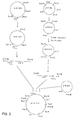
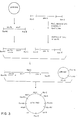
- Figs. 1-4 are diagrams representing respectively steps in the engineering of plasmids pKB663, pKB712, pKB750, and pKB766.
- the desired product compound is synthesized by cells via a synthesis pathway with steps that are targets of gene-expression regulation. That is, regulation at a step in the synthesis pathway is accomplished by varying the level of expression of the gene for an enzyme to vary the amount of enzyme in the cell, and such regulation involves DNA sequences adjacent to the regulated gene.
- the pathway steps selected for derepression should be rate-limiting ones so that successful derepression will show a gain in product yield.
- the dual-mechanism-repressed enzymes are the specific targets. In order to deactivate both of the repression mechanisms, it is preferable to remove the regulatory DNA that naturally occurs with the structural gene whose expression is being derepressed and to add a foreign promoter (i.e. one that in naturally occurring structures does not govern expression of the gene).
- the promoter may be foreign to both of the genes, or it may be foreign only to the gene selected for derepression.
- the two synthetic operon genes should be close to each other, but there may be short, or even quite long, sequences between them, as long as there are no signals to stop transcription between the genes.
- Each synthetic operon gene corresponds to the structural component of a naturally occurring gene. By the term 'corresponds to" we mean that the operon gene is either identical.or sufficiently related to the naturally occurring structural gene that the operon gene codes for an enzyme that catalyzes the reaction catalyzed by the natural gene product.
- Choice of the other operon component offers an opportunity to engineer a construction that highly expresses another pathway enzyme.
- One preferred choice is another rate-critical pathway step.
- the other operon component also may be selected to simplify the cloning procedure by selecting a gene with regulatory material that is used on the vector. In that case, the 3' end of the operon may be the derepressed structural gene, and the 5 1 end may be the other member of the operon with its naturally occurring regulatory sequence.
- a promoter is used that is exogenous or foreign to both members of the operon, the members can be linked in either order. Additional structural genes may be added to the operon, and more than one of them may be feedback repressed in its naturally occurring structure, so that it also is derepressed by insertion in the operon.
- Each vector is useful in synthesizing the amino acid L-phenylalanine by derepressing expression of the pheA gene of E. coli, which is naturally regulated in response to available phenylalanine.
- the product of pheA the dual-function enzyme chorismate mutase-prephenate dehydratase, effects the penultimate steps in phenylalanine biosynthesis. Regulation of pheA expression occurs both by a repressor/operator system and by a leader peptide/attenuator system. When sufficient or excess phenylalanine is available, expression of pheA is turned off, and phenylalanine synthesis stops.
- FIG. 1 A fragment of DNA carrying the pheA gene of E. coli but not its associated promoter, operator, leader peptide, or attenuator, is prepared from plasmid pKB45 (Zurawski et al. Proceedings of the National Academy of Sciences 75:4271-4274 [1978]) by digestion with endonucleases StuI and BalII.
- the next step involves plasmid pKB430, which is a derivative of pBR322 that carries a 95 bp - AluI generated DNA fragment containing the lactose operon promoter-operator cloned in the endonuclease PvuII cleavage site of pBR322 such that a new PvuII site is created at the border of the lac promoter and the pBR322 sequences, and lac transcription proceeds across this PvuII site toward the tet region.
- the pheA-containing DNA fragment is cloned by standard techniques (Bolivar, F. and Backman, K. Methods in Enzymology, Vol.
- pKB663 in addition to the pheA gene, pKB663 also carries a gene which determines resistance to ⁇ -lactam antibiotics.
- FIG. 2 depicts the construction of pKB712 from two components:
- the second component is the aroF structural gene; specifically aroF, contained on pKB45 is subcloned into pBR322 as an EcoRV to PvuII fragment, yielding pKB648.
- the aroF gene is preceded (5') by a EcoRV site which is cleaved and exonucleolytically resected, followed by insertion of an EcoRI linker positioned about 20-bp upstream from the aroF gene's ribosome binding site.
- an EcoRI linker positioned about 20-bp upstream from the aroF gene's ribosome binding site.
- Near the 3' end of aroF is a PvuII site which can be joined to the PvuII site of pBR322.
- the TthlllI site 3' to the gene thus cloned is changed to a HindIII by a linker.
- the two structural genes are joined at a point approximately eight nucleotides after the first stop codon at the end of pheA and approximately 20 nucleotides upstream from the ribosome binding site of the aroF gene.
- pKB750 differs from all of the above-described expression vectors in that it is expressed under the control of the aroF promoter, not the lac promoter.
- pKB750 is constructed as shown in Fig. 3 from two fragments.
- the first fragment is an aroF gene with its naturally associated promoter, obtained by from pKB45 via pKB648; the segment begins with an EcoRV site 5' to the gene and ends with a KpnI site positioned next to the PvuII site at the end of aroF.
- the second fragment is a pheA gene bounded by a K p nI site 5' to the gene and an EcoRI site 3' to the gene.
- the KpnI site is created by cleavage at the StuI side 5 1 to pheA (e.g. on pKB45 or a suitable derivative) and exonucleolytic resection towards pheA; KpnI linkers are then added.
- the EcoRI site is created by abutting a BanI site to a filled in EcoRI site.
- the pheA gene, or a synthetic operon that includes pheA can be expressed from any of a number of exogenous promoters that are not regulated by p heA synthesis pathway compounds.
- Suitable multipurpose cloning vehicles for making those constructions are pKB707 or pKB766, illustrated in Fig. 4.
- pKB766 is constructed starting with the KpnI - EcoRI pheA-containing fragment illustrated in Fig. 3 cloned in vector pKB678 to yield pKB707.
- the KonI site of pKB707 is readily converted to a BqlII site by means of a linker yielding pKB766.
- pKB707 and pKB766 contain unique cloning sites 5' to the pheA gene.
- Insertion of any number of promoter-carrying DNA fragments in the KDnI site of pKB707 or the BalII site of pKB766 results in the synthesis of chorismate mutase-prephenate dehydratase in a manner unregulated by phenylalanine.
- the gene II promoter from bacteriophage m13 and each of two promoters from the tet region of pBR322 [between the EcoRI site at position 1 and the BanI site at position 76] are each cloned onto DNA fragments having sticky ends compatible with BqrlII sticky ends and are then cloned into the BcrlII site of'pKB766.
- Phenylalanine production is scored by ability to crossfeed a phenylalanine auxotroph. Although strains carrying pKB766 cannot crossfeed phenylalanine auxotrophs, all derivatives of pKB766 which carried a promoter were able to produce and secrete phenylalanine and thereby crossfeed a phenylalanine auxotroph. Thus, the promoter-carrying fragments are responsible for the observed phenylalanine secretion.
- E. coli K12 strain YMC9 which has been deposited with the American Type Culture Collection and has an accession number ATCC 33927 (Backman et al., Proceedings of the National Academy of Sciences USA 78 [1981], 3743-3747), is transformed with pKB663, yielding YMC9/pKB663.
- Plasmid pKB663 is available from strain YHC9/pKB663, which has been deposited with the American Type Culture Collection and has an accession number ATCC 39462.
- YMC9/ pKB663 is cultured at 37°C in M9 salts plus 4 mg/ml sodium acetate and 1 ⁇ g/ml thiamine, and culture turbidity is monitored using a Klett-Summerson Colorimeter (green filter). During growth of this strain on acetate, no detectable phenylalanine appears in the supernatant. When the culture density reaches either 45 or 148 Klett units, the cells are collected by filtration, resuspended in an equal volume of fresh medium, and glucose is added (final concentration: 4 mg/ml). Incubation is continued for 10 to 15 hours, at which point phenylalanine content in the supernatant is determined.
- pKB663 is used to transform derivatives of YMC9 designated KB285 and KB280 which are described in our co-pending European Patent Application, hereby incorporated by reference, entitled “Cells and their Use in Methods forProducing Product Compounds” and filed the same day as this application.
- KB280 and KB285 are deposited with the American Type Culture Collection with accession numbers ATCC 39461 and ATCC 39463, respectively.
- KB285/pKB663 or KB285/pKB663 may be used to synthesize L-phenylalanine as described in that application.
- Phenylalanine concentration is determined microbiologically using phenylalanine assay medium (Difco) and Pediococcus acidilactici ATCC 8042 (Difco Manual, 1953).
- pKB712 and pKB750 can be used to transform a host such as E. coli YMC9 or derivatives thereof to yield a strain that secretes phenylalanine into the supernatant melieu.
- pheA is directed by the foreign promoter, and production of phenylalanine is enhanced when the pheA structural gene is introduced as part of a synthetic operon, rather than as a single deregulated structural gene.
- derivatives of vectors pKB663, pKB712, and pKB750 may be used as expression vectors; or derivatives of pKB766 may be used as a precursor to an expression vector into which a suitable foreign promoter is inserted.
- derivatives we mean naturally occurring or engineered variations of the vector that conserve the desired functions.
Landscapes
- Genetics & Genomics (AREA)
- Health & Medical Sciences (AREA)
- Engineering & Computer Science (AREA)
- Life Sciences & Earth Sciences (AREA)
- Organic Chemistry (AREA)
- Chemical & Material Sciences (AREA)
- Zoology (AREA)
- Wood Science & Technology (AREA)
- Biotechnology (AREA)
- Biomedical Technology (AREA)
- Bioinformatics & Cheminformatics (AREA)
- General Engineering & Computer Science (AREA)
- Microbiology (AREA)
- Biochemistry (AREA)
- General Health & Medical Sciences (AREA)
- Molecular Biology (AREA)
- Physics & Mathematics (AREA)
- Biophysics (AREA)
- Plant Pathology (AREA)
- General Chemical & Material Sciences (AREA)
- Chemical Kinetics & Catalysis (AREA)
- Preparation Of Compounds By Using Micro-Organisms (AREA)
- Micro-Organisms Or Cultivation Processes Thereof (AREA)
Priority Applications (1)
| Application Number | Priority Date | Filing Date | Title |
|---|---|---|---|
| AT84306841T ATE71145T1 (de) | 1983-10-07 | 1984-10-08 | Expressionsvektoren, solche vektoren enthaltende wirtszellen und verfahren zur herstellung gewuenschter produkte unter verwendung solcher zellen. |
Applications Claiming Priority (4)
| Application Number | Priority Date | Filing Date | Title |
|---|---|---|---|
| US54019083A | 1983-10-07 | 1983-10-07 | |
| US540190 | 1983-10-07 | ||
| US06/653,193 US4839286A (en) | 1983-10-07 | 1984-09-24 | Method of biosynthesis and cells therefor |
| US653193 | 1984-09-24 |
Publications (2)
| Publication Number | Publication Date |
|---|---|
| EP0145156A1 true EP0145156A1 (fr) | 1985-06-19 |
| EP0145156B1 EP0145156B1 (fr) | 1992-01-02 |
Family
ID=27066358
Family Applications (1)
| Application Number | Title | Priority Date | Filing Date |
|---|---|---|---|
| EP84306841A Expired - Lifetime EP0145156B1 (fr) | 1983-10-07 | 1984-10-08 | Vecteurs d'expression, cellules hôtes contenant de tels vecteurs et méthodes pour la production des composés désirés utilisant de telles cellules |
Country Status (5)
| Country | Link |
|---|---|
| US (1) | US4839286A (fr) |
| EP (1) | EP0145156B1 (fr) |
| JP (1) | JP2509552B2 (fr) |
| CA (1) | CA1236411A (fr) |
| DE (1) | DE3485415D1 (fr) |
Cited By (9)
| Publication number | Priority date | Publication date | Assignee | Title |
|---|---|---|---|---|
| EP0176349A3 (fr) * | 1984-09-24 | 1986-05-28 | Biotechnica International, Inc. | Méthodes de modification de cellules pour augmenter la production d'un composé désiré, cellules capables de biosynthèse d'un composé désiré, méthodes de production de composés désirés et méthodes de sélection de cellules mutantes montrant une production augmentée d'un composé désiré |
| WO1987000202A1 (fr) * | 1985-06-24 | 1987-01-15 | The Nutrasweet Company | Plasmides composites et synthese d'acides amines |
| WO1987002984A1 (fr) * | 1985-11-12 | 1987-05-21 | American Biogenetics Corporation | Cassette biogenetique |
| EP0190921A3 (fr) * | 1985-02-04 | 1988-01-13 | Engenics, Inc. | Procédé de surproduction d'acides aminés |
| EP0284185A1 (fr) * | 1987-03-26 | 1988-09-28 | Miwon Co., Ltd. | Procédé de production de L-phénylalanine par E.coli recombinant |
| EP0330773A1 (fr) * | 1986-05-07 | 1989-09-06 | Biotechnica International, Inc. | Protéines vecteurs d'expression contenant l'ADN codant pour ces protéines et cellules contenant ces vecteurs d'expression |
| EP0232262A4 (fr) * | 1985-08-15 | 1989-09-19 | Stauffer Chemical Co | Microorganisme producteur de tryptophane. |
| EP0257095A4 (fr) * | 1986-02-26 | 1989-09-26 | Massachusetts Inst Technology | Construction et applications de polyproteines. |
| US6316232B1 (en) | 1996-10-26 | 2001-11-13 | Holland Sweetener Company V.O.F. | Microbial preparation of substances from aromatic metabolism/I |
Families Citing this family (7)
| Publication number | Priority date | Publication date | Assignee | Title |
|---|---|---|---|---|
| US5424202A (en) * | 1988-08-31 | 1995-06-13 | The University Of Florida | Ethanol production by recombinant hosts |
| US7192772B1 (en) | 1988-08-31 | 2007-03-20 | The University Of Florida Research Foundations, Inc. | Recombinant cells that highly express chromosomally-integrated heterologous gene |
| US6849434B2 (en) * | 1988-08-31 | 2005-02-01 | University Of Florida Research Foundation, Inc. | Ethanol production in recombinant hosts |
| US5821093A (en) * | 1988-08-31 | 1998-10-13 | University Of Florida Research Foundation, Inc. | Recombinant cells that highly express chromosomally-integrated heterologous genes |
| AU4436900A (en) * | 1999-04-29 | 2000-11-17 | Dsm N.V. | Expression cassette for efficient production of a protein |
| US20050075298A1 (en) * | 2002-01-31 | 2005-04-07 | Wei Chen | Methods and composition for delivering nucleic acids and/or proteins to the intestinal mucosa |
| US20040009937A1 (en) * | 2002-01-31 | 2004-01-15 | Wei Chen | Methods and composition for delivering nucleic acids and/or proteins to the respiratory system |
Citations (2)
| Publication number | Priority date | Publication date | Assignee | Title |
|---|---|---|---|---|
| US4374927A (en) * | 1981-02-24 | 1983-02-22 | The Board Of Trustees Of The Leland Stanford Jr. University | Extrachromosomal regulation of expression |
| DE3128411A1 (de) * | 1980-07-18 | 1983-09-15 | Unisearch Ltd., 2033 Kensington, New South Wales | Kulturstamm-mutante von esccherichia coli sowie verfahren zur herstellung von phenylalanin |
Family Cites Families (5)
| Publication number | Priority date | Publication date | Assignee | Title |
|---|---|---|---|---|
| SU875663A1 (ru) * | 1978-06-30 | 1982-09-15 | Всесоюзный научно-исследовательский институт генетики и селекции промышленных микроорганизмов | Штаммы е.coLI ВНИИГенетика VL 334 @ N6 и ВНИИГенетика VL 334 @ N7-продуценты L-треонина и способ их получени |
| AU550349B2 (en) * | 1980-07-18 | 1986-03-20 | Austgen-Biojet International Pty. Ltd. | Novel e.coli and phenylalanine production |
| EP0077196A3 (fr) * | 1981-10-09 | 1984-06-06 | Genex Corporation | Microorganismes produisant des acides aminés aromatiques |
| JPS59203495A (ja) * | 1983-04-28 | 1984-11-17 | Kyowa Hakko Kogyo Co Ltd | 外来遺伝子の新規な発現方法 |
| EP0190921A3 (fr) * | 1985-02-04 | 1988-01-13 | Engenics, Inc. | Procédé de surproduction d'acides aminés |
-
1984
- 1984-09-24 US US06/653,193 patent/US4839286A/en not_active Expired - Lifetime
- 1984-10-05 CA CA000464804A patent/CA1236411A/fr not_active Expired
- 1984-10-08 DE DE8484306841T patent/DE3485415D1/de not_active Expired - Lifetime
- 1984-10-08 JP JP59211187A patent/JP2509552B2/ja not_active Expired - Fee Related
- 1984-10-08 EP EP84306841A patent/EP0145156B1/fr not_active Expired - Lifetime
Patent Citations (2)
| Publication number | Priority date | Publication date | Assignee | Title |
|---|---|---|---|---|
| DE3128411A1 (de) * | 1980-07-18 | 1983-09-15 | Unisearch Ltd., 2033 Kensington, New South Wales | Kulturstamm-mutante von esccherichia coli sowie verfahren zur herstellung von phenylalanin |
| US4374927A (en) * | 1981-02-24 | 1983-02-22 | The Board Of Trustees Of The Leland Stanford Jr. University | Extrachromosomal regulation of expression |
Non-Patent Citations (4)
| Title |
|---|
| ACTA MICROBIOLOGICA ACADEMIAE SCIENTIARUM HUNGARICAE, vol. 23, 1976, Budapest D.B. SPRINSON et al. "Regulation of Tyrosine and Phenylalanine Biosynthesis in Salmonella" pages 167-170 * |
| CHEMICAL ABSTRACTS, vol. 97, no. 21, November 22, 1982, Columbus, Ohio, USA SANRACU-OCEAN CO., LTD. "Genetic engineering of plasmids for L-tryptophan production by Escherichia coli" page 626, column 2, abstract-no. 180 140e; & JP-A-57 080 398 (SANRAKU OCEAN CO) 19-05-1982 * |
| GENE, vol. 5, 1979, Amsterdam, NL H.-U. BERNARD et al. "Construction of Plasmid Cloning Vehicles that Promote Gene Expression from the Bacteriophage Lambda pL Promoter" pages 59-76 page 59, summary pages 60, 61, introduction * |
| JOURNAL OF BACTERILOGY, vol. 144, no. 2, November 1980, Washington, D.C. J.I. ROOD et al. "Instability in tyrR Strains of Plasmids Carrying the Tyrosine Operon: Isolation and Characterization of Plasmid Derivates with Insertions and Deletions" pages 552-559 page 552 * |
Cited By (10)
| Publication number | Priority date | Publication date | Assignee | Title |
|---|---|---|---|---|
| EP0176349A3 (fr) * | 1984-09-24 | 1986-05-28 | Biotechnica International, Inc. | Méthodes de modification de cellules pour augmenter la production d'un composé désiré, cellules capables de biosynthèse d'un composé désiré, méthodes de production de composés désirés et méthodes de sélection de cellules mutantes montrant une production augmentée d'un composé désiré |
| EP0190921A3 (fr) * | 1985-02-04 | 1988-01-13 | Engenics, Inc. | Procédé de surproduction d'acides aminés |
| WO1987000202A1 (fr) * | 1985-06-24 | 1987-01-15 | The Nutrasweet Company | Plasmides composites et synthese d'acides amines |
| EP0229161A4 (fr) * | 1985-06-24 | 1987-11-23 | Nutrasweet Co | Plasmides composites et synthese d'acides amines. |
| EP0232262A4 (fr) * | 1985-08-15 | 1989-09-19 | Stauffer Chemical Co | Microorganisme producteur de tryptophane. |
| WO1987002984A1 (fr) * | 1985-11-12 | 1987-05-21 | American Biogenetics Corporation | Cassette biogenetique |
| EP0257095A4 (fr) * | 1986-02-26 | 1989-09-26 | Massachusetts Inst Technology | Construction et applications de polyproteines. |
| EP0330773A1 (fr) * | 1986-05-07 | 1989-09-06 | Biotechnica International, Inc. | Protéines vecteurs d'expression contenant l'ADN codant pour ces protéines et cellules contenant ces vecteurs d'expression |
| EP0284185A1 (fr) * | 1987-03-26 | 1988-09-28 | Miwon Co., Ltd. | Procédé de production de L-phénylalanine par E.coli recombinant |
| US6316232B1 (en) | 1996-10-26 | 2001-11-13 | Holland Sweetener Company V.O.F. | Microbial preparation of substances from aromatic metabolism/I |
Also Published As
| Publication number | Publication date |
|---|---|
| JP2509552B2 (ja) | 1996-06-19 |
| DE3485415D1 (de) | 1992-02-13 |
| CA1236411A (fr) | 1988-05-10 |
| US4839286A (en) | 1989-06-13 |
| JPS60149390A (ja) | 1985-08-06 |
| EP0145156B1 (fr) | 1992-01-02 |
Similar Documents
| Publication | Publication Date | Title |
|---|---|---|
| US4839286A (en) | Method of biosynthesis and cells therefor | |
| US5168056A (en) | Enhanced production of common aromatic pathway compounds | |
| EP0229161B1 (fr) | Plasmides composites et synthese d'acides amines | |
| EP0136359B1 (fr) | Procede de preparation de l acide amine l-histidine | |
| KR900004426B1 (ko) | L-티로신의 제조방법 | |
| US5605818A (en) | Process for producing L-tryptophan, L-tyrosine or L-phenylalanine | |
| US5498532A (en) | Process for producing amino acids | |
| US5447857A (en) | Process for producing L-tryptophan | |
| WO1998018936A1 (fr) | Preparation microbienne de substances a partir d'un metabolisme aromatique | |
| US5563052A (en) | Process for producing L-tryptophan | |
| US6180361B1 (en) | Recombinant DNA expression vectors and DNA compounds that encode deacetoxycephalosporin C synthetase and deacetylcephalosporin C synthetase | |
| EP0077196A2 (fr) | Microorganismes produisant des acides aminés aromatiques | |
| EP0183175B1 (fr) | Bactéries coryneformes contenant de l'ADN recombinant et procédé de production des amino-acides aromatiques en utilisant lesdites bactéries | |
| US4927758A (en) | Process for producing histidine | |
| US5595894A (en) | Process for stably maintaining recombinant plasmids in serine auxotrophic microorganisms belonging to the genus Corynebacterium or Brevibacterium | |
| US5882883A (en) | Process for the production of secondary metabolites | |
| JP2760788B2 (ja) | アミノ基転移酵素遺伝子tyrBのクローニングおよびその使用 | |
| CA1283375C (fr) | Methode de biosynthese et cellules necessaires pour son application | |
| EP0085958A2 (fr) | Procédé de production de L-phénylalanine par fermentation | |
| JPH01196297A (ja) | 組換えdnaを有する微生物を用いるl−トリプトファンの製造法 | |
| CA2160861A1 (fr) | Procede sans induction pour la preparation recombinante de la glutarylamidase |
Legal Events
| Date | Code | Title | Description |
|---|---|---|---|
| PUAI | Public reference made under article 153(3) epc to a published international application that has entered the european phase |
Free format text: ORIGINAL CODE: 0009012 |
|
| AK | Designated contracting states |
Designated state(s): AT BE CH DE FR GB IT LI NL SE |
|
| 17P | Request for examination filed |
Effective date: 19851125 |
|
| RAP1 | Party data changed (applicant data changed or rights of an application transferred) |
Owner name: H.J. HEINZ COMPANY Owner name: BIOTECHNICA INTERNATIONAL, INC. |
|
| 17Q | First examination report despatched |
Effective date: 19870330 |
|
| GRAA | (expected) grant |
Free format text: ORIGINAL CODE: 0009210 |
|
| AK | Designated contracting states |
Kind code of ref document: B1 Designated state(s): AT BE CH DE FR GB IT LI NL SE |
|
| REF | Corresponds to: |
Ref document number: 71145 Country of ref document: AT Date of ref document: 19920115 Kind code of ref document: T |
|
| REF | Corresponds to: |
Ref document number: 3485415 Country of ref document: DE Date of ref document: 19920213 |
|
| ET | Fr: translation filed | ||
| ITF | It: translation for a ep patent filed | ||
| PGFP | Annual fee paid to national office [announced via postgrant information from national office to epo] |
Ref country code: SE Payment date: 19920916 Year of fee payment: 9 |
|
| ITTA | It: last paid annual fee | ||
| PLBE | No opposition filed within time limit |
Free format text: ORIGINAL CODE: 0009261 |
|
| STAA | Information on the status of an ep patent application or granted ep patent |
Free format text: STATUS: NO OPPOSITION FILED WITHIN TIME LIMIT |
|
| 26N | No opposition filed | ||
| PG25 | Lapsed in a contracting state [announced via postgrant information from national office to epo] |
Ref country code: SE Effective date: 19931009 |
|
| EUG | Se: european patent has lapsed |
Ref document number: 84306841.2 Effective date: 19940510 |
|
| PGFP | Annual fee paid to national office [announced via postgrant information from national office to epo] |
Ref country code: FR Payment date: 20001002 Year of fee payment: 17 |
|
| PGFP | Annual fee paid to national office [announced via postgrant information from national office to epo] |
Ref country code: DE Payment date: 20001003 Year of fee payment: 17 |
|
| PGFP | Annual fee paid to national office [announced via postgrant information from national office to epo] |
Ref country code: GB Payment date: 20001004 Year of fee payment: 17 Ref country code: CH Payment date: 20001004 Year of fee payment: 17 Ref country code: AT Payment date: 20001004 Year of fee payment: 17 |
|
| PGFP | Annual fee paid to national office [announced via postgrant information from national office to epo] |
Ref country code: NL Payment date: 20001006 Year of fee payment: 17 |
|
| PGFP | Annual fee paid to national office [announced via postgrant information from national office to epo] |
Ref country code: BE Payment date: 20001116 Year of fee payment: 17 |
|
| PG25 | Lapsed in a contracting state [announced via postgrant information from national office to epo] |
Ref country code: GB Free format text: LAPSE BECAUSE OF NON-PAYMENT OF DUE FEES Effective date: 20011008 Ref country code: AT Free format text: LAPSE BECAUSE OF NON-PAYMENT OF DUE FEES Effective date: 20011008 |
|
| PG25 | Lapsed in a contracting state [announced via postgrant information from national office to epo] |
Ref country code: LI Free format text: LAPSE BECAUSE OF NON-PAYMENT OF DUE FEES Effective date: 20011031 Ref country code: CH Free format text: LAPSE BECAUSE OF NON-PAYMENT OF DUE FEES Effective date: 20011031 Ref country code: BE Free format text: LAPSE BECAUSE OF NON-PAYMENT OF DUE FEES Effective date: 20011031 |
|
| REG | Reference to a national code |
Ref country code: GB Ref legal event code: IF02 |
|
| BERE | Be: lapsed |
Owner name: H.J. HEINZ CY Effective date: 20011031 Owner name: BIOTECHNICA INTERNATIONAL INC. Effective date: 20011031 |
|
| PG25 | Lapsed in a contracting state [announced via postgrant information from national office to epo] |
Ref country code: NL Free format text: LAPSE BECAUSE OF NON-PAYMENT OF DUE FEES Effective date: 20020501 |
|
| GBPC | Gb: european patent ceased through non-payment of renewal fee |
Effective date: 20011008 |
|
| REG | Reference to a national code |
Ref country code: CH Ref legal event code: PL |
|
| PG25 | Lapsed in a contracting state [announced via postgrant information from national office to epo] |
Ref country code: FR Free format text: LAPSE BECAUSE OF NON-PAYMENT OF DUE FEES Effective date: 20020628 |
|
| NLV4 | Nl: lapsed or anulled due to non-payment of the annual fee |
Effective date: 20020501 |
|
| PG25 | Lapsed in a contracting state [announced via postgrant information from national office to epo] |
Ref country code: DE Free format text: LAPSE BECAUSE OF NON-PAYMENT OF DUE FEES Effective date: 20020702 |
|
| REG | Reference to a national code |
Ref country code: FR Ref legal event code: ST |