EP0150747A2 - L'application de polyuréthanes fortement chargés pour la purification biologique d'eau usées - Google Patents
L'application de polyuréthanes fortement chargés pour la purification biologique d'eau usées Download PDFInfo
- Publication number
- EP0150747A2 EP0150747A2 EP85100287A EP85100287A EP0150747A2 EP 0150747 A2 EP0150747 A2 EP 0150747A2 EP 85100287 A EP85100287 A EP 85100287A EP 85100287 A EP85100287 A EP 85100287A EP 0150747 A2 EP0150747 A2 EP 0150747A2
- Authority
- EP
- European Patent Office
- Prior art keywords
- polyurethane
- water
- weight
- fillers
- urea
- Prior art date
- Legal status (The legal status is an assumption and is not a legal conclusion. Google has not performed a legal analysis and makes no representation as to the accuracy of the status listed.)
- Granted
Links
Images

Classifications
-
- C—CHEMISTRY; METALLURGY
- C02—TREATMENT OF WATER, WASTE WATER, SEWAGE, OR SLUDGE
- C02F—TREATMENT OF WATER, WASTE WATER, SEWAGE, OR SLUDGE
- C02F3/00—Biological treatment of water, waste water, or sewage
- C02F3/02—Aerobic processes
- C02F3/10—Packings; Fillings; Grids
-
- Y—GENERAL TAGGING OF NEW TECHNOLOGICAL DEVELOPMENTS; GENERAL TAGGING OF CROSS-SECTIONAL TECHNOLOGIES SPANNING OVER SEVERAL SECTIONS OF THE IPC; TECHNICAL SUBJECTS COVERED BY FORMER USPC CROSS-REFERENCE ART COLLECTIONS [XRACs] AND DIGESTS
- Y02—TECHNOLOGIES OR APPLICATIONS FOR MITIGATION OR ADAPTATION AGAINST CLIMATE CHANGE
- Y02W—CLIMATE CHANGE MITIGATION TECHNOLOGIES RELATED TO WASTEWATER TREATMENT OR WASTE MANAGEMENT
- Y02W10/00—Technologies for wastewater treatment
- Y02W10/10—Biological treatment of water, waste water, or sewage
Definitions
- the invention relates to the use of non-floating, abrasion-resistant, non-viable cells in the manufacture, containing highly filled, water-absorbent polyurethane (urea) masses as carriers for biomasses in biological wastewater treatment, these carriers having a content of more than 15% by weight and less than 95% by weight (based on the anhydrous content of filler-containing polyurethanes) of finely divided, fossil lignocelluloses or natural products containing them, preferably peat or lignite, but also hard coal or coke, and / or activated carbon and / or finely divided distillation residues and / or organic fillers and / or homogeneous or cellular plastic particles, in particular polyurethane foam (waste) particles, and contain hydrophilic and / or hydrophobic polyurethane (urea) s, preferably with a content of cationic groups, as the filler-binding matrix, these highly filled polyurethane (urea) carriers have a high water absorption capacity of more than 3
- These carriers can be used to improve the cleaning of industrial and municipal wastewater in biological sewage treatment plants, whereby increased wastewater treatment results in purified wastewater with reduced toxicity, reduced odor, improved brightening and a very low residual content of organic, degradable residues.
- the organic components of the wastewater are essentially biodegraded by microorganisms in sewage treatment plants. Under the conditions used, there is a strong microbial increase in the so-called activated sludge basin of the biomass, which mainly consists of bacteria, with extensive assimilation, ie conversion of the organic contamination.
- the remaining residual content of dissolved organic wastewater constituents is in many cases still too high after using the usual methods, ie does not meet the stricter requirements for water purity. For this reason, numerous attempts have been made for many years and process improvements have been sought in order to further reduce the content of the remaining wastewater constituents.
- the throughput in the activated sludge basin which has a size of 500 to 30,000 m
- the biomass and oxygen concentration were increased and in some cases additional ones Aeration tanks, if necessary, are connected downstream using trickling filter technology.
- Additional gassing (increased oxygen supply) of the activated sludge was also tested.
- Various special oxidation processes have also been developed, for example an ozone or hydrogen peroxide treatment.
- DE-OS 30 32 882 (EP-A 46 900) and DE-OS 30 32 869 (EP-A 46 901) describe the use of a macroporous substance with a low specific weight (10-200 kg / m 3 ) as a carrier material described for nitrifying bacteria in activated sludge clarification.
- a macroporous substance with a low specific weight (10-200 kg / m 3 ) as a carrier material described for nitrifying bacteria in activated sludge clarification.
- These are, for example, typical polyurethane foams.
- foam particles are described in a method and an apparatus for anaerobic biological wastewater treatment.
- gwf-Wasser / Abwasser, 124 (1983), Issue 5, 233-239 Such foams, however, float in free activated sludge tanks and lead to various process disturbances.
- Chunky foams based on (among other things) polyurethane were also recommended in various special processes as bulk fill (DE-PS 28 39 872 and DE-AS 2 550 818) or as trickling mass (Austrian PS 248 354) for biological wastewater treatment.
- EP-A 77 411 describes the use of PU foam pieces as the filter medium, the dirt load of which is rinsed off from time to time to regenerate the foam after certain rinsing processes.
- DE-OS 26 33 259 and DE-OS 27 03 834 the adsorption of cells to, for example, aluminum oxide, bentonite and Si0 2 and their subsequent embedding described in polyacrylates.
- DE-OS 26 29 692 also describes the incorporation of cells into photocurable polyurethanes which contain photocurable acrylate double bonds.
- DE-OS 29 29 872 also describes a process for the production of hydrophilic, gel-like or foamed biocatalysts with a high load of enzymatically active substance described by polymer inclusion of whole cells, cell fragments or enzymes, by mixing an aqueous suspension of the enzymatically active substance with hydrophilic polyisocyanates to form an enzymatically highly active, hydrophilic polyurethane network in block form or pearl-like form.
- DE-OS 29 29 872 also describes a process for the production of hydrophilic, gel-like or foamed biocatalysts with a high load of enzymatically active substance described by polymer inclusion of whole cells, cell fragments or enzymes, by mixing an aqueous suspension of the enzymatically active substance with hydrophilic polyisocyanates to form an enzymatically highly active, hydrophilic polyurethane network in block form or pearl-like form.
- the object of the invention is to provide hydrophilic, non-floating, highly filled polyurethane (urea) compositions which can serve as carriers for biomass in biological wastewater treatment, where
- these carrier masses do not float in the sewage treatment plants, but remain easily separable, are abrasion-resistant, also with regard to added fillers such as activated carbon, sea sand and lignite dust, and for colonization with bacteria for degradation of organic substances in the liquids to be clarified are such a good carrier medium that the highest possible and improved clarification effect occurs and a clarified water of high quality is obtained.
- the filler is an essential constituent of the polyurethane (urea) materials suspended in the sewage water as hydrophilic (water-absorbent) carriers, an interaction between the filler and the polyurethane (urea) material resulting in the unexpectedly high degradation effect when the claimed carriers are used according to the invention .
- hydrophilic fillers e.g. lignite or black peat
- the fillers consist of fossil lignocelluloses or natural substances containing their secondary products, such as peat and / or lignite, or also hard coal or finely ground coke or charcoal.
- Hard coal, coke or charcoal is, however, preferably only used as a mixing component with other fillers.
- peat is preferred (in particular as a pre-dried, crushed natural product, preferably with a residual water content below 20% by weight, preferably below 15% by weight, particularly preferably less than 10% by weight, can, however, also be completely dried back to zero% values, in various states of aging, such as, for example, white or (preferably) black peat) and in particular brown coal.
- Lignite for example with approximate percentages of about 68% C, 5.3% H, 25.7% 0 and 1.0% N, based on dry matter, is a very particularly advantageous, hydrophilic filler and is very special as a filler according to the invention preferred, at least as a filler in addition to other fillers, in particular in addition to PU foam particles as built-in fillers.
- Peat and lignite are able to bind large amounts of water in a hydrophilic manner without these materials feeling wet - for example) 150% water, based on lignite or peat dry matter.
- Activated carbons can also be used as fillers, furthermore fine-particle organic distillation residues melting above 100 ° C., in particular distillation residues from tolylene diisocyanate distillation, which are obtained, for example, by introducing the distillation residues into water with denaturation and subsequent granulation.
- These TDI residues can optionally also be modified subsequently by treatment with compounds carrying reactive hydrogen, such as ammonia, polyols or polyamino compounds. In many cases, they are still low. Amounts of included NCO groups or reactive modification products of isocyanates, which can react with the biomass or compounds to be broken down.
- Such distillation residues are described for example in DE-OS 28 46 814, 28 46 809, 28 46 815.
- Still suitable distillation residues are also high-melting distillation residues of amines, phenols, caprolactam and the like.
- homogeneous or cellular plastics of various types but in particular polyurethane foam particles or polyurethane (semi) rigid foam granules, are suitable as preferred fillers.
- foams are embedded or encased in the polyurethane matrix in such a way that at least a part or, in other cases, almost all cavities are filled by the binding polyurethane matrix and the material is thus substantially compressed, as a result of which these carriers no longer float.
- plastic batches or plastic waste are also of particular economic interest.
- Homogeneous plastics are used with a size of less than 3 mm or finer, cellular plastics, on the other hand, in particular the polyurethane soft foam waste that is inevitable in huge quantities, can be in the form of inexpensive, irregular, lumpy granules with edge lengths of one mm to several cm, also as a mixture
- Different foam weights, used as filler with the polyurethane (urea) mass to produce the carrier can be in the form of inexpensive, irregular, lumpy granules with edge lengths of one mm to several cm, also as a mixture
- Different foam weights used as filler with the polyurethane (urea) mass to produce the carrier.
- Carriers which contain combinations of fossil lignocelluloses, in particular lignite dust and / or black peat and PU foam particles (preferably PU soft foam (waste) particles) are particularly preferred.
- the inorganic fillers such as quartz, sea sand, pyrogenic silica (Aerosil), silicates, aluminosilicates, bentonites, aluminum oxide, pumice, silica sol, water glass but also calcium oxide, calcium carbonate, heavy spar, gypsum, but especially also fine particles (iron (II) and / or iron III-oxides in pigment form or as magnetite slurries) are preferably added only in proportions in addition to the fossil and / or foam fillers in order to allow a certain regulation of the specific weight of the carrier so that they sink in the liquid to be clarified or hover, but never float.
- Particularly fine-particle inorganic fillers e.g. with primary particles below 10 ⁇ m and a high surface area, e.g. Aerosil or iron oxides
- Aerosil or iron oxides promote the transfer of oxygen to the sewage sludge bacteria when present in the carriers to be used according to the invention and thus better degradation performance or degradation effects, with metal oxides apparently particularly favorable, specific oxygen transfer functions effect and thus result in favorable degradation effects according to the invention.
- Fibers for example inorganic fibers
- fibers such as glass fibers or natural or synthetic fibers (for example cotton dust) can also be used as modifying filler additives.
- the grain size of the fillers is generally between 0.5 to 1000 ⁇ m, preferably less than 300 ⁇ m, particularly preferably less than 100 ⁇ m, smaller grain sizes being preferred in particular for activated carbon and inorganic constituents and for hard coal powder or charcoal powder than, for example, in the case of peat or lignite dust, where peat and lignite may also contain fibrous components.
- the size restriction of the grain size does not apply.
- a few mm e.g. 1 to 30, preferably 2 to 10 mm
- large pieces of foam can be embedded in the polyurethane (urea) mass or even about 2 - 10 mm thick PU foam sheets.
- the total proportion of filler should be over 15% by weight, preferably> 20% by weight, particularly preferably> 40% by weight, an upper limit of ⁇ 95% by weight, preferably 85% by weight and particularly preferred ⁇ 80 wt .-% is maintained.
- the proportions of fillers are calculated in% by weight, based on the dry matter of the filled polyurethane (urea) materials.
- the upper limit is generally determined by the cohesion and the abrasion resistance of the highly filled polyurethane materials. It is even possible in individual cases to increase the proportion of filler even further, e.g. to 97% if the biological clarification is carried out in a fixed bed arrangement.
- the fillers are incorporated into the polyurethane (urea) matrix in various embodiments, which are described in more detail in the description.
- they can be mixed into one of the starting materials or the prepolymer products, preferably the NCO prepolymers or the OH-functional, higher molecular weight polyols, which may have been pre-extended with polyisocyanates, and then the polyurethane-forming reaction can be carried out with this mixture.
- the fillers are preferably first be with water wetted or dispersed in water and bound by the addition of the NCO prepolymers, but at the same time the polyurethane (urea) structure (in particular using water as a chain extender) takes place.
- ionic NCO prepolymers When using ionic NCO prepolymers, a short-term mixing with part of the intended amount of water, for example in a flow mixer or static mixer, is advantageous for the production of a very fine-particle emulsion which enables immediate wetting of even more pre-dried, fossil celluloses with the total amount of water , so that the isocyanate reaction can proceed in an optimal distribution.
- the carriers should have a water absorption capacity (WAF) value of at least 33% by weight of water, preferably 50 to 97% by weight of water, particularly preferably 75 to 95% by weight of water, based on water-swollen, filler-containing polyurethane (urea) carrier in Have suspension (see measurement instructions).
- WAF water absorption capacity
- Hydrophilic polyurethane are preferred as the binding matrix for the fillers, it being possible for the higher molecular weight polyols used as well as the chain extenders and the polyisocyanates (the latter, however, in a technically less preferred form) to have hydrophilic properties.
- the higher molecular weight polyols with molecular weights preferably above 400 are higher polyhydroxyl compounds, in particular about 2.2 to 3.5 polyhydroxy polyethers or mixtures thereof with low molecular weight polyols.
- Polyethers with molecular weights of about 400 to 6000 are in front of the In principle, polyesters, polycarbonates or polylactones, which are likewise usable, are very preferred since, even in the long-term behavior, they are significantly more stable to hydrolysis than the polyhydroxyl compounds containing ester groups.
- Polyoxyalkylene ethers which contain a large number, e.g. contain more than 20% by weight, or more than 30% by weight and especially more than 40% by weight, but less than 85% by weight of oxyethylene sequences.
- the oxyethylene groups can be incorporated into the polyethers in a terminal, randomly distributed or preferably segment-like manner, or both terminal and segment-like (inside).
- the polyoxyalkylene ethers can also contain small amounts of e.g. contain cycloaliphatic or aromatic groups, for example if they are based on cycloaliphatic polyols or aromatic compounds, e.g.
- Suitable polyols can also be built up from higher-functional sugar alcohols or sugars by alkoxylation.
- chain extenders with molecular weights up to 399, preferably up to 254 can also be used, preferably di- and / or polyols or amino alcohols, for example ethylene glycol, 1,2-propylene glycol, 1,4-butanediol, 2,3-butanediol, neopentyl glycol , 2-methyl-propanediol-1,3, hexanediol-1,6, dodecanediol-1,12, but especially the relatively hydrophilic ones di-, tri-, tetra- and higher molecular weight polyethylene glycols with molecular weights up to 399, but also di-, tri- and tetrapropylene glycol diols or di-, tri- and tetraoxymethylene diols.
- amino alcohols which can be used are bis-hydroxyethyl-amine, bis-2-hydroxypropylamine, amino sugar or 2-amino-propanedi
- Polyamines are preferably used as chain extenders only in addition to other low molecular weight polyols or water.
- the preferred chain extender is water, which acts not only as a chain extender but also as a swelling agent for the hydrophilically structured carriers.
- the di- and polyfunctional polyisocyanates are preferably used as polyisocyanates, e.g. Hexane diisocyanate, dicyclohexylmethane diisocyanate, isophorone diisocyanate, but preferably aromatic di- and polyisocyanates, such as the tolylene diisocyanate isomers, diphenylmethane-4,4'- and / or 2,4'- and / or 2,2'-isomers, and optionally the higher molecular weight polyphenylpolymethylene polyisocyanates , as they result from phosgenation of crude formaldehyde / aniline condensation products (polyamine mixtures) and are used as optionally undistilled bottom products.
- Polyisocyanates containing sulfone groups can also be used.
- polyurethane catalysts such as tert. Amines, metal catalysts or tin catalysts can be used, but in many cases this is not absolutely necessary.
- the hydrophilic polyurethanes are usually in the form of a more or less gel-like, swollen, possibly foam-gel-like form, which feel moist.
- they can be produced by all methods and from starting components, as described, for example, in DE-OS 23 47 299, DE-PS 25 21 277, DE-PS 25 21 265, DE-OS 31 03 500, DE-OS 31 03 564 and DE-OS 31 51 925 are described.
- the highly filled, inherently hydrophobic polyurethane (urea) compositions made up of hydrophobic polyols and polyisocyanates are surprisingly also highly hydrophilic in terms of their water absorption capacity (WAF value), especially when using peat or lignite, but they feel in contrast to the above largely or completely dry on hydrophilic gels, are also particularly easy to manufacture and particularly resistant to years of operation in sewage treatment plants and are significantly less prone to undesirable foam formation on the surface of the clarifier. They are therefore highly preferred, in particular with peat and / or lignite as fillers, if appropriate additionally with PU foam fillers, and in cationically modified PU materials.
- WAF value water absorption capacity
- hydrophilic and / or hydrophobic starting components with cationic groups or groups forming cationic groups in the construction of the polyurethane (ureas).
- quaternary or salt-like ammonium groups but also sulfonium or phosphonium groups can be used as cationic groups.
- the use of quaternary ammonium groups or tertiary is preferred Compounds containing amino groups, which are subsequently converted into the ammonium (salt) form.
- the amount of the cationic groups or groups forming cations to be incorporated is 10 to 3000 milliequivalents of compounds forming cations or cations per 1000 9
- Solid polyurethane / matrix In cases where quaternized or salted compounds are used, the upper limit is generally 1000 milliequivalents per 1000 g of solid PU, since otherwise too high a viscosity will be noticeable during the reaction. 30 to 750 milliequivalents of cationic or cation-forming groups are preferably incorporated, particularly preferably 50 to 750 milliequivalents of cationic or cation-forming groups per 1000 grams of solid polyurethane.
- the cation-forming compounds used are preferably tertiary amino group-containing diols or polyols, e.g.
- N-methyldi (ethanol) amine or - (propanol) amine N, N-dimethylaminomethyl-propanediol-1,3, bis-hydroxyethylpiperazine, but also more highly functional compounds, e.g. Triethanolamine or higher molecular compounds such as e.g. Polyoxyalkylene ethers, which are based on tert. Amine polyols e.g. of the type mentioned. Other such built-in tert. Amine compounds are listed, for example, in DE-PS 3 461 102 or Austrian Patent 257 170. However, quaternized compounds such as e.g.
- Tetramethylammonium chloride or tetramethylammonium methyl sulfonate can be used as built-in components. Sometimes it is also sufficient to incorporate compounds which give tertiary amine end groups into the compounds, e.g. N, N-dimethylaminoethanol.
- cationic or cation-forming polyurethane (urea) compositions are via isocyanate prepolymers which contain incorporated cationic groups or have a group capable of forming cations, such as tertiary nitrogen.
- phosphoric acid salts can also be used, which, for. B. necessary growth components for the sewage sludge bacteria represent. In many cases, however, salt formation with the humic acids or other acidic constituents from the sewage sludge is sufficient, so that the cation formation can only take place in the settling tanks.
- lignite and / or peat as filler-containing, preferably cationically modified, polyurethane compositions
- cationic dispersions complete absorption in highly filled polyurethane (urea) compositions is usually only possible in relatively small amounts - if the amount of additive is too high, some of it will be washed out again in the water.
- anion groups for example sulfonate groups
- polymer or polymeric additives to form, or better below, the ion equivalence, with the formation of ampholyte systems be.
- An excess of anions over the cation groups is to be avoided in any case when using brown coal or peat.
- the cation groups in the highly filled polyurethane (urea) compositions not only have a decisive favorable influence on the binding of the fossil natural substances mentioned, in particular lignite and / or peat, but also on the activity of the activated sludge bacteria and, surprisingly, also on the abrasion resistance of fillers.
- the ion charges ensure a finely dispersed distribution or even solution of the isocyanate compounds in the amounts of water used in very large excesses (a kind of emulsifier effect), so that undesired coagulation of the polyurethanes does not occur on its own, but rather a very uniform coating of the filler particles takes place .
- inorganic natural substances such as quartz, sea sand or pumice powder
- quartz, sea sand or pumice powder are bound considerably more abrasion-resistant by the cationic polyurethanes and that there are no signs of sedimentation of the inorganic fillers during polyurethane formation.
- This addition of inorganic fillers is mostly used for regulation of the specific weight of the carrier masses in order to adjust the specific weight so that the carrier does not float during the clarification processes.
- Extremely fine-particle inorganic fillers (0.1 to 10 ⁇ m) additionally increase the specific surface of the carrier mass. Iron oxides have a favorable effect on the oxygen transfer to the bacteria.
- the inorganic fillers are generally only used in modifying amounts in addition to the other fillers, preferably in addition to lignite and / or peat and / or PU foams.
- a preferred way of producing the hydrophilic polyurethane (urea) -based compositions is to produce them via NCO prepolymers, which are prepared from hydrophobic and / or hydrophilic polyhydroxyl compounds, the latter preferably from polyethers containing oxyethylene groups, optionally chain extenders and excess polyisocyanates.
- NCO prepolymers which are prepared from hydrophobic and / or hydrophilic polyhydroxyl compounds, the latter preferably from polyethers containing oxyethylene groups, optionally chain extenders and excess polyisocyanates.
- the water can optionally contain smaller amounts of di- or polyamines.
- the fillers are preferably suspended first in the excess aqueous phase or by wetting the fillers with the intended excess water; the NCO prepolymer is then metered in.
- reaction rate can be influenced in a known manner using catalysts and / or using elevated temperatures.
- temperatures between 10 to 90 ° C., preferably 20 to 70 ° C., are selected. In many cases, the usual room temperatures are well suited.
- the reaction temperature can be increased to about 90 ° C.
- water is not only required as a reactant for the polyisocyanate compounds, but it also serves as a dispersing agent in large excess amounts, irrespective of whether hydrophilic or hydrophobic isocyanate compounds are used.
- the resulting hydrophilicity is particularly important, i.e. the water absorption capacity and the water retention capacity of the end product, i.e. of the highly filled, polyurethane (urea) carrier, the abrasion resistance of this hydrophilic (water-absorbent) carrier, as long as possible resistance and insolubility in the sewage water and a slight tendency to sink or at least float in the sewage sludge basin, i.e. a non-floating characteristic of the particles.
- hydrophilicity can be achieved either by the fact that all the components used in a dominant amount are highly hydrophilic, for example polyurethane (urea) precursors such as polyols or chain extenders (gives hydrophilic PU gels as a matrix), or preferably also (in particular approximately the same or better larger amount than the polyurethane used) hydrophilic filler.
- polyurethane (urea) precursors such as polyols or chain extenders
- hydrophilic PU gels as a matrix or preferably also (in particular approximately the same or better larger amount than the polyurethane used) hydrophilic filler.
- an overly hydrophilic PU matrix is usually not sufficiently stable with regard to long-term storage in water and is not resistant to abrasion in the fluidized bed.
- Polyether polyols with ⁇ 20, possibly?, Are preferably used as hydrophilic PU starting components. 30, or e 40 wt .-% oxyethylene groups used.
- the water absorption capacity of the supports to be used according to the invention can be achieved in different embodiments of the preparation or composition, but the rule of thumb is that hydrophilic polyurethanes can be combined with both hydrophilic and hydrophobic fillers, while hydrophobic polyurethanes as a matrix generally with hydrophilic fillers , such as Peat or brown coal must be combined in order to achieve the necessary water absorption capacity of the carrier.
- the water absorption capacity is also generally increased by incorporating polyurethane (soft) foams.
- the required water content can mostly vary between 33% by weight and 97% by weight, preferably 50% by weight and 95% by weight, based on water-swollen, filler-containing polyurethane, about 30 to 300 are subjected
- urea highly filled polyurethane
- the abrasion, the tendency to sink, the color and the transparency of the aqueous phase can easily be determined within 24 hours with the completely swollen carrier mass.
- the presence and correct metering of excess amounts of water is, as stated, of great importance in the manufacture of the carrier material for the intended use of the filled polyurethane (ureas) as bioactivators in biological sewage treatment plants.
- Filled polyurethane (urea) carriers to be used according to the invention have the marked properties discontinuously or continuously, the production method using a polyisocyanate prepolymer, at least 30% of an NCO prepolymer, in contrast to the production from known low molecular weight polyisocyanates and a higher molecular weight and optionally low molecular weight , at least divalent hydrogen-active compounds, preference is given.
- more coarse foam-like plastics especially polyurethane foams, can be bound as fillers with polyurethanes as a matrix to form suitable carriers.
- such supports for biomass are used which contain polyurethane foam particles (density by weight about 10-110 kg / m 3 ) within the polyurethane matrix.
- polyurethane foam particles density by weight about 10-110 kg / m 3
- Polyurethane flexible foams or semi-hard polyurethane foams are preferably used, in lumpy form, while hard, brittle polyurethane particles, preferably in powdered form, are used because they often show less favorable behavior in lumpy form and, depending on the case, also bind in the polyurethane matrix of their composition - are ground and are therefore often not sufficiently resistant to abrasion.
- foam flakes with a weight of less than 23 kg / m in the bound form with polyurethanes are excellently suitable carriers for growing biomass.
- the voids in the foams are practically completely or at least partially filled when they are bonded with the polyurethane matrix, and thus the density and mechanical strength increase sufficiently so that the foam flakes no longer float and are resistant to mechanical influences.
- finely divided peat and especially lignite dusts are also used as filler particles, and in particular those polyurethanes which are cationically modified are used as the matrix.
- These carriers may also contain, as additional fillers, proportions (preferably less than 10% by weight) of inorganic fillers, e.g. Aerosil or iron oxides.
- the polyurethane foam waste can be used as a filler in the form of a reasonably priced, mostly irregular granulate with edge lengths from 1 mm to several cm.
- the polyurethane foam is generally reacted with the isocyanate compounds in large excess amounts of water.
- the isocyanate compounds used are generally NCO prepolymers from the components mentioned, but under certain conditions also polyisocyanates alone, in particular higher-functional bottom products of polyphenyl-polymethylene polyisocyanate or TDI-containing residue products.
- the amount of water used is usually a multiple, often 10 to 15 times the amount of foam weight.
- the mostly and preferably also used surface-active filler, such as lignite dust, is surprisingly evenly distributed on and in the foam cells in simple mixing apparatuses and bound in an abrasion-resistant manner with the aid of the isocyanate reactions in the water-swollen polyurethane phase.
- the resultant, highly filled polyurethane (urea) is incorporated, for example, as a filler used polyurethane foam waste with an average density of only 23 kg / m 3 completely changed in its original structure and physical properties and is only usable according to the invention by the fundamental modification with the polyurethanes.
- a sufficient amount of water can be bound in the mostly partially filled cavities of the foam, so that it is possible to use (soft) foam pieces as filler in combination with both hydrophobic and hydrophilic polyurethane reaction components, preferably NCO pre-adducts and preferably with additional hydrophilic fillers ( Lignite) to use.
- hydrophilic fillers preferably peat or lignite
- the interaction of hydrophilic fillers and the physically bound amounts of water form an advantageous structure on which bacterial growth can also occur in the remaining cavities of the modified foams.
- inorganic fillers are used in very finely divided form, set lärenbergkeit whereby the necessary specific weight for the K and optionally the oxygen transfer can be promoted on the bacteria.
- hydrophobic polyurethane (urea) matrix the customary, non-hydrophilic, higher molecular weight polyhydroxyl compounds with molecular weights of 400 to about 10,000, preferably up to 6,000, optionally low molecular weight chain extenders and polyisocyanates can be used as hydrophobic reaction components are as they are generally known for the production of polyurethane and as they are listed for example in DE-OS 28 32 253.
- the higher molecular weight "hydrophobic" polyhydroxyl compounds are also preferably polyethers which are obtained by adding e.g. Propylene oxide are produced on multifunctional starters and do not contain any significant amounts of oxyethylene segments with a hydrophilizing effect ( ⁇ 20% by weight).
- water is preferably used as chain extender and excess dispersion and swelling agent.
- a hydrophobic, preferably cationically modified, polyurethane matrix is particularly preferred in amounts of 5 to 95% by weight of solid in combination with hydrophilic fillers, in particular lignite and / or peat, because of its good abrasion resistance and ease of manufacture.
- the polyurethanes as matrix preference is also given to those which at least partially, e.g. have a hydrophilic character due to the ion content and / or oxyethylene sequences in the polyether polyol.
- the polyurethanes are preferably weakly cationically modified, in particular if the preferred fillers based on peat and especially lignite and / or based on inorganic fillers are used.
- the preferred hydrophilic PU matrix is one which contains less than 30% oxyethylene groups in the polyether polyol, is built up with peat and / or lignite, optionally also with PU foam particles as fillers, and contains cationic or cation-forming groups in the polyurethane matrix.
- the shape in the manufacture of the highly filled polyurethane (ureas) is coordinated in many possible variants to the respective process technology of the very differently operating sewage treatment plants. Regular or irregular, lumpy "granules" are obtained by the usual cutting or granulating techniques as block, strand or ribbon goods.
- the highly filled polyurethane (ureas) to be used according to the invention are hung in clarification tanks in the form of a film or used in a spiral manner.
- textile bases according to known casting or doctoring methods may be used to stabilize particularly large areas.
- the carriers are used in the form of irregular granules in a size of 0.1 to 10 cm, preferably 1 to 5 cm.
- the largely or completely reacted, highly filled polyurethane (urea) is cut to the appropriate piece size in a prefabricated strand, block or belt shape using conventional choppers or cutting granulators. Any fine grain that may have formed can be isolated and separated during washing.
- the isocyanate reactions are carried out in kneaders or in mixing apparatuses equipped with flock-like tools, so that subsequent comminution is no longer necessary.
- the water-swollen, hydrophilic carriers according to the invention are generally soft-elastic, more or less moist or else dry to the touch, abrasion-resistant particles which can be suspended in water and slowly sink there.
- the polyurethane (urea) masses filled with fillers such as activated carbon or lignite as carriers with strongly hydrophilic properties in a homogeneous structure could be produced with sufficient abrasion resistance, have such a favorable influence on biological clarification, although the fillers are more active Kind of like Black peat and lignite are embedded within the polyurethane mass and the biomass of the bacteria is initially in the outer, coherent aqueous phase and only grows there from the outside.
- the carriers used according to the invention are suitable for most of the conventional processes for the biological, aerobic or anaerobic treatment of waste water both in industrial and in municipal sewage treatment plants.
- the biological conversion of organic contaminants by means of bacteria with oxygen supply in mainly consisting of carbohydrates and proteins Bacterial masses in C0 2 and water, and possibly also nitrates and nitrogen, is referred to as aerobic wastewater treatment.
- the conversion of organic contaminants, preferably carbohydrates, proteins and fats without the addition of oxygen by means of acid-forming bacteria, sulfate-reducing bacteria and methane-producing bacteria with the formation of hydrogen sulfide, carbon dioxide and in particular methane is referred to as anaerobic wastewater treatment.
- the highly filled, hydrophilic polyurethane compositions according to the invention bring about improved biological purification of waste water, both in the stationary and in the preferably agitated state, particularly surprisingly also for waste water with a very low concentration of pollutants, for example below 500 mg / l, which is for the final purification stage in sewage treatment plants is very important for the proper drainage of clarified water.
- the cleaning according to the invention can therefore be carried out in the first and / or in subsequent further activation stages by feeding the carriers to any one or more combined activated sludge tanks.
- the polyurethane (urea) compositions according to the invention are highly abrasion-resistant in water, despite their relatively low proportion of polyurethanes, they can be used both in settling tanks with high turbulence and in containers with sewage sludges which are not or only slightly moved, i.e. the highly filled polyurethane (urea) masses can be used in appropriate fluidized or fixed bed arrangements.
- the introduction of air and / or (pure) oxygen creates considerable turbulence in the large-scale aerobic treatment processes.
- This keeps the highly filled polyurethane masses and the activated sludge in motion in a so-called liquid fluidized bed.
- a bacterial lawn forms on the surface and partly also inside the highly filled polyurethane, which achieves the surprisingly increased cleaning performance described in the experimental part.
- the filler incorporated in the polyurethane has an advantageous influence on the improved disposal method in several respects.
- the mechanical strength and the hydrophilicity of the polyurethane are improved and, in particular, surprisingly, the bioactive assimilability of the organic substances dissolved in the waste water is significantly increased.
- the filler or filler mixture incorporated in the hydrophilic polyurethane is at the same time a regulator for maintaining optimal, specific weights of the water-permeable supports used according to the invention, so that in the usual, about 4 to 12 m high, strongly filled activated sludge tanks, the distribution is even Carrier with a weak sinking tendency or the maintenance of a floating state is possible. For most of the biological wastewater treatment plants operated by local authorities or industry today, this is of particular importance or even a procedural requirement.
- the polyurethane (urea) compositions with their fillers and, if appropriate, additives are adjusted such that they sink immediately or within a few hours in the aeration tank of the sewage treatment plant and, despite sufficient air and oxygen flow, as carrier materials with the a certain amount of adhering biomass form a fluidized or fixed bed with an overhanging polyurethane-free water layer through which oxygen-containing gas flows, which can be changed if necessary, for example for the occasional or continuous removal of excess sludge by a correspondingly strong gassing.
- the highly filled, hydrophi used according to the invention len polyurethane (urea) masses are not discharged here either.
- anaerobic wastewater purification is of great technical importance, especially in the case of wastewater with a high carbohydrate content, for example in the food industry.
- a combined anaerobic and aerobic biological wastewater treatment is particularly effective.
- the highly filled, hydrophilic polyurethane (urea) supports according to the invention can be used favorably.
- the degree of hydrophilicity in the highly filled polyurethane (urea) compositions according to the invention is preferably set so that a high water absorption takes place within hours or a few days with strong swelling or a larger amount of water is already present as a disperse phase during the preparation of the polyurethane compositions and thus the Carriers are already fully swollen.
- larger amounts of gaseous products such as carbonic acid, methane or hydrogen sulfide can escape well through the products according to the invention.
- the degradation performance and cleaning effect i.e. the improvement in wastewater quality, according to the method according to the invention, is not only limited to a significant reduction in the chemical oxygen demand (COD values), but also favors a drastic reduction in daphnia toxicity and fish toxicity, which is undoubtedly at least as important.
- COD values chemical oxygen demand
- an extensive elimination of the bad smell occurring in many sewage treatment plants and an additional clear lightening of the color of the treated wastewater is achieved.
- the capacity of an existing biological sewage treatment plant can be increased significantly.
- the highly filled polyurethane (urea) compositions according to the invention decisively improve the cleaning performance of biological sewage treatment plants in two ways. Not only can wastewater constituents generally be concentrated on the surface of the supports by the supports according to the invention, it can Rather, substances from wastewater are also specifically enriched, which otherwise could not be used in their dissolved form and due to their low concentration in addition to other, readily degradable compounds by the microorganisms of the sludge. The substrate concentration of such compounds is raised to the level required for biodegradation. At the same time, microorganisms settle on the highly filled carrier and multiply optimally due to the well-enriched range of substrates.
- Adsorption surfaces for substrates ie for the organic compounds of lower concentrations contained in the wastewater, are released again after the conversion by bacteria.
- the processes of adsorption and recycling of dissolved wastewater constituents on the carriers on which the microorganisms have grown are continuous.
- a state of equilibrium is formed between the adsorption and enrichment of the substances dissolved in the water and the biodegradation by the microorganisms which are also located on the surface of the carrier. This ensures continuous regeneration of the surface.
- urea highly filled polyurethane
- a simple technical application of the carriers is to add them to a conventional, biological aeration tank.
- the gas / liquid flow keeps the carrier particles in suspension and distributes them evenly in the aeration room. Due to their extremely high abrasion resistance, the highly filled polyurethane supports can also be used with aeration tanks equipped with surface aerators.
- these plants can also be operated as fluidized bed reactors or as fixed bed reactors.
- the flow in the fixed bed can be from bottom to top as well as from top to bottom. Operation as a trickling filter is also possible. Due to their particularly large surface area, highly filled polyurethane masses are also used to advantage as a vegetation area (trickling filter).
- the polyurethane (urea) materials with a greatly increased degradation capacity and drastically reduced residence times of the polluted water can be operated in the sewage treatment plants, and there are several options for the highly filled carrier materials which can be used according to the invention.
- the systems can be operated in a fluidized or fluidized bed as well as in a fixed bed.
- the highly filled polyurethane materials can be used as granules or as fixed internals, such as in the form of rolled mats or prefabricated inserts.
- the flow in the fixed bed can take place from bottom to top and vice versa.
- the mode of operation is generally carried out depending on the nature and particularity of the wastewater.
- the carriers according to the invention can also be used to purify exhaust air from organic components, e.g. Exhaust air from sewage treatment plants or the exhaust air from production processes of organic compounds, by single or multiple suction or in contact with moist or wet, or suspended in water, highly filled polyurethane urea carriers.
- the exhaust air is cleaned by washing the exhaust air with the impurities passing into the aqueous phase and then purifying this contaminated water according to the invention with biodegradation.
- one or more columns connected in series which are used according to the invention
- the polyurethane urea carrier compositions are filled in a package compressed to 50 to 80% by volume and, if necessary, mixed with suitable microorganism suspensions for biodegradation, at the same time (for example from above) exhaust air is passed in and sprinkled with water.
- exhaust air is passed in and sprinkled with water.
- dwell times of about 5 to 60 seconds there is already a high biological elimination of organic pollutants, which leads to a lively increase in degrading microorganisms after a relatively short start-up period.
- Even in this economically favorable process as in aqueous suspensions, the adsorption of the pollutants and their degradation in the presence of a moisture film on and in the carrier mass are carried out simultaneously and in the same place in a physical-biological equilibrium.
- the excess of growing microorganisms can be removed by occasionally filling the bioreactor columns once or several times with water and vigorously blowing air through them.
- the disposal of the carrier compositions used according to the invention is easy because of their inert character.
- these can be discharged with the excess activated sludge over a long-term use and may also be incinerated as an energy material. In general, however, an exchange of the entire carrier material is not necessary.
- the NCO prepolymers are prepared in a manner known per se in a stirring apparatus by heating the starting components (high molecular weight polyhydroxyl compound, optionally low molecular weight polyols, preferably tertiary nitrogen-containing polyols and polyisocyanates) at temperatures of about 70 to 90 ° for about 2 to 3 hours C until the calculated NCO content is approximately reached.
- starting components high molecular weight polyhydroxyl compound, optionally low molecular weight polyols, preferably tertiary nitrogen-containing polyols and polyisocyanates
- the filler is suspended in the stated amount of water and / or the NCO prepolymer is stirred in rapidly and intensively at room temperature.
- the reaction mixture solidifies at room temperature after only a few minutes, e.g. 1 to 3 minutes, but only after 1 to 2 hours for the hydrophobic NCO prepolymers.
- the reaction time is optionally shortened to a few minutes by adding 0.1 to 0.5% by weight of catalyst, based on the amount of prepolymer, and / or by using hot water (about 80 ° C.).
- the calculated or a partial amount of acids (here phosphoric acid or sulfuric acid is preferred) is added to the aqueous filler suspension to form amine salts or is used as filler if lignite or peat is used the humic acids contained therein for salt formation with the formation of polyurethane humates, optionally with the use of only a proportionate amount of mineral acids (for example 5-10 equivalent% sulfuric acid, based on tert.N of the NCO prepolymer).
- acids here phosphoric acid or sulfuric acid is preferred
- the carrier compositions according to the invention which are optionally comminuted in conventional cutting granulators, sediment at different rates, depending on the composition, but completely in the clarifying water.
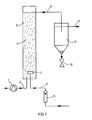
- process I a the process in the fixed bed apparatus is referred to as process I a), the process in the fluidized bed apparatus as process I b).
- the column is filled with the carrier material (4) on which the activated sludge biomass is to settle.
- the gas required for gassing and oxygen supply to the column is fed to the column (3) through the rotameter (5) via line (6) with a frit or perforated plate (7).
- the Column can be operated as a fluidized bed or as a fixed bed with low gas supply.
- the oxygen-containing gas emerges from the frit or perforated plate (7) in the form of small bubbles and flows through the column (3).
- the wastewater supplied via the line (2) likewise flows through the column (3) on the filling (4) of which a biological lawn forms in the support materials according to the invention in a few days and then exits via the outlet (8) of the column (3).
- the treated wastewater is passed via line (8) into a clarifier (9). Particles of the biological lawn washed out of the column (3) separate in the clarifier (9) and can be drawn off via the shut-off valve (10).
- the treated wastewater leaves the clarifier (9) via the drain line (11).
- a partial flow of the outflow of a first revitalization stage of a large industrial plant (COD 5 300-400 mg / 1, BOD 5 18-27 mg / 1) is pumped continuously with the pump (1) via the line (2) into the container (3) .
- the container (3) is supplied with oxygen-containing gas.
- the wastewater to be treated and the carrier material (7) on which the bacteria are to grow are kept in motion with the stirrer (8) so that the carrier material and the activated sludge are evenly distributed is guaranteed.
- the gas escaping in fine bubbles through the frit (6) is distributed in the container (3) by the stirrer (8), as a result of which an adequate oxygen supply to the container contents is possible.
- the treated waste water overflowing from the container (3) is passed through the line (9) into the clarifier (10).
- Activated sludge (7) which is flushed out of the container (3) and settles in the clarifier (10), can be returned to the container (3) by means of the pump (11) via the line (12) or can be removed.
- the clarified waste water leaves the clarifier (10) via the line (13).
- the continuous cleaning in the stirring apparatus described above is referred to as cleaning method II.
- the average residence time is 4 hours.
- the solid, cationic polyurethane (urea) carrier material filled with lignite contains 32.5 g of lignite dry substance in 40 g of anhydrously accepted carrier mass (from anhydrously calculated lignite and anhydrously accepted polyurethane), consequently 81.25% by weight, of lignite, based on the dry weight of the filled polyurethane (urea) carrier.
- the granulated carrier material obtained is then mixed with excess water, completely swollen for 24 hours (at room temperature) and, after stirring, the water above it is decanted off.
- the solids content of the aqueous suspension of the granules thus produced, in the form of a now strongly swollen carrier material, is in the example 140 g of solids per liter of "suspension" (without excess water).
- the solids content in one liter of such a suspension (without excess water) is referred to as the dry substance of the suspension (abbreviated TS (S)).
- the weight of one liter of this suspension of the heavily swollen carrier material (without excess water) is called the suspension weight (abbreviated SG).
- the value of the so-called suspension factor (F4) is derived from the weight of one liter of the suspension (SG) and the value of the dry mass of the carrier (TS-S) contained therein.
- the value of the suspension factor F4 minus 1 (F4-1) indicates how many times the amount of water (based on dry carrier substance) is in the suspension as a whole (as spring water and as water in the interstices in or between the carrier particles).
- the value of the suspension factor F 4 is determined by determining the dry carrier mass of one liter of a suspension of the carriers in water (without excess water) and the weight of the suspension (SG) divided by the weight of the dry carrier mass (TS (F)) it contains:
- the water absorption capacity (WAF) can be determined as a characteristic for the carrier compositions to be used according to the invention using the following formula:
- the bulk weights (in g / 1) are determined according to different types of treatment, the bulk weights S1 to S3 being determined under the following conditions:
- the carrier mass is suspended in a large excess amount of water for 24 hours, then a sieve with 2 mm sieve holes 10 cm high is filled with this swollen mass and allowed to drain for 1 hour; the remaining filling quantity is then weighed in a measuring vessel and converted to the bulk density per liter.
- the carrier mass drained according to S1 is exposed to a pressure of 3 bar for 5 minutes on a 1 mm sieve and then weighed in a measuring vessel. After converting to one liter, the bulk density S2 is determined.
- the moist, squeezed-out carrier mass is dried (approximately) for 1 day at 110 ° under vacuum to constant weight and weighed out in a measuring vessel as above.
- the volume, squeezing and swelling factors should be at least 2, preferably at least 3, particularly preferably at least 4.
- the upper limits of the factors mentioned are approximately below 20, preferably below 15.
- the three factors of the same sample should differ as little as possible, i.e. differ by a maximum of only three times, preferably only twice.
- a fixed bed volume of 1,000 1 to 75 vol.% Is filled with the carrier material described above and an inflow / outflow amount of 250 1 / h is set (see FIG. 1 and general process description I a)).
- the carrier material contains about 66.2% by weight of lignite in the solid (anhydrous).
- the granules were crushed into pieces below 12 mm.
- the dry matter content (TS-S) suspended in water is 112 g / 1 suspension (without excess water, see explanations in Example 1).
- the bulk weights (g / 1) are:
- Waste water purification was carried out in a fixed bed under conditions as in patent example 1).
- Base material made of cationic polyurethane (urea) with 66.6% by weight of sea sand as filler
- a cationic polyurethane is made from isocyanate prepolymer KI-PP-A and sea sand (fineness below 300 pm) (10 parts by weight of cationic NCO prepolymer KI-PP-A, 70 parts by weight). Parts of water, 20 parts by weight of sea sand). The granules obtained are used comminuted to a size below 12 mm.
- the dry matter content is 125 g / 1 suspension, the bulk weights Sl): 728 g / 1 (drained); S2): 620 g / 1 (squeezed); S3): 406 g / 1 (dried).
- the carrier material was used in a fluidized bed apparatus (cleaning process I b)).
- the carrier mass according to Example 3 sediments (in contrast to Comparative Example 5) and can therefore be used both in the fixed bed and in the fluidized bed process.
- sea sand as the sole filler has limited effectiveness with regard to the effects of biological wastewater treatment.
- good results can be achieved if part of the sea sand is replaced by hydrophilic fillers such as lignite (see Example 4).
- the granules crushed to a size of less than 12 mm have a dry matter content TS-S of 84.5 g / 1 suspension.
- Example 5 comparative experiment to Examples 1-4 - not according to the invention
- a cationic polyurethane (urea) is made from isocyanate prepolymer KIPP-A, but without filler (15 parts of NCO prepolymer KIPP-A and 85 parts of water). The granules obtained are used comminuted under 12 mm.
- Example 5 The substance according to Example 5 (comparison) had to be used in a stirring apparatus (cleaning process II / FIG. 2), since this carrier material (without filler) floated up even after weeks in a fixed bed apparatus. In a fluidized bed apparatus according to process I b), this material is absolutely unusable.
- the dry matter content TS-S (g / l suspension) of Example 5 - granules was 36 g / 1, the bulk weights: S1: 520 g / 1 (drained); S2: 490 g / 1 (squeezed) and S3: 219 g / 1 (dried).
- Cationic polyurethane (urea) mass filled with 50 wt .-% lignite dust and 25 wt .-% (based on dry matter) black peat.
- the filler-containing polyurethane (urea) carrier is used in a fixed bed in the first 4 weeks according to method Ia), then in a fluidized bed for 4 weeks in a method according to Ib).
- the volume is 100 1, 75 vol .-% were filled with the above carrier material.
- the outflow / inflow was 25 l / h.
- a cationic polyurethane (urea) mass according to production method A from 12.3 parts by weight of black peat as in patent example 6 (10% by weight of anhydrous black peat), 7 parts by weight of anthracite dust, crushed under 90 ⁇ m, 8 parts by weight of the Cationic NCO prepolymer mixture from Example 6.1 (4.5% NCO) and 73 parts by weight of water are reacted in the usual way and comminuted to give granules of less than 12 mm. Suspended in water, the dry matter content is 87 g / l. Bulk weights are: drained: 538 g / 1 (S1), squeezed: 408 g / 1 (S2), dried: 172 g / 1 (S3).
- the dry bulk weight of the soft foam consisting mainly of block foam waste is about 14 g / l. Particle size from 1 mm to 20 mm, occasionally up to 25 mm.
- Soft foam waste from mold shoots with a very high percentage of rind (tough outer skin), bulk density S1: 365 g / 1; S2: 199 g / l; S3: 61 g / l; TS-S 51.7 g / 1 suspension.
- Block foam waste Particle sizes 1 to 12 mm; Bulk weights Sl: 365 g / 1; S2: 199 g / l; S3: 40 g / l; Dry substance TS-S 35 g / 1 suspension.
- the bulk densities of the granulate consisting of block rigid foam waste with particle sizes below 2 mm are: Sl: 896 g / 1; S2: 457 g / l; S3: 65 g / l.
- activated carbon powder is introduced into the aqueous suspension of the foams mentioned under 1 a) or 1 b), the experiments show that this is not bound by the foam.
- Activated carbon can be squeezed into moist foam under certain conditions, but when it is suspended in water, the activated carbon is largely rinsed out again.
- the highly filled polyurethane (urea) materials used in patent examples 9 to 21 are produced at room temperature either in an intensive mixer, which consists of a cylindrical container which is attached obliquely to a rotating plate and is equipped with an eccentrically insertable agitator, that runs in the opposite direction to the plate rotation, or you use horizontally mounted mixers that are equipped with ploughshare-like tools.
- an intensive mixer which consists of a cylindrical container which is attached obliquely to a rotating plate and is equipped with an eccentrically insertable agitator, that runs in the opposite direction to the plate rotation, or you use horizontally mounted mixers that are equipped with ploughshare-like tools.
- the filler eg brown coal
- the filler eg brown coal
- the catalyst K is added last (in the form of an aqueous emulsion diluted twenty times). After all the components have been mixed in, the stirring is stopped after a few minutes and the support material is spread out in a layer about 10 cm high for 10 to 90 minutes until the isocyanate reactions have largely ended.
- the carrier material is optionally comminuted and washed several times with plenty of water and can then be used directly or at a later point in time for the biological purification according to the invention.
- composition of the carriers according to Examples 9 to 23 are shown in Table 2.
- Table 4 summarizes a number of measured values of the supports according to Examples 9 to 24.
- a double-paddle screw trough with a capacity of approx. 180 l and a length of approx. 300 cm serves as apparatus, and the paddle shafts rotate in opposite directions.
- the product is forcibly conveyed from the inlet opening towards the outlet opening, with a certain kneading or squeezing of the reaction mixture taking place between the paddle shafts.
- the polyurethane foam shredded to 12 or 25 mm and the brown coal dust are conveyed separately into the screw trough via metering screws.
- the water is introduced by means of piston pumps and the NCO prepolymer by means of gear pumps.
- Patent Examples 9 to 18 were achieved within the first 4 weeks, of Patent Example 14 after 10 weeks.
- the average residence time was 4 hours.
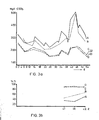
- Curves B, C, D show the COD / 5 values after 4 hours of wastewater in the clarification stage.
- the brightening of the brown color is shown as transmission (Tr.) At 600 nm (in%) for the 47th, 48th and 49th day (d).
- the drainage of the cleaned wastewater is practically odorless, clear and almost colorless.
- the difference of the% WAF value (water absorption capacity) to 100 represents the percentage content (% FCS) in the suspension (without excess water).
Landscapes
- Life Sciences & Earth Sciences (AREA)
- Water Supply & Treatment (AREA)
- Microbiology (AREA)
- Hydrology & Water Resources (AREA)
- Engineering & Computer Science (AREA)
- Environmental & Geological Engineering (AREA)
- Chemical & Material Sciences (AREA)
- Organic Chemistry (AREA)
- Biodiversity & Conservation Biology (AREA)
- Polyurethanes Or Polyureas (AREA)
- Biological Treatment Of Waste Water (AREA)
- Solid-Sorbent Or Filter-Aiding Compositions (AREA)
- Compositions Of Macromolecular Compounds (AREA)
- Detergent Compositions (AREA)
- Fire-Extinguishing Compositions (AREA)
- Orthopedics, Nursing, And Contraception (AREA)
- External Artificial Organs (AREA)
- Fertilizers (AREA)
- Soil Conditioners And Soil-Stabilizing Materials (AREA)
- Agricultural Chemicals And Associated Chemicals (AREA)
Priority Applications (1)
| Application Number | Priority Date | Filing Date | Title |
|---|---|---|---|
| AT85100287T ATE25959T1 (de) | 1984-01-26 | 1985-01-14 | Verwendung von hydrophilen, hochgefuellten polyurethanmassen zur biologischen abwasserreinigung. |
Applications Claiming Priority (2)
| Application Number | Priority Date | Filing Date | Title |
|---|---|---|---|
| DE3402697 | 1984-01-26 | ||
| DE19843402697 DE3402697A1 (de) | 1984-01-26 | 1984-01-26 | Verwendung von hydrophilen, hochgefuellten polyurethanmassen zur biologischen abwasserreinigung |
Publications (3)
| Publication Number | Publication Date |
|---|---|
| EP0150747A2 true EP0150747A2 (fr) | 1985-08-07 |
| EP0150747A3 EP0150747A3 (en) | 1985-08-28 |
| EP0150747B1 EP0150747B1 (fr) | 1987-03-18 |
Family
ID=6225988
Family Applications (1)
| Application Number | Title | Priority Date | Filing Date |
|---|---|---|---|
| EP19850100287 Expired EP0150747B1 (fr) | 1984-01-26 | 1985-01-14 | L'application de polyuréthanes fortement chargés pour la purification biologique d'eau usées |
Country Status (10)
| Country | Link |
|---|---|
| US (1) | US4576718A (fr) |
| EP (1) | EP0150747B1 (fr) |
| JP (1) | JPS60172399A (fr) |
| AT (1) | ATE25959T1 (fr) |
| CA (1) | CA1249674A (fr) |
| DE (2) | DE3402697A1 (fr) |
| DK (1) | DK37085A (fr) |
| ES (1) | ES539857A0 (fr) |
| FI (1) | FI91243C (fr) |
| NO (1) | NO167564C (fr) |
Cited By (11)
| Publication number | Priority date | Publication date | Assignee | Title |
|---|---|---|---|---|
| GB2181424A (en) * | 1985-09-11 | 1987-04-23 | Malcolm Graham Goodson | Zeolite impregnated open-cell foam |
| EP0244695A1 (fr) * | 1986-05-03 | 1987-11-11 | Bayer Ag | Utilisation de supports polymères dans les transformations biochimiques en phase aqueuse |
| EP0210493A3 (en) * | 1985-07-23 | 1988-06-01 | Bayer Ag | Aquous suspensions of agglomerates, their preparation and use |
| EP0209790A3 (en) * | 1985-07-23 | 1988-10-05 | Bayer Ag | Carrier materials containing polymer-bound fillers, process for their manufacture and their use |
| EP0210478A3 (en) * | 1985-07-23 | 1989-01-04 | Bayer Ag | Process for the preparation of anionically modified polyurethane (urea) masses containing fillers, polyurethane (urea) masses obtained and their use |
| EP0340567A1 (fr) * | 1988-05-04 | 1989-11-08 | Bayer Ag | Procédé pour la dégradation biologique de complexes organiques persistants présents dans les eaux usées |
| WO1992006043A1 (fr) * | 1990-10-09 | 1992-04-16 | Allied-Signal Inc. | Procede permettant d'eliminer les produits polluants organiques des eaux usees |
| WO1993002971A1 (fr) * | 1991-08-07 | 1993-02-18 | Allied-Signal Inc. | Procede servant a enlever des polluants organiques d'eaux usees |
| EP0692319A1 (fr) * | 1994-07-15 | 1996-01-17 | Nederlandse Organisatie Voor Toegepast-Natuurwetenschappelijk Onderzoek Tno | Procédé et dispositif pour assainir un sol chimiquement pollué |
| US5543052A (en) * | 1988-07-28 | 1996-08-06 | Alliedsignal Inc. | Process for removal of organic pollutants from waste water |
| WO2002051518A3 (fr) * | 2000-12-27 | 2003-02-20 | Stockhausen Inc | Procede et appareil de deshydratation de l'huile moteur utilisant des polymeres superabsorbants |
Families Citing this family (63)
| Publication number | Priority date | Publication date | Assignee | Title |
|---|---|---|---|---|
| DE3520160A1 (de) * | 1985-06-05 | 1986-12-11 | Noell GmbH, 8700 Würzburg | Verfahren und vorrichtung zum entfernen von nitrat aus oberflaechen- und grundwasser, insbesondere trinkwasser |
| DE3526183A1 (de) * | 1985-07-23 | 1987-02-05 | Bayer Ag | Verfahren zur verbesserten trennung der klaerfluessigkeit von der biomasse bei der biologischen abwasserreinigung |
| CH666131A5 (fr) * | 1985-10-31 | 1988-06-30 | Battelle Memorial Institute | Support a phase solide muni d'un composant destine a participer a une reaction dans une phase liquide. |
| JPS62146819A (ja) * | 1985-12-19 | 1987-06-30 | Matsushita Electric Ind Co Ltd | マガジンホルダ− |
| ATE87886T1 (de) * | 1986-09-16 | 1993-04-15 | Commw Scient Ind Res Org | Abwasserbehandlung. |
| DE3737309A1 (de) * | 1987-09-03 | 1989-03-16 | Tecon Gmbh | Anlage zur aeroben biologischen reinigung von schadstoffhaltigem wasser |
| AT392941B (de) * | 1989-01-19 | 1991-07-10 | Hamburger Dietrich | Spendevorrichtung zur dosierten abgabe eines duftstoffes an die luft, insbesondere fuer einen fahrzeuginnenraum |
| IE892435L (en) * | 1989-02-10 | 1990-01-29 | Zymogenetics Inc | Translation of polycistronic messages in eucaryotic cells |
| US5019512A (en) * | 1989-03-17 | 1991-05-28 | Baxter International Inc. | Spin filter for removing substantially cell-free culture medium from suspension cell culture system |
| US5021157A (en) * | 1989-05-03 | 1991-06-04 | Drake Kenneth M | Filtration, drainage, and drying apparatus for deliquification of sludges |
| ATE116272T1 (de) * | 1990-02-14 | 1995-01-15 | Tauw Milieu Bv | Verfahren zur reinigung von verunreinigtem wasser und vorrichtung zu dessen durchführung. |
| JPH0736919B2 (ja) * | 1990-06-13 | 1995-04-26 | 勝利 大島 | 有機性廃液の浄化方法 |
| US5126042A (en) * | 1991-10-31 | 1992-06-30 | Malone Ronald F | Floating media biofilter |
| JPH0623065A (ja) * | 1992-04-15 | 1994-02-01 | Ebara Infilco Co Ltd | 有機性汚水の生物処理方法および装置 |
| US6153094A (en) * | 1992-05-13 | 2000-11-28 | E. Craig Jowett | Wastewater treatment method and apparatus |
| US5707513A (en) * | 1992-05-13 | 1998-01-13 | Jowett; E. Craig | Wastewater treatment method and apparatus |
| US5432204A (en) * | 1993-01-22 | 1995-07-11 | Woodbridge Foam Corporation | Foamed polymer and process for production thereof |
| US5413714A (en) * | 1993-04-16 | 1995-05-09 | Alliedsignal Inc. | Process for biological remediation of vaporous pollutants |
| CA2139554C (fr) * | 1994-01-06 | 2008-09-09 | E. Craig Jowett | Methode et appareil d'epuration de l'eau usee |
| US5573663A (en) * | 1994-01-10 | 1996-11-12 | Junius; John H. | Fluid filter using floating media |
| US5945005A (en) * | 1994-01-10 | 1999-08-31 | Junius; John H. | Fluid filter using floating media |
| US5486292A (en) * | 1994-03-03 | 1996-01-23 | E. I. Du Pont De Nemours And Company | Adsorbent biocatalyst porous beads |
| HU224100B1 (hu) * | 1995-02-13 | 2005-05-30 | Proceff Limited | Laza szemcsés anyag szennyvízkezeléshez, eljárás ennek gyártására, továbbá eljárás és berendezés szennyvíz kezelésére |
| US5618427A (en) * | 1995-02-13 | 1997-04-08 | W. R. Grace & Co.-Conn. | Composition and method for degradation of nitroaromatic contaminants |
| JPH10174990A (ja) * | 1996-12-17 | 1998-06-30 | Nisshinbo Ind Inc | バイオリアクタ−用担体及び方法 |
| US5770080A (en) * | 1997-04-23 | 1998-06-23 | Malone; Ronald F. | Air charged backwashing bioclarifier |
| US6187183B1 (en) | 1997-05-02 | 2001-02-13 | Septitech, Inc. | Waste water treatment process and system with filtering media |
| US6881339B1 (en) | 1997-10-30 | 2005-04-19 | Sud-Chemie Ag | Process for treating industrial and municipal waste water highly loaded with ammonium |
| DE19828175A1 (de) * | 1997-10-30 | 1999-12-30 | Sued Chemie Ag | Verfahren zur Behandlung von mit Ammonium hochbelasteten Prozeßabwässern auf dem Abwassergebiet |
| GB2334029A (en) * | 1998-02-04 | 1999-08-11 | John James Todd | Media for waste water treatment |
| DE69928237T2 (de) * | 1998-03-31 | 2006-08-03 | Samsung Engineering Co., Ltd. | Verfahren zur behandlung von abwasser zur entfernung von organischen stoffen und stickstoff, |
| US6517724B1 (en) | 1998-04-16 | 2003-02-11 | Ronald F. Malone | Air charged backwashing bioclarifier |
| JP2001300583A (ja) * | 2000-04-25 | 2001-10-30 | Nisshinbo Ind Inc | 有機性排水の硝化脱窒方法 |
| KR20020063098A (ko) * | 2001-01-26 | 2002-08-01 | 히다찌 플랜트 겐세쓰 가부시키가이샤 | 수중의 외인성 내분비교란화학물질의 제거방법 |
| US6673258B2 (en) | 2001-10-11 | 2004-01-06 | Tmp Technologies, Inc. | Magnetically responsive foam and manufacturing process therefor |
| US7140495B2 (en) * | 2001-12-14 | 2006-11-28 | 3M Innovative Properties Company | Layered sheet construction for wastewater treatment |
| US7211206B2 (en) * | 2004-01-23 | 2007-05-01 | Century-Board Usa Llc | Continuous forming system utilizing up to six endless belts |
| US7763341B2 (en) * | 2004-01-23 | 2010-07-27 | Century-Board Usa, Llc | Filled polymer composite and synthetic building material compositions |
| AU2005267399A1 (en) | 2004-06-24 | 2006-02-02 | Century-Board Usa, Llc | Continuous forming apparatus for three-dimensional foamed products |
| US7309434B2 (en) * | 2004-06-28 | 2007-12-18 | Potts David A | Apparatus and method for wastewater treatment |
| US7794224B2 (en) | 2004-09-28 | 2010-09-14 | Woodbridge Corporation | Apparatus for the continuous production of plastic composites |
| US7927492B2 (en) * | 2005-06-07 | 2011-04-19 | William E Baird | Filter assembly, bioreactor catch basin and method of using the same |
| US7582474B2 (en) * | 2005-07-11 | 2009-09-01 | Honeywell International Inc. | Process reactor with layered packed bed |
| WO2007112105A2 (fr) * | 2006-03-24 | 2007-10-04 | Century-Board Usa, Llc | Extrusion de matériaux composites en polyuréthanne |
| DE102006050793A1 (de) * | 2006-10-27 | 2008-04-30 | Bayer Materialscience Ag | Neuartige Hydrogele auf Basis aliphatischer NCO-Prepolymere |
| US20090295021A1 (en) * | 2008-05-27 | 2009-12-03 | Century-Board Usa, Llc | Extrusion of polyurethane composite materials |
| WO2010045644A1 (fr) | 2008-10-17 | 2010-04-22 | Bioair Solutions, Llc | Milieu filtrant pour la filtration/purification de liquide ou de gaz, modules de réacteur associés, dispositifs et procédés de filtration |
| US10258473B2 (en) * | 2008-11-19 | 2019-04-16 | Softjoint Corporation | Device and method for restoring joints with artificial cartilage |
| US9481759B2 (en) | 2009-08-14 | 2016-11-01 | Boral Ip Holdings Llc | Polyurethanes derived from highly reactive reactants and coal ash |
| US8846776B2 (en) | 2009-08-14 | 2014-09-30 | Boral Ip Holdings Llc | Filled polyurethane composites and methods of making same |
| MX2009013966A (es) * | 2009-12-17 | 2011-06-16 | Inst Potosino De Investigacion Cientifica Y Tecnologica A C | Material de empaque para biofiltracion con base en poliuretano modificado con almidon, metodos para la manufactura del mismo y sistema de biofiltracion. |
| US8691092B2 (en) * | 2010-07-07 | 2014-04-08 | Biohabitats Incorporated | Treating water using floating wetland made of plastic waste |
| US9745224B2 (en) | 2011-10-07 | 2017-08-29 | Boral Ip Holdings (Australia) Pty Limited | Inorganic polymer/organic polymer composites and methods of making same |
| US9932457B2 (en) | 2013-04-12 | 2018-04-03 | Boral Ip Holdings (Australia) Pty Limited | Composites formed from an absorptive filler and a polyurethane |
| WO2016018226A1 (fr) | 2014-07-28 | 2016-02-04 | Crocco Guy | Utilisation d'agents réfrigérants évaporatifs pour fabriquer des composites de polyuréthane chargés |
| US9752015B2 (en) | 2014-08-05 | 2017-09-05 | Boral Ip Holdings (Australia) Pty Limited | Filled polymeric composites including short length fibers |
| WO2016118141A1 (fr) | 2015-01-22 | 2016-07-28 | Boral Ip Holdings (Australia) Pty Limited | Composites de polyuréthanne hautement chargés |
| WO2016195717A1 (fr) | 2015-06-05 | 2016-12-08 | Boral Ip Holdings (Australia) Pty Limited | Composites de polyuréthane chargés à charges légères |
| US20170267585A1 (en) | 2015-11-12 | 2017-09-21 | Amitabha Kumar | Filled polyurethane composites with size-graded fillers |
| CN110342642A (zh) * | 2018-04-08 | 2019-10-18 | 上海熊猫机械(集团)有限公司 | 一种原位水质净化装置 |
| CN108423802B (zh) * | 2018-05-18 | 2024-03-08 | 清华大学深圳研究生院 | 一种用于悬浮快滤池的滤料 |
| CN111040115B (zh) * | 2019-12-27 | 2022-01-28 | 陕西科技大学 | 一种复合型腐植酸海绵仿生土壤基质及其制备方法和应用 |
| CN113880354B (zh) * | 2021-10-13 | 2023-08-22 | 世纪华扬环境工程有限公司 | 一种高海拔条件下污水处理用工艺 |
Family Cites Families (22)
| Publication number | Priority date | Publication date | Assignee | Title |
|---|---|---|---|---|
| AT248354B (de) * | 1962-06-13 | 1966-07-25 | Purator Klaeranlagen Grosshand | Biologische Reinigungsanlage |
| DE1934030B2 (de) * | 1969-07-04 | 1971-02-04 | Kali Chemie Ag | Verfahren zur Herstellung eines Trockenmittelformkoerpers |
| CH535184A (fr) * | 1971-08-11 | 1973-03-31 | Techfina S A | Procédé de traitement des eaux usées biodégradables et installation pour la mise en oeuvre de ce procédé |
| US4342834A (en) * | 1972-05-03 | 1982-08-03 | W. R. Grace & Co. | Enzymes bound to polyurethane |
| US3779906A (en) * | 1972-08-03 | 1973-12-18 | Biospherics Inc | Plastic moving-surface treatment of sewage |
| US4137200A (en) * | 1973-10-09 | 1979-01-30 | W. R. Grace & Co. | Crosslinked hydrophilic foams and method |
| DE2633259C3 (de) * | 1975-07-23 | 1984-11-15 | Japan Atomic Energy Research Institute, Tokio/Tokyo | Verfahren zum Unbeweglichmachen von Enzymen oder enzymhaltigen Zellen |
| DE2550818C3 (de) * | 1975-11-12 | 1978-05-18 | Michael 6600 Saarbruecken Funk | Verfahren und Vorrichtung zur biologischen Abwasserreinigung nach dem Schlammbelebungsverfahren |
| JPS5266681A (en) * | 1975-11-26 | 1977-06-02 | Saburo Fukui | Fixing of enzyme or microbial fungus |
| JPS5294487A (en) * | 1976-01-31 | 1977-08-09 | Japan Atom Energy Res Inst | Production of compositions containing enzyme or microbial cells |
| GB1579623A (en) * | 1976-06-08 | 1980-11-19 | Clough G F G | Filtration medium for the biological treatment of waste water |
| JPS5381681A (en) * | 1976-12-25 | 1978-07-19 | Agency Of Ind Science & Technol | Bio-reaction process |
| GB2006181B (en) * | 1977-10-20 | 1982-05-19 | Hartley Simon Ltd | Growth of biological material |
| DE2839872C3 (de) * | 1978-09-13 | 1981-03-12 | Funk, Michael, Ing.(grad.), 6604 Güdingen | Verfahren und Vorrichtungen zur biologischen Abwasserreinigung nach dem Schlammbelebungsverfahren |
| DE2914976A1 (de) * | 1979-04-12 | 1980-10-16 | Kurt Helmut Hofmann | Verfahren und vorrichtung zum entfernen von eiweiss und dessen abbauprodukten aus wasser |
| DE2929872C2 (de) * | 1979-07-24 | 1985-10-31 | Joachim Prof. Dr. Klein | Verfahren zur Herstellung von hydrophilen, gelförmig oder geschäumten Biokatalysatoren mit hoher Beladung an enzymatisch aktiver Substanz |
| DE3025353A1 (de) * | 1980-07-04 | 1982-01-28 | Basf Ag, 6700 Ludwigshafen | Verfahren zur reinigung von organischen verunreinigten abwaessern mit aktivkohle in zwei oder mehreren hintereinandergeschalteten aktivkohlekolonnen |
| DE3032869A1 (de) * | 1980-09-01 | 1982-04-15 | Linde Ag, 6200 Wiesbaden | Verfahren und vorrichtung zur anaeroben biologischen reinigung von abwasser |
| DE3032882A1 (de) * | 1980-09-01 | 1982-04-15 | Linde Ag, 6200 Wiesbaden | Verfahren und vorrichtung zur biologischen reinigung von abwasser |
| DE3176082D1 (en) * | 1981-10-19 | 1987-05-14 | Linde Ag | Process for the elimination of solids from a liquid |
| US4427548A (en) * | 1982-01-06 | 1984-01-24 | The Dow Chemical Company | Filtering method and apparatus |
| DE3213074A1 (de) * | 1982-04-07 | 1983-10-20 | Linde Ag, 6200 Wiesbaden | Verfahren und vorrichtung zur biologischen abwasserrreinigung |
-
1984
- 1984-01-26 DE DE19843402697 patent/DE3402697A1/de not_active Withdrawn
- 1984-11-16 US US06/672,441 patent/US4576718A/en not_active Expired - Fee Related
-
1985
- 1985-01-10 NO NO850112A patent/NO167564C/no unknown
- 1985-01-14 EP EP19850100287 patent/EP0150747B1/fr not_active Expired
- 1985-01-14 AT AT85100287T patent/ATE25959T1/de not_active IP Right Cessation
- 1985-01-14 DE DE8585100287T patent/DE3560091D1/de not_active Expired
- 1985-01-24 FI FI850318A patent/FI91243C/fi not_active IP Right Cessation
- 1985-01-25 ES ES539857A patent/ES539857A0/es active Granted
- 1985-01-25 CA CA000472917A patent/CA1249674A/fr not_active Expired
- 1985-01-25 JP JP60011160A patent/JPS60172399A/ja active Pending
- 1985-01-25 DK DK37085A patent/DK37085A/da not_active Application Discontinuation
Cited By (13)
| Publication number | Priority date | Publication date | Assignee | Title |
|---|---|---|---|---|
| EP0210493A3 (en) * | 1985-07-23 | 1988-06-01 | Bayer Ag | Aquous suspensions of agglomerates, their preparation and use |
| EP0209790A3 (en) * | 1985-07-23 | 1988-10-05 | Bayer Ag | Carrier materials containing polymer-bound fillers, process for their manufacture and their use |
| EP0210478A3 (en) * | 1985-07-23 | 1989-01-04 | Bayer Ag | Process for the preparation of anionically modified polyurethane (urea) masses containing fillers, polyurethane (urea) masses obtained and their use |
| GB2181424A (en) * | 1985-09-11 | 1987-04-23 | Malcolm Graham Goodson | Zeolite impregnated open-cell foam |
| EP0244695A1 (fr) * | 1986-05-03 | 1987-11-11 | Bayer Ag | Utilisation de supports polymères dans les transformations biochimiques en phase aqueuse |
| EP0340567A1 (fr) * | 1988-05-04 | 1989-11-08 | Bayer Ag | Procédé pour la dégradation biologique de complexes organiques persistants présents dans les eaux usées |
| US5543052A (en) * | 1988-07-28 | 1996-08-06 | Alliedsignal Inc. | Process for removal of organic pollutants from waste water |
| WO1992006043A1 (fr) * | 1990-10-09 | 1992-04-16 | Allied-Signal Inc. | Procede permettant d'eliminer les produits polluants organiques des eaux usees |
| WO1993002971A1 (fr) * | 1991-08-07 | 1993-02-18 | Allied-Signal Inc. | Procede servant a enlever des polluants organiques d'eaux usees |
| EP0692319A1 (fr) * | 1994-07-15 | 1996-01-17 | Nederlandse Organisatie Voor Toegepast-Natuurwetenschappelijk Onderzoek Tno | Procédé et dispositif pour assainir un sol chimiquement pollué |
| NL9401169A (nl) * | 1994-07-15 | 1996-02-01 | Tno | Werkwijze en inrichting voor het saneren van een chemisch verontreinigde bodem. |
| WO2002051518A3 (fr) * | 2000-12-27 | 2003-02-20 | Stockhausen Inc | Procede et appareil de deshydratation de l'huile moteur utilisant des polymeres superabsorbants |
| US7033493B2 (en) | 2000-12-27 | 2006-04-25 | Stockhausen, Inc. | Method and apparatus using super absorbent polymers for dehydration of oil |
Also Published As
| Publication number | Publication date |
|---|---|
| DK37085A (da) | 1985-07-27 |
| ES8601811A1 (es) | 1985-11-16 |
| NO850112L (no) | 1985-07-29 |
| FI91243C (fi) | 1994-06-10 |
| FI91243B (fi) | 1994-02-28 |
| FI850318L (fi) | 1985-07-27 |
| EP0150747A3 (en) | 1985-08-28 |
| FI850318A0 (fi) | 1985-01-24 |
| DE3560091D1 (en) | 1987-04-23 |
| CA1249674A (fr) | 1989-01-31 |
| EP0150747B1 (fr) | 1987-03-18 |
| ES539857A0 (es) | 1985-11-16 |
| ATE25959T1 (de) | 1987-04-15 |
| JPS60172399A (ja) | 1985-09-05 |
| DE3402697A1 (de) | 1985-08-01 |
| NO167564C (no) | 1991-11-20 |
| NO167564B (no) | 1991-08-12 |
| DK37085D0 (da) | 1985-01-25 |
| US4576718A (en) | 1986-03-18 |
Similar Documents
| Publication | Publication Date | Title |
|---|---|---|
| EP0150747B1 (fr) | L'application de polyuréthanes fortement chargés pour la purification biologique d'eau usées | |
| EP0210478B1 (fr) | Procédé de préparation de masses de polyuréthane-urée contenant des matières de charge et modifiées par des groupes anioniques, les masses de polyuréthane-urée correspondantes et leur utilisation | |
| EP0151937B1 (fr) | Procédé pour la préparation de compositions de polyuréthane (urée) contenant de la mousse, compositions de polyuréthane (urée) contenant de la mousse et leur application | |
| EP0209790B1 (fr) | Matériaux-supports contenant des matières de charge et liés par les polymères, procédé pour leur fabrication et application | |
| EP0121851B1 (fr) | Composition biologiquement active pour la purification des eaux résiduaires et des gaz d'échappement | |
| CA1269493A (fr) | Methode pour la separation amelioree de liquide clarifie de la biomasse en rapport avec le traitement biologique des eaux-vannes | |
| EP0046901B1 (fr) | Procédé et dispositif pour l'épuration biologique anaérobe d'eau usée | |
| EP0151938B1 (fr) | Procédé pour la préparation de compositions de polyuréthane(urée) chargées, compositions de polyuréthane(urée) chargées et leur application | |
| DE3615103A1 (de) | Verwendung von polymertraegermassen als traeger bei biochmischen umwandlungsprozessen in waessriger phase | |
| DE69227909T2 (de) | Verfarhen zur beseitigung organischer schadstoffe aus abwasser | |
| DE4238126A1 (de) | Verfahren zur Herstellung von Füllstoff-modifizierten Polyurethan-Schaumstoffträgern für Biokonversionsprozesse |
Legal Events
| Date | Code | Title | Description |
|---|---|---|---|
| PUAI | Public reference made under article 153(3) epc to a published international application that has entered the european phase |
Free format text: ORIGINAL CODE: 0009012 |
|
| PUAL | Search report despatched |
Free format text: ORIGINAL CODE: 0009013 |
|
| 17P | Request for examination filed |
Effective date: 19850114 |
|
| AK | Designated contracting states |
Designated state(s): AT BE CH DE FR GB IT LI NL SE |
|
| AK | Designated contracting states |
Designated state(s): AT BE CH DE FR GB IT LI NL SE |
|
| 17Q | First examination report despatched |
Effective date: 19860515 |
|
| GRAA | (expected) grant |
Free format text: ORIGINAL CODE: 0009210 |
|
| AK | Designated contracting states |
Kind code of ref document: B1 Designated state(s): AT BE CH DE FR GB IT LI NL SE |
|
| REF | Corresponds to: |
Ref document number: 25959 Country of ref document: AT Date of ref document: 19870415 Kind code of ref document: T |
|
| ITF | It: translation for a ep patent filed | ||
| REF | Corresponds to: |
Ref document number: 3560091 Country of ref document: DE Date of ref document: 19870423 |
|
| ET | Fr: translation filed | ||
| PLBE | No opposition filed within time limit |
Free format text: ORIGINAL CODE: 0009261 |
|
| STAA | Information on the status of an ep patent application or granted ep patent |
Free format text: STATUS: NO OPPOSITION FILED WITHIN TIME LIMIT |
|
| 26N | No opposition filed | ||
| ITTA | It: last paid annual fee | ||
| PGFP | Annual fee paid to national office [announced via postgrant information from national office to epo] |
Ref country code: DE Payment date: 19941212 Year of fee payment: 11 |
|
| PGFP | Annual fee paid to national office [announced via postgrant information from national office to epo] |
Ref country code: SE Payment date: 19941213 Year of fee payment: 11 |
|
| PGFP | Annual fee paid to national office [announced via postgrant information from national office to epo] |
Ref country code: FR Payment date: 19941229 Year of fee payment: 11 |
|
| PGFP | Annual fee paid to national office [announced via postgrant information from national office to epo] |
Ref country code: GB Payment date: 19950104 Year of fee payment: 11 |
|
| PGFP | Annual fee paid to national office [announced via postgrant information from national office to epo] |
Ref country code: AT Payment date: 19950109 Year of fee payment: 11 |
|
| PGFP | Annual fee paid to national office [announced via postgrant information from national office to epo] |
Ref country code: CH Payment date: 19950113 Year of fee payment: 11 |
|
| PGFP | Annual fee paid to national office [announced via postgrant information from national office to epo] |
Ref country code: BE Payment date: 19950118 Year of fee payment: 11 |
|
| EAL | Se: european patent in force in sweden |
Ref document number: 85100287.3 |
|
| PGFP | Annual fee paid to national office [announced via postgrant information from national office to epo] |
Ref country code: NL Payment date: 19950131 Year of fee payment: 11 |
|
| PG25 | Lapsed in a contracting state [announced via postgrant information from national office to epo] |
Ref country code: GB Effective date: 19960114 Ref country code: AT Effective date: 19960114 |
|
| PG25 | Lapsed in a contracting state [announced via postgrant information from national office to epo] |
Ref country code: SE Effective date: 19960115 |
|
| PG25 | Lapsed in a contracting state [announced via postgrant information from national office to epo] |
Ref country code: LI Effective date: 19960131 Ref country code: CH Effective date: 19960131 Ref country code: BE Effective date: 19960131 |
|
| BERE | Be: lapsed |
Owner name: BAYER A.G. Effective date: 19960131 |
|
| PG25 | Lapsed in a contracting state [announced via postgrant information from national office to epo] |
Ref country code: NL Effective date: 19960801 |
|
| GBPC | Gb: european patent ceased through non-payment of renewal fee |
Effective date: 19960114 |
|
| REG | Reference to a national code |
Ref country code: CH Ref legal event code: PL |
|
| PG25 | Lapsed in a contracting state [announced via postgrant information from national office to epo] |
Ref country code: FR Effective date: 19960930 |
|
| NLV4 | Nl: lapsed or anulled due to non-payment of the annual fee |
Effective date: 19960801 |
|
| PG25 | Lapsed in a contracting state [announced via postgrant information from national office to epo] |
Ref country code: DE Effective date: 19961001 |
|
| EUG | Se: european patent has lapsed |
Ref document number: 85100287.3 |
|
| REG | Reference to a national code |
Ref country code: FR Ref legal event code: ST |