EP0151886A1 - Procédé pour la préparation d'esters - Google Patents
Procédé pour la préparation d'esters Download PDFInfo
- Publication number
- EP0151886A1 EP0151886A1 EP84309071A EP84309071A EP0151886A1 EP 0151886 A1 EP0151886 A1 EP 0151886A1 EP 84309071 A EP84309071 A EP 84309071A EP 84309071 A EP84309071 A EP 84309071A EP 0151886 A1 EP0151886 A1 EP 0151886A1
- Authority
- EP
- European Patent Office
- Prior art keywords
- alkanol
- primary
- ester
- mixture
- bar
- Prior art date
- Legal status (The legal status is an assumption and is not a legal conclusion. Google has not performed a legal analysis and makes no representation as to the accuracy of the status listed.)
- Withdrawn
Links
- 238000000034 method Methods 0.000 title claims abstract description 42
- 150000002148 esters Chemical class 0.000 title claims abstract description 41
- 230000008569 process Effects 0.000 title claims abstract description 30
- XLOMVQKBTHCTTD-UHFFFAOYSA-N Zinc monoxide Chemical compound [Zn]=O XLOMVQKBTHCTTD-UHFFFAOYSA-N 0.000 claims abstract description 59
- 239000000203 mixture Substances 0.000 claims abstract description 58
- 239000003054 catalyst Substances 0.000 claims abstract description 46
- 229910052739 hydrogen Inorganic materials 0.000 claims abstract description 32
- 239000001257 hydrogen Substances 0.000 claims abstract description 32
- QPLDLSVMHZLSFG-UHFFFAOYSA-N Copper oxide Chemical compound [Cu]=O QPLDLSVMHZLSFG-UHFFFAOYSA-N 0.000 claims abstract description 31
- 239000011787 zinc oxide Substances 0.000 claims abstract description 30
- UFHFLCQGNIYNRP-UHFFFAOYSA-N Hydrogen Chemical compound [H][H] UFHFLCQGNIYNRP-UHFFFAOYSA-N 0.000 claims abstract description 28
- -1 alkyl carboxylic acid Chemical class 0.000 claims abstract description 16
- 238000004519 manufacturing process Methods 0.000 claims abstract description 16
- 239000005751 Copper oxide Substances 0.000 claims abstract description 13
- 229910000431 copper oxide Inorganic materials 0.000 claims abstract description 13
- 238000006555 catalytic reaction Methods 0.000 claims abstract description 9
- 239000007795 chemical reaction product Substances 0.000 claims abstract description 9
- 125000005907 alkyl ester group Chemical group 0.000 claims abstract description 8
- 125000004432 carbon atom Chemical group C* 0.000 claims abstract description 5
- LFQSCWFLJHTTHZ-UHFFFAOYSA-N Ethanol Chemical compound CCO LFQSCWFLJHTTHZ-UHFFFAOYSA-N 0.000 claims description 85
- XEKOWRVHYACXOJ-UHFFFAOYSA-N Ethyl acetate Chemical group CCOC(C)=O XEKOWRVHYACXOJ-UHFFFAOYSA-N 0.000 claims description 78
- 239000000047 product Substances 0.000 claims description 43
- 239000006227 byproduct Substances 0.000 claims description 18
- 238000004821 distillation Methods 0.000 claims description 17
- 238000006243 chemical reaction Methods 0.000 claims description 16
- 230000009467 reduction Effects 0.000 claims description 10
- 239000000463 material Substances 0.000 claims description 7
- 150000002431 hydrogen Chemical class 0.000 claims description 4
- 238000010926 purge Methods 0.000 claims description 3
- 238000005057 refrigeration Methods 0.000 claims description 2
- 238000011084 recovery Methods 0.000 claims 1
- QTBSBXVTEAMEQO-UHFFFAOYSA-N Acetic acid Chemical compound CC(O)=O QTBSBXVTEAMEQO-UHFFFAOYSA-N 0.000 description 27
- OKKJLVBELUTLKV-UHFFFAOYSA-N Methanol Chemical compound OC OKKJLVBELUTLKV-UHFFFAOYSA-N 0.000 description 21
- IJGRMHOSHXDMSA-UHFFFAOYSA-N Atomic nitrogen Chemical compound N#N IJGRMHOSHXDMSA-UHFFFAOYSA-N 0.000 description 18
- VNWKTOKETHGBQD-UHFFFAOYSA-N methane Chemical compound C VNWKTOKETHGBQD-UHFFFAOYSA-N 0.000 description 14
- 239000007789 gas Substances 0.000 description 11
- IKHGUXGNUITLKF-UHFFFAOYSA-N Acetaldehyde Chemical compound CC=O IKHGUXGNUITLKF-UHFFFAOYSA-N 0.000 description 10
- 229910052757 nitrogen Inorganic materials 0.000 description 9
- LRHPLDYGYMQRHN-UHFFFAOYSA-N N-Butanol Chemical compound CCCCO LRHPLDYGYMQRHN-UHFFFAOYSA-N 0.000 description 8
- 239000007788 liquid Substances 0.000 description 7
- UGFAIRIUMAVXCW-UHFFFAOYSA-N Carbon monoxide Chemical class [O+]#[C-] UGFAIRIUMAVXCW-UHFFFAOYSA-N 0.000 description 6
- KFZMGEQAYNKOFK-UHFFFAOYSA-N Isopropanol Chemical compound CC(C)O KFZMGEQAYNKOFK-UHFFFAOYSA-N 0.000 description 6
- VYPSYNLAJGMNEJ-UHFFFAOYSA-N Silicium dioxide Chemical compound O=[Si]=O VYPSYNLAJGMNEJ-UHFFFAOYSA-N 0.000 description 6
- 239000000498 cooling water Substances 0.000 description 6
- 229910052751 metal Inorganic materials 0.000 description 6
- 239000002184 metal Substances 0.000 description 6
- PNEYBMLMFCGWSK-UHFFFAOYSA-N Alumina Chemical compound [O-2].[O-2].[O-2].[Al+3].[Al+3] PNEYBMLMFCGWSK-UHFFFAOYSA-N 0.000 description 5
- 238000006356 dehydrogenation reaction Methods 0.000 description 5
- 150000002739 metals Chemical class 0.000 description 5
- 239000000126 substance Substances 0.000 description 5
- XLYOFNOQVPJJNP-UHFFFAOYSA-N water Substances O XLYOFNOQVPJJNP-UHFFFAOYSA-N 0.000 description 5
- XKRFYHLGVUSROY-UHFFFAOYSA-N Argon Chemical compound [Ar] XKRFYHLGVUSROY-UHFFFAOYSA-N 0.000 description 4
- OTMSDBZUPAUEDD-UHFFFAOYSA-N Ethane Chemical compound CC OTMSDBZUPAUEDD-UHFFFAOYSA-N 0.000 description 4
- 239000004372 Polyvinyl alcohol Substances 0.000 description 4
- XBDQKXXYIPTUBI-UHFFFAOYSA-M Propionate Chemical compound CCC([O-])=O XBDQKXXYIPTUBI-UHFFFAOYSA-M 0.000 description 4
- KXKVLQRXCPHEJC-UHFFFAOYSA-N acetic acid trimethyl ester Natural products COC(C)=O KXKVLQRXCPHEJC-UHFFFAOYSA-N 0.000 description 4
- QVQLCTNNEUAWMS-UHFFFAOYSA-N barium oxide Chemical compound [Ba]=O QVQLCTNNEUAWMS-UHFFFAOYSA-N 0.000 description 4
- 229910002090 carbon oxide Inorganic materials 0.000 description 4
- 239000011261 inert gas Substances 0.000 description 4
- TZIHFWKZFHZASV-UHFFFAOYSA-N methyl formate Chemical compound COC=O TZIHFWKZFHZASV-UHFFFAOYSA-N 0.000 description 4
- 229920002451 polyvinyl alcohol Polymers 0.000 description 4
- ZWEHNKRNPOVVGH-UHFFFAOYSA-N 2-Butanone Chemical compound CCC(C)=O ZWEHNKRNPOVVGH-UHFFFAOYSA-N 0.000 description 3
- RYGMFSIKBFXOCR-UHFFFAOYSA-N Copper Chemical compound [Cu] RYGMFSIKBFXOCR-UHFFFAOYSA-N 0.000 description 3
- RTZKZFJDLAIYFH-UHFFFAOYSA-N Diethyl ether Chemical compound CCOCC RTZKZFJDLAIYFH-UHFFFAOYSA-N 0.000 description 3
- IKHGUXGNUITLKF-XPULMUKRSA-N acetaldehyde Chemical compound [14CH]([14CH3])=O IKHGUXGNUITLKF-XPULMUKRSA-N 0.000 description 3
- 229910052799 carbon Inorganic materials 0.000 description 3
- 229910052802 copper Inorganic materials 0.000 description 3
- 239000010949 copper Substances 0.000 description 3
- 238000005755 formation reaction Methods 0.000 description 3
- 229960004592 isopropanol Drugs 0.000 description 3
- 150000003138 primary alcohols Chemical class 0.000 description 3
- 238000000926 separation method Methods 0.000 description 3
- 238000005809 transesterification reaction Methods 0.000 description 3
- YIWUKEYIRIRTPP-UHFFFAOYSA-N 2-ethylhexan-1-ol Chemical compound CCCCC(CC)CO YIWUKEYIRIRTPP-UHFFFAOYSA-N 0.000 description 2
- CSCPPACGZOOCGX-UHFFFAOYSA-N Acetone Chemical compound CC(C)=O CSCPPACGZOOCGX-UHFFFAOYSA-N 0.000 description 2
- OKTJSMMVPCPJKN-UHFFFAOYSA-N Carbon Chemical compound [C] OKTJSMMVPCPJKN-UHFFFAOYSA-N 0.000 description 2
- CURLTUGMZLYLDI-UHFFFAOYSA-N Carbon dioxide Chemical compound O=C=O CURLTUGMZLYLDI-UHFFFAOYSA-N 0.000 description 2
- VGGSQFUCUMXWEO-UHFFFAOYSA-N Ethene Chemical compound C=C VGGSQFUCUMXWEO-UHFFFAOYSA-N 0.000 description 2
- 239000005977 Ethylene Substances 0.000 description 2
- AMQJEAYHLZJPGS-UHFFFAOYSA-N N-Pentanol Chemical compound CCCCCO AMQJEAYHLZJPGS-UHFFFAOYSA-N 0.000 description 2
- XTXRWKRVRITETP-UHFFFAOYSA-N Vinyl acetate Chemical compound CC(=O)OC=C XTXRWKRVRITETP-UHFFFAOYSA-N 0.000 description 2
- 150000001298 alcohols Chemical class 0.000 description 2
- 150000001299 aldehydes Chemical class 0.000 description 2
- 229910052786 argon Inorganic materials 0.000 description 2
- 230000015572 biosynthetic process Effects 0.000 description 2
- XUPYJHCZDLZNFP-UHFFFAOYSA-N butyl butanoate Chemical compound CCCCOC(=O)CCC XUPYJHCZDLZNFP-UHFFFAOYSA-N 0.000 description 2
- 229910002091 carbon monoxide Inorganic materials 0.000 description 2
- 239000012876 carrier material Substances 0.000 description 2
- 230000003197 catalytic effect Effects 0.000 description 2
- 238000000975 co-precipitation Methods 0.000 description 2
- 150000001875 compounds Chemical class 0.000 description 2
- 238000006482 condensation reaction Methods 0.000 description 2
- 230000000694 effects Effects 0.000 description 2
- 239000000446 fuel Substances 0.000 description 2
- 238000004817 gas chromatography Methods 0.000 description 2
- 239000011521 glass Substances 0.000 description 2
- NCDCLPBOMHPFCV-UHFFFAOYSA-N hexyl hexanoate Chemical compound CCCCCCOC(=O)CCCCC NCDCLPBOMHPFCV-UHFFFAOYSA-N 0.000 description 2
- 150000002576 ketones Chemical class 0.000 description 2
- 239000000395 magnesium oxide Substances 0.000 description 2
- CPLXHLVBOLITMK-UHFFFAOYSA-N magnesium oxide Inorganic materials [Mg]=O CPLXHLVBOLITMK-UHFFFAOYSA-N 0.000 description 2
- AXZKOIWUVFPNLO-UHFFFAOYSA-N magnesium;oxygen(2-) Chemical compound [O-2].[Mg+2] AXZKOIWUVFPNLO-UHFFFAOYSA-N 0.000 description 2
- NUJOXMJBOLGQSY-UHFFFAOYSA-N manganese dioxide Chemical compound O=[Mn]=O NUJOXMJBOLGQSY-UHFFFAOYSA-N 0.000 description 2
- IJDNQMDRQITEOD-UHFFFAOYSA-N n-butane Chemical compound CCCC IJDNQMDRQITEOD-UHFFFAOYSA-N 0.000 description 2
- 230000003647 oxidation Effects 0.000 description 2
- 238000007254 oxidation reaction Methods 0.000 description 2
- 229920002689 polyvinyl acetate Polymers 0.000 description 2
- 239000011118 polyvinyl acetate Substances 0.000 description 2
- BDERNNFJNOPAEC-UHFFFAOYSA-N propan-1-ol Chemical compound CCCO BDERNNFJNOPAEC-UHFFFAOYSA-N 0.000 description 2
- 239000011541 reaction mixture Substances 0.000 description 2
- 229910052703 rhodium Inorganic materials 0.000 description 2
- 239000010948 rhodium Substances 0.000 description 2
- 239000004576 sand Substances 0.000 description 2
- 229910001220 stainless steel Inorganic materials 0.000 description 2
- 239000010935 stainless steel Substances 0.000 description 2
- 239000011701 zinc Substances 0.000 description 2
- OUCGJMIVSYHBEC-UHFFFAOYSA-N 2-ethylhexyl 2-ethylhexanoate Chemical compound CCCCC(CC)COC(=O)C(CC)CCCC OUCGJMIVSYHBEC-UHFFFAOYSA-N 0.000 description 1
- SJIWUNNSRFWATG-UHFFFAOYSA-N 4-[2-(2-hydroxyethoxy)ethoxy]-4-oxobutanoic acid Chemical compound OCCOCCOC(=O)CCC(O)=O SJIWUNNSRFWATG-UHFFFAOYSA-N 0.000 description 1
- 229910018182 Al—Cu Inorganic materials 0.000 description 1
- 238000004438 BET method Methods 0.000 description 1
- DGAQECJNVWCQMB-PUAWFVPOSA-M Ilexoside XXIX Chemical compound C[C@@H]1CC[C@@]2(CC[C@@]3(C(=CC[C@H]4[C@]3(CC[C@@H]5[C@@]4(CC[C@@H](C5(C)C)OS(=O)(=O)[O-])C)C)[C@@H]2[C@]1(C)O)C)C(=O)O[C@H]6[C@@H]([C@H]([C@@H]([C@H](O6)CO)O)O)O.[Na+] DGAQECJNVWCQMB-PUAWFVPOSA-M 0.000 description 1
- 239000005909 Kieselgur Substances 0.000 description 1
- 229910000831 Steel Inorganic materials 0.000 description 1
- GWEVSGVZZGPLCZ-UHFFFAOYSA-N Titan oxide Chemical compound O=[Ti]=O GWEVSGVZZGPLCZ-UHFFFAOYSA-N 0.000 description 1
- 238000010521 absorption reaction Methods 0.000 description 1
- 150000001242 acetic acid derivatives Chemical class 0.000 description 1
- 150000001335 aliphatic alkanes Chemical class 0.000 description 1
- 150000001336 alkenes Chemical class 0.000 description 1
- 238000004458 analytical method Methods 0.000 description 1
- 230000008901 benefit Effects 0.000 description 1
- 229910052793 cadmium Inorganic materials 0.000 description 1
- 238000001354 calcination Methods 0.000 description 1
- 229910002092 carbon dioxide Inorganic materials 0.000 description 1
- 239000001569 carbon dioxide Substances 0.000 description 1
- 150000004649 carbonic acid derivatives Chemical class 0.000 description 1
- 230000006315 carbonylation Effects 0.000 description 1
- 238000005810 carbonylation reaction Methods 0.000 description 1
- 150000001732 carboxylic acid derivatives Chemical class 0.000 description 1
- 239000012159 carrier gas Substances 0.000 description 1
- 238000003889 chemical engineering Methods 0.000 description 1
- 229910052804 chromium Inorganic materials 0.000 description 1
- 229910017052 cobalt Inorganic materials 0.000 description 1
- 239000010941 cobalt Substances 0.000 description 1
- GUTLYIVDDKVIGB-UHFFFAOYSA-N cobalt atom Chemical compound [Co] GUTLYIVDDKVIGB-UHFFFAOYSA-N 0.000 description 1
- 239000000567 combustion gas Substances 0.000 description 1
- 239000002131 composite material Substances 0.000 description 1
- 230000005494 condensation Effects 0.000 description 1
- 238000007796 conventional method Methods 0.000 description 1
- 238000006297 dehydration reaction Methods 0.000 description 1
- 238000010586 diagram Methods 0.000 description 1
- 239000003085 diluting agent Substances 0.000 description 1
- 230000032050 esterification Effects 0.000 description 1
- 238000005886 esterification reaction Methods 0.000 description 1
- 238000002474 experimental method Methods 0.000 description 1
- 238000000855 fermentation Methods 0.000 description 1
- 230000004151 fermentation Effects 0.000 description 1
- 239000000945 filler Substances 0.000 description 1
- 230000004907 flux Effects 0.000 description 1
- 239000008246 gaseous mixture Substances 0.000 description 1
- 229910052737 gold Inorganic materials 0.000 description 1
- 238000010438 heat treatment Methods 0.000 description 1
- 239000001307 helium Substances 0.000 description 1
- 229910052734 helium Inorganic materials 0.000 description 1
- SWQJXJOGLNCZEY-UHFFFAOYSA-N helium atom Chemical compound [He] SWQJXJOGLNCZEY-UHFFFAOYSA-N 0.000 description 1
- 230000036571 hydration Effects 0.000 description 1
- 238000006703 hydration reaction Methods 0.000 description 1
- 229930195733 hydrocarbon Natural products 0.000 description 1
- 150000002430 hydrocarbons Chemical class 0.000 description 1
- 238000007327 hydrogenolysis reaction Methods 0.000 description 1
- 230000007062 hydrolysis Effects 0.000 description 1
- 238000006460 hydrolysis reaction Methods 0.000 description 1
- 238000010348 incorporation Methods 0.000 description 1
- 239000004615 ingredient Substances 0.000 description 1
- 229910052741 iridium Inorganic materials 0.000 description 1
- 229910052742 iron Inorganic materials 0.000 description 1
- 229910052745 lead Inorganic materials 0.000 description 1
- 239000007791 liquid phase Substances 0.000 description 1
- 230000014759 maintenance of location Effects 0.000 description 1
- 230000007246 mechanism Effects 0.000 description 1
- 229910052753 mercury Inorganic materials 0.000 description 1
- 229910044991 metal oxide Inorganic materials 0.000 description 1
- 150000004706 metal oxides Chemical class 0.000 description 1
- 229910003455 mixed metal oxide Inorganic materials 0.000 description 1
- 238000002156 mixing Methods 0.000 description 1
- 229910052750 molybdenum Inorganic materials 0.000 description 1
- 229910052759 nickel Inorganic materials 0.000 description 1
- 150000002823 nitrates Chemical class 0.000 description 1
- 229910052762 osmium Inorganic materials 0.000 description 1
- 150000003891 oxalate salts Chemical class 0.000 description 1
- RVTZCBVAJQQJTK-UHFFFAOYSA-N oxygen(2-);zirconium(4+) Chemical compound [O-2].[O-2].[Zr+4] RVTZCBVAJQQJTK-UHFFFAOYSA-N 0.000 description 1
- 229910052763 palladium Inorganic materials 0.000 description 1
- 239000008188 pellet Substances 0.000 description 1
- FGPPDYNPZTUNIU-UHFFFAOYSA-N pentyl pentanoate Chemical compound CCCCCOC(=O)CCCC FGPPDYNPZTUNIU-UHFFFAOYSA-N 0.000 description 1
- 230000000737 periodic effect Effects 0.000 description 1
- 229910052697 platinum Inorganic materials 0.000 description 1
- 239000002574 poison Substances 0.000 description 1
- 231100000614 poison Toxicity 0.000 description 1
- 230000002028 premature Effects 0.000 description 1
- 238000011027 product recovery Methods 0.000 description 1
- MCSINKKTEDDPNK-UHFFFAOYSA-N propyl propionate Chemical compound CCCOC(=O)CC MCSINKKTEDDPNK-UHFFFAOYSA-N 0.000 description 1
- 238000010791 quenching Methods 0.000 description 1
- 230000000171 quenching effect Effects 0.000 description 1
- 229910052702 rhenium Inorganic materials 0.000 description 1
- MHOVAHRLVXNVSD-UHFFFAOYSA-N rhodium atom Chemical compound [Rh] MHOVAHRLVXNVSD-UHFFFAOYSA-N 0.000 description 1
- 229910052707 ruthenium Inorganic materials 0.000 description 1
- 238000007086 side reaction Methods 0.000 description 1
- 239000000377 silicon dioxide Substances 0.000 description 1
- 229910052709 silver Inorganic materials 0.000 description 1
- 229910052708 sodium Inorganic materials 0.000 description 1
- 239000011734 sodium Substances 0.000 description 1
- 239000010959 steel Substances 0.000 description 1
- 238000003860 storage Methods 0.000 description 1
- OGIDPMRJRNCKJF-UHFFFAOYSA-N titanium oxide Inorganic materials [Ti]=O OGIDPMRJRNCKJF-UHFFFAOYSA-N 0.000 description 1
- 229910052721 tungsten Inorganic materials 0.000 description 1
- 229910001928 zirconium oxide Inorganic materials 0.000 description 1
Images

Classifications
-
- C—CHEMISTRY; METALLURGY
- C07—ORGANIC CHEMISTRY
- C07C—ACYCLIC OR CARBOCYCLIC COMPOUNDS
- C07C67/00—Preparation of carboxylic acid esters
- C07C67/39—Preparation of carboxylic acid esters by oxidation of groups which are precursors for the acid moiety of the ester
- C07C67/40—Preparation of carboxylic acid esters by oxidation of groups which are precursors for the acid moiety of the ester by oxidation of primary alcohols
-
- C—CHEMISTRY; METALLURGY
- C07—ORGANIC CHEMISTRY
- C07C—ACYCLIC OR CARBOCYCLIC COMPOUNDS
- C07C67/00—Preparation of carboxylic acid esters
- C07C67/48—Separation; Purification; Stabilisation; Use of additives
- C07C67/52—Separation; Purification; Stabilisation; Use of additives by change in the physical state, e.g. crystallisation
- C07C67/54—Separation; Purification; Stabilisation; Use of additives by change in the physical state, e.g. crystallisation by distillation
Definitions
- This invention relates to a process for the production of esters, more particularly to a process for the production of a primary C 2 + alkyl ester of an alkyl carboxylic acid from a primary C 2+ alkanol.
- Esters such as ethyl acetate, are relatively expensive bulk chemicals. Typically they are produced by esterification of the carboxylic acid with the corresponding alcohol, e.g.: In some cases the Tischenko condensation reaction can be used. For example ethyl acetate can be produced from acetaldehyde:
- esters are by-products of other reactions.
- ethyl acetate is produced as a by-product in the liquid phase oxidation of n-butane.
- Ethanol may be available in large quantity, either as a product of hydration of ethylene or, in certain countries, as a fermentation product.
- Acetic acid is typically produced by oxidation of n-butane or other hydrocarbons, such as naphtha.
- the production of acetic acid by the carbonylation of methanol using cobalt, or more recently rhodium, catalysts has also had wide industrial application. In certain circumstances ethanol may be available in excess capacity, whilst acetic acid is not available.
- esters directly from primary alcohols has been described on various occasions in the literature.
- dehydrogenation of methanol over Cu-Zr-Zn catalysts at temperatures of 100 to 400°C to yield methyl formate has been described in Belgian Patent Specification No. 879915 (see also Chemical Abstacts, Vol 93 (1980), No. 204080f at page 635).
- the Cu-Zr-Zn ratio is 1:0.01-2.0:0.01-2.
- French Patent Specification No. 1000505 (see Chemical Abstracts, Vol 51 (1957), 3061b) describes passage of methanol vapour over an Al-Cu catalyst at 180 to 250°C to form methyl formate by dehydrogenation.
- the present invention accordingly seeks to provide a novel process for production of C 2+ alkyl esters of alkyl carboxylic acids from C 2+ primary alcohols, enabling production of such esters at relatively low cost and involving simple plant.
- a process for the production of a primary C 2+ alkyl ester of an alkyl carboxylic acid which comprises contacting a vaporous mixture containing a C 2+ primary alkanol and hydrogen in an alkanol:hydrogen molar ratio of from about 1:10 to about 1000:1 at a combined partial pressure of alkanol and hydrogen of from about 0.1 bar up to-about 40 bar and at a temperature in the range of from about 180°C to about 300°C in a catalytic reaction zone with a catalyst consisting essentially of a reduced mixture of copper oxide and zinc oxide, and recovering a reaction product mixture containing a primary C 2+ alkyl ester of an alkyl carboxylic acid, which ester contains twice as many carbon atoms as the primary C 2 + alkanol.
- the primary C 2+ alkanol contains from 2 to about 8 carbon atoms.
- the primary C 2+ alkanol is ethanol and the ester is ethyl acetate.
- Other primary C 2+ alkanols which can be mentioned include n-propanol, n-butanol, n-pentanol, n-hexandl, and 2-ethylhexanol; these yield respectively n-propyl propionate, n-butyl butyrate, n-pentyl valerate, n-hexyl caproate, and 2-ethylhexyl 2-ethylhexanoate.
- the vaporous mixture supplied to the catalytic reaction zone contains, in addition to the primary C 2+ alkanol (e.g. ethanol), hydrogen either alone or in admixture with other gases (desirably gases inert to the ester and the catalyst).
- gases include inert gases such as nitrogen, methane, and argon.
- the vaporous mixture may further comprise a minor amount, for example from about 0.1 mole up to about 10 moles or more, per 100 moles of primary C 2+ alkanol, of the corresponding alkanal. It may also include a minor amount of recycled ester product.
- the process of the present invention is conducted at a temperature of between about 180°C and about 300 * C, preferably at a temperature of at least about 200°C. Typically, the temperature is between about 240°C and about 280°C.
- the combined partial pressure of primary C 2+ alkanol and hydrogen lies in the range of from about 0.1 bar to about 40 bar, preferably in the range of from about 1 bar up to about 35 bar.
- the primary C 2+ alkanol:hydrogen ratio in the vaporous mixture fed into contact with the catalyst may be from about 1:10 to about 1000:1. Usually it will not exceed about 400:1 or about 500:1 and may be no more than about 120:1.
- the total pressure i.e. the sum of the partial pressure of hydrogen, primary C 2+ alkanol, ester, inert gas (if any) and any by-products
- the total pressure preferably does not exceed about 100 bar and even more preferably does not exceed about 50 bar.
- the reaction proceeds in two steps.
- the first step involves dehydrogenation of the primary C 2+ alkanol to yield the corresponding alkanal which then can react in a second step with further alkanal or with primary C 2+ alkanol to form the ester and release hydrogen.
- the reactions involved are: or:
- the product mixture often contains amounts of the alkanal corresponding to the starting primary C 2+ alkanol.
- this alkanal is postulated to be an intermediate in the process of the invention it can be ignored in calculating the overall selectivity of conversion of the primary C 2+ alkanol to product ester.
- the product mixture may include small amounts of other by-products, including higher alcohols, ketones, carbon oxides, methane and other alkanes.
- other by-products including higher alcohols, ketones, carbon oxides, methane and other alkanes.
- the catalyst is a mixed metal oxide catalyst that consists essentially of a reduced mixture of copper oxide and zinc oxide.
- consists essentially of we mean that the catalyst includes as essential ingredients in the mixture before reduction copper oxide and zinc oxide, but may also include amounts of other metal oxides that do not materially alter,the basic characteristics of the catalyst as well as inert fillers or supports, such as carbon.
- Such characteristics include the ability to catalyse production from C 2+ alkanol-s of C 2+ alkyl esters of alkyl carboxylic acids, in the presence of hydrogen at moderate temperatures, for example in the range of from about 180°C to about 300°C, and low total pressures, for example in the range of from about 5 bar to about 100 bar, with high selectivity to the desired esters, typically in excess of 90% (if any alkanal formed is disregarded), and with a marked absence of significant amounts of other by-products, typically less than 10% in total of by-products.
- the catalyst may be derived from a mixture which contains only copper oxide and zinc oxide. Alternatively it may include one or more other materials, such as an inert support or other material that is effectively catalytically inactive in the ester formation reaction.
- the catalyst may be derived from a mixture of CuO and ZnO, which before reduction contains from about 5 to about 95% by weight, preferably from about 20 to about 85% by weight, and typically from about 25 to about 70% by weight, of CuO and from about 95 to about 5% by weight, preferably from about 80 to about 15% by weight, and typically from about 75 to about 30% by weight, of ZnO.
- the mixture may contain, for example, from about 20 to about 40% by weight of CuO and from about 60 to about 80% by weight of ZnO.
- a preferred mixture for example contains from about 30 to about 36% by weight of CuO and from about 62 to about 68% by weight of ZnO.
- mixtures contain from about 65 to about 85% by weight of CuO and from about.35 to about 15% by weight of ZnO, for example mixtures containing from about 60 to about 75% (e.g. about 68 to about 75%) by weight of CuO and from about 40 to about 25% (e.g. about 32 to about 25%) by weight of ZnO.
- the catalyst may contain minor amounts of at least one carrier material such as carbon, titanium oxide, zirconium oxide, manganese dioxide, silica, diatomaceous earth, kieselguhr, or aluminium oxide.
- carrier material such as carbon, titanium oxide, zirconium oxide, manganese dioxide, silica, diatomaceous earth, kieselguhr, or aluminium oxide.
- Such other materials do not usually comprise in total more than about 20% by weight of the catalyst.
- the presence of minor amounts of other materials can be tolerated in the mixture from which the catalyst is derived, provided that these do not significantly affect the catalyst performance.
- basic oxides such as magnesium oxide or barium oxide tend to promote alcohol condensation and dehydration reactions.
- incorporation of excessive quantities of alkaline oxides in the mixture to be reduced will tend to promote "heavies" formation and to produce one or more alkenes as by-products.
- catalysts include mixtures containing from about 40 to about 50 weight percent each of CuO and ZnO and from 0 to about 20 weight percent, typically from about 5 to about 20 weight percent, of alumina.
- preferred catalysts of this type comprise from about 40 to about 47.5 weight percent each of ZnO and CuO and from about 5 to about 20 weight percent of alumina.
- the catalyst is, however, preferably essentially free from other metals, particularly from metals of Group VIII of the Periodic Table, such as Fe, Co, Ni, Ru, Rh, Pd, Os, Ir, and Pt, as well as from Group VIB metals such as Cr, Mo, and W, from the metals Ag, Re, Au and Cd, and also from elements of atomic number 80 and above, e.g. Hg and Pb.
- metals of Group VIII of the Periodic Table such as Fe, Co, Ni, Ru, Rh, Pd, Os, Ir, and Pt
- Group VIB metals such as Cr, Mo, and W
- the catalyst contains not more than about 0.1 wt% (i.e. not more than about 1000 ppm), and preferably not more than about 250 ppm, of the element in question.
- Such metals include metals which, under the reaction conditions used in the process of the invention can cause side reactions or which lack catalytic activity or are catalyst poisons.
- the catalyst may be prepared by any of the methods known in the art of forming a composite of copper oxide and zinc oxide.
- the catalyst may be prepared by mixing the separate oxides, by coprecipitation of the oxalates, nitrates, carbonates, or acetates, followed by calcination.
- the coprecipitation method is preferred.
- the mixture of CuO and ZnO is reduced by hydrogen or carbon monoxide as reducing gas, optionally in admixture with an inert gas such as nitrogen or argon, at a temperature in the range of between about 160°C and about 250°C for several hours, preferably for 8 to 24 hours, prior to contact with the vaporous mixture containing primary C 2+ alkanol and hydrogen. If the catalyst is charged in a pre-reduced form the period required for reduction can be reduced accordingly.
- the mixture of CuO and ZnO is reduced prior to its use as catalyst.
- Hydrogen or CO, or mixtures thereof are generally mixed with a diluent gas such as steam, nitrogen, or combustion gas, to maintain the catalyst bed temperature and to carry away the heat of reduction.
- Reduction of the mixture of CuO and ZnO is complete when no more hydrogen is being reacted as shown by analysis of the inlet and outlet hydrogen.
- Complete reduction of the mixture occurs when the total amount of water produced in the reduction is equal to the stoichiometric value of water which should be produced when a given amount of copper oxide is reduced to copper. This value is about 0.079 kg of water per kg of catalyst for a mixture containing 35 weight percent of CuO.
- An inert carrier material may be included in the CuO-ZnO catalyst composition.
- the catalyst is generally formed into pellets, tablets, or any other suitable shape prior to use, by conventional techniques.
- the mixture of CuO and ZnO have an internal surface area of from about 25 to about 50 s q. m per gram.
- the internal surface area may be determined by the well-known BET method.
- the process of the present invention is most conveniently carried out in a continuous manner, although semi-continuous or batch operations may also be employed.
- a primary C 2+ alkanol, hydrogen, and, optionally, a carrier gas such as nitrogen or a mixture of nitrogen with methane and/or other inert gases may be brought together and, under the desired pressure, contacted in the vaporous state with the catalyst.
- the reaction zone can be, for example, an elongated tubular reactor filled with the catalyst. Alternatively it can be an adiabatic reactor.
- the reaction is endothermic. Hence, if adiabatic operation is used, an appropriately high inlet temperature should be selected in order to avoid premature quenching of the reaction due to the endothermic nature of the process.
- Several reactors in series can be used.
- the reaction mixture from the catalytic reaction zone contains, besides hydrogen (and possibly also other gaseous components such as nitrogen, carbon oxides, methane and ethane), unreacted primary C 2 + alkanol, ester and possibly also byproducts, such as the alkanal corresponding to the primary C 2+ alkanol.
- the condensible components including primary C 2+ alkanol, C 2+ alkanal and product ester, can be condensed and separated in any convenient manner, e.g. distillation in one or more stages under normal, elevated or reduced pressure. Unreacted primary C 2+ alkanol can be recycled to the catalytic reaction zone, as can also gaseous components and any byproduct C 2+ alkanal.
- the primary C 2+ alkanol may form an azeotrope with the product ester.
- azeotropes can be separated from the bulk of the product ester as an overhead product by distillation under normal pressure, or under superatmospheric pressure if operation under superatmospheric pressure reduces the concentration of ester in the azeotrope.
- Any azeotrope thus separated can be used as fuel or recycled for admixture into the vaporous mixture to be contacted with the catalyst.
- purge streams can be taken in order to control the level of inerts and/or byproducts in the recycled streams.
- the reaction product mixture is distilled at elevated pressure, for example at a pressure of from about 10 bar to about 40 bar, to yield an overhead product stream comprising an azeotrope of the primary C 2+ alkanol and the product ester and a bottom product stream comprising predominantly said ester.
- Conveniently material of the overhead product stream is recycled for admixture with primary C 2+ alkanol feed.
- the reaction product mixture is distilled in a plurality of stages, including a low pressure distillation stage at a pressure of not more than about 5 bar and a subsequent high pressure distillation stage at a pressure of from about 10 bar to about 40 bar, said low pressure distillation stage resulting in production of a bottom product which comprises predominantly primary C 2+ alkanol and an overhead product which is a first azeotrope of the primary C 2+ alkanol and a major molar amount of said ester, the first azeotrope being thereafter subjected to distillation in said high pressure distillation stage to produce a bottom product which comprises predominantly said ester and an overhead product which is a second azeotrope of a major molar amount of the primary C 2+ alkanol and said ester, said second azeotrope being conveniently recycled to said low pressure distillation stage.
- reaction product mixture can be distilled essentially at reaction pressure, prior to said low pressure distillation stage, to remove alkanal by-product as an overhead product. It will usually be preferred to recycle said alkanal by-product for admixture with fresh primary C 2+ alkanol feed.
- the ester product e.g. ethyl acetate
- the ester can be hydrolysed in conventional manner to liberate the alkyl carboxylic acid, e.g. acetic acid, and release primary C 2+ alkanol, e.g. ethanol, for recycle (if desired) to the catalytic reaction zone. If the process of the invention is combined with hydrolysis in this way then the overall reaction becomes, for example:
- the process of the invention can be used to advantage in the treatment of methyl acetate produced as a byproduct of polyvinyl alcohol.
- Polyvinyl alcohol is produced by polymerisation of vinyl acetate, followed by transesterification of the resulting polyvinyl acetate with methanol which yields polyvinyl alcohol and methyl acetate.
- This latter compound can be hydrolysed to yield methanol, which can be recycled by the plant operator, and acetic acid.
- the acetic acid is of little value to the plant operator and it is often scarcely worthwhile to return the acetic acid to the manufacturer of vinyl acetate.
- the primary C 2+ alkanol When operating continuously it is preferred to supply the primary C 2+ alkanol to the catalytic reaction zone at a liquid hourly space velocity of at least about 0.1 hr- 1 , preferably in the range of from about 0.2 hr -1 to about 1 hr -1 , e.g. about 0.5 hr- 1. Usually the liquid hourly space velocity will not exceed about 5.0 hr- 1 .
- the exit gas flow rate was measured downstream from the condenser using a wet gas meter (also not shown).
- a charge of 50 ml of a granulated copper oxide/zinc oxide catalyst (65 wt% CuO:35 wt% ZnO) was placed in the reactor which was then purged with nitrogen at 14.5 bar.
- a dilute H 2 in N 2 gaseous mixture at 14.5 bar was passed over the catalyst for 24 hours in order to effect catalyst reduction.
- the sand bath was raised to a temperature of 251°C.
- Ethanol was then introduced into the vaporiser at the rate indicated in Table I below.
- the condensate was analysed by gas chromatography using a 1.82 metre long stainless steel column with an internal diameter of 3.18 mm containing 10% diethylene glycol succinate on Chromosorb PAW, a helium gas flow rate of 30 ml/minute and a flame ionisation detector.
- the instrument was fitted with a chart recorder having a peak integrator and was calibrated using a mixture of ethanol, acetaldehyde, ethyl acetate and water of known composition.
- the exit gas was also sampled and analysed by gas chromatography using the same technique.
- Example 2 Using a similar procedure to that described in Example 1 three further runs were carried out, all at 14.6 bar, using 50 ml of a different copper oxide/zinc oxide catalyst (35 wt% CuO:65 wt% ZnO). -The results are listed in Table II.
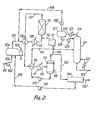
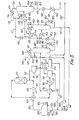
- Figures 2 and 3 are diagrammatic and that further items of equipment, such as temperature and pressure sensors, pressure relief valves, control valves, level controllers and the like would additionally be required in a commercial plant.
- the provision of such ancillary items of equipment forms no part of the present invention and would be in accordance with conventional chemical engineering practice.
- the various heat exchangers shown in Figures 2 and 3 are merely one means of obtaining the necessary temperature levels and heat fluxes. Other methods of effecting such heat exchange can of course be adopted in practice without departing from the scope of the present invention.
- ethanol is supplied in line 101 to feed pump 102 and thence by way of line 103 to a vaporiser 104. This is heated by steam supplied in line 105.
- a vaporous stream which consists predominantly of ethanol, passes overhead in line 107 and is admixed with an azeotrope recycle stream in line 108.
- the combined stream then passes through heat exchangers 109 and 110 and is admixed with hydrogen supplied from recycle compressor 111 in line 112.
- the resulting vaporous mixture is supplied at a temperature of 273°C and at a pressure of 4.3 bar to reactor 113 which contains a charge of a catalyst which consists essentially of a reduced mixture of copper oxide and zinc oxide.
- the ethanol:H 2 molar ratio in this stream is approximately 300:1 and the liquid hourly space velocity is 0.35 hr- 1.
- reactor 113 There exits from reactor 113 in line 114 a mixture containing hydrogen, ethyl acetate, unconverted ethanol, a small amount of iso-propanol, and minor amounts of carbon oxides, methane, ethane and n-butanol.
- the ethanol:ethyl acetate molar ratio is approximately 2.4:1.
- the resulting condensate is separated from the gaseous components in knock-out pot 118 and is pumped through line 119 by pump 120 through heat exchanger 115 to product recovery column 121.
- This distillation column is heated by steam supplied in line 122 to its reboiler section and is operated at a pressure of 20.7 bar.
- Ethyl acetate product is recovered in line 123 whilst an approximately 20/80 mol/mol ethyl acetate/ethanol azeotrope is recovered overhead in line 124.
- Part of this is condensed in condenser 125 against cooling water supplied in line 126 and is recycled to the top of column 121 from condensate drum 127 in line 128 by pump 129.
- the remainder passes overhead from condensate drum 127 into line 108 through pressure let-down valve 130.
- the overhead stream from knock-out pot 118 contains an appreciable amount of ethanol, ethyl acetate and acetaldehyde and passes through a demister pad 131 into line 132. A part of this overhead stream is fed in line 133 to the inlet end of recycle compressor 111. The remainder is fed to refrigeration unit 134, the condensate from which is fed by means of pump 135 to line 106.
- the gaseous components mainly hydrogen together with minor amounts of carbon oxides, methane and ethane
- Reference numeral 136 indicates the steam supply line for heat exchanger 110.
- Line 119 leads to an aldehyde separation column 140.
- Acetaldehyde appears in the overhead product in line 141 and is condensed in condenser 142 against cooling water supplied in line 143.
- a gas purge stream is taken in line 144 from aldehyde condensate drum 145.
- Part of the acetaldehyde condensate is returned to the top of column 140 in line 146, whilst the remainder is recycled in line 147 by means of pump 148 for admixture with the ethanol feed.
- Part of the bottoms product from column 140 is revaporised in reboiler 149 by steam supplied in line 150 and is returned to column 140 in line 151. The rest passes on in line 152 and then through throttle valve 153.
- valve 153 In passage through valve 153 its pressure is reduced to 1 bar.
- the stream in line 152 is heated in vaporiser 154 by steam supplied in line 155 and the resultant vaporous mixture is fed to a low pressure ethanol/azeotrope column 156 which yields almost pure ethanol as bottoms product.
- a major part of this ethanol bottoms product is recycled in line 157 by pump 158 and is admixed with the ethanol feed from line 103.
- the remainder of the bottoms product is revaporised by passage through reboiler 159 which is heated by steam supplied in line 160.
- the resultant vapour stream is fed back to the bottom of column 156 in line 161.
- the overhead product from column 156 in line 162 is condensed in condenser 163 by means of cooling water supplied in line 164 and consists of a 53.8/46.2 mol ratio ethyl acetate/ethanol azeotrope.
- From the condensate drum 165 part is pumped back to the top of column 156 by pump 166, whilst the rest is fed in line 167 by pump 168, which raises its pressure again to 20.7 bar, to vaporiser 169; this is heated by steam supplied in line 170.
- the resultant vapour is fed to a high pressure ethanol/ethyl acetate azeotrope column 171.
- the top product of this column in line 172 is a 20/80 mol ratio ethyl acetate/ethanol azeotrope which is condensed in condenser 173 against cooling water supplied in line 174. Part of the resulting condensate from condensate drum 175 is recycled by pump 176 to the top of column 171. The remainder is fed in line 177 to throttle valve 178, which allows its pressure to drop again to 1 bar, for recycle to column 156.
- the bottom product from column 171 is almost pure ethyl acetate which is recovered in line 179 and is passed through throttle valve 180 to cooler 181, in which it is cooled against cooling water in line 182, and thence to storage.
- Reference numeral 183 indicates the reboiler for column 171 and item 184 is its associated steam supply line.
Landscapes
- Chemical & Material Sciences (AREA)
- Organic Chemistry (AREA)
- Crystallography & Structural Chemistry (AREA)
- Organic Low-Molecular-Weight Compounds And Preparation Thereof (AREA)
Applications Claiming Priority (2)
| Application Number | Priority Date | Filing Date | Title |
|---|---|---|---|
| GB8400785 | 1984-01-12 | ||
| GB848400785A GB8400785D0 (en) | 1984-01-12 | 1984-01-12 | Process |
Publications (1)
| Publication Number | Publication Date |
|---|---|
| EP0151886A1 true EP0151886A1 (fr) | 1985-08-21 |
Family
ID=10554883
Family Applications (1)
| Application Number | Title | Priority Date | Filing Date |
|---|---|---|---|
| EP84309071A Withdrawn EP0151886A1 (fr) | 1984-01-12 | 1984-12-21 | Procédé pour la préparation d'esters |
Country Status (4)
| Country | Link |
|---|---|
| EP (1) | EP0151886A1 (fr) |
| BR (1) | BR8500142A (fr) |
| ES (1) | ES8601841A1 (fr) |
| GB (1) | GB8400785D0 (fr) |
Cited By (10)
| Publication number | Priority date | Publication date | Assignee | Title |
|---|---|---|---|---|
| EP0201105A1 (fr) * | 1985-05-10 | 1986-11-12 | Union Carbide Corporation | Méthode pour la transformation d'alcanols primaires en leurs esters correspondants |
| EP0990638A1 (fr) * | 1998-10-01 | 2000-04-05 | Kvaerner Process Technology Limited | Procédé |
| EP0992484A1 (fr) * | 1998-10-01 | 2000-04-12 | Kvaerner Process Technology Limited | Procédé |
| EP0992482A1 (fr) * | 1998-10-01 | 2000-04-12 | Kvaerner Process Technology Limited | Procédé |
| US8558025B2 (en) | 2009-10-20 | 2013-10-15 | Greenyug, Llc | Ethyl acetate production |
| US9018427B2 (en) | 2013-02-19 | 2015-04-28 | Greenyug, Llc | Production of higher alcohols |
| US9079851B2 (en) | 2012-02-01 | 2015-07-14 | Greenyug, Llc | Ethyl acetate production |
| US9447018B2 (en) | 2009-10-20 | 2016-09-20 | Greenyug, Llc | Ethyl acetate production |
| US10081588B2 (en) | 2013-12-04 | 2018-09-25 | Rescurve, Llc | Production of butyl acetate from ethanol |
| US10669221B2 (en) | 2015-08-19 | 2020-06-02 | Rescurve, Llc | Composition of catalysts for conversion of ethanol to N-butanol and higher alcohols |
Citations (3)
| Publication number | Priority date | Publication date | Assignee | Title |
|---|---|---|---|---|
| GB287846A (en) * | 1927-03-26 | 1929-04-11 | Du Pont | Improvements in process of manufacturing esters and other valuable organic compounds |
| GB312345A (en) * | 1928-05-26 | 1930-08-05 | Du Pont | Improvements in catalytic dehydrogenation |
| GB470773A (en) * | 1935-02-27 | 1937-08-20 | Melle Usines Sa | Process for the manufacture of esters, especially of ethyl acetate |
-
1984
- 1984-01-12 GB GB848400785A patent/GB8400785D0/en active Pending
- 1984-12-21 EP EP84309071A patent/EP0151886A1/fr not_active Withdrawn
-
1985
- 1985-01-11 ES ES539829A patent/ES8601841A1/es not_active Expired
- 1985-01-11 BR BR8500142A patent/BR8500142A/pt unknown
Patent Citations (3)
| Publication number | Priority date | Publication date | Assignee | Title |
|---|---|---|---|---|
| GB287846A (en) * | 1927-03-26 | 1929-04-11 | Du Pont | Improvements in process of manufacturing esters and other valuable organic compounds |
| GB312345A (en) * | 1928-05-26 | 1930-08-05 | Du Pont | Improvements in catalytic dehydrogenation |
| GB470773A (en) * | 1935-02-27 | 1937-08-20 | Melle Usines Sa | Process for the manufacture of esters, especially of ethyl acetate |
Cited By (24)
| Publication number | Priority date | Publication date | Assignee | Title |
|---|---|---|---|---|
| EP0201105A1 (fr) * | 1985-05-10 | 1986-11-12 | Union Carbide Corporation | Méthode pour la transformation d'alcanols primaires en leurs esters correspondants |
| US6632330B1 (en) | 1998-10-01 | 2003-10-14 | Davy Process Technology Limited | Process for purification of alkyl alkanoate |
| JP2002526519A (ja) * | 1998-10-01 | 2002-08-20 | クヴェルナー・プロセス・テクノロジー・リミテッド | アルキルアルカノエートの精製用プロセス |
| EP0992482A1 (fr) * | 1998-10-01 | 2000-04-12 | Kvaerner Process Technology Limited | Procédé |
| WO2000020374A1 (fr) * | 1998-10-01 | 2000-04-13 | Kvaerner Process Technology Limited | Purification d'alkyle-alcanoate |
| WO2000020375A1 (fr) * | 1998-10-01 | 2000-04-13 | Kvaerner Process Technology Limited | Elaboration d'ethylacetate |
| WO2000020373A1 (fr) * | 1998-10-01 | 2000-04-13 | Kvaerner Process Technology Limited | Procede |
| GB2357503A (en) * | 1998-10-01 | 2001-06-27 | Kvaerner Process Tech Ltd | Process for purification of alkyl alkanoate |
| GB2357503B (en) * | 1998-10-01 | 2003-11-12 | Kvaerner Process Tech Ltd | Process for purification of alkyl alkanoate |
| EP0990638A1 (fr) * | 1998-10-01 | 2000-04-05 | Kvaerner Process Technology Limited | Procédé |
| JP2002526518A (ja) * | 1998-10-01 | 2002-08-20 | クヴェルナー・プロセス・テクノロジー・リミテッド | プロセス |
| EP0992484A1 (fr) * | 1998-10-01 | 2000-04-12 | Kvaerner Process Technology Limited | Procédé |
| JP2002526520A (ja) * | 1998-10-01 | 2002-08-20 | クヴェルナー・プロセス・テクノロジー・リミテッド | 酢酸エチルの製造用プロセス |
| GB2357505A (en) * | 1998-10-01 | 2001-06-27 | Kvaerner Process Tech Ltd | Process |
| GB2357505B (en) * | 1998-10-01 | 2003-12-31 | Kvaerner Process Tech Ltd | Process for the recovery of ethyl acetate |
| US6809217B1 (en) | 1998-10-01 | 2004-10-26 | Davy Process Technology Limited | Process for the preparation of ethyl acetate |
| US7553397B1 (en) | 1998-10-01 | 2009-06-30 | Davy Process Technology Limited | Process |
| US8558025B2 (en) | 2009-10-20 | 2013-10-15 | Greenyug, Llc | Ethyl acetate production |
| US8562921B2 (en) | 2009-10-20 | 2013-10-22 | Greenyug, LLC. | Ethyl acetate production |
| US9447018B2 (en) | 2009-10-20 | 2016-09-20 | Greenyug, Llc | Ethyl acetate production |
| US9079851B2 (en) | 2012-02-01 | 2015-07-14 | Greenyug, Llc | Ethyl acetate production |
| US9018427B2 (en) | 2013-02-19 | 2015-04-28 | Greenyug, Llc | Production of higher alcohols |
| US10081588B2 (en) | 2013-12-04 | 2018-09-25 | Rescurve, Llc | Production of butyl acetate from ethanol |
| US10669221B2 (en) | 2015-08-19 | 2020-06-02 | Rescurve, Llc | Composition of catalysts for conversion of ethanol to N-butanol and higher alcohols |
Also Published As
| Publication number | Publication date |
|---|---|
| GB8400785D0 (en) | 1984-02-15 |
| ES539829A0 (es) | 1985-11-16 |
| ES8601841A1 (es) | 1985-11-16 |
| BR8500142A (pt) | 1985-08-20 |
Similar Documents
| Publication | Publication Date | Title |
|---|---|---|
| EP1117631B1 (fr) | Elaboration d'ethylacetate | |
| US5004845A (en) | Hydrogenation of aldehydes | |
| EP1117630B1 (fr) | Purification d'alkyle-alcanoate | |
| JP4094737B2 (ja) | 酢酸からのアセトアルデヒドの製造方法およびこの製造方法に用いる触媒 | |
| US4751334A (en) | Process for the production of butane-1,4-diol | |
| US4626604A (en) | Hydrogenation process | |
| US7164049B2 (en) | Process for the preparation of 3,3-dimethylbutanal | |
| EP0656339B1 (fr) | Procédé pour la fabrication de cyclohexanediméthanol avec prépondérance de l'isomère-trans | |
| JPH0457655B2 (fr) | ||
| US4879401A (en) | Process for removal of impurities in alkyl nitrite formation | |
| EP2766337B1 (fr) | Production d'acétate d'éthyle | |
| CA1250599A (fr) | Hydrogenation catalytique d'aldehydes | |
| EP1268376B1 (fr) | Procede de preparation de propane-1,3-diol par hydrogenation en phase vapeur de .beta.-propiolactone, oligomeres de beta-propiolactone, esters d'acide 3-hydroxypropanoique ou de leurs melanges | |
| GB2150560A (en) | Production of alcohols by hydrogenolysis of esters | |
| EP1586548A1 (fr) | Procédé pour la préparation de 3,3-diméthylbutanal |
Legal Events
| Date | Code | Title | Description |
|---|---|---|---|
| PUAI | Public reference made under article 153(3) epc to a published international application that has entered the european phase |
Free format text: ORIGINAL CODE: 0009012 |
|
| AK | Designated contracting states |
Designated state(s): DE FR GB IT |
|
| STAA | Information on the status of an ep patent application or granted ep patent |
Free format text: STATUS: THE APPLICATION IS DEEMED TO BE WITHDRAWN |
|
| 18D | Application deemed to be withdrawn |
Effective date: 19860222 |
|
| RIN1 | Information on inventor provided before grant (corrected) |
Inventor name: HARRIS, NORMAN Inventor name: KIPPAX, JOHN WILSON Inventor name: TURNER, KEITH Inventor name: SHARIF, MOHAMMAD |