EP0152999A2 - Molécules d'acide désoxyribonucléique utilisable comme sondes pour la détection de gènes délétères incorporés dans l'ADN chromosomal - Google Patents
Molécules d'acide désoxyribonucléique utilisable comme sondes pour la détection de gènes délétères incorporés dans l'ADN chromosomal Download PDFInfo
- Publication number
- EP0152999A2 EP0152999A2 EP85300065A EP85300065A EP0152999A2 EP 0152999 A2 EP0152999 A2 EP 0152999A2 EP 85300065 A EP85300065 A EP 85300065A EP 85300065 A EP85300065 A EP 85300065A EP 0152999 A2 EP0152999 A2 EP 0152999A2
- Authority
- EP
- European Patent Office
- Prior art keywords
- deoxyribonucleic acid
- stranded
- chromosome
- acid molecule
- fragments
- Prior art date
- Legal status (The legal status is an assumption and is not a legal conclusion. Google has not performed a legal analysis and makes no representation as to the accuracy of the status listed.)
- Granted
Links
Images


Classifications
-
- C—CHEMISTRY; METALLURGY
- C12—BIOCHEMISTRY; BEER; SPIRITS; WINE; VINEGAR; MICROBIOLOGY; ENZYMOLOGY; MUTATION OR GENETIC ENGINEERING
- C12Q—MEASURING OR TESTING PROCESSES INVOLVING ENZYMES, NUCLEIC ACIDS OR MICROORGANISMS; COMPOSITIONS OR TEST PAPERS THEREFOR; PROCESSES OF PREPARING SUCH COMPOSITIONS; CONDITION-RESPONSIVE CONTROL IN MICROBIOLOGICAL OR ENZYMOLOGICAL PROCESSES
- C12Q1/00—Measuring or testing processes involving enzymes, nucleic acids or microorganisms; Compositions therefor; Processes of preparing such compositions
- C12Q1/68—Measuring or testing processes involving enzymes, nucleic acids or microorganisms; Compositions therefor; Processes of preparing such compositions involving nucleic acids
- C12Q1/6876—Nucleic acid products used in the analysis of nucleic acids, e.g. primers or probes
- C12Q1/6883—Nucleic acid products used in the analysis of nucleic acids, e.g. primers or probes for diseases caused by alterations of genetic material
-
- C—CHEMISTRY; METALLURGY
- C12—BIOCHEMISTRY; BEER; SPIRITS; WINE; VINEGAR; MICROBIOLOGY; ENZYMOLOGY; MUTATION OR GENETIC ENGINEERING
- C12Q—MEASURING OR TESTING PROCESSES INVOLVING ENZYMES, NUCLEIC ACIDS OR MICROORGANISMS; COMPOSITIONS OR TEST PAPERS THEREFOR; PROCESSES OF PREPARING SUCH COMPOSITIONS; CONDITION-RESPONSIVE CONTROL IN MICROBIOLOGICAL OR ENZYMOLOGICAL PROCESSES
- C12Q1/00—Measuring or testing processes involving enzymes, nucleic acids or microorganisms; Compositions therefor; Processes of preparing such compositions
- C12Q1/68—Measuring or testing processes involving enzymes, nucleic acids or microorganisms; Compositions therefor; Processes of preparing such compositions involving nucleic acids
- C12Q1/6813—Hybridisation assays
- C12Q1/6827—Hybridisation assays for detection of mutation or polymorphism
-
- C—CHEMISTRY; METALLURGY
- C12—BIOCHEMISTRY; BEER; SPIRITS; WINE; VINEGAR; MICROBIOLOGY; ENZYMOLOGY; MUTATION OR GENETIC ENGINEERING
- C12Q—MEASURING OR TESTING PROCESSES INVOLVING ENZYMES, NUCLEIC ACIDS OR MICROORGANISMS; COMPOSITIONS OR TEST PAPERS THEREFOR; PROCESSES OF PREPARING SUCH COMPOSITIONS; CONDITION-RESPONSIVE CONTROL IN MICROBIOLOGICAL OR ENZYMOLOGICAL PROCESSES
- C12Q1/00—Measuring or testing processes involving enzymes, nucleic acids or microorganisms; Compositions therefor; Processes of preparing such compositions
- C12Q1/68—Measuring or testing processes involving enzymes, nucleic acids or microorganisms; Compositions therefor; Processes of preparing such compositions involving nucleic acids
- C12Q1/6876—Nucleic acid products used in the analysis of nucleic acids, e.g. primers or probes
- C12Q1/6883—Nucleic acid products used in the analysis of nucleic acids, e.g. primers or probes for diseases caused by alterations of genetic material
- C12Q1/6886—Nucleic acid products used in the analysis of nucleic acids, e.g. primers or probes for diseases caused by alterations of genetic material for cancer
-
- C—CHEMISTRY; METALLURGY
- C12—BIOCHEMISTRY; BEER; SPIRITS; WINE; VINEGAR; MICROBIOLOGY; ENZYMOLOGY; MUTATION OR GENETIC ENGINEERING
- C12Q—MEASURING OR TESTING PROCESSES INVOLVING ENZYMES, NUCLEIC ACIDS OR MICROORGANISMS; COMPOSITIONS OR TEST PAPERS THEREFOR; PROCESSES OF PREPARING SUCH COMPOSITIONS; CONDITION-RESPONSIVE CONTROL IN MICROBIOLOGICAL OR ENZYMOLOGICAL PROCESSES
- C12Q2600/00—Oligonucleotides characterized by their use
- C12Q2600/156—Polymorphic or mutational markers
Definitions
- chromosomal translocations are known to be associated with human cancer (for a review see Yunis, 1983). The chromosomal rearrangements that occur as a result of these translocations may activate human cellular oneogenes that have been rearranged. Past studies of these cancers and the chromosomal translocations involved have focused on an analysis of the translocated oncogene sequences themselves.
- This invention takes a novel approach in that it uses probes isolated from a limited region of the receptor chromosome which does not normally contain the deleterious gene.
- This limited region for which we propose the term "breakpoint cluster region” is a deoxyribonucleic acid molecule of limited length within which the various chromosomal breakpoints are clustered. Probes isolated from this region are used to detect a translocation by hybridizing the probes with chromosomal DNA and examining the resulting restriction patterns.
- Previous studies have identified breakpoints on the chromosomes involved in other cancers (Dalla-Favera et al., 1983; Adams et al., 1983; Erikson et al., 1983; Erikson et al. 1982). However, these breakpoints are distributed over a relatively large region of DNA and thus are not useful as hybridization probes to test for chromosomal translocations.
- CML Chronic myeloeytie leukemia
- Ph' chromosome is the result of a translocation between chromosome 22 and chromosome 9 (Rowley, 1973, 1982; Sanberg, 1980); its presence has important prognostic and diagnostic value.
- chromosome 22-specific sequences of the chimeric DNA fragment to isolate a second chimeric chromosome 9/22 (9q + ) fragment from a different CML patient.
- the chromosome 9-specific sequences in this fragment must be localized at a minimal distance of 40 kb from the human v-abl homologous sequences.
- This invention relates to a single-stranded deoxyribonucleic acid molecule having a length less than about 25 kb and preferably less than about 15 kb, and containing at least three distinct nucleotide sequences which are the sites for incorporation into a chromosome of a deoxyribonucleic acid molecule encoding a deleterious gene.
- a single-stranded deoxyribonucleic acid molecule may be derived from a chromosome.
- the single-stranded molecule may be incorporated into double-stranded deoxyribonucleic acid molecules.
- Such deleterious genes include oncogenes.
- Deoxyribonucleic acid probes labelled with a detectable marker, have been prepared from such molecules or fragments thereof. Such hybridization probes have diagnostic value and are useful for detecting chromosomal deoxyribonucleic acid which has a deoxyribonucleic acid molecule encoding a deleterious gene incorporated therein.
- a specific embodiment of the invention relates to a single-stranded deoxyribonucleic acid molecule derived from human chromosome 22, which is about 5.8 kb in length and contains sites for incorporation of a deoxyribonucleic acid molecule encoding the oncogene c-abl derived from human chromosome 9. Labelled deoxyribonucleic acid probes have been prepared from this molecule and used to detect the abnormal Philadelphia chromosome associated with chronic myeiocytic leukemia.
- a single-stranded deoxyribonucleic acid molecule have a length less than about 25 kb, preferably a length less than about 15 kb, and containing at least three distinct nucleotide sequences which are sites for incorporation into a chromosome of a deoxyribonucleic acid molecule encoding a deleterious gene has been discovered.
- Such a single-stranded deoxyribonucleic acid molecule may be derived from a chromosome, e.g., a human chromosome, or may be chemically or enzymatically synthesized. It may also be incorporated into a double-stranded deoxyribonucleic acid molecule.
- sites for incorporation are breakpoint sites on the chromosome to which a deoxyribonucleic acid molecule encoding a deleterious gene derived from a second chromosome or a distal region of the same chromosome, attaches during a translocation.
- Examples of deleterious genes include oncogenes, e.g., c-abl, the activation of which can cause cancer, or other normally innocuous genes which upon activation can cause specific human diseases.
- oncogenes e.g., c-abl
- the Philadelphia translocation involves the translocation of the oncogene c-abl located on chromosome 9 to chromosome 22 and its incorporation therein.
- a single-stranded deoxyribonucleic acid molecule derived from chromosome 22 has been discovered which is about 5.8 kb in length and contains breakpoint sites which are the incorporation sites at which the deoxyribonucleic acid molecule encoding the oncogene c-abl derived from chromosome 9 attaches to chromosome 22.
- the single-stranded deoxyribonucleic acid molecule or fragments of it, e.g., fragments of such a molecule produced by restriction enzyme cleavage, may be labelled with detectable markers, such as radioactive or fluorescent or enzymatic markers. These labelled molecules may then be used as hybridization probes to detect a chromosomal deoxyribonucleic acid molecule containing a deoxyribonucleic acid molecule encoding a deleterious gene incorporated therein.
- Certain embodiments of this invention involve the use of such fragments prepared by the cleavage of the 5.8 kb fragment derived from human chromosome 22 containing the sites for incorporation of the deoxyribonucleic acid molecule encoding the oncogene c-abl derived from human chromosome 9. Cleavage of this molecule with the restriction enzymes Hind III and Bgl II yielded a 1.2 kb fragment, while cleavage with Hind III and Barn HI yielded a 0.6 kb fragment. Both of these fragments were labelled with radioactive nucleotides and used as probes.
- a method for detecting chromosomal deoxyribonucleic acid containing a deoxyribonucleic acid molecule encoding a deleterious gene incorporated therein comprises treating total chromosomal deoxyribonueleie acid under suitable denaturing conditions to obtain single-stranded deoxyribonucleic acid molecules. These single-stranded molecules may then be contacted with a labelled probe which is a single-stranded deoxyribonucleic acid molecule or a fragment of such a molecule, which includes sites for the incorporation of the deleterious gene, under suitable conditions permitting hybridization of complementary single-stranded molecules. The hybridized molecules may then be identified or separated to thereby detect deoxyribonucleic acid containing the deleterious gene.
- Another method of detecting a chromosomal deoxyribonucleic acid molecule containing a deoxyribonucleic acid molecule encoding a deleterious gene incorporated therein comprises cleaving the chromosomal deoxyribonucleic acid with the appropriate restriction enzymes, and then separating the fragments by gel electrophoresis. The separated fragments may be denatured to obtain single-stranded deoxyribonucleic acid molecules which may be recovered from the gel and immobilized on a suitable solid support, e.g., a nitrocellulose filter.
- the immobilized single-stranded fragments may then be contacted with a labelled deoxyribonucleic acid probe which is a single-stranded deoxyribonucleic acid molecule or a fragment of such a molecule, which includes sites for the incorporation of the deleterious gene under suitable conditions permitting hybridization of complementary single-stranded molecules.
- the hybridized molecules so formed may then be detected, e.g., by autoradiography, and abnormalities in the restriction patterns of the chromosomal deoxyribonucleic acid resulting from the incorporation of deoxyribonucleic acid encoding the deleterious gene may be identified.
- a specific embodiment of this invention relates to a method of diagnosing chronic myelocytic leukemia in a human subject.
- This leukemia is associated with the abnormal Philadelphia chromosome which contains the translocated oncogene c-abl.
- Chromosomal deoxyribonucleic acid is digested with the appropriate restriction enzymes, e.g., Hind III, Bam HI or Bgl II.
- the resulting fragments are separated by gel electrophoresis, denatured under suitable conditions to obtain single-stranded deoxyribonucleic acid molecules, recovered from the gel and immobilized on a suitable solid support such as a nitrocellulose filter.
- the immobilized single-stranded fragments are then contacted with a labelled probe, e.g., a radioactively-labelled single-stranded deoxyribonucleic acid molecule isolated from the 5.8 kb region of chromosome 22 which includes sites for the incorporation of the oncogene c-abl derived from chromosome 9, such as the 1.2 kb Hind III, Bgl II fragment or the 0.6 kb Hind III, Bam HI fragment, under suitable conditions permitting hybridization of complementary single-stranded molecules.
- the hybridized molecules so formed may then be detected, e.g., by autoradiography, and abnormalities in the restriction patterns of the chromosomal deoxyribonucleic acid caused by the presence of the abnormal Philadelphia chromosome may be identified.
- PgME-25 Nu is a human-mouse somatic cell hybrid obtained from fusion with mouse Pgl9 cells; it contains as its only human component chromosome 22.
- Chinese hamster cell line E36 was used to obtain hybrids IOCB-23B and 14CB-21A.
- the hybrid IOCB-23B contains human chromosomes 5, 9, 11 and 19, whereas 14CB-21A has retained chromosomes 4, 7, 8, 14, 20, and 9q + (Geurts Van Kessel et al., 1981b; Geurts Van Kessel et al., 198IC; de Klein et al., 1983).
- WESP 2A was obtained by fusion of mouse WEHI-3B cells with leukocytes of a Ph'-positive CML patient and contains human chromosomes 7, 8 and 14, in addition to the Ph' chromosome (de Klein et al., 1983).
- DNA probes were prepared by digestion with appropriate restriction enzymes, followed by electrophoresis through low-melting point agarose gels. Desired bands were cut from the gel and brought into solution by heating at 65°C for 30 min. Agarose was removed by two extractions with phenol equilibrated with 0.3 M NaOAc (pH 5.0), and one extraction with phenol/chloroform/isoamyl alcohol (25:24:1). DNA was precipitated with ethanol and 0.2 M NAOAc (pH 4.8) in the presence of 20 ⁇ g/ml Dextran T-500 as carrier. Restriction enzymes and low melting point agarose were purchased from Bethesda Research Laboratories and were used according to the supplier's specifications.
- DNAs analyzed include isolates from CML patient frozen spleens; 02120185, 0311068, 031929, 7701C, C999, C481, C080, C011; blood, H80-251, CML O, H81-164, H8I-122, H81-118, H79-179, H77-94, H81-258, H79-147; bone marrow B79-216, B79-100; and human cell lines GM 3314 and A204.
- CML patients 0311068 and 7701C contained a very high percentage of leukemic cells: the percentage of leukemic cells in other spleen tissues is not known. There are no data concerning the presence of the Ph t chromosome in these spleen cells.
- this probe hybridizes to a normal 3.3 kb Bam HI fragment in all three DNAs, but detects an additional abnormal 11.3 kb Bam HI fragment in DNA 02120185.
- additional restriction enzyme fragments with other restriction enzymes in DNA 02120185, we examined whether these abnormal fragments were the result of the presence of a chromosomal breakpoint.
- the DNAs of the patients H81-258, C080, C011 and H79-147 did not exhibit abnormal Bgl II fragments. Two of these, H81-258 and C080, showed deviant restriction enzyme patterns with other restriction enzymes (this will be discussed below).
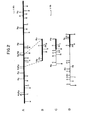
- Region 2 is delineated by this Barn HI site at the 5' and a Hind III site 3' to it; region 3 is the 1.2 kb Hind III-Bgl II fragment (1.2 HBg) used as a probe in the experiments described above. Region 4 is outside the 5.0 kb Bgl II fragment and is bordered at the 5' by the Bgl II site and at the 3' by the Bam HI site.
- the 4.0 kb Bgl II fragment is a 22q - chimeric fragment with the 5' Bgl II site originating from chromosome 22; it is not detected by the 1.2 HBg probe.
- the breakpoint in DNA 0311068 must be located in region 1.
- the 1.2 HBg probe detects, in addition to a normal 3.3 kb Bam HI fragment, an abnormal 6.2 kb Bam HI fragment in CML DNA 7701C.
- the Bam HI site bordering region 2 at the 5' must, therefore, be absent from the 9q + chromosome.
- the Hind III site at the 3' of region 2 has been retained, as only one normal 4.5 kb Hind III fragment is visible after hybridization to 1.2 HBg. This CML DNA must contain a breakpoint in region 2.
- Patient C481 and H77-92 apparently have a breakpoint in region 3, encompassing the 1.2 HBg probe.
- the 1.2 HBg probe hybridizes to three restriction enzyme fragments in every restriction enzyme digest; abnormal Bgl II fragments of 6.0 and 2.8 kb and a normal one of 5.0 kb, abnormal Hind III fragments of 7.0 and 3.5 kb in addition to a normal 4.5 kb fragment abnormal Barn HI fragments of 7.5 and 5.2 kb and a normal 3.3 kb fragment. Therefore, in this CML, DNA the 1.2 HBg probe detects both the 22q - and 9q + breakpoint fragments.
- the different breakpoint subregions (0-4) are as indicated in Figure 3. For some patients, the exact breakpoint subregion has not yet been determined more than one subregion is indicated for these patients in the table.
- bcr in the Ph' translocation is highly specific for CML, as analogous rearrangements were not found in DNAs isolated from other neoplastic tissues or cell lines, including DNAs from four acute myeloid leukemia patients, one acute myelomonocytic leukemia patient, glioblastoma, melanoma, multiple myeloma and teratocarcinoma cell lines. A low percentage of acute lymphocytic leukemia patients do, however, also exhibit the Ph' translocation.
- Probes isolated from the ber, in particular the 1.2 kb HBg probe, are highly specific tools for the identification of the Ph' translocation in leukemic DNA and as such, may be of diagnostic value, in particular when no metaphase chromosome spreads are obtainable.
- the breakpoint on chromosome 9 appears to be variable in different Ph'-positive CML patients and may be found within a relatively large but limited region on chromosome 9; the region of chromosome 9 containing human c-abl (q34-qter) that is translocated to chromosome 22 is too small to be visualized by cytogenetic, analysis and does not exceed 5000 kb (Heisterkamp et al. 1983b; de Klein et al., 1982). The size of the region over which the chromosome 9 breakpoints are distributed in the Ph' translocation is too large to provide for a diagnostic test by currently available methods.
- a t (8;14) is found in many patients with Burkitt lymphoma: in the latter case, the human oncogene c-myc, located on chromosome 8 (Dalla-Favera et al., 1982; Taub et al., 1982), is often translocated into the immunoglobulin heavy-chain locus on chromosome 14 (Taub et al., 1982; Dalla-Favera et al., 1983; Adams et al., 1983; Erikson et al., 1983; Hamlyn and Rabbits, 1983).
- the breakpoints on chromosome 8 may be distributed over a relatively large region 5 1 of human c-myc (Dalla-Favera et al., 1983; Adams et al., 1983; Erikson et al., 1983), a situation analogous to that of human c-abl on chromosome 9.
- breakpoints in the variable (Erikson et al., 1982) and in the constant region of the heavy-chain locus have been reported in Burkitt lymphoma, indicating that neither the breakpoints on chromosome 8 nor those on 14 are localized within a breakpoint cluster as discussed in the present study.
- the ber on chromosome 22 seems as of yet to be unique in humans. However, the existence of bcrs on other human chromosomes is not unlikely taking into consideration the incresing number of reports of other highly specific translocations in neoplastic diseases (for a review, see Yunis, 1983).
- chromosomal breakpoint on chromosome 22 indicates that this region may be involved in CML. Consistent with this possibility is the fact that the ber on chromosome 22 corresponds to a functionally active human gene which we now know to be expressed at a high level (Heisterkamp et al. unpublished results). Additionally, a human oncogene, c-abl, is consistently translocated to chromosome 22, even in patients with complex Ph' translocations (Bartram et al., 1983b) and is amplified in a CML cell line, K 562 (Heisterkamp et al., 1983b).
Landscapes
- Chemical & Material Sciences (AREA)
- Life Sciences & Earth Sciences (AREA)
- Organic Chemistry (AREA)
- Health & Medical Sciences (AREA)
- Proteomics, Peptides & Aminoacids (AREA)
- Zoology (AREA)
- Wood Science & Technology (AREA)
- Engineering & Computer Science (AREA)
- Genetics & Genomics (AREA)
- Analytical Chemistry (AREA)
- Immunology (AREA)
- Microbiology (AREA)
- Bioinformatics & Cheminformatics (AREA)
- Molecular Biology (AREA)
- Biophysics (AREA)
- Physics & Mathematics (AREA)
- Pathology (AREA)
- Biochemistry (AREA)
- Biotechnology (AREA)
- General Engineering & Computer Science (AREA)
- General Health & Medical Sciences (AREA)
- Hospice & Palliative Care (AREA)
- Oncology (AREA)
- Measuring Or Testing Involving Enzymes Or Micro-Organisms (AREA)
- Saccharide Compounds (AREA)
- Investigating Or Analysing Biological Materials (AREA)
- Investigating Or Analyzing Non-Biological Materials By The Use Of Chemical Means (AREA)
Priority Applications (1)
| Application Number | Priority Date | Filing Date | Title |
|---|---|---|---|
| AT85300065T ATE54943T1 (de) | 1984-01-18 | 1985-01-04 | Als sonden zum nachweis von schaedlichen, in chromosom-dns enthaltenen genen zu verwendende deoxyribonukleinsaeuremolekuele. |
Applications Claiming Priority (2)
| Application Number | Priority Date | Filing Date | Title |
|---|---|---|---|
| US571911 | 1984-01-18 | ||
| US06/571,911 US4681840A (en) | 1984-01-18 | 1984-01-18 | Deoxyribonucleic acid molecules useful as probes for detecting oncogenes incorporated into chromosomal DNA |
Publications (3)
| Publication Number | Publication Date |
|---|---|
| EP0152999A2 true EP0152999A2 (fr) | 1985-08-28 |
| EP0152999A3 EP0152999A3 (en) | 1985-10-09 |
| EP0152999B1 EP0152999B1 (fr) | 1990-07-25 |
Family
ID=24285562
Family Applications (1)
| Application Number | Title | Priority Date | Filing Date |
|---|---|---|---|
| EP85300065A Expired - Lifetime EP0152999B1 (fr) | 1984-01-18 | 1985-01-04 | Molécules d'acide désoxyribonucléique utilisable comme sondes pour la détection de gènes délétères incorporés dans l'ADN chromosomal |
Country Status (9)
| Country | Link |
|---|---|
| US (1) | US4681840A (fr) |
| EP (1) | EP0152999B1 (fr) |
| JP (2) | JPS61501203A (fr) |
| AT (1) | ATE54943T1 (fr) |
| AU (1) | AU580753B2 (fr) |
| CA (1) | CA1240629A (fr) |
| DE (1) | DE3578786D1 (fr) |
| DK (1) | DK173700B1 (fr) |
| WO (1) | WO1985003297A1 (fr) |
Cited By (3)
| Publication number | Priority date | Publication date | Assignee | Title |
|---|---|---|---|---|
| EP0181635A3 (fr) * | 1984-11-14 | 1988-06-15 | Oncogene Science, Inc. | Sondes et procédés convenables pour détecter les transactions chromosomiques |
| EP0338713A1 (fr) * | 1988-04-18 | 1989-10-25 | City Of Hope | Diagnostic de leucémie chronique de myélogène |
| EP0364953A3 (fr) * | 1988-10-18 | 1991-03-27 | Teijin Limited | Sonde pour détecter une aberration chromosomique provoquée par une translocation chromosomique ainsi qu'un procédé pour la détecter |
Families Citing this family (35)
| Publication number | Priority date | Publication date | Assignee | Title |
|---|---|---|---|---|
| US5447841A (en) | 1986-01-16 | 1995-09-05 | The Regents Of The Univ. Of California | Methods for chromosome-specific staining |
| US5756696A (en) | 1986-01-16 | 1998-05-26 | Regents Of The University Of California | Compositions for chromosome-specific staining |
| US6280929B1 (en) | 1986-01-16 | 2001-08-28 | The Regents Of The University Of California | Method of detecting genetic translocations identified with chromosomal abnormalities |
| US6475720B1 (en) | 1986-01-16 | 2002-11-05 | The Regents Of The University Of California | Chromosome-specific staining to detect genetic rearrangements associated with chromosome 3 and/or chromosome 17 |
| US6872817B1 (en) | 1986-01-16 | 2005-03-29 | The Regents Of The Univ. Of California | Method of staining target interphase chromosomal DNA |
| US7115709B1 (en) | 1986-01-16 | 2006-10-03 | The Regents Of The University Of California | Methods of staining target chromosomal DNA employing high complexity nucleic acid probes |
| US5721098A (en) * | 1986-01-16 | 1998-02-24 | The Regents Of The University Of California | Comparative genomic hybridization |
| US5066792A (en) * | 1987-09-04 | 1991-11-19 | Board Of Regents University Of Texas | Gene probe for detection of specific human leukemias |
| US5057410A (en) * | 1988-08-05 | 1991-10-15 | Cetus Corporation | Chimeric messenger RNA detection methods |
| US6203977B1 (en) * | 1988-11-15 | 2001-03-20 | Yale University | Delineation of individual human chromosomes in metaphase and interphase cells by in situ suppression hybridization |
| US5075217A (en) * | 1989-04-21 | 1991-12-24 | Marshfield Clinic | Length polymorphisms in (dC-dA)n ·(dG-dT)n sequences |
| US8592155B2 (en) * | 1989-07-19 | 2013-11-26 | The Regents Of The University Of California | Method of detecting genetic deletions identified with chromosomal abnormalities |
| ATE230024T1 (de) * | 1990-10-25 | 2003-01-15 | Univ Columbia | Entwicklung von dns-sonden und immunologischen reagenzien von menschlichen tumor-assoziierten antigenen |
| US6159751A (en) * | 1990-10-25 | 2000-12-12 | The Trustees Of Columbia University In The City Of New York | Development of DNA probes and immunological reagents of human tumor associated antigens |
| US5851764A (en) | 1990-10-25 | 1998-12-22 | The Trustees Of Columbia University In The City Of New York | Human prostate tumor inducing gene-1 and uses thereof |
| WO1992016660A1 (fr) * | 1991-03-22 | 1992-10-01 | Sloan-Kettering Institute For Cancer Research | Procede de detection et de traitement du cancer |
| JPH06508622A (ja) * | 1991-06-18 | 1994-09-29 | テンプル ユニバーシティ−オブ ザ コモンウェルス システム オブ ハイヤーエデュケーション | bcr−ab1アンチセンスオリゴヌクレオチドによる白血球増殖の選択的抑制 |
| US6025126A (en) | 1991-10-28 | 2000-02-15 | Arch Development Corporation | Methods and compositions for the detection of chromosomal aberrations |
| DE69330750T2 (de) | 1992-03-04 | 2002-07-04 | The Regents Of The University Of California, Oakland | Vergleichende genomhybridisierung |
| US7534567B2 (en) * | 1992-03-04 | 2009-05-19 | The Regents Of The University Of California | Detection of nucleic acid sequence differences by comparative genomic hybridization |
| US5976790A (en) * | 1992-03-04 | 1999-11-02 | The Regents Of The University Of California | Comparative Genomic Hybridization (CGH) |
| US6689561B1 (en) * | 1994-04-14 | 2004-02-10 | The Regents Of The University Of California | Tumor suppressor gene and methods for detection of cancer, monitoring of tumor progression and cancer treatment |
| US6689864B1 (en) * | 1994-04-14 | 2004-02-10 | The Regents Of The University Of California | Cyclin dependent kinase 4 inhibitor |
| US5639600A (en) * | 1994-08-05 | 1997-06-17 | The Regents Of The University Of California | Diagnosis and treatment of cell proliferative disease having clonal macrophage involvement |
| US5830645A (en) | 1994-12-09 | 1998-11-03 | The Regents Of The University Of California | Comparative fluorescence hybridization to nucleic acid arrays |
| US6007994A (en) * | 1995-12-22 | 1999-12-28 | Yale University | Multiparametric fluorescence in situ hybridization |
| EP0878552A1 (fr) * | 1997-05-13 | 1998-11-18 | Erasmus Universiteit Rotterdam | Détection moléculaire d'aberration chromosomique |
| US6849400B1 (en) | 1997-07-23 | 2005-02-01 | Gen-Probe Incorporated | Methods for detecting and measuring spliced nucleic acids |
| ES2322859T3 (es) | 1998-05-01 | 2009-06-30 | Gen-Probe Incorporated | Analizador de diagnostico automatizado. |
| AU3516899A (en) | 1998-05-04 | 1999-11-23 | Dako A/S | Method and probes for the detection of chromosome aberrations |
| AU2002259230A1 (en) * | 2001-05-14 | 2002-11-25 | Cancer Genetics, Inc. | Methods of analyzing chromosomal translocations using fluorescence in situ hybridization (fish) |
| WO2005079474A2 (fr) | 2004-02-17 | 2005-09-01 | The Regents Of The University Of California | Detection de differences de sequences d'acide nucleique par hybridation genomique comparative |
| EP1909108B1 (fr) | 2005-03-10 | 2019-05-29 | Gen-Probe Incorporated | Systèmes et procédés pour effectuer des analyses afin de détecter ou quantifier des analytes |
| CA2842402C (fr) | 2005-03-10 | 2016-02-23 | Gen-Probe Incorporated | Systemes et procedes permettant d'effectuer des dosages afin de detecter ou de quantifier des analytes dans des echantillons |
| KR100902081B1 (ko) * | 2007-05-15 | 2009-06-09 | 삼성전자주식회사 | 탄소 나노튜브의 전극 사이 배치 방법, 탄소나노튜브-탐식자 복합체를 이용한 생체분자 검출 장치와 그방법 |
Family Cites Families (3)
| Publication number | Priority date | Publication date | Assignee | Title |
|---|---|---|---|---|
| US4535058A (en) * | 1982-10-01 | 1985-08-13 | Massachusetts Institute Of Technology | Characterization of oncogenes and assays based thereon |
| US4490472A (en) * | 1982-06-17 | 1984-12-25 | Imreg, Inc. | Sensitive tests for malignancies based on DNA detection |
| US4542096A (en) * | 1983-02-25 | 1985-09-17 | President And Fellows Of Harvard College | Detecting rearranged human c-myc DNA fragments associated with oncogenes |
-
1984
- 1984-01-18 US US06/571,911 patent/US4681840A/en not_active Expired - Lifetime
-
1985
- 1985-01-04 DE DE8585300065T patent/DE3578786D1/de not_active Expired - Lifetime
- 1985-01-04 AT AT85300065T patent/ATE54943T1/de not_active IP Right Cessation
- 1985-01-04 EP EP85300065A patent/EP0152999B1/fr not_active Expired - Lifetime
- 1985-01-08 WO PCT/US1985/000014 patent/WO1985003297A1/fr not_active Ceased
- 1985-01-08 CA CA000471634A patent/CA1240629A/fr not_active Expired
- 1985-01-08 JP JP60500519A patent/JPS61501203A/ja active Pending
- 1985-01-08 AU AU38802/85A patent/AU580753B2/en not_active Expired
- 1985-09-17 DK DK198504204A patent/DK173700B1/da not_active IP Right Cessation
-
1997
- 1997-01-14 JP JP9017432A patent/JPH09308485A/ja active Pending
Cited By (3)
| Publication number | Priority date | Publication date | Assignee | Title |
|---|---|---|---|---|
| EP0181635A3 (fr) * | 1984-11-14 | 1988-06-15 | Oncogene Science, Inc. | Sondes et procédés convenables pour détecter les transactions chromosomiques |
| EP0338713A1 (fr) * | 1988-04-18 | 1989-10-25 | City Of Hope | Diagnostic de leucémie chronique de myélogène |
| EP0364953A3 (fr) * | 1988-10-18 | 1991-03-27 | Teijin Limited | Sonde pour détecter une aberration chromosomique provoquée par une translocation chromosomique ainsi qu'un procédé pour la détecter |
Also Published As
| Publication number | Publication date |
|---|---|
| CA1240629A (fr) | 1988-08-16 |
| US4681840A (en) | 1987-07-21 |
| DK420485D0 (da) | 1985-09-17 |
| JPS61501203A (ja) | 1986-06-19 |
| AU3880285A (en) | 1985-08-09 |
| ATE54943T1 (de) | 1990-08-15 |
| JPH09308485A (ja) | 1997-12-02 |
| WO1985003297A1 (fr) | 1985-08-01 |
| DK173700B1 (da) | 2001-07-02 |
| AU580753B2 (en) | 1989-02-02 |
| DE3578786D1 (de) | 1990-08-30 |
| EP0152999B1 (fr) | 1990-07-25 |
| EP0152999A3 (en) | 1985-10-09 |
| DK420485A (da) | 1985-09-17 |
Similar Documents
| Publication | Publication Date | Title |
|---|---|---|
| US4681840A (en) | Deoxyribonucleic acid molecules useful as probes for detecting oncogenes incorporated into chromosomal DNA | |
| Groffen et al. | Philadelphia chromosomal breakpoints are clustered within a limited region, bcr, on chromosome 22 | |
| Zbar et al. | Loss of alleles of loci on the short arm of chromosome 3 in renal cell carcinoma | |
| Cleary et al. | Nucleotide sequence of at (14; 18) chromosomal breakpoint in follicular lymphoma and demonstration of a breakpoint-cluster region near a transcriptionally active locus on chromosome 18. | |
| Sulong et al. | A comprehensive analysis of the CDKN2A gene in childhood acute lymphoblastic leukemia reveals genomic deletion, copy number neutral loss of heterozygosity, and association with specific cytogenetic subgroups | |
| Gaidano et al. | Frequent mutation of the 5′ noncoding region of the BCL-6 gene in acquired immunodeficiency syndrome-related non-Hodgkin's lymphomas | |
| Levy et al. | DNA rearrangements proximal to the EVI1 locus associated with the 3q21q26 syndrome | |
| Shiramizu et al. | Localization of breakpoints by polymerase chain reactions in Burkitt's lymphoma with 8; 14 translocations | |
| O'Connell et al. | Fine structure DNA mapping studies of the chromosomal region harboring the genetic defect in neurofibromatosis type 1 | |
| CA1214092A (fr) | Detection de l'adn rearrange | |
| CA2269664C (fr) | Methode diagnostique pour determiner la predisposition d'un sujet a developper un carcinome mammaire | |
| Patterson et al. | Genetic and physical mapping of a novel region close to the fragile X site on the human X chromosome | |
| Kukita et al. | Molecular gene mapping of human aldolase A (ALDOA) gene to chromosome 16 | |
| Selleri et al. | Philadelphia-positive chronic myeloid leukemia with a chromosome 22 breakpoint outside the breakpoint cluster region [published erratum appears in Blood 1988 Jan; 71 (1): 272] | |
| Palumbo et al. | Human homologue of Moloney leukemia virus integration-4 locus (MLVI-4), located 20 kilobases 3′ of the myc gene, is rearranged in multiple myelomas | |
| Gnatt et al. | Human acetylcholinesterase and butyrylcholinesterase are encoded by two distinct genes | |
| Van Ooteghem et al. | A new B-cell line showing a complex translocation (8; 14; 18) and BCL2 rearrangement | |
| Akasaka et al. | Polymerase chain reaction amplification of long DNA targets: application to analysis of chromosomal translocations in human B-cell tumors | |
| Brett et al. | Linkage analysis and exclusion of regions of chromosomes 3 and 8 in Gilles de la Tourette syndrome following the identification of a balanced reciprocal translocation 46 XY, t (3: 8)(p21. 3 q24. 1) in a case of Tourette syndrome | |
| Nakamura et al. | Consistent involvement of the 3’half part of the first BCR intron in adult Philadelphia‐positive leukaemia without M‐bcr rearrangement | |
| Martel et al. | De novo methylation of tumour suppressor genes CDKN2A and CDKN2B is a rare finding in B‐cell chronic lymphocytic leukaemia | |
| Gemmill et al. | A 1.5-megabase restriction map surrounding MYC does not include the translocation breakpoint in familial renal cell carcinoma | |
| Bufton et al. | Four restriction fragment length polymorphisms revealed by probes from a single cosmid map to chromosome 19 | |
| Gartenhaus | Allelic loss determination in chronic lymphocytic leukemia by immunomagnetic bead sorting and microsatellite marker analysis | |
| WO1990005194A1 (fr) | Sonde permettant de detecter la presence d'un syndrome x fragile |
Legal Events
| Date | Code | Title | Description |
|---|---|---|---|
| PUAI | Public reference made under article 153(3) epc to a published international application that has entered the european phase |
Free format text: ORIGINAL CODE: 0009012 |
|
| PUAL | Search report despatched |
Free format text: ORIGINAL CODE: 0009013 |
|
| AK | Designated contracting states |
Designated state(s): AT BE CH DE FR GB LI NL SE |
|
| AK | Designated contracting states |
Designated state(s): AT BE CH DE FR GB LI NL SE |
|
| 17P | Request for examination filed |
Effective date: 19860219 |
|
| 17Q | First examination report despatched |
Effective date: 19870710 |
|
| GRAA | (expected) grant |
Free format text: ORIGINAL CODE: 0009210 |
|
| AK | Designated contracting states |
Kind code of ref document: B1 Designated state(s): AT BE CH DE FR GB LI NL SE |
|
| REF | Corresponds to: |
Ref document number: 54943 Country of ref document: AT Date of ref document: 19900815 Kind code of ref document: T |
|
| REF | Corresponds to: |
Ref document number: 3578786 Country of ref document: DE Date of ref document: 19900830 |
|
| ET | Fr: translation filed | ||
| PLBE | No opposition filed within time limit |
Free format text: ORIGINAL CODE: 0009261 |
|
| STAA | Information on the status of an ep patent application or granted ep patent |
Free format text: STATUS: NO OPPOSITION FILED WITHIN TIME LIMIT |
|
| 26N | No opposition filed | ||
| EAL | Se: european patent in force in sweden |
Ref document number: 85300065.1 |
|
| REG | Reference to a national code |
Ref country code: GB Ref legal event code: IF02 |
|
| PGFP | Annual fee paid to national office [announced via postgrant information from national office to epo] |
Ref country code: NL Payment date: 20031216 Year of fee payment: 20 |
|
| PGFP | Annual fee paid to national office [announced via postgrant information from national office to epo] |
Ref country code: AT Payment date: 20031219 Year of fee payment: 20 |
|
| PGFP | Annual fee paid to national office [announced via postgrant information from national office to epo] |
Ref country code: GB Payment date: 20031230 Year of fee payment: 20 |
|
| PGFP | Annual fee paid to national office [announced via postgrant information from national office to epo] |
Ref country code: SE Payment date: 20040122 Year of fee payment: 20 Ref country code: FR Payment date: 20040122 Year of fee payment: 20 |
|
| PGFP | Annual fee paid to national office [announced via postgrant information from national office to epo] |
Ref country code: CH Payment date: 20040126 Year of fee payment: 20 |
|
| PGFP | Annual fee paid to national office [announced via postgrant information from national office to epo] |
Ref country code: BE Payment date: 20040216 Year of fee payment: 20 |
|
| PGFP | Annual fee paid to national office [announced via postgrant information from national office to epo] |
Ref country code: DE Payment date: 20040301 Year of fee payment: 20 |
|
| PG25 | Lapsed in a contracting state [announced via postgrant information from national office to epo] |
Ref country code: LI Free format text: LAPSE BECAUSE OF EXPIRATION OF PROTECTION Effective date: 20050103 Ref country code: GB Free format text: LAPSE BECAUSE OF EXPIRATION OF PROTECTION Effective date: 20050103 Ref country code: CH Free format text: LAPSE BECAUSE OF EXPIRATION OF PROTECTION Effective date: 20050103 |
|
| PG25 | Lapsed in a contracting state [announced via postgrant information from national office to epo] |
Ref country code: NL Free format text: LAPSE BECAUSE OF EXPIRATION OF PROTECTION Effective date: 20050104 |
|
| REG | Reference to a national code |
Ref country code: GB Ref legal event code: PE20 |
|
| BE20 | Be: patent expired |
Owner name: THE *UNITED STATES OF AMERICA AS REPRESENTED BY TH Effective date: 20050104 |
|
| REG | Reference to a national code |
Ref country code: CH Ref legal event code: PL |
|
| EUG | Se: european patent has lapsed | ||
| NLV7 | Nl: ceased due to reaching the maximum lifetime of a patent |
Effective date: 20050104 |
|
| BE20 | Be: patent expired |
Owner name: THE *UNITED STATES OF AMERICA AS REPRESENTED BY TH Effective date: 20050104 |