EP0155177B1 - Ungesättigte Amido-substituierte cyclische Äthern-Verbindungen und Verfahren zu ihrer Herstellung - Google Patents
Ungesättigte Amido-substituierte cyclische Äthern-Verbindungen und Verfahren zu ihrer Herstellung Download PDFInfo
- Publication number
- EP0155177B1 EP0155177B1 EP85301695A EP85301695A EP0155177B1 EP 0155177 B1 EP0155177 B1 EP 0155177B1 EP 85301695 A EP85301695 A EP 85301695A EP 85301695 A EP85301695 A EP 85301695A EP 0155177 B1 EP0155177 B1 EP 0155177B1
- Authority
- EP
- European Patent Office
- Prior art keywords
- group
- butyl
- acrylic amide
- amide
- general formula
- Prior art date
- Legal status (The legal status is an assumption and is not a legal conclusion. Google has not performed a legal analysis and makes no representation as to the accuracy of the status listed.)
- Expired - Lifetime
Links
Classifications
-
- C—CHEMISTRY; METALLURGY
- C07—ORGANIC CHEMISTRY
- C07C—ACYCLIC OR CARBOCYCLIC COMPOUNDS
- C07C231/00—Preparation of carboxylic acid amides
- C07C231/08—Preparation of carboxylic acid amides from amides by reaction at nitrogen atoms of carboxamide groups
-
- C—CHEMISTRY; METALLURGY
- C07—ORGANIC CHEMISTRY
- C07D—HETEROCYCLIC COMPOUNDS
- C07D295/00—Heterocyclic compounds containing polymethylene-imine rings with at least five ring members, 3-azabicyclo [3.2.2] nonane, piperazine, morpholine or thiomorpholine rings, having only hydrogen atoms directly attached to the ring carbon atoms
- C07D295/04—Heterocyclic compounds containing polymethylene-imine rings with at least five ring members, 3-azabicyclo [3.2.2] nonane, piperazine, morpholine or thiomorpholine rings, having only hydrogen atoms directly attached to the ring carbon atoms with substituted hydrocarbon radicals attached to ring nitrogen atoms
- C07D295/08—Heterocyclic compounds containing polymethylene-imine rings with at least five ring members, 3-azabicyclo [3.2.2] nonane, piperazine, morpholine or thiomorpholine rings, having only hydrogen atoms directly attached to the ring carbon atoms with substituted hydrocarbon radicals attached to ring nitrogen atoms substituted by singly bound oxygen or sulfur atoms
- C07D295/084—Heterocyclic compounds containing polymethylene-imine rings with at least five ring members, 3-azabicyclo [3.2.2] nonane, piperazine, morpholine or thiomorpholine rings, having only hydrogen atoms directly attached to the ring carbon atoms with substituted hydrocarbon radicals attached to ring nitrogen atoms substituted by singly bound oxygen or sulfur atoms with the ring nitrogen atoms and the oxygen or sulfur atoms attached to the same carbon chain, which is not interrupted by carbocyclic rings
- C07D295/088—Heterocyclic compounds containing polymethylene-imine rings with at least five ring members, 3-azabicyclo [3.2.2] nonane, piperazine, morpholine or thiomorpholine rings, having only hydrogen atoms directly attached to the ring carbon atoms with substituted hydrocarbon radicals attached to ring nitrogen atoms substituted by singly bound oxygen or sulfur atoms with the ring nitrogen atoms and the oxygen or sulfur atoms attached to the same carbon chain, which is not interrupted by carbocyclic rings to an acyclic saturated chain
-
- C—CHEMISTRY; METALLURGY
- C07—ORGANIC CHEMISTRY
- C07C—ACYCLIC OR CARBOCYCLIC COMPOUNDS
- C07C233/00—Carboxylic acid amides
- C07C233/64—Carboxylic acid amides having carbon atoms of carboxamide groups bound to carbon atoms of six-membered aromatic rings
- C07C233/67—Carboxylic acid amides having carbon atoms of carboxamide groups bound to carbon atoms of six-membered aromatic rings having the nitrogen atom of at least one of the carboxamide groups bound to a carbon atom of a hydrocarbon radical substituted by singly-bound oxygen atoms
-
- C—CHEMISTRY; METALLURGY
- C07—ORGANIC CHEMISTRY
- C07D—HETEROCYCLIC COMPOUNDS
- C07D307/00—Heterocyclic compounds containing five-membered rings having one oxygen atom as the only ring hetero atom
- C07D307/02—Heterocyclic compounds containing five-membered rings having one oxygen atom as the only ring hetero atom not condensed with other rings
- C07D307/34—Heterocyclic compounds containing five-membered rings having one oxygen atom as the only ring hetero atom not condensed with other rings having two or three double bonds between ring members or between ring members and non-ring members
- C07D307/38—Heterocyclic compounds containing five-membered rings having one oxygen atom as the only ring hetero atom not condensed with other rings having two or three double bonds between ring members or between ring members and non-ring members with substituted hydrocarbon radicals attached to ring carbon atoms
- C07D307/40—Radicals substituted by oxygen atoms
- C07D307/42—Singly bound oxygen atoms
-
- C—CHEMISTRY; METALLURGY
- C07—ORGANIC CHEMISTRY
- C07D—HETEROCYCLIC COMPOUNDS
- C07D309/00—Heterocyclic compounds containing six-membered rings having one oxygen atom as the only ring hetero atom, not condensed with other rings
- C07D309/34—Heterocyclic compounds containing six-membered rings having one oxygen atom as the only ring hetero atom, not condensed with other rings having three or more double bonds between ring members or between ring members and non-ring members
- C07D309/36—Heterocyclic compounds containing six-membered rings having one oxygen atom as the only ring hetero atom, not condensed with other rings having three or more double bonds between ring members or between ring members and non-ring members with oxygen atoms directly attached to ring carbon atoms
- C07D309/38—Heterocyclic compounds containing six-membered rings having one oxygen atom as the only ring hetero atom, not condensed with other rings having three or more double bonds between ring members or between ring members and non-ring members with oxygen atoms directly attached to ring carbon atoms one oxygen atom in position 2 or 4, e.g. pyrones
Definitions
- This invention relates to unsaturated cyclic amido-substituted ether compounds and their preparation process. More specifically, it relates to unsaturated cyclic amido-substituted ether compounds, in each of which at least one hydroxyl group of an OH-substituted cyclic compound has been substituted by an unsaturated amidopolymethylenoxy group, and their preparation process.
- the unsaturated cyclic amido-substituted ether compounds of this invention can be used in crosslinking agents, adhesives, paints and raw materials for hygroscopic resins as well as in various other fields.
- Cyclic compounds have permitted relatively easy introduction of various substituent groups owing to their cyclic structures. This feature is not seen in aliphatic compounds, whereby making them suitable as raw materials for functional materials. When using them as functional materials, it is however necessary to increase their molecular weights, generally by fixing them to side chains of monomers so that they are insolubilized.
- N-substituted amide derivatives have some advantageous characteristics unseen in other skeletal compounds such as esters, ethers and hydrocarbon derivatives, including their better compatibility with a variety of materials, their resistance to hydrolysis, etc. compared with such other skeletal compounds.
- the unsaturated cyclic amido-substituted ether compounds can be prepared by reacting cyclic halogen-substituted ether compounds with unsaturated amide compounds in the presence of a strong basic substance in an aprotic polar solvent.
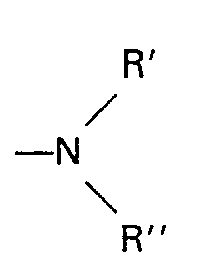
- the compounds of this invention are unsaturated cyclic amido-substituted ether compounds each represented by the following general formula (I): wherein: R, is an aromatic cyclic group; Z is an alkylene group having 1 or 2 carbon atoms, an alkenylene group having 3 carbon atoms, an oxyalkylene group represented by the general formula wherein x is 1 or 2, or an aminoalkylene group represented by the general formula: A is a halogen atom, a hydroxy group, an oxo group, a cyano group, a nitro group, a mercapto group, a sulfo group, an alkyl group having 1 to 9 carbon atoms, an alkenyl group having 3 carbon atoms, an aminoalkyl group represented by the general formula: wherein R' and R" each are an alkyl group having 1 or 2 carbon atoms, or a group represented by the general formula RO- or RCO-, wherein R is an alkyl group having 1 carbon atom
- the compounds of this invention can each be prepared by reacting a cyclic halogen-substituted ether compound represented by the following general formula (II): wherein R i , Z, A, m, I and s have the meanings defined above and X denotes a halogen atom, with an unsaturated amide compound represented by the following general formula (III): wherein R 2 has the same meaning as defined above, in the presence of a strong basic substance in an aprotic polar solvent.
- cyclic halogen-substituted ether compounds which are raw materials required for the preparation of the compounds of this invention can be obtained with ease in accordance with a process already proposed by the present inventors, namely, through reactions between OH-substituted cyclic compounds and dihaloalkanes.
- multi-functional monomers such as crosslinking agents can also be prepared with ease by using multi-substituted OH-substituted cyclic compounds as raw materials.
- New functions which are unseen in conventional crosslinking agents have been found as new types of crosslinking agents.
- the halogen indicated by A is chlorine, bromide, iodine or fluorine.
- the halogen represented by X is chlorine, bromine or iodine.
- the carbon ring shown by R i is an aromatic or a condensed or combined ring thereof.
- aromatic rings may be mentioned monocyclic and condensed polycyclic rings such as benzene, naphthalene, anthracene, pentacene, heptacene and the like, and those formed of 2-4 of these rings which are bonded together.
- the compounds of this invention are more specifically those obtained using, as basic skeletal structures, those formed of carbocyclic rings such as aromatic or their condensed or combined rings. Also included are those obtained by introducing such substituent groups as referred to above with respect to A into carbocyclic rings.
- acyl groups to the aromatic rings of the above-described compounds, may for example be mentioned:
- substituted derivatives of compounds containing OH-substituted carbocyclic rings illustrative of substituted derivatives of polyhydric alcohols of compounds, which contain aromatic rings, may include:
- substituted derivatives of those obtained by substituting alkoxy groups to aromatic rings of the above-described compounds and those formed by bonding aryl groups to the aromatic rings via oxygen atoms may for example be mentioned:
- substituted derivatives of those obtained by substituting mercapto groups and/or sulfo groups to aromatic rings of the above-described compounds may for example be mentioned, as salts formed in the case of the substitution of sulpho groups to aromatic rings:
- Illustrative of such compounds may include:
- the above-exemplified unsaturated cyclic amido-substituted ether compounds may be prepared by reacting the cyclic halogen-substituted ether compounds represented by the general formula (II) with the unsaturated amide compounds represented by the general formula (III) in the presence of a strong basic substance in an aprotic polar solvent.
- cyclic halogen-substituted ether compounds and unsaturated amide compounds are exactly the same as the general formula described in detail in connection with the unsaturated cyclic amido-substituted ether compounds and are thus not described in detail here.
- cyclic halogen-substituted ether compounds are included those obtained by substituting at least one hydroxyl group of compounds, which contain OH-substituted carbocyclic rings, with halogen-substituted ether groups.
- Unsaturated amide compounds include acrylic amide and methacrylic amide.
- any suitable method for example, to charge all the three reaction materials into the aprotic polar solvent and then to mix them there to suspend the strong basic substance therein; to suspend the strong basic substance in the aprotic polar solvent and then to charge the cyclic halogen-substituted ether compounds and unsaturated amide compound simultaneously to the resulting suspension for their reaction; or to either dissolve or suspend the cyclic halogen-substituted ether compounds and unsaturated amide compounds in the aprotic polar solvent and thereafter to add and suspend the strong basic substance.
- aprotic polar solvent may be employed as a reaction solvent in the present invention.
- exemplary aprotic polar solvents may be mentioned acetonitrile, N,N-dimethylformamide, N,N-dimethylacetamide, dimethylsulfoxide, sulforan, tetraglime, dioxane, N-methylpyrrolidone, and so on.
- the process of this invention In a reaction system in which the process of this invention is effected, it is preferred to initiate the reaction in such a state that at least part of the strong basic substance is suspended.
- the amount of water in such a state is generally 6 wt.% or so as the water quantity in the reaction system. If the amount of water should exceed this level, side reactions such as hydrolysis of the dihalogen-substituted compound tend to occur and the yield will be lowered significantly.
- the solvent may amount to 5-95 wt.% or preferably 10-90 wt.% of the total weight of reaction materials which include the solvent.
- the strong basic substance to be employed in the present invention is a solid substance. Any strong basic substances may be used so long as when either dissolved or suspended in water, the pHs of resulting aqueous solutions are above 10 or preferably above 11.
- basic substances may for example be mentioned alkali metal hydroxides, alkali metal oxides, alkali metal carbonates, alkaline earth metal hydroxides, alkaline earth metal oxides, alkali metal hydrides, alkaline earth metal hydrides, alkali metal amides, alkali metal alkoxides, etc.
- alkali metal hydroxides include sodium hydroxide, potassium hydroxide, lithium hydroxide, rubidium hydroxide and cesium hydroxide.
- alkali metal oxides may for example be mentioned sodium oxide, potassium oxide, lithium oxide, rubidium oxide and cesium oxide.
- Exemplary alkali metal carbonates may include sodium carbonate, potassium carbonate, lithium carbonate, rubidium carbonate and cesium carbonate.
- alkaline earth metal hydroxides may include beryllium hydroxide, magnesium hydroxide, calcium hydroxide, strontium hydroxide and barium hydroxide.
- alkaline earth metal oxides may for example be mentioned beryllium oxide, magnesium oxide, calcium oxide, strontium oxide and barium oxide.
- exemplary alkali metal hydrides may include sodium hydride, potassium hydride and lithium hydride.
- exemplary alkaline earth metal hydrides may be mentioned beryllium hydride, magnesium hydride and calcium hydride.
- Alkali metal amides are compounds obtained by substituting ammonia with alkali metals, including for example sodium amide, potassium amide and lithium amide.
- Alkali metal alkoxides are compounds obtained by substituting the protons of the hydroxyl groups of alcohols with alkali metals, including for example, sodium methoxide, sodium ethoxide, sodium t-butoxide, potassium methoxide, potassium ethoxide, potassium t-butoxide.
- those suitable in the practice of the process of this invention may for example be alkali metal hydroxides, alkaline earth metal hydroxides, alkali metal oxides, alkaline earth metal oxides, alkali metal carbonates and the like.
- Each of these strong basic substances is usually provided in a solid form for the reaction.
- the reaction is initiated in such a state that at least part of the strong basic substance is suspended in the liquid reaction mixture.
- the relative amounts of the raw materials i.e., the cyclic halogen-substituted ether compound, unsaturated amide compound and strong basic substance to be used vary depending on the reactivity between the cyclic halogen-substituted ether compound and the unsaturated amide compounds, etc. and cannot thus be specified as any constant amounts or amount ranges.
- the cyclic halogen-substituted ether compound may generally be used in a molar amount 0.2-20 times or preferably 0.3-10 times the unsaturated amide compound.
- the strong basic substance may approximately be used in a molar amount 0.2-15 times or preferably 0.5-10 times the amide compound.
- a polymerization inhibitor may also be added in order to avoid polymerization of raw materials and reaction product during the reaction and purification steps.
- a polymerization inhibitor use of a phenol-type inhibitor, amine-type inhibitor, mercaptan-type inhibitor or copper powder may generally be mentioned.
- an ordinary reaction vessel may be employed.
- the reaction may be effected in accordance with the flow method, namely, by packing the strong basic substance in a column and then causing a mixed solution of the cyclic halogen-substituted ether compound and unsaturated amide compound to recirculate through the column.
- Use of a reaction vessel is however more convenient for the maintenance of the reaction apparatus.
- the reaction temperature is dependent on the reactivity between each cyclic halogen-substituted ether compound and unsaturated amide compound to be employed. A lower reaction temperature will result in a reduction to the progress of the reaction. On the other hand, a higher reaction temperature will induce side reactions such as hydrolysis of the unsaturated amide compound and will hence result in a reduction to the yield of the intended product. Therefore, the reaction is generally carried out within a temperature range of -30-+100°C or preferably -20-+70°C. So long as the reaction is carried out within this temperature range, it may not be absolutely necessary to maintain the temperature at a constant level during the reaction. It may be possible to change the reaction temperature suitably to allow the reaction to proceed efficiently while precisely observing the progress of the reaction.
- the reaction time varies depending on each cyclic halogen-substituted ether compound and unsaturated amide compound to be used.
- the reaction time is however within 30 hours at the longest, and normally within 20 hours.
- the progress of the reaction can be observed by depending on changes in nature or state of the reaction system or by determining the concentrations of the raw materials and intended product in the liquid reaction mixture with gas chromatography or highspeed liquid chromatography.
- the intended product of high purity can be obtained by filtering off the by-produced metal halide and distilling the resulting filtrate under reduced pressure.
- the intended product of high purity can be obtained by driving-off the solvent, removing the metal halide with a combination of solvents capable of forming two layers such as hexane-water, benzene-water or chloroform-water, and then distilling the residue under reduced pressure.
- the compounds of this invention generally have high boiling points and many of these compounds have non-volatile properties. In addition, they contain readily-polymerizable double bonds in their molecules. Therefore, they may not be purified by distillation in many instances.
- the intended products may still be isolated with good purity by solvent extraction or recrystallization or by using an adsorbent such as silica gel, alumina, activated carbon, ion-exchange resin, adsorptive resin or the like. Furthermore, two or more of the above-mentioned purification methods may be used in combination.
- reaction solvent has great miscibility with water like dimethylsulfoxide or N,N-dimethylformamide and the intended product is highly hydrophobic
- it is feasible to isolate the intended product after the reaction for example, by adding an aliphatic hydrocarbon solvent such as hexane to the liquid reaction mixture to extract the intended product, adding water to the liquid reaction mixture to separate the intended product as an oil layer, or extracting and separating the intended product with a solvent capable of forming two layers when mixed with water, such as benzene, toluene or chloroform.
- a variety of cyclic unsaturated amido-substituted ether compounds can be prepared using the same reaction procedure and the same reaction reactor. Therefore, the present invention is suitable for the preparation of various products in small volumes.
- the cyclic unsaturated amido-substituted ether compounds of this invention have been obtained by introducing an extremely wide variety of substituent groups in side chains as shown by the above-exemplified compounds. They can be used for various applications depending on the nature of introduced substituent groups.
- principal raw materials may be mentioned principal raw materials, auxiliary raw materials, crosslinking agents and the like for adhesives, paints, paper-converting or paper-conditioning agents, textile-processing agents, emulsions, urethane-hardening agents, pigments, dispersants, additives to plastics, high-molecular coagulants, ion-exchange resins, adsorption and separation resins, chelate resins, optical lenses, photosensitive resins, soft contact lenses, hygroscopic resins, binders for magnetic materials, binders for composite materials, high-molecular catalysts, clinical reagents, biocompatible materials, enzyme-immobilizing base materials, etc.
- the compounds of this invention can be used in a variety of fields.
- Example 19 In exactly the same manner as in Example 19 except that 3.0 g of (12-bromododecyloxy)benzene was used in lieu of 2.0 g of (8-bromooctyloxy)benzene in Example 19, a reaction and its post-treatment were carried out to obtain 2.26 g of N-(12-phenoxydodecyl)acrylic amide (yield: 78%). It was purified furtherwith column chromatography in which silica gel and benzene were used as an adsorbent and developer respectively. Its melting point was measured and its elementary analysis was also conducted. The following results were obtained. Melting point: 69-71°C. Elementary analysis data: C, 76.03% (Calculated: 76.09%); H, 10.14% (10.03%); N, 4.19% (4.23%).
- Another resin was also prepared in exactly the same manner as in Referential Example 1 except that N,N'-methylenebisacrylic amide was used as a crosslinking agent in place of 2,2-bis[4-(4-acrylamidobutoxy)phenyl]propane.
- the resin was caused to absorb water at 25°C in exactly the same manner. The volume of absorbed water was measured to be 23 ml.
- the water-absorbed resin was sandwiched between glass plates. After displacing the glass plates relative to each other, the upper glass plate was removed to observe the state of the water-absorbed resin. About 40% of the resin was found to have been ground.
Landscapes
- Chemical & Material Sciences (AREA)
- Organic Chemistry (AREA)
- Chemical Kinetics & Catalysis (AREA)
- Organic Low-Molecular-Weight Compounds And Preparation Thereof (AREA)
- Low-Molecular Organic Synthesis Reactions Using Catalysts (AREA)
Claims (6)




Applications Claiming Priority (2)
| Application Number | Priority Date | Filing Date | Title |
|---|---|---|---|
| JP46532/84 | 1984-03-13 | ||
| JP59046532A JPS60193955A (ja) | 1984-03-13 | 1984-03-13 | 環式不飽和アミド置換エ−テル化合物及びその製造方法 |
Publications (3)
| Publication Number | Publication Date |
|---|---|
| EP0155177A2 EP0155177A2 (de) | 1985-09-18 |
| EP0155177A3 EP0155177A3 (en) | 1987-02-04 |
| EP0155177B1 true EP0155177B1 (de) | 1990-10-31 |
Family
ID=12749894
Family Applications (1)
| Application Number | Title | Priority Date | Filing Date |
|---|---|---|---|
| EP85301695A Expired - Lifetime EP0155177B1 (de) | 1984-03-13 | 1985-03-12 | Ungesättigte Amido-substituierte cyclische Äthern-Verbindungen und Verfahren zu ihrer Herstellung |
Country Status (6)
| Country | Link |
|---|---|
| US (1) | US4649219A (de) |
| EP (1) | EP0155177B1 (de) |
| JP (1) | JPS60193955A (de) |
| KR (1) | KR870000958B1 (de) |
| CA (1) | CA1244012A (de) |
| DE (1) | DE3580293D1 (de) |
Families Citing this family (38)
| Publication number | Priority date | Publication date | Assignee | Title |
|---|---|---|---|---|
| KR100490339B1 (ko) * | 2002-05-08 | 2005-05-17 | 국방과학연구소 | 2,2-디나이트로프로필 아크릴레이트와 2,2-디나이트로부틸아크릴레이트의 공중합체 |
| US9227978B2 (en) | 2013-03-15 | 2016-01-05 | Araxes Pharma Llc | Covalent inhibitors of Kras G12C |
| US9745319B2 (en) | 2013-03-15 | 2017-08-29 | Araxes Pharma Llc | Irreversible covalent inhibitors of the GTPase K-Ras G12C |
| JO3805B1 (ar) | 2013-10-10 | 2021-01-31 | Araxes Pharma Llc | مثبطات كراس جي12سي |
| JO3556B1 (ar) | 2014-09-18 | 2020-07-05 | Araxes Pharma Llc | علاجات مدمجة لمعالجة السرطان |
| JP2017528498A (ja) | 2014-09-25 | 2017-09-28 | アラクセス ファーマ エルエルシー | Kras g12c変異体タンパク質のインヒビター |
| WO2016049568A1 (en) | 2014-09-25 | 2016-03-31 | Araxes Pharma Llc | Methods and compositions for inhibition of ras |
| MX382355B (es) | 2015-04-10 | 2025-03-13 | Araxes Pharma Llc | Compuestos de quinazolina sustituidos y métodos de uso de los mismos. |
| EP3283462B1 (de) | 2015-04-15 | 2020-12-02 | Araxes Pharma LLC | Kondensierte tricyclische inhibitoren von kras und anwendungsverfahren dafür |
| US10144724B2 (en) | 2015-07-22 | 2018-12-04 | Araxes Pharma Llc | Substituted quinazoline compounds and methods of use thereof |
| EP3133065A1 (de) | 2015-08-21 | 2017-02-22 | Merck Patent GmbH | Verbindungen für optisch aktive vorrichtungen |
| WO2017058792A1 (en) | 2015-09-28 | 2017-04-06 | Araxes Pharma Llc | Inhibitors of kras g12c mutant proteins |
| EP3356351A1 (de) | 2015-09-28 | 2018-08-08 | Araxes Pharma LLC | Inhibitoren von kras-g12c-mutanten proteinen |
| WO2017058728A1 (en) | 2015-09-28 | 2017-04-06 | Araxes Pharma Llc | Inhibitors of kras g12c mutant proteins |
| EP3356354A1 (de) | 2015-09-28 | 2018-08-08 | Araxes Pharma LLC | Inhibitoren von kras-g12c-mutanten proteinen |
| EP3356347A1 (de) | 2015-09-28 | 2018-08-08 | Araxes Pharma LLC | Inhibitoren von kras-g12c-mutanten proteinen |
| US10689356B2 (en) | 2015-09-28 | 2020-06-23 | Araxes Pharma Llc | Inhibitors of KRAS G12C mutant proteins |
| EP3356349A1 (de) | 2015-09-28 | 2018-08-08 | Araxes Pharma LLC | Inhibitoren von kras-g12c-mutanten proteinen |
| WO2017070256A2 (en) | 2015-10-19 | 2017-04-27 | Araxes Pharma Llc | Method for screening inhibitors of ras |
| EP3377481A1 (de) | 2015-11-16 | 2018-09-26 | Araxes Pharma LLC | 2-substituierte chinazolinverbindungen mit einer substituierten heterocyclischen gruppe und verfahren zur verwendung davon |
| WO2017100546A1 (en) | 2015-12-09 | 2017-06-15 | Araxes Pharma Llc | Methods for preparation of quinazoline derivatives |
| CN106986789B (zh) * | 2016-01-20 | 2019-07-16 | 中国人民解放军军事医学科学院生物医学分析中心 | 对苯二酚类化合物及其制备方法与在抗肿瘤或免疫调节中的应用 |
| US10822312B2 (en) | 2016-03-30 | 2020-11-03 | Araxes Pharma Llc | Substituted quinazoline compounds and methods of use |
| US10646488B2 (en) | 2016-07-13 | 2020-05-12 | Araxes Pharma Llc | Conjugates of cereblon binding compounds and G12C mutant KRAS, HRAS or NRAS protein modulating compounds and methods of use thereof |
| EP3519402A1 (de) | 2016-09-29 | 2019-08-07 | Araxes Pharma LLC | Inhibitoren von kras-g12c-mutanten proteinen |
| US10377743B2 (en) | 2016-10-07 | 2019-08-13 | Araxes Pharma Llc | Inhibitors of RAS and methods of use thereof |
| US11358959B2 (en) | 2017-01-26 | 2022-06-14 | Araxes Pharma Llc | Benzothiophene and benzothiazole compounds and methods of use thereof |
| EP3573954A1 (de) | 2017-01-26 | 2019-12-04 | Araxes Pharma LLC | Fusionierte bicyclische benzoheteroaromatische verbindungen und verfahren zur verwendung davon |
| US11136308B2 (en) | 2017-01-26 | 2021-10-05 | Araxes Pharma Llc | Substituted quinazoline and quinazolinone compounds and methods of use thereof |
| WO2018140513A1 (en) | 2017-01-26 | 2018-08-02 | Araxes Pharma Llc | 1-(3-(6-(3-hydroxynaphthalen-1-yl)benzofuran-2-yl)azetidin-1yl)prop-2-en-1-one derivatives and similar compounds as kras g12c modulators for treating cancer |
| CN110382482A (zh) | 2017-01-26 | 2019-10-25 | 亚瑞克西斯制药公司 | 稠合的杂-杂二环化合物及其使用方法 |
| EP3363786A1 (de) | 2017-02-15 | 2018-08-22 | Merck Patent GmbH | Verbindungen für optisch aktive vorrichtungen |
| EP3363793A1 (de) | 2017-02-15 | 2018-08-22 | Merck Patent GmbH | Hydrophobe verbindungen zur herstellung von optisch aktiven vorrichtungen |
| CN110869358A (zh) | 2017-05-25 | 2020-03-06 | 亚瑞克西斯制药公司 | Kras的共价抑制剂 |
| CN110831933A (zh) | 2017-05-25 | 2020-02-21 | 亚瑞克西斯制药公司 | 喹唑啉衍生物作为突变kras、hras或nras的调节剂 |
| JP2020521741A (ja) | 2017-05-25 | 2020-07-27 | アラクセス ファーマ エルエルシー | がんの処置のための化合物およびその使用の方法 |
| BR112021001709A2 (pt) | 2018-08-01 | 2021-05-04 | Araxes Pharma Llc | compostos espiro heterocíclicos e métodos de uso dos mesmos para o tratamento de câncer |
| EP4015512A1 (de) * | 2020-12-16 | 2022-06-22 | AMO Ireland | Optisch aktive vorrichtungen |
Family Cites Families (28)
| Publication number | Priority date | Publication date | Assignee | Title |
|---|---|---|---|---|
| US2773063A (en) * | 1956-12-04 | Preparation of acrylamides | ||
| DE312687C (de) * | ||||
| DE8498C (de) * | Graf CH. DE MONTBLANC und L. GAULARD, Chemiker, in Paris | Apparate zur Bereitung der sogenannten Ammoniak-Soda | ||
| DE312689C (de) * | ||||
| US2773899A (en) * | 1953-11-24 | 1956-12-11 | Cilag Ltd | Alkenoic amides of arylethers of alkanolamines |
| US3037056A (en) * | 1959-03-30 | 1962-05-29 | California Research Corp | Amido polyglycols |
| US3280189A (en) * | 1961-11-17 | 1966-10-18 | Devoe & Raynolds Co | Preparation of alcohol blocked n-hydroxymethyl unsaturated acid amides |
| BE628348A (de) * | 1962-02-14 | |||
| NL293393A (de) * | 1962-06-04 | |||
| NL302380A (de) * | 1962-12-22 | 1900-01-01 | ||
| GB1010760A (en) * | 1963-09-18 | 1965-11-24 | Hercules Powder Co Ltd | Modified polyolefines |
| DE1443912C3 (de) * | 1964-12-08 | 1975-07-10 | Bayer Ag, 5090 Leverkusen | 3,5-Dialkyl-4-hydroxy-benzylamide der Acryl- bzw. Methacrylsäure und Verfahren zu ihrer Herstellung |
| US3627831A (en) * | 1965-04-01 | 1971-12-14 | Ciba Ltd | Carboxylic acid amides |
| US3652478A (en) * | 1967-10-27 | 1972-03-28 | Mitsubishi Rayon Co | Coating composition for electrodeposition coating |
| CH500168A (de) * | 1968-04-19 | 1970-12-15 | Basf Ag | Verfahren zur Herstellung von Alkylenglykol-di(-acrylamid-N-methyl)-äthern |
| BE759428A (fr) * | 1969-11-28 | 1971-04-30 | Eastman Kodak Co | Nouveaux composes acryliques monomeres et polymeres, utilisables en optique, et procede de preparation |
| US3796773A (en) * | 1971-03-19 | 1974-03-12 | Lubrizol Corp | Graft polymers |
| US3784565A (en) * | 1971-10-29 | 1974-01-08 | Goodrich Co B F | Stabilizers for chlorine-containing polymers |
| GB1415159A (en) * | 1971-11-25 | 1975-11-26 | Coates Bros Co Ltd | Copolymers |
| US4233430A (en) * | 1973-06-26 | 1980-11-11 | L'oreal | Anti-solar acrylamide derivative polymers, method of making the same and cosmetic compositions containing the same |
| US4025548A (en) * | 1974-02-04 | 1977-05-24 | The O'brien Corporation | Radiation curable oligomers |
| US3928499A (en) * | 1974-02-19 | 1975-12-23 | Dow Chemical Co | Unsaturated poly(amide-esters) and cross-linked derivatives thereof |
| CA1019485A (en) * | 1974-06-21 | 1977-10-18 | Sed Systems Ltd. | Automatic dialing equipment |
| US4172933A (en) * | 1975-07-16 | 1979-10-30 | Xerox Corporation | Polymers having pendant acceptor groups |
| US4021404A (en) * | 1975-10-01 | 1977-05-03 | The Goodyear Tire & Rubber Company | Antihardeners for polymers |
| US4129545A (en) * | 1976-01-16 | 1978-12-12 | Mitsubishi Rayon Co., Ltd. | Thermosetting acrylic copolymer usable as a powder paint and method for producing the same |
| US4134916A (en) * | 1978-02-06 | 1979-01-16 | Texaco Development Corp. | N-polyalkoxyalkyl acrylamides or methacrylamides |
| US4393237A (en) * | 1981-07-02 | 1983-07-12 | Texaco Inc. | Polyoxyalkylenepolyacrylamides |
-
1984
- 1984-03-13 JP JP59046532A patent/JPS60193955A/ja active Granted
-
1985
- 1985-03-06 US US06/708,568 patent/US4649219A/en not_active Expired - Fee Related
- 1985-03-06 CA CA000475877A patent/CA1244012A/en not_active Expired
- 1985-03-12 DE DE8585301695T patent/DE3580293D1/de not_active Expired - Lifetime
- 1985-03-12 EP EP85301695A patent/EP0155177B1/de not_active Expired - Lifetime
- 1985-03-13 KR KR1019850001614A patent/KR870000958B1/ko not_active Expired
Also Published As
| Publication number | Publication date |
|---|---|
| EP0155177A3 (en) | 1987-02-04 |
| CA1244012A (en) | 1988-11-01 |
| KR870000958B1 (ko) | 1987-05-14 |
| JPH0573739B2 (de) | 1993-10-15 |
| DE3580293D1 (de) | 1990-12-06 |
| US4649219A (en) | 1987-03-10 |
| KR850006924A (ko) | 1985-10-25 |
| JPS60193955A (ja) | 1985-10-02 |
| EP0155177A2 (de) | 1985-09-18 |
Similar Documents
| Publication | Publication Date | Title |
|---|---|---|
| US4649219A (en) | Unsaturated cyclic amido-substituted ether compounds and preparation process thereof | |
| US4156696A (en) | Fluoroaliphaticsulfonyl substituted methanes | |
| US3991106A (en) | 16-Ethers of 8-aza-9-dioxothia-11,12-seco-prostaglandins | |
| US4055596A (en) | 11,12-Seco-prostaglandins | |
| Nakatsuji et al. | Synthesis of bis (bromomethyl) dimethyl crown ethers and complexation properties of their derivatives having electron-donating sidearms | |
| SU584777A3 (ru) | Способ получени изохроманов | |
| CA1224809A (en) | Perfluorinated vinyl ethers containing a secondary hydrogen atom, polymers formed therefrom and a process for the preparation of the monomers | |
| KR870000918B1 (ko) | N-(ω-글리시독시알킬)-치환 아미드 화합물의 제조방법 | |
| EP0012824A1 (de) | Verfahren zur Herstellung von alpha-Tocopherol und Zwischenprodukt für dieses Verfahren | |
| CA1237441A (en) | Substituted trifluorooxetane and preparation thereof | |
| JPS63264543A (ja) | ポリヒドロキシベンゾフエノン類の製造方法 | |
| US4290945A (en) | α,α-azo-bis-isobutyric acid α,ω-bis alkyl ester derivatives and method for preparing same | |
| KR100460191B1 (ko) | 퍼룰산 유도체 및 이를 이용한 액정 재료, 양이온 검출요소, 음이온 검출 요소, 이온 전도성 재료 및 전해질 | |
| JPH0573736B2 (de) | ||
| HARANO et al. | Solvolytic Behavior of Ο-(1-Cyclopropylethyl) S-Methyl Dithiocarbonate and Related Compounds | |
| KR870000164B1 (ko) | 할로겐-치환 글리시딜 에테르 화합물의 제조방법 | |
| JPS60190424A (ja) | 不飽和アミド置換ポリオキシアルキレン化合物及びその製造方法 | |
| SU734201A1 (ru) | Способ очистки винилпиридинов или их смесей с алкилпиридинами от дивинилпиридинов | |
| Koizumi et al. | Radical ring-opening polyaddition of bis (vinyloxirane) derivatives and dithiols | |
| JPS60161938A (ja) | ポリオキシアルキレン化合物及びその製造方法 | |
| US3654315A (en) | Organic pseudo peresters | |
| JPS63265920A (ja) | ポリフルオロポリエ−テル | |
| EP0112297A1 (de) | Verfahren zur Herstellung von Bis(perfluoroalkyl-alkylthio)-alkansäuren und davon derivierten Lactonen | |
| SU906990A1 (ru) | @ ,W-бис-[W-(хлорметилфенил)алкилОВЫЕ ЭФИРЫ @ , @ -АЗО-БИС-ИЗОМАСЛЯНОЙ КИСЛОТЫ В КАЧЕСТВЕ ИНИЦИАТОРОВ РАДИКАЛЬНОЙ ПОЛИМЕРИЗАЦИИ ЭТИЛЕННЕНАСЫЩЕННЫХ СОЕДИНЕНИЙ И КАК ПРОМЕЖУТОЧНЫЕ ПРОДУКТЫ ДЛЯ ПОЛУЧЕНИЯ РЕАКЦИОННОСПОСОБНЫХ ПОЛИМЕРОВ | |
| Van Zyl et al. | Condensations of Epoxides with 2-Thienylsodium and 2-Thienylmagnesium Bromide |
Legal Events
| Date | Code | Title | Description |
|---|---|---|---|
| PUAI | Public reference made under article 153(3) epc to a published international application that has entered the european phase |
Free format text: ORIGINAL CODE: 0009012 |
|
| AK | Designated contracting states |
Designated state(s): CH DE FR GB IT LI NL SE |
|
| PUAL | Search report despatched |
Free format text: ORIGINAL CODE: 0009013 |
|
| AK | Designated contracting states |
Kind code of ref document: A3 Designated state(s): CH DE FR GB IT LI NL SE |
|
| 17P | Request for examination filed |
Effective date: 19870515 |
|
| 17Q | First examination report despatched |
Effective date: 19880407 |
|
| GRAA | (expected) grant |
Free format text: ORIGINAL CODE: 0009210 |
|
| AK | Designated contracting states |
Kind code of ref document: B1 Designated state(s): CH DE FR GB IT LI NL SE |
|
| PG25 | Lapsed in a contracting state [announced via postgrant information from national office to epo] |
Ref country code: SE Effective date: 19901031 |
|
| REF | Corresponds to: |
Ref document number: 3580293 Country of ref document: DE Date of ref document: 19901206 |
|
| ITF | It: translation for a ep patent filed | ||
| ET | Fr: translation filed | ||
| PG25 | Lapsed in a contracting state [announced via postgrant information from national office to epo] |
Ref country code: LI Effective date: 19910331 Ref country code: CH Effective date: 19910331 |
|
| PLBE | No opposition filed within time limit |
Free format text: ORIGINAL CODE: 0009261 |
|
| STAA | Information on the status of an ep patent application or granted ep patent |
Free format text: STATUS: NO OPPOSITION FILED WITHIN TIME LIMIT |
|
| PG25 | Lapsed in a contracting state [announced via postgrant information from national office to epo] |
Ref country code: NL Effective date: 19911001 |
|
| 26N | No opposition filed | ||
| NLV4 | Nl: lapsed or anulled due to non-payment of the annual fee | ||
| REG | Reference to a national code |
Ref country code: CH Ref legal event code: PL |
|
| PGFP | Annual fee paid to national office [announced via postgrant information from national office to epo] |
Ref country code: GB Payment date: 19920302 Year of fee payment: 8 |
|
| PGFP | Annual fee paid to national office [announced via postgrant information from national office to epo] |
Ref country code: FR Payment date: 19920320 Year of fee payment: 8 |
|
| PGFP | Annual fee paid to national office [announced via postgrant information from national office to epo] |
Ref country code: DE Payment date: 19920323 Year of fee payment: 8 |
|
| PG25 | Lapsed in a contracting state [announced via postgrant information from national office to epo] |
Ref country code: GB Effective date: 19930312 |
|
| GBPC | Gb: european patent ceased through non-payment of renewal fee |
Effective date: 19930312 |
|
| PG25 | Lapsed in a contracting state [announced via postgrant information from national office to epo] |
Ref country code: FR Effective date: 19931130 |
|
| PG25 | Lapsed in a contracting state [announced via postgrant information from national office to epo] |
Ref country code: DE Effective date: 19931201 |
|
| REG | Reference to a national code |
Ref country code: FR Ref legal event code: ST |