EP0155534A2 - Dialysemembran aus Cellulose mit verbesserter Biokompatibilität - Google Patents
Dialysemembran aus Cellulose mit verbesserter Biokompatibilität Download PDFInfo
- Publication number
- EP0155534A2 EP0155534A2 EP85101968A EP85101968A EP0155534A2 EP 0155534 A2 EP0155534 A2 EP 0155534A2 EP 85101968 A EP85101968 A EP 85101968A EP 85101968 A EP85101968 A EP 85101968A EP 0155534 A2 EP0155534 A2 EP 0155534A2
- Authority
- EP
- European Patent Office
- Prior art keywords
- dialysis membrane
- cellulose
- solvent
- isocyanate
- prepolymer
- Prior art date
- Legal status (The legal status is an assumption and is not a legal conclusion. Google has not performed a legal analysis and makes no representation as to the accuracy of the status listed.)
- Granted
Links
Images
Classifications
-
- B—PERFORMING OPERATIONS; TRANSPORTING
- B01—PHYSICAL OR CHEMICAL PROCESSES OR APPARATUS IN GENERAL
- B01D—SEPARATION
- B01D71/00—Semi-permeable membranes for separation processes or apparatus characterised by the material; Manufacturing processes specially adapted therefor
- B01D71/06—Organic material
- B01D71/08—Polysaccharides
- B01D71/10—Cellulose; Modified cellulose
-
- B—PERFORMING OPERATIONS; TRANSPORTING
- B01—PHYSICAL OR CHEMICAL PROCESSES OR APPARATUS IN GENERAL
- B01D—SEPARATION
- B01D71/00—Semi-permeable membranes for separation processes or apparatus characterised by the material; Manufacturing processes specially adapted therefor
- B01D71/06—Organic material
- B01D71/08—Polysaccharides
- B01D71/12—Cellulose derivatives
Definitions
- the invention relates to a dialysis membrane for hemodialysis in the form of flat films, tubular films or hollow fibers made from regenerated cellulose.
- Dialysis membranes made from regenerated cellulose for hemodialysis in the form of flat foils, tubular foils or hollow fibers have been known for a long time and are still used with preference in artificial kidneys, although some properties causing complaints have not yet been eliminated.
- DE-C-27 05 735 discloses a dialysis membrane for hemodialysis, with reduced thrombogenic activity from cellulose, with antithrombogenic compounds chemically bound to it, the dialysis membrane consisting of two or more layers of a cell regenerated from Cuoxam cellulose solutions Lulose consists, which were each obtained from separately fed slots of a spinneret.
- the cellulose layer arranged on the blood side is wholly or partly a modified cellulose which contains antithrombogenic active substances chemically bound.
- dialysis membranes made of synthetic or natural polymers can very easily cause blood clotting when used in artificial kidneys, which is largely prevented by appropriate medicinal treatment or by the aforementioned special dialysis membranes, dialysis membranes made from regenerated cellulose often occur
- Another problem that has not yet been solved satisfactorily namely that it had been found that in the treatment of a kidney patient with dialyzers with cellulose membranes, a temporary drop in leukocytes can take place in the first period of dialysis treatment. This effect is called leukopenia.
- Leukopenia is a decrease in the number of white blood cells (white blood body) in the bloodstream.
- the number of white blood cells in humans is approximately 4000 to 12000 cells / mm '.
- Dialysis leukopenia is most pronounced 15 to 20 minutes after onset, and the neutrophils (those that can be stained with neutral or simultaneously stained with acid and basic dyes) can almost completely disappear. After that, the number of leukocytes recovers to almost the original value or exceeds it within about an hour.
- leukopenia occurs again to the same extent.
- the complement system within the blood serum is a complex, multi-component plasma enzyme system that defends itself in various ways of invading foreign cells (bacteria etc.). If antibodies against the invading organism are present, complement can be activated by the complex of the antibodies with antigenic structures of the foreign cells; however, it is also possible to activate the complement system in an alternative way by means of special surface features of the foreign cell.
- the complement system is based on a large number of plasma proteins. After activation, these proteins react with each other specifically in a certain order and in the end a cell-damaging complex is formed that destroys the foreign cell.
- Peptides are released from individual components of the complement system, which trigger inflammation symptoms and can occasionally also have undesirable pathological consequences for the organism.
- the dialysis membrane according to the invention in the form of flat films, tubular films or hollow fibers made from regenerated cellulose is characterized in that at least on one membrane surface in organic solvents which are soluble, except those which react with isocyanate groups and which dissolve cellulose, isocyanate prepolymers with an average molecular weight of 300 to 50,000 chemically are bound.
- solvents which do not react with isocyanate groups and which do not dissolve cellulose are methylene chloride, chloroform, tetrahydrofuran, dioxane, dimethylformamide, dimethylacetamide and acetone.
- the solvents can be used as such in the production of the membranes according to the invention or in a mixture with one another, provided that the mixture also fulfills the requirement that it does not dissolve cellulose. It is advantageous if the solvent has a good dissolving power for the isocyanate prepolymers at temperatures below 60 ° C., in particular at room temperature.
- the molecular weight is a ratio of the mass of a molecule to the atomic mass of the carbon isotope 12. In some cases it is given the dimension "Dalton".
- the isocyanate prepolymer is preferably a reaction product of a hydroxy and / or polyhydroxy compound and a polyfunctional isocyanate compound.
- Suitable polyhydroxy compounds are hydroxyl-containing polyethers, such as polyethylene glycol, polypropylene glycol and polytetramethylene glycol; hydroxyl-containing polyesters, such as polyethylene adipate, polypropylene adipate, polybutylene adipate; polycarbonates containing hydroxyl groups, such as polyhexanediol carbonate.
- polyethers such as polyethylene glycol, polypropylene glycol and polytetramethylene glycol
- polyesters such as polyethylene adipate, polypropylene adipate, polybutylene adipate
- polycarbonates containing hydroxyl groups such as polyhexanediol carbonate.
- naturally occurring polyhydroxy compounds such as castor oil or derivatives of castor oil or monoglycerides of naturally occurring fatty acids and / or mixtures thereof can also be used for the reaction with di-, tri- and / or polyfunctional isocyanate compounds.
- isocyanate compounds examples include diphenylmethane diisocyanates, tolylene diisocyanates, hexamethylene diisocyanates, dicyclohexylmethane diisocyanates, isophorone diisocyanates, cyclohexyl diisocyanates, triphenylmethane triisocyanates.
- the isocyanate prepolymer is a reaction product of a diisocyanate with a fatty alcohol having 6 to 30 carbon atoms.
- the isocyanate prepolymer is a reaction product of a diisocyanate with an ethoxylated fatty alcohol having 6 to 30 carbon atoms.
- the isocyanate prepolymer is a reaction product of a diisocyanate with an ethoxylated fatty acid having 6 to 30 carbon atoms.
- the degree of ethoxylation is preferably 5 to 400.
- Isocyanate prepolymers which are reaction products of a diisocyanate with polyhydroxy compounds are particularly preferred.
- Dioxy and / or trioxy compounds are preferably used as polyhydroxy compounds for their preparation.
- a further embodiment of the membranes is characterized in that the isocyanate prepolymer is a reaction product from a reaction of a hydroxy and / or polyhydroxy compound initially carried out with a polyfunctional isocyanate compound and a subsequent reaction of this intermediate product with hydrazine and / or an aliphatic diamine a chain length of 2 to 30 carbon atoms.
- the present invention makes it possible to reduce leucopenia and complement activation to a considerable extent in cellulose dialysis membranes, regardless of the respective production. Because of the favorable dialysis properties of cellulose, which is regenerated from Cuoxam solutions, one is preferred.
- the average molecular weight should preferably be 80,000 to 150,000.
- the invention also relates to a method for producing the claimed dialysis membrane. It is characterized in that a dialysis membrane in the form of hollow fibers, tubular films or flat films made of regenerated cellulose with a solution of an isocyanate prepolymer at temperatures above 10 ° C in an organic solvent which does not react with the chosen prepolymer and does not dissolve cellulose, and below the boiling point of the solvent is treated between 3 minutes and 24 hours, the excess prepolymer is washed with pure solvent and the solvent is removed.
- the treatment time depends on the isocyanate prepolymer, the concentration in the reaction solution and the temperature.
- Isocyanate prepolymers derived from aromatic isocyanates normally react faster than those derived from aliphatic ones, so that catalysts are used in particular in the latter to shorten the treatment time.
- Iron III-acetylacetonate has proven to be outstandingly suitable for the present invention. With the aid of the catalyst, it is possible to limit the treatment time of the membrane to 5 minutes to 3 hours, even with slowly reacting isocyanates.
- the concentration of the isocyanate prepolymer in the solvent is preferably from 0.1 to 20% by volume.
- Solutions are preferably used in which the concentration of the isocyanate prepolymer in the solvent is from 1.0 to 10.0% by volume.
- the dialysis membranes are to be used for hemodialysis, it is particularly important to remove the solvent or solvents after the treatment has ended. This is preferably done by removing the solvent by washing the solvent with a more volatile, cellulose-insoluble, organic solvent and letting the remaining solvent residue evaporate.
- the hollow dialysis threads of the same type were again treated with a 1% by volume solution of the isocyanate prepolymer described in Example 1 in acetone for 3 hours. After the hollow fibers had been washed out with acetone, the hollow fibers were dried. Again, unchanged values of the UFR and the dialytic permeability of creatinine were found compared to untreated hollow fibers.
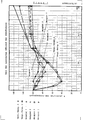
- the result of the counting of leucocytes in the dialysis of rabbits with a dialyzer with a membrane surface of 500 cm 2 is also shown in FIG. 1.
- the treatment time was 20 minutes.
- the I socyanate prepolymer used was one which had been formed from 120 g of polyethylene glycol with a molecular weight of 6000 and 10 g of 4,4'-diphenylmethane diisocyanate. It was used as a 15% by volume solution in dimethylacetamide.
- Hollow fibers were treated micron regenerated cellulose from T S C E yp with a lumen diameter of 168 microns and a wall thickness of the seventeenth
- the cellulose was regenerated by saponification of cellulose l o s eacetat. After a treatment period of 45 min. the residual solution was washed out with dimethylacetamide and then washed with methylene chloride.
- the dried hollow fibers were evaluated for their performance and the Leu kozytenkohl in dialysis of rabbits with a dialysate or of 500 cm 2 membrane surface determined.
- the leukocytes is shown in Figure 1 compared to the other examples, the encryption g le i ch SExample A and a comparative measurement with untreated hollow of the type used in this example SCE (Comparative Example C) threads shown.
- the dialytic permeability of creatinine was determined to be 30 ⁇ 10 -3 cm / min, compared to 45 ⁇ 10 -3 cm / min for untreated hollow fibers.
- the isocyanate prepolymer used in this example was a reaction product obtained in a two-step reaction. In a first stage, 50.4 g of 4,4'-dicyclohexylmethane diisocyanate were reacted with 95.2 g of castor oil. In the second stage, the intermediate product obtained was reacted with 5.8 g of hexamethylenediamine. This reaction product was then used as a 10% solution in dimethylacetamide.
- Hollow fibers made of cellulose that were regenerated from Cuoxam solutions were treated.
- the treatment time was 1 hour.
- the treatment was carried out at 50 ° C.
- the hollow fibers were then washed out with pure dimethylacetamide, the dimethylacetamide was removed with acetone and the hollow fibers were dried.
- an isocyanate prepolymer was used, which was also made in stages.
- 50 g of 4,4'-diphenylmethane diisocyanate and 60 g of polyethylene glycol with an average molecular weight of 600 are reacted.
- the intermediate is reacted with 1.6 g of hydrazine.
- Hollow cellulose fibers were treated with a 5% strength solution of this isocyanate prepolymer in dimethylacetamide, the cellulose having been regenerated from Cuoxam solutions. The treatment was carried out at room temperature and was carried out over a period of 10 minutes. The hollow fibers were then washed first with pure dimethylacetamide and then with acetone and dried.
Landscapes
- Chemical & Material Sciences (AREA)
- Chemical Kinetics & Catalysis (AREA)
- External Artificial Organs (AREA)
- Separation Using Semi-Permeable Membranes (AREA)
Abstract
Description
- Die Erfindung betrifft eine Dialysemembran für die Hämodialyse in Form von Flachfolien, Schlauchfolien oder Hohlfäden aus regenerierter Cellulose.
- Dialysemembranen aus regenerierter Cellulose für die Hämodialyse in Form von Flachfolien, Schlauchfolien oder Hohlfäden sind bereits seit längerem bekannt und werden nach wie vor bevorzugt in künstlichen Nieren eingesetzt, obwohl sich manche Beschwerden verursachende Eigenschaften noch nicht beseitigen ließen.
- So ist aus der DE-C- 27 05 735 eine Dialysemembran für die Hämodialyse, mit verminderter thrombogener Wirkung aus Cellulose, mit daran chemisch gebundenen antithrombogenen Verbindungen bekannt, wobei die Dialysemembran aus zwei oder mehreren Schichten einer aus Cuoxamcelluloselösungen regenerierten Cellulose besteht, die jeweils aus getrennt gespeisten Schlitzen einer Spinndüse erhalten worden.sind, wobei die auf der Blutseite angeordnete Celluloseschicht ganz oder teilweise eine modifizierte Cellulose ist, die antithrombogene Wirkstoffe chemisch gebunden enthält.
- Es ist aber auch bereits schon in der DE-A- 17 20 087 vorgeschlagen worden, dadurch,daß das Polymermaterial der Membran mit einem Alkylhalogenid umgesetzt und danach das erhaltene Material mit einem Alkalisalz einer antithrombogenen Verbindung mit kationischen Rest (z. B. Heparin oder eine Heparinoidverbindung) umgesetzt wird, die Gefahr der Gerinnung des Blutes zu verringern. Zu den möglichen Alkylhalogeniden werden dabei auch Halogenalkyldialkylamine gerechnet. Auch Cellulose, jedoch im wesentlichen Celluloseacetat, zählt zu den möglichen Polymeren.
- Neben dem Unstand, daß Dialysemembranen aus synthetischen bzw. natürlichen Polymeren bei ihrem Einsatz in künstlichen Nieren sehr leicht eine Gerinnung des Blutes hervorrufen können, die durch entsprechende medikamentöse Behandlung oder durch die vorgenannten besonderen Dialysemembranen weitgehend verhindert wird, tritt bei Dialysemembranen aus regenerierter Cellulose häufig ein weiteres Problem auf, das bisher noch nicht zufriedenstellend gelöst werden konnte, und zwar war festgestellt worden, daß bei der Behandlung eines Nierenkranken mit Dialysatoren mit Cellulose-Membranen in der ersten Zeit der Dialysebehandlung ein vorübergehender Leukozytenabfall stattfinden kann. Dieser Effekt wird als Leukopenie bezeichnet.
- Leukopenie ist eine Erniedrigung der Leukozytenzahl (weiße Blut- körper) im Blutkreislauf. Die Zahl der weißen Blutkörper beim Menschen beträgt ca. 4000 bis 12000 Zellen/mm'.
- Die Leukopenie bei Dialyse ist am stärksten ausgeprägt 15 bis 20 Min. nach Beginn, wobei die Neutrophilen (das sind die mit neutralen oder gleichzeitig mit sauren und basischen Farbstoffen anfärbbaren Leukozyten) fast vollständig verschwinden können. Danach erholt sich die Zahl der Leukozyten innerhalb etwa einer Stunde wieder auf fast den Ausgangswert oder übersteigt diesen.
- Wird nach Erholung der Leukozyten ein neuer Dialysator angeschlossen, tritt wieder Leukopenie im gleichen Ausmaß ein.
- Cellulose-Membranen verursachen eine ausgeprägte Leukopenie. Auch wenn die klinische Bedeutung der Leukopenie wissenschaftlich nicht geklärt ist, besteht doch der Wunsch nach einer Dialysemembran für die Hämodialyse, die den Effekt der Leukopenie nicht zeigt, ohne daß dadurch die anderen sehr erwünschten Eigenschaften von Dialysemembranen aus regenerierter Cellulose beeinträchtigt werden.
- Bei der Hämodialyse mittels Membranen aus regenerierter Cellulose hat man neben der Leukopenie auch eine deutlich Komplement- Aktivierung festgestellt. Das Komplement-System innerhalb des Blutserums ist ein komplexes, aus vielen Komponenten bestehendes Plasmaenzym-System, das auf verschiedene Weise der Abwehr von eindringenden fremden Zellen (Bakterien u.a.) dient. Wenn Antikörper gegen den eindringenden Organismus vorhanden sind, kann Komplement durch den Komplex der Antikörper mit antigenen Strukturen der Fremdzellen aktiviert werden; es ist aber auch möglich, auf einem Alternativ-Weg durch besondere Oberflächenmerkmale der Fremdzelle das Komplement-System zu aktivieren. Das Komplement-System beruht auf einer Vielzahl von PlasmaProteinen. Nach Aktivierung reagieren diese Proteine spezifisch in einer bestimmten Reihenfolge miteinander und am Ende wird ein zellschädigender Komplex gebildet, der die Fremdzelle zerstört.
- Aus einzelnen Komponenten des Komplement-Systems werden Peptide freigesetzt, die Entzündungserscheinungen auslösen und gelegentlich auch unerwünschte pathologische Folgen für den Organismus haben können.
- Es wird angenommen, daß die Aktivierung bei Hämodialysemembranen aus regenerierter Cellulose über den alternativen Weg erfolgt. Objektiv können diese Komplement-Aktivierungen unter anderem durch eine Bestimmung der Fragmente C3a und C5a festgestellt werden.
- In diesem Zusammenhang wird auf folgende Arbeiten hingewiesen: D.E. Chenoweth et al, Kidney International Vol.24, Seiten 764 ff, 1983, und D.E. Chenoweth, Asaio,Journal Vol. 7, Seiten 44 ff,1984.
- Obwohl die klinische Bedeutung der Komplement-Aktivierung noch nicht geklärt ist, ist man bestrebt, diese bei der Hämodialyse möglichst auszuschließen. Es war deshalb Aufgabe der vorliegenden Erfindung, Hämodialysemembranen aus regenerierter Cellulose so weit zu modifizieren, daß die genannten Erscheinungen der Leukopenie und der Komplement-Aktivierung nicht mehr auftreten.
- Gelöst wird diese Aufgabe durch Dialysemembranen entsprechend den Patentansprüchen der vorliegenden Erfindung.
- Die erfindungsgemäße Dialysemembran in Form von Flachfolien, Schlauchfolien oder Hohlfäden aus regenerierter Cellulose zeichnet sich dadurch aus, daß mindestens an einer Membranoberfläche in organischen Lösungsmitteln lösliche, ausgenommen mit Isocyanat-Gruppen reagierende und Cellulose lösende Lösungsmittel, Isocyanatpräpolymere mit einem mittleren Molekulargewicht von 300 bis 50.000 chemisch gebunden sind.
- Beispiele für Lösungsmittel, die mit Isocyanat-Gruppen nicht reagieren und Cellulose auch nicht lösen,sind Methylenchlorid, Chloroform, Tetrahydrofuran, Dioxan, Dimethylformamid, Dimethylacetamid und Aceton. Die Lösungsmittel können als solche bei der Herstellung der erfindungsgemäßen Membranen oder im Gemisch untereinander Verwendung finden, sofern auch das Gemisch die Forderung erfüllt, daß es Cellulose nicht löst. Es ist vorteilhaft, wenn das Lösungsmittel ein gutes Lösungsvermögen für die Isocyanatpräpolymeren bei Temperaturen unterhalb von 60°C aufweist, insbesondere bei Raumtemperatur.
- Isocyanatpräpolymere werden durch Umsetzung von H-aciden Verbindungen mit Isocyanat-Verbindungen erhalten, die mehrere Isocyanat-Gruppen enthalten, wobei das molare Verhältnis der H-aciden Verbindung zum Isocyanat geringer gewählt wird, als zum Umsatz aller Isocyanat-Gruppen erforderlich wäre, so daß freie N=C=0-Reste für die Addition des Präpolymeren an Cellulose zur Verfügung stehen.
- Das Molekulargewicht ist eine Verhältniszahl der Masse eines Moleküls zur Atommasse des Kohlenstoffisotops 12. Es wird in manchen Fällen mit der Dimension "Dalton" angegeben.
- Vorzugsweise ist das Isocyanatpräpolymere ein Reaktionsprodukt aus einer Hydroxy- und/oder Polyhydroxy-Verbindung und einer polyfunktionellen Isocyanat-Verbindung.
- Als Polyhydroxyverbindungen kommen dabei in Frage hydroxylgruppenhaltige Polyäther, wie Polyäthylenglykol, Polypropylenglykol und Polytetramethylenglykol; hydroxylgruppenhaltige Polyester, wie Polyäthylenadipat, Polypropylenadipat, Polybutylenadipat; hydroxylgruppenhaltige Polycarbonate, wie beispielsweise Polyhexandiolcarbonat. Es können aber auch natürlich vorkommende Polyhydroxyverbindungen wie beispielsweise Rizinusöl oder Derivate des Rizinusölsoder Monoglyceride der natürlich vorkommenden Fettsäuren und/oder deren Gemische für die Reaktion mit Di-, Tri- und/oder polyfunktionellen Isocyanatverbindungen herangezogen werden.
- Beispiele für geeignete Isocyanatverbindungen sind: Diphenylmethandiisocyanate, Toluylendiisocyanate, Hexamethylendiisocyanate, Dicyclohexylmethandiisocyanate, Isophorondiisocyanate, Cyclohexyldiisocyanate, Triphenylmethantriisocyanate.
- In einer Ausführungsform der Erfindung ist das Isocyanatpräpolymer ein Reaktionsprodukt eines Diisocyanates mit einem Fettalkohol mit 6 bis 30 C-Atomen.
- In einer anderen Ausführungsform der Erfindung ist das Isocyanatpräpolymer ein Reaktionsprodukt eines Diisocyanates mit einem äthoxilierten Fettalkohol mit 6 bis 30 C-Atomen.
- In einer weiteren Ausführungsform der Erfindung ist das Isocyanatpräpolymer ein Reaktionsprodukt eines Diisocyanates mit einer äthoxilierten Fettsäure mit 6 bis 30 C-Atomen. Vorzugsweise beträgt dabei der Äthoxilierungsgrad 5 bis 400.
- Besonders bevorzugt werden Isocyanatpräpolymere, die Reaktionsprodukte eines Diisocyanates mit Polyhydroxy-Verbindungen sind. Zu deren Herstellung werden vorzugsweise als Polyhydroxy-Verbindungen Dioxy- und/oder Trioxy-Verbindungen eingesetzt.
- Eine weitere Ausführungsform der Membranen ist dadurch gekennzeichnet, daß das Isocyanatpräpolymere ein Reaktionsprodukt ist aus einer zunächst durchgeführten Reaktion einer Hydroxy-und/oder Polyhydroxy-Verbindung mit einer polyfunktionellen Isocyanat-Verbindung und einer anschließend durchgeführten Reaktion dieses Zwischenproduktes mit Hydrazin und/oder einem aliphatischen Diamin einer Kettenlänge von 2 bis 30 C-Atomen.
- Die vorliegende Erfindung gestattet es, bei Dialysemembranen aus Cellulose, unabhängig von der jeweiligen Herstellung, die Leucopenie und die Komplementaktivierung in erheblichem Maße zu reduzieren. Wegen der günstigen Dialyseeigenschaften von Cellulose, die aus Cuoxamlösungen regeneriert ist, ist jedoch eine solche bevorzugt. Dabei soll das mittlere Molekulargewicht vorzugsweise 80.000 bis 150.000 betragen.
- Die Erfindung betrifft auch ein Verfahren zur Herstellung der beanspruchten Dialysemembran. Es ist dadurch gekennzeichnet, daß man eine Dialysemembran in Form von Hohlfäden, Schlauchfolien oder Flachfolien aus regenerierter Cellulose mit einer Lösung eines Isocyanatpräpolymeren bei Temperaturen oberhalb 10°C in einem organischen Lösungsmittel, welches mit dem gewählten Präpolymeren nicht reagiert und Cellulose nicht löst, und unterhalb der Siedetemperatur des Lösungsmittels zwischen 3 Minuten und 24 Stunden behandelt, den Überschuß an Präpolymer mit reinem Lösungsmittel auswäscht und das Lösungsmittel entfernt.
- Die Behandlungszeit richtet sich nach dem Isocyanatpräpolymeren, der Konzentration in der Reaktionslösung und der Temperatur. Von aromatischen Isocyanaten abgeleitete Isocyanatpräpolymere reagieren normalerweise dabei schneller als von aliphatischen abgeletitete, so daß man insbesondere bei letzteren zur Abkürzung der Behandlungszeit Katalysatoren verwendet. Als hervorragend geeignet für die vorliegende Erfindung hat sich als Katalysator Eisen--III-acetylacetonat bewährt. Mit Hilfe des Katalysators gelingt es auch bei langsam reagierenden Isocyanaten,die Behandlungszeit der Membran auf eine Zeit von 5 Minuten bis 3 Stunden zu begrenzen.
- Die Konzentration des Isocyanatpräpolymeren im Lösungsmittel beträgt vorzugsweise von 0,1 bis 20 Volumen-%.
- Vorzugsweise werden Lösungen eingesetzt, bei denen die Konzentration des Isocyanatpräpolymeren im Lösungsmittel von 1,0 bis 10,0 Volumen-% beträgt.
- Da die Dialysemembranen für die Hämodialyse eingesetzt werden sollen, ist es besonders wichtig, nach beendeter Behandlung das bzw. die Lösungsmittel zu entfernen. In bevorzugter Weise geschieht dieses dadurch, daß das Lösungsmittel dadurch entfernt wird, daß man mit einem leichter flüchtigen, Cellulose nicht lösendem, organischen Lösungsmittel das Lösungsmittel auswäscht und den verbleibenden Lösungsmittelrest verdampfen läßt.
- Zur weiteren Erläuterung der Erfindung dienen die nachfolgenden Beispiele.
- Mit Hilfe eines Hämodialysators, der Hohlfäden aus Cellulose, die aus Cuoxamlösungen regeneriert worden war, enthielt und dessen Membranoberfläche 500 cmZ betrug, wurde an Kaninchen eine Hämodialyse durchgeführt. Nach bestimmten Zeitabschnitten wurde von dem den Dialysator verlassenden Blut eine Probe entnommen und in dieser die Zahl der Leukozyten gezählt. Die dabei erhaltenen Werte wurden auf die ursprüngliche Zahl der Leukozyten des Kaninchens bezogen und sind in der Figur 1 im Vergleich zu den Beispielen 1, 2, 3 und 5 dargestellt.
- Mit Dialysatorzellen, die Hohlfäden entsprechend Vergleichsbeispiel A, jedoch mit einer Membranoberfläche von 50 cm2 enthielten, wurde die Komplementaktivierung direkt am Menschen im ex-vivo-System untersucht. Dazu wurde die Bestimmung der Fragmente C3a und C5a mit Hilfe der RIA(Radioimmunoassay)methode (Upjohn Test) herangezogen.
- Ermittelt wurden: C3a = 15300 ng/ml C5a = 124 ng/ml
- Es wurde in gleicher Weise, wie beim Vergleichsbeispiel A beschrieben ist, eine Hämodialyse an Kaninchen mit einem Hämodialysator mit 500 cm2 Membranoberfläche durchgeführt, der jedoch Hohlfäden aus Cellulose, die durch Verseifung von Celluloseacetat regeneriert worden war, Type SCE enthielt.
- Die erhaltenen Werte sind in Figur 1 graphisch dargestellt.
- Mit einer 10 Vol.-%igen Lösuna eines Isocyanatpräpolymeren, das aus 100 g Rizinusöl und 71,4 g 4,4'-Diphenylmethan-diisocyanat gebildet worden war, in Methylenchlorid wurden Hohlfäden aus Cellulose, die aus Cuoxamlösungen regeneriert worden war, 10 min. behandelt. Anschließend wurden die Fäden mit reinem Methylenchlorid nachgewaschen und das restliche Lösungsmittel ausgeblasen. Die danach getrockneten Hohlfäden wurden zur Bestimmung der UFR und der Dialysierleistung für Kreatinin herangezogen. Die erhaltenen Werte sind nachfolgend für die erhaltene Membran und eine unbehandelte Membran gegenübergestellt.

- Die Untersuchung der Leukopenie an Kaninchen ergab das in Figur 1 dargestellte Ergebnis, d.h. der Abfall der Leukozytenzahl ist im Vergleich zu unbehandelten Hohlfäden-viel geringer. Die Versuche wurden mit Dialysatoren einer Membranoberfläche von 500 cm2 durchgeführt.
- Analog zu Beispiel 1 wurden Dialysehohlfäden aus Cellulose, die aus Cuoxamlösungen regeneriert worden war, mit einer 5 Vol.-%igen Lösung eines Isocyanatpräpolymeren, das aus 383 g Polyäthylenglykol mit einem mittleren Molekulargewicht von 2000 und 100 g 4,4'-Dicyclohexyl-methan-diisocyanat gebildet worden war, im Dimethylformamid unter Zusatz von 0,1 Gew.-%, bezogen auf das Präpolymer, Eisen-III-acetylacetonat 15 min. bei Raumtemperatur behandelt. Die Lösungsreste wurden zunächst mit Dimethylformamid und anschließend mit Methylenchlorid ausgewaschen. Nach dem Ausblasen des Methylenchlorids wurden die Fäden getrocknet. Sowohl die UFR als auch die dialytische Permeabilität ergaben die gleichen Werte, wie sie mit unbehandelten Hohlfäden erhalten wurden, nämlich: UFR = 4,9 m1/m2·h·mm2 Hg DLKreat. = 45·10-3cm/min
- Das Ergebnis der Zählung der Leucozyten in Abhängigkeit von der Dialysezeit bei Kaninchen,mit einem Dialysator mit 500 cm2 Membranoberfläche,ist in Figur 1 dargestellt.
- Analog zu den vorhergehenden Beispielen wurden wiederum die gleichartigen Dialysehohlfäden mit einer 1 Vol.-%igen Lösung des in Beispiel 1 beschriebenen Isocyanatpräpolymer in Aceton 3 Stunden behandelt. Nach dem Auswaschen der Hohlfäden mit Aceton wurden die Hohlfäden getrocknet. Auch hier wurden wiederum gegenüber unbehandelten Hohlfäden unveränderte Werte der UFR und der dialytischen Permeabilität von Kreatinin festgestellt. Das Ergebnis der Zählung der Leucozyten, bei der Dialyse von Kaninchen mit einem Dialysator mit 500 cm2 Membranoberfläche,ist ebenfalls in Figur 1 dargestellt.
- Es wurde eine 10 Vol.-%ige Lösung in Methylenchlorid eines aus 100 g Rizinusöl und 74,6 g 4,4'-Dicyclohexyl-methan-diiscoyanant gebildeten Isocyanatpräpolymeren mit 0,1 Gew.-% Eisen-III-acetylacetonat, bezogen auf das Isocyanatpräpolymer, zur Behandlung von Cellulosehohlfäden, die aus Cuoxamlösungen regeneriert waren, eingesetzt. Die Behandlungszeit betrug 20 min.
- Neben der Bestimmung der Leukozytenzahl bei der Dialyse von Kaninchen mit einem Dialysator von 500 cm2 Membranoberfläche und der Bestimmung der UFR und dialytischen Permeabilität von Kreatinin wurden die Komplementaktivierung durch Bestimmung der Fragmentkomponenten C3a und C5a an Blutproben ermittelt, die analog zu Vergleichsbeispiel B am Menschen im ex-vivo-System mit Zellen von 50 cm2 Membranoberfläche erhalten worden waren. Dabei wurde festgestellt, daß der Wert für C3a nur 3700 ng/ml und für C5a 11 ng/ml betrug.
- Die Dialyseleistungen gegenüber unbehandelten Cellulosehohlfäden blieben unverändert.
- Als Isocyanatpräpolymer diente ein solches, das aus 120 g Polyäthylenglykol mit einem Molekulargewicht von 6000 und 10 g 4,4'-Diphenyl-methan-diisocyanat gebildet worden war. Es wurde als 15 Vol.-%ige Lösung in Dimethylacetamid verwendet.
- Behandelt wurden Hohlfäden aus regenerierter Cellulose vom Typ SCE mit einem Lumendurchmesser von 168 µm und einer Wandstärke von 17 µm. Die Cellulose war durch Verseifen von Cellu- loseacetat regeneriert worden. Nach einer Behandlungsdauer von 45 min. wurde die Restlösung mit Dimethylacetamid ausgewaschen und anschließend mit Methylenchlorid nachgewaschen. Die getrockneten Hohlfäden wurden auf ihre Leistungsdaten und die Leukozytenzahl bei der Dialyse von Kaninchen mit einem Dialysator von 500 cm2 Membranoberfläche bestimmt. Der Leukozytenabfall ist in Figur 1 im Vergleich zu den anderen Beispielen, dem Ver- gleichsbeispiel A und einer Vergleichsmessung mit unbehandelten Hohlfäden der bei diesem Beispiel verwendeten Type SCE (Vergleichsbeispiel C) dargestellt.
- Für die UFR wurde ermittelt:

- Bei unbehandelten Hohlfäden betrug sie 2,9 ml/h·m2·mm Hg. Für die dialytische Permeabilität von Kreatinin wurde 30·10-3 cm/min ermittelt, gegenüber 45·10-3 cm/min bei unbehandelten Hohlfäden.
- Das in diesem Beispiel verwendete Isocyanatpräpolymer war ein in einer zweistufigen Reaktion erhaltenes Reaktionsprodukt. In einer ersten Stufe wurden 50,4 g 4,4'-Dicyclohexylmethan-diisocyanat mit 95,2 g Rizinusöl umgesetzt. In der zweiten Stufe wurde das erhaltene Zwischenprodukt mit 5,8 g Hexamethylendiamin umgesetzt. Dieses Reaktionsprodukt wurde dann als 10 %ige Lösung in Dimethylacetamid verwendet.
- Behandelt wurden Hohlfäden aus Cellulose, die aus Cuoxamlösungen regeneriert waren. Die Behandlungszeit betrug 1 Stunde. Die Behandlung wurde bei 50 °C durchgeführt. Anschließend wurden die Hohlfäden mit reinem Dimethylacetamid ausgewaschen, das Dimethylacetamid mit Aceton entfernt und die Hohlfäden getrocknet.
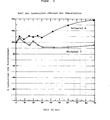
- Die Untersuchung der Leukopenie ergab das in Figur 2 dargestellte Verhalten.
- In diesem Beispiel wurde ein Isocyanatpräpolymer verwendet, das ebenfalls in Stufen hergestellt worden ist. In der ersten Stufe werden 50 g 4,4'-Diphenylmethandiisocyanat und 60 g polyäthylenglykol mit einem mittleren Molekulargewicht von 600 umgesetzt. In der zweiten Stufe wird das Zwischenprodukt mit 1,6 g Hydrazin umgesetzt.
- Mit einer 5 %igen Lösung dieses Isocyanatpräpolymeren in Dimethylacetamid wurden Cellulosehohlfasern behandelt, wobei die Cellulose aus Cuoxamlösungen regeneriert worden war. Die Behandlung erfolgte bei Raumtemperatur und wurde über einen Zeitraum von 10 Minuten durchgeführt. Die Hohlfasern wurden anschließend zunächst mit reinem Dimethylacetamid und dann mit Aceton gewaschen und getrocknet.
- Das Verhalten der Leukozyten am Kaninchen ist in der Figur 2 graphisch dargestellt.
Claims (18)
Applications Claiming Priority (4)
| Application Number | Priority Date | Filing Date | Title |
|---|---|---|---|
| DE3410133 | 1984-03-20 | ||
| DE19843410133 DE3410133A1 (de) | 1984-03-20 | 1984-03-20 | Dialysemembran aus cellulose mit verbesserter biokompatibilitaet |
| DE3438531 | 1984-10-20 | ||
| DE19843438531 DE3438531A1 (de) | 1984-10-20 | 1984-10-20 | Dialysemembran aus cellulose mit verbesserter biokompatibilitaet |
Publications (3)
| Publication Number | Publication Date |
|---|---|
| EP0155534A2 true EP0155534A2 (de) | 1985-09-25 |
| EP0155534A3 EP0155534A3 (en) | 1986-12-03 |
| EP0155534B1 EP0155534B1 (de) | 1988-12-28 |
Family
ID=25819517
Family Applications (1)
| Application Number | Title | Priority Date | Filing Date |
|---|---|---|---|
| EP85101968A Expired EP0155534B1 (de) | 1984-03-20 | 1985-02-22 | Dialysemembran aus Cellulose mit verbesserter Biokompatibilität |
Country Status (3)
| Country | Link |
|---|---|
| US (2) | US4741927A (de) |
| EP (1) | EP0155534B1 (de) |
| DE (1) | DE3566954D1 (de) |
Cited By (5)
| Publication number | Priority date | Publication date | Assignee | Title |
|---|---|---|---|---|
| DE3826468A1 (de) * | 1988-08-04 | 1990-02-15 | Akzo Gmbh | Dialysemembran fuer die haemodialyse aus regenerierter, modifizierter cellulose |
| US4999110A (en) * | 1986-11-07 | 1991-03-12 | Asahi Kasei Kogyo Kabushiki Kaisha | Regenerated cellulose membrane and processes for preparation thereof |
| EP0512527A1 (de) * | 1991-05-09 | 1992-11-11 | Teijin Limited | Modifizierte cellulose, Blutbehandlungsvorrichtung und Verfahren zu ihrer Herstellung |
| US5853647A (en) * | 1996-03-07 | 1998-12-29 | Akzo Nobel Nv | Process for the stabilization of the properties of cellulosic membranes |
| EP0345151B2 (de) † | 1988-05-30 | 2000-10-04 | Terumo Kabushiki Kaisha | Verfahren zur Herstellung einer Hohlfasermembran |
Families Citing this family (9)
| Publication number | Priority date | Publication date | Assignee | Title |
|---|---|---|---|---|
| DE3341113A1 (de) * | 1983-11-12 | 1985-05-23 | Akzo Gmbh, 5600 Wuppertal | Dialysemembran mit verbesserter vertraeglichkeit |
| US5073265A (en) * | 1987-02-27 | 1991-12-17 | Johnson Richard J | Methods of manufacturing nucleophilic material modified for improved biocompatibility |
| DE3814326A1 (de) * | 1988-04-28 | 1989-11-09 | Akzo Gmbh | Verfahren zur modifizierung von cellulosischen dialysemembranen zur verbesserung der biocompatibilitaet und vorrichtung zur durchfuehrung des verfahrens |
| US4843733A (en) * | 1988-05-10 | 1989-07-04 | The Dow Chemical Company | Process for drying water-wet polycarbonate membranes |
| ES2083757T3 (es) * | 1991-08-17 | 1996-04-16 | Akzo Nobel Nv | Filamento hueco para dialisis. |
| DE59208184D1 (de) * | 1992-01-07 | 1997-04-17 | Akzo Nobel Nv | Verfahren zum Beschichten cellulosischer Membranen |
| JPH05310801A (ja) * | 1992-05-08 | 1993-11-22 | Teijin Ltd | 変性セルロース系ポリマー、血液処理器及びその製造方法 |
| EP0574699A2 (de) * | 1992-05-20 | 1993-12-22 | Akzo Nobel N.V. | Dialysemembran aus Celluloseacetat |
| US7132582B2 (en) * | 2003-05-30 | 2006-11-07 | Council Of Scientific And Industrial Research | Catalytic process for the preparation of isolongifolene |
Family Cites Families (18)
| Publication number | Priority date | Publication date | Assignee | Title |
|---|---|---|---|---|
| US2593540A (en) * | 1945-09-01 | 1952-04-22 | American Viscose Corp | Semipermeable membrane |
| US3441142A (en) * | 1966-07-21 | 1969-04-29 | Dow Chemical Co | Nonthrombogenic plastic membranes |
| DE2358150C2 (de) * | 1973-11-22 | 1982-03-18 | Hoechst Ag, 6000 Frankfurt | Verfahren zum Herstellen von Wasser aufnehmenden, aber darin zu mehr als 50% unlöslichen Celluloseethern |
| US4005012A (en) * | 1975-09-22 | 1977-01-25 | The United States Of America As Represented By The Secretary Of The Interior | Semipermeable membranes and the method for the preparation thereof |
| US4051040A (en) * | 1976-03-17 | 1977-09-27 | John L. Hutchinson | Antithrombogenic hemo dialysis membranes |
| US4145515A (en) * | 1976-12-01 | 1979-03-20 | Congoleum Corporation | Method of forming storage-stable polyurethane prepolymers |
| FR2380052A1 (fr) * | 1977-02-11 | 1978-09-08 | Akzo Nv | Membrane de dialyse pour l'hemodialyse |
| DE2705735C3 (de) * | 1977-02-11 | 1982-05-19 | Akzo Gmbh, 5600 Wuppertal | Dialysemembran für die Hämodialyse |
| JPS5443882A (en) * | 1977-09-14 | 1979-04-06 | Nippon Zeon Co Ltd | Preparation of semipermeable membrane |
| FR2420548A1 (fr) * | 1978-03-25 | 1979-10-19 | Akzo Nv | Masse d'enrobage en polyurethanes, son procede de preparation et son utilisation |
| US4280970A (en) * | 1979-01-19 | 1981-07-28 | Puropore Inc. | Polyoxyethylene grafted membrane materials with grafting links derived from a diisocyanate |
| DE3066996D1 (en) * | 1979-09-19 | 1984-04-19 | Aligena Ag | Porous semipermeable cellulose acetate membranes modified by ionic groups, process for their production and their use |
| DE3010030A1 (de) * | 1980-03-15 | 1981-09-24 | Akzo Gmbh, 5600 Wuppertal | Einbettmasse aus polyurethanen |
| US4423099A (en) * | 1980-07-28 | 1983-12-27 | Ciba-Geigy Corporation | Membrane modified hydrogels |
| JPS6020499B2 (ja) * | 1980-11-29 | 1985-05-22 | 旭化成株式会社 | セルロ−ス成形品の部分硫酸エステル塩化法 |
| JPS5941656B2 (ja) * | 1981-03-31 | 1984-10-08 | 工業技術院長 | 再生セルロ−スに抗血液凝固性を賦与する方法 |
| JPS5941647B2 (ja) * | 1981-03-31 | 1984-10-08 | 工業技術院長 | 抗血液凝固性再生セルロ−スの製造法 |
| CH660852A5 (de) * | 1982-11-23 | 1987-05-29 | Aligena Ag | Dynamische membranen, die sich als duenne polymerschichten auf poroesen, polymeren traegermaterialien befinden. |
-
1985
- 1985-02-22 DE DE8585101968T patent/DE3566954D1/de not_active Expired
- 1985-02-22 EP EP85101968A patent/EP0155534B1/de not_active Expired
-
1986
- 1986-05-16 US US06/871,761 patent/US4741927A/en not_active Expired - Fee Related
-
1987
- 1987-08-04 US US07/081,534 patent/US4772393A/en not_active Expired - Fee Related
Cited By (6)
| Publication number | Priority date | Publication date | Assignee | Title |
|---|---|---|---|---|
| US4999110A (en) * | 1986-11-07 | 1991-03-12 | Asahi Kasei Kogyo Kabushiki Kaisha | Regenerated cellulose membrane and processes for preparation thereof |
| EP0345151B2 (de) † | 1988-05-30 | 2000-10-04 | Terumo Kabushiki Kaisha | Verfahren zur Herstellung einer Hohlfasermembran |
| DE3826468A1 (de) * | 1988-08-04 | 1990-02-15 | Akzo Gmbh | Dialysemembran fuer die haemodialyse aus regenerierter, modifizierter cellulose |
| US5055570A (en) * | 1988-08-04 | 1991-10-08 | Akzo N.V. | Cuprammonium-stable cellulose esters and carbamates for dialysis membranes |
| EP0512527A1 (de) * | 1991-05-09 | 1992-11-11 | Teijin Limited | Modifizierte cellulose, Blutbehandlungsvorrichtung und Verfahren zu ihrer Herstellung |
| US5853647A (en) * | 1996-03-07 | 1998-12-29 | Akzo Nobel Nv | Process for the stabilization of the properties of cellulosic membranes |
Also Published As
| Publication number | Publication date |
|---|---|
| US4772393A (en) | 1988-09-20 |
| DE3566954D1 (en) | 1989-02-02 |
| EP0155534A3 (en) | 1986-12-03 |
| US4741927A (en) | 1988-05-03 |
| EP0155534B1 (de) | 1988-12-28 |
Similar Documents
| Publication | Publication Date | Title |
|---|---|---|
| EP0172437B1 (de) | Dialysemembran aus modifizierter Cellulose mit verbesserter Biokompatibilität | |
| DE60034416T2 (de) | Dialysatoren zur Blutbehandlung sowie ihr Herstellungsverfahren | |
| EP0155534B1 (de) | Dialysemembran aus Cellulose mit verbesserter Biokompatibilität | |
| DE69634352T2 (de) | Methode zur Herstellung einer teildurchlässigen Hohlfasermembran aus Polysulfon | |
| EP0807460A1 (de) | Cellulosische Dialysemembran | |
| EP0330134A1 (de) | Modifizierte Cellulose für biocompatible Dialysemembranen IV und Verfahren zu deren Herstellung | |
| EP0168783A1 (de) | Asymmetrische mikroporöse Hohlfaser für die Hämodialyse sowie Verfahren zu ihrer Herstellung | |
| EP0319862A2 (de) | Biocompatible Dialysemembran aus Cellulose mit erhöhter Beta-2-Microglobulinadsorption | |
| EP0339200A1 (de) | Modifizierte Cellulose für biocompatible Dialysemembranen III und Verfahren zu deren Herstellung | |
| DE69623196T2 (de) | Permselektive Membranen und Verfahren zu ihrer Herstellung | |
| DE68919142T3 (de) | Hohlfasermembran. | |
| EP0339502B1 (de) | Verfahren zur Modifizierung von cellulosischen Dialysemembranen zur Verbesserung der Biocompatibilität und Vorrichtung zur Durchführung des Verfahrens | |
| DE3410133A1 (de) | Dialysemembran aus cellulose mit verbesserter biokompatibilitaet | |
| DE3524596A1 (de) | Dialysemembran aus modifizierter cellulose mit verbesserter biokompatibilitaet | |
| EP0319938B1 (de) | Modifizierte Cellulose für biocompatible Dialysemembranen | |
| DE3438531A1 (de) | Dialysemembran aus cellulose mit verbesserter biokompatibilitaet | |
| EP0459293B1 (de) | Dialysemembran aus Polysaccharidether | |
| EP0376069B1 (de) | Biocompatible Dialysemembran aus einem gemischten Polysaccharidester | |
| EP0550879B1 (de) | Verfahren zum Beschichten cellulosischer Membranen | |
| EP0353561B1 (de) | Dialysemembranen aus cuoxamstabilen Celluloseestern und Carbamaten | |
| EP0572910B1 (de) | Dialysemembran aus Polysaccharidether II | |
| DE102005019130B4 (de) | Membran für Flüssigphasenseparationsprozesse und Verfahren zu ihrer Herstellung | |
| DE102006017453B4 (de) | Membran für Flüssigphasenseparationsprozesse und Verfahren zu ihrer Herstellung | |
| WO1994017904A1 (de) | Modifizierte membran für medizinische zwecke | |
| DE3430503A1 (de) | Dialysemembran aus modifizierter cellulose mit verbesserter biokompatibilitaet |
Legal Events
| Date | Code | Title | Description |
|---|---|---|---|
| PUAI | Public reference made under article 153(3) epc to a published international application that has entered the european phase |
Free format text: ORIGINAL CODE: 0009012 |
|
| AK | Designated contracting states |
Designated state(s): DE FR GB IT |
|
| PUAL | Search report despatched |
Free format text: ORIGINAL CODE: 0009013 |
|
| AK | Designated contracting states |
Kind code of ref document: A3 Designated state(s): DE FR GB IT |
|
| 17P | Request for examination filed |
Effective date: 19870527 |
|
| 17Q | First examination report despatched |
Effective date: 19880225 |
|
| RAP1 | Party data changed (applicant data changed or rights of an application transferred) |
Owner name: AKZO PATENTE GMBH |
|
| RBV | Designated contracting states (corrected) |
Designated state(s): DE FR IT |
|
| ITF | It: translation for a ep patent filed | ||
| GRAA | (expected) grant |
Free format text: ORIGINAL CODE: 0009210 |
|
| AK | Designated contracting states |
Kind code of ref document: B1 Designated state(s): DE FR IT |
|
| REF | Corresponds to: |
Ref document number: 3566954 Country of ref document: DE Date of ref document: 19890202 |
|
| ET | Fr: translation filed | ||
| PLBE | No opposition filed within time limit |
Free format text: ORIGINAL CODE: 0009261 |
|
| STAA | Information on the status of an ep patent application or granted ep patent |
Free format text: STATUS: NO OPPOSITION FILED WITHIN TIME LIMIT |
|
| 26N | No opposition filed | ||
| ITTA | It: last paid annual fee | ||
| PGFP | Annual fee paid to national office [announced via postgrant information from national office to epo] |
Ref country code: FR Payment date: 19951220 Year of fee payment: 12 |
|
| PGFP | Annual fee paid to national office [announced via postgrant information from national office to epo] |
Ref country code: DE Payment date: 19960113 Year of fee payment: 12 |
|
| PG25 | Lapsed in a contracting state [announced via postgrant information from national office to epo] |
Ref country code: FR Effective date: 19971030 |
|
| PG25 | Lapsed in a contracting state [announced via postgrant information from national office to epo] |
Ref country code: DE Effective date: 19971101 |
|
| REG | Reference to a national code |
Ref country code: FR Ref legal event code: ST |